One of the Palestinian Authority’s (PA) governors has barred businesses from displaying signs in Hebrew in his West Bank district.
The Jerusalem Post reported that Abdullah Kmeil, the governor of the Salfit District in the central region of the West Bank, announced on July 8 that the measure is being implemented in response to “the occupation … exploiting the scene of the signs in Hebrew for purposes that serve its racist and fascist policy.” Various businesses in the region have been displaying Hebrew signs in order to bring in Jewish customers, according to the Post.
Kmeil also argued that the measure is the result of “the arrogance of the occupation aimed at stealing our lands and obliterating the features of the Palestinian identity in the Salfit Governorate, where settlements are expanding.” He gave businesses a week to comply with the measure and threatened “strict legal action” against businesses that fail to adhere to the law.
Various pro-Israel Twitter accounts criticized the PA policy.
“Engaging with Israel achieves peace,” AIPAC tweeted. “Boycotting Israel achieves nothing. The Palestinian people suffer from their leaders’ anti-Israel policies that make peace impossible.”
Engaging with Israel achieves peace. Boycotting Israel achieves nothing.
The Palestinian people suffer from their leaders’ anti-Israel policies that make peace impossible. https://t.co/9RECR9Jhz1
— AIPAC (@AIPAC) July 8, 2021
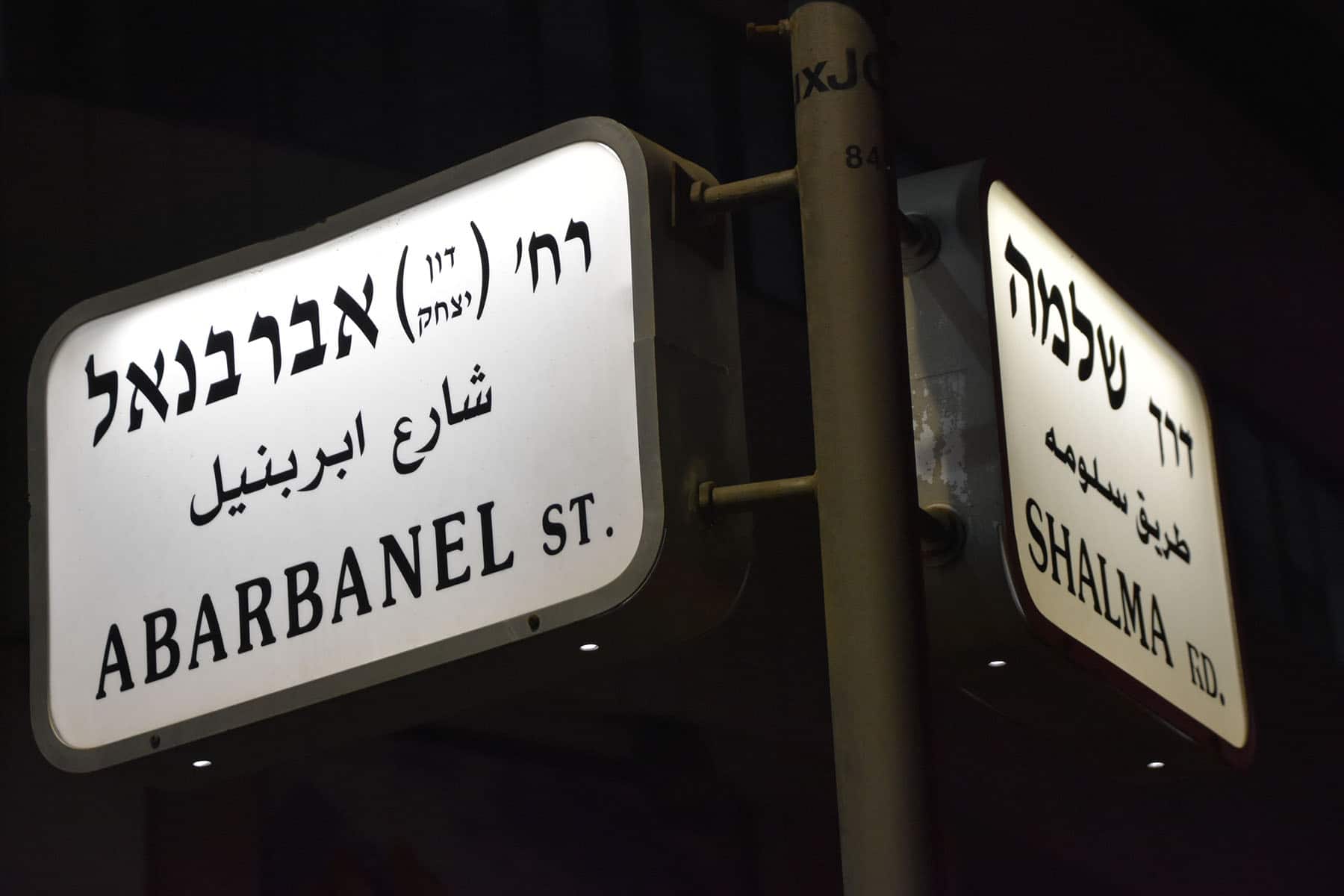
UN Watch Executive Director Hillel Neuer noted in a tweet that “multicultural Israel” has various streets written in Arabic, whereas “in the apartheid State of Palestine, Hebrew signs are banned and land sales to Israeli Jews are punishable by death.”
TOP: In multicultural 🇮🇱 Israel, street signs have Arabic.
BOTTOM: In the apartheid 🇵🇸 State of Palestine, Hebrew signs are banned and land sales to Israeli Jews are punishable by death. https://t.co/nprGPqRsZ4 pic.twitter.com/jMnXKTYL1x
— Hillel Neuer (@HillelNeuer) July 8, 2021
George Mason University International Law Professor Eugene Kontorovich, who is also a fellow at the Kohelet Policy Forum, similarly tweeted, “Banning private signs in Hebrew language is just another step towards cementing the PA’s apartheid regime, already evident in laws banning property rights for Jews, paying for extrajudicial killing of Jews, and spreading hate through education & culture.”
Banning private signs in Hebrew language is just another step towards cementing the PA's apartheid regime, already evident in laws banning property rights for Jews, paying for extrajudicial killing of Jews, and spreading hate through education & culture. https://t.co/oYkfkDevRj
— Eugene Kontorovich (@EVKontorovich) July 8, 2021