A lot of people will be posting their Robin Williams memories. Beyond the hours of laughter he gave me, I have one personal memory of Williams, who was found dead on Aug. 11 at his home in Northern California at age 63, an apparent suicide.
Williams was one of the entertainers at the annual banquet for the USC Survivors of the Shoah Visual History Foundation. It was February 17, 2005. Steven Spielberg, who created the Shoah Foundation with the proceeds from his film Schindler’s List, was the host. Williams provided the comedy, Sheryl Crow the entertainment, and the lead speaker and guest of honor was former President Bill Clinton.
My table was next to Williams, who sat beside Crow and her then-boyfriend Lance Armstrong.
A comedy act at a Holocaust event is never easy—that’s a subject for a whole other story—but Williams nailed it. I remember one line from a rapid fire monologue that left him sweating and spent and the crowd in stitches.
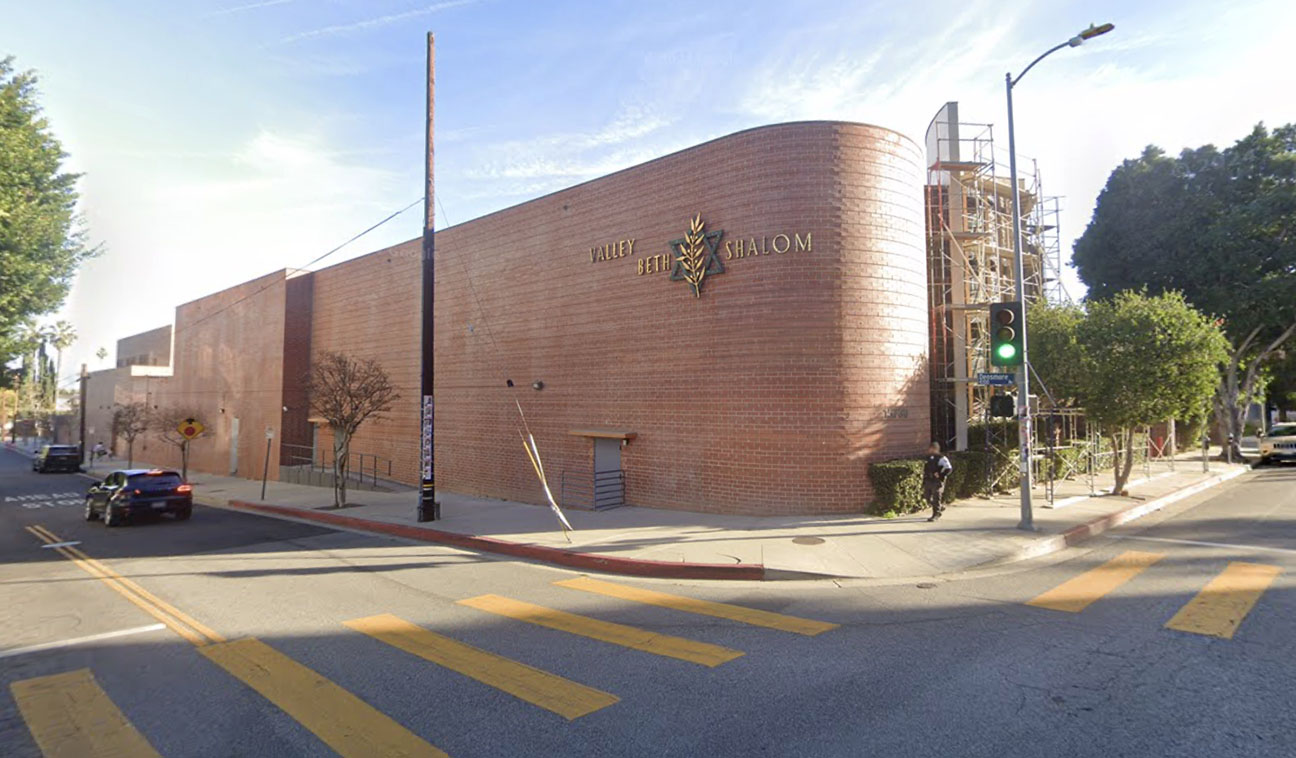
“Ladies and gentlemen,” Williams said in a Yiddish accent, “Welcome to Temple Beth Prada. This evening's meal will be milchidik, fleishadik, and sushidik.”
Williams, born and raised Episcopalian, said on many occasions he considered himself an “honorary Jew.” He certainly lived his life according to some of the highest Jewish values, among other acts of loving kindness donating his talents through Comic Relief to raise over $50 million for the homeless. He also played– naturally– some Jews onscreen, most memorably as the spiritually lost Everyman in an adaptation of Saul Bellow’s Seize the Day, as a latke salesman in Jakob the Liar, and as the gay nightclub owner Armand Goldman in The Birdcage.
“Shouldn’t you be holding the crucifix?” Armand sashays. ” It is the prop for martyrs!”
But perhaps the mantle, or crowd, or burden, of “honorary Jew” was best reflected in his ability to play the eternal outsider– a rules-breaking Vietnam War D.J. in Good Morning, Vietnam, a man who's a woman in Mrs. Doubtfire, an alien in suburbia in “Mork & Mindy.”.
In one memorable episode, Williams-as-Mork says, “He stole your necklace, he stole your ribs, he’s obviously not kosher.”
As Williams told our reporter Naomi Pfefferman during an interview about Jakob, “People tend to think I'm Jewish. I love Yiddish because it is a great language for comedy. There are so many great words. And 'nu' is the greatest word of all. It encompasses everything: 'What? How are you? Everything good? Bad? Hmmmm? Nu?”
Last March, Williams tweeted a picture of himself in a kippa on the set of his sitcom, “The Crazy Ones.”
Williams tweeted: ““Too late for a career change? Rabbi Robin?”
And, not long ago, Williams had this memorable exchange on German TV.
German Interviewer: Mr. Williams, why do you think there's not so much comedy in Germany?
Williams: Did you ever think you killed all the funny people?
Of all the words Steve Martin could choose to eulogize his friend, maybe it's no coincidence he tweeted, “'Mensch, great talent, genuine soul.”
My memory? As the Shoah event went on, I noticed Williams had returned to his seat and remained to the very end, long past the time most headliners duck out. As we all got up to leave, I found myself standing right beside him.
“You were hysterical,” I said.
“Thank you,” he said.
“And you stayed to the end,” I said.
Williams looked at me with great sincerity.
“This means a lot to me,” he said. “Of course.”
His voice caught me off guard at first, coming from a man who on stage slipped with restless energy from one crazy voice to another. Then I realized: the earnest, quiet sincere voice I was hearing—that was his own.
Bless you, Robin Williams.