
By Ben Spielberg
I am very attracted to the idea of a community. It is not something that I had when I was growing up, and when I was thrown into Beit T'Shuvah as a dope-sick, existentially disturbed 20-year-old, communal living didn't exactly seem like the answer to any of my problems. In fact, after reading enough Sartre and Thoreau, I preferred being alone to being around large groups of people.
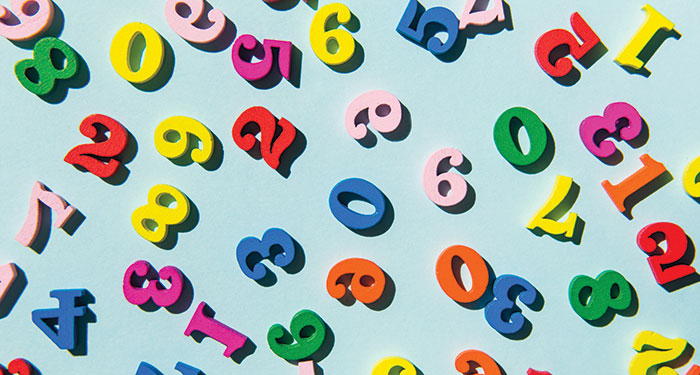
What I realized, however, is that communities are often a cognitive necessity. It is well known that our senses are generally unreliable: taste and olfactory become diminished after years of Marlboro Reds; our brains make up what we see in our periphery; a worldwide loss of hearing occurred after the introduction of the iPod. As a result, we are people whose words carry very little merit. Even memory is so malleable that the courtroom may not accept it as valid. I see this daily in my office: after reciting a sequence of digits, my clients will be asked to repeat the same sequence. Once they reach their capacity, they—unconsciously–guess the missing numbers. Just as there is a blind spot in our vision, there is a blind spot in our memory.
This trait is common among different aspects of human beings. C4N Y0U R34D TH1S? We are excellent at filling things in; in fact, I could probably write “C4N R34D Y0U TH1S,” and most people wouldn't notice the difference between the two alphanumeric phrases. While this is evolutionarily—and realistically—necessary, there are still problems. What if we misperceive something? What if a drug and alcohol counselor gives a set of directions, and they become discombobulated and nonsensical by the time they are understood? What if twelve-step programs are just too many steps for most individuals to comprehend in one sitting?
Communities fill the hole in the gap of our senses. As individuals, we understand very little of what goes on in the outside world. As community members, though, we fill in the gaps for each other. If a twelve-step program seems too daunting, overflowing your mental and emotional capacity, you get a sponsor. If you don't understand a passage in the Torah, or one of Rabbi Mark's sermons, you ask a member of the community. After all, the whole is greater than the sum of its parts.














 More news and opinions than at a Shabbat dinner, right in your inbox.