Where does Maimonides stand on the question of free will? Where is God when evil occurs? Whom do you go to for guidance on these issues? ask Elliott Gould.
Rabbi Ari Hier did.
The Jewish Studies Institute director wanted a celebrity to help in his quest to raise the profile of what he calls the "Jewish take" on world events. "Hollywood and Torah, it’s a non sequitur," says the rabbi, "But Elliott has become a real chevruta [study partner]."
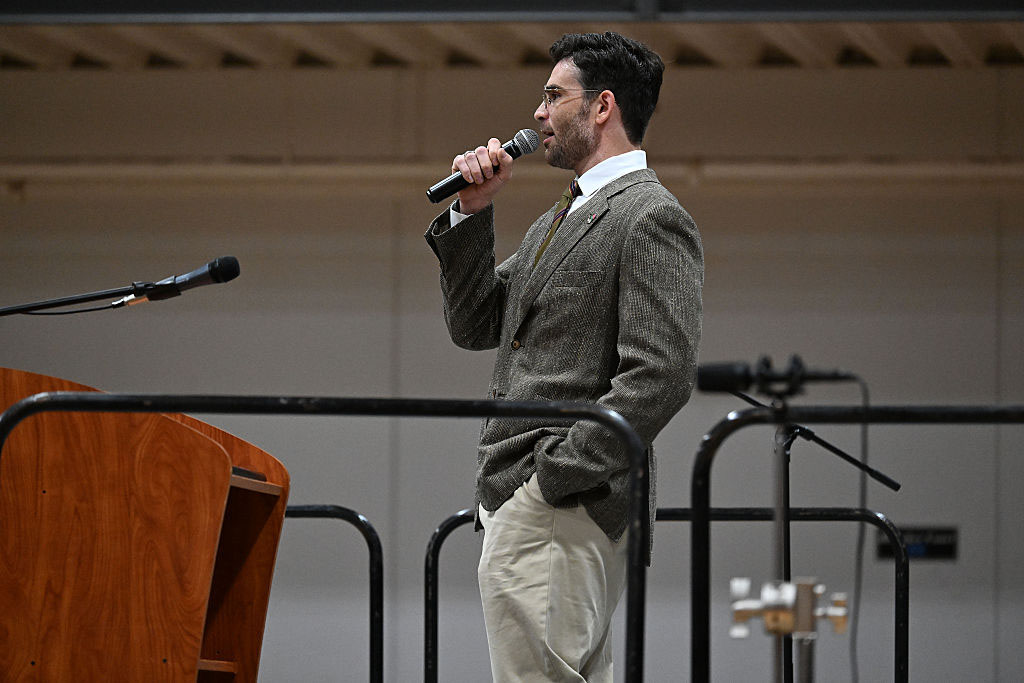
For the Sunday, Sept. 23, evening of textual discussions, Hier sent letters to Jewish celebrities in July, inviting them to study with him before leading the public talk. Gould responded immediately. "Ari said to me, the audience can be tough," Gould recalled, "and I thought, ‘I know. What audience isn’t?’"
In light of the terror attacks on Sept. 11, the audience that gathered at the Simon Wiesenthal Institute had some tough questions indeed.
As the star read the Laws of Repentance from the Mishna Torah and selections from Rabbi Issac Kurzner’s "The Relevance of Jewish Prayer," he fielded questions that characters like Trapper John and Jack Geller never could have fathomed. "I am not even a beginning student when it comes to Torah," said Gould, who clearly relished the spirited discussion his readings provoked. Drawing on a lifetime of spiritual exploration along with a month of study sessions with Hier, Gould said of his Judaic wisdom, "I know nothing, and I know everything."
While Hier’s call for a return to traditional forms of worship conflicted with Gould’s more liberal opinions, Gould offered this explanation: "I read in the press a few years ago that I had returned [to Judaism], but I never left. I took license to go beyond, to see for myself, but consciously, as one of us. The greater part of unorthodox is orthodox."
All the actor asked of his audience was that they join in the discussion. As two listeners stood to leave in the middle of the talk, Gould got them back in their seats. "Hey, hey, where are you going?" he called, "This isn’t a movie. I’m working here."