fbpx

Kahuna of Kabbalah

For Rabbi Nachum Shifren (aka The Surfing Rabbi), \"The world of surfing reflects the hand of the Creator.
[additional-authors]
March 15, 2001

For Rabbi Nachum Shifren (aka The Surfing Rabbi), “The world of surfing reflects the hand of the Creator. The whole concept of a wave that starts thousands of miles away, that’s hands-on experience of the primordial force.”

The California native grew up indifferent to his Judaism and passionate about the Malibu surf. His path to religion took him around the world, spending years surfing in Mexico, studying in Germany and working on a kibbutz, until finally his car broke down on Shabbat during a visit to a rabbi in Santa Barbara.

Rabbi Shifren saw it as a sign, and his life changed, but the lessons learned in his pre-religious days still influence his life. Though his emphasis on surfing has garnered the rabbi much attention (he’s been featured in every major surfing magazine), there’s more to Rabbi Shifren than mysticism and longboards. He details the long strange trip from secular surfer to surfing rabbi in his book “Surfing Rabbi: A Kabbalistic Quest for Soul.” Living in Los Angeles for the past two years while writing and promoting the book, Rabbi Shifren continues to do what he has done for most of his adult life: teach.

Yes, the Surfing Rabbi teaches at the beach, paddling out with Jews and non-Jews, young and old. He leads surfing Shabbatons. But that’s weekend work, and this rabbi has a day job. Rabbi Shifren teaches Spanish and bilingual education at Maclay Middle School in San Fernando. Before moving to Israel in 1995, the rabbi taught at Dorsey High. Though some parents are surprised at first by the bearded Spanish teacher with a kipah, Rabbi Shifren says the students never mind; in teaching, “being a little eccentric doesn’t hurt.”

One person who clearly understands the eccentricities of the Surfing Rabbi is his publisher (and wife), Rivkah Shifren. The founder of Heaven Ink Publishing (which also publishes Judy Gruen’s “Carpool Tunnel Syndrome”) was raised Catholic by her Latino father, until she discovered that her mother was Jewish. The revelation sent her in search of her own Jewish identity. Today the Shifrens have four children and plan to move back to Israel eventually, where they still own a home.

But for now, the couple is focused on getting out the story of a rabbi who is “bound to Torah and out at sea.” Rabbi Shifren’s weekly e-mail newsletter and dvar Torah, “Surf and Soul,” reaches hundreds attracted to the spirituality he finds in the waves, 40 percent of them non-Jews. A promotional tour is planned, including stops in Israel and Australia, where he’s been invited to teach the congregation of Chabad of Melbourne to hang ten. And though the 50-year-old rabbi spends much of his time teaching schoolkids, studying and promoting his story, he says, “I can still out-surf kids half my age.”

For more information please visit SurfingRabbi.com”>

Did you enjoy this article?
You'll love our roundtable.

Editor's Picks

Latest Articles

The Beat Goes On

While so much of the world seems obsessed with and consumed by its hatred of Israel and Jews, Israelis continue to build, create, work, celebrate, argue, raise families, and plan for the future.

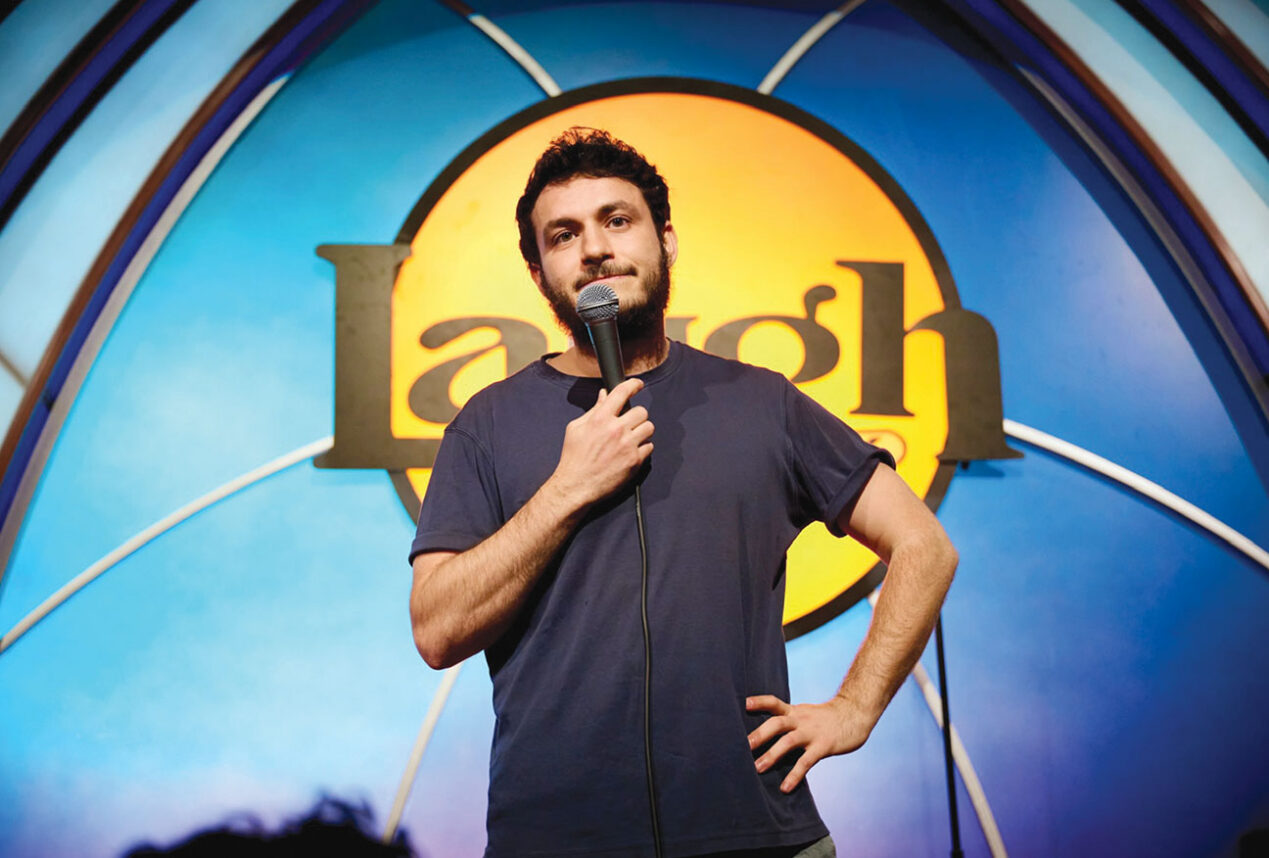
Viral AI Video Targets Jewish Comedian

“The biggest concern is that people now have a pathway to shut down Jewish voices through complete falsities that people will believe. … For the future of Jewish entertainment, it’s very scary.”

Yiddish Historians: Writing in Their Own Language for Their Own People

Mark Smith has compiled an important anthology of Jewish history using 49 works by Yiddish historians to recreate or at least open the door to a world of Jewish thought that was once almost mainstream, but which no longer exists, except in the minds of too few specialists.

The Everlasting Melody

Most Jews who have sung “Eitz Chaim” over the past half-century probably never knew Portnoy. They did not know when he wrote the melody or how young he was when he composed it. They simply knew the song.

Who’s Really the Victim?

Those who would revel in Israel’s demise are claiming victimhood on every front and denying attacks on us in the same breath.

Biblical Deterrence

After Oct. 7, the sentiment in Israel toward the Iranian leadership was unequivocal: You went medieval — so we will go biblical.

How Sukkot Makes Us Whole

This year, I bless us that we open our eyes to truly see the beauty and the holiness of the world, and of the person before us at each and every moment, and to see the godliness of their aspirations and their fears.

The New Ushpizot

Ushpizin invite us to “welcome in our ancestral constellation and dwell amongst them.” This year, it’s Ushpizot, for the women. It’s the year of the Feminist Visitation.

Macklemore, Or Less

In between his songs, he proclaimed, “Free Palestine,” which is fine, asserted that opposing Israeli military actions is not antisemitic, which is accurate, and accused Israel of apartheid and genocide, which is offensive, untrue and hateful.

The Rokeach’s Remarkable Sukkah

To Rabbi Eleazar ben Judah of Worms (1176-1238), the medieval German pietist known as the Rokeach, the sukkah symbolized Jewish military might.

The Sukkah and the Power of Endurance

They can destroy our Temples, demonize us in social media, shower us with hate, but they can’t destroy a spirit that never stops building. That enduring spirit is the power of the sukkah.

NY Mag’s Habibi City

A satirical response to Zaina Arafat’s erasure of Jews in her New York Magazine article “Habibi City,” written as Zaina Arafat.

The ‘Fauda’ Enigma

In many of the nations that believe Israel has no right to exist and routinely root for terrorists to slaughter Jews, a TV show that depicts Israeli covert operatives outsmarting and dispatching Arabs has an inexplicably loyal global audience.

More news and opinions than at a Shabbat dinner, right in your inbox.