Sometimes Torah simply refuses to give us the straight dope. Were man and woman created simultaneously from God’s command (Genesis 1:26-27)? Or did God sculpt Adam out of clay (Genesis 2:7) and then generate Eve from his rib (Genesis 2:21-22)? Does God require us to “remember” the Sabbath (Exodus 20:8) or to “observe” it (Deuteronomy 5:12)?
Most of Torah’s apparent inconsistencies have inspired ingenious and spiritually enriching solutions: Every Friday evening, for example, we sing “Lecha Dodi,” which specifically marvels at God’s mystical power to express both “observe” and “remember” in a single utterance.
Sometimes, however, when facing multiple possibilities in Torah, our post-biblical tradition chooses one option over the other — and not always the more uplifting one. This is the case with Jacob’s twin brother, Esau.
As with the creation of Adam and Eve, the Torah depicts Esau confusingly and with marked ambivalence. On the favorable side: Isaac prefers Esau over Jacob (Genesis 25:28); the Torah seems to acknowledge that Jacob swindled him (Genesis 27:36); and God grants him possession of the region called Seir as a rightful inheritance (Deuteronomy 2:22, Joshua 24:4).
On the unfavorable side: Rebecca prefers Jacob over Esau (Genesis 25:28); Esau’s disposition seems slightly brutish (Genesis 25:27); Esau becomes a foreigner by virtue of marrying Canaanite women (Genesis 36:2); and the Edomites, the people named after Esau, refuse passage to the Israelites in the desert (Numbers 20:21).
By the Book of Judges, the biblical depiction of Esau settles on permanent antagonism, and in the main, the rabbinic and medieval traditions dig in against him. Esau and Jacob (and their descendants) become and remain enemies.
As Parashat Vayishlach begins, however, Esau still represents a complicated mix of conflict and brotherly love. Our weekly portion opens as Jacob returns to the Land of Israel from his uncle’s household in Mesopotamia. When he arrives in Esau’s territory, “Jacob was greatly frightened” (Genesis 32:8). According to the medieval commentary of Samuel ben Meir (Rashbam, 1085-1158), Jacob feared his brother because he expected Esau to harbor resentment against him. Presumably, Jacob acknowledged Esau’s gripe. So, Jacob propitiates Esau with gifts, and he also prepares for battle, if necessary.
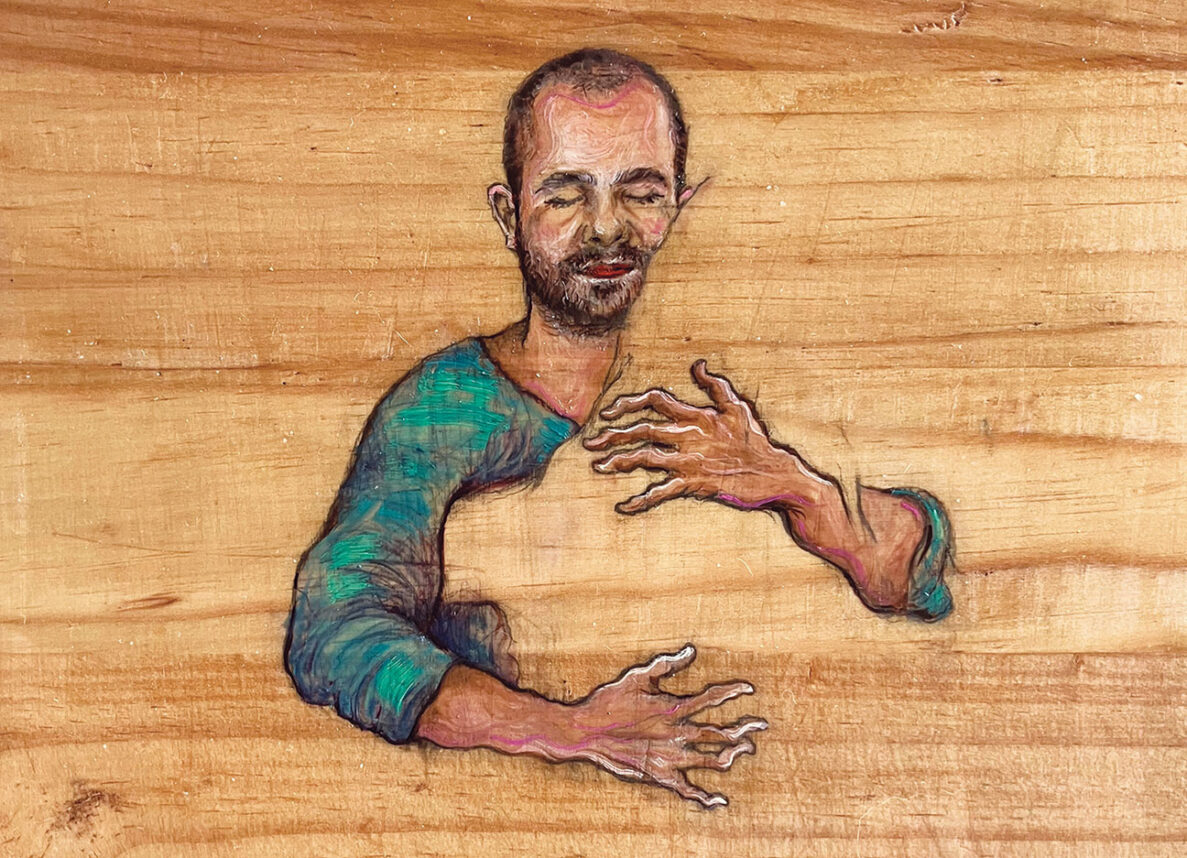
The following morning, the dramatic tension rises with Esau’s approach. Jacob emerges from his own camp and “bowed low to the ground seven times until he was near his brother” (Genesis 33:3). But the tension breaks in grand style, as Esau and Jacob fall into each other’s arms, in one of Torah’s most beautiful passages, replete with brotherly love, forgiveness and reconciliation. “Esau ran to greet him. He embraced him and, falling on his neck, he kissed him; and they wept” (Genesis 33:4).
Sadly, however, our tradition seems unable to get out of its own way and simply take this reunion at face value. In his comment on this climactic moment, Rashi (1040-1105) quotes two midrashim, each negative in its way. In the first case, the rabbis and Rashi doubt the sincerity of Esau’s kiss altogether. In the second, they accept the authenticity of Esau’s embrace, but only because, in the glow of the moment, his anger succumbed to temporary warmth.
Other interpreters are even less charitable. David Kimhi (1160-1235) resignedly determines that “ … originally Esau had intended to bite Jacob’s neck, feigning an embrace, but God made his teeth as soft as wax and Jacob’s neck as hard as ivory.”
And the story does not improve. Over the subsequent centuries, Jewish authors adapted the Bible’s tradition of pegging biblical characters to contemporary nations. In this way, Torah establishes that our people, Israel, came from Jacob, and later traditions claim that Ishmael became the forebear of the Arabs. Meanwhile, over the course of our long history, Esau was associated with a few different peoples (Idumeans, Romans, etc.), all of whom shared one common trait: enmity with the Jewish people.
So it was that Esau, who fell into his twin brother’s embrace — our embrace — came to represent the ultimate enemy, a bit like another infamous oppressor of the Jews, Amalek. But unlike Amalek, Esau breaks our heart, not only because he is our twin brother but also because Vayishlach seems to promise reconciliation with a kiss.
Reading it year in, year out, perhaps we can make Vayishlach’s optimism our beacon, even if history sometimes threatens to get in the way.
Joshua Holo is dean of the Hebrew Union College-Jewish Institute of Religion, Jack H. Skirball Campus in Los Angeles.