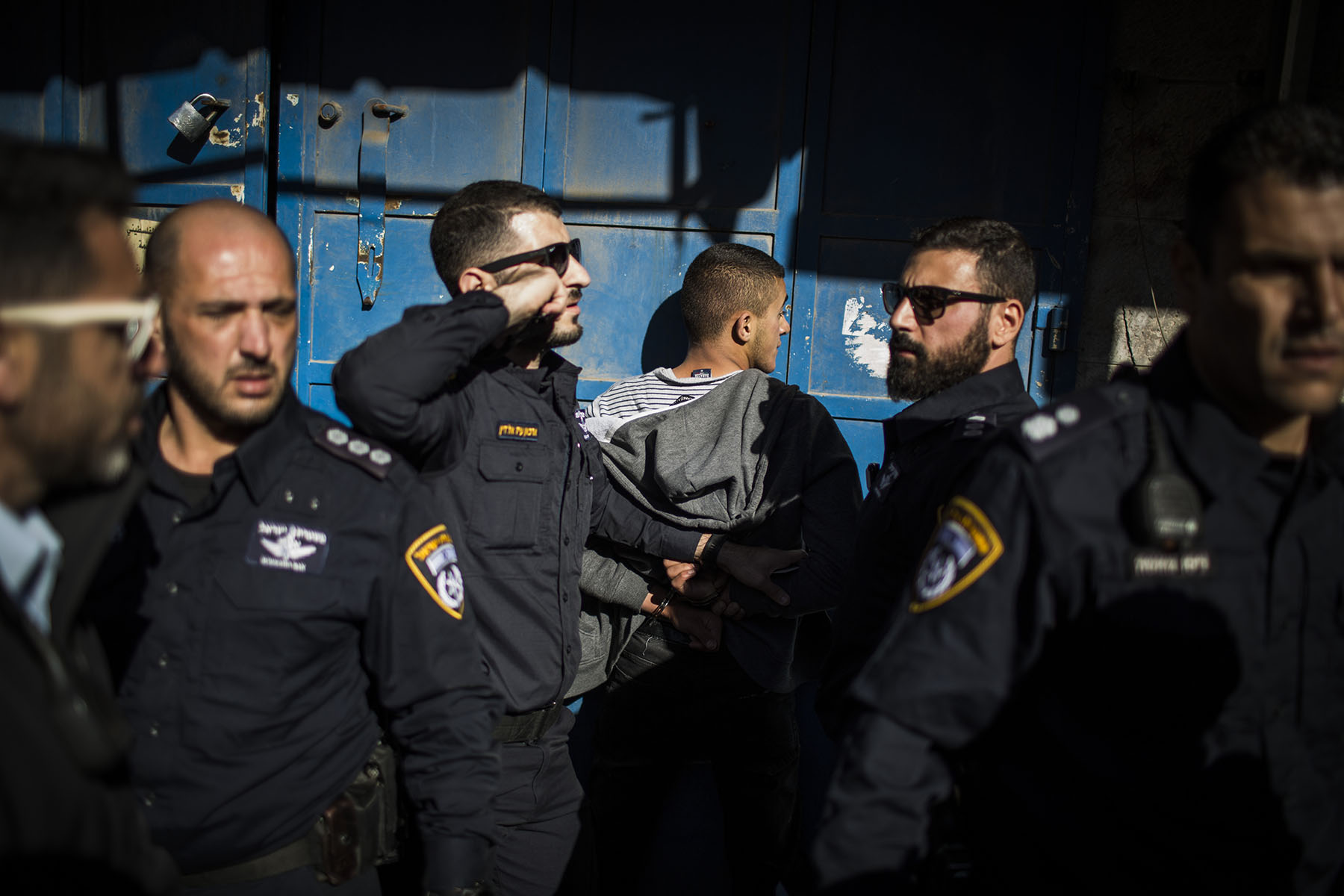
Micky Rosenfeld, the spokesman for the Israeli National Police, issued a couple of tweets on June 9 stating that Israel hasn’t instructed United States police officers to put a knee on a suspect’s neck during an arrest.
The Algemeiner reported that Rosenfeld’s first tweet read, “There is no procedure that allows an officer of the #israel police [department] to carry out an arrest by placing a knee on the neck of a suspect.”
He added in a subsequent tweet that Israeli partnerships with other countries’ law enforcement officers on counterterrorism have never discussed such a measure.
There is no procedure that allows an officer of the #israel police dept to carry out an arrest by placing a knee on the neck of a suspect.
— Micky Rosenfeld (@MickyRosenfeld) June 9, 2020
None of police Counter terrorism training that #Israel national police provide to foreign law enforcement officers involves such a measure.
— Micky Rosenfeld (@MickyRosenfeld) June 9, 2020
The Simon Wiesenthal Center tweeted, “Palestinians have set social media aglow with screed. As [Winston] Churchill said, a lie can travel half way around the world before the truth gets its pants on. Israel + anyone committed to truth must push back against insidious social media-fueled big lie campaigns”
Palestinians have set social media aglow with screed. As Churchill said A lie can travel half way around the world before the truth gets its pants on. Israel + anyone committed to truth must push back against insidious social media-fueled big lie campaigns https://t.co/XIwRKlqyy8
— SimonWiesenthalCntr (@simonwiesenthal) June 10, 2020
The knee-on-the-neck technique has come under scrutiny since African American George Floyd, 46, died on May 25 after Police Officer Derek Chauvin put his knee on Floyd’s neck during an arrest. Chauvin has been charged with second-degree murder and the three other officers present have been charged with aiding and abetting murder.
Since Floyd’s death, some groups and individuals have blamed Israel for police brutality in the U.S. For instance, a petition from various student groups like Students for Justice in Palestine (SJP) called on the University of California to divest from companies that conduct business in Israel because “the knee-to-neck choke-hold that [Derek] Chauvin used to murder George Floyd has been used and perfected to torture Palestinians by Israeli occupation forces through 72 years of ethnic cleansing and dispossession.”
Additionally, Los Angeles real estate mogul Mohamed Hadid posted a cartoon to his Instagram account on May 31 showing a police officer and Israeli soldier having their knees on the necks of an African American man and a Palestinian child, respectively. Hadid wrote in the post, “Two sides of the same coin.” Hadid later issued an apology that was subsequently taken down.
Senior U.S. law enforcement officials have taken part in counterterrorism training with Israeli military officers since the 9/11 terror attacks.
Tablet senior writer Yair Rosenberg tweeted that those blaming Israel for U.S. police brutality and that billionaire George Soros is funding the protests against Floyd’s deaths are both similar anti-Semitic conspiracy theories.
“What both these anti-Semitic theories share is that they take America’s systemic racism, which dates back to our founding, and try to offload its impacts onto outside Jewish agitators,” Rosenberg tweeted. “It’s not an American problem, it’s a Jewish problem, and that’s why we have racism/protests.’”
https://twitter.com/Yair_Rosenberg/status/1270406838937362433?s=20