fbpx

Rosner’s Torah Talk: Parashat Lech Lecha with Rabbi Danya Ruttenberg

[additional-authors]
October 11, 2013

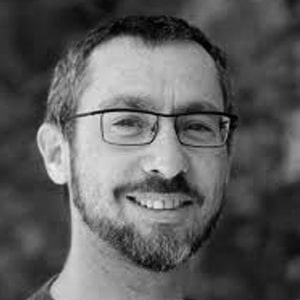
Our special guest this week is Rabbi Danya Ruttenberg, author of Surprised By God: How I Learned to Stop Worrying and Love Religion (Beacon Press); editor of The Passionate Torah: Sex and Judaism (NYU Press) and Yentl’s Revenge: The Next Wave of Jewish Feminism (Seal Press); and co-editor, with Rabbi Elliot Dorff, of three books on Jewish ethics.

A graduate of the Ziegler School of Rabbinic Studies in Los Angeles, Rabbi Ruttenberg has served as Senior Jewish Educator at Tufts Hillel and Campus Rabbi at Northwestern Hillel. She has written for the New York Times, Salon, and The San Francisco Chronicle, and she is a regular contributor to The Huffington Post.

This week's Torah portion- Parashat Lech Lecha (Genesis 12:1–17:27)- features Abram's Journey to the land of Canaan, his forced departure to Egypt, his covenant with God, the birth of Ishmael, Abram's circumcision, and the changing of his name to Abraham. Our talk discusses, among other things, the symbolic nature of the uncertainty facing Abraham and the problematic father-son relationships in the stories of the patriarchs.


 

Did you enjoy this article?
You'll love our roundtable.

Editor's Picks

Latest Articles

A Ka’ak By Any Other Name

A symbol of hospitality, families bake batches for holidays, family celebrations and visits with friends and relatives.

The Story That Never Goes Away

Rachel Goldberg-Polin, mother of slain hostage Hersh Goldberg-Polin, can’t stop speaking about her pain and the public love her body cannot always receive. She talks to the Journal about her son’s legacy and her new book.

Rosner’s Domain | A Dime-Store Abe: The Karhi Crisis

This week’s “Constitutional Crisis” is typical of the way the government operates. It issues a statement, or a tweet and then walks it back. Oops, we did not mean it. Or rather, we did, but we also meant to deny that we did.

Why Can’t We Be Friends?

If we want to see a less polarized society, both internally and beyond, we must emphatically reject the idea that political alignment is the predominant commonality for friendship.

Ruth-less, the Enigma of a Name

Jews spoke in two voices about Ruth, a kind of national schizophrenia, one with joyous chanting on Shavuos as the Book of Ruth was read; the other, removing her name from the chain-link of repeated names throughout the generations.

Honoring My Father: Saying Kaddish with Men

Saying kaddish every day tested my faith and commitment. It made me realize that there is no room for excuses. It taught me how to show up. It taught me that my voice can be heard, even when not expected.

More news and opinions than at a Shabbat dinner, right in your inbox.