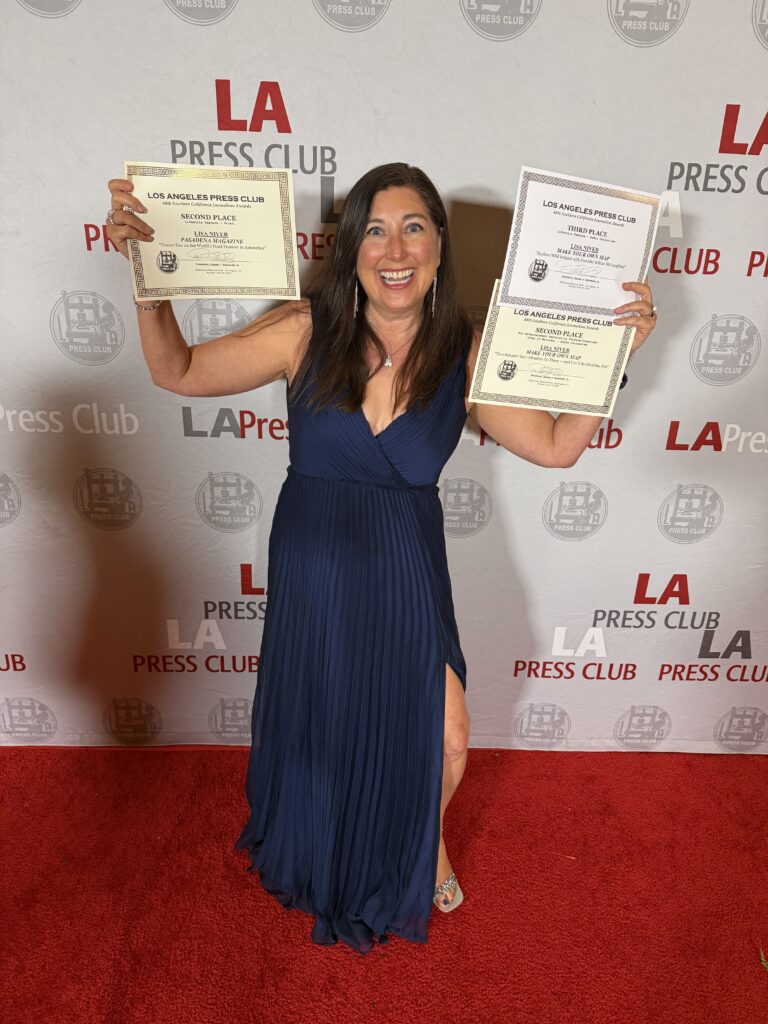
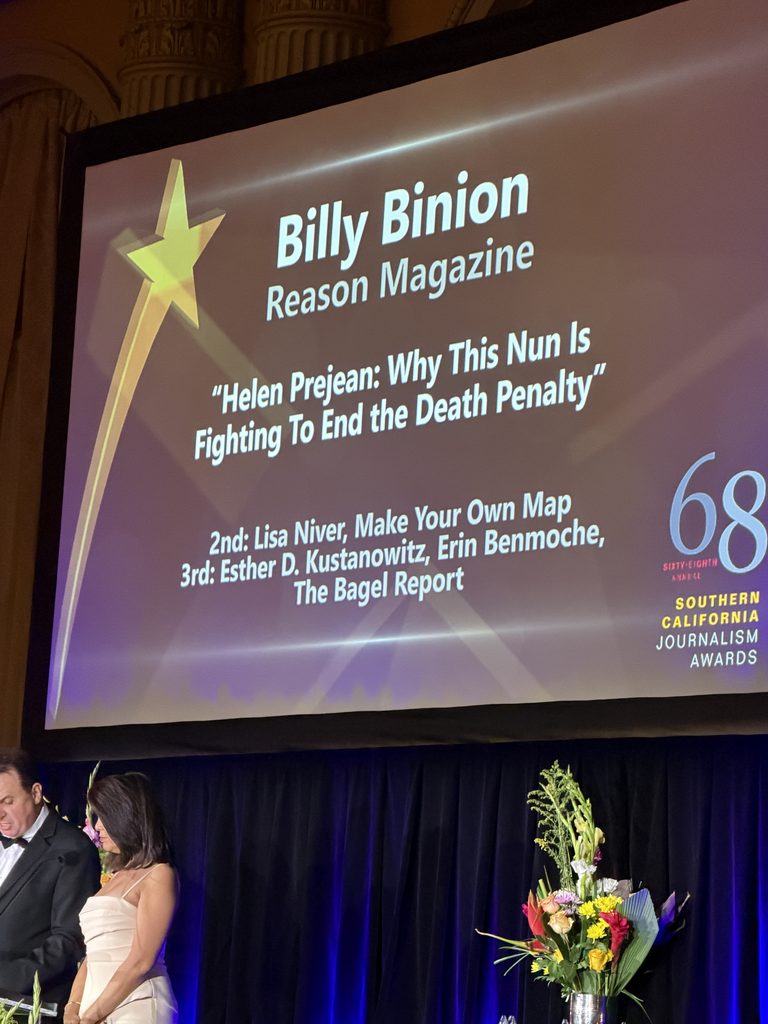
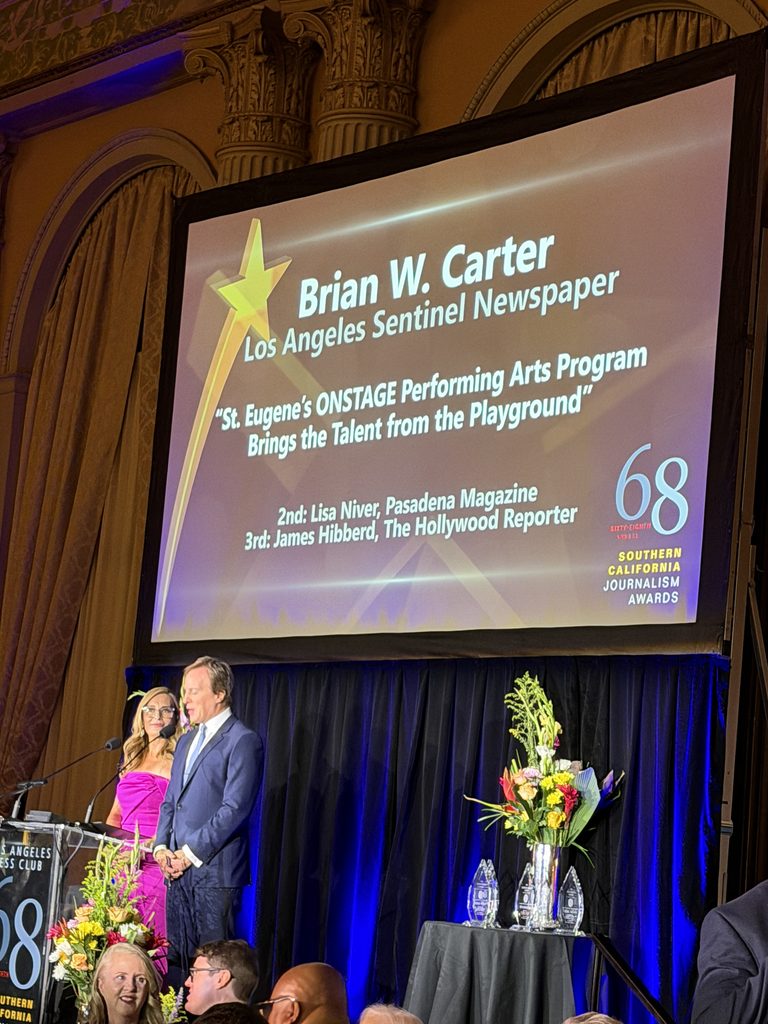
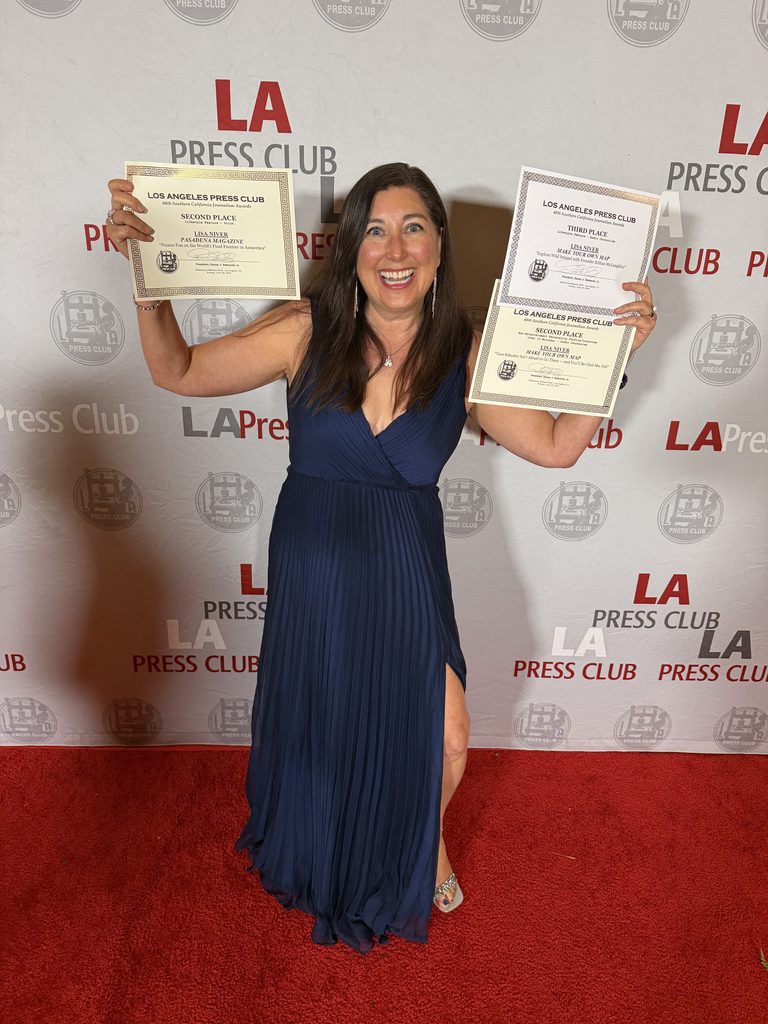
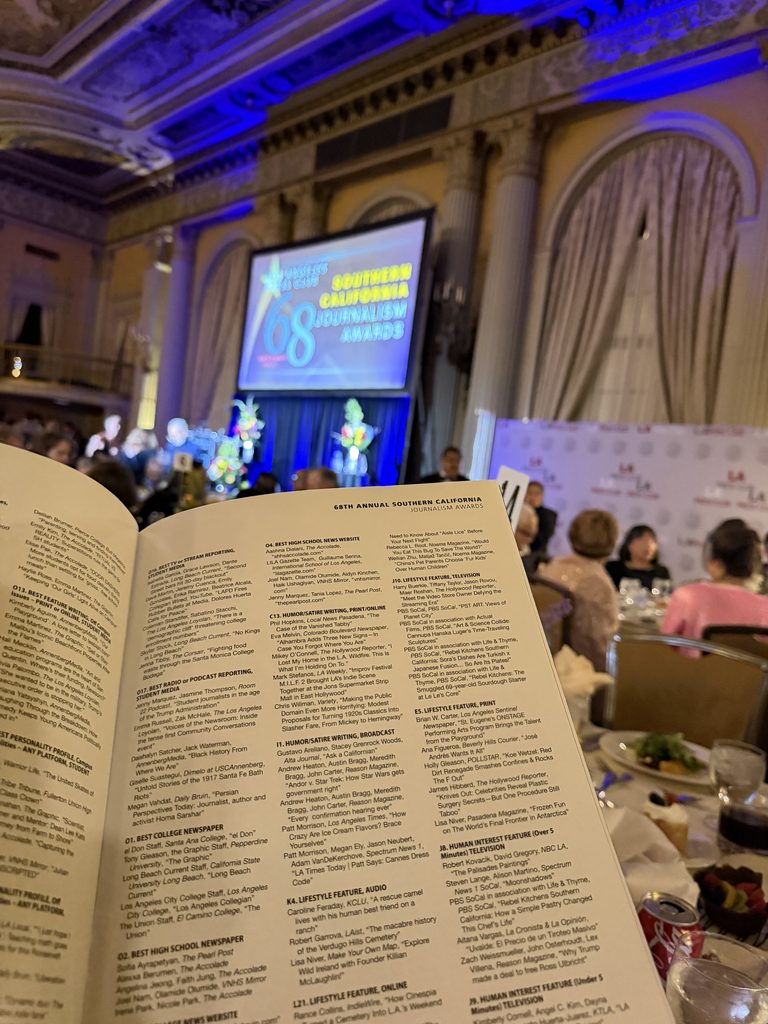
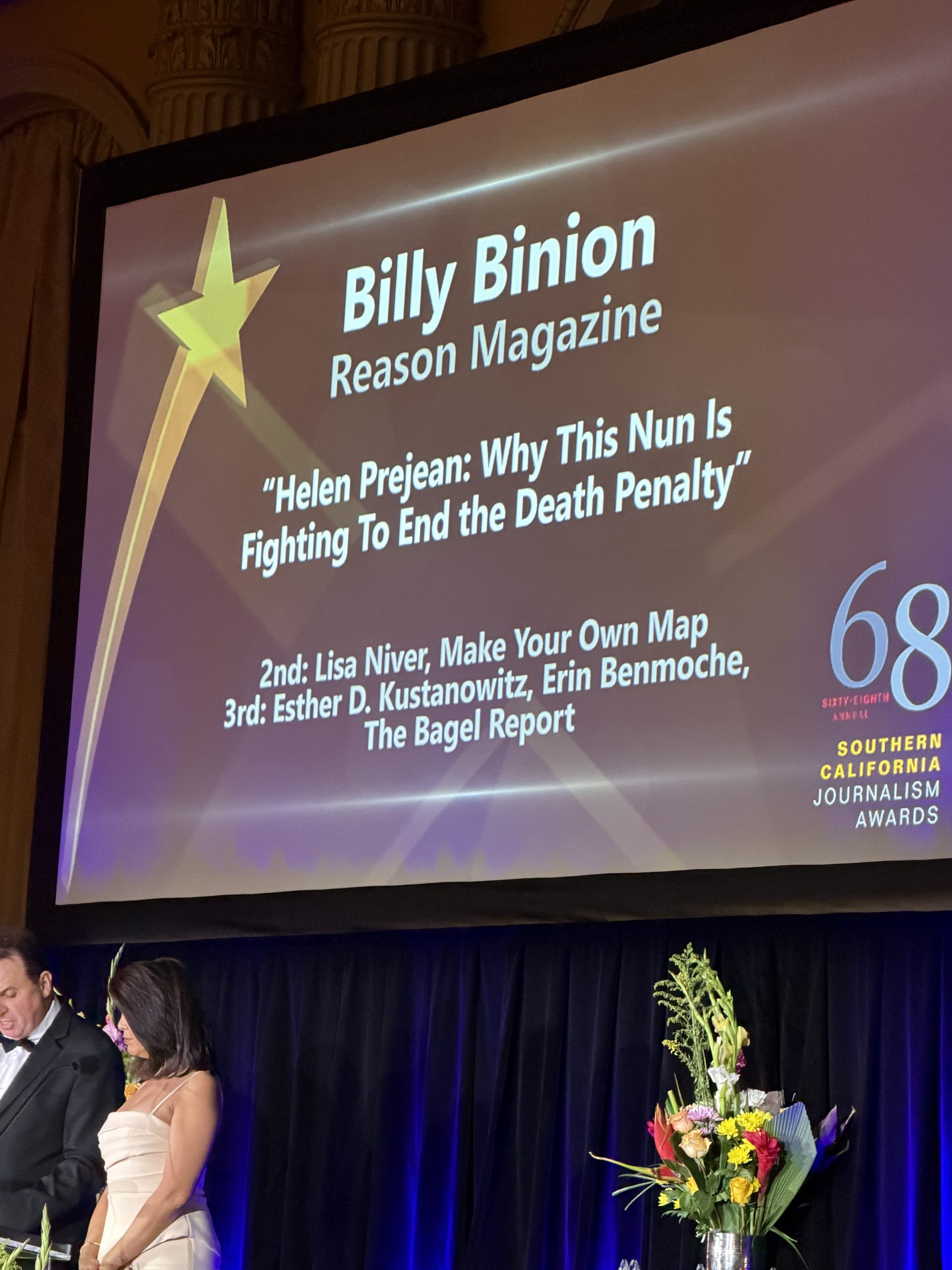
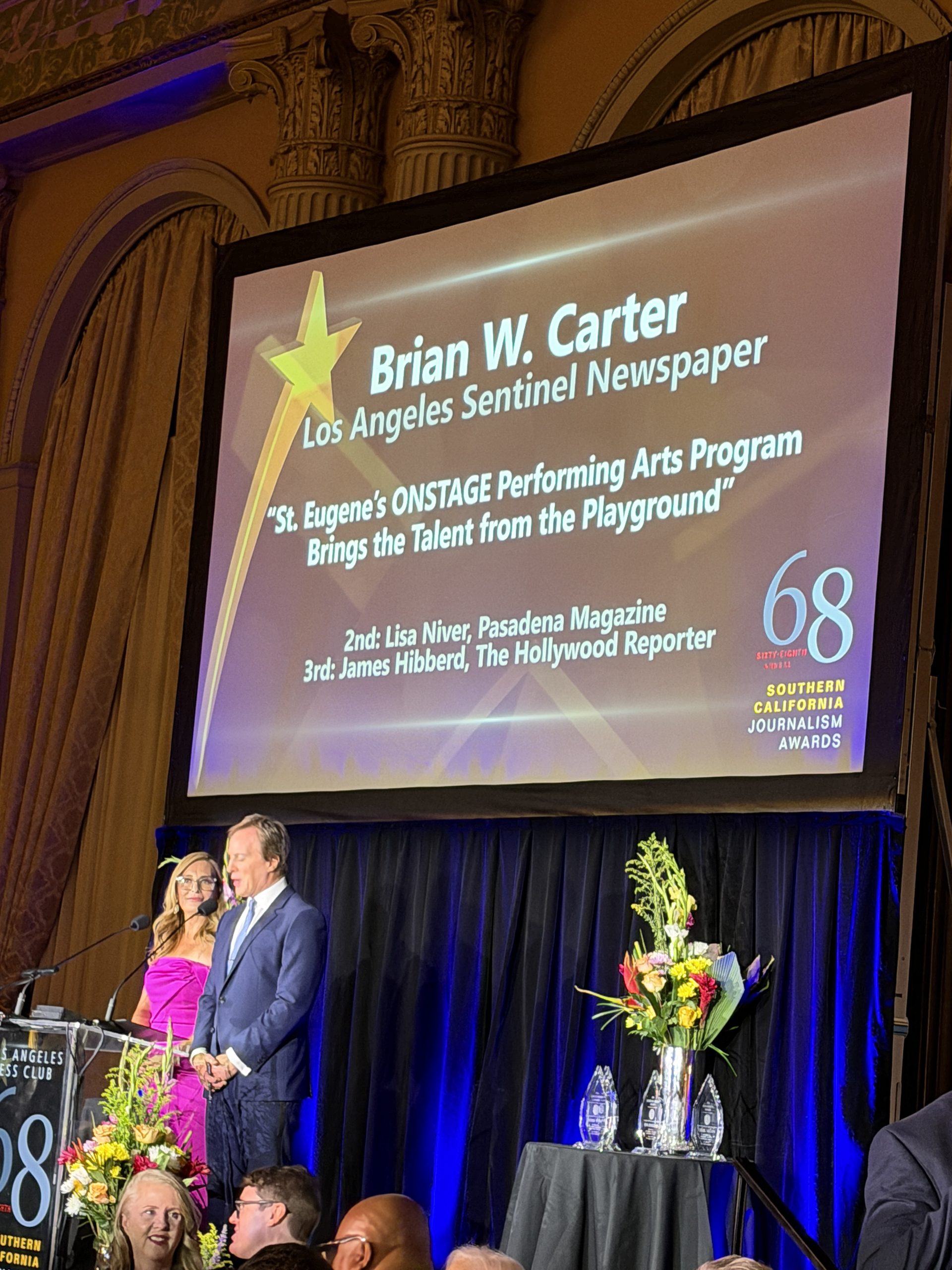
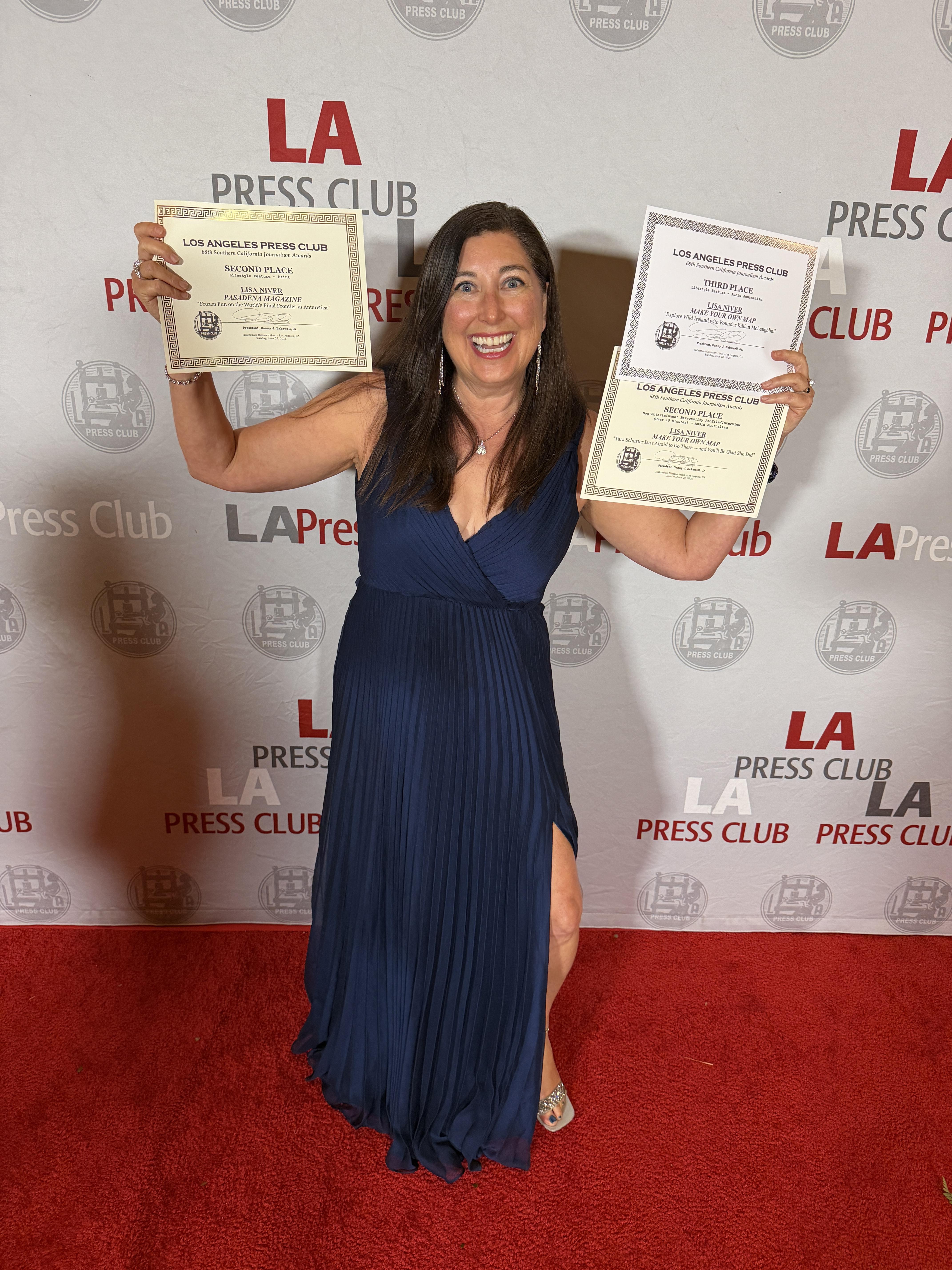
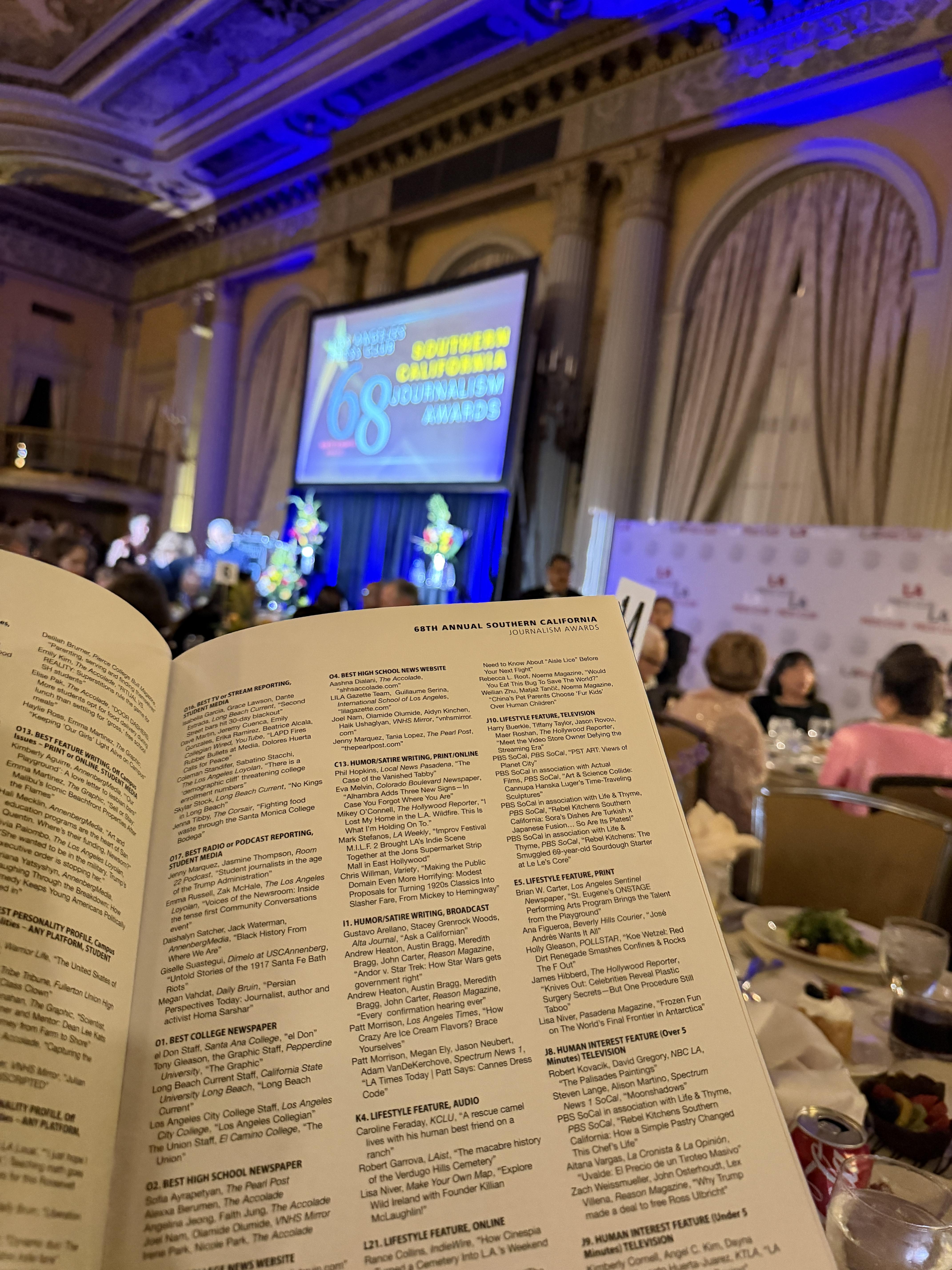
WOW! What an unforgettable evening at the beautiful Biltmore in downtown Los Angeles celebrating journalism, storytelling, and the incredible community of journalists at the 68th Southern California Journalism Awards.
I arrived honored to be a five-time finalist and left absolutely thrilled—and still pinching myself—with three award wins!
These latest honors bring my Los Angeles Press Club recognition to 16 wins and 47 finalist honors across the Southern California Journalism Awards and the National Arts & Entertainment Journalism Awards. I am incredibly grateful to be recognized alongside so many talented journalists whose work I admire.
My Three 2026 Southern California Journalism Awards Honors:
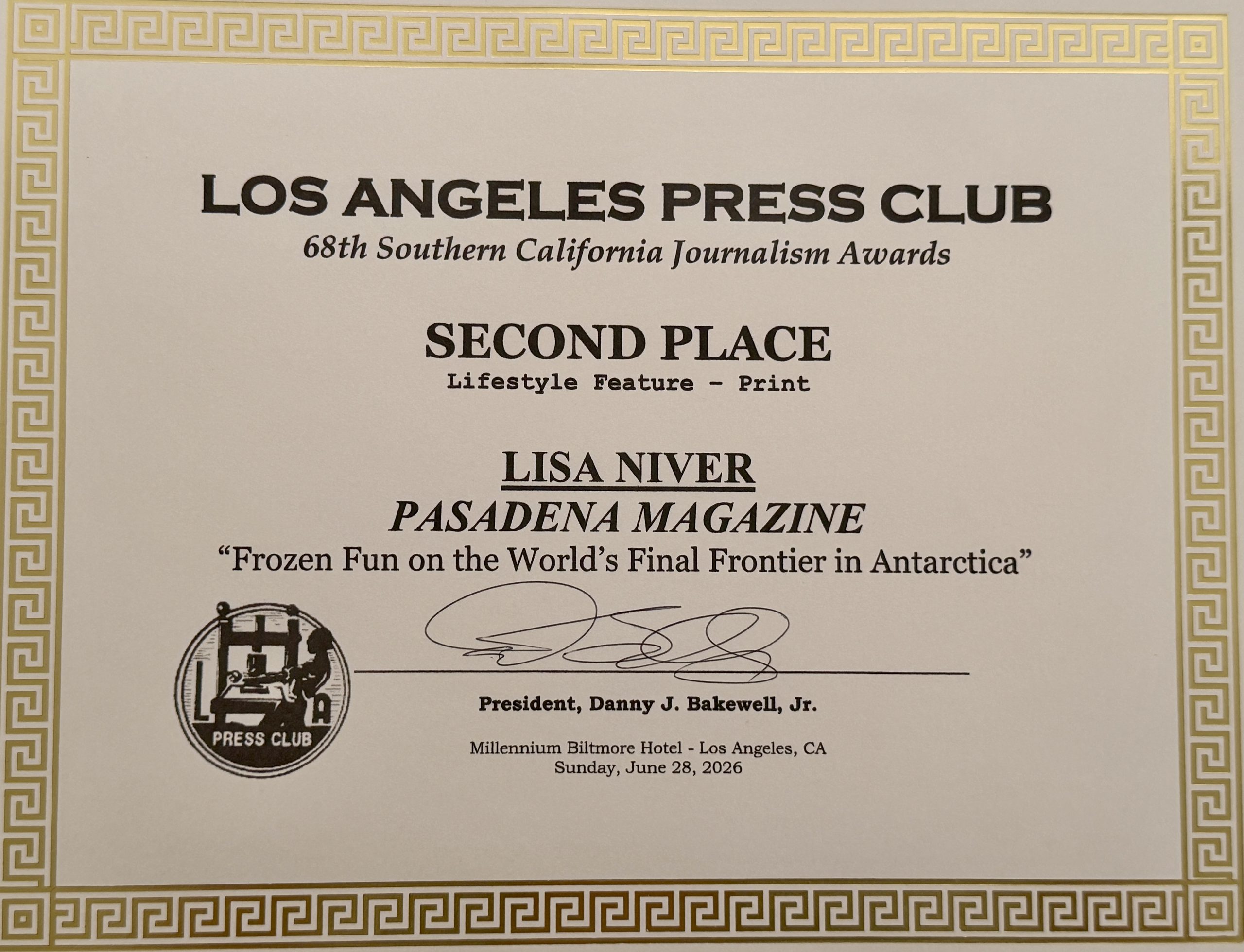
🏆 Second Place – Lifestyle Feature (Print)Pasadena Magazine“Frozen Fun on The World’s Final Frontier in Antarctica”
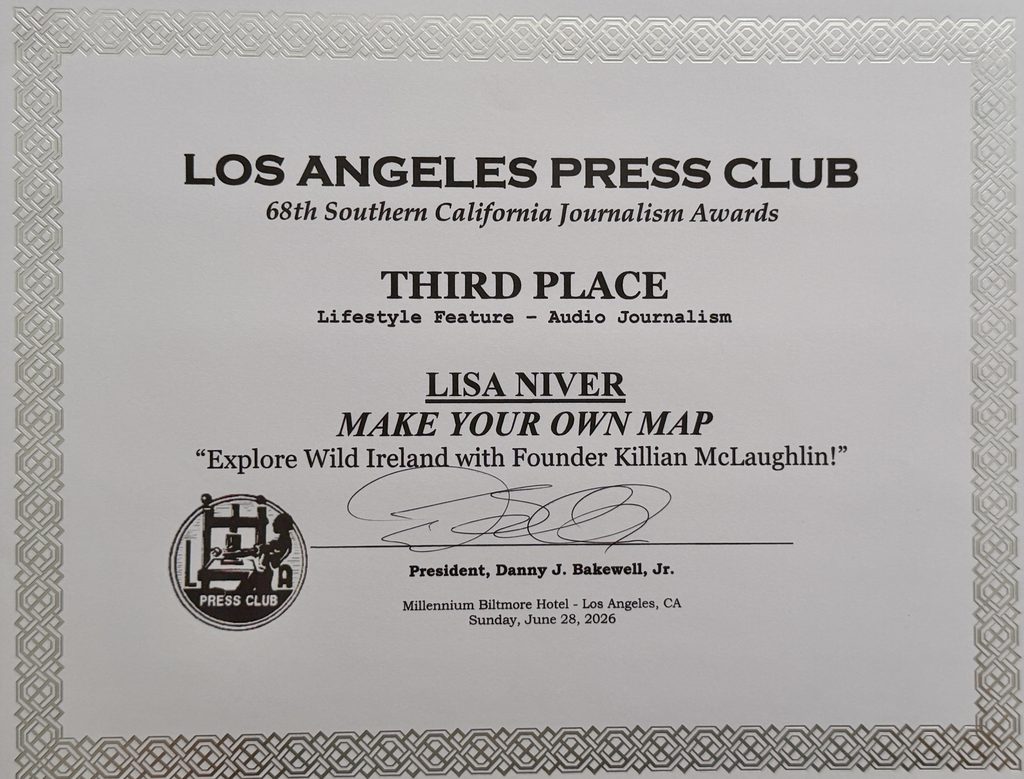
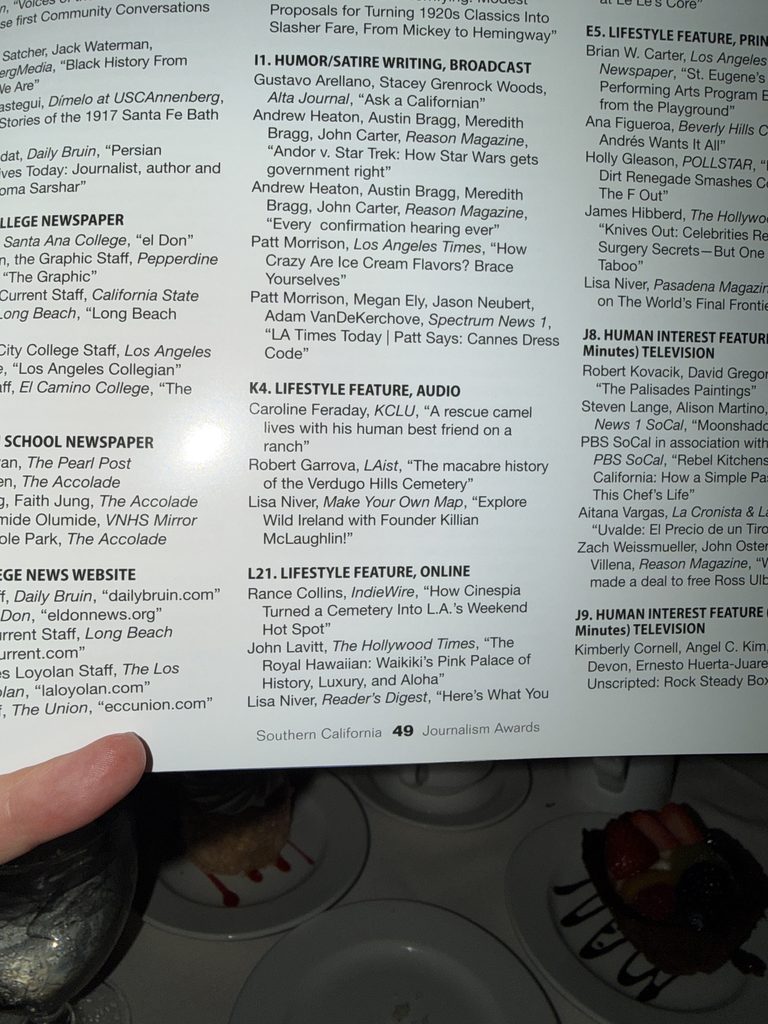
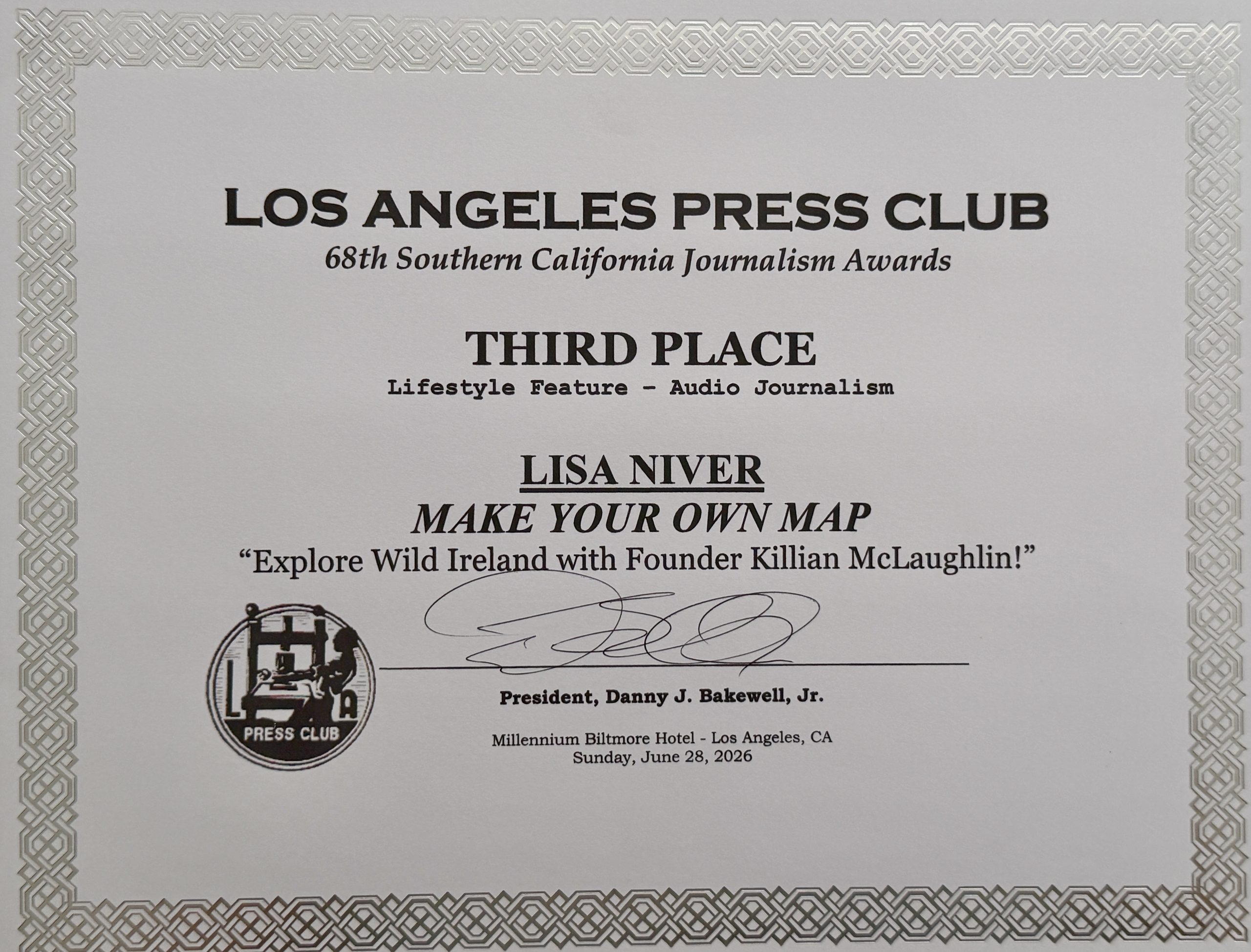
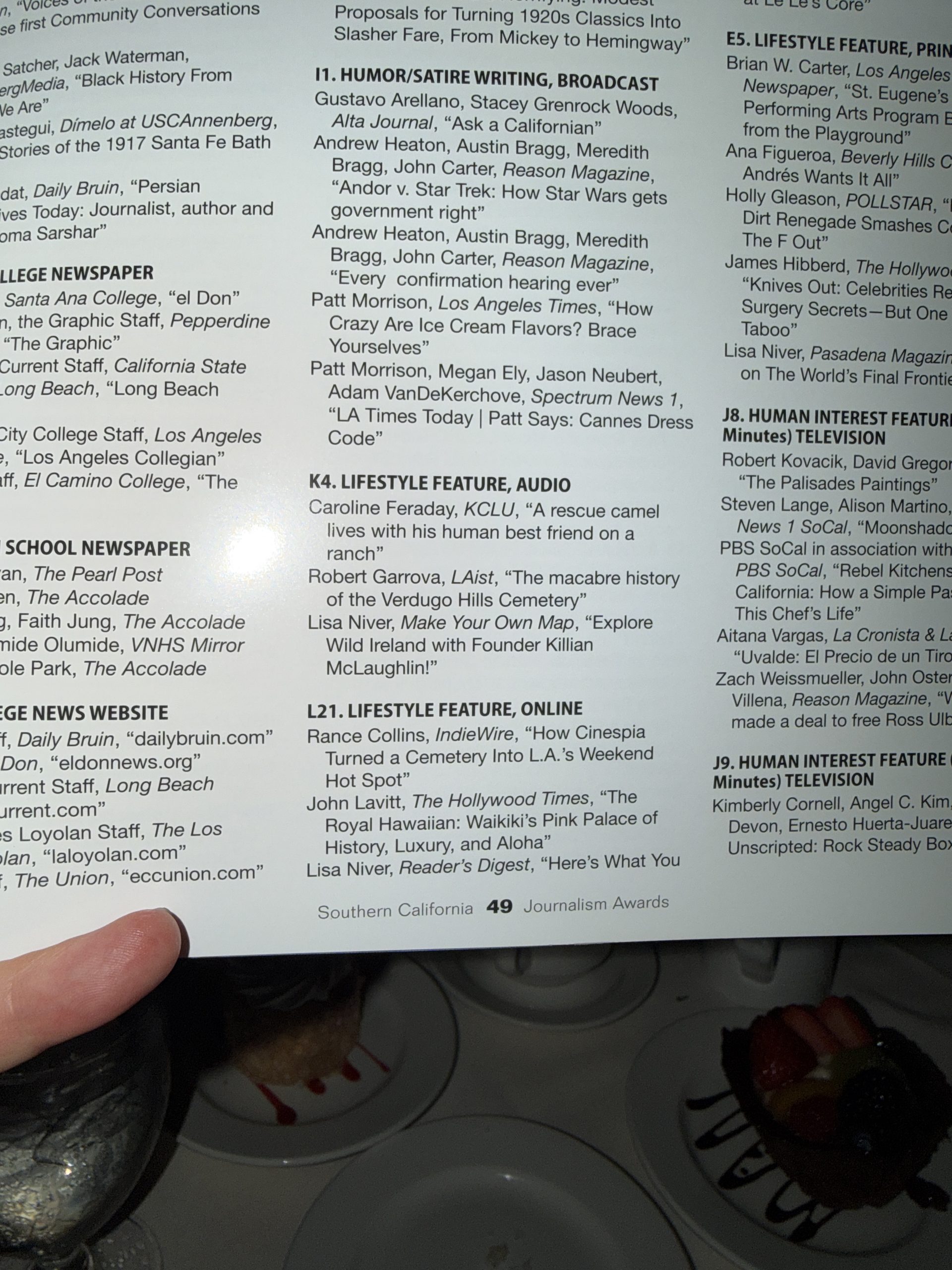
🏆 Third Place – Lifestyle Feature (Audio Journalism)Make Your Own Map Podcast“Explore Wild Ireland with Founder Killian McLaughlin!”
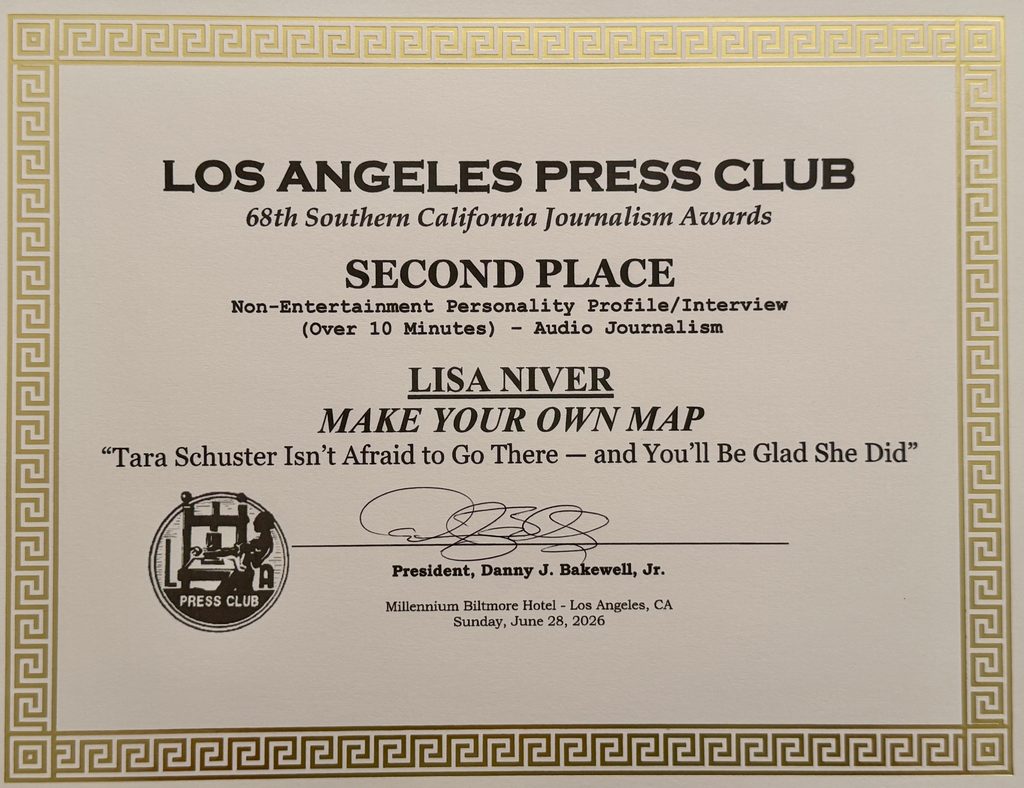
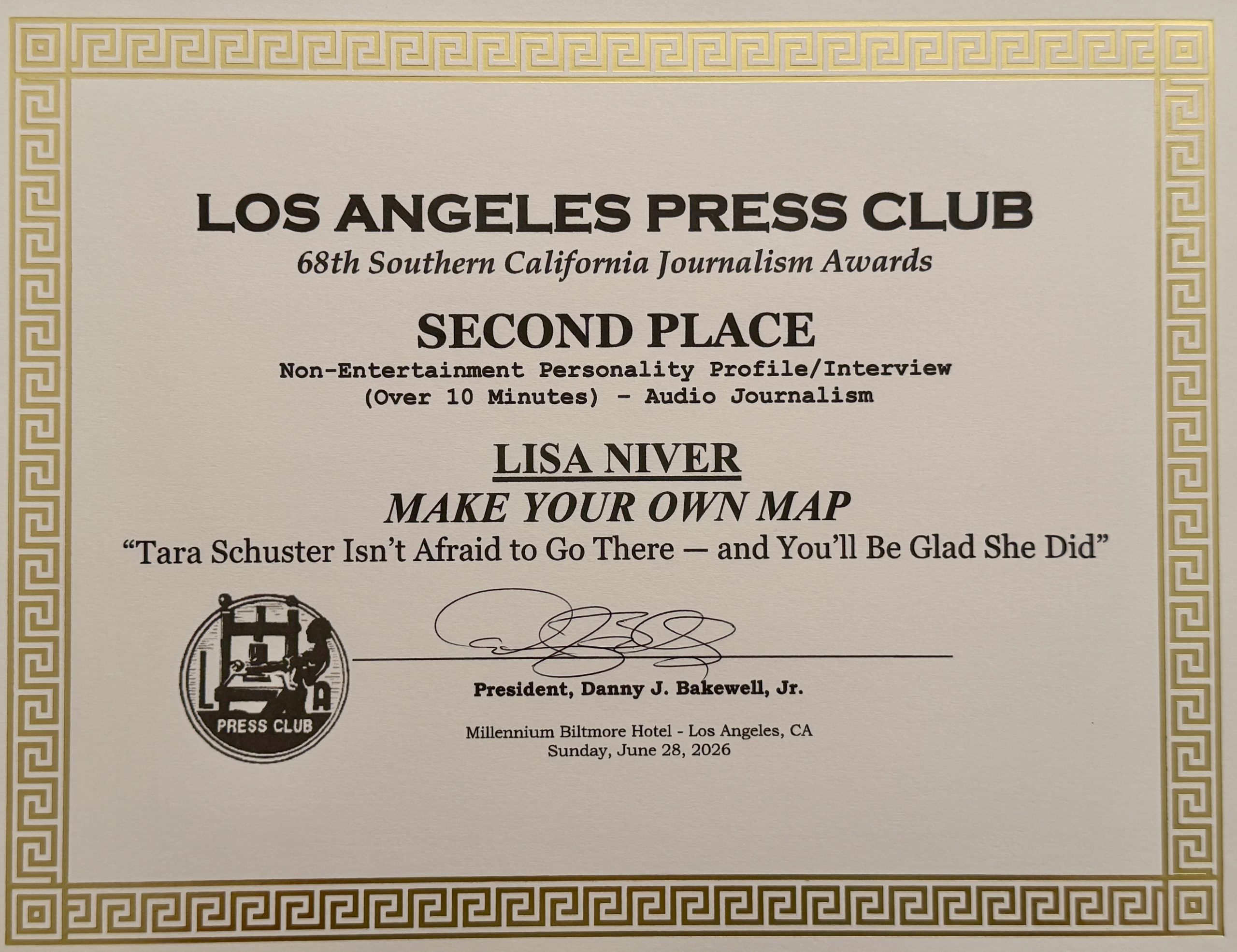
🏆 Second Place – Non-Entertainment Personality Profile (Audio Journalism)Make Your Own Map Podcast“Tara Schuster Isn’t Afraid to Go There—And You’ll Be Glad She Did”
https://youtube.com/shorts/_2RbpM9Xy0I
Stories Behind the Awards
Every story begins with curiosity.
Antarctica has been one of the most extraordinary chapters of my travel storytelling journey. During my expedition with Quark Expeditions, I traveled to the world’s final frontier, crossed into the Antarctic Circle, and returned home with unforgettable memories and stories to share. The experience became my Pasadena Magazine feature, “Frozen Fun on The World’s Final Frontier in Antarctica,” and I’m honored that this story continues to connect with readers. It has also opened doors for additional storytelling opportunities, including my recent work with Travel + Leisure.
Pasadena Magazine, “Frozen Fun on The World’s Final Frontier in Antarctica”
The Wild Ireland story began as part of my Ireland television project, a journey celebrating the landscapes, history, adventure, and people of this incredible destination. The episode featuring Killian McLaughlin became a podcast conversation for Make Your Own Map and earned recognition at both the Southern California Journalism Awards and the National Arts & Entertainment Journalism Awards. This Ireland project has also been recognized across platforms, including a Telly Award and a Platinum dotCOMM Award, making it a particularly meaningful example of how one story can evolve through television, podcasting, and digital storytelling.
Make Your Own Map, “Explore Wild Ireland with Founder Killian McLaughlin!”
My conversation with Tara Schuster represents everything I love about podcasting. The best interviews come from curiosity, trust, and creating space for someone to share their story. This episode of Make Your Own Map, “Tara Schuster Isn’t Afraid to Go There—And You’ll Be Glad She Did,” was recognized at both the Southern California Journalism Awards and the National Arts & Entertainment Journalism Awards, making it a special milestone for the podcast.
Make Your Own Map, “Tara Schuster Isn’t Afraid to Go There—And You’ll Be Glad She Did”
Grateful for the Los Angeles Press Club Community
The Los Angeles Press Club has been an extraordinary part of my journalism journey.
Through its two major award programs—the Southern California Journalism Awards and the National Arts & Entertainment Journalism Awards—the Press Club celebrates excellence across journalism, including print, digital, audio, video, and entertainment reporting. I am honored to have my work recognized alongside so many talented journalists.
But beyond the awards themselves, the Los Angeles Press Club has given me something even more valuable: community. Through mentorship, networking, conversations with inspiring journalists, and opportunities to connect with incredible people, this organization has helped shape my career. I’m also grateful to contribute by supporting the organization’s social media efforts.
A Journey Across Platforms
Over the years, my storytelling has taken many forms—from travel journalism and podcast interviews to television, digital media, and publishing. My memoir BRAVE-ish has received multiple book awards, my television and video storytelling have earned recognition, and my work continues to reach audiences around the world.
Each article, episode, interview, and adventure starts with the same thing: curiosity.
Thank you to my editors, podcast guests, readers, listeners, viewers, friends, and everyone who has supported my journey as a journalist, author, podcast host, and storyteller.
Thank you to the Los Angeles Press Club, the judges, and everyone who celebrated with us at the 68th Southern California Journalism Awards.
I am honored, inspired, and excited for the next story.
✨
And the days of Terah were two hundred and five years, and Terah died in Haran.~ Genesis 11:32
I would make the best of
two hundred and five years.
I would use my knowledge
of a century ago to make them
avoid the wars of tomorrow.
I wouldn’t let old buildings look old.
I’d put a penny in the bank and
avoid all my mother’s troubles
ten generations later. I’d tell them
about solar power. I’d have
been a vegetarian before
vegetables were invented.
Look how fit I am! That’s
two centuries of diet and exercise!
I’d avoid the mistakes of Terah.
My shop would sell olives, not idols.
My boy Abram would be so proud.
Learn from me, readers,
the lessons of two centuries
and five years.
We’ll make all the difference.
Rick Lupert, a poet, songleader and graphic designer, is the author of 30 books including “Begin the Beget” and “God Wrestler: A Poem for Every Torah Portion.” Visit him at www.JewishPoetry.net
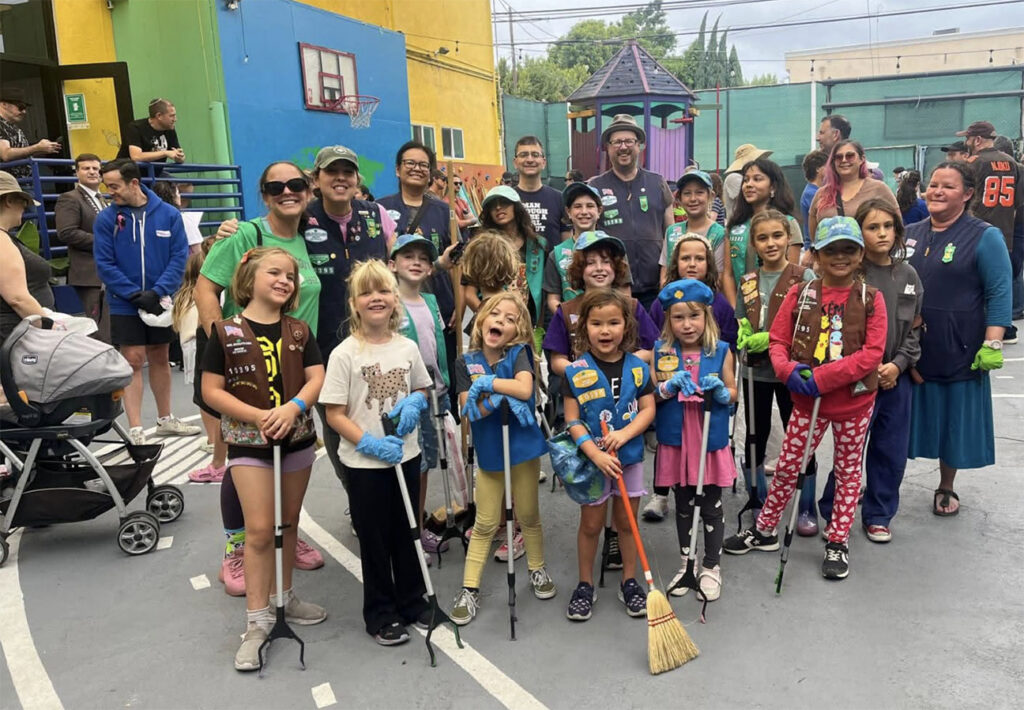
Boaz Hepner works as a Registered Nurse in Saint John’s Health Center. He moonlights as a podcaster, leading a large, friendly, bipartisan gathering on Zoom, allowing everyone to speak freely, just as if they were at a Shabbat table. He is a Pico/Robertson native, where he has led an annual neighborhood cleanup since 2009. He enjoys spending time with his wife Adi and children Natalia and Liam, and pursuing his passions of movies, poker and traveling.
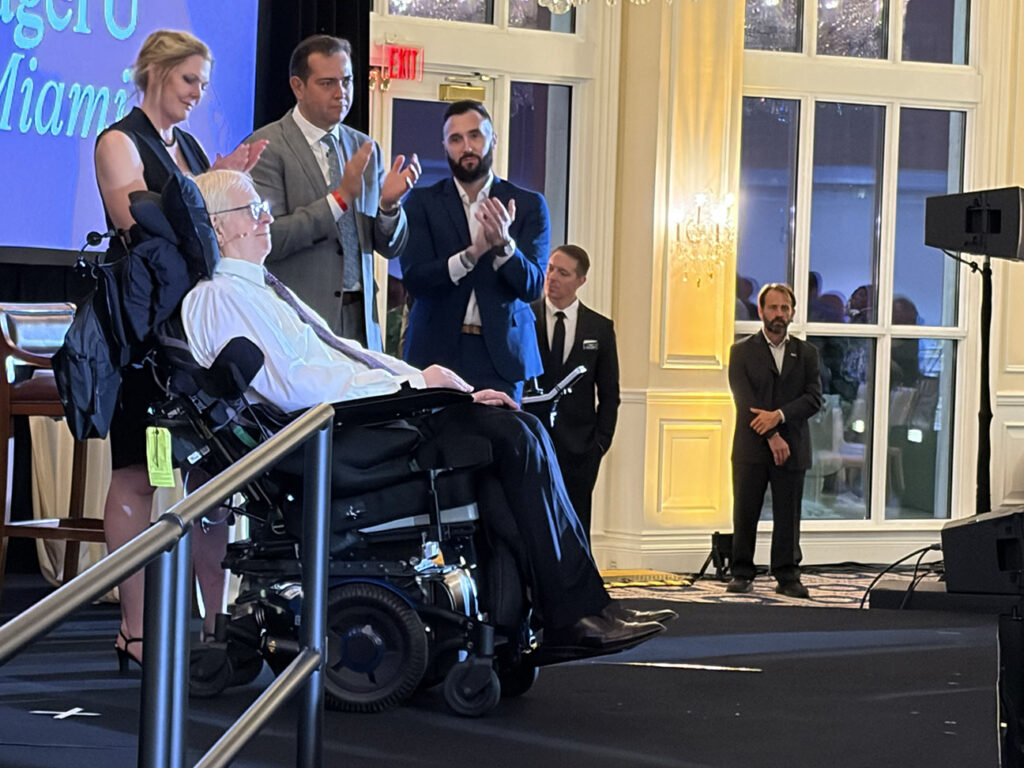
“Most people wait until tragedy strikes before thinking about how to incorporate tragedy into their life,” Dennis Prager said to a packed ballroom at a Miami resort Thursday night. “And then the shock is often too great to absorb into their emotional and psychological system.”
That was a stunning statement. Who lives a life that “incorporates” tragedy?
Dennis’s tragedy occurred on Nov. 12, 2024, when a fall in a bathroom left him paralyzed from the shoulders down. He was rendered quadriplegic, but fortunately sustained no brain damage.
It’s odd to use the word “fortunately” when describing what Dennis calls a “catastrophic injury,” but that dissonance between nightmares and miracles defined both his talk and his rational philosophy of life.
Dennis has spent a lifetime deploying that philosophy in bestselling books, speeches, essays and decades of radio, including a weekly “happiness hour.”
At the PragerU event Thursday night, he gave us a taste.
His body couldn’t move, but his mind was as sharp as ever. He considers it a “miracle” that he can talk without the use of a ventilator. Having a brain and a voice that are intact means he can continue doing what he loves most: sharing his ideas with the world.
The last thing we should do, he told us, is feel sorry for him.
He let us know that since his accident, he has completed one book, “If There Is No God: The Battle Over Who Defines Good And Evil,” and now works a few hours almost every day to complete his commentary on Leviticus, the fifth volume of his Torah commentary, “The Rational Bible.” In addition, for the past two months he has been doing a weekly podcast on PragerU and been interviewed on multiple other podcasts.
I’ve been a regular visitor over the past few months. I’ve seen him in action. The more often I visit, the less I think of his body and the more I think of Dennis.
Of course I can’t completely ignore his condition, but I find myself gravitating naturally to happy schmoozing, something we both enjoy. His personality, his humor, his wisdom, it’s all still there. He put a lump in my throat when he told the crowd: “After visiting me each day for a week, David commented that he felt he was talking to the old Dennis, not the new Dennis.”
After his accident, he told us, he had three choices: be dead, be depressed, or persevere. He showed us the third choice Thursday night, a man determined to give the “old Dennis” to the world.
It is surely the ultimate test of a big life. If Dennis truly believes everything he has written about gratitude, happiness, good and evil and suffering, then an accident, however horrible, shouldn’t change that.
If anything, it seems to have strengthened those beliefs.
“Many of the conclusions I reached helped prepare me intellectually, and perhaps even emotionally, to deal with my accident,” he said. When he quotes from a book on happiness he wrote 30 years ago, you get a sense that he needs to hear it as much as we do.
His take on happiness, as he wrote in his Journal cover story for Rosh Hashanah, is anything but schmaltzy:
“In formulating my views on happiness,” he told a crowd entranced by his every word, “I have had to deal realistically with the ubiquity of unjust, often seemingly pointless, pain and suffering.”
This has had two effects on him. First, it has “engendered immense and constant gratitude in me. And since gratitude is the mother of happiness, I have been able to be happy.”
At the same time, he always reminded himself that “tragedy is not confined to the ‘other guy.’ I am just as likely to be the ‘other guy.’ And now I am.”
He’s never had more credibility, he quipped, to weigh in on notions like happiness and gratitude. “I hope that how I am dealing with this awful injury will be of help to many others,” he said. Indeed, one can argue that after his accident, he may have even more impact than the old Dennis.
For one thing, he abhors the word victim.
“You cannot be happy if your primary identity is that of a victim, even if you really are one,” he said. “People who have chosen to regard themselves as victims cannot allow themselves to enjoy life, because enjoying life would challenge their perception of themselves as victims.”
There is no question about Dennis being a victim:
“I cannot move my legs, and worst of all, I cannot move my arms. I envy paraplegics. I would give anything to be able to wheel myself around, use a keyboard, hug my wife, children, grandchildren, and friends. I have spent most of the last nearly two years trying to recover the ability to breathe without a ventilator and to regain my normal voice.”
Despite all that, he told us, he refuses to see himself as a victim.
“One reason is that seeing myself as a victim would ensure anger and depression, negating any possibility of happiness. Another is the effect my seeing myself as a victim, with its concomitant anger and depression, would have on those who love me and, for that matter, all those who visit me.”
Given the miracle that he can still share his ideas with the world, he prefers to “regard myself in many ways as quite lucky, without denying any of the objective facts of my condition.” His biggest stroke of luck is his amazing wife and advocate Sue, who has stood by him through challenges too long to list.
One idea he loves to share is the value of memory. If we only live in the here and now, it’s as if the past never happened. Instead of being envious of his pre-accident past, he impressed on us that he is immensely grateful for seven long decades of happiness.
Seeing him now, it’s exceedingly difficult to internalize both devastation and inspiration. This is the challenge Dennis poses. We can’t ignore the devastation, but he’s showing us only inspiration.
That inspiration was in full bloom last night. I can’t recall a scene where one man talks for a full hour and hundreds of people at a crowded gala sit completely silent. The man lengthened our attention spans. He could have gone on for another hour.
It struck me that the Dennis Prager story is quite rare. What are the odds that a man who spends half a century preaching gratitude and happiness finds himself confronting his own advice after a catastrophic injury?
Dennis knows that the optics can make our hearts crumble. He knows how hard it must be to see him paralyzed.
Perhaps his biggest accomplishment is to make us feel better. Using his brilliant mind and his familiar voice, he manages to convince us that he really is grateful that he still has both.
The highlight of the night for me came down to three words: “I love life,” he told a loving crowd.
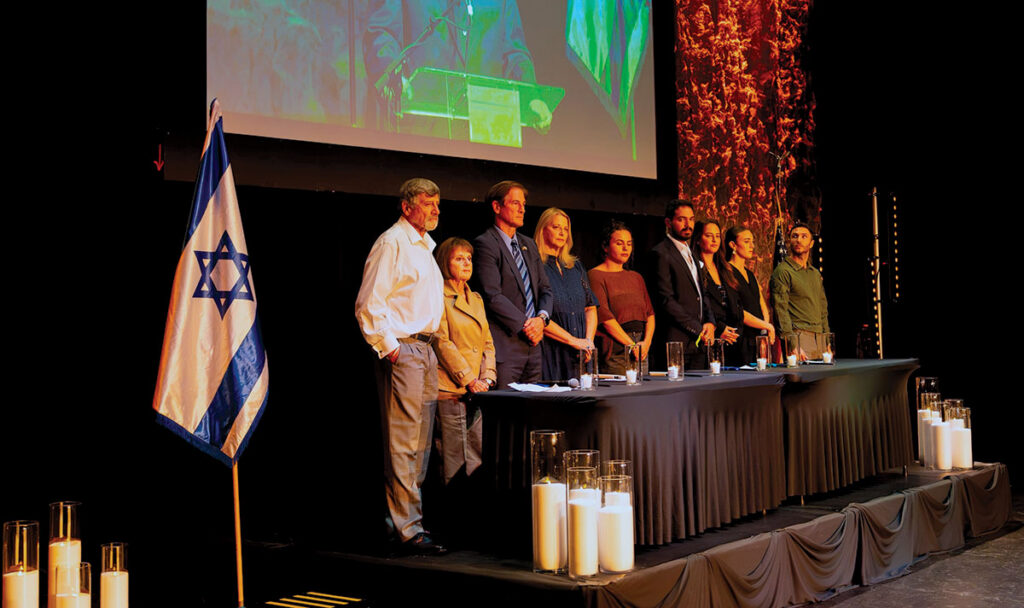
Three years after the Hamas-led Oct. 7 terror attacks in Israel, nearly 2,000 people gathered at the Saban Theatre in Beverly Hills to honor the victims and survivors, remember those who were killed, and express their solidarity with Israel.
Maya Regev, who was kidnapped with her brother on Oct. 7 and released the following month, lit a memorial candle in honor of the hostages who never returned home.
“May their memories forever be a blessing,” she said.
Modi Ephraim, Israel’s newly appointed consul general to the Pacific Southwest, drew applause when he noted that the recent High Holidays marked the first time in three years that no hostages remained in Gaza.
“I know that everyone here never stopped fighting for their release and recovery,” he said. “On behalf of the State of Israel, we are deeply grateful.”
The memorial, organized by StandWithUs, featured remarks from StandWithUs Co-Founder and CEO Roz Rothstein; Noa Tishby, actress and former Israeli special envoy for combating antisemitism and delegitimization of Israel; Rabbi David Baron of Temple of the Arts; American Jewish Committee Los Angeles Regional Director Kimberley Plotnik; Israeli-American Council CEO Elan Carr; and Jewish Journal Publisher and Editor-in-Chief David Suissa.
“Tonight, we honor the memory of those slaughtered on Oct. 7 and those who have fallen since,” Tishby said. “We will never forget them or the broken hearts of the families that mourned them.”
Two survivors of the Nova music festival massacre, Rom El-Hai and Lee Sasi, also shared their experiences. El-Hai recounted fleeing east with friends as the attack began and hiding behind a bush while falsely assuring a relative by phone that he was safe.
He ended his remarks by unfurling a rainbow-colored flag bearing the word “Nova” and wrapping himself in it. “We will dance again,” he said.
Sasi, who described herself as an “818 girl” from the San Fernando Valley, recalled attending the festival with her uncle, Avi Sasi, who was killed in the attack. She said her uncle threw himself onto a grenade to protect her and others sheltering in a roadside bomb shelter.
The program also included musical and dance performances and a candle-lighting ceremony overseen by Suissa, who fought back tears as he addressed the audience.
“I hope I can get through this,” he said.
The event was organized by StandWithUs in partnership with the American Jewish Committee’s Los Angeles office, the Israeli-American Council, Temple of the Arts, Jewish Journal, the Israeli consulate, Bnei Akiva of Los Angeles, American Friends of Soroka Medical Center and Eighteen18.
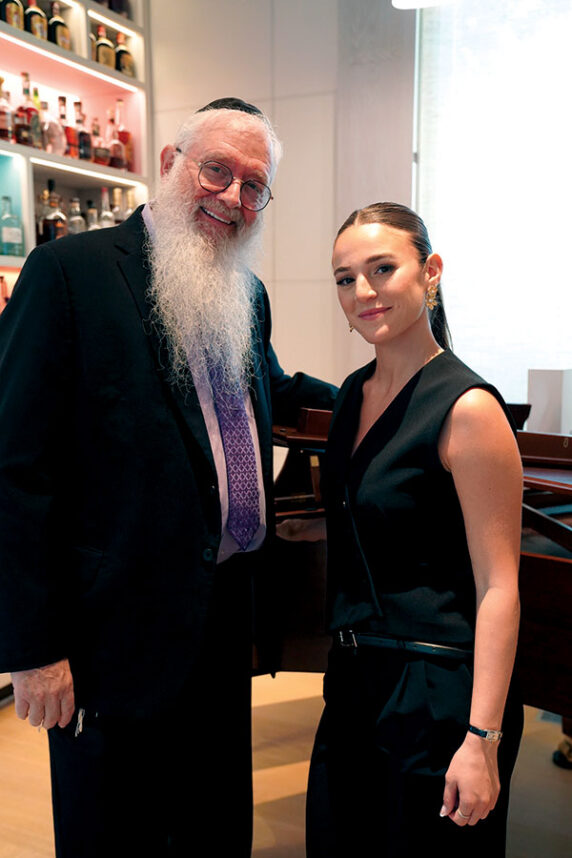
Chabad of Bel Air Rabbi Chaim Mentz and hostage survivor Maya Regev. Photographer: Orly Halevy
Three years after the Oct. 7 Hamas attacks, two senior physicians from Soroka Medical Center in Beersheba joined former hostage Maya Regev for an intimate gathering at a private home in Los Angeles, where they shared their experiences of the war, the challenges of treating its victims and the long road to recovery.
Dr. Abd Abu Ganim, a senior surgeon and director of Soroka Medical Center’s Kidney Transplant Service, and Professor Zvi Perry, a senior surgeon, researcher and specialist in general and bariatric surgery, were both working at the hospital on Oct. 7 when hundreds of wounded Israelis were brought in following the Hamas attacks. The physicians recalled the chaos of that day and the enormous challenges faced by medical teams as they struggled to save lives under extraordinary circumstances.
Among those treated at Soroka was Regev, who was abducted from the Nova music festival and held hostage in Gaza for 54 days. After her release, she was brought directly to the hospital for urgent medical treatment. At the L.A. gathering, Regev joined the physicians to reflect on her experience and the medical care she received after returning to Israel.
The discussion also highlighted the challenges faced by medical professionals who worked to save lives while worrying about the safety of their own families and communities.
Their experiences were also documented in a Kan 11 television documentary broadcast to mark the third anniversary of Oct. 7. The film features previously unreleased footage from Soroka’s internal security cameras, along with firsthand accounts from six hospital staff members. It offers a rare look at the events inside the hospital that day, as medical teams struggled to keep up with the continuous arrival of wounded patients.
Soroka Medical Center, which serves residents of southern Israel, was itself struck by an Iranian missile in June 2025, causing extensive damage to the hospital. The American Friends of Soroka in Los Angeles was established 12 years ago by Avi Kadmon, following Operation Protective Edge in 2014, after he recognized the need to support the hospital and its vital work in the Negev.
Among the guests at the gathering was Rabbi Chaim Mentz of Chabad of Bel Air, who emphasized the importance of mental health care for those suffering from post-traumatic stress disorder (PTSD) as a result of the war. Mentz also donated $25,000 to the hospital.
– Ayala Or-El, Contributing Reporter
Photo by Ryan Torok
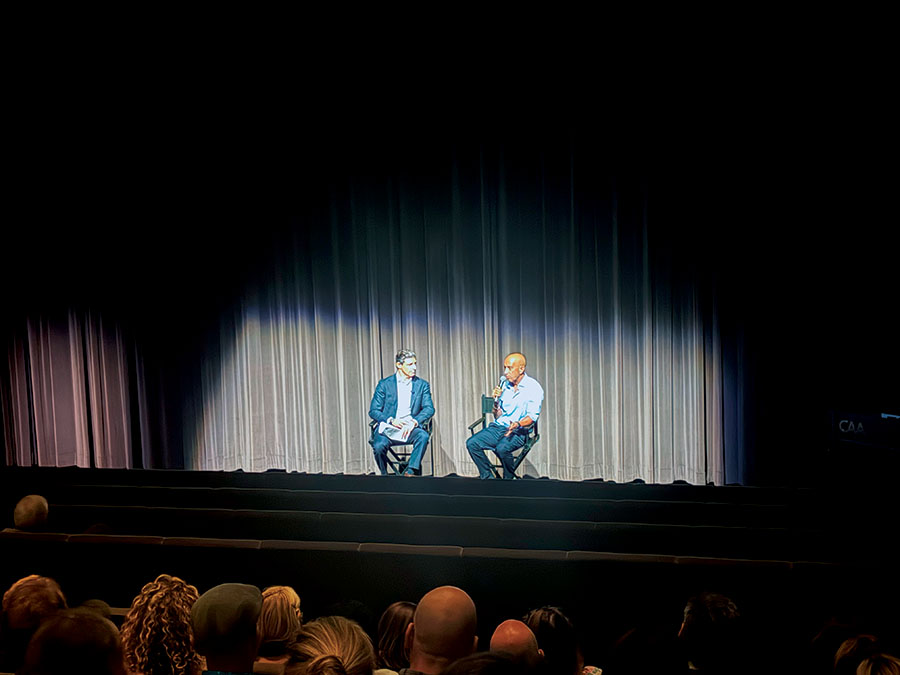
On Oct. 6, one day before the anniversary of the Oct. 7 attacks against Israel, “Fauda” co-creator Avi Issacharoff (right) appears in conversation with journalist Matt Gutman during an invitation-only event at Creative Artists Agency. The event, held in CAA’s Ray Kurtzman Theater, was organized by the Paul E. Singer Foundation.