fbpx

July 31, 2026

Rabbis of LA | Rabbi Schuldenfrei’s Path to the Pulpit

It’s been 20 years since Rabbi Deborah Schuldenfrei was ordained, and
during that time she has instructed nearly every kind of Jew, from children and seekers to adult scholars and elders. A year from now, she will become the senior rabbi of her first congregation, Kol Tikvah, Woodland Hills, succeeding the retiring Rabbi Jon Hanish.

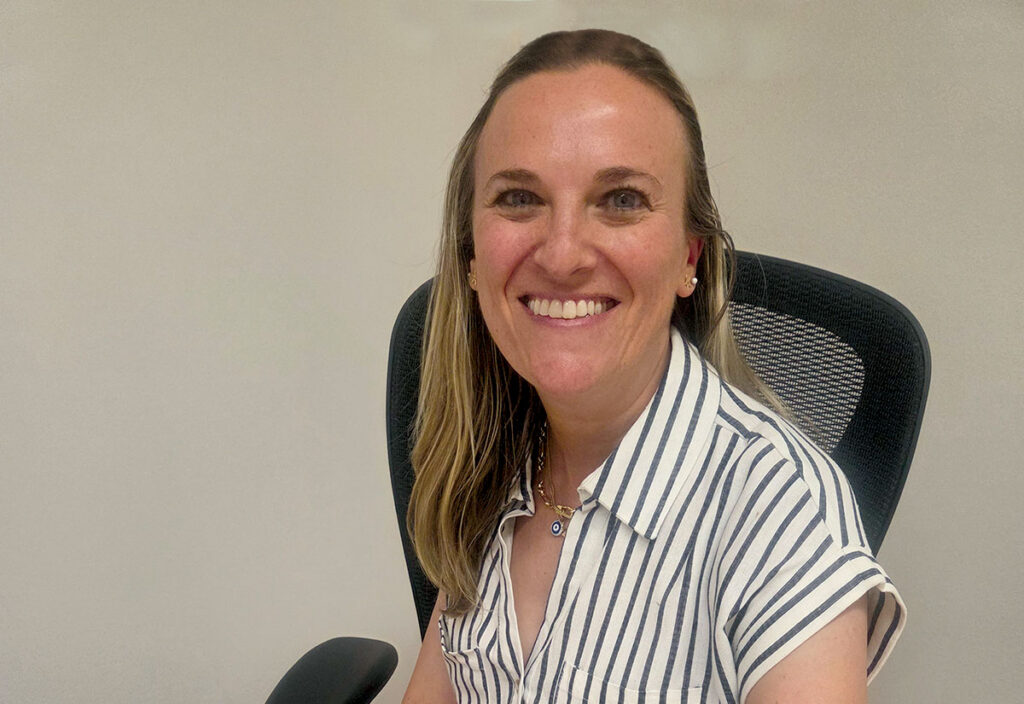
Personable, accessible and outgoing, Rabbi Schuldenfrei, sitting behind her Kol Tikvah desk, explained how she arrived here: “My parents modeled for me what it means to be part of a community.” That was just the first inspiration. Raised in a Conservative/Conservadox home in Milwaukee, she went to day school, to camp, and was very involved in BBYO (B’nai B’rith Youth Organization). “That was big,” she said. “I spent a lot of time in Israel, my summers there as a teenager.”

But none of this explained why this curious teenager was drawn to the rabbinate, where women were flatly barred until the 1970s.  To start, she said “I had to be able to imagine what a rabbi looked like.” But there were no female mentors in the Midwest. And members of her congregation didn’t support it. “Women were not allowed to count in a minyan. That didn’t happen until after I was ordained [in 2006].”But importantly, her parents supported her ambitions.

In the summer of 2000, after graduating from Washington University in St. Louis,  she came to Southern California to study at the Brandeis Collegiate Institute (BCI) in the Simi Valley. “At BCI, I met a woman who was a rabbi, Shawn Fields-Meyer, and I met a rabbinic student. Those experiences just expanded my capacity to understand what [the rabbinate]could look like. This experience led me in the direction of Jewish education and Jewish leadership.” BCI, she said “truly was trans-denominational and pluralistic… It has a special place in my heart.”

BCI was not going to be the last stop for the determined young woman; she wanted to attend graduate school for Jewish Educational Leadership. Surveying the landscape, it became clear to her that Hebrew Union College “had the strongest program for educational leadership. At the time, it was the only program that required a year in Israel for Jewish educators.” She was determined to be “an educational leader, not only a teacher.”

Schuldenfrei wanted a rounded education, something which she said was reinforced by her “very pluralistic” upbringing. “I didn’t know you couldn’t be pluralist,” she said. “I didn’t know why you would ever think of yourself as so segmented in your movement.”

Aliyah, of course, is on the minds of many Jews once in Israel.  Schuldenfrei went in June of 2000. In October, there was the Second Intifada. “It was a formative time for me and for the Jewish people’s understanding and relationship with Israel,” said Rabbi Schuldenfrei. “I always considered Aliyah.”

This is not her first go-round with the Kol Tikvah community. Three years ago, before the High Holy Days, the congregation’s rabbi, Jon Hanish, suddenly became ill. “They hired me as the interim because it was six weeks before the High Holidays,” Rabbi Schuldenfrei said. “I jumped right in and spent six months. The good news is Jon got better.”

Looking back at the path that led her here, Rabbi Schuldenfrei said, “I have had very diverse Jewish educational and Jewish leadership positions in my career.” She has served as Head of School at a day school (Valley Beth Shalom), taught adult and children’s education, children, been part of nonprofits, was a founding education leader at IKAR when she still was a student and led the Graduate School at HUC preparing day school teachers for their work and their California credential.

“Those are all very different jobs. But at the core of it for me it’s the same, and I am passionate about all facets of it.” She took some years to raise a family, she said, “three incredible sons, 18, 16, 14.”  All the while she raised them, she worked here and there. “Yes, it has been a singular path with facets, with roads to alternative rabbinic jobs.”

Which isn’t to say it was an easy ride. “When I was working in education,” she said, “people would say ‘When are you going to be a real rabbi?’ They would really say that.”

To some Jews, the only “real” rabbi is on the pulpit. “That is most peoples’ vision of a real rabbi,” she said, “even though rabbis serve in so many important and diverse roles in the Jewish community. I never have felt particularly tied to one or another. All of these roles have been enriching – both educationally and spiritually. I always have felt nourished and interested.”

Fast Takes with Rabbi Schuldenfrei

Jewish Journal:What is your favorite memory?

Rabbi Schuldenfrei: Family vacations to Florida in winter.

J.J.: Your favorite off-time activity?

R.S.: The beach.

J.J. Your favorite Shabbos moment?

R.S.: The aroma of the match after it’s struck lighting the candles.

Rabbis of LA | Rabbi Schuldenfrei’s Path to the Pulpit Read More »

Temple Beth Am-Pressman Academy Gala, Bubbela Party at Venice Beach

The Temple Beth Am-Pressman Academy gala was held on June 14 in honor of outgoing Temple President Jacqui Jacobs and the outgoing chair of the Conservative congregation’s Education Cabinet Shani Fisher.

Appropriately, the event’s theme was “Leadership with Heart.”

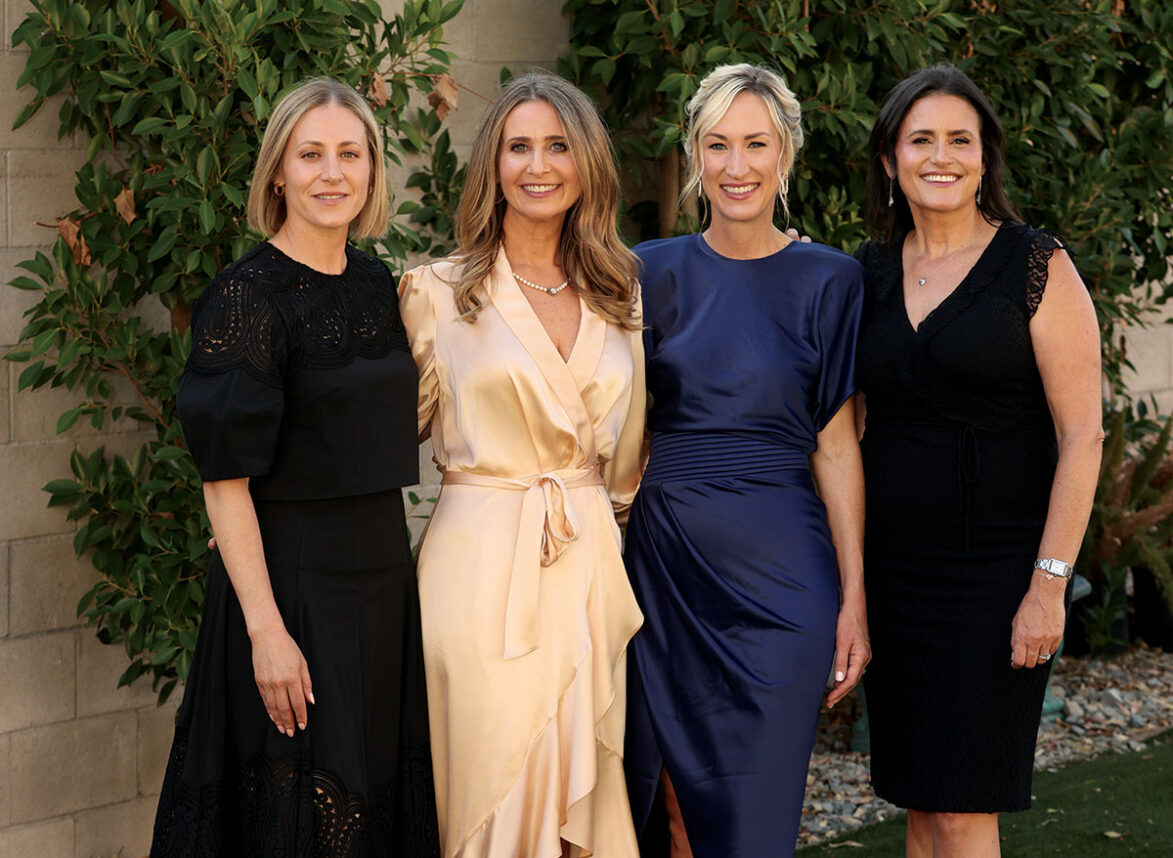
Temple Beth Am-Presman Academy Gala Co-Chair Joanna Kasirer, Honoree Jacqui Jacobs, Honoree Shani Fisher and Gala Co-Chair Anamay Carmel. Photos courtesy of Temple Beth Am

Jacobs, the congregation’s outgoing president, joined Temple Beth Am in 2010 and, according to the synagogue’s leadership, “has enriched our community ever since.” Fisher and her husband, Seth, have called Pressman Academy and Beth Am home since relocating from New York in 2011. Their two sons have been raised at Beth Am and the community has been central to their family’s life.

Jennifer Low; Beth Am Executive Director Sheryl Goldman; Marshall Temkin; Susan Hetsroni; Jacqui Jacobs; Mark Wolf; Virginia Maas; Robert Ring; Mike Cohn; Diane Shapiro; Stuart Tochner; Avi Peretz and Rabbi Adam Kligfeld turn out to last month’s Temple Beth Am-Pressman Academy gala.

A Conservative congregation, Temple Beth Am is located near Pico-Robertson. The congregation’s day school, Pressman Academy, engages students in general and Judaic studies.


The Bubbela beach party in Venice Beach brings together young professionals looking to form friendships and connections. Courtesy of Mem Global

Venice Beach turned into Tel Aviv at the end of June for an event hosted by Bubbela, a local initiative that engages Jewish young adults. Organized by sisters Karina and Alexa Zysman, more than 100 people came to the Tel Aviv-themed beach block party, which started at Dudley Market with wines and small bites, before heading to the beach for mindfulness, wellness activities, Spikeball, Matkot and beach volleyball.

“This was our love letter to a Tel Aviv summer day that we so fondly reminisce about,” the Zysman sisters said. “If you’ve ever spent a summer afternoon in Tel Aviv, you know the specific feeling we wanted to evoke. Sun on your face, turning strangers into friends, slowing down and nowhere else to be. We know not everyone made it to Israel this summer, so we’re doing the next best thing and bringing Israel to us.”

BUBBELA, an initiative of Mem Global, also partnered with Jumbo Time Wines to offer an in-person sampling and tasting of their best wine at the event.

“As someone who just recently moved to L.A. and has been looking to find my Jewish community, Bubbela events have become the thing I look forward to most,” one participant shared. “This one in particular, from the wine tasting to the reflective sound bath, captured exactly what makes these gatherings different from anything else out there.”

Temple Beth Am-Pressman Academy Gala, Bubbela Party at Venice Beach Read More »

When a Faculty Union Turns Against Its Students

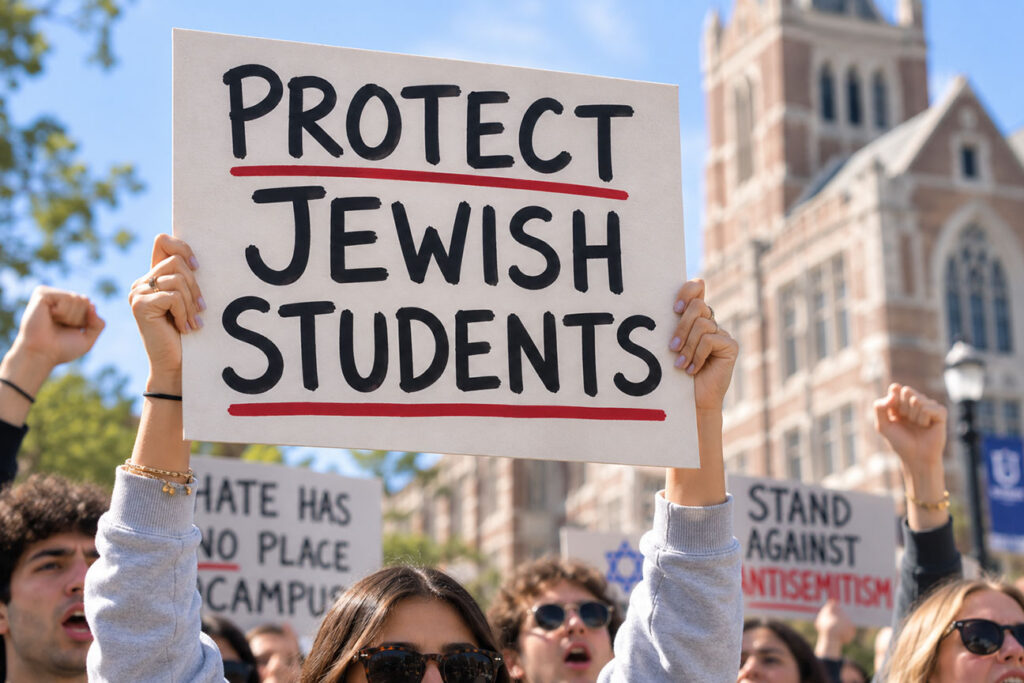
California’s latest fight over campus antisemitism was framed as a battle over free speech. But beneath that familiar slogan was something far more disturbing: an effort by the faculty union for California State University’s 22 campuses to weaken vital protections for Jewish students while claiming to defend student rights.

That effort took the form of AB 2551, which began as a health-care measure before being gutted and amended into a higher-education bill late in the legislative process. In its original rewritten form, it would have repealed the campus-safety protections added to California’s Education Code after the post-Oct. 7 explosion of antisemitism in public higher education.

After a swift statewide outcry, the repeal language was removed. But the bill still advanced — and its sponsor, the California Faculty Association, made clear that its larger goal had not changed.

At the Senate Education Committee hearing, CFA legislative action chair Melina Abdullah called the bill “a first step towards ending time, place and manner restrictions” that she described as “repressive and harmful to our students.”

Time, place and manner rules are not censorship. Properly enforced, they allow protest to coexist with everyone else’s rights. They distinguish advocacy from intimidation, rallying from blocking access, and protest from disrupting classrooms, libraries, residence halls and campus events. These are precisely the protections Jewish students have needed since Oct. 7, as anti-Israel activism too often moved from political expression into harassment, exclusion, intimidation and denial of access.

Before accepting CFA’s free-speech claim, Californians should ask what kind of freedom CFA is prepared to defend — and for whom.

In April 2025, CFA adopted a resolution demanding that CSU “immediately and permanently terminate” study-abroad programs in Israel and end academic and cultural partnerships with Israeli universities.

This was not a political statement. It was an academic boycott: a demand that the nation’s largest public university system use its academic infrastructure — study abroad, exchange, research partnerships and scholarly collaboration — to limit what and where students may study, which scholars they may learn from, which partnerships may exist and whether Israel may be encountered as a legitimate subject of university life. For Jewish, Zionist and pro-Israel students, cutting off those opportunities is a direct attack on their academic freedom.

But academic boycott and its harms reach beyond formal university ties. Its anti-normalization logic treats ordinary engagement with Israel — and Zionism itself — as illegitimate. On campus, that means pressure to stigmatize speakers, marginalize Israel-related scholarship and treat students who refuse to disavow Zionism as suspect members of the academic community, creating conditions in which abuse and harassment can be excused as activism.

That is the staggering hypocrisy at the center of CFA’s position. The union invokes free speech when anti-Israel activists want fewer rules, but shows no comparable concern when its own boycott campaign would trample the academic freedom and free expression of Jewish, Zionist and pro-Israel students, and help create the hostile conditions those rules are meant to prevent.

The hypocrisy would be disturbing from any faculty group. From CFA, it is far more dangerous. As the exclusive bargaining representative for CSU faculty, CFA has systemwide infrastructure, access to university leadership, organizing capacity, and legislative clout.

CFA’s boycott resolution was not simply a local union position. It carried out a campaign that PACBI — the Palestinian Campaign for the Academic and Cultural Boycott of Israel, the academic-boycott arm of the BDS movement — had asked faculty networks to pursue: dismantling study-abroad programs in Israel and other academic collaborations with Israeli institutions and scholars. PACBI’s U.S. affiliate, USACBI, promoted the campaign on American campuses. CFA’s Palestine, Arab and Muslim Caucus, co-chaired by USACBI founder Rabab Abdulhadi, then drafted a resolution matching that demand. In effect, CFA used public faculty-union power to press CSU into a foreign-led academic-boycott campaign against the Jewish state, at the expense of CSU’s own students and faculty.

AB 2551 is not separate from that campaign. It gives legislative form to a defensive strategy the BDS movement developed. Through its “Right to Boycott” campaign, the movement portrays anti-BDS laws, antisemitism definitions and protest restrictions as attacks on political expression.

In academia, USACBI goes further. Its “Academic Defense” apparatus urges faculty, students and campus groups engaged in BDS advocacy to reframe antisemitism charges, sanctions and litigation as attacks on academic freedom, antiracist activism, faculty governance and university autonomy. AB 2551 follows that script: rules adopted to protect students from harassment and hostile environments are recast as repression, while activists constrained by those rules are recast as the injured party.

California lawmakers must not pass AB 2551 in any form. At this point, no legislator can honestly treat it as neutral free-speech legislation. It is the defensive side of the academic-boycott campaign CFA has already pressed CSU to adopt. That campaign narrows Jewish students’ academic freedom and then seeks to weaken the rules they need when exclusion turns into harassment, intimidation or denial of access.

And because academic boycott directly undermines public universities’ educational mission, lawmakers should not stop with defeating this bill. They should consider legislation, modeled on existing state precedent, that keeps taxpayer-supported colleges and universities in California from using academic programs, partnerships and exchanges to enforce political boycotts.

California’s public universities exist to expand knowledge, inquiry and academic opportunity. A faculty union must never be allowed to turn them into instruments of political coercion and exclusion.


Rossman-Benjamin is the director of AMCHA Initiative, a nonpartisan, nonprofit organization dedicated to combating antisemitism at colleges and universities in the United States. She was a faculty member at the University of California for 20 years.

When a Faculty Union Turns Against Its Students Read More »

“You Say Genocide, I Say War:” Dissecting the Genius of Boy George’s New Song

Jew-haters are going crazy.

After having the field to themselves for three years, convincing much of the world that Israel rhymes with genocide, a quirky non-Jewish artist from London has rattled them.

Not just with a fabulous song with a cool reggae beat. He’s rattled them with six words:

You say genocide, I say war.

The pro-Israel community has spent hundreds of millions trying and failing to make Israel’s case, and here is iconic singer Boy George with six words that nail the truth.

You say genocide, I say war.

I wrote a column recently on the power of words. Well, I don’t think I’ve seen six better words to make Israel’s case.

Need I elaborate?

The absolute best defense against the calumny of genocide is that Israel was defending itself against another attempted genocide, the invasion from Hamas that massacred 1200 Israeli souls on Oct. 7, 2023.

Boy George is effectively telling the world that Israel was in a defensive war against genocide.

Look at how he continues the song:

When you’re attacked, that’s what the army’s for
Does it get ugly? You bet it does
When I know you wanna kill
Every last one of us

In other words, things got ugly because Hamas wanted to kill every last Jew. What says “genocidal intent” better than a Jew-hating terror group sworn to Israel’s destruction wanting to kill every last Jew– babies and young girls included?

He exposes the cruelty:

You never mention October 7
Young girls raped against trees, murdered brutally, for the crime of dancing

Then he goes after those who love to hate Jews:

You condemn the Jews, with selective memory
Musicians holding flags, mouthing like sheep
Propaganda fueled by the Internet feels so weak

For the chorus, he brings joy and defiance:

But trust me, we will dance again
Wе will dance again
We will dance again 

And in a song about war, he still finds room for dreams:

And there won’t be no war… I don’t feel brave I just need to behave like a human.

Why do you think the song has triggered such an uproar among the “Israel rhymes with genocide” crowd?

Because it demolishes their case.

It does it with the elegance of brevity, the clarity of common sense, and the power of an exhilarating song. I’ve heard a lot of great pro-Israel songs since Oct. 7, but none that include a compelling argument against a global narrative.

Boy George says AI helped him with the song. It’s not clear to what extent, but even if he’s just the “producer,” he’s responsible for the song and he’s taking the heat for it.

“The track has caused a furor online,” The New York Times reports.

No kidding.

The Jew-hating knives are out. The backlash has begun– calls for boycotts, frantic attempts to smear both singer and message, anything to smother this musical meteor that is making the case for the world’s most maligned country.

As the song continues to spread globally, it may well presage a cultural shift few people have noticed:

Bashing Israel is becoming boring.

It’s convenient for people who follow the herd, who are afraid to take risks, who conform to what’s in vogue.

Boy George represents the rebels who have the guts to defend the little Jewish country everyone enjoys bashing.

If he was famous for his Culture Club, now he represents the Counter Culture.

But he always did. He always was a rebel.

That’s why he has the courage to sacrifice for his principles, even if that means losing a colleague or losing business.

When someone denounced him as “Zionist scum” on social media, he replied, “Jew love is true love.”

When friends recommended that he “pipe down” and let the uproar blow over, he replied, “I’m afraid it’s not an option.”

When a record label colleague told him, “I want nothing to do with this song,” he responded, “Ok, we’re done.”

And then he added: “When someone is gutless it really does not hurt to say goodbye. My faith in humanity will not diminish and the truth will always win.”

All of this makes sense when you hear the golden thread of his song, which might as well become a new anthem:

And if you’re ever confused, I stand with the Jews.

Who would have thunk it?

A super-cool, gutsy and world-famous singer shows up to defend an ancient people, and the haters are losing their minds.

“You Say Genocide, I Say War:” Dissecting the Genius of Boy George’s New Song Read More »

Boy George Stands with the Jews — And the Jewish People Will Never Forget It

Nearly thirty years ago, when I was serving as rabbi at Oxford University, I hosted Boy George before approximately one thousand students.

He was already one of the most recognizable artists on earth. Culture Club had supplied the soundtrack of an entire generation. His voice, appearance, wit, and fearless individuality had made him a global icon.

But what struck me that evening was not merely his celebrity. It was his humanity.

Even then, his warmth toward the Jewish people was unmistakable. There was something deeply instinctive about it. It was not political calculation. It was not an attempt to curry favor. It was the natural sympathy of a man who understood what it meant to be different, publicly judged, mocked, ostracized, and yet determined never to surrender his identity.

George and I became friends, and we have remained in touch over the decades.

Now, at a time when so many celebrated artists have either remained silent about Jewish suffering or actively joined the campaign of demonization against Israel, Boy George has done something extraordinary.

He has released a new song, “Od Nirkod — We Will Dance Again,” declaring his solidarity with Israel and the Jewish people after the massacre of October 7. The reggae-inflected song invokes the promise that Israelis will dance again after the slaughter at the Nova music festival and includes the unambiguous declaration that, amid the world’s moral confusion, he stands with the Jews. Those are simple words. But in today’s poisoned cultural climate, they require enormous courage.

Boy George is not an obscure artist with nothing to lose. He is one of the defining cultural figures of the last half-century. Millions of people grew up listening to him. His music crossed continents, religions, races, and generations.

And he knows exactly what happens today when a prominent entertainer supports Israel.

The mobs arrive.

The abuse begins.

The denunciations pour in.

The artist is called immoral, racist, complicit, or worse. Professional opportunities can disappear. Friendships can dissolve. Social media becomes a sewer of threats and contempt.

Boy George knew all of this. He sang anyway.

That is moral courage.

It is especially meaningful because so many in the entertainment industry have chosen the opposite course. They have watched Jewish women describe rape and mutilation and responded with suspicion. They have seen photographs of murdered families and treated the killers as freedom fighters. They have watched babies, children, concertgoers, and elderly people dragged into Gaza and somehow concluded that the real moral emergency was Israel’s attempt to prevent the next massacre.

Many celebrities rushed to condemn Israel before the blood of the murdered had dried. Some repeated grotesque accusations without evidence. Others signed letters demanding that Israel be isolated from international culture. Still others offered tortured statements about “all suffering,” as though the deliberate murder of Jewish civilians could not be condemned without immediately placing the Jewish victims on trial.

Boy George refused this cowardice.

His song does not pretend that war is beautiful. It does not celebrate Palestinian suffering. It says something far more basic: when a nation is attacked, it has the right and obligation to defend its people. The song directly challenges the fashionable claim that Israel’s war of self-defense is inherently genocidal and criticizes artists who follow ideological fashion like sheep.

Predictably, the backlash was immediate.

Critics attacked the song as offensive and “nauseating.” Some portrayed George’s support for Israel as a moral stain rather than an act of conscience. Up But the ugliness of the response only proves why the song was necessary.

The modern campaign against Israel is not satisfied with criticizing a government or debating military policy. It increasingly demands complete ideological obedience. Artists may denounce Israel in the most inflammatory terms and be praised for courage. But let an artist defend Israel’s existence, acknowledge the horror of October 7, or declare solidarity with Jews, and suddenly he is told that his speech is dangerous.

That is not activism. It is intimidation.

And it has worked on far too many people.

Boy George refused to be intimidated.

There is something particularly poignant in his promise that “we will dance again.” Hamas chose a dance festival as one of its principal killing grounds because the terrorists were not merely attacking Israelis. They were attacking joy, music, freedom, sexuality, youth, and life itself.

The young people at Nova were dancing beneath the open sky. They were not soldiers. They were not occupying anyone. They were celebrating music when armed terrorists descended upon them, hunted them through fields, raped women, kidnapped survivors, and murdered hundreds.

In Jewish tradition, dancing is not frivolous. It is one of the most profound expressions of spiritual endurance. Jews danced after crossing the Red Sea. We dance with the Torah. We dance at weddings. Hasidim danced through poverty and persecution because joy itself was an act of resistance.

“We will dance again” therefore means more than returning to a festival.

It means that terror will not define Jewish life.

It means Hamas will not have the final word.

It means the Jewish people will not surrender our capacity for joy.

And it means that the civilized world must stand with those who dance rather than those who murder dancers.

Boy George understands that instinctively.

The Jewish community owes him a tremendous debt of gratitude. We are often quick to criticize public figures who abandon us, and rightly so. But we must be equally determined to honor those who stand with us when doing so carries a cost.

We should buy the song. Share it. Play it publicly. Invite him to Israel. Honor him at Jewish institutions. Thank him not quietly, but loudly.

Jewish gratitude must be more than a private emotion. It must become a public moral principle.

Too many allies discover that supporting the Jewish people brings punishment from Israel’s enemies but little visible appreciation from Jews. That must change. Those who stand with us should know that we stand with them.

I have known Boy George for roughly three decades. I saw his affection for the Jewish people long before the present war, long before social media mobs, and long before supporting Israel became a potential professional liability.

His new song is therefore not an opportunistic conversion. It is the public expression of something I witnessed many years ago at Oxford: a compassionate man with a profound instinct for the outsider and a natural bond with the Jewish people.

At a moment of frightening abandonment, he has given Jews something precious—the knowledge that we are not completely alone.

George sings that he does not feel brave; he is simply trying to behave like a human being.

But in an age when basic humanity has become controversial, behaving like a human being is bravery.

Boy George has stood with the Jews.

Now the Jews must stand with Boy George.


Rabbi Shmuley Boteach is the international bestselling author of thirty-eight books, translated into more than twenty languages. He has been hailed as “the most famous rabbi in America” (The Washington Post, Newsweek), “arguably the most famous Orthodox Jew on earth” (The New York Observer), and named one of the fifty most influential Jews in the world (The Jerusalem Post). Follow him on Instagram and X @RabbiShmuley.

Boy George Stands with the Jews — And the Jewish People Will Never Forget It Read More »