

fbpx

June 2, 2026

Jewish Agency’s Israeli Emissaries from the U.S. March in New York’s Israel Day Parade

On Sunday, May 31, a record 50,000 people marched in the Israel Day Parade in New York. Of those, 40 were Shlichim (Israeli emissaries) from The Jewish Agency for Israel. They were part of a joint float organized with the World Zionist Organization and American Zionist Movement.

“The Shlichim are a living bridge to the communities here,” said Gal Atia, head of the Jewish Agency delegation to North America. “It’s significant for connecting the Jewish community from the U.S. to Israel.”

According to Atia, there are 405 Shlichim in North America during the year, and 2000 more come for summer camps. There are 3000 Shlichim working in summer camps, schools, college campuses, and Jewish communities around the world. They help strengthen Jewish identity, connections to Israel in communities, and Israeli and Hebrew culture. For the parade, Atia brought in emissaries working in places around New York and the tri-state area.

“Just as the community here has stood by our side throughout the years, our Shlichim are here to proudly walk shoulder to shoulder with the community,” said Atia. “This year’s parade and its theme powerfully captured the values of identity, unity, and shared purpose that our Shlichim work daily to strengthen across the nation.”

“Just as the community here has stood by our side throughout the years, our Shlichim are here to proudly walk shoulder to shoulder with the community.” Gal Atia

Some marched with their communities, including Hillels, Jewish Federations, Young Judea, and local schools. Others marched alongside the float with Yaron Shavit, deputy chairman of the executive of The Jewish Agency for Israel, Yaakov Hagoel, chairman of the World Zionist Organization, as well as Herbert Block, executive director of the American Zionist Movement. Ronen and Orna Neutra, the parents of Omer Neutra (z”l), an Israeli-American IDF officer who was killed on October 7, marched next to the float as well.

Ronen and Orna Neutra marching in the parade

“During the parade, Shlichim saw cheering and good energy directed towards them,” said Atia. “It gives them the ability to be proud of who they are. This is one of the greatest things the parade does.”

There has been a 25% increase in the number of Shlichim since October 7. According to Atia, this is because many Jews in the diaspora cannot visit Israel right now, but they still want to keep up the connection. Parents and schools also want children and students to stay engaged with Israel.

“We want the Shlichim to understand the greater good we are trying to create,” Atia said. “We are the face of Israel and show the complexity of it. We are not the headlines, but a real story that young Jews can relate to on a personal level.”

It may be hard when there are anti-Israel protests happening all the time, along with negative sentiment towards Israel in the news and on college campuses.

“Honestly, a lot of the time, you feel alone and like you’re fighting the wind when you only see the news,” Atia said. “Being part of the parade gave me so much hope. I felt like I was part of something so great. I was so proud. I am sure every person marching in it had that same feeling.”


Jewish Agency’s Israeli Emissaries from the U.S. March in New York’s Israel Day Parade Read More »
Jewish Angelenos and our Allies Deserve Better

Los Angeles City Council member Nithya Raman wants to be mayor of Los Angeles, but after her actions earlier this month, many Jewish Angelenos are left wondering whether her vision for the city truly includes all of us.

On May 15, as part of a regular Los Angeles City Council meeting, the Council marked Jewish American Heritage Month for the tenth consecutive year, recognizing the contributions of the Jewish community to the civic, cultural, and political life of Los Angeles. At a time when antisemitism continues to rise dramatically across the country and here at home, it should have been a simple decision for her to join the numerous elected officials and stand with the Jewish community.

Raman made the choice not to be there.

Instead, she chose to appear on a livestream with Hasan Piker, a podcaster with approximately 11 million followers across his multiple platforms who has repeatedly spread antisemitic rhetoric targeting Israel and the Jewish community. During the livestream, Raman indicated that she believes the false claim that Israel is committing genocide, spoke about wanting to see a future “without apartheid,” and publicly distanced herself from prior engagement with pro‑Israel organizations such as Democrats for Israel Los Angeles, stating that she would not seek further endorsements from them and therefore from large segments of both the pro‑Israel and Jewish communities.

That was the choice she made during the commemoration of Jewish American Heritage Month instead of standing with the Jewish community at City Hall.

We will admit that when Raman, who is a member of the Democratic Socialists of America–Los Angeles (DSA‑LA), an organization that has taken extremely anti‑Israel positions, first ran for City Council, we were skeptical. Still, she appeared to want to engage with and support the Jewish community, and over the years, even as there were moments that gave us pause, we wanted to believe those efforts were sincere. Unfortunately, we do not believe that anymore.

What became painfully obvious that Friday is that this does not appear to have been about genuine concern for the Jewish community. It now feels far more likely that her engagement with the Jewish community was politically advantageous at one point but no longer is.

What makes this even more troubling is that she is not distancing herself from the fringe; she is distancing herself from the Jewish community at large. The overwhelming majority of Jewish Angelenos are Democrats, and we overwhelmingly support a two‑state solution: a Palestinian state alongside a Jewish state, Israel, the ancestral homeland of the Jewish people. In fact, support for two states for two peoples has been part of the California Democratic Party platform for decades.

Los Angeles is home to the second‑largest Jewish population in the United States. Jewish Angelenos deserve leaders who are willing to engage respectfully with our community, not distance themselves from it when doing so becomes politically inconvenient.

Voters should ask themselves a simple question: Do we want a mayor, or even a council member, who does not seem interested in supporting or standing with our community?


Debbie Paperman is a lifelong Democrat immersed in proIsrael and Jewish community advocacy in Los Angeles.

Laura Goldstein is a lifelong Democrat and child of Holocaust survivors.

Jewish Angelenos and our Allies Deserve Better Read More »

As California Primary Elections Arrive, Community Grapples with Choices

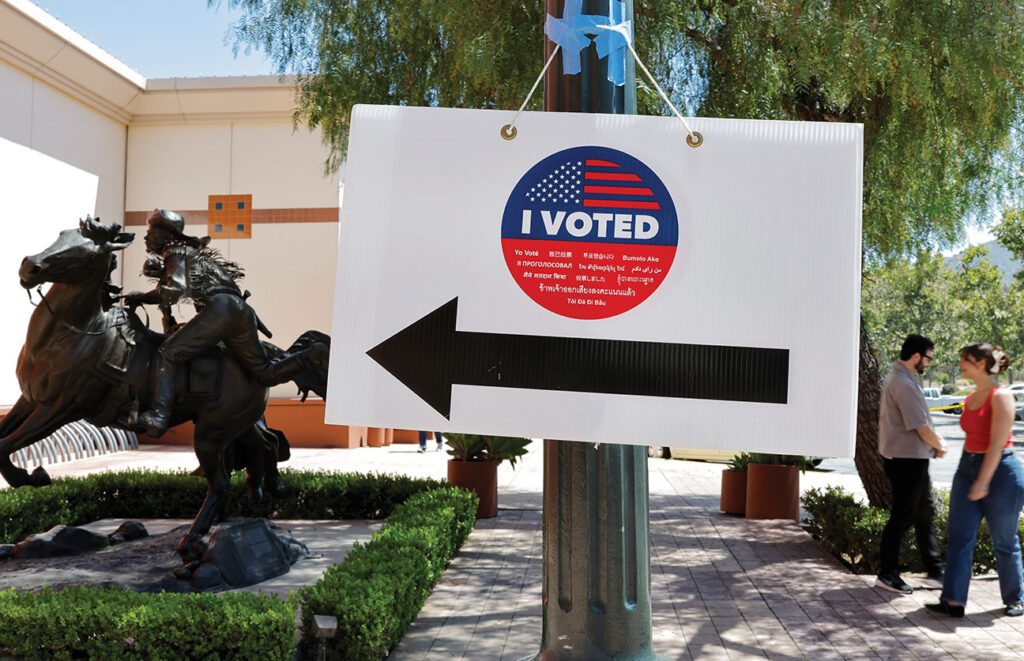
For some in the local Jewish community, California’s primary elections have become an opportunity to express frustration with political leaders and an electorate they feel has not always stood with Jews in the years since the Oct. 7 attacks.

The races have also highlighted how politically homeless many pro-Israel Jews feel today, with candidates from neither major party appearing particularly appealing in some of the state’s highest-profile contests.

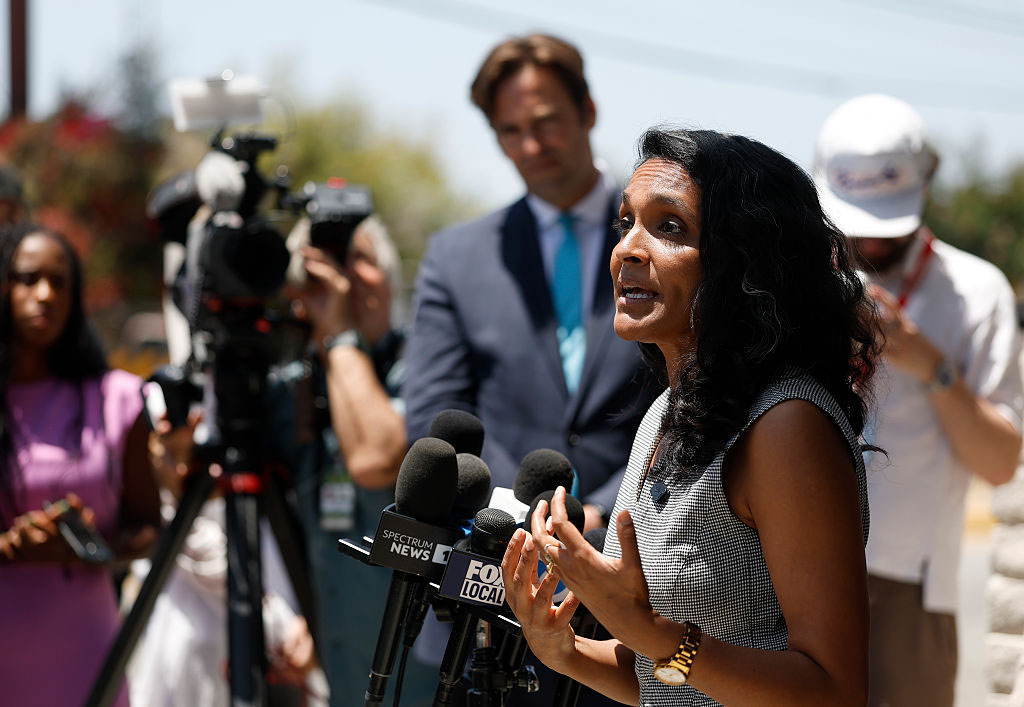
Debbie Paperman, a Santa Monica resident who is active in local politics, frequently posts on Facebook about her anger with the Trump administration while also speaking out against antisemitism and anti-Zionist sentiment within the Democratic Party. She was particularly frustrated with the decision of mayoral candidate and city councilmember Nithya Raman to opt out of the recent Jewish American Heritage Month celebration at L.A. City Hall and instead appear on a podcast with political commentator Hasan Piker, a frequent critic of Israel.

“She is distancing herself from the Jewish community at large,” Paperman wrote in a recent op-ed that was critical of Raman’s candidacy.

With none of the three top-polling mayoral candidates likely to garner a majority in the primary, all three – incumbent Los Angeles Mayor Karen Bass; Raman; and outsider and former reality TV star Spencer Pratt – remain viable contenders to advance to the runoff.

Dan Schnur, the U.S. politics editor and an instructor at UC Berkeley, USC and Pepperdine, predicted it can be any two of the three who make the runoff. Asked his thoughts on the three mayoral candidates, Schnur described them as follows:

“Bass is Biden-minus – she’s had very longstanding relationships in the Jewish community, but it’s never been particularly strong,” he said in a phone interview. “Raman clearly sees a need to appeal to the most progressive voters in the city, which appears to have led her down this path. And Pratt is delivering an essentially MAGA, pro-Israel line. He’s saying the right things on Israel but is unacceptable to Jewish voters for a number of reasons.”

For many Jewish voters, the election is arriving during a period of heightened political unease. Since Oct. 7, 2023, debates surrounding Israel, campus protests and antisemitism have become central issues in California politics, particularly in Los Angeles, home to the world’s second-largest Jewish population outside of Israel.

At the same time, voter frustration with homelessness, crime, wildfire preparedness and distrust of government institutions has created new opportunities for outsider candidates, such as Pratt in the mayoral race and Steve Hilton, a Republican who has exceeded expectations in the gubernatorial contest.

Under California’s “top two” primary system, all candidates appear on the same ballot regardless of party affiliation, with the top two finishers advancing to the general election.

On the day before the election, a longtime Jewish professional leader voiced his frustration with the city’s leadership but also said he couldn’t bring himself to vote for Pratt. In an interview, he likened the mayoral role to running a business—a large, bureaucratic business—and said Pratt has no experience “leading anything.” Meanwhile, Raman, he said, would be “a disaster.” This person lives in Raman’s council district and has repeatedly found her inattentive to her constituents’ needs.

While this Jewish leader declined to share who he supported in the mayoral race, he was eager to speak about who won his vote for governor: San Jose Mayor Matt Mahan. Despite earning praise from some moderates for his approach to governance in San Jose, Mahan has largely failed to gain traction statewide. Still, this voter said, Mahan was the best choice of all the options.

In the days before the election, I called up my mom to discuss the election. Typically, we speak on the phone and fill our ballots out together, scouring websites like the Los Angeles Times for endorsements. This year, though, we didn’t do that.

“Honestly, honey, I’ve been so turned off by the sheer volume of political advertising and the negative tone of the campaigns,” my mom, who lives in Encino, told me, “that I just couldn’t vote for anybody.

“I just feel there’s so much lying out there,” she said. “They say stuff they think you want to hear, and I just don’t trust any of it anymore. And just the awful way they talk about each other makes you not want to vote for any of them.

“The nastiness and the hate have become a turnoff,” she continued. “I want better options. I would’ve voted if I had better options.”

The conversations reflected a broader tension among Jewish voters this election season: frustration with many of the available choices, but continued engagement with the political process. Whether backing long-shot candidates, weighing strategic votes or sitting races out altogether, many said they were still searching for leaders who reflected both their values and their concerns.

As California Primary Elections Arrive, Community Grapples with Choices Read More »

Let’s Fight Antisemitism by Reclaiming Our Americanism

“Antisemitism is often understood as visceral hatred of Jews. But that is only part of the story,” Izabella Tabarovsky wrote recently in Quillette.

She added: “Antisemitism is also a politics and a zeitgeist; a conspiracy theory that fuels mass hysteria about Jewish power; an underlying culture that teaches people that Jews are different, they don’t belong, they aren’t on our side—and ultimately, that they are our misfortune. It draws an invisible line between Jews and the broader society, gradually normalising their marginalisation and exclusion.”

As I read those haunting words, I found myself facing two reactions: Given that the force of gravity is already to isolate Jews, why not just double down on my “Jewish difference” to nourish my Jewish pride? Or, instead, should I go the other way and double down on my Americanism?

Normally, I would lean toward the first choice. For better or for worse, Jews have always been treated differently. That’s because in so many ways we are different, just not in the sinister way the haters would have you believe. For me, Jewish difference has always been a source of pride precisely because my people have given so much to the world.

And yet, at this moment, something compels to go in the other direction. I feel like digging deep into my love of America. Not only am I not that different, I want to tell the Jew-haters who are out to isolate me, I’m actually as mainstream American as they come.

Maybe it’s because our 250th birthday is right around the corner. Or maybe it’s a statement of defiance, a way of telling Jew-haters I’m giving them the very opposite of what they want.

Whatever it is, in terms of fighting antisemitism, I’m convinced we can’t just settle for being “Jews who worry only about Jews.” It’s a trap we ought not fall into.

Jews in America have never been limited to taking care only of their own. From the moment we landed on these shores, out of sheer gratitude we’ve given back without limit.

Different or not, Jews love America. I want the haters to know that.

“Aside from Israel, this country has been the most supportive and welcoming place for Jews in all of history,” my friend Peter Himmelman wrote in the Journal in July 2025. “That support hasn’t always been perfect or uninterrupted. But look at the arc: America welcomed Jewish immigrants fleeing pogroms, and again after the Holocaust. It gave sanctuary and dignity to survivors. It stood by Israel — more than any other nation. And most importantly, it allowed Jews to speak, dissent, pray, create, and thrive.”

Jew-haters would love nothing better than to eviscerate this deep Jewish connection with America. It threatens them. It contradicts their propaganda that “Jews don’t belong,” that we are America’s “misfortune.”

If there is any misfortune in America today, it is that too many Americans have fallen out of love with their country.  According to Gallup, since 2000 the percentage of Americans who are extremely/very proud to be American has tumbled from 87 percent to 58 percent, most of it coming from the left.

As Arthur Krystal writes in a recent essay in The New Yorker, “Wokeness helped chill the left’s admiration for the nation.” He concludes that “Patriotism just isn’t cool anymore.”

How sad. How tragic. It’s no longer cool to love America. This apathy toward the American experiment is a corrosive virus that can devour us from within.

Jews have an opportunity to fight that virus. Hating Jews is like hating America. By fighting Jew-hatred, we can also fight America-hatred.

On this 250th anniversary of our great nation, we can help bring patriotism back.

For starters, let’s include love of America in all our communal initiatives, including our activities on July Fourth. As much as we love our Jewish identity, we love this country. Let that be our central message.

What a great way to show our “difference.”

What a great way to build Jewish pride.

What a great way to say happy birthday.


Let’s Fight Antisemitism by Reclaiming Our Americanism Read More »