fbpx

April 17, 2026

Rabbis of LA | For Rabbi Guzik, Being a Rabbi and a Therapist ‘Are the Same Thing’

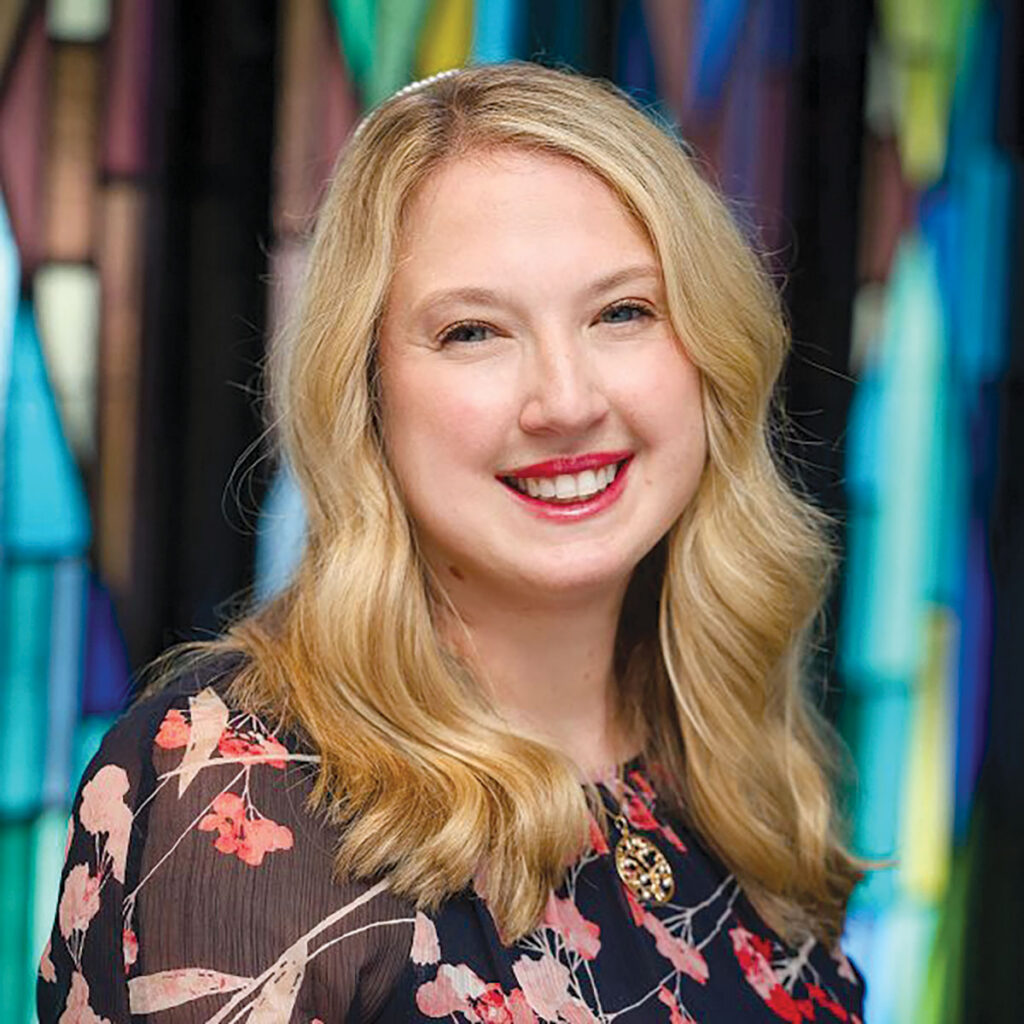
Since becoming an associate marriage and family therapist, Rabbi 
Nicole Guzik of Sinai Temple never had a single doubt she made the correct decision. “I am having such a good time,” she said with a wide smile. “And I hope [my clients] are, too.”

At the popular Sinai Temple Mental Health Center, Rabbi Guzik says she sees two types of couples: Those married for years who now are encountering static and couples who are planning to marry.

But there is a sharp distinction, she learned, between married couples and the not-yets. During postgraduate training at the Maple Counseling Center, Beverly Hills, she learned that “unfortunately, when people seek Couples Counseling, it’s not that it is too late, it’s often very far down the line. … However, when people are coming to me for pre-marital counseling, that is like dessert. You can tell this is a couple – they are not far down the line – it’s not too late. It’s that they care so much about their upcoming marriage that they want to do everything they can to create a strong foundation.

“That excites me. It excites me when couples come in – and it is not that they are in crisis, but if people are in crisis, I would welcome them to meet with me, too. I don’t think it is too late. But I am so impressed by couples who say, ‘Everything is going so well that we want to make sure it continues going well.’”

And the work has changed her. “This is how I have changed,” she said. “There is something Rabbi [David] Wolpe taught me many years ago. Perhaps it is obvious to everyone, but I really have held onto it strongly. He has said over and over again that each person has a story.  And within each person there are broken pieces. Sometimes they are revealed, sometimes not.

“Rabbi Wolpe is the best – the best. I think since embarking on this journey of becoming a therapist, I have had a better sense of the brokenness that exists in each person. Sometimes it floats up to the surface quicker. Maybe it is just looking at someone’s face and realizing that something is off. I think that has helped me over the last 10 years.”

Her training has given the rabbi the ability to see her clients’ brokenness more quickly. Reading their faces and studying the way questions are answered provide her with valuable insights. Brokenness, she explained, is used synonymously with hurt or anger, sometimes illness. “There is just something that is fracturing the soul, I hope not permanently. My experience has allowed me to see the brokenness quicker. … Sometimes, if it is the right moment, I am able to go up to the person and just let him or her know that I am right here for them,” she said.

What she has learned, she said is “to sit back and listen with a different sense of understanding. … So when someone is trying to share a story with me, I don’t jump in and give my quick opinion that I normally would have. Instead, I feel my job is – as I said when I first got this degree – to ask more questions. But I have to ask the right questions so that perhaps the story that the client wants to tell will come out. … I have found it interesting that the first story we tell is not always the story we want to tell,” she said.

A year after Rabbi Guzik graduated, the Sinai Temple Mental Health Center was opened, owing, she said, to the generosity of Nadine and Fred Rosen. A fulltime clinician, Carolyn Hoffman, was hired. “What we have found over the course of the last six years,” the rabbi said, “is that people really are open to speaking with her. Maybe it’s because it’s a clinician within the synagogue.”

Rabbi Guzik is convinced that placing the Mental Health Center within the Conservative temple has made a huge difference. “It’s a safe space,” she said. “It’s a place of faith, and clients have confidence in her. She’s a phenomenal human being with a fantastic resume of experience. And she also has the backing of the clergy. We put our trust in her. And our congregants trust us. It’s a beautiful synergy.

“Perhaps you have heard this expression before that often in therapy you will go through the first 40 minutes, and as you are leaving and holding onto the doorknob, that is when you start spilling out what you want to share with the therapist. I think the same thing happens in the rabbi’s office, that you really want to share something – but it’s not until the end when you feel comfortable that you are ready to share what was on your heart.

“I just feel so blessed that the combination of clergyperson and therapist strengthens me every day. I am loving it so much. As we are learning more about what social media and AI are doing, and how they are affecting us socially and emotionally, there is such a deeper need for the synagogue, a deeper need for clinicians in-person. More and more, I feel there is a need for this.”

Rabbis of LA | For Rabbi Guzik, Being a Rabbi and a Therapist ‘Are the Same Thing’ Read More »
Jay Ruderman: Meaningful Activism – Not Intimidation – Makes Change Possible

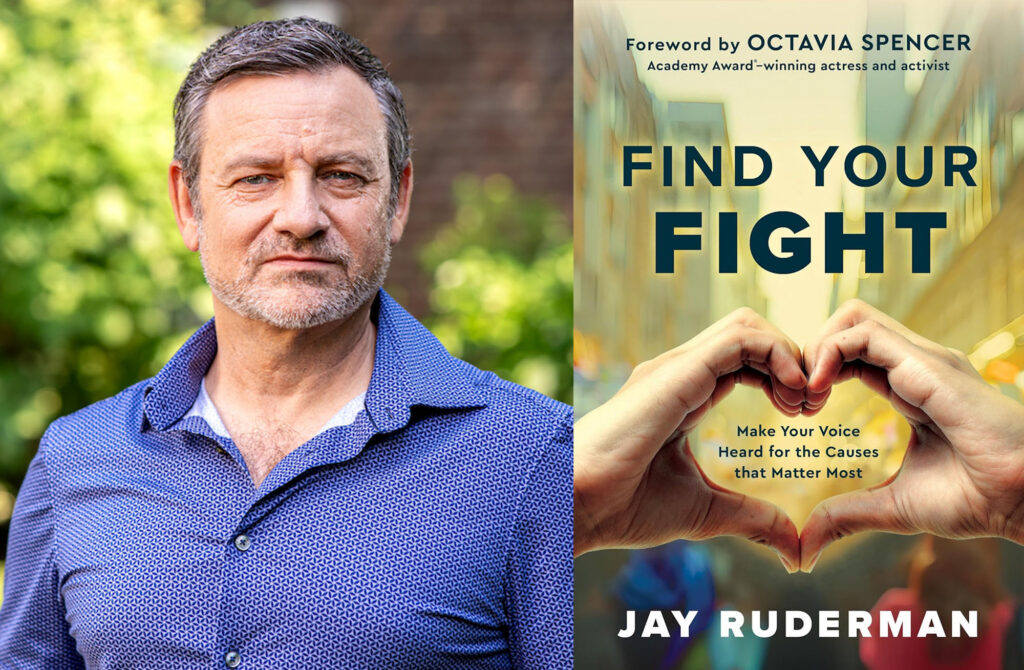
Jay Ruderman has been an activist his entire life. He has long advocated for social justice for people with disabilities, ensuring their visibility in Hollywood productions. Through his work as president of the Ruderman Family Foundation, he’s been able to make meaningful change.

“The reason I have been an activist is because it’s allowed me to take issues I care deeply about and be more impactful,” he said.

“The reason I have been an activist is because it’s allowed me to take issues I care deeply about and be more impactful.” – Jay Ruderman

Ruderman laid out his life’s work and guide for activists in his 2025 book, “Find Your Fight: Make Your Voice Heard for the Causes that Matter Most,” which received praise from actresses Geena Davis and Marlee Matlin, along with Abraham Foxman, national director emeritus of the Anti-Defamation League. Now, he’s sharing his wisdom on what’s happening today in a post-October 7 world: intimidation of Jewish institutions disguised as “activism.”

Along with advocating for those with disabilities, Ruderman is also a fierce supporter of Israel; in the past, he served as a liaison between the IDF and diaspora Jewry and as a deputy director for AIPAC. What he’s seeing today – even where he lives, in the Boston area – is not activism.

“It’s intimidation,” he told the Journal. “There is a website in Boston now taking every Jewish person who has ever been supportive of Israel and putting their name on it. This is not the first time this has happened. That’s not activism. They aren’t trying to better society. They’re trying to intimidate and target people.”

Ruderman also witnessed this at his daughter’s school, Columbia University, when the anti-Israel encampments were taking place and anti-Israel students seized part of Columbia’s library.

“The university did not fundamentally understand the difference between free speech and intimidation,” he said. “My son is at NYU, where they have excellent leadership and respond to antisemitism right away. Leadership makes a difference. When the administration, president, and board of directors stand up and say, ‘We are not going to allow you to intimidate a whole class of people,’ things stop. When there are consequences, things stop.”

Instead of using intimidation, in his book, Ruderman lays out effective activism tactics, like appealing to people’s hearts and minds.

“There are too many people who are not trying to find solutions and better society. Instead, they are trying to rip society apart for their own personal gain,” he said. “Activism should be about changing our world for the better.”

Ruderman also believes in the importance of finding like-minded activists and joining together.

“Activism involves building coalitions,” he said. “The most significant activism I have been involved with has been on the issue of disability rights. I wasn’t alone. I did it with other people.”

In a time when college campuses are rife with antisemitism and antizionism, Jews are under attack online and off, and Israel is a target on the left and the right, what makes Ruderman hopeful?

“It gives me hope to stand up for myself and what I believe in,” he said. “Even when you suffer setbacks, you have to be persistent. Persistence has a benefit. It’s how real things get done.”

From the perspective of a long-time activist, Ruderman said that during this time of intimidation, “Jews should not be afraid to stand up and speak out… We shouldn’t be intimidated. Speak up and believe you are on the right side of history, because you are.”

A father of four – with three of his children at three different universities right now – Ruderman said he sees how younger Jews are being intimidated to move away from their culture, religion, and history.”

The author encourages younger Jews to be proud of who they are.

“You come from a line of thousands of years of people who were proud of who they were and deeply cared about their people and religion,” Ruderman said. “Whether you’re looking at American Jews or Jews anywhere in the world, we’ve always been thrown out of places and attacked and we have survived. This is especially during a difficult time when people are trying to pull us apart. We must stand together.”

He continued, “As Jews, we have been through a hard time lately. But there have been many, many worse times. We will survive. And we will be strong.”

Jay Ruderman: Meaningful Activism – Not Intimidation – Makes Change Possible Read More »

It’s Good to Be a Jew

There’s an old joke about two elderly Jews who are sitting in the park. One is reading a Yiddish newspaper, and the other an antisemitic tabloid. Suddenly, the second man bursts out laughing.

The first one is upset. “It’s not enough that you’re reading that garbage, but you actually find it funny?”

The other man shrugs. “Look, when I read our paper, all I see is bad news, with Jews being attacked and humiliated. But when I read this antisemitic paper, I finally get some good news. According to them, we Jews run the entire world!”

Sometimes it feels like Jews are far too comfortable emphasizing the ‌bad news. And as a friend recently pointed out to me, I am quite guilty of this as well. Since Oct. 7th, my sermons and writings have focused on the conflict; even my classes are on topics such as blood libels, trauma and resilience, and anti-Zionism.

I shared on a recent podcast with Shai Davidai that right now I feel like I’m in survival mode, fixated on defending the Jewish people. Our brothers and sisters in Israel have been under attack for two and a half years, and in the U.S. there is a cesspool of anti-Israel propaganda that flows right through the media, with a parallel rise in antisemitism. And those traumas have colored my view of everything. I have leaned heavily into local politics even though I always wanted to stay away from politics. I’m reluctant to criticize anything about Israel right now because I know that bad-faith actors who want to destroy Israel will exploit any rabbinic criticism. And I spend far too much of my time refreshing news feeds, looking for the latest details about Israel and the Jewish community.

Yes, I talk a lot about the bad news. In my defense, there has been plenty of bad news. Even so, that is not an adequate defense; it is too easy to fixate on what’s wrong and forget the context.

Salo Baron launched a historical debate when he criticized what he called the “lachrymose conception of Jewish history.” In 1928, in the early years of his career, Baron wrote an article challenging the view that the Middle Ages were “a nightmare of the deepest horror” for Jews.

Earlier historians such as Graetz and Dubnow had taken the “suffering and scholars” approach to medieval European Jewish history. Life outside the community was a vale of tears, and at the same time, there was a constant output of rabbinic genius within the community.

Baron disagreed. He explains that the various massacres and inquisitions were episodic; for the most part, Jews had long stretches of peace and prosperity during the medieval period. And although Jews didn’t have equal rights, this wasn’t unique; except for the elites, most people had limited rights. Baron finds it particularly difficult to sidestep the question of ghettos. He explains that although they were unwanted, they offered the silver lining of providing the Jewish community with a great deal of autonomy.

His theory found immediate critics. Yitzchak Baer wrote a sharp rejoinder in 1936. Baron and Baer’s argument was not based merely on a detached reading of the data. The “lachrymose conception of Jewish history” is precisely the argument Zionists made then for building a State of Israel. And Baron took the opposite view, certain that if Jews could relatively live well under the protection of their medieval rulers, they certainly could flourish in the safe-haven of the United States.

Tragically, the Nazis murdered Baron’s parents in Tarnow in 1943. Baron would later testify at the Eichmann trial about the impact of the Nazi murders on the Jewish world.

Even so, Baron held firm to this view for the rest of his career. And that had a profound influence. Many of the Jewish historians in North America studied under him or his students. They have held “neo-Baronian” views, often seeing Jewish history as being built on mostly positive interactions in their societies.

Personally, I lean toward the “pro-lachrymose” school. The fact that massacres and pogroms occur infrequently does not diminish their impact. On the contrary, the accumulated trauma leaves Jews permanently uncertain of their place in society. And antisemitism isn’t measured by violent outbursts alone; there are daily indignities of nasty words and discrimination, each a reminder that one simply doesn’t belong.

Yet I still find enormous value in Baron’s point of view. Not as a theory of history, but as a perspective on Jewish identity.

We must not be dragged into a lachrymose concept of Jewish identity. When we sigh and declare, “It is difficult to be a Jew,” we diminish Judaism.

How we describe ourselves truly matters.

Parshat Tazria discusses the laws of tzaraat, different lesions that can attach to the human body, clothing and houses, and render those people and items impure. One peculiar detail of the laws is that no matter how vivid and large the tzaraat lesion is, it is not impure until declared so by a kohen.

Various commentaries wonder why specifically a kohen is needed, instead of any other expert. Rashi says it is simply a divine decree. The Alshich says by involving a kohen, an emissary of God, the Torah shows tzaraat is not a mere disease but rather a supernatural apparition. The Meshech Chochmah actually takes the opposite approach; he says tzaraat is contagious, and only a divinely appointed emissary like a kohen will be protected when examining it. Seforno says that the kohen is there to pray for the person and help them heal.

Of particular interest is the theory of the Kli Yakar, who says that tzaraat comes because of the sin of slander, which “causes quarrels and separations between brothers. Therefore, the Kohanim, the sons of Aaron, who … had the trait of peace, and loved peace and pursued it, can come and heal the tzaraat.”

One rule, however, remains unexplained. The tzaraat is only impure after the declaration of the kohen. No matter how many experts inspect the lesion and say that it must be tzaraat, nothing takes effect until the kohen says so. Its status depends on a declaration.

But why is that so? Shouldn’t it be the lesion itself that makes one impure, not the words of the kohen?

I would argue that this too is a lesson about slander: words matter. At times, they even matter more than reality. The declaration of the kohen can change one’s life.

I would argue that this too is a lesson about slander: words matter. At times, they even matter more than reality.

And so it is with slander. What we say about others can transform the world they live in. Even a few negative words can cause irreparable harm.

Negativity about Jewish identity is just as damaging.

Rav Moshe Feinstein argued vehemently against the sentiment that “shver tzu zayn a yid” (“it is difficult to be a Jew”). He wrote that even if people wanted to highlight the inner strength of previous generations with this phrase, it would backfire. By speaking that way, we make young Jews feel as if Judaism is devoid of joy. But it should not be.

We must not have a lachrymose theory of Jewish identity. We have the privilege of carrying forward a remarkable 3,000-year-old tradition. Our community has found success that our ancestors could only dream of. And we live at a time when the State of Israel has been reborn. We are truly lucky.

It’s good to be a Jew.


Rabbi Chaim Steinmetz is the Senior Rabbi of Congregation Kehilath Jeshurun in New York.

It’s Good to Be a Jew Read More »

Are We Ready for Human Connection Through Glasses?

Mark Zuckerberg has this super cool gadget that promises to further blur the line between the real and the virtual.

It’s glasses.

He’s invested billions in the hope that this gadget will become humanity’s new best friend.

The glasses are so amazing they can do pretty much anything your smart phone does, with one major addition: through life-like holograms and a wide field of view, you’ll be able to create “human” gatherings or encounters at will. No exertion required. No more schlepping to cafes.

“The average person would like to have 10 friends, and they have two, right? Or three,” Zuckerberg said in a recent interview. “And there’s just more demand to socialize than what people are able to do given the current construct.”

For the man who brought us Facebook, meeting a friend at a café is a construct. So is inviting people over for dinner or going to the theater or hiking or visiting a museum or any other of the countless activities we share with people.

Thus, any interaction where you have to actually meet in person is a pesky “construct” that limits our social life and our circle of friends.

Zuckerberg’s pitch: Buy my new AI-powered glasses and your socializing will be limitless. You’ll finally be able to have those ten friends!

Hmm, can I get back to you, Mark?

I realize the train may have left the station on this latest techno miracle; that it’ll simply become too good for people to turn down.

“Meta reports that seven million people bought its A.I. glasses last year, and as competitors pile on, the product will continue to evolve,” Sam Anderson wrote last week in The New York Times. “But wherever it goes next — smart contact lenses, neural implants, nanobots injected straight into our corneas — the trend is clear. Silicon Valley is in the business of mediation. It wants to insert its products as directly as possible between us and the outside world.”

Let that sink in. There’s big money to be made by inserting products as directly as possible between us and the outside world. Anderson asks: “What does it mean for the human mind to be trained, constantly, to ask an external presence for help?”

It means, among other things, that a significant aspect of our humanity is stripped away.

I know what some of you are thinking: But what about the positives? Every new technology has good and bad.

My problem is precisely that the technology will be so good it will make some of us forget that everything we see through these glasses is virtual.

It’s not a real café. It’s not a real ocean. It’s not a real kitchen. It’s not a real theater. It’s all from that gadget on my face that saved me from schlepping to Santa Monica to stroll on the beach with a friend.

These glasses are so powerful an expert on X described the experience as “sees what you see, hears what you hear… a second mind sitting behind your eyes. Building context around every person in front of you, every room you walk into, every silence you’d otherwise sit in alone.”

It sounds both mesmerizing… and scary. I can almost imagine a scientist in a lab muttering: “I will make this more human than human!”

Zuckerberg calls the result “this feeling of presence, and this capability of really personalized intelligence that can help you.”

Well, yes, capitalism is all about “helping” consumers, isn’t it? Zuckerberg is simply offering us his version of a helpful product—a gadget with personalized intelligence that will create a “feeling of presence.”

There’s one thing Zuckerberg got right. We’ve never been more physically isolated and in need of human connection. The problem is that Silicon Valley doesn’t make any money when our human connections do not require their gizmos as mediators.

The irony is that we are more connected and more isolated at the same time. As the expert on X wrote, “That isn’t a contradiction. That’s what connection without presence produces… there’s a gap between being reachable and being there.”

He adds that “Zuckerberg is the first person with the capital, the hardware, and the AI to close [the gap]. Or to simulate closing it so convincingly that nobody checks.” In other words, “If a pair of glasses can make an empty room feel full, most people won’t go looking for the real thing. They’ll just put the glasses back on.”

That’s the scary part: a technology that simulates human connection so convincingly we won’t need to check whether it’s real or not.

But there’s a hopeful part. Just as techno wizards have the freedom to sell us their wares, we have the freedom to say “no thanks.”

I hope to be in that camp. You see, I actually enjoy shlepping to the beach or to cafes to meet friends, or meeting them over Shabbat dinner without needing to put anything on my face except a happy smile.

In the meantime, I can’t help wondering whether Zuckerberg will encourage his own kids to wear his miracle glasses so they too can have many friends.

Shabbat shalom.

Are We Ready for Human Connection Through Glasses? Read More »

The Israel Independence Day Test: Can You Rejoice That Israel Is?

This Yom Ha’atzmaut the polls are sobering. The mass media pounding and social media shaming Israel and Zionism have absorbed since October 7 soured many Americans on Israel. In response, many American Jews are wavering too. But Israel’s 78th Independence Day is an opportunity to defy this political moment and think eternally, existentially, and about your identity.

Here’s a simple Independence Day Test: No matter what you think about what Israel does, can you rejoice that Israel is? Can you marvel how the Jewish people re-established themselves with a thriving Jewish democracy in their forever homeland? If you appreciate that achievement, defying 2,000 years of homelessness and powerlessness, then go to your freezer, and celebrate the Jewish State’s establishment with ice cream for breakfast — or any other gesture to make the day festive and memorable.

More broadly, even if you would have answered the recent JFNA poll saying you’re not a Zionist – come home. To be a Zionist you just have to believe in Israel’s legitimacy as a Jewish democratic state. That means understanding that Jews are a people as well adherents of a religion; that Jews have a homeland, Israel – which doesn’t preclude others from loving that homeland, as we know about America’s contested claims; and that Jews –like 192 other countries in the UN today — have a right to establish a state on their homeland.

Fair-minded critics of Israel beware. You’re far closer to being Zionists than anti-Zionists – as long as your dismay about what Israel occasionally does doesn’t lead you to regret that Israel is.

Don’t be misled by the Zionist right’s absolutism, which risks so narrowing the definition of Zionis as to squelch honest faultfinding trying to make Israel the best it can be. While such stultifying, my-way-or-the-highway litmus-testing is now fashionable, it weakens democracies and violates Zionism’s prickly, robust, argumentative tradition that has long pitted left versus right, socialists versus capitalists, compromisers versus hardliners, secular versus religious.

Note, despite these frustrations with hard-headed, overly-defensive Zionists resisting any deviation from the dominant – yet transient — party line – at least they support the Jewish State. There’s no moral equivalence between their excesses, and the negaters, the haters, the eliminators.

Be smart. Don’t you dare be conned into becoming fellow-travelers of the anti-Zionist, anti-American, exterminationist hard Left. Anti-Zionists hate Israel in peacetime and wartime, when Israel compromised during Oslo and when Israel fights for its life after October 7, when Bibi Netanyahu is in charge or when Yair Lapid was prime minister. These fanatic anti-Zionists want to make the Zionist brand radioactive. They caricature Zionism as oppressive, settler-colonialist, genocidal, supremacist. Hasan Piker is clear – to them liberal Zionists are as inconceivable- and deceitful- as liberal Nazis.

Tragically, these illiberal liberals have so sullied the Zionist brand, even many Jews who want Israel to live, now recoil from the Z-word.

Read what they write. Hear what they say. Look in their eyes as they shout “Die Zionists Die” and burn the American and Israeli flags together, as they deny October 7’s perversions, or cheer Hamas and Iran’s jihadist regime. Shouldn’t reasonable liberals run far away from these monsters?

Consider another test. If Israelis elected a Barak Obamawitz as Prime Minister — a cool, suave, hip, left-leaning leader, compromising with Palestinians, drafting the ultra-Orthodox, taming Israel’s far right, making Israel the ideal liberal-democracy Progressive Zionists desire — would you call yourself “Zionist” then? If so, you’re certainly not anti-Zionist – that would never satisfy these eliminationist anti-Zionists; and you’re not non-Zionist, because that’s the dream of many liberal Zionists.

So, believe it or not… you’re a Zionist.

The tarnishing of the word “Zionist” reflects a worldwide, decades-long campaign with deep Communist roots and, now, broad Palestinian and Iranian backing. Being anti-Zionist has become trendy. Anti-Zionists are so intolerant, even many Zionists are becoming Marrano Zionists, hiding their Zionism, and their Jewishness, dodging an updated Inquisition.

There’s a broader phenomenon distorting the debate. America politics has turned ferocious, triggering all-or-nothing contests banning nuance, complexity, healthy confusion. Even the New York Times columnist Thomas Friedman, hailed as a foreign policy guru, admitted on CNN: “I really want to see Iran defeated militarily, because this regime is a terrible regime” but “The problem is I really don‘t want to see Bibi Netanyahu or Donald Trump politically strengthened by this war, because they are two awful human beings.”

It’s a stunning admission, while American soldiers risk their lives at war. Is it reasonable that Friedman’s partisan distaste for two democratically-elected leaders — even if justified – diminishes his hopes that America and Israel might vanquish this sexist, homophobic, genocidal, terrorist regime that killed 40,000 of its own? The war is existential – Friedman’s calculation is political.

Amid either-or, black-and-white politics, loudmouths dominate. Bullies – from both extremes – recruit Phony Recruits. These more thoughtful citizens go all-in, say with Trump or the anti-Trump crowd, even if they can see the gray. Why? They’re closer to one extreme, and don’t want to be browbeaten by friends – or associated at all with enemies. These ambivalent-at-heart Echo-Chamber Prisoners, forced to choose between Fox News or MS NOW, the right’s insanity or the left’s, let themselves be captured by the harshest forces opposed to those they know they detest.

That process distanced many American Jews from the term “Zionism.”

  1. Most American Jews are liberal, even Progressive – and detest Donald Trump and Benjamin Netanyahu.
  2. The loudest, harshest Progressives and anti-Trumpers are aggressively anti-Zionist.
  3. Without going that far, American Jews, preferring the Left’s Echo-Chamber, end up steeped in an anti-Zionist narrative that sours them on the Z-word, even if they want Israel thriving as a Jewish and democratic state.
  4. These peer-pressured, Phony Recruits, overdosing on Israel-bashing, become Shadow anti-Zionists. Without calling themselves anti-Zionists, they seek peace – or social acceptance — by dodging the term. Worse, some deludedly, self-defeatingly propose abandoning the word, as if that linguistic victory would be enough for enemies who wish to wipe out the State of Israel.

To help resist these forces, after passing  the “That Israel is Test” and the “Barak Obamowitz Test,” ask yourself:

•  Are you still appalled by October 7’s horrors – and every Palestinian act targeting innocents?

•  Do you still get misty-eyed when you hear “Hatikvah” or “Yerushalayim Shel Zahav”?

•  Are you proud when you hear about an Israeli winning another Nobel prize or launching another game-changing innovation from that really small country improves the world so dramatically?

•  Can you still marvel that in 1948, Israel beat seven Arab states seeking to pull off a follow-up Holocaust, or in 1967, triumphed within six days, over massive Arab armies vowing to “throw the Jews into the sea?”

•  Did the first time you saw the Western Wall move you?

•  Can you imagine watching one of the many compelling Israeli TV shows, Fauda, Tehran, Hatufim/Prisoners of War, and shouting at the screen, “I am a Zionist!” because you want Israel to win?

If you answer “yes” to any one of those questions… face it, you’re a Zionist. You don’t have to wear blue-and-white all day this Wednesday. You don’t have to parade your increasingly subversive identity – it’s not just a political affiliation – on the street. But make sure you have your favorite ice cream flavor for breakfast.

And the next time, if a pollster happens asks, “are you a Zionist,” answer “yes.” Know that it doesn’t mean you’re endorsing any policies or politicians you hate; but it does mean you’re disappointing an anti-Semitic exterminationist movement that hates you, your people, and your homeland.

Chag Sameach!


The writer is an American presidential historian and a senior fellow in Zionist thought at the Jewish People Policy Institute in Jerusalem. Last year he published To Resist the Academic Intifada: Letters to My Students on Defending the Zionist Dream and The Essential Guide to October 7th and its Aftermath. His latest E-book, The Essential Guide to Zionism, Anti-Zionism, Antisemitism and Jew-hatred, was just published and can be downloaded on the website of JPPI – the Jewish People Policy Institute.

The Israel Independence Day Test: Can You Rejoice That Israel Is? Read More »