fbpx

January 9, 2026

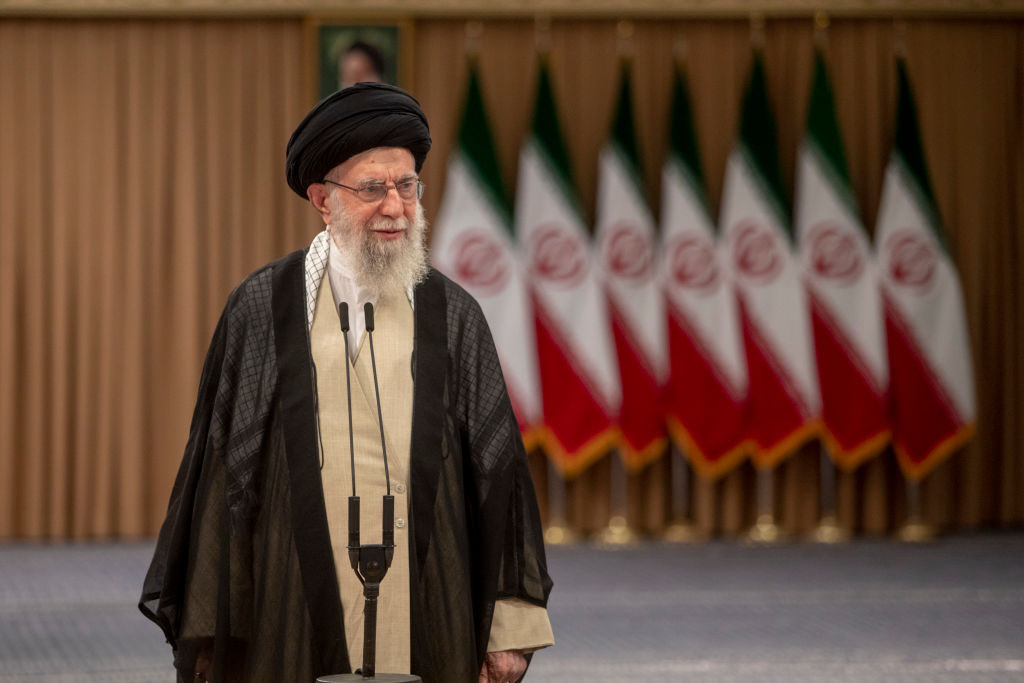
What Will Khamenei Do With His $94 Billion?

How many suitcases does it take to carry $94 billion?

I’ve been asking myself that question ever since Bloomberg reporter Dan Williams alerted me Friday to this latest news: “Israel’s military intelligence now believes the Tehran government could fall, a change in its assessment as Iranian protests spread.” Then I read that U.S. intelligence is on the same page.

First, wow.

The mere possibility that this diabolical government could fall makes my heart tremble. We’ve published enough pieces on this prospect over the years; we know the extent of the agonizing and the yearning, especially with the Persian community here in Los Angeles. The freedom they so value in America is the freedom they so crave for their compatriots back in Iran. Now that things appear to be reaching a breaking point, there is probably nothing else on their mind.

Second, where’s the money?

Have you noticed the $94 billion figure in those reports about dictator-in-chief Khamenei planning a possible exit to fellow dictator Putin’s Russia? Somehow, no one ever asks: Where did the man get all this money?

Seriously, $94 billion can be the GDP of a third world nation. According to an investigation by Reuters, Khamenei’s wealth is more than his country’s total annual petroleum exports.

I wouldn’t be surprised if an image of their leader escaping with $94 billion is fueling the rage of a people suffering their worst economic hardship in years. Maybe that’s why protesters are chanting, “Neither Gaza nor Lebanon, my life for Iran.” They’ve had it seeing their supreme leader squander billions on faraway terrorism rather than spend it on his own people who are mired in misery and oppression.

There are signs Khamenei’s blood pressure may be rising. He let protesters know that those who are burning government buildings, clashing with armed forces and “committing sabotage” would face the death sentence. He warned the judicial system that security forces will show “no leniency towards saboteurs.”

Of course, he also brought in his two favorite scapegoats—Big Satan America and Little Satan Israel– announcing that security forces would “neutralize the destabilization plans of the Zionist regime and its godfather, the United States.”

He warned that Tehran would not tolerate people acting as “mercenaries for foreigners.”

“Last night in Tehran and some other cities, a bunch of people bent on destruction came and destroyed buildings that belong to their own country in order to please the President of the US and make him happy,” he said.

Make Trump happy? Protesters are hoping Trump is exceedingly unhappy.

On that front, the president reiterated his threat of retribution against Iran. “I have let them know that if they start killing people, which they tend to do during their riots… we’re going to hit them very hard,” he said in an interview today with radio host Hugh Hewitt.

The problem is that he made similar threats a week ago, while protesters were being killed. With the death toll mounting, will he mean it now?

“They’ve been told very strongly — even more strongly than I’m speaking to you right now — that if they do that, they’re going to have to pay hell,” he said to Hewitt.

What hell means is yet to be determined.

Love him or hate him, after what we saw in Caracas, no one will be shocked if Trump reaches a breaking point with Tehran. Persians around the world will surely be praying for that this weekend.

If Trump does decide to make a move against Khamenei, I’m sure he’s already thinking about how to get that $94 billion.

What Will Khamenei Do With His $94 Billion? Read More »

Rabbis of LA | Feinstein Today: ‘I’m Still That Kid’

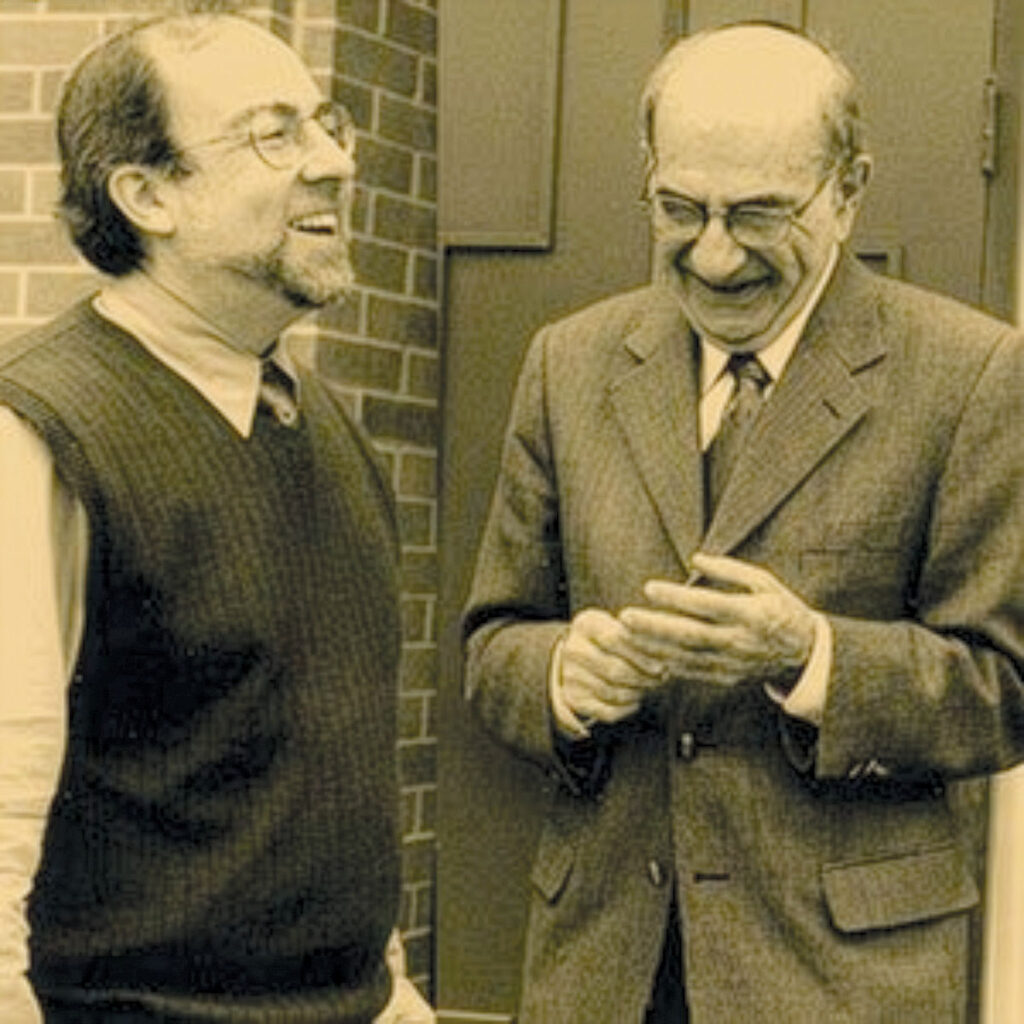
Rabbi Ed Feinstein has spent all but a decade of his 71 years in his only true Jewish home, Valley Beth Shalom, where the 16-year-old Feinstein met the recently-arrived Rabbi Harold Schulweis.

Last week Rabbi Feinstein explained how the Schulweis dynasty began at VBS, now it was his turn in the spotlight. He laughed frequently while describing how little he has changed. “I still have long hair and my desert boots from when I was a teenager,” he said. “I haven’t changed … I just don’t have hair anymore. That’s a problem. That’s God’s decision, not mine.

“But I am still the kid I was. Understand that I learned how to talk a little more smoothly than I did when I was young. And I learned the books, and I know how to cite the citations but I’m still that kid. I’m still full of questions. I’m still full of visions. I see my role as an educator is to give young people the power of imagination and permission to dream. That’s my job, within the Jewish tradition, which, I think, is a tradition of imagination and dreams and revolutionary ideas.

“I’m still that kid. No hair, but I’m still that kid.”

A Valley native, Rabbi Feinstein briefly reflected on his earliest lessons. “When I graduated from the seminary, my first job was in Dallas,” he said. “There was a wonderful soul in the synagogue, Phil Olian, a bachelor. Phil was the gabbai rishon, the ritual chairman. One day he took me aside. I was dressing like a college student. Phil said ‘I don’t want to take away your individuality, but people will listen to you more if you put a suit and tie on.’

“He actually took me to Neiman Marcus and bought me my first suit and tie as a rabbi. He was that kind of a soul. He became godparent to my kids because he was so good to them.

“Want to know something? He was not wrong. I so appreciated his gentleness and his goodness.”

But getting to know Rabbi Schulweis had the biggest impact on his life. 

“The rabbinate had been on my mind,” he said. “What happened was, in the 1970s a group of young rabbis graduated from the seminary and came out to the West Coast to lead the community. Nina and I both were in youth groups, and we were affected by these people.” Among the names he mentioned were Stewart and Vicky Kelman, Joel and Fredi Rembaum, Michael and Roz Menitoff at Ramat Zion, Moshe and Lois Rothblum at Adat Ari El, Shelly and Gail Dorph, Elliot and Marlin Dorff. “This whole cadre of young, bright, imaginative rabbis was sent to LA by the Jewish Theological Seminary. 

They became mentors, he said. “Rabbis, to me, always have been people ‘way up on a pulpit. They were always old guys with beards, and here was a group of people who were my peers. They were just a little older than us, and they were able to guide us. So that became the force that drew us into this work.

“Rabbi Schulweis was the catalyst of the whole thing. He was so powerful. Understand that when I first met him and sat with him – his son was in my class at Hebrew High – and we went over to sit with him one time, it was like sitting with God.  He turned out to be just a lovely, lovely gentle human being. Once he got on the pulpit, he was amazing with explosive energy.

He had “mar-r-r-r-velous” teachers, playfully rolling the “r”  – “Yitz Greenberg, David Hartman, Neil Gilman OBM at the Seminary, Eli Schochet, my rabbi in Canoga Park, wonderful soul. These were great teachers. But nobody’s oratory came close to Rabbi Schulweis.

 “No one had the power to move an audience the way Schulweis did. Part of what distinguished him from the crowd was his style. But more than that, was the idea that we have a truth that is urgent: we, the Jewish people, have something to say to the world. We need to say it in a language the world can hear it.” 

Rabbi Feinstein identified one of his mentor’s main gifts. “Schulweis always was able to see over the horizon,” he said. “He could see what was coming, what the culture needed, what we needed as a community. He always was coming up with new ideas. They always were pressing, things like what other people came up with later, but he already had thought them up and had begun to work on these things.

“This imaginative power, this prescience, this deep, deep conviction that Judaism has something urgent, critical, important to say. I have been so blessed in my life to have such great teachers.”

Rabbi Feinstein wrote a biography of Schulweis for his doctorate. Published when Schulweis turned 80, “we tried to figure how do you honor a man like that? We decided to have a symposium, and invited great teachers: Yitz, David Hartman, David Ellenson OBM and Harold Kushner. They all came here and we learned together, a remarkable experience.

“Then I decided, I know he is 80 and his health was beginning to show failure. I didn’t want to lose his voice. I arranged to work with a friend who does professional videos. We did 11 hours of interviews with Rabbi Schulweis. He was sitting in his office, and I was able to ask him about everything, his background, his family, about his philosophy, his experiences here in the synagogue, about everything.

“The idea was, we don’t have a videotape of Maimonides.”

Fast Takes with Rabbi Feinstein

Jewish Journal: Who is the public figure you most admire?

Rabbi Feinstein: Harold Schulweis, Jewishly speaking. And my teachers: David Hartman, Yitz Greenberg, Elliot Dorff – incredible people.

JJ: Favorite travel destination?

RF: I would say home. And I love Yerushalyim. Tel Aviv is such an exciting city, a city of imagination. Outside of Israel, Nina and I have spent wonderful times in London, and here, Santa Fe, N.M.

JJ: Anything about your life you would like to change?

RF:  I want to live in a country safe for Jews.

Rabbis of LA | Feinstein Today: ‘I’m Still That Kid’ Read More »

AJU Names Masor School Dean, Black-Jewish Delegation Visits Israel

American Jewish University (AJU) has appointed Jay Greenlinger dean of its Masor School for Jewish Education and Leadership, effective Jan. 6. A nationally recognized educator, Greenlinger brings more than 20 years of experience advancing educational excellence across K–12 and higher education to AJU.

In his new role, Dr. Greenlinger leads AJU’s Masor School, overseeing academic programs, faculty development, curriculum innovation and strategic growth. His appointment reflects AJU’s continued investment in preparing educators and leaders to shape the future, AJU President Jay Sanderson said.

“Jay Greenlinger is an exceptional educator and leader whose career reflects a deep commitment to learning, equity and values-based education,” Sanderson said. “His experience building strong faculty cultures, designing innovative programs and leading complex educational organizations makes him the ideal dean to guide the Masor School into its next chapter.”

Greenlinger previously served as assistant superintendent of personnel and pupil services for the Sulphur Springs Union School District in Santa Clarita, where he oversaw recruitment, professional development, student services, enrollment and compliance for approximately 700 employees across nine schools. He earned his Doctor of Education in Educational Leadership from California State University, Northridge. He also holds master’s degrees from California State University, Northridge, and Pepperdine University, and a bachelor’s degree from the University of Massachusetts, Amherst.

“I am honored to join American Jewish University and to serve as dean of the Masor School,” Greenlinger said. “AJU plays a vital role in shaping educators and leaders who carry Jewish values into classrooms, institutions, and communities.”

He succeeds Bruce Powell, who has served as interim dean since 2023. During Powell’s tenure, the Masor School added three new cutting-edge degree programs and grew significantly in enrollment. As Greenlinger assumes his role as dean, Powell continues as senior advisor at the Masor School.


Zioness CEO Amanda Berman (front row, second from left) participated in an interfaith delegation that recently visited Israel. Also on the trip was a delegation of 15 Black religious and political leaders from Compton, continuing a Black-Jewish initiative that began with a Freedom Seder last Passover. Courtesy of SKDK Publicity

More than 15 Black religious and political leaders from Compton recently visited Israel on a unity and education trip to bridge divides across race, faith, and history.

This interfaith delegation–led by Pastor Michael Fisher of Greater Zion Church Family, Rabbi Yoshi Zweiback of Stephen Wise Temple and Zioness Founder and CEO Amanda Berman–met with Israeli leaders to explore what solidarity and shared liberation can look like in practice.

The trip took place from Nov. 11-20 and was strategically timed to culminate with the celebration of Sigd—a sacred Ethiopian Jewish festival held 50 days after Yom Kippur, symbolizing communal renewal and longing for Jerusalem.

From visiting October 7 sites and meeting Israeli Bedouin Arabs who saved lives, to walking the Via Dolorosa and celebrating Shabbat in Jerusalem, to engaging with Palestinian voices committed to dialogue, the journey offered a nuanced exploration of Israel’s complexity through the lens of faith, justice, and shared liberation, said those who participated.


AJU Names Masor School Dean, Black-Jewish Delegation Visits Israel Read More »

When the Stutter Speaks Louder Than Words

In the mid-1800s, a controversy erupted regarding Moses’s character. The newly published Mishnah commentary of Rabbi Israel Lipshutz (1782-1860), the Tiferet Yisrael, tells the story of an Arabian king who had heard of Moses’s fame and commissioned a talented artist to visit Moses and make a perfect portrait of him. When the artist brought back the portrait, the king gave it to his best physiognomists, who could tell a person’s character simply by looking at their face. The physiognomists told the king that the face was of a man who was “entirely wicked, arrogant, greedy, capricious, and suffused with every known vice.” Shocked by this assessment, and certain that the artist had failed to portray Moses properly, the king went to visit Moses. Immediately, he saw the artist had gotten Moses’s portrait perfectly, so the king assumed the physiognomists had failed.

When the king mentioned this to Moses, Moses explained that the physiognomists were correct; by nature, he had many negative character traits. However, with great effort and determination, he had managed to overcome his natural inclinations and become a great man instead.

The Tiferet Yisrael drew heated opposition from rabbis who considered this legend sacrilegious. Shnayer Z. Leiman, who published a translation of this passage, quotes several of the opponents in his introduction. One, Rabbi Hayyim Isaac Aaron Rapoport of Jerusalem, published two entire pamphlets attacking this legend, filled with quotations from biblical and rabbinic passages proving that Moses was born with an exceptional character.

This controversy is not surprising. Moses is 80 years old when God sends him to redeem the Jews from Egypt. We know very little about most of his life; there are a handful of narratives about him as a young man, and then the record goes silent. Much about Moses remains an enigma.

Among the unknowns is why God chose Moses to redeem the Jews.

The Talmud states that God chose Moses even before he was born; as a child, his sister Miriam received a prophecy that her future brother would redeem the Jewish people. And after Moses was born, a divine light filled the home.

Rashi cites these comments from the Talmud. They depict Moses as larger than life, a born prophet and redeemer. And the enormous influence of Rashi’s commentary is why the Tiferet Yisrael’s depiction was so controversial.

Other commentaries highlight Moses’s character as the reason for God’s choice. The following passage in the second chapter of Exodus offers a window into Moses’ soul:

“Now it came to pass in those days, when Moses was grown, that he went out to his brethren and looked at their burdens. And he saw an Egyptian beating a Hebrew, one of his brethren. So he looked this way and that way, and when he saw no one, he killed the Egyptian and hid him in the sand.

“And when he went out the second day, behold, two Hebrew men were fighting, and he said to the one who did the wrong, “Why are you striking your companion?” Then he said, “Who made you a prince and a judge over us? Do you intend to kill me as you killed the Egyptian?” So Moses feared and said, “Surely this thing is known!” When Pharaoh heard of this matter, he sought to kill Moses. But Moses fled from the face of Pharaoh and dwelt in the land of Midian; and he sat down by a well.

“Now the priest of Midian had seven daughters. And they came and drew water, and they filled the troughs to water their father’s flock. Then the shepherds came and drove them away; but Moses stood up and helped them, and watered their flock.”

The Torah presents three separate incidents about Moses. Moses intervenes to save a Jewish slave from an extreme beating by killing the Egyptian slavemaster. The next day, Moses attempts to break up a fight between two Jews. When he arrives in Midian, Moses protects Jethro’s daughters from the shepherds attacking them.

Many read this section as Moses’ “resume”; in it we see the virtues of a future leader.

First, Moses is courageous. The Ralbag points out that Moses risks his life to take on the Egyptian slavemaster. Maimonides points out how Moses, “a trembling stranger” when he arrives in Midian, still takes on the local shepherds.

When read together, the three episodes point to another virtue: a profound sense of justice. Nechama Leibowitz explains that: Moses intervened on three occasions to save the victim from the aggressor. Each of these represents an archetype. First he intervenes in a clash between a Jew and non-Jew, second, between two Jews and third between two non-Jews. In all three cases Moses championed the just cause.”

Justice should be blind, and by standing up for anyone in need, Jew or non-Jew, Moses shows his impartiality.

Justice should be blind, and by standing up for anyone in need, Jew or non-Jew, Moses shows his impartiality.

Finally, Moses shows enormous compassion. Shadal explains that when the Torah says Moses “looked at the burdens” of his Jewish brethren, it means that “he looked upon their affliction with a compassionate eye.” A midrash elaborates on this, saying Moses visited the Jews and helped them complete their work.

Another midrash presents Moses’s vocation as proof of his compassion:

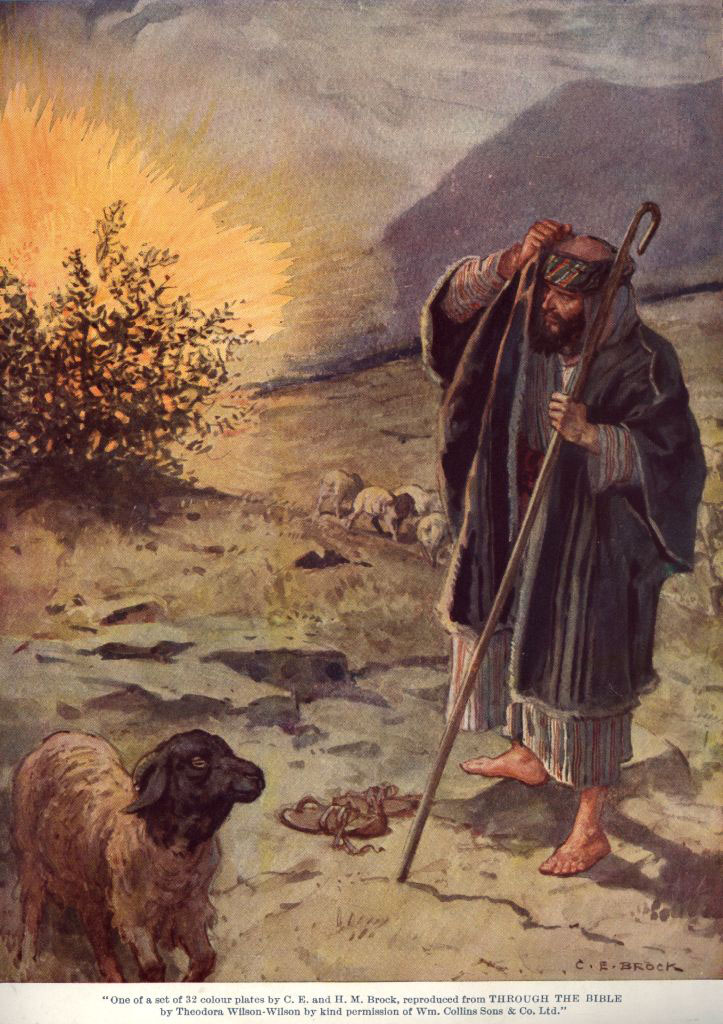
“When Moses … was shepherding the flock of Jethro in the wilderness, a lamb ran away from him. Moses ran after it until it reached a …. a pool of water … and the lamb stopped to drink. When Moses reached the lamb, he said: ‘I did not know that you were running because of thirst. You must be exhausted.’ He lifted the lamb onto his shoulders and carried it as he walked. The Holy One, blessed be He, said: ‘You have compassion to tend the flock of flesh and blood in this way … shall shepherd My flock, Israel.’ Thus it says: ‘And Moses was a shepherd.’”

In short, Moses is chosen because of his remarkable virtue. And today, virtue-based leadership has many academic champions. However, this picture of Moses as the paradigmatic virtuous leader is incomplete; and other commentaries, while not as extreme as the Tiferet Yisrael, see Moses as flawed, a leader who is not yet ready to lead.

Samson Raphael Hirsch argues that Moses betrays timidity in the way he confronts the Egyptian slavemaster:

 “But Moses is … far removed from that captivating boldness required to place oneself at the head of hundreds of thousands and to sweep them along into perilous enterprise; to break their chains and, sword in hand, wrest freedom from the yoke of a tyrant. 

“To the man who first ‘looks around on all sides to see whether there is no witness,’ it never even occurred, not even in a dream, to become the savior and leader of his people. He lacked, ‘from within himself,’ the very first element required to become such a historical ‘hero.’”

Read this way, while certainly courageous, Moses lacks the requisite courage to lead; and when asked by God decades later, he will be too reluctant to answer the call.

Looking at Moses’s full “resume,” there are many other reasons to disqualify him as a leader of the Jews. He was raised in the home of Pharaoh; why would the Jews trust him? (For more on this point, see my previous article, “Moshe and the Road Less Traveled.” He has essentially retired, living a comfortable life in Midian. God only appears to Moses some 60 years after his heroic exploits. Moses has crushing humility and refuses God’s call time after time. And he has a bad stutter.

Moses is not at all the obvious choice to be the savior of the Jewish people.

But perhaps that is the point. The Ran argues that, paradoxically, Moses’s speech impediment shows that his message was authentic. Moses was not a persuasive speaker; no one was entranced by his eloquence. Had his message not been compelling, people would have ignored Moses because of his stutter.

Moses’s stutter certainly undermines his ability to make speeches; but it also highlights the sincerity of his words, his deep desire to communicate the message of freedom.

It is this lesson that allows us to make sense of Moses’s resume. Virtue is critically important, but it is in grappling with flaws and failures that you see a leader’s intangibles. It’s not easy to measure passion, inspiration and sincerity. But they are attributes that allow the defeated and discouraged to overcome and triumph. And God chooses Moses because He sees Moses’s intangibles. He sees a young man who has defied fate multiple times, who is vulnerable and strong all at once.

After much hesitation, Moses faces his fears and accepts God’s mission. He stutters as he stands in Pharaoh’s palace. But that doesn’t matter.

Because his stutter speaks louder than words.


Rabbi Chaim Steinmetz is the Senior Rabbi of Congregation Kehilath Jeshurun in New York.  
When the Stutter Speaks Louder Than Words Read More »