fbpx

August 20, 2025

Can “Dude Be Nice” Become the World’s Hottest Slogan?

I have a habit of talking to my mother in Montreal during my daily walks, which means I’m always looking for interesting conversation.

When our usual schmooze diet of food, the kids, family memories and Israel runs out, I’ll bring up anything that may catch my eye.

This morning, this schoolyard sign caught my eye: “Dude Be Nice.”

As I crossed the street to take a photo, I mentioned it to my mother (“Mec, soit gentil” in French), explaining that it was one of those motivational messages schools like to feature.

It turns out my mother had plenty to say about the message. She’s no expert on education or the modern ills of social media, but she does watch the news. And the news today, well, what can I tell you that you don’t already know? There’s lots of bad stuff going on, and wherever there’s bad stuff, you can assume some people are being mean (not to mention violent).

My mother’s motherly instinct was that a “be nice” message was exactly what the world needs to hear right now, and the subject bought me about ten minutes of good conversation! That wasn’t too surprising, though, because “be nice” is how she raised us.

When I got back to my computer, I researched the whole idea of “meanness” and whether things were getting worse. I saw a Pew survey from earlier this year that found that half of Americans say people have gotten ruder since the COVID-19 pandemic. But I was especially curious about the state of schools—are schoolchildren getting meaner? Is that why the school put up the sign?

Evidently, my mother was onto something. It’s like she smelled it.

According to a Jan. 2025 report in Education Week, “Student behavior problems continue to plague schools, and educators say they’ve actually grown more serious, according to a recent survey by the EdWeek Research Center. Nearly half of teachers, school leaders, and district leaders this school year—48 percent—said in the survey that students’ behavior was a lot worse this fall when compared to their pre-pandemic behavior.”

Can a humble sign in a schoolyard make a difference? Can three words change anything?

“Just do it” certainly permeated the culture and became one of the most famous slogans in history.

But Nike never told us what “it” was.

Is there a more important “it” to create a decent world than the simple yet essential idea of being nice? Being nice even when we don’t feel like it? Being nice even when we’re right and others are wrong? Being nice even when we must say difficult things? Being nice even while being funny or thought-provoking?

Asking people and “dudes” to be nice is not cool or snarky or hip, but neither is my mother. She’s just earnest.

Maybe Nike can throw their next advertising billion at “Dude Be Nice” and we can all hope that more people, including schoolchildren, will just do it.

Can “Dude Be Nice” Become the World’s Hottest Slogan? Read More »
Jeremy Kneller Hernandez: Deli Nostalgia, Culture and Knish

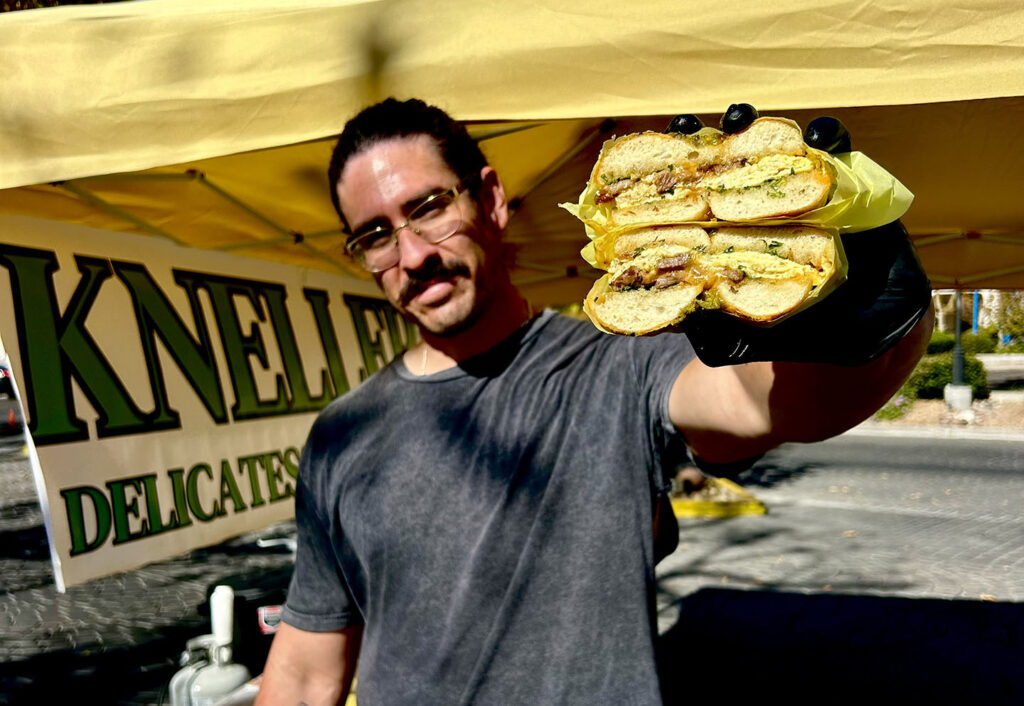
“[A good deli] is like a barbershop with food; everyone knows each other by name and it’s just cozy,” Jeremy Kneller Hernandez, owner of Kneller’s Delicatessen & Appetizing in Tucson, Arizona, told the Journal. “When I have people in the deli here, who are literally hanging out all day eating breakfast and lunch and talking to people … it warms my heart.”

Hernandez – whose father is Hispanic and from East LA; his mom is Jewish from Queens – would spend summers with his grandparents in New York. There, family gatherings were never missed and his bubbe’s cooking was non-stop in the kitchen.

“The aroma of brisket, kugel, rugelach, and schmaltz – so much schmaltz  – would fill the air with a sense of warmth and a lot of love,” he said. “My grandpa and I would hit a delicatessen almost every morning before Oyster Bay for a day of fishing or the Shea Stadium for a Mets’ game.”

After working in the world of food since age 15 – and feeling as if the deli was a second home – it was finally time for him to open his own place. He wanted to bring the deli vibe to the desert.

Jeremy Kneller Hernandez shares his love of deli, his dual-cultural upbringing (“ I’m very grateful to have had both experiences,” he says.), and the role of music in his life and in the kitchen. He talks about some of the ways he “spices up” traditional deli food and his take on his great aunt’s knish recipe, which you can find at JewishJournal.com/podcasts.

“There’s something about the flow of making knish,” he says. “It’s a beautiful melody that comes together with just perfect timing; it’s fun to make and it’s really fun to master.”

Learn more about Jeremy Kneller Hernandez and Kneller’s Delicatessen & Appetizing at knellersdelicatessen.com and follow @knellersdelicatessen on Instagram and Facebook.

For the full conversation, listen to the podcast:

Watch the interview:

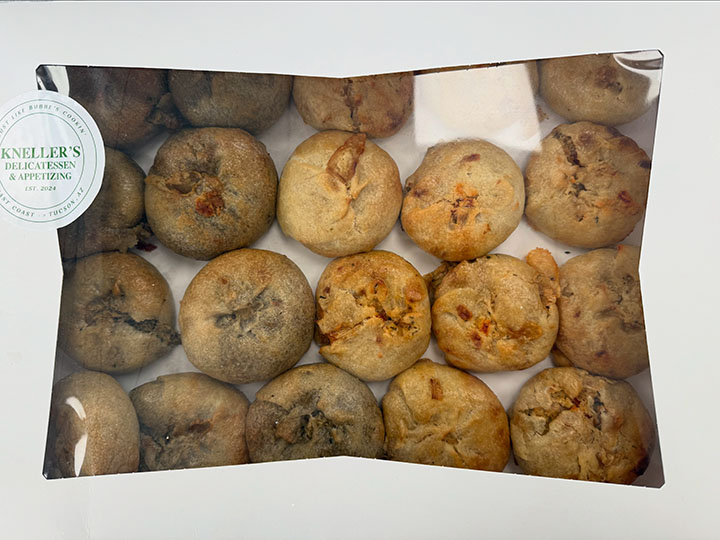
Knish Recipe

yield – 25 knish


Filling

5 russet potatoes peeled

1 yellow onion peeled and diced

1/3 cup butter

2 tbsp chopped fresh thyme

1.5 tsp white pepper ground

2 tbsp garlic powder

salt and pepper to taste

Knish Dough

5 cups all purpose flour

2 tsp baking powder

1.5 cups blend canola oil

2 beaten eggs

2 tsp white vinegar

1 cup warm water

Instructions

For the Filling:

Boil a large pot of water and salt the water ALWAYS. Quarter your potatoes and boil for about 20 minutes until tender with a fork. While potatoes are boiling, dice your onion and caramelize them in a pan with a couple of tablespoons of oil. Let them caramelize on low until it renders and turns brown. When potatoes are done boiling, drain them then add them into a large pan or keep in the pot. Add butter to melt. Roughly mash them. You don’t want them to be smooth but a little rough and slightly chunky. Add and mix all the rest of your ingredients for the filling and then let cool in a fridge for 30 minutes.

For the Dough:

Grab a large mixing bowl. Mix thoroughly your flour, salt and baking powder. Create a well in your flour. Whisk all the rest of your ingredients separately from the dough. Once mixed, add it into your flour well. Mix rapidly and thoroughly with your hand until it forms a solid one ball. Place on the counter with a pinch of flour and knead the dough for 5-7 minutes. Put back in the bowl as a ball and cover with plastic wrap or towel and let proof for 30 minutes at room temp.

Have some extra flour handy. On a large flat smooth counter throw your dough ball on the counter. Cut the dough into 6 evenly pieces. Throw some flour on the counter and start pressing down on the ball with your palm to make a square like shape about 10×10. Use a roller and roll out your dough ball so it is slightly translucent and rectangular 20×10. Grab an egg and scramble it to egg wash the top end of your pastry dough sheet. Place a log of your knish filling on the bottom of the dough and leave 2 inches from both sides and bottom. Wrap the bottom of the dough sheet on top of the filling log and roll it out all the way. Then close and fold the sides on top. Cut some off if there is too much extra. make 5 indentions evenly with your hand like a karate chop. Then slice them with a knife or dough scraper. Then fold in each piece to make an enclosed knish ball. Repeat this with the rest of the dough and filling. Then preheat your oven to 350 degrees F. Egg wash your knish on parchment paper on a sheet tray. Bake for 15-17 minutes. Enjoy.


Debra Eckerling is a writer for the Jewish Journal and the host of “Taste Buds with Deb.Subscribe on YouTube or your favorite podcast platform. Email Debra: tastebuds@jewishjournal.com.

Jeremy Kneller Hernandez: Deli Nostalgia, Culture and Knish Read More »

France, Antisemitism and Dr. Seuss

“An act of antisemitic hatred.”

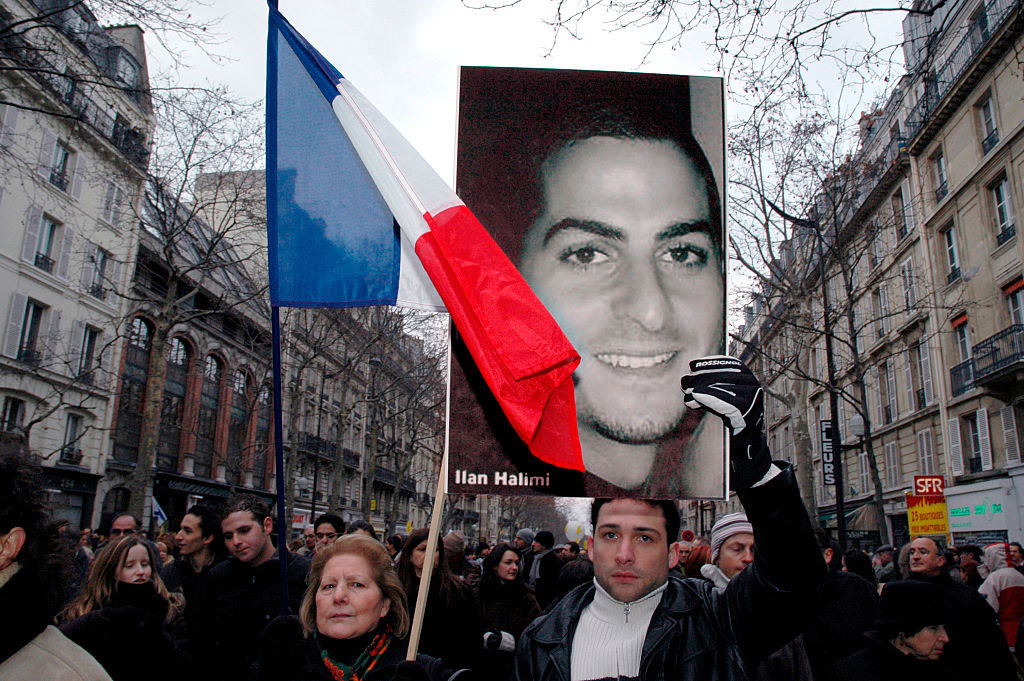
That’s how French President Emanuel Macron described the recent chopping down of a tree in a Paris suburb that had been planted in memory of Ilan Halimi, a French Jew who was tortured to death by a Muslim gang in 2006.

Ironically, the French authorities initially denied the antisemitic nature of the murder, despite ample evidence. The government also insisted on keeping the trial of the killers behind closed doors, on the grounds that two of the 27 defendants were slightly under 18 years of age. The Halimi family suspected the authorities were trying to downplay the role of antisemitism in the killing.

Today, however, there is no dispute that the crime was motivated by antisemitism. And now France’s president says that the chopping down of the Halimi memorial tree also qualifies as antisemitism.

One wonders if Macron would be willing to acknowledge the role of antisemitism in numerous French actions and policies in past decades.

For example, if cutting down a tree is antisemitic, was it antisemitic to protect an indicted Nazi war criminal?

For more than a year after World War II ended, the French authorities allowed a notorious Nazi collaborator, Grand Mufti Haj Amin el-Husseini, to reside in a comfortable villa in a Paris suburb—even after he was indicted as a war criminal by the government of Yugoslavia, for assisting the Nazis in various ways, including committing atrocities.

When international pressure for the Mufti’s arrest intensified in 1946, the French allowed him to “escape.” The Palestinian Arab leader boarded a TWA flight to Cairo and was granted asylum in Egypt.

Is it antisemitic to say that all Jews are “domineering” (dominateur)? That’s what French president Charles DeGaulle said at a press conference in 1967. He alleged that Jews “through the ages” acted like “an elite people, sure of itself and domineering,” and thereby “provoked—caused, more exactly—a tide of ill-will in certain countries and at certain times…”

DeGaulle insisted he was not antisemitic. A poll by the French magazine L’Express found 44% of the French public agreed with what DeGaulle said about Jews. No doubt they, too, would have denied being antisemitic.

How about protecting modern-day killers of Jews, and condemning Israel for fighting them? Is that antisemitic? The French government condemned Israel for killing Arab airplane hijackers during its rescue at Entebbe in 1976. The following year, the French detained and then quickly released Munich massacre mastermind Abu Daoud, enabling him to find haven in Algeria.

Yet when Islamist terrorists struck in Paris—rather than against Israeli Jews—hypocritical French leaders used language that they denounced when Israeli officials spoke similarly.

French President Francois Hollande said the ISIS attacks in Paris in 2015 were carried out by “barbarians,” towards whom France should show “no mercy.” The French responded to those attacks with air strikes on medical clinics, a soccer stadium, and a museum that were near ISIS terror encampments in Syria. Yet last October, President Macron declared an arms embargo against Israel because some civilians in Gaza were harmed as a result of Hamas barbarians embedding themselves in medical clinics and other civilian sites in Gaza.

Today, President Macron waxes indignant about the Halimi tree, while threatening to recognize the “State of Palestine.” One might ask which is more antisemitic—cutting down a tree, or rewarding the mass murder, torture, and gang-rapes of 1200 Israeli Jews?

It should be noted that there are separatist movements active in the northwestern French region of Brittany; in Savoy, along the French-Swiss border; and on the French-occupied island of Corsica. But Macron has not said a word about recognizing their claims to statehood.

According to the IHRA definition of antisemitism—used by 46 countries, including the United States—one example of antisemitism is  “Applying double standards by requiring of [Israel] a behavior not expected or demanded of any other democratic nation.” In the case of Macron, it’s even worse—he’s demanding that Israel do something which he himself is not willing to do. And it’s something much more consequential than cutting down a tree.

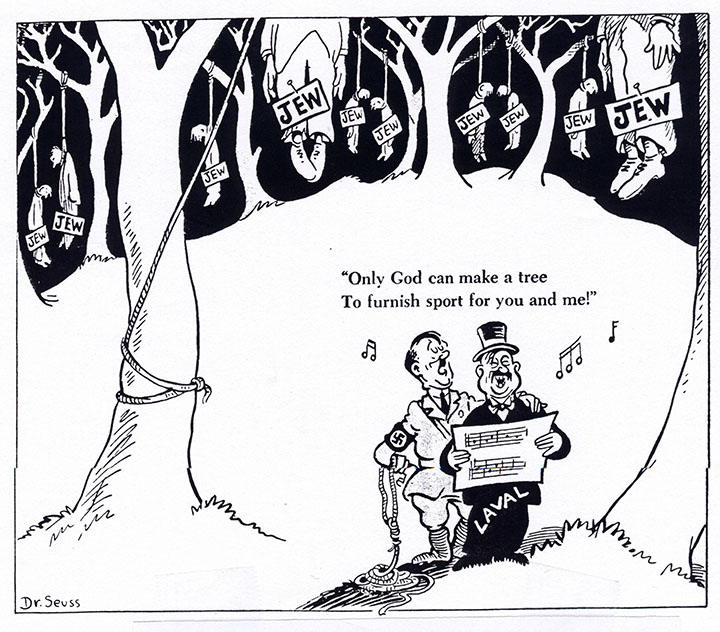
Dr. Seuss, the beloved creator of children’s books such as The Cat in the Hat, once drew a remarkable cartoon on the subject of France, Jews and trees. It was in 1942, when Seuss was the editorial cartoonist for the New York City newspaper P.M.

That summer, the Nazi forces occupying France began the mass deportation of Jews from France to Auschwitz. The collaborationist French government headed by Prime Minister Pierre Laval helped carry out the mass arrests.

In P.M., Seuss drew a cartoon showing Laval and Hitler, in a forest, singing the words of the famous poem “Trees,” by Alfred Joyce Kilmer. All around them, the corpses of dead French Jews hang from the trees. Seuss showed Laval and Hitler adding a line of their own to the poem, describing the murder of the Jews as “sport for you and me.”

Killing Jews for “sport” has been all too common throughout history, whether by the Nazis and their helpers in 1942, the Munich Olympics attackers in 1972, the killers of Ilan Halimi in 2006, or Hamas in 2023. The best way to honor Ilan’s memory is both to condemn those who desecrated his memorial, and to stand up against all those who commit anti-Jewish atrocities.


Dr. Medoff is founding director of The David S. Wyman Institute for Holocaust Studies and author of more than 20 books about Jewish history and the Holocaust. His book The Road to October 7: Hamas, the Holocaust, and the Eternal War Against the Jews will be published on October 1, 2025, by The Jewish Publication Society / University of Nebraska Press.)

France, Antisemitism and Dr. Seuss Read More »