
fbpx

December 13, 2024

ASIF Follow the Food Tour

Since Oct. 7, Asif has focused on supporting frontline soldiers and families impacted by the war, while also bolstering the local culinary community. Asif is a non-profit organization and culinary center in Tel Aviv, dedicated to cultivating and nurturing Israel’s diverse and creative food culture.

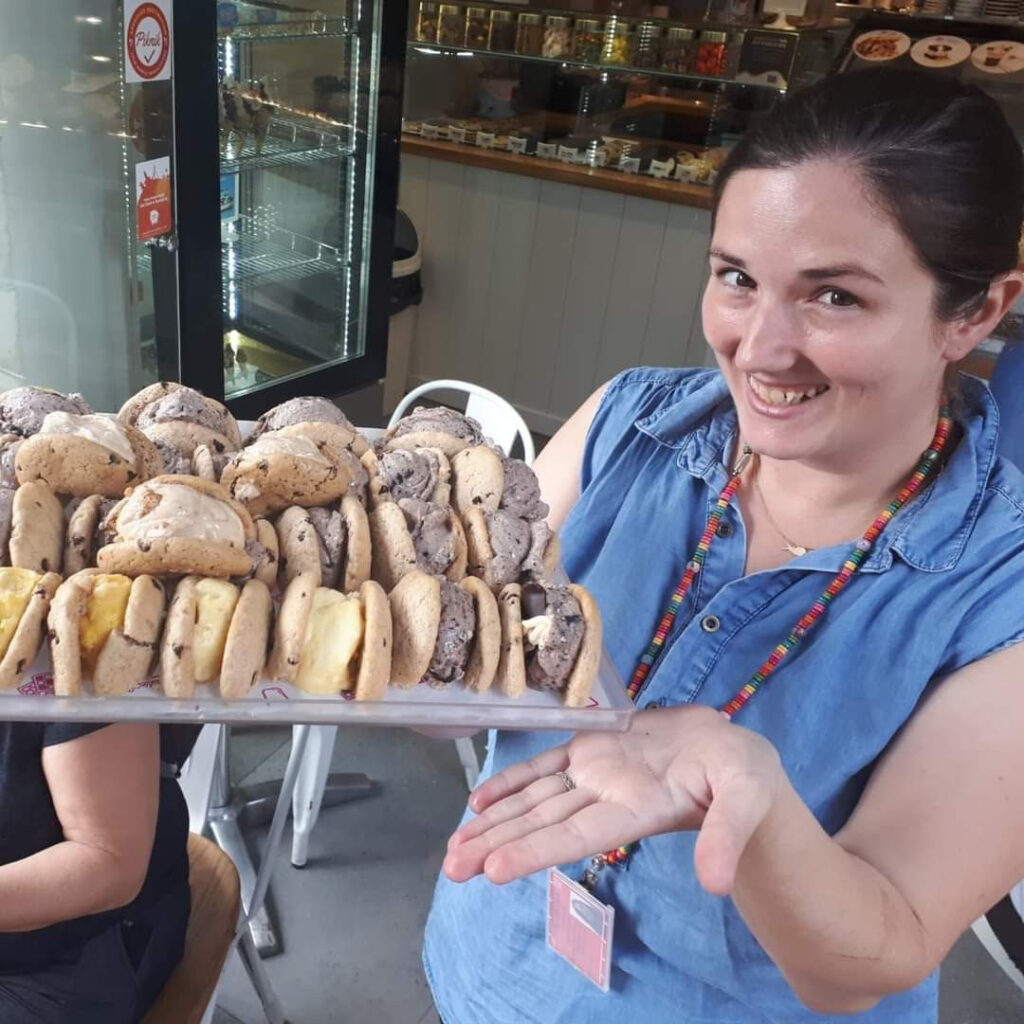
ASIF’s Follow the Food initiative, which began in April, has been supporting food tours around Israel by raising money to sponsor free tours with Israel’s top independent tour guides. As a result, it has breathed life into Israel’s economy, tourism and food/restaurant industry.

“We’re talking about 20 tours every week, for months, so it’s a real financial boost for them,” ASIF CEO Chico Menashe told The Journal. “At Asif, we believe food has the power to connect, nourish and heal; food is an essential part of our personal resilience, but also the national resilience.”

There’s an added benefit.

“With Follow the Food, we are providing respite for the partners of soldiers in the field by enabling them to go on food tours across many regions in Israel,” Menashe said. Almost 4,000 soldiers’ partners have already participated.

“To be able to bring them several hours of distraction while simultaneously lifting up the food tour guides and businesses who need our support feels like a win all around,” Menashe said. “It’s a three-way impact project: the women’s wellbeing, the businesses economical condition and the tour guides financial survival.”

Menashe said ASIF’s initiative is practically the only one that is accessible in scale, diversity and quality to soldiers’ partners all over the country. And it’s entirely free.

“We see a group of women doing our tours at the Haredi food spots in Jerusalem, and on such a tour we see settlers from Judea and Samaria, sitting down with Tel Aviv and Beer Sheva wives that registered for that tour in Jerusalem,” he said. “They meet each other for the first time: Magic happens there.

“They’re all being exposed to culinary culture they have never before encountered, doing their shopping in stores they have never visited and always declaring they plan to come back,” he continued. “In some of the stops they sit down to eat together and find themselves in a natural support group of women that are in their same situation.”

The tour business owners are also seeing the benefits.

For instance, Michal David, who was born and raised in Tel Aviv, is a tour guide, artist, baker and mother of two. She leads vibrant and delicious culinary tours through Tel Aviv’s bustling markets, showcasing the flavors and stories that make the city special.

“This year has been incredibly challenging,” David told The Journal. “As a tour guide, my business has slowed to almost a complete stop.”

At home, David remains sole parent to her 6- and 3-year-old children, while her husband has served 250 days in Gaza and Lebanon this year.

“Joining Asif’s project, guiding women like me who are facing tough circumstances and bringing life back to the markets through tours, has been a true highlight and an incredible privilege,” she said.

Courtesy of Adi Rozen

Adi Rozen is a resident of Netiv HaAsara in southern Israel and owner of the culinary tour company “Culinary Story.” Rozen continues to promote her unique culinary tours, despite her husband being on reserve duty most of the time since Oct. 7 and her family still being evacuated.

Rozen’s tours, which take place in Sderot, Ashkelon, Arad, Kiryat Malachi, Ashdod and Netivot, offer participants a chance to experience the magic of the south through flavors, stories and heartfelt encounters with locals.

“Joining such a tour isn’t just about enjoying good food,” Rozen told the Journal. “It’s about discovering a rich culture, supporting local businesses, giving reserve soldiers’ families a breath of fresh air and connecting with remarkable people.”

“Joining such a tour isn’t just about enjoying good food … It’s about discovering a rich culture, supporting local businesses, giving reserve soldiers’ families a breath of fresh air and connecting with remarkable people.” – Adi Rozen

At the beginning, ASIF thought the “Follow the Food” tours would be a nice benefit, but still wanted to check its impact before moving forward.

“The reactions we got from the participants were overwhelming to us,” Menashe said. “Hundreds of women sent us personal messages telling us, ‘It’s the first time during the last three months that someone got me out of the house, from my three kids, I needed that air; I feel someone really thought about my wellbeing.’” 

Now, thoughts are to expand it, making this project accessible not only to soldiers’ partners, but to every Israeli.

“It educates people on our unique food culture, which unites Israelis, while getting needed support to the culinary ecosystem,” Menashe said. “I plan to have vans getting out of Israeli workplaces every day, travelling to the north and south with their employees, to take part in this mission; now I only need to find the right partners for us that will want to join our journey and support it.”

If ASIF succeeds in raising the needed funds, they hope to keep doing these tours next year and scale it to an even higher level.

“Our dream is to be a part of the even wider national mission: to rehabilitate the north and the south,” Menashe said. “Our part in this mission is to do it through strengthening the small food businesses in these areas.”

ASIF Follow the Food Tour Read More »

Survival Optimism

Rachel lived a life of broken dreams. She was in love with Jacob, waiting seven long years for marriage, only to be betrayed by her father at the wedding. For years, God holds Rachel childless. In her distress, Rachel quarrels with her husband and sister. And in the end, Rachel dies in childbirth, a young woman. Her body is too bloody to be carried to the family burial plot; so she is buried hastily on the side of the road, alone.

In her final moments, Rachel fully expresses her anguish. She had so desperately wanted children that she once told Jacob “give me children; if not, I will die.” Ironically, Rachel ends up dying in childbirth; and with her last breaths, she expresses a lifetime of frustration when she declares that her baby should be called Ben-Oni – “the son of my sorrow.” Rachel has known too much sorrow in her own life; and this baby is a living tribute to her broken life.

Rachel’s lament becomes part of her legacy. Jeremiah, (a Kohen who lived among the tribe of Benjamin,) writes that when the Jews went into exile, one could hear the voice of “Rachel weeping for her children, refusing to be comforted for her children, for they are gone.” Rachel, the woman who sacrificed her life so Benjamin could have his, cannot bear to see the exile of her descendants.

Her cry is a bitter call of protest. In kabbalistic practice, special prayers known as Tikkun Chatzot are recited at midnight. One section is known as Tikkun Rachel, which bewails the destruction of Temple. In the Jewish imagination, Rachel refuses to accept the broken reality of this world.

Rachel knows the bitterness of a life interrupted, pulled apart by multiple moments of alienation from one’s dreams; and she will forever be our mother Rachel, who cries with us, and for us, when we stand at a painful distance from our own destiny.

Not so Jacob. He doesn’t accept the name Ben-Oni, and instead, offers a new name for the child: Ben-Yamin, or Benjamin.

Rashi explains that Yamin is the Hebrew word for right side; and if one faces east, the right side corresponds to the South. (The Arabic word for Yemen may have the same derivation.) Israel, Rashi explains, is to the South when one comes from Aram (where Jacob had just lived for 20 years).  Jacob is declaring that Benjamin is his only child who was born in the South, i.e., Israel. Instead of focusing on sorrow, Jacob’s choice of name tells a story of redemption, of a family that finally has come home.

The Ramban offers a different interpretation. Yamin, the right side, is the side of strength. Benjamin is the “son of strength,” a child meant for greatness.

The Ramban adds another thought-provoking point. He explains that the Hebrew word Oni actually has two possible meanings; sorrow and strength. Even though Jacob modified Rachel’s name for her son, Jacob didn’t want to uproot it entirely. Instead, he reread Oni as meaning strength instead of sorrow. This allows the name Benjamin to remain the equivalent of Ben-Oni, and for Jacob to continue to respect the name Rachel chose.

I always thought the Ramban’s explanation was disingenuous, some clever linguistic sophistry. But actually, it reflects a profound truth, that the ability to carry on despite sorrow is a source of enormous strength. Ezekiel says “that in your blood you shall live.” The name Benjamin expresses the very same idea: sorrow and strength are often close companions.

According to both Rashi and the Ramban, the name Benjamin reframes the story; instead of focusing on the tragedy of Rachel’s death, it focuses on a better future. Even after burying his beloved, Jacob turns to optimism. But how does he do that?

This question is not just about Jacob; it is about Jewish history. While we might make jokes about Jewish pessimism, Jews have always been optimists, even in the worst of times. We never lost hope, and never stopped believing in redemption.

Many see Jewish optimism as connected to the belief in the Messiah; if you dream of a better world, you have to be an optimist. And this Biblical dream has spread throughout the world; for centuries philosophers and social scientists have preached about the possibility of unending progress, perhaps even an “end to history.”  Those dreams are messianic dreams, and simply a commentary to Isaiah’s prophecies.

But that isn’t the source of Jacob’s optimism.

Jacob is holding an orphan in his hands. He must make a decision; will he wallow in grief, or will he raise this child properly? You cannot raise a child by telling them they are a cause for sorrow. Like every child, Benjamin has a gift to bring to this world; it must not be eclipsed by sadness.

This is survival optimism.

During my career, I have seen awful tragedies; and none are worse than a parent who loses a child. Yet those same parents, bereft and broken, change their tone and demeanor when they are with their other children. There is an intuitive understanding that they must live, if not for their own sake, for the sake of their remaining children.  They know they must learn how to savor life, and once again embrace hope, because the survival of their family demands it.  They have no choice.

This is survival optimism. It is primal, a call from inside that declares “I shall not die but live.” (Psalms 118:17) And in order to live, you must embrace a bit of optimism to nourish the spirit.

In the last year, several stories have appeared in Israeli media about widows of soldiers who have given birth. These women are the mirror image of Rachel, giving birth to children who will never know their father. The stories are touching; hospital staff, friends, and even complete strangers assist them in every conceivable way. The mothers speak about the void they feel, but also, how they feel this child brings them even closer to their late husbands. And they vow to bring the child up to proud, to be strong, and to be happy.

They have optimism because they know that is what life demands of them.

And there is nothing more sacred than survival optimism.


Rabbi Chaim Steinmetz is the Senior Rabbi of Congregation Kehilath Jeshurun in New York.

Survival Optimism Read More »

Pity the Poor Antisemite

The antisemite must be the most frustrated person on the planet. Has anyone ever put more effort into any project? And what does he have for millennia of dedicated effort?

After the Jews lost their temple and their sovereign state two thousand years ago, they wandered wherever they could find refuge—from Babylonia, eventually to Europe and north Africa and later North America.

Each host country in time turned on the Jews as scapegoats for hard times or, most often, as an excuse for religious persecutions. Being a Jew in a Christian land or a Muslim state was not a long-term solution to statelessness. Too many stubborn Jews refused to convert in spite of intense pressure and chose to practice their religion in secret or leave for temporary greener pastures elsewhere—hence, “The Wandering Jew.”

And they survived. Every country that took in Jews benefitted enormously from their industriousness, energy, intelligence and efforts. Eventually, though, those Jews became “too powerful” or “too different” to fit in, so they were expelled (in England in 1290, in Spain in 1492, in Portugal in 1496).

The Jew had the misfortune of having the wrong religion, even if it was the one that gave birth to the others. Later in history, it was decided that it was their race that was hated. That’s when Jewish life became really dangerous. You can convert from your religion, but you can’t convert from your race. So, it was no longer good enough to expel the Jews who wouldn’t convert. They had to be killed. And now, in our time, it is the nation state of the Jewish people that is the cause of all the problems in the world. For the antisemite, Israel must be delegitimized at all costs in order to destroy it.

Imagine the horror and dismay of the antisemite. After two thousand years, at the mercy of others, defenceless, alone, needing to run anywhere they would be taken in, the Jews rebuilt their ancestral homeland and created a modern, vibrant, prosperous country out of the desert. That is unbearable to the poor antisemite. It must be dismantled at all costs.

Israel makes its neighbors look bad. Democracy in the Middle East? Jews and Muslims living as citizens in a Jewish country? Opportunity and prosperity for all? No, this is intolerable. Israel must be portrayed as an interloper, oppressor, foreigner. Truth and history must take second place to outrage.

Israel makes its neighbors look bad.

Jews with an army means that others cannot carry out a pogrom or farhood with impunity. Jewish blood has become expensive. This is not the wandering Jew, the ghetto Jew, the cowering Jew. The antisemite is hysterical. All of his energy, time, effort to erase this remnant, this formerly powerless, troublesome group, and they come back, strong and determined! It is enough to drive a hater to distraction.

The antisemite could have put his mind, such as it is, to create something, to build, to contribute to society, to add value to life, whether in the Middle East, Europe or North America. He and the hated Jews would all be much better served.

Bloody but not bowed, the Jew exists, always tiny in numbers. The small number should signal to the antisemite that the Jew could not possibly control the world, could not be the author of his misfortune, that conspiracy theories are offerings to the feeble minded who will not accept their own responsibility for their lives. Now, the punching bag is punching back and where will this all end?

Well, there’s hope. There’s Iran. Iran spends countless billions with the sole purpose of wiping Israel off the map. It is obsessively focused on that one goal above all else. It has dedicated proxies that surround the Jewish state in a constant state of war and successfully enlist support from antisemites throughout the world. They have the same zeal and goal as the Nazis. Will they succeed where others have failed? Ask the Assyrians, the Babylonians, the Persians, the Romans, the Greeks who all failed and whose great empires are now dust and ashes.

What the antisemite can do is cause damage, inflict pain and loss, celebrate death, wreak havoc on a grand scale. He breaches every norm of civilized life as embodied in the U.S. constitution, Canada’s Charter of Rights and Freedoms, and the U.N. charter and Enlightenment values, not to mention normative religious values.

The endless suffering of the Jew and the frustration of the pathetic antisemite make a hell of a world that is filled with much beauty and mostly decent people. The antisemite is the most extreme and enduring symptom of a society in crisis. His bitterness and rage are not shared widely in normal times, but when tears appear in the social fabric, the reaction is not better policies and rational examination of problems but radical and harmful responses. This predictable and destructive cycle has a long history and causes so much needless pain.

The yearning for a better life of peace and tranquility is as permanent and desirable as the persistence of hatred and destruction. Someday, the arc of the moral universe will bend toward justice, in the immortal words of the Reverend Martin Luther King, for Jews and for all people. Someday.


Dr. Paul Socken is Distinguished Professor Emeritus and founder of the Jewish Studies program at the University of Waterloo.

Pity the Poor Antisemite Read More »

The Angel – Comments on Torah Portion Va-Yishlach 2024

The Angel – Comments on Torah Portion Va-Yishlach 2024 (adapted from previous versions)

c Rabbi Mordecai Finley

In our Torah portion, Va-Yishlach, we have one of the most dramatic and vivid scenes in the Bible – Jacob wrestling with an angel. Except, in our Torah portion, it is never written that Jacob wrestled with an angel. The image that Jacob wrestled with an angel comes from Hosea 12:5, not the narrative contained in Genesis 32. Here is what it says in Hosea:


He struggled with an angel and (Jacob) prevailed over him; he (the angel) cried and implored of him (Jacob). He (Jacob) found him (the Angel) at Beit El, and he (Jacob) spoke with him (the Angel) there.


It is clear that Hosea knew of the story in Genesis, but had his own version.


What does it actually say in our Torah portion about Jacob in the wrestling match?


First, the set up. Jacob has been gone from Canaan for 20 years. He left Canaan in fear, after tricking his father Isaac to appropriate the birthright from his brother Esau. After being deprived of the birthright blessing, Esau announced his intention to kill Jacob once Isaac passed away.


Jacob was stuck. None of this was his idea. It was Jacob’s mother, Rebecca, who had instigated this plan at the implied behest of God. By urging Jacob to carry of the ruse, Jacob certainly had the blessing of his mother. Eventually, Jacob received the birthright blessing from his father, Isaac, as himself, not masquerading as Esau. Affirming Rebecca’s plan, God blessed Jacob in the dream of the ladder connecting heaven and earth. The blessings of Rebecca, Isaac, and God aside, Jacob fears that Esau still resents him and will fulfill his intention to kill him on sight, announced 20 years earlier. Resentment sometimes only deepens with time. The idea that Esau would bless him was probably beyond his imagination.


Twenty years passed and Jacob returned to Canaan. He arrived at the border of Canaan ready for a fight but hoping for a truce. He ferried his family across the river Yabok, but suddenly found himself alone. The story picks up here – it is worth citing fully, from Genesis 32:


Jacob was left alone. An “ish” (unidentified person) wrestled with him until the dawn arose. And he saw that he could not overcome him, and he struck the socket of his thigh, and the socket of Jacob’s thigh was strained from his wrestling with him. And he said, “Let me go, for dawn has broken!” And he said, “I won’t let you go unless you bless me.”


And he said, “What is your name?” He replied, “Jacob.” And he said, “Jacob will no longer be your name, but rather Yis’ra’el, “ki sarita im Elohim ve’im anashim, va-tuchal” _ “for you have striven with beings divine and mortal, and you have prevailed.”


And Jacob asked, saying, “Please, tell me your name!”  And he said, “Why would you ask for my name?” And he blessed him there.


And Jacob called the name of that place, “Peni-el” (The Face of God), for I have seen God face to face, and my soul has been saved. And the sun rose upon him as he passed Penu-el, and he was limping on his hip.


Who was the “ish,” “a man,” the unidentified person? In my reading of this text, the person that Jacob wrestled with was his brother Esau, not an angel. Why would Esau attack him in the middle of the night, wrestle with Jacob, lose the match, and then bless Jacob with a new name?


In my mind, Esau knew that Jacob had the blessing of his mother, his father, and of God, but not his, Esau’s, blessing, the Esau whom Jacob had wronged. Jacob had gained the blessing of the birthright through trickery. Esau now gives Jacob the gift of fighting for the blessing, fair and square, hand to hand combat. No masking, no chicanery. Straight up. “You want this blessing – you’ll have to fight for it.” Esau gives Jacob a chance to redeem himself.


Jacob prevails over Esau, and Jacob’s name identity, and name, is changed. Esau says that Jacob is no longer the Usurper/Trickster (the meaning of the name Jacob; see Genesis 27:35-36). Esau, who labeled his brother The Deceiver, now grants his brother the name Yis’ra’el – “the one who struggles with beings divine and mortal” and who prevails.


Only Esau could change Jacob’s name. In doing so, Esau helps Jacob escape his stained identity, his shame wound. Esau facilitates Jacob’s birth into a new being. Esau blesses Jacob with the blessing that Jacob needed most, and only Esau could grant that blessing. In changing Jacob’s name, Esau is also saying that Jacob has changed his nature. Jacob’s nature was no longer the trickster, he was now The God-wrestler.


Only Esau could grant that moment, that moment of external validation of an inner change. A conversion experience, if you will. Not to a new religion, but to the birth of a new self. At that moment, Jacob saw God face to face, the God who is present at a moment of radical transformation. God’s presence was channeled through the gracious, forgiving, and wise actions of Esau. Esau channeled the divine.


“What is your name?” Jacob asked, just as Jacob’s father Isaac had wondered who it was that was seeking his blessing, 20 years earlier. Jacob’s opponent was hiding his identity, just as Jacob hid his identity from his father.


Esau says, “Why would you ask my name?” As with most “why” questions, it was not a question, it was a subtle rebuke. I imagine Esau, who had somehow masked himself, thinking, “My name is not the question at hand. Your name is the focus. Let’s focus on one thing at a time.”


He is really Esau – the brother whom he had wronged, and who has now forgiven him.


Who was Esau? Esau was the brother rejected by God, as Cain had been rejected by God. In rage, Cain killed his brother Abel, proclaiming he was not the guardian of his brother. Esau, however, does not kill his brother, the one favored by God. Esau is in essence saying, “I am, indeed, my brother’s keeper.” “Even though God has not favored me, I am nevertheless by brother’s keeper.” Esau, however, goes much further than overcoming his anger and not killing his brother. Esau atoned for the sin of Cain.


Esau re-entered Jacob’s life at a turning point. In my reading of this text, Jacob had been fearing this moment for 20 years. Jacob had been having nightmares about this confrontation the whole time. Jacob is wracked by guilt and shame. Yes, his mother, father, and God had approved of Jacob’s getting the birthright through trickery, but Jacob bore the moral burden. Only Esau could lift it.


Esau lifted that burden. The wrestling between the brothers that began in the womb has finally ceased. Jacob was no longer grasping at his brother’s heel. Jacob has prevailed – over capricious fate that had Jacob become a usurper. And Jacob prevailed over his brother in a wrestling match, fair and square. Jacob has been redeemed. “I’ve seen God face to face, and my soul has been saved.” Esau, in a moment into which the divine presence has been channeled, has saved Jacob’s soul. (In my reading, Esau threw the fight, once Jacob had proven that he was willing to fight for the blessing.)


I see I have made a mistake. I now believe that Esau, the singular agent of another’s redemption, actually was an angel, a human being on a mission from God.


In my reading, Esau’s identity had also changed. He was no longer the hunter. Esau was now the man of the tents, studying God’s ways.


Each of us is Jacob, yearning for transformation. Each of can be Esau, leading another person to a moment of transformation. Each of us can be Rebecca, guiding another person toward overcoming anger, resentment, and grudges, and allowing new life to be born.


As I have said many times, Esau’s teacher, the agent of his transformation, was Rebecca, now a professor at the mythical Beit Midrash of Shem and Eber (specializing in Leviticus 19:17-18). And as I have also said many times, the teaching that transformed Esau is recorded in the yet to be written Midrash of Rebecca, which I hope to write, if an angel gives me the blessing to do so.

The Angel – Comments on Torah Portion Va-Yishlach 2024 Read More »