
fbpx

October 20, 2024

Change in Defense and Deterrence Doctrine?

In a confidential report from Iran’s Islamic Revolutionary Guard Corps (IRGC) to officials working on the country’s nuclear program, the supreme leader Ali Khamenei’s desired course of action is outlined. It asserts that while the regime’s missile capabilities are a significant factor in the “deterrence power of the Islamic Republic,” considering the “ongoing regional conflict” and the possibility of its escalation, the regime now needs a “higher level of deterrence.” The current balance is inadequate for the “next stages” of the conflict, and the report suggests that the “best solution is to alter the nuclear doctrine and design a new balance of power model.”

The balance of power in the region has dramatically shifted following the killing of Hassan Nasrallah and the severe blows dealt to Hezbollah, Hamas and other proxy forces. The regime’s so-called “strategic depth” has, in its own words, been shattered.

According to revelations by the Iranian opposition group, the National Council of Resistance of Iran (NCRI was the first to reveal Iran’s secret nuclear program in 2002), a report following the regime’s second missile strike on Oct. 1 stated that in Operation Vow of Truth 2, “ballistic and hypersonic missiles were used.” However, the report stressed that repeating similar missile strikes would “achieve nothing new” and could instead escalate into direct military confrontations between Iran and Israel, further destabilizing the already unpopular regime and paving the way for another uprising. For this reason, the Iranian regime aims to avoid direct confrontation, referring to this tactic as “strategic patience.”

Shift in Defense or Deterrence Doctrine?

On Oct. 9, 2024, 39 members of Iran’s parliament wrote to the Supreme National Security Council, calling for a shift in the regime’s defense doctrine to include nuclear weapons. Hassan Ali Akhlaqi Amiri, a member of the parliament’s cultural committee, referred to Khamenei’s “fatwa” that forbids nuclear weapons, but noted that “in Shi’ite jurisprudence, time and place influence rulings, and secondary rulings can replace primary ones.”

That same day, parliamentarian Mohammad Reza Sabaghian stated that they would ask Khamenei to reconsider and change the strategy on nuclear weapons. He added, “Building nuclear weapons would be easy for us … In the current situation, to ensure deterrence and national security, developing nuclear capabilities is necessary. The enemy seeks to weaken Iran’s deterrence through negotiations, assassinations, and military threats. We must not neglect to strengthen our deterrence.”

On Oct. 11, former Foreign Minister Kamal Kharazi stated in an interview with Al Jazeera that “if the Zionist regime dares to harm Iran’s nuclear facilities, our deterrence level will change, and if Iran’s existence is threatened, we will have no choice but to change our nuclear doctrine.”

On Oct. 12, Brigadier General Haq-Talab, commander of the IRGC’s Nuclear Facilities Security Corps, said, “Revising the doctrine and nuclear policies of the Islamic Republic of Iran and departing from previously announced positions is both possible and conceivable.”

That same day, Brigadier General Rasoul Sanayee Rad, Deputy Political Director of the Commander-in-Chief’s Ideological-Political Office, said, “Some politicians have raised the possibility of changes in strategic nuclear policies.”

Also on Oct. 12, parliamentarian Mohammad Manan Raeesi declared that “the nuclear doctrine of the Islamic Republic must change … To achieve maximum deterrence, there is no avoiding a shift in the nuclear doctrine. Currently, we are not far from this goal. Fortunately, over the past year, we’ve made significant progress in the nuclear field. God willing, within six months, we will achieve this capability.”

It seems that the Iranian regime is aiming to follow the model set by North Korea.

It seems that the Iranian regime is aiming to follow the model set by North Korea.

The Real Threat is Inside Iran, Not at the Borders

It is said that Iran has enough enriched uranium for eight to ten nuclear bombs and could test its first within weeks. However, the U.S. has repeatedly stated—and made it clear to the Iranian regime—that it will not allow Iran to acquire nuclear weapons. The regime knows that testing its first bomb would cross a red line, making any retreat impossible.

A government-affiliated newspaper, however, suggests that the existential threat to the Iranian regime doesn’t come from external enemies but from within.

Emerging from the Middle Ages and unable to meet the needs of its people in the 21st century, the Iranian regime has relied on repression from the very beginning. To hide this repression, it has stirred up war, crises and terrorism outside its borders. This has been the mullahs’ survival strategy: creating proxy forces to wage war and spread terrorism. The regime called this its “strategic depth,” extending into Syria, Iraq, and even the Red Sea.

With its “strategic depth” collapsing, the regime faces two paths:

  • Continue supporting its proxies, thus accepting direct confrontation with Israel. In this scenario, Israeli strikes could destabilize the regime, creating the very situation Khamenei sought to avoid at the start of the conflict, and setting the stage for new uprisings.
  • Withdraw support for its proxies, which would require the regime to open up domestically and reduce repression to some extent. Until now, the regime has used war as a cover for its oppression. But without warmongering, the regime would have to allow more openness. After 40 years of repression, this would likely lead to a massive explosion of public discontent, like a powder keg finally detonating.

The Iranian regime is trapped in a strategic deadlock. If it pursues nuclear weapons, it embarks on a path of no return. If it does not, it still faces inevitable collapse at the hands of its own people. The regime’s only choice seems to be, as Ali Khamenei once warned, between death and suicide out of fear of death.


Hamid Enayat is a political scientist, specializing on the topic of Iran, who collaborates with the Iranian democratic opposition.

Change in Defense and Deterrence Doctrine? Read More »
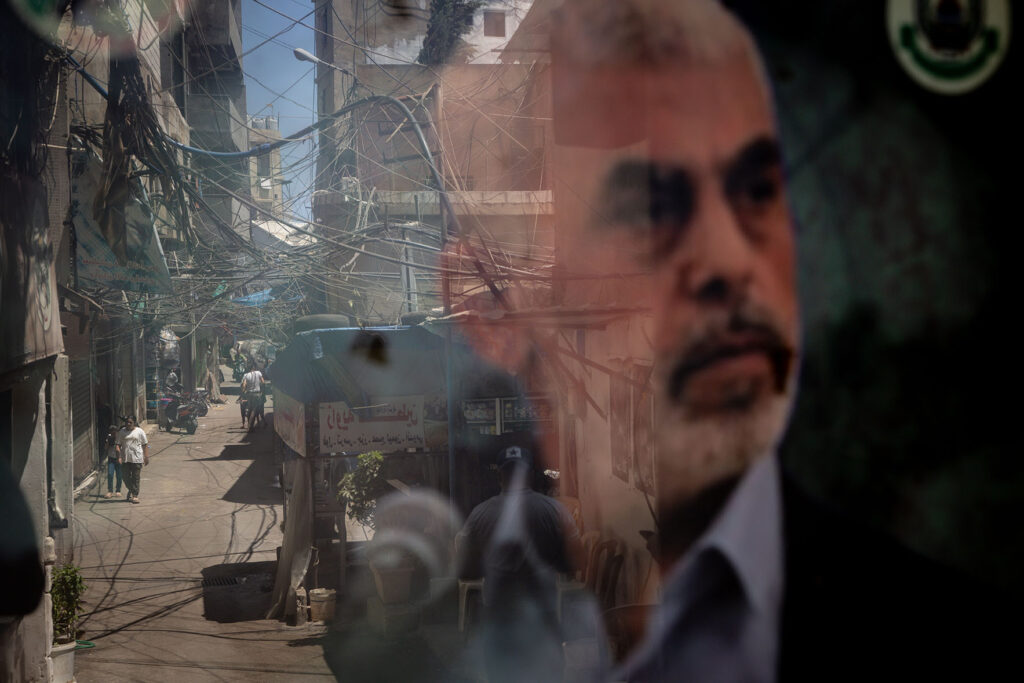
The Year of Living Insanely Dangerously

In 2008, Yahya Sinwar, the mastermind of the October 7 massacre in southern Israel, underwent a surgical procedure to remove a tumor from his brain—in an Israeli hospital!

Yes, I know: Sometimes Jews should have their heads examined.

We’re constantly told by shrieking Jew-haters that Israel has genocidal intent in Gaza. Yet, they cured the most infamous Palestinian terrorist of brain cancer.

Israeli doctors saved Sinwar’s mind so he could one day master the art of killing Jews. Ironically, that same terrorist just had his brains blown from his head in an Israeli surgical strike.

It won’t surprise anyone who has paid attention to the self-fulfilling death wishes and disastrous decision-making of Palestinian leaders since 1947—when they rejected the first of five offers of statehood—that releasing Sinwar, and 999 other terrorists, from prison in 2011 in exchange for one kidnapped Israeli soldier, did not portend that his restored brain would result in a a change of heart. The antisemitic bloodlust of Palestinians is not easily abandoned.

Sinwar was never going to pursue a life of good deeds. Like clockwork attached to a bomb, he went straight back to the mass-murdering drawing board. A dozen years later, he returned Israel’s favor by training and inciting Gazans to behead Jewish babies and rape Jewish girls.

Thankfully, he is now dead, although there are thousands of antisemitic agitators on college campuses, some twisted tikkun olam Jews, the demented confederates from Jewish Voice for Peace and IfNotNow, and the nutjob Neturei Karta Hasidic Jews, who are all mourning his loss.

Sinwar’s bloody hands made him a hero on college campuses and a rock star among the progressive left. Michigan might have elected him governor. If seeing dead Jews makes your day, then the disappearance of a terrorist hellbent on murdering them will leave you bereft. As for the Jewish left, the killing of any Palestinian at the hands of a Jew, no matter how many Jewish lives it saves, is a mortal sin.

Sinwar’s bloody hands made him a hero on college campuses and a rock star among the progressive left. Michigan might have elected him governor.

Tragically, for them, Sinwar was not the only name in the updated obituary that includes a rogues’ gallery of Hamas leaders. Through disciplined, methodical targeted assassinations, Israel has eliminated the entire Hamas command structure: Ismail Haniyeh, Sinwar, Mohammed Deif, Marwan Issa, and Saleh al-Arouri. Three of Haniyeh’s adult sons were killed back in April, just in case they had designs on inheriting the family business.

For all the bluster about annihilating the Jewish state, the Palestinian brain trust took their final breaths in this year of living dangerously on Israel’s Most Wanted list.

So, is it over? Has the war been won?

Hamas’ leaders may have expired, but many October 7 collaborators are doubtlessly still alive. Every last Palestinian who participated in the carnage must receive their due. The moral universe demands it. What’s more, Israelis and other nationalities among the tortured, torched, raped, beheaded, mutilated, murdered and taken hostage deserve nothing less than a total victory.

The mastermind is dead, but the lesser minds of rapists and revelers remain at large.

Israel believes it has killed over 18,000 Hamas terrorists; a scant few battalions are, technically, still in the fight. But Gazans have been conditioned to accept only apocalyptic choices: victory or martyrdom. Nation building. Statesmanship. Contrition? Sorry, not in their moral vocabulary. Even without leaders, Gazans will soldier on.

Rockets are still being fired at Israel, probably at the command of a giddily unhinged Palestinian teenager. There is an inexhaustible supply of Islamic lunatics among Gazans. People who devotedly sacrifice their children as human shields may be awful parents, but they are not without courage, belief, and steely will.

The question Western democracies should now be asking Palestinians: We know you have many Hamas and Islamic Jihad acolytes and recruits to spare, but are there any peacemakers among you? Is it possible two million Gazans actually believe that beheading Jewish babies expresses the best values of your people?

Are you savages, or can you be saved?

Somewhere deep within the Palestinian psyche there must be a wish to see children dressed in school clothes rather than suicide vests, scientists working on life-saving medicines rather than misfired rockets, builders of public works rather than terror tunnels.

Then again, maybe not.

We have no way of knowing how this will end. Given the long history of Palestinian violence and rejectionism, and recent polling showing Hamas to still be wildly popular in both Gaza and the West Bank, recapturing the optimism of the Oslo Accords is not where the smart money is being directed.

There are those who insist that Hamas is an “idea.” It can’t be eradicated no matter how many leaders are dispatched. Perhaps, but ideas, and the people who act upon them, can be trounced, unable to recover, leaving behind bitter but mostly harmless adherents. This is precisely what happened to National Socialism at the end of World War II. Today, calling adversaries Nazis is an insult, and not an actual party affiliation.

What should happen next is to allow Israel to finish the job, which now includes a multifront theater of war with Hezbollah, and possibly Iran. Israel, given America’s pacifistic withdrawal, has become the Western world’s policeman when it comes to countering Islamic terror. Its regional military superiority is now on full display. The aftermath of 10/7, and the extension of the Abraham Accords, might reshape the Middle East and make the world safer.

Granting Israel a green light necessitates retiring those false cliches that epitomize the Obama and Biden administrations’ appeasement preferences. Remember, “show restraint,” “de-escalate,” “diplomacy over conflict,” “temporary ceasefires,” “don’t invade Rafah,” “delayed arms shipments,” “take the win,” and “over the top” acts of self-defense?

Every single one of those warnings, and the betrayal of an ally it implied, proved to be demonstrably wrong.

The Middle East responds to strength. President Obama tried convincing Americans that Islamic regimes and faculty lounges were one and the same. Muslims all throughout the Middle East and Persian Gulf laughed at him.

They are still laughing. President Biden adopted the same foreign policy team.

Since 1992, not a single American president has served in the armed forces. Yet, some purport to know what’s best for Israel within a neighborhood of terrorists and theocrats.

Wearing a special jacket with the presidential seal in the Situation Room does not make you a counterterrorist.

If this year of beheadings and ballistic missiles has taught us anything, it is that Islamic trash talk is real. American platitudes are mere sound bites.


Thane Rosenbaum is a novelist, essayist, law professor and Distinguished University Professor at Touro University, where he directs the Forum on Life, Culture & Society. He is the legal analyst for CBS News Radio. His most recent book is titled “Saving Free Speech … From Itself,” and his forthcoming book is titled, “Beyond Proportionality: Is Israel Fighting a Just War in Gaza?”

The Year of Living Insanely Dangerously Read More »