fbpx

March 21, 2024

Testimony – A poem for Parsha Vayikra

If a person sins, whereby he accepts an oath, and he is a witness [to some matter] by seeing or knowing [it], yet he does not testify, he shall bear his transgression… ~ Leviticus 5:1

As a self-appointed officer of all that is correct
these are the transgressions to which I would testify —

Flagrant jaywalking.
Changing lanes without signaling.

Smoking anything, anywhere.

Operating a car detailing service
on my residential street.

Your dog barking all day and all night
every day while I’m at home trying
to interpret the words of the Lord.

Leaving the food on our porch
when no-contact delivery was clearly
not selected.

Putting mayonnaise on anything
within a one-mile radius of me.

Communicating anything that
could have been an email in any way
that is not an email.

Cruelty to animals.

Teaching my fifteen-year-old with
ego instead of compassion.

Being mean to my wife who is
the kindest person in the world.

Complaining about the unhoused
on your street instead of feeding them.

Accusing someone of stealing an election
by trying to steal an election.

Invading anywhere.

Action or inaction preventing anyone from
breathing, eating, smiling or claiming
the dignity that every creature deserves.

This is my testimony. Let it be entered
into the permanent record.


Rick Lupert, a poet, songleader and graphic designer, is the author of 27 books including “God Wrestler: A Poem for Every Torah Portion.” Find him online at www.JewishPoetry.net

Testimony – A poem for Parsha Vayikra Read More »

Rep. Nancy Mace Urges Gov’t to Take Action Against Campus Antisemitism

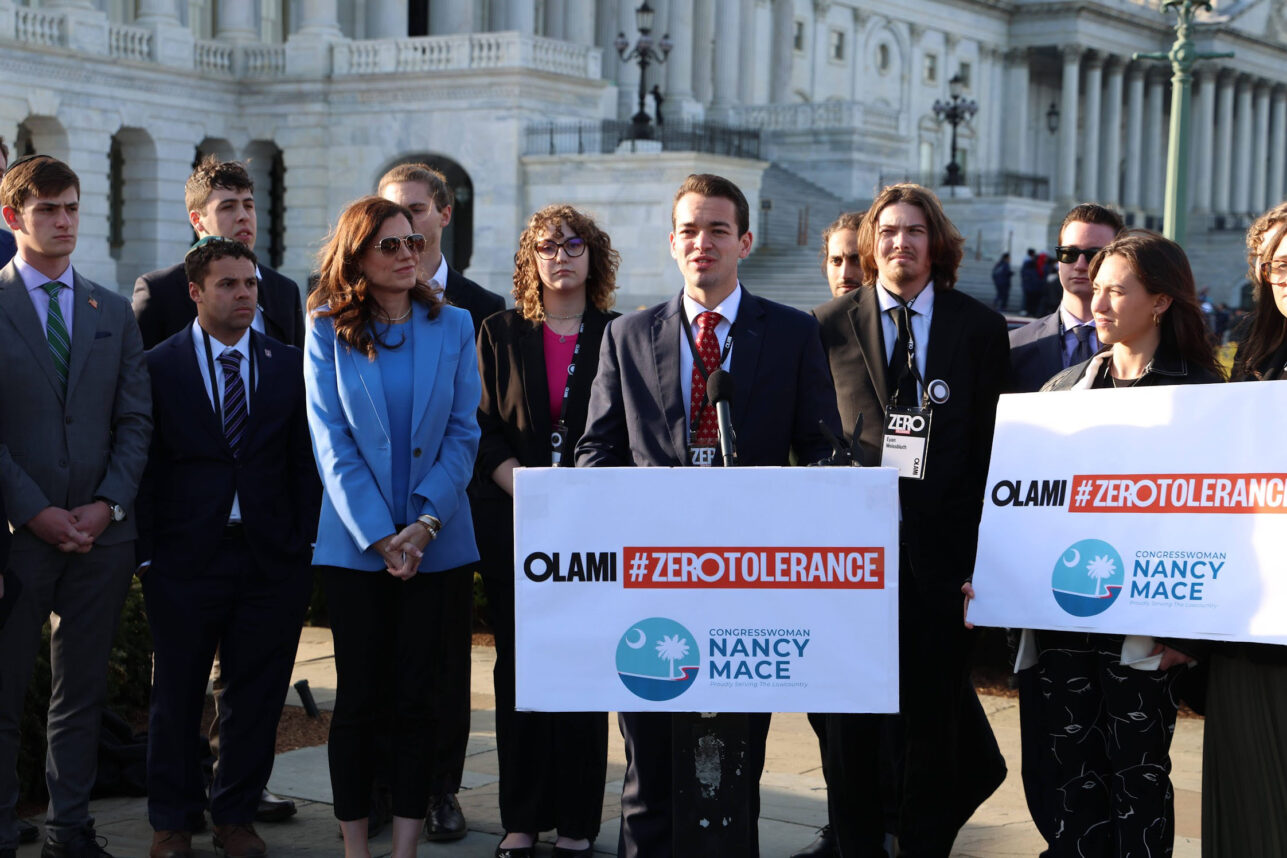
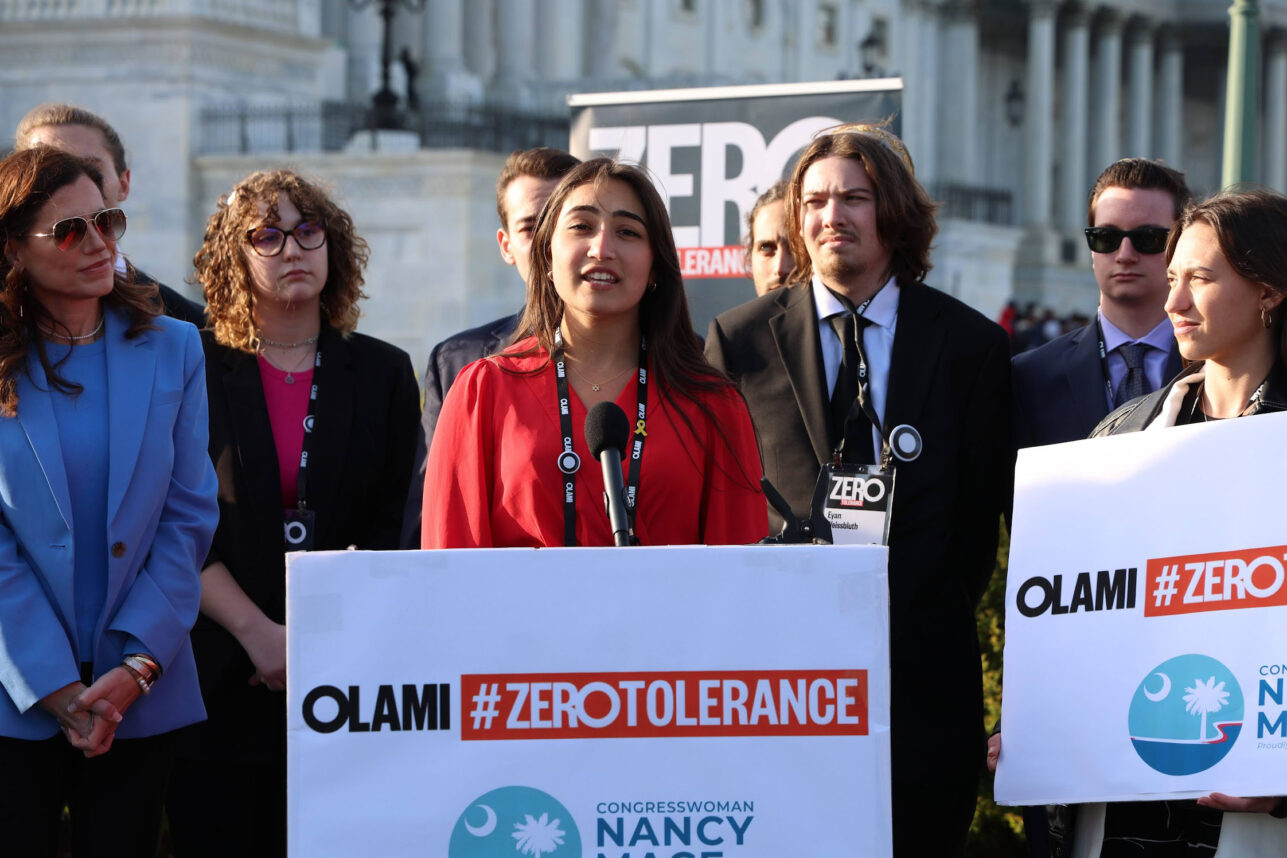
Representative Nancy Mace (R-S.C.) held a press conference Wednesday, March 20 in Washington, D.C. featuring two Jewish students urging the federal government to better address antisemitism on college campuses.

Mace’s office drafted a letter to the Department of Education lobbying it “to implement a uniform reporting system for all instances of antisemitic bias and discrimination at all college and universities that receive federal funding.” The first student who spoke at the press conference, Stanford University senior Joshua Jankelow, is South African; he explained that parliamentarians in the South African legislature “have been calling for the arrests of prominent rabbis and have engaged in various campaigns to undermine the safety of the Jewish people in South Africa.” He added: “I fear that the impunity propagated across American college campuses may lead to the same level of hatred among American politicians if it continues to go unchecked and there are no proper procedures for reporting hate on our campuses.”

He emphasized that his South African and Jewish heritage have both played a key part of his campus experience, in one example when he defended Israel at a student government meeting. “Students had said that I, as a Jewish South African, am predisposed to supporting apartheid regimes and thus had no right to discuss the issue.” Further, Jankelow claimed that a student who lauded the Oct. 7 massacre “was lambasted by an anonymous South African who called them from a South African phone number. On a WhatsApp group, people decided to state that since they already knew a particular South African, it would be most wise to pin it on me.” When Jankelow was informed about this, he took down his door sign and reported the development to campus security; Jankelow alleged that security told him “that it’s not their jurisdiction to interfere in a time like this, but rather it is their duty to determine whether a crime has happened or not.” They referred Jankelow to the university’s Protected Identity Harm Reporting office; three days later, the office then referred him back to campus security, who yet again referred Jankelow to the Protected Identity Harm Reporting office.

Joshua Jankelow. Photo courtesy of Olami

“It became abundantly clear that the whole system was dedicated to moving students from department to department until their exhaustion eventually outweighed their fear,” Jankelow said, “and I’d argue my experience was one of the more benign. Students have had their safe housing vandalized with slogans of ‘Free Palestine,’ which have nothing to do with the students’ identity.” These students have similarly had to deal with “more offices” like housing, public safety and police, Jankelow said. “With universities being risk-mitigating, they benefit from burying their students in bureaucracy, and it creates an image that they’re doing perfectly fine and they’re perfectly safe.”

Having Mace’s suggestion implemented, Jankelow said, would create “a transparent reporting system” and “ensure that the government actually knows the reality of what’s happening at our college campuses.”

Drexel University senior and Resident Assistant (RA) Gisele Kahlon followed Jankelow, said that on Oct. 9 she rebuked a fellow RA who celebrated the Oct. 7 massacre in a WhatsApp group chat. “I was instantly met with intense backlash from the rest of the RAs,” Kahlon said. “I was dismissed as their colleague and their fellow Drexel Dragon.” Kahlon proceeded to take a deep breath before saying, “Since then, I’ve been seen as one thing and one thing only in their eyes: A Jew. I am not safe on campus.” Kahlon knows an openly Jewish student whose dormitory door burned down, and a friend who was hit in the face while wearing a kippah walking from a Shabbat dinner; the assailant shouted, “F— the Jews!” As far as Kahlon knows, the university is still investigating both matters, and in her eyes neither of them are safe on campus.

“College is the place for students to learn more about themselves and to discover their passions in a safe environment,” Kahlon said. “Jewish students deserve no less … to feel safe is not a privilege, rather, it is a right. It is our right as American Jews.”

Gisele Kahlon. Photo courtesy of Olami

In Mace’s letter, the congresswoman also pushed for “reporting by these colleges and universities to the Department of Education’s Office for Civil Rights [OCR] within a defined period of time of details pertaining to each incident of antisemitic bias and discrimination, and the actions taken by the college or universities in response to these incidents.” Additionally, Mace urged the department to “establish a system and ensure compliance” and “terminate federal financial assistance to any college or university that fails to comply with these new reporting requirements.” Mace explained in the press conference that she is circulating the draft letter amongst her colleagues and cited the spike in antisemitic incidents on college campuses since Oct. 7.

“We ought to have a zero-tolerance policy for any antisemitism, period, in our country,” Mace said. “And the stories we’re hearing are awful.” Mace, herself the mother of two teenage kids about to go to college, said she couldn’t “imagine the kind of hate that any child would find on a college campus that should be a safe place for them.”

“We ought to have a zero-tolerance policy for any antisemitism, period, in our country,” – U.S. Rep Nancy Mace

At the press conference, she claimed: “We know that American money is being funneled to UNRWA, an organization that enables and employs Hamas terrorists — this is a proven fact — it’s better spent on resources for colleges … and to support Jewish students right here at home. Rather than sending money overseas that supports terrorism, that money should be right here in the United States to support our Jewish citizens and our Jewish students.” The congresswoman added that her proposed measure to the Department of Education would provide “Jewish students with a vital voice and a safety net.”

Jankelow and Kahlon are part of a group of 25 students who are visiting D.C. as part of the #ZeroTolerance initiative by the Jewish group Olami. Mace’s office is partnering with Olami on the initiative. Olami Executive Vice President & Managing Director of Vision and Partnerships Rabbi David Markowitz and Strategic Advisor Charlie Harary as well as Conference of Presidents of Major American Jewish Organizations Vice Chair Emeritus Malcolm Hoenlein, who currently serves as the president of Abraham Spirit, also spoke at the press conference.

Rep. Nancy Mace Urges Gov’t to Take Action Against Campus Antisemitism Read More »

A Bisl Torah – Jewish Unity

This week we experienced an international effort through Aish to bring Jews together. The initiative was called “Global Hour of Jewish Unity.”

Aish CEO Steven Burg asked Jews to sing the Shma at precisely the same time, emulating our ancestors during the reign of Queen Esther. Just as the Jews of Shushan came together and prayed for a miracle, so too with prayer we shall overcome this evil in the world. And he urges that our prayers will garner enough strength to return the hostages and bring peace to Israel.

I joined the prayerful effort. But I want more. Immediately after October 7th, Jews banded together to support our brethren in Israel. Months later, Jewish unity is being tested. Physical and spiritual fatigue has set in and tension between Jews is taking root. Whether we are reacting online or in person, our words are used as a fuel, creating a dangerous combustion ready to destroy the bonds that are necessary for Jewish survival. We may disagree with each other on a plethora of issues. But our differences must not dismantle the strength of Jewish spirit. There are too many plotting for the demise of the Jews to concede to an emerging disunity within our people.

What does unity look like? Shma Yisrael. Israel, listen. Those that wrestle with God, those that ask questions, those that take learning seriously and dig deeper, stay connected in our willingness to engage in dialogue and conversation. Listen first. We were open to praying together at the very same time. Let’s now put the prayer into action.

The people and land of Israel will be bolstered by the unity of the Jewish people. May future generations look back at this time and see that we stood together.

Am Echad B’Lev Echad—one people with one heart.


Shabbat shalom


Rabbi Nicole Guzik is senior rabbi at Sinai Temple. She can be reached at her Facebook page at Rabbi Nicole Guzik or on Instagram @rabbiguzik. For more writings, visit Rabbi Guzik’s blog section from Sinai Temple’s website.

A Bisl Torah – Jewish Unity Read More »

Purim in Time of War

Purim has a different resonance now, in the middle of this terrible war.

Megilat Esther is essentially a Jewish fantasy about what it would mean to be given permission to fight back. And not only that, in this fantasy, we imagine ourselves to be so ferocious and formidable a foe that everyday Persians, trembling in fear, pretend to be Jewish to avoid our terrible wrath:

“And in every province and in every city, when the king’s command and decree arrived, there was gladness and joy among the Jews, a feast and a holiday. And many of the people of the land professed to be Jews, for the fear of the Jews had fallen upon them.” (Esther 8:17)

The idea that people would pretend to be Jewish in order to preserve their own lives because the “fear of the Jews (pachad haYehudim)” had fallen upon them is meant to be funny. It’s a story told by a people so powerless that the best we can do is fantasize about a moment when we can fight back and defend ourselves. The bloody ending belies the vulnerability and powerlessness that is at the heart of the story.

I think of generations of our ancestors for whom this once a year celebration was quite literally the best they could hope for. Indignity after indignity, pogrom after pogrom, massacre after massacre, come Purim we could imagine a different world, a world turned upside down where we could be victorious and those who would seek our destruction would receive at long last their just deserts.

For a powerless, oppressed people, the mental image of our would-be destroyer, Haman, impaled on a tree was, though improbable, surely psychologically satisfying, even healing.

We are, by all measures, no longer powerless–not in America and not in Israel, our sovereign homeland. And yet, despite our return to power, there is a terrible feeling of impotence right now, following the terrible attacks of October 7. How could we have been caught so off guard on October 7? How is it, still, after five terrible months that we have not yet been able to defeat Hamas, capture Sinwar, and bring our hostages home? There seems to be no shortage of public outrage against Israel for doing what, frankly, any sovereign state would do after such a brutal attack. But where are the voices calling for the return of the more than 130 men, women, and children who were stolen from their homes?

But make no mistake, we are not powerless. To the contrary, despite missteps and failures, let us not forget our return to sovereignty. Let us remember that we are not alone in the world.

The difficulty of course of our return to power is in wielding it properly, appropriately, and morally. The heartbreaking challenge of war — this one in particular given the nature of the fighting and the depravity of our enemy — is that even if we do it well, taking great pains to avoid civilian casualties, thousands of innocents will inevitably suffer, many to their deaths. No matter that but for Hamas none of them would have been harmed. In the end, we must carry the burden of responsibility including the obligation to ensure that the basic human needs of the people of Gaza are provided.

Notwithstanding the moral challenges and the pain we feel (I can only imagine the pain that IDF soldiers endure as they do their best to achieve their mission while keeping themselves safe and avoiding civilian casualties as well), I wouldn’t trade places with our powerless ancestors who didn’t have to carry such a heavy burden for a moment. Power comes with terrible responsibility. It is messy and, at times, morally fraught.

Even in the midst of this awful war, I am grateful for our return to power even as I recognize how challenging and fraught such a privilege is. (And let us be clear: this is not a privilege for which we should ever feel the need to apologize. Countless other peoples around the world enjoy that same privilege without ever being asked to explain it. Zionism is our national liberation movementwhich we have not only the right to pursue but, given our history of persecution, the obligation as well.)

But I wouldn’t trade it for the alternative for one moment because I know the terrible consequences of such a reality and not just from the stories of our distant past of inquisitions, crusades, farhuds, and holocausts. I know it from the horrifying footage of October 7. That’s the horrifying, unbearable, intolerable image of Jewish powerlessness.

Our ancestors’ dream is still in the process of being fully realized. We still struggle with the challenge of how to wield power justly (as, I would argue, does every sovereign state on this planet). But despite the challenges, the moral difficulties, the heartbreak that comes with the inevitability of getting power wrong sometimes, I wouldn’t have it any other way.

May the day soon come when all Israel and all peoples of the world might dwell in harmony so that there might be “gladness and joy for the Jews” and all humanity.


Rabbi Yoshi Zweiback is the Senior Rabbi of Stephen Wise Temple in Los Angeles, California.

Purim in Time of War Read More »

Mordecai, Esther and the Lottery

Against Ahasuerus, Mordecai

discovered that two men had started plotting;

he learned about this as a private spy,

from paper that they both had used for blotting,

which Mordecai was able to decipher—

a gifted linguist working as detective:

he knew all tongues from Harrisburg to Haifa,

in not a single one was he defective.

Both traitors he would very closely follow,

by clues they gave a Clouseau-like masseur,

who orbited Shushan’s walls like Apollo.


At birth named Ishtar, Esther was Hadassah,

a name that labeled her as Jew.

she never told her royal rich harasser

before he, sexually, her knew,

by him not queried or identified

as Jewish.  Cosmopolitan she thought

was safer, and thus always tried

to seem as Persian as a Persian ought.

Role models whom she emulated

were harem heroines, not wives of priests,

but though she thought she was assimilated

she didn’t think in fact all men were beasts,

as many liberated women thought

within the walls where people shopped in Shushan,

for she respected what she had been taught,

though her identity caused some confusion.


Contrast this with her cousin Mordecai,

who was her guardian husband: it would seem

he changed his name from Marduk to deny

allegiance to the Persians, whose regime

he always with derision would regard:

“Please call me Mordecai the Jew,” he’d say.

To say this word for Esther was most hard.

That’s why she would prefer the sobriquet

that she chose for herself, I mean Hadassah,

regarding Esther as the name of slave,

so only her rude royal rich harasser

would call her by the name her parents gave.


The king, of course, was sleeping while men plotted,

by strong wine that he loved intoxicated,

and by his many lovely wives besotted.

The complex where he lived was always gated

though open to his eunuchs and his wives,

a different woman in his bed each night:

he’d choose them for his harem from the dives

where he’d go incognito, out of sight.


When M learned of the plot, without delay

he went to the Intelligence of Persians,

notoriously known as PIA,

to which all dissidents had great aversions

for fear of torture used on men suspected

of antifundamentalistic treason.

Some captivated Jews we know defected,

of course heroic, but a rational reason

for torture—if you know that there’s a bomb

that may blow up and kill you in the palace,

it isn’t right to wait with great aplomb

till terrorists explode the bomb with malice.


The king declined to give the just reward

he’d promised for revealing both the plotters:

his courtiers said the king could not afford

to pay it to a Jew: “They are all rotters!”

But when one night he tossed and turned in bed,

in Shushan sleepless, maybe God behind him,

he asked to hear what Mordecai had said,

and so the minister chose to remind him

that Mordecai had managed once to foil

a dangerous plot that would have killed the king,

and sharply brought down price of all the oil

which helped to keep the kingdom in the swing.

When he was told the name of the detective

who’d learned about the terror from his spying,

he asked why the reward had been defective,

and realized that his courtiers were lying

when they all claimed the man was quite unworthy

of honors that the king was now proposing;

the king though was in fact quite down-to-earthy,

and even falling drunk he was imposing.


So Mordecai received the honors due him,

and rode the king’s horse wearing the king’s cloak.

Though many anti-Semites tried to boo him

he nobly took their protests as a joke.

Hadassah, too, regarded each protester

as ludicrous and very soon reverted

to that name with which she was born, Queen Esther

her title…and she never was converted,

unlike some other leaders who were Jewish,

(examples are too common to be cited)

she always waved the flag that’s white and bluish,

supported Arsenal, not M. United—-

for even in those days it was the Gunners

whom Jews supported all the world around;

the Persians sent throughout the land their runners

to give results of matches on each ground.

She led a life that made her uncle proud,

for she was more than Queen, she was a writer,

more popular with all the liberal crowd

than Mordecai, conservative and fighter,

who therefore disapproved of them in journals

where left-wing types give their opinion,

for Mordecai preferred to sit with colonels

and with the Orthodox prayed in a minyan.


You’ll notice there’s one name I did not mention,

that of the Agagite, the biggest foe

of all the Jews.  I’ve chosen by abstention

all reference to him hereby to forgo.
I could have mentioned him a lot of times,

but have restrained myself: it rhymes with layman,

but though I’m often driven by such rhymes,

I have restrained myself with my no-namin’.


You find too often, reading the Megillah,

his name, but since I greatly hate the beggar

who wished to be of all the Jews the killer

let my omission here growl like the gregger

that drowns out every reference to the rascal

whose name the Torah tells us to blot out,

thus making Adar’s Purim a pre-Pascal

celebration. It seems quite without

God’s name, Queen Esther’s Book that is twice read

on Purim, just as, next month, on Passover

we don’t eat the least crumbs of leavened bread,

not even cakes we saved as a leftover,

commanded by an unseen God whose “Name”

we never utter, loathing to reveal it.

I’ve tried here in these in fact the same:

God’s name unwritten in this profane writ.


It is a name that any faithful Jews,

who think they know it, quietly conceal,

a name that none of them will ever use,

how to pronounce it always most unsure,

except the High Priest on Yom Kippur who

expresses it when very clean and pure,

but other Jews should never ever do.


On 3/17/24 Rabbi David Silber suggested in a Torah in Motion lecture that the absence of God in the Purim megillah reflects that He is ironically—–perhaps as a warning—–replaced by a mortal ruler, Ahasuerus, who is overcome by two mortals, Mordecai and Esther, whose names are, etymologically, transformations of names of local alien gods, Marduk and Ishtar, transformed into Mordecai and Esther. As a result, the megillah echoes the way that at the Reed Sea God defeated not only Pharaoh, like Ahasuerus a ruler of exiled Jews, but, as God tells Moses before the Tenth Plague, intends to execute judgments  וּבְכׇל־אֱלֹהֵ֥י מִצְרַ֛יִםon all the gods of Egypt (Exod. 12:2). This victory is recalled in Hallel in Ps. 118:14 when it states עָזִּי וְזִמְרָת יָהּ. God is My strength and song, a phrase that echoes words of the Song of the Sea, Exod. 15:2, sung after God defeated not only the Egyptians but their gods, whom the Reed Sea drowned together with them.

God’s defeat of Pharaoh and his gods at the Reed Sea is echoed by the defeat of Ahasuerus. The decree against the Jews is defeated by Judeans who are led by two Jews whose names echo names of Ahasuerus’ gods. Ahasuerus’ disorderly government of misrule is led by a quasi-magician called Haman, a Persian magus who echoes the magicians on whom Pharaoh relied—the link explains why Haman relied on lots, which denote the black magic that provides Purim with its name!

Purim culminates with its celebration in the Passover seder, a word that means “order.” The climax of the seder is when Hallel is recited, with Ps. 118:14 recalling Exod. 15:2.



Gershon Hepner is a poet who has written over 25,000 poems on subjects ranging from music to literature, politics to Torah. He grew up in England and moved to Los Angeles in 1976. Using his varied interests and experiences, he has authored dozens of papers in medical and academic journals, and authored “Legal Friction: Law, Narrative, and Identity Politics in Biblical Israel.” He can be reached at gershonhepner@gmail.com.

Mordecai, Esther and the Lottery Read More »

A Moment in Time: “Welcome Rabbi Daniel Freedman”!

Dear all,

A new chapter begins at Temple Akiba of Culver City! Rabbi Daniel Freedman(middle) will join Cantor Lonee Frailich and me as the clergy team of our congregation. Rabbi Freedman spent time at Akiba as our rabbinic intern from 2018-2020. He will now become our Rabbi-Educator, overseeing our religious school program (under the leadership of Randee Bishoff) while also serving as a full member of our clergy.

Our congregation is so excited, and we are eager to plan, vision, and dream.

When I first came to Temple Akiba in 2006, our congregation had fewer than 300 families and a religious school of 150 kids. With the incredible growth of Culver City, Akiba’s membership now includes well over 400 families and 250 children in our schools. Rabbi Freedman will help nourish all generations with his love of Torah, his passion for Tikkun Olam, and his gift of Kindness.

This is a moment in time that opens the doors to tomorrow!

May we go from strength to strength!

With love and shalom.

Rabbi Zach Shapiro

A Moment in Time: “Welcome Rabbi Daniel Freedman”! Read More »

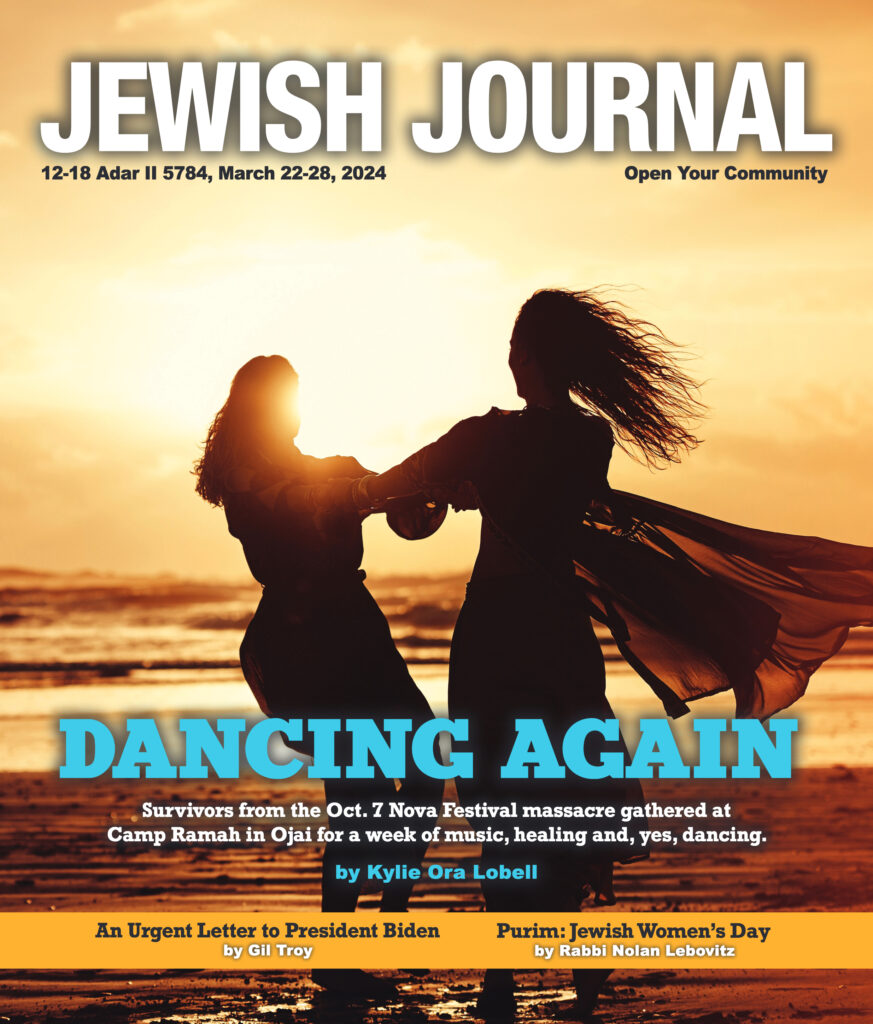
Print Issue: Dancing Again | Mar 22, 2024

CLICK HERE FOR FULLSCREEN VERSION

Print Issue: Dancing Again | Mar 22, 2024 Read More »

BRAVE-ish is a Hearten Uplifting and Inspiring Non-Fiction FINALIST!

Thank you to Chanticleer Book Reviews for including my memoir as a FINALIST for the 2023 HEARTEN Book Awards for Inspiring & Uplifting Non-Fiction.

MORE BOOK AWARDS:

Goody Business Book Awards: Memoir/Self-Help

Zibby Awards: Best Book for The Strong Woman

For the Hearten Book Awards–I was on the short list, then the long list, then a semi-finalist and NOW a FINALIST! What an honor to be considered for my memoir, Brave-ish!

My Podcast, Make Your Own Map, won 2nd place for Diversity in TV/Streaming at the NAEJ Awards

My website is #10 on the top 100 Travel Lifestyle Blogs and Websites

I am also the #3 Top Travel Influencer for 2024 for Afluencer as well as #10 of Female Influencers Brands Can’t Get Enough of for 2024!

I want to send a special thanks to my awesome literary agent, Chip MacGregor and my phenomenal Post Hill Press editor, Debra Englander! This team has believed in my book from the very beginning. I am deeply grateful!

And here is a new review from Midwest Book Review:

THANK YOU for all of your support.

My AUDIO BOOK of Brave-ish narrated by ME is now available!

BRAVE-ish is a Hearten Uplifting and Inspiring Non-Fiction FINALIST! Read More »

The Nova Survivors Dance Again

Danielle Sasi loved life. How could she not? 

She got married to her husband Maor in 2022. They soon brought a precious baby boy into this world. She was close to her family, especially her father, whom she called her best friend. She felt truly blessed.  

And then, Oct. 7 happened. She and her husband had flown from Los Angeles to Israel to attend the Nova Music Festival. They were having a good time, dancing and listening to music all night long – and then Hamas terrorists attacked. 

They viciously murdered and wounded innocent civilians, raped women and captured others, taking them back to Gaza as hostages. 

Danielle and Maor witnessed death and destruction. To survive, they hid under dead bodies for seven hours.

“My eyes were murdered. My life was vandalized. I was dead on the inside and numb to my core.”
– Danielle Sasi

“My eyes were murdered,” Danielle said. “My life was vandalized. I was dead on the inside and numb to my core.”

After surviving, Danielle found out that Hamas terrorists had murdered her father, her cousin and her husband and another good friend.

“Life before Oct. 7 was innocent,” she said. “I may even call myself naive to what the world went through.”

A month after that tragic day, Danielle and Maor flew back to Los Angeles, to a city where everything seemed normal. 

“I was alone and scared,” she said. “My husband and I had no one we could relate to. The community showed their love and of course, had all their questions as to what happened, but there will never be a way to explain really what happened. They were not there.”  

Sebastian, who was also at Nova, went to the festival with his girlfriend. On Oct. 7, they ran away as terrorists shot at them; Sebastian dragged his girlfriend to safety and took care of the wounded.

I’m trying to balance myself and relearn who I am.” – Sebastian

“I saw people fall around me,” he said. “Since then, I’ve been experiencing great uncertainty, and it is difficult to find a comfortable routine, or to find the routine in a lack of routine. I’m trying to balance myself and relearn who I am.”

Danielle and Sebastian were disturbed by the horrors they saw at Nova — where Hamas murdered more than 360 people — and have been trying to cope with their trauma from that day. The Jewish community has been stepping up to support them in their time of need, most recently hosting them at Camp Ramah in Ojai for a weeklong, healing retreat. From February 6 to 13, they gathered with 118 other Nova survivors at the Orot Healing Retreat, which was organized by volunteers and paid for by caring sponsors.

Karin Hepner, board president of Irvine Hebrew Day School, took the lead with her sister-in-law Rikki and other local volunteers including Limor Ness, the owner of Kfar Saba Urban Farms, Adi Davis, Miriam Wolf, Sepi Makabi and Rabbi Yonah Bookstein, the founder of Pico Shul and musician Nachum Peterseil put the event together. Craig Dershowitz from Artists 4 Israel was the fiscal sponsor.

“We were all thinking about ways to help our fellow brothers and sisters in Israel since Oct. 7,” Hepner said. “After doing our investigating, we decided that the population that really needed our support right now is the Nova survivors. They don’t have a community. They’re all spread out. Many of them lost contact with close friends and family members. And at this point in life when they’re ready to launch, they’re stuck.” 

Bringing in the Survivors

Hepner, a mother of five in Irvine who frequently volunteers in the Jewish community, spoke to a number of organizations in Israel doing relief work before going forward with the retreat. She then worked together with Rikki and the other volunteers to help organize it and find a venue. Camp Ramah gladly stepped up to the plate.

“They were the host site, but also very much partners in this,” she said. “They were fully invested emotionally and financially in helping us make this happen.”
Hepner and the volunteers then decided on a name: The Orot Healing Retreat.

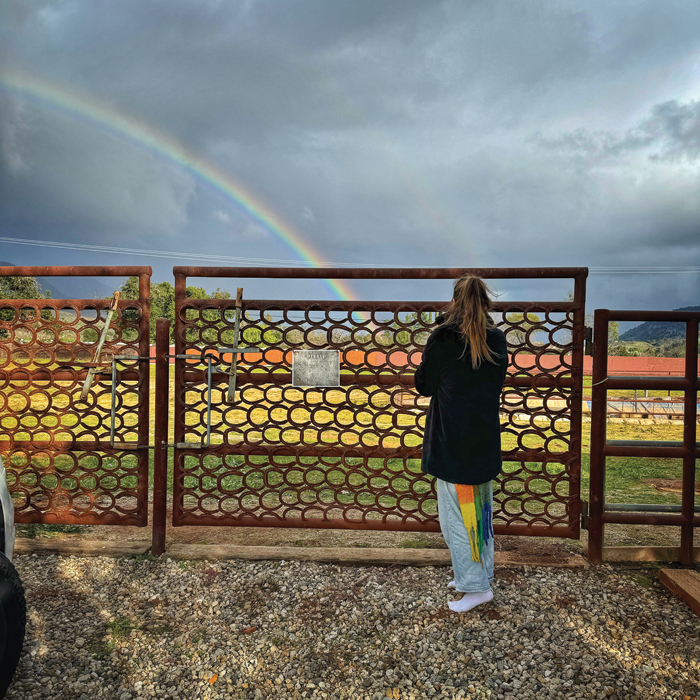
“We created a space of light for anyone to step into it,” she said.

In a blog post, Bookstein echoed a similar sentiment. “At Orot, our goal was to provide survivors with the opportunity to breathe,” he said. “We wanted to create a safe place to process and share their experiences and an opportunity for survivors to find their strength surrounded by light and love.”

To find volunteers to help throughout the week, Hepner and the others posted online. Hepner started receiving 300 messages a day from people who wanted to volunteer in any way they could, from running yoga classes to cleaning up.

“An instructor in Iowa said he wanted to come out,” Hepner said. “He told me he was happy to come and make food and wash dishes.”

Volunteer spots filled up quickly, and a group from San Diego showed up with 120 backpacks filled with goodies and handmade children’s cards.

“They drove them up to Ojai,” Hepner said. “So many people wanted to help. That’s the Jewish community.”

The campgrounds could accommodate up to 120 people; Hepner ended up receiving 500 applications. 

One of those applications came from Danielle Sasi, who had already visited Limor Ness’ farm and participated in a healing evening. 

“There, we met a few other Nova survivors and many people who just wanted to help us in any way they can,” she said. “Then, one day, Limor tells us that a group of Nova survivors are coming to a retreat in Ojai. She did everything in her power to help us get in.”

When Sasi arrived — along with her cousin, Lee Sasi, also a Nova survivor — she immediately felt more at peace.

“I entered Camp Ramah, and my healing began,” she said. “I finally felt like I wasn’t alone.”

Healing at the Retreat

Hepner and the volunteers welcomed the survivors with open arms on Feb. 6. 

“Before they came, we were talking about 120 Nova survivors,” she said. “But when they arrived, we got to know each and every one of them as individuals. Each one of them has their own harrowing, Holocaust-level story you can’t imagine anyone going through.”

The retreat featured many different activities throughout the weeklong event.

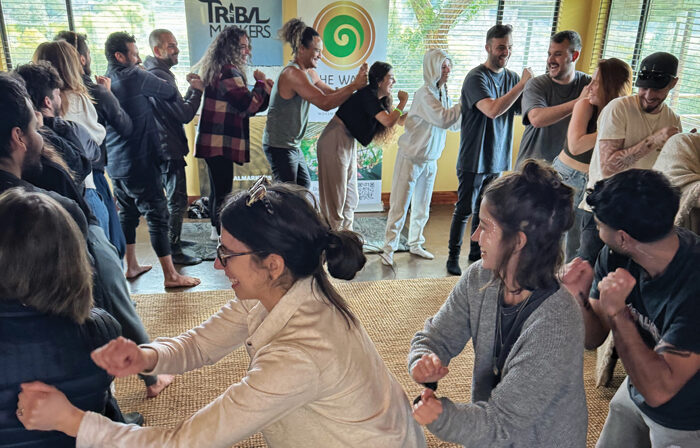
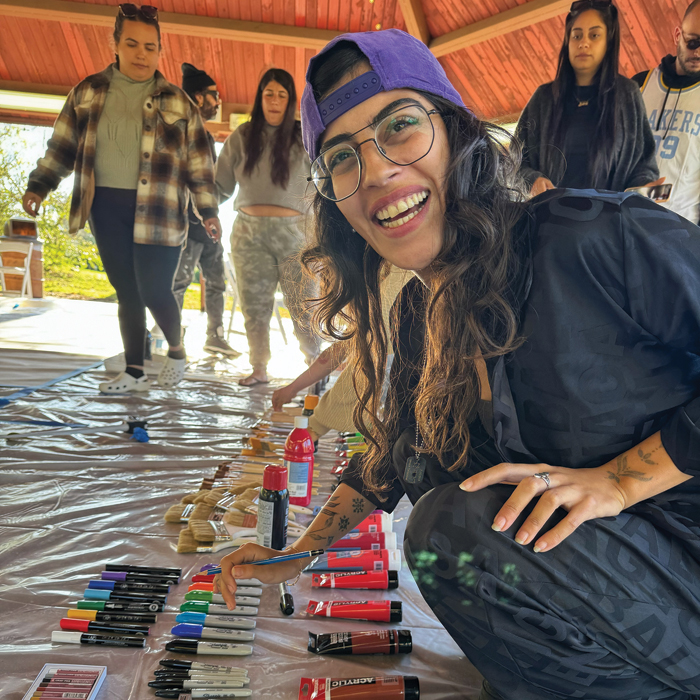
The lead therapist, Guy Zvili, founder of Ruach Adama, who teaches and trains therapists on helping patients heal from crisis, oversaw the sessions with trauma therapists from Israel. There were therapy animals on campgrounds, along with meditation and yoga classes, surfing, singing, art workshops and, of course, dance parties.

Lee said it “was really nice to be around others who have been through what I have been through. The retreat made me feel like I am not alone in this.”

On Oct. 7, when running away from the terrorists, she hid in a bomb shelter on a side of the road with more than 50 other partygoers. They ended up being attacked by Hamas and were terrorized for seven hours with automatic weapons and explosions. Out of the more than 50 people there, only nine survived – Lee was one of them. She lost her uncle during it.

“Before Oct. 7, life was very simple and normal,” Lee said. “I had a full-time job, and I was full of motivation and very busy with my days. Life after Oct. 7 has been hard, and I’ve had depression. It’s hard to find a spark of any type of motivation. I barely have any discipline within my life, and I feel like my life shattered and now I need to pick up the pieces bit by bit.”
After taking part in the Orot retreat, she said, “I’m grateful to be alive … it was very helpful for my healing journey and I’m very thankful I had the opportunity to go.”

Sebastian experienced the same feeling.

“The retreat helped [me] experience life differently, to be free from all the difficulties happening in the country, to experience myself feeling again like a child, insecure for a moment about the universe and life and vulnerable, but safe,” he said. “The retreat brought me back to feeling a little like myself again and remembering who I am and want to be.”

There were group and one-on-one discussions among the survivors and volunteers, and the survivors opened up about what they had gone through.

“I’m deeply sad thinking about some of the conversations I had,” Hepner said. “Not everyone wanted to tell their story, but some did. I saw their pain. One individual was crying and shaking. This was someone who had never stopped smiling the entire time, but it was all right here, beneath the surface. It got me to understand a bit more of what they’ve been through as individuals. We can never really understand, but we can see people who are so ready to live life again.”

After Oct. 7, one survivor, Uriel (not a real name) said that he went from being a much more optimistic and happy person to someone who is “full of sadness, full of fears, including serious concerns about my future and [the future] of those around me. I had lost my motivation and felt that my trust in people and in myself has been irreversibly damaged.”

But following his time at Orot, Uriel felt much more hopeful. “It restored my love, joy and faith in humanity,” he said. “I discovered that although it is possible to experience and absorb so much evil, terrible acts that humanity cannot grasp, there is still goodness and love in the world, and love conquers all. The retreat helped me heal and gave me tools to carry me through my life to deal with crises, pain and challenges.”

Danielle participated in group therapy, where she was able to open up and share her experiences. She also talked about her trauma with her individual therapist, Shelly. 

“She was very special,” she said. “I connected with her.”

Danielle got the chance to sing and paint and go on hikes with her fellow survivors, too.

“I was happy and smiling,” she said. 

Orot included Shabbat services, which Bookstein led. He described how, right before Friday night dinner, everyone sang “Shalom Aleichem,” the song to welcome in the angels, over and over again.

“We were in a room of people whose angels had all protected them from death just four months ago.”  – Rabbi Yonah Bookstein

“We were in a room of people whose angels had all protected them from death just four months ago,” he said. 

 As the rabbi stood on a chair in the middle of the room, he got ready to sing the Friday night kiddush. But instead of singing the regular tune, he chose one traditionally used for a wedding.

“There was so much joy in the room,” he said. “My brain just made the switch. The joy of chatan and kallah, the bride and groom, the joy that we all have standing at a chuppah. The joy of the promise of the Jewish future. The joy of two people in love and families and friends together. That is the joy in the room. We are the bride, and God is the groom.”

When he finished the blessing, everyone in the room answered with a loud “Amen.”

“I was still,” he said. “It took my breath away.”

We Will Dance Again

The feeling of hope was one that permeated throughout the week at Orot, which culminated in a dance party on Saturday night. 

“Not only was it incredibly fun and amazing for the survivors to dance with their friends, but they felt safe and didn’t have to look over their shoulders,” Hepner said. “Remembering what it feels like to be safe was one of the most remarkable outcomes of the event.”

She remembered one survivor, a police officer who could only think about the people she was unable to save on Oct. 7. 

She remembered one survivor, a police officer who could only think about the people she was unable to save on Oct. 7. Since that day, she hadn’t been able to look at the sunrise.

“There was a shift in her,” Hepner said. “She started thinking about the ones she did save, and she told me, ‘This is the first time I’ve allowed myself to look at the sunrise since Oct. 7.”

Though the Nova survivors went through tragedy and trauma, they are ready to move forward, to get back some semblance of peace and try to rebuild.

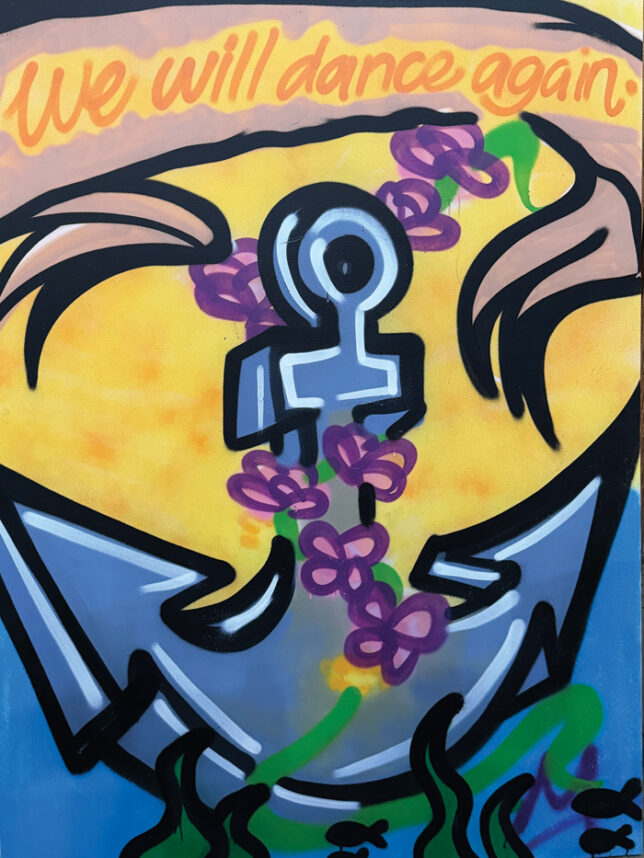
“There was this whole idea of, ‘We will dance again,’” Hepner said. “It’s a real thing.”

Certainly for Danielle, things have shifted following the retreat. Now, she hopes for a brighter future ahead.

“My mom was so happy to see that a bit of light was starting to come into my life again, and so was I,” she said. “Healing is a very [long] journey, and I was not sure how it would even start. But thanks to the retreat, I can say that I’m going through it. I’m learning to live life with the trauma and grief. I would like to extend my gratitude to everyone who made it possible.”


Kylie Ora Lobell is the Community Editor of the Jewish Journal.

The Nova Survivors Dance Again Read More »

Campus Watch March 21, 2024

UPenn Faculty Members File Lawsuit Attempting to Stop University from Providing Documents to House Committee Investigating Antisemitism at Penn

A group of faculty members at the University of Pennsylvania (UPenn) filed a lawsuit in an attempt to block the university from handing over documents to the House Committee on Education and Workforce, alleging that doing so would put pro-Palestinian students and faculty members at risk.

The Philadelphia Inquirer reported on March 12 that the lawsuit, filed on behalf of two faculty members (one of whom co-organized the “Palestine Literature Writes” Festival) and the Faculty for Justice, alleges that “the committee has eagerly joined billionaire donors, pro-Israel groups, other litigants, and segments of the media in accusing Penn of being a pervasively antisemitic environment (which it is not)” and that pro-Palestinian students and faculty have faced threats and doxxing. The lawsuit also argues that then-University President Liz Magill’s December House testimony about how it “depends on the context” if calls for genocide against Jews violate university policy was actually “a good-faith and honorable answer pursuant to the First Amendment and Penn’s commitments regarding academic freedom.”

CSU Long Beach President, Faculty Members Targeted With “Genocide Denier” Posters

California State University Long Beach (CSULB) President Jane Conoley and several other faculty members have been targeted with posters on campus calling them “genocide deniers.”

According to reports from The Daily Forty-Niner, Conoley sent out an email to the campus community on March 13 condemning a flyer on campus that accused Jewish Studies Professor Jeffrey Blutinger, with his picture on it, of being a “genocide denier” “Everyone involved in the conflict is hurting… But no one on this campus is bombing Palestinians or was involved in the horror of Oct. 7,” she wrote. “No one on this campus deserves to be seen as an enemy.”  The next day, flyers with the same template were put up on campus accusing Jane “Colonist” of being a “genocide denier.” Other flyers targeted Vice President of Student Affairs Beth Lessen and San Jose State University (SJSU) Professor Jonathan Roth; the latter allegedly was in involved in an altercation with a pro-Palestinian protester during a February event at SJSU where Blutinger was scheduled to speak.

Conoley called the flyers “cruel and cowardly” and that “the people behind these attacks are attempting to silence others,” per the Forty-Niner. The university is investigating the matter.

Hebrew University Announces Suspension of Prof Who Accused Israel of Genocide

Hebrew University announced on March 12 that they are suspending a professor who is accusing Israel of genocide and of lying about Hamas’s sexual violence.

The university said in a letter that the professor, Nadera Shalhoub-Kevorkian, enaged in “incitement and hatred” with her “distorted statements.” Jewish News Syndicate (JNS) highlighted Shalhoub-Kevorkian’s recent statements accusing the “Zionist entity” of being a “killing machine.” She also alleged that Israel is lying about Hamas committing sexual violence and murdering babies on Oct. 7, per JNS.

Following Shalhoub-Kevorkian’s suspension, hundreds of students on campus held a rally urging the university to fire her altogether over her comments, according to Arutz Sheva.

“Free Palestine, AEPi Supports Genocide” Graffiti on Bradley University’s AEPi House

Graffiti stating “Free Palestine, AEPi Supports Genocide” was spray-painted on Bradley University’s AEPi house, as well as on the sidewalks nearby a couple of university buildings.

The graffiti is believed to have occurred sometime on the evening of March 14 or the morning of March 15, according to WMBD-TV. The university said in a statement that police are investigating the matter and that “these acts are completely against the fabric of who we are as a University. Bradley University has no tolerance for acts of bias, hatred, violence, or intimidation toward ANY member of our community.”

Harvard Hillel Announces New Executive Director

Harvard University’s Hillel announced on March 18 that they are hiring Rabbi Jason Rubenstein, who served as Yale University’s Howard M. Holtzmann Jewish Chaplain and senior rabbi at Yale’s Hillel for the past six years, as their new executive director.

According to a press release, Rubenstein wrote an open letter to the Jewish community guiding students on how to address antisemitism on campus following the Oct. 7 massacre, which received coverage in The New York Times. He will begin his new position on June 1.

“It is the honor of a lifetime to lead this community of boundless potential – students, faculty, parents, alumni, supporters, and staff – in together creating Jewish life at Harvard that will inspire the next generation of Jewish creativity,” Rubenstein, himself a Harvard alumnus, said in a statement. “The resurgence of antisemitism at Harvard and beyond since Oct. 7 has made the work of sustaining Harvard’s vibrant Jewish life that much more urgent.”

Campus Watch March 21, 2024 Read More »