
fbpx

January 31, 2024

Remembering the Soundtrack of Our Lives: A Jewish In Memoriam Guide to the Grammys

The passing of Jewish music luminaries in pop, rock, classical, films, and Broadway shows will be honored at the Grammys ceremony–with its traditional In Memoriam segment–on Sunday, February 4.

With their names flashing by only for an instant, this guide provides a broader and deeper look into the incredible creative contributions of six prominent Jews in the music community who departed this past year. Their souls have ascended, their memories are for blessings, and of course, their music surely is destined to live on.

Menachem Pressler, 99

Photo by Carlos Alvarez/Getty Images

In November 1928, the men’s clothing store owned by Pressler’s Jewish parents was destroyed by Kristallnacht, the Nazi riots directed against German Jews and their businesses. Within a year, his family fled Nazi Germany for Italy, then settled in Palestine. His grandparents, uncles, aunts, and cousins all died in concentration camps.

The trauma for young Menachem understandably was great; he suffered from eating disorders and was in danger of starvation. But he found solace in playing piano and says that his time at the keyboard helped cure him.

With diligent practice, he became good enough to win first prize in the Debussy International Piano Competition in 1946, which was held in San Francisco. There, Pressler saw the enormous musical opportunities that he could pursue in the United States. His move came soon after, and in 1947, he took the stage for his Carnegie Hall debut.

He became an acclaimed piano soloist, touring with leading orchestras throughout the U.S., as well as Brussels, Helsinki, London, Oslo, and Paris. In 1955, he recorded a cycle of Mozart piano trios at the Berkshire festival, appearing with violinist Daniel Guilet and cellist Bernard Greenhouse. This performance was so well received that the three musicians decided to form a chamber music group, the Beaux Arts Trio, that went on to perform in hundreds of recordings and thousands of concerts. Pressler’s star in the classical musical galaxy would shine for decades, and over time, the Beaux Arts Trio expanded to include contemporary music by Charles Ives and Ned Rorem.

Pressler also became a revered teacher of new generations of piano virtuosos as a Distinguished Professor of Music and Charles Webb Chair at the Indiana University Jacobs School of Music. This aspect of his life, which extended for more than a half-century, was equally rewarding.

It was especially poignant when Pressler returned to Germany in 2008 to perform on the occasion of the 70thanniversary of Kristallnacht.  Aged 90, in December 2014, he made his debut with the Berlin Philharmonic at their New Year’s Eve concert. This performance was televised live throughout the world, something that was unimaginable when the Presslers fled their native Germany. The darkness of life then seemed to have no end, but Pressler’s music throughout his storied career brought back light to the cherished memories of those whose lives had been tragically cut short.

Sheldon Harnick, 99

Photo by Matthew Eisman/Getty Images

We all can hum the memorable tunes composed by Jerry Bock. But it is the lyrics to the songs that make all the difference because they allow us to sing them with a range of emotions. If I Were a Rich Man. Sunrise, Sunset. Matchmaker, Matchmaker. And perhaps the greatest Jewish anthem of all time: Tradition.

By the time Sheldon Harnick wrote the words to these songs in Fiddler on the Roof, he already had won a Pulitzer Prize and Tony Award with Bock for their score to the 1959 Broadway musical, Fiorello! But the expectations for Fiddler were relatively low since few could imagine that audiences beyond the Jewish community would flock to a story based on Tevye the Dairyman and other tales by Sholom Aleichem, set in the Pale of Imperial Russia at the beginning of the 20th century.

The exquisite quality of the story, songs, and direction by the acclaimed director and choreographer Jerome Robbins could not be denied. The set design by Boris Aaronson was in the style of Marc Chagall’s paintings. Zero Mostel as Tevye was a force of nature on stage. And who could forget Bea Arthur as Yente the Matchmaker or, yes, Bette Midler as daughter Rivka?

Those who subsequently sang Harnick’s Fiddler lyrics, too, are a diverse group of talented Jewish performers. Among the actors who have assumed the role of Tevye on stage are Chaim Topol, Herschel Bernardi, Theodore Bikel, Leonard Nimoy, Danny Burstein, and Harvey Fierstein.

The original Broadway production opened in 1964 to high praise and critical acclaim. It became the first musical theatre run in history to surpass 3,000 performances won nine Tony Awards, including another one for Bock and Harnick. And unlike most Broadway shows, it also was highly profitable for the handful of investors who knew that the story of Fiddler was both Jewish and universal, touching upon themes of family and a longing to feel at home for generations.

The show remains an international hit sixty years on. Fiddler has played to sold-out audiences in Europe, South America, Africa, and Australia; it remains the longest-running musical ever seen in Tokyo. According to Broadway World, Fiddler has been staged “in every metropolitan city in the world from Paris to Beijing.” The number of summer camp, school, and community theatre productions is nothing short of staggering, with over 500 amateur productions a year in the US alone. Its popularity continues in full force, including the acclaimed 2022 off-Broadway revival by the National Yiddish Theatre Folksbiene, directed by Joel Grey.

Sheldon Harnick also knew that his lyrics, however well-known, could be adapted to the needs of the times. Since Sunrise, Sunset has become such a staple at Jewish weddings, Harnick realized that it was appropriate in 2011 to write a version with minor word changes that would be suitable for same-sex weddings. For example, male couples now could be serenaded with “When did they grow to be so handsome.” The wordsmith himself knew that the idea of Tradition would mean more if it remained relevant for all in contemporary times.

Burt Bacharach, 94
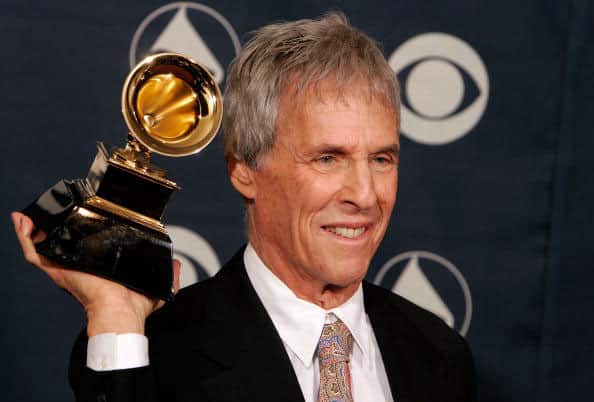
Photo by Kevin Winter/Getty Images

Burt Bacharach was a man of all media: composer, arranger, producer, pianist, conductor, recording artist, and host of memorable television specials with Barbra Streisand and others. Songs he co-wrote with various lyricists have been recorded by more than a thousand artists, making him one of the most successful tunesmiths of popular music from the 1960s on.

From Dionne Warwick and The Carpenters to Herb Alpert and Luther Vandross, Bacharach’s name is associated with music that’s more sophisticated than three chords in 4/4 time. It filled a middle-of-the-road gap of Broadway, pop, and easy listening for the generation just before the British Invasion and the era of the singer/songwriter began, and kept going with new writing partners such as Elvis Costello.

Burt Bacharach’s ascendance came at a time when Top 40 AM radio was the currency of the day for a songwriter or performer. Now, satellite radio channels can get sliced down to not just a single genre, but sometimes a specific artist. Spotify and Pandora narrow the possibilities even further.

In contrast, during the 1960s, the Top 40 hits chart could include songs from almost anyone as long as there was a large audience for it.  Music from rock groups like The Beatles, crooners like Frank Sinatra, Sammy Davis Jr. and Dean Martin, the Singing Nun, and an occasional country singer flowed seamlessly on the same radio station. Bacharach’s songs with Hal David had a prominent role in that broad roster, excelling with a rare level of complexity and sophistication.

His string of hits with David started in earnest when he met singer Dionne Warwick at a recording session. He recognized she had the musical chops to handle the intricate melodies, tricky phrasing, and time changes that were the team’s signature.

The trio crafted hits including Say a Little Prayer for Me, I’ll Never Fall in Love Again, Walk On By, The Look of Love, Alfie, Always Something There to Remind Me, and Do You Know the Way to San Jose? Their collaboration was one of the most successful in pop music history. For movies, Bacharach co-wrote Raindrops Keep Fallin’ on My Head and Arthur’s Theme, both Oscar winners.

He rarely discussed the Jewish background of his parents or himself, but his commitment to the principle of tikkun olam clearly was evident in That’s What Friends Are For, which he wrote with his then-wife, lyricist Carole Bayer Sager. His work in making this a mega-hit had a true and lasting impact well beyond the song itself.

Their close friend Elizabeth Taylor, at Dionne Warwick’s suggestion, asked if they would allow the song to be used in a special way during the height of the AIDS epidemic in the early 1980s. Little was known about the disease, and virtually no government research money had been allocated, even though thousands were dying rapidly.

Bacharach and Sager agreed and made sure that all of the song’s royalties would be directed to the American Foundation for AIDS Research (amfAR), which had appointed Elizabeth Taylor as Honorary Chair. The recording artists on that 1985 single— Dionne Warwick, Stevie Wonder, Elton John, and Gladys Knight–also directed their royalties to this charity.

As a result, this recording raised more than three million dollars for amfAR. Equally important, its prominence on radio playlists made the song an enduring anthem that would supercharge public recognition of the need to help combat the global AIDS epidemic.

Jerry Moss, 88
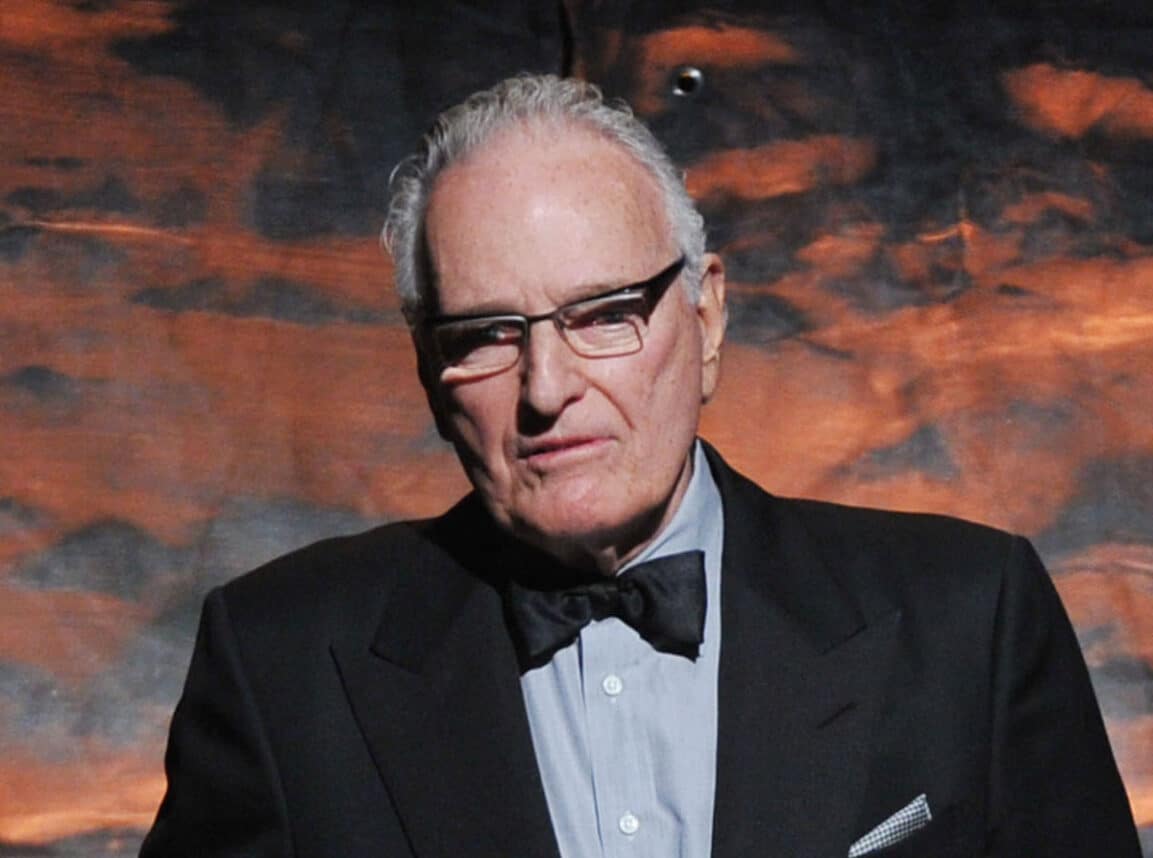
Photo by Theo Wargo/Getty Images for Songwriters Hall Of Fame

Has there ever been a Rock & Roll Hall of Fame inductee who also has been honored by the Southern California Jewish Sports Hall of Fame?

Recording executive Jerry Moss is the only one who could claim these two honors. Moss’s career started in the 1950s by promoting records like the hit 16 Candles by The Crests, one of the first racially and gender-mixed doo-wop groups. However, his business acumen led him to think bigger about the possibility of his own independent record company.

A&M Records was the start-up venture that Moss launched with trumpeter Herb Alpert in the early 1960s. It became a powerhouse by nurturing a large roster of superstar artists such as Alpert’s Tijuana Brass, The Police, Janet Jackson, Quincy Jones, The Carpenters, Burt Bacharach, Cat Stevens, Carole King, Sheryl Crow, Joan Baez, and Peter Frampton.

Moss oversaw financial, marketing, and record distribution concerns, with Alpert focusing on the creative side by working closely with the musicians on the label’s roster. Alpert said Moss had great integrity and they never had more than a handshake deal. Those were priceless assets.

They also proved to be highly profitable for these close business partners and friends. They sold A&M Records to PolyGram Records for an estimated $500 million in 1989 (more than $1.2 billion in 2024). This enabled Alpert and Moss to become dedicated philanthropists for decades to come. Jerry Moss donated $25 million to the Music Center in downtown Los Angeles, and millions more in the areas of education and healthcare. Ever the businessman, he also owned an art collection with works by Picasso, Magritte, and Warhol, a portion of which was auctioned off for $60 million.

As for his induction into the Southern California Jewish Sports Hall of Fame, his successes in the music industry also allowed Jerry Moss to indulge his passion as a horse breeder, a notoriously expensive undertaking. He went on to win the Kentucky Derby in 2005 with his horse Giacomo, named after one of the musician Sting’s sons. Sting laid down a $1,000 bet on the horse with 80-to-1 odds in the Derby and jokes that he’s still living off the proceeds today.

Moss scored big again in the Breeders’ Cup Classic four years later with Zenyatta, named for an album by The Police–the group that made Sting famous and helped propel A&M Records as a force to be reckoned with in the music industry.

Cynthia Weil, 82
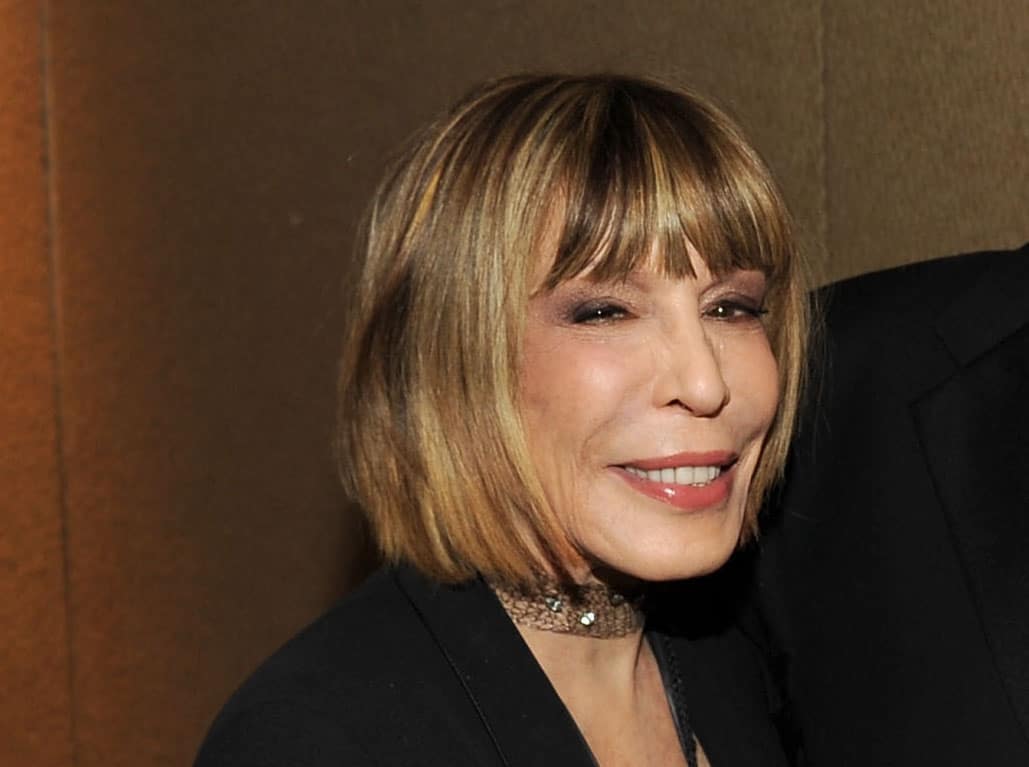
Photo by Larry Busacca/Getty Images for Songwriters Hall of Fame

The epicenter for American pop music in the late 1950s and 1960s—before the Beatles and the British Invasion took the country by storm—was the Brill Building at 1619 Broadway in New York City. There, a group of largely young Jewish musicians toiled away to churn out dozens of chart toppers that have stood the test of time.

Reviewing the Brill Building roster today seems fantastical; how could so much talent be squeezed into a few floors of a single location in Manhattan? Neil Sedaka was there, as was Neil Diamond, Marvin Hamlisch, and even Paul Simon, using the name Jerry Landis when he was in a duo with Art Garfunkel called Tom and Jerry.

The most competitive writing teams used the success of their rivals to see who could turn out the next big hit on AM radio. The story is well told in the Broadway show Beautiful: The Carole King Musical. Two young married couples, King (née Carol Klein) and Gerry Goffin, and Cynthia Weil and Barry Mann, became lifelong friends and musical rivals. As Carole King recalled to Simon Frith in The Sociology of Rock, “Every day we squeezed into our respective cubby holes with just enough room for a piano…You’d sit there and write and you could hear someone in the next cubby hole composing a song exactly like yours.”

The melodies may have sounded similar, but the lyrics clearly were distinctive. And as a pop lyricist, Cynthia Weil emerged as Brill Building royalty, working with Mann (and occasionally other musical partners) to produce great songs for six decades.

The Rock & Roll Hall of Fame’s 2020 tribute when Mann and Weil were inducted into that hallowed institution captured the special impact of her lyrical gifts: “With Weil writing the words and Mann the music, they came up with a number of songs that addressed such serious subjects as racial and economic divides (Uptown) and the difficult reality of making it in a big city (On Broadway). Only in America tackled segregation and racism [causing it to be recorded by Jay and the Americans rather than The Drifters, who were deemed to be too controversial as a black group to deliver that sober message]. We Gotta Get Out of This Place [a smash for The Animals], became an anthem for the Vietnam soldier, antiwar protesters, and young people who viewed it as an anthem of greater opportunities.”

And her lyrics for You’ve Lost That Lovin’ Feelin’, with music by Barry Mann and Phil Spector, reached a stratospheric level of airplay; Broadcast Music, Inc. ranked it as the most-played song on American radio and television in the 20th century, and the Recording Academy honored it as the Song of the Century.

Cynthia Weil’s words were heartfelt and soulful. Perhaps the best example was a song recorded by Linda Ronstadt that she co-wrote with Mann and James Horner, which was a double Grammy winner in 1988. Cynthia’s father was Morris Weil, a furniture owner and son of Lithuanian-Jewish immigrants. The animated musical An American Tail tells a similar Jewish story about Fievel Mousekewitz and his family as they emigrate from Russia to the United States. After losing them upon arrival, Fievel then must find a way to reunite with loved ones.

Somewhere Out There is both a cry of despair and an ode to hope. Cynthia Weil uniquely could capture that all in about three glorious minutes.

Robbie Robertson, 80

Photo by Kevin Winter/Getty Images

One of the ironic things about The Band’s Civil War-themed song The Night They Drove Old Dixie Down is that it was written by a Canadian who was part Cayuga and part Mohawk. But this songwriter’s music had a true feel of the American spirit. His first name was Jaime, but he was known to music fans as “Robbie” Robertson and he was one of the creative forces behind The Band.

Robertson was obsessed with the guitar at an early age. His first important exposure to making music was when visiting relatives living on the Six Nations reservation near Toronto, Canada, where he had spent his early years.

Aged twelve when his mother was getting divorced, she revealed a big surprise in his lineage. The man he called “Dad” up until then was not his natural parent. That day, he learned his biological father was actually a Jewish-American gambler who had been killed years earlier in a hit-and-run accident.

By the time he was fifteen, Robbie was already a good enough musician to leave home to join Ronnie Hawkins and The Hawks for their North American club dates. With his background well known among friends by then, Hawkins once commented, “Robbie’s real dad was a Hebrew gangster.”

The backup group broke away from Hawkins and eventually changed their name to simply The Band. They provided the music for Bob Dylan’s first electric tour where they were roundly booed, moved to the Woodstock area, and had Beatle George Harrison and guitar legend Eric Clapton yearning to join.

Some of Robertson’s other best-known songs were Up on Cripple Creek, Stage Fright, and Life is a Carnival. Vying with “Dixie” for his best-known song was The Weight, about a trip to Nazareth, the Pennsylvania location of the Martin Guitar factory that produced the instrument that he used in writing the song. The Weight has been recorded at least 25 times by artists ranging from the Staple Singers and Aretha Franklin to John Denver and Joe Cocker.

The Last Waltz, a 1978 feature-length documentary of The Band’s final concert, was directed by Martin Scorcese. It helped to open the second phase of Robertson’s career. He and Scorcese worked on the film together and became friends and collaborators. Robertson went on to score or serve as music supervisor for many films with the noted director, beginning with 1980’s Raging Bull and ending with 2023’s Killers of the Flower Moon, for which he has been posthumously nominated for an Oscar.

Robertson stayed connected to his indigenous roots. In 1994, he recorded a solo album, Music for the Native Americans. It showed his passion for music was sparked by his upbringing on the Six Nations Reservation and marked the first time he had written music inspired by his Mohawk heritage.

He nurtured his Jewish roots, too, especially by forging a close relationship with his late father’s two brothers, Morris and Nathan, and with The Band’s manager Albert Grossman, who recognized Robertson’s talent in the early days when The Band took up residence at a house he rented for them—Big Pink.


Stuart N. Brotman and Bob Males are music aficionados who have spent decades– as friends since their Bar Mitzvahs–sharing with each other their vinyl singles, albums, CDs, iTunes playlists, and Spotify selections. Their tastes have become more eclectic with each passing year, and their appreciation for Jews who have shaped American musical history continues to grow.


Remembering the Soundtrack of Our Lives: A Jewish In Memoriam Guide to the Grammys Read More »

Michele Rodri z”l March 26, 1935 – January 24, 2024

On Wednesday morning not very long after day break, on the eve of Tu b’Shavat, the new year for the trees, Michele said goodbye to this world. She left this world as she lived in it, unafraid and resolute and practical and also with a keen sense of loss for the sweetness she was leaving behind.

Michele Rodri z”l was a vital and dynamic woman, elegant, funny, devoted to the Jewish people, to her family, her friends, to life, until her very last breath. Courageously honest, deeply, deeply human, warm and emotionally generous, she was a good friend and one of the finest, most loving mothers and matriarchs I have known.

For the last 20 years she gave her time sharing her story of survival and perseverance with young people across the city and virtually across the country, and across the world.

She shared how as a child she was daringly rescued from an internment camp by her brother, spoke of her life in a convent and later, under difficult conditions, with a family. She shared and carried forward the memory of over 200 family members: Aunts, uncles, first and second cousins, of her dear brother Maurice, his life cut short, so cruelly, so young, so heartbreakingly murdered by the Nazis before his life even blossomed in fullness.

She shared how she thought of him every single day. She was keenly aware of the delights and pleasures and joys he would never know.

She lived with that sadness but it did not disable her capacity for infinite joy, laughter, and love.

The way she laughed, how her beautiful eyes lit up, how her enchanting smile revealed itself spread across her radiant lively lovely self. The essence of Michele was just that. The thing that infused everything she did. How she mothered and befriended and related and consoled and taught and inspired and made each of us who loved her feel so blessed to have her in our lives.

This is her legacy.

Love for her beautiful family she built and grew and nurtured and loved every single day of her life, Kirk and Sam and Jacob, love for her husband of 47 years, Jack, a survivor of Bergen-Belsen who she talked to every day until her life ended.

Love for the Jewish people that started under the teachings of her loving mother, father and older brothers. She carried that every day, working, as executive assistant to Rabbi Philip Schroit at B’nai David-Judea Congregation, never taking a penny of monetary compensation. A job into which she poured her love for Judaism. The purest work there is.

Love for her friends. She loved well, constantly and joyfully. She was loyal, impassioned, a teacher, a guide, a sage. Uplifting all those in her presence.

Her legacy, like the complex communicative deep roots of the oldest wisest trees, will remain with us strong and sturdy. Guided by her teachings, sheltered and nurtured by our memories of the life she lived, the example she set and the love she gave.

Michele Rodri , a woman of warmth and wisdom and deep love for all she held true. Eshet Chayil. A woman of valor like no other.

Samara Hutman
Remember Us, Lay Director
Second Nurture, LA Affiliate Director

To learn more about Michele’s extraordinary life, read these 2 Jewish Journal Articles :

Michele Rodri: Double Survivor


Survivor Michele Rodri: Shuttled from place to place until danger passed


Michele Rodri z”l March 26, 1935 – January 24, 2024 Read More »

Should We Feel Guilty?

I was sitting in the front row at the comedy show my husband was performing on with four other Jewish comedians, laughing at his jokes in a room full of other Jews having a good time as well.

And then I looked around and thought: Should we be laughing right now? Should we be enjoying ourselves when there are so many awful things happening in Israel and to Jews around the world? My mind went to the Holocaust: Did the Jews in America go on as if life was normal while their fellow Jews were being massacred in Europe? Are we doing something wrong?

Since Oct. 7, I’ve had these thoughts every single day – especially when I’m enjoying myself. How can I be happy when so many are suffering? 

The truth is that these feelings are probably normal. If I’m feeling this, I know that others must be, too. 

Guilt can be productive. It can help us figure out the areas in our life in which we aren’t performing our best. That little voice in our head can tell us what we need to be doing, and it’s up to us to listen to it. The concept of “Jewish guilt,” that Jews feel guiltier than others, is a myth, and it’s antithetical to authentic Torah Judaism. 

We are not supposed to feel guilt all the time and punish ourselves when we do something wrong. We are meant to learn and grow from our mistakes and try not to mess up again. Torah Judaism is about celebrating life, about doing as many mitzvot as possible to try to be closer to Hashem and lead a more fulfilling existence. Even during the Holocaust, people found ways to celebrate the holidays in the camps, to find the smallest slivers of joy possible. And in the aftermath of the Oct. 7 massacre, IDF soldiers are getting married in their uniforms, mothers are naming their beautiful babies after the victims and people are coming together for simchot.

As Jews, we hold dual realities at the same time; we can be joyous, but we must remember who we are and the hardships we’ve endured.

As Jews, we hold dual realities at the same time; we can be joyous, but we must remember who we are and the hardships we’ve endured. We smash a glass under the chuppah to remember the destruction of the Temples and have fun Passover seders where we reflect on our enslavement in Egypt. This is what we’ve always done and will continue to do. Remembering what we’ve been through – even in these celebratory moments – is what makes us Jewish and ensures that we not only continue to survive, but thrive.

Going back to the comedy show, the comedians were joking about current events while also calling for unity and urging people to donate to Israel. The laughter was a much-needed break from the grim news and gave strength to everyone in the room. I fully believe that laughter is essential to our existence. 

If we feel guilty 24/7 for living our lives, we won’t be able to support our Jewish brothers and sisters in Israel, who need us to be strong now more than ever. We need to defend them, to offer them comfort during this tumultuous time. If we all feel guilty every second of the day, we’ll be depressed and listless and unable to help – and that’s the last thing we need.

People like to say that the “ultimate revenge” we can have on the antisemites and those who tried to wipe us out is by being happy and living joyful Jewish lives. I don’t like to frame it as “revenge,” because that’s negative. However, I do agree with the sentiment, that we must continue to be exuberant, even in the face of hate. We can’t let them get us down. 

For now, I won’t “live my life” as I did pre-Oct. 7. Something fundamentally changed in all of us that horrible day. It made me focus more on giving back to my fellow Jews, providing comfort to them and very publicly standing up for Israel.

Though things have shifted, I also won’t give up my resolve to be proudly Jewish and b’simcha. That’s what Hashem wants from us: to say “l’chaim” in the face of fear and to fulfill our unique mission as Jews to be a light in the darkness. 

It’s time to shine bright.

Have you felt guilty post-Oct. 7? Email me: Kylieol@JewishJournal.com.


Kylie Ora Lobell is the Community Editor of the Jewish Journal.

Should We Feel Guilty? Read More »

The Dangerous “Moral Aestheticism” of Israel’s War Critics

What strikes me most about denunciations of Israel’s conduct in the war against Hamas is the lack of basic moral reasoning. People who should know better react emotionally to scenes of devastation in Gaza as proof positive of Israel’s guilt. Innocent people died, hence Israel is culpable. For example, UN Secretary-General António Guterres stated recently that “the onslaught on Gaza by Israeli forces over these 100 days has unleashed wholesale destruction … Nothing can justify the collective punishment of the Palestinian people.”

Secretary Guterres doesn’t ask and answer basic moral questions: What military action on the part of Israel was unjustified and why? Was at least some of the damage and carnage not committed by Hamas, which booby-trapped hundreds of buildings? Is Hamas at least partially culpable for using Gazan civilians as human shields? 

Has Israel lived up to its moral responsibilities in war? It’s a difficult question to answer because in many instances we simply don’t know enough. We do know that the IDF drops leaflets warning Gazans of impending attacks and that the military provided safe passage to more than a million people from northern to southern Gaza to avoid hostilities. But that doesn’t mean that the military has always been judicious. If you are truly trying to apply fair moral standards to Israel’s conduct in war, however, you must, in the words of my high school math teacher, “show your work.” Otherwise, you aren’t engaging in moral reasoning but in a kind of shallow moral aestheticism, confusing what looks bad with what is bad. 

The Book of Genesis offers a powerful allegory of the disparate moral and aesthetic sensibilities when Noah, lying drunk and naked, is, according to the rabbis of old, assaulted by his son Ham. The two other brothers, Yapheth and Shem, cover their father and look away. One common interpretation among the rabbis is that Yapheth acted out of the aesthetics of the moment and looked away in disgust at what his brother Ham had done, while Shem was offended on a deep moral level.

The Bible has a penchant for imbuing names with powerful meaning. Ham, which means “hot,” is heated by his unchecked evil inclination. Yapheth, which is derived from the word for “beauty,” demonstrates the aesthetic sensibility in his repugnance. Shem, which means “name,” names the immoral act. Jews, among others, are considered descendants of Shem, imbued with this moral sensibility. Hence the label “Semites.”

Years back, the TV show “Larry King Live” played host to a hilarious clash of moral and aesthetic sensibilities on the topic of meat-eating between renowned Jewish writer Jonathan Safran Foer, author of the book “Eating Animals,” and the now-deceased celebrity chef Anthony Bourdain. “There’s a certain kind of meat,” Safran Foer said, “which is produced on factory farms, that is in every single way unconscionable. It’s unconscionable to feed to our children because of health. It’s unconscionable because it’s the single worst thing we can do to the environment by a long shot. And it’s unconscionable because of what we’re doing to animals who are raised on factory farms.”

Bourdain countered: “My major area of concern is … supermarket quality, fast food quality, pre-chopped meat. The stuff they’re putting in these burgers would not be recognized by any American as meat. That said, I would counter Jonathan’s argument just with one word: bacon. It’s so delicious.”

While both Bourdain and Safran Foer were opposed to eating factory-farmed meat, Safran Foer, the Shem in the biblical story, is opposed out of a sense of moral duty, and Bourdain, the Yapheth, is opposed because it’s disgusting. Whatever one thinks of Safran Foer’s moral reasoning against eating factory-farmed animals, he was engaging in moral reasoning. Bourdain, for his part, was the very personification of the aesthetic sensibility.

In morally evaluating the Hamas-Israel war, political philosopher Michael Walzer states that “we have to think beyond our feelings and acknowledge that the suffering will continue until those who designed and began the war have been defeated.” But, he cautioned, “Israel’s high-tech army has clear moral responsibilities: to do everything it can to minimize civilian casualties. That means targeting as carefully as possible and accepting risks in gathering the information that makes targeting precise … But even if the IDF does all this and accepts the morally necessary risks, it will kill large numbers of civilians.” Walzer, in contrast to Secretary Guterres, is engaging in moral reasoning, even if the moral answers are hard to come by.

Another recent example of moral aestheticism is a New York Times opinion piece authored by Megan Stack, who lauds the South African case of genocide against Israel that was before the International Court of Justice. In recounting the horrors of the war, Stack states that “Israel did not promise, nor did it execute, a sharply targeted retaliation against Hamas … or a strategic hunt for the hostages … To understand this extraordinary spasm of violence as an act of national self-defense, you’d have to accept that Israel’s only chance for safety depends upon Gaza being crushed and emptied—by death or displacement—of virtually all Palestinians.”

But Stack doesn’t bother to mention Israel’s oft-stated war aim: to dismantle Hamas so Israel’s citizens from the south can return to their homes. The real moral question, which Michael Walzer poses, is “what contribution does destroying this target make to success in the ongoing battle or the longer-term military campaign—or to victory itself? Or to the deterrence of future conflicts?” To fairly evaluate Israel’s military actions requires one to understand what Israel is trying to accomplish. Stack’s failure to do so decontextualizes the destruction. It would be like surveying the devastation wrought by U.S. forces against ISIS (The U.S. reportedly killed nearly 30,000 civilians.) without referencing the American war aim to end ISIS’s murderous rampage through the Middle East.  

The moral aestheticism practiced by Guterres and Stack is appealing because it substitutes ill-formed impressions for critical judgment and relieves gnawing doubts. And while this lack of moral reasoning is not new, it’s gotten much worse with the now vogue leftwing ideological predilection to divide up the world into the powerful and the powerlessness. In this worldview, the powerful are presumed guilty and the powerless innocent. Once one determines that there’s something fundamentally wrong with Israel, he or she is free to hold the Jewish state alone responsible for the conflict and to ignore all exculpatory evidence. Hamas can’t be responsible because it represents the supposedly powerless party.  

And while this lack of moral reasoning is not new, it’s gotten much worse with the now vogue leftwing ideological predilection to divide up the world into the powerful and the powerlessness.

Not all criticism of Israel is so simplistic and some reproval does indeed apply sound moral logic. Supporters of Israel, like me, who take moral discourse seriously must be open to evidence that specific Israeli commanders acted with ill intent or failed to take adequate cautionary measures in protecting civilian life. In the course of a long war, it’s quite possible that Israel did not always act within the bounds of the just-war doctrine or the laws of war. But we can’t make those judgments without hearing the evidence and multiple accounts of the events. 

Unfortunately, the moral confusion about power and complicity, once confined to the extreme left, has caught on among the mainstream commentariat. Tired of contending with the bad optics of self-defense, these NGO leaders, opinion elites and journalists have resolved their conflicting impulses. Israel is guilty. Freed of all dialectical tension, they can now castigate Israel for its bad manners and the inherent repugnance of even the most legitimate self-defense. 

If such moral aestheticism continues unabated, how will any country ever fight a just war and keep its citizens safe? Or does this level of scrutiny only apply to Israel? 


David Bernstein is founder of the Jewish Institute for Liberal Values (JILV) and author of “Woke Antisemitism.”

The Dangerous “Moral Aestheticism” of Israel’s War Critics Read More »

Applying To College After October 7

I am a senior in high school. In the weeks before Oct. 7, 2023, I was finalizing my list of where I would apply to college. I had narrowed it down to 13 universities based on two main criteria. First, because I plan to become a nurse practitioner, I sought schools with a direct-entry nursing major. Second, because I’m an observant Jew, I sought schools that have a robust Jewish life. Prior to Oct. 7, this meant a school with Shabbat services and a Kosher meal plan. My list consisted of state schools, Ivy League and other private universities. 

And then Oct. 7 happened. At first I didn’t understand the magnitude of what had occurred. Then, as I read the coverage and saw the horrifying pictures and videos, it began to sink in. I found out that a close family member who was in the IDF had been murdered by Hamas while rescuing civilians. He was just shy of his 23rd birthday and I had been in Israel a year before, celebrating his wedding. I felt numb and pulled to go to Israel, to take a stand against this evil. Instead I was at home in Los Angeles, a high school student who still had to apply to college. 

I was also shocked to see that Jewish students on many of the college campuses I was applying to were scared to leave their dorms. They were afraid of people on campus knowing they were Jews, let alone that they supported Israel. Aggressive, often violent, pro-Hamas demonstrations were taking place on these campuses, and they seemed designed to make Jews feel threatened. Jewish students on these campuses feared for their safety, felt alone, and like no one on campus supported them or cared they were afraid.

A close family friend and recent graduate of my high school is now a freshman at an Ivy League college. She is Jewish, her parents are Israeli, and she has at times felt terrified on her campus since Oct. 7. She has two Muslim roommates who she thought were her friends. But when she checked their social media accounts, she saw that they were posting antisemitic and pro-Hamas sentiments. When she was walking on her campus wearing a Star of David necklace, someone tore the necklace off her neck and shoved her violently while shouting antisemitic insults in her face. I couldn’t believe that this was happening on college campuses in modern-day America and not 1930s Germany.

Being an open, proud Jew is a core part of my identity and I want to go to a university where I wouldn’t have to hide this part of myself in order to stay physically safe. Being Jewish is not a part of my identity that I’m willing to compromise.

After hearing these stories from friends and watching the testimony from university presidents in front of Congress, I began to worry about what it would be like to be a Jewish student at many of the colleges on my list. Being an open, proud Jew is a core part of my identity and I want to go to a university where I wouldn’t have to hide this part of myself in order to stay physically safe. Being Jewish is not a part of my identity that I’m willing to compromise.

Based on these realizations, I only ended up applying to six of the 13 schools on my original list; I purposefully did not apply to some of the schools currently making headlines for antisemitism. Given that nursing is a very selective major, I knew that applying to so few schools may mean that I wouldn’t get into university at all. My backup plan would be to attend university in Israel. 

Fast forward a few months, and most of my peers still applied to schools based on prestige and not the reality of what it is like being Jewish on college campuses today. Now that my classmates and I have started receiving our college admission decisions, seeing my friends get into certain schools has felt complicated. While I am happy for them, I know that going to some of these universities means that while they will get the branding, they likely won’t have easy experiences as Jews. I hope that those of my friends going to these schools will be able to retain their proud Jewish identities and won’t compromise or hide in order to fit in with the new, anti-Semitic campus climate. 

Ralph Waldo Emerson once said, “I am ashamed to think how easily we capitulate to badges and names, to large societies and dead institutions.” I don’t know what the future holds for me or my peers. But it has led me to think: what are the values I and other members of my generation hold most dear? And as we go out into the world as adults for the first time, how will our lives reflect those values? I hope that the next four years for my friends do not look like the last few months on college campuses.


Maayan Mazar is a high school senior in Los Angeles.  

Applying To College After October 7 Read More »

Shakespeare and Mid-East Peace

As the Israel-Hamas war continues, tensions between Israel and Egypt are simmering. The country, which maintains a cold peace with Israel and a border with Gaza, seems intent on publicly supporting the Palestinian cause, while refusing to let Gazan refugees find shelter from the zone of fighting. Daily headlines like “U.S. working to prevent worsening of the diplomatic crisis between Israel and Egypt” and “Egypt weighed recalling ambassador amid nadir in ties sparked by Gaza war” are indicative of a decades-long detente becoming strained at the seams. Yet, a little over a century ago, a week of remarkable cultural exchange took place. Though it might seem unimaginable in today’s fraught Middle East, perhaps it reminds us that unlikely need not mean impossible as Israel and its regional partners envision the “day after.”

In November 1919, Jerusalem’s residents were visited by the Egyptian theater company of Abd al-Aziz al-Jahili. The performers stayed for five nights. They performed “Charlotte,” a play based on the life of the late 18th century French assassin Charlotte Corday, and “Hamdan al-Andalusi,” about the renowned philosopher and mathematician. They also performed Shakespeare’s “Hamlet, “Othello” and “Romeo and Juliet.”

As Ziad Fahmy notes in his “Ordinary Egyptians: Creating the Modern Nation through Popular Culture,” al-Jahili’s was one of many popular traveling troupes of the era. Hailing from Cairo, the cultural capital of the Arab world, the actors and director borrowed from earlier translations of the Bard, and likely took poetic license. Scholars suggest they likely utilized a version of “Hamlet” with a happy ending. Dismissed by the conservative elite as occupying a “low” status on the Egyptian cultural scale, al-Jahili and Co. were able to perform unhindered to diverse local audiences. The hosting venue for those November evenings was Qahwat al-Ma‘aref. Located right outside Jaffa Gate, the cafe was in the city’s commercial center and served as Jerusalem’s main public performance venue. Constructed a few years earlier, this central district symbolized the middle-class, non-sectarian, and modern aspirations of late Ottoman-era Jerusalem. The posters advertising the shows were trilingual, written in Arabic, English, and Hebrew in order to attract the widest possible audience, though the actors’ lines were recited in colloquial Egyptian Arabic. 

Amusingly and endearingly, the Hebrew ad refers to the show about star-crossed lovers as “Ram ve-Yael” (“Ram and Yael”), borrowing biblical-style names used in an earlier, Hebrew-language version of the show by Israeli actors. In English, the title appears as “Romes and Juliette.”

One can only imagine whether a multicultural audience shared drinks and swapped stories together during intermission those five nights, overcoming, in this unique context, religious and political differences. Regardless, the recollection of this series — a moving mosaic of Arabic, Hebrew, French, and English — might help us envision a revival in calmer times. In a grassroots effort, free from the strictures of the upper echelons of political and social forces, hands of friendship were extended across divides long thought insurmountable. Israel’s holiest city hosted locals and visitors alike to see Egyptians, Israel’s biblical oppressors, lead the assembled in a shared appreciation of the best of the West. Muslims invited Jews to enjoy the classic works of a Christian. History’s foremost playwright couldn’t have written a better scene.

Shakespeare, wrote Rabbi Sacks, “was open to life in all its multiplicity and complexity, its conflicts and contradictions, while other, lesser writers sought to reduce it to a single philosophical frame.”

In considering the legacy of Shakespeare, Rabbi Lord Jonathan Sacks noted that the poet John Keats, in an 1817 letter to his brothers George and Thomas, sought to unpack what made Shakespeare so great in comparison to other writers. The Bard possessed, Keats wrote, “Negative Capability – that is, when a man is capable of being in uncertainties, mysteries, doubts, without any irritable reaching after fact and reason.” Shakespeare, wrote Rabbi Sacks, “was open to life in all its multiplicity and complexity, its conflicts and contradictions, while other, lesser writers sought to reduce it to a single philosophical frame.” And fittingly for the setting of al-Jahili’s series of shows, Rabbi Sacks added, “What Shakespeare was to literature, Abraham was to faith.” 

No doubt months if not years will be spent in forging a post-war Middle East. Investigations will be ordered, trials conducted, and international negotiations will dictate the policies, alliances and repercussions of the fallout from that horrible day. Mysteries and doubts, conflicts and contradictions will abound. But as presidents, parliamentarians, jurists and pundits ponder what comes next, it is the common citizen, the children of Abraham, cousins who dwell together in the land, who will shape the emerging culture. Through generosity of spirit and faith in the future, creative and welcoming cultural exchanges might just yet gift us with a repeat performance of what occurred those five Jerusalem nights. In the meantime, the poster announcing the performances sits in Israel’s National Library, waiting to be unfurled by the next curious visitor.


Rabbi Dr. Stuart Halpern is Senior Adviser to the Provost of Yeshiva University and Deputy Director of Y.U.’s Straus Center for Torah and Western Thought. His books include “The Promise of Liberty: A Passover Haggada, “which examines the Exodus story’s impact on the United States, “Esther in America,” “Gleanings: Reflections on Ruth” and “Proclaim Liberty Throughout the Land: The Hebrew Bible in the United States.”

Shakespeare and Mid-East Peace Read More »

Amy Steinhaus Kirwin and Rebecca Edana: “Two Jews Making Food,” Fun with Cooking and Vegetarian Kishka

Amy Steinhaus Kirwin and Rebecca Edana love to cook, eat and share their joy of cooking with others! Their show, “Two Jews Making Food,” now in its third season, began airing on ChaiFlicks in January.

“When you share food, you’re sharing a piece of yourself and [your] heart,” Edana told the Journal. “It’s a great way to connect with people and … to explain cultures.”

During the half-hour episodes, Steinhaus Kirwin and Edana share recipes for food and drink, based on their weekly theme; they also have a loved one Zoom in to share the Yiddish Lesson of the Day.

“Sometimes it’s my dad, it’s my mom, it’s Rebecca’s mom, it’s been a few other people here and there,” Steinhaus Kirwin told the Journal. “My dad … was the original. He’s 87 now, but he’s a poo-poo Kenahora, a good 87. He loves doing it.”

Note: ‘Kenahora” is the Yiddish Lesson of the Day on their Taste Buds with Deb episode, which you can watch on JewishJournal.com/podcasts.

“I love learning about Yiddish,” Edana said. “These words were really a part of my childhood. … Sometimes people are using them and they don’t even know what they mean, but they know that they’ve heard them and they know … the implied meeting, so it’s like a little bit of trivia.”

The “series” began in 2019, when the duo decided to cook a holiday meal together and livestream it.

“We figured it’d be funny to have people watch us while we’re cooking and ask us questions,” Steinhaus Kirwin said.

The broadcast lasted for two hours.

“Amy and I just had such a great time that we were like, we should keep doing this,” Edana said. “A lot of people are familiar with Jewish food, but I think there’s so much out there to share. It comes from so many different places, and so many people can relate to it.”

Adds Edana, “It created kind of a nice community that people felt like they could share that part. of their personality in a safe and comfortable place.”

Although they took a break from filming during the pandemic, the LA-natives now film at LTV Studios in East Hampton, NY (it’s a public access station).

“We tried to do the show with each other on Zoom and we would prop an iPad up like on a music stand, and that would be like the other person next to us,” Steinhaus Kirwin said. “And it was just a mess.”

In addition to the show, they do some live events in the community. The pair said the coolest part is people, who are not Jewish, will come up and say that a recipe reminds them of a food from their culture and upbringing.

“So many people can find they relate to the food and also that a wide variety of food,” Edana said.

Most people are familiar with Ashkenazi recipes (deli food, matzo ball soup, stuffed cabbage). However they have discovered that a lot of Middle Eastern/Sephardic Jewish food is a little less known, but “equally delicious and fun” to make.

“We’re not kosher, but we love food and we love stories and we love to learn,” Edana said. “The show was created in an effort to find out what is out there.”

“It’s not just Jewish cuisine; that’s why it’s not ‘Two Jews Making Jewish Food.’” Steinhaus Kirwin said. “It’sfood from our culture and sometimes it’s somebody else’s, and that’s where we find those similarities.”

One of their favorite recipes is Edana’s vegetarian kishka. The recipe is below.

“Everybody that eats it loves it,” Edana said. “And it’s so easy. It’s one of those things that you make it that you’re like, you have to be kidding me. That can’t be it”

Kishka is usually made with meat.

“It’s like our version of haggis; I love haggis,” Steinhaus Kirwin said.  “The vegetarian kishka is carrots, onion, celery and matzo meal, and then you make a loaf out of it.”

Whereas Edana is more methodical with her cooking (though she hates cleanup), Steinhaus Kirwin tends to use all the dishes when she cooks (and loves presentations).

“When I cook, I really enjoy experimenting,” Steinhaus Kirwin said. “When it comes to certain things, I’ll follow a recipe, but I really just like to make things up. I think I’m pretty good at identifying flavors that go well together and creating the perfect bite.“

Edana does like to make recipes that she is not familiar with.

“I want people to see that you don’t have to be scared; just make it,” she said. “Sometimes it’s going to be awful. Make it again and the next time it’ll be better.”

Follow @twojewsmakingfood on Instagram and learn more at TwoJewsMakingFood.com and ChaiFlicks.com.

Launched in August 2020, ChaiFlicks is the world’s largest streaming platform dedicated to Jewish storytelling. The platform has more than 2,500 hours of acclaimed films, television series, documentaries and short films, and is available on every major streaming device. “Schmoozing and Cruising” with CW Silverberg, previously interviewed on Taste Buds, is also on ChaiFlicks.

For the full conversation, listen to the podcast:

Watch the interview:

Here’s the Mandylicious Taste Buds Episode Edana mentioned in this episode.

Vegetarian Kishka

2 cups matzo meal

2 carrots

2 stalks of celery

1 onion, chopped

½ cup oil

1 egg, beaten

1 tbsp sugar

salt and pepper

Heat oven to 375 degrees.

Put matzo meal in a bowl. Blend remaining ingredients in a blender or food processor.

Pour mixed ingredients into the bowl with the matzo meal and mix well.

Form into 2 long rolls.

Lightly oil 2 sheets of aluminum foil and place each roll in the foil and seal.

Bake for 45 minutes.

Slice and serve!


Debra Eckerling is a writer for the Jewish Journal and the host of “Taste Buds with Deb.Subscribe on YouTube or your favorite podcast platform. Email Debra: tastebuds@jewishjournal.com.

Amy Steinhaus Kirwin and Rebecca Edana: “Two Jews Making Food,” Fun with Cooking and Vegetarian Kishka Read More »
Talking Travel: Niver’s Jan News 2024

Jan News 2024 with Lisa Niver & We Said Go Travel:

I loved speaking in Chicago at the Travel and Adventure Show and on NBC Chicago Today about my memoir, Brave-ish!

EVENTS

Come meet me in Los Angeles at the LA Travel and Adventure Show. I will be signing my book in the Vroman’s Bookstore booth # 1251 on SAT Feb 3 and SUN Feb 4 at 1:30pm and speaking on Sunday at 2:45 in the Savvy Traveler Theater.

February 16-19 in Mexico at the Women’s Travel Fest

Womens Travel Fest logo
Womens Travel Fest featuring Lisa Niver

10 Questions With Women’s Travel Fest Speakers: Lisa Niver

April 12-14 in Utah at the Women in Travel Summit

Learn more about my events: click here and my articles here

NEW PRESS INTERVIEWS:

AARP logo

Make Your Own Map Podcast Featured In AARP’s “7 Travel Podcasts You Can Listen To While Waiting In The Airport”

“One way you can plan for your next vacation is by listening to travel podcasts. You can also learn about places you might want to visit, or you can experience the destination if you’re unable to go there. We spoke to travel experts to find out which podcasts are worth listening to, especially if you are stuck waiting at the airport.”

Read Article

Looking For TRAVEL BENEFITS? Southwest Rapid Rewards Credit Card By Chase

I was honored to be selected to share on camera for the holidays about the Southwest Rapid Rewards Credit Card by Chase.

https://youtu.be/8DakUV-Tt2g

Watch the TV Segment

Debby Waldman Substack - What to Believe
Some of my favorite memoir reads from 2023 - Debby Waldman

Brave-Ish Featured On Debby Waldman’s “Some Of My Favorite Memoir Reads From 2023”

“Brave-ish was one of my favorite memoirs of the year because it covered such a range of emotion, from the absolute depths of Niver’s horrible marriage, to the way she picked herself up with the support and love of people who truly cared about her and created the life she always wanted. I love stories that show deep resilience.” – Debby Waldman

Read Article

Sheperd logo
Shepard best books that make the flight time disappear because you feel in the story

The Best Books That Make The Flight Time Disappear Because You Feel In The Story

As both a lifelong traveler and reader, I cannot start an adventure without a great book. Having owned a Kindle since 2008, I consistently carry a virtual library, curating an assortment of captivating reads for every journey. As a travel journalist, I fly multiple times a month, which amplifies my need and understanding of the perfect in-flight companions; stories that transport and captivate.

Read Article

ABC 1490 AM KMET 98.1 FM logo
Lisa Niver on Moments with Marianne

Brave-Ish With Lisa Niver At Moments With Marianne

Are you looking to create a life of wonder and excitement? Tune in for an inspiring discussion with Lisa Niver on her new book Brave-ish: One Breakup, Six Continents, and Feeling Fearless After Fifty.

Listen Podcast

Thank you to Harvard-Westlake School for sharing about my new book in the alumni news.

I wish I could share my new book with my favorite Westlake teacher, Joannie Parker. I wrote about her class and being at the United Nations Global Assembly for Ms. Magazine: https://bit.ly/Joannie23 My memoir, Brave-ish, One Breakup, Six Continents and Feeling Fearless After Fifty, is now available. Thank you to everyone who came to my events at Vroman’s Bookstore in Pasadena and Zibby’s Bookshop in Santa Monica. I hope to see you at one of my future events. I will be speaking at AdWeek NY, Business Travel Awards Miami, DEMA in NOLA, Penn Bookstore in Philly and a keynote in London. I have virtual events too–I am doing a global book club with Wanderful and an author’s corner for BookFest. Invite me for your next book club or conference. INFO: https://lisaniver.com/braveish/ Thank you for all of your support for me and my writing! I am very grateful for my education at Westlake School for Girls and look forward to reconnecting. Please contact me through my website or on social @LisaNiver.

AWARDS for Brave-ish

SEMI FINALIST: Brave-ish is now in round 3 of the Hearten 2023 HEARTEN Book Awards for Inspiring & Uplifting Non-Fiction. I was on the Long List and then the Short List and now a SEMI FINALIST!

WINNER: Goody Business Book Awards: Memoir/Self-Help

Runner-up: Zibby Awards: Best Book for The Strong Woman

We Said Go Travel is #10 on the 100 Best Travel Lifestyle Blogs and websites for 2024

and I am also the #3 Top Travel Influencer for 2024 for Afluencer as well as #10 of Female Influencers Brands Can’t Get Enough of for 2024!

THANK YOU for watching my podcast! It has now been seen and heard in 41 countries on 6 continents!

USA 🇺🇸  India 🇮🇳 Canada 🇨🇦  Ireland 🇮🇪Puerto Rico 🇵🇷  UK 🇬🇧   Italy 🇮🇹  Australia 🇦🇺 Philippines 🇵🇭 Singapore 🇸🇬  New Zealand 🇳🇿 Portugal 🇵🇹 Saudi Arabia 🇸🇦 Switzerland 🇨🇭 Hong Kong 🇭🇰   Mexico 🇲🇽  Japan 🇯🇵  Fiji 🇫🇯 Seychelles 🇸🇨 France 🇫🇷 Latvia 🇱🇻  Netherlands 🇳🇱  Kenya 🇰🇪  UAE 🇦🇪 Cambodia 🇰🇭 Israel 🇮🇱Guatemala 🇬🇹 Germany 🇩🇪 Uruguay 🇺🇾 Bangladesh 🇧🇩 Spain 🇪🇸 Panama 🇵🇦 Thailand 🇹🇭 Uganda 🇺🇬   Greece 🇬🇷  South Africa 🇿🇦 Costa Rica 🇨🇷 Bosnia and Herzegovina 🇧🇦  Sri Lanka🇱🇰Romania 🇷🇴 Pakistan 🇵🇰

WATCH my podcast, “MAKE YOUR OWN MAP: Are YOU ready to be BRAVE?” on Spotify, Apple Music, Amazon Music, YouTube PodcastGoogle Podcasts, Audacy, Audible, Anchor, PandoraiHeart Radio

WHERE CAN YOU FIND MY TRAVEL VIDEOS?

Here is the link to my video channel on YouTube where I have over TWO MILLION views on YouTube! (now at: 2,070,500)

Thank you for your support! Are you one of my 4,220 subscribers? I hope you will join me and subscribe! For more We Said Go Travel articles, TV segments, videos and social media: CLICK HERE

Find me on social media with over 150,000 followers. Please follow  on TikTok: @LisaNiver, Twitter at @LisaNiver, Instagram @LisaNiver and on FacebookPinterestYouTube, and at LisaNiver.com.

My Podcast: “Make Your Own Map!”

Fortune Cookie SAID:

“Your words have the power to inspire and captivate.

Embrace the stage weaving tales that resonate and uplift the hearts of many.”

BRAVE-ish, One Break-up, Six Continents and Feeling Fearless After Fifty


Talking Travel: Niver’s Jan News 2024 Read More »

How Jewish Journalism Has Changed After October 7

Each year, the American Jewish Press Association (AJPA) invites writers to submit their best work to the annual Simon Rockower Awards, which recognize excellence in Jewish journalism. And each year, I pore over 12 months-worth of weekly columns and other stories I have written in search of anything that may be worthy of submitting on behalf of the Jewish Journal. 

Last week, I reviewed everything I have written for this paper since January 2023 and, rather than feeling accomplished, I felt what can only be described as a sense of remorse. 

My last 16 columns have been devoted to Israel, antisemitism or Iran. But still, there were plenty of other columns, on full display on my Journal author page: Every single column, cover story, “Dear Tabby” and community story I had written before Oct. 7. I had devoted tens of thousands of words to topics ranging from The Hollywood Bowl and Barbie dolls, the end of “The Marvelous Mrs. Maisel” and the importance of experiencing a lousy, menial summer job as a teen. 

While it’s true that I had also written more serious columns and cover stories, I still felt a tinge of remorse in being reminded of everything I had written pre-Oct. 7. When I saw that my last column before the Simchat Torah massacre, published on Oct. 4, was titled “Machines, Machines, Everywhere” and offered a list of grievances against automated machines at supermarkets, I felt downright chagrin. 

How could I have devoted a column to such a seemingly trivial issue only three days before the worst Jewish massacre since the Holocaust? Yes, there was no way I could have known about the horror that was about to be unleashed against my people. But I still can’t come to terms with the fact that my last column before Oct. 7 complained about Amazon return kiosks at Whole Foods.  

I began to wonder how, as a Jewish American writer, I can possibly return to capturing the kinds of human interest stories, general musings and personality profiles that have nothing to do with Israel, antisemitism and other urgent issues. 

I believe that Jewish writers and reporters worldwide are experiencing a sense of discombobulation (not to mention chronic heartbreak) since Oct. 7. From Jewish newspapers in California to Georgia to New York and beyond, there is understandably very little coverage of matters that are not related to Israel and antisemitism today. In the words of one colleague who is a freelance American Jewish writer, and who asked to remain anonymous, “How can I write about anything else right now? It would be like writing about the opening of a new bakery during the Holocaust.”

My colleague’s words may sound harsh, but Jewish journalism in the Diaspora is currently facing a strange dilemma: On the one hand, writing about people and issues that have nothing to do with the massacre, the rape, the hostages and the current war may run the risk of appearing tone-deaf, to say nothing of a sense of turning our backs on Israel, whether perceived or real. 

On the other hand, what about all of the stories — the wonderful, diverse stories — about Jewish communities and endeavors worldwide, that are not related to Israel or the war, but that also deserve to be told? Fortunately, Jewish writers today know that Oct. 7 can be weaved into many, but not all of the stories we cover. Still, I know I can’t return to seemingly frivolous subjects for a while. 

I have a long list of story ideas I’m longing to cover that have nothing to do with Israel, but when will I return to them? I realize that contemplating this question is a privilege; it means that as a Jewish writer living in the United States, I have enough physical and even emotional distance to feel confused and guilty over how I currently choose to write about Israel. Israeli writers and reporters don’t enjoy this privilege; they exist at Ground Zero, whether or not they’re reporting from the battlefield. For them, there is no respite; only a perpetual survival mode of emotions. Just ask Sarah Tuttle-Singer and Etgar Lefkovits.

“We’re in a constant state of mourning, anxiety and exhaustion,” Tuttle-Singer told me in a phone interview from Jerusalem. A blogger for the Times of Israel (TOI) and author of the 2018 book, “Jerusalem, Drawn and Quartered: One Woman’s Year in the Heart of the Christian, Muslim, Armenian, and Jewish Quarters of Old Jerusalem,” Tuttle-Singer, who was born in LA and made aliyah, wishes that more Americans understood the personal nature of Oct. 7 and the ongoing war for all Israelis. 

“Every single person in Israel has a connection with a hostage or with someone who was murdered on Oct. 7, or a soldier killed in Gaza,” she said. “There’s no six degrees of separation here. We look at photos of soldiers and read the names of victims with our hearts in our throats. The connections here are so close and intense that every name released is a punch in the gut. Every face seems familiar.” Tuttle-Singer stressed that Israeli Jews are also being deeply affected by the images of Palestinian women and children in Gaza, “but are also still processing the staggering grief of Oct. 7.” 

How has the war affected her as a writer? “I’m not a reporter; I’m a storyteller,” she told me. “I’m finding it more necessary than ever to find the human stories. More than ever, the stories I want to share are about the beauty and complexity and diversity here, especially in Jerusalem.” 

That probably explains why Tuttle-Singer’s most recent blog was titled, “I’m a Jew: I’ll hold my head up high and my middle finger up higher if I need to.” A self-proclaimed member of the Israeli Left, she admitted that Oct. 7 was “a huge blow.” “The bridges we wanted to build have now been decimated, so now, we look inward to Israeli society itself.” And that includes strengthening ties between Israeli Arabs and Israeli Jews. “The only thing I could do right now is to turn inward and to strengthen our own tent,” said Tuttle-Singer. 

“Covering the war in Gaza from the onset of the Oct. 7 massacre, many people have asked if it was not frightening and horrifying visiting the hard-hit kibbutzim in the days and weeks after the attack, with missiles raining down on southern Israel,” Lefkovits, a Jerusalem correspondent with JNS (Jewish News Syndicate) told me via email. “Actually, every time I was there — even with missiles coming in en masse during the first weeks of the war — I came away strengthened by the resolve and the unprecedented unity of spirit among the people in overcoming this tragedy, both the army of civilian volunteers from across the nation, local residents, and military officers and conscripts along with reservists as one.”

I confided in both Lefkovits and Tuttle-Singer that I can’t bring myself to write about issues not related to Israel (and, by extension, Iran and antisemitism) anymore. In a strange way, perhaps I was searching for permission from Israeli writers to pursue nonwar-related stories. Living in the U.S., I’m not as immersed as Israeli writers, and I can’t fight like the thousands of brave Israeli reservists and current soldiers. I can mostly use my metaphoric pen.

“Yes, the tragedy of October will motivate you, but let that allow you to share the beauty of Jewish life as well. We will never move on completely. We will always remember. Yet, we continue to build. That is so precious about Judaism.” – Sarah Tuttle-Singer

It was then that Tuttle-Singer reminded me that in Judaism, if a funeral procession and a wedding procession meet at a crossroads, the wedding procession is entitled to proceed first. “For Jews, life comes first, so you do eventually have to go back to writing about life, because life sustains us,” she said. “Yes, the tragedy of October will motivate you, but let that allow you to share the beauty of Jewish life as well. We will never move on completely. We will always remember. Yet, we continue to build. That is so precious about Judaism.”

Long after this war is over, and the soldiers and hostages have hopefully returned home, I hope to look back and see that I and other writers did our best to respond to the extraordinary pain of this once-unimaginable time. I draw inspiration from writers in Israel, who continue to remind me that, unlike our enemies, Jews are not obsessed with death; in Tuttle-Singer’s words, we are “obsessed with life, so you must write about living.”


Tabby Refael is an award-winning writer, speaker and weekly columnist for The Jewish Journal of Greater Los Angeles. Follow her on X/Twitter and Instagram @TabbyRefael

How Jewish Journalism Has Changed After October 7 Read More »
My View From Gaza

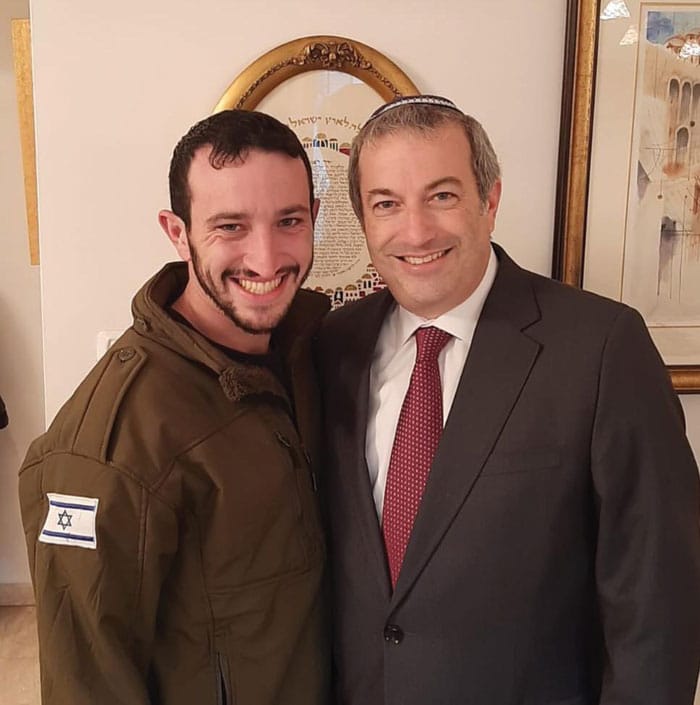
Last week I joined the brave IDF soldiers in Gaza. Riding across the border was one of the most terrifying moments of my life: full military gear, armed escorts, machine guns drawn, bullets in the chambers. I witnessed the daily risks our soldiers take in defending the Jewish homeland. We passed the border fence that the terrorists broke through on Oct. 7, the pockmarked houses and rubble of villages, and we came to the outskirts of the area where the IDF was actively operating. I was amazed by the professionalism, speed and dedication of the soldiers. During the visit, Hamas attacked a patrol nearby, and ten minutes later, the military ambulance that extracted two wounded soldiers pulled up in front of my jeep. As we prayed for the soldiers’ wellbeing, a helicopter was called in and in just a few minutes the wounded were medevaced to the nearest hospital and have since fully recovered.

Amazing to see the efficiency and expertise of our soldiers in Gaza.

I came to Gaza with our rosh yeshiva, Rabbi Meir Goldvicht, in coordination with the IDF to express to our soldiers the global support for their safety and their mission. I told the soldiers that Jews and people of moral conscience from all around the world are praying for them, and I shared with them the thought that they are serving as God’s messengers in this battle against Hamas, which is a battle for humanity against evil. 

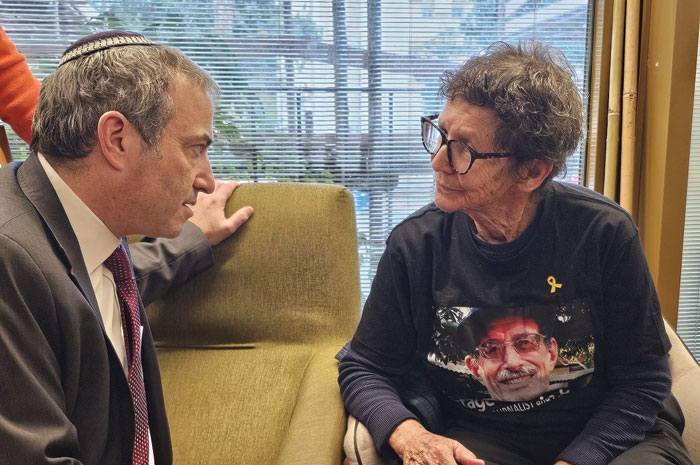
Meeting with the family of hostages Gali and Ziv Berman.

The soldiers were very aware of the grave danger they faced, but their morale was sky-high. They embraced their mission to defend Israel in this existential battle. They gave me a tour of the terrain to better understand the battle zone, took me into their tanks to show me how they lived, and expressed to me their appreciation for the global Jewish community, which had donated so much of their high-quality military gear. I ended our visit to Gaza by singing “Am Yisrael Chai” with the soldiers in the very villages from which the terrorists attacked Israel. It was a stirring example of the enduring message of the song: Am Yisrael Chai, the people of Israel live, now and forever.

As inspired as I was to be in Israel last week, I was also profoundly pained by the deep sense of loss and tension that gripped the country. Each soldier that falls in battle is a national tragedy, but recent losses hit close to home. I made aliyah 17 years ago, and the community in which I live when I am in Israel, Neve Daniel, suffered a brutal blow when one of its sons, Ephraim Jackman, was lost in combat. Most of my neighbors there have sons who are currently in Gaza, and while the heroism of their children is certainly a mark of deep pride, the uncertainty of their fate is frightening. A number of our YU families who made aliyah have tragically had to sit shiva for their sons who were lost in combat, and my time in Israel included attending a funeral and a shiva and making visits to bereaved families. 

I also met with the families of hostages. Gali and Ziv Berman are 26-year-old twins from the small kibbutz of Kfar Aza. When Hamas attacked, their mother, Talia, urged them to come into the safe room in their house, but instead they went out to protect their neighbors from the terrorists. Talia told me she emerged from the safe room to find that her two boys had been taken captive.

I have never experienced Israel in such a state. As someone deeply rooted in both Israel and America, I have never felt such a gap in our contemporary Jewish experiences. 

I have never experienced Israel in such a state. As someone deeply rooted in both Israel and America, I have never felt such a gap in our contemporary Jewish experiences. While the current crisis is felt by all Jews across the globe, and the threat of antisemitism is real throughout the world, the sacrifices demanded from the families in Israel are extraordinary and ongoing. 

Returning to America, one burning question remained on my mind: are we worthy of their sacrifices? Do our life choices honor their commitment?

Rabbi Berman with his son prior to deployment.

With Israel engaged in a war lasting over 100 days with no clear end in sight, we need to stand vigilant in our support in all ways. While it is natural for the sense of urgency that gripped the American Jewish community in the first phase of the war to have passed, as long as our brothers and sisters in Israel have not returned to their normal lives, we cannot return to ours. When Klal Yisrael is in pain, we are all in pain. When Israel is at war, we are all called to service.  

I had not returned to Israel since I was in Jerusalem on Oct. 7. On that fateful day, my son Yehuda was called up as a reservist and has been serving in his combat unit throughout the war. I was blessed that during my visit Yehuda had a day off from the army. Seeing and hugging him for the first time since the attacks was an experience I will never forget. 

With all the uncertainty of war, experiencing the incredible character and dedication of our soldiers in Gaza inspired in me great confidence in Israel’s future. One soldier told me that he never previously felt the global hug of the united Jewish community like he does today. Hashem has a plan. We have the opportunity to write ourselves into it by continuing to fiercely support and hug our family in Israel. 

 Together we will rise; together we will win; Am Yisrael Chai.


Rabbi Dr. Ari Berman is President of Yeshiva University.

My View From Gaza Read More »