fbpx

November 30, 2023

A Class for Our Times

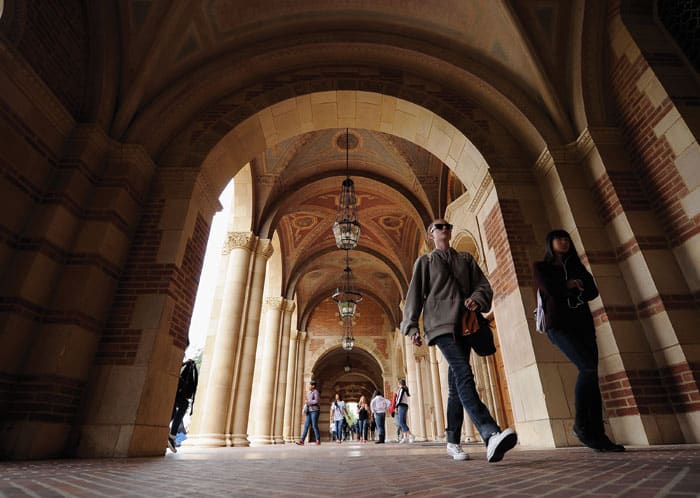
It’s a classroom, much like the thousands of other classrooms across America. The teacher is at the lectern, double-checking that the audiovisual materials are cued up and ready. Students shuffle in. But this class is different. It’s “The Globalization of Antisemitism: A Survey of Transnational Trends,” taught by Dr. Sharon Nazarian, the former senior vice president of international affairs (and current board member) of the Anti-Defamation League (ADL). And across the road from the building where the class is held, there is a Students for Justice in Palestine demonstration. Which means the 20-odd students attending her class at UCLA (approximately an even split between Jews and non-Jews) get to experience the subject first-hand.

When Nazarian’s class began on October 4, she had no idea how topical her subject would soon become. Just days later, after Hamas slaughtered more than 1,200 Israelis on October 7, the campus became a hotbed of antisemitism. Jewish professor of piano Inna Faliks told the Journal she heard hundreds of students chanting “Slaughter the Jews”; students were captured on video screaming, “Beating that f–ing Jew” over a megaphone as they pummeled a piňata of Benjamin Netanyahu with a stick. As in many colleges across the U.S., the campus now echoes with the cry, “From the river to the sea, Palestine will be free”— a slogan popularized by Hamas for the elimination of Israel.

None of this surprises Nazarian. “Everything’s very intertwined,” she told the Journal. In one lecture, she likened it to “a perfect storm.” That occurs, she said, when the extremes on the left and the right converge, “and they converge upon Jews.” By way of example, she pointed to recent laws in Europe banning circumcisions. There, the far right and the left join forces in arguing that circumcision harms babies, is inhumane and should be banned. This sends the message that “freedom of religion and protection of minority rights don’t matter.”

“The Islamists have their own bucket, and you have the far left coming from its own anti-colonial, anti-capitalist perspective. And yet the rhetoric winds up being the same.”

If you think this sounds like Jews have to fight a two-front war against the neo-Nazis and the far left, you’re being optimistic. Actually, she said, there’s a third front. “The Islamists have their own bucket, and you have the far left coming from its own anti-colonial, anti-capitalist perspective. And yet the rhetoric winds up being the same.”

“Antisemitism can manifest in many different ways,” she said in a recent class. “And in Europe today, it could be in the form of verbal assault, it could be in the form of physical assault, it could be to the form of threats, harassment, discrimination, unequal treatment in the workplace or other places, property damage and graffiti.”

She added that in some cultures, graffiti is “a kind of public art. But there is a difference when you put even a swastika on a tunnel or a bridge or some public building versus when you put a swastika on a Jewish institution. When you spray a swastika on a synagogue, on a Jewish day school, on the Jewish frat house here at UCLA, that is considered antisemitic because the intention behind it is antisemitic.”

Standing before the class, Nazarian is a formidable yet approachable presence. Her soft voice still carries a hint of her Iranian childhood: a musical quality that draws you in and pulls you along. She’s calm and unflappable; when she wants to make a point she doesn’t raise her voice; her words become clipped. Antisemitism, she insisted, is not only about Jews and Israel, even though Jews, alone among races and religions, are blamed for the hatred against them. After World War II, she said, the international community recognized that “governments have to be held responsible for the protection of their religious minorities, and it’s not up to the minorities to protect themselves. That’s not their job. It’s their government’s job because they’re citizens of those countries.”

The United Nations and European Union, she said, came to consider that hate crimes violate the fundamental rights of their citizens, specifically, the right of human dignity. It is “a threat to human dignity, to the right of equality of treatment and to freedom of thought, conscience and religion. This is why the Fundamental Rights Agency of the European Parliament collects data on antisemitism: Member states of the European Union “have come together and said we deem antisemitism as going against those very values that we have set on our mission.”

Nazarian said the aim of her class is to provide students with the tools and data to understand antisemitism; everything she shares in the class reflects her experience as “someone whose work has been on the frontlines around the world of seeing how antisemitism shows up. What are the drivers behind it, and what do we do about it?” It has been the focus of her world for seven years. The theoretical and ideological material she assigns the class include books ranging from Walter Laqueur’s “The Changing Face of Anti-Semitism” to “The International Holocaust Remembrance Alliance Working Definition of Antisemitism” to the virulently antisemitic “The Protocols of the Elders of Zion,” which helps the students understand “the symptoms and manifestations” of antisemitism. The final classes of the fall quarter will help the students fight antisemitism using the tools she’s shown them. 
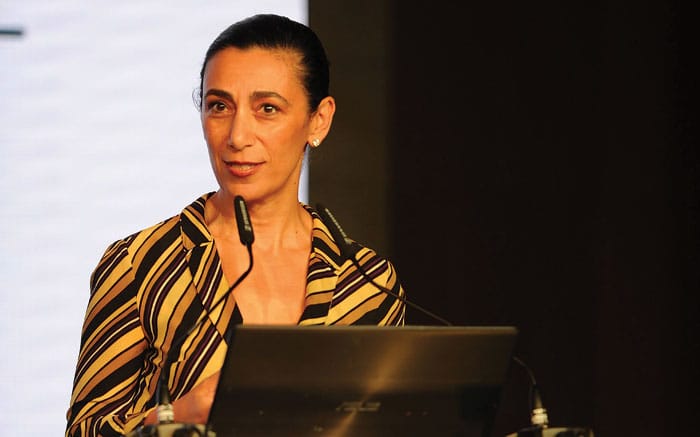
Dr. Sharon Nazarian
Photo courtesy of ADL, used by permission

The second half of each class has been given over to recorded interviews with visiting scholars. These have included Ahmed Shaheed, the UN special rapporteur on Freedom of Religion or Belief; Katharina Von Schnurbein, European Commission Coordinator on Combating Antisemitism and Fostering Jewish Life; and Lord John Mann, Advisor to the Government on Antisemitism in the United Kingdom. One of the things that makes the class unique is the quality of these guest lecturers. As Nazarian said, “I want to show our community that we have resources and we have really high dignitaries from around the world wanting to come to our classroom at UCLA and to bring their knowledge.”

The other thing that sets her class apart, Nazarian said, is that it’s not offered through the Middle Eastern or Jewish Studies programs, but by the Global Studies department. It’s something she insisted on. She wanted to reach beyond the Jewish community and Middle Eastern or Jewish Studies majors to students “who have a global lens that, as they look at the various issues they’re interested in, whether it’s global health or environmental issues or all kinds of political, economic, developmental issues, if they don’t have this additional variable — which is antisemitism — they are missing a huge lens through which our societies today, especially liberal democracies, have to be understood.” Adding that lens, she said, is “the hypothesis of this class.” It’s about “showing the trends we’ve witnessed and how these ideologies converge. What is the effect on societies, and how they manifest in current-day countries and capitals.”

Within her class, Nazarian trains her student to “look at the data.” But outside, among those Students for Justice in Palestine demonstrators, is something very different. It is, she said, “a display of a subsegment of our society, especially the elite, more justice-leaning young adults and students who have somehow internalized the idea of Palestinian justice, conflated it with social justice and racial justice in America, I would say in a very misguided way because the two are not comparable.”

The shift has been decades in the making. As Nazarian said, American Jews have come to be no longer viewed or labeled or treated as a minority, but rather as a part of the privileged white majority.

The shift has been decades in the making. As Nazarian said, American Jews have come to be no longer viewed or labeled or treated as a minority, but rather as a part of the privileged white majority. There has also been the reframing of Israel since the Six-Day War in 1967. That new narrative, recasting Jews as oppressors, she said, has spread not just in the Middle East, but through Europe and America. 

So when the October 7 massacre happened in Israel, “A lot of young social justice activists say, ‘That is resistance and resistance will involve violence, and that’s what it takes – by any means necessary.’” 

This didn’t happen by accident.  As Nazarian sees it, this was fomented by “extremists, Islamist radicals who have come into the heart of liberal democracies in Europe and, now, in America, bringing their intolerant, undemocratic, illiberal values with the very singular mission of dominating those societies with their own extremist ideology … And so that’s the pendulum that now has to be recognized by all democratic liberal democracies around the world [who must] say, ‘OK, this cancer cell is now in our body, in our own corpus, and we cannot close our eyes to it.’”

The result of this surge of antisemitism “is that for the first time, American Jewry is having this real strong sense of insecurity.” Emotional and physical insecurity has long been the experience of European, Middle Eastern and Latin American Jews and even South African and Australian Jews. “We were privileged in that we didn’t have that sense of insecurity. Today for the first time, we feel what diaspora Jewry around the world have always felt. And so we are no longer different.”  American Jews “were really unprepared and taken aback.”

Students are especially feeling intimidated and afraid. Nazarian has seen it with her own children. “They’re telling me that most Jewish students are just really afraid. They’re really afraid to talk about any of this. If they wear a kippah, they’re hiding it. They’re even hiding their feelings and thoughts and fears, and they’re not discussing it with their non-Jewish friends because they don’t know what reaction they’ll get. The rug has been pulled out from under them.”

Her solution, not surprisingly, is education, which she sees as “the most powerful tool of breaking down some of this societal lack of understanding and ignorance.” The Nazarian family is a well-known name in Jewish philanthropy, with an emphasis on education. Her parents are the namesake of UCLA Younes & Soraya Nazarian Center for Israel Studies, which Dr. Nazarian founded in 2010. She’s especially proud of this accomplishment. She views her class in the same light, “exposing students to the depth, nuance and complexity of Israel.” 

It’s an idea she believes is scalable. “I would love to see every university have a class within its Global Studies department looking at the threats of global antisemitism and what does that present to the whole array of global challenges that we face as an international community and economics, politics, environmental, global health.”

“Globalize the Intifada,” the protestors chant outside. Dr. Sharon Nazarian could teach them a thing or two, but for now, they are heeding other voices.

A Class for Our Times Read More »

Holocaust Museum LA Celebrates $45 Million Expansion

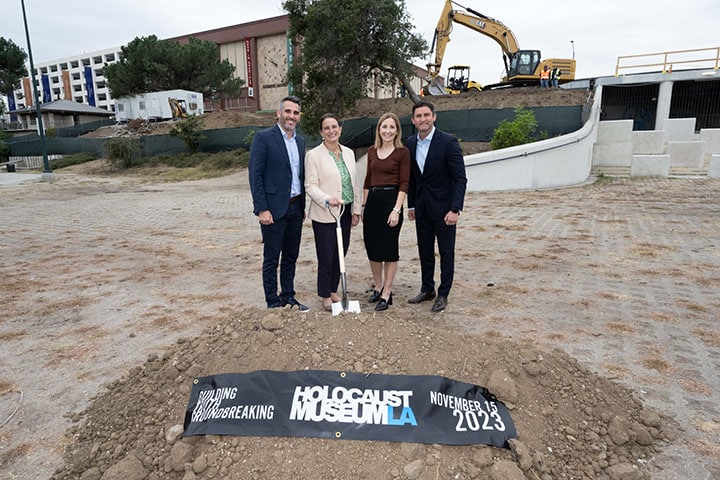
It was a moment for the Jewish community to remember last week when ground was broken on a massive $50 million expansion of Holocaust Museum LA. 

The Jona Goldrich Campus in Pan Pacific Park will rise alongside its big brother. The museum is a unique institution: It was the first Holocaust survivor-founded museum, and it was the first Holocaust museum in the U.S. It was built in 1961, a only 16 years after the Holocaust.

Museum CEO Beth Kean said the expansion, designed by award-winning architect Hagy Belzberg, is scheduled to open in late 2025. It will offer outdoor reflective spaces, large galleries and classrooms, a theater for survivor talks, film screenings, concerts, conferences and public programs and a new pavilion to house an authentic boxcar. It will also have a dedicated theater for USC Shoah Foundation’s “Dimensions in Testimony” exhibition that allows visitors to have a virtual conversation with a Holocaust survivor using a holographic capture and voice recognition software.

Fifteen age-defying Holocaust survivors were cheered by the crowd of 200 officials and Jews beneath a tent in Pan Pacific park on an overcast morning. 

Kean, who shared the opening platform with Museum Board Chair Guy Lipa, remarked that the joy of the day’s events marked, “the most I have smiled since Oct. 7.”

Lipa, the grandson of survivors, addressed current events. “Our community is devastated by the atrocities being committed by Hamas unfolding across Israel and the surging antisemitism in our backyards. But I am heartened by seeing our community come together today. Never Again is now.”

Before becoming CEO, Kean, who served on the museum’s board, recalled a familiar scene.

Survivor and museum founder Jona Goldrich (1927-2016) “used to pound his fist on the table at the end of every board meeting and say ‘A Holocaust museum on every street corner never would be enough. I am fighting against forgetting.’” 

Kean noted that Goldrich’s name, “has become synonymous with Holocaust education in Los Angeles.” Goldrich’s daughters – Andrea Goldrich Cayton and Melinda Goldrich – who are major donors, “are carrying forward his legacy.” This is why the new campus will be named in his honor.

For many who attended the groundbreaking, the most memorable moment was when survivor Paul Kester took the stage to the day’s only standing ovation.

“I often tell my story to students here at the Holocaust Museum and many other venues,” he began. Days away from his 98th birthday, he spoke with uncommon precision and eloquence.

“My name is Paul Kester. I was born in 1925, and I grew up in Weissberg in Western Germany. I had very happy childhood, even during early years of the Nazi regime.” Alluding to Kristallnacht, he said: “There was a day 85 years ago, Nov. 10, 1938. On that day, my childhood was shattered. That day a major pogrom was ordered against the Jews.

“It was the beginning of the end of Jewish life in Germany and, ultimately, of Jewish life in Europe.  What happened on that day, what I experienced, was hopelessness and fear, death and destruction. How to get out? No country wanted us. To live in those days is still very much on my mind. 

“Now it is November 2023, and again I have experienced not fear but concern and disgust over a new wave of antisemitism. 

“This time it is not government- organized. But it is not limited to acts by England and confused individuals. It is pervasive among all levels of society, especially among this country’s intellectual elite, and among faculty and students at the greatest universities.”

Kester vowed not to soften.

“We can fight this new antisemitism. And the Holocaust Museum is uniquely qualified to do this.” – Paul Kester

“Today I can say times are different. We can fight this new antisemitism. And the Holocaust Museum is uniquely qualified to do this.

“I will continue to play my part as long as I can do it.”

Smiles over the success of the four-year campaign enlarge the museum and a mostly happy occasion thinned when Kean reflected on a recent event.

“Sadly,” she said, “we lost one of our cherished Holocaust survivors last week. 

“Just two days before 99-year-old Fred Ostrowski passed away, he Facetimed me. He said thank you for creating a most valuable asset for our community, insuring the future of Holocaust education for generations to come.”

Reflecting on the birth of Holocaust Museum LA 62 years ago, Kean observed what a different time it was. “The founding survivors,” she said, “had the courage and foresight to create a memorial at a time when the community was not ready to face this part of our history.”

Museum Board Chair Guy Lipa, City Councilmember Katy Yaroslavsky, Museum CEO Beth Kean and state Assemblymember Jesse Gabriel. Photos by Gary Leonard, Holocaust MuseumLA.

For a solution, “Education is the way forward,” said Kean, who also read a letter of commendation from Gov. Gavin Newsom.

Joe Alexander is one of the busiest, most widely traveled Holocaust survivors in Los Angeles. 

Moving freely without a cane or any other aid, he turned 101 years old this week.

Last May, Alexander told the Journal, Germany’s government invited him to participate at the former Dachau concentration camp in celebrating the 78th anniversary of its liberation.

In recent months, the hearty survivor also has traveled to South Dakota and Pennsylvania for celebratory occasions.

City Councilmember Katy Young Yaroslavsky (D-5th District) summarized the many spoken words. 

“Earlier this week, along with colleagues, I had the opportunity to meet with survivors of Oct. 7 and family members of hostages,” she said. “I don’t have the words yet to describe everything I felt listening to them telling their stories.

“What I do know, I was reminded of the power of hearing first-person accounts – people’s stories make real accounts of that which we have a hard time wrapping our heads around.”

In addition to Lipa, Kean, Kester and Yaroslavsky, other speakers included architect and museum board member Hagy Belzberg, three members of the California Assembly Legislative Jewish Caucus: Assemblymember Jesse Gabriel, State Sen. Ben Allen (D-El Segundo), Assemblymember Rick Chavez Zbur (D-Hollywood), Steve Zimmer, California deputy superintendent of Public Instruction, Museum Vice Chair Andrea Goldrich Cayton and County Supervisor Lindsey Horvath (D-3rd District).

Holocaust Museum LA Celebrates $45 Million Expansion Read More »

Coping Like Our Ancestors

How do we find comfort in such horrific times? How did our brethren console themselves when faced with insecurity, discomfort, and uncertainty? Confronting betrayal, hatred, and attackers in every country the Jews have lived, what could assuage their fear and despair? Every instinct is to survive, to continue, to believe in life, no matter what, despite the world’s efforts to erase us. Finding a home in America was the promise Jews needed, seeing Lady Liberty’s welcome: “Give me your tired, your poor, your huddled masses yearning to breathe free.” Then, creating the State of Israel, the last vestige of immunity after waiting 2,000 years to be reunited with our homeland. Bookmarked by refuge, on two sides of the globe, West and East, safe and secure, as never felt before in our history. 

But that has been shattered. The impregnability of Israel now a misnomer, as if we live in biblical times with overlays of the Middle Ages, when the crusades trampled on Jews. The horror of October 7 ruptured our complacent belief in a “civilized” world, leaving us deeply grieving, along with the loss of so many souls, innocent lives on both sides. As a Jew and a human being, I feel pain for children, parents, grandparents, whether Jewish or Palestinian, casualties of a war, brought on by such bitter hatred of our people that only annihilation can satisfy their hunger. Like a wildfire, the malignant abhorrence for the Jew has been unleashed and surfaced all around us. Vulnerable — whether you identify as Jewish or not — as once felt in German society by those Jews assimilated enough to think they were immune. 

Having attended the Jewish Journal Gala recently, I tapped into consoling energy being surrounded by 100s of Jews. Listening to children sing our national anthem and “Hatikvah,” my heart burst. Seeing almost 300,000 Jews gather in Washington, holding each other up and being visibly strong, felt like my COVID vaccine, immunized with strength and assurance our voices will be heard. Speaking at a Conference for Jewish and Catholic women to break down barriers and build mutual support, I was reminded we’re not necessarily alone. In the insanity of our political divide, there exist compassionate human beings waiting to be called “To act justly and love mercy and to walk humbly with your God.” We not only revel in our community’s presence, but a letter to the Pope signed by over 400 scholars and rabbis calls our kindred friends of other faiths to stand with us. This is a time to test whether all the interfaith dialogue over the years, truly has planted seeds that will blossom when essential.

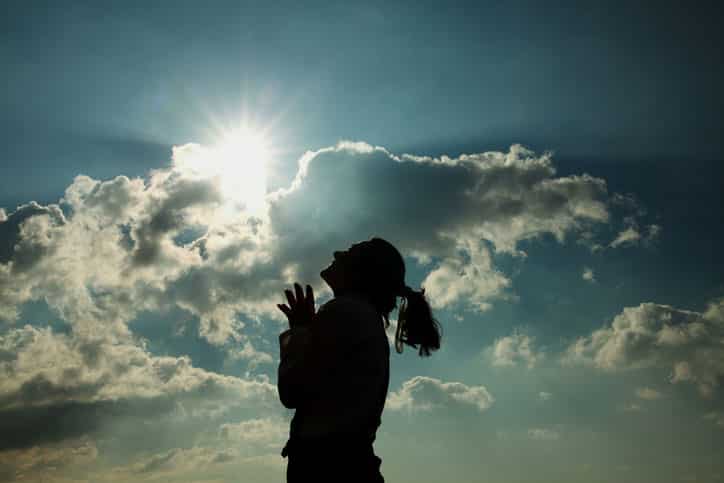
Every individual, in these moments of fragility and discomfort, can find prayer and poetry that have sustained Jews throughout the ages to succor their despair. 

Also, every individual, in these moments of fragility and discomfort, can find prayer and poetry that have sustained Jews throughout the ages to succor their despair. For almost 4,000 years, men and women poured out their hearts, calling out to their hidden G-d, demanding attention to be heard, “… Let my cry reach You. Hide not Your face from me …”

These texts our now more relevant than ever. How many of us “at night I flood my bed with tears …” or cry out, “Protect me, oh G-d for I have sought refuge in you … I am afraid of our enemies …” or the survivors of the Shoah and young adults on college campuses to exclaim, “My being is utterly terrified …” And those who faced abomination on October 7,  “Listen to my cry for I have been brought very low …” All of these ancient words express our own reality. 

Psalms also speak of hope, faith, and joy that rise after “sowing tears.” The light shines through cracks of broken shards. Natan Sharansky held his Book of Psalms in a Russian prison, repeating “Adonai is my light and my salvation” until the day of his release. And who isn’t comforted by “I will fear no evil for You are with me” for meditation or a reverberating mantra.

Prayers and poetry were held closely to the chest of our ancestors, which is why they are with us today. No matter the trials, the exiles, or the persecution, they were like a Mikveh, the spiritual waters transforming the moment and uplifting the spirit. In moments of isolation, alienation, and trepidation mine the beauty and inspiration of our people’s heartfelt language. Holy One, “Your word is a lamp for my feet, a light for my path.”


Eva Robbins is a rabbi, cantor, artist and the author of “Spiritual Surgery: A Journey of Healing Mind, Body and Spirit.”

Coping Like Our Ancestors Read More »