fbpx

November 30, 2023

Silence is Betrayal

In the early hours of Saturday, October 7, Hamas terrorists invaded Israel, savagely murdering 1,200 babies, children, women, men, grandfathers, and grandmothers in their homes, and taking another 240 as hostages.

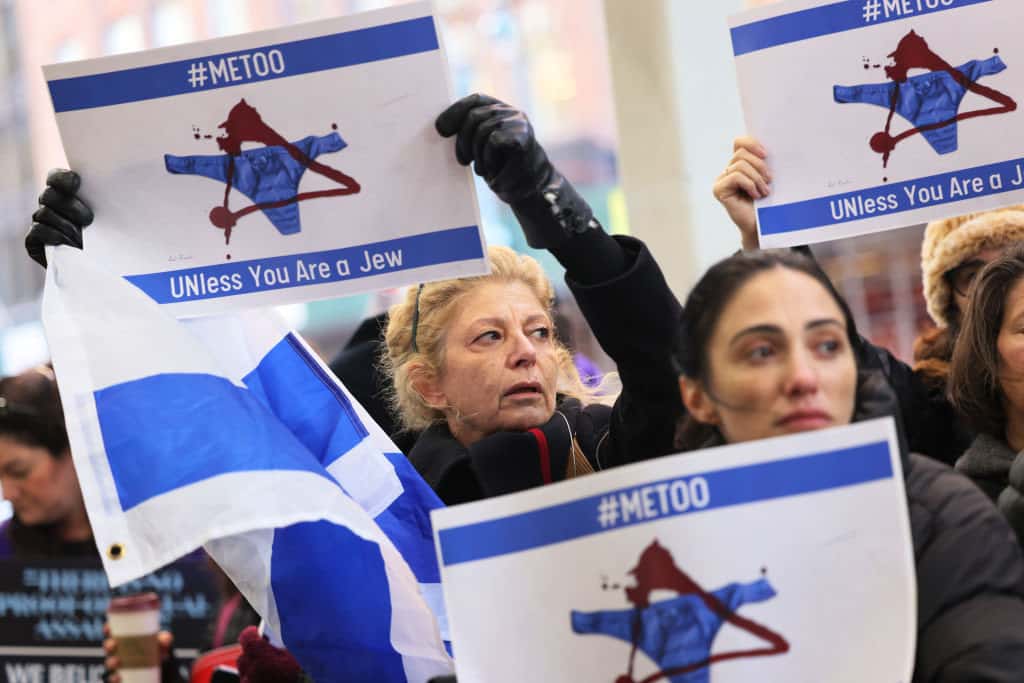
Among all the atrocities—documented by the terrorists’ bodycams, by surviving eyewitnesses, and by Israel police investigators —the ones committed against the women and girls were among the most hideous and shocking.

The Israel police, as well as a commission established by the Knesset to investigate crimes against women during the Hamas attack, have gathered extensive evidence of the rapes, gang rapes, and of post-mortem female mutilation.  An IDF spokesperson for the unit responsible for identification and burial of female soldiers told the Daily Mail that “there is evidence of mass rape so brutal that they broke their victims’ pelvises –women, grandmothers, children.”

One surviving eyewitness reported to the Israel Police that she observed a woman being gang raped; during the rape, the terrorists cut off one of the woman’s breasts and tossed it around among the gang rapists. One of those same men executed the woman with a bullet to her head even as he was raping her.

Twenty years ago, Rabbi Harold Schulweis, of blessed memory, and I co-founded Jewish World Watch as the Jewish community’s response to atrocities in Darfur, many of which involved the systematic rape and mutilation of women and girls. At the time, the world’s response to that violence was silence.

We pointed out then that the underlying history and political issues in Darfur, as in most such conflicts, might be complicated, but distinguishing between right and wrong behavior is not. And silence in the face of hideous abuse of women and girls doubles the horror.

Whatever one’s views are on the Israeli-Palestinian conflict, what Hamas did on October 7 is not fraught with ambiguity or complexity—the rapes, murders and kidnappings are heinous crimes that should shock the conscience of all human beings.
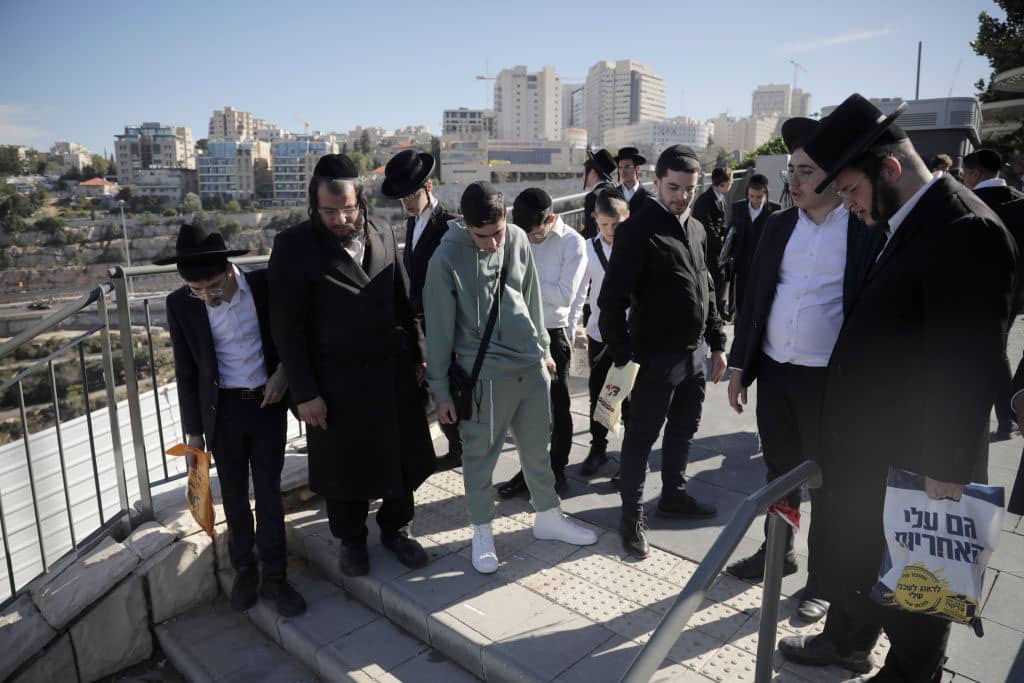
Yet, even when confronted with such appalling images and information, where is the cry of outrage? Where are the reactions by international bodies, including women’s organizations, to these unspeakable attacks?

Even when confronted with such appalling images and information, where is the cry of outrage? Where are the reactions by international bodies, including women’s organizations, to these unspeakable attacks?

There is only silence from the U.N. Security Council, from the myriad U.N. committees established for the very purpose of calling out conflict-related sexual assaults against women, from the independent international organizations created to promote the safety, well-being, and political rights of women.

It is unfathomable to me why the violated bodies of Israeli women and girls are not being singled out for condemnation of the men who savaged them.  If the world’s institutions created to defend women can’t speak and act here, then what is their reason for existing?

Eight decades after the Holocaust, is the world tired of hearing about savagery against Jews? Or is it that women the world over are so often victims of violence that the gender-directed atrocities of October 7 are just another episode on a list as long as time?

One thing is becoming clear—this palpable silence has unleashed a centuries-old fear among Jews, a fear by now deeply enmeshed in our DNA, that, except for some brave leaders, we Jews may once again find ourselves standing alone.

Ruth Halperin-Kaddari, who directs Israel’s Bar-Ilan University’s Rackman Center on the Advancement of Women and who has represented Israel on the UN Committee to Eliminate Discrimination against Women, told Haaretz: “I feel a strong sense of desertion and even betrayal… [W]hat we are witnessing now, is simple disregard for what happened on October 7.”

Another prominent Israeli women’s rights advocate, Elkayam Levy, said, “All of the agencies that are involved in humanitarian crises should have at least offered recognition and support. We can’t even get them to the first stage of recognition.”

This silence betrays more than Israelis and Jews worldwide; it is a clear betrayal of humanity. I am outraged by the evil acts and outraged a second time over the silence.  If you are not outraged by and moved to speak out against the rape, mutilation and execution of Israeli women and girls, what will outrage you?


Janice Kamenir-Reznik is an attorney and co-founder, with the late Rabbi Harold Schulweis, of Jewish World Watch, an organization founded in 2004 to combat genocide. 

Silence is Betrayal Read More »

Is the U.S. Suddenly Allergic to the Word “Palestinian”?

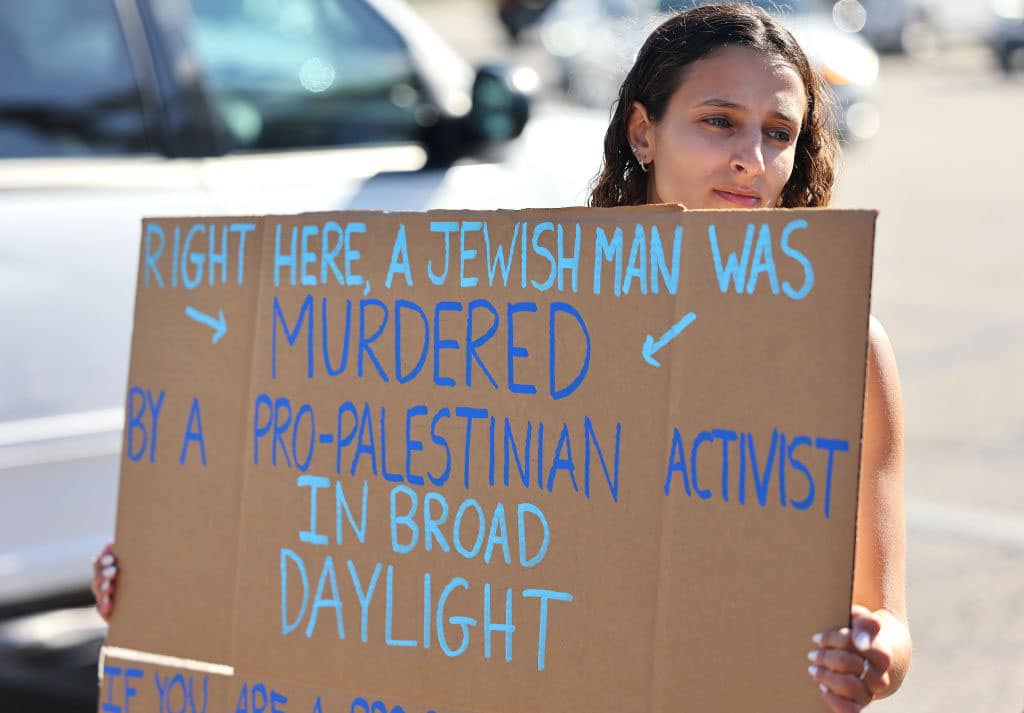
Secretary of State Antony Blinken and U.S. Ambassador to Israel Jack Lew were quick to condemn Thursday’s slaughter of Jewish civilians in Jerusalem. But just who was it that committed the massacre? You wouldn’t know the answer from the statements issued by these senior American officials.

“My heart goes out to the victims of this attack,” Blinken said. “We unequivocally condemn such brutal violence,” Lew tweeted.

Who carried out the attack? Who perpetrated that brutal violence? To judge from the words of the secretary of state and the ambassador, they could have been disgruntled postal workers, drivers inflamed by road rage, or any other type of non-political lunatics. There was no acknowledgment that the killers were Palestinian Arabs who were members of Hamas.

Just five months ago, Lew’s predecessor, Thomas Nides, did almost exactly the same thing. His response to the slaughter of four Israelis in a restaurant near Eli was to tweet about “the civilian deaths and injuries that have occurred in the West Bank,” without identifying the perpetrators.

When critics—including President Isaac Herzog—expressed outrage that Ambassador Nides was grouping the terrorist attack together with an Israeli counter-terror raid in Jenin, Nides issued a second tweet specifically condemning the murder of the Israelis—but he again refused to acknowledge that the killers were Palestinian Arabs. The official State Department statement about that attack likewise failed to identify the murderers.

Senior U.S. government officials are usually extremely careful in their choice of language. They know that every word they speak or tweet is being scrutinized for policy implications. It’s hard to believe that the repeated omission of the words “Palestinians” and “Hamas” in these contexts is accidental—especially considering the verbal shenanigans in which other political leaders have engaged concerning Jewish victims in recent history.

In late October 1943, the foreign ministers of the Soviet Union and Great Britain, and the U.S. secretary of state, met in Moscow. It had been nearly year since the Allies had publicly confirmed that systematic annihilation of the Jews was underway. Yet in their final statement threatening postwar punishment for Nazi war crimes, they referred to the victims as “French, Dutch, Belgian or Norwegian hostages … Cretan peasants … [and] the people of Poland.” There was no mention of the Jews.

In February 1944, officials of the U.S. War Refugee Board presented President Franklin D. Roosevelt with a draft statement that they wanted him to issue, in which he would warn that the Germans were trying “to exterminate all the Jews within their grasp” and acknowledging that “more than two million men, women and children already have been put to death solely because they were Jews.”

After two weeks of stalling, presidential aides informed the Board that FDR “wanted the statement rewritten so as to be aimed less directly at the atrocities against the Jews.” The final version that the president and his staff produced deleted the reference to Jews being murdered “solely because they were Jews”; removed three of the statement’s six references to Jews; and added three opening paragraphs naming various other nationalities who had suffered during the war.

Similarly, Roosevelt’s 1944 statement commemorating the anniversary of the Jewish revolt in the Warsaw Ghetto did not mention Jews. In the same spirit, the heads of FDR’s Office of War Information instructed their staff that any article they intended to write about the Nazi mass-murders would be “confused and misleading if it appears to be simply affecting the Jewish people.”

Words spoken by political leaders have political implications. President Roosevelt and his administration were concerned that too much emphasis on the persecution of the Jews would increase pressure for action to help them, such as admitting more Jewish refugees to the United States—something the president strongly opposed.

Arthur Szyk, the famous artist and Jewish activist, remarked bitterly that Allied officials seemed to be treating the persecution of the Jews “as a pornographical subject–you cannot discuss it in polite society.”

At the very moment that Europe’s Jews most needed someone to speak up on their behalf, the theme of Roosevelt’s policy toward the Jews was to downplay and minimize their plight. Today, when Jews most need their American friends to speak loudly and clearly about Palestinian Arab terrorism, senior U.S. officials suddenly seem to be allergic to the words “Palestinian” and “Hamas.”

Are political motives at work in the Blinken and Lew statements? Are they concerned acknowledging that Palestinian Arab terrorists from Hamas perpetrated the Jerusalem slaughter might undermine the Biden administration’s pressure on Israel to make more concessions to Hamas and the Palestinian Authority?

Statements by Biden administration officials in the days ahead will merit careful scrutiny for the answers to those questions.


Dr. Medoff is founding director of The David S. Wyman Institute for Holocaust Studies and author of more than 20 books about Jewish history and the Holocaust. His latest is America and the Holocaust: A Documentary History, published by the Jewish Publication Society & University of Nebraska Press.

Is the U.S. Suddenly Allergic to the Word “Palestinian”? Read More »

Three Killed, Six Wounded in Terror Shooting near Jerusalem

Three Israelis were killed and six other people were wounded on Thursday morning in a terror shooting on Weizman Boulevard at the entrance to Jerusalem.

Magen David Adom emergency medical personnel treated the victims before evacuating them to hospitals in the capital.

The fatalities were identified as 24-year-old Livia Dickman, from Jerusalem’s Har Nof neighborhood; Hanna Ifergan, a school principal in Beit Shemesh in her 60s; and Rabbinical Court Judge Elimelech Wasserman, 73.

According to police, two terrorists got out of their car at 7:40 a.m. and opened fire at a bus stop. They were reportedly armed with an M-16 assault rifle and a handgun.

Two off-duty soldiers and an armed civilian killed the terrorists, according to reports.

The attackers were later identified as brothers Murad Namr, 38, and Ibrahim Namr, 30, from eastern Jerusalem.

According to the Israel Security Agency (Shin Bet), the pair were Hamas members and had previously been jailed for terror-related activity.

In a statement, Hamas’s “military” wing took responsibility for the attack, identifying the perpetrators as “jihad-waging Qassam martyrs” while calling for “escalation of resistance [i.e., terrorism].”

Prime Minister Benjamin Netanyahu issued a statement on the terrorist attack following a meeting with U.S. Secretary of State Anthony Blinken in the Israeli capital.

“This is the same Hamas that carried out the horrible massacre on Oct. 7, the same Hamas that tries to murder us everywhere. I told him [Blinken]: We swore, and I swore, to eliminate Hamas. Nothing will stop us,” said Netanyahu.

Visiting the scene of the attack, Israeli National Security Minister Itamar Ben-Gvir said the government needed to respond to terror with military force.

“This incident proves yet again that we cannot show weakness, that we have to address Hamas only through war,” said Ben-Gvir.

National Security Minister Itamar Ben-Gvir (second from right) at the scene of a deadly terror attack near Jerusalem, Nov. 30, 2023. Credit: Otzma Yehudit Party.

Minister-without-Portfolio Benny Gantz, a member of the War Cabinet, said that the attack strengthened Israel’s resolve to continue waging war against Hamas in the Gaza Strip.

“This terror attack is further proof of our obligation to continue to fight with strength and determination against murderous terrorism, which threatens our citizens. In Jerusalem, Gaza, in Judea and Samaria, and everywhere,” said Gantz.

Finance Minister Bezalel Smotrich, who is also a minister in the Defense Ministry, tweeted in response to the attack: “We are at war on all fronts. The terrible attack in Jerusalem reminds us that our enemies are not only the Nazis in Gaza. We will pursue and destroy them, God willing, everywhere.”

Israel would “not rest until victory is achieved,” he added.

U.S. Ambassador to Israel Jack Lew denounced the attack, tweeting: “Abhorrent terrorist attack in Jerusalem this morning. We unequivocally condemn such brutal violence. My thoughts are with the families of the victims and I offer my sincere condolences to all those affected.”

On Nov. 16, Hamas terrorists shot and killed an IDF soldier and wounded five other members of the security forces near the “tunnel road” checkpoint between Gush Etzion and southern Jerusalem.

Three Palestinian gunmen arrived at the crossing by car and opened fire on Israeli forces, who returned fire, killing the terrorists.

The terrorists were part of a Hamas cell and planned to perpetrate a much larger attack in Jerusalem.

The slain soldier was identified as 20-year-old Cpl. Avraham Fetena from Haifa.

Earlier this month, an Israeli-American Border Police officer was killed in a terror attack near the Herod’s Gate entrance to Jerusalem’s Old City. Another officer was moderately wounded.

The slain officer was named as Sgt. Elisheva Rose Ida Lubin, 20, from Kibbutz Sa’ad near the Gaza Strip. She immigrated from Atlanta in the United States in August 2021 and was drafted into the police in March of the following year.

Late last month, an Israeli policeman was seriously wounded in a stabbing attack near the Shivtei Yisrael light rail stop in Jerusalem.

On Oct. 12, two police officers were injured in a terrorist shooting just outside Jerusalem’s Old City.

Thursday’s attack comes amid a ceasefire in the war sparked by Hamas’s Oct. 7 invasion of the Jewish state, in which terrorists killed 1,200 people, wounded thousands more and took some 240 captives to the Gaza Strip.

Three Killed, Six Wounded in Terror Shooting near Jerusalem Read More »

Thankful for Brave-ish! Niver Nov News 2023

Nov News 2023 with Lisa Niver & We Said Go Travel:

Thankful for your support of my memoir, BRAVE-ish!

For the Thanksgiving season, my heart is brimming with gratitude. Your unwavering support for my memoir has been incredible. Thank you for buying my book, showing up at my events, watching my videos and listening to my podcast which is up for THREE AWARDS!

I am so happy to share my first byline for Travel and Leisure: “How Travel Healed Me After Divorce — and Made Me Fearless in My 50s.”

AWARDS:

Lisa Niver is a 3x National Arts and Entertainment Journalism Awards Finalist!

Lisa Niver is a JUDGE for the 2023 Business Traveler Awards USA

My wish is for all of the hostages to come home.


NEW ARTICLES and INTERVIEWS about me and my BOOK!

Jewish Sacred Aging logo
JSA Jewish Sacred Aging Brave-Ish Rabbi Address
On this week’s episode of the Seekers of Meaning TV Show and Podcast, author Lisa Niver discusses her book, Brave-ish, One Break-up, Six Continents and Feeling Fearless After Fifty.
Philly Mag logo
Lisa Niver on Philly Mag

Lisa Niver On Philly Mag

Author and travel expert Lisa Niver will discuss her new travel memoir Brave-ish, about her exploits in Myanmar, Cuba, Morocco, Kenya and Mongolia.

MORE on my PRESS PAGE  

READ my Nov articles on We Said Go Travel, MSN & Google News:

Grateful for Zibby Owens, A Light for the Book Industry

Exquisite Luxury at Dorado Beach, A Ritz-Carlton Reserve: A Haven of Opulence

Reese’s Book Club new Lobby Library at The Sheraton Grand Los Angeles!

Celebrating Women’s Equality Day at Take the Lead Conference 2023

Museum Store Sunday: Thank you to the Skirball Cultural Center

https://youtu.be/Tfbf9iiDBro

EVENTS

Meet me at Author’s Corner in New Orleans at DEMA 2023

Best of the West 2023 at Sofitel Los Angeles

BRAVE-ish at Penn Bookstore Nov 10, 2023

Thank you Frequent Traveler University!

All Ghouls Gala 2023 for Autism Care Today

THANK YOU for watching my podcast! It has now been seen and heard in 40 countries on 6 continents!

USA 🇺🇸  India 🇮🇳 Canada 🇨🇦  Ireland 🇮🇪Puerto Rico 🇵🇷  UK 🇬🇧   Italy 🇮🇹  Australia 🇦🇺 Philippines 🇵🇭 Singapore 🇸🇬  New Zealand 🇳🇿 Portugal 🇵🇹 Saudi Arabia 🇸🇦 Switzerland 🇨🇭 Hong Kong 🇭🇰   Mexico 🇲🇽  Japan 🇯🇵  Fiji 🇫🇯 Seychelles 🇸🇨 France 🇫🇷 Latvia 🇱🇻  Netherlands 🇳🇱  Kenya 🇰🇪  UAE 🇦🇪 Cambodia 🇰🇭 Israel 🇮🇱Guatemala 🇬🇹 Germany 🇩🇪 Uruguay 🇺🇾 Bangladesh 🇧🇩 Spain 🇪🇸 Panama 🇵🇦 Thailand 🇹🇭 Uganda 🇺🇬   Greece 🇬🇷  South Africa 🇿🇦 Costa Rica 🇨🇷 Bosnia and Herzegovina 🇧🇦  Sri Lanka🇱🇰Romania 🇷🇴

New PODCAST episodes:

Courageous Living: Margie Warrell on Embracing Challenges

Jen on a Jet Plane: Journeying Beyond Borders

WATCH my podcast, “MAKE YOUR OWN MAP: Are YOU ready to be BRAVE?” on Spotify, Apple Music, Amazon Music, YouTube PodcastGoogle Podcasts, Audacy, Audible, Anchor, PandoraiHeart Radio

WHERE CAN YOU FIND MY TRAVEL VIDEOS?

Here is the link to my video channel on YouTube where I have over TWO MILLION views on YouTube! (now at: 2,024,500 views)

Thank you for your support! Are you one of my 4,175 subscribers? I hope you will join me and subscribe! For more We Said Go Travel articles, TV segments, videos and social media: CLICK HERE

Find me on social media with over 150,000 followers. Please follow  on TikTok: @LisaNiver, Twitter at @LisaNiver, Instagram @LisaNiver and on FacebookPinterestYouTube, and at LisaNiver.com.

My Podcast: “Make Your Own Map!”

Fortune Cookie SAID:

“Gratitude turns what we have into enough. Cherish the moments, big and small.”

“The secret to a joyful life is simple: cultivate gratitude. Let it be your guiding star.”

BRAVE-ish, One Break-up, Six Continents and Feeling Fearless After Fifty

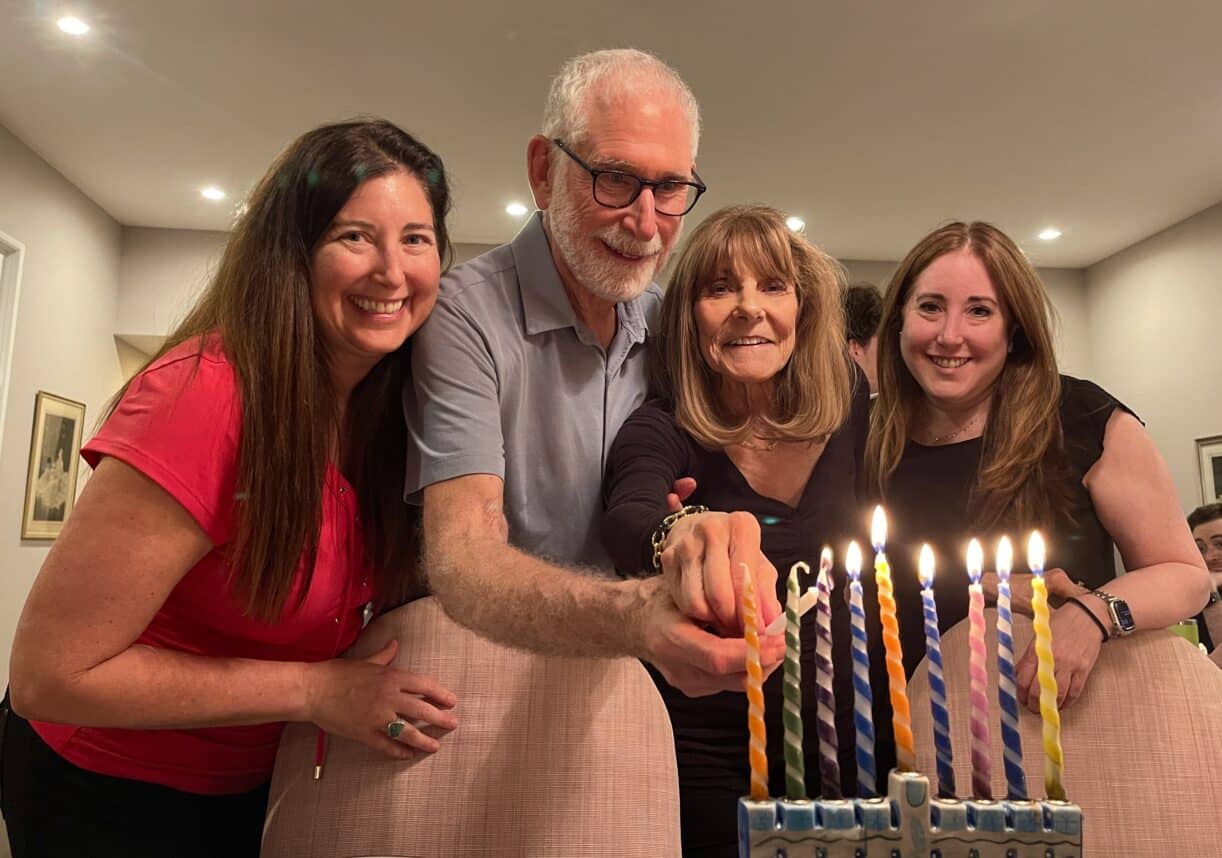
At Thanksgiving, we lit early Chanukah candles! I hope the festivals of light in this season of darkness bring hope and warmth to your family and loved ones.

Thankful for Brave-ish! Niver Nov News 2023 Read More »

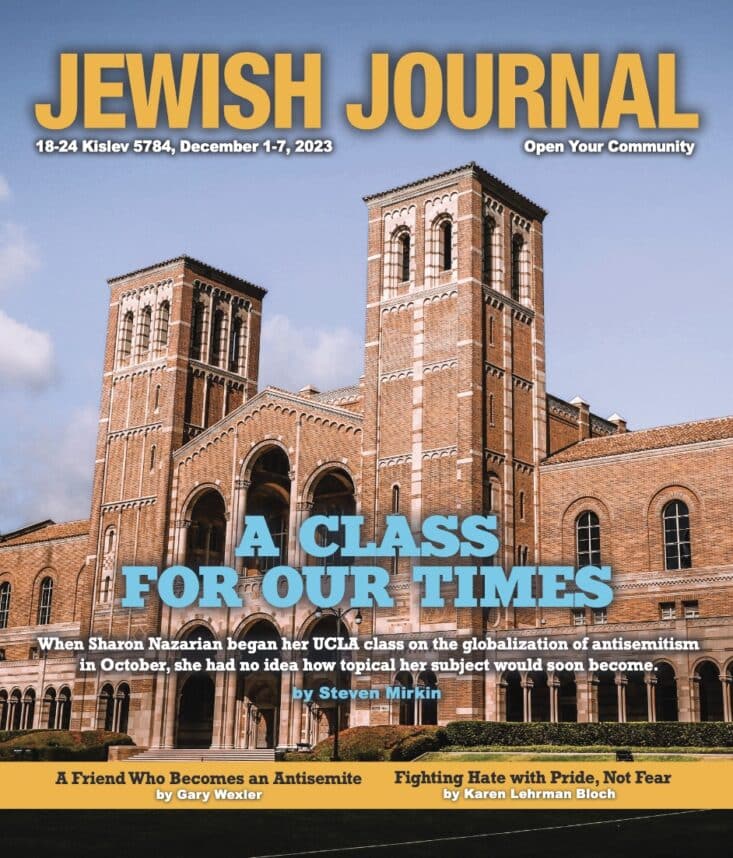
Print Issue: A Class for Our Time | Dec 1, 2023

CLICK HERE FOR FULLSCREEN VERSION

Print Issue: A Class for Our Time | Dec 1, 2023 Read More »

Chief Rabbi of Poland Stresses “Unity is Our Secret Weapon”

Less than a week after the most heinous terror assault in Israel’s history, Chief Rabbi of Poland Michael Schudrich instituted a public prayer for peace in Warsaw. Rabbi Schudrich presides over the Nożyk Synagogue on Twarda St. in Warsaw. This seminal institution is the only surviving pre-war Jewish house of prayer in the city as it officially opened to the public in 1902. Damaged by an air raid in Sept. 1939 at the onset of World War II, the building was partially restored and returned to the Warsaw Jewish Commune in the months after the war. It was not completely rebuilt until April 1983, however. Rabbi Schudrich conceded in 2019 that, “The Jewish community [in Poland] is a small community struggling to reassert its Jewish identity while being responsible for preserving its glorious past,” he told Jewish News Syndicate (JNS).

Rabbi Michael Schudrich. Photo by Cezary Piwowarski under the Creative Commons Attribution 3.0 Unported license.

As a Conservative Jew in New York growing up with three siblings, Schudrich studied religion at SUNY Stony Brook on Long Island before attending the Jewish Theological Seminary (JTS) in Manhattan for rabbinical school. He then earned his master’s in history from Columbia University. His first trip to Poland was as an 18-year-old in the early ’70s. As also reported by JNS, he “returned again and again, joining forces with the Jewish Flying University, where people gathered secretly.” After graduating from JTS, Rabbi Schudrich headed a small congregation in Japan, largely composed of tourists, professionals and post-army-duty Israelis.

It was the help of Ronald Lauder, the businessman who has been president of the World Jewish Congress for two decades, that brought Rabbi Schudrich to Poland for the long term. “Ronald is the one who got me here,” Rabbi Schudrich also told JNS.  “Without him, I don’t know if we could have accomplished a fraction of what we have.” Beginning in 2000, after returning to the U.S. to receive his second rabbinical ordination from the Rabbi Isaac Elchanan Theological Seminary at Yeshiva University, Schudrich served as rabbi of Warsaw and Łódź. In 2004, he accepted the job of Poland’s chief rabbi.

Under the Sigismund’s Column in Warsaw on Oct. 10, Rabbi Schudrich called upon people “to participate in a shared, public prayer for peace,” which addressed “all people of goodwill.” The event, which was held just a few days after Hamas’s multipronged and deadly terror attack, was attended by many dignitaries, including Israeli Ambassador to Poland Yaakov Livne as well as U.S. Ambassador Mark Brzezinski. Several rabbis from throughout the country also attended the gathering among throngs of others. “We can never forgive this barbarism; we will never be silent,” Rabbi Schudrich said, as reported by TVP World. “I lack the words to describe this tragedy. It’s difficult for me to say whether the current situation in Israel can be called a war. Military actions are not just about fighting the army, but affect defenseless civilians. This is not only an assault on Israel but on every Jew around the world. This is an assault on every moral person around the world,” he said.

Photo by Magdalena Sommer at the Nożyk Synagogue during a special presentation of the shul’s history held on Nov. 29, 2023. The event was organized by the Schorr Foundation’s Grażyna Pawlak.

In an exclusive interview with the Jewish Journal of Los AngelesRabbi Schudrich provides a rare and essential Talmudic guide to better equip and help Jews navigate spiritually and pragmatically through these difficult days and weeks ahead.

Jewish Journal: Speak to the notion of “light vs. darkness” when it comes to Israel’s war with Hamas. Broadly speaking, what are the current existential questions posed for the Jewish people?

Rabbi Schudrich: This war is not between Israel and the Arabs or the Palestinians. It is a war between Israel together with the Jewish people against a terrorist group, Hamas, that wants to kill both the State of Israel and all Jews around the world. Simply put: [it’s] a war between good and evil.

Jewish Journal: As Chief Rabbi of Poland, what are the crucial aspects you’re seeking to impart to your congregants and to the Jewish Diaspora in light of the devastating terror assault on Oct. 7? 

Rabbi Schudrich: We must be more united than ever. Divisions within our people weaken us.  Unity will always strengthen us.

Jewish Journal: Have the themes of the weekly Parshas evolved in recent weeks? What pieces of Jewish liturgy can help Jews gain some degree of comfort and solace?

Rabbi Schudrich: The Parsha always has a special message and lesson for what we are experiencing right now. The Lubavitcher Rebbe often emphasized this. My challenge continues to be finding what the unique special message is for us right now from this week’s Parsha.

Jewish Journal: Take me back to the morning of Oct. 7. What series of ideas have raced through your mind since then?


Rabbi Schudrich
: Since Oct. 7, I have been completely focused on what we can do to help: materially, politically and most importantly, spiritually. But all three elements are essential.

Jewish Journal: What do you consider your role as Chief Rabbi of Poland to be in the wake of these atrocities?

Rabbi Schudrich: My role is the same as any other Jew or any other moral person. [It’s] to speak the truth in the loudest and most persuasive manner possible. [My role, too, is to] support all those who need my support and give solace as is needed.

Jewish Journal: The question of “NEVER AGAIN” has long been a common refrain since the Shoah. This maxim seems to have fallen by the wayside in light of this heinous terror assault. What must be the new refrain for Jewish institutions and synagogues in particular?

Rabbi Schudrich: Am Yisrael Chai. Unity is our secret weapon.

Am Yisrael Chai. Unity is our secret weapon.

 Jewish Journal: Were you heartened by the near 300,000 in attendance at the March for Israel in Washington, D.C. on Nov. 14? There also was a strong presence at a March for Israel in Warsaw. What do you make of each?

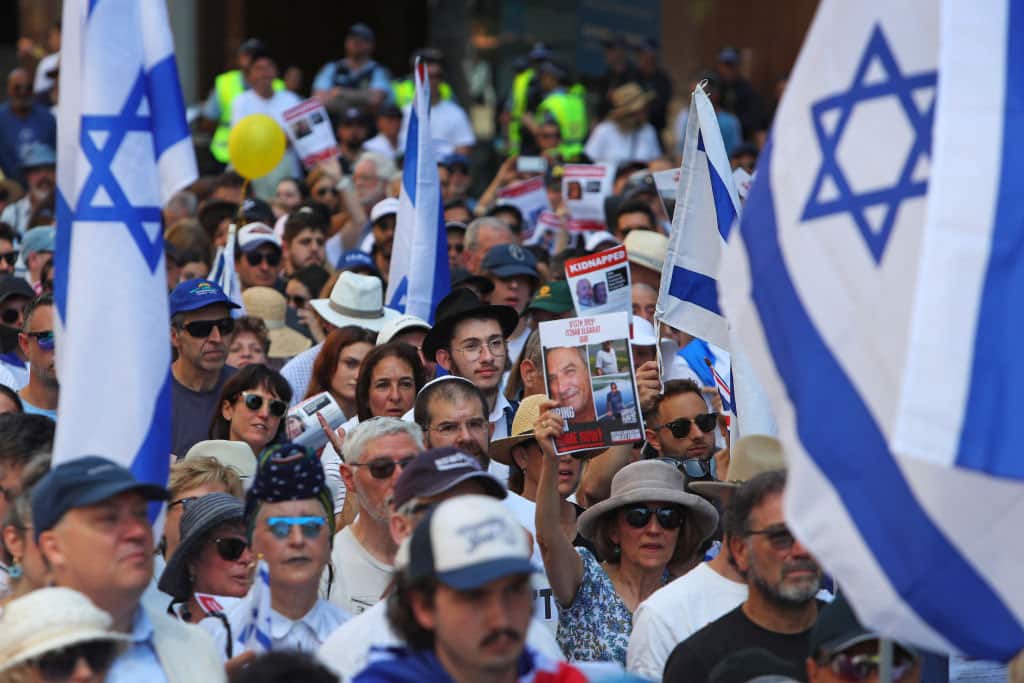
Rabbi Schudrich: The Washington March for Israel was amazing! My daughter, brother, sister-in-law, nephew and cousin were there. We also had an amazing March for Israel here in Warsaw, and we marched through the main street of Warsaw, known as the Fifth Avenue of Warsaw. There were Israeli and Polish flags flying [along with] photos of Israeli hostages. [There was] singing and praying together with one people—Jews and non-Jews together. [We were all] marching for the right of Israel to exist and defend itself, marching for the hostages to ‘bring them home now,’ and marching against antisemitism and hate. [This was meant for] moral people marching together to save the soul of the world.

Jewish Journal: Would you give a summary of who you personally know in Israel and what they’re now doing? For instance, on your Instagram, you’ve posted a rabbi from Poland who is a reservist. He stressed that Jews “must be one,” regardless of affiliation or political point of view. Will you speak to this notion of “oneness”?

Rabbi Schudrich: Most of my extended family live in Israel and I have two cousins who were called back up to the army and are serving in or near Gaza. My wife’s cousin is one of two female navigators for fighter jets. Two rabbis who formerly served in Warsaw were also called up back to the army and are serving in the north. Lots of children and grandchildren of my close friends are back in the army. For many of us, this war is also very personal with family and friends on the front and some have been wounded and killed.

Jewish Journal: The rise of antisemitism worldwide since Oct. 7 is a phenomenon impossible to ignore, but in lieu of discussing it in fear of amplifying unnecessary attention to hateful rhetoric and actions, what are the best mechanisms to counter these nefarious elements? Where are these seeds of hate emanating from and why? What can those who seek “truth and light” best do in order to counter it?

Rabbi Schudrich: Seeds of antisemitism come from both traditional sources, but also people being influenced by lies being told on social media. We need to be much better at getting our message out on social media. However, it is an unfair fight. We write the truth. The terrorists write lies and hate.

Jewish Journal: As Chief Rabbi of Poland, how are you mediating various congregations among Israel, U.S. and Poland’s Jews?

Rabbi Schudrich: It’s always the same goal. It’s to bring Jews and [other faiths] of goodwill closer.

Jewish Journal: As to combat the scourge of antisemitism, are you worried about the rise of such nationalist groups to exploit this terrible time that’s befallen the Jewish people?

Rabbi Schudrich: I do not worry as I plan and work to combat all hate.

Jewish Journal: Do you see parallels with Hamas’s brutal assault on Oct. 7 with the Russian invasion of Ukraine?

Rabbi Schudrich: The Ukraine war is connected since Russia’s been training Hamas terrorists in Syria. This is not parallel. It is simply connected.

Jewish Journal: In broad strokes, what do you suggest the emphasis of Jewish diaspora should be over the next weeks and months?

Rabbi Schudrich: We need to emphasize that this is not a war between Israel and Palestinians. This is a war to uproot terrorists from Gaza. To accomplish this, we need to be very active in social media and most importantly be together. Unity. Oneness. When we achieve unity, we will succeed, and [ultimately] to work and bring peace to all people of the Middle East.

Chief Rabbi of Poland Stresses “Unity is Our Secret Weapon” Read More »

What Norman Finkelstein Gets Wrong About Gazan Misery

“I, for one, will never begrudge—on the contrary, it warms every fiber of my soul—the scenes of Gaza’s smiling children as their arrogant Jewish supremacist oppressors have, finally, been humbled,” cheered Norman Finkelstein, one of Israel’s bitterest academic critics, when he heard about the October 7 massacre. “Glory, glory, hallelujah. The souls of Gaza go marching on!”

When I read his statement, the question I found myself asking was, why? What was it that excited Finkelstein so much about news of slaughtered people?

One might speculate that, as a self-described loner, Finkelstein is some sort of sociopath without any moral sense. But that can’t be quite right. In the very same essay, Finkelstein unmistakably conveyed ethical feelings such as his conviction that chattel slavery and Nazi antisemitism were wrong. Like many advocates for the Palestinians, moreover, he has always presented himself as a humanitarian, genuinely concerned with the wellbeing of oppressed people everywhere.

“For the past 20 years the people of Gaza, half of whom are children, have been immured in a concentration camp,” was how Finkelstein justified his celebration of Hamas’s pogrom. “Today [Oct. 7] they breached the camp’s walls. If we honor John Brown’s armed resistance to slavery; if we honor the Jews who revolted in the Warsaw Ghetto—then moral consistency commands that we honor the heroic resistance in Gaza.”

Or as he later told the podcaster Candace Owens, “Everybody thinks, ‘Yeah, we should start with October 7th, that’s when the story begins,’ but … that’s not when the story begins; that’s where the story climaxes: After being born into a concentration camp, and living in that inferno for twenty years, they finally resolved to revenge the curse that had been inflicted on their lives.”

What warmed every fiber of his soul, then, wasn’t a result of his lack of morality; instead, it was because his ethics are more pristine and consistent than ours. The revulsion we felt at reports of tortured Israeli families and kidnapped children was transcended in his higher consciousness by a more penetrating insight into their Jewish supremacism and systemic oppression.

But before we aspire to his higher moral awareness, let’s pause to ask two questions whose answers Finkelstein appears to assume he knows. The first is: Was life in Gaza really so accursed and wretched?

Recent data from the UN’s Human Development Report Office (HDRO), whose reports enjoy editorial independence from the politicized United Nation’s General Assembly, painted a rather brighter picture of life in Gaza and the West Bank. Last year, the Palestinian areas were given a Human Development Index (HDI) value of 0.715, “which put the country in the High human development category—positioning it at 106 out of 191 countries and territories,” according to the HDRO study (italics mine).

This “high” development score signifies that, prior to Oct. 7, the standard of life in the West Bank and Gaza Strip had surpassed nearly half the countries worldwide, when measured by such vital indicators as life expectancy at birth, mean and expected years of schooling, and overall economic prosperity measured in U.S. dollars. Obviously, the same could not have been said for the victims of the Warsaw Ghetto and Southern slavery.

Finkelstein’s analogies of concentration camps and slave rebellions are further belied by social media posts that ordinary Gazans themselves had been posting in recent years about their interesting lives. Visit @imshin’s valuable X account, for example, to witness countless instances of extravagant Gazan consumerism, from exquisite dining in beachfront restaurants and resorts to playful excursions in amusement and water parks.

Finkelstein’s analogies of concentration camps and slave rebellions are further belied by social media posts that ordinary Gazans themselves had been posting in recent years about their interesting lives.

Thanks to Gazan social media, one can vicariously experience the allure of their designer clothes and adorable baby attire, behold their fascination with fancy cars at their luxury car dealership, indulge in the festive atmosphere of their bustling shopping malls, savor afternoon tea in their charming rooftop cafés, unwind in their luxury chalets and villas, and discover the glamour of their finely crafted gold, including spectacular gold-plated iPhones. Moreover, one can share in their delight in filling up grocery carts at stores packed with delicious foods, and witness their holiday vacationing and sporting events beyond the supposedly impossible confines of their concentration camp.

Somewhat ironically, the much-discussed hospitals in Gaza, with footage of advanced medical equipment, is yet another indicator that life in their “refugee camps” wasn’t quite the hellscape that Finkelstein and others would have us believe. One of the reasons Gaza received a high HDI value was because Palestinian healthcare had been fairly good. As observed in these pages in 2021, a pregnant woman’s baby stood a better chance of survival in the West Bank and Gaza Strip than in Brazil, Turkey, Egypt and numerous other nations around the world.

That is not to say that most Gazans were wealthy or even that the wealthy among them had been satisfied with their relatively affluent existence. According to the latest UN-sponsored World Happiness Report, Palestinians were indeed one of the gloomiest populations globally, ranking 99th out of 137 nationalities. Which leads to the second question: Why were they so unhappy before Oct. 7?

Finkelstein, a Marxist, replies that Palestinian sourness was due to their living in a crowded open-air prison under appalling material conditions. But that’s quite unpersuasive. El Salvador’s quality of life, for instance, was markedly worse than the Palestinians and yet Salvadorans were significantly happier, according to UN data. External material factors, it seems, can only account for so much when it comes to the riddle of human happiness.

There is a spiritual dimension to our experience of joy. The nineteenth-century philosopher Arthur Schopenhauer, who spent his life contemplating the nature of sorrow, astutely pointed out that the world in which each of us lives is shaped by the way in which we look at it. That is why identical external events affect individuals differently; even in similar circumstances, each person inhabits a unique universe of their own.

“All the pride and pleasure of the world, mirrored in the dull consciousness of a fool, are poor indeed compared with the imagination of Cervantes writing Don Quixote in a miserable prison,” Schopenhauer remarked memorably. The inner universe of Palestinian psychology, not the outside world, brought about the 7th of October.

Following their worldwide street celebrations of that day, Palestinians and their supporters are now posting lamentations of their lost paradise on the Gaza Strip after Israel’s retaliation. It is as though many of them believed their previous affluence was divinely ordained—as though they had been oblivious to how good life had been. Instead of appreciating their general wellbeing, and rather than building upon the constructive possibilities of the Abraham Accords, they stewed in anger over Israel’s continued existence, plotting cruelties of unimaginable barbarity.

Schopenhauer again: “A man never feels the loss of things which it never occurs to him to ask for; he is just as happy without them; whilst another, who may have a hundred times as much, feels miserable because he has not got the one thing he wants.” In the case of Gazans, despite being materially better off than many other populations on earth, the crucial missing element in their quest for happiness has been conquering their hated Jewish neighbors across the fence, once and for all. As a consequence of their failure to do so, they have ungratefully indulged their otherwise decent lives while nursing revenge fantasies and willingly risking it all in pursuit of that one elusive thing.

Finkelstein, presenting himself as their friend, keeps encouraging them in this self-destructive Quixotic adventure. Like many in the pro-Palestinian movement, he exhibits an irrational inclination to catastrophize—a cognitive distortion that prompts people to make giants out of windmills, or in Finkelstein’s case, a concentration camp out of an area ranked highly on the human development index. It is this widespread irrationalism at the rotten bottom of his side’s political thinking that, ironically and fatefully, does so very much to perpetuate Palestinian miseries.

And, as old Schopenhauer would have us note, even if the Gaza Strip really had been the inferno that Finkelstein depicts, it still wouldn’t follow that such unpleasant external conditions necessarily inspire most men to think and behave as grotesquely as the Palestinians did on October 7th—or, for that matter, to cheer it on as Finkelstein did, no less cruelly.

Jonah Cohen is communications director for the Committee for Accuracy in Middle East Reporting and Analysis (CAMERA.org).

What Norman Finkelstein Gets Wrong About Gazan Misery Read More »

CW Silverberg: “Schmoozing and Cruising,” Kosher Americana and Easy Chicken and Rice Recipe

CW SIlverberg, host of “Schmoozing & Cruising: A Trip Through Kosher Americana,” grew up kosher in a non-kosher neighborhood in Minnesota. His love for kosher Americana – and sharing “wonderful stories of positivity, food and fun” – is what drives this project.

“We live in a golden age of exploration and communication,” Silverberg told the Journal. “I get to try all those kosher things that you would never think would exist.”

He adds, “That’s really what the TV show is also about. That’s what my whole lifestyle is about.”

“Schmoozing & Cruising, airing on ChaiFlicks,” explores innovative kosher food experiences across the United States. It features a different theme each week, including donuts for Hanukkah and Chinese food for Christmas.

ChaiFlicks launched in August 2020, and is the world’s largest streaming platform dedicated to Jewish content. “Schmoozing & Cruising,” which debuted November 16, is the platform’s first original series.

“The first episode is about barbecue,” Silverberg said. “Because what’s more American than barbecue.”

Silverberg was a special needs high school teacher for many years. However, he always loved cooking. After leaving his teaching career, he started a secret sandwich club at his friend’s shop, which pivoted into catering.

Silverberg says one of the most basic, fundamental dishes is a roast chicken. His recipe for chicken and rice is below.

“Once you learn how to roast the chicken, you take rice and you put it on the bottom of the pan and pour in whatever seasonings, flavors, you want in the rice,” he said.

So for a Mediterranean chicken, you would add artichokes, tomatoes and lemon.

He also loves turning a fancy dish into a sandwich and vice versa.

“It doesn’t have to be foo foo,” Silverberg said. “It’s just more conceptual. Take a sandwich and make it a dish or [turn] a dish into a sandwich.”

For instance, the main components of a chicken salad are poached chicken breast, celery, mayonnaise and rye bread. You can poach the celery, shred the chicken on top of it and make a fancy sauce, like a bechamel, with mayonnaise and egg.

“Most importantly, you always have to identify with the bread,” he said. “I like a chicken salad sandwich on a seeded rye, so I would probably throw some sort of caraway seed in there or make some sort of caraway seed cracker.”

Silverberg also shared his favorite cooking hack for the holiday season and beyond.

“Instead of making the dough, proofing the dough, and having to patshke with the dough, buy yourself some frozen Rhodes dough,” he said. “[They] are frozen yeasty dough.”

Just proof the dough and bake. Not only can you use this kosher-certified dough for dinner rolls, you can also fry the dough and use it to make donuts.

“They work for all your sandwich needs … and holiday fried dough needs,” he said.

Silverberg, who says he always wanted to kind of be an Alton Brown or a Julia Child-esque host of sorts, is living his dream.

He teamed up with television producer Tsvika Tal, and they started making short documentaries about the kosher lifestyle, called “Trippin Kosher.”

“ChaiFlicks saw our almost 10 years worth of [work], and understood exactly what we were doing,” he said. “They have given us the platform to expand on that into a magnificent  experience.”

“Schmoozing & Cruising” is not about the secret places, where there are kosher restaurants, food trucks and other establishments. It’s about the only places.

“We’re there to highlight what’s special about them,” he said. “We are here to educate and entertain and have a great time.”

Learn more at ChaiFlicks.com.

For the full conversation, listen to the podcast:

Watch the interview:

Eezy Peezy Chicken and Rice

Photo by CW Silverberg


1 whole chicken (2-3 lbs.)

Seasonings (salt, pepper, etc.) to taste

2 cups white rice

4 cups chicken broth

Olive oil, to taste

Preheat the oven to 425°F.

Season chicken liberally with salt and pepper (and whatever flavors you want to add).

Put 2 cups of white rice in a roasting pan. Then, add 4 cups of hot broth plus a healthy glug of olive oil.

Place chicken, breast side down, in the pan. Pop it into the oven and roast for 45 minutes.

Next, flip the chicken so it is breast-side up and roast for another 25 mins, until rice is fully cooked and juices run clear. Chicken should be at a temperature of 165 ºF.


Debra Eckerling is a writer for the Jewish Journal and the host of “Taste Buds with Deb.Subscribe on YouTube or your favorite podcast platform. Email Debra: tastebuds@jewishjournal.com.

CW Silverberg: “Schmoozing and Cruising,” Kosher Americana and Easy Chicken and Rice Recipe Read More »

Who’s a Grasshopper Now?

Numbers 13:33 contains one of the most fascinating passages in the bible.  Moses had sent out a dozen scouts to explore the land of Canaan.  Upon their return, all but two of them, Joshua and Caleb, reported that it would be better to go back to Egypt than to move forward, since the Israelites couldn’t possibly survive in the promised land given the ferocity of its inhabitants.  Their message wasn’t that our enemies are strong and we are weak, but that “we looked like grasshoppers to ourselves, and so we must have looked to them.”

Think about that – if you consider yourself to be small and vulnerable, should you be shocked when your adversaries judge you to be that way?  Now, as then, we need to stand tall against those who hate and doubt us, calling out mischaracterization and hypocrisy wherever we see it. And, alas, we seem to see it everywhere we look.

It is revolting to witness so many self-identified “progressive” students and faculty reflexively decrying the actions of Jewish “colonialists,” as they rationalize, ignore, or even celebrate, the brutality of Hamas terrorists.

While the global outrage at the notion that Israel has a right to defend itself is deplorable, nowhere is it more so than on America’s college campuses.  It is revolting to witness so many self-identified “progressive” students and faculty reflexively decrying the actions of Jewish “colonialists,” as they rationalize, ignore or even celebrate the brutality of Hamas terrorists.

I am not surprised to read the words of donors who are so disgusted with their alma maters that they are looking to redirect their philanthropy to more deserving causes.  I suggest that rather than write off universities altogether, they consider campus organizations that directly support their Jewish communities, such as Hillel.  And I ask them to also turn their attention to Israeli educational institutions, especially given that at a time when those schools need allies the most, they have been largely abandoned by their international counterparts.  

In a recent open letter to the worldwide academic community, the leaders of the major Israeli universities wrote that “It’s unsettling to note that college campuses [in the U.S. and in Europe] have become breeding grounds for anti-Israel and antisemitic sentiments,” as they “have adopted Hamas as the cause celebre while Israel is demonized …    Academic institutions stand as lighthouses in the intellectual landscape, and we ask you to illuminate them … Expose the falsity of justifications for acts of terror; expose and condemn disingenuous statements; and reject hypocritical voices that justify murder, rape, and destruction in the name of ‘resistance.’”

The Israeli institution I know best is Tel Aviv University.  Northwestern University, where I served as President for 13 years, and TAU are sister schools, with a range of joint teaching and research programs.  And I am proud to say that I am one of many members of their global Board of Governors.

Under the leadership of its president, Ariel Porat, a celebrated legal scholar, TAU has been at the forefront of the Israeli response to the horrors of 10/7:  6,000 of their students are on active IDF duty; 1,000 of their faculty and staff are volunteering in hospitals and in agricultural fields; they created a substantial emergency fund for those directly affected; they host evacuees in their dorms; they are creating a major post-trauma center; etc.  And they are not alone.  

President Porat told me that he has never seen such unity in Israel.  The divisions in Israeli society of recent months, largely related to the problematic attempts at judicial “reform,” are a distant memory.  As Israel fights for its very survival, all hands are on deck.  

Those who think of Israelis – or Jews, in general – as grasshoppers, are seeing just how wrong they are.  By standing strong and united, as we did in biblical times, we are demonstrating our ability not merely to exist, but to thrive.  
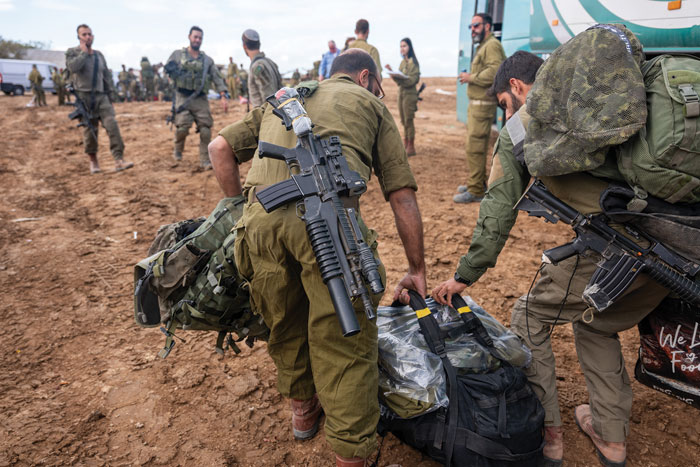
Whether you write checks, volunteer your time, assist in the all-important public relations battle against those who maliciously misrepresent current events, or simply proudly wear your Jewish star, you are showing the world the vibrancy of our people.  We cower before no one in the defense of our ancient and forever homeland, as we shout for all to hear, “Am Yisrael Chai.”


Morton Schapiro is the former president of Williams College and Northwestern University.  His most recent book (with Gary Saul Morson) is “Minds Wide Shut:  How the New Fundamentalisms Divide Us.”

Who’s a Grasshopper Now? Read More »

Civilian Casualties and the Ethics of Jewish Power

There has been a worldwide focus on civilian casualties in Israel’s war in Gaza. Frequent demands are heard for an immediate ceasefire on the grounds that there are too many civilian deaths and this killing must be stopped at once. These calls fail to face the bitter truth that a cessation of hostilities would leave Hamas in power, bloodied but not broken and able to massacre again. President Macron of France and Prime Minister Trudeau of Canada — who initially supported Israel’s right to defend its citizens after the October 7 massacre — are quoted as saying that Israel must stop killing women and babies. The implication is that Israel is engaged in a war of revenge, that the IDF is targeting women and children or at least not taking care to minimize civilian casualties. Nothing could be further from the truth.

It is important for supporters of Israel to know that when the Jewish state created an army, its leaders recognized that this was a turning point in Jewish history. Instead of living on sufferance of the host society — and frequently being victimized due to their powerlessness — the Jewish people decided to become sovereign and take political and military power to have an important role in determining their own fate. This meant giving up the self-righteousness of being the victims (and never the abuser). This meant taking on the risk of exercising power where failure meant disaster for Jewry. This also meant taking on the risk of waging wars that would inescapably result in civilian casualties. The new ethical challenge was to fight with restraint and act to minimize collateral damage. The IDF believed that soldiers would be better fighters if they believed in the justice of their cause and that their army fought justly using moral standards. 

The IDF set out to minimize civilian casualties and in the process became the most moral army in the world. Note: Keep in mind the sad truth that the definition of a moral army is that it minimizes (but cannot eliminate) civilian casualties.

The IDF adopted a strong tohar haneshek (purity of arms) doctrine. The code started with the emerging ethical principles of international law: necessity (an army goes to war only if this is the only way left to enable life to go on); distinctiveness (the army is careful not to harm civilians and attacks only soldiers and military targets); proportionality (if the enemy mixes civilian and military so that it is impossible to fight without putting civilians at risk, then if the attacks would harm civilians more than the military advantage gained, it would not be done).

The IDF codified its rules and gives a copy to every soldier. Officers spend serious time instilling those values as part of the basic training process. After the IDF codification, a Judicial Advocate General office (praklitut tzva’it) was set up to monitor behavior, investigate deaths or abuses of civilians and hold people accountable before military tribunals. The Israel Supreme Court then took over ultimate review of military justice and tactics to ensure that the army fully lives up to its code. A free press and media also investigate abuses and check potential violations.

The army developed ordnance to minimize collateral damage, including smart bombs to ensure that only intended military targets were hit and special munitions that reduced explosive scatter. In the Gaza war, IDF introduced “Iron Sting,” a newly developed mortar munition that reduces scatter. Such munitions reduce the chances of wounding civilians in the vicinity of military targets. The classic case is the Iron Dome missile defense system, which neutralized rockets’ ability to destroy civilians and civilian life. 

The IDF developed tactics to reduce enemy civilian casualties. These included canceling missions in actual operation where it was determined that too many civilians would be hurt; mass telephone calls warning local inhabitants to get out before their area was bombed or invaded; dropping flyers warning of coming military actions; and “knock on roof” shells  that did not explode but gave a last warning to civilians to get out before their building was struck. Many of these tactics allowed terrorist fighters to get out of harm’s way, but the IDF was determined to minimize civilian casualties at all costs. In retrospect, this tactic boomeranged as some of those spared terrorists went on to murder hundreds and planned to murder millions. 

The real measure of the IDF’s accomplishments was articulated by Richard Kemp, leader of the United Kingdom’s armed forces in Afghanistan. Driven by the need to gain the support of the population against the Taliban, the Allied forces made an all-out effort to reduce civilian casualties. By strenuous effort, the Allies brought the ratio of civilian deaths to fighter deaths down to a historically unprecedented level — three to four civilians killed for every fighter. Hamas is a group which deliberately places its military installations and fighters among civilian populations. Yet by 2021, after repeated military conflicts with Hamas, the IDF brought the ratio down to one fighter killed for every civilian killed. No other army in the world has reached such levels of protecting civilians. It is literally true that IDF was the most moral army in the world — on the heartbreaking understanding that a moral army kills as few innocent civilians as possible.

The Hamas October 7 massacre was so massive and cruel that it generated a wave of anger. Many Israelis called for revenge and retaliation. Extremist ministers called for indiscriminate collective punishment and wholesale destruction of Gaza. The IDF rejected these ideas as incompatible with its values. The government and the IDF determined that Hamas must be destroyed and its governance over Gaza ended — but the war would be fought according to the IDF’s code of ethics, including minimizing civilian casualties. The air bombing targets only military sites. The IDF called upon the inhabitants of Northern Gaza to evacuate the area in order to sharply reduce civilian losses. Israel itself evacuated over 120,000 civilians in northern and southern Israel to put them out of harm’s way. Hamas soldiers blocked civilians from leaving while its media department claimed Israel was carrying out ethnic cleansing. An estimated 70% of Gazans exited northern Gaza. 

Why then are Palestinian deaths so high? The first answer is that the Hamas-controlled Gaza Health Department inflates the figures. In the Al Shifa hospital incident, Hamas blamed an IDF strike and claimed there were 500 deaths. Later evidence showed that the strike was a failed Islamic Jihad rocket aimed at Israel that broke up and blasted the hospital’s parking lot, with about 50 casualties. The Gazan report includes the 1,500 Hamas fighters who were killed inside Israel during the IDF counterattack to the massacre, as well as Hamas terrorists killed in the Gaza fighting. It also includes all the casualties caused by Hamas and PIJ rockets. Over 8,000 rockets have been fired toward Israel and an estimated 20% of them fall in Gaza, causing Palestinian casualties.

The definition of proportionality has also changed. In the past, a terrorist leader with a few civilians nearby would be spared. Now, knowing that this man, spared, could order the killing of hundreds of civilians, the strike goes on — justifiably.

Hamas turned Gaza’s citizens into human shields. They so intertwined their military with civilians that any and all attempts to stop their assaults cause civilian casualties.

The major reason for the increased casualties is that Hamas multiplied its military installations in Gaza. It dug kilometers of attack tunnels with numerous openings in civilian neighborhoods, and placed rocket launchers in proximity to schools, hospitals, etc. They placed command and control centers in (that is, under) hospitals. They turned blocks of civilian buildings into military posts. This mixing is a war crime. Hamas turned Gaza’s citizens into human shields. They so intertwined their military with civilians that any and all attempts to stop their assaults cause civilian casualties. The deepest cynicism in this strategy is that Hamas set up Gaza to maximize Palestinian civilian casualties, in the belief that civilian deaths bring sympathy and support to their cause. 

In the classic chutzpah narrative, a man kills his father and mother and pleads for mercy on the grounds that he is an orphan. Hamas has done better. It sets up tens of thousands of civilians as human shields. Then, after massacring a thousand civilians, it demands a ceasefire. No one should fight back against its terrorism — since civilians will be hurt. 

We have to fight the false implication that the higher civilian casualties in this war proves that Israel is not trying hard to minimize them. The evacuation of Northern Gaza saved countless lives; however, this escape route also allowed many terrorists and Hamas’ top leadership to get out of the line of fire by moving alongside the civilians. Israel’s protection of civilians costs it dearly in terms of mortal enemies who take advantage to save themselves. It is important for Israel’s supporters, here and elsewhere, to let the world know that in the face of staggering barbarism, Israel is still making extraordinary efforts to reduce Palestinian civilian casualties.

When Israel took up the burden of defending Jews’ right to live, we did not imagine the devastating cost of that defense in Palestinian lives. Since every human life is of infinite value, we deeply feel the pain of every innocent Palestinian life lost. The death of children in Gaza is particularly painful. The fault is all Hamas’ and its deliberate use of human shields —but we still feel the sorrow of every loss of life.

The war carries a heavy cost in our own fighters’ lives as well as  Palestinian civilians’ but this is the outcome of the principle of necessity. There is no other way to stop the attempt to destroy Israel. For the same reason, a ceasefire now would save Hamas from destruction and allow terrorist groups to regroup. Those who sincerely are calling for a ceasefire in order to save civilians should know that unchecked, radical jihadists will kill hundreds of thousands, even millions, in the future —not just in Israel, but in the rest of the free world.


Rabbi Yitz Greenberg serves as the President of the J.J. Greenberg Institute for the Advancement of Jewish Life (JJGI) and as Senior Scholar in Residence at Hadar.

Civilian Casualties and the Ethics of Jewish Power Read More »