fbpx

November 15, 2023

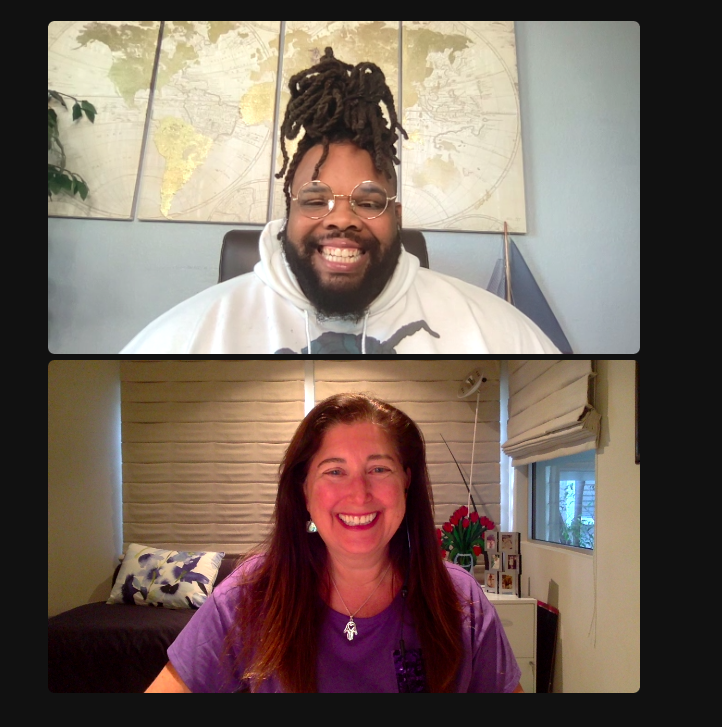
Lisa Niver is a 3x National Arts and Entertainment Journalism Awards Finalist!

I am honored to be three-time finalist for the 2023 16th annual National Arts and Entertainment Journalism Awards for Podcast Host, Diversity in Entertainment and Personality Profile. Finalists with me for podcast host include Jon Stewart and for Diversity in Entertainment Ari Saperstein from the New York Times. I am floored to be a finalist with journalists from KCRW, Variety, The Hollywood Reporter and the New York Times.

From the Los Angeles Press Club: “For the 16th National A&E Journalism Awards, our judges carefully reviewed more than 1,600 entries, and you came out on top with the best A&E reporting in the nation.”

J1. Radio/Podcast Anchor/Host

* Lisa Niver, PODCAST: Make Your Own Map, “Lisa Niver HOST of Make Your Own Map
  • Jon Stewart, Apple TV+ Podcast, “The Problem with Jon Stewart: The Official Podcast
  • Elvis Mitchell, KCRW, “Robert Townsend, Carell Augustus and The Treat: an essential but underappreciated Bowie album”
  • Madeleine Brand, KCRW, “Press Play with Madeleine Brand”
  • Michael Schneider, Clayton Davis, Jazz Tangcay, Jenelle Riley, Emily Longeretta, Variety, “Variety’s Awards Circuit Podcast”

K6. Diversity in the TV/Streaming Industry

Lisa Niver, We Said Go Travel, “Unveiling the Uncharted: Jeff Jenkins on Embracing Life Beyond Comfort Zones
  • Ari Saperstein, The New York Times, “‘Best Foot Forward’ Is a Story About, and by, People With Disabilities
  • Emily Longeretta, Variety, “Neal Bledsoe Steps Away From Great American Family: ‘My Support for the LGBTQIA+ Community Is Unconditional’”
  • Elaine Low, Insider, “Warner Bros. Discovery nearly axed the TV writers workshop known as its own ‘farm team,’ then rushed to announce a new plan amid Hollywood backlash”
  • Christy Piña, The Hollywood Reporter, “‘We Don’t All Fit Neatly Inside a Box’: How Latin Execs Across Studios Are Fighting for More Representation”

K10B. Personality Profile, TV Personalities

Lisa Niver, Jewish Journal, “Walking with Andrew McCarthy
  • William Earl, Variety, “Screaming Matches and Food Fights: ‘Bar Rescue’ Host Jon Taffer Breaks Down the 96-Hour Marathon of Saving a Business”
  • Tricia Romano, Alta Journal, “Dan Savage’s Adaptation”
  • Sean Wilsey, Alta Journal, “It Came from San Francisco”
  • Christian Zilko, IndieWire, “Tim Heidecker and Gregg Turkington Give Us ‘Siskel & Ebert’ at the Gates of Hell”

Thank you to the Los Angeles Press Club and Diana Ljungaeus, Executive Director!

Lisa Niver has won many awards! From 2017 to 2023, in the Southern California Journalism Awards and National Arts and Entertainment Journalism Awards, she has won five times and been a finalist twenty-five times for a variety of broadcast, print and digital categories. More about Lisa Niver: https://lisaniver.com/awards/
LOS ANGELES, CALIFORNIA – OCTOBER 16: BJ Korros and guest attend the Los Angeles Press Club’s 63rd Annual Journalism Awards Dinner at Millennium Biltmore Hotel Los Angeles on October 16, 2021 in Los Angeles, California. (Photo by Robin L Marshall/Getty Images)
Jewish Journal Wins Two LA Press Club Awards and Several Other Honors

Lisa Niver is a 3x National Arts and Entertainment Journalism Awards Finalist! Read More »

Finding Meaning in a Time of Loss

Over the weeks following October 7th, I have lost a part of myself as well as my America!  As if without warning, I along so many of my colleagues have experienced a series of losses. This past month, I have seen friends disappear; the failure of America’s elite universities to be responsive to the needs of their students and alumni; and sadly, my political party move further left, upending its long-held consensus on the American-Israel partnership.

How could this have happened? 

Conflicts and wars, as we know, are ugly and problematic. But most such situations are simply played out as military undertakings, not necessarily impacting one’s core relationships or upending core values and beliefs. In this moment however a whole different constellation is emerging. For many of us, the upending of so many aspects of our lives is as traumatic as it is dramatic.  

During the days following Hamas’ assault on Israelis, I expected many of my non-Jewish friends, colleagues and associates to demonstrate their support. Instead I/we experienced a wall of silence, and in some cases, quite the opposite, as various folks immediately embraced the case against Israel. The loss of friendships built over time is particularly devasting.

Some of my Jewish colleagues are telling me that they are feeling bereft, as they recall marching with their circle of friends around an array of causes dealing with civil and human rights, environmental concerns, and other liberal initiatives, only to find themselves today totally alone.

To add to this state of disappointment, I was taken aback when the University of Pennsylvania, where I had completed my graduate studies, demonstrated a level of moral bankruptcy as its campus administration failed to call out anti-Semitism and public hate.  But if Penn had been the only violator it would be bad enough. However the reality here is that many of America’s premier institutions of higher education abdicated their responsibilities, as they discounted their Jewish students, faculty, alumni, and administrators. Of the numerous institutions that American Jewry have so generously embraced, these great educational centers were particularly significant. As they abandoned their charge to ensure academic integrity, provide safe and open public discourse, and maintain intellectual inquiry, this represented a most profound and significant loss for the Jewish community.

When talking this week with Jewish students across campuses, one hears the litany of stories of Hillel posters ripped from walls, of school relationships ending, and of professors articulating hateful messages charging Israel with “genocide.”

What has been particularly unsettling involves the fall-out I am experiencing from my political home, the Democratic Party, as we observe the progressive left align with Hamas, rejecting Israel as an “occupier” and as a “white colonial power,” despite the extraordinary leadership of our President.  Feeling isolated and separated from one’s political moorings is indeed unsettling, but collectively, all these microaggressions translate into undoing my rootedness in the American narrative.  

Even beyond these stark political messages, a broader disconnect appears at hand. What we are coming to realize based on these experiences within the educational orbit and among our younger political activists is a fundamental divide defined by age, ethnicity and race regarding the place of Israel within the American mindset. We are reminded that older citizens have a particular affinity to the Jewish state, whereas younger Americans view the Israel story from a fundamentally different place. The political mantra of the left with its focus on intersectionality, post-modernism, and an alternative understanding of the uses of power has consumed many Millennials and Gen Z’s, including elements of younger Jews.  Social media has added a layer of rhetoric that contributes to this generational political divide around Israel. The broader existential question maybe is what happens when in the future there is another crisis demanding American support for Israel and Jews. Where will this nation be in support of its long-standing ally?

In moving forward how does one understand such losses?  Over the course of a lifetime, one builds these critical connections. Each of these core ingredients frames an individual’s social fabric, involving lifelong friendships, educational connections, and political ties providing a person with their identity. 

But even in the essays that I shared on these pages, prior to October 7th, I had begun to lay out a scenario describing the “unthinkable” new realities that some of us were already feeling ahead of this moment.

…a level of unsettledness defines this nation’s Jews, creating an internal debate involving many of us: As we have shifted from a period of American liberalism to a time of political populism, deep fissures are dividing Americans in general and Jews in particular. Jewish political differences may never have been more pronounced.

Political divisiveness and social instability serve as triggers for such attacks on Jews.

In conversations with my Jewish academic colleagues, we are reminded that in every Diaspora experience Jews have encountered periods of disruption undermining their welfare and state of comfort. At other times, we have experienced those finite endings, a moment of stark reality where the bonds of connection involving the safety and status of Jews are abruptly and radically uprooted. In those cases, governmental policy and actions dictated such definitive outcomes. What might this moment represent for America’s Jews? 

None of this is offered without a deep acknowledgement that Israel itself faces significant political challenges ahead, as it confronts its intelligence failings, its policies regarding settlements and occupation, and the steps it will require to preserve and strengthen its democratic character and rebuild its national Jewish identity.

There is rapidly emerging a new type of Jewish resiliency, demanding of each of us to think more creatively, act more prudently, and live more consciously our Jewish experience.

This is an extraordinarily challenging time to be a Jew! There is rapidly emerging a new type of Jewish resiliency, demanding of each of us to think more creatively, act more prudently, and live for more consciously our Jewish experience.  We are reminded of Abraham Joshua Heschel’s imperative that “the gravest sin for a Jew is to forget what he represents. We are God’s stake in human history.”


Dr. Steven Windmueller is an Emeritus Professor of Jewish Communal Studies at the Jack H. Skirball Campus of HUC-JIR, Los Angeles. His writings can be found on his website, www.thewindreport.com.

Finding Meaning in a Time of Loss Read More »

The Trouble With Sharing Oct. 7 Miracle Stories

After the horrific massacres and kidnappings of October 7, tales of divine intervention went viral in the news and on social media. During a crisis, stories of hope, faith, resilience, and belief in a protective higher power can offer solace and inspiration. But relying on and disseminating these stories can also come at a cost. 

The Jerusalem Post claimed a “Jewish Miracle” when a rocket hit a Sderot home, leaving a famous rabbi’s picture undamaged. Social media brims with tales of sacred items, such as tefillin or books of Psalms, surviving devastating fires. Another widely circulated story recounts how Hamas gunmen bypassed a woman’s home after she, in that very moment, decided to observe the Sabbath, as a plea for divine protection.

Heroic stories inspire and boost morale, while claimed miracle stories often focus on perceived divine interventions, involving events subject to speculation, and may not have concrete evidence.

Distinguishing between claimed miracle stories and accounts of bravery, resilience, and heroism is crucial. Heroic stories inspire and boost morale, while claimed miracle stories often focus on perceived divine interventions, involving events subject to speculation and may not have concrete evidence.

Sharing these selective supposed miracle stories could sow seeds of doubt and pain. For every miraculous tale of escape, there are countless stories that didn’t end well. Over 1,400 deaths and ongoing hostage situations attest to this. 

The selection bias inherent in these widely shared “miracle” stories raises painful questions: Why did some merit divine intervention while others didn’t? This can inflict guilt and spiritual doubt, especially among grieving families thinking maybe they didn’t have enough devotion to merit protection. 

Holocaust survivor Elie Wiesel remarked on his own survival, “Certainly not [a miracle]. If heaven could or would perform a miracle for me, why not for others more deserving than myself?” This sentiment resonates deeply.

Personally, these miracle accounts offer me no comfort. I often wonder why God didn’t save my sister-in-law Henya Federman and niece Shterna, who tragically drowned recently, or my cousin Meir Tamari, who terrorists murdered in the West Bank, or my father who died when I was a teen. Where was their miracle?

Furthermore, over-reliance on divine interventions might also cause some to take a backseat, waiting for a “miracle” rather than addressing challenges and seeking solutions. This is especially concerning during crises, where proactive action is paramount.

A University of Michigan study showed that “placing too much control in divine hands may lessen efforts to seek [medical] treatment or take preventive measures such as quitting smoking.” The study also found that religion contributes to “better life satisfaction” but this is only useful if it doesn’t inhibit proactive effort.

The founder of Hasidic Judaism, the Baal Shem Tov, taught the importance of learning from everyone. A student once chided, so what can we possibly learn from an atheist? The rabbi replied that we should perform good deeds out of an inner sense of morality and in moments of adversity say “I will help” instead of relying on God to intervene. 

Claiming a deep understanding of God’s intention is also presumptuous and problematic. The book of Isaiah reminds us, “for My thoughts are not your thoughts, neither are your ways My ways,” which emphasizes the unknowability of divine intentions. When the philosopher was asked to describe God in three words he blurted “I don’t know!”    

The deeper issue with claiming miracles amid the Oct. 7 horrors is the risk of viewing our fate as transactional rewards for faithfulness, reducing it to mere cosmic bartering. This also opens the door for people to exploit these stories with pernicious claims that if you follow the right religious sect or display enough faith your chance of survival somehow increases. This exploitation isn’t just theoretical; as recently as this past week, the YouTube channel “Stories to Inspire” uploaded numerous videos claiming that observing the Sabbath saved lives on October 7 and could save lives in the future.

My young daughter asked me once what I pray for. I replied with the conventional “peace, prosperity, and health.” Puzzled, she retorted, “But aren’t you supposed to pray for God?” Her innocent question reminded me of the essence of faith, which should transcend doing something for some reward or ulterior motive or supposed divine protection. Our relationship with God should not be transactional but about genuine connection, so let’s be cautious about the stories we spread, ensuring they uplift rather than unintentionally undermine the foundations of faith.


Mr. Federman has written on law and religion in the Wall Street Journal, USA Today, Reuters and others. X: @elifederman  

The Trouble With Sharing Oct. 7 Miracle Stories Read More »

For a Post-Hamas Peace Process, the Palestinians and their Allies Must Change the Narrative

Hamas’ October 7, 2023 pogrom gravely harmed the body and spirit of the people of Israel. It simultaneously severely wounded the shrinking hope for a Palestinian state. The United States’ main hope for a post-Hamas new security order is to restart the Israel-Palestinian peace program. That can’t happen until (and unless) we can convince the Palestinians to change their narrative and decide to live with a Jewish state. 

I write as a Zionist Jew who still wishes there could be a two-state solution for the Israeli-Palestinian conflict. Zionism’s key teaching was that every people is entitled to the dignity of self-government. Therefore just as the Jews created a Jewish state, I hoped that the Palestinians would fulfill their dreams for self-determination. 

Two decades ago, a majority of Israelis supported the concept of two states existing together. The Hamas atrocity dramatizes why, by now, a majority of Israelis believe that the Palestinians are not fit or are too dangerous to have their own state.

The main cause that the Palestinians are stateless is that in their narrative, they premised their statehood on destroying the Jewish state. 

The main reason that the Palestinians are stateless is that they premised their statehood on destroying the Jewish state. On college campuses and elsewhere, the main justification of support for the Palestinians is the claim that Israel occupies Palestine and does not allow them a state. But the historical record shows that the Palestinian policies are the main obstacle to Palestinian statehood. 

In 1947, United Nations Resolution 181 called for the creation of an Arab state and a Jewish state. The Zionist leadership accepted this solution. Ben-Gurion chose Israel for the name of the Jewish state because he assumed that the Arabs would want the name Palestine for theirs. The neighboring Arab nations were determined to destroy the Jewish state rather than create the Arab state. In 1948, they invaded the Jewish state but were driven off at the cost of 1% of Israel’s population being killed or wounded. They did not care enough to create an Arab state then because they were focused on driving out the Jews. 

Between 1948 and 1967, the Arab nations isolated Israel politically, harassed it militarily and  boycotted it economically. Although Jordan controlled the West Bank and Egypt ruled over the Gaza Strip, they did nothing to create an Arab state because destroying Israel was their primary focus. 

When the Arab plan to drive the Jews into the sea was defeated in the Six Day War, the Arab League gathered in Khartoum, proclaiming no recognition [of Israel], no negotiations, no peace. They passed up a chance to negotiate formation of a Palestinian state because their priority was to eliminate the Jewish state. 

Palestinian life flourished under Israeli control. The Gross National Product of the West Bank grew by 12.9% annually between 1968 and 1978. The annual per capita income in the Gaza Strip rose from $80 in 1968 to over $1,700 over the next 25 years.Eighteen percent of Gaza’s infrastructure had electricity in 1967; by 1981, 89% had. There were no universities in the West Bank before 1967; seven were set up afterward. Civic and religious life (including the Muslim Brotherhood) flourished. However, there was frequent violence — and tight Israeli control. This generated a cycle of friction, repression, revenge-seeking and terror. Exposure to Israeli life and Israeli nationalism generated Palestinian nationalism.Thus Israeli possession of lands captured in a war of self-defense turned into an occupation. By the 1980’s,  the Palestinians demanded national dignity and a Palestinian state.

By the 1990s, the other Arab nations dropped out, leaving the Palestinians in charge of gaining their independence. However, the nascent nationalism was embedded in a policy of terrorism and a denial of the Jewish state’s right to exist. The PLO’s charter called for destruction of Israel. Hamas (founded in 1986) was driven by a religiously-based genocidal antisemitism. Its charter stated that its goal was not only to wipe out Israel but also to kill all Jews. It cited the infamous hadith about an apocalyptic war in which all the Jews — to the last ones — would be killed by Muslims.

The Oslo Accords sought to create a path to Palestinian sovereignty and peace but Arab terrorism surged, sustained in the territory which the PA controlled. In the 15 years after the Accords, over 1,500 Israelis were killed by terrorists compared to 270 in the 15 years before. The PLO removed the destruction of Israel from its charter — equivocally — while Arafat continued to play the terrorist card behind the scenes. In 2000 Ehud Barak was elected Prime Minister on a platform to make peace with the Palestinians and enable a Palestinian state. Despite Barak’s concessions and President Clinton’s mediation, the Palestinians never accepted the deal. Instead they launched the Second Intifada, a wave of terror, suicide bombings and violence that all but choked off normal daily life in Israel. Again, the Palestinian dream of eliminating the Jewish state was prioritized over gaining national sovereignty. The policy decimated the Israeli left politically. Many Israelis concluded that the Palestinians would never live in peace with the Jewish state and that the left was guilty of naivete and reckless disregard for security in proposing a Palestinian state. 

In 2004, Ariel Sharon decided to withdraw Jewish settlements from Gaza in order to separate from the Palestinians and reduce the exposure to terrorism. The Palestinian voters’ response in the next election (2006), was to give Hamas — an organization openly much more violent than the PLO — a majority. The excuse was that the PA was corrupt but the bottom line was that the Palestinians voted for a government dedicated to Israel’s destruction to represent them. The PLO suppressed the election but Hamas forcibly seized control of Gaza in 2007. From there, it continuously harassed Israel and terrorized the Jewish communities near Gaza. This cycle was punctuated by periodic IDF military operations that would quiet Hamas for a few years before the cycle resumed. 

In 2008, Prime Minister Olmert offered the Palestinian Authority sovereignty over 95% of the conquered territories and a symbolic return of 50-100,000 Palestinians to Israel. East Jerusalem would be their capital. Allowing Israel to retain 6.4% of the land (in order not to uproot most settlements) would be offset by land swap from Israel and international control of the Old City. Abbas rejected the plan by never accepting it — again because it entailed recognizing Israel’s right to exist as a Jewish state. 

This account is not meant to deny that from 1968 on, the process of West Bank settlement kept growing. There are now 500,000 Israelis living in the territories. This increased Palestinian doubts that Israel would allow a Palestinian state and created a growing constituency of Israelis opposed to a two-state solution. Terrorism against the settlers led to tighter Israeli controls and checkpoints, which increased friction, anger and humiliation among Palestinians. This acknowledgement is offset by the Palestinian Authority’s ongoing policies of both tolerating terrorism as well as cooperating with Israel’s security services to prevent it. Similarly, the PA funds Israeli-imprisoned terrorists and their families. The more heinous the terrorists’ acts were, the greater the funding level (“pay to slay”). The PA continuously incited its population against Israel. It taught hatred and instilled jihad and martyrdom values in its children and school curricula. It glorified and honored as holy martyrs people who committed despicable terrorist acts. Internationally, the Palestinians actively pursued alliances that outlawed Israel and policies denying its legitimacy. 

The record shows that the Palestinians are responsible for their own failure to achieve sovereignty. Still, their allies have a grave responsibility for encouraging them to persist in their ruinous policy rather than turn to peace.

From the ’50s to the ’80s, the neighboring Arab countries tried to eliminate the Jewish state.  Israel was excluded and boycotted and demonized in Arab media and culture. Anwar Sadat broke ranks and made peace with Israel — but in retaliation he was assassinated by Islamic extremists. The primary Arab allies were the Soviet Union and the satellite countries in that evil empire. The Soviets supported the continuous delegitimation of the Jewish state in the United Nations. They even spearheaded UN Resolution 3379 in 1975, condemning Zionism as racism. The label of racism was meant to communicate that Israel is beyond the pale. After Arab defeats, as in 1967 and 1973, instead of suggesting that they make peace, the Soviet Union supported them in hanging on to their genocidal fantasies and resupplied them with weapons. The Soviet Union provided training and arms for terrorists, and never even rebuked the murderous policy against Israel. They never pressed for non-genocidal policies.

Terrorism was glorified as resistance instead of being condemned as inhumane and criminal. How were the Palestinians to change policies, if their allies egged them on? 

Similarly, as the Palestinians became the poster child for opposition to Israel, the radical left and rogue human rights organizations adopted their cause without trying to remove its murderous edge.  It is shocking that the language of dignity and human rights was hijacked and put in the service of terror and genocide. The growing Boycott, Divestment, Sanctions (BDS) movement — like the increasing use of the apartheid term to label Israel — was meant to evoke the outlaw white supremacist state of South Africa and put Israel in the same category. Terrorism was glorified as resistance instead of being condemned as inhumane and criminal. How were the Palestinians to change policies, if their allies egged them on? 

In the 21st century, as ideologies like intersectionality and group identity politics grew, the radical left falsely claimed that Israel was the enemy of all oppressed minorities, whereas it was Hamas which degraded and “honor killed” women. Israel worked to eliminate discrimination against LGBTQs, whereas Hamas threw gays off the roof. The Ethnic Studies associations that called for boycotts of Israeli institutions never challenged Hamas’ blatant antisemitism or its genocidal ideology. Instead they used the language of colonial settlers to describe the Jews. Thus they denied three thousand years of Jewish connection to the land of Israel. They falsely “whited out” the 50% of Israel that is Mizrachim (descendants of Sephardic Jews driven out of Arab countries) and the Ethiopian Jews — while the Palestinians were dubbed indigenous people of color. They could have criticized the Israeli policies on the West Bank and urged the Palestinians to focus on building their own state.  They chose to suborn genocide by placing the Israelis in a category of people that had no right to exist. 

We need to push back at the Ilhan Omars and Rashida Tlaibs of the Democratic Party for using the rhetoric of justice to legitimate terrorism and twisting the language of human rights to provide alibis to those who would carry out genocide. 

Even the United States and Western European nations which sought to bring about a two-state solution fell down on the job. They understood Israel’s vulnerability and legitimate concerns about being put beyond the pale. They offered diplomatic support and even military arms assistance. But they pressed Israel to look away from Palestinian eliminationism. They told Israel that once peace and the Palestinian state was established, the Palestinians could be persuaded to stop the incitement and the hatred. The constant rain of UN resolutions condemning Israel was criticized and many were vetoed by America. Still, except for the idiosyncratic Trump administration, UNESCO and UNWRA were not confronted and forced to stop strengthening the denial of Israel’s right to exist. 

The Western powers should have said to the PA that we will stand fast for a two-state solution. But every time that you pursue the policies of delegitimation, when you continue to instill hatred in curricula and tolerate genocidal language and behaviors, we will pause our activity on your behalf until you change course.

When Hamas was elected by the Palestinians, the United States should have said that we will not proceed until you repudiate this genocidal movement as your representative. When Israel was driven to military action, the Western powers intervened to check it or close it down. They failed to press the Palestinians to turn from terrorism to building an economy and just society that would win the trust of Israelis enough to risk allowing them more autonomy and even sovereignty someday. The hastily imposed ceasefires were meant to minimize Palestinian casualties but the net result was the murderous rampage of Hamas on October 7. Now to end the unbearable terrorism, the drive on Gaza will cause more casualties on Israel’s side and on the Palestinian side, no matter what efforts will be made to minimize civilian losses. 

Only strong feedback to the Palestinians that they must give up the culture of demonizing Israel and wishing for the death and suffering of Israelis can turn the Palestinians from their ruinous strategy. The moderate Arab state must join in the pressure.

Both Israel and the powers that seek a solution for both sides must make clear to the Palestinians that developing new non-corrupt leadership (hopefully democratic) and turning to building a decent non-violent society is their best and only hope of winning back the trust of Israelis. Renouncing revenge and victimhood and making a better life for themselves, however long that takes, is the only path to a better Palestinian future. The choice is in the Palestinians’ hands.


Rabbi Yitz Greenberg serves as the President of the J.J. Greenberg Institute for the Advancement of Jewish Life (JJGI) and as Senior Scholar in Residence at Hadar.

For a Post-Hamas Peace Process, the Palestinians and their Allies Must Change the Narrative Read More »

Jewish Students Should Boycott Universities that Coddle Antisemites

It’s time for Jews to begin their own BDS movement against every college and university that cowers and equivocates in the face of virulent antisemitism on campus. Time to walk away from institutions that have failed to protect them over months and even years as emboldened, brazen Jew-haters on campus have enjoyed their “free speech” and safe spaces at the expense of Jewish students’ safety.

This notion may be a bitter pill to swallow for students and their parents. Jews have a longstanding love affair with higher education and are often star-struck by Ivy League names on diplomas. 

Many would reject the notion that Jewish students walk away instead of staying and standing proud. Stand With Us and Christians United for Israel on Campus do outstanding work battling collegiate ignorance and hatred, patiently fighting ignorance and hatred with fact-based programming and discussion with willing students. And Jewish students sometimes begin to explore the meaning of their religious identity when faced with antisemitism. We have been strengthened through such tests throughout our 3,300-year history.   

But we must also know when to say, “No more.” When Jewish students stay locked in a college library as the mob outside pounds on the glass walls, shouting “Globalize the Intifada!”; when Jewish students are physically assaulted and sent death threats; when professors at Cornell and Columbia write of being “exhilarated” by the “awesome” scenes of “resistance” from the Hamas massacres; and more than 100 professors from Columbia and Barnard sign a letter defending students who blamed Israel for Hamas’s carnage, all without any meaningful consequences, it’s time to divest. Let Jewish tuition dollars, youthful energy, and creative and intellectual aspirations flourish elsewhere.     

I have an undergraduate degree from UC Berkeley and a master’s degree in journalism from Northwestern. Those degrees helped launch my career, but in the mid-1980s leftism hadn’t yet completely suffocated academia or fully normalized the teaching of the vicious antisemitism we see bursting from every victimization-studies corner today. By the time our four children finished high school it was clear that no top-brand secular university could provide a suitable environment for them. Identity politics had poisoned most of the humanities as well as the sciences. The social environment would also have been hostile to our Torah-observant kids and their traditional values.   

Ambitious, hardworking, smart kids can still become doctors, lawyers, psychologists, business leaders, or anything else they want while bypassing top-tier secular colleges for their undergraduate degrees. One of our three sons earned his bachelor’s degree in Talmudic studies from his yeshiva, followed by a master’s degree in education through Johns Hopkins University. Our eldest son earned his undergrad business degree from Touro College, a Jewish institution, and is a licensed CPA. Our youngest son and our daughter each earned undergrad degrees through a combination of credits earned through post-high school seminaries and yeshivas, combined with online courses administered through small private colleges. This son earned a dual master’s in tax law and law degree at Loyola and works for a fast-growing firm. Our daughter earned her master’s degree in education from American Jewish University and is a resource specialist in a private school. All have thriving careers. 

These workarounds are increasingly common, and not only among Jewish kids. Families with traditional moral, religious, and political values aren’t willing to pay bloated tuition dollars for intellectually bankrupt, leftist-driven group-think. While our kids did miss out on typical collegiate activities and clubs, some of which might have been broadening and enjoyable, they all found meaningful outlets for their interests. It helped that most of their friends were following a similar, non-“elite” college path.

Welcome pushback is rising against the coddling of the “From the river to the sea” set. A consortium of law firms has warned they won’t hire graduates who publicly engaged in overt antisemitic activities on campus, suggesting that avoiding top-tier schools where Hamas-booster clubs are trendy might even be a resumé booster. Major donors are closing the money tap at some of the worst-offending institutions. Brandeis University banned the campus chapter of National Students for Justice in Palestine. The UC Board of Regents refused to walk back its declaration of the Hamas attacks as “terrorism,” both “sickening and incomprehensible,” despite demands by the 300-member UC Ethnic Studies Faculty Council to do so.

It will take decades to undo the damage inflicted by thousands of faculty members who teach that Israel—unlike every other nation on Earth—has no right to exist. 

Unfortunately, the antisemitic rot has grown thick on the vines of many Ivy League and other premier universities. It will take decades to undo the damage inflicted by thousands of faculty members who teach that Israel — unlike every other nation on Earth — has no right to exist. 

Avoiding these elite colleges will have many benefits. Parents will save hundreds of thousands of dollars. Upon graduation your children will still be recognizable as the same gender as they were a few years earlier. Having been spared indoctrination in critical race theory, they may still know how to think for themselves. 

Throughout history, antisemitism has barred Jews from many professions, schools, clubs, regions, and even countries. These barriers have never held us back. Boycotting institutions that have not taken our humanity and safety seriously isn’t a show of weakness — it’s a show of strength.


Judy Gruen is the author of several books, including “The Skeptic and the Rabbi: Falling in Love with Faith.” Her next book, “Bylines and Blessings,” will be published in February 2024 by Koehler Books.

Jewish Students Should Boycott Universities that Coddle Antisemites Read More »

FAME Church and Temple Isaiah Come Together

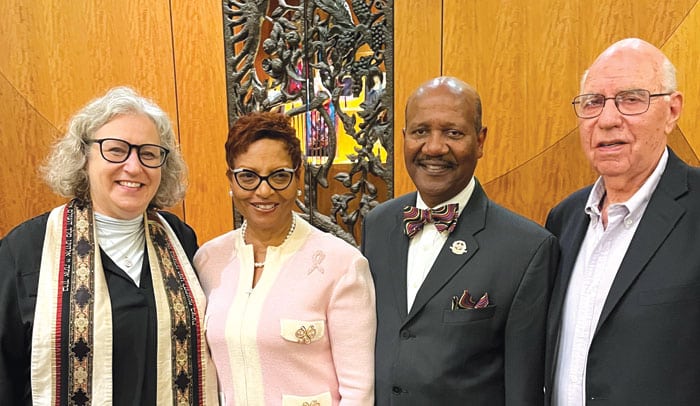
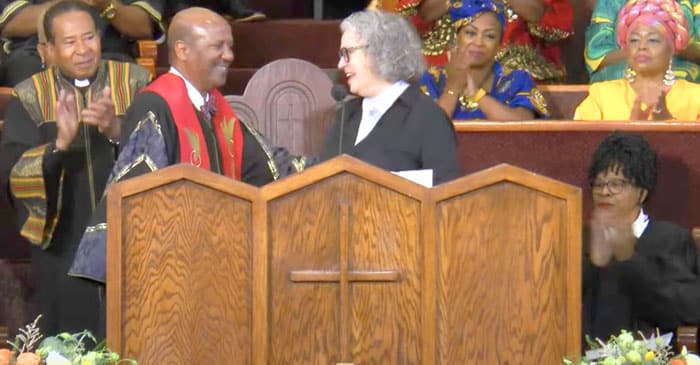
On October 20, members of THE First African Methodist Episcopal Church (FAME) in Los Angeles joined Temple Isaiah on Pico for a special Shabbat service. Then on October 22, Temple Isaiah’s Rabbi Zoë Klein Miles and other members of the congregation were invited to the Sunday service at FAME.

“First AME Church and Temple Isaiah have had a unique and special partnership for many decades, beginning with Rev. Chip Murray and our Rabbi Emeritus, Rabbi Robert Gan, and then Pastor J. Edgar Boyd and me,” Miles told the Journal. “We have shared many prayer services and pulpit exchanges.”

After the horrendous attacks on October 7, Pastor Boyd, senior minister of FAME Church, sent an email to Miles with the subject “We are Here for You!” along with a request to join them in prayer.

After the horrendous attacks on October 7, Pastor Boyd, senior minister of FAME Church, sent an email to Miles with the subject “We are Here for You!” along with a request to join them in prayer.

“We have exchanged spiritual support, moral encouragement, and social exchange throughout your and my 11-year clerical relationship,” Boyd wrote. “At no time, since we have known each other, have I felt such a deep urge to speak out about human justice and our individual right to live, than I do now, in the face of Hamas’ outright intent to kill and do harm to Jews, simply because they exist in the cross-hairs of their hatred.”

Rabbi Zoë Klein Miles and Pastor J Edgar Boyd at First AME Church

He continued, “While we pray for your community’s well-being in Israel, and throughout the world, we are reminded of the struggles both our communities endure daily, here at home. Indeed, ‘Injustice anywhere, is a threat to justice everywhere.’”

While Temple Isaiah expected a handful of people from FAME to join their Friday night service, they were stunned by the turnout. Between both congregations, the sanctuary was filled to capacity. “They were radiating love, warmth, and smiles,” David Chiu, a member of the temple’s board of trustees, told the Journal. “As it is whenever they visit our community, FAME brought with them an enthusiasm and energy that lifted all of our spirits.” 

Although this was Boyd’s final weekend before his retirement, he felt it was important to stand in solidarity with these congregants, his longtime friends. “He gave the D’var Torah and spoke with the wisdom and passion we at Isaiah have always been in awe of,” Chiu said. “I felt so comforted that this good man was proudly standing with the Jewish people.”

FAME’s choir led the congregations in singing “Lift Every Voice and Sing,” which Isaiah Rabbi Dara Frimmer said is nicknamed “The Black National Anthem.” This was followed by everyone singing “Hatikvah” together.

“[FAME] reached out to us, they showed up for us and they came to pray with us,” Madeleine Wolf told the Journal. Wolf is a member of Temple Isaiah’s board of trustees and activist in Am Tzedek, Isaiah’s social justice group. “I felt love and compassion; I felt their warmth and caring for me in this time of struggle and shock.” 

Chiu says he kept hearing that people of color weren’t supporting Jews after the horrific events of October 7. As a Jew of color, “that was devastating to hear and I wondered if it could possibly be true,” he said. “When Rabbi Zoë read Pastor Boyd’s letter at our October board meeting, I was overcome with emotion. I felt so seen and embraced.” He added, “There’s a Jewish value I love called HaKarat HaTov: recognizing the good. While it’s important to call out antisemitism across the world, I feel like this is equally important. You cannot get more good than the people of FAME.”

This act of good is merely a continuation of a long-standing relationship of support between the two congregations. Isaiah annually hosts FAME church the Friday night of Martin Luther King Weekend. Plus, they built the FAME Legal clinic together, and have shared Passover seders, toy drives and more. 

The congregation is “stronger with their allies,” James Finney-Conlon, a congregant at Temple Isaiah and chair of their Interfaith Solidarity Group, said. “We are so grateful for our deep communal and sacred bond with the FAME community.”

When Miles spoke at FAME’s Sunday service, she said, “When Pastor Boyd reached out to me two weeks ago, and to Temple Isaiah, on behalf of FAME church … It was a ray of light, of hope, of healing. Light, just when the darkness was closing in. Hope, just when despair was becoming too heavy to bear.”

FAME Church and Temple Isaiah Come Together Read More »

It’s the Intifada, Stupid

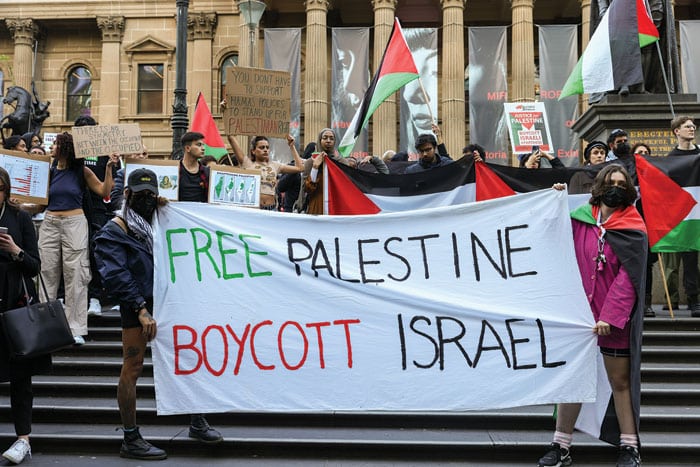
I’ve been thinking a lot lately about what, exactly, we are seeing throughout the world today, from pro-Palestinian protestors tearing down American flags in New York City on Veteran’s Day and replacing them with Palestinian flags, to rage-filled demonstrators smashing glasses and violently pounding on the locked doors of Grand Central Terminal in the same city, with police officers barricaded behind those doors. 

Most of us know there’s something going on, but how are we to understand it?

And then, after watching a video of a pro-Palestinian man climbing a statue of Benjamin Franklin during a demonstration in Washington, D.C. and wrapping the statue’s head in a keffiyeh, I had an epiphany: It’s the intifada, stupid. 

Readers of a certain age may remember one of the slogans from Bill Clinton’s first successful presidential campaign in 1992, “It’s the economy, stupid,” made famous by his strategist, James Carville, in a television quip. The message was also plastered at Clinton campaign headquarters in Little Rock as part of three repetitive campaign slogans: “Change vs. more of the same,” “The economy, stupid” and “Don’t forget health care.”

I don’t know about you, but I never thought I would live to see the day when a statue of Benjamin Franklin would be wrapped in a Palestinian keffiyeh, or people would climb flagpoles in New York City to replace American flags with Palestinian ones. I also thought I’d never see the day when a sitting member of Congress, namely Ilhan Omar (D-Minn.), would lose it on the House floor and begin screaming into a microphone because her dear friend, Rashida Tlaib (D-Mich.), another sitting member of Congress, had been censured for repeatedly chanting a genocidal slogan against Jews (“From the river to the sea, Palestine will be free”). Incidentally, more young men have been recruited into terrorist organizations from Omar’s district than anywhere else in the U.S., according to the FBI, especially to Somali terror groups abroad. But that’s for another column.

Sometimes, I wonder if, until now, we didn’t truly take the anti-Western, antisemitic, misogynistic fanatics who are out in the streets and on campus today seriously.

Sometimes I wonder if, until now, we didn’t truly take the anti-Western, antisemitic, misogynistic fanatics who are out in the streets and on campus today seriously. 

The thing about these hateful people is that they’re now saying the quiet part loud and the loud part even louder. Case in point: Outside the Sydney Opera House in Australia, protestors chanted, “Gas the Jews!” At the University of Maryland, home to the fourth-largest Jewish student population in the country (roughly 6,000), students chanted, “There is only one solution—the intifada revolution,” and “Holocaust 2.0” was scrawled on campus. Last week in Quebec, two Jewish schools were struck with gunfire, a synagogue was firebombed, a keffiyeh-clad female student was filmed screaming, “kike!” and pointing to a Jewish student, an imam called for the extermination of Jews and a professor called a Jewish student a “whore” before telling her to go back to Poland.

Such unnerving honesty has awoken many. At the United Kingdom House of Lords, Lord David Wolfson delivered a powerful speech in which he admitted that he worries more about his teenage daughter riding “the tube” in London while wearing a Star of David necklace than his son, who is currently serving in the Israel Defense Forces. Shockingly, he also said, “University Jewish societies no longer publicize where they are meeting [in the U.K.]. The address is handed out samizdat fashion shortly before the meeting. This isn’t some underground group in Soviet Russia. It is a Jewish [student] society in this country, in 2023.”

Imagine that. It’s almost as disturbing as the video from UCLA last week that showed angry pro-Palestinian students, most of them hiding their faces behind wrapped keffiyahs, holding a long stick and beating a piñata with Benjamin Netanyahu’s face on it. Most of them were female students, with the exception of an angry male, who, instead of using a stick, began punching the piñata. Unsatisfied, he pulled it down, punched it again and began stamping on it. Everyone cheered. It’s fair to ask what these students would do to a Jewish or Israeli student if he or she was walking alone, in the dark, off campus? At Harvard, a mob quickly descended upon a male Jewish student and overwhelmed him with shouts. One of the hateful participants was an editor of the Harvard Law Review. 

But anyone who cherishes Western values, including women’s rights, should look past these young men and women, to their future children. What will be their values about democracy, women’s rights and plurality? I realize we need to focus on the urgency of today, but we also need to look at least one generation ahead and imagine what it will look like to be Jewish on the street or on campus in 20 years. And who will have stood with Israel-bashers for so long that we won’t even bother to reach out to them for support and allyship two decades from now? 

Perhaps Israel will eradicate Hamas. Perhaps there will be peace with the Saudis. But what about all the anti-Western fanatics who now have been empowered? At this moment, I believe that a Jew would be safer at Shabbat services in Riyadh than in London.  

Would there ever be fewer Jew-haters in the Middle East than in Europe and the West? It’s a question worth asking. And it reminds me of an old Persian adage: “The bowl is hotter than the soup that’s in it,” a phrase frustrated people back in Iran often use about the regime’s obsession with supporting Palestinians, rather than its own people.  

Maybe that explains why Representative Omar recently screamed and beat her chest on the House floor over Palestinian causes, instead of condemning the mass killing of 1,300 people at a displaced persons’ camp in Darfur by Sudan’s Rapid Support Forces (RSF) a few days ago, with over 2,000 injured and 310 missing. There were “corpses in the streets,” survivors told the media about this horrifying humanitarian crisis. 

Sometimes, it helps to call something by its name. It also helps that pro-Palestinian demonstrators themselves are chanting slogans such as “Globalize the intifada.” 

Do all those who are protesting against Israel today want an intifada, and do they all support Hamas? The real question we should be asking is if even some, not all, of these protestors have openly praised Hamas or called for a global intifada, why have so many others joined protests knowing these kinds of people would also be there?

I received clarity about this question a few days ago, when I watched a video of one lone man (who actually looked Iranian), standing among pro-Palestinian protestors and holding up a simple sign: “Hamas = terrorists.” It didn’t take long for those around him to notice his sign. I’ll leave it to you to guess what happened next.


Tabby Refael is an award-winning writer, speaker and weekly columnist for The Jewish Journal of Greater Los Angeles. Follow her on X/Twitter and Instagram @TabbyRefael 

It’s the Intifada, Stupid Read More »

How Hate From the World Became Love From the Jews

I’ve been trying to put my finger on a phenomenon that has swept much of world Jewry over the past few weeks. I haven’t succeeded, because it’s been rather confusing.

Opposite things have been occurring simultaneously. On one side, we have the lingering trauma of the darkest day in Israel’s history, when more than 1200 souls were brutally massacred. And on the other, we have an alarming rise in Jew hatred that has instilled fear in many Jews.

We grieve, and yet we’re afraid. That’s confusing.

But as we fear this troubling rise of Jew hatred, we’re comforted when we gather with other like-minded Jews. That’s also confusing. These opposite stimuli can make us dizzy.

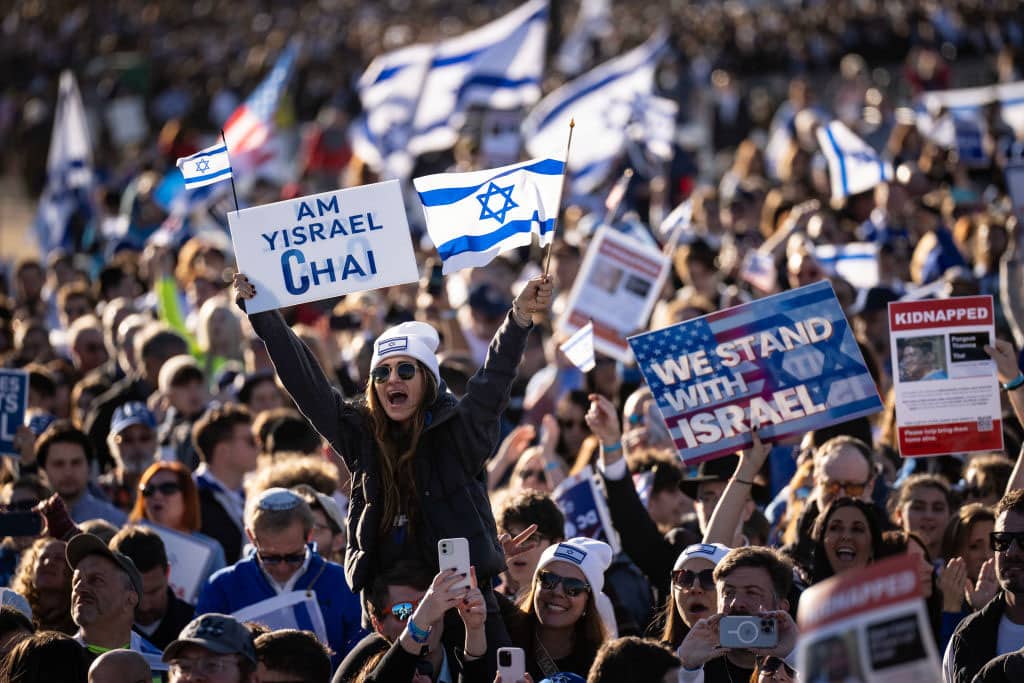
The nearly 300,000 people who attended yesterday’s March for Israel rally in D.C. have witnessed this rise in Jew hatred, but their hearts were surely comforted by the mutual empathy and support they felt at the rally.

Similarly, at the Jewish Journal gala on Monday night, nearly 400 people felt the warmth of community and Jewish solidarity, but no one could ignore the danger to Jews which all three speakers compelled us to see.

This is why it’s hard to put a finger on the moment: we feel hate and fear on one side, and love and warmth on the other.

How do we connect these dots?

It took a simple social media meme this morning to enlighten me.

Here’s what it said:

“If there’s one thing we Jewish people have learned in the past few weeks it’s this: The world doesn’t care about us as much as we hoped, but we care about each other a lot more than we realized.”

So simple, and yet so elegant.

The more hate the world has been giving to Jews, the more love Jews have been giving to one another.

As the bombs of hate are falling, Jews are looking for an empathy bunker. What safer space than to gather with like-minded Jews?

You might call it instant solidarity. You meet a fellow member of the tribe and you feel an immediate connection. It has happened to me countless times since Oct. 7, and there’s not much mystery to it: We all read the news. We all see the danger. We all see the hate.

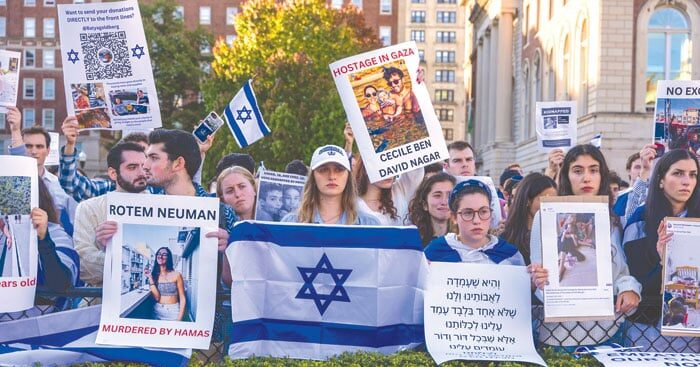
We see the reports from campuses: the ugly images of haters tearing down hostage posters; the violent calls to “globalize the intifada.”

We see the blatant double standard Israel receives in media coverage and in institutions like the United Nations, while we are still grieving those we lost and praying for the hostages.

It’s painful to see so many groups and influencers apologize for the barbaric thugs of Hamas, a terror army sworn to Israel’s destruction that uses its own people as human shields. It’s painful to see how the world pays attention to Muslim victims only when Jews are involved. It’s painful and sobering.

This doesn’t mean, of course, that Jews have no allies. We have plenty, especially among those who understand the danger of a murderous ideology driven only to exterminate Jews. Those people get it.

But more and more people throughout the world don’t. The haters have used the massacre of Jews, and Israel’s attempt to eliminate the threat, as an opportunity to come after Jews with a zeal and venom that can be, frankly, terrifying.

But it’s also clarifying.

As the meme says, the world may not “care about us as much as we hoped,” but the flip side is that “we care about each other a lot more than we realized.”

Regardless of how the winds blow in the future, maintaining that spirit of solidarity would be very, very good for the Jews.

How Hate From the World Became Love From the Jews Read More »

UCLA Chancellor: Video of Pro-Palestinian Protesters Beating Netanyahu Pinata “Extremely Hateful”

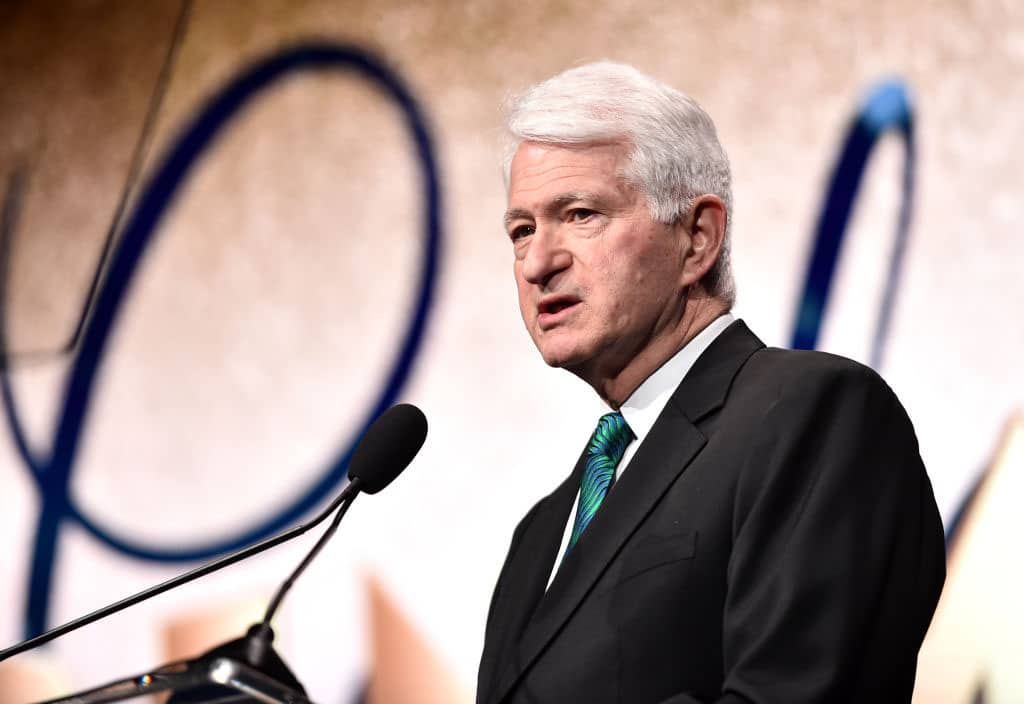
UCLA Chancellor Gene Block issued a statement to the UCLA community on Friday that appeared to address a recent video showing pro-Palestinian protesters beating a piñata of Israeli Prime Minister Benjamin Netanyahu; the chancellor called it “extremely hateful.”

The video, which has gone viral on social media, shows pro-Palestinian protesters beating the piñata with a stick while chanting “Free Palestine.” The video ends with a masked protester punching the piñata and then breaking it with his knees.

Asked by the Journal to comment on the video, a university spokesperson pointed to Block’s Friday statement. “At an event just this week on our campus, individuals exhibited extremely hateful behavior and used despicable Antisemitic language, which was captured on video and shared widely, frightening many within our community,” Block said in the statement. “While this may be protected speech under the First Amendment, it is nonetheless abhorrent and completely unacceptable. Campus officials are reviewing the actions at the event and anyone found to be in violation of the law or the UCLA code of conduct will be held accountable.”

According to the Daily Bruin, organizers of a November 8 pro-Palestinian rally on campus “invited attendees to destroy piñatas” that had both Netanyahu and President Joe Biden on them. The rally, held by Students for Justice in Palestine (SJP) at UCLA and UC Divest Coalition at UCLA, called for the university to divest from the investment company BlackRock; the Bruin talked to a student who claimed that BlackRock “is investing in weapons companies linked to the Israeli military.” Chants of “from the river to the sea, Palestine will be free” and “Israel, Israel you can’t hide we charge you with genocide” also occurred at the rally, per the Bruin. The Bruin talked to various attendees at the rally who accused Israel of perpetuating genocide against the Palestinians.

“In our diverse university community, even if we disagree with someone passionately, we cannot devolve into dehumanizing them with rhetoric, treating them with prejudice or jeopardizing their safety,” Block added in his statement to the community. “We must find the best in ourselves and in one another. Let us work towards better days ahead.”

Hillel at UCLA Executive Director Dan Gold told the Journal via text message regarding the video, “As I and our Hillel has said publicly, we stand strong and we stand firm against all forms of antisemitism on our campus at UCLA. There should be no doubt about this rhetoric, these chants, and these aggressive and violent tactics at the supposed ‘anti-Zionist’ rallies are antisemitic and are done to intimidate Jews on campus. We condemn it and we call on everyone else united against hate to condemn it.”

UCLA’s SJP and UC Divest Coalition chapters did not respond to the Journal’s request for comment.

Earlier in his Friday message, Block said that he “joined University of California President Michael V. Drake and the UC chancellors in issuing a forceful condemnation of incidents of bigotry, intolerance and intimidation that have taken place on UC campuses — including UCLA — over the past several weeks. We must be crystal clear: discrimination, threats, violence and hate have absolutely no place in a university community dedicated to open-mindedness, respect and mutual understanding.” He added that UC President Michael Drake will be issuing “a series of systemwide initiatives in the coming weeks to address the current university climate, and my administration will be launching its own set of efforts to strengthen community and reaffirm our values in this period of intense strife.”

UCLA Chancellor: Video of Pro-Palestinian Protesters Beating Netanyahu Pinata “Extremely Hateful” Read More »

Looking Beyond the War

The Gaza war is barely a month old and it’s impossible to guess how long it will last. Biden Administration officials have begun warning their Israeli counterparts that worldwide pressure will shorten the time window in which the current military offensive can continue, but Prime Minister Benjamin Netanyahu has made it clear repeatedly that there will be no ceasefire until all of the hostages have been returned. So this is not going to end anytime soon.

There are three unanswered questions of immense importance that will define what Israel will look like after the war — militarily, politically and internationally. 

Discussing what happens after a war ends so shortly after it has begun often seems premature. But there are three unanswered questions of immense importance that will define what Israel will look like after the war — militarily, politically and internationally. Beginning to consider those questions now at this seemingly early stage may prepare us better for what comes next. 

Already the most publicly debated of these three questions is the fate of Gaza. No one wants responsibility over this territory once Hamas is gone. When Netanyahu speaks of an ongoing Israeli security presence there, he clearly has little enthusiasm for an ongoing military or oversight role. But he also recognizes that without a credible governance structure in place, the region will continue to be a launching pad for future terrorist attacks. Egypt, Jordan and other Arab nations have all exhibited little interest in filling that role, and a United Nations-type multinational force would be a sitting duck for any of the Iranian-backed guerillas that would occupy that territory. There has been some conversation about the Palestinian Authority stepping in, but that corruption-ridden organization lacks the credibility to effectively administer Gaza and would need to be part of a broader collaborative effort.

So who will run Gaza? Israel doesn’t want the job. But unless some type of pan-Arab coalition steps up, Israeli troops will be there for a long, long time – to the detriment of people on both sides of the line.

The second and most clear-cut question relates to Israeli domestic politics, more specifically what the nation’s government will look like after the war. It’s much less likely that future will include Netanyahu: More than 70% of Israelis now want to see him gone. It’s almost impossible to see the voters turning leftward in this environment, but a center-right government that looks a lot like a traditional Likud coalition seems like a natural next step for a wary electorate. Take away Bibi’s ultra-right allies, replace them with the national security leaders who left over Netanyahu’s legal entanglements, and the result is less precarious version of the Bennett-Lapid-Gantz team that briefly led the nation until the last election.

Netanyahu has brilliantly leveraged safety and security issues for his entire career, but Israelis see him as responsible for the current crisis. He will be replaced once the war is over – if not before.

Finally, let’s examine the future of the relationship between Israel and the Jewish community here in the United States. Jewish voters in this country have long prioritized domestic cultural issues such as abortion, guns and marriage equality over Israel and the Middle East. But now that we have been shaken out of our collective complacency, both in terms of Israel’s vulnerability to terrorist violence and our own exposure to the hostility of so many of our fellow Americans, it’s worth asking whether the Jewish state will again become more important to our political decisions.

Neither party is a natural home for us right now. For the last several weeks, we have seen the worst type of antisemitic ugliness emanating from self-described progressives on the extreme political left. We already know that the nativism of equally extreme ultra-conservatives drives similar hatred from the far right. The vast majority of Americans reject both those who shout “from the river to the sea” and those who proclaim that “Jews will not replace us.” But neither party has done a satisfactory job of confronting their own zealots.

These questions can’t be answered while the bullets are still flying. But the sooner we begin those conversations, the better prepared we will be when that time does come.


Dan Schnur is the U.S. Politics Editor for the Jewish Journal. He teaches courses in politics, communications, and leadership at UC Berkeley, USC and Pepperdine. He hosts the monthly webinar “The Dan Schnur Political Report” for the Los Angeles World Affairs Council & Town Hall. Follow Dan’s work at www.danschnurpolitics.com.

Looking Beyond the War Read More »