fbpx

November 15, 2023

Memorable Quotes from the Memorable March For Israel Rally in D.C.

At the March for Israel Rally, a crowd estimated to be more than 290,000 gathered at the National Mall, with many more watching the livestream. It featured politicians, actors and student and community leaders. Here are some of the more memorable things that were said:

“We all have third-degree burns on our souls. Our hearts are bruised and seeping with misery but the real souls suffering are those of the hostages … why is the world accepting that 240 human beings from almost 30 countries have been stolen and buried alive?”

– Rachel Goldberg, mother of Hersh Goldberg-Polin, who was wounded and kidnapped by Hamas terrorists from the Nova Music Festival on October 7.

“As a descendant of Holocaust survivors on both sides, he understood the importance of a strong Israel … from a place of deep pain, we hold strong for you Omer. We speak in your name, tirelessly …”

-Orna Neutra, mother of Omer Neutra, a lone solider kidnapped by Hamas on October 7.

Ronen and Orna’s Neutra’s son, Omer, was kidnapped by Hamas on October 7. Orna told the crowd their son is a sports fan and a lone soldier. Photo by Perry Bindelglass/ Conference of Presidents of Major Jewish Organizations

“The pain I have experienced since they were taken has been so sharp it follows my every beath. I wake up each morning to remember this truth: My family is being held hostage by terrorists. I am here with you because I love my family and I promised I would scream to the end of the Earth for them … for too many in the West, the suffering of hostage families like mine has become a footnote.”

Alana Zeitchik, whose cousins were kidnapped by Hamas terrorist from Kibbitz Nir Oz on October 7, including Sharon, her husband David, their 3-year-old twin daughters Emma and Yuli, as well as Danielle and 5-year-old daughter Amelia.

“In the long years in prison I was told again and again that I’m alone, that I’m abandoned, that we failed … you were bringing so much love and so much strength to us. This picture of one Jewish fighting family was always in my head and that’s why it was so clear that whatever will be my personal fate, the outcome of our struggle can be only our victory … We in Israel go through difficult days. We go from one funeral of the soldier who fell fighting against Hamas yesterday and another funeral of the family who was tortured and killed five weeks ago but was identified only now. And in between you go to the family whose children were kidnapped, became hostages … how (do) you keep going? You keep going by doing it together.”

-Natan Sharansky, imprisoned in Russia from 1977 to 1986, before eventually becoming a deputy prime minister of Israel. He now works against antisemitism.

I know you are in pain. I know you are afraid. I know you feel alone and abandoned by people you thought were your friends. I know you feel misunderstood and maligned. I know because I do too … we are all being tested; a tsunami of hate has crashed down upon us and then a deafening silence. We see clearly now. We see naked, virulent Jew-hatred being disguised as a noble call for liberation and we reject it … what does Israel’s defense in response to a terrorist attack have to do with an elderly Jewish man in California killed for holding an Israeli flag. This is madness. This is terrorism. But we will win. We always have …”

-Debra Messing, actress and star of “Will & Grace.”

Actress Debra Messing announced that she, like all others, felt the pain of the tragic event. Photo by Perry Bindelglass/ Conference of Presidents of Major Jewish Organizations

“We come to together to march for good over evil … 80 years ago, Jews came out of Auschwitz and vowed never again … Never again is now. The Hamas savagery and crimes against humanity bring to my mind as President Biden has said, the worst rampages of ISIS … we feel our hearts beat as one. We hear our brothers’ and sisters’ blood crying out to us from the ground. Once again in Jewish history, we demand, ‘let our people go.’”

Issac Herzog, Israel’s President

“Not everyone whose calling for a ceasefire wants Israel to cease to exist. But everyone who wants Israel to cease to exist is calling for a ceasefire.”

-U.S. Representative Ritchie Torres (D-N.Y.)

My name is Tovah Feldshuh. My Hebrew name is Tova Feldshuh. And my Starbucks name is Toval Feldshuh …we stand here firm against global antisemitism. We stand here firm in confrontation of antisemitism here in these United States. We stand here to say, ‘enough, maspeek.’”

-Tovah Feldshuh, Film, TV and Broadway actress.

“These lies are spreading again. The violence is rising again. The threat is real again…this is a moment that we will all remember forever and what we do right now in this moment will stay with us for the rest of our lives.”

Montana Tucker, Actress, Influencer and creator of Holocaust remembrance film “How To Never Forget.”

Musician and influencer Montana Tucker told people to be strong despite the rise in hate against Jews. Photo by Perry Bindelglass/ Conference of Presidents of Major Jewish Organizations

I don’t know about you but a lot of friends turned their backs on me this month. I feel betrayed in a way I never thought possible. These so-called friends, they were never really our friends. They were never really there for us. They never really saw us for how we deserved to be seen, as beautiful, as special, as excellent and the fact is they might never see us for who they really are. But we see them. We see them now oh so clearly. We see that these oh so fake former friends are nothing but cowards.”

Brett Gelman, actor who appeared on Netflix’s “Stranger Things.”

“Today our thoughts are with the victims and survivors of October 7th, with the innocent Israelis and Palestinians suffering because of Hamas’ terror and with the families with empty seats at the dinner table. Today our thoughts are with the brave soldiers of Israel’s defense forces as they defend the state of Israel and the Jewish people.”

-Julie Platt, Chair of Jewish Federations of North America

My heart breaks for all the Israeli children. My heart breaks for all the Palestinian children…I pray that every single hostage is released.”

-Van Jones, CNN political commentator, attorney and best-selling author.

“All America’s listening. The Jewish people will not back down. Bring our hostages back.”

-Matisyahu, Grammy nominated artist who performed “One Day” with The Maccabeats.

Matisyahu and The Maccabeats performed “One Day.” Photo by Perry Bindelglass/Conference of Presidents of Major Jewish Organizations

“Allow no one to make you afraid.”

-Deborah Lipstadt, historian author and Ambassador/ special envoy to monitor and combat antisemitism for the Biden administration.

“There will not be a ceasefire until the hostages are home…Israel is not going anywhere. Jewish people are not going anywhere…stay safe and make sure you stay disruptive.”

-Michael Rapaport, Actor and comedian 

“When we hear genocidal chants, my GW peers and I from organizations like Chabad GW, GW for Israel and GW Hillel, we sing “Hatikva.” And “Oseh Shalom…”

– Sabrina Soffer, a student at George Washington University, Commissioner of the university’s Special Presidential Task Force To Combat Antisemitism and vice president of the campus Chabad. The school has had a number of antisemitic incidents.

“I am a Black, Native American, Jewish woman and I will not be silenced. No matter how many anti-Israel demonstrations I must walk past on my way to class, no matter how many of my professors support the students defending Hamas, no matter how many times we are told to cower in fear, I will continue to shout.”

-Nao Fay, student at Columbia University
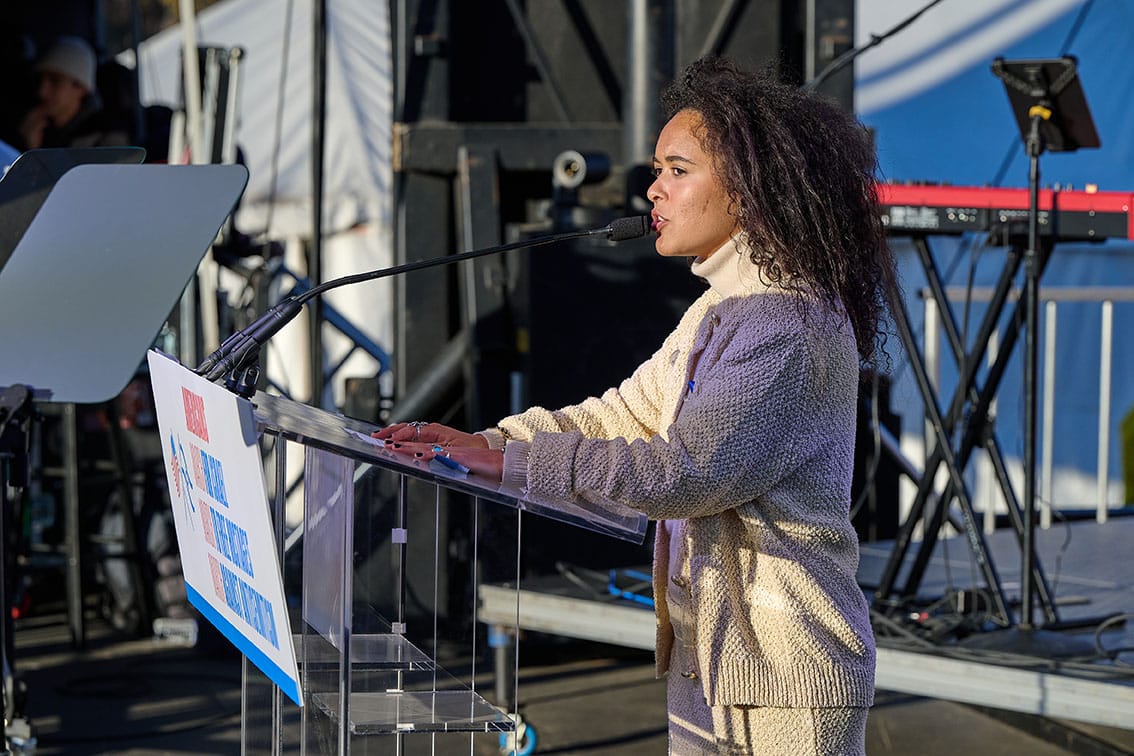
Columbia University student Noa Fay delivered a fiery and defiant speech. Photo by Perry Bindelglass

Memorable Quotes from the Memorable March For Israel Rally in D.C. Read More »

Keeping it Together for Israel

Solidarity, unity and strength of spirit were felt in abundance over the weekend as the international Jewish community marked the first Shabbat Project since the outbreak of the Israel-Hamas war. The Shabbat Project is an international movement that brings together Jews from around the world to keep one Shabbat together each year.

The theme of this year’s Shabbat Project was “Keeping it Together for Israel,” a sentiment that bore a special significance after the attacks in Israel on Oct. 7.

This year marks a decade since the founding of the Shabbat Project. Originally established in South Africa by Chief Rabbi Warren Goldstein, the movement has since spread to more than 1,500 cities across 100 countries. The grassroots initiative transcends divisions of nationality, age, lifestyle and religious observance by encouraging Jews to keep one full Shabbat together, from sunset on the first day to stars out on the second, according to Goldstein.

This year’s iteration fell on Nov. 3 and Nov. 4, less than a month after terrorist organization Hamas killed over 1,400 people and took some 240 more hostage in a series of attacks across Israel.

Reflecting on the symbolism of the event, Goldstein called this year’s Shabbat Project “a sublime moment of global Jewish unity,” adding: “We must let the world know that we will not succumb, submit, or forsake our eternal values. It’s no coincidence that Hamas attacked on Shabbat ­– Shabbat is who we are. It is the very soul of the Jewish people.”

The Shabbat Project was marked in Israel against the backdrop of war. Thousands of Israelis took place in events across the country—there were more than 1,200 across the Jewish State–including drives to organize Shabbat dinners for evacuees, bake challahs for local shelters, and even mobile music cars’ to lift people’s spirits. More than 200 volunteer partners were involved, with Aharon Ackerman, who runs the project in Israel, stating: “Every group we approached came on board, and it was amazing to see how quickly partners put these events together.”

The initiative “gave people hope, solidarity, unity, making them feel part of the Jewish people,” said Itai Friedlander, who helped coordinate the Shabbat Project programs under Israeli NGO, Garin Torani. “This year, it was more than something nice – it was something essential.”

Goldstein echoed Friedlander’s sentiments, adding: “I’m in awe of the people of Israel. At a time when so many are conscripted, so many are displaced, so many are traumatized and disoriented by the attacks, Israelis demonstrate daily heroic resilience, and have shown that they want and need Shabbat, as a source of comfort and strength, and national and personal purpose.”

In North America, nearly 1,600 Shabbat Project events took place, run by almost 900 partners. Locally in Los Angeles, there was an outpouring of community support in celebration of Jewish identity and culture, including a challah bake attended by 800 participants.

“The Los Angeles community joined the Shabbat project this year with a full weekend of robust programming under the theme of ACHVA, said Rabbi JJ Duchman, Los Angeles Hillel program director and Hillel camp director. “From the challah bake all the way through the havdalah concert, we celebrated are oneness as a Jewish nation.”

Internationally, events were held in cities as far reaching as Strasbourg, Panama, Tokyo, Guadeloupe and Sidney. In addition to disconnecting from devices, spending time with family, attending synagogue services and engaging in spiritual reflection, members of the Jewish community attended specially organized events  across the globe including Shabbat buffets, meditation workshops, community dinners and Havdalah ceremonies.

 “Ultimately, these events happening around the world are a statement that we the Jewish people refuse to be defined by the hatred of our enemies,” said Goldstein. “That while a grim battle for survival rages on, we affirm our right to live as Jews, to celebrate our values with pride and confidence, to proclaim Am Yisrael Chai!”


Keeping it Together for Israel Read More »

Play It Again Woody: Antisemitism Then and Now in Allen’s “Annie Hall”

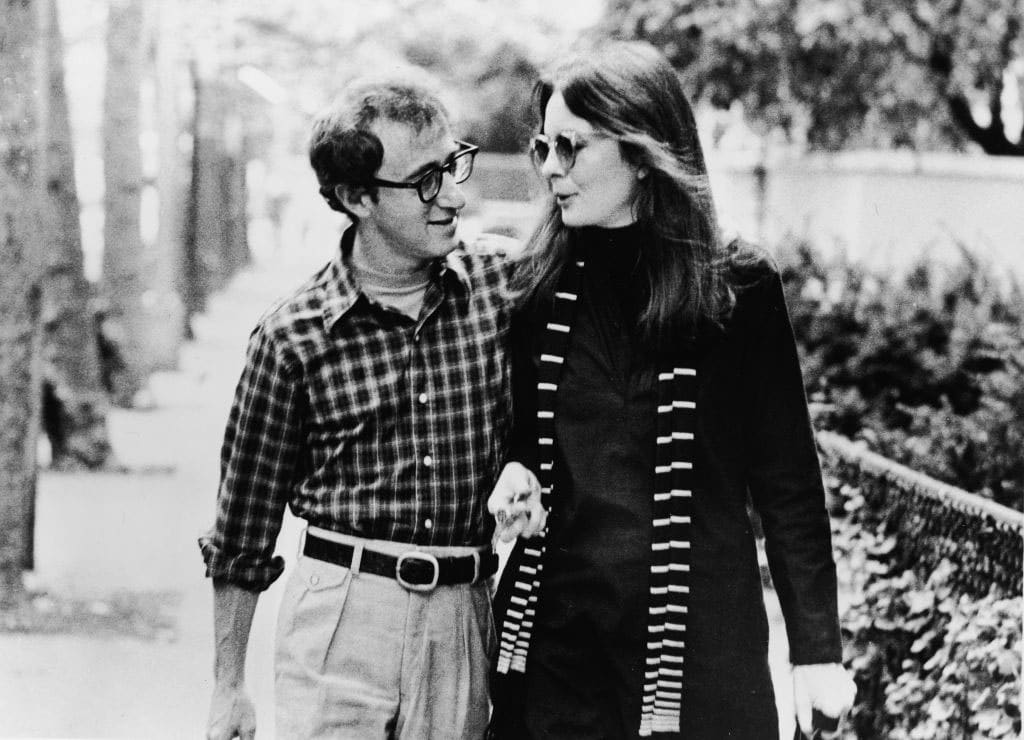
Remember when antisemitism was funny in Woody Allen’s classic comedy, “Annie Hall” (1977)? On reflection, the current eruption of virulent antisemitism in America and throughout the world has darkened the humor, but perhaps the same horrific events have made the power of humor and laughter even more vital to regaining our shared humanity and our understanding of the human condition.

Allen portrays antisemitism in “Annie Hall” as real but relatively harmless. Antisemitism in the film becomes funny because it appears as something probably outside the daily lived experience of both Jewish and non-Jewish members of Allen’s typical audiences at the time the film was made. Then, instances and incidents of antisemitism were generally isolated occurrences on the margins of society. Such antisemitism ordinarily posed little felt or immediate threat to Allen’s fans, so it was easy to laugh at antisemitism in “Annie Hall.” With Allen’s film, audiences could take comfort in a false sense of security that came from being part of a modern liberal democratic culture that appeared immunized against the prejudices and hatreds of the past. Such feelings helped moviegoers to enjoy the film’s comedy.

Yet, in the mind of Alvy Singer, the film’s paranoid protagonist played by Allen as a kind of doppelgänger for Allen the director, antisemitism occurs with such force that the depth of his dread inevitably must resonate with the facts of historical memory. Alvy’s terror and anguish at some level touches the common experience and awareness of viewers, adding a kind of existential pungency to the humor. Antisemitism becomes both scary and funny as in old-fashioned horror movies, the kind of films Allen celebrates and once made.

While public scandal has inevitably influenced Allen’s reputation, an example of his standing genius as a director can be found in his humorous use of antisemitism as a source of character development and cultural and historical insight in “Annie Hall.”

Famously obsessed and conversant with Freudianism throughout his body of work, Allen presents antisemitism in a way that dramatizes the workings of Alvy’s inner mind. Allen’s cinematic art form parallels his focus on Alvy as driven by latent forces. In an important early scene in the film that exploits antisemitism for humor, we hear but do not see Alvy in conversation with his friend Rob (Tony Roberts) as they walk on a street in Manhattan. Distancing the characters to the point of invisibility at the beginning of the scene can suggest latent drives and meaning for Allen in this film. Seen through the lens of psychoanalysis, Alvy’s language articulates the hidden and the ambiguous as the two men come into view. Alvy says, “I distinctly heard it. He muttered under his breath, ‘Jew.’” Interestingly, Rob calls Alvy “crazy” and “a total paranoid.” Alvy in turn says, “Wh-How am I a paran—? Well, I pick up on those kind o’ things. You know I was having lunch with some guys from NBC so I said … uh, ‘Did you eat or what? and Tom Christie said, ‘No, didchoo?’ Not, did you, didchoo eat? Jew?  No, not did you eat, but jew eat? Jew. You get it? Jew eat?”

A touch of reality lends credibility and significance to Alvy’s existential psychology of antisemitism. Diane Keaton in a self-proclaimed career-making performance as Alvy’s girlfriend, Annie Hall, says to Alvy that her grandmother, Grammy Hall, would consider Alvy “a real Jew.” The innocence of Annie’s description of her grandmother’s antisemitism indicates its reality but also its seeming lack of seriousness as a threat. Annie says, “She hates Jews. She thinks that they just make money, but let me tell yuh, I mean, she’s the one—yeah, is she ever, I’m tellin’ yuh.”

When Alvy actually meets Grammy Hall at a hysterically funny dinner of clashing cultural and ethnic perspectives, he sees her as “a classic Jew hater.” In the scene, Allen creates one of his truly-telling and provocative images of Alvy’s projection of how he thinks Grammy sees him as an orthodox Jew immured in his alien world behind a beard and mustache and dressed in traditional black coat and hat.

Clearly, with all of Alvy’s paranoia and craziness, Allen’s film highlights something many did not want to see as real or potentially endangering, preferring instead to understand antisemitism as a perilous threat from another time and place. It seems Allen like Philip Roth saw better than many.

Allen and Roth also saw the indispensable importance of humor in facing the worst that life offers. Although the humor of “Annie Hall” must resonate differently today in light of current events, the prescience of Allen’s treatment of antisemitism in the film also suggests that losing the ability to laugh becomes a form of disarmament against evil and horror.

Allen and Roth also saw the indispensable importance of humor in facing the worst that life offers.

Thus, in the midst of all the violence and hatred of October 7 and its aftermath, an emotional John Podhoretz, editor of Commentary, related on “Morning Joe” on MSNBC (November 1, 2023) that his Bar Mitzvahed son’s name of Isaac means laughter, literally directing “Why, even now, we are commanded to laugh.”

Podhoretz’s touching story echoes Amos Oz’s memory in “A Tale of Love and Darkness” of what his Jewish grandmother used to say: “If you have no more tears left to weep, then don’t weep. Laugh.”


Sam B. Girgus is a retired professor of English and American studies who has taught at Vanderbilt University and the Universities of New Mexico, Alabama and Oregon. A recipient of a Rockefeller Humanities Fellowship, he has written and published more than ten books on film, modernism and American literature, thought and culture.

Play It Again Woody: Antisemitism Then and Now in Allen’s “Annie Hall” Read More »

Gaza Laborers’ Troubling Role in the Pogrom

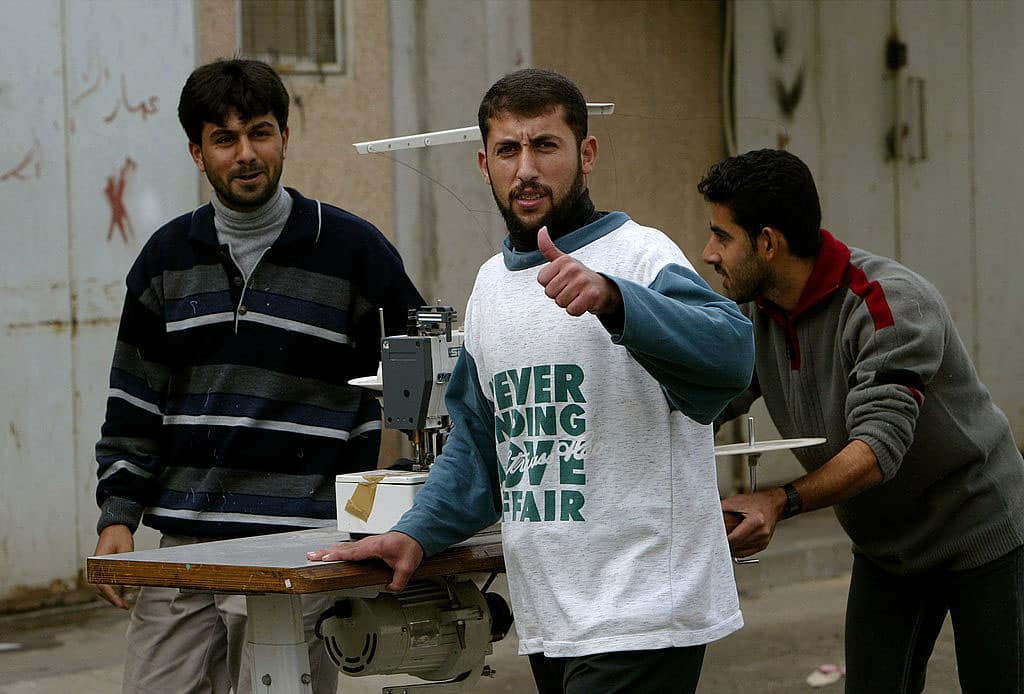
The status of day laborers from Gaza has always been a bone of contention between Israel and its critics. The State Department has repeatedly pressed Israel to admit more of them. Many Israelis worried about the potential security risks, citing the occasional laborer involved in a terrorist act.

Now it turns out that the security risk was much greater than anybody imagined.

The Washington Post reported November 12 that the reason the Hamas terrorists were so well versed in the access points, layout, and other aspects of the Israeli towns they invaded is because they had “compiled information from Gazan day laborers, who were allowed to enter Israel every day to work.” The Post cited as its sources for this fact “intelligence officials from multiple countries.”

“Many of the laborers worked in the communities that were ravaged by Hamas, where entire families were shot, burned alive, and mutilated in their homes,” the Times of Israel noted.

Until October 7, the main security risk from the day workers appeared to stem from the relatively small number of individual laborers who used their access to commit acts of terrorism.

One such episode in 1994 particularly shook the Israeli public. The victim was a Holocaust survivor named Isaac Rotenberg, whose life in many ways had symbolized the rise and success of the State of Israel.

Deported with his family to the Sobibor death camp as a teenager, Rotenberg managed to escape during the October 1943 uprising at the camp. After the war, he made his way to British Mandatory Palestine. Despite all he had suffered, despite the loss of most of his family and his own brushes with death, Rotenberg found himself compelled to take up arms again, this time as a soldier in Israel’s War of Independence.

When the war ended, he and his countrymen set about building new lives. He married, raised two children, and helped found the Tel Aviv suburb of Holon. Rotenberg was a plasterer by profession, but when he reached retirement age in 1993, he was too devoted to his lifestyle of old-fashioned hard work to turn his attention to bridge or shuffleboard. That’s why, on the morning of March 29, 1994, the 67 year-old Rotenberg was fixing the tiles in a floor in a building in Petah Tikvah.

Two of the other workers, Abu-Moussa Atiya and Shabbi Hazam, came each day from Gaza. On March 29, when Rotenberg’s back was turned, Atiya and Hazam butchered him with axes. The State Department later pressured Israel to free a number of imprisoned terrorists as a “confidence-building gesture” to the Palestinian Authority, and Atiya walked free.

Despite such episodes, some past and present U.S. officials have called on Israel to significantly increase the number of day laborers it admits from Gaza. In 2018, Hady Amr—today the State Department’s Special Representative for Palestinian Affairs—coauthored a Brookings Institution report urging Israel to admit 50,000 to 75,000 Gazan laborers daily.

In a 2015 Washington Post op-ed, former U.S. official David Makovsky and former Palestinian Authority official Ghaith Al-Omari suggested that Israel should be pressed to “take steps such as allowing 100,000 Gazan workers into Israel, matching the number of West Bankers already working there.”

Israeli government officials whom I interviewed at the time were skeptical about making policy on the basis of arbitrary considerations such as numerical symmetry. They pointed out that in the aftermath of Israel’s withdrawal from Gaza, they had fewer intelligence sources there and thus were less able to screen out potential security risks.

During the year preceding the October 7 pogrom, the number of Gazans permitted to enter Israel usually fluctuated between 10,000 and 15,000. Now we know, from the Washington Post, that those workers were the source of much of Hamas’s information. One can only imagine the additional damage that would have been done if 100,000 laborers had been entering Israeli towns every day.

A spokesman for Israeli victims of terrorism told me back in 2015, “It’s very easy for State Department officials or think tank pundits to sit in Washington and tell Israel how many Gazans it should admit, but they will not suffer the consequences when their proposals explode, which happens pretty often in this very dangerous part of the world. We Israelis will be the ones who end up paying the price.” Those words seem all the more prescient—and painful—in the wake of October 7 and its aftermath.


Dr. Medoff is founding director of The David S. Wyman Institute for Holocaust Studies and author of more than 20 books about Jewish history and the Holocaust. His latest is America and the Holocaust: A Documentary History, published by the Jewish Publication Society & University of Nebraska Press.

Gaza Laborers’ Troubling Role in the Pogrom Read More »