fbpx

October 31, 2023

“Jews Are Not Running from Anyone Anymore. We’re Not Hiding; We’re Fighting.”

Israel Bachar, the newly-arrived Consul General of Israel in Los Angeles, shakes my hand and tells me he didn’t sleep much the night before. It’s not surprising, given that his country (and our collective Jewish homeland) is under attack by enemies so cruel that their barbarity has horrified Jews (and non-Jews) worldwide. 

Yet, at precisely the moment my heart was shattered for Israel, I realized that being at the Consulate, and in the presence of Israel’s senior representative to the Southwestern United States, was healing for me, almost like returning home. 

Bachar began his term in L.A. in September, just weeks before the biggest slaughter of Jews since the Holocaust. One of Israel’s highest-profile marketing and political strategists, he’s worked with nearly every major political party and Israeli leader in the country’s modern era, including the late Ariel Sharon, Benjamin Netanyahu and Benny Gantz (it was Bachar who thought of the party name, “Blue and White”). In Israel, Bachar is especially known for his out-of-the-box thinking, and his historic “bloc” strategy forever changed the face of Israeli election outcomes.  

Bachar, who was born in Beit She’an in northern Israel and became religious at age 30, spent seven years living in the U.S., serving at the Israeli Consulate in New York and completing his master’s degree in Communications at New York’s Fordham University. 

We spoke about the horror of Israel’s current war against Hamas in Gaza, his upbringing as the son of Sephardic Jews (his father primarily spoke Ladino), and why he considers it a personal mission to strengthen Jewish identity in the U.S. The following interview, which was conducted on October 26, has been edited and abridged for clarity and length. 

Jewish Journal: First and foremost, how is your family in Israel? Are they safe?

Israel Bachar: They’re okay, but are worried and glued to the TV, like everyone else. I’m trying to stay in touch with them as much as I can. 

JJ: How are you coping with this horror, being 8,000 miles away from home?

IB: I feel the pain, but like every other Israeli, it’s hard for me to understand that hatred of Jews is still here. Before I came to this post, I took my wife and daughters to Yad Vashem, to remember why we’re going to America. I bought a book called “To Bear Witness,” to remember every day why I’m here. It’s here, on my desk. I wanted to remind my family and educate my girls that we’re going on a mission: To strengthen the Jewish state and to strengthen the Jewish people in America, because we have a responsibility to them, and a responsibility to our state. And to remember that we cannot take for granted our independence, and that our [Jewish] heritage must be firm and clear. 

Professionally, I’m working around the clock to help the State of Israel. On an emotional level, it’s heartbreaking. 

JJ: Can you give us any updates on the status of the nearly 240 Israeli hostages currently being held by Hamas in Gaza?

IB: There are two goals for the government right now: Topple Hamas and bring back the hostages. It’s very complicated to combine the two. We’re currently exerting a lot of international pressure on Hamas. America is also involved in the hostage crisis. Gal Gadot spoke last night at Temple Israel of Hollywood. We both called on Hamas to release the hostages. Noa Tishby also spoke. I read a passage from Jeremiah 31 about how [the biblical Jewish matriarch] Rachel is weeping for her children and wanting them to come back home. We’re waiting for good news. 

JJ: Do you have any updates about the conflict in the north, with regard to the threat from Hezbollah?

IB: Our assessment right now is that Hezbollah is trying to engage us in some small, military action, but does not necessarily want to open a large-scale war. American deterrence is working and we need to say thank you to President Biden for going public and deterring Hezbollah and Iran, and moving carriers to the region. So far, it’s working. We understand we need to contain the situation in the north, and win in the south. 

JJ: Is Israel considering any long-term action against Iran?

IB: Iran is the architect and Hamas is the proxy. The origin of this instability in the region and worldwide terror network is Iran. We will confront Iran if it’s going to run to the [nuclear] bomb. And it’s Iranian-backed militias that are moving from Iraq to Syria. They’re trying to challenge us on the eastern border, so we responded with a military strike to send a clear signal. Iran is trying to create a ring of fire to surround Israel: In the north, Hezbollah; militias in Syria, and Hamas in the south, in Gaza.  

JJ: What has moved you about how the American Jewish community has responded to this war? 

IB: Two days after the attack, over 300 surgeons wanted to fly to Israel and volunteer. I called the Israeli Health Ministry to tell them aid is on the way. They responded, “Don’t send them.” When I asked why, they told me, “So many have been murdered and burned. There’s no one to save. Please send forensic doctors instead. We need to identify bodies.” So from Los Angeles, we sent four forensic doctors who are working in Israel around the clock, and many of the victims’ bodies still cannot be identified. It was our initiative.

JJ: What does Israel need most from American leaders at this time?

“We are going to have a huge, worldwide diplomatic battle ahead.”  

IB: First, a credible deterrence in the region. Second, an ammunition supply. Third, financial aid. And fourth, we need America to stand with us diplomatically for the long haul. We are going to have a huge, worldwide diplomatic battle ahead.  

JJ: What does Israel need most from the average American today?

“This is not about territory; this is about terrorism.”  

IB: It’s a moment in history when people need to stand for the truth, to distinguish between good and evil, light and darkness. This is not about territory; this is about terrorism, and of taking hope away from humanity. We don’t want to lose the hope of humanity in this world, but that’s what terrorists want. 

JJ: Having previously lived in the U.S., you’re familiar with American society. But have you been surprised by the continued American media bias against Israel in this war, given what a terrible loss the country has suffered?

IB: It didn’t surprise me, because people tend to interpret reality through their own agenda and beliefs, and that’s exactly what The New York Times did, for example. It was obvious to me from the first second that the hospital bombing wasn’t Israel. What fires from Gaza often lands in Gaza. According to the IDF [Israel Defense Forces], 10% of rockets fired from Gaza land in Gaza, and one of them fell on a hospital. And it can happen again tomorrow. 

JJ: What were some of your most important goals as Consul General before October 7, and how have they changed or remained the same? 

IB: What remains the same is that we need to cultivate reciprocity in relationships between the Israeli public and American Jews, mostly on the Israeli side. We need to create educational programs for age 11 to 14, in which students connect weekly on Zoom through the school system, so that Israeli kids will cultivate responsibility and caring for American Jews, and vice versa. We cannot come to people when they’re 20 and already on campus and start to explain to them for the first time about Israel. The future of American Jewry is Jewish education, and the goal is to make it accessible. 


JJ: On a local level, who has stood strongest with you in supporting Israel?

“If you’re born in Israel, you’re an Israeli for life.”   

IB: Israelis in L.A. are great and are responding to the situation. We feel an outpouring of love and volunteering. A few thousand reservists left L.A. to fly to Israel, and the flights were full. There were some designated flights from L.A. to Israel, only for the reservists. If you’re born in Israel, you’re an Israeli for life. 

I must give credit to American Jewry. It doesn’t matter if they’re observant or not. That’s the beauty. Everyone understood this was a moment bigger than us. And I got a phone call from [former L.A. mayor] Antonio Villaraigosa. I met with Mayor [Karen] Bass and raised the issue of safety for the Jewish community, and I requested to increase patrols. She was on top of it. I also told Mayor Bass that this war isn’t about territory; it’s about terrorism. She came to the very first vigil on October 8. 

JJ: Please share with readers a story that touched your heart, broke your heart, or one that you may never forget about this current war.

IB: Last night at Temple Israel of Hollywood, I met the Jewish family of two sisters, Norelle and Roya Manzuri, who were at the Nova Festival, along with Norelle’s fiancé of two weeks, Amit. The sisters grew up in L.A. and moved to Israel [when they were] around 10 years old. Their family told me how, back in Israel, their mother received notice that Roya was murdered. But they didn’t know about the status of Norelle. While the mother was talking to President Biden on Zoom, a military official knocked on the door and delivered the second announcement that her other daughter was murdered, too. 

Norelle and Roya Manzuri

The family held two different funerals in the same week. Amit was also murdered. One of the bodies was very hard to identify, even from DNA tests. The sisters ran from the festival to the yeshuvim, and there, Hamas burned them alive. 

JJ: What an unspeakable tragedy. And yet, so many continue to demonize Israel and support Hamas. How can Israel secure a place in the hearts and minds of younger Americans?

“It’s about time to be a proud Jew and a courageous Jew.”  

IB: I’m a great believer in long-term education. I don’t believe in quick fixes. If you want to win the heart and mind of a person, it can take many years of education. We have a beautiful story as a Jewish people, on every level. It’s about time to be a proud Jew and a courageous Jew. That’s exactly why I came here. The Rambam wrote “The Guide to the Perplexed,” but he didn’t write it as a philosophical book for future education. Greece had influenced Jewish society and he understood that we can’t allow foreign ideas into Judaism. Sometimes, I feel that we need to find a second “Guide for the Perplexed” for our generation.

JJ: Your father was born in Turkey and your late mother, z’l, was born in Morocco. How does your identity influence the lens through which you view Israel and being Jewish?

IB: My mother shared a memory with me that, contrary to all the beautiful stories about Morocco, her childhood experience included a pogrom against Jews, and the ones who saved the Jews were the French troops. 

This is exactly why I’m here. The goal of her generation was for people like me to have an independent state. I grew up as a first-generation Israeli. I never felt threatened by different nationalities that let me reside in their country. 

The first time someone made an antisemitic comment to me was when I was 22 and on a trip to America. It was an antisemitic libel about money. I said to myself, “now I understand my mother better; why the state of Israel is the call of history for our generation.” That’s what it is. It’s our job to maintain it. 

JJ: You served in Israel’s elite Golani Brigade. Was there a particular memory from your army service that has stayed with you?

IB: It was 1990 and we were [serving] in Gaza. Back then, there was no Hamas in Gaza, but some Palestinians, including kids, were throwing stones at us. And I remember as a young soldier, I said to myself about Gaza, “Where is this place headed?” I understood something was wrong then, but I couldn’t understand where we were heading with Palestinian society.

JJ: In a September 2023 Jerusalem Post interview, you said that you believe you have a “mission to strengthen Jewish identity.” What does this mean to you?

IB: When I said my goal is about Jewish identity, it’s because first, I care about the Jewish people. But second, I know a strong Jewish identity translates directly to support for Israel. The future of American Jewry resides a lot in the education system and the ability of Jews to give their kids affordable Jewish education. 

It’s hard to blame kids who are going to public schools if they lack knowledge or connection to Judaism and Israel. For me, it was obvious that my girls would study at Jewish schools while we’re in L.A. I’m not coming at this from a halachic (Jewish law) philosophy; I’m coming from a heritage and foundational need that we need to instill in our kids. 

JJ: How do you respond to Jews in the U.S. who now are removing their mezuzot or hiding their Star of David necklaces in public, believing this is the right approach to remaining safe? 

IB: It’s the opposite. Jews are not running from anyone anymore. We’re not hiding; we’re fighting. We’re not apologizing; we’re celebrating who we are.


Tabby Refael is an award-winning writer, speaker and weekly columnist for The Jewish Journal of Greater Los Angeles. Follow her on X and Instagram @TabbyRefael 

“Jews Are Not Running from Anyone Anymore. We’re Not Hiding; We’re Fighting.” Read More »

Too Many to Bury

Israel has a TV station of the dead. A continuous loop of the names, date of birth, and pictures of the 1,400 slaughtered babies, children, parents, grandparents, and soldiers. 

Such is our reality. Too many names to announce on the nightly news. 

I can’t get my head around the numbers. Macabre questions creep into my thoughts.

How many people can be buried in one day? How many grave diggers are needed? How many funerals can you go to in one day when over scores of your neighbors were butchered? Is there enough raw material for all the headstones? How many stonecutters are needed to chisel those stones?

How many shiva calls can you make in one day, in a week, before your comforting words sound as hollow as an empty bullet casing? How many shiva tents and white plastic chairs do municipalities have for their mourners?

Try living in a reality that begs these questions.

This is just the beginning. We’ve barely started the ground war. The Ground War. I can’t let my mind go there. I resist with all my strength, just like the families who held on so desperately to their mamad door handles to keep the terrorists out. Try doing that 24/7.

One of the names in the continuous loop on TV lived on our street. We walked through the open door and out to the small backyard, where people were sitting on those white plastic chairs, in a mishmash of rows. A group around each sibling and one for the parents. 

The mother, Yifat, her red shirt ripped at the neck, her head covered with a turban popular with modern orthodox, sat on the low chair, engaged in conversation with a Haredi woman. The pieces of conversation I picked up over the distraction of the fans and the young mourners around the sisters, were about faith. Apparently, the traditional purification ceremony was not needed for the victims of Hamas because they were murdered for being Jews, making them “Holy.” Yifat seemed to accept this, saying she knew how pure her daughter was, with her innocent soul and the goodness that had inspired her deeds.

We sat in silence for a while before approaching the bereaved parents, explaining that we are neighbors and wanted to comfort them. I repeated the same condolences they had heard for the last several days. Yifat took my hand in hers as she thanked us for coming. I wished I had hugged her. 

Outside, I saw the Haredi lady. 

“I couldn’t hear everything you were saying, but it sounded so comforting and supportive,” I said. 

“I understand what they are going through,” she said softly, “People came to us from all over the country when we were sitting and it was such a comfort.”

I was momentarily stunned. But quickly recovered.

“I’m very sorry for your loss.” 

I wanted to add, “What terrorist attack murdered your loved one?” but I didn’t. 

“Now we go around the country to comfort others,” she said. 

Walking home, I felt spiritually uplifted. I may not have the same level of faith as these two mothers, but looking around at the diverse collection of people who made the effort to sit in this Shiva tent, I felt a unique shared devotion to our people and our country. 

We have strangers who suffered tragic losses from ruthless terrorists and yet find the inner strength to give of themselves to help others. We tune into a TV station dedicated to the memory of people we didn’t know but who suffered unimaginable atrocities.  We go to funerals of friends and strangers and visit shiva homes of friends and strangers. We will get through this. 

But we in Israel cannot live with the imminent threat of this happening again. We cannot live with Hamas-ISIS terrorists just a few hundred meters from any of our borders. Could you?

If we are not allowed to destroy the Evil that controls Gaza, you just might have to. They won’t stop here. 

If we are not allowed to destroy the evil that controls Gaza, you just might have to. They won’t stop here. Look at the pro-Hamas rallies in Europe and on campuses of American universities. If Hamas is still standing after this war, it will be perceived as a victory for them and their sponsor Iran, creating an explosion of global terror.


Galia Miller Sprung moved to Israel from Southern California in 1970 to become a pioneer farmer and today she is a writer and editor. 

Too Many to Bury Read More »

Every Little Dent Counts

The worst thing about this war is how helpless it’s making some of us feel. Violence and terrorism against Israel and its people have been a constant for the country’s entire existence. But for many American Jews, the ongoing violence has become mostly background noise. We know that these attacks are an ongoing part of life for most Israelis, and we always devote more attention during the periodic flareups. But it’s been several decades since most of us felt that Israel’s essential survival was at stake.

For the first time in half a century, we understand that Israel faces threats to its very existence. And we’re not exactly sure what we’re supposed to do. So we’ve been flailing — watching the news updates, praying for the hostages and waiting for the overwhelming counterattack that we’ve been expecting since the day after Simchat Torah. 

The danger seems closer here at home too. We trade stories and share outrages of the nascent ant-Zionism and antisemitism that we’ve taught ourselves to either minimalize or downright ignore. The friendships we thought we’d built on the political left have been disappearing, no match for the intersectionality that somehow links Palestinians to minority communities and other U.S.-based progressives. There are even fissures in our evangelical-fueled backers on the right, as the toxic combination of America First nationalism and outright prejudice are luring away small but growing numbers of conservatives.

We were just as unprepared for the isolation we are now facing in this country as we were for Hamas’ attack on innocent Israelis. Which is why a seemingly small victory at Los Angeles City Hall last week should serve as a reminder that we are not nearly as helpless or as friendless as we have been feeling.

Like most of you, I had never heard of Josh Androsky, a second-level Southland political consultant and city council staffer, until his recent online outburst. Androsky, who had been employed by Councilmember Hugo Soto-Martinez and is Jewish himself, unleashed a screed of hateful antisemitic and misogynistic online vitriol against actress Amy Schumer, whose only apparent offense was to post a cartoon criticizing pro-Hamas protestors on her Twitter account. 

Androsky was harshly and widely vilified for his bigotry and misogyny, and quickly resigned his position. Mayor Karen Bass deserves special credit for her condemnation of Androsky, especially as it comes on the heels of her equally commendable statements in the wake of other recent anti-Semitic activity. But even Soto-Martinez, a member in good standing of the Democratic Socialists of America organization that has been a leader in the anti-Israel protests across the country over the last few weeks, referred to his former employee’s messages as “disgusting.”

As a political centrist, I do not share a great deal in common with Soto-Martinez in terms of ideology or public policy. But he deserves our thanks and gratitude, too. Bass has consistently stood with the Jewish community throughout her career. In their own elections, both also relied on the support of voters who vilify Israel with ugly and hateful zeal. But neither of them hid. Neither equivocated. Neither sought refuge in false moral equivalency. They simply did the right thing.

Each of us has the agency and the influence to help make change happen in our own communities, our own neighborhoods, our own workplaces and social circles.

This is an admittedly small win. Eradicating one foolish and hate-filled voice from city government will not make our existential threats disappear. But Androsky’s departure reminds us that we are not powerless. Each of us has the agency and the influence to help make change happen in our own communities, our own neighborhoods, our own workplaces and social circles. None of those win a war, either this fight against Hamas or the eternal battle against anti-Semitism and prejudice. But each one makes a difference.

The late Steve Jobs once talked about “putting a dent in the universe.” If each of us picks up a crowbar and leaves one small impression, then consider the collective impact of all those individual dents. Just because none of us can do everything doesn’t mean that none of us can do anything. Each of us can play a part in our own defense – and each of us must.

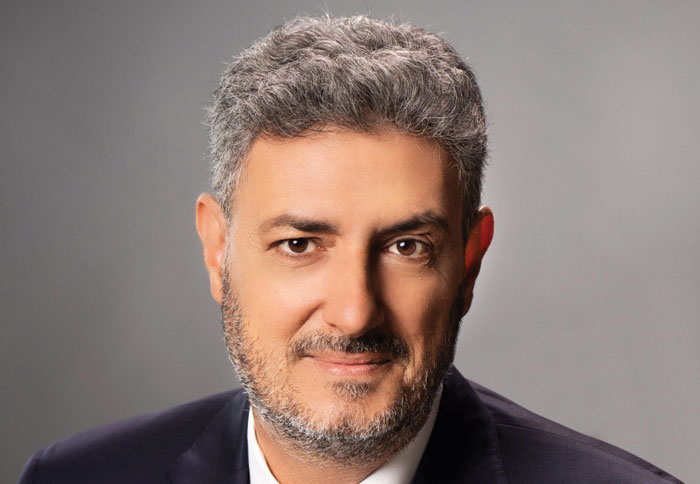
Dan Schnur is the U.S. Politics Editor for the Jewish Journal. He teaches courses in politics, communications, and leadership at UC Berkeley, USC and Pepperdine. He hosts the monthly webinar “The Dan Schnur Political Report” for the Los Angeles World Affairs Council & Town Hall. Follow Dan’s work at www.danschnurpolitics.com

Every Little Dent Counts Read More »

Rosner’s Domain | How Israel Already Changes

Upheavals of the kind that Israel is going through are often followed by significant social, political and ideological changes. Many of them are difficult to predict in advance. Some of them are quickly noticeable. The First Lebanon War led to the departure of PM Menachem Begin, and subsequently, a deep change in the character of the Likud Party. It greatly strengthened the Israeli left. The Yom Kippur War was followed by a wave of emigration. Nineteen-seventy-four was the year in which the highest number of Israelis left the country. Some of them thought that the country was lost. They spent a lifetime abroad waiting for the disaster that never came. Some of them might feel that they are witnessing it now. 

In retrospect, the emigration of 1974 turned out to be a passing trend of little significance. The Yom Kippur crisis had much more important outcome: A political upheaval that heralded the end of the Labor Party as the generative political force of the country – and a peace with Egypt that heralded the possibility of the Arab world’s recognition of the reality in which Israel is a permanent fixture.

When positions on the Israeli-Palestinian conflict are measured, the public is moving to the right. When positions on the political parties in Israel are measured, the public is moving to the left.

What will happen to Israel as a result of the current crisis? It depends on the results of an event that is still ongoing. And yet, some trends are already in motion. Here is one, which presents a kind of paradox. The Jewish public in Israel is moving to the right — and the Jewish public in Israel is moving to the left. How is that possible? Because the move it is not the same move. The shift to the right is ideological. The shift to the left is political. In other words: when positions on the Israeli-Palestinian conflict are measured, the public is moving to the right. When positions on the political parties in Israel are measured, the public is moving to the left.

It makes sense that shocking security threats provoke ideological changes. If back in the ’90s one thought that Palestinian leader Yasser Arafat was a partner for peace, and then, at the 2000 Camp David Summit, one found out that he was not a partner, and then, in the Second Intifada, one found out that Arafat is a murderous terrorist — it was only natural for one to change one’s position. Thus, in the first decade of the millennium the Israeli public moved rightward, never to move back. So much so, that the Palestinian issue, which had not disappeared as a challenge, had almost disappeared as a significant issue in the public discourse. In the last year Israel was debating a “legal reform.” In the last five years it was torn over yes or no to Bibi. The debates of the past, that began after the Yom Kippur War, when “Gush Amunim” (the settler movement) and “Peace Now” (the peace camp) were both established, almost disappeared. This was the result of the Second Intifada. This was the result of the shift to the right.

And now the public says, again, that it is moving rightward. Fifty percent of Jews in Israel estimate that “society has become more right-wing.”  Only 4% estimated that it is becoming “more left-wing.” And when we ask Israelis what happened to them personally, about one-tenth of the voters of the opposition parties say that they have moved more to the right, and close to a third of the voters to the coalition parties say that they have moved more to the right. In total, about one in five Jews in Israel says that he or she moved to the right. 

But, as mentioned, this is not the only thing that happens. Parallel to this ideological shift rightward, there is a political shift leftward. But here we need to be precise: when we say “left” in this case we do not mean a mass movement of Israelis to the leftist parties. The movement is from the right to the center-right and center. And it is not a mass movement, but a movement noticeable enough to have the ability to alter the outcomes of future elections, when they occur. About a quarter of Likud voters now say they will not vote for Likud. About a third of Religious Zionist Party voters are in a similar situation. The major opposition parties do not lose voters. 

Hence, the ideological-political paradox: a shift rightward and a shift leftward at the same time. The hardening of positions on the Israeli-Palestinian conflict, alongside a search by quite a few right-wing voters for an alternative that is not as right-wing as the current coalition. How will this process end? One can see at least three possibilities: either at some point the process will reverse itself (ideologically or politically) for some reason; Or it will lead centrist parties to become more rightwing and thus provide a political home to a new crowed; Or maybe what we see here are the seeds of new party between the center and the right. A right-wing party that is not currently in the coalition. To be determined after the war.

Something I wrote in Hebrew

Biden is Israel’s friend, and Israelis begin to internalize this fact:

How long will the romance last? You can already hear complaints about Biden. Although he talks nicely and sends weapons, he limits land entry, or wants to renew the peace process, or over-emphasizes the need for humanitarian aid to the Palestinians. Israelis sometimes have a tendency to get confused and think that the American president is their president. They have a tendency to think that his main job is to work for them and agree to their every request … But the story now is a story of transformation: From loving Trump to loving Biden. For the time being … (see graph below). 

A week’s numbers

A survey of Jewish Israelis by the Jewish People Policy Institute (JPPI) asked if it’s better for Israel to have Biden or Trump win the 2024 US election.

A reader’s response:

Or Lotan asks: “Are Israelis at all concerned about American campuses and the rise of antisemitism?” Answer: Yes they are, but they will not halt needed military operations to remedy this situation.


Shmuel Rosner is senior political editor. For more analysis of Israeli and international politics, visit Rosner’s Domain at jewishjournal.com/rosnersdomain.

Rosner’s Domain | How Israel Already Changes Read More »

It’s Time for Parents to Stand Up for Their Kids – and Against Educational Malpractice

When Palestinians raided Israel on October 7, most of the civilized world shuddered. Alas, in a flash, many who were long in denial finally noticed the moral rot that has degraded America’s universities. Some — not enough — students are furious, denouncing their professors and peers who celebrate or deny or minimize this massacre by “contextualizing” it. Some — not enough — donors have started cutting funds to stop subsidizing such moral idiocy. But where, o where, are the parents? It’s time for parents to break their addiction to careerist credentialism and show their kids they stand for something more meaningful than getting ahead. At Columbia, at Harvard, at Cooper Union, at UCLA and elsewhere, including in elite high schools parroting similar evils, parents must confront this epidemic of educational malpractice — which prefers propagandizing over teaching – and demand that every student feels safe, even if they, support Israel or — God forbid — are conservative.
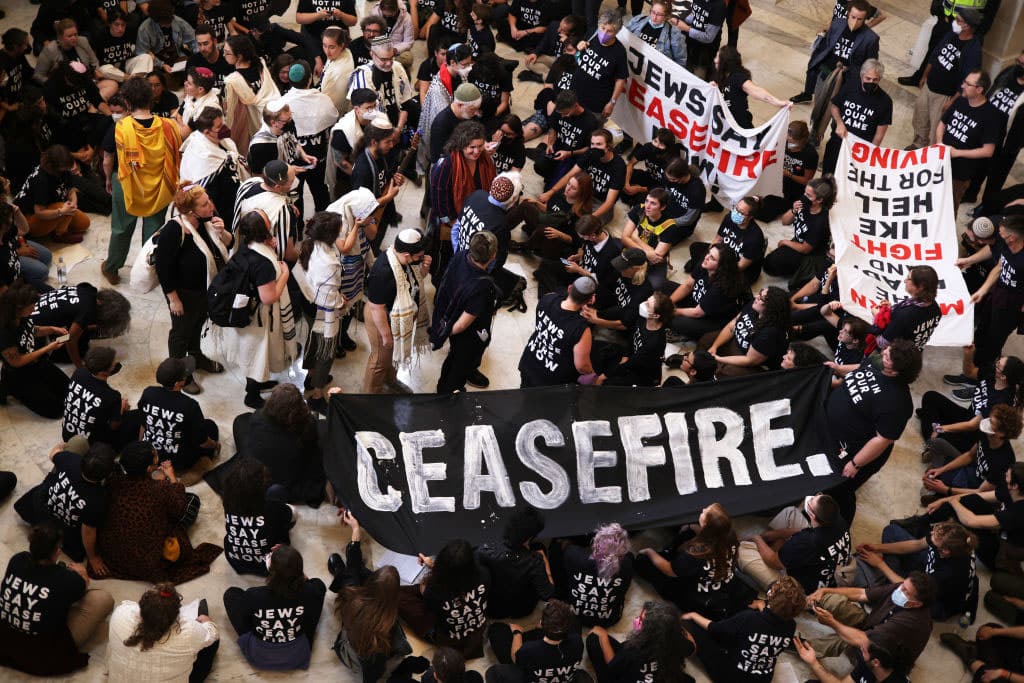
For American Jewish parents, this moment must be unbearably painful. An impressive 84% of voters favor Israel over Hamas. Yet that consensus of concern collapses in academia, the American institution Jews most worship, and have over-invested in psychologically, financially, existentially. Cold-blooded academics and their fanatic minions at those career-making factories toast this bloodbath as “exhilarating,” “awesome,” and well-deserved payback.

Although American Jews feel it particularly — this abomination is not a Jewish issue. The moral abdication should concern every thinking parent. The October 7 perversions transcended any political battle or culture war. There’s much room to debate Israel’s policies toward the Palestinians or Israel’s options in fighting Hamas. These terrorists and their apologists challenge core moral values and civilizational norms. We’re not debating “Heather Has Two Mommies,” but warning: “Heather’s being brainwashed to celebrate evil.”

In an academy targeting microaggressions, which can include looking at a student in the wrong way, when we cannot say the “n-word,” who could tolerate “members of our community” celebrating ethnically-targeted mass murder, maiming, and gendered violence?

Anyone who cannot recognize that it’s never acceptable to gleefully slaughter civilians, to rape, to behead, to murder families en masse, is not qualified to teach students – at any level. Parents must become consumer activists, asking what kind of perverse ideologies are imposed on their children.

What happened was purposeful, cultivated, years in the making, only surprising to those asleep at the ideological wheel. Central to this brutal insensitivity, approving assaults on civilians and civilized norms is the trendy anti-colonialist ideology bewitching intellectuals today. Deeming Israelis “settler-colonials,” ranting that “this is what decolonization looks like,” these Ivy League jihadis dehumanize certain people for not fitting into the right category they artificially created.

Parents take note. Many high schools now push this anti-colonialist orthodoxy, embedded in anti-racist curricula, imposed after the justifiable disgust surrounding George Floyd’s murder. If one man’s killing challenged so many of us to reckon with America’s past — shouldn’t the mass killing of 1,400 (and counting) challenge us to reckon with its educational present – and our kids’ future?

Since October 7, we keep reading about those grade-grubbing radicals, crying for more blood, cowering behind their masks, shouting “Israel, Israel, you can’t hide, We want Jewish genocide.” Too many of us didn’t take seriously the genocidal intentions of the Hamas charter. In the aftermath, let’s take such cries literally, calling out the Israel-erasing slogan “From the River to the Sea, Palestine will be free.”

In her illuminating, depressing, Free Press essay, “Why My Generation Hates Jews,” Julia Steinberg, a 21-year-old Californian, describes an exercise in her Los Angeles high school “where we made a T-chart dividing various ethnicities, religions, and other identities into the categories of ‘oppressor’ and ‘oppressed.’ Women: oppressed. Straight people: oppressor. Black people: oppressed.” Naturally, Steinberg also learned “that every white person is racist, and all men are evil.”

Many long warned that the self-esteem movement, which discouraged teachers from correct students’ misspelling, needed a course correction — but this is ridiculous. It’s child abuse, psychological warfare eviscerating kids’ natural identities. What parents want their sons being told they are inherently evil or that their whiteness is a crime? Fill in the blanks. There would be mass protests if others’ daughters were told they were inherently weak as girls or their blackness was a crime.

This categorical fascism must end. Admittedly, it’s hard for liberal parents to fight these illiberal grievance junkies and race baiters who flank them from their left. But liberals cannot allow their disgust for how Donald Trump and Ron DeSantis launched a “war on woke” to tolerate a war against their kids’ souls — and America’s founding ideals.

Marx distinguished between the blameless, virtuous, “oppressed,” and their evil “oppressors.” When anti-colonial theory weaponizes this divide, justifying “resistance” against oppressors by “any means necessary,” that Marxist brew becomes even more toxic. Beyond indoctrinating Steinberg’s peers “to believe that Jews are oppressors,” making “even our mass slaughter … justifiable revenge,” her teachers’ reductionism becomes homicidal — or at least mass-murder-positive.

From 1939 to 1945, Nazis pushed this kind of categorical fascism to its logical but evil limits — some lived, millions died. On October 7, Islamic fundamentalists once again showed how they treat dar al-harb — infidels who only deserve the sword — unlike those in dar al-Islam – those who voluntarily submit to Allah. Since that orgy of war crimes in Israel, anti-colonialists have shown a sadistic ability to relish the suffering of those they brand “settler-colonialists.”

The arc of history has been blown off-course. In the 1950s and 1960s, mass revulsion against the Holocaust boosted movements of people essentially saying: “stop imprisoning us in essentialist categories.” Auschwitz taught humanity not to dehumanize people based on race, color, or creed — or overly romanticize any people so much as to excuse every crime any of them committed.  The civilized world saw the harm a “selektzia” could do: Reducing people to those worthy of living — and those deserving death.

Oozing egalitarianism, the civil rights movement succeeded by demanding equal rights for all, including blacks. Women’s liberation promised to liberate men too from their own sexual straitjackets. Gay marriage became legal and acceptable so quickly because activists didn’t want special treatment, only equal rights.

Thanks to Affirmative Action — and its resulting Diversity, Equity, Inclusivity Industrial Complex — being deemed one of the politically-correct oppressed now has cachet. Too many read Black Lives Matter as exclusive not inclusive – some academics had to apologize for saying “All Lives Matter.” Institutionalized gender-studies feminism often indulges in man-hating and man-bashing. And more traditionally-minded people are often ostracized for publicly uttering their thoughts about gender or sexuality.

Just as Israelis are on a wartime footing, American parents must mobilize immediately. Parents should go on a tuition strike — before the spring semester. They should put any further payments for this academic year into escrow accounts, gathering interest but inaccessible to their children’s institution until universities start fighting malpractice in the classroom and harassment on campus.

No parents should pay for their children to feel endangered or diminished. Parents must stop subsidizing institutions selling education but actually propagandizing, bullying and demeaning instead. Tuition strikes only work when dozens join on. And if the universities fight back, penalizing the students for their parents’ principles, it’s a win-win too. Academia will look terrible and the parents will look good — showing their children that there are more important things in life than getting good grades.

Those professors who hijack their podiums to serve as political platforms should be boycotted by students and prevented by administrators from teaching required courses. At this point, there are too many bigoted brainwashers to fire en masse, but it’s time to start marginalizing them. Parents should out and confront anyone who commits educational malpractice, pushing political theories rather than cultivating critical thought — or shaming students for deviating from the teacher’s thoughts. Administrators must monitor how students answer questions on course evaluations assessing how open the professors were to different opinions and how welcoming a classroom environment teachers create.

By standing up for their kids, parents will start showing their kids the value of standing up. I feel sorry for the various students reporting how unsafe, how bullied, how intimidated they have been. I don’t mean to embarrass anyone from the infamous Cooper Union video showing a handful of religious Jews barricaded in a library as pro-Palestinian protestors menace them, but why couldn’t those students learn something from their Israeli peers who run toward danger rather than away from it? Bullied students should get angry, not scared. In the 1960s, radicals shamed America. Defying police to beat them, they chanted “the whole world is watching.”

These students bullied by Jew-haters should have huddled together, whipped out their cellphones, exited proudly through the front door, started recording these laptop bullies, these careerist snowflakes, while shouting: “Your future bosses are watching!”

Never forget: These grade-grubbing radicals are as credential-addicted as their Jewish peers. Naming them, shaming them, should become routine. Let them speak freely but let them live with the consequences of endorsing violence and Jew-hatred on the new morally-recalibrated campus. As Harvard University’s Dean of Students creates a perverse task force “supporting” students who claimed to have been “Doxxed” (internet speak for being outed), let the Campus Kapos start losing precious jobs because of their heinous positions. It’s not “Doxxing.” It’s called accountability.

Many mock modern parents as helicopters, forever hovering too close; as bulldozers, clearing the way for their kids; and as security cameras, monitoring them 24/7. Parents must become liberal lions and lionesses, fighting fiercely to make liberal arts liberal again – and inspiring their kids to roar along and, when necessary, fight fiercely too.


Professor Gil Troy, a Senior Fellow in Zionist Thought at the JPPI, the Global Think Tank of the Jewish People, is an American presidential historian, and, most recently, the editor of the three-volume set, Theodor Herzl: Zionist Writings, the inaugural publication of The Library of the Jewish People.

It’s Time for Parents to Stand Up for Their Kids – and Against Educational Malpractice Read More »

URJ’s Call for a “Humanitarian Pause” is Irresponsible

Well, that was quick.

After the barbaric Hamas attacks on Israel that left 1,400 dead and a nation traumatized, most Jews understood that the immediate international vows of support for Israel would soon evaporate in the face of the inevitable toll on Gaza civilians and fear, especially in European countries, about their own Arab streets. That took about 10 days, hastened by the false reports about Israel blowing up the Gaza hospital.

What was less clear was how long it would take before Jews, in the face of the greatest atrocity since the Holocaust, would begin to diverge from Israel to promote other agendas. The answer, we now know, is three weeks. On Friday the Union for Reform Judaism (URJ) — leaders of the largest denomination of Jews in North America — called for the swift release of all the hostages and for a “humanitarian pause” to “ensure that food, water, medicine, and other humanitarian aid can flow more quickly into Gaza.”

The URJ did not provide any details for its war plans, which seem to amount to an unconditional cessation of hostilities by Israel. It did not, for instance, say how long this pause should last or whether it was plausible that Israel could restart bombing and the ground campaign, presumably leading to the same humanitarian concerns as before. The URJ also simply ignored that Hamas would use the time to rebuild its command-and-control functions, give its fighters a rest and allow Iran and other supporters to resupply it. As former Secretary of State Hillary Clinton, noted, “People who are calling for a  ceasefire now don’t understand Hamas … It would be such a gift to Hamas because they would spend whatever time [that] there was a ceasefire in effect rebuilding their armaments … to be able to fend off an eventual assault by the Israelis.”

The URJ said it was repeating the calls of some in the U.S. government for a humanitarian pause.  It did not say if there were any Israelis of note who were calling for such a gambit. In making recommendations for how war should proceed, the greatest credence should be given those who are within missile range and have to fight, and who will suffer if it goes badly.

The URJ did say that, “At the same time, there must be guarantees that Hamas will not siphon off the aid. Hospitals must be able to function. Families must not starve.” There will be no such guarantees. I know from having studied peacekeeping for many years, including co-editing the first major pubic examination of the US/UN intervention in Somalia, that aid resources are routinely diverted by armed groups who are invariably more motivated to steal than international authorities, dedicated to preventing their officials from being in harm’s way, are to preventing theft. Hamas has shown what they can do to Israelis, and previously demonstrated their willingness to kill fellow Palestinians when they took over Gaza in 2007. To build their army, they will steal the aid resources that others, with the best of intentions, provide, just as they have done for the past 16 years.

To build their army, Hamas will steal the aid resources that others, with the best of intentions, provide, just as they have done for the past 16 years.

Perhaps even more dangerous is the URJ’s reframing of the conflict. Other than the fate of Gazans, the URJ focuses only on the over 200 hostages taken by Hamas.  Everyone hopes, of course, that they are released immediately. However, the larger truth is that all 9.4 million Israelis are being held hostage by Hamas and Hezbollah by the threat of missiles and further terrorist incursions. Unless Israel succeeds in dismantling Hamas and restoring deterrence in the region, its people will never be safe. That is the true hostage crisis that must be resolved.

Humanitarian concerns during war should always be discussed. However, Israel has reached a desperate moment where the valid concerns about the safety of others must be subsumed before a more basic priority: Survival.

To read Rabbi Rick Jacobs’ response, click here.


Jeffrey Herbst is President of American Jewish University. He was for 18 years a professor of politics and international affairs at Princeton University. He is the co- editor of, among other publications, “Learning from Somalia: The Lessons of Armed Humanitarian Intervention.”

URJ’s Call for a “Humanitarian Pause” is Irresponsible Read More »

Queen of the Pogrom-Deniers

Queen Rania of Jordan has introduced a new term into 21st century discourse: pogrom-denier.

“It hasn’t been independently verified…that Israeli children [were] found butchered in an Israeli kibbutz,” the queen said in an interview on CNN. “There’s no proof of that.”

Yet really, the queen shouldn’t be surprised that Israel’s enemies are capable of such horrors. After all, her own country’s troops committed nearly identical atrocities against numerous Israeli Jews during the 1948 war.
The Jordanian army, then known as the Arab Legion, played a central role in the war against the newborn Jewish state, often operating alongside Palestinian Arab terrorist forces that were in many ways precursors of Hamas.

R.M. Graves, an official of the British administration in Palestine at the beginning of the war, wrote in his diary (published in the 1949 book Experiment in Anarchy) that “the mutilation of the Jewish dead” was “a common practice” among the Arab forces. After one attack, he wrote: “Some heads were cut off the bodies of the fallen Jews and have been carried round Jerusalem as trophies of victory. A British member of my staff met a younger in the German Colony yesterday, who showed him a handful of severed fingers.”

The renowned investigative journalist John Roy Carlson (Arthur Derounian) worked undercover in Arab areas in and next to Israel during the 1948 war. He wrote of the aftermath of one Arab attack near Jerusalem: “The next day on sale everywhere in the Holy City were gruesome photographs of the battle: the burnt and mutilated bodies of Haganah men…had been stripped of clothing and photographed in the nude….Arabs carried them in their wallets and displayed them frequently…”

Contemporaneous sources reveal the same facts. To cite just one of many examples, a Jewish Telegraphic Agency report on January 19, 1948, summarizing Arab attacks in recent days, mentioned that a Jew murdered by Arabs in Jerusalem “was mutilated and his body was partially burned,” while “an unidentified Jewish male was found near Haifa with the head severed from the body.”

Uri Milstein’s four-volume History of Israel’s War of Independence, the definitive study of the subject, chronicles the 1948 war battle by battle. Again and again, he refers to actions by the Jordanians or the Palestinian Arabs that sound as if they were taken straight from accounts of the October 7 pogrom.

A Jewish truck from Kibbutz Negba was ambushed on the Kiryat Gat-Ashkelon Road on December 6, 1947; the driver and passenger fled. When their bodies were later found, they showed “signs of abuse.” Three days after that, a patrol from Kibbutz Gvulot encountered Jordanian troops near the village of Shu’ot. “British troops later brought the mutilated corpses of the dead to Kibbutz Gvulot,” Milstein reports.

On December 11, a Jewish convoy from Jerusalem to Gush Etzion was ambushed by Arab forces. Yaffa Mundlak, a medic who survived, recounted: “When our bullets ran out, the Arabs went down to the road and slaughtered the [Jews] one by one. There was a girl there. They yanked up her head by the hair and shot her in the forehead…Most of the others were killed. The Arabs mutilated the corpses and burned the truck.”

A convoy from Mikveh Yisrael was attacked as it passed the Arab town of Yazur on January 22. “All seven men in the pickup were killed, some instantly in the explosion, the other wounded victims beaten and stabbed to death by [the Arab attackers], who then abused the corpses…”

On February 2, Arabs ambushed a Jewish vehicle going through the Sheikh Jarrah of Jerusalem. They murdered two Jews, “burned the car and mutilated the bodies.”

After the last defenders of Gush Etzion surrendered on May 13, the Arab Legion forces murdered the prisoners, “stripped the corpses, looted them, and then mutilated the bodies until they were difficult and almost impossible to identify. One body was decapitated.”

The list of such examples goes on and on, and much of it sounds remarkably similar to what we know the Hamas pogromists did on October 7, from murdering wounded prisoners and burning Jews alive, to mutilations, decapitations, and sexual violence. We know that all happened from the videos that the killers themselves posted on social media; from the transcripts of the murderers’ telephone calls; from the confessions that captured terrorists have given; and the countless eyewitness testimonies of the survivors. This is the evidence that the queen of Jordan denies.

With her charm, elegance, and Western education, Queen Rania, like her husband King Abdullah II, is often regarded as the epitome of reason and moderation. Her descent into pogrom-denial, however, undermines that perception.

One may wonder whether the queen of Jordan is so ignorant, and so enamored of conspiracy mongering, that she honestly believes the atrocities stories are all fabricated—presumably as the result of a conspiracy by the governments of Israel and the United States, together with world Jewry and the international news media.

Or perhaps it’s just that she is so dishonest and cynical that she denies the atrocities, even though she knows they happened, simply in order to undermine world sympathy for Israel.

It’s hard to know which possibility is more troubling.


Dr. Medoff is founding director of The David S. Wyman Institute for Holocaust Studies and author of more than 20 books about Jewish history and the Holocaust. His latest is America and the Holocaust: A Documentary History, published by the Jewish Publication Society & University of Nebraska Press.

Queen of the Pogrom-Deniers Read More »

Visiting the Carnage, Dancing at a Wedding

We arrived early Thursday morning in Tel Aviv for our son Yosef’s wedding. He is a soldier in an elite combat unit, but he has been given a short leave of absence for his wedding. He is not on the Gaza border, thank God. His older brother, who had been called up immediately while the October 7th massacre was ongoing, is not as lucky and is stationed right by Israel’s worst enemies.

I get off the plane and, foregoing my usual practice of always kissing the land of Israel when I exit the terminal, I do it right there in the airport. I’m in a big rush and nothing can wait. Thankfully, no one looks at me as a weirdo as Ben Gurion Airport is completely empty. Much emptier even than when I arrived several times during COVID. Almost no one is coming into Israel. Everyone is at the departures terminal going out.

I quickly get our bags, and by our, I mean our entire family. Nine of our children are now in Israel for the wedding, and all our 10 grandchildren and our four sons-in-law. People told us we were insane bringing babies into a war zone. But how could we miss our son’s wedding?

I go through customs. The guy sees a truckload of stuff. “Anything to declare?” he asks in Hebrew. “Only my unconditional love for Israel,” I answer. He doesn’t smile or respond. “Why so much stuff,” he wants to know? Because we’re a huge family I tell him, and my daughters, who live in Teaneck, are angels who have brought tons of gear for the soldiers.

He lets us through.

I rush to a waiting car and, together with my social media influencer daughter Rochel Leah (@thethirstysouls) and son-in-law Rabbi Itamar Taktuk, who are the Rebbe’s emissaries in Fort Lauderdale, Florida, we are on our way south, to the killing fields around Gaza.

Rochel Leah and Itamar were visiting his parents on 7 October, Simchat Torah, in Ashkelon. They woke up to a terror hellscape of rockets, bombs, and marauding terrorist savages and barely survived. Now they join me in going to see the places of the carnage, courtesy of my friend Amichai Eliyahu, Israel’s Minister of Heritage, who will be meeting with survivors and local leaders in the south to see how the government can help.

We arrive at a junction that marks the closed military area in the south. We are surrounded by thousands of soldiers and endless military hardware. The men are all sporting mustaches. “Clark Gable look,” I say to them, as I snap photos of men going into war. “No,” they tell me, “it’s a thing now in the IDF. We’re trying to look like the soldiers who turned the tide in the Yom Kippur War after Israel was surprised 50 years ago.”

God, how I hate the ‘70’s, I think to myself, as we transfer into a police vehicle and head further south into the belly of the beast.

With the Minister, now clad in tactical bullet proof vest and surrounded by a phalanx of ferocious looking Israeli security armed to the teeth, we arrive in Beeri, the Kibbutz where a quarter of the residents were slaughtered. The lead soldier gives us instructions. “Walk in single file on the path I show you. Do not touch anything. You can take pictures. If there is siren or red alert, follow our instructions to the letter.”

We walk through. The kibbutz is completely decimated. The sickening stench of death is all around us. The bodies of the victims have been removed. But the blood is everywhere, as are bodies of the terrorists that are covered in plastic.

We walk into one house. The blood of the murdered victims has congealed all over the floor and the walls. The knife the terrorists used is still there. You can see it on my Instagram page. I try not gag and throw up.

We go into the infirmary where the medical staff was slaughtered. Bullet holes, broken glass, blood – everywhere. The houses all around us are heaps of rubble. The terrorist used not just Kalashnikovs but high explosives, rocket propelled grenades, and bombs to murder the innocent. The enormous bullet casings are everywhere.

We travel to the Alumim agricultural farm not far away. The leaders are waiting for us. They grow mangoes and avocadoes. Many of their workers are Thai. Fourteen of them were murdered and about 20 taken hostage. One of the Thai workers was beheaded with a pickaxe. The leaders tell the minister that if the IDF does not destroy Hamas utterly than there is no hope of Israelis every living in the south again.

It is the same message we hear from the Mayor of Sderot whose police station was taken over and whose senior officers were all murdered. Out of 37,000 residents, ninety percent are now war refugees spread throughout Israel. He remains with a tiny remnant.

I ponder the words I heard earlier: Israel will lose the south? But this is not really the south. Like much of the language in the Middle East, this is deceptive. We are only an hour and a quarter by car from Tel Aviv. It takes longer from me to drive into Manhattan with traffic from Englewood, New Jersey, then from Tel Aviv to Ashkelon. What I am really hearing is that if Israel does not destroy Hamas, then the country itself has no future.

We travel to the Chabad House of Sderot. The heroes of Chabad have not left and are running the only supermarket in the town so that the remaining residents don’t starve. They do not charge a shekel for food. They get me a minyan to say afternoon Kaddish for my mother. Then the sirens start. Rockets are headed right for us. Whereas in Tel Aviv you have a minute and a half to dodge the rockets, here in Sderot you have only 20 seconds. The security people around the minister freak out and push us all into the secure area. All clear, we begin to leave. We’re outside and now it’s even worse. A terrorist has breached the gate from Gaza and is roaming around Sderot. We hear the rat-tat-tat of machine guns as the IDF engages him. The security freak out even more and push us all back into the Chabad House.

Strangely, I am not afraid. Mostly because I have confidence in Israel’s security and because I see the kind of faith in God that the Chabad emissaries have.

A few hours later we are back to the relative safety of Jerusalem. It is Friday and I am preparing for my son’s Shabbat Chatan, wedding Sabbath. We have rented an apartment in the Old City of Jerusalem but we have not been informed that it has faulty pipes. There is a flood on the floor. I walk down the stairs, slip and fly up in the air, and feel a bang on the back of my head that is the worst of my life. I am stunned and in shock. I feel the back of my head and my hand is covered in blood. Soon my whole chest is red with blood. I have a huge gash from the slip brought about by the faulty plumbing and now I am in an ambulance being rushed to Shaarei Tzedek hospital. As I try and collect myself amidst the concussion, I note the irony of having been in the most dangerous place on earth the day before and emerged unscathed, only to have almost died in a Jerusalem apartment that was not fit to be rented.

I get a CAT scan that shows for now I don’t have internal hemorrhaging, thank God. They give me seven staples in the back of my head and release me to rejoice with my soldier son Yosef at the Kotel. The IDF also releases Mendy from the border for just one Shabbat.

Finally, bliss at last. Nearly all our family is there for the Sabbath which is truly joyous. Being joyous on Shabbat is not just a good idea; it’s an obligation. Yosef gets called up to the Torah and we sing and dance the entire day. I wonder: Is this really possible as Israel fights an existential war for its survival? Is this the power of Shabbat?

The Sabbath ends. Mendy rushes back to his base. I visit various hotels around Israel where the war refugees are being housed, including one where my friend Uri Geller is entertaining children from a Kibbutz where 20 members were slaughtered. Many of the children are orphans.

I decided, amid a healing broken arm, and the terrible gash and staples on the back of my neck, to ride a bike along the Tel Aviv seashore. I need to feel that there is still all the natural beauty in Israel that I so love and not just consumed by war and terror. The streets are empty. The beaches, amid the most glorious weather, are empty too. Tel Aviv is a ghost town. The Tel Aviv port, normally a huge hub of activity, is a deserted waste land with one corn on the cob place open. I give him business and buy the corn.

I arrive at a hotel. I take a shower. The sirens begin. Deafening alerts that Qassams are headed right where I am. Where the hell do I run? I forgot to ask where the bomb shelter is. I run out of my room in nothing but a towel (sorry for that painful image). The entire hotel floor is empty. I am alone. Boom, boom, and then, SHATTERING BOOM. Now, for the first time in my adult life in Israel, I am shaking. The first two explosions, I knew, were Iron Dome. The last one made all the earth shake and could not have been Israel’s defense system. I run back in the room, put on some clothes, and race to the lobby. “A Qassam hit a building 200 meters from here,” I’m told. “Three are reportedly injured. You can still see the smoke from the fires.”

I collect myself and now it’s time for the reason we came, which was not just to be with my Jewish brothers and sisters when Israel is at war, as we have done with our family in previous conflicts, but to see my soldier son married. He is marrying a wonderful young woman named Dalia. She is also an IDF soldier that works in a unit that arranged 70 funerals of murdered soldiers in the south in the week before her wedding.

We all forget the war and put on our finest garb. The wedding has been moved from Jerusalem to Raanana because we found a hotel that has a large enough bomb shelter for all the guests. The wedding is joyous and immaculate, almost as if the 300 or so guests needed some sort of release from all the pain, blood, and murder of the last weeks. The prayer for the IDF is read by Lt. Col. Jonathan Conricus, the IDF’s Chief Global Spokesperson, who has taken a break from his constant appearances on CNN, Fox, ABC, and NBC to honor our soldier son at his wedding. The witness to the wedding vows is Doron Spielman, deputy Global Spokesman for the IDF who is also on all the world’s airwaves defending the Jewish State against constant attack.

My friend Bret Stephens of the New York Times is there as well, covering the war for his publication, and I thank him publicly for being the only voice of morality at a publication that a few days earlier had falsely reported that Israel bombed a Gaza hospital and murdered 500 Palestinians, something directly contradicted by American intelligence and President Biden himself.

As I speak at the Chuppah as the Rabbi honored with conducting the ceremony, the familiar “Boom, Boom, Boom,” is heard and plumes of smoke are all around us. Iron Dome is stopping the Qassams from murdering us.

But is the Iron Dome, a blessing, I suddenly wonder at my own son’s wedding? “I want you, Yosef and Dalia, to have a normal life. Herzl did not conjure up Israel merely as a Jewish state but as a place where Jews would no longer be afraid. Who among us today is not afraid?” Perhaps the relative security of Iron Dome allowed Israel to accept the unacceptable and to live with the unlivable. Is it normal to live with a genocidal enemy on your doorstep and rely for your survival on a battery of missiles? Did JFK allow Cuba to keep nuclear weapons on America’s doorstep, even amid America’s ballistic deterrence?

No, he was not that stupid. And in the greatest moment of his presidency, he got the USSR to remove the missiles. But not Israel, who allowed the cancer of Hamas and Hezbollah to metastasize until so many innocents were murdered by the Hamas savages.

The Chuppah ends, the reception begins, and, just as I expected, it is the most celebratory wedding I’ve ever been at. The crowd is on fire with joy and excitement for two IDF soldiers who are getting married. I see the celebrations – almost all Israelis, most with children serving on the front lines – and I think to myself that this is a giant “F-You” to Hamas.

You will never stop Jewish weddings. You will never stop Jewish babies from being born. You will never make us afraid. And you will never push us out of our ancient homeland.
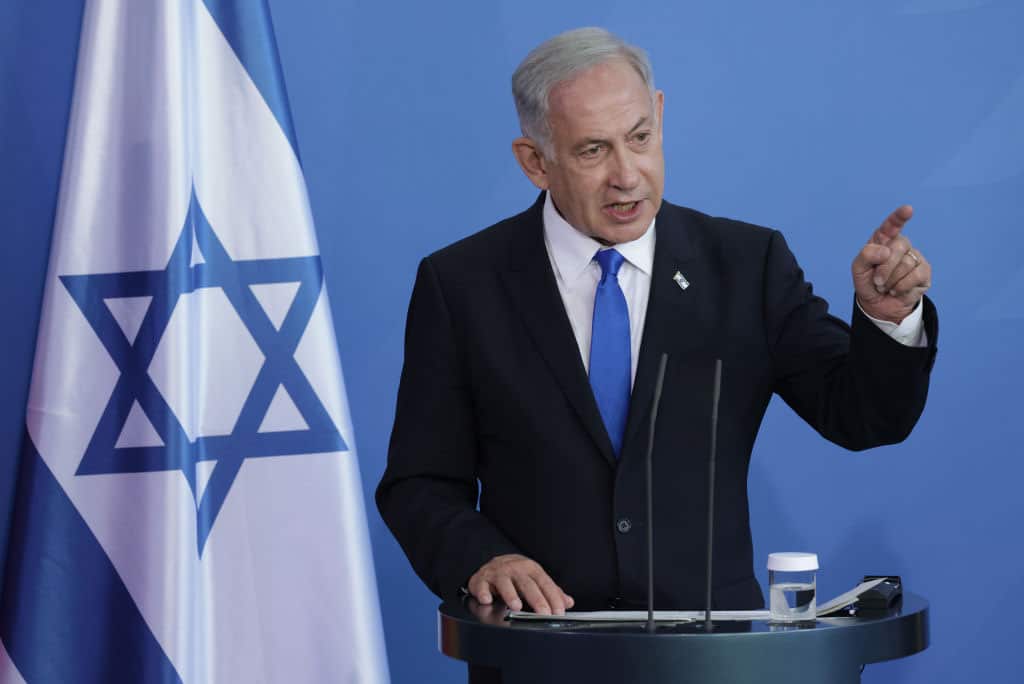
Despite all your savagery. Despite all your barbarism.

We, the eternal people, are here in Israel forever and ever and ever.


Rabbi Shmuley Boteach, “America’s Rabbi” whom the Washington Post and “Newsweek” call “the most famous Rabbi in America,” is the author of “Judaism for Everyone” and “The Israel Warrior.” Follow him on Instagram, Facebook, and Twitter @RabbiShmuley.

Visiting the Carnage, Dancing at a Wedding Read More »

Instead of Impressing the Civilized World, Bibi Needs to Humiliate Hamas

Israeli Prime Minister Benjamin Netanyahu has been channeling wartime Winston Churchill in his recent speeches.

“Until recently, many believed that the promise of progress of the 21st century would enable us to move beyond the barbaric horrors of the past towards a better and brilliant future,” he said in his latest address. “Many believed that we could go about our comfortable lives and that evil will simply pass us by. It will not.”

Like Churchill during World War II, Bibi has been sounding epic and historic:

“The horrors that Hamas perpetrated on October 7th remind us that we will not realize the promise of a better future unless we, the civilized world, are willing to fight the barbarians. Because the barbarians are willing to fight us. And their goal is clear: Shatter that promising future, destroy all that we cherish and usher in a world of fear and darkness.”

Bibi’s prose is grand and eloquent because he is appealing to the civilized world. But that has zero impact on this brutal enemy. If anything, Hamas loves that grandiose war-against-the-world stuff. It gives them a sense of nobility.

To help his side win, Bibi must engage in psychological warfare.

He needs to be more brutal, more primal, more personal.

He needs to attack, expose, humiliate.

Something, perhaps, like this:

“I have a direct message for the cowards of Hamas: You have the blood of your people on your hands.

“You are so afraid to face Israeli soldiers man to man, you have to hide behind your people.

“You have to hide under hospitals, schools, mosques and apartment buildings.

“You have to hide behind your women and children, knowing that if they are killed during the fighting, you will win the world’s sympathy.

“Because that is your fondest wish: To butcher 1400 Israelis and still win the world’s sympathy.

“From the very first day you launched your terror war against Israel, you have been a curse to your people.”

“That’s why you stopped so many of your people from evacuating.

“That’s why from the very first day you launched your terror war against Israel, you have been a curse to your people.

“You pretend to have noble goals; but your goals are only to destroy the tribes you hate while abandoning your own tribe.

“You have diverted humanitarian aid and funds to build a war machine– while leaving your people in misery.

“And where are your fearless leaders, Ismail Haniyeh and Khaled Mashal, while your people need them? They’re living it up in luxury hotels in the Gulf.

“Because you have abandoned your people, the blood of every Palestinian killed in every one of your attacks on Israel is forever on your hands.

“Now it’s time to let your people go free– while you fight like real men.

“Or are you afraid to fight like real men?”

This is not empty bluster. This is tactical humiliation.

The bottom line, Mr Netanyahu, is this: Israel is in ugly combat with barbarians who hide behind civilians. We don’t need to impress the world at this time with Churchillian speeches.

We need to attack and publicly humiliate cowards and strip them of all pretense of nobility.

Instead of Impressing the Civilized World, Bibi Needs to Humiliate Hamas Read More »

Celebrate Brave-ish and my BIRTHDAY! Oct News 2023

Oct News 2023 with Lisa Niver & We Said Go Travel:

Thank you for all the birthday wishes! I loved my doors-off helicopter ride over Central Park with NYONair!

I signed my BOOK at AdWeek NYC 2023 in the Equality Lounge with The Female Quotient. My memoir was on the book-SHE-lf!

I am praying for the hostages in Israel. #BringThemHome. I am very concerned about the rise of anti-semitism. Please sign the ADL letter to the U.S. Department of Education to Make Colleges Safe from Antisemitism. See more on Instagram

In Los Angeles, I loved the grand opening of the Lobby Library at the Sheraton Grand in collaboration with Reese’s Book Club! Make sure to stop by and find your next favorite book.

Thank you to everyone for joining me to celebrate my new book! I have videos from my events in Santa Monica at Zibby’s bookshop and in Pasadena with Ms. Magazine at Vroman’s Bookstore.

Join me at my next events in Philadelphia and New Orleans: click here for details! More cities coming soon for 📚 my memoir, Brave-ish, One Break-up, Six Continents and Feeling Fearless After Fifty, and I am very grateful for your support. 💕💕!

NEW ARTICLES and INTERVIEWS about me and my BOOK!

Conde Nast Traveler logo
Brave-ish featured on Conde Naste Traveler

Condé Nast Traveler: Women Who Travel Book Club

 10 New Books We Can’t Wait to Read This FallBRAVE-ish: “I can’t wait to dig into Niver’s honest account of how she transformed her life by committing to doing 50 new things by 50: diving with sharks and pulling 3-Gs while bobsledding. I love inspirational books, especially when travel, adventure, and gutsy women are involved.”

Read Article CLICK HERE TO see all of my interviews and articles about my new book and HERE for the rest of my Oct Birthday and BRAVE-ish news.

Celebrate Brave-ish and my BIRTHDAY! Oct News 2023 Read More »