It is a tradition in between Rosh Hashana and Yom Kippur to visit the graves of our loved ones. Some also choose to visit during these days leading up to Rosh Hashana, knowing that major holidays often amplify loss and intensify an already present grief.
Included in the graveside liturgy is Psalm 23. The first line of the psalm feels troubling. “The Lord is my shepherd; I shall not want.” And yet, don’t we want? Is it not in our rawest, lowest points in deeply missing those we love that we want a reversal of time? We want to see our loved one in the land of the living. We want to hear their laughter and ask them millions of questions. Of course, we want.
But this is where the translation is misleading. The translation should read, “The Lord is my shepherd; I will not lack a thing.” The difference is subtle. Yes, I may want the physical return of the person I love. “I will not lack a thing” is instead read as an instruction of gratitude. With an abundance of love offered during their lifetime and comforting memories that continue during ours, we “want” but do not lack appreciation. Still wanting, but grateful for what we have been given during the length of their days.
The Lord is our shepherd, holding us close, reminding us of the blessings we receive in this world and the blessings we receive from the world beyond.
Shabbat Shalom
Rabbi Nicole Guzik is senior rabbi at Sinai Temple. She can be reached at her Facebook page at Rabbi Nicole Guzik or on Instagram @rabbiguzik. For more writings, visit Rabbi Guzik’s blog section from Sinai Temple’s website.
Most vivid memories are not
of victories, but crisis and defeat.
It’s harder to remember what
caused you to feel elated and upbeat
than to recall the moments when
you felt your life had spun out of control,
preventing you to reach again
the top of life’s egregious, greasy pole.
The Bible helps this process, ending
with Emperor Cyrus’ famous declaration,
defeat of the Judeans mending
with restoration of our Jewish nation.
The Aeneid does this in a dream
in which Aeneas was the mythic founder
of that great city which would seem
to be than Troy romanticized far sounder.
Fortune reversal is the trope
the Bible and the epic Aeneid share,
a Rome before there was a pope
where pius prince Aeneas had to dare
to travel to, while we, in Persia,
refuseniks, to Jerusalem were told
to go, although due to inertia,
what later was in song compared to gold
was not rebuilt in Cyrus’ era….
like ancient Rome not built in just one day,
though every day brings all Jews nearer
to what all pious Jews thrice daily pray.
In “How the Authors of the Bible Spun Triumph from Defeat: History may be written by the victors, but the world’s most influential text comes from antiquity’s biggest losers,” The New Yorker, 8/21/23. Adam Gopnik, reviewing Why the Bible Began by Jacob L. Wright, writes:
The pagans who dominated the world lost their gods when they lost their empires and saw them swept into myth by the monotheistic religions spawned from the Jewish one. And the Hebrew Bible, or Old Testament, is, perhaps, unique on the planet inasmuch as it is, as the scholar Jacob L. Wright suggests in his new book, “Why the Bible Began” (Cambridge), so entirely a losers’ tale. The Jews were the great sufferers of the ancient world—persecuted, exiled, catastrophically defeated—and yet the tale of their special selection, and of the demiurge who, from an unbeliever’s point of view, reneged on every promise and failed them at every turn, is the most admired, influential, and permanent of all written texts. Wright’s purpose is to explain, in a new way, how and why this happened.
The easiest explanation is that it happened this way because that’s the way God wanted it to happen. But this does not lessen the need to say how it happened. Or, as Edward Gibbon wrote, in one of the most perfect of sentences, explaining his ambition to provide a rational account for the rise of Christianity, “As truth and reason seldom find so favourable a reception in the world, and as the wisdom of Providence frequently condescends to use the passions of the human heart, and the general circumstances of mankind, as instruments to execute its purpose, we may still be permitted, though with becoming submission, to ask, not indeed what were the first, but what were the secondary causes?”….
Division and defeat, Wright explains, made the Bible memorable. Successive expulsions and exiles forced the Jewish poets and prophets, like Red Sox fans of yore, to imagine defeat as a virtue, dispossession as a gift, failure today as a promise of victory tomorrow. Defeat usually compelled other ancient peoples, as it does us, to invent rationalizations for what happened. (Yes, we failed to pacify Afghanistan, but nobody could have done so.) In the face of regular defeat, however, the Jewish scribes had to ask whether defeat wasn’t God’s will in the first place, and so opened mankind unto a new contemplative possibility: that spiritual success and failure were not to be judged on worldly terms. Nice guys, or, anyway, pious guys, finish last and should be proud of their position.
It occurred to me, after reading Gopnik’s review of Jacob Wright’s book, that the way the Bible celebrates defeat of the Israelites, by concluding the Tanakh with Cyrus’s declaration, inviting the Judean to return to Jerusalem and there rebuild the temple, echoes how the Aeneid celebrates defeat of the Trojans by recording the prediction of Anchises, Dido’s father, that Romulus would found Rome, providing a rationale for Aeneas’ escape from Troy and his journey towards what would become Rome.
Gershon Hepner is a poet who has written over 25,000 poems on subjects ranging from music to literature, politics to Torah. He grew up in England and moved to Los Angeles in 1976. Using his varied interests and experiences, he has authored dozens of papers in medical and academic journals, and authored “Legal Friction: Law, Narrative, and Identity Politics in Biblical Israel.” He can be reached at gershonhepner@gmail.com.
I came across a relic of bygone days. An actual pay phone! Remember those?
With the Holy Days approaching, this season that reminds us to reaffirm our connections, I thought to myself, “Zach, in this moment in time, who are you going to call?”
(I’ll be honest – the thought of “Ghostbusters” did resonate!)
Who do I need to embrace?
With whom do I need reconciliation?
Who do I need to support?
Who do I need to let them know I am thinking of them?
And finally – have I been accessible to answer the call as well?
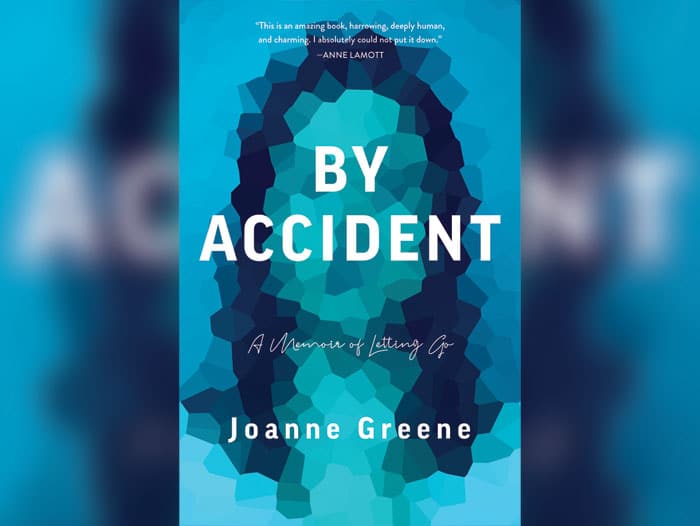
As Joanne Greene crossed the street on October 3, 2012, she heard a sudden and loud sound. She thought it was an explosion, but then she realized she was airborne and thrown on the hood of a car. On the street, right in front of her synagogue and her local JCC, where she worked, she lay on the ground, in agonizing pain, unable to move, surrounded by shocked onlookers.
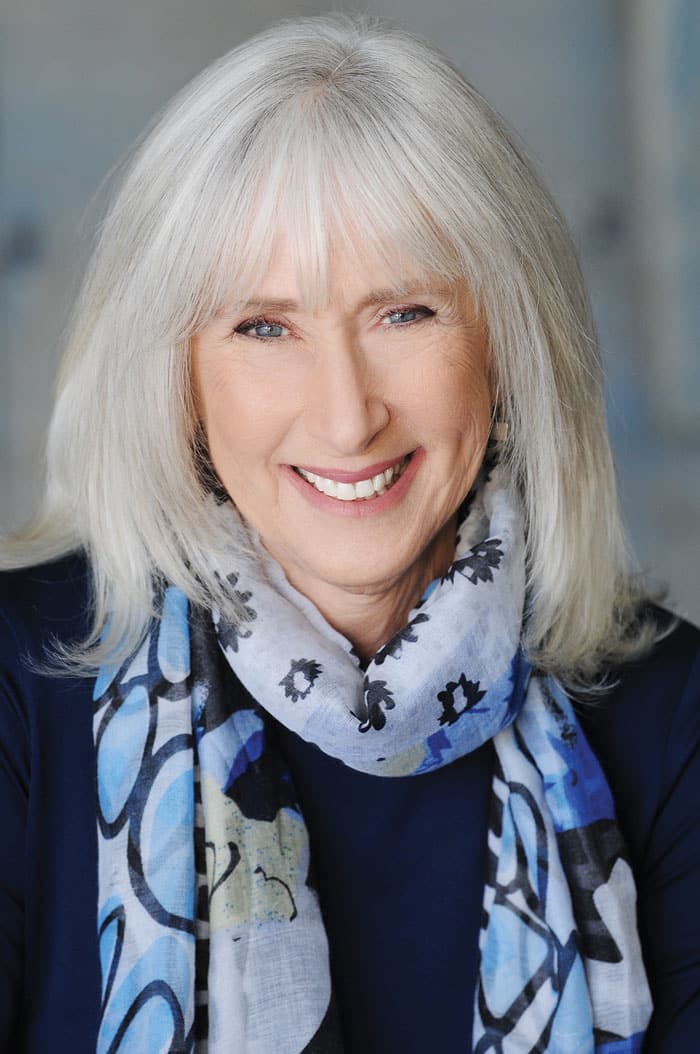
Joanne Greene
What laid ahead for Joanne was a long road to recovery, one that was physical, mental and spiritual and resulted in her letting go of control and finding a new way to live, which she documented in her book, “By Accident: A Memoir of Letting Go.”
A former radio show host in San Francisco, Greene spent 11 years as the director of the Center for Jewish Peoplehood at the Marin JCC. At the beginning of the book, she is working at the JCC and her colleague, Janet, witnesses her being hit.
Greene writes, reflectively, in the opening chapter: “Being hit by a car is not my first blow — although it’s probably the most literal — and it won’t be my last. But it will be a catalyst for me, a sudden graphic stop to my constantly in-motion existence, my need to produce and achieve to feel worthy of love, my need to control everything because I’ve believed that it would make me safer. It will be the test that finally teaches me that my needs are masks, and that control is an illusion.”
“By Accident” details Greene’s recovery, which involves arduous physical therapy to heal her four pelvic fractures and other injuries. Throughout the entire ordeal, she relies on her loving husband, Fred, along with family members and friends, something she isn’t used to.
She wrote the book to help readers who may also be struggling.“After a tumultuous period in my life which I not only survived but turned into a major growth opportunity, I felt I had a story worth sharing with life lessons that might benefit others,” said Greene. “Also, having lost my parents and both siblings, I wanted to capture stories for future generations.”
Greene’s Judaism plays a large part in her recovery; she practices gratitude, especially when things get difficult, and when she hears the Misha Berach, the prayer for healing, she writes that it’s “like velvet caressing my arms.”
She said, “Judaism teaches us to choose life, to be grateful for our blessings and to have faith in forces much greater than ourselves. I’m a part of a supportive Jewish community that showed up for me in major ways.”
At one point, Greene goes to the mikvah with close friends and family members as a symbolic move and has a spiritually uplifting experience.
“This ancient ritual purification — used to mark many passages in Judaism — can mark the progress of my healing,” she writes. “[In the mikvah], time feels suspended. My body tingles as I submerge in the water, again and again. There’s power to this ancient practice. I feel spiritually cleansed, like I’m being taken on a sacred journey of healing.”
Though Greene went back to work part-time at the JCC after her accident, she decided to retire during the pandemic and write her book. These days, life is slower and more relaxed; she spends time reading, doing yoga, hiking and being with her family.
“I’m not as hard on myself, cutting myself slack and sometimes even napping mid-afternoon,” she said. “I see my children and grandchildren, all of whom live in L.A., as often as possible.”
Through her journey, Greene learned what she believes will be helpful to others: try not to think about how long it’s going to take to recover.
Through her journey, Greene learned what she believes will be helpful to others: try not to think about how long it’s going to take to recover. Instead, focus on the moment. Ask others for help – and receive it. Stop judging the way people go about things, because we are all different and most of us are trying to do our best.
It’s also important to have a loving mantra.
“I hope people learn that what we tell ourselves matters greatly,” she said. “Questioning, for instance, ‘who do you think you are?’ doesn’t serve you. Alternately, saying ‘I can do this’ repeatedly, does. Even if you don’t believe your mantra initially, saying it to yourself often enough makes the message sink in.”
If nothing else works, go back to the basics and be grateful. “Gratitude is the best attitude to default to when feeling lousy,” she said. “Counting one’s blessings will always improve your state of mind.”
Joanne Greene will be speaking with Lacey Rose, Senior Managing Editor for The Hollywood Reporter, at Zibby’s Bookshop in Santa Monica on September 7 at 6 p.m.
For some reason, residents of Los Angeles love finding spaces that help them forget they’re in LA.
Blame the merciless traffic or the unsightly ubiquity of strip malls, construction sites or cement walls. I’ve lived in various cities and in each one, I’ve craved spaces that have reminded me of where I was. But for me and many Angelenos, the best places in LA are the ones that inspire us to declare, “I don’t feel like I’m in LA when I come here.” The Hollywood Bowl is one of those places.
It’s ironic, given that on the surface, the Hollywood Bowl is about as LA as it gets, including the maddening traffic and congestion around the parking lots and the close view of the Hollywood sign. But in an LA that is increasingly eliciting a sense of pain, fear and anxiety among some residents due to the uptick in violent crimes, robberies and homelessness, spaces like the Hollywood Bowl can be healing precisely because they reinforce the best of LA.
I recently returned to the Bowl to attend a Fourth of July concert by The Beach Boys. Before entering the venue, I was treated to the classic LA experience: unbelievable traffic, expensive parking, and long lines that required standing for nearly an hour. But anyone who’s been to the Hollywood Bowl knows that once you enter that exquisite space and catch your first glimpse of those 17,500 seats, that iconic bandshell and that open-air sky, all of your frustration over the traffic, parking and long lines dissipates and you finally feel free, whether it’s your first or your 40th time there.
My first visit to the Hollywood Bowl coincided with my first concert, which rendered the experience even more amazing. It was the late 1990s and I celebrated my sixteenth birthday by treating my older sister and myself to a concert by one of my favorite bands, Aerosmith. Weeks earlier, I had asked my father to drive me to the Ticketmaster kiosk at the old Robinsons-May department store near The Beverly Hilton so that I could purchase the tickets, which cost $17.95 each.
Standing on those wooden benches that night and watching a sea of thousands of lighters illuminate the Bowl as Aerosmith sang their hit, “I Don’t Want to Miss a Thing,” I instantaneously knew that I was experiencing one of the best nights of my life. And for the record, lighters feel so much more authentic than cell phone flashlights when a band is playing a slow megahit.
In the years that passed, I saw many wonderful performances at the Bowl, but The Beach Boys’ concert a few months ago was good for my soul because I needed a respite from my constant concern over crime as well as antisemitic acts in my beloved city. That concert was also extraordinary because the Hollywood Bowl Orchestra played a musical tribute to veterans and members of America’s armed forces before The Beach Boys appeared (with special guest John Stamos, who stole my heart).
As conductor Thomas Wilkins announced the names of each of the armed forces and the orchestra played each branch’s unique song, men and women who had bravely served this country stood up and were treated to resounding applause. I’ll admit that I was taken aback.
For various reasons, I had stopped counting on many in this city to espouse patriotism, or at the very least, to pay respect to our veterans and those who are currently serving in the armed forces. After all, this is California, not Texas. But watching tens of thousands of Angelenos cheer for our brave men and women was more than nice; for me, it was healing. And it didn’t hurt that my concert ticket cost less than $40.
That’s the beauty of the Bowl. You can still find affordable tickets, which also explains why this extraordinary space is accessible to Angelenos of various socioeconomic backgrounds.
I asked my friend and colleague Yael Swerdlow, who’s visited the Hollywood Bowl more than anyone I know, what keeps bringing her back. When I asked her how many years she’s been enjoying concerts at the Bowl, she told me, “I’m 66 and I first went there when I was five, so you do the math.”
Swerdlow is especially passionate about classical music; she is the CEO and founder of Maestro Games, which offers a groundbreaking virtual reality platform that helps everyone from first responders to those with Post-Traumatic Stress Disorder access non-pharmaceutical intervention and healing. Her technology platform utilizes classical music and most of the concerts she’s attended at the Hollywood Bowl have featured artists playing some of the world’s most beautiful music, from Mozart and Beethoven to Bach and Rachmaninoff.
Swerdlow, who is a second-generation Angeleno, said her late father, who also had a passion for classical music, “spoiled” his kids with concerts at the Bowl. “He wanted us to be educated at a young age,” she said. Back then, during the 1960s, there were fountains near where the front-row seats are today, and as well as iconic spheres of various sizes beneath the bandshell. For a young Swerdlow, it was a magical place that seemed to fit “a million people.”
One of her best memories was the time her father “consented” to allow her and her sister to attend a concert which featured the Los Angeles Philharmonic during the first half, and strangely enough, the rock band Deep Purple, one of the pioneers of heavy metal music, during the second half. “My dad made sure we saw him put in earplugs when Deep Purple started playing, but at one point, the guitarist started riffing on Bach,” she recalled. “My dad worshiped Bach, and he pulled out his earplugs, stood up and yelled, “That’s Bach he’s playing!”
Over the years, Swerdlow has heard some of the best conductors and performers in the world at the Hollywood Bowl. In nearly every city she’s visited, she’s attended a classical music concert, but she believes “the Bowl is iconic because it’s outside, and it’s one of the only places in Hollywood that’s not tarnished by Hollywood.”
But lately, Swerdlow is witnessing a distressing trend: “I was at the Hollywood Bowl a few weeks ago and the thing that broke my heart increasingly was that rather than helping their kids enjoy the music, parents gave their kids their cell phones to play games and be distracted,” she said. “It is absolutely heartbreaking that you can’t even have a kid sit there for any length of time, listening to some of the most glorious music in the world, in a beautiful place, because of the phones.” Swerdlow recalled that when she visited the Bowl as a kid, her mother offered her and her sister large candy bars so they would be quiet. But during the concert, they were “enveloped” by the wonder of the music.
“All the joy and beauty that the music and this venue bring is completely lost on many kids today,” she said. And then, Swerdlow offered a plea to parents who visit the Hollywood Bowl with their children: Barring age or neurodevelopmental factors that would make it hard to stay in one place continuously, she begged parents to help their kids develop “the skills to sit and listen to a concert” (Taylor Swift shows notwithstanding).
Like me, she still experiences a sense of awe and wonder each time she returns to the Bowl.
“Sixty-one years after my first concert there, I’m still transported to such joy and beauty,” she said. “This is a place where magic happens.”
“Sixty-one years after my first concert there, I’m still transported to such joy and beauty,” she said. “This is a place where magic happens.”
Tabby Refael is an award-winning writer, speaker and weekly columnist for The Jewish Journal of Greater Los Angeles. Follow her on Instagram and X @TabbyRefael
The Jews of Iran have been living in that land for nearly 2700 years. During this time, they have survived the challenges of life as a minority, first in a predominantly Zoroastrian land, and then in a Muslim world that since c. 650 C.E. consistently regarded its Jewish citizens as dhimmis: Second-class citizens with few societal privileges, economic opportunities and legal rights. Of the numerous social challenges that have impacted the lives of Iranian Jews as dhimmis under Islamic rulers, perhaps one of the most painful has been an unintended consequence of these socio-economic restrictions that invariably forced Jews throughout Iran to remain within the community into which they were born.
With little means for social, geographical, and/or economic mobility, the Jews of Iran have married gentile members of their respective communities for centuries. One unintentional benefit of this dynamic was that many of these Jewish communities maintained their own particular Judeo-Persian dialect — each closely rooted in various ancient Persian languages — which have preserved numerous native linguistic features that might otherwise have been lost to history. On the other hand, the bitter reality of second-class citizenship for the Jews of Iran has also brought heartbreaking repercussions — reverberations that, over the past four decades, the community has only begun to fully understand. Today, one of those repercussions is known to geneticists as GNE Myopathy (GNEM) or Hereditary Inclusion Body Myopathy (HIBM).
There has been a relatively high prevalence of HIBM among the Jews of Iran…HIBM is a rare genetic disorder that affects muscle strength and function throughout an individual’s body, leaving the patient wheelchair-bound within 10 to 15 years after the onset of symptoms.
Hereditary Inclusion Body Myopathy is a rare genetic disorder that affects muscle strength and function throughout an individual’s body, leaving the patient wheelchair-bound within 10 to 15 years after the onset of symptoms. The disease usually affects those in early adulthood, starting in the legs and eventually leading to the complete loss of mobility. While recent studies have shown the disorder also to exist throughout the Middle East, India, Japan and some Western countries, there has been a relatively high prevalence of HIBM among the Jews of Iran, especially among the Jewish communities of Isfahan in central Iran, Kashan located between Isfahan and Tehran, and Mashhad in the northeast. Sadly, HIBM has also been detected in other Jewish Iranian communities, too.
While rare, an estimated 10 to 15% of the population in these communities are known to carry at least a single copy of the mutated gene which codes for an enzyme known as Glucosamine (UDP-N-Acetyl)-2-Epimerase/N-Acetylmannosamine Kinase, typically abbreviated as GNE. Given the numerous restrictions on geographical mobility for the Jews of Iran, community-specific intermarriage most likely is the culprit behind the high prevalence of this genetic disorder among these specific communities.
HIBM was first described in Iran’s Jewish population in the early 1980s. Since then, researchers have identified specific genetic mutations that are responsible for causing HIBM. The disease is inherited in an autosomal recessive manner, meaning that an individual must inherit two copies of the mutated GNE gene (one from each parent) to develop the condition. If only one parent carries a copy of the mutated gene, they remain asymptomatic and there’s a 50% chance that one offspring will be an asymptomatic carrier. If both parents carry the gene, the likelihood of passing the mutation to their children is 75%. In this scenario, there’s a 25% chance that one offspring will come down with HIBM.
Since the early days of this discovery, a community-wide effort has been made to test young couples for the gene before they’re married. Given the absence of a known cure, this solution has thus far proven the most effective means of putting an end to this potentially devastating condition. Today, unfortunately, young adults continue to find themselves facing the challenges of living with HIBM. For this reason, many efforts have been made to study the genetics of HIBM in hopes of developing potential treatments. Nevertheless, HIBM has remained a challenging condition with no known cure. But today, there is hope.
Recent advances in a wide range of genetic therapies have now brought some hope to those living with HIBM. This is a result of the work of Solve GNE, a Los Angeles-based nonprofit organization that has raised over $2.5 million and sponsored research with multiple leading medical researchers to help develop a cure for HIBM. The key to this organization lies in its collaboration within the research community.
Since its inception in 2022, Solve GNE has supported a consortium of academic and private sector researchers tasked with the development of various gene therapies. To this end, Solve GNE has agreed to fund the work of four leading organizations: Genosera, Gradalis, Johns Hopkins University School of Medicine and Stanford University. These agreements include commitments from Genosera and Gradalis to start human clinical trials within 12 to 18 months.
Solve GNE is focusing on a common goal; using this a parallel track strategy should allow them to approach the FDA with multiple options to start Phase 1 trials as rapidly as possible.
Each participant brings a unique perspective to the collaboration. Solve GNE will allocate funding accordingly to the four institutions. Additionally, Solve GNE has identified Nationwide Children’s Hospital in Ohio and Stanford University as primary clinical sites.
Solve GNE will host a global webcast reporting their progress on Sunday, Sept. 10 at 8:00 AM PDT. For more information and a link to the webcast, please visit www.solvegne.org or follow them on Facebook and Instagram.
Houman M. Sarshar is an independent scholar with numerous publications about the history of Jews in Iran, including “Esther’s Children: A Portrait of Iranian Jews” (editor) and “Jewish Communities of Iran: Entries on the Judeo-Persian Communities of Iran” (editor), published by the Encyclopædia Iranica He is also a contributing author to the Encyclopædia Iranica and the Encyclopedia of Jews in the Middle East.
Recipes and a love of baking get passed on through the generations.
“L’dor v’dough, I call it,” Doug Weinstein, who considers himself the steward of Diamond Bakery in Los Angeles, told the Journal.
“I’m technically the owner, but I don’t really own Diamond Bakery,” he said. “It’s really the 76 years of family traditions that really make up the character of Diamond Bakery, and I’m just the one that’s perpetuating that for the time being.”
Jack and Betty Segal opened the Fairfax-area bakery in 1946. In 1969 it was sold to two couples, the Lottmans and Rubensteins; three of whom were Holocaust survivors.
In 2019, the bakery became employee-run. According to Weinstein, the son of one of the couples decided to close, and the employees wouldn’t let it happen. Then Covid hit.
“I came in in February of 2021 to get a cheese pocket and a corn rye and found out they were going to close in a couple of months,” Weinstein said. “The word shonda (yiddish for shame) is what comes to mind; it couldn’t happen.”
Weinstein told the story to a few people, raised some money and took over.
Diamond features old-school Jewish-style baking, with Eastern European, German, Russian, Ukrainian, Polish and Hungarian roots. Weisntein says they have maintained the quality of the product throughout the years.
“It’s just really good,” he said. “The babkas, the racetrack, the Russian coffee cake, the rugelach, the black and white cookies. the mandelbrot.”
Weinstein’s rugelach recipe is below.
He continues, “There’s somebody every day that says, ‘I drove 70 miles to get three pounds of mandelbrot,’ or ‘I flew in from Detroit, [and] took a two-hour layover, to come and get the corn rye.’”
An avid eater, Weinstein is a classically trained bakery- pastry- culinary veteran with 35-years of experience. He started cooking at a young age with his mother, grandmother and aunts.
Weinstein’s first job was sweeping floors and cleaning up for a shop around the corner in exchange for a pastrami sandwich. One day, the owner asked if he wanted to learn how to make pizza dough.
“I was 13,” he said. “I was spinning pizzas, the old fashioned way, and I just got the bug; I loved it.”
Out of high school, Weinstein did his apprenticeship as a pastry chef at the Century Plaza Hotel.
“That’s when I found out about Diamond Bakery,” he said. “It was one of the benchmark places that I would go to make sure I was learning everything I needed to learn. And so I’ve been coming here since 1980.”
As a pastry chef, he says making the “fancy stuff” – chocolate and sweets – was fun but very involved. Weinstein’s favorite thing to make is challah. His recipe is below.
“Bread, it’s so simple,” Weinstein said. “It’s got 4 or 5 ingredients in it, depending on what you’re making, and … I get lost in the process: mixing the dough and feeling it and scaling it, shaping it, nurturing it to rise. Then when it comes out and it comes out well, it’s just beautiful and delicious.”
Weinstein said it’s gratifying that people come and get his challah for their Shabbat dinners.
“It’s meaningful,” he said. “I get to be part of their tradition.”
Diamond Bakery is located at 335 N. Fairfax in Los Angeles. Learn more about Diamond Bakery.
For the full conversation and even tips on baking challah and making rugelach, listen to the podcast:
8 cups all-purpose flour (if you use bread flour start with 7 ½ cups)
3 teaspoons salt
4 tsp dry yeast (2 packages)
5 eggs (4 for dough, 1 for brushing before baking)
½ cup vegetable oil
½ cup sugar
2 tablespoons honey
1 3/4 cup warm water
Mix flour and salt in a large bowl.
Combine water, eggs, oil and honey in a bowl, sprinkle the yeast on top and let the mixture sit for 5 minutes.
Add liquid to flour and mix into dough. Knead until smooth. It may feel sticky at first; allow time for the flour to fully absorb the water. Once the dough comes together you can “rest” it in a lightly oiled bowl covered with plastic or a towel for 15 minutes then continue kneading.
Let the dough sit covered for 1 hour or until it has doubled in size.
Remove the dough from the bowl, de-gas (push out the air) and divide into 3, 4, or 6 equal parts, depending on what you know how to braid. Shape the parts into loose balls and let them sit for 15 – 20 minutes.
De-gas the dough again and shape it into strands. Braid into shape.
Brush the dough with an egg wash and let sit in an off oven until it has doubled in size again.
Remove from the oven and apply another egg wash. Turn on the oven to 375°F. When the oven is hot, put the shaped challah into the oven and bake until the internal temperature reaches 200°F when inserting a thermometer or until the challah is hazelnut brown.
Let cool and enjoy!
* * *
Chef Doug Weinstein’s Rugelach
Alexandra Grablewski/Getty Images
Yield: 48 cookies
4 cups all purpose Flour
1 teaspoon salt
2 cups sweet butter (room temp)
14 oz. cream cheese (room temp)
½ cup sour cream (cold)
Food processor procedure:
Mix dry ingredients in the machine, pulse to combine. Add the butter, cream cheese and sour cream; pulse until 40 to 50 seconds or until a course-crumble develops. Do not over mix.
Turn out onto a lightly floured surface, fold onto itself and press until the dough comes together. Form a log and divide into 6 equal portions. Place on plastic wrap and loosely wrap, flatten the dough into a disc. Rest for 2 hours in the fridge or freeze for up to 3 months.
Remove one portion at a time from the fridge; remove the plastic (sad, but I have to say it), place on a lightly floured surface and roll into a circle about 10” in diameter and ¼ inch thick.
For chocolate rugelach:
Once you have the circle of dough, put 3 to 4 tablespoons of Hershey’s chocolate syrup on the disc, spread evenly over the dough, leaving an 1/8 of an inch space around the dough. Sprinkle with chocolate chips, sprinkle with Oreo cookie crumbs and add a pinch of cinnamon sprinkled over top.
Using a pizza wheel, cut the disc into 8 equal wedges. Take one and roll it up from the wide side. Do not stretch the dough. Place on a sheet pan with the tip of the dough under the rest of the piece.
For Cinnamon Walnut:
Combine 1 cup walnuts, 2 tablespoons of brown sugar and a ¼ teaspoon of ground cinnamon in the food processor bowl. Then pulse with the blade until a course-crumble appears. Spread 2 tablespoons of sour cream over the circle and sprinkle with the cinnamon sugar, roll up like chocolate ones. Place on a sheet pan. egg wash the cookies and sprinkle with coarse sugar.
Bake at 350 F for 30 minutes. Eat.
Debra Eckerling is a writer for the Jewish Journal and the host of “Taste Buds with Deb.” Subscribe on YouTube or your favorite podcast platform.Email Debra: tastebuds@jewishjournal.com.
Some people believe the Earth is flat. They’re wrong, of course, but don’t try to tell them that. They have their reasons. Those of us on the round Earth team can smugly sit back, secure in our superior knowledge.
But what if it’s just an accident that you believe the Earth is round?
If you go to the Flat Earther website, you will find articles with titles like “The Mathematics of the Infinite Flat Earth” that cite Gauss’s law (a complex math theory), and “Early Parallaxian Theory in a Nutshell.” If someone who studied flat-earth philosophy challenged you to prove why you believe the Earth is round, are you sure you could do it? The fact that you’ve seen photos from space won’t cut it.
If you believe the Earth is round, you might not have better ways to logically explain your position than Flat Earthers have to explain theirs. You just happen to have come out on the right side of history on this particular topic.
We all “know” so many things about the world, life, and the price of gasoline – but if we were asked to prove why we know what we know about almost anything, we’d be hard-pressed to explain many things we believe. We would probably end up grumping, “I just know I’m right!”
And therein lies the problem. We “know” we’re right and the other guys are wrong. Worse, we might dismiss those who disagree with us as stupid, inferior, or infuriating. This pattern is easy to understand with an issue like the flat Earth, but what about our “knowledge” about COVID or climate change? Can we provide proofs and facts to support our claims?
Even when it comes to something more subjective, like our political opinions, knowledge of facts makes a difference. Who will be better prepared to vote in a presidential election? Someone who was swept up by popular opinion, swallowing snapshots of information without diving deeper? Or someone who understands both current events and historical precedents? On all levels, educating ourselves changes the conversation.
However, most of us are unwilling to consider the possibility that we are ignorant. We know a little bit about something and extrapolate to full-blown “knowledge” about situations that are incredibly complex and nuanced. We read a headline and accept a journalist’s interpretation of a scientific study or a world event. And then, magically, everyone who disagrees with us is wrong and stupid.
Political conversations can be painful, but religious differences cause discomfort, too, mainly because each side “knows” it is right without considering that they might simply be unaware of information the other person has.
Overconfidence in our ability to assess information leads to error. Political conversations can be painful, but religious differences cause discomfort, too, mainly because each side “knows” it is right without considering that they might simply be unaware of information the other person has. For example, secular people know their professions well and might assume that because they are proficient at, say, medicine or law, they are qualified to judge religious texts. However, the religious person, who understands the full scope of the Torah material, has a far more discerning awareness than the secular person may give credit for.
Just as the religious person should not try to cure his own pneumonia, the secular person should not make glib assumptions about religious ideas. As the Taoist sage Lao Tzu wrote, “To know that we know what we know, and that we do not know what we do not know, that is true knowledge.”
There is such a thing as truth: The Earth is round. As we go through our daily dialogues, let’s remember that other people’s opinions are not our enemies. Ignorance is our enemy. As Jews, citizens, and humans, we must seek truth, even when it may contradict deeply held beliefs.
Elizabeth Danziger is the author of four books, including Get to the Point, 2nd edition, which was originally published by Random House. She lives in Venice, California.
“Wokeness” and cancel culture operate in reverse when it comes to the Jews. For all other minorities, the Woke Police eagerly sniff out barely perceptible (or non-existent) “harm” caused by a teacher’s stray phrase in a classroom, an actor’s comments, an author’s opinion, or a physician’s approval of biological facts. When such a “sin” is discovered, the woke world demands not merely retraction of the offending statement and a craven apology for the statement’s issuance, but also abnegation of the sinner. And then the offenders are often officially cancelled—literally removed from the rolls of respectability in “polite” society—driven from jobs, deprived of clients, their names rendered unmentionable by anyone who does not him or herself want to become the next victim of an auto-da-fe.
But then there are statements about Jews. For these, even the most outrageous and wildly unfounded assertions about Jews and/or the Jewish State are not only permitted to be uttered but also tweeted and retweeted, expounded upon and, most significantly, taught as truth in classrooms.
When someone is so naïve as to demand that a baseless and false attack on the Jews be treated the same way as a statement about any other minority, a unique phenomenon is revealed. In this case, the speaker is not embarrassed into a craven apology, or obliged to endure a struggle session in which he confesses his sin and promises to be an ally of the Jews. Rather, when Jews or Israel are the subject of such a statement, the same bevy of Moral Inquisitors who demanded cancellation of anyone allegedly maligning any other ethnic group piles on not to demand cancellation of the antisemites, but to protect the antisemites and to excoriate the Jews.
This precise drama is playing out at Princeton University, where Professor Satyel Larson will be teaching a fall course: “Decolonizing Trauma Studies.” The curriculum for this class includes a book called “The Right to Maim,” by Rutgers professor Jasbir Puar, which claims that the Israeli government directs soldiers to shoot only at the lower limbs of Palestinian activists engaging in violence. But this humanitarian policy aimed at avoiding death is instead alchemically transformed by Puar into an expression of the policy of “colonization,” intended specifically to permanently immobilize and debilitate Arab Palestinians in order to perpetuate control over them.
The Deborah Project, a public interest law firm of which I am the legal director, asserts and defends the civil rights of Jews, wrote to Christopher Eisgruber, the president of Princeton University, about the use of Puar’s book. We did not demand that the course’s professor be fired or that the book be withdrawn, as many other critics of the class have done. Instead we called Princeton’s attention to the legal problems they create for themselves when they protect political advocacy in their classrooms.
Both Puar and Larson have signed an online manifesto, Palestine & Praxis, in which they publicly assert and commit themselves to advancing a specific political ideology. As our letter to Eisgruber explains, signers are “committed to a particular political agenda.” Signers of the manifesto affirm that all their work, in the classroom and on campus centers the goals of the manifesto, to:
—Never “conduct research in Palestine or on Palestinians without a clear component of political commitment;
—Ensure that Palestinians are “sources of authority ”simply by virtue of being Palestinians;
—Advance the claim that “Israel’s sovereignty over its territory is founded on belief in the racial supremacy of Jewish-Zionist nationals”;
—Commit to “pressuring the academic institutions with which they are associated for the Boycott of Israel” and “center” the accounts of people because of who they are and not because of the validity of their analysis.
Many defenders of the course, the book and the professor, including President Eisgruber, have thrown on the sheltering cloak of “academic freedom” to justify their refusal to do anything about Larson’s course and Puar’s book. What this defense misses is that what Puar has written, and what Larson is providing to her students is not entitled to the shield of academic freedom because it is not “academic” at all: It is blatantly political.
In addition to the abandonment of truth as a goal, as a source, or as an inspiration, the activity of this professor and the use of this book violates the Internal Revenue Service Code section governing tax-exempt entities such as Princeton. IRS regulations, rephrased and enshrined by Princeton’s own internal rules, make clear that at all tax-exempt non-profit corporations, of which Princeton is one, “Studies which in and of themselves might be bona fide academic research might also be designed for partisan political purposes. The University’s resources cannot be used for such work nor to advance other causes not directly related to the mission of the University, unless it is paid for from non-University funds and at the regular rate plus the standard surcharge applicable to such work.”
Our letter to Princeton’s president noted his “commitment to ensuring academic freedom, including the need to protect members of Princeton’s academic community when they advance ideas that some may find troubling or even wounding.” But as we explained to Mr. Eisgruber, “Larson’s ‘political commitment’ to advancing her own political agenda in the classroom is, quite plainly and by her own proclamation, not academic activity; it is instead ‘pressure’ intentionally placed on her students and others, to further her own political goals and the conferral of status as ‘authoritative’ upon particular people simply by virtue of who they are and not based on their credentials or analysis.”
As we explained to Mr. Eisgruber, “Larson’s ‘political commitment’ to advancing her own political agenda in the classroom is, quite plainly and by her own proclamation, not academic activity.
Even as legal advocates for a people that has been, throughout history, on the receiving end of murder-inducing vitriol, we readily acknowledge the duty to endure and indeed to be open-minded toward unpleasant or painful ideas when advanced in the cause of the search for truth. But no member of the Princeton community has any such duty to submit to tax-exempt Princeton’s funding of attacks on his or her nationality, ethnicity or religious commitments, when such attacks come not in the course of an open-minded search for truth but as part of a frankly and publicly acknowledged ideological campaign.
The use of the book “The Right to Maim” and the signing of Palestine & Praxis make clear that Larson and Puar use the academy as a weapon in a political and ideological and antisemitic battle. That is not an intellectual pursuit. It is not entitled to the shield of academic freedom. It is antithetical to western intellectual freedom, reaching back to the Greeks and the roots of intellectual heritage that brought Princeton University into being, committed as all these traditions are, to the search for truth and not the advancement of ideology.
It is unacceptable that while non-Jewish students get protection from microaggressions, Jewish students don’t merit protection from macroaggressions, especially when those aggressions have nothing to do with academic freedom.
Lori Lowenthal Marcus is Legal Director of The Deborah Project.
There are restaurant reviews in The Los Angeles Times and The New York Times, but you won’t find restaurants covered in American Jewish news outlets.
Why not?
“It’s a small Jewish world,” said Rabbi Shlomo Einhorn, dean of Yeshivat Yavneh in Los Angeles. “From just a societal perspective, if you criticize someone’s restaurant and end up davening next to them in shul, it’s not going to be a good situation.”
Rabbi Avidan Elkin, owner of the New Jersey-based Bisra Meats, would likely be a top draft pick if Jews had to flee to an island for safety. He is trained as a Sofer Stam (scribe who writes Torahs) a shochet (ritual slaughterer) and a butcher, and has 10 children.
“With lashon hara, (evil, or damaging speech) there is a fine line, and we have to be careful,” Elkin said. “A big question is what is your intent and tone? If you’re a customer and you do not bring up the problem with the owner or manager and you run and post online, your intent immediately comes into question. If you do bring it up, and post something factual, that is not based on emotion and has no exaggeration, that is another story. In terms of a knowledgeable and fair person writing an official review in a Jewish publication, as long as it is constructive, and certainly is not nivul peh, or what we would call dragging someone’s name through the mud, a food critic would be extremely useful. There are times people need to be warned if a food product is dangerous, if something isn’t as advertised or people are wasting their money. If it’s done the proper way, a restaurant review is not lashon hara.”
He said of the thousands who post on the Internet, some have valid points.
“But people love to kvetch online,” Gold said. “It’s very fun. It’s has opened up a whole new world of kvetching.”
Elan Kornblum, president and publisher of Great Kosher Restaurants Media Group, runs what is believed to be the largest online kosher food group. The Great Kosher Restaurants Foodies page on Facebook boasts more than 87,000 followers and Kornblum does intercede at times when there are disputes between customers and owners. He said people should consult rabbis as to what is or is not lashon hara.
“My joke is that everyone thinks they’re a food critic,” Kornblum said. “I don’t know that there is a need for an official critic for a Jewish news outlet. With social media, there is enough out there. I post information online, there are others who post information and restaurants do as well. People can choose to go or choose not to go. I think people are intelligent enough to decide for themselves based on their individual needs, priorities and tastes, that might not be shared by a particular reviewer or critic.”
Elan Kornblum, president and publisher of Great Kosher Restaurants Media, runs the Great Kosher Restaurants Foodies group on Facebook. Shlomo Klein is the Chief Operating Officer of Fleishigs Magazine. Both say there isn’t a need for a kosher food critic in a Jewish media outlet. Photo-Elan Kornblum/Facebook
He said he advises consumers to bring up any significant problem calmly and respectfully, at the time of the issue, while at the restaurant.
“It’s strange to me,” Kornblum said. “People will say they didn’t want to embarrass an owner by speaking to them, but have no problem blasting and embarrassing them online, when in some cases, they might not even have all the information. Of course, there are times where there are legitimate issues.”
It’s been said that anyone who moves to Los Angeles knows about Pat’s Restaurant, Shilo’s and La Gondola. In New York, people know Mike’s Bistro, Reserve Cut and Barnea Bistro won’t disappoint.
Etan G, one of the first Jewish rappers, whose name is Etan Goldman, started as part of Shlock Rock. He once performed “Makin The Motzee” on the Howard Stern show. The Los Angeles resident has broken bread at top kosher restaurants in LA and appeared the YouTube show “Trippin Kosher” run by C.W. Silberberg. For theshow, Etan G flew solo and had a Tuna Niçoise Salad at Pat’s, a “bacon” flatbread and fig tart at Shiloh’s and a Tunisian Burger at Jeff’s Gourmet Sausages.
“I don’t think many Jews have the ability to say something negative, but nicely,” Goldman said. “We always love to complain. The waitress didn’t get to clean off the table right and someone will write that the restaurants stinks. At shul or at kiddush, all Jews talk about is new restaurants. If something is bad, people will talk about it, and it doesn’t need to be in a review or on YouTube. We don’t need to air our dirty laundry. Let’s keep it to ourselves. In cities that have only a couple of kosher options, the quality may be lower, but I think people would rather have a kosher restaurant that’s maybe not the best than people ripping it and having no kosher option at all.”
Comedian Elon Gold has eaten at great kosher restaurants in Los Angeles and New York. He said he isn’t sure if there is a need for a food critic and said comedians are like restaurants.
Comedian Elon Gold said if something is really terrible, people should be warned. He said the combination of a Jewish focus on food and special media has opened up “a whole new world of kvetching.” Photo by Perry Bindelglass.
“Everyone has their favorites,” he said. “It’s not like there is one universal favorite. Some like (Jerry) Seinfeld, some like (Dave) Chapelle and some like (Chris) Rock. People have different tastes. As for lashon hara, my take is that if a restaurant is really, really, terrible, you almost are mandated to warn people.”
But Gabriel Boxer, known as the “Kosher Guru” who runs the Kosher Guru Kosher Nation page on Facebook, said an official critic is urgently needed if it could be done in consultation with a halakhic authority. He said a Jewish news outlet might require a donation from a philanthropist to enable the logistics required for meaningful and consistent reviews.
“We seriously need a kosher food critic writing for a major publication,” Boxer said. “But I don’t think an outlet can afford to pay a writer in addition to food-related expenses which would be significant. It’s a big obstacle. But it would be a great service to the community. With the economy the way it is, people work very hard for their dollars and kosher consumers need to be well-advised as to what they expect when they go out to an establishment.”
Gabriel Boxer, known as the Kosher Guru, runs Kosher Guru foodie Nation on Facebook. He says a kosher food critic is definitely needed and would be useful to consumers who are spending hard earned money, though it would need to be done in consultation with a rabbinic authority. photo Gabriel Boxer/Facebook
Shlomo Klein is the Chief Operating Officer of Fleishigs Magazine, a leading industry publication that publishes 11 issues a year. He said he is constantly asked his opinion regarding where to eat. but he is not out to lower anyone’s livelihood.
“We’re not looking to hurt anyone’s parnassa,” Klein said. “At the same time, there are people who say ‘hey, if we’re hiring a babysitter to go out, we want to know if a restaurant is really good or over-hyped. We will do features and report on amazing dishes that stood out. But to actually write a review and start judging, the question is, how are we judging? Everyone has different tastes. I have many people that ask me all the time where to go, and I’ll tell them we went to a certain place, and we had these four dishes that were excellent. Then they’ll tell me they weren’t fans of the place, but they didn’t order any of the dishes I recommended. There’s enough online to get a picture of what’s going on. There’s also common sense. If you go to a barbecue place and order something that isn’t barbecue, you might not get what you were expecting.”
Dani Klein is the owner of the popular website yeahthatskosher.com that advises kosher travelers and notes restaurants and dishes that stand out.
“While it is understood that there is a need for not only glowing reviews, I’m not sure what value reviews in the New York Times are bringing to society,” Klein said. “You can’t trust Yelp or Google reviews for kosher restaurants. You could have someone write: ‘They didn’t have pork. I’m giving it one star.’ But you do have Facebook groups and Instagram content where kosher restaurants are discussed. Are they formal reviews? No. But there is a large mass of people posting so if certain restaurants are favorites, there’s a reason for it. Is there a need for an official food critic? I don’t think there’s a huge need. If somehow, a person could be funded by an outlet plus get a salary, and be within the confines of halacha, is it possible? Maybe. While a portion might take it seriously, a large part would not. Then there is the question of where the critic is coming from? Is this person a foodie and knowledgeable? There’s a risk also that the opinion could be in an arrogant style that doesn’t relate to the average kosher consumer. There are people dropping hundreds or thousands of dollars at kosher restaurants that don’t seem to need a food critic and I don’t know that they feel so sophisticated that they’re look for a culinary expert to advise them.”
Chanie Apfelbaum is the founder of Busy in Brooklyn, is a cookbook author and has more than 102,000 followers on Instagram. She said it might be a tall order.
“I think there is a need for a fair kosher food critic because I feel it would push restaurants to improve their service and their food,” Apfelbaum said. “Who’s holding them accountable? I have a platform, but I don’t write negative things because of the issue of lashon hara or people losing parnassa. I don’t want to be responsible for that. Reviews exist in the mainstream world. I just don’t know it is really possible to do it in the kosher world.”
Based in Los Angeles, Nina Safar is a food blogger, the founder of kosherinthekitch.com. and the author of “The Simply Kosher Cookbook.”
She said she didn’t “need a food critic to examine a restaurant and give it some obscure rating that isn’t helpful because it’s all relative,”, adding that she looks at online reviews and studies photos of dishes that are served at restaurants and can advise people.
She said legitimate food critics, who are balanced, are needed and can help restaurants. She she writes reviews on Facebook where she is a straight shooter. The kosher food world has expanded, she said, from the kosher food groups online to Fleishigs Magazine, as well as live kosher events. She said in Israel it is common to have regular reviews on television and American Jewish outlets should follow suit.
Lévana Kirschenbaum, known as the “Jewish Julia Child,” is the author of four cookbooks, a cooking teacher and for 32years was the co-owner and chef of Levana, a fine dining kosher restaurant in Manhattan. “The question is, what is a review?” she asked. “If someone writes that it’s the most disgusting place, or they’re complaining it took too long to get a table, that’s not a review. If something is delicious, write that it’s delicious. If something can be improved with better seasoning, you should write it. While I know people say they don’t want to spread lashon hara and hurt someone’s parnassa, there can be an opposite effect. By not having reviews, a kosher restaurant with flaws may not get constructive criticism, never fix the problem, and have to close. Especially places that don’t have consultants, they might have everyone tell them it’s all wonderful. A restaurant, whether it is kosher or not, needs to get constructive criticism from somewhere. Reviews in the Jewish media, if done correctly, could save restaurants. We live in a society where we are conditioned to tell people everything is perfect. That’s not how you learn from mistakes. That’s how you continue to make them. Saying a steak is too salty is not lashon hara.”
Ari White is the owner of the Wandering Que, a pop-up with a specialized smoker that allows him to serve hundreds of customers at street fairs, synagogues or other events. He is no stranger to being critiqued. He once earned the title of Brisket King of New York, which included non-kosher competitors. When he catered events, people pleaded with him to open a restaurant, but he has refused.
“I think a fair food critic would be useful,” White said. “I think people should have the freedom to speak the truth. The flipside is we have to remember that words have more meaning than we might think. People sometimes flippantly post stuff online. Sometimes it’s for a laugh or to entertain themselves. They should consider that for those who attempt non-kosher business, the odds are stacked against them. For starting a kosher one, it’s even more difficult. So, words that might put you in a good mood for a few minutes, could lead to putting a kosher proprietor out of business.”
Mendy Merel is the owner of Mendy’s in Manhattan. It gained national recognition when it was featured in the “Seinfeld” Episode, “The Soup” where Jerry reluctantly agrees to have a meal with Kenny Bania, played by Steve Hytner. They have a nearly Talmudic discussion about what constitutes a meal. He thinks restaurant critics would be beneficial.
“My only question is where the review would be,” Merel said. “The majority of people going to kosher restaurants are Hasidim, Modern Orthodox or Orthodox. If it’s a newspaper, are they reading that paper? If it’s online, how do you know they go to that site?”
If you’ve never looked at kosher food groups online, it is worth it to see many heated arguments about a range of topics, which could be suitable for a reality show on Bravo. One recent popular question was how some kosher fine dining restaurants could possibly charge $14 for a bottle of sparkling water.
Mike Gershkovich, owner of the highly acclaimed Mike’s Bistro and more casual New Amsterdam Burger Bar, said people often get emotional, rather than analytical.
“The New Yorker said it’s “understandable that price gets the most heat and traction online. To think of $14 for sparkling water, everybody is appalled by it. Let me remind you if you step up to any bar and you say ‘I’d like a club soda, with lime,’ they’ll charge you five bucks for that. And a tip is expected. They’re taking the gun; they’re spraying water into a glass full of ice and putting a lime in it. You’re probably getting four ounces of liquid; the rest is ice. So, multiply that by four and that’s $20. It ends up being comparable.
He said he has strong opinions on whether there is a need for a kosher restaurant critic for a news outlet.
“Food criticism is by nature designed to be destructive, painful and fun to read,” Gershkovich said. “Food reviews are there to entertain, not to tell people where they should or should not eat. The idea of bashing somebody to make money on somebody else’s back is simply not part of Jewish culture. Until recently, there weren’t many kosher restaurants so there wouldn’t be a market for one. I could see with the growth of kosher restaurants, there could be a use for one, in theory. But the question is, does the person know what they’re talking about? The new reviewer is the Yelper, and they might know nothing or they might know something. I think if you had an experienced person, who could tell if a restaurant advertised a type of Wagyu Beef, or wine, but was really only offering a substitute, in that example, a critic might be of use. But how many could spot that? And people don’t realize when you go in once, you don’t get a true picture. That’s like judging a baseball player by one at-bat. So, in actuality, there is no need for a food critic. Would a critic be enjoyed by some? Definitely? Would the critic be going to Hell? Definitely.”
Rabbi Sholem Fishbane, kashruth administrator for the Chicago Rabbinical Council, suggested one stipulation.
“If there was to be a kosher restaurant critic, they should have to learn musar (ethics or moral teachings) for 25 minutes a day,” Fishbane said.
David Weinbach, a Brooklyn- based Orthodox comedian, who once won The Jewish Week’s Funniest Comic Contest, said he remembered an ironic moment.
“I was at a kosher deli, and I ordered tongue,” Weinbach said. “I didn’t like it. The waiter said, ‘what’s wrong? It wasn’t good?’ I told him, ‘it was lashon hara.’”