fbpx

August 25, 2023

Yemin Orde Youth Village Reunites Young Immigrants with Family Members

Surafil Alamo moved his tassel from right to left. The phrase tikkun olam, or repair the world, played over in his head. He felt prepared to say goodbye to high school and step forward into the next chapter of his life.

The meaning of tikkun olam is instilled in students, like Alamo, at the Yemin Orde Youth Village in Israel. Located atop Mount Carmel near Haifa, and supported by philanthropy ImpactIsrael, the Yemin Orde Youth Village is celebrating 70 years of acting as a school and home for immigrant and at-risk Israeli youth.

At the early age of 12, Alamo made aliyah in 2006 from Ethiopia and found solace at the village. Throughout his time at the village, he was taught resiliency and found passion by helping communities in need.

“At Yemin Orde there were so many people who helped me over time. I was lucky to connect with different staff members over the years. Their warmth and encouragement were an important part of my teenage years,” Alamo said.

The support the students receive does not end at graduation. Yemin Orde awarded Alamo with the necessary scholarships so he could pursue higher education. Alamo completed his BA in political science after graduation from Yemin Orde, and currently is obtaining a master’s degree in political science, both from The University of Haifa.

He is currently interning in the municipality of Kfar Saba, learning about the inner workings of local government. His long-term dream is to work as a government official and find innovative solutions that better support people with disabilities.

“I want to contribute to society and advocate for human rights,” he said.

When not attending lectures, or interning, Alamo fills his schedule by volunteering at various leadership programs in Haifa. At one program he mentors young Ethiopian Israelis, teaching them good study habits and encouraging them to pursue higher education.

“Yemin Orde taught me that true success comes from hard work, and I want to pass that on. I see myself in these students and I want them to succeed. Everyone needs someone to root for them,” he said.

Alamo, like other young immigrants, is orphaned. His mother died when he was young, and his father died when Alamo was completing his military service. The staff at Yemin Orde, who saw Alamo grow into the successful man he is today, noticed how much Alamo missed his family. Afterall, his extended family was still in Ethiopia.

The staff, in the true spirit of tikkun olam, put their minds together and got Yemin Orde to support the expenses of Alamo’s extended family immigrating to Israel. Now, Alamo has both his family, and his Yemin Orde family cheering him on.

Anna Greenboym, also a recent graduate from Yemin Orde, found herself in a similar situation to Alamo.

Greenboym was born in Kharkiv, Ukraine and grew up with her large family of five siblings. In 2014, she left Ukraine on her own and ventured to Israel. Transitioning to Israeli lifestyle was difficult for Greenboym, but Yemin Orde, she said, made her feel grounded.

“I felt lost when I came here, and Yemin Orde gave me a place to call home,” she said.

At the village, Greenboym learned Hebrew and English and became passionate about tech after joining the Integrated Tools Computer and Cyber Program in high school. She built positive relationships and made many friends at Yemin Orde, she said, including her current roommate. They both live together in Herzilya and Greenboym currently works for the tech start-up, Qwilt.

But life for Greenboym quickly changed last year, when Russia invaded Ukraine, and tragedy struck Greenboym’s home. Greenboym’s family, still in Ukraine, was in danger and she needed to get them out as fast as possible.

Luckily, Yemin Orde stepped in. The staff took notice and provided the financial support to help Greenboym’s family immigrate to Israel. Now, when she is not working, Greenboym visits her family and even goes back to Yemin Orde. Her youngest brother is currently in tenth grade at Yemin Orde, following in his sister’s footsteps.

“It is nice to know that he is receiving the same support I did. I am incredibly grateful,” Greenboym said.

There are currently 400,000 at-risk youth in Israel, according to Yemin Orde officials, who need assistance. The school has worked with 5,000 of them. They believe their work is just beginning.

Yemin Orde Youth Village Reunites Young Immigrants with Family Members Read More »

Israel Must Come Back From the Brink

The noise from Israel since the coalition announced its judicial overhaul in January has been so loud, so piercing, one question has gotten lost in the sea of protests: Given that the goal of the overhaul is to correct the power imbalance between the government and the judiciary, what happens if this ends up creating a version of Israel that deforms the character of the state?

For example, what happens if a future coalition passes a law that allows everything in Israel to open on Shabbat? This would violate the essence of the country as a Jewish state. If the judiciary can’t stop such legislative abuse, who will?

Proponents of the reforms like to reply, “That’s what elections are for.” But it’s not that simple. Unraveling the national sanctity of Shabbat for a few years until new elections are called would trigger divisive riots that would make today’s protests look like a picnic.

A democracy empowers a governing coalition to legislate its policies, but not to redistribute the balance of power among different branches of the government, which poses an obvious conflict of interest. Thus, any coalition with, say, a one-seat majority that gives itself the power to redistribute power– something much better suited for a bipartisan commission– is clearly asking for trouble. For starters, it’ll be accused of transferring too much power to itself to ensure that its policies, like allowing everything to open on Shabbat, will go through with minimal pushback.

The brouhaha in Israel, then, is about a partisan power grab designed to transform the country with virtually no court oversight. This is why passions have been running so high– there’s a real fear of legislative abuse. It’s also why Israel must come back from the brink before things get out of control.

It turns out that the worst possible government to oversee a reform of the judiciary is one dominated by extremists, especially when they have leverage over the coalition. As scholar Ran Baratz said recently on a Tikvah podcast, “The kind of parliamentary democracy that we have is very susceptible to exploit…by leaders who know how to incite people but are not very good at manufacturing solutions and social compromises.”

Indeed, in just a few short months, the coalition’s extremists have shown a real talent for inciting people. Whether through racism, homophobia, maximalist positions on the West Bank, further subsidizing of the Haredi sector, blanket military exemptions for yeshiva students, usurping authority from the security establishment, diminishing Arab rights, undermining Israel’s international standing, risking Israel’s economy and security, distracting the country from existential threats like a nuclear Iran or thumbing their noses at an indispensable U.S. ally, they’ve given us a valuable glimpse of an extremist government with no brakes.

It’s the “no brakes” that is most troubling. Because as galling as these extreme policies may be, even more galling is the blatant attempt to neutralize court oversight. The extremists are basically telling us, We want to go nuts and we don’t want anything getting in the way.

As Baratz reminded us, Israel’s parliamentary democracy is very susceptible to such exploitation. Maybe that’s why hundreds of thousands of flag-waving Israelis have been “getting in the way” for 34 straight weeks.

Until Israel drafts a long overdue constitution, it must aim for broad coalitions which temper extremist impulses. Had this government been led by a traditional Likud coalition with centrist parties, Israel would never be experiencing this turmoil. Among other things, instead of advancing a radical and divisive judicial overhaul, a more balanced coalition would likely have formed a bipartisan commission to craft reforms in the spirit of compromise. Such a delicate mission is not a job for extremist ideologues.

Pundits who argue that the protests are about Ashkenazi vs. Mizrachi, the elites vs. the working class, the religious vs. the secular, etc., are pouring oil on the fire and irresponsibly furthering a societal breakdown. Yes, there are deep schisms in the Jewish state that have come to the surface in 2023. But if there’s ever any hope of addressing them, the first step is to isolate and minimize the poison of extremism.

The #1 threat to Israel’s civil society is extremism, full stop. Extremism comes in all classes, denominations, parties and ethnicities, and that includes any extremists in the protest movement and any secular extremists who want everything to open on Shabbat. Extremism of any kind doesn’t represent the country and must remain on the sidelines, where it belongs.

Let’s remember that Prime Minister Benjamin Netanyahu was always a cautious, secular leader who shunned extremism and put a premium on stability. His weakness is that he puts a higher premium on power. To regain his throne after the last election, at a time when he was compromised by a criminal trial, he was forced to promise the moon to extremist parties who have now come to collect. He’s so attached to his throne that he’s been watching his nation bleed for eight long months while stunningly allowing the wounds to go deeper and deeper. Risking his personal position, even for the sake of bringing his country together, is evidently out of the question.

The tragedy is that a reasonable reform of the judiciary that would correct the current imbalance while preventing legislative abuse is eminently doable. But it can’t be championed by hard-charging extremists, from the left or right, for the simple reason that ideologues put their ideology above all else, including the unity of the country.

The only extremists Israel needs at the moment are extremists in favor of national healing. That healing won’t happen until a brave coalition of Israel-first Knesset members push for a pause in the overhaul and move heaven and earth to form a broader coalition, with or without Netanyahu.

The quicker Israel gets this new coalition, the quicker the country will come back from the brink, the quicker the healing and renewal can begin. It will be a true miracle if, instead of a constitutional crisis, a return to sanity will greet the nation during the Days of Awe.

All Israel lovers should pray for that miracle.

Israel Must Come Back From the Brink Read More »

Marching on Washington: Reclaiming Dr. King’s Vision for Unifying a Polarized Nation

Imagine standing in the sweltering heat of an August day in Washington, shoulder to shoulder with a quarter of a million other people, all holding the shared belief in a united and equal America. We were there—two young people from different worlds, connected by a conviction grounded in the ideals of our nation but missing from its reality.

Sixty years ago, on Aug. 28, 1963, we were among the throngs of Americans who gathered by the Reflecting Pool on the National Mall for what would become one of the most significant moments in American history—the March on Washington for Freedom and Jobs and Dr. Martin Luther King Jr.’s iconic “I Have a Dream” speech.

One of us was a college student spending the summer of 1963 in Washington on the staff of a U.S. senator. The other was a 15-year-old working as a statewide youth coordinator in North Carolina and one of the youngest persons working with Dr. King’s Southern Christian Leadership Conference.

We were drawn to the event by our shared belief that God created us equally, despite differences of race, class, sex, creed, or whatever else, but also by our revulsion at the racism and injustice then so pervasive in this country and so counter to that sacred truth.

The stated purpose of the March on Washington was advocating for jobs and freedom. But the underlying principle, the animating passion that drove so many Americans of all backgrounds to our National Mall that day, was the principle of equality and the goal of civil rights for every American.

Dr. King captured it so eloquently: “I have a dream that my four little children will one day live in a nation where they will not be judged by the color of their skin but by the content of their character.”

We did not meet until later in our lives. But like everyone else there that day, we each knew that we were witnessing history happen. When we recently sat along the Reflecting Pool to recount our experiences there, we both recognized how powerful an impact it had on each of us and on our nation.

Six decades later, we live in an increasingly diverse nation, and we can look proudly on the strides America has made toward Dr. King’s vision, among them bipartisan passage of the 1964 Civil Rights Act and the 1965 Voting Rights Act, neither of which would have been possible without that remarkable display of solidarity, equality, and unity that momentous August day.

Yet, we must recognize that the work of the Civil Rights Movement is far from complete. In fact, the struggle for equality, national unity, and justice are constant, and today it is under renewed attack. Sadly, we believe one of the biggest sources of this danger is in the very city where Dr. King and so many others gathered in the name of civil rights.

Extreme partisans on both sides have worked to tear down the spirit of unity and bipartisan problem-solving in Washington, D.C., that furthered the civil rights movement and so many other great accomplishments in our nation’s history.

Our political system no longer encourages cross-party collaboration for the good of the country but seems to motivate toxic partisanship instead. The costs, to all of us, are everywhere, from our soaring national debt to our broken immigration system to the pervasive and uncharacteristic pessimism of the American people.

This extremist partisanship has seeped beyond the Beltway into polarized communities across the country, encouraging prejudices, hostilities, racial and religious bigotry and hatred, and legitimizing politically motivated violence and even insurrection.

Meanwhile, millions of commonsense Americans find themselves not just frozen out of the political process but alienated from and disgusted with it.

As one of us wrote in an essay in June, “Maybe it’s how I came up in politics, but the notion that Democrats and Republicans should repel each other like magnetic poles strikes me as un-American.” It still does.

That’s why we are devoting our efforts to countering that antidemocratic trend as co-chairs of No Labels, a national movement of Republicans, Democrats, and Independents united by the belief that America must move beyond extremist partisanship to move forward to achieve a “more perfect union.”

No Labels has a 13-year record of promoting bipartisanship, including creation of the bipartisan Problem Solvers Caucus in the House of Representatives and the Common Sense Coalition in the Senate that have played a critical role in passing some of the most significant legislation of the past few years, such as the 2021 bipartisan infrastructure bill. We’ve worked hard to be a voice for the commonsense majority of Americans, cultivating a grassroots unified movement of like-minded citizens.

No Labels has been assailed for our effort to secure ballot access in all 50 states to potentially give Americans another choice in next year’s presidential election. Well-funded groups in Washington, D.C., that feed off of the extremism fueling today’s politics are engaged in a campaign to deny millions of commonsense voters more choices in the democratic process. It is a form of voter suppression, and it is anathema to what Dr. King exhorted on the steps of the Lincoln Memorial.

As we reflect on that unforgettable August day 60 years ago and the progress we’ve made since, we’re ready to take on the work that lies ahead. Today, we are on a mission together to rekindle the spirit of that day—a spirit of unity, equality, freedom, collaboration, and common purpose. But we cannot do this alone.

In honor of Dr. King and the countless others who marched that day, we call on all Americans—Republicans, Democrats, and Independents alike—to take a stand. Engage in a conversation with someone whose political views differ from your own. Advocate for compromise and collaboration in your local and national leaders. Vote for democracy. Vote for freedom and jobs.

Vote for equality. Vote for the future of our nation that Dr. King dreamt of – a nation where character and mutual respect of our common humanity matters most. In a world where misinformation seems to cloud our path, let us make the truth of our unity and shared progress our guiding light.

Dr. King eloquently and prophetically proclaimed his dream; now, it’s up to all of us to keep that dream alive and to move forward, as ever, as “one nation under God, indivisible, with liberty and justice for all.”


Former Connecticut Sen. Joseph Lieberman is a founding chairman of No Labels. Benjamin F. Chavis, Jr. is a civil rights icon and national co-chair of No Labels. @JoeLieberman @DrBenChavis @NoLabelsOrg 

Marching on Washington: Reclaiming Dr. King’s Vision for Unifying a Polarized Nation Read More »

Jewish Students Must Steer the Ship, Not Sit Back and Let Others Decide Our Fate

Spending three invigorating days at the Israel on Campus Coalition’s (ICC) National Leadership Summit earlier this month, I couldn’t help but think back to last year when I was scrolling Instagram, as I often do in my free time, and came across Kanye West’s antisemitic rant.

There is no way this is happening to us, I thought, as tears welled in my eyes, not here, not now, not just 78 years after our liberation from Nazi Germany. With every antisemitic post that tainted my Instagram feed, my body was consumed by a heated rush of anger and isolation.

To the millions of his impressionable and devout followers, West’s tweets set a dangerous precedent: An unabashed display of public Jew-hatred. With the click of a button, he had normalized antisemitism.

A typical school day turned into a catastrophic realization: Antisemitism was no longer just a “word” but a living, breathing monster that took on a life of its own. It had always lurked — sometimes concealed from the public — but now, it was viral. Millions had instantly seen it. Now it had found me. Now it was real.

At that moment, I realized the skeleton of Jew hatred was no longer hidden in a closet. Instead, Jew-hatred and antisemitic tropes had become a part of our mainstream culture. When I saw the apathetic response to Kanye’s antisemitism, I realized I had two options: fall victim to this modern wave of antisemitism or proactively battle it.

My undergraduate journey has been filled with opportunities to explore my passions and convictions, and I’m very grateful for that. I have cultivated a lifelong commitment to the alliance between the United States and Israel. And while such a commitment is met with great dissent on my campus, it took only three days at  the National Leadership Summitto meet 400 other college students who feel the same. I was no longer alone. From the moment I arrived at the Summit, I could feel the passion and energy in the air. Being surrounded by some of the nation’s most outstanding student leaders — each with their own unique background — was an invigorating and comforting experience.

My involvement in Central Student Government as a representative for the University of Michigan’s College of Literature, Science, and the Arts taught me one thing: Amplifying voices drives positive change. ICC created a space to engage with critical issues affecting Israel and the Jewish people, which no longerexist on many of our nation’s campuses. This year’s ICC’s National Leadership Summit was three-days of thought-provoking panel discussions, skill-building workshops, and interactions with seasoned pro-Israel advocates and an incredible range of political and cultural figures. Those who attended gained new perspectives and tools that will make a real difference on our campuses and, beyond that, in our collective efforts to strengthen support for the U.S.-Israel relationship.

I was particularly moved by the keynote speakers who shared their expertise with Summit attendees, including the co-founder and chair of the Charles and Lynn Schusterman Family Philanthropies, Lynn Schusterman, who inspired me to dream big, take risks, and make it happen. Israel’s Ambassador to the United States, Michael Herzog, said it best during his plenary session: “You [young people] are our future, and we have to invest in the future.”

Since I’ve returned to campus, I feel more empowered and inspired. I want to continue my active leadership and take my activism to greater heights. My experience at ICC’s National Leadership Summit has equipped me with the necessary tools to make my voice heard and continue fighting for the values I hold dear.

If I see any antisemitism on my Instagram feed again, and hear the screams of survivors ringing in my ears, I will speak up. I won’t stand idly by. I only hope other students on other campuses feel the courage to do the same and feel empowered to direct our Jewish-American future. We will not sit back and let others decide our fate.


Emma grew up in Los Angeles where her family still resides, and she is a rising junior at the University of Michigan.

Jewish Students Must Steer the Ship, Not Sit Back and Let Others Decide Our Fate Read More »

The Case for Marriage

It is a true declaration of love, written by one of the most eloquent rabbis of our generation. In an article published on the occasion of his 30th anniversary, Rabbi Jonathan Sacks describes the early years of his marriage:

Elaine and I were married young. She was 21, I was 22. At that time we had no idea what life would bring. As the Yiddish saying has it: the one thing that makes God laugh is seeing our plans for the future.

I had gone to university to study economics. I then changed to philosophy. For a while I toyed with the prospect of becoming a barrister…. It took several years before I heeded the inner voice calling me to the rabbinate. During those years, Elaine – a radiographer – was the breadwinner, and I the (not very good) housekeeper.

Our life has had its twists and turns, its unexpected blessings and crises. But looking back, I know that whatever I have done I could not have done alone, and I try to say so as often as I can.

Rabbi Sacks describes a “journey into the unknown” that many couples undertake; they start their marriage filled with hope, and then, their best-laid plans go awry. Suddenly, they are forced to improvise and reinvent their relationship. What keeps a couple like the Sackses together when their lives are turned upside down? Most people would simply guess: “love.” And that is part of the answer. But the actual answer is: “a commitment to love.”

Love expresses what you feel; commitment states what you promise to do. For a couple already in love, the need for commitment may even seem redundant; after all, isn’t love what drew them together in the first place? Yet the Torah emphasizes the importance of marriage. Maimonides writes that common law relationships were the norm prior to when the Torah was given; a couple simply moved in together and called themselves man and wife. What the Torah came to add was a ceremony of commitment, one that creates obligations for both partners. The Ketubah, which is read at every wedding ceremony, outlines the husband’s obligations of support, both during marriage and after divorce or death. It is terribly unromantic, an Aramaic legal document that envisions the worst at the very moment that the couple is dreaming of a beautiful life together. Yet that is the point of it. The Ketubah may be unsentimental, but it is also a powerful expression of unconditional commitment. And it is through the obligations of marriage that a true covenant is created and a lasting partnership is built.

Love and commitment approach relationships from different perspectives. Love is self-satisfied; it is so intoxicating, that every couple imagines they are destined for a life of “happily ever after.” In preparatory meetings before a wedding, I discuss with couples the various educational programs available to strengthen relationships; most of the time, my words are met with a distant look, as if what I am saying has no relevance to them. Indeed, the workmanlike ethos of intentional relationship building seems to violate the tender aesthetic of love, which considers itself to be the product of otherworldly inspiration.

Commitment, on the other hand, is insecure, unwilling to abandon the relationship to the muses of romance; it wants to ensure that the connection will remain even when passion proves elusive. It understands that the couple must constantly continue to build their relationship, and can’t leave their future to love alone.

This idea is highlighted by the verse: “When a man has taken a new wife, he shall not go out to war or have any other duty laid on him; he shall be free to remain at home for one year, and bring happiness to his wife whom he has taken.” (Deuteronomy 24:5.) Remarkably, the Torah exempts the newly married from many military and communal responsibilities for a full year; the young couple comes before affairs of the state. Maimonides, as well as several other medieval authorities, explain that this verse is not just an exemption from military service during wartime, but actually an obligation on all newly married men to remain close to home for the first year of marriage and “bring happiness to his wife.” This first-year marital obligation is often referred to in yeshivot as “shanah rishonah,” and many teachers lecture their students about the importance of acting gallantly during shanah rishonah.

One saying I remember hearing in yeshiva is that “one’s entire marriage is to be treated as shanah rishonah, and the first year is certainly to be treated as shanah rishonah.” This is not merely hyperbole, and seems to have been suggested by the 13th-century Rabbi Isaac ben Joseph of Corbeil. It is clear that the very institution of marriage obligates each spouse to worry about the happiness of others. As Rabbi Samson Raphael Hirsch comments, “The husband must see this as his first and foremost duty in marriage, to bring happiness to the woman who he made his partner.”

The ideas outlined above are not new. There are many books about “working on” relationships, and many a sermon has been preached about commitment and responsibility. However, a decade and a half of polling has shown that marriage is far less popular today than ever before.

That does not shock me. The road of obligation and commitment is a difficult one, and it is reasonable for someone to choose otherwise. Indeed, it is actually remarkable that marriage has remained so popular until recently. But it is unfortunate that it is in decline, and sad that the arguments for marriage are forgotten.

Judaism makes a case for marriage that is built on the culture of commandment. It maintains that unequivocal commitments are transformative; not just for the individual, but for the entire world. The Talmud says that when the bride and groom rejoice, it is as if “one of the destroyed buildings in Jerusalem have been restored.” The 13th-century mystic  Menachem ben Binyamin Recanati comments that the joy of the bride and groom brings God and the Jewish people closer. At every wedding, one can hear the echoes of redemption.

What is the meaning of these grandiose claims about marriage? They are based on the recognition that marriage, which is an act of faith, has the potential to redeem the individual. If one loving marriage can change so much, who knows what a world of loving marriages can accomplish? Sacks writes the following about his own marriage:

For most of us, life just is a long journey into the unknown. Rarely do we know in advance what the next bend will bring. The only certainty we had was that we would be there for one another, and it was enough, more than enough. We knew – and surely that knowledge is what marriage means – that we would find strength in the unspoken presence of love, come what may.

Marriage is a commitment to always be there for each other, whatever one is feeling at the moment. This commitment changed the lives of Elaine and Rabbi Jonathan Sacks; and it may well be able to change the world.


Rabbi Chaim Steinmetz is the Senior Rabbi of Congregation Kehilath Jeshurun in New York.

The Case for Marriage Read More »

“Golda” is a Beautiful Depiction of a Leader, and her People, Fighting for Survival

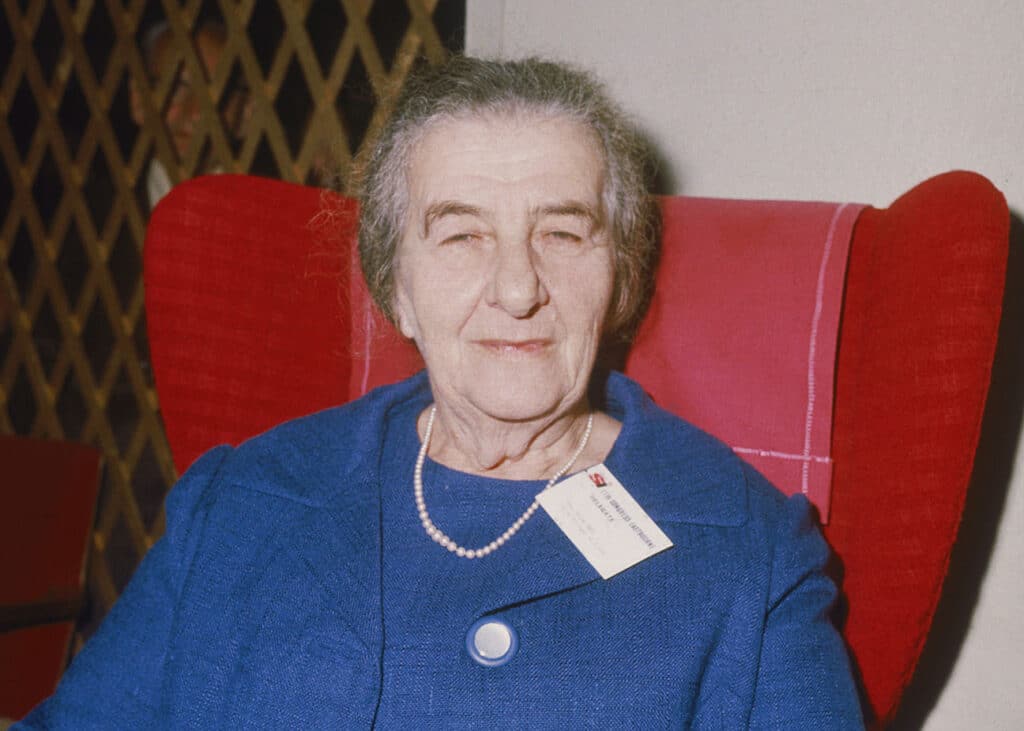
The new film “Golda,” which opens in theaters on August 25th, provides a poignant and deeply moving portrait of one of Israel’s most beloved and transformational Prime Ministers, Golda Meir. Raised largely in Wisconsin, Meir, who served as prime minister from 1969-74, was one of the world’s most prominent female leaders. Many outside Israel know her for the profound insight and empathy encapsulated in her pithy sayings, such as “A leader who doesn’t hesitate before he sends his nation into battle is not fit to be a leader” and “We will only have peace with the Arabs when they love their children more than they hate us.” In the film, Helen Mirren as Golda captures her steely leadership during the bitter challenge of the Yom Kippur War, revealing another side of her powerful character.

October 6, 1973, was Yom Kippur, the holiest day of the Jewish calendar year – the Shabbat Shabbaton (Sabbath of Sabbaths), when Jews traditionally spend the whole day fasting and praying in synagogue. In the leadup to the Holy Day, Israel was aware that Egyptian and Syrian armies were massing on her borders but, as depicted in the film, deferred to U.S. requests not to launch a preemptive strike. Instead, Israel suffered a surprise invasion by the Arab alliance, with the two invaders rapidly advancing as Israel engaged in the largest tank battles since World War II, desperately trying to repel the numerically superior invaders. The stakes could not have been higher — a mere 28 years after the Holocaust, it was understood that not only the survival of the Jewish State but the very lives of its people were in jeopardy. In the film, Golda tells one of her aides that if the Egyptian army captures Tel Aviv, she must not be taken alive.

Israel’s tiny geography and the tragic history of the Jewish people inform another of Golda’s famous quotes: “We Jews have a secret weapon in our struggle with the Arabs — We have no place to go.” In the film, Golda recalls that as a little girl in Ukraine — then a province of the Russian Empire — defenseless Jews were beaten to death in the streets by Cossacks, out of sheer spite, without suffering consequences. We now know that these murders were not random but part of a deliberate policy by the Russian government, with one of the Tsar’s ministers vowing that “one-third of the Jews will convert [to Christianity], one-third will die, and one-third will flee the country.” This gives the lie to the enemies of Israel who suggest that its citizens should “go back” to where they came from — apparently meaning the killing fields of Europe that stole six million Jewish lives or the Middle Eastern nations that expelled another million Jews in the years after Israel’s independence. Those who hate us know full well that this is not a serious proposal. There is nowhere else for Israelis to run to. As a beloved Israeli song puts it, “I have no other country.”

Israel made it out of the Yom Kippur War partly through sheer grit and pluck — most notably, turning around the military situation when then-General Ariel Sharon crossed the Suez Canal into Africa and surrounded an Egyptian Army. Credit is also due to the United States, which sent an emergency airlift to the beleaguered state of Israel, risking an oil embargo from the Arab World. Ultimately, Golda accepted U.S. pressure for a cease-fire once Israel’s forces had gained the upper hand, but on condition that Egypt’s President Sadat not only return all Israeli prisoners of war but also recognize Israel under its own name (as Israel, not the “Zionist Entity,” which rejectionist states like Syria and Iran refuse to do to this day). In the Hebrew Bible, Jacob had to wrestle with an angel (Genesis 32:25) to win the name Israel (“G-d contends” or “wrestled with G-d”), for, as the angel tells him, “you have wrestled with both the divine and with men, and you have prevailed” (Genesis 32:29).

Israel and the Jewish people, throughout history, have repeatedly had to fight for survival, to fulfill our calling as a free and ethical nation that can serve as a “light unto the nations” (Isaiah 49:6). Thanks to the leadership of Golda Meir, Israel survived one of the most terrible challenges of its modern history. However, the war cost the small country 2,656 dead soldiers and 7,251 injured. As Golda said, “It is true that we have won all our wars, but we have paid for them.” Our history teaches us that the price of failure or surrender would have been far higher. Golda the movie is without question a worthwhile way to spend a couple of hours. We all have much to learn from the compassionate and courageous woman so artfully rendered on screen, who made the difficult decisions required to ensure the survival of her people.


Savetsky works with numerous non-profit and philanthropic movements as an outspoken advocate for Israel and the Jewish people.

“Golda” is a Beautiful Depiction of a Leader, and her People, Fighting for Survival Read More »

Local 17-Year-Old Making It Big in Real Estate

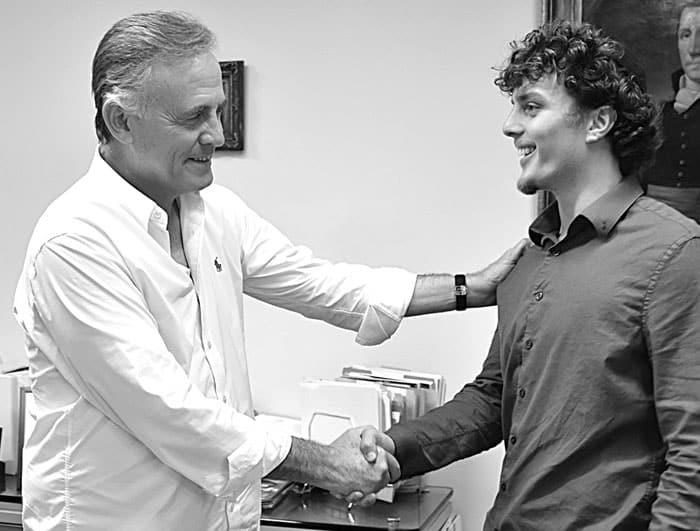
When David Luria was 15 years old, he started working in real estate. By 16, he became an executive assistant at Fred Leeds Asset Group, and by 17, when he graduated a year early from YULA High School, he began working for Leeds full time.

“Stocks were scary and just numbers on a screen. Buying bricks and giving someone a home sounded much more concrete.” – David Luria

Along with managing thousands of apartments as well as commercial real estate properties with big box tenants such as Dollar Tree, CVS and The Home Depot, Luria started his own asset management company, SD Realty, with his friend and fellow YULA graduate Simmy Goldberger, who serves as managing director. Now, the two have experience managing and investing in properties all around the United States. “I invest in real estate because I like tangible things,” Luria, who grew up in Los Angeles, Seattle and New York, said. “Stocks were scary and just numbers on a screen. Buying bricks and giving someone a home sounded much more concrete.”

When the young entrepreneur first started out at Fred Leeds’ company, he was an intern for a month.

“I was shredding papers eight hours a day,” he said. “They gave me more and more tasks. And the more I did, the more they trusted me.”

Every day, Luria wakes up around 5 a.m. and exercises. He goes to work between 7 and 9 a.m., works with Leeds until 5, and then goes home and focuses on SD Realty.

“I like to work,” he said. “I graduated early because I’m not much of a school person.”

Currently, Luria owns multiple single-family homes in Ohio because it’s an easier market to get into than L.A. “It’s the seventh most populated state and the rents are high,” he said. “It’s good for cash flow. In LA, all the taxes and tenant laws have made investments hard to manage.”

Luria enjoys working with and learning from Fred Leeds, whom he calls a father figure and “a great family man. He gives everybody the time of day no matter who they are. He’s always smiling. He’s a hard worker and very sincere.”

Luria has known the Leeds family since he was in the third grade and became best friends with Charlie, Fred’s son. “I have seen David grow up through Yavneh elementary and middle school and YULA High School, excelling at anything he put his mind to,” Fred said. “Through COVID, difficult times with apartment residents, insurance companies and retail, David shined with finding solutions when issues arise. [He is] brilliant and capable.” 

Fred’s wife, Dina, echoed her husband’s feelings. “Don’t ever discount or write off youth, as many of them are a diamond in the rough just waiting for the right opportunity to shine and show you their value,” she said. “David was always an incredible kid, but what an extraordinarily responsible and talented young adult, and businessman, he has turned out to be.” 

Luria credits his support from the Leeds, as well his mom and stepdad, for his success.  He hopes to return the favor to his parents one day. “Fred takes care of his family, and I would love to do the same for mine,” he said. 

Ultimately, Luria is going to stick with asset management, which, as a people person, he enjoys. But he also keeps a grounded perspective in mind when things get tough and clings onto his faith. “Assets won’t make or break whether I’m happy or not,” he said. “I try to be relaxed. As cliché as it sounds, I leave it up to God.”

Local 17-Year-Old Making It Big in Real Estate Read More »

Back to School Banana Treats

School is back in session. Don’t go bananas figuring out creative, healthy treats for your kids. Use them. Even better, involve your kids in the cooking and baking process.

“Both recipes are fun and kid friendly so your child can help you prepare them.” – Judy Elbaum

 “Banana muffins are a tasty and nutritious addition to the lunchbox [and] frozen bananas make a great afterschool snack,” Judy Elbaum, founder of Leave it to Bubbe, told the Journal. “Both recipes are fun and kid friendly so your child can help you prepare them.”

Chocolate Chip Banana Nut Muffins

1 ¼ cups all purpose flour
½ cup whole wheat flour
2/3 cup sugar
1 tsp baking powder
¼ tsp baking soda
½ tsp salt
½ cup shortening
1 cup very ripe bananas, mashed (about
3 bananas)
2 eggs, lightly beaten
1 Tbsp orange juice
2 tsp vanilla
½ cup chocolate chips, optional
½ cup walnuts, chopped, optional

Before you begin, you will need: a 12-cup standard size muffin pan (3” diameter x 1” deep) lined with 12 standard size cupcake liners.
Preheat the oven to 350°F.
In a large mixing bowl, sift together the first six ingredients.
With a pastry blender, two knives or your fingertips, cut in the shortening until it resembles coarse meal.
In another mixing bowl combine the mashed bananas, eggs, orange juice and vanilla; then add it to the dry ingredients.
Mix together all ingredients until just combined; do not over mix.
If desired, fold in optional chocolate chips and nuts.
Fill each cupcake liner about ½ to ¾ full with the dough.
Bake for 30 to 35 minutes or until the muffins are golden brown and a cake tester inserted into the muffin comes out clean.
Makes 8 to 12 muffins.

Chocolate Dipped Frozen Bananas

4 ripe small bananas
Popsicle or lollipop sticks (about 5-
6 inches)
16 oz white, dark or milk chocolate
2 Tbsp Crisco (you can also use Canola oil, butter or margarine)
Assorted toppings: chocolate jimmies, rainbow sprinkles, chopped nuts, toasted flaked coconut, crushed cookies, Rice Krispies, granola

Peel bananas. Cut in half. Insert popsicle or lollipop stick into cut side very gently – about halfway into the banana. Be careful not to split the banana.
Place bananas on a baking sheet lined with parchment paper. Freeze for several hours or overnight. Once bananas are frozen, you can place them in a large baggie and store in the freezer until ready to use.
When you are ready to dip the bananas, place your favorite toppings on paper plates.
Place chocolate and Crisco in a microwave safe bowl and microwave at 50% power for one minute. Repeat this process, one minute at a time until all the chocolate is melted and smooth.
Pour the melted chocolate into a long, slender cylindrical vessel (such as a champagne flute), remove each banana from the freezer and dip it into the melted chocolate.
Once the banana is fully coated, work quickly and roll in your favorite topping, before the chocolate hardens.
If desired, you can melt a different color of chocolate to drizzle on the banana instead of a topping. For instance, if you’ve coated the banana in dark chocolate, you can drizzle white chocolate over it. It is okay to drizzle on a design after the coating has hardened.
Place coated and decorated bananas on a parchment lined baking sheet and freeze.
When the finished bananas are frozen, you can store them in Tupperware or aluminum storage containers.
Serve bananas directly from the freezer. They will turn mushy if they defrost.


From the time nutritionist Dawn Lerman was old enough to hold a spoon, her grandmother had her mixing, stirring and taste testing.

Her high-fiber banana oatmeal cookies and chocolate nana donuts are easy to make and “loaded with super-star ingredients for satiety, brain health and energy,” Lerman, author of “My Fat Dad: A Memoir of Food, Love, and Family, With Recipes,” told the Journal. “They are also delicious, portable and can be enjoyed as a snack or an on-the-go breakfast.”

Photo by Dawn Lerman

Banana Oatmeal Cookies
Makes approximately 22 medium cookies.

2 1/2 cups rolled oats
½ tsp salt
¼ tsp baking soda
a dash (or more) cinnamon
3 medium bananas, the riper the better
¼ cup applesauce or pumpkin purée
1/3 cup maple syrup
2 Tbsp liquid coconut oil, or melted butter
¼ cup raisins or cranberries or dried blueberries or chocolate chips
Optional: Tbsp of almond butter, peanut butter or sunflower butter

Preheat the oven to 350°F.
Lightly grease one or two baking sheets.
In a large bowl, whisk together oats, salt, baking soda and cinnamon.
In a medium bowl, mash bananas to a creamy consistency using the back of a fork or a potato masher. Blend in the applesauce/pumpkin purée, maple syrup. nut butter. if using, and oil. Mix until thoroughly combined.
Mix liquid ingredients into the dry mixture.
Fold in raisins, dried fruits or choco-
late chips.
Roll dough into balls the size of ping-pong balls and place on a prepared baking sheet. Flatten slightly. If the mixture is a little dry you can add a little extra oil or, if you prefer a sweeter cookie, add a touch more maple syrup. Depending on the time of year, the texture of the dough seems to fluctuate a little; if it’s a little mushy, add a touch more of the oats.
Bake cookies for 12-15 minutes or until they are slightly crispy around the edges and gently firm to the touch. Allow to cool on the baking sheet for 20 minutes before removing.

Photo by Dawn Lerman

Chocolate Nana Donuts

1 1/2 cups oat flour
1/2 cup unsweetened cocoa powder
1 1/2 tsp baking powder
1/2 tsp baking soda
1/2 tsp salt
1/4 cup melted butter or coconut oil
or applesauce
1/2 cup coconut sugar, or sweetener
of choice
2 overripe bananas, mashed
1/4 cup milk of choice
1 tsp vanilla
2 eggs
1/2 cup chocolate chips

To a mixing bowl, add your flour, cocoa powder, baking powder, baking soda and salt, and whisk thoroughly. To a large mixing bowl, add your butter and sugar and beat them together with a hand mixer till creamy. Add bananas and mix till smooth. Add milk, vanilla, and eggs and briefly blend in. Add dry ingredients to your wet ingredients and mix till smooth.
Preheat your oven to 350°F and line a donut mold tin (or spray with non-stick spray). Let your batter rest for about 10 minutes, while your oven preheats. Fill the donut mold tin about 3/4 way full with batter. Bake for 18 minutes, or until a toothpick comes out clean. Let them cool before popping them out of the mold.
Fun fact: You can make your own oat flour by adding oats to a blender. Give it a quick blend until it reaches a fine (flour) consistency.


For a fast, portable on-the-go breakfast or dessert, Lerman loves a good smoothie.

“Simply dump, stir and blend,” she said. “I love to double the recipe and freeze the leftovers in a popsicle mold for a nutritious after-school treat.”

Banana Strawberry Smoothie

1 frozen banana

1 cup of fresh strawberries

½ cup of yogurt

1/2 cup of milk

1 scoop of protein powder

Blend all the ingredients till smooth. Pour into a glass. Enjoy!

Back to School Banana Treats Read More »

Problematic Behavior Like Deciding Not to Die

In the view of many, saying “I am vegan”
is for “I’ve an eating disorder” a quite useless euphemism.
It may help people who’re obese and wish to sleeken,
but useless when they are so thin you will not want to kiss ‘em.

Those who say they’d like to have a child one day, may not
object to having one for two days, but two days would be the tops,
and punchlines, which a man whose memory is poor, forgot,
provide jokers with death sentences whose periods are full stops.

The Torah’s law to send away the mother bird
from whom you’ve taken a small chick, can’t be explained.
To say it’s because God’s merciful, is wrong, a rule that sounds absurd.
How can He not protect a mother when she’s being pained?

Though weddings can be fun, few marriages last longer
than six months nowadays, which is a reason why
some like to go to funerals more than to weddings, chances stronger
for corpses, than for couples, not to change their minds to die.


Deut. 22:6-7 states:

ו  כִּי יִקָּרֵא קַן-צִפּוֹר לְפָנֶיךָ בַּדֶּרֶךְ בְּכָל-עֵץ אוֹ עַל-הָאָרֶץ, אֶפְרֹחִים אוֹ בֵיצִים, וְהָאֵם רֹבֶצֶת עַל-הָאֶפְרֹחִים, אוֹ עַל-הַבֵּיצִים–לֹא-תִקַּח הָאֵם, עַל-הַבָּנִים.   6 If a bird’s nest chance to be before thee in the way, in any tree or on the ground, with young ones or eggs, and the dam sitting upon the young, or upon the eggs, thou shalt not take the dam with the young;

ז  שַׁלֵּחַ תְּשַׁלַּח אֶת-הָאֵם, וְאֶת-הַבָּנִים תִּקַּח-לָךְ, לְמַעַן יִיטַב לָךְ, וְהַאֲרַכְתָּ יָמִים.  {ס} 7 thou shalt in any wise let the dam go, but the young thou mayest take unto thyself; that it may be well with thee, and that thou mayest prolong thy days.

The Mishnah Berachot 5:3, legislates that we silence a precentor who prays: על קן צפור יגיעו רחמיך “Upon the bird’s nest does your mercy extend.” Tzvi Novick explains in “Morality and Prepositions: On Taking a Mother on Her Young” that according to the Babylonian Talmud the rationale for this prohibition is that the precentor who attributes this law to God’s mercy “overemphasizes God’s mercy, at the expense of other attributes, in particular anger.”

Novick points out that the name of this law, provided in m. Hul. 12:1, שילוח הקן, sending away the nest, is anomalous, since the law actually really demands  שילוח האם, sending away the mother bird. Novick also  points out that  שילוח,  the nominal form of the piel verb תשלח in Deut 22:7, reminds us of  divorce, because the word שלח denotes divorce in Deut 24:1. This leads me to surmise that the term שילוח הקן, sending away the nest, implies that the law is an implied polemic against divorce, suggesting that it is problematic behavior which involves not only expulsion of a mother but the breakup of a nest.


Gershon Hepner is a poet who has written over 25,000 poems on subjects ranging from music to literature, politics to Torah. He grew up in England and moved to Los Angeles in 1976. Using his varied interests and experiences, he has authored dozens of papers in medical and academic journals, and authored “Legal Friction: Law, Narrative, and Identity Politics in Biblical Israel.” He can be reached at gershonhepner@gmail.com.

Problematic Behavior Like Deciding Not to Die Read More »