fbpx

July 26, 2023

American Dreamer

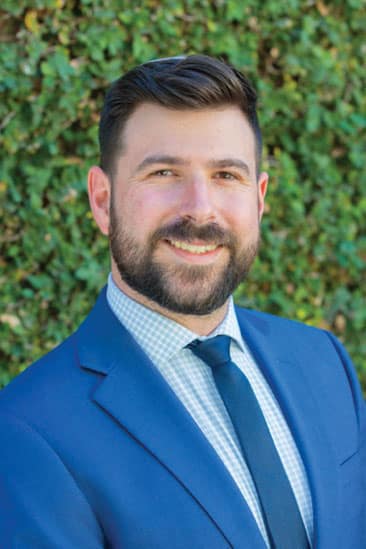
If you want to make my heart sing, just say the words “American Dream.” I am that corny immigrant from Morocco who believes in that idealized view of America, perhaps because I have lived it. I worked 12-hour days for many long years building with my partner an advertising agency that rose to be named “Agency of the Year” by USA Today.

On my long and often difficult journey to the rarefied air of the ad biz, at no point did I ever feel that something within America was getting in the way of my dream. My adopted country was there to provide the opportunity, and it was up to me to seize it.

That idea best summarizes my love for this country: Everything was up to me. It was up to me to shape my work habits, my expertise, my networking and, ultimately, my destiny.

When I changed careers and graduated to my first love, journalism, I took my American dream to the next level. If I felt like writing a critique of our president in my weekly column, I never took it for granted that I lived in a country that afforded me that freedom.

This priceless freedom to shape one’s destiny infuses two new books connected to the iconic Michael Milken.
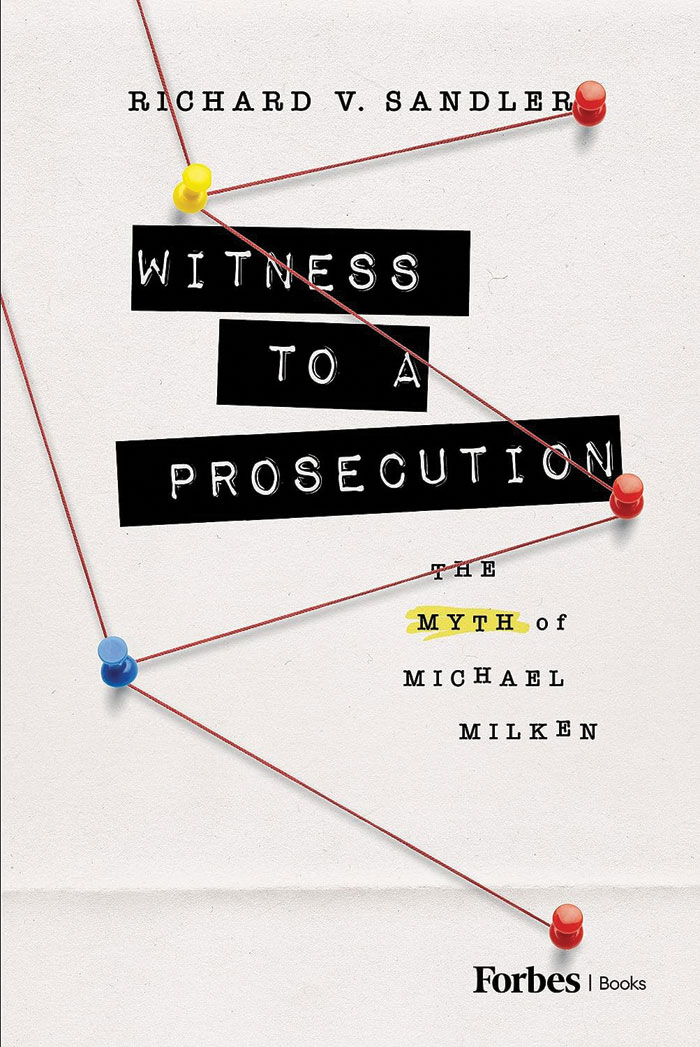
The first, “Witness to a Prosecution: The Myth of Michael Milken,” is a detailed, firsthand account by Richard Sandler of one the biggest news stories of the 1980s. Sandler, who is both a close friend of Milken’s and acted as one of his attorneys, describes the beginning of the long ordeal as follows:  

“In 1986, the Securities and Exchange Commission (SEC) and the US Attorney’s Office for the Southern District of New York began an investigation of Michael and Drexel Burnham Lambert and its High Yield and Convertible Bond Department, a department Michael created and headed. Michael was the most successful and innovative financier of his time, and Drexel, due to Michael, was the most successful securities firm on Wall Street.”

That description gives us a little taste of a high-flying time in America that today feels almost quaint. These were the days before 9/11, the Iraq War, Donald Trump, COVID, Black Lives Matter, Twitter wars, cancel culture, remote work, AI and a national crisis of isolation and mental health.

Quaint or not, the American dream was as alive as ever during the roaring ’80s. Through his blow-by-blow account, Sandler chronicles not just a controversial prosecution but also the aphrodisiac of ambition and dreams that shapes the American story. There’s not much he didn’t see.

“From the moment the investigation started, I became Mike’s personal lawyer, responsible for working with the lawyers we hired and overseeing the defense,” Sandler writes. “As such, I witnessed exactly what happened, how it happened, and why it happened.

“Michael Milken and this prosecution have been described in books and articles by others who had no firsthand knowledge of the events and were motivated to describe what happened in a certain way. I, too, am motivated to describe what happened, but I am motivated because I want the true story told, and I do have firsthand knowledge. I lived this matter day in and day out for over 10 years.”

The book is a slice of heaven for finance and legal nerds. The amount of detail can be mind-numbing, but it’s clear that Sandler is injecting as much context as possible so readers can get a fuller picture of why Milken ended up pleading guilty to regulatory violations and serving time. It’s finally the moment, Sandler writes, “to set the record straight.”

Because I’m neither a finance nor a legal nerd — I’m more of a philosophy nerd — what fascinated me most about the book was a section explaining the infamous term “junk bonds,” which has long been associated with Milken.

It turns out the moniker “junk” is somewhat misleading. Technically, while higher-rated or investment-grade bonds have ratings such as AAA, AA or A, anything rated below BBB was more accurately called “high yield bonds” rather than “junk bonds.”

What was so special about these high yield bonds? As Sandler explains, “The rating agencies gave a rating based on the past. Michael did research to understand the future, where a particular company was going and where its industry was heading.”

Milken’s innovation, in other words, was to assess investment opportunities and yields based on future potential rather than just past performance, as everyone else was doing. I found that a compelling idea. You’re not a captive of your past; you’re a master of your future. But assessing potential required a lot more due diligence, which, as Sandler writes, “often included meeting the management of the company, since Michael believed the most valuable asset was human capital, and that was not on the balance sheet.”

This forging of human capital and future potential is what brought home the idea of the American dream. Milken was out to democratize capital and make it accessible to those who showed potential but didn’t meet the standards of the rating agencies. He wanted to help entrepreneurs with good ideas go after their dreams. Sandler quotes a Wall Street Journal op-ed from October 1990:

“[Milken] would in time conclude that what really counted was future cash flow and the quality of a firm’s management team. Mr. Milken helped raise funds for more than one thousand small firms, many of which have become household names such as MCI Communications, KinderCare and the Turner Broadcasting System.”
The fact that Milken’s innovation made him wealthy is a sign of his creativity and hard work more than anything else.

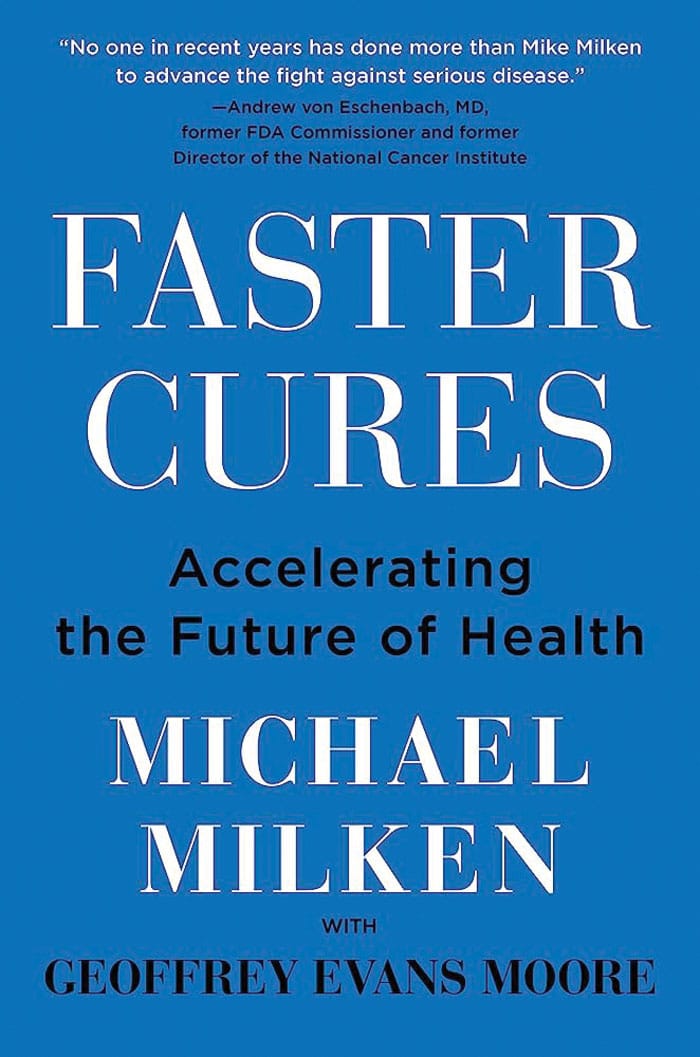
But as fate would have it, after he got through his legal ordeal, Milken’s own destiny was severely tested. He was diagnosed in 1993 with terminal prostate cancer and was told he had 12 to 18 months to live. This personal trauma brings us to the second Milken book I alluded to, this one written by Milken himself: “Faster Cures: Accelerating the Future of Health.”

Fueled by his will to overcome his cancer diagnosis and help others benefit from his work, Milken threw himself at the often dysfunctional and inefficient world of public health. The book is a deep dive into one man’s relentless passion to make a complex behemoth institution work better. Just as he disrupted the world of finance, Milken took that same discipline and innovation to the field of health. By connecting dots that were never connected and better leveraging resources and investments, he made enough of an impact that Fortune magazine dubbed him, “The man who changed medicine.” In the process, he managed to conquer his own cancer through the latest treatments and a radical change in his diet and health habits.

In both books, which cover a half-century of Milken’s life, we encounter a man whose nature is to aim as high as possible. If there is a golden thread to the man and his life, it may be just that: a drive to dream big and to act even bigger. The jacket description of “Faster Cures” speaks to an almost child-like enthusiasm to dream the biggest dreams:  

“What if cleaning early-stage cancers from your body could become as routine as going to the dentist to clean your teeth, or if a single vaccine could protect you against multiple viruses, or if gene editing could eliminate many birth defects and slow the aging process?”

Milken wants us to know that these dreams, and many others, are within reach.

It’s perhaps fitting, then, that the culmination of Milken’s life centers around an expansive public space in Washington, D.C., named the Milken Center for Advancing the American Dream (MCAAD).

Artist rendering (Courtesy of Milken Center for Advancing the American Dream)

According to reports, he has poured $500 million of his own money into establishing the complex, which is currently being built and sits across the street from the U.S. Treasury and catty-corner from the White House.

For all the spectacular nature of his latest venture, in pitching the center on its website Milken prefers to focus on human interest stories.

“Over the past five decades,” he writes, “I’ve known and worked with many outstanding people who exemplified the American Dream. When we began planning the Milken Center for Advancing the American Dream several years ago, we wanted to celebrate their stories and those of thousands of others who provide inspiration and hope for the future.”

Among those stories, he describes people like:

• Reginald Lewis, who came from a tough East Baltimore neighborhood and through sheer grit became a star athlete, a Harvard-trained lawyer and a remarkably successful entrepreneur. It was my privilege to help finance the growth of the business that made Reg one of the first African-Americans to lead a billion-dollar enterprise.

• Yvonne Chan, a self-described “very poor peasant kid” who emigrated from China, followed her dream in Los Angeles and inspired thousands of inner-city students to excel beyond all expectations. As a young woman, she learned Spanish picking oranges and grapes to put herself through school. Today, 90% of the predominantly Latino students in the low-income neighborhood school she founded go on to college.

• Kevork Hovnanian, an Armenian Christian living in Iraq, who fled to America after the 1959 revolution with no money but with fierce determination. He went on to build one of the nation’s largest home-building companies. So strong was his feeling about keeping new houses within the reach of average Americans that he personally set the prices.

• Padmanee Sharma, M.D., Ph.D., whose ancestors were indentured laborers in India. Sold into slavery, they landed in Guyana on South America’s Atlantic coast. Today, in partnership with her husband, Nobel laureate James Allison, she advances the science of immunology at an Anderson Cancer Center laboratory.

In seeing these stories, I couldn’t help but think back to a tiny Arab village 20 minutes from Casablanca where I was born many moons ago. While hardly having the same level of drama or suffering, I still see myself as a product of the American dream: moving with my family to the frozen tundra of Montreal, falling in love with English, graduating from McGill, getting a first job with Procter and Gamble, moving to Los Angeles, opening my own ad firm, raising a family, starting a new career mid-life, etc.—and all along, struggling, losing and sometimes winning, but always fortunate to be in a place where there is “hope for the future.”

This hope now occupies Milken’s present. If he spent the ’80s selling America high yield bonds, he is now promoting high yield hope. It’s as if he wants “hope for the future” to spread like a positive epidemic, available to anyone willing to put in the work.

As it says on the MCAAD website, “The idea at the heart of the American Dream speaks to the aspirations of people everywhere: No matter who you are or where you come from, you should have the opportunity to build the life you want to live. Our purpose is to make the American Dream attainable for all.”

In addition to assembling a top professional team, Milken’s center has identified Four Pillars that help turn dreams into reality: Education and job training; good health; economic freedom; and an entrepreneurial mindset. You might say those four pillars have defined Milken’s professional life.

That professional life has seen many swings. Since he became such a household name in the ’80s, in recent years Milken has had a tendency to stay in the background and let his actions and initiatives, such as the prestigious Milken Institute Global Conference, do the talking.

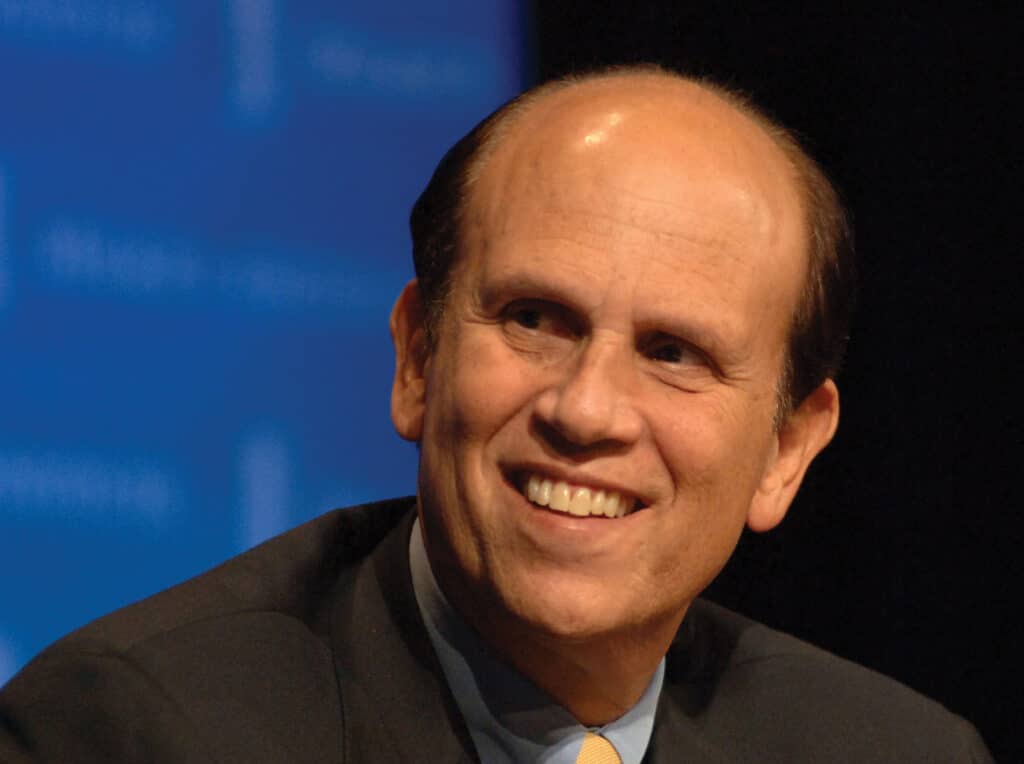
Michael Milken (left) at the 2023 Milken Institute Global Conference at The Beverly Hilton on May 02, 2023 in Beverly Hills, California. (Photo by Jerod Harris/Getty Images)

I’ve only met him a few times, bumping into him at events or galas. One encounter that I distinctly remember occurred several years ago at Milken Community High School, where one of my kids was enrolled. He was wearing jeans and was about to go downtown to teach math to inner city kids. When I offered to tag along one day and write about it in my weekly column, he was polite but didn’t show much interest. Clearly, he wasn’t doing it for the press or for his image. He was doing it for the kids.

Maybe the fact that he wasn’t looking for press is what drew me to write about him. I would say, though, that the biggest reason is simply that I share his belief in the American dream. I’m still that grateful immigrant from Morocco who believes in such things. At a time when cynicism and political tribalism rule the national conversation, we could do worse than bring back the innocence of pursuing dreams.

What makes Milken especially effective as a dreamer is a knack for strategy and execution. I’ve spoken to several people close to him and they all say the same thing: He can cut through the bureaucracy and get big things done with maximum impact. He’s a dreamer with a plan. It’s not a coincidence that his center wants to advance the American dream, not just celebrate it.

Jews should know all about advancing dreams. Indeed, the Jewish story in America is very much one of pursuing dreams — for us and for others — and making them happen. Judaism at its best is when the Jewish people share their gifts with the world to make it a better place.

As Rabbi Marc Angel wrote in 2004 on the 350th anniversary of Congregation Shearith Israel in New York: “America is not merely a country, vast and powerful; America is an idea, a vision of life as it could be … During the past 350 years, the American Jewish community has accomplished much and contributed valiantly to all aspects of American life.”

Michael Milken, the financial genius of days long past, is sharing his gifts with the world to improve our health and help us follow our dreams. In doing so, he is fulfilling his own American dream.

American Dreamer Read More »

Sleepaway Camp

Two days after the school year ended, I was sent away to a Jewish sleepaway camp in the Catskill Mountains, also known as the Jewish Alps. The term “sent away” is also used when one is shipped off to prison. I was 10 when my parents sent me away for a full eight weeks. 

For many of us New York kids, summer camp was our yearly break from the sweltering heat and concrete jungle, and instead of an open fire hydrant, the swimming pool at camp was amazing. Baseball on real grass and actual dirt. Tetherball, tennis, swimming with tadpoles and frogs. And living with a variety of bugs and wildlife other than rats, roaches, and alley cats. And no parents. Some kids missed their parents, some could not get rid of them fast enough. I vacillated between the two.

I noticed the kid who prayed the hardest was the one who was usually hit in the head with a hardball and was sent back home with a lump on his head.

We marched to the flagpole at 7 A.M.  to salute, say the Pledge of Allegiance and then mumble our morning prayers. I noticed the kid who prayed the hardest was the one who was usually hit in the head with a hardball and was sent back home with a lump on his head. Then it was off to gruelfast, usually powdered eggs, stale cereal, and warm milk with dead mosquitos floating on top. Prepared flawlessly by some of the country’s top 16-year-old, Jewish, acne-faced chefs. 

If it rained, we’d watch a movie shown on a wrinkled white sheet, or arts and crafts which was lanyard making, and bingo to get us ready for old age. A future Jewish accountant who could not count always yelled “Bingo!” when they didn’t have it. 

No calling home until the fourth week, unless there was an emergency. Like in the old prison movies, two dial pay phones were attached to the canteen wall. We were limited to a three-minute collect call. If your parents didn’t answer your call, there was always some idiot kid who told you they were dead. 

There was one parent visiting day during the eight weeks, and if a kid’s parents didn’t show up, word spread that their parents didn’t like them. On visiting day, the camp notched the food up to a C+. 

Parents were allowed to send care packages twice during the summer. When my first one didn’t arrive like everyone else’s, now-billionaire Barry Silverman told me that my parents moved and that I’d have to live at the camp forever. I was much relieved when my package eventually did show. I offered none of my provisions to Barry, short-sheeted him, and dropped Daddy Longlegs on his face and down his throat while he was asleep. Eventually, they moved him to another bunk. 

Unless you took out someone’s eye with a rock or kept pushing kids who couldn’t swim out of their canoe, it was hard to be sent home. But let’s face it, for the most part, what happens in sleepaway camp stays in sleepaway camp.

My favorite was the bunk raids and of course Color War. None of the bunks were ever locked. A raid consisted of stealing an article of clothing and then hanging it from the flagpole. It always got returned. During Color War, we learned the valuable lesson that if someone beats you at something you can still be good friends with them. 

Most of us kids had no idea what sleepaway camp was offering us. Besides fun and bad food, it was the first opportunity for many of us to spend some real time away from our homes. It was a chance to make new friends and grow up simply by separating us from our parents and siblings for a few weeks. 

When I returned from a summer away, I was a different person. I was tan, more mature, though I still had at least 30 more years until people stopped asking when I would grow up. The food at home was like dining in a Michelin five-star restaurant compared to the powdered eggs and bug juice that I had gotten used to over the summer.

My wife and I sent our boys to sleepaway camp. We loved them, but it was a pleasure to be rid of them for a few weeks. Just like my parents felt.


Mark Schiff is a comedian, actor and writer, and host of the ‘You Don’t Know Schiff’ podcast. His new book is “Why Not? Lessons on Comedy, Courage and Chutzpah.”

Sleepaway Camp Read More »

Love Don’t Fade Away

“Words are the language of the mind, but music is the language of the soul. And when the soul sings, the spirit soars.” 

– Rabbi Jonathan Sacks 

Some things in life fall under the category of “too beautiful.” A poem, a song, a relationship — it doesn’t just touch your soul, it sears through it, changing you in the process.

I’ve listened to the song “Love Don’t Fade Away” by Darren Glick hundreds of times. But each time I listen it tears through me in a way I’ve never experienced before. 

I’ve listened to the song “Love Don’t Fade Away” by Darren Glick hundreds of times. But each time I listen it tears through me in a way I’ve never experienced before. Written by Glick in 2019, the song captures both the life and death of Samuel Isaac Farkas, who tragically slipped off a balcony to his death a day before his 16th birthday. Glick and Michael, Samuel’s father, have been close friends since childhood. But Glick’s inspiration came from Sammy’s beautiful soul: wise, empathetic, kind. A young man truly touched by G-d.

During shiva, students and teachers from the Hebrew Academy of Miami Beach, where he had been a sophomore, told story after story of Sammy’s remarkable ability to connect — and understand. “One young student,” Glick said, “was entering his first day of the middle school. Sammy found him in the bathroom crying. When asked why he was crying and if he could help, the young kid said, ‘it’s my first day and I don’t know anyone.’ And he was scared and lonely. Sammy, as was his specialty, gave him a big smile and said, ‘Well, you’re my friend and now all my friends are your friends.’ They became and remained best friends from that moment on.”

Another time Sammy told a friend: “I can tell something is bothering you.” When the friend said he was struggling with his relationship with his father, Sammy told him: “You have to respect your parents. And once you show the respect, you’ll see the relationship change.”

“And the stories just continued,” Glick told me, “as if we were being shown this beautiful secret life of a hidden Tzaddik. I witnessed this incredible outpouring of love and giving from Sammy’s friends and acquaintances, and from rabbis, guidance counsellors, and teachers as well as from parents. I witnessed a community that recognized a need to cradle this family in a time of sheer grief and paralysis and make sure their needs were looked after as one of their own. Not just for the seven days of shiva … but for weeks and in certain situations, months.”

The idea of writing a song for Sammy came during shiva. “The melody came first,” Glick said. “The feeling was overwhelming. A tune had already formed inside my heart. But I was at a loss for words and a loss for a Hebrew prayer that would reflect these multiple overwhelming feelings of emotion that were rippling through me.”

On the first Shabbat during shiva, Glick walked with Sammy’s father to shul in the morning. “I remember being so torn inside every time I heard Sammy’s father say Kaddish. And with tears rolling down my face, I wholeheartedly asked HaShem to help me find the right words, and the right prayer, for Sammy. I turned the page in my Siddur and there was—the Shochen Ad prayer.”

In that prayer there is a name that is encoded vertically: Yitzchak — Sammy’s Hebrew name. A rabbi later showed Glick that there was another name encoded in the prayer vertically: Rivkah — Sammy’s mother’s name. And then the rabbi explained to Glick the literal interpretation of the prayer as well as its deeper secrets.

While in its literal sense, the Shochen Ad prayer is about the exalting and praising of G-d, it has a far deeper symbolic meaning. The commentary in the Artscroll Siddur states that “the primary Praise of God comes from the deeds of the Righteous. The ‘key’ however is not in their rhetoric but in the ‘song’ of their good deeds.”

“You can do a mitzvah without any emotion and still receive your credit,” Glick explained. “But the holiest way is by doing that mitzvah in joyous song, with your soul, your very essence. Sammy epitomized this understanding of holiness. I knew I had found the lyrics.”

“Sammy didn’t ask, he just did,” Glick said. “He put himself out there for anyone and everyone. With a smile, words, prayer—in any way he could. He lived it.”

“Wrote it down so I would remember
Took a picture in my mind
Oh that smile, I’ll never forget you
My memory is stuck in rewind.”

For the first yarzheit of Sammy’s passing, January 2020, Glick wanted the students at the Hebrew Academy to sing the song for Sammy’s family — Koolulam-style. “Since it was the students that inspired me to write it,” says Glick, “this was their song as well, not just mine.” 

The principal was fully supportive of the idea and gave Glick a 45-minute window during finals week to teach the entire student body the song. The following day the school performed it, helping to create the song’s official video.

Sammy’s friends and fellow students, on their own, began several personal and communal campaigns in his honor. To be “Sammy Strong” and “Do it like Sammy” by adding mitzvot to their daily lives as well as organizing and distributing Shabbat candles on the streets of Miami Beach. “Because that’s exactly what Sammy would’ve liked his friends and classmates to do. To unite to help and elevate others and thus yourselves. Sammy’s passion combined with his enormous compassion allowed him to truly personify the mitzvah of ‘Love Thy Neighbor Like Yourself.’” 

“Snapshot of the moment
I caught you looking at me while I was staring at you
Regrets and Atonement
I believed every word you said was True”

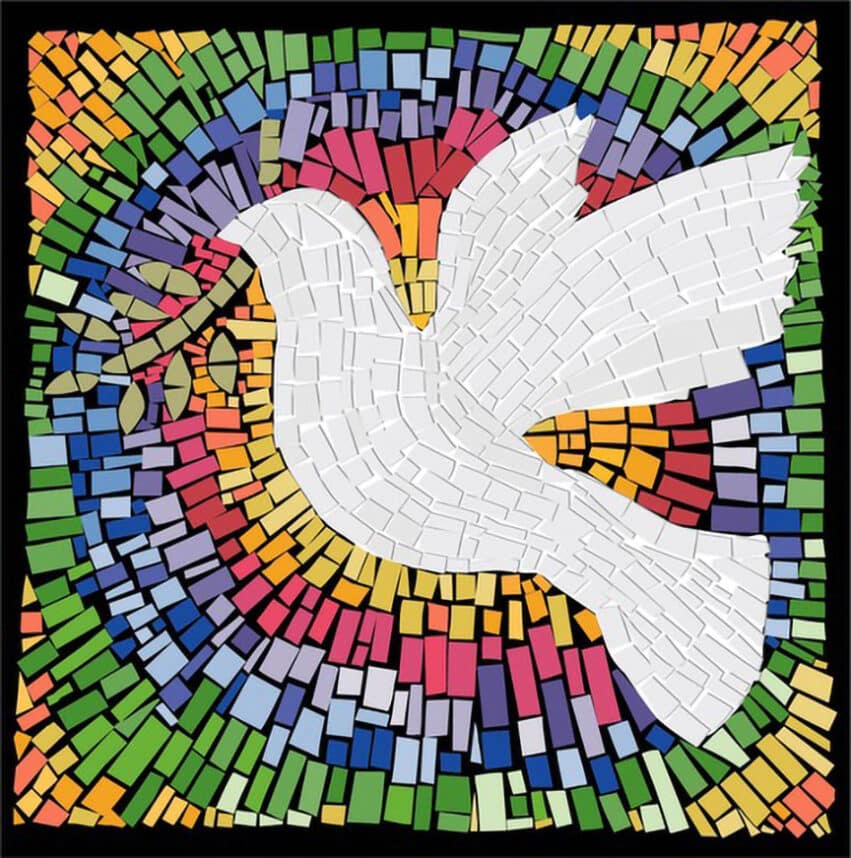
The dove mosaic in the video was created by Sammy and a couple of his fellow students in his art class, a few weeks before he passed.

“I wrote the song thinking this may help, in some way, to heal this awful wound, and in fact it has helped me in the years that followed,” says Glick. “Almost every morning I would start my day by listening to the song, and it would motivate me to put on my Tefillin right away and it would reverberate inside me throughout the day, to the point that I was going to minyan three times a day. In Sammy’s honor.”

“Just as a Tzaddik is said to be living even after his death by his deeds and his teachings being passed on. So too Sammy’s legacy will live on by all those he gave a helping hand to. Or listened with compassion to their problems and gave advice to. And all those he helped stay on the derech — the path.” 

“You said Love don’t fade away,
If you reach out you’ll feel me
Sing out, you’ll hear me
I close my eyes, I’ll see you again”

“The universe is always filled with music,” says Glick. “You have to be open to it to receive it.” 

Sammy’s song has indeed been well received. It became the #1 song on Al Gordon’s Show on WJPR 1640 for several weeks, and received quite a bit of airplay on Nachum Segal’s Jewish Radio Station.

Glick also performed it when he opened for Matisyahu at the Chabad Loft Annual Gala in 2019 in New York City. “A few months after the memorial video was uploaded to Facebook, I received a message from Eric Weinstock. I was Facebook friends with him but had not spoken to or seen him in 45 years … Eric explained that he thought ‘Love Don’t Fade Away’ would be perfect for a film he had written and was about to begin filming. I was honored and explained that I would first like to get Sammy’s father’s approval as I consider it Sammy’s song.”

 “I always knew that this song had a journey of its own, and I was only a passenger,” says Glick. “It was truly divinely inspired.” 

The short film that Weinstein created, also titled “Love Don’t Fade Away,” is a story of love and loss and the search for life’s meaning. A man struggles to find peace of mind amidst the crushing pressures of financial insecurity and self-doubt. Feeling he is letting down himself and his wife, the man’s pursuit of life’s true meaning takes an unexpected turn; his serendipitous “discovery” challenges him to contemplate what matters most in this life. 

“I’m prepared to talk to the Angels

Make them grant me time with the One above

On my way up I’ll wear me a white robe

And ask Him one thing what is Love?”

Glick performed the song at the premiere of the “Love Don’t Fade Away” film in Boston in April. Says Glick: “True love never fades away, even after death.” Because of this song, this angelic young man who I never met has inspired me to be a better person. Such is the power of music, stronger than any other art form. The song was divinely inspired to not just touch every soul — but to change every soul that listens. And, of course, to appreciate each day with our loved ones and to take nothing for granted. “Some people come into our lives, leave footprints on our hearts, and we are never the same,” wrote poet Flavia Weedn. As do some songs.

“You said Love don’t fade away,
If you reach out you’ll feel me
Sing out, you’ll hear me
I close my eyes I’ll see you again.”


Karen Lehrman Bloch is editor in chief of White Rose Magazine.

Lyrics © 2020 Darren  Glick.

Love Don’t Fade Away Read More »

The Gift of Breath

Most of us don’t give much thought to breathing. It is an automatic physical response that keeps functioning on its own. It is only in moments of crises such as asthma, allergy symptoms, and lung disease, including COVID, that the breath becomes the focus of our attention, aware of how critical it is to staying alive. But even if healthy, our breath is impacted by the stressors of daily living — spam calls and unwanted emails, rude drivers, reports of environmental disasters, prospect of certain presidential candidates, noise of
garden blowers, construction, and constant cellphone conversations, all on our watch unbidden. Then there are the deeper stresses of family conflicts, personal challenges, and as I have experienced, on-going caregiving. Everything that impacts us physically, emotionally, and spiritually influences our breath and in turn affects our health and well-being.

An individual takes an average of 12-15 breaths a minute, rather fast paced, almost verging on a fight-flight response. What research shows, and what faith traditions have known since ancient times, is that focused breathing not only brings a greater sense of calm but will extend one’s life.

An individual takes an average of 12-15 breaths a minute, rather fast paced, almost verging on a fight-flight response. What research shows, and what faith traditions have known since ancient times, is that focused breathing not only brings a greater sense of calm but will extend one’s life. The health benefits have been documented. When we slow down each breath, we affect blood pressure, heart rate, as well as calming our nerves, all of which maintain a sense of stability and well-being. In such trying times we can reduce fear, anxiety, and depression by merely paying attention and slowing down our breath. We become our own self-regulators and reduce the need for medication. At least, 10-15 minutes a day harmonizes our being.

In Hebrew the word Ruach means breath and spirit, and the word N’shamah, soul, with different vowels, becomes another word for breath. Breath and spirit are one.

The medical community has come a long way in understanding the power of the breath to effect changes in the body, but many religions have had a visceral understanding of the breath and its power for physical and emotional equilibrium as well as the spiritual awareness and transcendent experience in centered, focused breathing, often the first step in meditation. In Hebrew the word Ruach means breath and spirit, and the word N’shamah, soul, with different vowels, becomes another word for breath. Breath and spirit are one.

There is another beautiful Hebrew word, Kavanah, which means intention and direction. It is a qualitative approach to whatever we do; praying, mitzvot, and even engaging in conversation. As proud as we are of the ability to multitask, like typing while speaking to a friend on the phone or checking emails when sharing a meal at a restaurant, we actually undermine the potential for deeper connections when our attention is bifurcated. Approaching, with sincere desire, any activity, we receive added emotional rewards plus the gift of our presence. It is no different with the most essential activity of daily living, breathing. When done with intention, focus and patience, slow and with purpose, we restore our center, nourish our inner organs, and maintain a sense of equanimity we so need and desire in these chaotic times.

Torah teaches why we must honor the breath and give it the respect and due it deserves. In the first book of Torah, Bereishit, we read how G-d speaks all of creation into being. But when we get to Chapter 2 something startling is presented. G-d forms the human out of particles of dust and then blows into the nostrils the “breath of life and the human becomes a living soul.” This is the most intimate and personal act of creation. I have no doubt that when G-d breathed into the human it was long and slow, from the depths of G-d’s love, with kavanah, sincere intention. The spirit of the Holy One is gifted to man and woman. We each receive a spark of the Divine, enlivening us and nurturing us with life and with soul. Every breath is an opportunity to continually re-experience this moment.

Not only is focused slow breathing healthy, nourishing, and calming, it is a connection to the source of our existence. Each breath makes possible an awareness of gratitude we sorely need when difficulty and loss surround us. When we are most depleted, discouraged, and ridden with anxiety we have the free will offering from the Divine. The Ruach Elohim, the spirit/breath/wind of G-d flows into our nostrils, invigorating our cells, renewing our bodies and our spirits, regenerating, all of our internal functions building the kind of resilience we need to sustain whatever confronts us while healing that which is within us. What better present could we receive, one that is available at every moment. 

Take a minute, close your eyes, breathe in, receiving the gift of Divine love, slowly, intentionally, to the count of 6, then slowly, to a count of 6, breathe out, returning to the Universe that which nurtures G-d’s creations. Pause, feel peace, Shalom, and a sense of wholeness, Shaleym. This is yours whenever life feels frightening, overwhelming, or too challenging. This is the gift of breath.


Eva Robbins is a rabbi, cantor, artist and the author of “Spiritual Surgery: A Journey of Healing Mind, Body and Spirit.” 

The Gift of Breath Read More »

Cutting Off State-Sponsored Hate: Defunding AB 101 Will Stop UC Faculty’s Antisemitic Crusade

The passage of California’s ethnic studies high school graduation requirement bill (AB 101) in 2021 has unfortunately resulted in a growing number of school districts adopting ethnic studies curricula with anti-Jewish and anti-Zionist biases and contracting with consulting groups that promote an antisemitic so-called “liberated” version of ethnic studies. This, despite “guardrail” amendments added to the bill to prevent exactly that. As mainstream Jewish organizations anguish over the abject failure of the “guardrails,” they should keep their eyes on a related, alarming development at the University of California.

The UC Ethnic Studies Faculty Council, claiming to represent 300 ethnic studies faculty across the UC system, recently launched an effort to revive a proposal written by members of the Council’s leadership, who wanted the University “to play a defining role in how ethnic studies is rolled out through the state” in the wake of AB 101’s passage.  That proposal calls for making a “liberated”-style ethnic studies course a pre-requisite for UC admission and the de-facto standard of ethnic studies courses in California high schools. The proposal was on track to be approved by the Academic Senate last year, but was derailed at the last minute because of strenuous opposition from UC faculty and members of the public.

Whether the proposal will be reconsidered by the Academic Senate in the coming year – or ever — is anyone’s guess.

In the meantime, however, recent actions of the Council’s leadership have provided a frightening glimpse into the kind of “defining role” that UC ethnic studies faculty intend to play in the roll-out of AB 101.

Earlier this month, Chair of UC Santa Cruz’s Critical Race and Ethnic Studies Department Christine Hong, who is also a founding member of the UC Ethnic Studies Council and a lead writer of the controversial ethnic studies admission requirement proposal, joined together with a handful of other ethnic studies faculty and activists from across the country to form the Institute for the Critical Study of Zionism. The new Institute’s website claims that its purpose is to “support the delinking of the study of Zionism from Jewish Studies, and to reclaim academia and public discourse for the study of Zionism as a political, racial and gendered knowledge project, intersecting with Palestine and decolonial studies, critical terrorism studies, settler colonial studies, and related scholarship and activism.”

Lest there be any doubt that the Institute will focus on promoting anti-Zionist activism rather than genuine scholarship, consider that the six university-affiliated members of the institute’s “Founding Collective,” including Hong, are not only open proponents of an academic boycott of Israel, they have all signed a statement pledging to bring the antisemitic boycott onto their campuses and into their classrooms. And to that end, the group is planning an October conference to formally launch the institute that will take place at both New York University and UC Santa Cruz. Entitled “Battling the ‘IHRA definition’: Theory & Activism,” the conference promises to build knowledge about how the IHRA definition “both amplifies and hides repressive power and state violence,” as well as to help academics and activists who are “battling” the definition to develop “strategies to advance that work.”

The International Holocaust Remembrance Alliance (IHRA) definition, the most authoritative and internationally-accepted definition of antisemitism today, rightly understands that the vast majority of Jews worldwide are inextricably linked to the Jewish state and identifies physical and verbal threats to Israel’s existence as forms of antisemitism. As such, the Institute’s inaugural conference, whose purpose is to battle the IHRA definition by denying the connection between Zionism and Judaism, constitutes a broadside attack on Jewish identity and the Jewish state that is antisemitic in both intent and effect.

Among the conference’s co-sponsors are Hong’s Critical Race and Ethnic Studies Department and its Center for Racial Justice at UCSC, as well as the UC Ethnic Studies Faculty Council.

Shockingly, despite the fact that the conference is being held at a University of California campus with official departmental sponsorship and possible university funding, all speakers and attendees are required to “confirm their agreement” with the anti-Zionist “points of unity” that guide the Institute’s work. These include identifying Zionism as “a settler colonial racial project” linked to “group supremacy,” “ethnic cleansing,” and “racism,” and agreeing to “join in resistance” against Zionist repression.

For Christine Hong and fellow UC Ethnic Studies Council members, the anti-Zionist focus of the Institute and its inaugural conference is not just personal, it’s professional – part and parcel of how they understand their discipline, teach it to their students, and believe it should be taught to high school students throughout the state.

Should the Council-backed ethnic studies admission requirement proposal be approved in the near future, high schools gearing up to implement the AB 101 requirement will feel compelled to ensure their students are UC-eligible by choosing a “liberated” ethnic studies curriculum almost guaranteed to incite animosity towards Jews and the Jewish state. Even if the proposal is not immediately approved, schools struggling to meet AB 101’s impending deadlines are likely to opt for a “liberated” course anyway, figuring that a UC ethnic studies admissions requirement could be approved at any time.

Although keeping an antisemitic “liberated” version of ethnic studies out of California classrooms seems hopeless, it may not be.

A recent memorandum published by the Foundation Against Intolerance and Racism makes a compelling case that AB 101 is not yet operative. A last-minute amendment to the bill, apparently added by legislators who worried the bill’s guardrails could not prevent antisemitic “liberated” curricula from being adopted in many school districts, stipulated that the bill is “operative only upon an appropriation of funds by the Legislature.” Yet since the passage of AB 101, no such funds have been allocated.

If AB 101 is inoperative, high schools are under no obligation to establish an ethnic studies requirement, nor will the large number of schools that have not yet established one be motivated to do so, given its considerable cost and the pressing need to address students’ post-pandemic learning losses.

Although members of the California Legislative Jewish Caucus supported AB 101, believing the guardrails they helped to insert would keep the antisemitic “liberated” curriculum out of high school classrooms, they were mistaken. Now is the time to make things right.

The Jewish Caucus must clarify for the Jewish community whether the ethnic studies graduation requirement mandated by AB 101 is operative. If it is not, they must do everything in their power to make sure it stays that way.


Tammi Rossman-Benjamin is the director of AMCHA Initiative, a nonpartisan, nonprofit organization dedicated to combating antisemitism at colleges and universities in the United States. She was a UC faculty member for 20 years.

Cutting Off State-Sponsored Hate: Defunding AB 101 Will Stop UC Faculty’s Antisemitic Crusade Read More »

Pressman Joins with Selma RB Hudson to Promote Better Understanding Between Groups

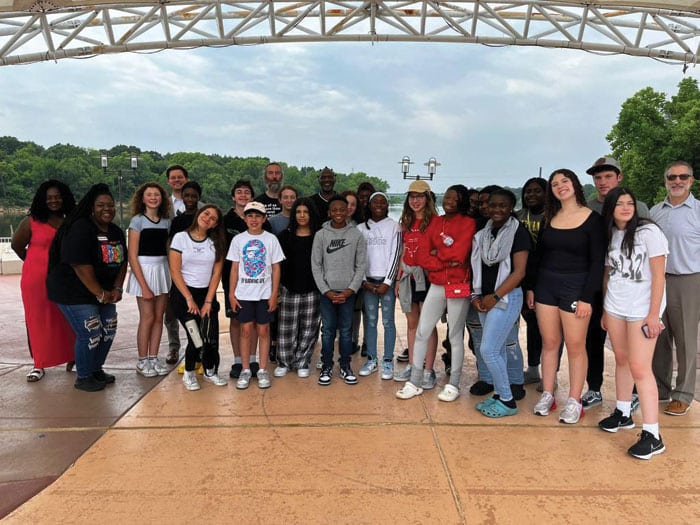
Though they had met on Zoom a dozen times before, it was only in May 2023 that Los Angeles Pressman Academy students and Selma RB Hudson students finally met face-to-face. The eighth graders were picked to participate in this innovative collaboration to promote understanding and tolerance between the Jewish and African-American communities. 

Rabbi Chaim Tureff from Pressman Academy, a private Jewish day school for children from Pre-K to eighth grade, brought up the idea to the principal of RB Hudson, who agreed to collaborate. “Our two schools share the belief that educating students on the importance of coming together to know each other is a critical way to fight racism, antisemitism and intolerance,” wrote the school rabbi to the parents in a letter announcing the launch of the program.

At first, there was a little fear of the unknown from both sides, admitted Rabbi Tureff. After all, these are children coming together from different backgrounds and communities. “In general, the kids in Selma had never met anybody that was Jewish, and our kids, even though they know African-Americans and people that are not Jewish, they still live within their circle so to speak.” 

The questions that hovered on everyone’s mind were: Will it work? Will they actually connect?

The first few meetings were a little awkward; it took some time for both sides to feel comfortable and start a real conversation. 

The first few meetings were a little awkward; it took some time for both sides to feel comfortable and start a real conversation. “We had 13 students from our school and 10 from Selma. It was a small group of students that we picked after doing some interviews with them. We wanted to make sure that we had students that were really invested in this and wanted to make a social change. We started with Zoom meetings and had approximately 15 meetings until we actually met with them in Selma,” recalled Rabbi Tureff. 

“We learned a little bit about the history of both communities and social issues. We also did some social emotional learning in the sense of talking about experiences that they’ve had in their lives that have impacted them. One time, the students were asked to bring an object that is significant to them or their family and talk about it. One of the Jewish students brought a Kiddush cup and an African-American kid brought a baseball, and through their stories about those objects, they learned more about each other and about the civil rights history of the United States.” 

The program took months to get running. It required contacting both of the school districts and administration, presenting the program, and getting their approval. 

Although the Selma school was generally enthused about the program, at first, there was some trepidation. “This is one of the hubs of civil rights movements and they’ve had people come and promise things in the past and exploit the community, so there was a level of distrust at first,” Tureff said. “Like, who are these people and why are outsiders coming in here?”

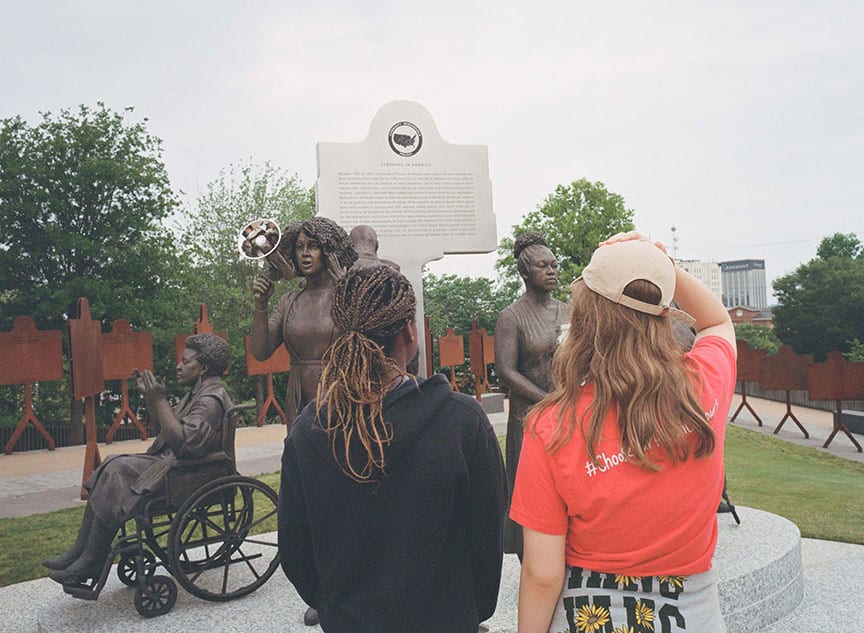
The highlight of the program was a trip to Selma, Alabama. When the Pressman students finally traveled there, they brought along  Kenny Stoff, a documentarian who is also a Pressman parent. Stoff and his team documented the groundbreaking partnership, the first meeting of the children, and their visit to the 16th Baptist Church in Birmingham which was bombed by the Ku Klux Klan in 1963 where four young girls lost their lives.

“We spent the day in Selma and crossed the bridge with Mrs. Joanne Bland, a civil rights activist who was a child when she marched with Dr. Martin Luther King and was there on bloody Sunday.” – Rabbi Chaim Tureff

“We spent the day in Selma and crossed the bridge with Mrs. Joanne Bland, a civil rights activist who was a child when she marched with Dr. Martin Luther King and was there on bloody Sunday. We spent three days together, and each day we learned about different things and the kids started to warm up to each other and wanted to share about who they are and their community.”

The large Jewish community that once resided in Selma has shrunk to only three members. The historic temple Mishkan Israel (built in the late 1800s) serves as the only reminder of the Jewish life that once lived deep in the South. The visit to the synagogue was a first experience of its kind for the kids from RB Hudson.

Not surprisingly, the experience has led to a better understanding from both groups of each other’s plight and history. Rabbi Tureff is encouraged by the attention the program has received from other schools, and hopes they will adopt similar efforts to promote better understanding between two venerable communities.

Pressman Joins with Selma RB Hudson to Promote Better Understanding Between Groups Read More »

Why Teens Should Experience the Joy of a Lousy Summer Job

As a teen in the late ’90s and early 2000s in Phoenix, Payam worked at AMC Theaters, first as a porter, tasked with removing trash from seats and quickly sweeping popcorn and candy from aisles before the next film began. Then, he moved his way up to the concession stand. Finally, he nabbed a coveted job at the ticket sales counter.

I had only one question for Payam about his self-described menial summer job: Was he provided disposable gloves with which to pick up trash from those movie theater seats?

“I don’t think so,” he recalled. “And it was actually a hard job because it was a lot of menial work and rushing around.” But Payam told me that he came home each day with more appreciation for his parents’ constant cleaning and tidying around the house. And more than ever, he understood the value of each dollar he made sweeping, ticketing or topping popcorn with imitation-butter.

In her late teens, Shadi, his younger sister, was a waitress at Cracker Barrel. If, like me, you had never heard of Cracker Barrel, it’s a restaurant chain that serves Southern comfort food. There was Phoenix’s local Cracker Barrel, with its meatloaf, mac and cheese and signature “Chicken N’ Dumplins,” and there was Shadi, with her olive skin, dark curls and mostly Persian diet that consisted of anything but “dumplins.”

“I worked at Subway for a year, Dairy Queen for a summer, Cracker Barrel for two years and Famous Dave’s for two years,” she told me. “Those jobs taught me a lot about customer service, the importance of tipping and how to multitask effectively, which is a very valuable skill in my current career.” Incidentally, today, Shadi is an emergency medicine physician.

As for me, I could devote a short book to my slew of fantastically underwhelming teen summer jobs in Los Angeles. There was the time I served as a Starbucks cashier and barista in Westwood Village the summer after high school in 2001. That job tested my physical limits; I used my body weight to push the world’s heaviest mop, burned my hands mildly almost every week on the temperamental milk steamer, and gained eight pounds that summer because I purposely prepared small Frappuccino samples (with lots of whipped cream) precisely when we had fewer customers, allowing me to consume most of them myself. 

Despite having worked four jobs while in high school, I never fully understood the value of a dollar until I worked as a young barista. I paid for my own clothes, CDs and movie tickets with my slightly scalded fingers. I felt so accomplished. But to this day, I’m uncomfortable around milk steamers. 

One of my other teen jobs was as a proofreader and paid intern during several summers at The Beverly Hills Courier, a local newspaper founded by the late March Schwartz in 1965. In 1998, I was paid $6 an hour, totaling a glorious $36 a day. I spent most of it at AMC Theaters in L.A., the same theater chain where, back in Phoenix, Payam was allegedly collecting theater refuse with his bare hands.

Aren’t lousy teen summer jobs the best?

I asked some friends about their menial teen summer jobs. One worked for a vending machine company, collecting quarters from the machines in Philly and South New Jersey. He and a friend were also tasked with carrying heavy pool tables and pinball machines up and down steps of bars. Things were going well until they dropped a pool table. 

One friend spent time at a new dig site at the La Brea Tar Pits in the late 1960s. “I thought it would be interesting, but I was spending hours inspecting and re-inspecting dirt to look for tiny bones,” she told me. “I don’t think I found one all summer.” 

Another friend worked at a bagel shop at age 15, but quit after two weeks because there was nowhere to sit, and after standing all day next to hot ovens in the summer heat, she felt faint. One friend worked as a cashier at a dry cleaner in 2002, earning $7 an hour. When I asked her if, in hindsight, she learned any important lessons from that job, she responded that it taught her “how to deal with irrational people. But it was really the backbone of what started my work ethic.” 

My favorite anecdote came from a friend who once worked at a little hot dog cart in downtown LA and was made to wear a cap with a plastic hot dog on it. That cap, he told me, was the bane of his existence. But at the end of summer, he realized it was evidence of his ability to tolerate annoying realities. That, he said, made him feel “more proud” of himself than being accepted into UCLA. 

I asked Suri Nowosiolski, LCSW, MSpEd. (Licensed Clinical Social Worker), who has spent nearly 30 years working with children and families, about the value of a menial summer job for teens. Nowosiolski, a therapist who is based in Sherman Oaks, runs Cognitive Connections Plus and told me that she’s seen “an overall increase in complaints of boredom and apathy” in youth. “Teens often lack a sense of belonging to something bigger than themselves,” she said. “They lack agency and a feeling that they matter and that what they do matters.”

A teen who’s bored, apathetic and sitting around all summer? Sounds like the perfect candidate for a menial summer job that will help build tolerance for boredom and resilience in non-optimal situations (think sweeping floors, doing tedious data entry or smiling at demanding customers).

Make no mistake: I’m not advocating for teens to suffer intolerable jobs, especially if they’re grueling, not accommodating for those with disabilities, or if teens are being somehow exploited at work. But isn’t experiencing an underwhelming summer job a rite of passage for most teenagers?

I wouldn’t be surprised if today, given the astronomical rise of influencers and others who seem to enjoy huge social and financial rewards for less tedious work, teens now believe that they don’t need summer jobs at all. 

Perhaps it used to be. But I wouldn’t be surprised if today, given the astronomical rise of influencers and others who seem to enjoy huge social and financial rewards for less tedious work, teens now believe that they don’t need summer jobs at all. Who wants to pull a lever to serve soft serve ice cream all day if they believe they can become an overnight success as an influencer? (There’s nothing inherently bad about influencers, but, in my opinion, there’s also no replacement for the boredom tolerance that develops from handling that metaphorical soft serve lever for hours.)

Nowosiolski told me repeatedly that the value of having summer jobs allows teens to develop and strengthen their “distress tolerance skills,” adding that “engaging in a summer job that may be perceived as menial offers them real-life situations where they can practice managing discomfort, maintaining focus, and persisting through tasks they may find less engaging. By working through these experiences, teens can gradually enhance their ability to tolerate distress and remain focused on their goals.”

A teen who struggles to find meaning in what other peers value may find a lot of meaning, value and structure in a summer job, no matter how tedious. Summer jobs help teens with everything from strengthening interpersonal communication and social skills to learning how to solve problems and deal with all kinds of people. 

Menial summer jobs offer teens a chance to “develop essential coping mechanisms, such as self-regulation and perseverance” in an environment that is controlled and supportive, said Nowosiolski. For example, a teen who may be struggling with a chaotic home life can experience order, normalcy and stability in a summer job (and can be out of the home more often). A teen who struggles to find meaning in what other peers value (think frivolous shopping or constant online gaming) may find a lot of meaning, value and structure in a summer job, no matter how tedious. Summer jobs help teens with everything from strengthening interpersonal communication and social skills to learning how to solve problems and deal with all kinds of people. 

Nowosiolski has seen “an influx of teens with low self-esteem, social anxiety, and depression,” and these are often exacerbated by “avoidant tendencies, difficulty tolerating non-preferred (read: boring) activities and a tendency to ‘numb-out’ with social media and other screen-based activities.”

Given my lousy, but important summer jobs, I believe that if you’re going to “numb out,” you might as well be paid for it (even if it’s minimum wage). 

Nowosiolski is especially known for helping kids cope with anxiety using evidence-based treatments. She told me that anxiety and depression among teenagers “have surged” in the aftermath of the COVID-19 pandemic. “The pandemic has created a challenging environment for their emotional well-being, clearly emphasizing the need for comprehensive support and resources to address the more serious mental health needs,” she said.

No one should expect a summer job to save a teenager, but experiencing the stability of a job that holds one accountable, offers new experiences and gives teens a chance to earn (and spend) their own money is part of a comprehensive, bigger picture.

The key word here is “comprehensive.” No one should expect a summer job to save a teenager, but experiencing the stability of a job that holds one accountable, offers new experiences and gives teens a chance to earn (and spend) their own money is part of a comprehensive, bigger picture: That bigger picture is the experience of growing up, of existing between two realms — not yet an adult, yet much more capable than a young child. 

“As adults, we understand the importance of engaging in a variety of tasks throughout the day, even if they are not all enjoyable,” said Nowosiolski. “We recognize that in order to lead a productive and fulfilling life, we can’t treat daily activities like a multiple-choice question or an à la carte menu.”

She continued, “We acknowledge that the correct answer often lies in embracing ‘all of the above.’ This means learning to persist through less stimulating tasks like completing tax returns, paying bills, and doing laundry.” Simply put, that means that those of us who can weather through these less-than-ideal activities have, over time, honed our distress tolerance skills. 

Naturally, I asked Nowosiolski if she had a lousy, but valuable summer job as a youth. “At 10 years old, I delivered newspapers using a little granny cart to lug them around, and then collected payment for them at the end of each week,” she said. “I learned to be organized, keep records, communicate with customers, bravely ask for payment and sit for hours as I totaled up what I collected and compared it to what I was supposed to have collected, without a calculator.” Despite her frustration, Nowosiolski felt something that’s precious for every youth: a sense of meaning and purpose. She understood that she provided an important service.

“Can we effectively manage our displeasure, boredom, or frustration to accomplish our goals?” she asked me regarding teen jobs. “Developing distress tolerance is a learnable skill, akin to strengthening a muscle. And one of the most effective ways to cultivate and reinforce this skill is through practice. What better opportunity for practice than a ‘menial’ summer job?”

Encourage your teens to get a summer job. Any job. At the very least, they’ll have some great stories to tell as adults. Just ask anyone who, as a teen, once swept movie theater floors, talked up “dumplins” to customers, tried to tame a milk steamer or wore a plastic hot dog on their head.

For more information about Suri Nowosiolski and Cognitive Connections Plus, visit www.surimsw.com


Tabby Refael is an award-winning writer, speaker and weekly columnist for The Jewish Journal of Greater Los Angeles. Follow her on Twitter and Instagram @TabbyRefael

Why Teens Should Experience the Joy of a Lousy Summer Job Read More »

Local Teens at JCC Maccabi Games, Ziegler School Names Assistant Dean

Jewish teens from across Los Angeles traveled as part of the J Los Angeles delegation to participate in the JCC Maccabi Games in Haifa, Israel, winning big on and off the field. 

The delegation was led by Ari Cohen, director of experiential learning at J Los Angeles, formerly known as the Westside JCC, and included five volunteer coaches as well as dozens of family spectators who traveled to Israel for the monumental occasion.

The delegation’s 15U soccer team took home gold, while 17U baseball won silver, and 17U basketball took bronze in final matches. In addition, the delegation’s five individual swimmers earned multiple medals throughout the competition.

Courtesy of J Los Angeles

The Olympic-style athletic competition is just a fraction of the experience. The JCC Maccabi Games bring together over 1,000 Jewish teens, ages 14-17, from across the globe including delegations from Ukraine, South America and Israel, giving Los Angeles teens a global Jewish-identity building experience. 

The trip also includes Shabbat programs and events where Jewish teens from all over the world socialize and share the experience together, in addition to a movement-wide tikkun olam program. The trip concludes with a 12-day tour of Israel’s most culturally, religiously, and historically significant sites.

“We are very proud of the teen athletes who represented our J in Israel this summer,” J Los Angeles Executive Director Brian Greene said. “The experience of competing and engaging with Jewish teens from around the globe will have a lasting impact on the participants.”

JCC Maccabi, a signature program of JCC Association of North America, is the world’s largest Jewish youth sports event. This year’s games began July 5 and continue until July 25. The three-week immersive experience included the JCC Maccabi Games as well as an Israel teen tour. This year marked the return of the games to Israel for the first time since 2011.

J Los Angeles sent a delegation of 50 teens to compete in the JCC Maccabi Games in Israel, while smaller delegations from the Valley Jewish Community Center and the Alpert Jewish Community Center of Long Beach also participated.

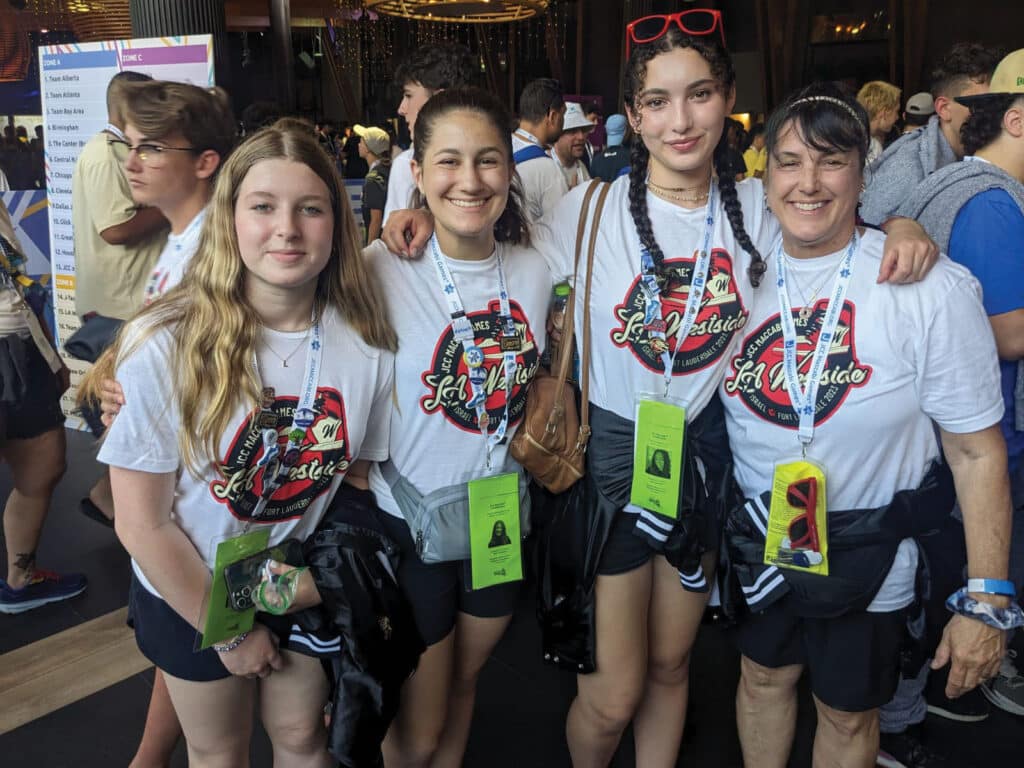
JCC Maccabi continues this summer, from Aug. 6-11, in Ft. Lauderdale, with 2,000 teens expected to come together at the JCC Maccabi Games and Access. J Los Angeles is sending 90 teens. 


American Jewish University’s Ziegler School of Rabbinic Studies has named Rabbi Samuel Rosenbaum its incoming assistant dean. 

Rabbi Samuel Rosenbaum

This appointment, according to AJU, marks an exciting milestone for the Ziegler School, with Rosenbaum engaging broader audiences through a variety of local and national speaking opportunities. And with a dedicated assistant dean leading the way, the school expects its year-round recruitment efforts to be strengthened. 

“With Rabbi Rosenbaum on the team, we are positioned to remain a thriving center of Torah and rabbinic training, attracting dynamic and passionate future rabbis to our outstanding Ziegler community,” Ziegler School Dean and Rabbi Bradley Shavit Artson said in a statement.

Rosenbaum previously co-founded The Well Atlanta, a vibrant monthly Kabbalat Shabbat service, and was a resident of Moishe House, where he curated and organized over 50 annual programs designed for young professionals.

At the Ziegler School, a seminary for the Conservative movement, he joins a staff that includes Associate Dean and Rabbi Cheryl Peretz.

“Rabbi Rosenbaum’s genuine passion for our school and community is truly inspiring,” Peretz said. “We are thrilled to welcome him to our staff and collaborate on enriching our admissions and recruitment efforts, while continuing to foster a caring and warm student community.”

Local Teens at JCC Maccabi Games, Ziegler School Names Assistant Dean Read More »

SB_logo2

The Social Media System ft. Stefanie Yunger

The last episode of Season 2 is here! The schmuckgirls show off their new comfy shirts and cute hats from Yonatees. If you’re looking for cute, fun, apparel or merchandise to show off your Judaism, checkout the links below. The girls discuss some of their favorite moments from the past season and how much things have changed (and in some ways stayed the same) over the past year. They discuss how mindsets between men and women change over time when it comes to making commitments. The girls also discuss the idea of being alone vs dating and if it’s just a defense mechanism to not feel the need for anyone. For the last episode of the season the girls welcome the hilarious and talented Stefanie Yunger! She gives updates on her marriage and shares some controversial opinions about Italian food. The trio dives into Stef’s childhood and how she realized she wanted to act and make people laugh. She also discusses growing up in a Miami and being surrounded by different cultures and how that turned into a love of playing with different languages and accents. They also talk about the struggles with social media not allowing people to ever make mistakes despite that being part of the human experience and how an anti-growth society can be dangerous. The girls also talk about how in dating, people can judge too quickly based on other people’s opinions without forming one of their own. Stef shares the cute story of how her and her husband met. She goes on to talk about a recent break from social media and how content creators don’t always have the support they need to take a break when starting to burnout. She shares in detail about some of the issues she has with Instagram and their algorithms and how they treat creators. They also discuss about making content for yourself and not always based on what your followers want but on what makes you happy. She talks about the importance of self-love and how supportive her family was of her content break. They also discuss the importance of Shabbat in this day and age of constant content consumption. They talk about the connection between Judaism and social media and how there can often be an emphasis on growth and not enough emphasis on the importance of being temporarily stagnant. Stef shares about her proud Jewish identity and how it’s changed throughout her life. They end with a game called “5 Speedy Spoofs with Stef” – where they give her scenarios to perform in the voice of her different characters. You can find Schmuckboys on Instagram @schmuckboysofficial, email schmuckboys@jewishjournal.com and find Stef on Instagram @stefachka. At Yonatees, we believe that life with a Jewish heritage can be playful, surprising, and fun. We believe that faith, like bread, is best served fresh, even while our values, like wine, come with a serious vintage. We bring you high-quality apparel, gear, stickers, and more. We aim to serve as ushers: guiding you in small ways toward an optimistic and faithful time in this world.Links:General items – yonatees.com/newAnti Antisemitsm – yonatees.com/search?q=antisemitism 

The Social Media System ft. Stefanie Yunger Read More »

High Drama in Israel

Once the current frenzy over “Oppenheimer” and “Barbie” has subsided, for many of us the next must-see film event will be Golda.

The new movie, starring Helen Mirren as the legendary Israeli leader, will be released in late August, chronicling an existential moment in Israel’s history and an especially complicated time in the relationship between the Jewish state and the U.S. And will hit theaters at an existential moment in Israel’s history and an especially complicated time in the relationship between the Jewish state and the U.S. 

The current Hollywood strikes mean that it will be some time before a Benjamin Netanyahu biopic is produced, but the real-world drama in both Israel and Washington has provided ample material for that film. Israeli President Isaac Herzog’s recent visit to the United States highlighted the growing tensions between the two countries, but Herzog’s time with President Joe Biden and congressional leaders was merely a prelude to the non-stop action that has dominated Israeli politics surrounding this week’s vote on Netanyahu’s judicial reform legislation.

If the sight of dueling massive protests and frantic last-minute negotiations was not enough, then perhaps Netanyahu’s emergency trip to the hospital over the weekend for an unscheduled pacemaker implant as a result of heart blockage added an additional Netflix-worthy plot twist. But like any compelling screenplay, the onscreen theatrics represent long-simmering antagonisms that surface at an emotionally fraught time.

Which is exactly what’s happening in Israel right now. Normally arcane questions of judicial oversight have exploded into a battleground that reflects much deeper religious, ethnic and cultural divisions that have emerged over the years. Netanyahu has successfully bridged these gaps in the past, but his own legal troubles have forced him into an alliance with the nation’s most religious and ultra-conservative players. The aggressive agenda that his new associates demanded to sign on to this partnership are tearing Israel in half.

This week’s vote will not end the conflict: it is only going to get nastier going forward. The secular Israelis who have dominated the country’s politics since its inception now see themselves as under siege. The growing numbers of religious voters see an opportunity for their values to be institutionalized more than ever before. This is a fundamental disagreement between two seemingly incompatible theories of how a society should function. It will not be resolved by a legislative vote, but only by leaders who recognize that recognizing the rights and the dignity of those with other beliefs is the only outcome that can allow a fragile democracy to survive.

It’s possible that a right-center alternative, like the Blue and White Party’s Benny Gantz or Defense Minister Yoav Gallant, could be such a leader, but only with Netanyahu’s cooperation. Netanyahu himself once filled that role and may again, if he can either tame his existing coalition or form a new one. None of these outcomes appear likely to happen anytime soon.

The political standoff in Israel also seems to have paralyzed the U.S. The best Biden could offer during Herzog’s visit were shopworn bromides about democratic values and scheduling a long-delayed meeting with Netanyahu this fall. The hyper-polarization that has paralyzed Congress on other issues prevents them from playing a relevant role here either. Their high-water mark last week was passing a bipartisan resolution declaring that Israel is not a racist state.

In 1973, the country confronted an invasion from foreign enemies: today’s difficulties are driven by domestic political discord. But both present seminal danger to Israel’s future.

The most significant difference between today’s crisis and that of 50 years ago is the nature of the threats Israel faces. In 1973, the country confronted an invasion from foreign enemies: today’s difficulties are driven by domestic political discord. But both present seminal danger to Israel’s future. 

At some point, leaders in both countries will need to step forward to convince the two sides that their incompatible goals for a Jewish state can be reconciled. That would the type of statesmanship that will be worth making another movie about. But the lead characters for that inspiring script are not yet in evidence. “Golda” tells the story of Israel’s leaders overcoming daunting obstacles to achieve victory. Fifty years later, we are ready for a sequel.


Dan Schnur is the U.S. Politics Editor for the Jewish Journal. He teaches courses in politics, communications, and leadership at UC Berkeley, USC and Pepperdine. He hosts the monthly webinar “The Dan Schnur Political Report” for the Los Angeles World Affairs Council & Town Hall. Follow Dan’s work at www.danschnurpolitics.com

High Drama in Israel Read More »