fbpx

June 2, 2023

The Beauty of Small Blessings

It all happened because of an annoying teenager. In 1979, Israeli archaeologist Gavriel Barkai was leading the excavation of a burial cave on the slopes of the Hinnom Valley. With him that day was a group of teenage interns, including one boy that Barkai described as a nudnik, a complete annoyance; so Barkai sent the boy to do busy work in a room that had been combed through very carefully. A little while later, Barkai felt a tug on his jacket. There was the nudnik, holding what was obviously a rare archaeological find in his hand. This boy had discovered a spot that had never been surveyed before.

After a few days of non-stop excavation, Barkai came across an exceptional find: two small amulets made of silver, written in Paleo-Hebrew script, that were  2,700 years old. One of them was inscribed with the words of Birkat Kohanim, the priestly blessing. It is the oldest inscription of a biblical verse that has been found.

There’s something very fitting about this discovery. Although Birkat Kohanim is meant to be recited exclusively by Kohanim, it has become an extremely popular blessing for all occasions.  It is part of the first prayers in the morning and the final prayers of the evening. Parents bless their children with Birkat Kohanim both on Friday nights and on special occasions, such as Erev Yom Kippur and at weddings.

Birkat Kohanim is the biblical equivalent of a hit single. Even 2,700 years ago people were carrying its words around their necks, hoping that a little bit of this blessing would rub off on them.

Brevity may be part of Birkat Kohanim’s popularity; it is a total of fifteen words in Hebrew, in short, rhythmic sentences of three, five, and seven words. In English, the blessing is:

“May the Lord bless you and protect you;

May the Lord make his face shine on you and be gracious to you;

May the Lord turn his face toward you and give you peace.”’

What is striking is how generic the language of Birkat Kohanim is, perhaps because it is meant to be a brief, quick blessing. But the vague language of Birkat Kohanim animates a great deal of discussion among the commentaries, who, as the commentary of the Kli Yakar notes, “each gives an interpretation according to their own sentiments.” They are searching for what the words of this blessing mean, and in a larger sense, what exactly it means to be blessed.

One approach is to view Birkat Kohanim as an accordion, embracing multiple possibilities in just a few words. The medieval commentary of Rav Yoseph Bechor Shor explains that the words “May the Lord bless you” means “with children, strength, wisdom, long life, greatness, both as you go out and as you come in, in the city and in the field, with wealth, with overflowing fruit baskets and kneading troughs….”  To be blessed is to be blessed with many things. Bechor Shor follows the approach of an earlier commentary, the Sifrei, which interprets Birkat Kohanim as referring to the lists of blessings found in Leviticus 26 in Deuteronomy 28. Simplicity allows Birkat Kohanim to be all-embracing, and condense multiple blessings into fifteen short words.

As beautiful as these interpretations sound, reality is quite different; blessings don’t just arrive by the cartload. For this reason, many commentaries interpret the lack of specificity as an acknowledgment that blessings are difficult to define. (As the Netziv points out, a businessman and a Torah scholar pursue very different blessings, and each would be dissatisfied with the dreams of the other. One man’s blessing is another man’s boredom.) These commentaries focus instead on the section of Birkat Kohanim that offers a blessing of spiritual enlightenment: “May the Lord make his face shine on you.” With enlightenment, all other divine gifts come into focus.

Like life itself, blessings are fragile and fleeting.  This is already evident from the opening words of Birkat Kohanim: “May the Lord bless you and protect you.” Ibn Ezra explains once you receive material blessings, you immediately need God’s protection to prevent other people from stealing them. As the Mishna (Avot 2:7) puts it, the more one has, the more one has to worry about; blessings bring new complications of their own. And the greatest complication of all is human nature.

Humans are quite often the authors of their own misery. Maimonides writes that most of life’s problems are caused by human recklessness; poor habits can destroy one’s health and wealth, and human aggression can turn a blessed existence into a hellish landscape of death and destruction.

The blessing we need the most, to quote the Midrash (Bamidbar Rabbah 11:6), is: “May God give you the wisdom to be gracious to each other and merciful to each other.” Birkat Kohanim concludes with a blessing of peace, because, as the Mishnah (Uktzin 3:12) points out, peace is the “vessel which holds all other blessings.” Without peace, all the blessings of the world turn into curses; indeed, the more that people have, the more they have to fight over. And whether or not we have the blessing of peace is up to mankind.

This is the most significant message of Birkat Kohanim: a blessing is only a blessing if one can keep it.

Good tidings can also end up promoting bad character. The Netziv explains that when Birkat Kohanim talks about God’s protection, it is calling on God to protect us from the harmful effects of the very blessings we receive. A scholar who is given an abundance of wisdom is prone to arrogance; a businessman who meets a lot of success can become greedy and dishonest. One can receive many gifts in their lifetime; whether or not those gifts are truly a blessing depends on their character and values. In the wrong hands, blessings are destructive.

Finally, to have is not always to be happy. A great deal of what makes a blessing a blessing is our own subjective reaction to them. Even Bechor Shor, after offering his interpretation along with a lengthy list of blessings, writes that the ultimate blessing of Birkat Kohanim is that “you should be blessed with joy, that your heart should be happy with your lot.”

This comment is a reference to the words of the Mishnah “Who is wealthy? One who is happy with his lot.” This Mishnah is often misread as promoting a lack of ambition, a willingness to sit back passively and accept what one is given. After all, one can be happy with their existing lot, so why pursue anything more?  But then there would be no need for Birkat Kohanim, and no purpose for blessings and prayer.

Instead, the Mishnah is teaching a lesson of appreciation. Don’t become obsessed with social comparisons, and the mindset that if another person has more than you do, what you have is inadequate. Someone with a beautiful home will all too often feel disappointed if their neighbors have homes that are nicer than their own. (And with social media, the opportunities for social comparison are endless.)

Don’t be carried off by what psychologists call a “hedonic treadmill,” and expect more and more every day. It is easy to get excited about something new: a new house, a new suit, a new car. But very quickly, one can become accustomed to old blessings and take them for granted; and then begins the never-ending search for something even better.

To experience joy, one must first get off the hedonic treadmill and close one’s eyes to social comparison. To “be happy with one’s lot” is to appreciate the blessings one has, and accept them with gratitude.

There’s a beautiful song from the Israeli singer Rami Kleinstein entitled Matanot Ketanot (Small Blessings,) which talks about Friday afternoons in a small town in Israel. It was written by the songwriter Noam Chorev while on vacation in Thailand. He was in one of the most beautiful places in the world, yet on Friday afternoon he felt homesick, missing the magical atmosphere of an ordinary Shabbat evening back home.

The song begins with a description of the start of Shabbat. As the sun goes down, processions of people wearing white fill the streets, returning home from synagogue; the aromas of Shabbat food permeate the house, and Shabbat melodies fill the air.

The song’s refrain continues:

Small presents,

Someone sent me small presents,

Traces of sincerity, droplets of faith.

Small presents,

Someone sent me small presents,

Like the power to accept,

What there isn’t and what there is,

And what one can still pursue.

Matanot Ketanot offers an insight that is central to the interpretation of Birkat Kohanim. In our day-to-day life, we often pursue large blessings, as we should; but even so, we must never stop being enchanted by small presents, those everyday gifts from God. And if we can find within ourselves the ability to do so, we will truly be blessed.


Rabbi Chaim Steinmetz is the Senior Rabbi of Congregation Kehilath Jeshurun in New York.

The Beauty of Small Blessings Read More »

How Is Not Showing Up at Israel Parade a Good Way to Speak Out?

I love people who show up. That’s why I’ve always liked activists– they’re experts at showing up. Whether from the left or right, activists understand better than most that you’re not likely to make an impact unless people can actually see you.

So, I was surprised when I got an email this morning from a rabbinic human rights group announcing that more than 2,000 rabbis will not show up at the Celebrate Israel Parade in New York this Sunday. Because far-right members of the Israel Knesset will join the parade, the group, T’ruah, said it declined to join the march this year “to show solidarity with Israeli protestors and stand up for democracy.”

Rabbi Jill Jacobs, CEO of T’ruah, said in the statement:

“Part of honoring Israel’s 75th anniversary means holding the country’s leaders and decision-makers accountable and speaking out when they fail to live up to our shared ideals. By not attending the parade, and by joining with other American Jews and Israelis to protest the ministers at their speaking engagements on Sunday and Monday, T’ruah wishes to demonstrate our ongoing commitment to a democratic Israel that protects the human rights of all Israelis and Palestinians.”

Regardless of which side you’re on, how do you hold decision-makers accountable by not showing up? If you want to “speak out” when people fail to live up to shared ideals, isn’t it better to face them so they can see you?

And how does not showing up show solidarity with Israeli protestors who have showed up week after week for nearly five months?

How does not showing up show solidarity with Israeli protestors who have showed up week after week for nearly five months?

In announcing its decision, T’ruah added that it refuses to march “with the bigoted, anti-democracy ministers such as Simcha Rothman, Meir Porush, Amichai Eliyahu, Amichai Chikli, and fourteen others who will have places of honor at the event. This is the wrong year for a simplistic call to ‘Celebrate Israel,’ as extremists in government push forward a judicial coup, and as Israelis continue to take to the streets protesting the anti-democratic ideologies of the far-right government.”

I understand the discomfort of being in proximity to fellow Jews whom you believe pose a fundamental threat to Israel’s democracy. I’ve written more than my share of critiques of the judicial reforms. That’s not the point.

The point is this: If you want to protest something that bothers you, does it make sense to stay away instead of showing up and speaking out? Who will notice you when you’re not there?

Being in the company of those you oppose  doesn’t mean you give them legitimacy. Had T’ruah asked me for advice, I would have suggested that they mobilize their 2,000 rabbis, get to the parade early, and make sure that when the far-right ministers speak, they will face a sea of rabbis holding up protest signs.

They could have held up messages like “Marching for a Better Israel,” “Israel Deserves Better” or “No Future Birthdays Without Democracy.” I’m sure the group would have come up with strong messages. More importantly, the media coverage of the parade would have included those messages, and the protest would have registered, especially on social media.

In any event, it’s a moot point. When the far-right speakers get on the podium on Sunday, they will see only a sea of celebration.

How Is Not Showing Up at Israel Parade a Good Way to Speak Out? Read More »

MAVEN Hosts BRCA Webinar for Women’s Healthcare Month

As part of Women’s Healthcare Month, on May 23, MAVEN presented a conversation on “Life, Love and the BRCA Mutation.” MAVEN is the immersive and experiential digital learning platform of American Jewish University (AJU). 

The webinar, hosted by AJU’s Catherine Schneider featured Jessica Queller, author of “Pretty Is What Changes.” The memoir chronicles her journey of inheriting a BRCA1 mutation from her mother and how it changed her life. Jenna Fields, chief regional officer of Sharsheret, also joined the conversation. A national Jewish nonprofit, Sharsheret supports women and families facing breast and ovarian cancer, as well as hereditary risk for cancer. 

During the webinar, Queller reflected on her mother’s death and how writing the book was a coping mechanism, part of her healing process and a way to honor her mother. Queller shared the challenges she faced during that time. She also talked about her decision to be a single mother, how she re-met and found love with her husband and more.
A television writer/producer, Queller has spoken about BRCA extensively on television and radio, has written Op-Ed pieces on the subject for The New York Times and The Wall Street Journal and is a member of Basser Center for BRCA’s Advisory Board. 

“I deeply identify with the [Jewish] community, my faith and my passion to help other women,” Queller said.

She lives in Los Angeles with her husband, Bill Prady, daughter Sophie Queller and stepson Asher.

“I took care of my health early, had a baby on my own, and then got married later,” Queller said. “It wasn’t the typical order, but it all worked out beautifully.”

One in 40 Ashkenazi Jews (men and women) carries a BRCA gene mutation. That’s nearly 10 times the rate of the general population. As Jewish families are significantly more susceptible to hereditary breast cancer and ovarian cancer, the webinar served as a friendly reminder to empower yourself for the sake of your health.

“This is such a Jewish issue on the health side and on the mental health side,” Fields said. “Any family history is worth looking into. All Ashkenazi Jews should be on high alert.”

Queller tested positive for the BRCA gene mutation in 2004, eleven months after her mother succumbed to cancer. Schneider remarked that Queller was likely the first person to publicly grapple with BRCA. 

A friend suggested Queller was eligible for the BRCA test. At the time, the test for the BRCA mutation was 10 years old. Queller was 34.

Queller decided it would confirm her clean bill of health, and managed to get a lab order without any pretest counseling. When Queller got the call that she tested positive, the tech told her, ‘You are statistically assured of getting cancer. Go find some help. Good luck.’

Those positive results put Queller at a terrifyingly elevated risk of developing breast cancer before the age of 50 and ovarian cancer in her lifetime. (She would have to have her ovaries removed by age 40). 

In her 30s, unattached and yearning for marriage and family, Queller faced an agonizing choice: a lifetime of vigilant screenings and a commitment to fight the disease when caught or the radical alternative: a prophylactic double mastectomy. 

“Seeing my mother’s suffering and death, it was a clear decision to take the prophylactic action,” she said. “I had no tolerance for risk.”

Queller said the fear is much scarier than the reality. And the relief she felt when taking action is immeasurable.

Queller said the fear is much scarier than the reality. And the relief she felt when taking action is immeasurable.

“All of us who have gone through adversity [know] you rise to the occasion because you have no choice,” Queller said.

Fields made it clear: Mastectomy and ovariectomy (removal of ovaries) are an option, but are not something everyone who tests positive has to do. Many people choose to enter into a screening plan, Fields added, although there’s no good choice for ovarian screening.

Keep in mind, Quellers’ experience is not what people go through today, Fields told her. 

”Now it’s easier and more affordable to test for a whole panel of mutations,” Fields said.

Those who test positive, or need to get tested, should know that they are not alone.

“Being your best self advocate is the best thing you can do,” she said.

Fields’ recommendations: Connect with Sharsheret’s genetic counselor, find the right team (there are resources and medical centers everywhere) and join Facebook groups and other communities for peer support.

Something everyone can do is open the lines of communication, when it comes to BRCA.

“Talk to a couple people about BRCA, genetic mutations and cancer risk,” Schneider said. “Let’s try to raise awareness in our communities and in our own homes.”

MAVEN Hosts BRCA Webinar for Women’s Healthcare Month Read More »

L.A. Jewish Film Fest, Skirball Names Rabbi-in-Residence, Teens in Sacramento

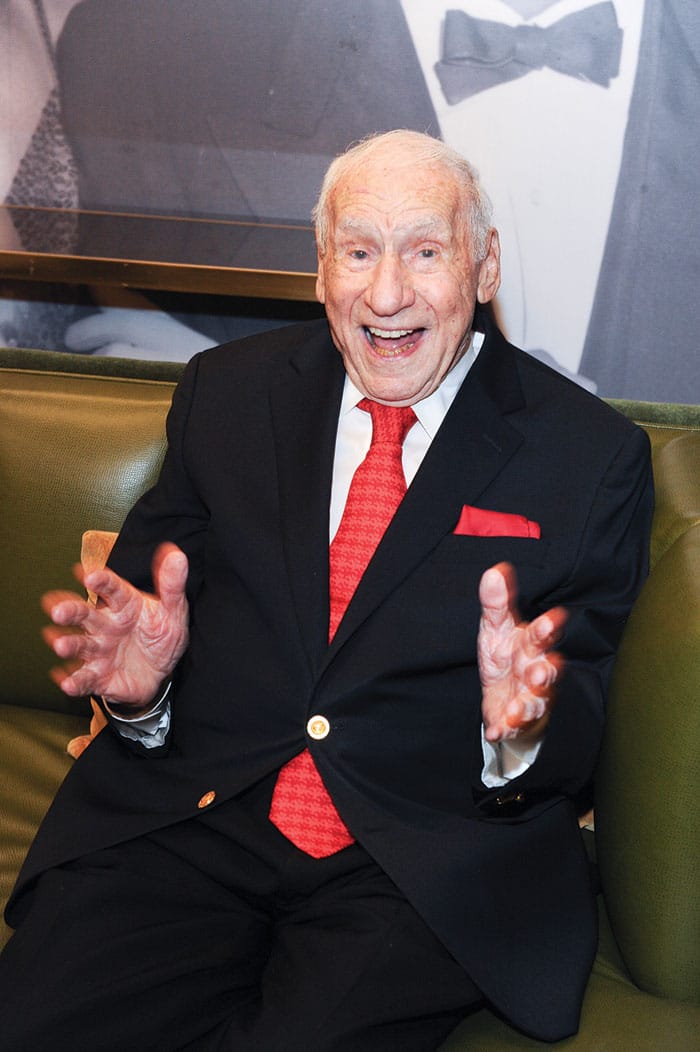
On opening night of the L.A. Jewish Film Festival, Mel Brooks turned up for the screening of “Remembering Gene Wilder.” Courtesy of L.A. Jewish Film Festival

The Los Angeles Jewish Film Festival (LAJFF) called it a wrap on May 24 after nearly a week of screenings at theaters across Los Angeles.

The opening night gala for the annual festival was held May 18 at the Saban Theater. The program included a world premiere screening of the documentary, “Remembering Gene Wilder.” The stars that turned out to celebrate the festival’s opening included the legendary Mel Brooks. 

Additional screenings included “Who are the Marcuses?” which was shown in celebration of Israel’s 75th anniversary. The film recounts the remarkable tale of Israel, water and philanthropy.  The festival also presented the documentary film, “Killing me Softly with His Song,” about the life and work of composer Charles Fox. 


Rabbi Beaumont Shapiro. Courtesy of Rabbi Beaumont Shapiro.

Skirball Cultural Center has appointed Rabbi Beaumont Shapiro to its newly created rabbi-in-residence position. Rabbi Shapiro’s role will commence on June 5. 

At the Skirball, he will serve as a leader, educator and community builder at the organization while partnering closely with Skirball Cultural Center President and CEO Jessie Kornberg and Skirball Cultural Center Executive Vice President Leslie Johnson on the expression of the Jewish values through the museum’s daily operations and programming.

Shapiro said he was looking forward to the opportunity.

“The Skirball is uniquely positioned amongst organizations nationwide to engage people from across the spectrum of Jewish life — and particularly important in this day and age, non-Jews as well — in exploring our connections to one another and our greater community so that, together, we can build a more just society,” he said.

Shapiro previously served as a rabbi and educator for 20 years at Wilshire Boulevard Temple. 


Fifteen Los Angeles teens, including students from Milken Community School, traveled to Sacramento, where they met with elected officials as part of a cohort organized by the Jewish Center for Justice. Courtesy of the Jewish Center for Justice

On May 24, 15 Los Angeles teens traveled to the State Capitol to meet with California legislators as part of the Jewish Center for Justice’s (JCJ) Leadership, Education, Advocacy, Democracy cohort.

The JCJ program mentors the next generation of Jewish leaders, teaches them how to amplify their voices, and empowers them to advocate for solutions to modern-day injustices, JCJ Executive Director Rabbi Joel Thal Simonds said. 

Participating students were from Palisades Charter High School, Milken Community School and the Archer School for Girls. They met with the staff from State Senator Toni Atkins and the California Jewish Legislative Caucus as well as with Assemblymembers Isaac Bryan and Tina McKinnor.

This trip marked the second consecutive year that teen activists from JCJ traveled to Sacramento to meet with elected officials and advocate on key legislative issues.

“Seeing them discover their voice and passion for these issues in real time speaks to the power of this program, and is a positive sign for the future of Jewish justice advocacy,” Simonds, who is also an associate rabbi at University Synagogue, said.

Founded in 2017, Jewish Center for Justice is a social justice, education and leadership development platform. The teen cohort is one of many JCJ programs. 

L.A. Jewish Film Fest, Skirball Names Rabbi-in-Residence, Teens in Sacramento Read More »

ADL CEO Jonathan Greenblatt, Special Envoy Deborah Lipstadt Discuss Biden Antisemitism Plan in Webinar

Anti-Defamation League (ADL) CEO Jonathan Greenblatt and United States Special Envoy to Monitor and Combat Antisemitism Deborah Lipstadt discussed the Biden administration’s National Strategy to Counter Antisemitism in a June 1 webinar, featuring Lipstadt calling the plan “something that transcends politics.”

The webinar, hosted by the ADL, began with Greenblatt gushing over the plan as “a historical monumental achievement” and called the day of its release “one of the most consequential days that I’ve experienced at CEO of ADL.” Greenblatt argued that the plan mirrors a lot of the ADL’s policies and recommendations and that the plan is “astonishing” given “its breath, its depth, its ambition, its scope, its specificity at all levels.” “I used to write and contribute to documents like this when I looked for the White House,” Greenblatt said, adding that “a plan like this is very difficult to organize” and that “when you release something like this it can move mountains.” Greenblatt worked as a special assistant to then-President Barack Obama and director of the Office of Social Innovation. The ADL CEO also lauded the plan for putting antisemitism on the same national priority as fighting climate change, income inequality and the debt ceiling as well as embracing the International Holocaust Remembrance Alliance (IHRA) definition of antisemitism “the single definition.”

Lipstadt explained that “over two dozen agencies” were involved in the plan and that Susan Rice, the outgoing head of the Domestic Policy Council, “held their feet to the fire” when they sent over “pablum.” Among the agencies involved included the Food and Drug Administration and the Agricultural Department, as one agency realized they didn’t have kosher food options available for children. Lipstadt hailed the plan as the “first time ever that the United States government has taken the bull by the horns and say, not to react but what can we do about it.”

The Special Envoy recounted how she is frequently asked if today’s climate is 1938 all over again. “I can say uncategorically: no,” Lipstadt said, pointing out that the Holocaust was a “government sponsored, government planned genocide.” “Today we have governments saying no,” she added, as the European Union, Germany and Austria have their own “very impressive” combating antisemitism strategies in place as well. “Things are difficult, but it’s a different time and I think this study is part of it,” Lipstadt said.

She also argued that the plan recognizes that the antisemitism isn’t just a threat to Jews, but to democracy as a whole. Antisemites believe that “Jews are behind the scenes conniving, controlling, making sure things run to fulfill their own needs at the expense of everyone else’s needs” and people who believe that “don’t believe in democracy” and don’t believe their government has their best interests at heart, Lipstadt said. “What starts with the Jews doesn’t end with the Jews,” she later added.

Greenblatt proceeded to ask Lipstadt about the plan’s embrace of IHRA while also including the Nexus Document definition. Lipstadt first explained that IHRA first came into being when “a group of countries convened in the year 2000 in Stockholm to address rising antisemitism, to address commemoration of Holocaust issues, to address a range of issues emerging from the Holocaust.” “Over the course of time what became evident to the participants of the alliance is that there was confusion… what exactly is antisemitism? There were times it was ambiguous,” Lipstadt said, as some wondered when criticism of Israel devolves into antisemitism. IHRA itself “is a guideline, not a law” and is “filled with nuance,” the Special Envoy continued. “It gives eight different examples of what might be antisemitism, and it introduces it by saying it may or may not [be antisemitism] depending on context. So you need to know the context.” The Biden administration has “embraced IHRA,” as has the State Department and Lipstadt herself, she contended. “This has been American policy and it’s reaffirmed in the report.”

As for Nexus, Lipstadt argued that it has “some of the same nuance that the IHRA definition has and in certain places, it even goes further than the IHRA definition” and that the two definitions “can supplement the other.” However, the report provides “no change in the American policy” regarding IHRA, according to Lipstadt.

Lipstadt was also asked about the role of the Council on American-Islamic Relations (CAIR) in the plan, as CAIR is listed as one of the partners in the plan’s “cross-community solidarity and collective action to counter hate” pillar. “CAIR had no role in the strategy and no contribution to it,” Lipstadt said, explaining that “when the White House was preparing the fact sheet [for the plan], they reached out to a broad range of organizations… and CAIR was one of the organizations on the list.” She went on to say that there have been various people, institutions and organizations that “in the past have had… less than stellar records on combating antisemitism and maybe have had even records on fostering antisemitism.” “Some of them have reached out and said, ‘We want to work on this, we want to fight this’ and this would be a good time to hold their feet to the fire, to have them acknowledge where maybe they have gone wrong in the past… and to see if there’s a change,” Lipstadt said.

Greenblatt said that CAIR does have a history of trafficking in antisemitism and “ugly anti-Zionism” and has “said slanderous things about our organization, others, but they just endorsed a plan that centers IHRA in the middle of federal policy.” “Bravo CAIR!” Greenblatt said. “I hope you realize that you did that and we’re proud that you did that and hopefully you’re going to come around and join the rest of the world in dozens of governments and scores of cities and hundreds of non-government organizations that recognize anti-Zionism is antisemitism. CAIR, I hope you’re on board with that.”

In response to an earlier question about holding both sides of the political aisle accountable, Lipstadt said that when the White House was preparing to launch the plan she “was calling Republicans as well as Democrats. Republican senators, Republican members of congress… who have taken an active role in the fight against antisemitism.” “Our effort is to make it clear that this is something that transcends politics,” Lipstadt later added.

ADL CEO Jonathan Greenblatt, Special Envoy Deborah Lipstadt Discuss Biden Antisemitism Plan in Webinar Read More »

LA Musician Brings Jazz to Israeli School

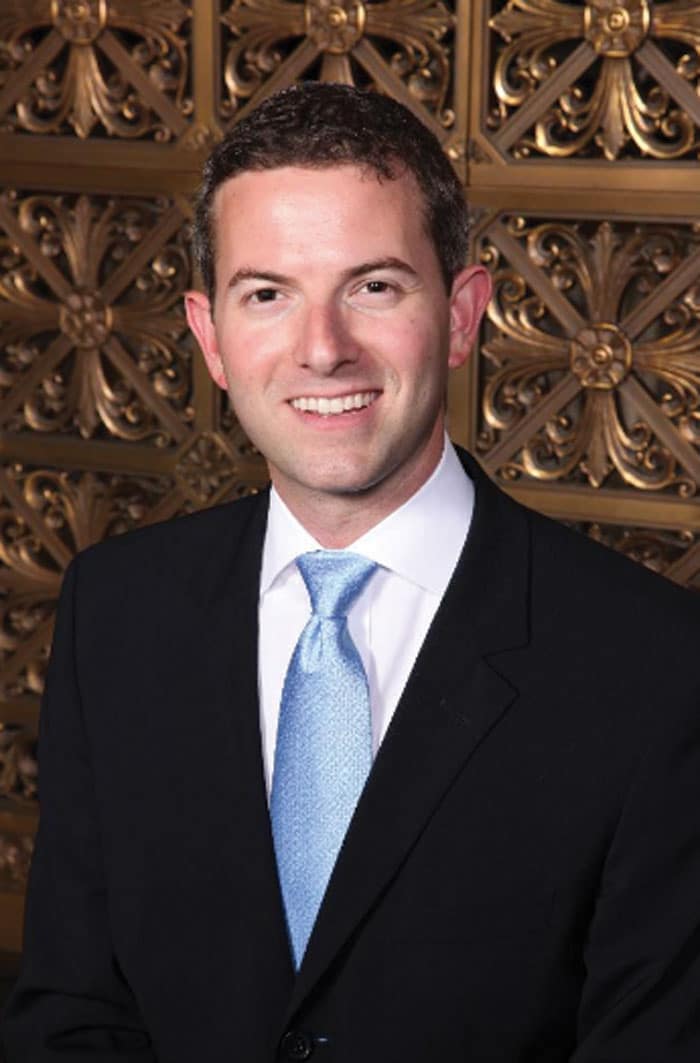
The Arad Conservatory, located in Israel’s Negev Desert, welcomed Los Angeles-based jazz musician and performer Tamir Hendelman, who led a workshop for about 50 of its students. 

Thanks to the support of Arizona-based philanthropists Susan and Lee Berk, Hendelman gave them a first-hand introduction to jazz improvisation. 

“We talked a lot about how jazz invites each musician to express themselves through improvisation, and to create a harmonious groove together,” Hendelman, who is founder of the Spirit of Israel Ensemble, told the Journal. “We embellish existing songs with our own rhythms, and play with the timing of melodies we love.”

The exercises in improvisation complimented the classical education they receive at the conservatory,  which is located in a remote region of Israel. 

“I was inspired by hearing the principal tell the students that even though they’re mostly classically trained, they should open their minds to doing things in a new way,” Hendelman said. “It was really heartwarming to see the young students in Arad learning and blossoming musically and to see the work that is being done to bring more arts and culture to [the area].”

Lee Berk, a former president of the prestigious Berklee College of Music, and his wife Susan both serve on Jewish National Fund-USA’s Arts & Entertainment Task Force; its purpose is to enrich living opportunities in Israel’s emerging communities. They have been admirers of  Hendelman for years. When they discovered he would be traveling to Israel, the Berks offered to sponsor the trip. “When he informed us he would be in Israel in the period ahead, it seemed like that was a ‘meant to be” opportunity,” Lee Berk told the Journal.

Hendelman is an Israeli who moved to the United States at the age of 12. Returning to Israel with the Berks’ support and partnering with JNF-USA and the Arad Conservatory was a meaningful and enriching experience for him, as well. 

“The Berks are true music lovers who have been hosting jazz and classical music series in their community,” Hendelman said. “Through our friendship and their connection to Jewish National Fund-USA, we thought it would be really beautiful to organize an opportunity for the students of Arad to meet a professional musician and learn a different style of music … Susan and I know from Arad’s great achievement with its Conservatory of Music and many other projects undertaken in collaboration with JNF-USA support that this community has a bright future,” Berk said. “Connecting the Conservatory to the broader music world in Israel and beyond can only assist its educational growth in a positive way, benefiting teachers and students, and elevating the Arad Conservatory of Music as a major cultural asset of this community.”

Hendelman’s visit provided inspiration and motivation for both the students and teachers at the Conservatory. Exposure to his experience as a performer, recording artist and composer could only broaden the vision of those at the Conservatory as to what is possible. 

Now, Hendelman and the Berks will continue to partner to bring art and culture to the Phoenix Jewish community as well as the people of Arad through a variety of concert and workshop opportunities.

“The jazz tradition invites everyone into the musical conversation, and in it, we all get to compose instantly and interact to create music in the moment,” – Tamir Hendelman

“The jazz tradition invites everyone into the musical conversation, and in it, we all get to compose instantly and interact to create music in the moment,” Hendelmen said. “Jazz originated in America but has embraced music from around the world. It’s very inclusive in that whatever level you are at, if you open your ears, get to know the songs and explore, you are welcome into the musical conversation.”

LA Musician Brings Jazz to Israeli School Read More »