fbpx

April 20, 2023

My Doves Are Your Doves – A poem for Parsha Tazria-Metzora

He shall then perform [the service of] one of the turtle doves or of the young doves, from whatever he can afford
-Leviticus 14:30

I am not a communist, but I feel
everyone should have what they need
even if they can’t afford it.

I am not an anarchist though
I sometimes jaywalk when
no one is looking.

I am not an authoritarian, but
by God, my son will do what he’s told
or we will lock that Xbox down.

I am not a fascist.
Really. Not at all.

I am not a nationalist.
Call me a worldist if you’d like.
Or peopleist if that makes
more sense to you.

I am not a corporatist.
Whether you put plants into the ground
or put numbers into a thing
you should get to have the same dinner.

I am not an identity politician.
But if that’s how you identify
I’m all for it.

I am not a conservative.
Oh, the excesses, the indulgences
I’ve partaken in.

I may be a feminist.
It’s hard to tell.

I’m sort of a capitalist.
But I feel guilty about it.

I undoubtedly am a liberal
and a progressive – The things those
who aren’t those do often
hurt my stomach.

I am one who would rather
you keep your turtle doves.
Use them in your songs.
Let their songs distract you
from those things you are not.
May, like them, you fly.


God Wrestler: a poem for every Torah Portion by Rick LupertLos Angeles poet Rick Lupert created the Poetry Super Highway (an online publication and resource for poets), and hosted the Cobalt Cafe weekly poetry reading for almost 21 years. He’s authored 26 collections of poetry, including “God Wrestler: A Poem for Every Torah Portion“, “I’m a Jew, Are You” (Jewish themed poems) and “Feeding Holy Cats” (Poetry written while a staff member on the first Birthright Israel trip), and most recently “I Am Not Writing a Book of Poems in Hawaii” (Poems written in Hawaii – Ain’t Got No Press, August 2022) and edited the anthologies “Ekphrastia Gone Wild”, “A Poet’s Haggadah”, and “The Night Goes on All Night.” He writes the daily web comic “Cat and Banana” with fellow Los Angeles poet Brendan Constantine. He’s widely published and reads his poetry wherever they let him.

My Doves Are Your Doves – A poem for Parsha Tazria-Metzora Read More »

I Was a Dream Tour Dropout

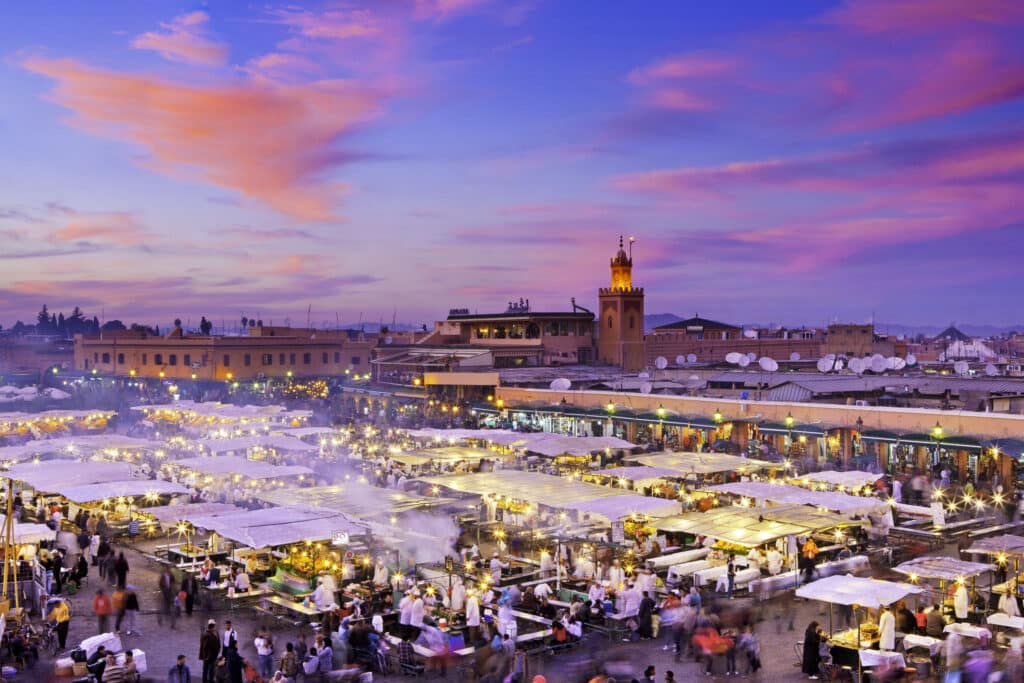
I dropped out of my dream tour of Morocco before it began. This guided adventure for active seniors had everything. Moonlight camel rides! A visit to an ancient tannery where craftspeople turned animal hides into fringed tote bags! An uphill trek with mules to view the mind-blowing Todra gorge, plus a tagine cooking lesson in someone’s home! It even included stops in four major cities—all in two action-packed weeks.

But before the departure date, I started to think: Did I really want to spend eight hours in a vehicle making small talk with strangers as we crisscrossed a barren desert? After all, didn’t I retire so I wouldn’t have to eat business lunches and schmooze with strangers? I remembered  that after my last road trip with my husband, I made a rule: Never sit in a car for longer than 2.5 hours with anyone. It’s just exhausting. And so, I lost my deposit.

Many of my friends adore these organized trips. On them, they can go anywhere—Antarctica, China, Turkey, Ghana and the Galapagos. They look forward to making new friends while they happily check exotic places off their bucket lists. Often, since their husbands don’t share their wanderlust, it is a safe way to venture to places they might not otherwise see. One friend now takes tours with friends she met on tours. She has a whole off-shore life.

I’m just not ready to make that jump. And so, I’ve planned my own trip to Morocco this spring. The itinerary is simple. I’m going to one city—Marrakech, a city that has been haunting me since the sixties—and I’m staying a week, by myself. What interests me the most about a different culture is the buzz of big cities in real time, where I can soak up a vibe—while shopping and sitting at cafes. Natural wonders have their charm but if I had to choose between a glorious mountaintop and a day at Galeries Lafayette, guess what I would pick.

In my experience it takes about a week to get oriented in a complex city like New York, Tokyo or London. Short of that, you’re just running around to monuments and museums feeling lost in crowds. Often, it’s only on the second or third visit to a city that I can calm down enough to observe what’s going on around me. I may be the only American who stayed a week wandering the gray city of Hanoi rather than venture to the countryside to crawl through the tunnels left after the Vietnam war. Another benefit of staying put, of course, is that you only have to unpack once.

Regarding safety in Marrakech, I have been warned by my adventurous female friends to be careful. Don’t wander alone, don’t get into an unknown taxi, don’t drink the water, and don’t wear big, shiny jewelry, they say. To be safe, I plan to hire day guides for outings and dine at my hotel in the evenings. At 70 plus, I’ll skip the discos.

Post Marrakech, I plan on heading to Paris, where I’ve been renting an apartment and staying for a month each year for my annual dose of French culture. I realized years ago that since it was the packing and shlepping that wasn’t fun, I would book longer stays in rentals and put down roots for awhile rather than run around visiting tourist spots around the globe. If I never make it to Mykonos, fine with me.

When a friend was stumped about why I keep returning to Paris I tried to explain. I found the spot on Earth where I feel happiest.

When a friend was stumped about why I keep returning to Paris I tried to explain. I found the spot on Earth where I feel happiest. Each time I go, I discover another aspect of the most beautiful city in the world—a tiny park, a new bookstore, a belle époque tea room, the place where the best art at Versailles is stashed. It’s the French at their frenchiest and I love it! Plus I get to improve my language skills—a 50 year project. This year, of course, could be colored by street demonstrations and the smell of trash in the street as the French continue to protest the rising retirement age. But when you travel, c’est la vie.

Meanwhile, my husband is happy to stay home. He really does not want to go. He’d much rather stay home, follow his routines and not be bothered by all the cultural differences I find so fascinating.

“If you survive,” my gloom and doom man is likely to say before I leave, “I’ll buy tickets to the Dodgers this summer.” There’s a place we can go together.


Los Angeles food writer Helene Siegel is the author of 40 cookbooks, including the “Totally Cookbook” series and “Pure Chocolate.” She runs the Pastry Session blog.

I Was a Dream Tour Dropout Read More »

Abortion Drug Ruling by Texas District Court Judge Threatens Women

I’m not an abortion provider, but I do have a long acquaintance with mifepristone, AKA RU 486, the abortion drug now entangled in federal court rulings. Now accounting for more than half of U.S. abortions, the drug blocks progesterone, the hormone that maintains fetal attachment to the placenta in pregnancy. Once administered, the procedure can be completed with the use of a second drug, misoprostol.

My involvement with mifepristone began in the early 1990s when it became commonly used in Europe. Hoechst Roussel, the drug’s owner, fearing the wrath of U.S. anti-abortion activists, refused access to the drug for U.S. researchers, even for indications unrelated to abortion.

The idea that outside parties with political agendas were curtailing my patients’ healthcare options was more than I could accept. Two colleagues and I founded “Physicians for RU 486” and recruited over 500 doctors to lobby for the drug’s release. Our leverage as prescribers of the company’s other drugs proved helpful. They relented and released its U.S. rights to the non-profit Population Council, which brought a new drug application to the FDA. The drug was approved in 1994.

After nearly three decades, a ruling by Texas District Court Judge Matthew Kacsmaryk now threatens this important patient option. Any medically informed individual reading his 61-page decision would be struck by its lack of scientific integrity. It reads like an anti-abortion polemic. The contrast with the tone of Justice Harry Blackmun’s now overruled Roe v. Wade could not be starker or more disturbing.  Blackman, after a careful review of the historic legal question of when life begins, humbly concluded that “the judiciary at this point in the development of man’s knowledge, is not in a position to speculate as to the answer.” Judge Kacsmyrak’s opinion shows no such humility. His bias becomes apparent right out of the gate with the comment that mifepristone is used “to kill the unborn human.” Invoking an inflammatory phrase rather than the scientific and more neutral term “fetus” or “embryo” reveals the bias one might expect of one who served as deputy counsel for the far-right Christian activist organization, First Liberty Institute. While there, Kacsmyrak submitted an amicus brief to the Supreme Court to restrict contraceptive access. Unfortunately, American jurisprudence allows plaintiffs to shop for a courtroom where the judge openly shares their biases.

The veracity of the science referenced in the ruling predictably follows the biases, ignoring the findings of major studies and depending upon cherry-picked anecdotes. In explaining why the plaintiffs, a collection of anti-abortion provider groups, merit standing to challenge the FDA the Judge commented that they “allege adverse events that place ‘enormous stress and pressure’ on doctors during emergencies and complications.” This one comment, so transparently deceptive, should be sufficient to impugn the credibility of the entire decision. The major complication rate for first-trimester abortion is recognized by studies as being about 0.24%. So the 50,000 annual abortions performed in Texas prior to the Dobbs decision would produce about 120 major complications per year. The notion that physicians caring for 30 million Texans could be overwhelmed by a toll far less than one major abortion complication per day would be laughable in mixed company, much less in a judicial decision.

Outrageously, Judge Kacsmaryk’s decision neglects any consideration of the consequences for those potentially denied abortion services due to his ruling. The Judge might consider maternal mortality. In the U.S. in 2021 maternal mortality was about 23.8 deaths per 100,000, worst of the eleven developed countries in the Organization for Economic Cooperation and Development (OECD). In 2020 the maternal mortality rate in Texas increased to a shocking 72.7 per 100,000 or about three times the U.S. average. A woman denied an abortion with mifepristone in Texas faces more than a 100-fold increase in mortality if forced to deliver an infant in Texas.

A woman denied an abortion with mifepristone in Texas faces more than a 100-fold increase in mortality if forced to deliver an infant in Texas.

Judge Kacsmaryk’s belief that abortion kills children is debatable as Justice Blackmun showed. What is beyond debate is that abortion services including mifepristone save lives in Texas by keeping women away from the state’s abominable maternity services.

Adult lives matter too. If Judge Kacsmaryk and the plaintiffs truly care about saving lives, they should leave his courtroom, head to the state legislature and demand improvements in the state’s appalling healthcare system.


Daniel Stone is Regional Medical Director of Cedars-Sinai Valley Network and a practicing internist and geriatrician with Cedars Sinai Medical Group. The views expressed in this column do not necessarily reflect those of Cedars-Sinai.

Abortion Drug Ruling by Texas District Court Judge Threatens Women Read More »

Telling Our Own Stories While Listening to Those of Others

The more subtle forms of antisemitism I grew up with—exclusionary practices, inappropriate jokes and the like—seem almost quaint today. From online harassment to defacing sacred places to outright violence, there is no hiding the fact that Jews today are being targeted for one reason: their Jewishness. It isn’t easy to forget the images of Charlottesville’s burning torches and the chant “Jews will not replace us.”

How best to respond?  I believe we need to tell our stories of dealing with hatred and to listen to those of others.

The impact of personal stories hit home for me in the wake of the murder of George Floyd. Like many of us, I educated myself the best I could about systemic anti-Black forces that have long existed in this country. But what stays with me are the accounts I heard directly from peers. At one meeting of college presidents, someone complained about the vilification of the police. A lot of heads nodded until one president, a Black man, told the story of police officers coming up to the official presidential residence as a dinner party let out. Someone apparently had reported a disturbance and the town police responded. They approached my friend and knocked him to the ground in front of his guests. His expression of the fear and humiliation in that moment has stayed with me. And when he asked us to raise our hands if we have ever felt targeted by the police, the only hands that went up belonged to the half dozen or so other Black presidents in the room. The rest of us went silent as we heard about being pulled over for “driving while Black” and the pain of having to give “the talk” to their children.

Jews also need to tell our own stories. When COVID was raging during the fall of 2020, the presidents and chancellors of the Big Ten Conference voted to delay the start of the football season. Many of us received nasty notes, but as the chair of the Big Ten board, I received the most. And being a Jew made me even more of a target. The threats I received were a little scary, leading campus security to guard my house. But the note I most remember asked why “a dirty Jew” had the authority to interfere with his passion of cheering on one of the conference superpowers. When I reported this to my colleagues, they were shocked. Alas, I was not. Like most Jews, I have been called worse.

Jews also need to tell our own stories.

One of the most gratifying lessons I have learned is that, just as Jews are among the first to respond when witnessing the pain of others, when non-Jews are made aware of anti-Jewish attacks, many of them step forward to help. That is at the heart of the “Stand Up to Jewish Hate” campaign funded by New England Patriot owner Robert Kraft. The numbers they present are shocking: Jews constitute around two percent of the U.S. population and are subjected to more than half of all religious hate crimes. But I don’t think that is the message viewers will recall. The online and television ads personalize anti-Jewish experiences. One shows a Bar Mitzvah boy reading text messages that mock him and his faith. The expression on his face is heartbreaking. But then an all-Black choir learns about this and responds by sending him a video in which they sing a Hebrew song to support him.

Responses such as these are not limited to made-for-tv moments. There are countless examples in real life of non-Jewish friends and neighbors standing up for Jews. I am still moved to tears when I recall how 10,000 residents of Billings, Montana, responding to a brick thrown through the window of a Jewish family’s home that had displayed a Hanukkah menorah, placed paper menorahs distributed by their local newspaper in their own windows.

Jews should never be silent in the face of hatred, whether it is directed to us or to any vulnerable group. By telling our most personal stories to potential allies, we might just elicit their support. And we must remain open to the uncomfortable learning that comes from listening to the painful stories of others.


Morton Schapiro is the former president of Williams College and Northwestern University. His most recent book (with Gary Saul Morson) is “Minds Wide Shut: How the New Fundamentalisms Divide Us.”

Telling Our Own Stories While Listening to Those of Others Read More »

God on Psychedelics? New Book Explores Current Trends

Don Lattin knows from religion. For decades he was the “God beat” reporter for the San Francisco Chronicle, writing about all sorts of religious matters: from flying in the Pope’s plane with the Pope, to spending the night in a teepee ingesting magical potions with a Native American holy man, to interviewing Jewish scholars in Jerusalem.  

And Lattin also knows from psychedelics. Several of his books — “The Harvard Psychedelic Club,” “Distilled Spirits” and “Changing Our Minds” — recount how powerful mind-altering substances, and the people who ingested them, have changed our world.

“God on Psychedelics: Tripping Across the Rubble of Old-time Religion” is Lattin’s latest book, and as the title indicates, it merges the two subjects he’s explored and written about for more than 40 years: religion and entheogens — a word which means ‘contacting the divine within’ and is now often used in place of ‘psychedelic’, which means ‘mind manifesting’ and has too many “groovy” ‘60s connotations. 

One of the threads in “God on Psychedelics” is Lattin’s deep dive into the growing number of groups using entheogens as their sacrament. Oddly, some of these groups, as Lattin describes their gatherings, tend to mirror mainstream religions. Some call themselves a church — even when led by Jews; some request financial support from their congregation and whoever else wishes to support them; some chant and bond as a community; and some are subject to internal schism issues, just like Christians and Jews. 

At the same time, these groups’ use of mind-altering plants as a sacrament, the lure that this will lead to a mystical experience, and their going into nature to carry out spiritual journeys, all that echoes much more primeval rites, whether Celtic, ancient Greek or Native American.

Another thread in “God on Psychedelics” is Lattin’s interviews with — and fascinating descriptions of — laity and clergy who have incorporated entheogens into their religious practice. Though much of the book is about those who come from Christian traditions, there is a chapter titled “On Being Psychedelic and Jewish,” in which Lattin profiles and quotes Jewish chaplains and rabbis, as well as Jewish scholars and lay ‘psychonauts’ — a newly-coined word that gives the act of ingesting entheogens the patina of lunar exploration. 

Lattin writes that the increasing acceptance of entheogens among some religious folk, and the emergence of groups using it as their sacrament, indicate a deep-rooted desire for meaningful spiritual experiences, a desire that has traditionally not been satisfied by mainstream religions—as evidenced by the growing number of people who have left those religions and yet consider themselves, as is often heard, “spiritual but not religious.”  

Lattin writes that the increasing acceptance of entheogens among some religious folk, and the emergence of groups using it as their sacrament, indicate a deep-rooted desire for meaningful spiritual experiences, a desire that has traditionally not been satisfied by mainstream religions.

“Mainline churches and synagogues have been in decline,” Lattin said in a Zoom interview, “those numbers have really fallen off the cliff in recent years … Both Christians and Jews I interviewed pointed out that churches and synagogues have done a terrible job of teaching people their own mystical traditions. There are reasons for that. Mysticism is dangerous for organized religion, whether or not triggered by psychedelics …

“When people have their own powerful personal experience of the divine, it may give them other ideas about what God is, or how they relate to God, or how they relate to the church or temple … So baby boomers — like me — came of age when a lot of people of my generation got into exploring other ways of being spiritual: Zen meditation, say, or maybe they hitched their wagon to an Indian guru, or got into Sufism or human potential movements.” 

It’s no secret that a large number of Jews are among those who have explored other traditions, whether or not triggered by the use of entheogens. Lattin has often written about a Jew whose life epitomizes this journey: Richard Alpert—Ram Dass—one of the leading pioneers in popularizing the use of LSD, and one whose spiritual search in India influenced many others.

As Lattin points out, Ram Dass once famously said of himself, “I’m only Jewish on my parents’ side.” But Lattin, who interviewed Ram Dass many times, found that his attitude evolved during his life. “I interviewed him shortly before his [1997] stroke and we talked about his Jewish upbringing and his turning away from that …”

“In the end,” Lattin writes in “God on Psychedelics,” “Ram Dass never really embraced his Judaism … But he admitted that ‘had I been in a warm relationship with Judaism, it may well have been that I would have found… the maps that would have given me some structure to what I had experienced on psychedelics.’”

“When people have these powerful psychedelic experiences that radically change their sense of self or feel a divine presence in a whole new way,” Lattin said, “in some cases they look for road maps in their own tradition.” 

One such person that Lattin interviewed for “God on Psychedelics” is Sam Shonkoff, professor of Jewish Studies at the Graduate Theological Union in Berkeley. Shonkoff told Lattin that “a major question … is how to tap into the creative forces of psychoactive plants and fungi without losing sight of the distinct gravity of ancestral Jewish sources.” 

Another is Zac Kamenetz, a Berkeley-based rabbi who founded Shefa, an international movement trying to integrate the use of entheogens and Jewish spiritual traditions. Shefa holds bimonthly “integration circles,” Lattin writes, “where Jews from around the world share and process their psychedelic experiences in a culturally and religiously sensitive setting.” Lattin writes that Kamenetz told him that Shefa’s aim is to “bridge our [Jewish] religious traditions and psychedelic states to mutually inform, enrich and reenchant spiritual life …”

In “God on Psychedelics” Lattin writes about other Jews who have used, and are using, entheogens to explore Judaism’s more mystical aspects. There’s an interview with Boston-based rabbi Art Green, who among other accomplishments, founded the Havurah movement. Green told Lattin that his past entheogenic experiences enriched his practice of Judaism.

At the same time, Lattin writes that some scientists and researchers feel that entheogens should be used mostly in a medical/therapeutic setting. One such person is New Mexico-based medical doctor and psychiatrist Rick Strassman, also Jewish, who has objected to the “loose use of ‘mystical’” and has warned that established religions are going to push back at the idea that people can reach mystical consciousness by use of a psychedelic drug.

In spite of some scientists’ misgivings, Lattin feels that entheogen use in a religious setting is the leading edge of the spiritual-but-not-religious movement. “A lot of this is underground,” he said, “but there are literally hundreds, maybe thousands of small groups, sometimes not so small … People are finding ways to get together and explore these realms on their own. It’s definitely growing, and it’ll be interesting to see how it affects organized religion.”


Roberto Loiederman has written more than 100 articles for The Jewish Journal. He is co-author of “The Eagle Mutiny,” a nonfiction account of the only mutiny on an American ship in modern times.

God on Psychedelics? New Book Explores Current Trends Read More »

Appeals Court Throws Out Challenge to Texas Anti-BDS Law

The Fifth Circuit Court of Appeals dismissed a lawsuit against Texas’ anti-Boycott, Divestment and Sanctions (BDS) movement law in an April 11 ruling, concluding that the plaintiff did not have standing.

The plaintiff, Haseeb Abdullah, filed in the lawsuit in 2020 after Texas’ Employee Retirement System divested from a Norwegian company that boycotted Israel. Abdullah, who used to work for the state government and currently works in Travis County, has contributed to that retirement fund and will receive retirement benefits from it. Therefore, he argued in the lawsuit that he would suffer economic damage from the anti-BDS law. Abdullah also argued the anti-BDS law violated constitutional rights.

The court did not buy Abdullah’s arguments, concluding that Abdullah’s claim of future economic loss from the law is too “speculative” and that he did not show that the law in any way infringed upon his constitutional rights. Thus, the court upheld a lower court’s ruling that Abdullah did not have standing to sue.

“Texas’s anti-boycott law is both constitutional and, unfortunately, increasingly necessary as the radical left becomes increasingly hostile and antagonistic toward Israel,” Attorney General Ken Paxton (R) said in an April 18 statement. “Though some wish to get rid of the law and see Israel fail, the State of Texas will remain firm in our commitment to stand with Israel by refusing to do business with companies that boycott the only democratic nation in the Middle East. In this case, I’m pleased to see the court recognize that the plaintiff lacked any standing to bring this challenge. Thus, our important law remains in effect, and I will continue to defend it relentlessly.”

In January 2022, a separate lawsuit against the law resulted in a preliminary injunction being issued against it. Paxton appealed the injunction to the Fifth Circuit, which remains ongoing.

Appeals Court Throws Out Challenge to Texas Anti-BDS Law Read More »

Print Issue: Rebirth of a Nation? | April 21, 2023

CLICK HERE FOR FULLSCREEN VERSION

Print Issue: Rebirth of a Nation? | April 21, 2023 Read More »

They Have Not Died in Vain: The Warsaw Ghetto Uprising, Eighty Years Later

The sheer audacity of it is astounding. On April 19th, 1943, a rag-tag group in the Warsaw Ghetto took on the most powerful army in Europe. With a handful of pistols and Molotov cocktails, the Jewish fighters held off a far larger army equipped with artillery, tanks and airplanes. In the end, the Nazis had to resort to mass destruction to counter the resistance; they razed the ghetto to the ground, blowing it up building by building. Even so, the battle raged on for weeks, with the bulk of the resistance only ending after the Nazi destruction of Mila 18 on May 8th.

Jewish resistance during the Holocaust was the subject of fierce debate after World War II. Some disparaged the six million victims of the Holocaust as going “like sheep to the slaughter” for not fighting back. Critics such as Bruno Bettelheim and Raul Hilberg claimed that the Jews, by being so obedient, made it easier for the Nazis to kill them. To them, the cowardly, docile Jew, always accommodating, failed to live up to the challenge of the time. Many, particularly survivors, found this theory to be deplorable.

The reality is quite different; there was a considerable amount of Jewish resistance during World War II. Thousands of Jews escaped the Nazis and joined partisan brigades. Underground organizations sprouted up in nearly four dozen ghettos, and there were two dozen uprisings in concentration and forced labor camps. Henri Michel found that Jewish resistance during World War II was far more substantial than that of the Soviet prisoners of war, even though 3.3 million Soviet POWs died in Nazi captivity. As Yehuda Bauer explains, the intensity of Jewish resistance was actually quite surprising.

But why did they resist? After two millennia of exile, one would expect the Jews to be weaklings, completely broken and beaten down. Where did the Jews of the Warsaw Ghetto find their courage?

The answer lies in the Jewish calendar. The Warsaw Ghetto Uprising began just a few hours before Pesach. The timing was determined by the Nazis, who, perhaps because of their sadistic habit of murdering Jews on Jewish holidays, chose to storm the ghetto that day. But the Jewish response was very much a Pesach response. Alexander Donat, a survivor of the Warsaw Ghetto, wrote this about that evening in his memoir: “Monday night Passover was to start. We had not prepared to observe the holiday fully, but its spirit was very much with us. Under the circumstances, the Haggadah took on a special meaning.”

For Donat and centuries of Jews, the Pesach Seder is a classroom of courage. It reminds us that freedom comes first. The Talmud (Kiddushin 22b) explains that after having experienced slavery in Egypt, a Jew must never accept another master upon themselves, and the story of the Exodus reminds Jews never to forget about the dream of redemption. As the leader of the rebellion Mordechai Anielewicz put in a talk to his fighters: “The most difficult struggle of all is the one within ourselves. Let us not get accustomed and adjusted to these conditions. The one who adjusts ceases to discriminate between good and evil. He becomes a slave in body and soul. Whatever may happen to you, always remember: Don’t adjust! Revolt against the reality!”

On that first night of the uprising, the words of the Haggadah echoed in bunkers and hiding places throughout the Ghetto. In a room that looked as if it were hit by a hurricane, Rabbi Eliezer Yitzchok Maisel conducted the Seder, despite the shooting and explosions just outside; when fighters stopped by he would offer them words of encouragement. To Tuvia Borzykowski, Maisel said “that although he was old and broken … the young people must not give up.” When Zivia Lubetkin, one of the key leaders of the resistance stopped in, Maisel interrupted the Seder, put his hands on her head and blessed her, and said, “I am ready to die now.”

That evening, the values of the Seder came to life. Jewish blood was no longer cheap; Jews would no longer cower before their murderers. Like the Pharaoh of the Exodus, the Nazis deserved plagues, punishment and more. By fighting back, these fighters avenged the deaths of their friends and families. As Anielewicz wrote in his final letter, “Self-defense in the ghetto is a reality. Jewish armed resistance and revenge are facts. I have been a witness to the magnificent, heroic fighting of Jewish men in battle.”

In the Haggadah there is a verse, taken from the Book of Ezekiel (16:6), that says, “And I said to you in your blood you shall live, and I said to you in your blood you shall live.” Life can emerge from destruction, and the blood, sweat, and tears of one generation can bring hope to the next. In Yad Vashem, this verse is the caption for a sculpture commemorating the Warsaw Ghetto Uprising; and indeed, that is the very legacy of the fighters.

This uprising renewed the Jewish spirit, and future generations would draw inspiration from the fighters’ courage and heroism.

This uprising renewed the Jewish spirit, and future generations would draw inspiration from the fighters’ courage and heroism. These men and women were exceptionally young, (almost all in their teens and early twenties,) and yet they stood unafraid, ready to sacrifice themselves in the pursuit of justice and freedom. Mary Berg, an American citizen who was interred in the Ghetto at the time, wrote in her diary that the “ghetto’s starved, exhausted defenders fought heroically against the powerful Nazi war machine. They did not wear uniforms, they had no ranks, they received no medals for their superhuman exploits. Their only distinction was death in the flames. All of them are Unknown Soldiers, heroes who have no equals.”

These fighters gave up their lives to build a better Jewish future, where other young Jews can walk proudly and without apology wherever they go. Eighty years later, it is up to us, to borrow a phrase from Abraham Lincoln, to resolve that those who died in the Warsaw Ghetto Uprising “shall not have died in vain,” and ensure that it is so.


Rabbi Chaim Steinmetz is the Senior Rabbi of Congregation Kehilath Jeshurun in New York.

They Have Not Died in Vain: The Warsaw Ghetto Uprising, Eighty Years Later Read More »

Be a Rebel: Dare to Be a Zionist

There’s a common perception among the progressive crowd that it’s cool to go against Israel, especially if you’re young and Jewish. After all, what’s cooler and more rebellious than taking on your own side, and even more so if it’s already seen as the big and powerful side?

On the surface, this makes sense. It always looks good to side with the underdog and the victims — in this case, the Palestinians. You can see this phenomenon with leftist Jewish activists who call on the U.S. to end support for Israel’s “apartheid” system and who put all the blame for Palestinian hardship on the Jewish state.

This approach looks like a classic case of courage — bash the strong and defend the weak. In reality, though, if we look more closely, all it reveals are activists who are rather conformist and risk-free.

Siding with the Palestinians, the world’s most coddled and celebrated victims, is as safe a bet as they come.

Siding with the Palestinians, the world’s most coddled and celebrated victims, is as safe a bet as they come. This is even more true in recent years, when the rise of intersectionality has intertwined the Palestinian cause with virtually every other progressive cause.

We can see this, for example, when Palestinian activists who protest Israel’s response to terror attacks are joined by multiple progressive groups.

“Pro-Palestinian activists say their numbers are being swelled by a more intersectional progressive coalition of supporters in the U.S.,” Time magazine reported in May 2021, after Israel responded aggressively to Hamas rocket attacks from Gaza. “More than 100 progressive groups signed onto a May 14 statement asking Biden to denounce ‘Israel’s use of disproportionate and deadly force against Palestinians in Gaza.’”

In other words, even when Israel is justified in defending its people against terror, the message is clear for Jewish activists who want to be accepted in progressive circles: Go with the crowd, side with the Palestinians and you’ll be just fine.

The harder path, the more courageous path, is to side with the Zionists. Yes, this won’t put you in popular territory, which is precisely the point.

Seen through that lens, the harder path, the more courageous path, is to side with the Zionists. Yes, this won’t put you in popular territory, which is precisely the point. If you really believe in something, you don’t care what others think. You’re willing to pay the price. That is the mark of a rebel.

It’s true that few words are less popular in polite society today than the word “Zionist.” But the true rebel thinks: the hell with polite society.

Rebel Zionists know that Zionism is the dramatic manifestation of a people yearning for 1900 years to return to their biblical homeland. They know they are part of one of humanity’s greatest and most miraculous stories. If that means they get looked down upon by the self-righteous cliques of Zionist bashers, they see that as a badge of honor.

The rebel Zionist doesn’t apologize for the fact that Israel must be very strong just to survive in the world’s most dangerous neighborhood. The rebel Zionist knows that Israel would be a lot more popular with progressives if hundreds of Israelis would die during rocket attacks instead of protecting themselves in bomb shelters.

The rebel Zionist has looked at that equation and has given the progressive world the middle finger: Sorry, we won’t die just to make you love us.

So, as Israel commemorates its 75th anniversary, it’s a good time for Jews to do a little soul searching. Will you hide your Zionism because you’re afraid to stand out and stick your neck out? Will you take the side of the Palestinians because it makes you feel virtuous and surrounds you with the comforting glow of progressive conformists and mainstream elitists?

Or will you throw caution to the wind, live dangerously and take the road less travelled? That is, will you stand up as a proud Zionist and accept Israel with all its faults even if it makes some people around you uncomfortable?

If you’re not sure, consider this fact: The progressive crowd that bashes Zionists rarely does anything to help the Palestinians. If anything, by infantilizing them as if they have no agency, they reinforce a chronic victimhood that only perpetuates their misery.

The rebel Zionist has no problem telling Palestinians that peace is a two-way street and they must do their share if they want a better future. The rebel Zionist has the fortitude to warn Hamas and other terrorists that Israel will crush them when they launch their terror at Israeli civilians. And the rebel Zionist knows that the best way to confront BDS haters on college campuses is not through fear and anxiety but through Zionist pride.

Rebel Zionists, in short, understand that their people need them. They are not at all embarrassed that Israel is powerful. Just the opposite: They think it’s really cool to not be victims and to stay alive.

Be a Rebel: Dare to Be a Zionist Read More »

In Honor of Israel’s Birthday, I Talked to Israeli Grandmothers

Growing up in America, whenever there was news of terrorism in Israel, I found comfort in speaking with my Jerusalem-based grandmother, who escaped Iran in the 1980s. Somehow, hearing her voice offered me a sense of continuity; life was resuming in Israel, despite the devastating loss of life. 

I can no longer speak with my grandmother, who passed away over a decade ago, but in contemplating my tribute to Israel on her 75th birthday (and especially in light of recent terrorist attacks), I instinctively knew to whom I would dedicate this column: Israeli grandmothers. Those wonderful, lovable, resilient women who hold a lifetime of pain, joy, complaints (all of them valid) and wisdom.

The first interview was simultaneously translated from Russian to English; the second was conducted in Persian. This is part one of a two-part column devoted to Israeli grandmothers. I’m grateful to friends who connected with the following women, most of whom wondered why an LA-based writer wanted to interview them and not, in the words of one grandmother, “people who are more interesting.” To me, these women are more than interesting; they’re eternal. 

“B”

Name: “B”

Based in: Ramat Gan

Age: 66

JJ: Your daughter informed me that you arrived in Israel with your family in 1992, after leaving Russia. What was that experience like for you?

B: I came here with my husband and three children. They were very small. I felt happy to finally be out of Russia, but also sad because my parents stayed there. I had a hard time getting used to Israel. 

JJ: In what sense?

B: I didn’t feel as Jewish as a lot of other people here. In Russia, my family was completely secular. When I came to Israel, I knew I was Jewish, but I felt like I was learning about someone else’s customs when I learned more about Judaism. 

JJ: Do you feel more connected to Judaism now?

B: Yes, definitely. But I still feel like I stand out, especially with my family.

JJ: Why?

B: Two of my daughters became “dati” (“Orthodox”). I love them very much, but sometimes, I feel like the evil grandmother! Don’t go to Grandma’s because she has a TV. She’ll corrupt you! [“B” laughs heartily.]

JJ: Are you concerned about the proposed judicial reforms in Israel that have sparked mass protests?

B: I don’t trust any government, not even democracies. I’m from Russia. Whoever has power over you will always try to exercise that power. The only way I’d be free is if I was Prime Minister. 

JJ: I bet you’d be tough, but fair. What would be your first priority as PM?

B: The cheese here is too expensive. Why is it so expensive? Why can’t these leaders make cheese fair-priced?

JJ: Do you enjoy cooking?

B: With cheese?

JJ: In general. [“B” laughs heartily again.]

“You can’t see me over the phone, but I’m a happily chunky person. I love to cook. I love flavors. My son tried to get me on a diet. I yelled at him, ‘I didn’t escape Russia to eat celery for the rest of my life!'” 

B: You can’t see me over the phone, but I’m a happily chunky person. I love to cook. I love flavors. My son tried to get me on a diet. I yelled at him, “I didn’t escape Russia to eat celery for the rest of my life!” [“B” erupts in laughter. So do I.]

JJ: What’s your best dish, the one everyone loves?

B: When my kids were little, they loved my carp. And I used to make pastries out of, how do you call them in English, berries of ducks? 

JJ: Are they a type of berry or a type of duck? [After a while, we finally realize “B” means gooseberries.] 

JJ: Do you enjoy staying up to date with current events?

B: I can’t tolerate hearing about terrorist attacks anymore. I feel very guilty.

JJ: Why is that?

B: I’m old, but I’m still here. But these beautiful, young people who were taken from us … they weren’t old. I’ve lived my life and they didn’t get to live theirs. 

“Esther”

Name: Ehteram (also known as “Esther”)

Based in: She would rather not say

Age: 93

JJ: How old were you when you arrived in Israel, and what year did you arrive?

E: I was 49 years old. It was 1979 or 1980. My [adult] children made me come here. I wanted to stay in Iran.

JJ: Why did you want to stay?

E: Those fanatics had come to power during the [Iranian] revolution, but I thought they wouldn’t last. Iran was my soil, my land. I was almost 50. I didn’t even speak Hebrew. Can you imagine how hard it was for me, at that age, to start everything all over in a new country?

JJ: Yes, I can imagine because my family and I experienced starting lives anew as well. 

E: Oh? Where are you from?

JJ: Tehran.

E: Tehran is nice, but you’ll be run over by a car there. Shiraz is really something. 

JJ: Do you enjoy living in Israel?

E: No.

JJ: No? You don’t like living in Israel?

E: Did you ask if I like living in Israel or if I like the people who live in Israel?

JJ: Well, do you like the people who live in Israel?

E: No.

JJ: No? 

E: I don’t like the people in my [apartment] building. They’re mostly the people I see all day. They keep to themselves. A long time ago, I knew all of my neighbors [in Israel]. But now, people have forgotten how to be human. I try to smile at them when I take my walks, but they don’t smile back. I used to invite my younger neighbors to come over to see me. None of them came. 

Since you asked, I’m fine with other people in Israel, but the ultrareligious take things too far and the ultrasecular have forgotten they’re Jews. My grandson tattooed his entire leg. I told him, “I’m so glad your great-grandfather (my father), who was very pious, never saw you like this.” But he’s a good boy. 

JJ: How old is your grandson?

E: I think he’s almost 50.

JJ: He sounds like a nice boy!

JJ: Are you glad you came to Israel?

E: Of course. My bones belonged to Iran, but when I came here, I knew that my soul belonged to Israel.

JJ: Is it painful to have witnessed the enmity and violence that Iran has displayed against Israel in the last 44 years since the [Islamic] revolution?

E: I don’t even recognize Iran anymore. I stopped recognizing it 40 years ago. Iranians never hated Israel, even the non-Jewish ones. 

JJ: You seem very up to date with the news. Do you—

E: My [late] husband made me interested in the news. I have a radio in every room in the apartment. 

JJ: Does it worry you that Iran has been trying to obtain nuclear weapons for several decades?

E: The mullahs want “bomb-eh-atomi” (“a nuclear bomb”)? I remember I heard about that on the radio. Who would give those mullahs a nuclear bomb? They’re really trying to get a bomb?

JJ: I’m afraid so. 

B: It’s like leaving a butcher in the same room with a lamb, isn’t it?

JJ: That’s a good way of—

E: You know that my grandchildren all served in the army? At first, I didn’t want them to, but then I changed my mind. 

JJ: Why was that?

E: If we had stayed in Iran, they would have had to serve in the Iranian army. If you’re going to do army service, it might as well be for Israel, rather than for those mullahs.

JJ: It’s beautiful that you were born a Persian Jew whose Hebrew name is Esther, and later, you found yourself redeemed in Israel. 

E: That’s part of Israel’s secret weapon.

JJ: Pardon?

“I tell people I’m like [Queen] Esther. If Iran threatens to destroy Israel, I’m the secret weapon. I’m very old, but they [the Iranians] would have to get through me to get to this country.”

E: I tell people I’m like [Queen] Esther. If Iran threatens to destroy Israel, I’m the secret weapon. I’m very old, but they [the Iranians] would have to get through me to get to this country. 

JJ: Do you know that Crown Prince Reza Pahlavi just visited Israel for the first time?

E: Of course. The radio said it. “Fadash-sham!” (“I would sacrifice myself for him!”).

Happy 75th Birthday, Israel.


Tabby Refael is an award-winning weekly columnist for The Jewish Journal, and an LA-based speaker and civic action activist. Follow her on Twitter and Instagram @TabbyRefael.

In Honor of Israel’s Birthday, I Talked to Israeli Grandmothers Read More »