fbpx

March 8, 2023

Have You Heard of the Jewish Joan of Arc?

Several months ago, I spent Shabbat morning at a Los Angeles synagogue filled with Moroccan Jews. I was intrigued to meet a lovely young woman whose first name I had never heard before: Solica. 

On the walk home, I asked my friend, David Elfersi, who was born in Casablanca, about this unique name. “You’ve never heard of Lalla Solica?” he asked incredulously, pronouncing the name as “Suleika.” I soon learned that nearly every Moroccan Jew, whether in Morocco, France, Israel or the United States, knows the name and legacy of Solica, the 19th-century Jewish Joan of Arc of whom few outside of Morocco have ever heard. 

On the heels of Purim, which celebrates another courageous female heroine, Queen Esther, and in honor of International Women’s Day (March 8), I want to share with readers the incredible story of a teenager named Solica Hatchouel, also known as Sol HaTzaddikah (“the righteous Sol”) or Lalla Suleika (“holy lady Suleika”).

Solica was born in the northern Moroccan city of Tangiers in 1817, the daughter of Haim, a merchant, and Simha, a homemaker. Her father was known for hosting Talmudic study groups in his home, and this seems to have had a deep effect on his daughter; Solica identified strongly with being a Jew. 

There was something different about Solica. Among the Jews of Tangiers, she was known to be strikingly beautiful, but also modest and renowned for her acts of chesed, or kindness. The 19th-century Jewish explorer, Israel Benjamin Joseph, wrote of Solica, “Never had the sun of Africa shone on more perfect beauty.” But according to Joseph, her jealous neighbors were apt to complain, “It is a sin that such a pearl should be in the possession of the Jews, and it would be a crime to leave them such a jewel.”

According to one account, after a bitter fight with her mother, the teenager sought comfort in the courtyard of a young, devout Muslim woman named Tahra de Mesoodi, who was Solica’s friend and neighbor. Tahra de Mesoodi was so jealous of the beautiful Jewish teenager that she falsely claimed that she had converted Solica to Islam, but that Solica now wished to return to Judaism. This account is offered by a Christian scholar named Eugenio Maria Romero, who claimed he interviewed those who knew Solica, including her parents, for his 1837 book, “El Martirio de la Jóven Hachuel, ó, La Heroina Hebrea” (The Martyrdom of the Young Hachuel, or, The Hebrew Heroine”).

Another account claims that a wealthy Muslim boy (also a neighbor) wanted to marry Solica and that his family threatened her if she would not convert to Islam in order to marry him. When Solica rejected him, the boy accused her of having converted to Islam, only to renounce it (a crime punishable by death). 

Whether it was her friend or a desirous boy who accused Solica of apostasy, that single false accusation unleashed a deluge of devastation. 

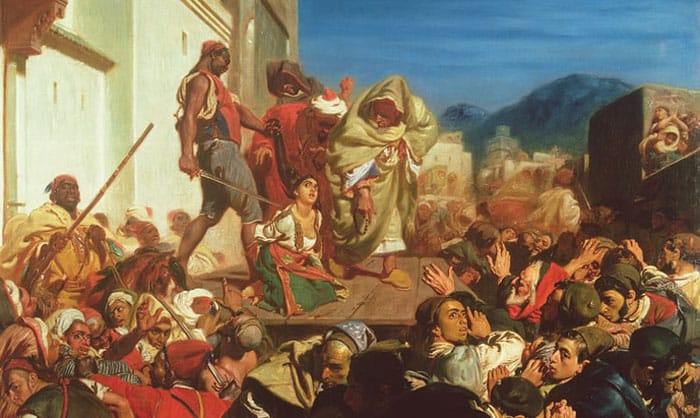
Solica hid in the home of a friend, but when soldiers threatened to take her mother away, she turned herself in to the authorities. The teenager knelt before the (pasha) governor at court, who promised her that as reward for conversion to Islam, she would receive gold, silk and marriage to a desirable young man. But in his book, which was written only three years after the incident, Romero claims that the governor warned Solica of dire consequences if she did not convert: 

“I will load you with chains,” said the pasha. I will have you torn (apart) piecemeal by wild beasts, you shall not see the light of day, you shall perish of hunger, and experience the rigor of my vengeance and indignation, in having provoked the anger of the Prophet.”

Incredibly, Solica responded: 

“I will patiently bear the weight of your chains; I will give my limbs to be torn (apart) piecemeal by wild beasts; I will renounce forever the light of day: I will perish of hunger: and when all the evils of life are accumulated on me by your orders, I will smile at your indignation and the anger of your Prophet: since neither he nor you have been able to overcome a weak female! It is clear that Heaven is not auspicious to making proselytes to your faith.”

Flabbergasted, the pasha ordered Solica to be held in a dark dungeon, with an iron collar around her neck and chains around her wrists and feet. He then sent her to the town of Fez, where the matter of the Jewish girl fell into the hands of the sultan himself. For nearly a week, Solica was dragged barefoot behind a mule-drawn cart from Tangiers to Fez.

In Fez, the sultan suddenly found himself with a potentially explosive problem: Like other North African countries, Morocco was becoming more susceptible to invading Western powers; four years earlier, in 1830, France’s Napoleon III had conquered Algeria, and now, the ruler was threatening Morocco (France would eventually begin a campaign of conquest against Morocco in 1907 and the country would become a French protectorate in 1912).

Pardoning a Jewish girl who had been accused of apostasy and insulting Islam, he surmised, would likely set off a wholescale uprising.

The sultan knew well that Moroccan public opinion was a powder keg when it came to perceptions of his leadership as weak or cowering to external pressure. Pardoning a Jewish girl who had been accused of apostasy and insulting Islam, he surmised, would likely set off a wholescale uprising.

But unlike other Arab countries, Morocco had mostly provided a safe environment for its Jewish population, and Jews there lived under the sultan’s protection. He felt a personal responsibility to protect the girl, but as sultan, knew the lay of the land better than anyone else. 

Rather than decide Solica’s fate himself, the sultan deferred the task to the Islamic court. I understand the sultan’s real concerns over a violent uprising, but I believe he missed a tremendous chance to act with merciful leadership. By outsourcing Solica’s case to the cadi (the judge of a shari’a court), the sultan placed Solica’s fate into the hands of some of the most fanatic men in the land — [a judge and a court who applied the Koran to the letter. 

Not surprisingly, the court informed Jewish sages in Fez that if Solica did not convert, she would be executed and the greater Jewish community would be at risk. While Solica was in Fez, even the sultan’s son is said to have been in awe of her beauty. He also asked her to convert and marry him. She refused.

Some believe that as much as the hachamim worried for her safety and that of the Jewish population, they rejoiced in their hearts over her unbelievable dedication to Judaism. 

The hachamim (learned Jewish men) of Fez entreated Solica to comply, but she would not forgo her Jewish faith. Some believe that as much as the hachamim worried for her safety and that of the Jewish population, they rejoiced in their hearts over her unbelievable dedication to Judaism. The Islamic judge ordered the hachamim to obtain a (false) confession from the girl that she had converted to Islam but sought to return to Judaism. 

What happened next is one of the most powerful, but little-known events in modern Jewish history. Next week, I’ll share the conclusion of Solica’s story and the amazing effects that one teenager’s courage has had on a Jewish population for nearly two hundred years. If you’re tempted to Google the outcome, don’t. This is a story that merits a more detailed and soulful telling, rather than a mindless click. And that’s the beauty of the reader-columnist relationship: We are moved together and we learn together.  

See you next week.


Tabby Refael is an award-winning, L.A.-based writer, speaker and civic action activist. Follow her on Twitter and Instagram @TabbyRefael.

Have You Heard of the Jewish Joan of Arc? Read More »

The Sundance Yid

Going to Sundance is a rite of passage for many Los Angeles filmmakers. All you need is a warm jacket for the freezing temperatures of Park City, Utah, a stylish hat, and a love of film. Sundance can be expensive, so it also helps if your winter coat has deep pocketfuls of disposable income.  

It occurred to me that one thing missing from the well-established program is a place for Jewish filmmakers to network, and to support one another in making independent films. I set up a brunch event, and called it the “Jewish Filmmakers Network.” Although a friend of mine said, “the Jewish Filmmakers Network — isn’t that Hollywood?”

The last decade has seen a regular Jewish presence at Sundance. In 2009, a Sundance Shabbat dinner was created by Rabbi Mendel Schwartz of LA’s Chai Center. The event is now called Shabbat Lounge, and is produced by Shabbat Tent, led by Rabbi Yonah and Rachel Bookstein, who stage it in partnership with the Chai Center and the United Jewish Federation of Utah. 

Shabbat Tent is a regular fixture at music festivals such as Coachella, and the Jewish space is subtitled as “Oasis of Chill.” The Shabbat Lounge at Sundance is a great space for hot food, and a toasty Jewish escape from Utah’s sub-zero chill.

Hundreds of people attended Shabbat Lounge programs during the weekend, and my event was the finale. I was hoping we’d get 40 people since that was all that the space allowed, but in the end we had standing room only, with people on the balcony and stairs, all cramming in to be part of the conversation. We had bagels flown in from New York, so even if they didn’t get a chair, at least they got lox and cream cheese.

I’m part of an independent film network called We Make Movies, and I wanted to bring the ethos to start a community of independent Jewish filmmakers. The approach of We Make Movies is to help you “make the movie you want to see,” without waiting for the coveted green-light that the film industry bestows on a few lucky people. Every summer we hold the We Make Movies International Film Festival, and recently ran a contest to give away three grants of $25,000 to help people make their films.

At the Jewish Filmmakers Network brunch, we staged a mini-pitchfest, with the aim of encouraging collaborations between attendees. One of the We Make Movies values is “helping the community is helping yourself.” In the great Jewish tradition of matchmaking, there were artistic shidduchs to be made.

One aim for the Jewish Filmmakers Network is to create a community where we can pool resources, and help each other create our films. Sundance Festival was a great place to launch the initiative, and Shabbat Lounge was the perfect host.

One aim for the Jewish Filmmakers Network is to create a community where we can pool resources, and help each other create our films. Sundance Festival was a great place to launch the initiative, and Shabbat Lounge was the perfect host.

I invited participants to introduce themselves to the group, introduce their film project, and ask for what they want. If someone has the solution to somebody else’s problem, then we all benefit because it increases the chances of the movie getting made.

The first person to stand up was a non-Jewish Black gentleman who asked, “How can I be an ally to Jewish filmmakers?” One person responded that “by being here and asking the question, you are already a great ally.”

A female filmmaker was looking for funding for a film about abortion, based on personal experience. An actress-producer was looking to connect with other Jewish filmmakers. An Israeli director wanted feedback on a project about the adventures of a cursed underwater rabbi, a kind of “Fiddler on the Roof meets Aquaman.” 

Another filmmaker was looking to access an unaffordable location for his independent movie. I asked the crowd if there were any directors of photography or camera operators among them, and invited the filmmaker to speak with them afterward to get advice on creative ways to get the shot he wanted on a minimal budget.

It can be challenging for artists who have spent many years learning their craft but never achieved that big break. Many people drop out along the way, and as one of my drama school teachers put it, it is a “war of attrition.” The majority of people move on to more conventional lifestyles, and leave the dream behind, but what can you do if the dream still holds on to you? The easy answer is: Create your own opportunities, and hire yourself. 

The cost of filmmaking is lower than ever before, and our focus is to create art without excuses. At the start of my acting career, I decided to write and produce my own plays, and so far I’ve performed them in 18 countries. These days I’m writing and acting in my own movies, and I continue to appreciate the power of collaboration. During the last few months I’ve filmed two romantic comedies on location in Los Angeles, and both were made stronger with the help of the community. I’ve benefited tremendously through joining forces with others, and want to continue to bring this empowerment to the Jewish community. 

Some people lament that Sundance has irrevocably changed from its time as a bootstrapping start-up festival in 1978, as it now hosts a variety of exclusive VIP parties, has corporate sponsors like Chase and Acura, is the place where major film distribution deals are made. But unlike the late 1970s, there are now scores of independent film festivals where you can get your movie screened. There are also over 50 international Jewish film festivals, and we hope that the Jewish Filmmakers Network launch event has helped some people accelerate their projects.

Sundance is full of ambition, but many artists feel that they are knocking on locked doors, or stooping below glass ceilings. 

Sundance is full of ambition, but many artists feel that they are knocking on locked doors, or stooping below glass ceilings. But this is America, this is 2023, and this really is a time of great opportunity. Directors want to direct, writers want to write, producers want to produce and actors want to act. We can be stronger when we band together, create more leverage through partnerships, and get our movies made. Lights, camera, traction!


Marcus J Freed is an actor, author, filmmaker and marketing consultant. He is a submissions judge for the We Make Movies International Film Festival. www.marcusjfreed.com and on social @marcusjfreed. 

The Sundance Yid Read More »

Bibi Pressured From All Sides

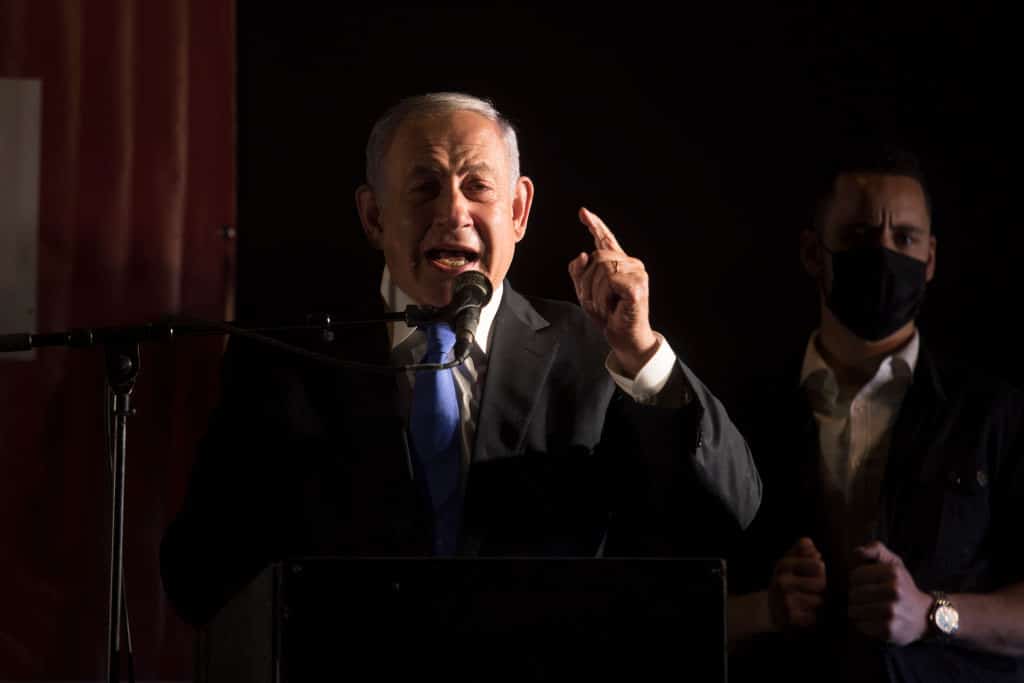
When Senate Majority Leader Chuck Schumer recently led a delegation of Democratic senators on a trip to Israel, the group implored Prime Minister Benjamin Netanyahu to stop the expansion of West Bank settlements and told the Israeli leader that further growth could imperil a future two-state solution that provided for a Palestinian state. The group also made it clear to Netanyahu that they felt he should cease his efforts to overhaul the nation’s judicial system, reinforcing their belief that such a move would harm Israel’s relationship with the U.S.

 The delegation did not publicize the trip in advance nor do any press events during their time in Israel, but Schumer’s office issued the following statement after the meeting:

 “We had a productive, wide-ranging conversation and a number of senators raised important issues directly with Prime Minister Netanyahu.”

 It was not reported whether Netanyahu managed to avoid laughing in the faces of his visitors.

Schumer is smart enough to know that his group’s requests were going to be non-starters with Netanyahu, and so the entire charade may have been for the benefit of left-leaning U.S. audiences that have increasingly soured on the direction of Israel’s government. (That’s also the most likely explanation for the unusually low-key nature of the meeting, so as to avoid the appearance of pressuring Netanyahu before his own voters.) But it also underscored the growing divergence between public and political attitudes in the two countries – and the futility of efforts such as those by Schumer and his colleagues to influence Israel’s national leaders.

But it’s even more important to understand why Netanyahu felt so little pressure to listen to the pleas of his American guests. Because several days after Schumer’s delegation left Israel, an even quieter and far more important binational meeting was taking place in Washington between Israeli Minister for Strategic Affairs Ron Dermer and some of President Biden’s top national security advisors. The topic of this conversation was Iran’s unprecedented progress toward full nuclear capability, and both Biden and Netanyahu know full well that Iran’s ability to mount a full-on nuclear attack is far more critical to both Israel’s and the U.S.’s future than the amount of housing in the West Bank or the balance of power between Israel’s legislative and judicial branches.

Biden administration officials believe that it would now only take 12 days to enrich enough weapons-grade uranium for Iran to build one nuclear bomb (although it will still need another one to two years to build a warhead for a ballistic missile.) They also believe that Russia is preparing to send military aircraft to Iran in exchange for the missiles they have received for the war in Ukraine, which would make an attack on Iran’s nuclear facilities much more difficult. And they know that the American people are in no mood for a second military conflict as the Russia-Ukraine war continues with no end in sight.

Add onto all this the precarious state of U.S. relations with key regional influencer Saudi Arabia, and it is clear how much the White House needs Israel to cooperate in any potential confrontation with Iran. Netanyahu has far more political capital than Biden to aggressively push back on the mullahs – both domestically and internationally – and both men understand that geopolitical reality. That’s why when Israel announced its new settlement plans last month, the U.S State Department carefully chose to use measured language such as “concern” and “troubled” (rather than “condemn” or “outraged”) to express their disapproval.

Netanyahu understands that he cannot claim the regional leadership role to which he aspires until he has settled – or at least calmed – the battles he faces internally. 

In the long run, Netanyahu understands that he cannot claim the regional leadership role to which he aspires until he has settled – or at least calmed – the battles he faces internally. But for now, he also knows that when it comes to Iran, Biden needs him more than he needs Biden. So at a time when Netanyahu is facing immense opposition to much of his domestic agenda, he can be secure in the knowledge that Israel’s most valuable international partner is not going to push him too hard. That lack of U.S. pressure is buying him valuable time.


Dan Schnur is a Professor at the University of California – Berkeley, USC and Pepperdine. Join Dan for his weekly webinar “Politics in the Time of Coronavirus” (www.lawac.org) on Tuesdays at 5 PM.

Bibi Pressured From All Sides Read More »