fbpx

February 16, 2023

Hand in Hand: Fostering Jewish-Arab Unity in Israel Through Education

Twenty-five years ago, an American Jew named Lee Gordon and a Palestinian citizen of Israel named Amin Khalaf came up with an idea. Though it seemed crazy, they thought it might work to foster peace and unity. What if Jews and Arabs in Israel attended school together? 

With help from Jewish and Arab parents, Gordon and Khalaf established two preschools, one in Jerusalem and the other in the Galilee. They called their organization Hand in Hand and started with 50 students. Now, over two decades later, they have six schools and communities that serve over 2,000 students throughout Israel.

“We aim to teach our students to think critically, embrace difference, value equality and act as change agents in society.”- Leah Beinhaker

“We aim to teach our students to think critically, embrace difference, value equality and act as change agents in society,” said Hand in Hand’s Director of Resource Development Leah Beinhaker. “We have never strayed from our values and mission no matter which political coalitions have been in power.”

According to Beinhaker, more than 99% of Jewish and Arab children in Israel study in separate schools. There are very few exceptions. 

“Due to these separate tracks, Jewish and Arab children do not have a structured opportunity to meet one another as children or young adults, so long as they are in the school system,” she said. “They also have little opportunity to learn about one another in a way that can dispel stereotypes, allay fears and overcome entrenched divisions in Israeli society.”

At Hand in Hand, Jewish and Arab students learn together starting from Pre-K until 12th grade. At the flagship school, the Max Rayne Hand in Hand Jerusalem School, which was founded in 1998, there are 664 students. Like at all of the schools, students study each other’s languages and learn about their cultures, religions and history. 

Each of Hand in Hand’s six schools – which are located in Jerusalem, the Galilee, Wadi Ara, Haifa, Tel Aviv-Jaffa and Kfar Saba – is bolstered by a multicultural adult community and partnerships with the municipal and national governments. Along with schooling, the organization provides cultural and social programming. It promotes civic engagement and productive dialogue between Jews and Arabs. 

“With each new student, school, community and public or institutional partner, Hand in Hand builds the foundations for a more equitable, shared society,” said Beinhaker.

Vicky Makhoul, an Arab Hand in Hand graduate who is now studying law at Tel Aviv University, said that going to school through the organization taught her to be open to hearing from others. 

“We live in such a small space, with so much diversity around us, but we fear it because we don’t speak to each other, because we don’t know each other. But I grew up differently, in an environment that really allowed me to speak my voice, to speak my story, but also to be able to be open to others and hear their pain, their joy, their stories and their identity.”

Another Hand in Hand graduate, Jewish student Hagar Mizrahi, echoed a similar sentiment, saying she learned “to always be open to the people I meet and to not judge them before I get to know them.”

According to the principal of Hand in Hand’s Kfar Saba school, Mohammad Kundos, by bringing together Jews and Arabs who will grow up to lead the country in 30 years, they’re coming up with an outside of the box diplomatic solution. 

“There are many streams in our society, and we should look into the underlying fear which leads to this need for societal segmentation,” he said. “Everyone fears losing their own identity, their own existence, their own story. But we offer an alternative, which does not blur the differences between us, but rather places an emphasis on each individual identity. In order to create complex dialogue among students, you must first be honest, and provide the narrative of the other in a clear and responsible manner.”

Hand in Hand: Fostering Jewish-Arab Unity in Israel Through Education Read More »
Steve Spitz: Looking for “Love on the Spectrum”

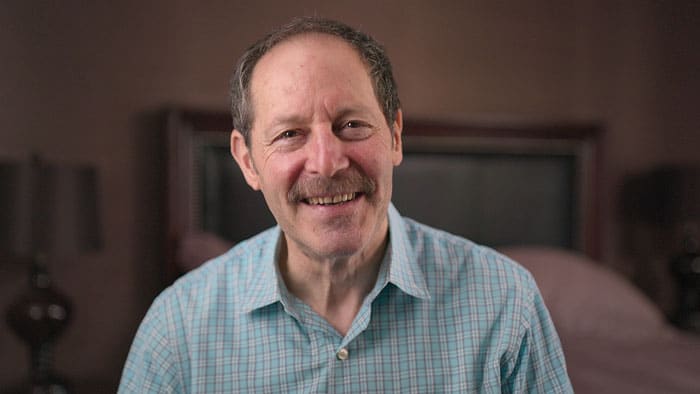
Steve Spitz was a fan favorite on Netflix’s “Love on the Spectrum,” which follows seven people on the autism spectrum as they explore the world of dating. A social butterfly with a kind heart, Spitz, 64, genuinely enjoys giving compliments, spending time with others and making his friends laugh. 

While most of the people on the show were diagnosed with autism in childhood, Spitz was diagnosed later in life. He was also the oldest cast member.  During the show, Spitz went on a couple of dates with two women, but is still searching for his soul mate.

“I haven’t really gone on many dates yet, but I am getting many lovely people coming up to me and cheering me on,” Spitz told the Journal. “Waitresses have given me their phone numbers, and others have approached me. However, they were either too young or just not the right person for me.”

As February is Jewish Disability Awareness and Inclusion Month (JDAIM), it’s the perfect time to shed light on Spitz and his quest for love. 

As February is Jewish Disability Awareness and Inclusion Month (JDAIM), it’s the perfect time to shed light on Spitz and his quest for love. 

Spitz, who is neurodivergent and requires minimal support, thinks many Jewish people are neurotypical. “What is funny is that I don’t seem to associate neurodiversity with Jewish people,” he said. “I am very happy that there is JDAIM, so that perhaps I can see that there are other people who are Jewish and also neurodivergent.”  

Spitz said he sometimes feels intimidated by the achievements of Jewish people.

“I am Jewish, but I am different,” he said. “I would like to meet other Jewish people who are more like me.”

Spitz likes cars, music (especially The Beatles) and playing with words, names and puns. He describes himself as kind, loving and with good intentions.

“I want to share the great feelings that I am getting from being neurodivergent with someone I love a lot,” he said.

Spitz was born in Los Angeles; his family moved to San Francisco when he was 4 years old. He’s loved his Judaism since he was a child.  “I was raised in a loving, positive Jewish home,” he said. 

Spitz would go with his grandparents to Temple Emanuel in L.A. Once his family moved to the Bay Area, they attended Congregation Beth Shalom in San Francisco. Spitz had his bar mitzvah there, and now goes to the synagogue as an adult.  

“I attend Friday night Shabbat services on a weekly basis,” Spitz said. “I also have private meetings with the rabbi three or four times a year to discuss Torah, the meaning of her sermons and where I am in my life now.”  While he took a 40-year break from weekly Shabbat services, Spitz has always attended High Holy Day services. Even during the pandemic, he attended via Zoom. 

“My personal assistant and I observe Tashlich and I work with my life coach, Elaine Hall, setting goals for the new Jewish year, and letting go of my old limiting habits and beliefs, feelings of regret, etc.  I allow myself to explore through Tashlich each year … Sometimes I am too hard on myself and feel that I messed up so long ago, and my Jewish practices help me to forgive myself and to begin [anew] every Jewish New Year.”

Spitz recalled going to Jewish singles events in his 20s, 30s, 40s and halfway through his 50s. 

“I stopped when I got older because everyone was so young,” he said. “I understand now that I was trying so hard to be someone that I wasn’t and the women that I went for may have not been interested in me.”  

While other women may have shown interest in Spitz, he said he might have looked the other way.  “I regret not being myself then and not being interested in women who might have been on the spectrum,” he said. “Today I see things differently.”  

Being on “Love on the Spectrum” has meant the world to Spitz. 

“It is the first time that I am feeling valued and celebrated for being myself and not having to mask or pretend to be anyone else but myself,” he said. “If anything, I need to give myself credit for this. The seeds for seeing myself in this way have been planted, and I just need to grow with wherever they go.”

When asked what advice he has for others on the spectrum who are looking for love, he said to continue being true to yourself.

“I am now going on that exact road myself,” he said. “I look forward to us all finding true love with someone who loves us for exactly who we are.”

Steve Spitz: Looking for “Love on the Spectrum” Read More »

A Story Told in Song: Elizabeth Graver’s ‘Kantika’

If you’ve been watching “The Beauty Queen of Jerusalem,” the romance-filled soap opera starring Israeli heartthrob Michael Aloni that tells the colorful story of a Sephardic family in the mists of a changing country (indeed, a changing world) in the first half of the 20th century, you’ll probably be as drawn to Elizabeth Graver’s latest novel “Kantika” as I was. Graver is a master at historical fiction. Her first novel, “Unravelling,” is set in mid-nineteenth century Lowell, Massachusetts amid the textile industry, and her previous novel, “The End of the Point,” which takes place on Ashaunt Point in Massachusetts Bay, offers a portrait of an affluent American family from World War II through the end of the 20th century. “Kantika,” which follows its characters through the years and across the world, is arguably far more ambitious than her previous works, and it is also, in my opinion, defter in character development than the series “Beauty Queen” or the book on which it was based.

Now, forgive me for automatically comparing “Beauty Queen” to “Kantika”; I am probably reinforcing the dominance of Ashkenormativity by suggesting all Jewish stories without Eastern European roots are actually the same story (a single, glitter-drenched unicorn). But the truth is, “Beauty Queen” and “Kantika” have a lot in common: Both are female-centered, sprawling, multi-generational novels about Ladino-speaking Jews that begin in the dusk of the Ottoman Empire and close in the English-speaking diaspora decades later. Both attempt to bring back for the reader the sights, sounds, smells, and tastes of a distant past, one that has not received a great deal of coverage in Jewish literature. So, if you’re a fan of “Beauty Queen,” if you enjoyed the novel or the series’ journey into virtually uncharted territory in Jewish culture, put “Kantika” at the top of your reading list. 

You won’t be disappointed. Graver’s writing is beautiful, lyrical and the embodiment of the “kantika” — the song — of the title. 

When we first meet Graver’s protagonist, Rebecca, she is singing to herself, and in a few short lines, Graver establishes the multilingual, multireligious, cosmopolitan, and yet concretely local and specific nature of Istanbul (then known as Constantinople) in 1907. “Rebecca sings to the rhythm of the oars as the boat delivers her to school, and in school with the nuns — tournez vos yeux vers Jésus — and climbing ropes at Maccabi gymnastics,” we read. “In wordless tunes, nonsense sounds and ballads, in Ladino, French and bits of Turkish, Hebrew, Greek, she sings, as on the street the lemon man sings lemons, the Bulgarian sings pudding, the vegetable man sings eggplant, squash and artichokes … [Her father] leads Rebecca to the ark [in the synagogue] … and she sings to the men below and the women above, her voice as unwavering as the cushioned freedoms and unspeakable good fortune of her childhood (still, her grandmother sews a bonjuk bead to the underside of every collar to ward off the evil eye).” We learn about Istanbul, its water-based geography, its open-air culture of buying and selling, and its intersecting communities. 

We also learn about Rebecca herself: Rebecca attends a Catholic school, a sign that Jews were not insular, and also suggesting family wealth. She participates in Jewish sporting clubs, demonstrating modernity (a modernity with a space for women and girls) and communal allegiance. She speaks a medley of languages, chiefly Ladino, the Judeo-Spanish language of the Jews who were expelled from Spain during the Inquisition. She is part of a family that has standing in the Jewish community (not every man can take his young daughter up to the ark). And, despite her family’s modernity and their religious observance, she adheres to local superstitious beliefs, wearing a Turkish amulet for protection.

Graver directly addresses her reader to explain the origin story of her novel: A tape recording of her grandmother, Rebecca Levy, made in 1985. The result is the feeling that this book is authentic, a piece of transnational, century-spanning Jewish history.

Graver’s characters and no doubt many details of their stories (particularly the hard facts — the migrations, the professions, the marriages of children) derive directly from her own family history. In fact, Graver directly addresses her reader to explain the origin story of her novel: A tape recording of her grandmother, Rebecca Levy, made in 1985.

The result is the feeling that this book is authentic, a piece of transnational, century-spanning Jewish history. The real photographs of Rebecca and her family members in Constantinople in the first quarter of the century, in Barcelona in the 1920s, in Havana in the 1930s, and New York in the years that follow  that front each chapter, strengthen that feeling. We navigate, through “Kantika,” a very personal history, and the family’s finances influence their transnational trajectory as much as national and international politics. I think these idiosyncrasies are a strong advantage of the novel. After all, history plays out differently for everyone.

But being beholden to the historical record, even the family one, has its challenges. Reading “Kantika,” I wanted to stay with Rebecca until the end of the novel. Her character is determined, feisty and bold. Her story is captivating. But as we move closer and closer to our own time, other voices clamor to be heard, and Rebecca’s voice gives way to her stepdaughter’s and her son’s, which alternate with Rebecca’s. I see why Graver wants to imagine the lives of her uncle and aunt; they, too, are interesting, particularly that of her Aunt Luna, who was diagnosed with cerebral palsy and struggled to live a good life in a time when disability was considered shameful and hidden away. Nonetheless, I was more curious to know what Rebecca would do next, how she would negotiate her life at each new age, in each new place, in every relationship.

My hope is that, like “Beauty Queen,” “Kantika” will land a Netflix deal. Then I can spend more time with the world that Graver has constructed, or, dare I say, resurrected. And I can see Rebecca again — and hear her sing.


Karen E. H. Skinazi, Ph.D, is Associate Professor of Literature and Culture and the director of Liberal Arts at the University of Bristol (UK) and the author of Women of Valor: Orthodox Jewish Troll Fighters, Crime Writers, and Rock Stars in Contemporary Literature and Culture.

A Story Told in Song: Elizabeth Graver’s ‘Kantika’ Read More »

UC Berkeley Student Senate Votes Against IHRA

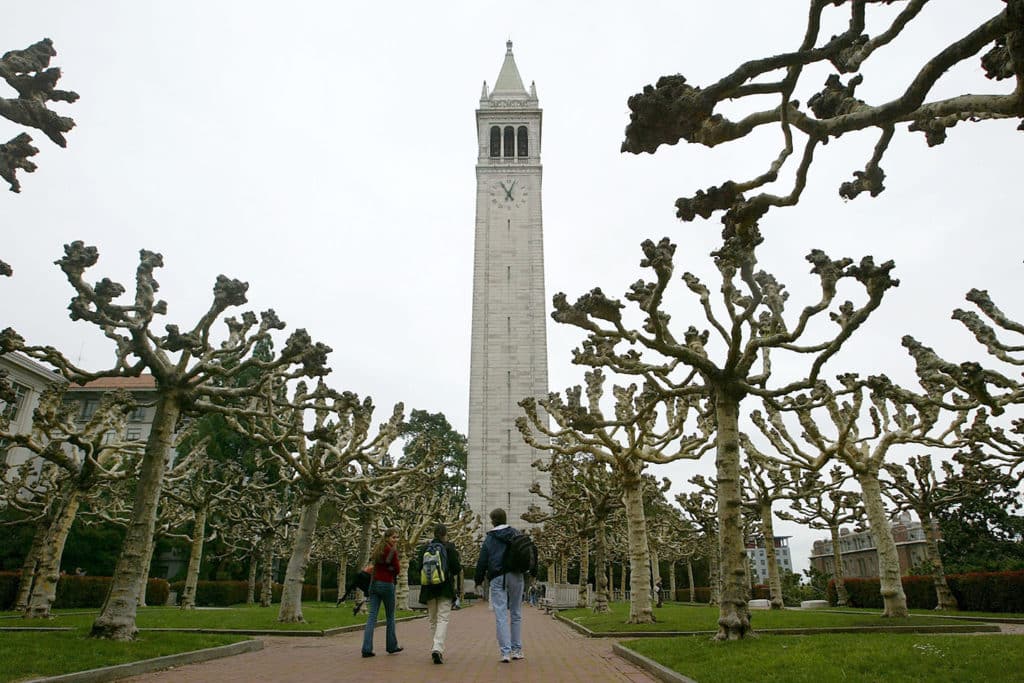
UC Berkeley’s student senate voted against the International Holocaust Remembrance Alliance (IHRA) definition of antisemitism during a February 15 meeting that lasted until 3 a.m.

After a five-hour long discussion, the Associated Students of the University of California (ASUC) Senate voted to indefinitely table the resolution by a vote of 13 in favor, four against and three abstentions. ASUC Senator Shay Cohen, who introduced the resolution, posted to Instagram afterwards, “The AUSC failed the Berkeley Jewish community last night. Telling a minority group how they should define their lived experiences of oppression, discrimination, and hatred is never acceptable. Once again, Jewish students are left feeling unheard and discouraged to display their Jewish pride on this campus. We are so proud of the courage from our community last night to come and fight for our voices and what we believe in.”


The news was first reported by Jewish News of Northern California (The J).

Cohen told the J that the resolution’s passage was a “longshot” but thought that introducing “it brought a lot of attention to a deeper issue on what it means to be antisemitic at Berkeley.”

Berkeley Hillel similarly said in a statement posted to Instagram that they are “disappointed” that the IHRA resolution failed in the ASUC. “Defining and recognizing antisemitism and hate is a critical first step toward our collective goal of making UC Berkeley a safer and more inclusive space for Jewish students and for all students. We are grateful to the many students who shared their personal lived experiences with antisemitism and brought their unique perspectives to this important and very personal issue. We look forward to continuing to work loosely with student leaders, the administration, and the larger community to promote an inclusive and welcoming campus environment at UC Berkeley, and to help ensure that antisemitism, hate, and bas of any kind have no place at our school.”


UC Berkeley Student Senate Votes Against IHRA Read More »

Blessing Downtime

“I am not a young conductor anymore,”

declared Gustavo Dudamel.  “Downtime”  I bless and reconstruct.

We all compose the earlier movements of our lives

before the last one, often a surprise, arrives,

enabling us to celebrate the others we were able to conduct.

Downtime’s a temporal downtown in which we explore

past times that we cannot restore,

downtime a neometaphor

for all the time we built before

the time arrives when anymore is

like Beethoven’s most joyful chorus,

conducted in downtime’s downtown,

life’s finally creative crown,

by ourselves awarded to

ourselves, and hopefully by you,

blessing God, for downtimes that are new,

transformed when old to new with she’heheyanu.

This is the she’hehyanu  blessing:

בָּרוּךְ אַתָּה ה’ אֱלֹהֵינוּ מֶלֶךְ הָעוֹלָם,

שֶׁהֶחֱיָנוּ וְקִיְּמָנוּ וְהִגִּיעָנוּ לַזְּמַן[1] הַזֶּה.

Blessed are You, the Lord who is our God, Sovereign  of the universe, who preserved our lives, and sustained us and enabled us to reach this season.

In “Gustavo Dudamel: A Maestro at a Crossroads: “I’m not a young conductor anymore,” Dudamel said as he prepares to leave Los Angeles in 2026 to lead the New York Philharmonic,” NYT, Feb. 12, 2023, Javier C. Hernández writes:

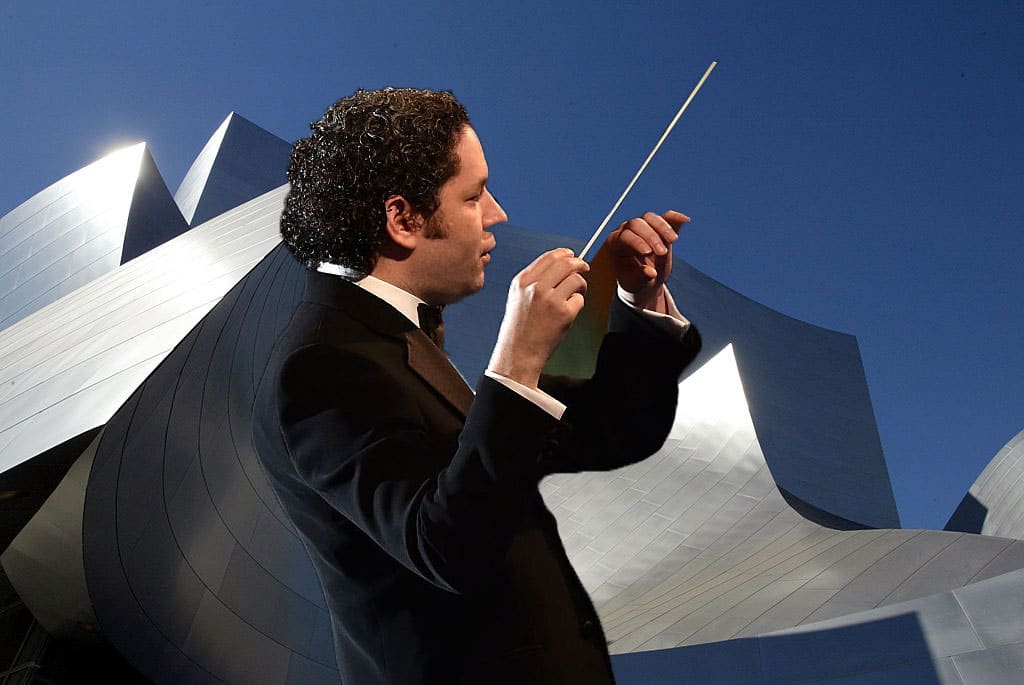
Gustavo Dudamel paused mid-Rachmaninoff the other morning and flashed a mischievous smile at the 92 players of the Los Angeles Philharmonic.

“This part,” he said as they rehearsed at Walt Disney Concert Hall, “is like that aunt who kisses you too much.” He puckered his lips loudly three times. “My dears,” he said, looking toward the violins, “let’s try it again.”

He was back on the same podium where, just two days earlier, he had broken the news to the musicians, in a shaky and uncertain voice, that he would leave his post as their music and artistic director in 2026 to take on the same job at the New York Philharmonic. It was, he said, one of the hardest decisions of his life. But now he was back in his element, making music, swaying his hips and throwing his fist into the air, and imploring the players to “liberate every bit of gravity” from their playing — “to levitate.”

Dudamel, 42, the rare maestro whose fame transcends classical music, finds himself at a crossroads: not only planning to move to a new orchestra, but also into a new phase of his career. Even as his curls have started to gray, he has never quite shed the image of a wunderkind, who at the age of 12 led his first orchestra in Venezuela, where he was born, and at 26 landed the job in Los Angeles.

Gustavo Dudamel checks his tie in the mirror, holding his baton in his left hand, in a backstage area with video monitors and wooden cases.

“You cannot imagine how I have changed in these last years,” he said in an interview. “I’m not a young conductor anymore.”


Gershon Hepner is a poet who has written over 25,000 poems on subjects ranging from music to literature, politics to Torah. He grew up in England and moved to Los Angeles in 1976. Using his varied interests and experiences, he has authored dozens of papers in medical and academic journals, and authored “Legal Friction: Law, Narrative, and Identity Politics in Biblical Israel.” He can be reached at gershonhepner@gmail.com.

Blessing Downtime Read More »

A Bisl Torah – Growing in Love

There is a foundational element of love that continues to intrigue me. The Torah reads, “You shall not hate your kinfolk in your heart. Reprove your kinsman but incur no guilt because of him.” Meaning, hatred of another is avoided if we are willing to offer constructive feedback and criticism. A step further: love between two people is protected, sustained, and even nourished when we both offer and accept rebuke. So maybe the movie is incorrect. Love does mean having to say you’re sorry…and even letting someone know when they are meant to offer an apology.

But the Talmud jumps to the punchline. Arakhin teaches “It was taught that Rabbi Tarfon said, ‘I would be surprised if anyone in this generation can take rebuke. You tell a person to take a stick out of their mouth and they’ll tell you to take a board between your eyes.’ Rabbi Eliezer Ben Azarya said, ‘I’d be surprised if anyone in this generation knows how to criticize.’”

Is the sentiment true of our generation? When thinking of our own intimate relationships, do we offer feedback in a way our loved ones can receive it? Are we genuinely in a place where another’s reproofs will land and be heard? In trusting relationships, it is the ability to speak our minds and offer our hearts that allows love to grow to new heights.

It is a difficult dance that is bound to include missteps and falling. And yet, not saying anything, staying mute is what fosters anger and breeds resentment.

Love is more than chocolate and roses. Love is choosing to grow. May the love we hold grow in trust, grow in curiosity, and grow in a willingness to see ourselves through the eyes of the other.

Shabbat Shalom


Rabbi Nicole Guzik is a rabbi at Sinai Temple. She can be reached at her Facebook page at Rabbi Nicole Guzik or on Instagram @rabbiguzik. For more writings, visit Rabbi Guzik’s blog section from Sinai Temple’s website.

A Bisl Torah – Growing in Love Read More »

New Video Series Uncovers Hidden Lessons From Israel’s Archaeological Past

A new video series titled: “If These Stones Could Talk,” brings to life the rich historical, archaeological and ethical lessons of Israel’s past in the hopes that a better understanding of Israel’s history will contribute to a better Jewish future.

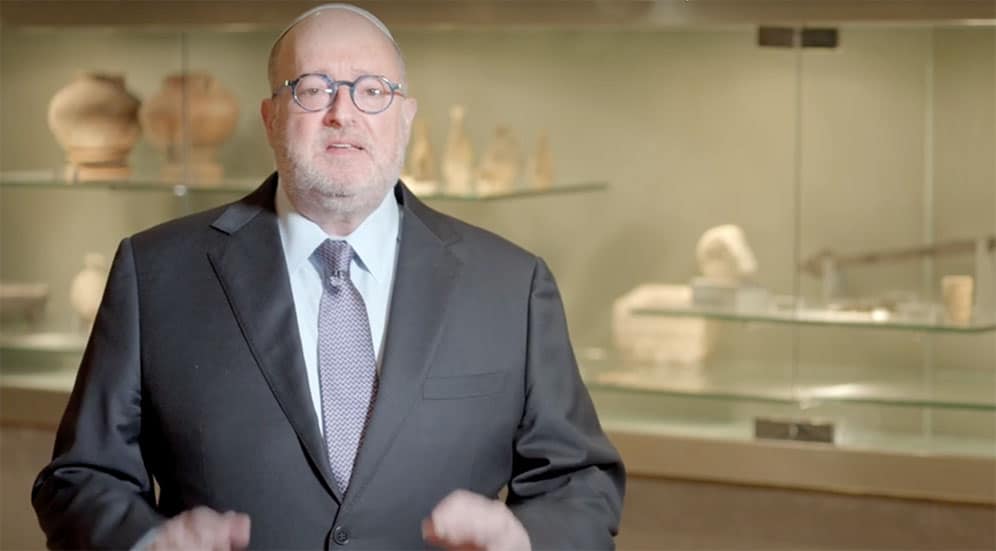
Created and hosted by Rabbi Dr. Kenneth Brander, president and Rosh HaYeshiva of Ohr Torah Stone (OTS), a modern orthodox movement of 30 organizations with offices in Israel, U.S., United Kingdom and Germany, the video series has so far released 6 videos with about 40 more in the pipeline.

Nearly every corner of the country holds a wealth of history with hidden messages from thousands of years ago .

“Many look at Israel as a tourist attraction, albeit a very special one, but the truth is that nearly every corner of the country holds a wealth of history with hidden messages from thousands of years ago that deserve our attention,” Rabbi Brander said in a statement. “There is certain fluidity and interaction here between the past, the present and the future that is just begging to be rediscovered.”

Rabbi Brander joined OTS in 2018. Prior to that, he served as vice president for University and Community Life, as well as the inaugural David Mitzner Dean of The Center for the Jewish Future (CJF) at Yeshiva University (YU), where he also taught rabbinic courses at the Rabbi Isaac Elchanan Theological Seminary (RIETS).

The videos explore how historical locations in Israel can serve as lessons for Jews around the world and provide a roadmap for a more enlightened Jewish future. Topics of the initial video series include: “A community Built by Unity,” “Elevating the Mundane,” “In Search of Meaningful Prayer,” “A Pilar of Triumph? Or a Warning for the Future,” and “Poisonous Pens and Slanderous Tongues.”

Rabbi Brander explains that many of these sites are located in places that thousands of people walk by each and every day and so many Jews come to visit, but are not given the opportunity to appreciate their deeper meaning or examine their relevance to our lives today.   

“Many look at Israel as a tourist attraction, albeit a very special one, but the truth is that nearly every corner of the country holds a wealth of history with hidden messages from thousands of years ago that deserve our attention. There is certain fluidity and interaction here between the past, the present and the future that is just begging to be rediscovered.

“We live at a time when the Jewish people are becoming more and more fractured,” he continued. “When you study the archaeology, you will see that some of the challenges that we are facing today– whether from the right, left, center; people who support the current Israeli government or those who stand staunchly in opposition – this is not the first time we, as a nation, are having this experience. 

”Generations ago, the Jewish people had these same challenges; sometimes we succeeded in dealing with them and sometimes, tragically, we did not. Visiting these sites and bringing these issues up for communal examination and discussion brings them back into the light for reflection, introspection and hopefully an opportunity to resolve some of our challenges.”

The series is available on the Ohr Torah Stone website (ots.org.il/stones), as well as via Whatsapp and YouTube, where new episodes are posted weekly.

New Video Series Uncovers Hidden Lessons From Israel’s Archaeological Past Read More »

Another One About How I’m a Vegetarian – A poem for Parsha Mishpatim

You shall not cook a kid in its mother’s milk.
-Exodus 23:19

In Italy there’s a city called Parma famous for
cheese and thin slices of ham I feel embarrassed
mentioning in a Jewish poem.

Full disclosure: I will not be eating the ham
let’s say for Jewish reasons and also because
ever since that pamphlet about vivisection

in 1986, I’m the least likely human to cook
a Kid in anything, let alone its mother’s milk.
We’re going to Parma this summer

and other nearby places where Jews were once
not welcome and where, if you have a mouth
and a stomach, you’re going to do just fine.

Addie, my wife, who I love so much it couldn’t
possibly be contained within a single poem,
asked if I would consider eating one of the slices,

just to have the experience, because, when are
we going to be in the neighborhood again and,
what happens when we die and we haven’t

done all the things there are to do?
I pause longer than my thirty six years of
vegetarianism want me to. I’m imagining

what the best of the best of these thin slices
might taste like before I see the eyes of the
creatures they were carved from.

Probably not I tell her. I learned from
Sean Connery that one should never say
never but it’s a really strong probably not.

There are so many things I’ve never done
that I think I would never do. I’d list them
but they’re my secrets. For now.

I’m going to Parma this summer.
It’s where a certain cheese was invented.
The kids will be alright.


God Wrestler: a poem for every Torah Portion by Rick LupertLos Angeles poet Rick Lupert created the Poetry Super Highway (an online publication and resource for poets), and hosted the Cobalt Cafe weekly poetry reading for almost 21 years. He’s authored 26 collections of poetry, including “God Wrestler: A Poem for Every Torah Portion“, “I’m a Jew, Are You” (Jewish themed poems) and “Feeding Holy Cats” (Poetry written while a staff member on the first Birthright Israel trip), and most recently “I Am Not Writing a Book of Poems in Hawaii” (Poems written in Hawaii – Ain’t Got No Press, August 2022) and edited the anthologies “Ekphrastia Gone Wild”, “A Poet’s Haggadah”, and “The Night Goes on All Night.” He writes the daily web comic “Cat and Banana” with fellow Los Angeles poet Brendan Constantine. He’s widely published and reads his poetry wherever they let him.
Another One About How I’m a Vegetarian – A poem for Parsha Mishpatim Read More »

At LA Jewish Health, It’s Never Too Late to Have a Bnai Mitzvah

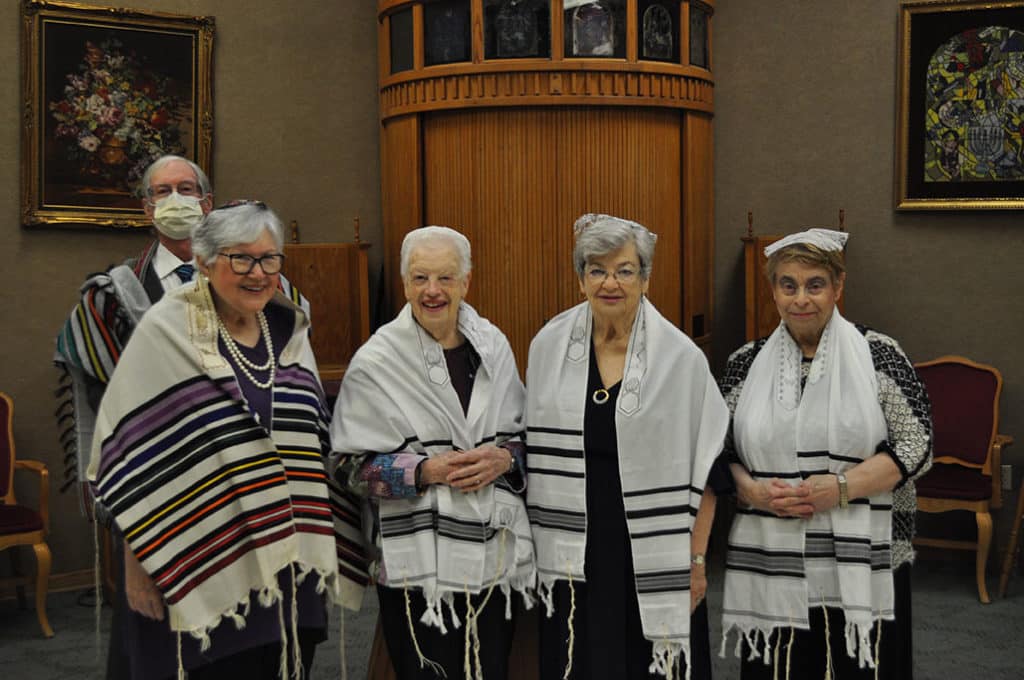
On January 9, Los Angeles Jewish Health celebrated the B’Not mitzvah of four of their residents: Casey Joseph, 69, Judith Karon, 83, Marcia Mass, 81 and Sue Solender, 80. 

“Having bat mitzvah at 83 hit me as a real milestone and a Jewish milestone at that,” Karon told the Journal. “The feeling of inclusion and involvement with my community, and especially my fellow students, meant so very much.”

About 50 friends and family gathered at the synagogue on the Eisenberg Village campus for this rite of passage, typically celebrated by 12 or 13-year-olds. The women read from the Torah, affirming their commitment to Jewish peoplehood.

The event was proof that it is never too late to grow in your faith.

“It was eye opening seeing people who clearly didn’t need to undertake this journey and challenge to pick it up willingly and with full hearts,” Ron Goldberg, rabbi of the Eisenberg Village campus, told the Journal. 

Goldberg taught the students and officiated the ceremony, which was an outgrowth of an adult b’nai mitzvah program he put together with Chief Mission Officer for Los Angeles Jewish Health Rabbi Karen Bender.

In the course of their weekly class work, several ladies pointed out to Goldberg that they never had their own bat mitzvahs. They had a real desire to go through the process and recognize their Jewish roots.

“I was always interested in learning about Judaism, but I was always told ‘no’ because it was something reserved for boys,” Joseph said.

Solender had a similar experience. “When I was in grade school, the Jewish community in my hometown of Minneapolis built a Hebrew school, and I wanted to go, but my mother told me I couldn’t,” she said.

Mass had a very secular upbringing. “I never heard of Hanukkah until I was a teen,” she said. 

When Mass became a teen, she began learning about Judaism. She was married in a synagogue and joined a Reform congregation when she started a family. 

“I had started and not finished bat mitzvah classes in the past,” Mass said. “When my daughter had a near-death experience, I made a promise to myself to have a bat mitzvah for myself. I am thrilled I was able to do it and honestly am proud of myself for doing so.”

The bat mitzvah students met with Rabbi Goldberg weekly. Among the topics discussed were the laws of kashrut, Shabbat, the Jewish calendar and the major holidays. They also learned about rituals, such as lighting candles and tallit.

 “It was a delight and joy to learn with and from the ladies each week,” Goldberg said.

For Karon, having a bat mitzvah strengthened how important Judaism is to her. She feels fortunate to be able to share the experience with her children, grandchildren and great-grandchildren. “This truly reinforced the true meaning of L’dor v’dor,” she said.

Not only did Solender enjoy the process, she found it to be a lot of fun. “[It] inspired me to continue my Jewish learning and [I] hope to find more opportunities to do so,” she said.

“I have a feeling of peace within myself that I was able to accomplish this journey.” – Marcia Mass

“I thought it was an amazing experience,” Mass said. “It truly touched me more than I expected it to. I have a feeling of peace within myself that I was able to accomplish this journey.”

During the ceremony, Los Angeles Jewish Health CEO and President Dale Surowitz presented the women with Kiddush cups (a special cup for sanctifying wine). Andrew Berman, chairman of Los Angeles Jewish Health’s board, handed out commemorative certificates to mark the occasion.

“Whether you’re a teenager or a woman somewhat past that, it takes a lot of courage to stand up in front of family and friends and chant words in an unfamiliar language, becoming links in a chain that extends all the way back to Mt. Sinai,” Goldberg said. “I am just thrilled for these women, whose determination and hard work were on display for everyone to see.”

At LA Jewish Health, It’s Never Too Late to Have a Bnai Mitzvah Read More »

A Moment in Time: “In Pursuit of Justice”

Dear all,

This past weekend, I traveled with teens from Temple Akiba to Washington D.C. to participate in L’taken, a program of the Religious Action Center of Reform Judaism that engages young people to understand that their voices can and do make a difference. Joining 100’s of teens from throughout North America, we spent two days learning about civil rights issues and how Jewish values can inform our actions.

Our Akiba group chose three topics: Reproductive Rights, Gun Violence, and Mental Health. In pursuit of justice, they gave speeches before the offices of our elected officials.

I was so very proud of them! And I learned in that moment in time that the walls of ignorance tumble when we march toward a righteous tomorrow.

With love and shalom,

Rabbi Zach Shapiro

A Moment in Time: “In Pursuit of Justice” Read More »