fbpx

February 2, 2023

YU Visits Morocco, LA Students Go Abroad, Unity Shabbat

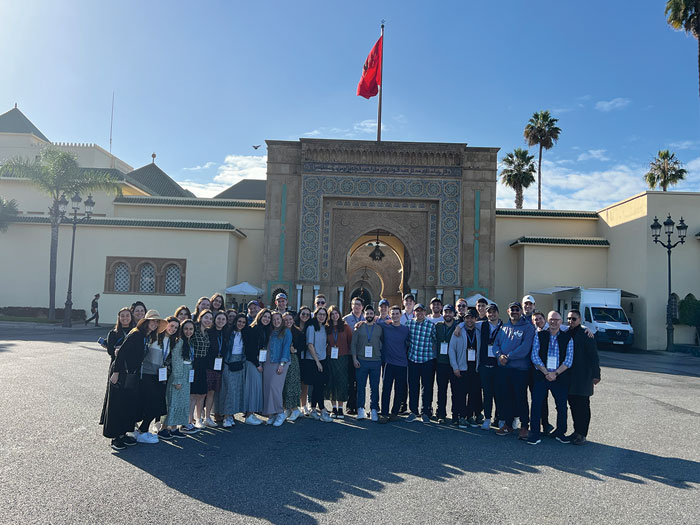
A group of Yeshiva University (YU) undergraduates spent a week last month traveling throughout Morocco, visiting Jewish heritage sites, building cultural bridges with Muslim university students, and expanding their leadership horizons.

The 31 YU “Global Citizenship 2023” participants — half Sephardic and half Ashkenazic — learned about the storied Moroccan Jewish community. They met the last Jewish woman who lives in Rabat, the country’s capital; rabbis who teach and lead congregations in Casablanca, which today has the largest Jewish community in Morocco; and a Jewish merchant who renovated the synagogue in the souk of Marrakesh and spends part of each morning restoring its cemetery.

The study theme for the week was “Community and Responsibility.” Students learned about the ways in which Muslim leaders in Morocco have consistently protected Jews and Jewish culture from antisemitism.

 “The streets, culture, and heritage of my ancestors not only strengthened my Moroccan identity but it reinvigorated a connection to my roots I never thought possible,” YU student Avior Hazan said. “Being the first Hazan to visit Morocco since my grandparents, Morocco was more than an experience for me — it was a true homecoming.”

Yeshiva University’s Office of Values and Leadership organized the trip in conjunction with the Rabbi Lord Jonathan Sacks-Herenstein Center for Values and Leadership, which is dedicated to disseminating the scholarship of the late Rabbi Sacks and YU’s core values through academic courses, conferences, leadership seminars, literary initiatives and executive education opportunities.


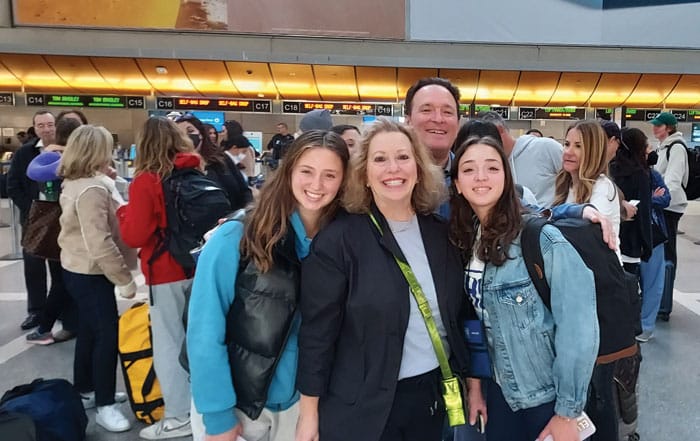
A Los Angeles family gathers together before sending their teens off to Israel for a semester at Alexander Muss High School in Israel. Courtesy of Jewish National Fund-USA

On Jan. 23, at LAX, more than 20 Los Angeles students hugged their parents and loved ones goodbye and flew to Israel to start the adventure of a lifetime at Alexander Muss High School in Israel, Jewish National Fund-USA’s premier college-prep/semester abroad program in Israel. 

Nearly two-dozen students from Los Angeles prepare to travel to Israel for a semester abroad at JNF-USA’s Alexander Muss High School in Israel. Courtesy of Jewish National Fund-USA

At the airport, in between the happy tears and warm embraces, Orange County resident and Muss Board Member Michael Feldman wished the students well and thanked everyone for taking this journey. 

“On behalf of the Board of Directors of Alexander Muss High School in Israel and Jewish National Fund-USA, I want to first thank you, the students for going on this adventure and to thank you, the parents, for entrusting your children to us,” Feldman said.

Alexander Muss High School in Israel — informally known as “Muss” — has connected Jewish students from around the world with Israel since 1972. 


The “Unity Shabbat” interfaith service at Temple Aliyah featured a gospel choir, elected officials, clergy and others coming together in commemoration of Martin Luther King Jr. Day. Courtesy of Mahomed Khan

When people attended Temple Aliyah’s Friday night service on Jan. 20, they took part in a community event, “Voices of Freedom,” that has been going on for 24 years.

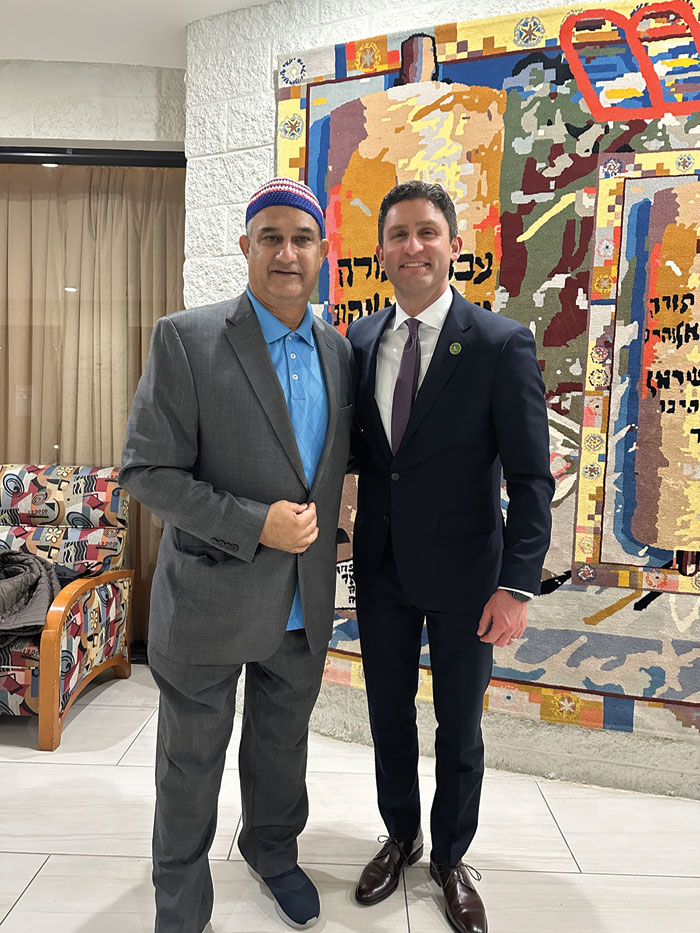
From left: Imam Mahomed Khan and State Assemblyman Jesse Gabriel attend “Unity Shabbat,” an interfaith program at Temple Aliyah. Courtesy of Mahomed Khan

Aliyah Rabbi Stewart Vogel and Hazzan Mike Stein, who officiated the service, have built a culture of dialogue and action by creating interfaith groups at Temple Aliyah involving local churches, mosques, and an ashram. 

The evening started with a song Stein composed called “Of One Breath.” Sung by two neurodiverse choirs, it “was a genuinely inclusive moment,” Stein said. They were joined by gospel music greats Deborah Sharpe-Taylor, Charlotte Crossley, H.B. Barnum, and Toni Malone. The de Toledo High School Tefillah Team, directed by Jared Stein, also performed and joined the choirs on the bimah.

Imam Mahomed Akbhar Khan and Hazzan Stein performed an unprecedented chant from the Koran in Arabic, Hebrew and English.

Rev Dr. Najuma Smith Pollard and others spoke about what happened to King’s dream in the 60 years since his famous speech in front of the Lincoln Memorial.   

Also speaking were Aliasager Najam of the Dawoodi Bohra branch of Islam and Shomrei Torah Synagogue Rabbi Richard Camras. Rev. Michael Fisher of Greater Zion Church Family delivered keynote remarks. 

Actor Ben Youcef sang an original piece, and local elected officials, including Assemblyman Jesse Gabriel (D-Encino), turned out to show support. 

“It was moving, inspiring and uplifting,” Stein said. “An amazing evening!”

YU Visits Morocco, LA Students Go Abroad, Unity Shabbat Read More »

Healthy Food Adventures for Tu B’Shevat … Or Any Time

Tu B’Shevat is a celebration of nature. 

Taking place on the 15th day of the Hebrew month of Shevat, this year Tu B’Shevat runs from sundown on February 5 through sundown February 6. 

This is the perfect time to enjoy the great outdoors, and explore fruit — especially Israeli fruits like figs, dates and carobs — and nuts and vegetables. 

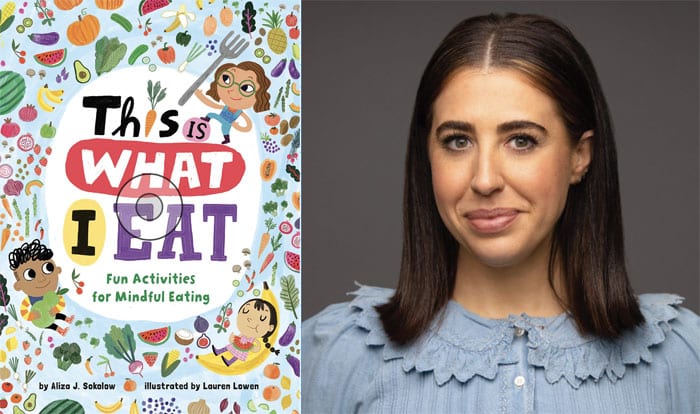
Aliza J. Sokolow’s new book, “This is What I Eat: Fun Activities for Mindful Eating,” is the ideal Tu B’Shevat guide for those who want to instill a love of healthy eating in their kids, 

With more than 30 activities and journal pages, as well as a focus on community and humanity, “This is What I Eat” is a great roadmap for culinary exploration.

“I grew up with a very culturally Jewish family … and healthy eating was something that my parents were very into,” Sokolow told the Journal. “Keeping a healthy lifestyle from the inside out is something I’ve always thought was an important value, Jewish or not Jewish.”

A second-generation Angeleno, Sokolow, a private chef, food stylist and photographer, grew up celebrating Shabbat every week with all of her aunts, uncles and cousins. So, in addition to eating, her book talks about family dynamics, the different ways that families eat together and “how food is different, but also very much the same,” she said.

“This is What I Eat” also highlights different meals from around the world. The one from Israel features pita, hummus, falafel and kebabs.

“I love eating Middle Eastern food, and I make it a lot,” Sokolow said. “When I’m in Israel, I’m always so proud of all the [beautiful] fruits and vegetables that they have at the shuk in Tel Aviv. It’s very healthy eating in Israel. I love eating watermelon with feta and mint at the beach.”

As Tu B’Shevat is a planting holiday, the book has pages on water, soil health, planting your own fruits, vegetables and herbs (“My sister and I used to take avocado pits and replant them in water at our window sill,” Sokolow said), and other growing-related activities. Sokolow also lays out the many options on how to eat fruits and vegetables to inspire conversation and action.

“It’s really just about the earth, eating healthy and doing things that have to do with keeping the cycle moving around,” she said. 

Growing up as a competitive swimmer, Sokolow intuitively knew food was fuel. About 12 years ago, she was hired to work with award-winning chef Jamie Oliver on his “Jamie’s American Food Revolution” television show, which was set in the LA Unified School District. This was eye-opening for Sokolow, as well as life changing.

“We worked with kids in schools in lower-income areas, who had a lot of health issues, based upon their diets,” she said. Many of them had type 2 diabetes and were overweight. They had never eaten salad and their recess times were being cut down. Then they got into the kitchen together. 

“I was working elbow-to-elbow with these kids who had never eaten fresh vegetables,” she said. Sokolow saw the impact healthy eating had on these kids, seeing their faces and how they felt when they changed some of the things that they were eating. 

“I knew this was something I wanted to do with my life.”

Sokolow, who sees the world through colors, shapes and sizes, explained that she wanted to write a book that was for both kids and parents. That was more of “having fun with food” instead of “Eat your vegetables. They’re good for you.”

Adding the element of fun, for instance if you’re going grocery shopping with your kid, is a tool that promotes healthy eating.

One such exercise, a food scavenger hunt, comes from Sokolow’s experience with her nephew, who would get bored going to the farmers market. She suggested, “Let’s find one fruit or vegetable of each color, and really make it a fun activity.” It made all the difference.

“Kids love a scavenger hunt and they love to [check] things off,” she said. “So, finding a strawberry and an orange and an eggplant and blueberries, things of different colors, make things more relatable in their minds.”

While they might not know the flavor, they’re able to see a distinction between all the different colors that make up food.

“A lot of my friends have kids who are very into white foods; they only want buttered noodles,” Sokolow said. ‘They’re like, ‘Thank you for making this book. My kid is now excited to try other things.’”

Sokolow is really focused on this education component (for instance, a lot of people think there’s just like a red and a green apple; there are 7,500 types of apples). She is excited to break people out of the “buttered noodle” category and loves seeing families use her book.

“It means so much to me that my creation is really impacting people,” she said.

Sokolow grew up going to Jewish school. They always did SOVA drives at school, which she also mentions in the book. And as an adult, Shabbat is still something she does often.

“I really try to live my life through being a mensch and being a good person and giving back,” she said. “I think to be Chesed and a person with integrity and goodness is something that encapsulates Jewish values; it’s very much what I try to live by.”

Sokolow’s love for fruit and vegetables, as well as art, dates back to her childhood, when the Jewish holidays were an opportunity to create art.

“My grandmother (my dad’s mom) was the most incredible artist and sculptor,” she said. “Every year for Sukkot my Nonny, my sister, and I would make the most incredible Sukkot decorations.”

Everything Sokolow’s grandmother drew (bananas, strawberries) looked realistic. They would also handmade new year’s cards. It was an incredible art education.

“We’d do really cool paintings for Rosh Hashanah or a collage with different kinds of apples,” she said. “I had a book party last week, and [people said], ‘We have every card you and your sister have ever made from Rosh Hashanah, because they are so beautiful.’”

Now, Sokolow has put all of the things she loves together in service of helping families enjoy healthy food. In fact, a lot of the illustrations in the book are inspired by her food photographs, taken at the Santa Monica Farmers Market.

“Your body is very much made up of what you’re putting in it. So I say to people sometimes, ‘Do you want to feel like a blueberry? Or do you want to feel like Cheetos?’”

“You truly are what you eat,” she said. “Your body is very much made up of what you’re putting in it. So I say to people sometimes, ‘Do you want to feel like a blueberry? Or do you want to feel like Cheetos?’”

When you eat more fruits and vegetables it changes the way you feel. And that changes everything!

One Tu B’Shevat custom is to eat fruits you haven’t tasted before. “This is What I Eat” is the perfect way to explore and discover new food as a family.

Healthy Food Adventures for Tu B’Shevat … Or Any Time Read More »

Complaints – A poem for Parsha Beshalach

The entire community of the children of Israel complained against Moses
and against Aaron in the desert.
-Exodus 16:2

There’s a comfortable familiarity
to the word complain.

Two Jews, three opinions.
That’s not the right melody.

There’s no food in the desert.
The water is bitter.

That’s not the way we usually do that.
Why did anything ever have to change?

We complain so much the complaints
themselves feel like our childhood blanket.

I’m wrapped up in the warmth of telling you
what’s wrong with this situation.

It’s nice that free bread came out of the sky
but do we really want to eat bread that’s

been in the dirt? In Egypt we weren’t free
but at least we knew our address.

It was nice singing and dancing on
the other side of the sea. Why don’t we

have parties like that anymore?
Complaining is one of our unofficial holidays.

And what’s with the holidays when we don’t eat?
Who thought that was a good idea?

It’s nice that the angel of death didn’t get us
but couldn’t we have achieved that without the blood?

And what about the line lengths of this poem?
Why are they all different sizes?

The words are nice but it’s hard to look at.
We can do so much better than this.


God Wrestler: a poem for every Torah Portion by Rick LupertLos Angeles poet Rick Lupert created the Poetry Super Highway (an online publication and resource for poets), and hosted the Cobalt Cafe weekly poetry reading for almost 21 years. He’s authored 26 collections of poetry, including “God Wrestler: A Poem for Every Torah Portion“, “I’m a Jew, Are You” (Jewish themed poems) and “Feeding Holy Cats” (Poetry written while a staff member on the first Birthright Israel trip), and most recently “I Am Not Writing a Book of Poems in Hawaii” (Poems written in Hawaii – Ain’t Got No Press, August 2022) and edited the anthologies “Ekphrastia Gone Wild”, “A Poet’s Haggadah”, and “The Night Goes on All Night.” He writes the daily web comic “Cat and Banana” with fellow Los Angeles poet Brendan Constantine. He’s widely published and reads his poetry wherever they let him.

Complaints – A poem for Parsha Beshalach Read More »

Neve Yaakov’s American Roots

News reports about the Neve Yaakov synagogue massacre have characterized that Jerusalem neighborhood as an “Israeli settlement” located in “predominantly-Palestinian East Jerusalem.”

Visitors to the area might be surprised, however, to discover that Neve Yaakov actually is a major urban community with more than 30,000 residents, not at all resembling the stereotypical “settlement” of trailer homes on a windswept hilltop. And far from being some recent foreign implant, Neve Yaakov’s origins reach back nearly a century, to an era long before terms such as “Palestinians” and “East Jerusalem” had even entered our vocabulary, at least in the way they are understood today.

A two-paragraph news brief in the Jewish Telegraphic Agency’s Daily News Bulletin on January 1, 1924, announced the laying of “the corner-stone of a new Jewish colony in Palestine” by the Mizrachi religious Zionists, in an area just north of Jerusalem’s Old City section. The new neighborhood would be known as “Kfar Ivri Neve Yaakov,” after the founder of the religious Zionist movement, the late Rabbi Yitzhak Yaakov Reines. Rabbi Meir Berlin (later Bar-Ilan), president of World Mizrachi, spoke at the founding event, as did Sir Gilbert Clayton, Civil Secretary of the British Mandatory government.

The new community was located on sixteen acres of land purchased from local Arabs by the American wing of the Mizrachi movement, today known as the Religious Zionists of America. Loans from the movement’s longtime treasurer, Baruch H. Schnur, helped make it possible.

Richard Kauffmann, the renowned German Jewish architect, was retained to design Neve Yaakov. Kauffmann would also become known for designing the cities of Afula and Herzliya, a number of neighborhoods in central Jerusalem, and the residence of Israel’s prime minister.

The role of American Jews in the purchase and development of land in British Mandatory Palestine is a little-known but significant chapter in Zionist history. During the early 1900s, American Zionists in various cities established local “Achooza” groups to advance these efforts. (In Hebrew, Achooza means “holding,” as in real estate holdings.) The St. Louis and Chicago Achooza branches established the towns of Poriya (1910) and Sarona (1913); the New York branch founded Ra’anana (1921) and Gan Yavneh (1931).

An American Zionist brochure in the 1920s, offering half-acre plots of land in Neve Yaakov for $150 apiece, emphasized the value of the investment and the opportunity to build a new life, but most of all appealed to those who “want the Holy Land to be in the hands of the Jewish people.”

Neve Yaakov encountered hardships similar to those endured by other Jewish communities in Mandatory Palestine during the 1920s and 1930s. Palestinian Arab terrorists attacked the neighborhood in 1929 and again during 1936-1939. The British authorities did not connect the town to the national water supply until 1935; another four years passed before it was hooked up to the electricity grid.

Despite these hardships, Neve Yaakov prospered, and by the 1930s boasted a population of more than 150 Jewish families. Neve Yaakov’s farmers became a major source of dairy products for the rest of Jerusalem, and its schools and summer camps attracted students from around the country.

Details concerning the makeup of the community’s population are fragmentary, but it is clear that at least some American Jews not only bought land in Neve Yaakov but settled there as well. The April 1927 edition of Palestine Pictorial, a Zionist advocacy magazine, included a photo of an Orthodox couple kneeling in a field, with the caption, “Springtime Has Come in Palestine: American Jews in Kfar Ivri [Neve Yaakov] planting seed in their garden. Every year sees an increasing number of well-to-do Jews from America settling in Palestine.” Several histories of pre-World War II American Jewish aliya mention the Zelig family, from Philadelphia, living in Neve Yaakov in the 1930s.

The neighborhoods ringing Jerusalem to the north, including Neve Yaakov, were frequent targets of attacks by Arab forces during the 1948 War of Independence. More than a few British soldiers joined in the assaults. During the defense of Neve Yaakov on March 10, Haganah fighters captured two Englishmen who were wanted for their role in carrying out an anti-Jewish terrorist attack on Ben-Yehuda Street in Jerusalem earlier that year, murdering 58 passersby and injuring 200 more. The pair, George Ross and Godfrey Stevenson, were tried by the British authorities for desertion, not terrorism, and then allowed to “escape” to Egypt.

The rapid approach of the Arab armies forced the residents of Neve Yaakov to flee for their lives. On May 17, a New York Times correspondent reported that the Arab troops entering Neve Yaakov included “eight British deserters and one German former paratrooper”—another peculiar feature of the 1948 war.

During the nineteen years of Jordanian occupation which followed, the Jews of Neve Yaakov were not allowed to return, or even to visit. Nor were they ever paid compensation for the destruction of their homes, farms, and property.

After Israel recaptured the area in the 1967 war, the Jordanian policy of barring all Jews was reversed by Israel’s Labor government, and Neve Yaakov was rebuilt. Eventually it became one of the eight “ring” neighborhoods forming the outer perimeter of Jerusalem, along with Ramot, French Hill, Pisgat Ze’ev, Talpiot Mizrach, Ramat Shlomo, Gilo, and Har Homa. Decades removed from the stereotypical settlements of yesteryear, these communities, with their modern apartment buildings, schools, stores, and hospitals, have come to constitute an integral part of Israel’s capital.


Dr. Medoff is the author of more than 20 books about Jewish history and Zionism, including The Historical Dictionary of Zionism [with Chaim I. Waxman].

Neve Yaakov’s American Roots Read More »

Jewish Groups Have Mixed Reactions to Omar’s Removal From House Foreign Affairs Committee

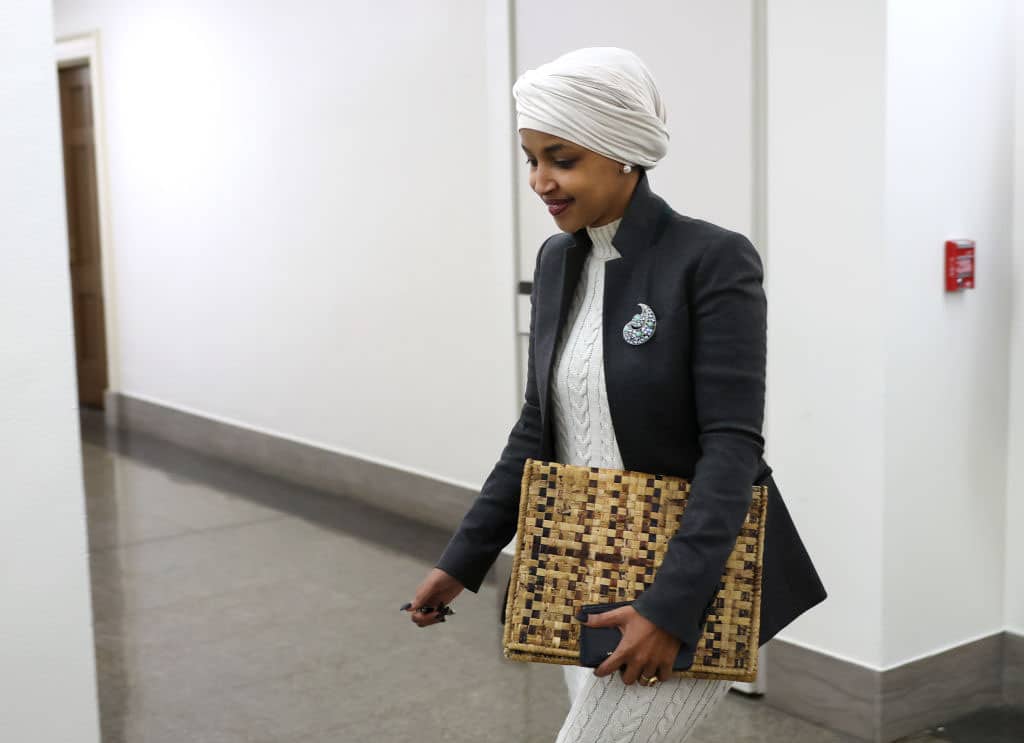
Jewish groups shared differing opinions on Representative Ilhan Omar (D-MN) being booted off the House Foreign Affairs Committee on February 2.

The House of Representatives voted 218-211 on a resolution to remove Omar from the committee along party lines, with Representative David Joyce (R-OH) voting present, per CNN. Speaker of the House Kevin McCarthy (R-CA) told reporters that Omar “said that the American military was equal to Hamas and the Taliban. From a member of the Foreign Affairs [Committee], she said Americans only like Israel because ‘it’s all about the Benjamins.’ And three years later she says, ‘I didn’t know these were tropes.’” McCarthy also referenced Omar saying with regard to the 9/11 terror attacks that “something happened that day.” “What does that say to other people around the world?” McCarthy said. “What does that say to somebody else who wants to create another 9/11? I’m sorry, it’s not right. We were right in our action, and she can serve other committees.”

Omar tweeted after the vote, “I will continue to speak for the families who are seeking justice around the world—whether they are displaced in refugee camps or hiding under their bed somewhere like I was. I didn’t come to Congress to be silent. I came to Congress to be their voice. My leadership and voice will not diminish if I am not on this committee for one term. My voice will only get louder and stronger.”

Some Jewish groups lauded Omar being kicked off the committee. Simon Wiesenthal Center Dean and Founder Rabbi Marvin Hier and Associate Dean and Director of Global Social Action Agenda Rabbi Abraham Cooper said in a statement, “No one believed for one minute her disingenuous claim following the deployment of a classic anti-Semitic trope. Representative Omar should have been held accountable immediately by the House when she made those statements. Moving forward, if Congresswoman Omar wants to repair her relationship with the Jewish community, she should own up to what was said in the past, apologize and move on.”

“For years, Democratic leadership has failed to hold Rep. Ilhan Omar accountable for her vile, hateful, and dangerous anti-Israel and antisemitic rhetoric,” Republican Jewish Coalition (RJC) National Chairman Senator Norm Coleman and CEO Matt Brooks said in a statement. “Today, Republicans, under Speaker Kevin McCarthy’s leadership, kept their promise to remove Rep. Omar from the prestigious and crucially important House Foreign Affairs Committee.” They added: “We are gratified that Rep. Omar will no longer be in a privileged position to influence legislation regarding US policy toward Israel and the Middle East.”

Stop Antisemitism tweeted, “We are thrilled antisemite Ilhan Omar has been removed from the House Foreign Affairs committee. Bigotry against the Jewish people must never be tolerated and we applaud current leadership for having the guts to do what should have been done a few years ago.”

Christians United for Israel (CUFI) Action Fund said in a statement, “Rep. Omar has a track-record of trafficking in antisemitic tropes and making bigoted claims concerning pro-Israel activists. Moreover, her positions regarding the Middle East defy reason. She has made blatantly false claims about Israel and has even gone so far as to compare the United States and Israel to terrorist groups. An individual espousing such fringe and hateful beliefs has no place serving on the House Foreign Affairs Committee. Just as we did during the last Congress when we supported the vote to remove Rep. Marjorie Taylor Greene (R-GA) from her committees because of her own antisemitic comments, the CUFI Action Fund will continue to combat antisemitism in all its forms, wherever it is found.”

Former New York Democratic Assemblyman Dov Hikind, who heads the Americans Against Antisemitism watchdog, tweeted that kicking Omar off the committee was “teaching @TheDemocrats a lesson on what it means to follow through in doing the right thing rather than just making empty threats! I hope this is a teachable moment for Omar: Say ‘NO’ to Jew-hatred!”

Other Jewish groups criticized the move.

“Jewish Dems condemn violence, antisemitism, and extremism wherever they exist,” Jewish Democratic Council of America CEO Halie Soifer said in a statement. “There is no equivalence between the two parties on this issue—Democrats have sought to combat extremism, while the GOP has normalized bigotry and provided a political home for extremists. The three Democrats removed from committees in the past week have never advocated for attacking our democracy or murdering their colleagues, unlike some Republicans currently serving on House committees.”

She added that the move shows how the Republicans disrespect “good governance or democratic norms.” “As we have said before, Jewish Dems oppose the GOP removal of these three Democrats from their committee assignments,” Soifer said. “We’ve disagreed with Rep. Omar on Israel, condemned her use of antisemitic tropes, and welcomed her apology. Today, we stand with House Democrats in strongly opposing this unjust act of political retribution. We also stand with Muslim Americans calling out this Republican attack for being rooted in bigotry and Islamophobia.”

J Street tweeted that the move was “cynical” and “especially exploitative given the myriad antisemitic statements from [McCarthy] and his top deputies.” As examples, they pointed to McCarthy tweeting “that George Soros and two other billionaires of Jewish descent were seeking to ‘buy’ an election” and House Whip Tom Emmer (R-IN) tweeting something similar. J Street also accused Representative Elise Stefanik (R-NY), the Republican Conference Chair, of promoting “the deadly, antisemitic ‘Great Replacement’ conspiracy theory.”

Americans for Peace Now (APN) condemned the move. “Speaker McCarthy’s claim that he did so on the basis that Representative Omar is ‘antisemitic’ is both inaccurate and offensive,” they said in a statement. “Criticizing Israeli policies and actions is not antisemitic. Antisemitism is a real and dangerous threat, and misrepresenting Congresswoman Omar’s statements does not advance the fight against antisemitism. Instead, this transparent attempt to weaponize the accusation of antisemitism to score cheap political points damages efforts to isolate and eradicate antisemitic speech. Targeting Omar has wide-ranging repercussions that go beyond congressional committee assignments. Representative Omar has been the target of disturbing and hateful Islamophobic attacks and threats, which could be further fueled by today’s House action against her.”

Jewish Groups Have Mixed Reactions to Omar’s Removal From House Foreign Affairs Committee Read More »

Israel to Loosen Legal Gun Licensing

To read more articles from The Media Line, click here.

Late Friday night, Israeli National Security Minister Itamar Ben-Gvir visited the scene of the attack in which seven Israelis were murdered by a Palestinian assailant outside a Jerusalem synagogue. He hugged a sobbing local resident in the crowd.

“If I was armed, I would have saved three or four people,” the eyewitness told Ben-Gvir as he cried. 

Several police officers arrived at the scene minutes after the shooting began and ended the killing spree. 

Hours later, a 13-year-old Palestinian shot at Jews in the Old City of Jerusalem. One of them, a soldier on leave, was armed. He immediately fired at the boy, likely preventing a wider attack. There were no Jewish fatalities in the incident and the Palestinian assailant is still in an Israeli hospital.

Reeling from this bloody weekend, the Israeli government is now planning to loosen gun laws and enable thousands of Israeli civilians to carry weapons, in addition to those who already do.

“The police cannot be everywhere,” said Itzik Chiprout, chairman of the Israeli Legal Weapon Association. “Even a swift police reaction is sometimes not enough. Civilians that are armed save lives.”

Rela Mazali is the co-founder and project coordinator of Gun Free Kitchen Tables, an NGO that operates for stricter gun control and small arms disarmament. She is highly opposed to any loosening of gun licensing.

“Arms proliferation only increases violence, we have seen this in recent years in Israel,” she told The Media Line. “But also, in this move, the state is privatizing the maintenance of public safety.”

Private gun ownership in Israel is legal. It is not a right protected by law, like in the United States, and is not easily accessible. There is a list of criteria that an Israeli needs to meet in order to get a license, including medical approval of mental and physical health. A clean criminal record and gun safety tests are also required. 

Once a license is obtained, there is a continuous training requirement and there are stringent rules regarding weapons storage. According to the Firearm Licensing Department, which is under the National Security Ministry, there has been an increase in the number of applications for gun licensing since 2021. Data from the ministry shows that a majority of the applications for weapons are either not followed through by the applicants or denied.

Due to a lack of personnel to process the requests and a lot of bureaucracy, applications often take months to be approved. But in the midst of a flare-up, many Israelis do not want to wait and the current Israeli government is looking to change just that.

A major turning point for Israelis was the internal violence that erupted in May 2021, when during an Israeli offensive in the Gaza Strip, there were massive clashes in mixed Arab-Jewish cities in Israel.

On the heels of the violent internal rift that was exposed, Ben-Gvir emerged as a politician who vocalized the fear of many Israelis who felt their personal safety had been compromised. Rushing to scenes of attacks, criticizing the previous governments for being weak, his often inflammatory rhetoric helped his party become the third largest in the Knesset (Israel’s parliament). His political power was translated into his appointment as Israel’s first minister of national security, an expanded portfolio from the previous Public Security one.

“I have ordered the manpower in the firearms department to be doubled. Weapons for more civilians is a quick and lethal response against terrorism,” Ben-Gvir tweeted in the aftermath of the latest attacks. 

According to Chiprout, the current situation – in which there is a major backlog of requests since the 2021 upheaval – was “comfortable” for Ben-Gvir’s predecessor in the ministry, Omer Barlev. 

“His policy was to cut the number of weapons in civilian hands,” he said. 

In addition to over 140,000 personal firearm licenses that exist in Israel, it is unclear how many people have expired licenses but still hold onto their weapons. With a large army, there are also many soldiers walking around with different types of weapons. 

According to a parliamentary report by the Knesset Research and Information Center, there has been a sharp rise in gun violence in Israel in recent years. While Israelis are feeling increasingly unsafe, not only due to violence from Palestinian militants, will more guns on the streets make them feel more confident?

“There is no doubt that when someone carries a weapon, they feel safer,” said Sharon Gat, CEO of Caliber 3, Israeli Counter Terror and Security Academy. “You can also see in all the recent incidents, wherever there was a firearm in the hands of a civilian, a greater disaster was prevented.”

According to Gat, since April last year, when tensions between Israelis and Palestinians escalated, there has been an increase in people coming to his academy. They come either to train at a shooting range for a first-time license application or license renewal. 

In the aftermath of the weekend attacks, Gat sees a spike in requests, not only for firearms but also more purchases of pepper spray and more people signing up for self-defense classes. 

“Weapons give the feeling of safety, but this is an illusion and the reality is grim,” said Mazali. 

It is important to note that there is also a proliferation of illegal weapons in Israel. Estimated at hundreds of thousands, those weapons are often involved in violent incidents. 

“You do not see a lot of murders with legal weapons,” said Gat. “The process of getting a license is highly supervised in Israel. Expediting the process like the government wants to, is not a bad thing.” 

In recent years, there has been more violence within Israeli society. Arguments over parking spaces and road rage have ended in death. Data from The Israeli Observatory on Femicide showed a 50% increase in femicide cases in the country in 2022, with 24 women killed in different domestic violence incidents. 

In 2018, there was a minor change that allowed more people to apply for licenses by abolishing the need to demonstrate a clear necessity for one. According to Gun Free Kitchen Tables, the result of this change was an immediate increase in the number of violent incidents that involved the usage of live fire, with a 40% rise in murders carried out using guns.

“The trend is clear and the process of more violence is already underway,” said Mazali. “Is this really what we want, more guns on the streets?”

Yet, many Israelis see the threat of Palestinian attacks as the one which most erodes their sense of safety.

“Usually the people who chose to carry a weapon are very responsible,” said Chiprout. “Any involvement in a violent incident, without even using a weapon, would revoke their license under the current criteria.”

The first change in the law will likely be to allow more people who have served in the military to apply.

“There mustn’t be a compromise on the strict criteria to obtain a license,” Prof. Efraim Inbar, President of the Jerusalem Institute for Strategy and Security (JISS), told The Media Line. “But the process needs to be shortened, it is important to operate efficiently. All the while, the high level of supervision must be maintained.”

Currently in Israel, not all soldiers who have combat experience meet the criteria to apply for a private license, and the majority of Israelis who served in the military are not eligible. In fact, only a minority of soldiers who have been in elite commando units are allowed to apply for a privately held weapon. Lawmakers have tried to change this. Now, with government support, the criteria will probably be widened, allowing more people to try.

“The process needs to remain as it is, highly supervised and with stringent training conditions,” said Gat. “Expanding the number of people eligible for a license is a positive development.”

“The constant coordination between the different authorities in Israel is critical to guarantee the safety of this process,” Gat added. “If someone commits a crime, the license is immediately revoked.”

Mazali also points out that the need to obtain a physician’s approval is only at the beginning of the process. A change in the status of the psychical or mental health of a gun owner will not necessarily come across the radar of authorities in charge of gun control.

“The interface between the authorities is not reliable and there is no good filter. The operative guideline is not prevention of violence,” she told The Media Line.

Yet, there is still concern that the anti-Arab rhetoric with which Ben-Gvir is often associated could encourage people to use their weapons more freely.

Chiprout believes the process to obtain a license and maintain one should not be changed dramatically, other than allowing more people to apply.

“The surveillance on people with licenses should continue and perhaps training requirements should be even tougher than they are today,” Chiprout said, suggesting an annual training mandate, rather than one every 18 months as currently stipulated by law. 

There is always a risk that more guns on the streets could lead to more violence. First the government will want to deal with the backlog, and then loosening the criteria. 

“It is a matter of changeover – what is less harmful?” Inbar said. “When faced with terrorism, this is a necessary step. But in the end, civilians holding weapons is only one small facet of the battle.”

Israel to Loosen Legal Gun Licensing Read More »

A Bisl Torah – Every Word Counts

The past few days, I have been teaching our 5th and 6th graders. In one session we discussed how an unintended mispronunciation of a Hebrew word might completely change a sentence. In another session, we discussed how someone’s tone might have a lingering, negative impact. Even if just one word is said sarcastically, it is often difficult deciphering what was heard versus what was meant. Our words matter—the ones we say and the ones we don’t.

Mishlei reminds us, “Death and life are in the power of the tongue.” We often forget how much control we exert when we praise, compliment, shame, or attack. When we spend our free time belittling someone’s character, our children learn the value of destroying. When we fuel our inner selves by watching someone else wallow, our world shrinks, words stripping away the lifelines of confidence and faith.

And not using our words offers a different sense of punishment. Where we can offer words of love, we must. When we exchange sentiments of positivity and adoration, we fill up someone’s soul. Our words hold the power to create or destroy. In the little time we have in this world, why not choose the path of creation?

Every word counts. May yours be used wisely. To lift. To inspire. To create.

Shabbat Shalom


Rabbi Nicole Guzik is a rabbi at Sinai Temple. She can be reached at her Facebook page at Rabbi Nicole Guzik or on Instagram @rabbiguzik. For more writings, visit Rabbi Guzik’s blog section from Sinai Temple’s website.

A Bisl Torah – Every Word Counts Read More »

Millennials, Their Wiser Elders and Moses

Millennials are allegedly all tolerant and open-minded,

confidently most ambitious,

but also are to their most grievous failings far too often blinded.


Among the ones that are pernicious

is that they are not just distrustful but are sadly disengaged

from non-millennials, so narcissistic


that they don’t honor the opinions of their wiser elders who have aged

in ways about which they’re not euphemistic

when they discuss them with contempt and generally without coherence,


referring frequently to phones more smart

than they, consuming data towards which their dumb, maladroit adherence

makes it an easy task their views to chart,


but not to understand, because the views to which millennials adhere

are to their elders often as incom-

prehensible as are the elders’ to millennials, which is why I fear


that these two generations will both bomb.


Moses said to Pharaoh the Israelites would go, both young and old,

together, Exodus 10:9.

maturity the antidote he needed to cool youth, too bold


to make decision he could sign,

determined to add calmness of maturity to rage

that burns more strongly during youth


than when it can be carefully controlled, both calmed and cooled by age,

its temperature reduced by truth,

which those who’re young consider to be less of a priority,


outing what they think outrageous,

while elders may, to rectify their wrath. assume authority,

like Moses, if they are courageous.


Norman Lamm writes in “The Calm and the Rage,” 1/17/77, a sermon explaining Moses’ statement to Pharaoh reported in Exod. 10:9 demanding  that he liberate young Israelites together with the old ones:

ט  וַיֹּאמֶר מֹשֶׁה, בִּנְעָרֵינוּ וּבִזְקֵנֵינוּ נֵלֵךְ; בְּבָנֵינוּ וּבִבְנוֹתֵנוּ בְּצֹאנֵנוּ וּבִבְקָרֵנוּ, נֵלֵךְ–כִּי חַג-יְהוָה, לָנוּ.           9 And Moses said: ‘We will go with our young and with our old, with our sons and with our daughters, with our flocks and with our herds we will go; for we must hold a feast unto the LORD.’                       

After Pharaoh accedes to Moses, and tells him לכו עבדו את ה’ אלקיכם, “go service the Lord your God” (Ex.10:8), he seems to have a second thoughts, and asks: מי ומי ההולכים – “but who are they that shall go?” (ibid.) To this Moses responds, ויאמר משה בנערינו ובזקנינו נלך, “We will go with our young and with our old” (Ex. 10:9).

Rabbi Shmuel of Slonim interprets this verse as more than an expression of the cooperation of generations who “go” together. Rather, he tells us that each, the young and the old, is a symbol of a special quality. Youth represents Zerizut– industriousness, diligence, sedulousness. Age represents Yishuv Ha-daat–thoughtfulness, pensiveness, deliberation.

עבודת השם (the service of the Lord) requires both. If we are told לכו עבדו את ה’ אלקיכם (go serve the Lord your God) and want to know מי ומי ההולכים (but who are they that shall go?), the answer is: בנערינו ובזקנינו נלך (we will go with our young and with our old), with both qualities, that which is representative of youth and that which represents old age….. 

There are certain times that circumstances call for precipitate and decisive action, for Zerizut. As an example, let us turn to the incident told in I Kings, which we study in one of our classes, the succession of Rehoboam to the throne of his father Solomon. After Solomon’s death, the people are disaffected and weary because of the heavy burdens that Solomon had placed upon them, (see I Kings, ch. 12). The people decide to meet Rehoboam in Shechem, instead of Jerusalem–already a sign of their protest against his father Solomon. They tell Rehoboam that they will accept his rule only if he will lighten the load upon them. To this Rehoboam turns to his advisors for counsel. The older ones, the זקנים, advise him to do the bidding of the people and ease their burden. But the ילדים–the children, the youngsters, the “boys”–advise him to take a “hard line.” Rehoboam decides with the younger ones. He takes the hard line, and the people–secede from his kingdom. Thus begins the tragic split that was eventually to cause the downfall of both the kingdom of Israel and the kingdom of Judea. 


Gershon Hepner is a poet who has written over 25,000 poems on subjects ranging from music to literature, politics to Torah. He grew up in England and moved to Los Angeles in 1976. Using his varied interests and experiences, he has authored dozens of papers in medical and academic journals, and authored “Legal Friction: Law, Narrative, and Identity Politics in Biblical Israel.” He can be reached at gershonhepner@gmail.com.

Millennials, Their Wiser Elders and Moses Read More »

A Moment in Time: “The Impact of Your Soul-Print”

Dear all,

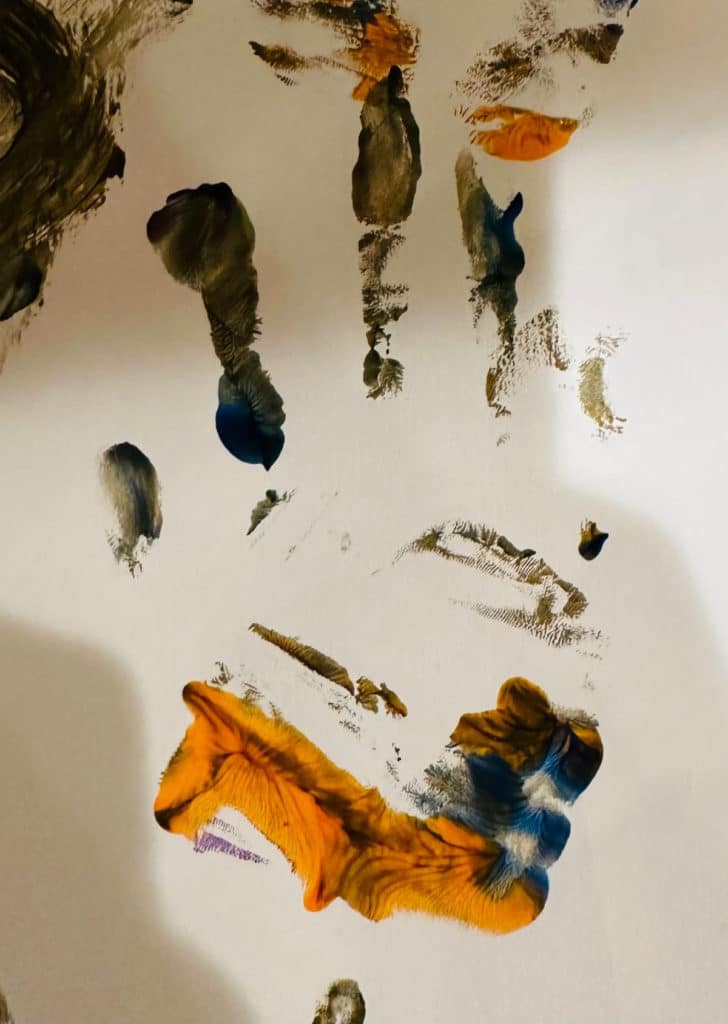
The kids wanted to paint this week. So we put dabs of colored paint on plates and gave them brushes. Both ignored the brushes and mixed the paint with their hands.

Dripping everywhere, they did manage to get some paint onto the canvass.

I looked carefully at Eli’s impression. And in that moment in time, it made me think.

Everything we touch makes an impact.

What impression will our soul-print leave in this world? How will our time on earth make a difference? Are we stopping to absorb the small wonders that surround us?

As I cleaned the paint spills from the floor (and from the chairs and from the table and from the ….), I couldn’t help but smile. I even left one drop of paint as a reminder of just how awesome life is.

With love and shalom,

Rabbi Zach Shapiro

A Moment in Time: “The Impact of Your Soul-Print” Read More »

The New Good Germans

The terrorist attack outside of a Jerusalem synagogue Friday evening was the deadliest since 2008. Media coverage was predictable: a sadistic equivalency was made between the seven murdered civilians and the raid on an Islamic Jihad cell in Jenin the day before.

False equivalencies—or worse—are standard operating procedure for leftist media regarding anything to do with Israel. For leftists, the intersection of neo-Marxist theory and anti-Semitism means Israel is always to blame; facts are irrelevant.

What surprised me, though, was that much of the left—including many Jews—ignored the attack entirely. No hashtags, no profile pic changes—no virtue signaling at all; it was as though nothing of note happened last weekend. I used to call this segment of the left status leftists: whatever they may think about an issue in private, their public persona showed a rock solid alliance with neo-Marxists and Islamists: why would they say or do anything that could possibly hurt their highly cultivated status in society?

But given that the attack occurred on International Holocaust Remembrance Day, it does seem appropriate to upgrade status leftists to a new and historic title: the New Good Germans.

Good Germans, of course, is the ironic term given to German citizens who claimed after World War II not to support the Nazi regime but remained silent and made no attempts to show their lack of obedience. That’s not fair, you may be thinking. The original Good Germans knew that if they said or did anything they could be immediately executed.

But there’s another way to look at that. What’s the worst that could happen to a status leftist—a professor, writer, head of a non-profit—who publicly supports Israel? Cancelation? Not so much anymore. Hounded on social media? Who isn’t? Not invited to the most radical chic dinner parties? Ah yes. That could be worse than execution for some.

My point is: the stakes are far lower than in the ‘30s and ‘40s—and yet they still say nothing. Despite the fact that they know that much of the rising anti-Semitism here in the U.S. is a direct result of the wild success of “Palestinianism”—the lies that have allowed the Arabs who call themselves Palestinian to fit nicely into neo-Marxist intersectionality. And yet the leftists who know better would still rather risk having their children being bullied by Islamist anti-Semites than publicly show any support for Israel during these pivotal times.

Why do so many young Jews on campus keep their heads down while Islamist activists shout genocidal mantras? Because their parents have instructed them to. They’ve learned that being able to say that they go to Harvard or Yale is far more important than standing up to lies about Israel or the Holocaust. Their parents have taught them what they consider the most valuable lessons of all: pretense and conformity. Some leftist parents have even begun telling their kids to not write Jewish on their college admissions application.

Hellenistic assimilation, in other words. And because this level of assimilation by so many in positions of power could lead to genocide, then yes: they are today’s Good Germans. These enablers of violence won’t get (immediately) executed, but the rest of us could.

The original Good Germans made obedience into an art form. The New Good Germans put on their double masks (literally and figuratively) and look away. While their neo-Marxist allies call out real liberals for free speech, real liberals continue to call out leftists for their unconscionable silence.

In the summer of 2014, it was the silence of my friends on the left that pushed me to begin focusing on Israel in my work. So I suppose I should offer them a bit of gratitude: if it weren’t for their lack of bravery, I wouldn’t have reconnected with my identity and homeland in such a profound way. And the truth is, I do feel sorry for them: imagine being so insecure that you can’t even come “out” as a Zionist.

But more than anything, it’s both terrifying and sad. Assimilation has never ended well for the Jewish people. The silence of status leftists has already enabled the Democratic Party to move to an anti-Israel extreme—both in policies and rhetoric. Yes, some Jews have left the party because of it. But most have stayed, rationalizing the betrayal of our people by focusing on the titles they’ve acquired and the cocktail parties they’ve been invited to.

Like the original Good Germans, their consciences were turned off a long time ago.


Karen Lehrman Bloch is editor in chief of White Rose Magazine.

The New Good Germans Read More »