fbpx

January 18, 2023

The Wide World of Rabbi Steve Leder Is Expanding

On a recent bright, chilly winter morning, Rabbi Steve Leder was giving a tour of the  site that will become the Wilshire Boulevard Temple’s Lynda and Stewart Resnick Campus. The former site of University Synagogue will become the third campus for Wilshire Boulevard, the oldest congregation in Los Angeles, joining the Irmas Campus on the West Side and the Glazer Campus on Wilshire by Koreatown.  

 The Minneapolis-born Leder,, who came to Wilshire Boulevard 36 years ago, exudes a mix of pride and excitement at what he sees. “This campus will have a world-class, state-of-the-art early childhood center, world-class, a state-of-the-art religious school, and a perfectly restored mid-century modern sanctuary and social gathering places,” he said. “We also will have the Karsh Tikkun Olam Center West, Karsh West, to go along with Karsh Tikkun Olam Center East (in Koreatown). Together, they will create “thousands of volunteer opportunity hours for Jews to engage and help alleviate some of the suffering in West Los Angeles,” adding that “anyone who doesn’t think there aren’t poor people in West Los Angeles, has not driven under a freeway. They are everywhere. Now we will have a staging area where we will be able to reach out and help people.”

“We should seize the opportunities in these disruptive episodes to grow. That is what we have tried to do.”

First, though, he related how inventive, imaginative millennials at Wilshire Boulevard Temple helped drive his community through the worst of the pandemic. “A long time ago, around 2009, during the financial crisis, I read about how challenging times are a healthy opportunity for organizations to acquire talent, to acquire assets, to leapfrog over their competition,” he said. “I always felt that should apply to Jewish organizational life, too. We should seize the opportunities in these disruptive episodes to grow. That is what we have tried to do.”

Having set the stage, Leder turned the spotlight to the new campus. “You are sitting in front of one of the examples of those opportunities: a completely gutted and about to be beautifully renovated Wilshire Boulevard Temple campus in Brentwood.”

As hard-hatted construction workers scurried around him, Leder mapped out the coming days and months.  

He hopes the renovated Sunset Boulevard structure, just west of the 405 Freeway, will be ready for the High Holidays that start September 15. “Definitely the early childhood center and the religious school will be open,” he said. “We are fast-tracking this.”

In the future, there will be Shabbat services there on a regular basis. “Our primary worship space on the Westside will be here,” said Leder, “because it is a better facility for it. Better parking. It’s a more beautiful space, larger and a far more inspiring space.”

His longterm plan, he said, “is the same as the short-term plan, to make Jews,” he said.” That is our mission. That is how I answer when people ask, ‘What is your mission?’ I say, ‘We make Jews.’”

Asked who will preside over the properties, Leder said, “ultimately, it all trickles upward to the senior rabbi.” 

As for the nuts and bolts, a consulting firm has been hired. “We are starting to think about how best to organize a synagogue that has three campuses,” he said. The three crucial questions are, is it best to rotate clergy through, or should each campus be treated as separate entities? Is it better to assign clergy primarily to one location? “We are constantly working on that because there is no model anywhere.”

The rabbi will have an office at the Brentwood campus and at the Glazer Campus in Koreatown. 

“I will move back and forth,” he said.

On Olympic Boulevard, the Audrey and Sydney Irmas Campus will be devoted “ever more to our early childhood center and our elementary school west,” Leder said. “Primarily it will be a school campus, although there will be other events there.”

Since Leder took over the leadership in 2003, there has not been a doubt about who is in charge. The 62-year-old, soft-spoken Leder knew he wanted to be a rabbi while studying writing as an undergraduate at Northwestern University, but he also knew that “writing effectively would be a very important tool. By preaching, which is a dying art,” Leder says. 

“Preaching has become almost universally conversational. Bullet points. I am of the belief that every word matters. Rhythm, nuance, cadence and precision all matter. Being able to share what you said, verbatim, matters. It is clearly important in terms of preaching, but it also is important in general communications – emails, announcements to the congregation, press releases. These require craftsmanship if you want them to be taken seriously, to rise above junk mail.”

But being responsible for what happens at three religious campuses miles apart is a challenging stretch — and unique for Los Angeles. In the last year, in addition to closely monitoring Wilshire Boulevard’s expansion andattending to his rabbinal duties at Wilshire Boulevard and the Irmas campus, he published his fifth book, “For You When I Am Gone,” following “More Beautiful Than Before,” “More Money Than God,” “The Extraordinary Nature of Ordinary Things,” and “The Beauty of What Remains.”

How does he keep up this hectic schedule?  Leder credits growing up in a working-class family in the Midwest. “My parents married as teenagers, and they had five kids before they were 30 years old,” Leder said. “Neither went to college or even considered it.  So for me, writing a book is a noble and powerful opportunity.” 

Leder can reflect on his dual career. Twice he has been named one of the 10 most influential rabbis in America while producing best-selling books. And after more than three decades in Los Angeles, he said his books “give me the opportunity to share my teaching, my truth, with a much, much wider community.”

The Wide World of Rabbi Steve Leder Is Expanding Read More »

Bibi: New King of the Israeli Left?

The left hates Bibi. It’s as true today as it was yesterday, but it may not be true tomorrow. 

There are stirrings of a new attitude towards Israel’s controversial Prime Minister. People who saw him as the greatest threat to Israel’s democracy now look to him as Israel’s only hope. People who labeled him an extremist now pray that he can prove to be a moderating force in Israeli politics. People who hated his corruption now have bigger worries on their minds.

This is all because there’s a new government in Jerusalem. It’s loaded up with ministers from the Kahanist Jewish Power party and the anti-LGBT Noam party. It wants to hamstring the Supreme Court, build more settlements, and bring immigration law into alignment with strict Jewish law. 

As a result, Bibi — the boogeyman of the left — suddenly doesn’t look so bad.

The Jerusalem Post writes, “Netanyahu must defend democracy from his coalition partners.” The Jewish Journal asks, “Will Bibi Be Israel’s Savior?” Countless articles suggest that Bibi will be the so-called “adult in the room,” keeping his coalition partners happy without actually letting them do too much damage. 

None of this makes much sense. Why should Bibi save Israel from a coalition he created? After all, he was the one who resurrected the far-right. Why would anyone think that he is any different from the rest of him?

And yet, here we are. And it’s not just a hallucination. We can see it in action. Bibi himself is trying to be the adult in the room — or at least trying to be seen as one. He is urging Ben-Gvir to stay off the Temple Mount. He is reassuring the press that gay rights are safe. He is distinguishing himself from his new coworkers — especially Ben-Gvir, Maoz, and Smotrich.

Looking at Netanyahu in comparison to this cast of characters, some on the left are wondering why we made such a fuss about him in the past. Something about a submarine deal, and ordering too much pistachio ice cream on the company credit card, or perhaps the scandal about the security detail for his bratty son. From where we currently stand, it all sounds like so much shtuyot — nonsense.

And now some of us are asking why we didn’t partner with him instead of trying to take him down. Why didn’t we do what the ultra-Orthodox parties have done — which is to do business with him, trading him job security in exchange for important ministries and good legislation? 

And now some of us are asking why we didn’t partner with him instead of trying to take him down. Why didn’t we do what the ultra-Orthodox parties have done — which is to do business with him, trading him job security in exchange for important ministries and good legislation?

Perhaps this is what will happen next time around. It’s possible that Bibi, exhausted from putting out PR fires from his new coalition partners, might prefer to join forces with centrists like Lapid and Gantz. The left, tired of Ben-Gvir’s inflammatory rhetoric and policies, may embrace Bibi with open arms. 

Of course, there will be those who will never stop hating him. There will be those who will remember that it wasn’t all shtuyot. He was guilty of incitement, of corruption, and of putting self before party and party before country. 

But there will also be those on the left who are happy to forgive and forget, just like we forgave and forgot with Bennett. If anyone can recall, Naftali Bennett was once treated by the foreign press like Ben-Gvir himself — a far-right extremist settler who would destroy Israel’s secular character and democracy. Less than a decade later he was heading up a center-left Jewish-Arab unity coalition. 

When the only important criteria on the table was “anyone but Bibi,” the left put aside its concerns about Bennett and Bennett put aside his concerns about the left. 

The next time around, the only important criteria on the table might be “anyone but Ben-Gvir.” If that’s the case, we might just find ourselves crowning Bibi “King of the Left.”


Matthew Schultz is the author of the essay collection “What Came Before” (2020). He is a rabbinical student at Hebrew College in Newton, Massachusetts.

Bibi: New King of the Israeli Left? Read More »

Will You Be My Mentor?

Five years ago in Mumbai, India, a 20 year old Jewish girl, Natalie Dayan felt lost and yearned for connection outside her world. 

She stumbled upon a TEDx talk about making connections by a woman on the other side of the world, me, Audrey Jacobs.

Natalie bravely sent me a respectful email asking to connect so she can learn from me. 

The last line of my TEDx talk is “If you connect two lives, you connect the world.” So of course I said yes.

As we began corresponding, I didn’t see what I could teach her. She was exceptionally humble and extraordinarily brave in how she navigated life at her young age. 

Natalie finished her degree in Mumbai in Biomedical engineering during COVID. She was locked down and felt trapped. She knew if the pandemic ended, she’d have to leave her family to pursue a research career in the U.S. Yet she didn’t know how to manifest it.

In her quiet and introspective way, she first looked inward. She wrote a screenplay called “Graduation, Now What,” which embodied her pain as a college grad who felt lost. She dreamed her screenplay would be produced as a Netflix film for other young adults who feel pressured to have it all figured out. 

She also looked outward and started a podcast called “The Hidden Artists.” She interviewed inspiring people who were also stuck. Natalie’s hope was to highlight ‘hidden artists’ and attract listeners who would discover and help them jump start their careers. Natalie took ‘making connections’ to a new level.

One year after COVID ended, from sheer determination Natalie manifested her goal to study in America!

Today Natalie is enrolled in a Stem Cell Biology and Regenerative Medicine masters program at USC in Los Angeles. She’s taken on a lot of debt to fulfill her dream, but she’s committed to build a career in stem cell research.

She told me this great news on January 2, when she enthusiastically responded to my holiday family email newsletter: 

“You have always been an inspiration to me ever since I first watched your TEDx talk. Now the stories of your children inspire me. In fact, reading your email in the beginning of 2023 itself is what I am grateful for. It continues to inspire me to keep pushing through the pain and get up and move forward, irrespective of how hard it is to do.”

I was moved to tears to learn, the way I stumble through life’s struggles inspires an amazing young woman I’ve never met. The truth is, she inspires me.

I was moved to tears to learn, the way I stumble through life’s struggles inspires an amazing young woman I’ve never met. The truth is, she inspires me.

Natalie hesitantly asked if we could meet in person. I immediately invited her to come a few days later to San Diego and spend Shabbat with my family.  I bought her a bus ticket to make it easy.

After a lively Shabbat dinner Natalie said, “I was so scared to meet you, who I’ve admired for so many years. When I arrived I immediately felt at home. You and your children were so embracing, kind and funny. Shabbat felt like home. I miss Shabbat; I miss my family.”

Back in India, Natalie‘s family celebrates Shabbat each week. Her Dad is very involved in the Indian Jewish community and every Friday attends synagogue while her mother prepares the Sabbath meal. There’s only about 1000 Jews in India, the most populous country in the world. Natalie traces her Jewish Indian heritage on both sides of her family for many generations. 

My sons, aged 15 to 24, had never met a Jew from India so they peppered her with questions. They were playful but also respectful, seeing that Natalie was shy. She became comfortable and shared more of her life.

What I observed is how much Natalie struggles with anxiety and yet, has become friends with the anxious part of herself. A few days prior, I posted on Facebook how my fractured self hides my doubt, fear and shame. For Natalie, her anxious self is an active partner in her success.

After my sons left, I shared my newest book, “No Bad Parts: Healing Trauma & Restoring Wholeness with the Internal Family Systems (IFS) Model” by Richard Schwartz. She shared a few documentaries and podcasts that featured IFS. We learned from each other.

The next morning we were done dissecting our inner demons. It was time for an adventure!  A friend who saw my melancholy Facebook post, messaged me late that night to invite me to Dulzura mountains to visit sacred land at the “Madre Grande” spiritual center.  

I woke Natalie up, “Get up! We’re going on a healing journey!”

Yet, the trip turned out not to be one of receiving, but one of giving. Once we arrived we realized we were called there to do a mitzvah. We were not there to heal ourselves, but heal others. My friend was ill and he needed a Jewish soul to visit, listen and care.  He also was excited to share his massive garden he planted with diverse trees and adorned with art installations designed to be in harmony with the land and animals. He needed a loving witness.

Finally after a long tour as we headed back into the main house, the residents tending the library stopped us. They asked if we’d take many heavy boxes of historic Jewish books in Hebrew which they could not read but hoped could go to a Jewish home. Of course I said yes. Another mitzvah.

After we safely descended the incredibly treacherous, long, windy, rocky mountain road, we exhaled deeply and began to reflect on our experience. 

I broke the silence, “You know we’d be OK because we had 100 pounds of sacred texts behind us to protect us!” We laughed. 

Questioning if this was meaningful for her, I asked Natalie, “How was that for you? What were you able to see and learn?”

“That was powerful. I wanted to observe how you navigate life in real life, not rehearsed on a stage like in your talk. I wanted to experience if what I sensed about your resiliency was true. If I could learn how to be brave by watching you.”

“What did you see?”

“On the mountain I saw how you stayed positive, resilient and hopeful when obstacles arose. Watching you, I learned how to reframe a situation, especially when things don’t go as planned. We cannot control what happens but we can control how we perceive it. For other people what we experienced would have been an imposition, but for you, you found purpose in it. That’s a lesson I can apply to anything.

“Also I saw how much care and attention you gave to each person you met. You reflected to them their value and contribution to the world, especially if they couldn’t see it themselves. I saw you try to bring the best out in everyone we met. I’m grateful to see how your confidence in connecting was to show kindness to strangers.

“Finally I was in awe that you chose we’d go somewhere you knew nothing about and you had the faith that we’d get there safely and it would be OK. When we began driving up a narrow unpaved, curvy mountain road, you had a calm head and a positive attitude. I was scared, but you knew no fear. You made me feel safe.”

Finally I understood, I did have something to offer Natalie. 

I asked, “Natalie, would you like me to be your mentor?”

She gave an audible sigh of relief. “Oh Audrey, yes! Thank you! I wanted to ask you but I was afraid to. Whenever I’ve needed help, I’ve asked my Mom and Dad but now there’s a 13.5 hour time difference and …  they don’t always have all the answers.”

Neither do I, but I do care. Natalie continued to ask a lot of questions, and I answered them. Not as one who has all the answers, but as one who has lived twice as long. Answers that only come from the wisdom of experience. 

In the Jewish book of wisdom, Pirkei Avot: Ethics of the Fathers, Chapter 4 says, “Who is wise? One who learns from others.”

So Natalie may see me as wise, but I see her also as my teacher. I’m honored she calls me her mentor.


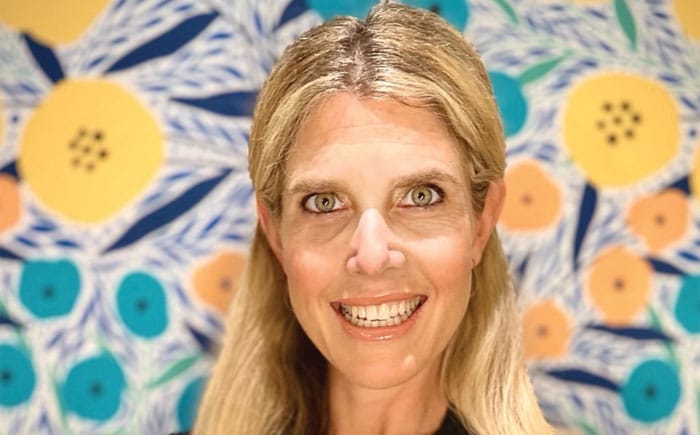
Audrey Jacobs is a financial adviser and has three sons.

Will You Be My Mentor? Read More »

A Legacy of Love: Sarina’s Syrian Cookies

When I met Neil, I also met his friend Lela, who along with her siblings were part of the Sephardic Educational Center (SEC) in the 80s. Soon Lela and I also became friends. Whenever I visited her family home, her mother Sarina was super welcoming, her face brightened with the most beautiful smile. Lela married Harley at Sephardic Temple a month before Neil and I were married there. Lela and Harley have lived in Seattle ever since and they have become pillars of Seattle’s renowned Sephardic community. Over the years, Neil and I would visit them in Seattle and whenever Lela and Harley were in Los Angeles visiting family, we would always make time for a night out together. 

This New Years Day, Lela and Harley invited us for brunch at their home in Malibu. On her kitchen counter was a plate of authentic Syrian cookies. Sharon and I are going to let Lela tell the rest of the tale of how they came to be there. 

—Rachel

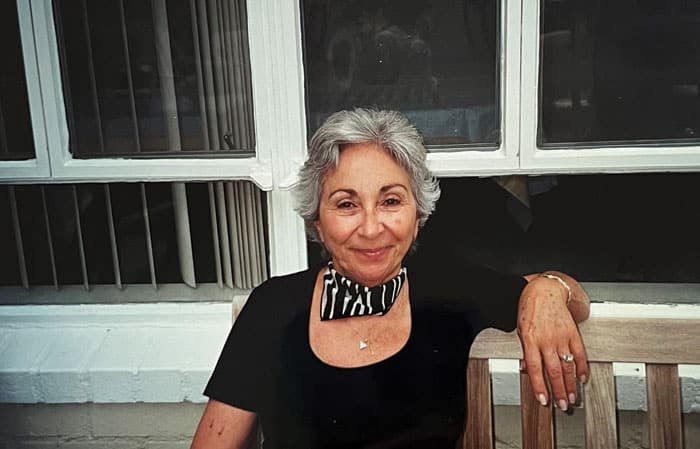
On Christmas Day, I was reminded how far our legacy connects us to the next generation and beyond. Lucia, a dear friend, (practically a family member) paid me a visit from out of town. As many Catholic women do, Lucia celebrates the beauty of Christmas by bestowing gifts of baked goods. She brought us cookies from our own Syrian heritage. She had baked greibe, akin to a Mexican wedding cookie adorned with a pistachio or candied bead and araz b’ajweh, date-filled horns. My mother, Sarina Sabin, had passed only two weeks earlier and it was she who had taught these recipes to Lucia.

My mother Sarina Sabin née Mizrahi was born in Mexico City to a family of 14 children. Her parents had moved there with their two eldest children from Damascus, Syria. The Damascon (Shami Jews) stuck together and she was brought up in a vibrant close-knit Syrian community.

In 1955, my mother was introduced to my father Abraham, who was born and raised in Brooklyn. Their parents knew each other from Damascus and soon enough a marriage was arranged. She moved to Brooklyn in the fall and it wasn’t long before the harsh New York winter weighed on her. She didn’t speak a word of English. She was cold and lonely and she really missed her family. After six long months, she proclaimed that she was joining some of her siblings in Los Angeles whether my father followed her or not. Follow her he did.

My parents soon had three children and became fairly entrenched in the L.A. Syrian community. My father Abie was even part of the committee that founded Sephardic Hebrew Academy (now Maimonides).

My mother became renowned for her culinary skills and everyone remembers having a seat at her table. It’s unclear how she learned to cook, whether she was specifically taught or just absorbed the skills from watching and helping her mother. Whether she was frying kibbe or making tacos, everything that came out of her kitchen was delectable.

Unfortunately, my father passed away at the age of 59 and my mother was left to raise my older sister Celia, 22 years old, and my younger brother Edward, 12. I was 17 and just starting college.

Sarina Sabin

My mother harnessed her skills as a bilingual woman and an amazing cook to support her family. She worked full time in a law office doing Spanish to English translation, and she catered. She started her cooking for hire after recipients of her delicious food asked if they could pay her to make them more. She began frequenting her beauty salon where she gained a reputation for delicious Mexican food. After that, she added Syrian mezze and sweets to her repertoire.

Weekends in my mother’s home were often spent making hand formed kibbeh, sambusak, greibe, ma’amul, and araz b’ajweh.

Lucia came to this country from Mexico when she was very young and found sanctuary in our home. She became far more than an employee, she became our sister, our fellow prankster. My mother virtually raised Lucia. Later, when she obtained amnesty in the United States and found a different job in retail, Lucia continued to live with my mother as her “fourth” child.

We all helped my mother with the catering, including Lucia. And we all learned to create these delicacies as well.

My mother’s tremendous cooking skills helped ensure that all three of her kids could get college educations and beyond. Her most famous job was cooking family dinner for Steve Lawrence and Eydie Gorme four nights a week. In her day, she served stars likes Barbra Streisand, Danny Thomas, Phil Donahue and others. But the biggest joy of her life was feeding her family — her children and grandchildren. Memorializing Sarina, her grandchildren all touted her delicious French toast. It may not have been extraordinary, but if Grandma made it, it was perfection.

I was truly touched when Lucia brought me these confections of my childhood. Needless to say, they reminded me of my mother and of those precious moments in her kitchen. 

I was truly touched when Lucia brought me these confections of my childhood. Needless to say, they reminded me of my mother and of those precious moments in her kitchen. Lucia says she makes them every year for her entire family.

She’s not the only one. My mother’s caregiver, Carmen, and my sister’s longtime nanny also make Greibe and give it to their loved ones for Christmas. Mama’s lessons definitely paid it forward.

The entwining of cultures is truly beautiful to behold. It teaches us that through food we spread our heritage, our experience and most importantly our love for one another and beyond.

—Lela Sabin Franco

Sarinas Greibe

1lb sweet butter, clarified
Equal volume of vegetable oil
(Measure the butter in a cup after you clarify it and then match the amount)
5 to 6 cups flour
1 ½ cup sugar (baker’s is best)
1 ½ cup powdered sugar
A couple of drops of rose water (optional)

  • Melt the butter in a pot over the stove or in the microwave.
  • Skim off all of the white grainy part of the butter to leave it completely clarified.
  • Add the same amount of oil to a big bowl and combine.
  • Slowly add both sugars, mixing to incorporate them completely. (Make sure that there are no lumps of sugar or butter in the batter.)
  • Add flour a little at a time until you can form a soft ball (about 5 or 6 cups)
  • Add a couple of drops of rose water (optional)
  • Form balls the size of a walnut and place on a tray then press the center of the cookie with a clean, unused pencil eraser to make a hole.
  • Bake at 350 degrees until slightly gold on the bottom edges.

Sharon Gomperts and Rachel Emquies Sheff have been friends since high school. The Sephardic Spice Girls project has grown from their collaboration on events for the Sephardic Educational Center in Jerusalem. Follow them on Instagram @sephardicspicegirls and on Facebook at Sephardic Spice SEC Food. Website sephardicspicegirls.com/full-recipes

A Legacy of Love: Sarina’s Syrian Cookies Read More »

Sinai Akiba Names School Head, ELNET Appoints Director, Jews of Color Fellow, PJTC Honors Professor

Day school Sinai Akiba Academy (SAA) has named Lauren Plant its new head of school, starting on July 1.

Plant’s hiring follows a national search led by DRG Talent Consulting Experts.

A Los Angeles native, Plant is currently head of school at Westerly School of Long Beach, where she has served since 2018. Her time at Westerly has been filled with innovative strategic planning, the development of signature education programs and helming a school-wide focus on diversity, equity and inclusion.

As SAA, an ECC-8th grade day school at Sinai Temple, enters its 55th year, her leadership promises to lead the school into a dynamic and reinvigorated next chapter, according to SAA leadership. 

Plant, who describes herself as “a relational leader who deeply values open communication, collaboration, and community partnership,” succeeds Interim Head of School Rabbi Andy Feig. Feig will serve in his current role through June before becoming head of school at Ilan Ramon Day School in West Hills.


From left: State Assemblymember Chris Holden (D-Pasadena), honoree Peter Dreier and PJTC Social Justice Committee Chair Carl Selkin. Photo by Ann Marie Hickabottom

Pasadena Jewish Temple and Center (PJTC) honored Peter Dreier, a professor of politics at Occidental College, at its annual Marv Gross Social Justice Award ceremony.

The Jan. 13 Friday night program coincided with the congregation’s sixth annual Dr. Martin Luther King, Jr. Shabbat.  

Dreier, an author and activist who writes widely on American public policy, is a frequent speaker on topics including urban politics, housing, community development and community organizing. 


Nicole Daghighian, one of six young adults in the Jews of Color Initiative leadership.
Courtesy of Repair the World

Six fellows from the Jews of Color Initiative (JoCI) have begun their placements at various leadership positions in the Jewish organizational ecosystem as part of a ten-month fellowship for young adults offering firsthand professional experience in the Jewish nonprofit sector.

Nicole Daghighian, an Iranian-American Jew raised in West Los Angeles, is a member of the second-ever cohort of the JoCI Leadership Fellowship. She has been placed at Repair the World, where she will contribute to their data management projects.

One of six fellows in the recently announced cohort, Nicole joins Jonah Levy, an illustrator from New York City, at Repair the World.

“We are beyond excited to have Jonah and Nicole join Repair the World through the Jews of Color Initiative Leadership Fellowship,” Repair the World Chief Strategy Officer Kate O’Bannon said. “Their perspective and talents will enable us to engage more young adults in meaningful Jewish service. We look forward to supporting Jonah and Nicole as they learn and grow in their roles within the strategy team at Repair. Our partnership with JoCI enables us to live our value of action and learning, na’aseh v’nishma, as we collaborate and learn together.”


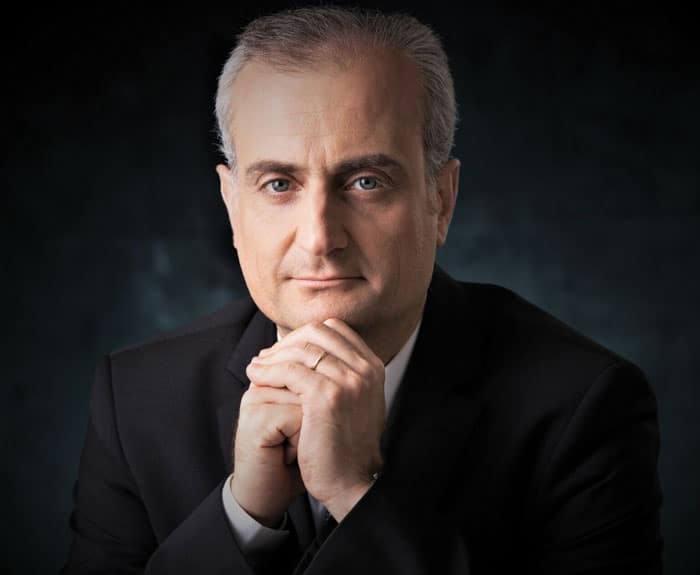
ELNET-Israel CEO Emmanuel Navon. Courtesy of the European Leadership Network

The European Leadership Network (ELNET) has appointed Emmanuel Navon executive director of ELNET Israel.

Navon is a renowned scholar, practitioner of foreign affairs and an expert on Europe-Israel relations. He brings more than two decades of experience in management, politics, academia and professional advocacy.

He has taught at Tel Aviv University; Reichman University in Herzliya, Israel; and at the IDF’s National Security College. His latest book, “The Star and the Scepter: A Diplomatic History of Israel,” is the definitive study of Israel’s international relations. 

With changes occurring in the geopolitical landscape in Europe and the Middle East, Navon is looking forward to leading the Israel office at ELNET, a nongovernmental organization dedicated to strengthening the Jewish state’s relationship with Europe based on shared democratic values and common interests. 

“I have worked with ELNET for years as keynote speaker for incoming delegations and strategic dialogues and I am familiar with its invaluable work and incredible team,” he said. “As CEO of ELNET Israel, I intend to build on past successes; develop strong relationships with European leaders; leverage the opportunities created by the Zeitenwende and Abraham Accords to strengthen Israel’s relations with Europe; and further develop financial resources.”

Friends of ELNET President David Siegel said Navon will be an asset to ELNET, a network of independent organizations.

“I’ve had the pleasure of working with Dr. Emmanuel Navon for several years,” Siegel said. “He is an extraordinary leader and practitioner, with a strong commitment to the core mission of ELNET.”

Sinai Akiba Names School Head, ELNET Appoints Director, Jews of Color Fellow, PJTC Honors Professor Read More »

Please, A Little Patience

The rain subsided and suddenly, I see buds emerging on my roses. After a cold winter with blustery winds and uncharacteristically frigid California weather, we are all looking for pockets of sunlight. I’m waiting for the roses to bloom.

And yet, I’m reminded of the Jewish value of patience. Not the kind of patience that is needed when we are driving on a packed 405 freeway. The kind of patience that is needed when we’re anxiously waiting to hit milestones. How many of us have worried when our children will start speaking or walking? The kind of patience that is needed when we’re wondering how our professional journeys will unfold. The kind of patience that is required when we’re anxious for a relationship to take its next step. An elusive, desired patience that very few possess. Because this kind of waiting is hard and sometimes, even painful.

Rabbi Yechiel Yitzchok Perr once taught, “You can train yourself to be patient. You can train yourself to open the space between the match and the fuse.” What does it look like to live in the in-between? To look at this realm of unknowing, realizing there may be lessons missed as we’re waiting for something else to take place. The child that isn’t walking may be smiling, waving, hugging, loving. The professional career that isn’t speeding up may offer professional connections or different opportunities. The evolving relationship asks for a living in the present versus a living in what’s to come. Patience is embracing an uncomfortable space, opening one’s heart to a wisdom unexpected.

Those roses will bloom when they are ready. In the meantime, I will wait. Still a little frustrated, still a little eager. But ready to welcome unanticipated beauty and unimagined growth.

Shabbat Shalom


Rabbi Nicole Guzik is a rabbi at Sinai Temple. She can be reached at her Facebook page at Rabbi Nicole Guzik or on Instagram @rabbiguzik. For more writings, visit Rabbi Guzik’s blog section from Sinai Temple’s website.

Please, A Little Patience Read More »

With Dream-Awakened Eyes

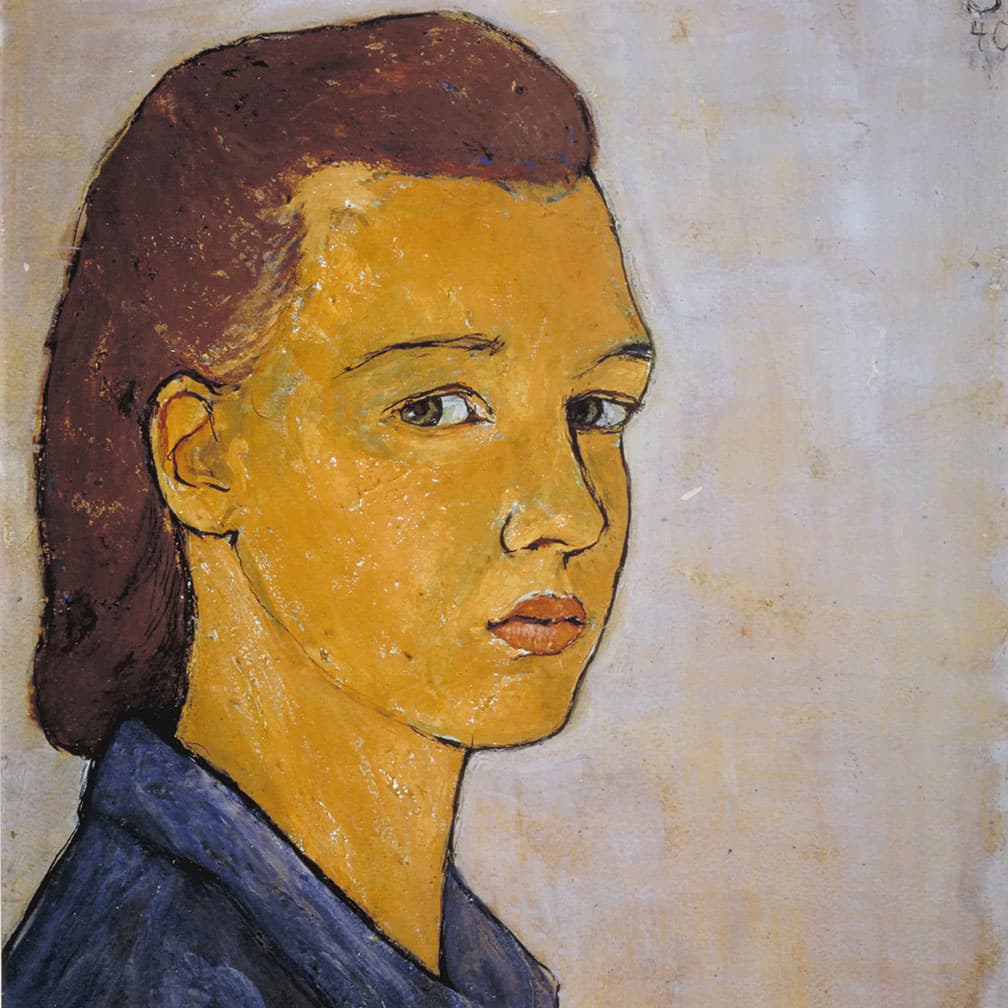
Charlotte’s dream-awakened eyes

saw beauty all around her,

the sea, the hills, the sun-drenched skies,

her sanity far sounder

than that of madmen whom she’d run

away from, fleeing death,

as with her brush and paint she won

a refuge for her breath.

All this emerges when we scan

the opus that she called

her life, in which she proved you can

avoid becoming salt

when looking back, if you recall

the joys and not the pains,

the loveliness before the fall

that after death remains.


And yet, her last name links her to

the king who, pondering beauty,

found it, like rubies, of less value

than doing divine duty:

conducting ourselves with great love

towards our race, mankind,

including those, like God above,

who’re out of sight—-not mind.


Charlotte Salomon fled Germany after Kristallnacht and lived in Villefranche-sur-Mer in the south of France until 1943 when she was murdered in Auschwitz, recalling her life in Berlin.  She painted some 1,300 gouaches and selected 780, illustrated by texts that she herself wrote to form “a great opera of the mind and eye,” as Norman Rosenthal puts it. In “A Private World to Ward Off the Nazi Horror,” NYT, November 30, 1998). Alan Riding wrote:


…… her final sentences suggest she had emerged from her own dark tunnel: ”And with dream-awakened eyes, she saw all the beauty around her, saw the sea, felt the sun and knew: she had to vanish for a while from the human plane and make every sacrifice in order to create her world anew out of the depths…….

Charlotte Salomon: Life and the Maiden premieres at the New York Jewish Film Festival on Jan. 18, 2023. Mira Fox writes in “Why is this Jewish artist’s murder confession being hidden again? Forward, 1/17/23:


https://forward.com/culture/532229/charlotte-salomon-life-and-the-maiden-murder-confession-review/?utm_source=Iterable&utm_medium=email&utm_campaign=afternoonedition_5943864


For years after Charlotte Salomon died at age 26 in Auschwitz, her father Albert and stepmother Paula only showed the manuscript she left behind to one person: Otto Frank. He, too, had shown the Salomons his daughter Anne’s diary to ask if they thought it was worth publishing ……


…… Charlotte’s parents published her manuscript too — also editing out the most controversial part — but it’s hard to imagine anyone less likely than Charlotte to be turned into a similarly angelic, appealing heroine.


….. Salomon tells the story of her life, including family dysfunction, multiple suicides, and her toxic love affair with a man 21 years her senior.

….. in a 35-page confession scrawled in all-caps with rusty-colored paint — and excised from the work by her parents — she confesses to murdering her own grandfather, who sexually abused her, feeding him a “Veronal omelet” full of barbiturates and sketching him as he died.


Prov. 31:30-31 states:


ל  שֶׁקֶר הַחֵן, וְהֶבֶל הַיֹּפִי:    אִשָּׁה יִרְאַת-יְהוָה, הִיא תִתְהַלָּל.        30 Grace is deceitful, and beauty is vain; but a woman that feareth the LORD, she shall be praised.

לא  תְּנוּ-לָהּ, מִפְּרִי יָדֶיהָ;    וִיהַלְלוּהָ בַשְּׁעָרִים מַעֲשֶׂיהָ.  {ש}      31 Give her of the fruit of her hands; and let her works praise her in the gates.


Gershon Hepner is a poet who has written over 25,000 poems on subjects ranging from music to literature, politics to Torah. He grew up in England and moved to Los Angeles in 1976. Using his varied interests and experiences, he has authored dozens of papers in medical and academic journals, and authored “Legal Friction: Law, Narrative, and Identity Politics in Biblical Israel.” He can be reached at gershonhepner@gmail.com.

With Dream-Awakened Eyes Read More »

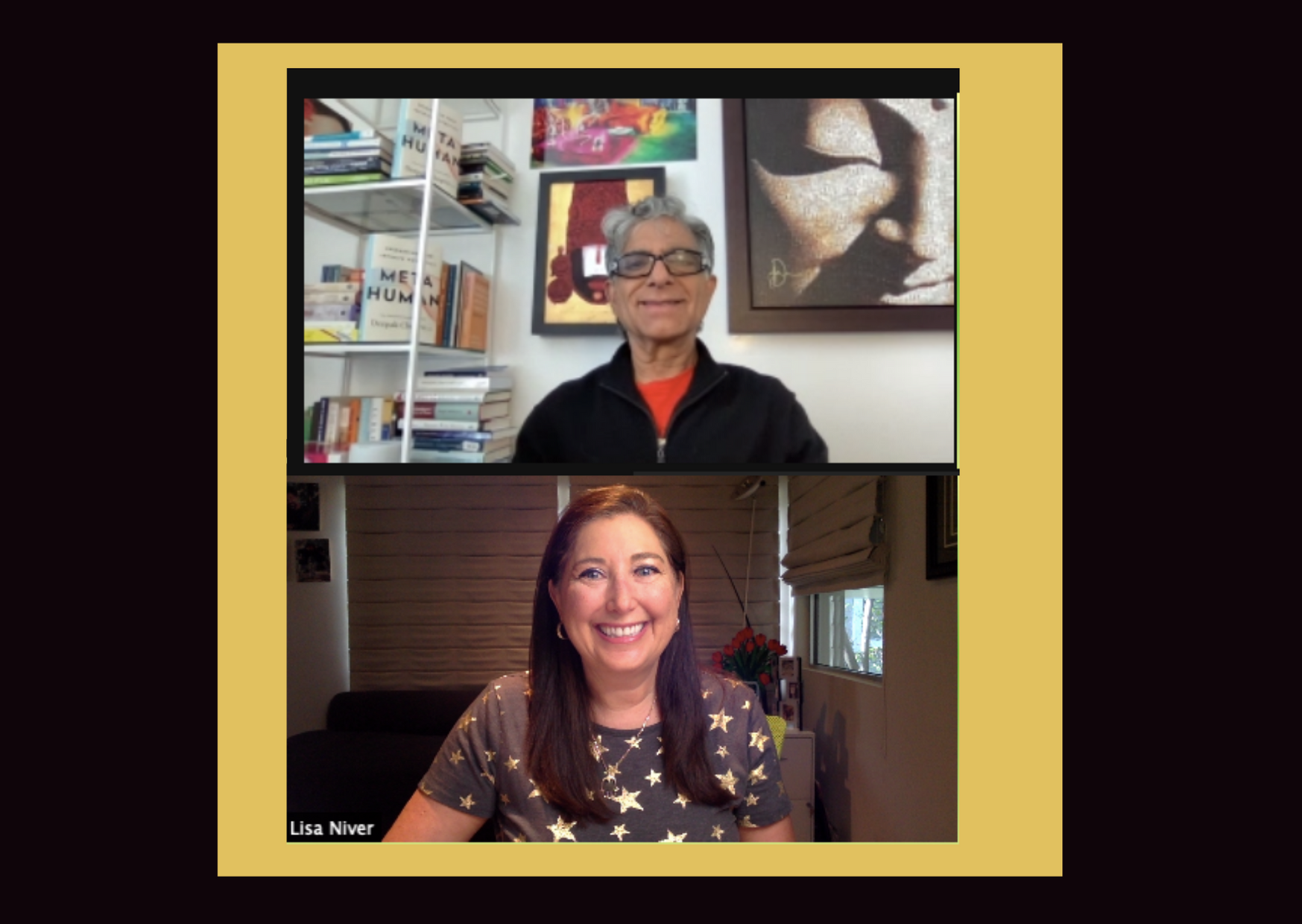
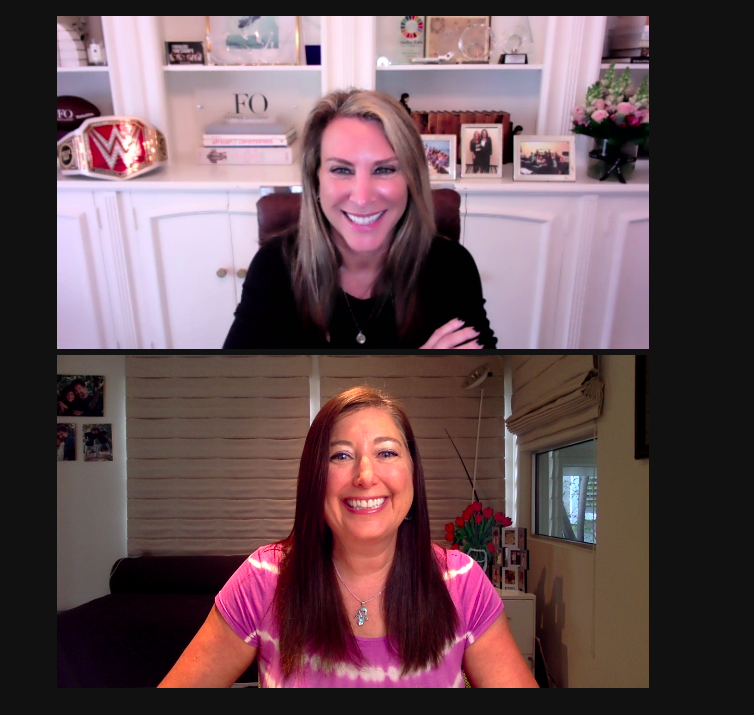
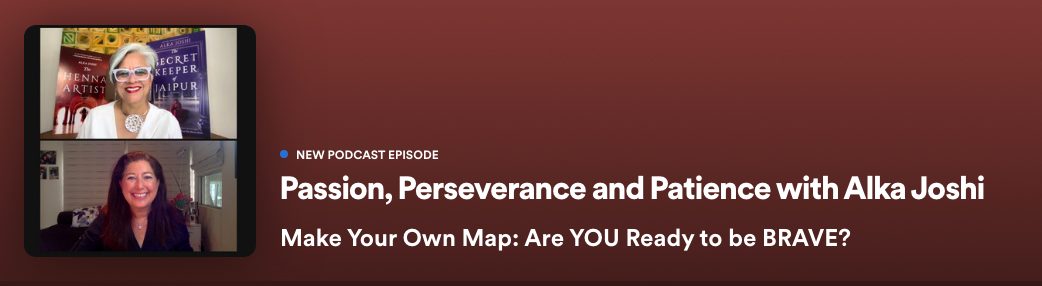
Watch my VIDEO PODCAST on Spotify: “Make Your Own Map!”

Step out of your comfort zone: how being brave can open you up to your dream world. Lisa Niver can show you how small steps can lead to big results. She tackled her own fears and overcame her top 50 challenges before she turned 50. She and her guests will share tips, tricks and tools for how to be courageous in the world of travel, and how that will result in big changes in other areas of your life.

WATCH on ANCHOR or SPOTIFY

SEASON ONE: Deepak Chopra, Alka Joshi, Mallika Chopra, Shelley Zalis, Meaghan Murphy, Tiffany Paulsen and Gaby Natale

https://open.spotify.com/show/6jkQ4AjuzS8CJznGVS0egc
https://anchor.fm/lisa-niver

As of January 11, 2023, in less than two weeks, my podcast has been watched in four countries on two continents!

WATCH on ANCHOR or SPOTIFY

Watch my VIDEO PODCAST on Spotify: “Make Your Own Map!” Read More »

Yiddish for Tottenham Hotspur Supporters

There are any number of disturbing things today that contribute to the spread of the virus of anti-Jewish racism or antisemitism. White supremacists, the BDS movement, and Kanye West are just a few inciters to Jew-hatred that come to mind.

The self-identification of Tottenham Hotspur fans as “Yids” or referring to themselves as members of the “Yid Army” is not one of them. Quite the opposite. For those who aren’t soccer fans, the Tottenham Hotspur Football Club of the English Premier League was founded in 1882. For more than half a century, Tottenham supporters have embraced the term “Yid,” a word that the supporters of rival clubs originally intended to be a slur.

As a proudly Jewish resident of Beverly Hills, one of the only Jewish-majority cities outside of Israel, a city in which we recently had another drop of flyers that accused Jews of being responsible for the COVID pandemic, I am acutely sensitive to the pathological nature of Jew-hatred and its stubborn resistance to reasonable forms of treatment.

If there are thinly veiled tropes about parts of North London, where Tottenham is located, because around 15% of its residents are Jewish, we have our own frequent dog whistles and stereotypes about Beverly Hills, often being gratuitously perpetuated by people who should know better.

I can’t claim to be a generational member of the Yid Army. My own fandom is fairly recent. As a member of a sports-mad family and a fan of different sports ranging from baseball, basketball, American football and hockey to, yes, Aussie rules footy (as a member of the mighty premiers, the Geelong Cats), it’s not surprising that English Premier League soccer would at some point be added to the fandom mix.

Fandom for me is not just a passing interest. Being a fan means participating in distinct, unique and varying communities. It often seems to engender an authentic, shared connection with individuals who otherwise might not have a whole lot in common. In the Los Angeles area, for example, the Dodgers manage to connect some of the most diverse groups and communities imaginable in a way unlike anything else.

My 15-year-old sports fan son became a fan of Liverpool, and so it became time for me to choose a team. Even if, as team songs go, I would probably tend more toward Rogers and Hammerstein than Barry Manilow (the exception being “Copacabana”), and even though Ringo Starr is a Beverly Hills resident, I was never going to choose Liverpool as my team.

On the other hand, as a famous maxim goes: “You don’t choose your football club; it chooses you.”

For me the choice was clear. As a proud Yid, it could only ever be Tottenham. I suspect it was the same—for a variety of diverse and sometimes personal reasons, most of which have nothing to do with ethnicity or religion—for a majority of Tottenham supporters. Most of them probably didn’t have a choice either. Perhaps the idea of the “Yid Army” is more appropriate than we know. Maybe we all really were chosen.

How could I support any team other than the one whose fans passionately chant: “Being a Yid. Being a Yid. The thing I love most is being a Yid”? How could they not be my peeps?

My fandom has given me occasion to read about how some, led by Jewish Chelsea fan David Baddiel, have attempted to suggest that Tottenham fans’ use of the term “Yid” is antisemitic or somehow stokes antisemitism.

Such narrishkayt (Yiddish for “foolishness”—in other words, “bollocks”).

“Yid” is the Yiddish word for “Jew.” Unlike the “N-word,” with which it has been sometimes incorrectly compared, the word “Yid” has been used for centuries by Jews to describe themselves. This has never been a matter of taking an inherently pejorative slur (like “kike”) and trying to flip it, as some suggest Black people have done with the N-word.

Vos macht a Yid?” is a friendly greeting that was common in Yiddish-speaking areas when there were still many native speakers of Yiddish. You could probably have heard it in East London toward the end of the 19th century. It literally translates to “What is a Jew doing/making?” with the meaning “How are you doing?” but thoroughly infused with Yiddish tam (flavor).

Has the word “Yid” (and variations including “Yiddo”) been used derogatorily, particularly in the UK, including by brownshirts and other antisemites in the 30s and beyond? Of course.

But the word “Jew” itself continues to be used derogatorily by Jew-haters, particularly when modified by various adjectives, including “dirty.” When used as a verb, the word “Jew” is extremely offensive, calling to mind stereotypes of Jews as self-interested, cheap and exploitative. The word “Jew” (in German) was written on the notorious yellow Stars of David that Jews living under the Nazi regime were forced to wear.

However, we would never ban the word “Jew.” Nor would we allow antisemites to take ownership of the word. We also would never abandon the Star of David as a proud symbol for the Jewish people just because the Nazis used it for their own evil purposes. The question is: Would we take offense if the word “Jew” was substituted for “Yid” in the Tottenham chant? “The thing I love most is being a Jew”?

It’s understandable that Baddiel as a Jewish Chelsea fan wouldn’t necessarily want a rival club to bask in Yiddishkeit. For me, as a Jew, it would be difficult if not impossible to cheer against a team whose supporters chant about how much they love “being a Yid,” who wave Israeli flags, and who so identify with their team’s Jewish connections. But Baddiel’s arguments, and those of people wanting Tottenham fans to redefine their community and fandom to exclude the Jewish connection, just don’t hold water.

For one, he argues that non-Jews don’t have a right to “reclaim” the word “Yid.” In other words, non-Jewish Spurs supporters can’t balance the derogatory usages of the word “Yid” with the positive associations and pride of their “Yid Army” chants and descriptions. And yet the purpose and intent of both Jewish and Gentile Tottenham fans in identifying as “Yids” isn’t an attempt to reclaim anything, despite however the usage may have originated half a century ago. It’s a symbol of pride and connection, important elements in the creation and perpetuation of community.

Some people have compared the “Yid Army” moniker to the insensitive use (mainly in America) of team names associated with Native Americans that are seen as offensive. The Tottenham Yid Army is nothing of the sort. “Yid Army” is not cultural appropriation, but ultimately comes from a sense of pride of people and place: the North London origins of the club, which came to be associated with the concentration of Jewish residents and Jewish club supporters. Never mind if there are Jews who support other clubs. The supporters of those other clubs did not come to define themselves, in part at least, by their Jewish connections.

But Tottenham did. And that is part of what makes the club so unique. On a personal level, I don’t only feel that being a part of the Yid Army is compatible with my own Jewish identity; but also I feel in some ways it complements and strengthens it—even if it means I need to prepare myself for a world of heartbreak. Maybe, in some way, Tottenham really is the Jewish team. As Sholem Aleichem once wrote, “Es iz schwer tzu sayn a yid” (“It’s tough to be a Jew”).

The claim that Tottenham fans’ embrace of their club’s Jewish connection causes expressions of Jew-hatred from the hooligan supporters of other clubs is a case of victim-blaming. It’s not dissimilar to the inverted “logic” that if Jews didn’t exist, there wouldn’t be Jew-hatred. But we know that antisemitism flourishes even in places where there are no (or very few) Jews. And the remedy for antisemitism is not for Jews to disappear. Jewish pride is a much better response. If critics like Baddiel think that non-Jewish Tottenham supporters have no claim to Jewish pride, at least the non-Jewish Yids have cause and reason to show solidarity.

A more apt comparison with sports team designations would be the American university Notre Dame’s “Fighting Irish” (complete with its stereotypical leprechaun mascot) and the NBA’s Boston Celtics. Would anyone seriously admonish non-Hibernian Notre Dame fans not to wear green and not to identify themselves as proud Irish?

I’m a communitarian. And I love sports. And as much as I love my Dodgers, my Clippers, my Packers, my Kraken, my Firebirds, my Trojans, Djurgårdens IF and, yes, the mighty Cats, I’m proud to be a Jewish-Swedish-American Tottenham supporter and a member of the worldwide Yid Army.

I find myself more on shpilkes (nervous) about each Tottenham game than I have any right to be, exultant when we score a goal to win a game, and gutted when we don’t live up to our potential (which, sadly, happens all too often). It really doesn’t make sense. Soccer isn’t even my favorite sport.

But when I see “Yid Army” and Israeli flags, when I hear members of the Yid Army cheering on the lilywhites, when I’m watching a Tottenham match at the Greyhound, the Los Angeles Spurs pub in Highland Park, surrounded by other Tottenham fans, I feel at home (even if I’m still often confused about the results of VAR reviews). The joy of a goal or victory and the despondency at a loss are all real. It doesn’t matter if I’m the only one wearing a Tottenham kippah. It doesn’t matter if I’m the only Jew there.

There are a multitude of ways in which people can come into a community. People can and often do belong to multiple communities, and often they define themselves by these various communities, however they managed to join them.

Maybe the overlap of communities here is an opportunity to combat antisemitism. When a non-Jewish Tottenham supporter is confronted with real instances of Jew-hatred, perhaps their identification as a “Yid” will cause them to recognize just how wrong anti-Jewish racism is. It needs to start somewhere. Why not start with a shared sense of community and a love of a football club with Jewish connections in a “Jewish” part of London? It’s not just Harry Kane who is “one of our own.” We are all “one of our own.” Perhaps, for a few Tottenham fans at least, the self-identification as Yids will encourage them to learn something more about Jewish culture, tradition and history. And maybe it might even inspire a few to learn a little Yiddish.

For Yid Army members who would actually like to learn a little Yiddish, here’s a brief glossary to kick things off (the ch in the transliteration below is not pronounced as in “charm,” but is a guttural sound as in “Bach”):

Shpilkes (see above)—Pins, as in “sitting on pins and needles.” What Tottenham supporters often feel during critical phases in a game.

A fargenigen—Enjoyment, as when Tottenham plays well throughout an entire game.

A geferleche zach—“A dangerous thing,” as when we play defensive soccer, but our midfield and backs leak.

Kvetch—To complain. Like after a questionable VAR ruling.

A shande—A scandal. A questionable VAR ruling.

Lomir reden fun freylicher zachen—Let us talk about happier things. A phrase used by Tottenham supporters after we lose in disappointing fashion.

Mishugge—Crazy. For some, perhaps, the decision to play purely defensive football.

Oy gevalt—Literally, “oh, violence.” Used to express shock, like a stupid, unforced turnover.

Oy oy oy—An expression Yiddish-speakers have in common with Swedes and Australians, with slightly different connotations. The Yiddish use comes closest to an emphatic American “Uh oh,” as when the opposing team starts a breakaway.

Chaver (plural chaverim)—From the Hebrew. Friend. Another Tottenham supporter.

Zay nit keyn fremder—Don’t be a stranger. A nice way to let fellow Yids know you look forward to seeing them again.

A mechaye—From the Hebrew, lit. a “life restorer.” A last-second Harry Kane goal to draw level, save a point, or, better yet, to win a match.

Neys—From the Hebrew. A miracle. For example, Tottenham’s winning hardware in a year without expectations.

Naches—Pleasure, delight, proud enjoyment, as when a child receives an honor or after a well-played sequence that ends with Kulusevski heading it in for a brace.

Gey kaken afn yam—An appropriately colorful response to antisemitic taunting from Tottenham-haters.

Heymish—Homey, cozy, like at home, but with almost untranslatable Yiddish overtones. White Hart Lane.

Simcha—From the Hebrew. A celebration. The phrase “nor af simchas” (“only at celebrations”) is often used when taking leave of someone, expressing the wish that the next reunion will be on a happy occasion, like a Spurs win over Arsenal (which after this weekend’s disappointment can’t be until next season).

Someday I hope to finally make the pilgrimage to heymishe White Hart Lane. And I would be thrilled to greet fellow Yid Army Community members, both Jewish and Gentile, with the words: “Vos macht a Yid?” May it be an occasion of great naches and simchas.

Nu-u-u ir yidn! (COYS!)


John Mirisch was elected to the Beverly Hills City Council in 2009, and has served as mayor three times. He is currently a garden-variety Councilmember.

Yiddish for Tottenham Hotspur Supporters Read More »

Loneliness is a Disease, and Judaism Has a Cure

Nearly a decade ago, while staying with my then-29-year-old cousin in Tel Aviv, I noticed something extraordinary: Several times a week, my cousin’s friends would each stop by unannounced, buzz from the downstairs apartment gate and declare, “I was in the neighborhood and thought I’d say hi.” My cousin and her friends would enjoy a cup of tea or a snack and simply connect in person with one another. Sometimes, it lasted a few minutes. Sometimes, more. 

As an Angeleno, I rarely have this experience. In LA, which spans over 500 square miles, dropping by a friend’s home is pathetically complicated, if not downright impossible. There are too many logistics and too many traffic considerations. If a friend who lives in Santa Monica decides to “drop-in’” unexpectedly to see me in Pico-Robertson, she should arrive by 1 p.m. and head back no later than 2 p.m. to avoid maddening traffic. 

Yes, in LA we more or less have one decent, traffic-free hour during daytime to plan visits with friends and even then, we’d rather spend that hour alone, scrolling social media.

There’s something that ravages our health even more than poor diet, lack of sleep or not enough exercise: loneliness. 

But there’s something that ravages our health even more than poor diet, lack of sleep or not enough exercise: loneliness. 

Loneliness kills. It’s even known to increase the risk of Alzheimer’s, diabetes and depression. And when it comes to loneliness, researchers are asking why Americans are spending less and less time in person with friends.

A May 2021 American Perspectives Survey report titled “The State of American Friendship: Change, Challenges, and Loss” found that Americans are spending less time in person with friends than ever before and that they also “report having fewer close friendships than they once did, talking to their friends less often, and relying less on their friends for personal support.” 

It’s tempting to blame the social isolation wreaked by the pandemic, but that doesn’t explain the fact that the number of Americans who made time to see friends in person was declining before COVID-19. In fact, that number actually increased slightly in 2020.

There’s got to be something more to this. Why are Americans seeing fewer friends in person and reporting more feelings of loneliness?

The simple answer is that social media, with its ability to “connect” us with thousands of others, has created an illusion of friendship that’s fooled many of us. I may not have actually seen a particular friend (in person) in four years, but I “see” my friend nearly each day through her social media posts. And there are other, closer friends whom I text once or twice a week. Isn’t that enough?

As it turns out, turning to social media as a way to curb loneliness and deepen friendships is a facade. It’s 2023 and many of us are so parched from loneliness that it almost seems like we’re fasting. Our solution? To constantly quench our deep thirst with sips of soda (social media), rather than gallons of water (in-person connections). 

Commenting on a friend’s picture doesn’t quell our loneliness; sharing a friend’s post isn’t a conversation. Yes, seeing friends in person can be an inconvenience, but in building and maintaining connections, there’s simply no substitute for it. 

The Torah recounts that God initially created a single person — in essence, a lonely being. But according to Genesis, “And God said: It is not good for man to be alone; I will make him a helper opposite him” (Genesis 2:18).

What happens when we’re virtually (digitally) surrounded by thousands and still feel alone? Amazingly, Judaism has a built-in antidote to loneliness: It’s called the miracle of Shabbat.

But what happens when we’re virtually (digitally) surrounded by thousands and still feel alone? Amazingly, Judaism has a built-in antidote to loneliness: It’s called the miracle of Shabbat. 

I’m referring specifically to attending a Shabbat meal, one of the last guaranteed ways to see friends on a weekly basis. Imagine a built-in system that ensures that you see at least one or two friends a week, each week, for an entire year, and for Jews who observe the laws of Shabbat, that your phones are nowhere in sight during the entire interaction.

A Shabbat meal with a few friends, whether we’re hosts or guests, also offers an antidote to the majority of excuses we offer when explaining why we don’t make time to see friends in person. If your friends are inaccessible, a Shabbat dinner or lunch invite is hard to turn down. Simply put, everyone has to eat, and who would turn down a warm meal at a friend’s home?

A Shabbat meal also solves parents’ problem of feeling that they have to choose between their friends and their children on weekends. During a Shabbat meal, parents can spend time with both their kids and their friends, and as an added perk, kids have more chances to become socialized with other children and to associate Shabbat with fun and friendship. Of course, anyone who’s ever tried to rein in their younger kids during a Shabbat meal knows it’s impossible to give equal time to friends at the table, but again, there’s no substitution for seeing friends in person, even if you’re changing a diaper and pulling a copious amount of cholent out of your hair. 

I believe it’s important for children to see that their parents have friends. It’s worth asking if your child sees you in the presence of your phone more than in the presence of other people, including your partner.

If you’re concerned that hosting is too hard, order a few takeout items from the supermarket or host a potluck meal. If you’re not receiving enough invitations for a Shabbat meal, there’s a solution for that as well. It will take a little courage, but write a post on social media or in a group chat, and make it cute: “Extremely interesting young woman (you) would love to be hosted for Shabbat lunch this week. Will bring as much wine as needed.” Text a friend and ask if he or she is hosting soon. In the worst case, the answer will be “not this week,” but your friend will hopefully have you in mind for a meal in the near future. 

Recently, one of my friends posted in a group chat, “Who would like to host a couple and their two adorable children for Shabbat lunch this week? We’ll bring dessert and wipe all hands and noses before entry.” That kind of vulnerability touched my heart and I invited them right away. 

Before I was married, I spent many Shabbat lunches at home by myself because I wrongly believed that in order to host a good Shabbat meal, I needed to invite dozens of people. But that was too hard to manage. In hindsight, I should have invited at least one friend over. It doesn’t take more than that to relieve loneliness.

In January, we rush to commit to healthier habits, including a near-ubiquitous commitment to lose weight. With just one meal a week with a friend on Shabbat, we can take a break from focusing on what we’d like to lose, and open our eyes to everything we want to gain.


Tabby Refael is an award-winning, LA-based writer, speaker and civic action activist. Follow her on Twitter and Instagram @TabbyRefael.

Loneliness is a Disease, and Judaism Has a Cure Read More »