fbpx

January 11, 2023

Jewish Winners at the 2023 Golden Globes 

It’s a wet day in Los Angeles but a golden night for several Jewish filmmakers and performers at the 80th Golden Globes. Here is a list of the Jewish winners and moments:

Steven Spielberg and Tony Kushner won Golden Globes as co-producers of “The Fabelmans,” which won Best Motion Picture (Drama).

It was Kushner’s first Golden Globe win after previously being nominated for Best Screenplay for “Munich” and “Lincoln.” 

In addition to Best Picture, Spielberg took home a Golden Globe for Best Director, his ninth Golden Globe of his career. He previously swept Golden Globes categories for Best Picture and Best Director for “Schindler’s List” and “Saving Private Ryan.” Spielberg also won Golden Globes for Best Picture with “E.T.,” “The Adventures of Tintin” and “West Side Story.” 

“The Fabelmans” is a semi-autobiographical film based on some of Spielberg’s earliest ventures into filmmaking. 

BEVERLY HILLS, CALIFORNIA – JANUARY 10: Steven Spielberg, winner of Best Director – Motion Picture and Best Picture – Drama for “The Fabelmans”, poses in the press room during the 80th Annual Golden Globe Awards at The Beverly Hilton on January 10, 2023 in Beverly Hills, California. (Photo by Amy Sussman/Getty Images)

“I’ve been hiding from this story since I was 17 years old,” Spielberg said in his acceptance speech for Best Director. “I put a lot of things in my way of this story. I told this story in parts and parcels all through my career. ‘E.T.’ has a lot to do with this story. ‘Close Encounters’ has a lot to do with the story, but I never had the courage to hit this story head on until… Tony Kushner, when we were working on ‘Munich’, which is a long time ago, sat me down and said, start telling me about all these stories I’ve heard about your life. And we started a conversation and the conversation lasted all through ‘Munich,’ all through ‘Lincoln,’ all through ‘West Side Story.’ And my wife Kate was always saying, ‘you have to tell this story.’ And during Covid, I didn’t know if any of us were going to have the chance to tell any of our stories again in March, April, May of 2020. So we sat down to tell a story, which is I think everything I’ve done up to this point has made me ready to finally be honest about the fact that it’s not easy to be a kid. The fact that everybody sees me as a success story, and everybody sees all of us the way they perceive us— based on how they get the information. But nobody really knows who we are until we’re courageous enough to tell everyone who we are. And I spent a lot of time trying to figure out when I could tell that story. And I figured out when I turned about 74 years old, I said, ‘you better do it now.’”

Spielberg received a special shout out during the first award of the evening. The award for Best Supporting Actor in a Motion Picture went to actor Ke Huy Quan for his role as Waymond Wang in “Everything Everywhere All At Once.” Quan first broke into Hollywood in 1984 with roles in “Indiana Jones and The Temple of Doom” as Short Round and “The Goonies” as Data—both films with Spielberg involvement. But since 1992, he has only been in three films. 

“I was raised to never forget where I came from and to always remember who gave me my first opportunity,” Quan said in his acceptance speech. “I am so happy to see Steven Spielberg here tonight, Steven, thank you! When I started my career as a child actor in “Indiana Jones and the Temple of Doom,” I felt so very lucky to have been chosen. As I grew older, I started to wonder if that was it. If that was just luck. Through so many years, I was afraid that I had nothing more to offer, that no matter what I did, I would never surpass what I achieved as a kid. Thankfully, more than 30 years later, two guys thought of me. They remembered that kid and they gave me an opportunity to try again,” 

Comedian Jerrod Carmichael, the ceremony’s host, kept the laughs going throughout the evening. He even referenced the Jewish community in a quip that garnered some of the biggest laughs of the night. 

“I want to take out a second to shout out Steven Spielberg, who is here,” Carmichael said. “It’s an honor sir. Congrats on ‘The Fabelmans.’ I actually saw it with Kanye and it changed everything for him. That’s how good you are. You changed Kanye West’s mind.” The crowd at the Beverly Hilton burst into laughter, and Spielberg comically put his hands together in gratitude and looked upward. 

BEVERLY HILLS, CALIFORNIA – JANUARY 10: Justin Hurwitz attends the 80th Annual Golden Globe Awards HFPA/Billboard Party at The Beverly Hilton on January 10, 2023 in Beverly Hills, California. (Photo by Emma McIntyre/Getty Images)

Composer Justin Hurwitz won his fourth Golden Globe, this time for Best Original Score for the film “Babylon.” Hurwitz previously won for Best Original Score for “First Man” and “La La Land,” as well as Best Original Song for the song “City of Stars” from “La La Land.” He has won every time he has been nominated, each directed by Damien Chazelle. 

Hurwitz, too, took the inspirational route in his acceptance speech.  

“I’m very grateful that I had the opportunity to figure out at a young age that music was the thing for me,” Hurwitz said. “I’m grateful to my parents. I’m grateful to the public schools I went to that have music classes. I think a lot about all of the people out there who are really talented at something, but never get the chance to figure out what that thing is. So I just think it’s so important to spread opportunity around to make sure that everybody, kids and adults, and everybody has the opportunity to be exposed to things, to try things out, to figure out what’s for them. Because I think things would be so much better if people could figure out the thing that they were good at, the thing they loved doing more than anything else, and we just need opportunity.”

Miguel Sapochnik, executive producer of the HBO series “House of the Dragon,” won a Golden Globe for Best Television Series (Drama). Sapochnik was joined on stage with performers Emma D’Arcy and Milly Alcock. Sapochnik’s wife Alexis Raben, who served as co-producer of season one, was not present on stage, and has been involved in some behind-the-scenes production drama. Just last week, it was reported that Sapochnik will not return to produce season two because HBO allegedly would not allow Raben to return as a producer, citing her lack of experience, according to the DailyMail. 

BEVERLY HILLS, CALIFORNIA – JANUARY 10: Jeremy Allen White poses with the Best Actor in a Television Series – Musical or Comedy award for “The Bear” in the press room during the 80th Annual Golden Globe Awards at The Beverly Hilton on January 10, 2023 in Beverly Hills, California. (Photo by Amy Sussman/Getty Images)

Actor Jeremy Allen White won a Golden Globe for his starring role as chef Carmen “Carmy” Berzatto in the television series “The Bear.” The FX comedy-drama is about Carmy, a fine-dining chef, returning home to Chicago to run his family’s rag-tag sandwich shop.

White was in talented company, beating out fellow nominees Donald Glover (Atlanta), Bill Hader (“Barry”), Steve Martin (“Only Murders in the Building”) and Martin Short (“Only Murders in the Building”). White choked up during his acceptance speech as he expressed gratitude for the late Chris Huvane, a talent agent who took his own life last year. 

“Chris Huvane…Chris really really loved the show, he didn’t get to see all of it,” White said. White was repped by Huvane, who worked at Management 360, now Entertainment 360. 

BEVERLY HILLS, CALIFORNIA – JANUARY 10: Julia Garner poses with the Best Supporting Actress in a Television Series – Musical-Comedy or Drama award for “Ozark” in the press room during the 80th Annual Golden Globe Awards at The Beverly Hilton on January 10, 2023 in Beverly Hills, California. (Photo by Amy Sussman/Getty Images)

Actress Julia Garner won Best Supporting Actress in a Television Series for her portrayal of Ruth Langmore on “Ozark.” 

“Playing Ruth for the last few has been the greatest gift in my life,” Garner said in her acceptance speech. 

“Abbott Elementary” won for Best Television Series (Musical or Drama). Co-producer Justin Halpern won his first Golden Globe. Halpern is best known for his book “Sh*t My Dad Says” 

About mid-way through the ceremony, actor Sean Penn gave an impassioned speech on stage.

“If the freedom to dream were a spear, I proudly present a human being who tonight represents that spear’s most horned tip,” Penn said. 

At that moment, Ukrainian President ​​Volodymyr Zelensky appeared, speaking directly to the camera in a recorded segment. Zelensky wore a black long-sleeve shirt with the Coat of arms of Ukraine emblazoned in the middle of his chest. The symbol itself, a shield with gold trident. The surprised crowd cheered as they recognized the former comedian and actor turned wartime president. 

“Ladies and gentlemen, dear participants of the Golden Globe ceremony,” Zelensky began. “The awards were born at a special time. The second World War wasn’t over yet…but there were still battles and tears ahead. It was then when the golden globe award appeared to honor best performers of 1943. It is now 2023, the war in Ukraine is not over yet but the tide is turning and it is already clear who will win. THere are still battles and teasers ahead…But now I can definitely tell you who were the best in the previous year: It was you, the free people of the free world, those who united around the support of the free Ukrainian people in our common struggle for freedom and democracy. For the right to live, to love, to give birth. No matter who you are, no matter where you’re from, no matter who you are with, the struggle for the right of the new generations to know about the war only from movies. The First World War claimed millions of lives. The Second World War claimed tens of millions of them. There will be no Third World War. It is not a trilogy. Ukraine will stop the Russian aggression on our land. We will make it together with the whole free world. And I hope all of you will be with us on the victorious day— the day of our victory. Slava Ukraini!”

“The First World War claimed millions of lives. The Second World War claimed tens of millions of them. There will be no Third World War. It is not a trilogy. Ukraine will stop the Russian aggression on our land.” 

-Ukranian President Volodymyr Zelensky at the Golden Globes

At the time that Russia invaded Ukraine in 2022, Penn was working on a documentary in Ukraine. He rushed out of the country two months later in April, but returned in June and met with President Zelensky. IMDB still lists the untitled documentary as “in production.” Penn is also a five-time Golden Globe nominee. His sole victory came as Best Actor for “Mystic River.”  

This year’s Golden Globes was the first ceremony to be entirely in Beverly Hills since 2020. 

There was no in-person ceremony in 2022, as the Hollywood Foreign Press Association was marred in controversy. In 2021, the ceremony took place between New York and Los Angeles. It was also the first Golden Globes in 61 years to take place on a Tuesday.

Jewish Winners at the 2023 Golden Globes  Read More »

Israel’s Greater Purpose to the Jewish People and the World

Recently, I attended a summit on antisemitism in Los Angeles, one of many I’ve attended in the last few years. Similar to past discussions in which I participated, I left the summit feeling dissatisfied and utterly bored with the messages repeated by our community leaders. Hearing one message in particular that is often expressed when discussing Israel’s purpose makes me question how our younger and future generations of Jews could possibly be empowered and inspired. The message is one we’ve all heard before: Israel is the Jewish people’s safe haven.

In the diaspora, Jewish organizations and Jewish education have instilled the idea that Israel is where the Jewish people run for safety during times of persecution or when antisemitism is on the rise. Surely, one of the first things we hear about Israel is that it is the Jewish people’s “safe haven.” But is this really the basis for Israel’s existence and purpose?

Think about it like this. A safe room in a home provides shelter, security and comfort to those who are escaping some form of disaster or tragedy. However, while the house occupants may feel safe in having this room, they will never consider this room to be their favorite room of the house. It would be unlikely to find them regularly cleaning or even generally maintaining this room and one certainly won’t find them utilizing it on a daily basis. Today, Israel has been regarded as the “safe room” for the Jewish people. But why should we limit Israel by seeing it only as our safe room when we could be acknowledging it as our favorite room, or the room we regularly maintain and utilize to support us in fulfilling our individual and collective roles in this world?

Indeed, Jewish history, culture and traditions indicate there is a greater and deeper purpose for Israel’s existence than merely a land in which to seek refuge. This is not to disregard the fact that Israel has saved the lives of millions of Jewish refugees who have escaped persecution all over the world from places including the Middle East, North Africa and Europe. Included in those millions was my family who escaped from Iran. But to view Israel primarily as a safe haven is to view Israel in a shallow light since it overlooks the Jewish people’s deep, historical connection to their homeland and Israel’s purpose and mission in this world.

The Jewish people must not see their homeland as a piece of territory where they can hide from the rest of the world, but instead a land that gives us purpose. Jews did not spend millennia yearning to go back to their ancestral land only to seek safety. We don’t chant “Next Year in Jerusalem!” at the Passover seder every year for reasons of safety. Nor are Jewish daily prayers, which include references to returning to Jerusalem, said for safety reasons. Moreover, Jews certainly did not return home and revive their civilization and ancient language of Hebrew because the land was only a safe haven.

The Jewish people must not see their homeland as a piece of territory where they can hide from the rest of the world, but instead a land that gives us purpose.

The Jewish people have always maintained a deep historical, spiritual, cultural, social and economic connection with their ancestral land since the beginning of their collective memory. Even through their diaspora, Jews kept a strong and unique relationship with their land, as the Jewish identity is fundamentally rooted to this specific land. Indeed, returning to Israel was and is at the center of Jewish identity.

Because of this unique and deep connection to their homeland, Jews throughout millenia did not envision Israel to be a land in which to hide, but a place in which to prosper. It is ultimately only in Israel that the Jews can continue the story our ancestors began. Our prayers, traditions and rituals all revolve around this specific land. Even the Hebrew calendar follows the agricultural cycle of Israel. In fact, most Jewish holidays are land-based, like Sukkot (the “harvest festival”) and Tu BiShvat (“the Jewish new year of trees”). Additionally, the majority of mitzvot can only be completed in Israel.

It is clear that the Jewish people see their land as one in which they have a purpose—and not a purpose simply to exist, but also to individually and collectively spread light, and to inspire other nations.

Israel is not merely a destination. It is our destiny. To limit Israel to being merely a safe haven is to limit the Jewish people and Israel’s mission in this world. Leaders today should encourage Jews in the diaspora to revisit our Jewish narrative and unique connection to our homeland. They must remind Jews around the world why Israel is our “favorite room.” Let’s shift the conversation so that newer generations can connect more deeply with the Jewish homeland in order to create real change.


Celine Rouben is an attorney and activist whose goal is to empower Jews in the diaspora by strengthening their Jewish identities and by teaching Israel’s story from the lens of our Jewish narrative.

Israel’s Greater Purpose to the Jewish People and the World Read More »

Author Robin Finn Leads Mothers Writing Workshop at Adat Ari El

Writing heals. And in a post-pandemic world, people are craving healing and community.

Local author Robin Finn has put the two together to create a writing workshop aimed at helping mothers — and mother figures — communicate their experiences during the pandemic and check in with how they are doing now.

“The stories of mothering through the pandemic are historical narratives worthy of being explored and shared.”

“For too long, women’s lives and stories have been undervalued,” Finn, an award-winning writer, teacher and coach, told the Journal. “The stories of mothering through the pandemic are historical narratives worthy of being explored and shared, regardless of whether you mothered a child, grandchild, friend or neighbor.” 

“What Just Happened: Mothering Through the Pandemic and Beyond,” will be held at Adat Ari El in Valley Village, and runs from January 17 to March 21. It will conclude with a live, public reading by the participants on March 26. 

According to Finn, who has master’s degrees in public health and spiritual psychology, there are many benefits to writing in the aftermath of the pandemic, including understanding the value of your story. Your words matter and your experience is important, she explained. 

“In our post-pandemic world, people are lonely,” she said. “Writing in community with others is healing and creates connections that nurture the soul.” 

Plus, she said, studies have long shown that writing and journaling improve brain function and enhance mental and physical wellbeing.  

“It’s my hope that participants will leave the 10-week workshop with greater confidence in their creative powers, a deeper understanding of the value of their self-expression, a richer connection to their voice, a clearer understanding of what the changes the pandemic has wrought and with tools and tips to incorporate writing and creativity into their daily lives,” she said.

Finn, who is also the founder of L.A.-based women’s writing program “Heart. Soul. Pen.,” received a Neighborhood Engagement Artist Residency (NEAR) Grant through the Los Angeles Department of Cultural Affairs. This grant enables her to offer this workshop at a reduced cost of $50 per participant; full scholarships are also available for those in need. 

 “I was so thrilled when I found out I was awarded the grant and grateful to have Adat Ari El partner with me and offer their wonderful facilities for the workshop,” she said.

The NEAR grant honors and supports individual teaching-artists who act as project-leaders to design and manage a series of community-relevant workshops, culminating in a free public presentation. NEAR supports freelance teaching-artists, social-activation artists and social practice artists in providing community-based, participatory projects in self-selected non-arts venues within the City of Los Angeles.

“COVID-19 affected all of us, but research shows that women were disproportionately affected, particularly mothers,” Finn said. “Job losses, additional childcare duties, school closings and the daily disruptions of life fell squarely on mothers.”

Finn knows this personally.

A mother of three, Finn parented three young adults through the pandemic, including a daughter who came home from college and a son who spent his high school senior year on Zoom. Her youngest transferred schools in the middle of quarantine. 

“Shortly after the pandemic began, I lost my mother,” Finn said. “No shivah, no family gatherings, no visits from family. I mourned my mother alone.”

Part of what Finn will explore in the 10-week writing workshop is how mothers, mother figures and caregivers have been changed by COVID-19. 

And “mother figure,” Finn said, refers to anyone who has mothered others, whether it’s an aunt, dad, neighbor or nurse. “You do not have to fill the traditional role of  mother to have mothered others through this difficult period.”

Finn believes this workshop is ideal for any Jewish mother, who is yearning for creativity, community, connection or all three. You don’t have to be a “writer” — no prior writing experience is necessary — but you certainly can be.

“If you feel like you have lost your voice or have been overwhelmed or are wondering what’s next, we are going to discover our voices on the page and reflect back and look forward to what’s ahead,” she said. “This workshop is a perfect place to connect to yourself and to others.”  

Finn, who was brought up as a Reform Jew, is not religious but feels very connected to Judaism, the people and traditions. 

“I would say that Judaism has impacted my journey as a writer because it’s an integral part of who I am and how I see the world — my humor, my hopes, and my fears,” Finn said. “My kids love to say that there was nothing Grandma (my mother) loved more than Jewish people. And it’s true.” 

Finn’s mother loved all things Jewish, and raised her with a love of people, community, words and reading. 

“As I’ve gotten older, I realize these gifts she gave me planted the seeds for my own love of writing and teaching and for my passion for building community,” she said.  

For more information and to register for the “What Just Happened? Mothering Through the Pandemic and Beyond,” writing workshop, go to www.adatariel.org/form/mtp_registration_form.

Author Robin Finn Leads Mothers Writing Workshop at Adat Ari El Read More »

SFSU Prof Abdulhadi Wins Middle East Studies Award

San Francisco State University (SFSU) Professor Rabab Abdulhadi was a co-recipient of the Middle East Studies Association’s (MESA) 2022 Jere L. Bacharach Service Award on December 2.

MESA’s website lauded Abdulhadi’s for “her deep commitment to Palestinian Studies, in relation to not only gender, sexuality, feminist, and queer studies, but also others.” The Canary Mission watchdog noted in a January 8 press release that Abdulhadi had attempted to hold a webinar featuring former Popular Front for the Liberation of Palestine (PFLP) member Leila Khaled in 2020 on Zoom that was ultimately deplatformed. 

Canary Mission also noted in a January 9 Twitter thread that Abdulhadi once said that SFSU welcoming Zionists to campus was a “declaration of war against Arabs, Muslims and Palestinians.” “The award says as much about @MESA_1966 as it does about @AbdulhadiRabab,” Canary Mission tweeted.

Judea Pearl, Chancellor Professor of Computer Science at UCLA, National Academy of Sciences member and Daniel Pearl Foundation President, criticized MESA for giving the award to Abdulhadi. “In giving this award to mega-Zionophobe Rabab Abdulhadi, MESA again defines itself as an arm of Palestinian propaganda machine, with anti-coexistence, eliminationist and  potentially genocidal agenda,” he told the Journal. “On May 14, 2019, Abdulhadi lectured at the UCLA department of Anthropology and made slanderous remarks against Israel, Jews and Zionists. As of today, she has not apologized to the literally thousands of students and faculty at UCLA who are devout Zionists, champions of human rights and social justice, whom she labeled ‘white supremacists.’”

Pearl continued: “In March of 2022, when MESA voted (4:1) to impose boycott on academic institutions in Israel, it lost many of its members and affiliated universities. On that week I wrote to UCLA Chancellor, Eugene Block, urging him to rescind UCLA membership in MESA. I’ve found it utterly unacceptable for a public university to support a politicized organization that criminalized its own academic mission, especially the missions of its Centers for Jewish and Israel Studies. This award that MESA has just bestowed upon Abdulhadi jolts me to write to him again.”

Jewish groups also criticized MESA over the award.

“Following MESA’s endorsement of BDS [Boycott, Divestment and Sanctions] it is no surprise that at their recent conference they decided to recognise and honor Rabab Abdulhadi, a well-known pro-BDS advocate notorious for spreading antisemitism and glorifying terrorism,” Asaf Romirowsky, who heads Scholars for Peace in the Middle East (SPME) and the Association for the Study of the Middle East and North Africa (ASMEA) as an alternative to MESA, said in a statement to the Journal. “MESA’s endorsement of BDS once again highlights the disconnect between the reality of the Middle East versus the skewed one filled with propaganda which dominates the academy propagated by Abdulhadi and her colleagues. Boycotting Israel encapsulates everything wrong with academia, namely its close-minded censoriousness, aloof cruelty and eagerness to play politics. It also goes without saying that MESA and its members boycotting Israel will do nothing for the Palestinians, except empower their leaders’ rejectionism further into the 21st century.” 

AMCHA Initiative Director Tammi Rossman-Benjamin similarly said in a statement to the Journal, “The fact that MESA would give someone like Abdulhadi an award is appalling, but not surprising. When an organization like MESA, whose very mission includes the production and transmission of knowledge about Israel and its relationship to other countries in the region, votes to impose an academic boycott of Israel whose goal is the exact opposite––shutting down the production and transmission of accurate knowledge about Israel––that organization has lost any claim to scholarly credibility. MESA, like Abdulhadi, has become completed corrupted by its antisemitic obsession with the Jewish state.”

StandWithUs CEO and Co-Founder Roz Rothstein also said in a statement to the Journal, “This award is unsurprising, coming soon after MESA joined a campaign of hate that aims to end Israel’s existence and shut down cooperation between Israelis and Palestinians. Multiple universities have cut ties with the organization, and more should follow suit now in order to protect their academic integrity.”

By contrast, pro-Palestinian groups congratulated Abdulhadi on the “well deserved” award, heralding her “unyielding fight for Palestinian rights.”

Abdulhadi and MESA did not respond to the Journal’s requests for comment.

SFSU Prof Abdulhadi Wins Middle East Studies Award Read More »

How Did Madoff Sleep at Night?

I was about nine years old yet I remember it as if it were yesterday.

My parents had a kosher grocery store in the heart of the business district in San Jose, Calif., where we lived. San Jose in those days didn’t have a lot of Jews who kept kosher, but just enough to keep the business going.

Down the block was a “five and dime store,” the precursor to Walgreens or CVS. Those of a certain age remember the ubiquitous “dime stores” that sold assorted sundries – items that grocery or department stores didn’t carry.

On many Sundays I would spend the afternoon at the store to kill time. Part of the routine was my dad would give me a coin to go to the dime store and buy a candy bar or a tchotchke (Yiddish for cheap piece of junk) to occupy myself until we went home. 

One Sunday I bypassed the candy and went to the toys instead. They sold for either a nickel, dime or quarter. My budget was a dime, which in those days was real money. 

I chose a toy and brought it to the counter. Behind the register was the store owner, an older gentleman who I had seen a million times and who never smiled. As I waited in line, I noticed that the owner mistakenly left a dime on the counter from the customer ahead of me. Immediately my criminal scheme took shape. When it was my turn to pay, if the owner saw the dime and assumed I had put it there, he would take it and I would walk out with a free toy. If he remembered it was his, I would just give him my dime and pay for the toy. The perfect crime.

It worked. He took the dime and I walked out with my free prize. I was proud of myself that I had gotten away with the crime of the century. I was so proud I couldn’t contain my enthusiasm and did something really stupid. 

I told my father.

Upon hearing the story my dad looked into my eyes with a stare I had never seen from him before. He immediately took off his butcher’s apron and tossed it on the counter. He then proceeded to lock up the store mid-day and marched me back to the dime store.

My father didn’t know the dime store owner personally. But they had a common bond. Both were hard-working storeowners just trying to make a living. My dad made me stand in front of his fellow merchant, confess what I did, apologize, and pay for the toy. The merchant didn’t say anything, but I could see the disappointment in his face. His look, with my dad at my side, was punishment enough that I never again entered his store and my life of crime ended then and there.

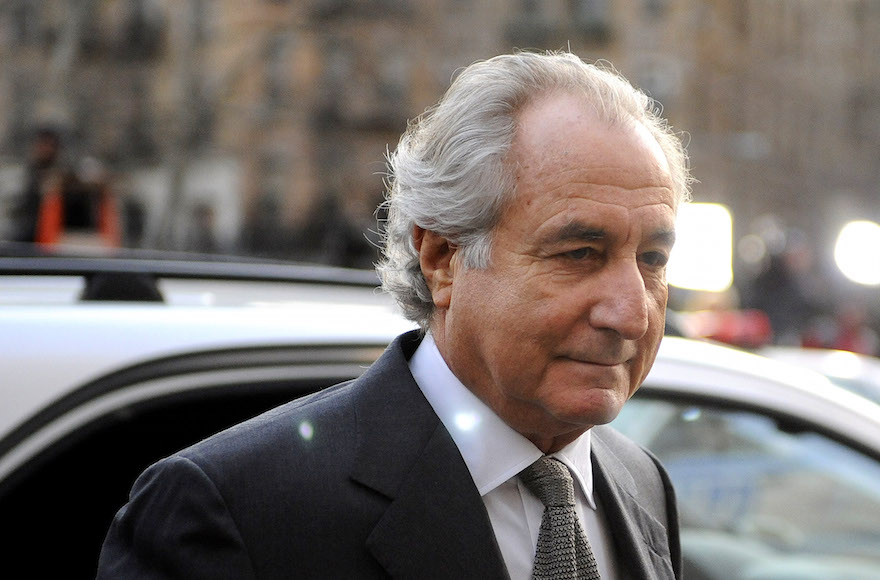
This childhood memory returned to me while watching the new Netflix docuseries “Madoff The Monster of Wall Street.” We all know the Madoff story so no spoiler alerts are needed. However, the reenactments of the actors and interviews with those who worked on Madoff’s secret 17th floor office where his crimes took place, makes the show a must see. 

When the Madoff scandal blew up everybody knew what a Ponzi scheme was, but Madoff was different. How could he perpetuate the crime of the century virtually single handedly and in plain sight? How could he keep the scam going for decades? Most intriguing, a good part of the show focuses on the fact that the SEC audited Madoff several times and found nothing irregular. This gave people peace of mind that he could be trusted, which should be a crime in and of itself.

At the time I was ashamed for what I did, but have grown grateful that I can sleep at night because my dad taught me right from wrong at an early age.

As I watched the program, I thought about that kid in the dime store. At the time I was ashamed for what I did, but have grown grateful that I can sleep at night because my dad taught me right from wrong at an early age.

Bernie Madoff died in prison in 2021 so we’ll never really know how he slept at night with the knowledge that his crimes were devastating the lives of so many people and institutions. And Netflix offers no explanations.

Something tells me he slept just fine.


Harvey Farr is a local community reporter for the Jewish Journal.

How Did Madoff Sleep at Night? Read More »

The Rise of Doug Emhoff

For most of American history, our vice presidents received little attention and were given no real responsibilities. Theodore Roosevelt did not even have a vice president for his first term in office, and several 19th century presidents never got around to filling the position at all. It wasn’t until Walter Mondale took the job under Jimmy Carter that the second-ranking official in government was entrusted with identifiable duties. 

Similarly, the spouses of presidents in this country have generally maintained low profiles on public policy matters, preferring to offer their advice to their husbands in private. Eleanor Roosevelt was the first and most obvious exception and Hillary Clinton famously took on a historic role for her husband’s health care agenda with mixed results. But since then, first ladies have been content to limit their public roles to decidedly non-controversial matters.

The wives of vice presidents have been even less noticeable. Tipper Gore and Lynn Cheney were both lightning rods for their work on polarizing issues during their husbands’ tenures, but the undoubtedly laudable projects that Barbara Bush or Jill Biden took on before their husbands were promoted, or to which Muriel Humphrey, Marilyn Quayle or Karen Pence devoted themselves, were largely overlooked.

But for the first time, our country has a Second Gentleman, and for reasons having nothing to do with his gender, it appears that Doug Emhoff is breaking new ground in a position that has previously received little attention from the nation’s political ruling class, news media and voters. And it couldn’t have come at a better time. In addition to the history he has made as the first male spouse in this role, Emhoff is also the first Jewish spouse of either a president or a vice president. As such, he has chosen to prioritize the fight against antisemitism as his signature issue, stepping into an urgent and contentious debate that has taken on greater political relevance given the unacceptable level of rhetoric and violence against Jews in this country and elsewhere around the world.

Last month, Emhoff hosted a high-profile White House event designed to draw public attention to the dramatic spike in the number of antisemitic incidents that have occurred in recent years. He has hosted other, less visible meetings and strategy sessions, has written on the topic, and has spent time privately with survivors of the Pittsburgh Tree of Life synagogue attack. Later this month, he will visit Germany and Poland to speak out against antisemitism in countries where the worst atrocities of the Holocaust occurred in order to raise the issue to a global audience.

Emhoff is also taking on more traditional roles for someone in his position. He is teaching a course at Georgetown Law School and has become involved in various legal aid efforts, recently hosting a roundtable with Attorney General Merrick Garland on the subject. He has also embraced the ceremonial aspects of his religious heritage, hosting a Hanukkah celebration and virtual Seder and hanging a mezuzah on the door of the U.S. Naval Observatory, the vice president’s official residence.  

But as acts of antisemitism have continued to rise, Emhoff’s profile as the Biden Administration’s most visible surrogate on this issue has drawn far more public and media notice. Late last year, Biden established an interagency task force to combat antisemitism and Islamophobia that will be led by National Security Council and Domestic Policy Council staff. And there has been talk of establishing a domestic counterpart to Deborah Lipstadt, the Biden Administration’s special envoy on antisemitism to highlight the challenge in this country.

But Emhoff’s role is different. He is not a government employee or a trained academic expert in this field. By his own admission, he is not even a particularly devout Jew. But he cares enough about his heritage, our culture and our religion to devote his time and energy to making sure that the ongoing fight against antisemitism receives the attention it deserves. If nothing else, that is an admirable example for the rest of us and represents an important step toward defeating this menace and its sponsors.


Dan Schnur is a Professor at the University of California – Berkeley, USC and Pepperdine. Join Dan for his weekly webinar “Politics in the Time of Coronavirus” (www.lawac.org) on Tuesdays at 5 PM.

The Rise of Doug Emhoff Read More »

Rosner’s Domain— A Legal Counter-Revolution

In Israel, 2023 started with a bang: A new government in a rush to reform our legal system—they say strengthening it, but their opponents say weakening it. One way or the other, what Justice Minister Yariv Levin has in mind is not a tweak; it is a foundational change. It is also the main first act of the new ruling coalition, and it signals that this coalition plans to be bold, and controversial. 

Why is this a revolutionary reform? Here is one example: Minister Levin wants politicians, not justices, to have the final word on who joins the Supreme Court. To Americans this might sound reasonable. But for Israel it is a huge change — from a court controlled from within, by established professionals who are resistant to outsiders and to critics, to a politicized court. Levin and his supporters argue that since the Supreme Court makes decisions that are ideological in nature, it ought to be more in line with the values of the majority. His opponents argue that politicizing the court will mean the removal of the only barrier that prevents a tyranny of the majority. 

To understand this highly significant move by the government, one must go back to the ’90s, when the Knesset passed two Basic Laws that the court interpreted as a mandate to restrict government actions. Some saw it, at the time, as a welcome flexing of judicial muscles; others believed it was an unwelcome and undemocratic move by a condescending, elitist court. The ’90s marked the beginning of a battle, and today we see its result. Thirty years ago, the court grabbed too much power, and now the politicians wish to grab it back, and then some.

It is a revolution and a counterrevolution, each striving to prove that since “the others” went far, we can go farther.

That’s the main problem. Not the wish to reform the system, not the wish to somewhat tame the court. It is the “then some” result of how pendulums swing in a political system. Rather than slowing down, they tend to swing further away. If you swung leftward, we would swing rightward. If you swung 10 inches, we would swing 20 inches. Some might say this is how the presidency of Barack Obama gave birth to the presidency of Donald Trump. Some might say this is how an Israeli government in which an Islamist Party was a member gave birth to an Israeli government of hardcore rightists and religionists. It is a revolution and a counterrevolution, each striving to prove that since “the others” went too far, we can go further.

The result is a sense of triumphalism on one side, that of the coalition, and a sense of despair on the other side, that of the opposition. The Supreme Court is the holy grail of secular Israelis. It is their most sacred institution. One might suspect that this is one of the reasons for the coalition to make it a target. You disrespect our rabbis, we are going to disrespect yours. And yet, beyond psychological motivations, there is also a serious debate about the way Israel ought to be governed. 

For some reason, right-wing politicians (and some on the left) had convinced themselves that the court, and the professional legal establishment, is the main obstacle standing between Israel and its desired policies. That’s nonsense — the legal system is more a convenient excuse for inaction than its real cause. Then again, this is what some politicians and many of their followers believe. And they intend to test their theory. There is a majority in parliament supporting it, and there is a majority among those who voted for this government supporting it. Now all we must do is decide what is this “it.”

Up until now, the tendency of both camps in Israel is to argue in generalities. Either you accept the need for a restructure, or you reject it. But in truth, that’s not how things work. A restructure can be limited or more expanded; it can include three main features, or twenty; it can be tweaked to remedy some of the opposition’s concerns or pass without any such consideration. And that’s the crucial stage that Israel must begin. The one of moving from bold plans and radical visions, to negotiating and finetuning toward a final outcome. 

It could be an embarrassment. It could be a disaster. It could also be a welcome change of a somewhat unreceptive establishment. To make it so, both coalition and opposition must have good will, and a sense of restrained responsibility. If I’m worried, it is because such sentiment is not easily detected.

Something I wrote in Hebrew

It’s another day, and another coalition demands to stop all work on infrastructure on Shabbat. Here’s what I wrote: 

The character of Shabbat in Israel does not yet have an agreed upon form, and is the subject of endless controversy. Yitzhak Rabin landed planes on a Friday afternoon in the 1970s, causing a political crisis. Ehud Barak moved an electric device on Shabbat and caused a political crisis. Benjamin Netanyahu is not interested in a political crisis. So he does not insist on work that offends his coalition partners. But he offends the majority of Israelis! Well, if that is the case, if there’s an offended majority, then where was it on Election Day?

A week’s numbers

If you’re searching for more differences between Jewish Israelis and Jewish Americans, take a look at the following graph, from a survey by themadad.com.

A reader’s response:

Elana Schmidt writes: “For some of us the new government that we see in Israel is intolerable.” My response: Yes, democracy could become an annoyance. 


Shmuel Rosner is senior political editor. For more analysis of Israeli and international politics, visit Rosner’s Domain at jewishjournal.com/rosnersdomain.

Rosner’s Domain— A Legal Counter-Revolution Read More »

Creative Aging: Life in the 70s

Editor’s note: First in a series

When my grandmother was still alive, I would recite the words on Yom Kippur, “Al Tashlicheni b’et zikna. Do not cast me out in my old age. I never gave them a thought that they could ever possibly be about me. 

In my late thirties, during my years in the hip ad biz, I created a campaign for the L.A. Jewish Federation. I wrote those words as the headline of a brochure honoring the Jewish elderly. I never even gave a thought that at the height of my career,  those words could apply to me. 

When my parents were alive in their nineties, and I would recite the words on Yom Kippur, I began to give the words more credence that they may one day apply to me. But not a lot. 

This year on Yom Kippur, at age 71, those words were now for me.  

When I show my little grandchildren pictures of a younger me, they squeal, “Oh, that can’t be you.”

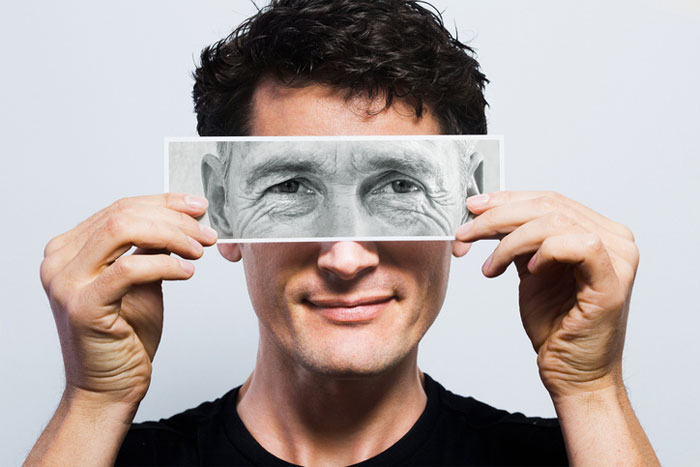
Standing on a crowded bus in Tel Aviv this last November, people kept getting up to offer me their seats. I realized they saw me as an old man. And I wanted to sock them. 

Standing on a crowded bus in Tel Aviv this last November, people kept getting up to offer me their seats. I realized they saw me as an old man. And I wanted to sock them. 

In the blink of an eye, I have arrived. 

Several friends, cousins and classmates are dead. A new generation looks at me as irrelevant. In the face of all this, I have no interest in listening to my peers still claiming their status, money and regaling me with only stories of their good life. At this age, we have all faced so many challenges, disappointments, victimizations and losses, there should be no shame in sharing our difficulties as well.  

I often find myself calculating how many good years I have left. And I know I’m both obsessive and sanguine. When in yoga, the class begins with a recitation of a long, vibrating group “OM,” I instead recite the “Shehechiyanu.” I thank God that my body can still do this, for the health and productivity of my wife, children, grandchildren, siblings, cousins and friends, for my ability to keep learning and growing, and for my personal creativity which I believe is as essential as exercise, family and friendships are to my continued forward movement.  

I think about the vulnerable, thin string upon which we all dangle. 

I am particularly proud of having walked away from my former professions and the status I gained, having made the hard decision to do something completely different in my seventies, and finally dedicate my time to what I always wanted. Write. I take classes, workshops, and hire editors to teach me to raise my craft to levels of excellence.  I’m in a writers’ critiquing group where I get alternately praised and smashed. At times, I find myself paralyzed for days.  One of my workshop leaders said to me, “This is your next profession. If you don’t write every day, willing to expose yourself, you will never become the writer of excellence you are imagining for yourself.” When I write like this I am once again young and experimental, writing like time is not disappearing, writing and writing. And I am also writing as if tomorrow I may be demented or dead — writing with a vengeance. None of my professions have ever been as challenging and all-consuming. 

Recently a new challenge has arisen — the recognition of shrinkage. I’ve lost about ten people who were part of my everyday life.  I am no longer at the center of global nonprofit and Jewish issues as I had been for so long, as a prominent marketing, communication and team creativity professional. My Jewish community has again become local, rather than the big national and international and Israeli one.  I am no longer teaching at USC, exposed to a new generation, students from across the world, and the environment of scholars. 

I’m struggling to determine how much of this shrinkage is acceptable to me. And how much I will I make the LA writers’ community and the local Jewish community an integral part of a new expansive experience in this later period of my life. 

Al tashlicheni b’et zikna. Do not cast me out in my old age. I’m not only making this plea to God and the people in my life. I’m making it to myself.


Gary Wexler woke up one morning and found he had morphed into an old Jewish guy. 

Creative Aging: Life in the 70s Read More »

Rashida Tlaib Calls 2022 “One of the Deadliest Years” for Palestinians, Urges Congress to “Stop Funding Apartheid”

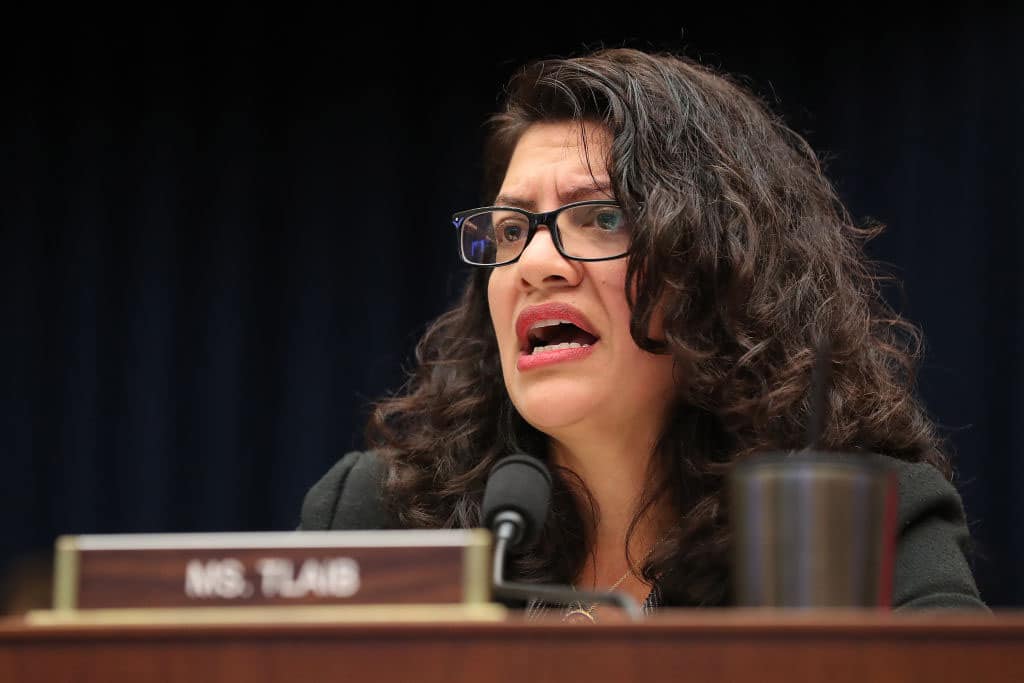
Representative Rashida Tlaib (D-MI) tweeted on January 4 that the past year was “one of the deadliest” for Palestinians and called on Congress to “stop funding apartheid.”

Tlaib was quote-tweeting Jewish for Voice Peace (JVP), an organization that supports the Boycott, Divestment and Sanctions (BDS) movement. JVP’s tweet was accusing the newly installed Israeli government of “ethnic cleansing,” pointing to expulsion of residents from a Palestinian village.

“2022 was one of the deadliest years for Palestinians on record,” Tlaib tweeted. “Israeli forces and settlers killed more than 200 Palestinians, including more than 50 children, injured thousands more and demolished over 800 Palestinian homes. Congress must stop funding apartheid.”

Tlaib was criticized for her tweet.

“Actually, somewhere between 70% & 90% of the Palestinians killed were done so when they were in the process of carrying out terrorist and violent attacks, & more than 2/3 of them were claimed by militant and terrorist organizations,” Creative Community for Peace Executive Director Ari Ingel tweeted, linking to a video from HonestReporting explaining why the “deadliest year” claim parroted by Tlaib and the United Nations is misleading.

Anti-Defamation League CEO Jonathan Greenblatt tweeted, “Truly bewildering to see a Member of Congress use inflammatory rhetoric & spread disinformation about the Jewish state. Using the terms ‘apartheid’ & ‘ethnic cleansing’ is both offensive & wildly inaccurate.” He added in a subsequent tweet that “the majority of those killed were involved in perpetrating terror attacks. Moreover, @reprashida clearly feels no need to acknowledge the Israeli victims of Palestinian violence. The loss of any life is tragic, no matter what.”

Journal columnist Blake Flayton tweeted, “Hey Rashida, why don’t you tell us what the vast majority of those Palestinians were doing in the moments before their death? A key precursor to history’s antisemitic riots was accusing the Jews of ritualistic murder of the innocent.”

Judea Pearl, Chancellor Professor of Computer Science at UCLA, National Academy of Sciences member and Daniel Pearl Foundation President, tweeted, “Those who count bodies and ignore intentions (e.g., @RepRashida) are bound to increase the former by fueling the latter.”

Others defended Tlaib and focused their ire on Greenblatt. “White nationalists spent the entire week on the House floor preventing a new Congress from being sworn in. But @JGreenblattADL
cares more about trying to bully @RashidaTlaib – the only Palestinian in Congress – into silence about the oppression of her own people.”

Max Berger, who co-founded the avowed anti-occupation group IfNotNow, also tweeted in response to Greenblatt, “Truly bewildering to see an unelected ‘leader’ of a Jewish organization spread disinformation about progressive allies. Using terms like ‘inflammatory rhetoric’ is both offensive and wildly inaccurate.” He added in a subsequent tweet: “It’s truly dismaying that the ADL has much more consistently & aggressively fought critics of Israel’s government than white supremacist Republicans and their billionaire allies. The ADL should focus on fighting antisemitism and stop attacking black, Latino and Muslim allies.”

Tlaib’s office did not respond to the Journal’s request for comment.

Rashida Tlaib Calls 2022 “One of the Deadliest Years” for Palestinians, Urges Congress to “Stop Funding Apartheid” Read More »