fbpx

January 5, 2023

Blessings are Doled Out – A poem for Parsha Vayechi

He will bless you [with] the blessings of the heavens above…
-Genesis 49:25

The children of Jacob continue to
receive blessings from their dad –

Gad is the one who will have troops
trooping forth from him. He’s the one you
want when the insurrection comes.

Asher will likely open a restaurant and
you’ll want to reserve in advance.
We’re talking multiple Michelin stars.

Naphtali will be doing cosplay as a gazelle.
He’s also a writer, and a good one, so
I’m willing to ignore the whole gazelle thing.

Joseph is charming, to his father,
to all the women, even to his brothers now
after the unpleasantness with the pit.

He’s suffered the most and now has the most.
He kept the rock together
Some say he is the rock.

The blessings he receives come from
even higher than his father’s, father’s father.
They couldn’t come from any higher.


God Wrestler: a poem for every Torah Portion by Rick LupertLos Angeles poet Rick Lupert created the Poetry Super Highway (an online publication and resource for poets), and hosted the Cobalt Cafe weekly poetry reading for almost 21 years. He’s authored 26 collections of poetry, including “God Wrestler: A Poem for Every Torah Portion“, “I’m a Jew, Are You” (Jewish themed poems) and “Feeding Holy Cats” (Poetry written while a staff member on the first Birthright Israel trip), and most recently “I Am Not Writing a Book of Poems in Hawaii” (Poems written in Hawaii – Ain’t Got No Press, August 2022) and edited the anthologies “Ekphrastia Gone Wild”, “A Poet’s Haggadah”, and “The Night Goes on All Night.” He writes the daily web comic “Cat and Banana” with fellow Los Angeles poet Brendan Constantine. He’s widely published and reads his poetry wherever they let him.

Blessings are Doled Out – A poem for Parsha Vayechi Read More »

Former HRW Head Denied Harvard Fellowship Over His “Anti-Israel Bias”

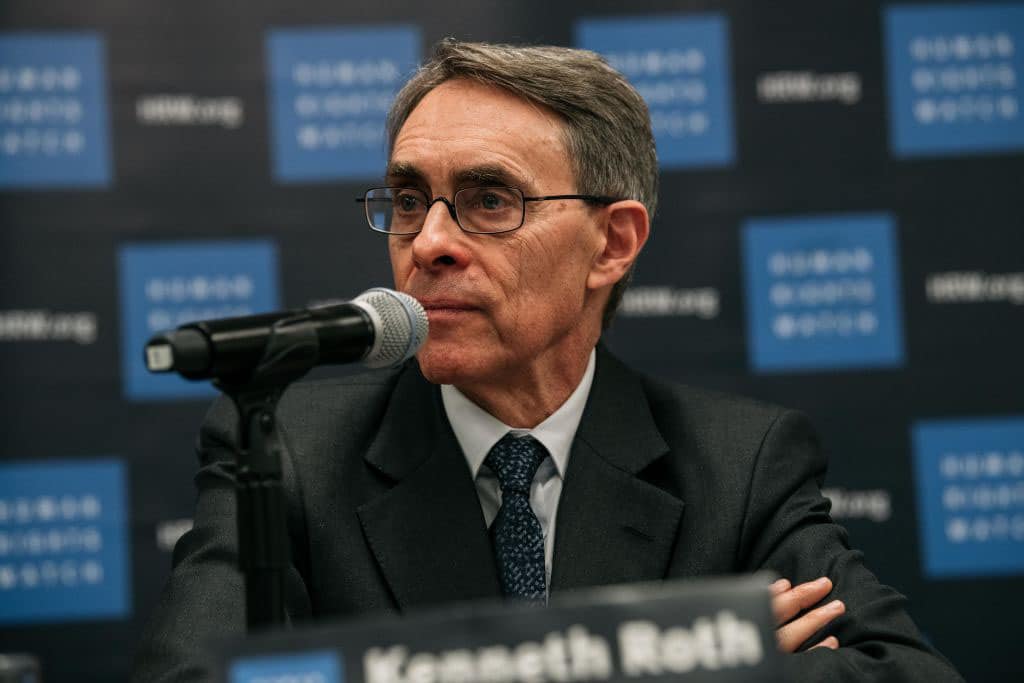
Former Human Rights Watch (HRW) Executive Director Kenneth Roth was a denied a fellowship position at Harvard University’s John F. Kennedy School of Government over his “anti-Israel bias.”

The Nation reported on January 5 that Roth was offered the position by Kennedy School Carr Center for Public Policy Executive Director Sushma Raman in May and Roth accepted it the following month. However, Kennedy School Dean Douglas Elmendorf overruled Raman’s decision in July, concluding that Roth’s tweets showed that he is biased against Israel. The Nation described the Carr Center as being “stunned” at Elmendorf’s decision; Raman argued to Elmendorf that Roth and HRW have treated Israel equally to other countries and the Palestinian territories, but Elmendorf was unmoved. Roth is now currently a visiting fellow at the University of Pennsylvania; he told The Nation that Elmendorf has “no backbone whatsoever.”

The Nation article pointed the finger at NGO Monitor Founder Gerald Steinberg for accusing Roth and HRW of being biased against Israel, particularly in regards to the 2021 HRW report claiming that Israel was engaging in apartheid against the Palestinians; Roth told The Nation that NGO Monitor is “profoundly biased” because the organization objects to any criticism of Israel. Roth added that he is Jewish and became involved in human rights issues after hearing about his father’s stories of escaping Nazi Germany in 1938. The Nation article also suggested that Elmendorf’s decision was reflective of the “fundamental reality” that “the US national security community and its close ally Israel” have a “dominant presence” at the school. The school told The Nation that they “do not discuss our deliberations about individuals who may be under consideration” for such positions.

Following the article’s publication, Roth tweeted: “So much for academic freedom at Harvard’s @Kennedy_School: Dean Douglas Elmendorf was so fearful of @HRW’s reporting on Israel (applying the same standards as HRW does everywhere else) that he vetoed a fellowship that the Kennedy @CarrCenter offered me.”

In response to The Nation article, Steinberg tweeted out his 2021 article in the Israel Affairs journal highlighting HRW’s “anti-Israel agenda” as well as a screenshot from a 2009 New York Times op-ed from HRW Founder Robert Bernstein criticizing Roth and HRW for giving fodder to those who portray Israel as a “pariah state.” The Nation article does acknowledge the Bernstein criticism and noted that HRW responded to Bernstein by claiming “that since 2000 it had produced more than 1,700 reports and other commentaries on the Middle East and North Africa, the vast majority of which were about countries other than Israel.”

Human rights lawyer Arsenn Ostrovsky, who heads The International Legal Forum, lauded Elmendorf in a tweet and told Roth: “You don’t deserve a fellowship, not when all you have done is peddle in Jew hatred, lies and endorse terror against Israel, masquerading as a human rights leader. I’m sure Al Jazeera will offer you a spot!”

Former HRW Head Denied Harvard Fellowship Over His “Anti-Israel Bias” Read More »

Local Lactation Counselor Helping Mothers Breastfeed

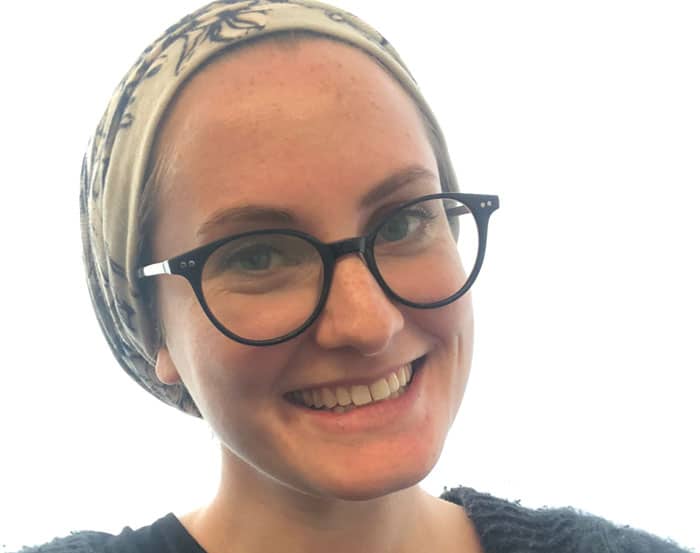
Breastfeeding isn’t as easy as it’s portrayed in TV shows and movies. That’s something Ally Tsitsuashvili learned when she had her first child nearly five years ago. 

“I did all this preparation to get ready for labor and delivery,” she said. “I had no idea that so much of my life was going to revolve around feeding her. I had no preparation for that whatsoever.”

Luckily, Tsitsuashvili didn’t have any trouble breastfeeding her daughter. But when she gave birth to her son two years ago, she had a totally different experience. 

“It was painful,” she said. “I was struggling and didn’t know why I had a low supply.”

The young mother asked around for help and found that there was only one lactation counselor — someone who assists mothers with breastfeeding — in her Pico-Robertson community. She was surprised.

“How could there be all these women in my community having babies and there isn’t more support?”- Ally Tsitsuashvili

“How could there be all these women in my community having babies and there wasn’t more support?” she said. “I decided then that I wanted to become that support.”

Tsitsuashvili became a certificated lactation counselor through The Academy of Lactation Policy and Practice and started her own lactation counseling company, Soul Food. 

“My husband named the company, and it’s such a spiritually powerful name,” she said. “If I can help women nurse in any capacity, then I’ll feel so grateful.” 

Through her work, Tsitsuashvili meets with mothers, gives advice to them and dispels myths about breastfeeding. For instance, she finds that mothers think it’s normal for breastfeeding to hurt, or that babies should be on a very specific feeding schedule, like every 2.5 hours — but these are just myths. Additionally, many mothers believe that they have a low supply because of stress or issues with their bodies.  

“The vast majority of cases where a woman has a low supply it’s because there is an inefficient latch,” she said. “That means there is no signal for her body to create the supply.”

That’s what happened with Tsitsuashvili’s second child.

“My counselor came in and showed me that I had a latching problem,” she said. “We made a small change with the latch, and it worked.” 

Tsitsuashvili, who does pre- or post-natal visits at the home or hospital, aims to educate expecting mothers, especially those who are having their first child, about how to be successful with breastfeeding. She teaches about the nursing journey, which she said starts two hours after giving birth, how long to go in between feedings and recognizing the signs that a baby is hungry or when they are just sucking for comfort. 

One client she helped had a lumpectomy in her breast and wasn’t sure if she would be able to nurse from that side — or at all.

“After we worked together, my client was able to nurse almost exclusively, even from that breast,” Tsitsuashvili said. “It was very emotional. It had a huge impact on her and her family.”

If a mother is having too much difficulty breastfeeding or doesn’t want to breastfeed, Tsitsuashvili is grateful that they have formula as an option. She also recommends that mothers look into the Human Milk Banking Association of North America, which creates milk banks. Women can purchase breast milk there, or, if they’re in the Jewish community, there are free kosher breast milk options.  

“Thank God we have all these options for women who are unable to nurse or don’t want to nurse,” she said. “Their babies can still be fully thriving and healthy.”

Need help with breastfeeding? Contact Ally Tsitsuashvili at Soulfoodclc@gmail.com or (818) 554-7850.

Local Lactation Counselor Helping Mothers Breastfeed Read More »

Beth Am Holds Shabbaton, BBYO Stages Global Shabbat, AFHU Announces Cohort

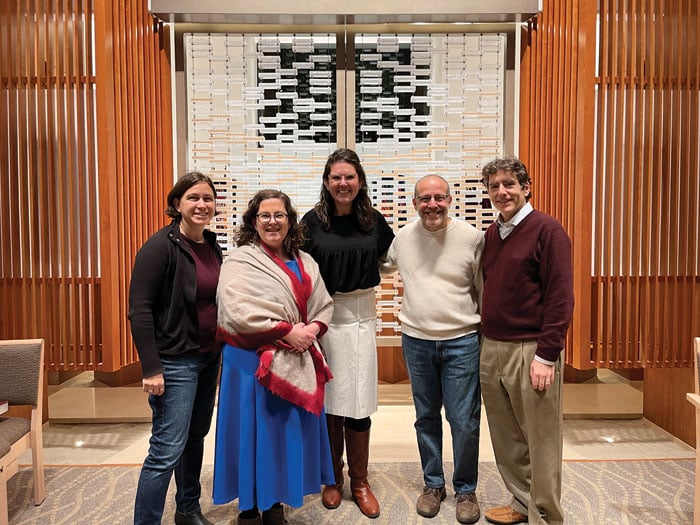
Last month, Temple Beth Am held its fifth annual Kol Tefilla Shabbaton, gathering Conservative movement leaders for a weekend of innovation, spirituality and meaning around prayer. 

About 150 participants from all over the country turned out for the Dec. 9-11 program, held in partnership with United Synagogue of Conservative Judaism (USCJ).

“Focusing on modalities of prayer and spirituality, Beth Am hosts Kol Tefilla to teach, model and provide experience for others to grow their community’s spiritual practice,” Beth Am Associate Rabbi Rebecca Schatz said. “Beth Am continues to be a traditional Conservative Jewish community that thrives in making innovation part of tradition.”

The weekend’s highlights included learning led by Rabbi Bradley Shavit Artson, dean of the Ziegler School of Rabbinic Studies; a community Shabbat dinner; and a Saturday night concert featuring the Moshav Band. 

On Sunday, USCJ board members convened for the USCJ General Assembly. 


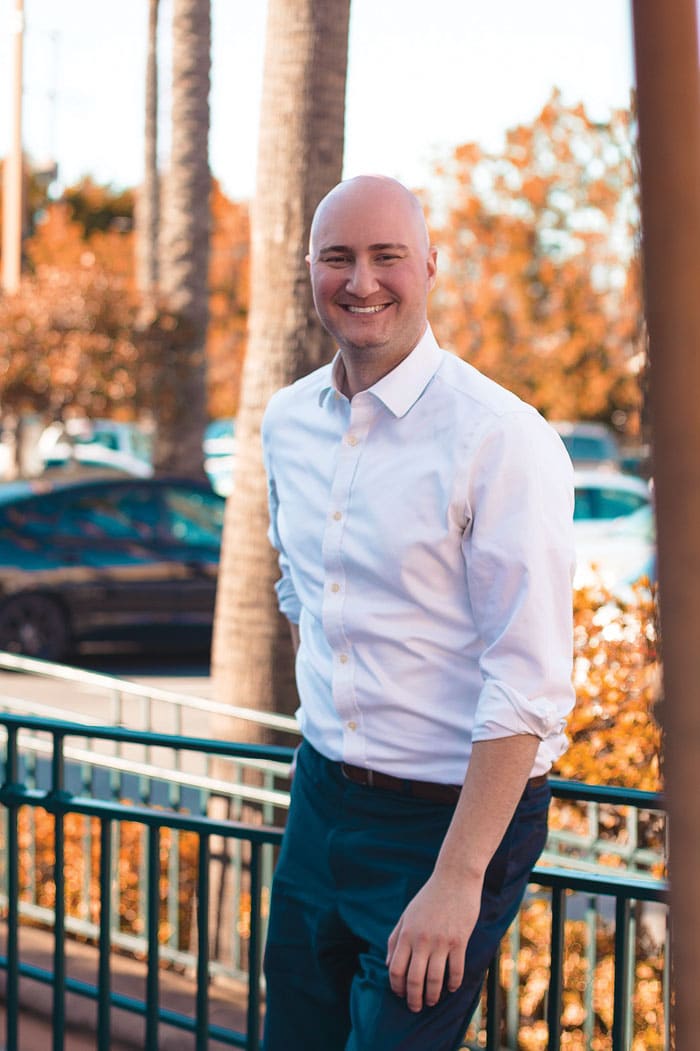
AFHU LEAD cohort member David Wulkan.
Courtesy of American Friends of the Hebrew University

American Friends of the Hebrew University (AFHU) has announced the second cohort of its prestigious Leadership Empowerment and Development Program (LEAD).

An exclusive and immersive 18-month experience, AFHU LEAD develops future leaders into ambassadors of Hebrew University, Israel’s premier research institution. Cohort members are tasked with promoting AFHU’s mission as well as the Jewish State’s bright future.  

Members of the latest group include: Los Angeles lawyer Jesse Levin, a litigation partner at Glaser Weil; Burbank resident Julia Cherlow, an attorney at the law firm Bird Marella; Ariel Anson, a Los Angeles County deputy district attorney; Gali Grant, a litigation partner at Glaser Weil; David Wulkan, associate at the law firm Mitchell Silberberg and Knupp; and Marissa Lepor, vice president at investment bank the Sage Group. 

AFHU LEAD cohort member Marissa Lepor.
Courtesy of American Friends of the Hebrew University

“My family has been actively involved with Hebrew University for many years,” Lepor, one of 14 members of the cohort, said. “I look forward to establishing my own personal connection with the university and its impactful initiatives through the AFHU LEAD program.”

As part of their participation, the group will travel to Israel in June. 

AFHU, a national nonprofit based in the U.S., provides supporters, Hebrew University alumni and the public with programs and events. The organization’s activities support scholarly and scientific achievement at the university, create scholarships, fund new facilities and assist efforts to recruit new faculty. 


Jewish teens around the world, from Los Angeles to Chile, South Florida to Argentina, gather for BBYO’s Global Shabbat 2022. Courtesy of BBYO

Around the world, more than 10,000 teens recently participated in BBYO’s Global Shabbat 2022, featuring innovative programming and the unprecedented participation of young people across six continents.

The theme was “Everyone. Everywhere.”

“This year’s celebrations reflected the power of our global teen movement to explore critical social issues, to feel empowered by a commitment to Judaism, and to be inspired to make a difference in their communities,” BBYO Vice President of Enrichment Strategy Liron Lipinsky said. “Now an established and celebrated anchor of BBYO’s annual program calendar, Global Shabbat offers a beautiful platform from which teens, families and guests can unite for a moment of rich Jewish tradition while embracing their role as a part of something bigger than themselves.”

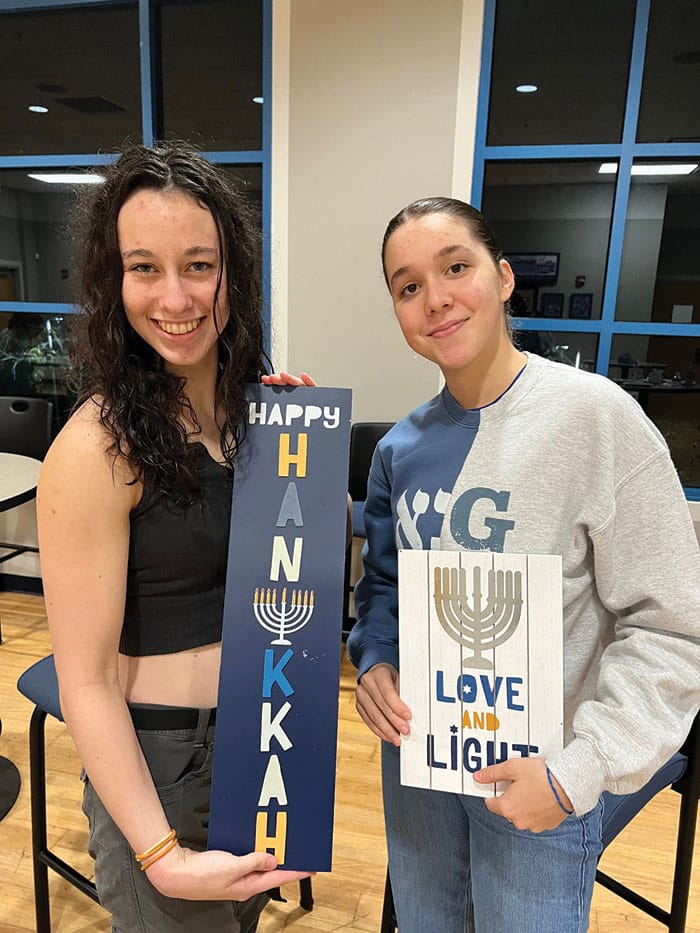
At BBYO’s Global Shabbat, Jewish teens prepare for Hanukkah. Courtesy of BBYO

Held from Dec. 9-10, the weekend of 112 gatherings included teen-led Shabbat services, conversations with Holocaust survivors, challah making and tzedakah projects while marking the first time since the start of the COVID pandemic that BBYO was able to offer a fully in-person Global Shabbat experience. 

BBYO, a pluralistic youth movement, has more than 21,000 members throughout the world. Its Pacific Western Region is comprised of more than 15 chapters in Southern California, representing over 400 Jewish teens in the area.

Beth Am Holds Shabbaton, BBYO Stages Global Shabbat, AFHU Announces Cohort Read More »

The Whoopi Goldberg Controversy (Redux)

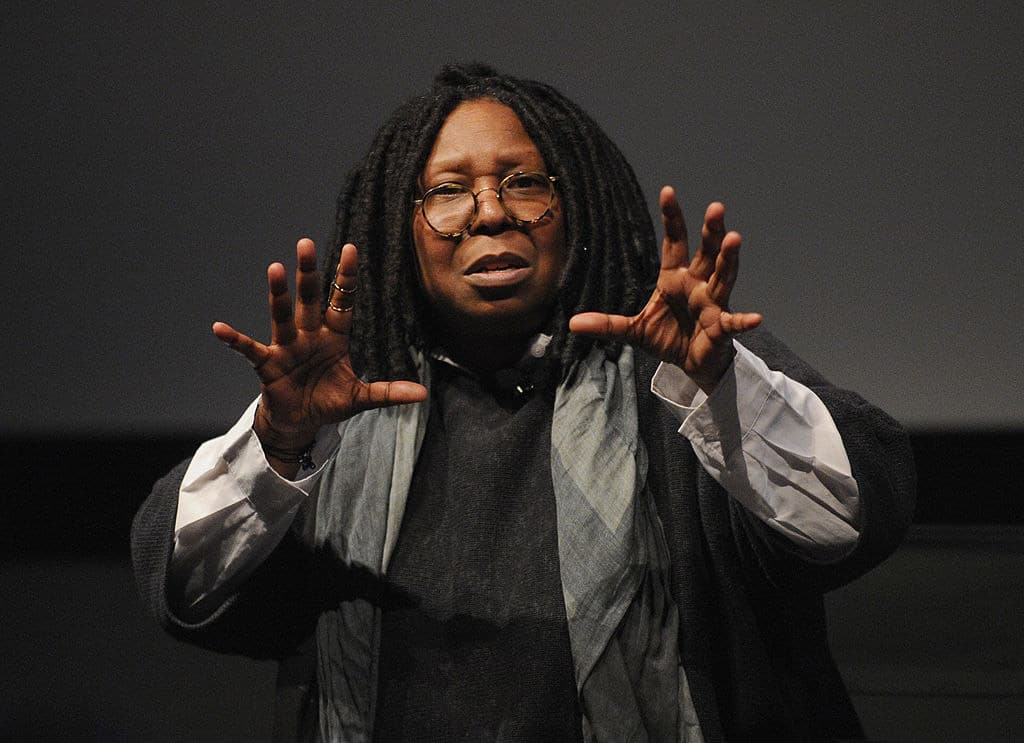
For a public figure with a huge audience, one would assume that having been rebuked and chastised publicly for making antisemitic remarks and erroneous factual errors it would not be repeated again—within less than a year. Whoopi Goldberg had been taken off the air for her previous failure to understand that the Nazi persecution and murder of the Jews was racism. She went through a series of interviews and discussions with a number of Jewish groups and leaders seeking penance for her errors. It, therefore, was appalling and unacceptable that she could repeat the same falsehood for which she had been so recently shutdown.

Once again, assuming no malice on her part but instead mere ignorance, one must ask her and others holding similar views what it is that she and they continue to fail to understand about the Jewish people and Nazi Germany. Furthermore, why are there no Black leaders—political, clerical, public intellectuals—not stepping forward and demanding that she be held accountable for being so hurtful?

To assert that the Nazi assault against the Jews was not racial is absurd. One can properly argue that Jews are not a race. But in fact, Jews are multi-racial and one even can become a Jew by choice—conversion. Go to Israel and see the multiplicity of colors of Jews. North African Jews resemble North Africans; European Jews, Europeans; and Ethiopian Jews, Ethiopians. And while many prominent Jews in the United States are white, there is also a significant and increasingly visible Black Jewish community, some by birth and some by choice.

When the synagogue in Colleyville, Texas, was attacked last year by a terrorist who took its Sabbath morning worshippers hostage, he asked to speak with the rabbi of the Central Synagogue. He presumably mistakenly believed that the Central Synagogue (near Grand Central Station in  New York City) must be the center of Jewish power. He would have been surprised to learn that its distinguished rabbi is a Korean born Asian-American Jew, Rabbi Angela Warnick Buchdahl.

Remember, the Nazi murder of Jews was all about racism.

A recent Pew Survey reported that many Jews who do self-identify as Jews, declared they had no religion, so being a Jew is more than being part of a religion, though for many Jews the foremost expression of their identity as Jews is religious. Mordecai Kaplan, the distinguished 20th-century rabbi and Jewish theologian, famously wrote that Judaism is a civilization, a peoplehood, a culture, an ethnicity, a tradition with its own languages, customs, norms, foods, music, dance, art, thought, history, and philosophies. Ms. Goldberg in her illustrious career must be familiar with many sorts of Jews: some devout, some less so, some religious, some anti-religious, yet all affirming that they are Jews.

Did the Nazis care about Jews because of how they practiced their religion?

Based on the 1935 Nuremberg Laws, the Nazis defined the Jews not by the identity they affirmed, the traditions they embraced, or the religion they practiced, but biologically. Jews were defined by German law based on the religion of their grandparents. German law developed several categories of Jews: full Jews, mischlinge (mix-breed or mongrels), half Jews and quarter Jews. Roman Catholic priests and nuns, Protestant pastors and parishioners were defined as Jews by the State even as they saw themselves and were seen by their Church doctrine as Christians. If one grandparent was a born a Jew, a person was marked by the Nazis as a member of the Jewish race.

Nazi ideology was all about racism. Aryans were the master race; all other races were subordinate. Twenty-eight institutes of racial science were created throughout Nazi Germany to prove “scientifically” the racial superiority of the Aryan race. Eugenics and euthanasia were joined.

Jews were the lowest on the racial hierarchy. They were not just considered an inferior race but also regarded as a “cancerous threat” to the Aryan race. German policy toward the Jews evolved under Nazism from exclusion to expulsion and from expulsion to extermination. Saul Friedlander has termed it “redemptive antisemitism”: the murder of Jews was essential to the salvation of the German nation. Yale historian Timothy Snyder considers it “zoological antisemitism,” the determined elimination of a species of humanity from the face of the earth.

Simply put, while the Holocaust was not all about race, it was surely about race.

Simply put, while the Holocaust was not all about race, it was surely about race.

Ms. Goldberg may believe that her experience as a Black woman has taught her all there is to know about racism, yet she clearly does not know about Nazi racism. The more she seeks to clarify her remarks, the less credible she becomes. Even without the presumption of malice one must come to the conclusion: “Forgive her for she knows not of what she speaks.”

This is precisely why Goldberg’s misspeaking exposes the other side of the problem. Jews and all Americans have a right to be defended and she needs to be addressed by leaders from within her own community. When a public figure makes gross, insulting, defaming comments, his/her own community needs to speak out. It is not sufficient that Jews push back and her employer suspends her. That Goldberg has uttered the same pronouncement without being put on the public carpet suggests that these remarks are being normalized.

As the rabbis say in a number of places in the Talmud: “Silence is assent.”


Gilbert Kahn is a Professor of Political Science at Kean University. Michael Berenbaum is a Distinguished Professor of Jewish Studies at the American Jewish University.

The Whoopi Goldberg Controversy (Redux) Read More »

Survival and Dignity in Viktor Frankl’s Legacy

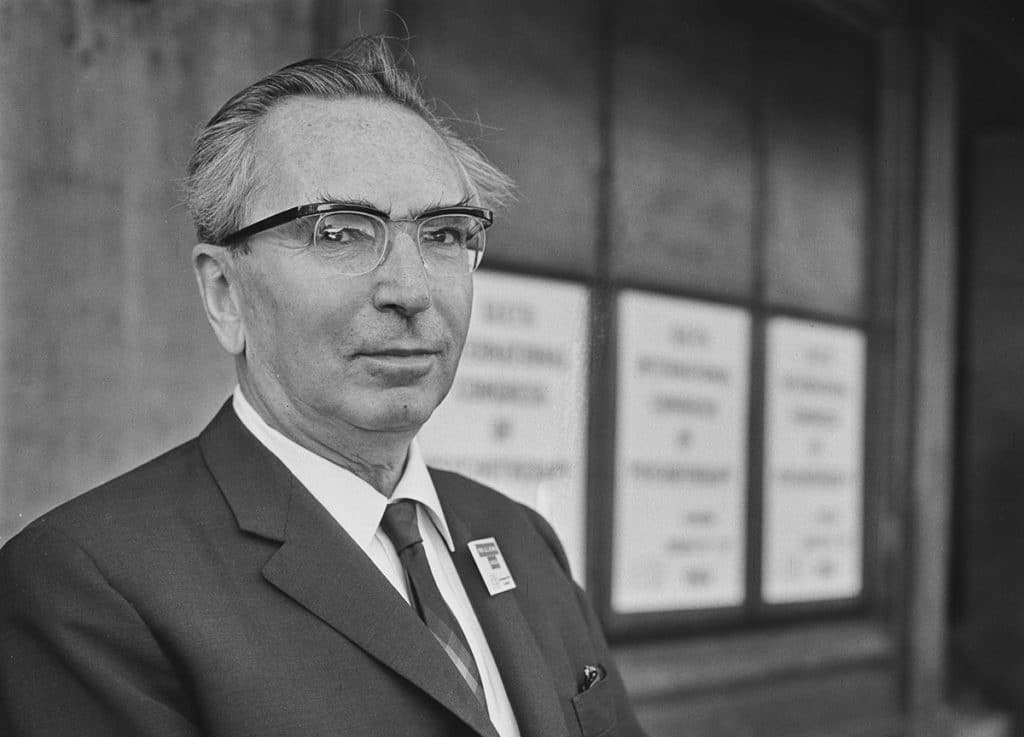
Viktor Frankl, survivor of four concentration camps, had a secret to happiness: Don’t strive for it. As a professor, he repeatedly advised his students to pursue a cause greater than oneself and promised that happiness and success would be the unintended by-product. This was his philosophy before, during and after the Holocaust.

In “Man’s Search for Meaning,” Frankl described his experiences as a concentration camp prisoner as physically, mentally and emotionally torturous—including beatings, starvation, degradation, filth, frostbite, insomnia and lack of access to any kind of self-care like showering or teeth-brushing. He reported that the threat of death was ubiquitous, so it was little wonder that “the thought of suicide was entertained by nearly everyone.” Frankl described prisoners’ “normal” response to such conditions as a “blunting of emotions” from becoming desensitized to hourly beatings, death and indignities. But he personally strove with every ounce of his being not to become hardened or numb.

Practically speaking, Frankl’s role as a concentration camp doctor spared his life repeatedly, but more abstractly, his love for his wife is what truly kept him alive. He described frequently looking up at the clouds and seeing his wife’s image, her smile and her encouraging glance. Through this fantasy and imagery, Frankl had an epiphany in the darkest, cruelest of all places: “Then I grasped the meaning of the greatest secret that human poetry and human thought and belief have to impart: The salvation of man is through love and in love.” It was this revelation that provided Frankl with the clarity and resolve to endure his suffering with whatever honor and dignity he could muster, and to recognize that only inner strength and light would liberate him from the torment of his existence. He could not change his circumstances and could not spare his parents and wife from their untimely death at the hands of the Nazis, but he could uplift countless others who had lost the will to live.

Logotherapy Meets the Hedonic Treadmill

After surviving Hitler’s “Final Solution” and reconstructing his confiscated manuscript on logotherapy, Frankl developed and perfected his meaning-based therapy. “Logos” is a Greek word translated as meaning or reason, and it is the concept of man’s search for meaning that undergirds Frankl’s psychological orientation. In “Man’s Search for Meaning,” he wrote, “Man … is able to live and even to die for the sake of his ideals and values.” Frankl pointed to research suggesting that suicide cases are linked to what he called an “existential vacuum,” and said that cases of “neurosis” are more widespread on Sundays when people are left alone to ponder the “lack of content in their lives.” Frankl asserted that when man chases the ephemeral, such as money, fame, happiness or success, he inevitably becomes entwined in a web of meaninglessness. This meaninglessness manifests itself in psychological distress including anxiety, depression, alcohol and drug dependency and suicide. Frankl believed that the cause of existential frustration is a belief that life is only good when we have everything we need and desire.

Frankl believed it is because our spiritual longing has not been fulfilled. Deep within each individual is a need for purpose and for something or someone to live for.

But the Nazis showed Frankl that everything in life could be lost at any given moment. Frankl understood that only one’s sense of dignity and meaning could be permanent. He recognized that possessions, acclaim and money do not bring happiness, not only because these things are impermanent, but also because once material possessions are achieved, a sense of dissatisfaction and a yearning for more often ensues. We earn more and more money, consume more and more goods, have more and more personal and sexual freedom, yet we are more and more miserable than ever. Why? Frankl believed it is because our spiritual longing has not been fulfilled. Deep within each individual is a need for purpose and for something or someone to live for. As Frankl put it, there is “more and more to live from, but less to live for.” Psychologists call this the hedonic treadmill—euphoria quickly dissipates and ennui returns. Thus, it is not more things that humankind truly craves, but rather more meaning.

The Search for Meaning

If it were true that mankind’s ultimate goal in life was to achieve comfort and self-satisfaction, in what way would he be different from animals? The answer is in no way. According to Frankl, every person has a spiritual side, or what he called a “noetic dimension” that raises him above basic, worldly needs and desires. Author and leading logotherapy practitioner Elisabeth Lukas writes in “The Therapist and the Soul,” “The spirit does not strive after lust, it needs meaning. It does not seek satisfaction of needs but rather meaningful tasks and aims in life.” To some people, this may sound haughty and unrealistic—after all, life is hard, and just getting through the day is challenging enough. The problem with that attitude is that it consigns our satisfaction, happiness and overall mood to the sway of day-to-day events; we become a servant to circumstance. Lukas describes one of Frankl’s primary philosophies as the need to imbue any situation (no matter how painful or mundane) with meaning. Frankl understood that suffering is an unavoidable side effect of the human condition, which we can either respond to maladaptively or with dignity and composure. To him and other logotherapists, what is indispensable is finding purpose in “being for something” and “being for someone.” Frankl described a “self-transcendent” life as the only path toward a meaningful life. And meaning is not only important when it is future focused. Frankl believed that entire breadth of one’s lived experiences, loving relationships, creations and goals does not fade with the passing of time. Lukas writes, “What exist are the goals reached … the total of all that has made life worthwhile.” How then to make sense of plans foiled, loves lost, mental and physical illness, untimely death and suffering? Frankl did not pretend to have all the answers, but he believed that some things will forever remain beyond the comprehension of mere mortals, and to believe otherwise strips life of a deeper, cosmic meaning.

Life is Good

Logotherapy’s beauty and uniqueness rest in its profound faith in the worthiness of humankind and of life itself. With this as a point of departure, logotherapy aims to help people increase their sense of value and life-worth, and when things don’t go as planned, manage their difficulties and setbacks. The point here is that life retains its intrinsic value even when things go terribly wrong. We can learn to search amid suffering to find meaning and light, rather than let it drag us down into darkness. This does not mean that logotherapy turns a blind eye to suffering. Nor does it mean that logotherapists are Pollyannish optimists. As Lukas puts it, “It is notable how wrong individuals can be regarding the sum total of negative and positive events in their lives if they are prejudiced by their troubles … by fixating attention on negative matters.” Logotherapy works because it starts with the positive belief that human beings are strong, resilient and will overcome any challenge if they can ascribe meaning to it. It also puts the patient in the driver’s seat and says essentially, life is good, let’s have a look around.

As Frankl understood, people are not helpless victims in the theater of life, but actors with a will to choose how they react. He wrote, “Man is not fully conditioned and determined but rather determines himself whether he gives in to conditions or stands up to them. In other words, man is ultimately self-determining.” In the Nazi concentration camps, Frankl put in his personal foreground not what he lacked, but what gave him meaning. He possessed a belief that said: Let us be defined not by what happens to us, but by the good choices we make for ourselves, for others, for the world and forever.


Dr. Beverly Wertheimer is a meaning-centered and cognitive behavioral therapist, adjunct professor of psychology at Pepperdine University, and certified life coach and CEO at BeWorthy.com. Previously, she was a TV anchor and reporter at ABC and NBC affiliates, CNN Turner Entertainment, and Entertainment Tonight. 

Survival and Dignity in Viktor Frankl’s Legacy Read More »

Print Issue: How Worried Should We Be? | January 6, 2023

CLICK HERE FOR FULLSCREEN VERSION

Print Issue: How Worried Should We Be? | January 6, 2023 Read More »

Campus Watch Jan. 5, 2023

Md. High School Staff Subjected to Antisemitic Emails Following “Jews Not Welcome” Graffiti

Staff at Walt Whitman High School in Bethesda, Md. found antisemitic emails in their inboxes from an anonymous person following antisemitic graffiti found on the school’s welcome sign.

The Bethesda Beat reported on December 20 that the person who sent the emails appears to be outside of the school county’s network; the specific text in the emails were not reported. The emails came a few days after graffiti stating, “Jews Not Welcome” was found on the school’s welcome sign. The school and police are working together to find the perpetrator.

Canadian High School Student Subjected to Nazi Salutes, Swastika

A student at a high school in Ottawa was subjected to Nazi salutes and a swastika in a locker room.

The CBC reported that the student had walked into the locker room on December 1 to find students doing a Nazi salute and a swastika made of ski poles on the floor. Four students were suspended, but the father of the victimized student, David Baker, told the Canadian outlet that the suspended students returned to school without their knowledge and one of them confronted his son upon returning. He showed “absolutely no remorse for what he had done, and how he’d behaved,” Baker told the CBC, urging the school board to take a stronger stance against antisemitism. A spokesperson for the school board told the CBC that they would be providing more education to students on antisemitism. 

UMich Police Stops Investigation of Antisemitic Assault on Student After Trail Goes Cold

The University of Michigan Police Department has closed their investigation of an antisemitic assault of a Jewish student, as the case has gone cold.

As previously reported in the Journal’s Campus Watch, an unidentified student at the university alleged that on November 10, a 5’10” male wearing a baseball cap grabbed her arm and then lobbed antisemitic comments at her. On December 21, the university police told The Algemeiner that “after a thorough investigation this case was closed with a lack of leads.”

U of Toronto President Rejects IHRA Definition

University of Toronto President Meric Gertler wrote in an op-ed for The Globe and Mail that the university has decided not to adopt the International Holocaust Remembrance Alliance (IHRA) definition of antisemitism.

The Algemeiner reported that Gertler wrote that he based his decision of the findings of a working group convened by the university, which found that IHRA is “both insufficiently responsive to many of the most troubling instances of antisemitism in the university context and in tension with the university as a place where difficult and controversial questions are addressed.” Gertler added that “the remedy for dealing with controversial speech is more speech, not less.”

The Algemeiner quoted a tweet from Canada’s Hasbara Fellowships criticizing Gertler’s op-ed as being “incredibly disappointing,” noting that the day before, The Globe and Mail had published an editorial urging the university to adopt the definition. Jewish on Campus similarly tweeted, “Adopting the IHRA definition of antisemitism is the stepping stone towards making university campuses safe and inclusive spaces for Jewish students. Want to support us? Adopt IHRA.”

Wiesenthal Center report lists American college campuses in top 10 global antisemitism report

The Simon Wiesenthal Center listed American college campuses among its top 10 global antisemitism incidents in 2022.

The Wiesenthal Center report ranked American college campuses as seventh on the list, behind rapper Kanye West, the United Nations Human Rights Council and the hostage crisis in Colleyville, TX, among others. The report cited a separate report from AMCHA Initiative stating “that there were more incidents of anti-Semitism at Harvard University – the pinnacle of elite American universities – than at any other US university in 2022.” “Selected examples of anti-Semitic conduct at Harvard include the tearing down of Harvard Hillel posters, anti-Israel stickers attached to tubs of kosher hummus in the dining halls, and the posting of anti-Harvard College Israel Trek signs,” the Wiesenthal Center report stated. 

Monument to Jewish cemetery at Greek university vandalized with swastika

A monument to one of Europe’s oldest Jewish cemeteries located at the Aristotle University of Thessaloniki was vandalized with antisemitic graffiti on December 29.

The Jerusalem Post reported that the graffiti consisted of a swastika and a Celtic cross, a white supremacist symbol, both in red spray-paint.

“This act is an insult to the Monument that commemorates the 50,000 Jews of Thessaloniki who were exterminated in the Nazi camps and connects the modern image of the area with its history by reminding everyone the existence, for centuries, of the old Jewish Cemetery which was destroyed by the Nazis and their collaborators in 1942,” the Jewish Community of Thessalonki said in a statement.

Campus Watch Jan. 5, 2023 Read More »

Dear Tabby: Jewish Privilege, Progressive Guilt and Defiant Sisters

Last month, we announced in my column that I am starting a new advice column titled, “Dear Tabby,” in which I will attempt to offer partially-useful, tongue-in-cheek responses to your most pressing questions. The first set of inquiries has affirmed that Jewish Journal readers are impassioned, complicated beings with justifiable stressors and an inarguable need to learn how to make Sephardic dafina. 

Dear Tabby,
My 14-year-old son came home from school and asked, “If we’re Jewish, we’re privileged, right?” I was so shocked. I’m a single mother who receives government aid. How should I respond?
Thanks,
99 Cents Store Mom

Dear 99 Cents,
You may not enjoy reading this, but your son is right; you are privileged. Please sit down with him and let him know that for thousands of years, Jews have received special privilege in being singled out by antisemites, to the exclusion of nearly everyone else. Ask him if he understands how special it is to be hated by both the Left and the Right. Can he imagine how rare it is to be loathed by a Leftist professor in the Pacific Northwest, a basketball superstar on the East Coast, a white supremacist in Europe and a fanatic Islamist in the Middle East? I’m sorry, but by my definition, that’s privilege. Also, I wouldn’t be surprised if you’re pushing your son to do well in school. Tell me, 99, is that really fair? Why would you have him aspire to academic success if it would mean continuing the cycle of privilege? Stop helping him with homework. Let him fail (while you also pursue various degrees of failure) so that the world will have one less privileged Jew. That’s not asking too much, is it? I hope this helps. 

Dear Tabby,
My sister is moving into a new house and only wants to put a mezuzah on the main door. I told her to put it on bedroom doors, too. She says she doesn’t want to. What to do?
Energetically Yours,
C

Dear C,
Before I committed to performing more mitzvot, or commandments, I also didn’t know that a mezuzah should be placed at each doorpost or entrance in the home (except for bathrooms). Like many Jews, I grew up with one mezuzah affixed at our front doorpost, which I kissed obsessively. In regard to your frustration, I have two questions: First, did you and your sister grow up with one mezuzah outside your front entrance at your parents’ home? If so, I understand why your sister doesn’t feel the need to affix more beyond that. Second, if you push your sister too hard on this matter, would you actually be turning her away from Jewish practice, rather than bringing her closer? If you really want to get involved (again), the best thing you could do for your sister would be to offer to have her mezuzah scroll checked to see if it’s kosher. It’s an easy process and there are many places in LA to have it checked. Finally, there is a solution to this conundrum: You can announce that when you visit your sister, you’ll only stay in the room that’s closest to the front entrance, and not venture out of there (not even to eat in the dining room or to use the bathroom). That’ll teach her. 

Dear Tabby,
I have considered myself a progressive before anyone started using that term. But as I’ve met and grown to appreciate so many Iranian Americans, I’ve become disenchanted with how American presidents have dealt with Iran. Why is it so complicated? The regime is genocidal and misogynistic, and needs to go. Is it wrong that I’m losing sleep over how the Biden administration should be helping Iranian demonstrators more?
Thanks,
Steve (Tired in Tarzana)

Dear Tired,
It’s not wrong. If anything, you should be losing more sleep. 

Dear Tabby,
Why does my Shabbat cholent keep burning at the bottom of the slow cooker?
Thanks,
Single ‘02

Dear ‘02,
Your cholent keeps burning because it’s not [Sephardic] dafina. Also, set the timer to “Warm” after 10, instead of 12 hours. And please speak to a cholent expert at once—like any grandmother.


To send a question to “Dear Tabby,” email deartabby@jewishjournal.com (and rest assured that all names will be kept anonymous)


Tabby Refael is an award-winning, LA-based weekly columnist for The Jewish Journal of Greater Los Angeles. Follow her on Twitter and Instagram @tabbyrefael.

Dear Tabby: Jewish Privilege, Progressive Guilt and Defiant Sisters Read More »

Rabbis of LA | Rabbi JudiAhavah DelBourgo: The Rabbinical Healer

When Rabbi JudiAhavah DelBourgo was growing up in New York, she was not particularly spiritual or religious. She had a bat mitzvah, and her family was loosely Reform. One of her closest friends was a devout Christian.

“I didn’t understand her desire to be close with God,” DelBourgo said.

Now that she’s been on her own spirituality journey, the rabbi can understand it.

“It’s amazing today to share a sense of spirituality with my friend,” she said. “We have extremely different religions, but the connection is there.”

So, how did DelBourgo get to this point?

The rabbi was perfectly happy with her life — she had a wonderful career as a public school fourth grade teacher. But then she had a powerful life-changing experience. 

“I had the opportunity to be with a dear friend as she took her last breath,” she said. “I sensed there was something more there than what we can see.”

DelBourgo became a hospice volunteer and trained in chaplaincy. She also started doing meditation and yoga.

“I was drawn to all things spiritual, never realizing that we have this incredible spirituality in our Jewish tradition,” she said. 

She ended up going to a synagogue and heard the rabbi and visiting teachers talking about topics that she said, “truly spoke to my heart. I heard Hasidic interpretations of Torah, and I was mesmerized by the power of Hebrew. Years after my bat mitzvah I fell in love with Hebrew and Judaism. All of a sudden, what seemed like distant lines on a scroll came alive for me. I was sold. I found what I had been looking for.”

DelBourgo studied at the Drisha Institute for Jewish Education, a Jewish learning center in New York City, and then studied Hebrew and Torah at the Jewish Theological Seminary.  She was ordained through the Ziegler School of Rabbinic Studies at American Jewish University.  

Today, DelBourgo works at Makom Ohr Shalom Jewish Renewal Community, a synagogue in Woodland Hills, and Skirball Hospice, a program of LA Jewish Health (formerly the LA Jewish Home). Through Skirball, she is a Spiritual Care Counselor for patients and families – a job that she finds to be meaningful and powerful.

“The power of human love, the power of the spirit and the power of God working through people are astounding.”

“When I’m with a family touched by hospice, there is anticipatory grief and pain,” she said. “It is awful to walk through impending loss, but the root of ‘awe’ has this other meaning: awesome and amazing.  The power of human love, the power of the spirit and the power of God working through people are astounding.”

A family that DelBourgo has worked with found so much comfort in their gathering together with her around their loved one’s deathbed for prayer that after the passing, when she called to provide bereavement support, a family member said it brought them great comfort to replay the video.  

“I sang with them the Mi Sheberach for healing,” she said. “It may seem like an illogical thing to pray for healing at end of life, but healing is a focus of the Vidui prayer, the final confessional prayer said for or by a dying person. When we pray for healing, there is always some kind of healing that’s possible. There can be a healing of spirit and the possibility of someone finding a sense of peace and fullness. God willing, healing also continues into the grief process, which is also included in the Vidui prayer.”

For DelBourgo, becoming more interested in Judaism brought her a sense of wholeness, which is why she hopes to help others find wholeness as well.

“Becoming more connected to Judaism perhaps was healing, in a way I didn’t know I wanted or needed,” she said. “It was a discovery and integration of a whole new layer of life I didn’t know existed. It opened up a new world for me.”

At Makom Ohr Shalom, she brings Jewish teachings and healing to her congregation through yoga, meditation, meaningful Torah conversations and inspiring services. One of the most important Jewish concepts she teaches to her community is gratitude. 

“Our tradition is largely about gratitude, with blessings for so many moments, actions and events. We can often find something to be grateful for, even if it’s just that we are able to breathe,” she said. “The first thing we say in the morning is Modeh Ani, I give thanks. Our morning blessings are all about embodying gratitude. We bless the Source of Life for opening our eyes and being able to put our feet on the ground.” 

In her work, whether it’s through Skirball or leading her congregation at Makom Ohr Shalom, she hopes to help connect people to their spirituality and lead fulfilling lives.

“I want to help people to find awe and enjoy life despite all its challenges and help them live together in a harmonious way,” she said. “It’s my goal to help people taste a sense of wonder and gratitude and build connections with one another and the Source of Life.“

Fast Takes with JudiAhavah DelBourgo

Jewish Journal: What’s your favorite Jewish food?

JudiAhavah DelBourgo: It’s got to be zucchini latkes, with chickpea flour. It’s not exactly a recipe that’s been given through many generations, but it sure is delicious.

JJ: What do you do on your day off?

JD: I like to hike, be at the ocean and spend time with friends. I also like taking the time to really do a yoga flow and not rushing it, like I sometimes end up doing. 

JJ: What yoga position do you like the best?  

JD: One of my favorites is Happy Baby. The Jewish connection is powerful. There is a midrash that when we are in the womb, an angel whispers the entire Torah to us. When we are about to be born, the angel strikes the groove above our lip and we forget everything. Our whole life, we get to remember and relearn the Torah’s wisdom. 

 

Rabbis of LA | Rabbi JudiAhavah DelBourgo: The Rabbinical Healer Read More »