fbpx

December 7, 2022

If You Care About Jews: Don’t Tell Me, Show Me

President Biden last week issued a strong statement decrying antisemitism that so many of my friends reposted on their social media feeds. The words were clear and correct, and also empty. Holding them up as a demonstration of this administration’s commitment to the safety and security of Jews, as so many of my friends did, belies how little of a commitment has actually been shown. Words do matter but not if they aren’t supported by deeds.

Powerful words are routinely spoken about the unshakable bond between the U.S. and Israel, but this president and this administration have breathlessly and inexplicably been pursuing a nuclear deal with Iran that would endanger the lives of millions of Jews. They seem eager to make extraordinary concessions to a terrorist state in return for no discernible gain for American national interests, and with clear danger to Israel’s. President Biden’s intentions aren’t antisemitic, but the consequences of this deal, if it were to happen, might be. What could be more “against the Jews” than an enriched, less isolated, nuclear Iran? Antisemitism doesn’t always look like someone strapping on a swastika and running out the door with the intent to harm Jews. Sometimes it manifests when you place political interests before a group of Jews whose harm you don’t directly cause but could have easily prevented.

The president and his administration are also enthusiastic promoters of identity politics. This poisonous ideology has done more to threaten Jews in America over the last two decades than any other has. Its twisted labeling and privilege system falsely groups together and characterizes people, including Jews, for political purposes. It then creates a halo around the resulting overt bigotry launched at disfavored groups, almost impossible to defend against in “polite society” or Ivy League classrooms. It is this collectivist, revisionist monster disguised as “social justice” that our kids meet on campus and in corporate America that makes being a Jew and a Zionist so uncomfortable for so many. If antisemitism in our country has an oxygen supply today, it is the free-speech killing, politically cynical, vicious cult of identity politics that President Biden celebrates.

President Biden’s statement, of course, was issued after former President Trump’s lunch with Kanye West and Nick Fuentes. That the president whose actions have consistently threatened Jewish safety should use a statement about caring for Jewish safety to exploit a moment of advantage against a former President whose record of friendship to the Jews is unrivaled in the White House, is the definition of cynical partisan politics. Jews who fall for it are being used, not to support Jews, but to support the DNC. This may be a desirable goal for many Jews in America who are Democratic voters, but they should support their political party by some other means. Using the fight against antisemitism to do so is dangerous.

The woke world we have constructed in America has an unhealthy obsession with overvaluing words even as they directly conflict with deeds. A man’s entire history of behavior can be erased because of one conversation, one tweet, one misgendered uttering. These “gotcha” moments are shameful, hysterical outbursts of religious fervor deployed for political purposes and we have tolerated them for too long. Conversely, we have allowed people to act badly but speak sweetly and raise up empty words as shields for their bad behavior. This too is a dangerous impulse and one we ought to discourage.

Words are not magic. They don’t make everything better. When they come from a President they should be supported by action, or at least the credible belief that they might be. If they don’t then they are just ramblings, PR packages, and virtue signals. Perhaps they are even “roundtables on antisemitism” hosted at the White House. Those won’t make Jews safer.


Rebecca Sugar is a writer living in New York. Her column, The Cocktail Party Contrarian, appears every other Friday in The New York Sun.

If You Care About Jews: Don’t Tell Me, Show Me Read More »
Lies, Libels, and the Justification of Terror

The past week presents a valuable lesson on how dangerous lies can easily lead to the justification of deadly violence.  

November 29 marked the 75th anniversary of the United Nations Resolution 181, which called for the creation of two states, a Jewish State of Israel and an Arab State of Palestine. The Jewish community accepted those terms, and declared the State of Israel, while the Arab community refused, and launched a war that they then lost. Over time, however, Palestinians developed their own version of the “big lie” in the form of the “nakba” myth, a retelling of the 1948 Arab-Israeli war in which the would-be genocidal Arab armies that failed in their mission to eliminate the Jewish state are reimagined as the helpless victims of a horrible catastrophe (or “nakba,” in Arabic) of destruction and displacement. The legend of the nakba is at the heart of much of modern anti-Zionism.

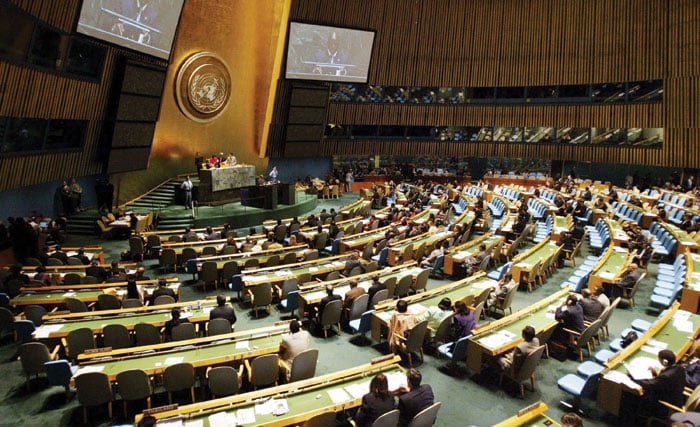
Right on cue, on Nov. 30 the United Nations General Assembly voted to officially commemorate the founding of the State of Israel as a nakba. U.N. Resolutions are not legally or morally binding, and they obviously cannot create truths. But they do lend a sheen of credibility to an otherwise ridiculous claim. Such a resolution makes it easier for the big lie to spread because people can rely on and appeal to the GA’s “authority” on the matter without having to defend or even care about the details of such a heinous accusation. And once a lie has become officially acceptable to speak in the halls of power, it is only a matter of time before it gets picked up and amplified by popular culture. This one certainly did not take long.

While the Netflix film “Farha” claims to be “based” on true events, the director has admitted that it is not factual, and that these scenes did not actually occur.

On Thursday, Netflix began streaming the Jordanian film “Farha,” which purports to focus on the experiences of a young girl during the 1948 Arab-Israeli War. The hero watches as Israeli soldiers, portrayed as inhumanly cruel, brutally and graphically murder innocent Palestinian families, including children. While the film claims to be “based” on true events, the director has admitted that it is not factual, and that these scenes did not actually occur. But that does not mean they will not have a very real-world effect on anti-Jewish hate and violence, because many will watch the movie, and few will read the disclaimer.

There are two reasons to publicly correct the record on the nakba. First, it is simply not true… Second, it is incredibly dangerous.

There are two reasons to publicly correct the record on the nakba. First, it is simply not true. There are primary sources, from the Jordanian side, attesting to the fact that the vast majority of Arabs who left their homes did so voluntarily, or under orders from the invading Arab, not the invaded Israeli, armies. Many left confident that the combined armies of Jordan, Syria, Iraq, Lebanon and Egypt would quickly overwhelm the tiny Jewish state. As the Jordanian newspaper Filastin reported, “The Arab States encouraged the Palestine Arabs to leave their homes temporarily in order to be out of the way of the Arab invasion armies.” But as another refugee quoted in another Jordanian newspaper, Ad Difaa, explained that “The Arab government told us: Get out so that we can get in. So we got out, but they did not get in.”  

Second, it is incredibly dangerous. In 1976, Mahmoud Abbas said that “The Arab armies entered Palestine to protect the Palestinians from the Zionist tyranny but, instead, they abandoned them, forced them to emigrate and to leave their homeland, and threw them into prisons similar to the ghettos in which the Jews used to live” (emphasis added). By 2011 his recollection had changed in direct proportion to the rising popularity of the nakba, so that he now claimed “Zionist forces expelled Palestinian Arabs to ensure a decisive Jewish majority in the future state of Israel, and Arab armies intervened.” This year, he went so far as to use the commemoration of the nakba — the same commemoration the U.N. has now embraced, as an excuse to reaffirm his government’s ongoing commitment to “pay for slay”: The Palestinian Authority policy under which terrorists who kill Israeli or American citizens are celebrated as heroes and monetarily rewarded. Last week, two bomb attacks in Israel killed one 16-year-old boy, Aryeh Shechopek a”h, and injured 14 other people. This week, the terrorist and his family will begin receiving their murder-stipend from Abbas’ government — the same government that pushed for the UN resolution.

In a world of rising antisemitism, demonstrably tied to anti-Zionism, it is dangerous for the United Nations to give continued credibility to lies. It is also disheartening for Netflix to give a propaganda film like this a platform to spread inciteful misinformation under the guise of historical fiction. Fake news can have real consequences, and facts do matter — even when the country that is being lied about is Israel, and even when the people who end up getting hurt are Jews.


Dr. Mark Goldfeder, Esq. is an international lawyer and Director of the National Jewish Advocacy Center.

Lies, Libels, and the Justification of Terror Read More »

LA Sephardic Temple Vandalized

Sephardic Temple Tifereth Israel was vandalized on November 26.

Stop Antisemitism tweeted on December 6 that “security footage captured a man throwing a large rock through an entrance window, shattering it. The man then continued to bang on the glass, shockingly recording himself the entire time.”

The synagogue’s president, Raymond Yashouafar, issued a statement saying that the synagogue has reported the matter to the police as well as the Anti-Defamation League (ADL) and the Jewish Federation.

“This is a reminder that anti-Semitism is real and is literally happening at our footsteps,” Yashoufar said. “It is deeply disturbing that we are still experiencing such hate crimes in 2022. We will not stand silent, and we will not allow anyone or anything to bring us down. Our temple has stood strong for the past 102 years, and we assure you that we will continue to thrive for many years to come.”

“We are aware of and horrified by the vandalism perpetrated at the Sephardic Temple Tifereth Israel on November 26,” ADL Los Angeles Regional Director Jeffrey I. Abrams said in a statement to the Journal. “ADL Los Angeles has been in contact with the synagogue and provided our safety and security resources. Additionally, we have been in direct contact with the Los Angeles Police Department, and we appreciate that they are looking into the possibility of this being a hate crime. As always, we stand against antisemitism and any criminal acts directed at synagogues, be they Ashkenazi, Sephardic or any other houses of worship.”

American Jewish Committee Los Angeles Regional Director Richard S. Hirschhaut similarly said in a statement to the Journal, “Any act of antisemitic vandalism is one incident too many. The reported vandalism of Sephardic Temple Tifereth Israel, in broad daylight on the Shabbat of Thanksgiving weekend, was a brazen act of hate. With antisemitic rhetoric flooding social media at unprecedented levels, it is difficult not to wonder whether this crime was fueled by such unrelenting streams of hate. That the alleged perpetrator recorded himself in the act suggests as much; hopefully, it will speed his arrest and prosecution.”

LA Sephardic Temple Vandalized Read More »

What Qatar Learned from Hitler’s Olympics

The government of Qatar reportedly has been pressuring Hamas — which it finances — to refrain from launching rockets into Israel during the World Cup soccer tournament presently underway in the Gulf state. Sound familiar?

The use of temporary deceit as a political weapon has a long and ignoble history. It originated with Grigory Aleksandrovich Potemkin, a Russian cabinet minister who is said to have built fake villages — or deceptively redecorated existing ones — along the route traveled by Czarina Catherine II during her visit to Crimea in 1787. As a result, Potemkin’s name has come to be associated with this particular kind of deceit.

Soviet dictator Josef Stalin was a master at this game. In the 1920s and 1930s, Western visitors to the USSR were taken to see Bolshevo, which was presented as an example of a “progressive” Soviet prison that needed no walls or guards, because criminals were educated and inspired to become productive citizens. 

The Nobel laureate author George Bernard Shaw, duped by this fiction, claimed the only problem in dealing with a Bolshevo prisoner was “inducing him to come out at all” when his jail term concluded. In reality, Bolshevo had been created to impress foreigners. It was populated largely by informers whose reward was to live in the fake prison. Thus the slave labor camps of the Soviet gulag remained hidden from foreign eyes.

During the Holocaust, the Nazis used Potemkin-style deception to help camouflage the mass murder of the Jews. In June 1944, Hitler invited a delegation from the International Red Cross to visit Theresienstadt (Terezin), the Jewish ghetto that had been created in Czechoslovakia as a transit point for Jews being shipped to the gas chambers of Auschwitz. But the Nazis told the Red Cross that the camp was an “Endlager,” a final destination where Jewish prisoners lived happily. 

In ”The Terezin Diary of Gonda Redlich” (edited by the late Prof. Saul S. Friedman), a Theresienstadt inmate described the Nazis’ preparations for the Red Cross visit: “They rain down order after order.  Kindergarten children are to sing during the visit, the workers are to return home. Plays and cultural events and sporting activities must take place. Even the few lambs left here roam about on the grass around the city. The children, the workers, the sheep — a perfect idyll.” Another prisoner recalled: “A playground was laid out with sandboxes and swings, a ‘children’s pavilion’ was built and painted from inside with big wooden animals as toys. Behind a glass veranda you could see a dozen cribs. It was like a story book — but children were only allowed to enter this little paradise on the day the commission visited Theresienstadt.” Houses were freshly painted — but only the portions that would be visible to the Red Cross inspectors. The visitors’ final report to Red Cross headquarters characterized conditions in the camp as “relatively good.” Nobody seemed to wonder why the population of Theresienstadt at the time of the visit was 30,000 less than what the Red Cross knew it had been just a few weeks earlier.

In the 1950s, the North Korean regime built a village called Kijong-dong in the demilitarized zone separating North Korea from South Korea. The North Koreans called it a “peace village” that supposedly was inhabited by 200 families, but to this day Kijong-dong actually has no civilian residents; it houses soldiers, artillery and underground bunkers. A Washington Post correspondent who visited the area in 1998 reported that “if you squint through your binoculars, you’ll see that the buildings [in Kijong-dong] don’t even have glass in the windows. It’s a lie, a huge Potemkin village.” The sidewalks are empty; automatic timers turn lights on and off in the buildings in order to create the illusion that people live there.

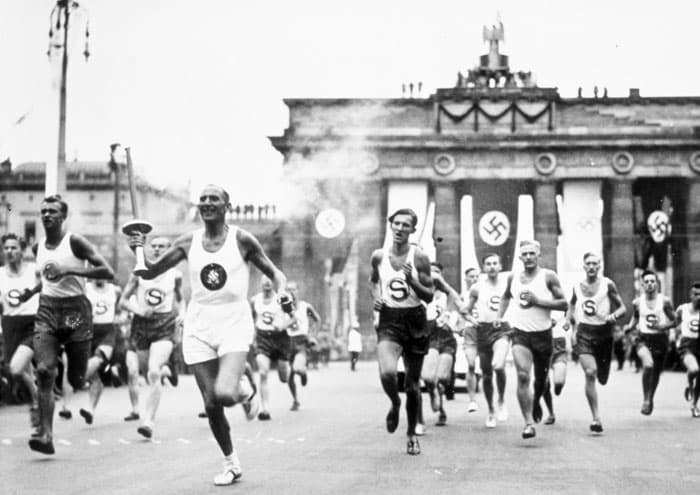
Perhaps the closest historical analogy to Qatar and the World Cup was the Berlin Olympics of 1936. For Hitler, the Olympics were an opportunity to make the Nazi regime seem reasonable and distract from his oppression of German Jews. The antisemitic newspaper Der Sturmer was briefly removed from newsstands and “Jews Not Wanted” signs that had been posted along major thoroughfares were taken down. Once the games were over, the signs and the newspaper returned. 

Likewise, the Olympics hosted by China earlier this year gave the ruling regime a chance to turn the world’s attention away from what the U.S. has said is China’s genocidal persecution of its largely-Muslim Uyghur minority. In advance of the games, according to the Washington Post, the Beijing government even temporarily closed some of the notorious “re-education centers” where an estimated one million Uyghurs have been interned. By now those centers undoubtedly have been reopened.

When the World Cup matches are over, the rocket attacks from Gaza undoubtedly will resume. Qatar has learned from Hitler, and too many other historical precedents, that the Free World is easily fooled.

We can expect the same thing from Qatar and Hamas. The Qatari government, which is the world’s largest financial supporter of Hamas, evidently has no problem with the firing of rockets from Gaza into Israeli nursery schools. The problem is merely a matter of timing. When the World Cup matches are over, the rocket attacks from Gaza undoubtedly will resume. Qatar has learned from Hitler, and too many other historical precedents, that the Free World is easily fooled.


Dr. Medoff is founding director of The David S. Wyman Institute for Holocaust Studies and author of more than 20 books about Jewish history and the Holocaust. His latest is “America and the Holocaust: A Documentary History,” published by the Jewish Publication Society & University of Nebraska Press.

What Qatar Learned from Hitler’s Olympics Read More »

Spirituality and Mental Health Go Hand in Hand

Surveys reveal that Americans continue to move away from traditional religious practice, but the yearning for spiritual connection remains strong. Research abounds that confirms the link between healthy spiritual connections and emotional health. A new report by Springtide Research Institute, “The State of Religion & Young People 2022: Mental Health—What Faith Leaders Need to Know,” underscores this truth. 

Nearly 10,000 young people, age 13-25, were asked about their beliefs, practices, behaviors and relationships, with a particular focus on mental health. Pandemic isolation added to emotional challenges for a majority of respondents (53%), yet only a third (34%) felt comfortable speaking to adults in their lives about it. 

More than half of the Gen Z’ers surveyed reported that spiritual or religious practices helped their mental health, including prayer and meditation. Forty percent of those who identified as very religious said they were “flourishing” in their emotional and mental well-being, compared to 17% of those who identified as not religious. Sizable majorities who believe in a higher power, pray daily and attend religious services weekly also reported that they were flourishing. Even for those who struggled the most, religious and spiritual connections seem to boost mental health.

A Jewish respondent — Tiffany, 25 — described her Jewish upbringing as more of a way of life than about going to temple: “[It was more about] you’re giving to charity, you’re doing volunteer work, you’re doing your part to make your community a better place.  . . .  I feel better when I’m doing things to help other people. That gives me something to think about. And then I’m not worried about myself . . . that’s an outlet for me — doing good things for other people.” 

Many young people don’t feel seen or heard by the adults and religious leaders in their lives. This makes them far less likely to reach out when they feel emotionally troubled. Dr. Josh Packard, executive director of Springtide, observed, “It’s imperative for religious leaders to recognize that the Belongingness Process works when young people feel noticed and named and known… An experience of belonging results from a deepening of relationships over time.” 

Religious leaders recognize the pressing need to address mental health issues among youth, because people cannot build a faith-based relationship with a higher being if they are filled with inner conflict. “What people are most concerned about is young people’s mental health,” Dr. Packard added. “And their concern is warranted. Without addressing mental-health issues, a young person who is mentally and emotionally unwell won’t be able to really engage with or understand the depth, beauty, power, awe, and love that can come with religion and spirituality. Faith leaders must be equipped to address both faith and mental health issues.”

This issue is being addressed on many college campuses, including at USC’s Hillel, where Wellness Director Leenie Baker complements the work of a part-time therapist through programming that supports “holistic wellness.” As one example, Baker pointed to their Wellness Learning Fellowship, a 10-week discussion-based cohort that explores various life issues through the lens of Jewish text based learning and psychological tenets. 

After one discussion on boundaries, one participant told Baker how helpful it was in navigating her relationship with her roommate. Another student who was very hard on herself academically learned to practice self-compassion. In group discussions, wellness skill-building usually connects to Jewish practice. As an example, Baker said, “Gratitude naturally leads to prayer for many students.”

Post-pandemic, people of all ages are eager for a sense of community. 

Post-pandemic, people of all ages are eager for a sense of community. No wonder that USC Hillel’s Friday night Shabbat dinners attract between 100-200 participants from across the Jewish spectrum each week. And Baker has seen where Jewish practice and community are paying mental health rewards for students. 

“A young woman told me that she realized a lot of her mental health struggles come from overthinking things. But when she comes to Shabbat services, she allows her brain to stop overthinking and be in the moment. Also, during the High Holidays, the students who gave divrei Torah nearly all touched on mental health issues, saying they hoped to start the year on the right foot. They are including their mental health as part of their spirituality.”


Judy Gruen’s latest book is “The Skeptic and the Rabbi: Falling in Love with Faith.” 

Spirituality and Mental Health Go Hand in Hand Read More »

NY Antisemitic Crimes Spiked by 125%

Antisemitic hate crimes in New York City spiked by 125% in November 2022 compared to November 2021, according to new data from the New York Police Department.

The Times of Israel reported that there were 45 antisemitic hate crimes in New York City in November 2022, compared to 20 in November 2021. The 45 figure accounted for 60% of all hate crimes that month; the second highest group targeted with hate crimes were LGBT at nine and Blacks at six.

The data also showed 195 antisemitic incidents occurred in New York City from January 1-September 30 in 2022.

“Shocking but not surprising & even more troubling in light of antisemitism being amplified on celebrities’ platforms,” Anti-Defamation League New York / New Jersey tweeted. “This must end.”

The Simon Wiesenthal Center similarly tweeted that the numbers showed a “staggering surge” in antisemitic hate crimes in New York City. The Jewish group called on the city to “step up the fight against history’s oldest hate and ensure the safety of the US city with the highest number of Jewish standards.”

Jewish on Campus tweeted, “Rhetoric has real-world consequences. Will you stand with the Jewish community?”

Former New York State Democratic Assemblyman Dov Hikind, who also runs Americans Against Antisemitism, asked New York City Mayor Eric Adams in a tweet what his plan is to combat antisemitism in the city. “Wishful thinking is not a plan!” Hikind wrote.

NY Antisemitic Crimes Spiked by 125% Read More »

Israel To Track Tourism Visit Patterns via Cellphone Data To Avoid Congestion

To read more articles from The Media Line, click here.

Israel’s Tourism Ministry has just launched an initiative to track the mobility patterns of foreign and domestic tourists from the country’s cellphone companies. The ministry issued a tender earlier this week to choose a company to carry out the plan, which it expects to put into action in the coming months.

Ministry spokeswoman Anat Shihor-Aronson told The Media Line that, for many years, the ministry has been operating with no direct knowledge of the real patterns of tourist visits to the country, besides the “obvious” attractive sites, such as the Western Wall. Otherwise, the ministry does not have real information on what are the other most common attractions.

Shihor-Aronson explains that the data collected will serve the ministry in two different areas: crowd management and infrastructure investment. The first goal, she says, is to avoid large crowds arriving at the same site at the same time. “What we want to know is more or less where the movements are. So, if there are tens of thousands of people in one place, at one time, we would like to tell the tourist group leaders to maybe find another time to go there,” she says. The ultimate aim, she points out: “So that no one stands in line for hours to enter one site.”

This is a process that will enable the Tourism Ministry to enhance and improve the tourism experience by reducing crowds, and by moving masses of people around in a much more efficient way, so that tourism in Israel will be much more enjoyable, she explains.

The second goal of the initiative, Shihor-Aronson continues, is to know where to develop the infrastructure around the sites: “We invest hundreds of millions of shekels in building infrastructures every year. So, as we consider that we’re using public money, we want to invest it in the best way we can. How else do you know where tourists are going, and what they like?”

However, as the initiative involves the ministry collecting movement data from cellular companies, it has raised some concerns regarding tourist privacy issues. Shihor-Aronson tells The Media Line that the ministry has taken into consideration the European Union’s General Data Protection Regulation (GDPR) rules for launching the initiative.

“There is no use of personal information,” she notes. “The ministry will receive data from general summaries only regarding the presence at sites of tourists or Israelis who are more than 60 kilometers from their place of residence. There is no violation of the GDPR rules.”

Concerning cellular companies, she notes that “They are bound by the law and the privacy protection rules.”

Michael Turkenich, a tour guide in Israel, tells The Media Line that Israel has serious congestion problems in some of its most popular sites. “When you’re talking about the tourist sites in Israel, you have certain bottlenecks that are unavoidable. For instance, if you’re talking about Christian tourism and sites such as the Holy Sepulcher. The biggest problem is in Jerusalem, and then there are other problematic sites, such as Masada.”

Turkenich notes that, currently, all the national parks are asking tour guides and travel agents to coordinate groups’ arrival times in advance to avoid congestion. “That wasn’t before COVID,” he points out. Thus, he believes that the ministry’s new movement data “would be nice to know, but as I said, sometimes it’s very hard to monitor that.”

On the other hand, Danny “The Digger” Herman, an archaeologist and tour guide in Israel, is not very enthusiastic about the ministry’s initiative, as he believes it should first invest in the tourism industry’s more basic needs. “It sounds like they are making up new ideas to show that they’re using new technologies,” he tells The Media Line.

“I would go to the basics of what tourism services should contain,” he stresses, citing the examples of informative road signs and the shade and water coolers available at the sites. “How about fixing the signs?” he asks. “So many signs in tourist sites in Israel are either broken or faded from the sun. When you go to sites, there’s never enough shade and never enough coolers.”

Israel To Track Tourism Visit Patterns via Cellphone Data To Avoid Congestion Read More »

Bibi’s Extreme Challenge

Do Israeli and American Jews need each other? Depending on how Benjamin Netanyahu’s new government moves forward, we may be about to find out.

Netanyahu emerged from last month’s election with a safe majority for his coalition, but one built upon a precarious ideological foundation. In exchange for their support, the three ultra-conservative parties who have allied themselves with Netanyahu’s Likud have demanded a range of concessions from him. Most of them relate to internal security matters, West Bank policy or Palestinian relations, many of which are controversial but likely to enjoy popular support in the wake of the ongoing violence that has plagued the country over the last several months. While many American Jews are uncomfortable with such a confrontational approach on these topics, only a small number of U.S. progressives are emotionally invested in the debate. For most of this country’s Jewish community, the seemingly ceaseless fighting between the Israeli military and Palestinian terrorists has become little more than political background noise.

But Netanyahu’s new partners have other ideological goals as well, which strike much closer to the concerns of American Jews. They have called for revocation of the so-called “grandfather clause” from Israel’s Law of Return, which grants Israeli citizenship to anyone with at least one Jewish grandparent who does not practice another religion. And they are advocating an end to official state recognition of conversions performed outside the Orthodox Chief Rabbinate, effectively ending recognition of Reform and Conservative conversions for the purposes of Israeli citizenship.

Together, these two steps would represent a fundamental redefinition of Judaism and citizenship in the eyes of the Israeli government. They are key components of a proposed override law that would allow a majority in the Knesset to overrule High Court rulings and would lay the foundation for a broad application of religious restrictions in Israeli society. Both proposals will remain part of the ongoing negotiations between Netanyahu and his partners as long as this partnership remains intact. In other words, the only way these issues will disappear from the political debate is if Netanyahu were to at some point either realign or expand his coalition to include representatives of center-right parties as part of a unity government.

Absent such a dramatic shift, immigration and conversion will remain at the center of Israeli politics for the foreseeable future. While the primary focus of these changes is not American Jews but rather those who would emigrate from Ukraine, Russia and other parts of Eastern Europe, the U.S. Jewish community would see such restrictions as a fundamental and visceral refutation of American Jewry. The number of Jews who immigrate from the United States to Israel each year is much smaller than the influx from the former Soviet bloc, but American Jews are much more likely to identify as Reform or Conservative and large numbers of them would be understandably insulted and outraged by what they would regard as a severing of their relationship with the Jewish homeland.

William Daroff, the well-respected and measured leader of the Conference of Presidents of Major American Jewish Organizations, has already spoken out forcefully against a newly-reconfigured Law of Return, which is likely to have led to Likud’s efforts to distance themselves from their new partners’ proposal. Daroff has always worked strenuously to avoid criticism of the Israeli government, but he is politically savvy enough and he clearly recognizes the devastating impact that these restrictions would mean to the relationship between Israel and American Jews.

Daroff is right. At a time when public opinion polls show a decreasing number of Jews in this country maintaining strong feelings toward Israel, with an especially precipitous drop in support among young Jews, the implementation of either of these exclusionary measures would raise seminal questions among American Jews about whether they would still be welcome in Israel. This could easily lead to an irrevocable split in a bond that has sustained both communities since 1948.

Netanyahu has chosen his new coalition partners, but for the sake of the American-Israel relationship, he must quickly now find a way to tame them.

Netanyahu has chosen his new coalition partners, but for the sake of the American-Israel relationship, he must quickly now find a way to tame them.


Dan Schnur is a Professor at the University of California – Berkeley, USC and Pepperdine. Join Dan for his weekly webinar “Politics in the Time of Coronavirus” (www.lawac.org) on Tuesdays at 5 PM.

Bibi’s Extreme Challenge Read More »

My Message to Douglas Emhoff for his White House Roundtable on Antisemitism

I have no idea what will be said at Wednesday’s White House roundtable with Jewish leaders on the rise in antisemitism and efforts to combat hate.

The only thing I know for sure—given that representatives of 13 Jewish organizations will attend, in addition to eight officials from the Biden-Harris administration— is that there won’t be much time for speeches.

But since I received excerpts from the Second Gentleman Douglas Emhoff’s office of his prepared remarks, I figured I had enough material to throw in my two cents. This is the gist of his well-intentioned remarks:

“Right now, there is an epidemic of hate facing our country. Let me be clear: words matter. People are no longer saying the quiet parts out loud, they are screaming them. We cannot normalize this. We all have an obligation to condemn these vile acts. We must not stay silent. There is no either or. There are no two sides. Everyone must be against this.”

These words feel so true and obvious I can assure you the many heads at the roundtable will all eagerly nod. They will nod with such enthusiasm because we’ve all heard these words a million times: Epidemic of hate! We must condemn! We must not stay silent!

But does Mr Emhoff sincerely believe we need more of the same? Does he follow the news? Google the words “condemnation of antisemitism” and you’ll get 1.45 million mentions. Google “denouncing Jew hatred” and you’ll get 3.1 million mentions.

The “condemn and denounce hate” industry is huge and growing, with major philanthropic support. It’s not that “condemn and denounce” are not noble acts; it’s just that we’ve been overdosing on those acts for years without ever asking: Is any of it working? It may make us feel good, but how strategic is it?

I hope someone gets up during the roundtable and has the courage (and the time) to say something like this:

“Mr Emhoff and fellow attendees,

“The most important message we must convey to Jew haters is that they can’t hurt us and we’re not afraid of them. Jews are thriving in this great country and nothing the haters do will stop that. They must know that they do not have the power to disrupt our lives. We recognize that the First Amendment protects even vile and offensive speech, so we won’t waste our time trying to silence them.

“When the law permits, we will seek justice. When institutions show systemic bias against Jews and Israel, we will take action. When we feel physically threatened, we will arrange for security.

“We must fight the haters in a strategic and firm way, but without giving them the massive publicity they crave. It is that publicity, as much as anything else, that normalizes antisemitism.

“It is not silence that emboldens hate, but fear and weakness on the part of the victim. That’s when the haters smell blood. That fear and weakness come through loud and clear every time the haters see the Jewish community get all agitated over yet another incident. We can’t allow a state of constant agitation and insecurity to define us.

“Instead of seeing Jews as alarmed and afraid, Jew haters must see us as confident, proud and happy, as hard-working patriotic Americans going about their lives. The haters must see how so much of America loves and admires Jews, and how our diverse community is completely woven into the fabric of this great nation. Indeed on that narrative we must be very noisy.

“Mr Emhoff, you said in your opening remarks that for you, this roundtable is ‘not the end. This is just the beginning of this conversation.’ I hope we can include this more strategic approach to countering antisemitism in future conversations.”

My Message to Douglas Emhoff for his White House Roundtable on Antisemitism Read More »

Herzl Warned Us

Theodor Herzl’s utopian novel “Altneuland” receives criticism from many Zionists. For one thing, it envisions for the future Jewish state a perpetually secure society never in need of robust defense, and over-relies on the mores of European cosmopolitan cities to predict how such a society would be run. Such a book, many argue, though a staple in the pantheon of Zionist works, is a naive projection of one’s own liberal values onto a region and a people that could not bend to fit them. Herzl could not foresee Israel’s endless military campaigns, the revival of Hebrew, and the arrival of hundreds of thousands of Jews to Israel from the Middle East (Jews who were not marinating in democratic ideologies and who were more traditional and spiritual in their lifestyles). Therefore, when learning about Israel, many recommend that “Altneuland” be studied, rather than heeded.  

And yet after the recent Israeli election, it would be difficult not to concede that what is written in “Altneuland” is still of some value and can still provide a roadmap for how Zionists are meant to run their state. If Herzl was able to kickstart the Jewish National Fund, the Zionist Organization, and is still regarded as the founding father of the country, then his ideas remain paramount. Even more so, because as history would have it, Herzl predicted and gave future generations explicit instructions on how to manage one of Israel’s current crises: the presence of extremists in mainstream politics.  

About halfway through “Altneuland,” in the year 1923, citizens of the new Jewish state, or “New Society,” head to the polls to choose their government. One candidate is a rabbi by the name of Geyer, who leads a party steadfast in its belief that non-Jewish residents of the land not be awarded political rights. An important note is that Rabbi Geyer does not advocate for the expulsion of Arabs from the land, just for depriving them of the privilege of civic participation because this is, after all, a Jewish state. In response, during a heated debate, a representative of the New Society’s liberal establishment says: “The New Society rests squarely on ideas which are the common stock of the whole civilized world … it would be unethical for us to deny a share in our commonwealth to any man, wherever he might come from, whatever his race or creed. For we stand on the shoulders of civilized peoples.” He receives thunderous applause, and the liberal party goes on to defeat Rabbi Geyer, who is taunted and criticized by Herzl’s fictional political thinkers for not truly being a Zionist. 

This scenario is a product of Herzl’s time. There was no conversation more prominent in turn-of-the-century Europe than nation building. A crucial part of this discussion was the status of national minorities and how best to integrate different peoples living in the same land — with more rights versus with less rights. Therefore, one would be incorrect to say that Herzl’s work is out of step with contemporary disputes over civil rights and systems of government, for he lived in the very time when these ideas began to take shape. In 2019, Shlomo Avineri, a prominent Israeli political scientist and expert on Herzl, said of “Altneuland”: “Herzl, being a journalist, having spent time in France, was very much aware that all societies, including democratic ones, have serious issues. Just as there can be racists in Europe, there can be racists amongst the Jews.” Herzl’s conclusion in “Altneuland” is informed and specific: that the Jewish state must take a particular course, a liberal democratic course that respects the rights of different peoples, to sustain its legitimacy and its status among the family of nations.  

In today’s Israel, Rabbi Geyer is best represented by Itamar Ben-Gvir, far-right lawmaker and leader of the Otzma Yehudit (Jewish Power) party. Ben-Gvir is poised to become the new “Minister for National Security” after the Religious Zionist party, with which Otzma Yehudit merged, scored fourteen seats in the last election. The goals of the Religious Zionist party are transparent: that Israel work to expand settlements in the West Bank and annex as much territory captured in the 1967 war as possible. Rather than giving Palestinians political rights and thus rendering Israel a binational state, however, Religious Zionism foresees a future where “peaceful Arabs” who are comfortable living in a Jewish state have their basic needs fulfilled, but are not awarded the right to participate in the state. Additionally, Religious Zionism and Otzma Yehudit advocate for greater incorporation of Halakha (Jewish law) into the public sector, the emphasis of Torah education into public schools, the legalization of gender segregation in public spaces, and the chipping away of LGBT rights in Israel.

In “Altneuland,” Herzl warned us that the ideas expressed by Rabbi Geyer, which are uncomfortably replicated in today’s Knesset, are an existential threat to the stability of Jewish sovereignty and a contradiction to the central idea of it in a holistic sense.

In “Altneuland,” Herzl warned us that the ideas expressed by Rabbi Geyer, which are uncomfortably replicated in today’s Knesset, are an existential threat to the stability of Jewish sovereignty and a contradiction to the central idea of it in a holistic sense. In “Altneuland,” we are entrusted to defeat these ideas at the ballot box whenever we are given the opportunity, for they could not be more at odds with the ideological environment that inspired political Zionism and its advocates in the beginning: national liberalism, secularism and democracy. In fact, even Ze’ev Jabotinsky, often regarded as one of the most right-wing original Zionist thinkers, would be considered a smolani (leftist) by Religious Zionism’s standards, considering he was an atheistic Jew who advocated for each minister position in government to be divided between an Arab and a Jew, and who directly endorsed the rights of minorities in a future Jewish state.  

In further comments about “Altneuland,” Shlomo Avineri says, “We can use the book as a mirror by which we can judge our own society today.” He continues: “In the last few years, there are forces and political parties and leaders in Israel who try to diminish the equal rights of Israeli-Arab citizens, and that is done in the name of Zionism — this is utter nonsense. The Zionist vision, as expressed by Herzl, views Israel as a Jewish state that respects the civil and cultural rights of its minorities.” 

Avineri goes on to offer the interesting insight that “Altneuland” is one of the only nationalist manifestos that not only serves as a call to build a new society, but also sketches out a model for how this new society should be run. To his knowledge, no other nation has an equivalent. It is my belief that it would be a mistake to take this for granted, to refuse to digest the words of those whose ideas led to Jewish liberation because they were, after all, the most successful ideas. They are the ideas that built the state. When Israelis head to the polls again, which I hope will be in the not-so-distant future, it would be a mistake not to remember the texts that did the most to create and secure our way of life.


Blake Flayton is the New Media Director and Columnist for the Jewish Journal. 

Herzl Warned Us Read More »