fbpx

October 28, 2022

AJRCA Names President, New Rabbi Joins Open Temple, Aish Gala

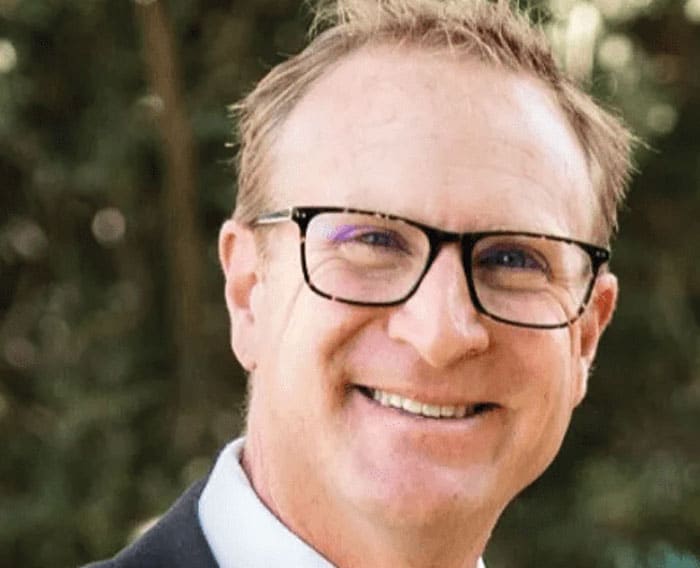
Trans-denominational seminary and graduate school Academy of Jewish Religion, California (AJRCA) has named Rabbi Joshua Hoffman as its new president and CEO.

Hoffman succeeds retiring President Rabbi Mel Gottlieb, who has led AJRCA for much of the past 20 years.

“We are thrilled to welcome Rabbi Joshua Hoffman,” AJRCA Board Chair Marlene Canter said in an Oct. 19 statement. “Rabbi Hoffman shares our strong commitment to the inclusive, trans-denominational ideals that AJRCA was built upon. He is the right person to lead AJRCA as it builds on its many successes over the past 20 years. He has a clear vision for the future that will take us into our next 20 years.”

Hoffman serves as the president of the Board of Rabbis of Southern California and previously held a pulpit position at Valley Beth Shalom. He was ordained at American Jewish University’s Ziegler School of Rabbinic Studies. 

On taking the helm at AJRCA, which represents all the denominations, “I see this position as a critical force for change at a pivotal time in American Jewish life,” Hoffman said. “AJRCA has proven successful in training 21st century Jewish leaders who are profoundly shaping our communities with purpose and pride. My mission is to continue expanding our role in developing future Jewish leaders through innovative and inspirational learning.” 

Hoffman joins AJRCA on the heels of the school’s relocation to the campus of Loyola Marymount University in the summer of 2021. Along with in-person instruction, AJRCA’s successful hybrid programs for rabbis, cantors, chaplains and lay leaders have made it more accessible to students from across the country as well as in its Los Angeles home. 

AJRCA currently has students in 17 states and more than 180 alumni serving in key roles throughout the country. 

In a statement, Rabbi Stan Levy, who co-founded the school in 2000, said Hoffman was the right person to drive AJRCA forward into its next era by building upon its proven strengths in its rabbinical, cantorial, and chaplaincy schools as well as its graduate program in Jewish Studies.

  “I am so very confident that Rabbi Joshua Hoffman has the passion, intellect, experience, and interpersonal gifts to lead AJRCA in the coming years,” Levy said. “With our new home and deepening partnership with Loyola Marymount University, and with the appointment of our new President, I am excited for the vibrant future of the Academy.”


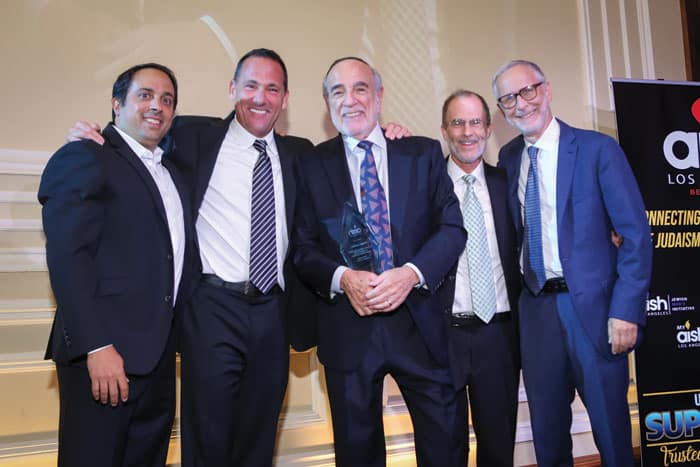
From left: Aish LA COO Rabbi Azriel Aharon, JMI City Leader Jeff Singer, Jewish Men’s Initiative Honoree Ralph Lacher, Aish LA Executive Director Rabbi Aryeh Markman and JMI Scholar-in-Residence Rabbi Shlomo Seidenfeld. By Jonah Light Photography

Aish LA recently held its 39th annual gala evening at the Taglyan Complex in Hollywood. The sold-out affair drew more than 475 trustees and young professionals celebrating the three honorees.

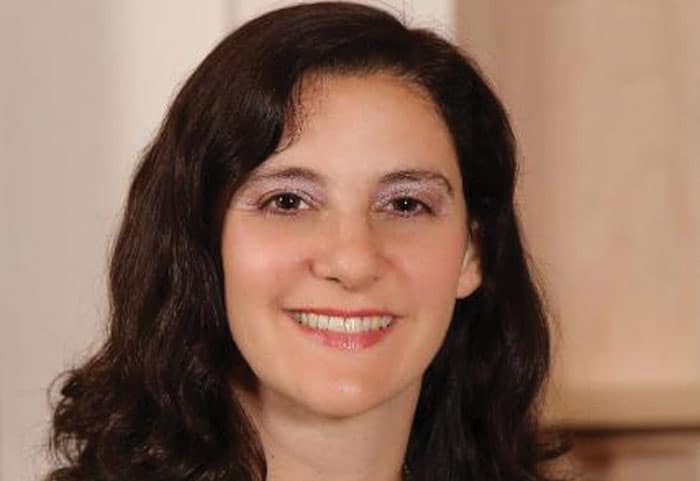
Aish LA Jewish Women’s Honoree Lisa Richards. By Jonah Light Photography

Isaac Davidi was honored for his work with the two young professionals’ divisions—MyAish and Aish Lit.  Lisa Richards was the Jewish Women’s Initiative (JWI) honoree, and Ralph Lacher was the Jewish Men’s Initiative (JMI) honoree.

Professional videos created by Sarah Weintraub Productions featured the Momentum Israel trips for the JMI and JWI participants, as well as the booming success of the young professional divisions. David Lieberman, a New York Times bestselling author and pioneering leader in the fields of human behavior and interpersonal relationship, was the well-received keynote speaker. Israeli activist Rudy Rochman headlined a special pre-gala young professional sushi and open bar reception. 

 “We know our galas will always be well attended because we have the magic formula of being professional, entertaining, meaningful and always done by 9 p.m.,” Aish LA Executive Director Rabbi Aryeh Markman said. “And that is because we have the dynamic duo creative team of Executive Producer Sarah Weintraub and Aish LA COO Rabbi Azriel Aharon, who always deliver.”

The event attracted the likes of real estate moguls David Hager and Adam Milstein; last year’s honoree, David Wiener, and his wife, Sheryl Wiener; Aish LA co-Founder Richard Horowitz; and JMI City Leader Jeff Singer and his wife, JWI activist Kelly Singer. 


Rabbi Ilana Grinblat

Rabbi Ilana Grinblat has joined the clergy team at Open Temple as its director of education and family programming. 

“Rabbi Ilana’s addition to Open Temple deepens our Family Education, Torah Study, B’nai Mitzvah program, Creative Family Services and Joy,” a statement by Open Temple said. “We are moved and inspired by her presence, wisdom and depth.”

Grinblat previously served as vice president of community engagement at the Board of Rabbis of Southern California. She also has served as a visiting rabbi at Temple Har Shalom in Idyllwild, CA, and Temple Beth Shalom of Long Beach. She is married to a franchise lawyer and the mother of two teenaged children. 

On Oct. 21, she led the Venice community’s Shabbat potluck dinner. 

AJRCA Names President, New Rabbi Joins Open Temple, Aish Gala Read More »

Israeli-Inspired Food Shines During Tel Aviv Groove

Eggplant croquettes that melt in your mouth. Tender sweetbreads with smooth risotto. Rich medjool date sticky toffee pudding that’s dangerously addictive. These were some of several items that were on the menu at Next Door, a kosher restaurant on Beverly Boulevard that was one of the pop-up spots for a new Israeli food festival.

Tel Aviv Groove, a series of culinary events inspired by the food and arts scenes in Tel Aviv, made its first stop in Los Angeles during the week of October 19. Orly Segal, who runs a PR company in Tel Aviv, organized the event, which featured three Israeli chefs, Cobi Bachar, Jonathan Sharvit and Danna-Lee Berman. The chefs visited LA and cooked at local restaurants. The series also featured wines from Binyamina Winery, located at Binyamina-Giv’at Ada in Israel. 

Berman, a South Africa native who made aliyah in 1996, took over the menu for the night at Next Door and brought a multicultural flair to the food. 

“Israel has the best food in the world,” she said. “We have such a mix of so many cultures. There are Persians and Moroccans and Tunisians and Polish people. Everybody from all the corners of the world are in Israel. We created our own kind of Tel Aviv-Israeli food that combines so many of these cuisines.”

The chef attended Le Cordon Bleu in Sydney, graduated with honors and worked in Jamie Oliver’s restaurants. When she was learning how to cook and gaining experience as a chef, she fell in love with European food like croquettes. Eggplant croquettes over tomato and red peppers with grated egg, mixed herbs and sumac appeared on the menu at Next Door.  

“The croquettes are a classic dish from France, Italy, Spain and Holland, which are not Mediterranean,” she said. “But I can’t think of anything that’s more Israeli or Mediterranean than eggplant.” 

Another dish that was on the menu at Next Door — Moroccan cigars, fried phyllo dough stuffed with beef or lamb — is found all throughout Israel. “Moroccan cigars are very classic,” Berman said. “There isn’t a Moroccan household in Israel where the family’s grandmother won’t have the best one.”

Berman enjoyed working with California produce, which she said was “even better than Israeli produce. LA has no seasonality, so you get everything all the time. Even the onions and leeks and simple vegetables were so amazing.” 

Many people believe that Israeli food is just hummus, tehina and falafel. Berman, who is opening her own restaurant in Israel next year, hopes to change their perspective. 

“It was really interesting to learn about Americans’ palettes,” she said. “It made me want to come here again and discover more and open people’s eyes to Israeli food. People don’t know about the large variety of Israeli food.” 

No matter where Berman is cooking, she strives to express herself through her food as well as bring people together.

“People can fight over millions of things, but when there is good food, everyone can sit at the same table and eat and be happy.”
 – Danna-Lee Berman

“I love feeding and hosting people, working with new cooks, flavors, eating, smell …  everything that food represents,” she said. “I love it when people close their eyes when they taste something delicious. People can fight over millions of things, but when there is good food, everyone can sit at the same table and eat and be happy.”

Israeli-Inspired Food Shines During Tel Aviv Groove Read More »

Play “Daddy Issues” Shows How Not to Please Your Jewish Parents

The tagline for the play “Daddy Issues” asks, “How far would a gay man go to please his Jewish parents?”

David Goldyn, who directed and produced the play, which he wrote under the pen name Marshall Goldberg, not only knows the answer, but he turned it into an entertaining stage show, now in its first West Coast run. 

The play is semi-autobiographical: the main character, Donald Moskowitz, is a gay man in his 20s, working as an actor in New York City in the 1980s. His overbearing parents, Sid and Marion, and his grandmother are in complete denial of their son’s sexual orientation, on top of belittling of his acting aspirations. They seem to be only concerned with Donald finding a nice woman to make them grandchildren. They even dangle a doubling of his inheritance if he follows through with their wishes. 

So Donald hatches a plan to fool his parents into thinking that a decade prior, while in college, Donald knocked up his then-girlfriend. When Donald informs his family of this fib, they insist on meeting their non-existent estranged grandchild.

What ensues is a farcical journey into a real-life struggle so many people with overbearing parents — Jewish or not — face on a daily basis. Donald and his friends conspire to fool his family. 

What ensues is a farcical journey into a real-life struggle so many people with overbearing parents — Jewish or not — face on a daily basis. Donald and his friends conspire to fool his family. 

While growing up in Orlando, Goldyn’s parents would spring the “make us grandparents” topic on him all the time. Mocking his late father, Goldyn demonstrated, “‘you know, your mother and I would be so happy if you gave us a grandchild.’ And gay guys were not having kids back then. In fact, when that started happening, I was like, ‘Wow, I could’ve done that all along. I would’ve liked to have had a kid.”

The plot of “Daddy Issues” echoes the time Goldyn played a similar trick on his parents. 

“I was living in Orlando and my parents came over at 10:00 am and I literally had an 11:00 am audition,” Goldyn told the Journal. “I said, ‘Please don’t push any of my buttons. Please don’t say anything that’ll upset me.’ And of course, they went into ‘Your mother and I would be so happy…’” Goldyn’s demeanor turned into a mocking, resentful tone. His parents once again asked him to take an interest in the ladies so one day he can make them grandparents. 

“Ruined my day, ruined my audition, because at that point, I didn’t know how feelings go. I’m young. I didn’t know how to do that. I’m better now. So that night at dinner, they pulled it again and I said, ‘There’s something I never told you. I had a son with the girl I dated in college, Mary Ellen.’”

Goldyn’s ruse with his parents would last about 40 minutes before he let them down and confessed that  he did not secretly father a child back in college.  

That was just one time in which Goldyn fought back against his parents. But the questions came many times before and after that incident where he fooled them.

In fact, he didn’t feel completely free to write about that situation until both of his parents had passed away. 

“When I wrote this, I was very angry at my parents. Very angry. But now that I directed it five, going on six, times, I realized they came from a place of love and protection. And they were not all bad, but, you know, they were bad in the sense that the road to hell is paved with good intentions. So I’ve come to terms. They were Depression-Era children. They wanted simple things for me. They didn’t want me to have to struggle. I can go in the family business, I can have it, get married, have kids. They had a specific thing in mind. I have forgiven them over the course of writing it and directing it. In fact, I’ve actually played my father in one of the productions.”

During the opening weekend, there were laughs every minute. The cantaloupe-colored walls of the set will remind you of a home you once lived in. 

Donald’s friends Levi (Josh Nadler) and Henrietta (Noa Lev-Ari) have strong chemistry, even as they both compete to play the role of Donald’s long-lost ex-girlfriend in the scheme they hatch. Donald’s mother Marion (Pamela Shaw) was the first role he casted for the west coast run. Goldyn said that she reminds him of his real mother in many ways. 

At one point in the play, the characters find a 10-year old kid in New York to play the role of Donald’s fictitious long-lost estranged son. The young actor, Solly Werner, nails the role. Even at age 9, he has such hysterical deadpan as his fictional Great-Grandma (Sherry Michels) and Grandpa Sid (Jonathan Fishman) fawn and kvell over his existence. The kid’s mother, played by Hannah Battersby, is a hilarious lush. Overall, the entire cast will have you wishing these characters would keep up their hijinks as a weekly sitcom.

Goldyn shared a review from his hometown Orlando Weekly that perfectly summarizes the play’s broad reach: “Goldyn’s snappy one-act is the rare show that would go over equally well in a gay nightclub and Miami retirement home.”

Both parents and their offspring will have many takeaways after seeing “Daddy Issues.” And Goldyn spelled the lessons out:

“As a parent, to be a better parent and listen and see who your kid really is, not who you fantasize them to be,” Goldyn said. “Look at your children and nourish what’s there. Not what’s not there. From a kid point of view, being true to yourself, knowing who you are and trying to stay true to that in spite of these voices all around you pulling you in many directions.”


“Daddy Issues” will run through November 13th at The Dorie Theatre at The Complex, located at 6476 Santa Monica Blvd., Los Angeles 90038. To purchase tickets and for more information, go to daddyissuestheplay.com. 

Play “Daddy Issues” Shows How Not to Please Your Jewish Parents Read More »

Congregation Focuses on Teens Throughout the Pandemic and Beyond

Congregation Or Ami in Calabasas spent the pandemic finding ways to support their community’s teens. Post-COVID, they are now more dedicated than ever to reconnecting their youth to their temple and each other.

“Or Ami is reinvesting, rethinking and reinvigorating our teen program,” Or Ami Rabbi Paul Kipnes told the Journal. “With support from all these grants from the community, and our own congregants, we are creating a real space for teens and young people to be able to find meaning, gain real leadership experience, be heroes to younger children and find adults who will sit and listen to them.”

The Or Ami Neshama [Soul] Initiative is a multifaceted program for seventh through 12th graders; it includes education, retreats and trips. Plus, there’s Makom, their Wednesday drop-in programing, focused on helping students deepen their Jewish knowledge, leadership skills, spirituality and social connection. Through these initiatives, teens learn about and experiment with Neshama tools, as well as strategies for dealing with the stress and pressures they face.

“It just feels right to be spending time and energy and resources on the youth right now, as we’re rebuilding this year,” Or Ami Rabbi Julia Weisz, who is also director of education, told the Journal. “COVID really took some chunks out of our programming and out of us, [out of everybody], emotionally and psychologically.” 

Weisz said her rabbinate has been focused on creating safe, brave spaces for anyone who comes in.

Toward the beginning of the pandemic, Or Ami sent their teens a survey, asking how they could help support them. “Overall we had teens saying, ‘Just show us that we matter, show us that you care,’” Weisz said. They could have asked for things like paying for the programs (which they would have figured out) or teaching more Judaism and Hebrew. “What they said to us is, ‘We feel alone. We feel like we don’t matter right now, because we’re in these silos,’” Weisz said. “So we really came up with some ways to show them that [we care].”

During COVID, Kipnes and Weisz, along with their teen engagement coordinator Andrew Fromer, started doing driveway check-ins. “We would bring our camping chairs and surprise some of the teens with gifts and things like that,” Weisz said. “[We’d] sit there and talk to them for 30 minutes to an hour.”

The team also hosted “office hours,” which they called Cocoa Conferences. They would send hot cocoa packets, a mug, microwaveable popcorn and a popcorn container in the mail, along with an invitation to join Weisz and Fromer on Zoom. 

“Most of the teens showed up,” Weisz said. “They were [also] completely Zoomed out, but at 8 o’clock at night they would have their popcorn and hot cocoa and hang out with us.” 

These simple tasks — care packages and driveway drop-ins — took time and energy. “But isn’t that why we run the teen program in the first place?” Weisz said.

Last year, Weisz noticed kids and families pulling away. Their kids were “anxious” or having trouble making friends at school. “How can I force them to come to temple?” the parents asked. The teen team spent a lot of last year trying hard to connect. The interruptions from the Delta and Omicron variants didn’t help. 

Fromer, the teen engagement coordinator, spends his time texting, emailing and calling, trying to get kids in the door. 

“I don’t know about synagogues around the country, but my guess is, they’re not always getting a text message from their youth (coordinator), saying, ‘Hey, do you know about this upcoming event?’” Weisz said. 

In fact, if Weisz gives a family with kids a tour, and they don’t know anybody in the synagogue, Fromer follows up and takes the kid out for ice cream. 

As they prepared for this year, the education team, including Weisz, Fromer and senior educator Rachel Altfeld, along with Kipnes’ support, reevaluated their efforts and asked themselves, ‘What are we bringing back? What was successful? What do we want to change? And how are we going to get to that?’ 

Their first goal was Disneyland, Weisz said. The year before COVID, Or Ami took their seventh and eighth graders to Disneyland. These are now their high school Madrichim (leaders). Last year’s trip was canceled due to the Delta variant. This year, they made it happen in mid-August.

 “We worked our tushies off to get the 20 kids to go to Disneyland,” Weisz said. “We didn’t see some of these kids all year last year.” 

Connecting and reconnecting kids to their Judaism and to each other is a big component of this year’s plan. 

“The reason why we’re trying to get kids back in the door is number one, that safe, brave space,” Weisz said. “We want kids to have the option to come to a youth group event instead of drinking before homecoming or whatever. There are kids that just don’t want that.”

“I think everything we do has mental health at the forefront, because we have to meet kids where they’re at.”  – Or Ami Rabbi Julia Weisz

They also give their teens an option to invite a friend to an event, even friends who are not Jewish. “I think everything we do has mental health at the forefront, because we have to meet kids where they’re at,” Weisz said. “We’re saying, if you want to invite a non-Jewish friend to this Jewish event, we’re not going to try to convert them. There’s going to be some Judaism there, and you’ve got to know that. And here’s what to expect.”

This gets them in the door. 

“It’s our hope that they feel safe back at their second home,” Weisz said. “I’m excited to be intentional about decisions and programming. And also, I’m excited about some of the new things that we’re doing and have kids reconnected to what I think is a magical place.”

Congregation Focuses on Teens Throughout the Pandemic and Beyond Read More »

Promoting Jew-Hatred Must Have Serious Consequences—Even if it Makes People Uncomfortable

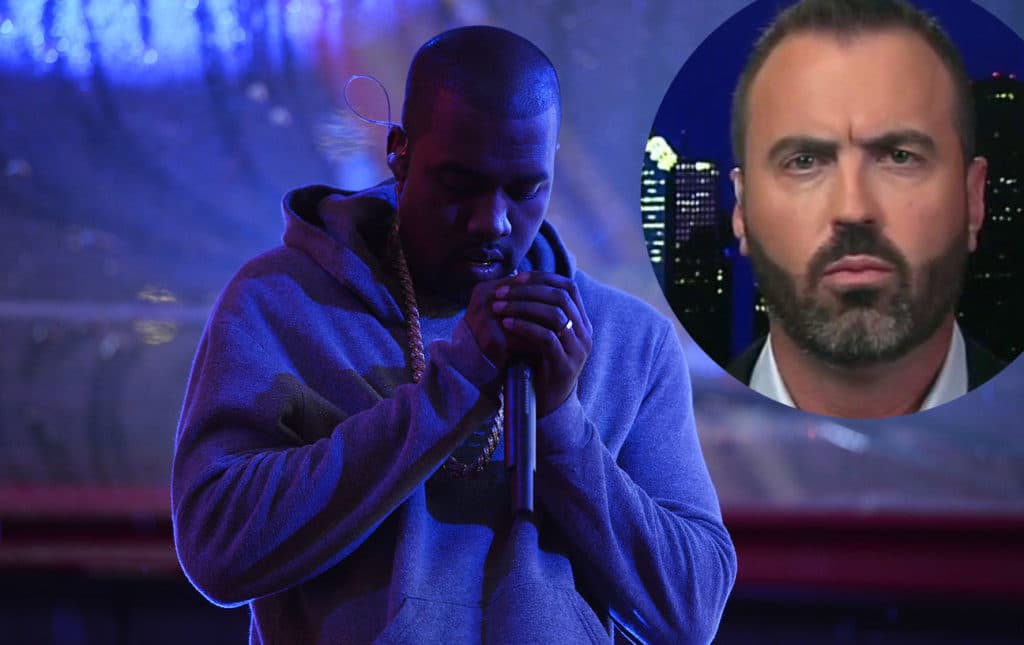
In the past three weeks since the artist formerly known as Kanye West (“Ye”) made his antisemitic claims on both social media and the Tucker Carlson Show—and then tweeted about going “Death-Con 3 on JEWISH PEOPLE”—he has had numerous opportunities to express genuine remorse for promoting dangerous tropes about the Jewish people to his tens of millions of followers. Instead, in at least a half dozen interviews, television appearances and podcasts, Ye doubled and tripled down on his antisemitic claims.

In one interview on October 16, 2022 Ye said “I’m #MeTooing the Jewish culture,” adding, “y’all gotta stand up and admit to what y’all have been doing.” Then in that same interview he referred to alleged Jewish control of the media, banks and the recording industry. He also blamed “Jewish Zionists” for the fact that his ex-wife and her boyfriend decided to make social media posts about their sex life. And citing centuries-old European tropes about Jewish control, Ye claimed that Jews “milk [Black people] until we die.”

The next day, during an interview with Chris Cuomo on NewsNation, Ye referenced a “Jewish underground media mafia” and argued that “every celebrity has Jewish people in their contract.” And in almost all of his interviews since his infamous “Death-Con 3” tweet, Ye has repeated his Nation of Islam/Louis Farrakhan based assertion that Black people cannot be antisemitic, stating that “we are Semite, we Jew, so I can’t be antisemite.” Notably, as Ye was repeatedly referencing a Black Supremacist-based conspiracy theory popularized in certain circles by Louis Farrakhan (which seeks to erase Jewish identity and history, claiming that Jews stole their identity from Black people) white supremacists from the Goyim Defense League were making Nazi salutes above signs draped over the 405 Freeway in Los Angeles that stated, “Kanye is right about the Jews.”

Given Ye’s nearly nonstop promotion of malicious and dangerous canards against Jewish people—which has attracted Jew-haters of all stripes—many Jewish groups and celebrities were calling on Ye’s business collaborators and partners to end their business relationship with him. As NFL All-Pro Aaron Donald recently noted, “hateful words and actions have consequences.”

On October 25, 2022 the biggest financial consequence to date occurred: Adidas ended its multi-billion dollar relationship with Ye. In the wake of the news from Adidas that they were ending their relationship with Ye over his repeated, unrelenting and certainly unapologetic promotion of many dangerous antisemitic tropes about the Jewish people, conservative radio show Jesse Kelly tweeted: “Kanye looked like a loon blasting away at Jews like that. Jewish people piling on him and demanding his financial destruction in the wake of it look equally terrible. As someone without a dog in that fight, you both look cringe and nasty.”

To be fair, Kelly is certainly not the only person to express such views over the last few weeks. But since he is the host of a nationally syndicated radio show with far more potential listeners than there are Jews in the world and over 555,000 followers on Twitter, I thought it fitting to address his comments directly.

First, the admission from Kelly that he has “no dog in the fight” against the promotion of dangerous antisemitic tropes and conspiracy theories, which for centuries have resulted in Jews being mass-murdered (at a time when antisemitic hate crimes in the U.S. are at an all-time high) is pretty terrible. Shouldn’t we all “have a dog in the fight” against the spread of racist hate and bigotry? The notion that one can be “neutral” in the face of someone with Ye’s reach and influence promoting such hateful antisemitic tropes is, in and of itself, as Kelly puts it, “cringe.”

The notion that one can be “neutral” in the face of someone with Ye’s reach and influence promoting such hateful antisemitic tropes is, in and of itself, as Mr. Kelly puts it, “cringe.”

And why does Kelly find it “cringe” that Jews are “demanding” Ye’s “financial destruction”?

In reality, it’s a non-Jew complaining about Jews who demand serious consequences for promoting dangerous antisemitic tropes and conspiracy theories to hundreds of millions of people that’s “cringe.” Further, Jews were not “demanding” Ye’s “financial destruction.” Rather, the overwhelming “demands” from both Jews and non-Jews who care about the dangers of promoting dangerous antisemitic tropes were for real and meaningful consequences for Ye’s actions.

After all, aren’t consequences for bad behavior something conservatives like Kelly are supposed to support? Or is that only for people who are not currently siding with people like him and Candace Owens on conservative political issues? Do Kelly and other conservative pundits and politicians really want to be no different from the many progressive and liberal pundits and politicians who try to shield the antisemites on their side of the aisle from consequences when they make blatantly antisemitic comments and promote antisemitic tropes?

Finally, since Kelly apparently thinks Jews should just “chill-out” and be less “cringe” in the face of a very influential man with significant reach trying to once again mainstream and popularize the worst antisemitic tropes, he may want to explore how poorly ignoring the promotion of antisemitic tropes has worked out for Jews in the past.

After all, Henry Ford, before WW2, suffered few adverse consequences (financial or otherwise) for his incessant promotion of many of the same antisemitic tropes Ye is promoting to far more people (and far more quickly and easily). At a time when, much like today, antisemitic hate was on the rise in both the U.S. and Europe, Henry Ford was a purveyor of mendacious antisemitic tropes about Jewish power and control.

Starting in 1919, Henry Ford translated into English the forgery called the “Protocols of the Elders of Zion”—first released by a newspaper in Czarist Russia in 1903. The “Protocols” weave a dark and terrible tale about a conspiratorial cabal of Jews wreaking havoc on the world in order to achieve world domination. Ford republished the “Protocols” in English as an ostensibly factual piece in the Dearborn Independent (a newspaper he owned) as he railed about “Jewish control” of the media.

Ford also published 91 issues of his “International Jew” magazine with different articles (using many of the same canards Ye has repeated) to support the claim that there was a vast Jewish conspiracy to destroy America and Europe, and to thereby take over the world. As one of the most famous men in America, with arguably more reach than almost any other American at that time, Ford legitimized hateful ideas that otherwise would have gained far less traction.

Ford spread hate and lies without any adverse consequences at a time when Hitler and the Nazis were still in their infancy politically and socially in Germany.

But Ford’s words, ideas and hate certainly had influence. Not only in the U.S., where they led many people to show open support for Nazi ideas as well as for Nazi Germany in the 1930s, but also in Germany and in the rest of Europe. It’s why Ford is the only American who Hitler complimented by name in “Mein Kampf”; and it is why, in 1938, on the eve of WW2 and the start of the Holocaust, Ford received from the Nazis the “Grand Cross of the German Eagle.” Because “birds of a feather …”

The position of Jews in most diaspora communities over the past millennium was often tenuous, thanks in large part to Jews’ relative powerlessness in most of these societies compared to the local aristocracy (the Fords of the world). As a result, history is replete with instances of Jews being silent in the face of powerful people with tremendous reach and influence stoking Jew-hatred and antisemitic tropes.

But that silence has also often led to Jews being subjected to increased discrimination, persecution, expulsions and even mass murder. The expulsion in 1290 of all Jews living in England, the Spanish Inquisition beginning in 1478, the terrible Kishinev Pogrom of 1903, the Holocaust, and numerous less famous brutal attacks on Jews throughout Europe and the MENA, all started with words. All were the result of the same type of hate, which Ye is now spreading, going forth largely unchallenged and certainly without significant consequences for the purveyors of this hatred.

After the Holocaust, most Jews and many non-Jews pledged “never again.” But if “never again” is to mean anything, then it must not only mean that we Jews will never again be stateless and defenseless. It must also mean that we will never again be silent in the face of powerful and influential people spreading dangerous antisemitic hate. It must mean that we insist on real consequences for those who spread such hate without remorse—even if it makes people without “a dog in the fight” like Jesse Kelly “cringe.”


Micha Danzig served in the Israeli Army and is a former police officer with the NYPD. He is currently an attorney and is very active with numerous Jewish and pro-Israel organizations, including Stand With Us and the FIDF, and is a national board member of Herut North America.

Promoting Jew-Hatred Must Have Serious Consequences—Even if it Makes People Uncomfortable Read More »

Pro-Israel Activists Push Back in London and North Carolina

The Israelis just showed up.

It was captured on a video, not even a minute long, and recently posted to Twitter. An anti-Israel crowd in Central London—some yelling “murderers!”—are confronted by two Israeli women who step into the fray. And win.

The clip electrified pro-Israel activists, ever outnumbered and often drowned out. Within days it racked up more nearly 11,000 views, a huge hit in the tiny world of Zionist activism.

The women were Ortal Amar and Danit Greenberg, TV personalities and influencers in Israel who reportedly encountered the event in front of the Puma shop by chance on pedestrian Carnaby Street. For about an hour, they joined several pro-Israel counter-protesters holding Israeli flags and a bullhorn. Protests against Puma are routine in the United Kingdom, as the company sponsors the Israel Football Association.

Ortal Amar and Danit Greenberg join Israel supporters at a BDS rally in front of Puma in London on Sept. 10, 2022.

In the video, Amar belts out an encomium of Israel and censure of Gaza: “Israel is the only democracy in the Middle East that has LGBT rights, human rights, children’s rights, free education!”

She continues, in a lilting Hebrew accent, “If you are a gay person in Gaza”—and here, Greenberg steps forward to shout in unison with Amar—“you will die!”

Amar continues: “If you are a woman that doesn’t dress modestly in Gaza,” and again, together they yell, “you will die!”

The effectiveness of the approach—informative, gutsy, soulful and seemingly cathartic—is tangible. With signs drooping, most protesters in the short clip appear merely to stare at the Israelis. One rolls up a banner. Others disperse. The Israelis show no signs of relenting, even when a police officer orders them to keep clear of the Puma entrance.

“They were absolutely brilliant!” said Gary Benjamin, an organizer of the counter-protest who uploaded photos of the Israelis to his Twitter account, @TattooedZionist. “The Pals packed up and went home early in the end. They really couldn’t take it anymore.”

Marina Greenberg (no relation), the Londoner who first posted the video under Twitter handle @BlueGreenberg, wrote, “They got told by Israelis who know the truth!”

More typical in the Boycott Divest Sanction scene is what happened a few days prior in front of Google offices in Durham, NC, among other cities. About 50 anti-Israel protesters amassed, some with signs that read “Israel is Apartheid.” Speaking into a megaphone, one woman said, with great feeling, that being an indigenous person drove her support for Palestinians. Another, a man of Middle Eastern descent, led the chant “Free! Free! Palestine!” as anger distorted his face.

With signs provided by the grassroots activism organization End Jew Hatred, about eight Israel supporters attempted to provide a counter-narrative. I was one of them.

Alexandra Ahdoot, the courageous co-president of the Students Supporting Israel club at nearby Duke University, approached a boycott proponent holding a sign that said “apartheid.” “Excuse me, sir,” said Ahdoot, “there is no apartheid. We have Arabs in the Knesset, on the supreme court, in hospitals, everywhere.”

He snickered. “It’s apartheid. You keep people apart. That’s apartheid.”

Rallies with two opposing camps can get tense. Cheryl Dorchinsky, founder and executive director of Atlanta Israel Coalition, has participated in dozens of pro-Israel events over the years. BDS advocates have at times become physically threatening, she said, giving many Israel supporters pause about participating. “Because of that hate, that’s just a reality,” Dorchinsky said. “You come face to face with it.”

For their part, most Google employees tried to skirt the hullabaloo. A few pro-Israel signs were legible among the many BDS signs in some photos run by the local press, and South African Emma Blass was interviewed about why Israel was not “apartheid.” From that standpoint, we called it a win.

But the Israelis demonstrated a winning that seemed altogether different. At one point, an anti-Israel demonstrator sidles up to the women. Greenberg points and shouts, “Go away! Go away! Go away! The only democracy [sic] country! The only one! Shame on you! Shame on you for telling lies!”

He does go away, a thin, forced smile on his lips.

“What they are doing is absolutely beautiful,” Dorchinsky said, after I sent her the video. “They know better than anyone. Israel’s their home.”


Kathryn Wolf is a journalist in Durham, North Carolina, where she lives with her husband and two daughters.

Pro-Israel Activists Push Back in London and North Carolina Read More »

Noah, Jonah, and Life After Catastrophe

The stories of Jonah and Noah are deeply intertwined. The very name “Jonah” itself suggests a link; the Hebrew word for Jonah is “Yonah,” or dove, which is the type of bird that Noah sent out of the ark to see whether the flood was over. Thematically, there are contrasts and parallels. Noah is commanded by God to take refuge in a boat, as protection from God’s wrath; Jonah defies God’s command, by fleeing in a boat from God’s mercy. There are multiple other similarities, including how characters offer sacrifices after being saved, the counting of forty days to destruction, and how gardening takes center stage at the end of the story. It is clear that the Book of Jonah is meant to be read with the story of Noah in mind.

What is the meaning of these literary connections? At first glance, Jonah is the anti-Noah. Noah is devout, while Jonah flees God’s calling; Jonah is even willing to sacrifice his life to defy God. Noah saves a remnant of the world from destruction, and although Jonah does save Nineveh in the end, he makes it clear that he would prefer Nineveh to be destroyed. Noah saves a menagerie of living beings by bringing them on his ark, while Jonah endangers an entire boat with his presence; the boat is safe only after Jonah is cast into the sea.

Jonah could be dismissed as a rogue prophet who has turned his back on God and man. And the Book of Jonah is merely a repetition of the story of Noah, a reminder that the way of destruction is not the way of God.

This interpretation misunderstands Jonah’s motives. Jonah is actually a prophet of justice who finds inspiration in the story of the flood, when a world of wickedness was washed away. Jonah is principled in his desire to punish the evil-doers and segregate the righteous from the unworthy. The flood, he believes, is the best blueprint for a human future.

But Jonah is not a reactionary who conveniently forgets the end of the flood story; he knows that after the flood God promises that “never again will all life be destroyed by the waters of a flood,” and designates the rainbow as the symbol that “never again will there be a flood to destroy the earth.” However, Jonah understands this divine promise as a concession to reality, a pragmatic necessity, to prevent the world from being destroyed on a regular basis. As Don Isaac Abravanel puts it, without God’s forbearance, “it would be necessary to have a flood every year, even perhaps every month,” due to humanity’s sins. God’s covenant of the rainbow does not undermine the importance of justice.

Jonah offers a clear answer to one of the most difficult questions in the Noah narrative: what was the purpose of the flood? God sent the flood because “The Lord saw how great the wickedness of the human race had become on the earth, and that every inclination of the thoughts of the human heart was only evil all the time” (Genesis 6:5). Yet, after the flood, the Torah explains that the reason why there will never be another flood is because “every inclination of the human heart is evil” (Genesis 8:24). The identical rationale is given for why God brought the flood, and why He promises never to repeat the flood. If humanity is equally evil both before and after the flood, what exactly did the flood accomplish?

Jonah would answer that the flood is a constant reminder to humanity that we are fundamentally unworthy. Even if God can’t destroy the world again, we need to recognize that this is merely a loophole, letting humanity off the hook from a punishment they actually deserve.

Even if God can’t destroy the world again, we need to recognize that this is merely a loophole, letting humanity off the hook from a punishment they actually deserve.

Similarly, the rainbow can be seen as a reminder of man’s utter inadequacy. The Talmud (Ketubot 77b) explains that there were no rainbows during the lifetimes of exceptionally righteous rabbis. Rainbows are evidence of humanity’s abiding guilt; they would disappear when the merit of a great rabbi tipped the scales in favor of humanity. In other words, we are all just a rainbow away from oblivion.

This is why Jonah finds God’s command to save Nineveh both unbelievable and unpalatable. Why save the wicked from destruction? If it weren’t for technical problems, destruction would and should be the norm. It is worth noting that Nineveh is built by Nimrod, the grandson of Ham, who is cursed and rejected by Noah. Jonah may be following in Noah’s footsteps by rejecting the wicked descendants of Ham, while at the same time fleeing to Tarshish, the descendent of Noah’s blessed son Jephet. Jonah can very well claim that he is carrying on Noah’s legacy, cursing the wicked while blessing the good.

Despites Jonah’s own views on the subject, it is love that stands at the center of the eponymous Book of Jonah. It explains that God cares about every living being, and doesn’t want another flood. When Jonah continues to protest God’s mercy even after the people of Nineveh repent, God responds by saying: “should I not have concern for the great city of Nineveh, in which there are more than a hundred and twenty thousand people … and also many animals?”(Jonah 4:11).  It is with these words that the book ends.

Two perspectives arise regarding the flood. One is that the destruction of the world is a reminder that man is always skating on thin ice, one rainbow away from catastrophe; the flood is a symbol of human failure. The second is that the flood is a cataclysm that leaves God crying out “never again,” pained at the destruction of His beloved creatures. The aftermath of the flood is a testament to God’s love for all living beings. The Book of Jonah gives voice to both alternatives because both have a place in the Jewish tradition. And echoes of this theological tug of war are ever present in Jewish texts, but this debate became far more significant a generation ago.

After the Holocaust, the Jewish world grappled with how to make theological sense of an overwhelming catastrophe. The Holocaust raises painful questions. How can we reconcile our belief in God with the brutal murder of even one innocent child, let alone a million and a half? How do we remain loyal to our covenant with God after such a horrible destruction? And above all, where was God?

There is much to write about this, but allow me to focus just a bit on the final question. Some see the Holocaust as very much a part of divine Providence, a catastrophe intended as a divine admonition to change course; in other words, the Holocaust was part of God’s plan. Others make the argument that God was in hiding, to allow history to proceed, perhaps to allow for absolute free will. But the answer that interests me most is this: God was there with the Jews, crying alongside them.

Rabbi Kalonymus Kalman Shapira, the Piaseczner Rebbe, lived his final years in the Warsaw Ghetto. He left behind a series of sermons that were hidden in milk bottles right before he was deported, and found in the ruins of the Ghetto after the war; they were later published under the title Aish Kodesh. In 1942, as the persecutions were becoming even more horrible, he offered several sermons on the same theme: God is crying alongside us. In February, he said this in a sermon: “Now the Jew, who is tormented by his afflictions, thinks that he alone suffers, as if all his personal afflictions and those of all Israel do not affect God above … scripture states however, that ‘in all their troubles He was troubled’ [Isaiah 63:9] … Our sacred literature tells us that when a Jew is afflicted, God, blessed be He, suffers, so to speak, much more than the person does.” In another sermon from July, the Rebbe said:  “How can we lift ourselves up at least a little bit in the face of the terrifying reports, both old and new, which tear us to bits and crush our hearts? With the knowledge that we are not alone in our sufferings, but that He, blessed be He, endures it with us, as the Book of Psalms states ‘I am with him in his trouble.’” The Piaseczner Rebbe looks for God in the Warsaw Ghetto, and finds Him crying with His beloved children.

This view raises more theological questions than it may answer. Does God have emotions? Is God powerless in the face of evil? Yet despite these obvious issues, the Piaseczner Rebbe’s interpretation retains an intense attractiveness, the distinctiveness of words that carry a profound truth. He is reminding us about God’s call at the end of the Book of Jonah, and that out of catastrophe, there is a thin, small voice calling out, telling us that we should be looking for love, and only love.

Even before the war, this idea was a foundation of the Piaseczner Rebbe’s teachings. One of the best known stories about the Piaseczner Rebbe was told by Shlomo Carlebach. He had met a streetcleaner in Tel Aviv who, as a child, had been a student in the Rebbe’s cheder in Piaseczno. The man had lost all of his family in the Holocaust, and had hunchback due to the beatings he had received in Auschwitz. Carlebach asked him what he remembered about the Piaseczner Rebbe. The man, after some prodding, related that the Rebbe would eat the Shabbat meals with the children, and at each meal would repeat: “Children, precious children, just remember the greatest thing in the world is to do somebody else a favor.” The man related that so many times he had given up on life, and then he would hear his teacher’s voice call out, “remember, the greatest thing in the world is to do somebody else a favor.” And so in Auschwitz, he would do favors; in Tel Aviv, he would do favors. This teaching kept him alive.

And this is the ultimate lesson of the Book of Jonah and the story of Noah: Remember, the greatest thing in the world is to do somebody else a favor. It is this love that keeps the world going.


Rabbi Chaim Steinmetz is the Senior Rabbi of Congregation Kehilath Jeshurun in New York.

Noah, Jonah, and Life After Catastrophe Read More »