fbpx

October 21, 2022

Cyclical American Antisemitism

Hushed-up institutional antisemitism at universities in the last century has recently garnered attention at Stanford and in an expose at Tablet Magazine about the Ivy League. These headlines hit home. Growing up, my mother would tell stories of my family’s ascent in America to remind us not to take anything for granted or develop an attitude of entitlement. Ours is a rags-to-riches story familiar to many Jewish families and uniquely American. However, there is another, darker family story that is also uniquely American. It is a cautionary tale of how American Jews previously experienced antisemitism—and are now experiencing it again.

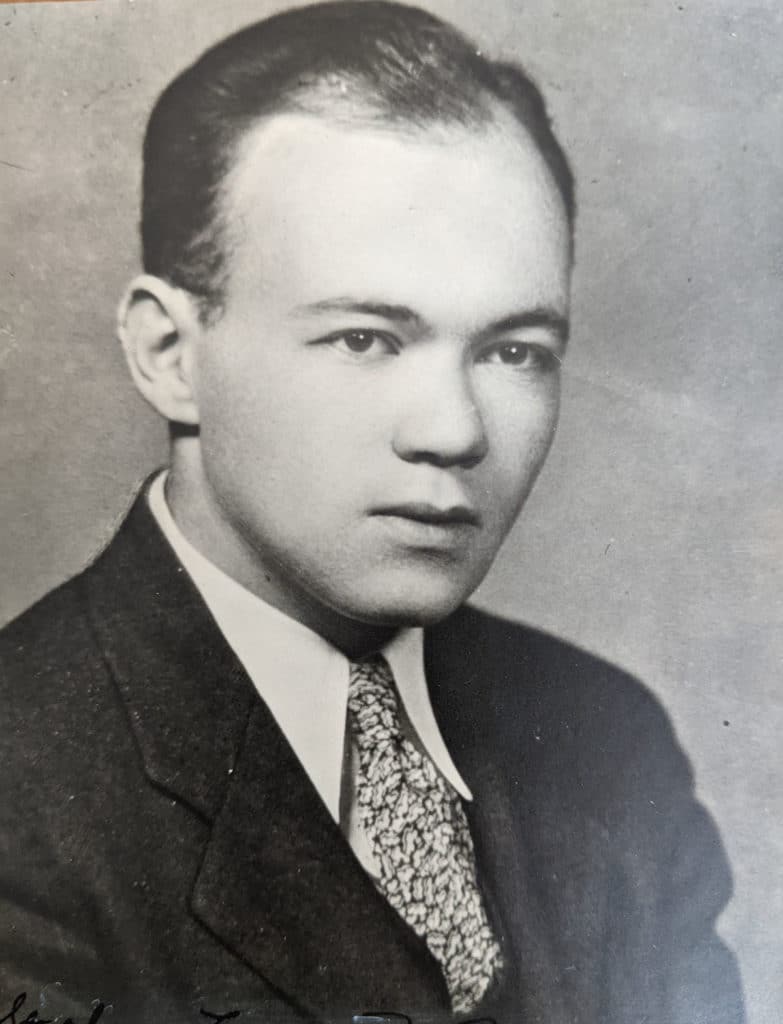
My maternal grandfather, Solomon, was born in 1907 in New York to a Ukrainian-immigrant Jewish family. He placed number one in New York State high school placement tests and received a full scholarship to Cornell University, hoping to become an accountant. My grandfather soon learned that 1920s corporate America systematically refused to hire Jews. So, Solomon applied to medical school. There, he found quotas limiting Jewish admissions. Determined to become a doctor, in 1929, he moved to Germany to attend medical school, knowing no German. He returned to America with his degree in the nick of time—1936—but still couldn’t get a job as a Jew. He changed his name to Stephen, shed his identifiable Jewish identity, and found employment. Solomon-turned-Stephen’s experience of American antisemitism was in the form of formidable barriers to entry in educational and employment opportunities unless overt Jewish identity was hidden.

Then came my parents’ generation and mine. Jewish generations in 1960s-2020 America faced far fewer limits on our opportunities. We had arrived, largely in part to the choices of my grandparents’ generation. Antisemitism still cropped up, but the incidents felt like outliers.

This brings us to my children’s generation, Gen-Z, the great-grandchildren of Solomon. Mark Twain said, “history does not repeat itself, but it often rhymes.” American Jews today are not experiencing antisemitism exactly as my grandfather did in 1925 America or in 1936 Germany. “Nitpicking over sloppy historical analogies [is] a convenient distraction,” writes Dara Horn in her illuminating and devastating book, “People Love Dead Jews.” The focus instead should be on how antisemitism is manifesting and how it activates “a communal memory of multiple millennia.”

As StandWithUs’ legal director, I work with a team providing students and others with legal tools to fight antisemitism and support Israel. As the new semester begins, we once again see a steady rise in antisemitic incidents personally targeting individuals for antisemitic discrimination. Too many of these incidents are reminiscent of my grandfather’s era.

Jews must remember that we have resources today available to us like never before in history: we have tools to stand up, be empowered, and fight back

Take one example of many: in spring 2022, at the University of Connecticut, anti-Israel student activists targeted a Jewish student, Natalie, for unrelenting antisemitic bullying on social media after she lawfully removed anti-Israel signs illegally posted in the school library. Her home address was posted online, and her safety compromised. She was thrown out of her student a capella group, of which she was president, based entirely on baseless accusations and without due process. StandWithUs worked extensively to ensure her safety, help her tell the truth about what was happening, and file criminal complaints with police. Ultimately, the university’s president made an admirable statement condemning what occurred, identifying it as antisemitic, and initiating an ongoing investigation. The personal nature of the antisemitism Natalie experienced likely would have felt familiar to my grandfather’s generation.

We are hearing increasing numbers of students whisper of unspoken quotas resurrecting on Jewish student admissions to colleges. Professors report of being denied tenure and merit-based raises in academic departments simply for being known Zionists or serving as faculty advisors to Jewish student campus groups.

It also hits home. In her first year of high school, during the May 2021 Gaza crisis with Israel, my daughter overheard classmates saying, “I’d never be friends with a Jew.” Her history teacher called her out in class repeatedly as “the class Jew” and directed students to Qatari-funded Al-Jazeera to learn about Israel. Her school administration was indifferent. When I speak to our StandWithUs Kenneth Leventhal High School Interns, my daughter’s story is not unique. When this generation identifies openly as Jews and Zionists, they often target themselves for antisemitic marginalization and worse.

Jews must remember that we have resources today available to us like never before in history: we have tools to stand up, be empowered, and fight back. Some university administrations, like at the University of Connecticut, call out antisemitism. And much of American antisemitism manifesting today is rooted in ignorance, not evil, making education crucial.

Yet we also must be vigilant. The brand of antisemitism reemerging today appears to be a cyclical, evolving variation of the same-old hate, awakening the millennia-old Jewish collective memory.


Yael Lerman is the director of the StandWithUs Saidoff Legal Department, providing legal resources to students, professors, and community activists confronting antisemitic and anti-Israel activity. She can be reached at legal@standwithus.com. StandWithUs is a 21-year-old, international, non-partisan non-profit organization that supports Israel and fights antisemitism.

Cyclical American Antisemitism Read More »

Just do it

Before we Jews assemble around the Sabbath table,

we welcome angels, but before we say kiddush

we send them all away, because we are not able,

 till they have \been removed just like the Nike swoosh

has been removed from Nike’s logo, to

to feel vicariously virtuous and victorious

when in the presence of great angels, who

than us—-but not the Sabbath queen!—- are far more glorious.

Yet on the Sabbath, which is like the World to Come,

we like to have the feeling that we’re worthy winners,

while in the six days of the workday week we felt ho-hum

at best, and when compared with angels, like  losing sinners.

My referenced to the Nike swoosh reminds me that “Just do it”

applies just as to positive commandments to all the shoes

that Nike makes, while “Just don’t do it” is a perfect fit

to ones that, being negative, are “don’ts” not “dos.”

Inspired by Rabbi David Wolpe’s Off the Pulpit, “No More Angels,”  on 7/9/15 for Shabbbat Pinchas 5775:

We gather around the Shabbat table, put our arms around one other and sing “Shalom Aleichem” — the song that greets the Shabbat angels. By the time we have finished the shabbat song, three minutes later, we are concluding with “Tzaitchem L’shalom” — go in peace, already asking them to leave. The poor angels must wonder why we do not wish them to stick around!

For a clue we can look at the Kotzker Rebbe’s comment on the verse in Exodus 22:31: “You shall be holy human beings to me.” The Kotzker said that God has enough angels, what God needs is holy human beings. Human beings are effortful and striving; we fail and overcome. We are human.

So Rabbi Soloveitchik made the comment that we usher the angels out so quickly because human beings cannot live with angels. Our mission is to understand that no one is perfect, that we are cracked and fissured and flawed, and need forgiveness. Together around the Shabbat table, we are delighted to welcome and entertain the angels — but not for too long. We need to eat and argue and forgive — and love. Shabbat Shalom.

On  10/16/22, Hoshanah Rabbah 5783, I  recalled the first part of this poem after  reading an obituary by Alex Williams  of Dan Wieden (“Dan Wieden, Adman of Nike ‘Just Do It’ Fame, Is Dead at 77,” NYT, 10/14/22). Dan Wieden’s chief claim to advertising fame was the slogan that he coined to promote Nike, “Just do it.”   It occurred to me that this slogan applies to the 248 positive commandments of the total of 613 commandments that Jews are commanded to observe, and coined “Just don’t do it” as a new slogan to discourage performance of the 365 negative commandments,

It occurred to me that this slogan applies to the 248 positive commandments of the total of 613 commandments that we are commanded to perform, and coined, “Just don’t do it” as a new slogan to discourage performance of the 3265 negative commandments.


Gershon Hepner is a poet who has written over 25,000 poems on subjects ranging from music to literature, politics to Torah. He grew up in England and moved to Los Angeles in 1976. Using his varied interests and experiences, he has authored dozens of papers in medical and academic journals, and authored “Legal Friction: Law, Narrative, and Identity Politics in Biblical Israel.” He can be reached at gershonhepner@gmail.com.

Just do it Read More »

The Creation of Failure

How do we tell the story of failure?

In 1923, Franz Kafka and his companion Dora Diamant went for a walk in Berlin. While out, they met a little girl in a park who was crying because she had lost her doll. Kafka told the girl not to worry, because the doll had actually gone away on a trip; in fact, the doll had written her a letter. When the girl asked for the letter, Kafka explained that he didn’t have it with him, but that if she would return the next day, he would bring it to her.

And so it began. For three weeks, Kafka would compose letters from the doll to the girl, to keep her informed about the doll’s “travels.” Diamant explained that Kafka gave these letters the same attention he gave to his other literary works. But then came the question: How would Kafka end this story, and bring the letter writing to a close? Dora told the French essayist Marthe Robert that Kafka “married off” the doll: He (Kafka) searched about for a long time and finally decided to have the doll marry. He first described the young man, the engagement, the preparations for the wedding, then in great detail, the newlyweds’ house. Having moved away with her husband, the doll could no longer write or visit the little girl. And finally, after the letters concluded, Kafka made sure that the little girl received a present of a new doll.

This fascinating story contrasts sharply with the bleak, pessimistic character of much of Kafka’s writing. But it offers a powerful example of the mindset needed to find a way forward when everything seems to have come to an end. And at some point in life, all of us are searching for our missing doll.

Mindsets stand at the center of a critical debate regarding this week’s Torah reading. The Tanakh begins with a debacle. Adam and Eve, in their first hours, violate the one and only commandment they are given, not to eat from the Tree of Knowledge of Good and Bad. Because of this transgression, they are expelled from the Garden of Eden and condemned to lives filled with death, disease and difficulty.

This story of sin and expulsion appears to be an absolute tragedy. Humanity is cast out of a utopia and into an unmapped reality, left only with dreams of a paradise lost. Some took up the quest to return to paradise. Brendan of Clonfert, a 6th-century Irish monk, gathered 16 fellow monks on a boating expedition to search for the Garden of Eden. (They may have discovered Newfoundland instead.) Who wouldn’t want to escape this vale of tears?

Others took an exceptionally pessimistic reading of this text. The Christian theologian Augustine of Hippo sees this “original sin” as something that taints all of humanity. The sin of Adam and Eve is hereditary, and every person is cursed from birth. Augustine asserts that “no one is free from sin in [God’s] sight, not even an infant whose span of earthly life is but a single day.” Since Adam and Eve ate from the Tree of Knowledge, human nature is so badly corrupted that every baby is a born sinner.

It is important to emphasize that Augustine sees free will itself as suspicious, something that can lead to disobedience. He writes that even before the sin, man should not have exercised his free will. Obedience to God, not autonomy, could have been Adam’s true glory: “since man has been naturally so created that it is advantageous  for him to be submissive, but disastrous for him to follow his own will.”

Augustine lobbied hard for his view to be adopted by the church; there is a rich history of the political intrigues he undertook to promote his view of original sin. Pelagius, a contemporary of Augustine’s who championed free will, was condemned and banished by the church, and to this day, Augustine’s view has remained dominant within most Christian denominations, and has had a profound influence on Western thought.

In Jewish theology, free will is a foundation of faith; the 613 commandments are meaningless unless a person can choose whether or not to do them. And because of this, many Jewish thinkers take great exception to the idea of “original sin.” In his commentary to the Torah, Rabbi Samson Rapahael Hirsch explains that

the dogma of original sin is a most regrettable error of an alien faith … to say that because of “original sin” sinfulness is innate in man, that man has lost the ability to be good and is now compelled to sin—these are notions against which Judaism raises its most vigorous protest … To this day, every newborn infant emerges from God’s hand in purity, as did Adam in his time; every child comes into the world as pure as an angel, to live and become a man. This is one of the cardinal points in the Torah of Israel and in Jewish life … Man as an individual and mankind as a whole can, at any time, return to God and to Paradise on earth.” The sin and expulsion from the Garden of Eden are tragic failures, but they don’t define humanity.

All of the above describes a fairly straightforward debate: Can humanity overcome this initial sin? One side maintains that the sin of eating from the Tree of Knowledge fatally corrupted humanity forever; the other says that each human being is born innocent, and has complete free will. Failure can always be overcome.

But what if failure is part of the plan? There is a fascinating third view, that says the sin of the Tree of Knowledge was actually what God wanted to happen.

But what if failure is part of the plan?

The Midrash Tanchuma (Vayeshev 4) says so explicitly, and reports that Adam complained to God that sin was merely a ruse to throw him out of the Garden of Eden. Eden was always a way-station, and Adam and Eve were never meant to live there.

Bezalel Safran has argued persuasively that the Ramban saw the sin and expulsion from the Garden of Eden as preordained, and notes that the Ramban makes several baffling comments about this passage that can only be understood in this manner. The Ramban says Adam and Eve were created to be perfect, and had no free will; they would have done what was good automatically. This explanation is baffling for two reasons; one, it denies free will, which as already mentioned, is a fundamental belief of Judaism. Second, if Adam and Eve had no free will and could only do what was good, how did they sin by eating from the Tree of Knowledge?

The only possible answer is that God programmed the initial sin of Adam and Eve, so they could acquire free will by eating from the Tree of Knowledge. The Ramban drops several other hints to this effect. One significant hint has to do with the aftermath of the sin. It says that “Adam and Eve heard the voice of the Lord God walking in the garden.” The Ramban quotes the Midrash, which explains that the divine presence was leaving, in response to the sin. Remarkably, the Ramban offers the opposite explanation: God was arriving to speak to Adam and Eve because of the sin. But why would two sinners be deserving of experiencing a special revelation?

These unusual comments, when pieced together, offer a very different interpretation of this passage. Adam and Eve were created perfect, and could have remained so. But only imperfect people can transform and grow; only with failure could Adam and Eve actually experience life.

And that is why God had to create failure. In order to enter the drama of history, with all of its imperfections, Adam and Eve would have to leave paradise.

The Ramban’s view is the polar opposite of Augustine’s theory of “original sin.” Augustine sees the fall of man as final and fatal, a curse from which humanity can never recover. The Ramban says, that on the contrary, it was God who forced humanity to fail, to leave behind perfection; it was God who engineered this sin, and opened the door for free will and personal growth. Our exit from paradise, as painful as it may be, was part of God’s plan, and allows us to live an authentic life.

What I find most compelling about this debate is that it represents two fundamentally different ways of seeing the world. The mindset of Augustine’s view, which sees humanity as fundamentally broken, is so different from the Ramban, who sees this sin as the foundation of spiritual growth.

Mindsets determine how we react when we are broken and imagine ourselves to be beyond repair, when paradise has suddenly disappeared. To see the world as fundamentally corrupt leads to a pessimistic mindset and a passive acceptance that little can be done.

But the Ramban offers us a different mindset. Failure is woven into the very fabric of our reality; but that is very much a part of the plan. It is left to us to find a way to overcome failure. Even after the doll is gone, we must find a way to write a new story, and search for new beginnings.


Rabbi Chaim Steinmetz is the Senior Rabbi of Congregation Kehilath Jeshurun in New York.

The Creation of Failure Read More »

Amherst College Student Paper Publishes “In Defense of Hamas” Piece

An anonymous student newspaper at Amherst College is under fire for publishing a piece that was initially titled “In Defense of Hamas” in their second Fall 2022 issue.

The Amherst Contra piece, which does not appear to be online yet although a print version of it has gone viral on social media, called Hamas “the perennial boogeyman of discussions on Israel-Palestine” and that while they may very well be a terror group, “Israel and the U.S. government are equally as violent and less justified.” The anonymous piece argued that Hamas’ violence is “a drop in a pool” compared to the U.S. and Israel, accusing the latter of murdering and torturing Palestinian civilians. It goes onto say that Hamas violence against is “far more morally justified” than Israeli actions against Hamas because “violent resistance groups” are the result of “constant human rights abuses.” The author concluded the piece that by stating that discussions about Hamas are merely attempts to obfuscate from Israel’s “decades of systematic apartheid and oppression.” The piece online has been renamed to “Recontextualizing Hamas” after the Contra acknowledged that “the original title did not accurately reflect the content of the article, and was extremely inflammatory, which shut down the possibility of any meaningful discussion before it could even begin.”

Jewish groups condemned the piece.

“Glorifying a foreign terror organization that espouses #antisemitism and hate, and is responsible for the killing of so many innocent Israelis, Americans and others, is inexcusable,” Anti-Defamation League New England tweeted. “We expect @AmherstCollege to speak out against this dangerous and misguided article.”

StandWithUs CEO and Co-Founder Roz Rothstein also said in a statement to the Journal, “Publishing a defense of an internationally recognized terrorist organization that promotes murder and targets innocent civilians in Israel, and uses its own people as human shields, is beyond appalling. Justifying this terrorism as a tactic to paint Israel as being terror-driven, when it is in fact driven by its responsibility to protect its citizens of all backgrounds, is dishonest and slanderous.  The Israel Defense Forces (IDF) has been praised by military experts around the world for its maximum promotion of morals and ethics during and between conflicts. To attempt to state otherwise, particularly anonymously, simply showcases cowardice and bigotry. Amherst’s administration must condemn this justification of violence against Jews and Israelis of all faiths, a group of people who share an identity with members of the Amherst community, in the strongest of terms and take measures to ensure their safety on campus.”

Associate Dean and Director of Global Social Action Agenda at the Simon Wiesenthal Center Rabbi Abraham Cooper also said in a statement, “It is no surprise that more mindless snowflake elites at our nation’s most expensive universities provide platforms for groups like Hamas whose antisemitic founding charter quotes from the infamous Protocols of Elders of Zion and has in word and deed till this day, devoted all of its energies to murdering Jews and whose leaders conveniently urge other parents to use Palestinian children as cannon fodder for their terrorism. The only difference between Hamas and Nazi Germany is that Hamas does not yet have the capacity to fulfill its genocidal goals in eliminating the lone Jewish state in the world and its nearly 10 million citizens.”

CAMERA on Campus similarly tweeted, “Attempts to whitewash the murderous actions of a terrorist org hell-bent on killing Jews are downright dangerous & an affront to Jewish students. @AmherstCollege, care to address this pro-Hamas propaganda?”

Amherst College said in a statement to the Journal, “This anonymous student publication represents the opinion of its author, and it does not purport to be a statement on behalf of the College or the larger student body. Amherst prizes and defends freedom of speech and the freedom to dissent in a respectful manner. As the College’s statement on academic and expressive freedom states, ‘At times, the desire to foster a climate of mutual respect may test the college’s duty to protect and promote the unfettered exchange of ideas. On such occasions, the college’s obligations remain clear. The liberal arts cannot thrive absent the freedom to espouse and debate ideas that are unpopular, controversial, discomfiting—and even seemingly wrongheaded or offensive.’”

This article has been updated.

Amherst College Student Paper Publishes “In Defense of Hamas” Piece Read More »

A Moment in Time: “What Will I Do to Create the Jewish Future?”

Dear all,

In a recent conversation regarding a mission statement for a Jewish organization, we struggled over language.

Do we want to preserve Judaism?

Do we want to ensure the survival of Judaism?

Do we want to maintain Judaism?

While all these may be true, none of them are forward thinking. When it comes down to it, we want to inspire through Judaism, we want ignite Jewish choices, we want to create a Jewish future.

I believe we therefore all must demand of ourselves: “What Will I do to Create the Jewish Future?”

And THIS is why every year I participate in the Tour de Summer Camps. And THIS is why I ask you to support my ride.

The Jewish Federation’s Tour de Summer Camps raises funds to send kids to Jewish Summer camps in Southern California. Every child who goes to Jewish camp is exposed to Jewish possibilities, dreams, values, and culture. Camp cultivates a spirit unmatched by any other kind of institution. And camp ensures that the ancient traditions we cherish become beacons of hope for tomorrow.

Support me in my ride. Support the future in Judaism with your donation. My goal is $3600 for the 36 miles I will travel. (I just tried the link myself. It only took a moment in time!)

With love, gratitude, and Shalom,


Rabbi Zach Shapiro

A Moment in Time: “What Will I Do to Create the Jewish Future?” Read More »

Jan Perry: Standing Up As a Jew

“I’m a Jew by choice,” Jan Perry says.  “It’s a big part of who I am.”

Jan is running for Congress in California’s 37th Congressional District, which includes heavily Jewish Pico-Robertson and adjacent areas. If elected, Jan will be the first Black-Jewish woman to represent the district, just as she has been the first Black-Jewish woman to sit on the Los Angeles City Council and the first to run the Los Angeles Economic Workforce Development Department.

When I interviewed Jan, my first question was obvious: “Why did you choose to be Jewish?”

Jan said her interest started early. Both of her parents were Black and Protestant. Her father told her that he enlisted during World War II because he felt he had to do something about Nazi evil. He often spoke to her about the liberation of the concentration camps and of antisemitism.

Her family lived in the Midwest where the school system was largely White and Gentile. Treated as outsiders, a bond developed between Jews and Blacks.  Frequently invited to the home of a Jewish friend, she observed and even participated in the family’s Jewish rituals, finding them fascinating and elevating. She proudly noted that one of those friends is now a rabbi in Los Angeles.

In college she took a class in theology where, in her words, she became “hooked on Judaism” and “enthralled” by its ethics.  Judaism, she says, “provides a life view. It teaches you to be an ethical and caring person. Judaism opened the door to a deeper understanding of why I am here and that there is always greater meaning to what we do in this life.”

After two years of rigorous study, Jan went before a beit din and, in accordance with Jewish law, undertook what she described as a “highly emotional” immersion in the mikvah. Today she’s a member of not one but two synagogues: the Reform Wilshire Boulevard Temple and the Orthodox Westwood Kehilla.

Judaism, she said, helped shape her political life. “The Torah teaches that strong and involved women can make a big difference. It teaches the obligation to help the vulnerable and to do so in an ethical way.  And it teaches love of Israel.”

“The Torah teaches that strong and involved women can make a big difference.“ – Jan Perry

Jan served on the Los Angeles City Council for 12 years, and from 2013 to 2018 was the General Manager of the Los Angeles Economic and Workforce Development Department. Through these two very different positions she learned not only “how to participate in politics as a policy maker but also as a hands-on implementer of policy, getting a better understanding of what actually works in the real world.” This included creating thousands of units of affordable housing, creating green spaces and wetlands to serve overcrowded areas, and working to improve health outcomes in underserved areas. In all her projects she required benefits to the local community that ensured jobs for those with low incomes.

Her unalterable support for Israel, Jan said, is a product not only of her Judaism but of her father’s concern with the fate of the Jewish people during World War II. I noted that both Jan and her opponent are Democrats, and presently pending before the House of Representatives is HR 2590, which has 34 co-sponsors, all of whom are Democrats. In the proposed legislation, “Congress finds … [that Israel’s] control over the occupied West Bank results in … serious violations of international law” and that Jewish settlements “established by the Government of Israel in the occupied West Bank, including East Jerusalem, have no legal validity.”

I asked Jan her views. She responded that she is endorsed by the Los Angeles Chapter of Democrats for Israel, and that she is unalterably opposed to the anti-Israel sentiment that finds a place among certain Democrats. Indeed, she says, one of the reasons for her conversion was because “in the event that I had a child I wanted to make sure that he or she had the right of return based on the fact that I was her Jewish mother.”

Jan noted that her election will provide a strong and proven Jewish voice in the Democratic Party to make sure that bills like HR 2590 never become law.


Gregory Smith is the President of Westwood Kehilla.

Jan Perry: Standing Up As a Jew Read More »

A Bisl Torah – Lingering

There is a midrash that likens the chag of Shemini Atzeret to the image of a parent begging their child to stay a little longer. That after celebrating for a series of days, God can’t imagine leaving and instead, implores us to sit and wait a bit. Relax…the rest of the world can wait.

My father is skilled in the art of an extended goodbye. Whenever I would come home from college (the long hour drive from Los Angeles to Orange County) and it was time to leave, he would say, “You should really go after the traffic has died down.” “Why don’t you leave in the morning? We can stay up, make popcorn, and have a movie night.” Even now, with three children of my own, my dad will tease, “You can all stay the night. Just get up early. C’mon, relax, stay a little bit longer.”

Shemini Atzeret is over, Simchat Torah has faded away and the “beginning” of the year is in full swing. It is hard to imagine a five-day work week. And yet, the lessons of the Jewish holiday season should not be so quickly packed away. As we have explored our mortality over Yom Kippur and reflected over the fragility of life while sitting in the sukkah, lingering with our loved ones is perhaps the greatest gift we are given. Taking a few more moments to hear each other’s stories. Sharing memories. Laughing. Crying. Doing nothing. Later realizing that the lingering, it was everything.

Our relationship with God is a metaphor for the relationships in our lives. We could never imagine saying no to a God that asks us for more time. And think of the wonderful surprises we just might experience in saying yes to a loved one that asks us to stay… just a little bit longer.

May the rushed beginning of this year include many moments of lingering, staying, basking in the glow of someone else that wants you close. The rushing will always be there. But the lingering…these are the moments we’ll hold for a lifetime.

Shabbat Shalom


Rabbi Nicole Guzik is a rabbi at Sinai Temple. She can be reached at her Facebook page at Rabbi Nicole Guzik or on Instagram @rabbiguzik. For more writings, visit Rabbi Guzik’s blog section from Sinai Temple’s website.

A Bisl Torah – Lingering Read More »

Explore Toronto with CityPASS and me!

For my summer trip to Toronto, I explored all of the CityPASS attractions! I loved all of the activities and was inspired to walk around the outside of CN Tower with EdgeWalk! Are you brave enough?


When I went on the CN Tower tour with CityPASS, I saw EdgeWalk and I knew I wanted to do it.

What is it? You will walk 116 stories above Toronto with nothing but a harness securing you. It is the world’s highest full circle hands-free walk and the first of its kind in North America. I want to go again but next time, not in the rain so you can see all the buildings below–far far below! I have some photos from a clear day. See the video below of our entire walk:

YES!! I did do EdgeWalk at CN Tower in the rain! And EdgeWalk is a NEXT LEVEL THRILL

There are thrills. And then there’s walking 116 stories above Toronto with nothing but a harness securing you. This is EdgeWalk, the world’s highest full circle hands-free walk and the first of its kind in North America. Walk in the clouds and get inspired like nowhere else! Are you ready to step up and touch the sky?”

During the CN Tower tour, I was INSPIRED to consider coming back for Edgewalk!

Elevate every occasion and celebrate infinite possibilities at Canada’s most celebrated architectural icon…the CN Tower. Discover Toronto’s most spectacular views day or night from floor-to-ceiling panoramic window walls on the Main Observation Level at 346 m/1,136 ft in the sky!

Carolann and I loved Casa Loma and saw them setting up for a lovely wedding.

Experience the elegance and splendor of the Edwardian era at Casa Loma, the only landmark castle in North America and Toronto’s premier historic attraction. Explore secret passages and tunnels. Tour the stables, with an exhibition of vintage cars from the 1900s, and take in the spectacular city view from the unique towers. See why Casa Loma is featured in famous films, including X-men and Crimson Peak. Plus, enjoy magnificent gardens May through September.”


I O-FISH-ALly LOVED seeing the Ripley’s Aquarium of Canada at night! I wanted to scuba in the tank with the sharks!

Explore the Waters of the World with 16,000 animals, 100 interactive displays and three touch exhibits featuring sharks, stingrays and horseshoe crabs. Check out North America’s longest underwater viewing tunnel, stare in amazement at the extensive jellyfish collection and soak in a live dive show!”


Did you know dinosaurs lived in Antarctica? I saw it on IMAX at Ontario Science Centre.

Where questions spark discovery! The Ontario Science Centre invites you to an exciting visit full of exploration, adventure and innovation! Visitors of all ages can explore more than 500 interactive exhibits, take in live science demonstrations, check out a real-life rain forest and a science arcade, and discover the wonders of the galaxy in the Space Hall, home to Toronto’s only public planetarium. Experience how thrilling films can be on our giant screen inside Ontario’s only IMAX® Dome theatre (film tickets sold separately).”


I was mesmerized by the Royal Ontario Museum. They “showcase art, culture & nature from around the globe and across the ages.” I could not wait to get back to my art studio to share photos of their ceramics collection.

Canada’s largest museum takes you on a journey from 4.5 billion years ago to today, from dinosaurs to mummies, Chinese architecture to Indigenous objects, and meteorites to precious jewels. Explore our world-class collection of art, culture, and nature from around the world and across the ages.

Have you been to CNE? The Canadian National Exhibition or The Ex happens every year at Exhibition Place in Toronto from the third Friday of August leading up to and including Canadian Labour Day, the first Monday in September! Listen to bands, feed the animals, eat fair food and ride the chair lift over the rides!

I celebrated my birthday last Fall (October 18, 2021) in Toronto and Carolann took me hiking. For this trip, we hiked at Hilton Falls in Ontario, Canada. It was so beautiful and peaceful. I loved how the sun peaked through the leaves, the falls and the bees!

I loved being back in Toronto and cannot wait to visit again. Thanks to CityPASS and Carolann for all of the amazing adventures. See my next article about my stay at Fairmont Royal York and meals at Shangri-la Toronto and Four Seasons Toronto.

Lisa Niver at EdgeWalk Canada in the rain

Explore Toronto with CityPASS and me! Read More »

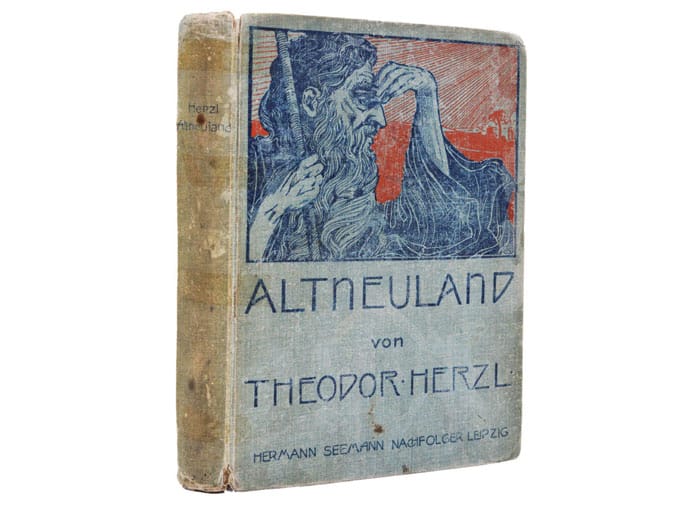
Herzl’s Defining Vision Altneuland – Old-New Land!

Editor’s note: Excerpted from the new three-volume set, “Theodor Herzl: Zionist Writings,” edited by Gil Troy, the inaugural publication of The Library of the Jewish People, to be published this August marking the 125th anniversary of the First Zionist Congress. This is ninth in a series. 

Amid all of Theodor Herzl’s personal, professional, and movement tensions, this remarkably resilient man was deep in the writing of his utopian novel “Altneuland,” “Old New Land,” which he published in 1902. “Der Judenstaat” was one of a series of nineteenth-century nationalist manifestos, asserting claims to various homelands. “Altneuland” was unique, Herzl’s biographer Shlomo Avineri explains, because it was “not just about Jews having a right,” but also about Jews making the right kind of state.

The novel was progressive and prescient. It envisioned equal rights and dignity for women – and for Arabs, whose ties to the land Herzl respected.

The novel was progressive and prescient. It envisioned equal rights and dignity for women – and for Arabs, whose ties to the land Herzl respected. It anticipated some of modern Israel’s tensions pitting secular versus religious Jews and non-Jews versus Jews. Most important, “Altneuland” provides a vivid if romantic vision of what a Jewish state would be reassured Jews that a Jewish state could be. 

The novel’s Hebrew translation captured Herzl’s alluring mix of romanticism and pragmatism, of dreaming and problem-solving. The Zionist intellectual and translator Nahum Sokolow rendered the title poetically as “Tel Aviv” – the ancient rubbled hill of spring. A tel is an artificial mound built up from archaeological relics and ruins, while the phrase comes from that most redemptive book of the Bible, Ezekiel 3:15. Seven years later, in 1909, the first Hebrew city, Tel Aviv, sprang up from the sand dunes just north of the ancient Jaffa port where Herzl had landed.

For a newly crowned King of the Jews, who knew little about Jews, Herzl did a masterful job of keeping the Zionist movement together. He usually harmonized his disparate diplomatic, organizational, and ideological initiatives, while carving a reasonable consensus around most issues. Alas, what might have been his greatest diplomatic breakthrough almost broke the movement.

Joseph Chamberlain, the Secretary of State for the Colonies of the United Kingdom, was as properly dressed as Herzl – and with a monocle to boot. As a liberal sympathetic to the Jewish plight, and an imperialist happy to keep Britain dominating the international arena, he was open to Herzl’s proposal in 1902, for a temporary Jewish home in Cyprus or El Arish. Consultation with the Cypriots and Egyptians redirected Chamberlain. When they met again in 1903, the colonial secretary offered Herzl 13,000 square kilometers at Uasin Gishu in the East Africa Protectorate – today’s Kenya. 

Somehow christened the Uganda Plan, it gained momentum after April 1903, when antisemites rampaged in Kishinev for two endless days, beating, raping, and murdering Jews. Coming six years into Herzl’s crusade, these Kishinev Pogroms validated his Zionist project, reinforcing his happy conclusion that the Jews were one people – with nerve endings overlapping and uniting them – and his unhappy conclusion that the Jews had no home in Europe. Desperate for an immediate solution, seeing dark clouds over Europe most Jews denied, Herzl presented the British offer at the Zionist Congress in August 1903 – and almost destroyed the movement he had sweated so hard to build.

Max Nordau would call the idea a “nachtasyl,” a refuge in the night. Menachem Ussishkin, who had been the secretary at the First Zionist Congress, was one of many Russian Zionists who felt the proposal repudiated the Zionist idea. If Herzl pursued such folly, Ussishkin and others threatened “to organize an independent Zionist Organization without Dr. Herzl.” Equally indignant, Herzl mocked the dissidents as typical hacks – for the “first thing they acquire are all the bad qualities of the professional politicians.” Showing his imperious side, he threatened to “mobilize the masses of the lower class … then cut off their funds.” 

This time, the masses abandoned Herzl.

There was good news hidden in the bad news from that volatile, vehement, angry, anxious Congress. The British government was treating the Zionist Organization and its leader Theodor Herzl seriously, marking a milestone in Jewish history. And when people take a young institution seriously enough to walk out of it, if it survives, it proves it is alive. Even a subsequent assassination attempt by a Uganda opponent on Max Nordau’s life confirmed Zionism’s growing relevance – “It does show love for an idea,” the wise Italian King Victor Emmanuel III, whose own father was shot dead in 1900, told Herzl. As one Altneu-nationalist to another, the king said. “I like this love for Jerusalem.”

The Sixth Zionist Congress voted 295 to 178 in Basel to explore the proposal. Nevertheless, the initiative’s formal defeat two years later would settle it: Zionism was about settling in Zion, nowhere else; it was a Jewish homecoming, not a spinoff to the European colonial adventure.

Herzl also enjoyed some diplomatic success with Russia’s interior minister, Count Wenzel von Plehve. This Jew-hater was open to schemes that might rid his country of the Jews. Herzl was realistic enough to focus on results and ignore motives. In retrospect, this recognition from Russian officials, followed by meetings in January 1904 with King Victor Emmanuel III and Pope Pius X, legitimized the movement and cemented Herzl’s legacy. Herzl kept trying to finalize a deal with the Ottoman Empire, sensing the “Sick Man of Europe’s” weakness, but multiple contacts and interactions never resulted in anything concrete.

With each passing year, Herzl realized that Zionism was also about reinvigorating Jewish identity and resolving many human dilemmas, not just solving the Jewish problem. “Zionism is a return to Jewishness even before there is a return to the Jewish land,” he explained. Herzl’s ideological journey, which tens of millions of Jews have now replicated, proved that the quest for Jewish normalcy is chimerical. Zionism does not work as a de-Judaized movement or a movement lacking big ideas or transformational values. It is as futile as trying to cap a geyser; Jewish civilization’s intellectual, ideological, and spiritual energy is too great.


Professor Gil Troy is the author of “The Zionist Ideas” and the editor of the three-volume set, “Theodor Herzl: Zionist Writings.” the inaugural publication of The Library of the Jewish People, to be published this August marking the 125th anniversary of the First Zionist Congress.

Herzl’s Defining Vision Altneuland – Old-New Land! Read More »

Local Chabad Mom Launches Kosher Cannabis Edibles Company

More than 10 years ago, Shifra Klein, a self-described “Chabad mom” from West Hollywood, sought to alleviate the autism symptoms that were debilitating to her then-3-year-old son. But little worked. After researching studies out of Israel and Spain, she turned to cannabis to ease her son Yaakov’s suffering. 

She used her cholent crockpot, of all things, to create cannabis oil.

Knowing her child would not take the oil straight, she measured a small amount of oil into some homemade gluten free cookie dough and baked it. And within a few minutes of eating the cookies, Yaakov made eye contact with Klein and her husband. 

“He looked right into our eyes and smiled,” Klein said. “That never happened before.”

Soon, when many people in Klein’s tight-knit religious community saw how effectively the cannabis-infused treats had worked on her son, she began getting calls from those seeking edibles to bring relief for their ailments. But she realized that if she were going to provide these products for other observant Jews, she wanted kosher certification.

This was the beginning of Klein’s yearslong journey in the kosher cannabis edible business, which culminated this summer with the launch of Hamsa Edibles, a kosher-certified and vegan cannabis edible that uses a nano technology for faster onset, bringing relief quicker to the patients. 

“Along with manufacturing safe and effective cannabis products, Hamsa’s goal is to protect the community from misinformation about cannabis and provide facts, studies and education, so the people can make informed choices for themselves and their families,” Klein, COO of Hamsa Edibles, said.

While most marijuana gummies on the market are gelatin-based, Hamsa Edibles products – “We answer to a higher power” the company tagline reads – are made with plant-based pectin. Pectin, a water-soluble fiber derived from non-animal byproducts, is commonly used in jams, jellies and fruit preserves. 

“Gelatin is not a kosher product, [so] that’s a big issue, especially when it comes to gummies in general, not just edibles,” Klein said. “We’re vegan so we appeal to the vegan community, and we’re kosher so we appeal to the kosher community. Having a choice of kosher products catering to your dietary needs—that’s a great option.”

Additionally, Hamsa Edibles are manufactured in their own kitchen where there is rabbinic supervision from Whole Kosher Services, a company based in Houston. The facility, Canfections Kitchen, operates out of Desert Hot Springs.

Hamsa Edibles gummies currently come in two flavors, mango and blueberry, and are available in various dispensaries throughout Los Angeles and the San Fernando Valley. Klein hopes they will soon be carried state-wide.

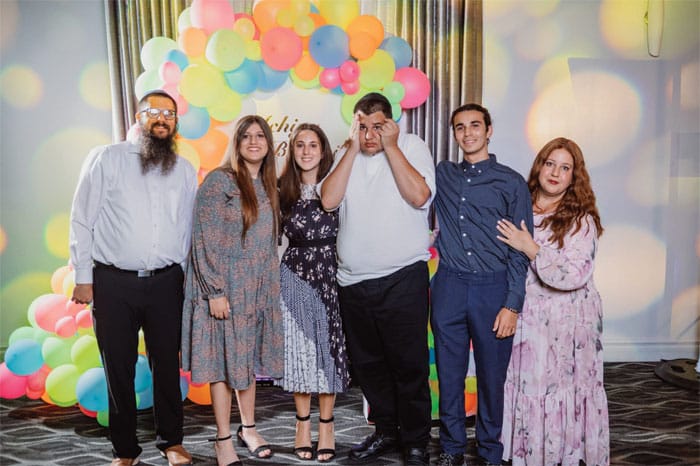
Hamsa Edibles founder Shifra Klein (far right) and her family. Courtesy of Shifra Klein

While Klein, a mother of four whose husband works in information technology, is largely responsible for promoting the kosher-certified product in her community, her partner, Janice Hardoon, has played a major part in the product’s launch. 

Hardoon is Jewish and has long run the West Hollywood-based K-town Collective. She established the Desert Hot Springs kitchen and found a chef that can make premium gummies to required specifications, including kosher.

“We just started Hamsa three months ago, and it’s a really exciting time,” Klein said.

While the two are enthused about the launch of Hamsa Edibles, Klein—a former preschool teacher in the Pico-Robertson area—acknowledges kosher cannabis has not been an easy career path. 

“The cannabis space in California is not currently a grossly profitable place, and we have daily struggles moving forward. We have been told by industry professionals, ‘You two ladies have a lot of beitzim to create a new brand in the current market,’ but we don’t see it that way,” Klein said. “This is our chesed [or kindness] to the community we love and are a part of. It’s our mitzvah project to share with the world options that are safe and effective for relief, with the extra sense of comfort that you don’t have to compromise being kosher to heal yourself.” 

Local Chabad Mom Launches Kosher Cannabis Edibles Company Read More »