fbpx

October 19, 2022

Literary Conference in Honor of Baruch Link to Feature Israeli Author Dorit Rabinyan

When Teri Link’s husband Dr. Baruch Link passed away in 2019 at the age of 72, she and their friends knew that they wanted to memorialize him in a way that was emblematic of how he lived: surrounded by modern Hebrew literature and poetry, creative minds and a curious community.

The late Dr. Baruch Link z’l

Dr. Link taught modern Hebrew literature at his alma mater, UCLA, as well as American Jewish University, Hebrew Union College, Tel Aviv University and Ben Gurion University. 

In his honor, Teri and a group of friends created an annual “Scholar in Residence Weekend” event to celebrate his life and immerse attendees in the literature and poetry he loved so much.

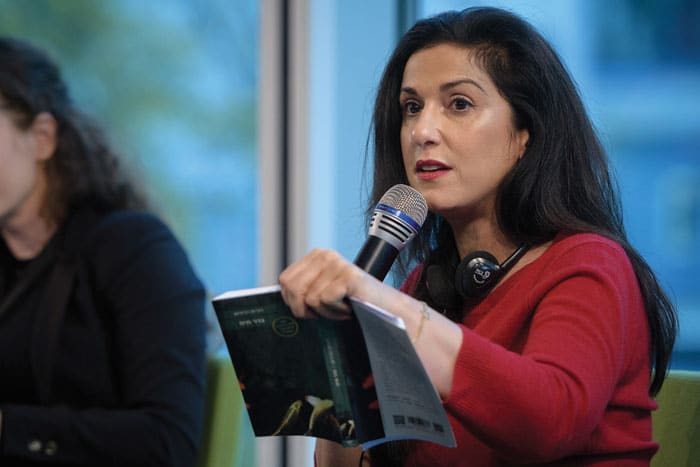
The inaugural event, “Writing from Zion: The Craft and Courage of a Modern Israeli Writer,” will feature guest scholar Dorit Rabinyan, author of the acclaimed novel, “All the Rivers.” 

The inaugural event, “Writing from Zion: The Craft and Courage of a Modern Israeli Writer,” will feature guest scholar Dorit Rabinyan, author of the acclaimed novel, “All the Rivers.” Rabinyan’s novel is about a secret romance between an Israeli woman and Palestinian man. A film adaptation is in development, slated to be produced by Gal Gadot.

“This is the way that a wonderful group of Baruch’s friends decided to honor his memory by creating this endowment focused on opportunities to bring scholars and authors in the modern Hebrew literature and poetry realm to Los Angeles.”  – Teri Link

“This is the way that a wonderful group of Baruch’s friends decided to honor his memory, by creating this endowment focused on opportunities to bring scholars and authors in the modern Hebrew literature and poetry realm to Los Angeles,” Teri told the Journal. “Baruch was an academic in the field of modern Hebrew literature for his whole professional career. There’s not very much knowledge about how this genre of literature, how these very talented writers and poets really do cross borders, cross cultures with very thought provoking and interesting works and that’s what we’re hoping to do in this weekend, introduce the Los Angeles community to authors that they most likely don’t know about.” 

The weekend will begin with a Shabbat dinner and conversation with author Rabinyan, who Tablet magazine declared the “Wonderwoman of New Israeli Lit.” On Saturday, there will be a “lunch and learn” presentation where Rabinyan will share tips and habits of her writing process. The panel will be moderated by journalist Danielle Berrin. There will be discussions on what separates Hebrew novels from other languages and the challenges Rabinyan has faced as her works tackle controversial issues.

Sunday’s session will feature Rabbi Adam Kligfeld and Professor David Myers, the Sady and Ludwig Kahn Chair of Jewish History at UCLA, discussing the question, “Can Israeli literature ever be apolitical?” The panel will then be followed by Professor Bill Cutter sharing poems from Dr. Link’s poetry books. 

“I’m very hopeful that with this inaugural weekend being a success, it will take off and that people from the community will indicate an interest in helping to vision it and fashion it going forward. It’s going to be a community program. It’s an opportunity to introduce this very vibrant literature and culture, because it’s also culture, too, to a new audience.”

Dr. Link was born in 1947 in Palestine to liberal Zionist parents who served in Israel’s War of Independence. As a child, he immersed himself in the works of Israeli writers and poets including S.Y. Agnon, Uri Zvi Greenberg, Hayim Nahman Bialik, Leah Goldberg and Zelda.  

Just before he intended to join the Israel Defense Forces, Dr. Link contracted a kidney virus that kept him from serving. So he jumped into the deep end of academia with a focus on literature. He received his PhD in comparative literature at UCLA in 1976. He and Teri would meet and raise a family in Los Angeles as members of Temple Beth Am and its lay-led “Library Minyan.”

Dr. Link had been a teacher all his adult life, so it was a top priority to the organizing committee that anyone who wants to attend the conference be able to attend without price as a barrier. There are sponsors who are generously supporting the attendance of students and teachers and young professionals. 

“One of the amazing things about being part of a close-knit Jewish community, like Temple Beth Am: everyone knew Baruch,” Teri said. “And so this is both personal and universal for the Temple Beth Am community. People loved him and are thrilled to celebrate in this way. Baruch was this ebullient warm man who was really a good friend to many.”

The “Writing from Zion: The Craft and Courage of a Modern Israeli Writer” conference takes place October 28-30 at Temple Beth Am. Tickets can be purchased at  https://www.tbala.org/get-involved/baruch-link-scholar-in-residence-weekend

Literary Conference in Honor of Baruch Link to Feature Israeli Author Dorit Rabinyan Read More »
How a Jewish Bandleader Was Inspired To Record His First Solo Album

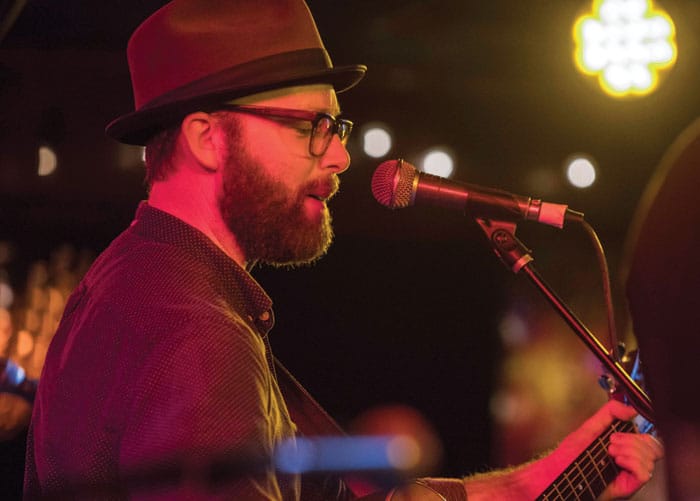
In his 20’s, Dov Rosenblatt thrilled New York fans fronting the Jewish rock group, Blue Fringe. In his 30s, while living in Los Angeles, he teamed up with the talented Duvid Swirsky of Moshav and Ami Kozak to form Distant Cousins, a group in which he still performs.

Now 41, he has moved to Nashville, Tennessee, to be the Cantor-In-Residence of Sherith Israel. He leads prayers three Sabbaths a month, which rekindled a desire he had since his youth — to release a solo album.

“From the first time stepping up to the bima and leading services, it inspired me, and I ended up writing a few more tunes and I realized I had an album’s worth,” Rosenblatt told the Journal.

He enjoys working at the synagogue and meeting those in the close-knit community. Despite playing music in front of thousands over the years, he was at first slightly nervous to lead prayers.

Making an album with a group is largely a collaborative effort; for his solo album, he wanted someone to bounce ideas off. He enlisted the aid of producer Joshua Grange, a pedal-steel guitar player who has worked with top artists, including k.d. lang and Eleni Mandell. “He’s definitely the real deal and a tasteful and soulful player,” Rosenblatt said.

Rosenblatt has a knack for taking Hebrew words of prayer and putting original and inspiring tunes to them. “HaNeshama Lach,” the first single from his upcoming album, “V’emunatcha Balalilot,” is especially beautiful. The album gets its name from the phrase which refers to belief in the night, which is part of the “Tov Lehodot” prayer chanted on the Sabbath and originates from Psalm 92.

“With a lot of these, I don’t sit and think about it too much. As I am davening, I will get tunes that come into my head and match.” – Dov Rosenblatt

“With a lot of these, I don’t sit and think about it too much,” he said. “As I am davening, I will get tunes that come into my head and match.”

One song “Refa Nah Lah (Heal)” has personal significance to him. It is a lovely and hopeful song, a prayer which calls for God to heal, but came from a frightful situation.

“A close family friend from L.A. was in a really bad car accident and was in a coma,” he said. “I was struck at how short the prayer was — just five words straight from the heart. Being in that hospital room, begging God from a heartfelt place, that’s how that one came about.”

Rosenblatt said it’s a bit scary to release a solo album, but it is also exciting, and he stands by all his songs.

He noted that a Distant Cousins song, written by Swirsky, has the lyric: “All the things you run from keep running through your heart.” Rosenblatt explained that while he didn’t run from creating a solo album, it was something he knew he would always do.

That song is called “In My Blood” and the ability to sing prayers beautifully is in Rosenblatt’s blood. His grandfather, Rabbi Morris D. Rosenblatt, was the longtime rabbi of Kneseth Israel in Annapolis, Maryland. He would often lead services with a powerful voice, and was also a Navy chaplain, Rosenblatt said, adding that his mother’s father was a hazan in Chicago. 

Swirsky released his soulful song “Anani” recently.

Rosenblatt laughed when asked if there is a rivalry between the two bandmates.

“No, there’s no rivalry,” he said. “We’re great friends and fans of each other and ask for advice.”

Rosenblatt said going from the New York-area to Los Angeles to Nashville, showcases three different speeds.

“From New York to L.A. there was a big exhale, like it’s more chill,” Rosenblatt said. “Now, being in Nashville, nobody is rushing around. Everyone is really present in the moment.”

Of course, Rosenblatt will still have to rush around as he has four children and will also begin performing solo shows, in addition to projects and performances with Distant Cousins, which include scoring a television series.

His voice evokes the gentleness of Elliot Smith and has both vulnerability and power. He said the tracks on this album are slow and introspective. Why did he choose his first solo album to be in Hebrew rather than English?

“I think the way this came about was very organic and is really about me getting back to my roots,” Rosenblatt said.

How a Jewish Bandleader Was Inspired To Record His First Solo Album Read More »

Rosner’s Domain— 10 Days: Time to Prepare for Israel’s Election

As much as we dislike politics, and five rounds of elections in Israel give us many reasons to dislike politics, or merely hope for a brief respite from having to think about politics – Election Day is 10 days away. Thus, I have no choice but to meet my obligation as political editor and propose a few pointers for the coming days. In other words, if you’re interested in Israel’s future, what are the trends that you need to follow until November 1st, when Israel goes to the polls.

Any signs of change: This has been the most static election season in Israel’s history, as far as we can judge (polls weren’t available in the early days of the state). Simply put, this means that any hint that people are deciding to switch from their current choice to a different choice of party could make a real difference. Even more important — in fact, a much more important sign — would be a decision by anyone to switch to the other bloc. We used to think about Israeli elections as a parliamentary contest between many parties, but this cycle is a contest between two blocs with almost no movement from one side to the other. For many weeks, most parties remained stable, and the blocs remained solid. A tie, or close to a tie, meaning, no one with the ability to form a coalition, was the result of almost all polls.

This has been the most static election season in Israel’s history … This means that any hint that people are deciding to switch from their current choice could make a real difference.

Arab intended participation: The share of Arab Israelis intending to vote in the coming election is low. If Arabs do not vote, the Jews get a higher share of the vote, and most Jews are right of center. In other words, a key for the center-left bloc to prevent a Likud-led rightwing coalition is to somehow convince Arab voters that they have a stake in preventing such outcome. The flip side of the same coin is for Netanyahu to not give Arab voters a reason to change their minds and suddenly decide to vote. 

Arab representation: The Arab voters are important because they will be crucial in determining the outcome of the election. But there’s another important feature of their participation that must be taken into account. Currently, the two parties closest to the electoral threshold are Arab parties (Hadash-Ta’al and Ra’am). This means that even a slight slip further down the participation scale could mean no Arab representation in the next Knesset. Repeat: more than 20% of Israel’s voters will have no representatives in the next parliament. And don’t blame the Jews for such outcome – if Arab voters decide not to vote, they cannot expect representation. 

Likud voters’ enthusiasm: In recent rounds, Likud voters did not attend the polls in great numbers. Some of them were cocky and believed that Netanyahu is going to win without them, some of them got tired of voting time and again without getting clear results, some might have tired of Likud, but do not have the stomach to vote for another party. Either way, Netanyahu needs them, all of them, to offset the shrinking number of parties who’d accept him as a leader of a coalition. Can he get out the vote? Here’s the tricky part of it: he needs to awaken them without using the means that would also arouse the Arab voters (that is, without crying “the Arabs are coming”). 

A Jewish Home dilemma: Ayelet Shaked and the Jewish Home party are a thorn at Netanyahu’s side. He wants her to quit, but she insists on running. He wants her voters to abandon her, but about 2% remain. This could mean a loss of 2-3 seats. The crucial seats. Thus, he will have to decide, sooner rather than later, whether to risk these votes by an even more aggressive attempt to bury Shaked, or risk them by calling on people to vote for her in an attempt to lift her party above the electoral threshold. In both cases, there’s no guarantee of success. 

Unrest in the West Bank: A rise in violent attacks in the West Bank and Jerusalem in the last few weeks could alter the course of the election in more than one way. They could impact the fervor of the right. They could influence the decisions of Arab voters. They could raise the temperature of this election to a higher level. Yair Lapid, as Prime Minister, is the man in charge. Any mistake when violence occurs on his watch could cost him the election. On the other hand, when reality, rather than empty rhetoric, is the main feature of public discourse, the PM has an edge, as he is the one who gets to make decisions and dominate the agenda.

Something I wrote in Hebrew

Would Israel enact a different policy had it known how the war in Ukraine is going to evolve? That’s not an easy question to answer. Here’s what I wrote:

In retrospect, it’s easy to say all kinds of things. In practice, leaders only have the reality in front of them. If you believe that Russia will win, you act on that belief. If the leaders of Israel believed that Ukraine could not withstand an attack, if they assumed that the West would quickly fold, that Joe Biden would act in Ukraine the way Obama acted in the Crimea – when they had little choice but to act the way they did. Does this mean next time Israel should act in a different way, be a little less careful (with states like Russia) and a little more moral (against all aggressors)? This is a complex question for leaders and a complex question for the public.

A week’s numbers

This is what optimism looks like. The right tends to believe there will be no need for a sixth election (namely, they win). The center and left tend to believe that another round is coming soon (namely, Netanyahu fails, again, to form a coalition). 

A reader’s response:

Josh Rosenthal asks: “I read your columns about the agreement with Lebanon and couldn’t figure out if the bottom line is for or against the agreement”. My response: I don’t think it is a very good outcome, but had I been a cabinet member I’d vote for it (because voting against it would do more harm than good).


Shmuel Rosner is senior political editor. For more analysis of Israeli and international politics, visit Rosner’s Domain at jewishjournal.com/rosnersdomain.

Rosner’s Domain— 10 Days: Time to Prepare for Israel’s Election Read More »

you-dont-know-schiff

Talking Schiff with Mark & Lowell #9: Mark Gets Robbed!

This week Mark talks with Lowell about a recent unpleasant incident.

Mark’s books are available for purchase!
Available November 8, 2022.”Why Not: Lessons on Comedy, Courage, and Chutzpah.”
Click on these links to buy:
Amazon
Barnes & Noble
Books-A-Million
Bookshop.org

Read road stories from some of the best comedians of our generation in Mark’s first book  “I Killed: True Stories of the Road from America’s Top Comics” available now!

Please follow “You Don’t Know Schiff” so you don’t miss out on any exciting episodes. Click here to subscribe on Apple Podcasts (and please leave us 5 stars and a positive review – your support means the world to us and it helps us get discovered by new listeners):

Your hosts:
markschiff.com
Twitter: @markschiff
Instagram: markschiff1
 

Lowell Benjamin
Twitter: @lowellcbenjamin
Instagram: @lowellcbenjamin


Talking Schiff with Mark & Lowell #9: Mark Gets Robbed! Read More »

Talking Schiff with Mark & Lowell #9: Mark Gets Robbed!

This week Mark talks with Lowell about a recent unpleasant incident.

Mark's books are available for purchase!
Available November 8, 2022.”Why Not: Lessons on Comedy, Courage, and Chutzpah.”
Click on these links to buy:
Amazon
Barnes & Noble
Books-A-Million
Bookshop.org

Read road stories from some of the best comedians of our generation in Mark's first book  “I Killed: True Stories of the Road from America's Top Comics” available now!

Please follow “You Don’t Know Schiff” so you don’t miss out on any exciting episodes. Click here to subscribe on Apple Podcasts (and please leave us 5 stars and a positive review – your support means the world to us and it helps us get discovered by new listeners):

Your hosts:
markschiff.com
Twitter: @markschiff
Instagram: markschiff1
 

Lowell Benjamin
Twitter: @lowellcbenjamin
Instagram: @lowellcbenjamin

Talking Schiff with Mark & Lowell #9: Mark Gets Robbed! Read More »

The Munkacser Yid

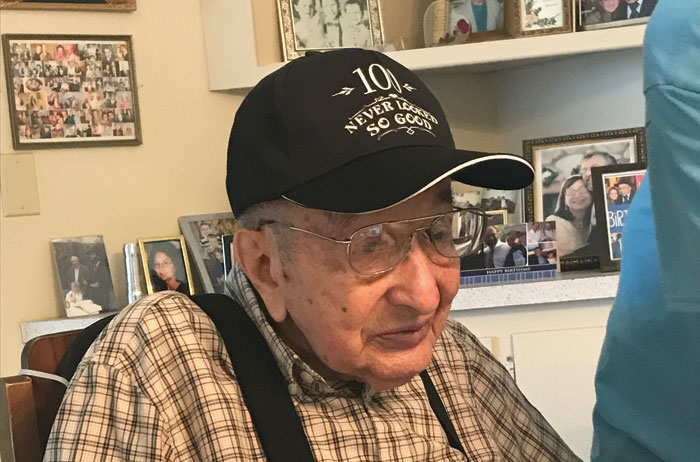
My father, Albert Farkas, whom many called a “Munkacser Yid,” passed away on the second day of Rosh Hashanah at age 102. A long life for a man who spent three years in a labor camp, then returned home to find that all of his family and relatives had been gassed in Auschwitz. Most of the great Jewish community of Munkacs had been wiped out by the Nazis, but my father was a survivor. Until the last week of his life, his mind was sharp, his memory amazing and his commitment to Yiddishkeit never wavering. I asked him once how he could stay so pious and committed to a God who had caused so much pain to the Jewish people? He told me this story. 

Toby and Albert Farkas

“Life in Munkacs was good,” he began. “Almost every Jew in town was religious. And the Munkacser Rebbe, whose fame was known worldwide, helped to maintain the spirit of Jewishness throughout the town. I met your mother in school. And we got engaged, but before the wedding could take place, the war broke out. My friends and I were shipped out to a labor camp. For three years, we had no idea what was going on in the rest of the world. 

Luckily, I survived and returned to Munkacs and, for the first time, found out about places like Auschwitz and the gas chambers. I also heard that your mother and her entire family were taken to Auschwitz, but I had no way of knowing if they were dead or alive. But that day I made a covenant with God that if Toby was spared, I would forever follow the Jewish commandments.”

When my mother had arrived at Auschwitz, the infamous Mengele asked the crowd, “Who knows a trade?” She and her sister raised their hands. When their father had died earlier, their mother had taught the daughters to cook and sew, so that if they were ever without a husband, they could earn a living. My mother cooked for the officers and her sister sewed uniforms. Every night my mother smuggled food into her dormitory to feed her sister and other starving prisoners.  

My father continued. “A few days later, one of the returning neighbors told me she thought that my mother was alive, but she was sick and in a hospital in Grimma, Germany. I immediately set out to find her. But the hospital in Grimma was chaotic and no one knew who was dead or alive. I returned to Munkacs and prayed. Each morning, I went to the train station hoping to see her. For three weeks I went there and waited. And then one morning, she stepped off the train with her sister. Two weeks later, we were married, and since then, I kept my promise to God.”

I was speechless as I absorbed this profound story of love. I kissed him on the forehead and told him how glad I was that he had kept his promise. He and my mother raised three children, and they had seven grandchildren and 18 great grandchildren. 

As I sit here remembering my father, the “Munkacser Yid,” I keep thinking that God must have kept him alive so long because he never broke his covenant.


Emil Farkas is a martial arts expert and author of eight books. He can be reached at BHKarate@aol.com.

The Munkacser Yid Read More »

A Day in Jewish Los Angeles

It started Sunday morning, when dozens of teenage Jewish boys set up folding tables on Pico Boulevard (and outside a few residential garages) and began selling fragrant lulavim and etrogim to Jewish men who, let’s face it, waited until the last minute to buy the necessary staples for Sukkot. Or perhaps they waited on purpose to ensure they bought the freshest possible etrogim. Either way, the customers were lucky if they discovered an empty parking space half a mile away from the young entrepreneurs’ folding tables. 

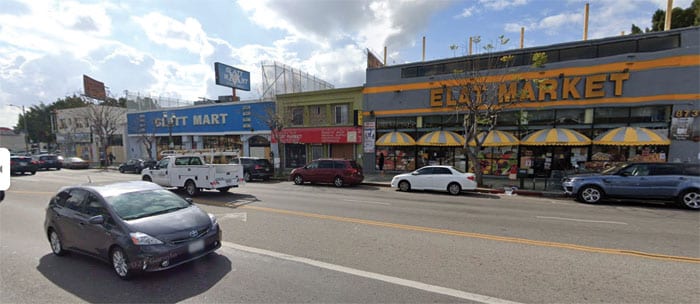
Not one to be outdone by the procrastination of others, I foolishly waited until Sunday morning to visit a local kosher Persian supermarket, which, due to the upcoming Sukkot holiday, would be closed for the following two days. I observe the halachot of Jewish holy days and wouldn’t have been able to spend money shopping at another store, and besides, the kosher markets are the only places where I can buy kosher string cheese for my kids, who squeal at the sight of it and scoff at my gourmet Persian delicacies. 

Did I mention that in Los Angeles in 2022, a bag of kosher string cheese costs $17.99? I would have been enraged, but a few minutes earlier, I had picked up a small package of kosher Brie cheese for myself for a whopping $14.99. I don’t know the cows who procured such cheeses personally, but given such prices, those bovines better have been fed grass imported from Switzerland.

With the Sukkot holiday beginning in a few hours, the masses in the supermarket were overwhelming, but nothing could have prepared me for the 25-minute wait in line at the cashier. In fact, the line in which I stood (the short line) wrapped around the aisle of artificial Israeli juices and past the grass-fed ground beef (undoubtedly fed with grass from Switzerland).

With such long lines, tensions were invariably running high, and one irate man began yelling loudly at a supermarket manager when he wasn’t allowed to return an item. All of that screaming made some customers palpably uncomfortable, given that we were about to begin a time of the year known as Ziman Simchateinu (“The season of our joy”). Fortunately, an older Persian woman at another register ended the awkwardness of that man’s incessant yelling by loudly demanding to know why one bunch of tarragon cost $4.59. 

That woman was my mother.

I realized I wouldn’t trade such madness — boys blocking sidewalks with their lulav and etrog tables, the chaos of packed kosher markets and, yes, my mother — for anything. 

A few minutes later, as I helped my mother back her gigantic car out of the tight supermarket parking lot, only to hear the justifiably aggravated honks of other drivers, I realized I wouldn’t trade such madness — boys blocking sidewalks with their lulav and etrog tables, the chaos of packed kosher markets and, yes, my mother — for anything. 

Sometimes, I really love LA. 

Back in my own car, my son asked me if, like his Ashkenazi teacher, he should say “esrog” rather than “etrog.” I calmly smiled and responded that we’re Mizrahim; “etrog” is appropriate for us. When my son wasn’t satisfied with my response and threw a tantrum, questioning life because his teacher had used the “wrong” word, I promised myself a shot of esrog liqueur inside my hosts’ sukkah later that night.  

Later that day, I faced bumper-to-bumper traffic at the worst intersection of the city. It’s the worst for me, anyway, because it’s home to not one, but two disturbing, giant billboards advertising the hit AMC show, “American Horror Story,” or “AHS.” Each time I drive past those adjacent billboards, I find a way to distract my small children in the back seat from looking out of the window, but I can only make funny faces and cross my eyes for so long. Eventually, my face hurts.

Various frightening AHS imagery has been plastered on billboards in the area for years. And for years, I’ve wondered whether parents, particularly some Orthodox Jewish parents who don’t even allow televisions in their homes, have ever made formal complaints about these billboards. But I don’t think anyone has the power to have them removed. 

As the hours passed and Sukkot approached, I drove to the local dry cleaners and watched as the kosher markets and many other Jewish-owned businesses, including jewelry and watch shops, restaurants and bakeries closed for the holiday. There’s something beautiful about watching a black hat-clad Jewish man frantically run home, carrying a bouquet of roses. Either he was trying to get home in time for Sukkot, or he truly loves his wife, and fears slightly for his life if those roses don’t arrive.

That evening, the sight of countless little outdoor huts — flimsy, but illuminating with the soft light of open hearts (and fairy string lights) — was nothing short of magical. 

That evening, the sight of countless little outdoor huts — flimsy, but illuminating with the soft light of open hearts (and fairy string lights) — was nothing short of magical. As my family and I walked past sukkah after sukkah, my kids saw other homes with both mezuzot on the doorposts and fake, dangling ghosts and other Halloween decorations on the front lawns. When they asked if some Jewish families celebrate Halloween, I told them that’s the beauty of America, even if our family uses pumpkins for stews rather than lawn decor. Incidentally, my son was still angry at his “esrog”-wielding teacher. 

Once inside our host’s wonderful sukkah for dinner during the first night of Sukkot, I loudly declared how blessed we were to have such fine, Southern California weather so that we could truly enjoy being inside the sukkah, whereas other Jewish communities are currently burdened with heavy rains, winds and even snow. 

Then I proceeded to pour nearly three-quarters of a bottle of children’s lice repellant over my head and body, hoping to prevent mosquito bites inside the sukkah. In my defense, that bottle was the closest thing I found to bug repellent as I shamelessly (and secretly) went through the medicine cabinet in my hosts’ home. It’s a little-known fact that LA has claimed first place on Orkin’s annual Top 50 Mosquito Cities List for the second year in a row. 

Sometimes, I really hate LA. 

The next morning offered an incredible contrast: countless Jews holding lulavim and etrogim, pushing strollers or swinging bags of wine and desserts as they walked to the synagogue, home or the sukkahs of their hosts for meals.

As I watched these people — my people, the People of the Book — eat, drink, laugh and pray in these fragile sukkahs, I realized how little control man has over any turns of events. And Jews, in particular, seem more vulnerable to the whims of others.  

And that day, as countless Jews and non-Jews walked through the busy LA streets, past the incessant smog, cars, buses and that one strange, UberEats food delivery robot at foot level, they were all within eyesight of giant stickers plastered over two separate billboards at some of the busiest intersections in the city. On those giant stickers on billboards were written the words, “ZIONIST JEWS CONTROL AMERICA.”

Sometimes, I really don’t know how I feel about LA.


Tabby Refael is an award-winning LA-based writer, speaker and civic action activist. Follow her on Twitter @TabbyRefael

A Day in Jewish Los Angeles Read More »

Hate, Lies, Partisanship

“If you are an honest person, you did not think this tweet was anti-Semitic. You did not think that he wrote this tweet because he hates or wants to genocide Jewish people. This does not represent the beginning of a Holocaust. That’s if you’re an honest person, you’ll admit that.” Candace Owens

Dear Candace,

As an honest person, I must say that in the entire Kanye West imbroglio, I was most surprised by your condescending, gaslighting defense of the rapper formerly known as Kanye West’s indefensible hate. It wasn’t just a defense; it was an attack on Jews for having the gall to stand up for ourselves.

As an honest person, I was deeply offended by the fact that you thought you could tell us what we should and should not be offended by — days before you drop a documentary called “The Greatest Lie Ever Sold: George Floyd and the Rise of BLM.” It appears that lying about blatant antisemitism is ok for you.

As an honest person, your mocking comment about the Holocaust was as offensive as your admiration of Hitler in 2019: “If Hitler just wanted to make Germany great and have things run well, okay fine. The problem is that he … had dreams outside of Germany.” 

As an honest person, I thought you were on a good track in distinguishing real racism from manipulated racism, but after gaslighting Jews, how can anyone trust you? Your new film is described as “a cautionary tale of what can happen when we blindly follow without critically thinking.” And yet you want the world to blindly follow your skewed view of antisemitism.

As an honest person, I know that West’s tweet was indeed dangerous. As Hillel Neuer tweeted: “The last time someone went death con 3 on the Jews, six million of us were murdered.” Not a week later, he fumed on the podcast “Drink Champs” that he was “used to getting screwed by the Jewish media” and blamed “Jewish Zionists” for pretty much everything: “Jewish people have owned the Black voice.”

As an honest person, I was equally disturbed by Tucker Carlson’s editing out West’s comments about Jews: “Jews don’t have the ability to make anything on their own … they are born into money.” He also wished that he had taught his kids to celebrate Hanukkah because it would come with “financial engineering.” Why would a journalist like Carlson believe he has the right to manipulate the truth—precisely what he accuses the left of doing?

As an honest person, I thought your line “It’s like you cannot even say the word ‘Jewish’ without people getting upset” was most telling. At a time when attacks against Jews are at an all-time high — when antisemitism has returned to being an “acceptable hatred” on both the left and the right — that line could only have been said by someone dishonest or perhaps anti-Semitic herself.

As an honest person, I now wonder about your beliefs regarding “Black Hebrew Israelites” and whether you, like West, have ties to Louis Farrakhan.

As an honest person, I have been equally disturbed by the far right’s unequivocal defense of you, West, and Carlson. We all know that the reaction would be quite the opposite if the three of you were on the left.

As an honest person, I know that when the right downplays or rationalizes antisemitism, as it has also done with Rep. Marjorie Taylor Greene and others, it becomes a mirror image of the left: protecting the indefensible and silencing dissent — all for the sake of partisanship.

We’re never going to be able to address any issues in this hyper-partisan environment. Hate needs to be depoliticized. Antisemitism, like racism, is not a competitive sport.

As an honest person, I know that we’re never going to be able to address any issues in this hyper-partisan environment. Hate needs to be depoliticized — and I would have thought that you of all people would know that. Antisemitism, like racism, is not a competitive sport.

As an honest person, I do wonder whether you understand that insinuating that Jews are dishonest is one of the oldest anti-Semitic tropes.

So my question for you is: Are you an honest, principled person? Or does partisanship override both?


Karen Lehrman Bloch is editor in chief of White Rose Magazine.

Hate, Lies, Partisanship Read More »

L.A.’s Broken Politics

In the struggle for civil rights and racial justice, it turns out that hating Donald Trump is the easy part.

But the city of Los Angeles has been roiled by a much more complicated controversy regarding race relations in the most demographically diverse community in the history of our planet. When three members of the City Council and an influential local union leader were caught on audiotape expressing a series of hateful ethnic slurs toward their political rivals, Angelenos were put to a potentially difficult test.

The four power brokers, caught talking about how to apportion Council districts according to a system of racial spoils that would benefit their own communities, were all of Latino descent. While most of us have become sadly accustomed to racially-charged insults being hurled at members of underrepresented minority groups, the fact that these epithets came from leaders of a historically marginalized community added a new and knotty twist. Would Los Angeles hold these transgressors accountable with the same vehemence as if the bigotry had come from a more expected source?

To their credit, the people of Los Angeles did not flinch from their responsibility. Council President Nury Martinez and Labor Federation president Ron Herrera quickly resigned and Councilmembers Kevin De León and Gil Cedillo seem likely to follow before too long. Their personal and political biographies did not protect them from widespread condemnation and revulsion.

Not all of our political leaders have met these challenges nearly as impressively. While Senator Alex Padilla led a parade of elected officials, including President Biden, in calling for the councilmembers’ ouster, California Governor Gavin Newsom was conspicuous in that his criticism did not include a call for the members to step down. Mayor Eric Garcetti did call for them to resign, but has kept an extremely low public profile as a leaderless City Council has careened through its first week since Martinez’ departure.

Garcetti may be playing a key behind-the-scenes role during this local government crisis, but his lack of visibility has been noticeable during this critical time. The mayor may also think that since he will be leaving office in a matter of weeks, he longer has the ability to rally the public toward a common set of goals and a recommitment to civic unity. I would disagree.

After a day’s hesitation, both mayoral candidates did call for the councilmembers’ departure and both voiced the necessary words about reconciliation and healing. But Karen Bass and Rick Caruso sounded as if the city’s most harrowing public challenge in a generation was simply a talking point for their respective campaigns. Both quickly repackaged the crisis as another proof point in their existing narratives – Bass as an experienced community organizer and Caruso as a can-do outsider – and both rushed to position themselves as the leader whose past experience could make things right. Both Bass and Caruso said all the right things: neither truly seized the moment.

Which leaves it to the rest of us to figure out how to piece a broken city back together. Although Martinez did make a passing reference to Jewish interests (including a familiar slur), it would be easy for our community to watch from the sidelines as black and brown leaders try to repair the damage. As a privileged older white man, I’ll admit some uncertainty about whether there is a useful role for me in these efforts at all.

We are living through one of the most exciting experiments in human history, to see if an unprecedented diversity of peoples can overcome our differences.

But I certainly hope there is, and so should you. We are living through one of the most exciting experiments in human history, to see if an unprecedented diversity of peoples can overcome our differences and work together toward common objectives. The lesson I’ve learned over the last two weeks that we are much further from that goal than I thought we were.

Which means there is work to be done, and the Jewish community here needs to be part of the solution. There was once a time when we played an important role in these efforts, but that was many years ago. The question now is whether we decide to step up again.


Dan Schnur is a Professor at the University of California – Berkeley, USC and Pepperdine. Join Dan for his weekly webinar “Politics in the Time of Coronavirus” (www/lawac.org) on Tuesdays at 5 PM.

L.A.’s Broken Politics Read More »