At the heart of the Rosh Hashana service is the U-netaneh Tokef prayer. Famously known for the phrases: who will live and who will die? Associated with the prayer, there is a certain sense of trembling and fear. We know the only predictability of life’s circumstances is its unpredictability. One can’t help but wonder whether the phrases will directly impact in the year to come.
This year, as I chanted the prayer, I read it differently. Not as questions but as challenges. Not who will be troubled but this year, I will seek to lessen the pain of those that feel troubled. Not who by water but this year, I will not ignore those who gasp for air, drowning from pressure and angst. Not who will die but who is having difficulty seeing the purpose in living?
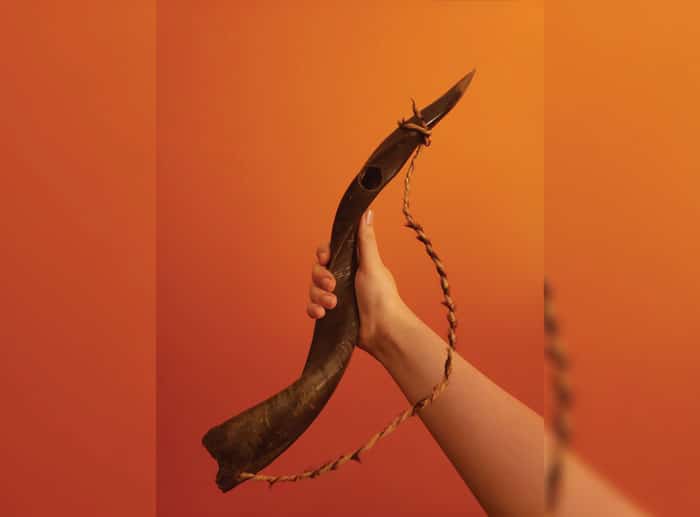
U-netaneh Tokef becomes a prayer constructed like a shofar. An alarm clock. A poem crying out the many ways we are being called.
Perhaps, the missing lines in U-netaneh Tokef are the following: this year, who is listening and who chooses to ignore? In these Yamim Noraim, Days of Awe, may the words of our prayers lift off the pages of the mahzor and embed themselves within our heart.
The message is clear: we are each being called to do God’s work.
Who will listen and who will choose to ignore?
G’mar chatimah tovah, may we all be inscribed in the Book of Life, Amen.
Rabbi Nicole Guzik is a rabbi at Sinai Temple. She can be reached at her Facebook page at Rabbi Nicole Guzik or on Instagram @rabbiguzik. For more writings, visit Rabbi Guzik’s blog section from Sinai Temple’s website.
The days between Rosh HaShanah and Yom Kippur are known as the Ten Days of Repentance (though I think of them more as ten days of reflection). We prepare ourselves individually so that we can come together as a community on Yom Kippur.
Over the next few days, look – really look into the mirror. Who is there? Are you using your voice appropriately? Are you being true to yourself? Are you honoring your finite soulprint? Are you inspiring others to harness goodness?
This is our opportunity to fine tune our mission on earth.
When I first started reading “Button Man” by Andrew Gross, a historical novel loosely based on the life story of Gross’s grandfather, I couldn’t help but think of my own father. The first few chapters tell us about the humble beginnings of the Rabishevsky family. Immigrants from the town of Minsk, the Rabishevsky’s settled in an impoverished area of Brooklyn. The youngest son, Morris, witnesses the death of his father at the age of twelve. My father grew up on Colonial Street in Montreal, also a tough neighborhood at the time. He also lost his own father when he was only twelve. Morris was forced to quit school and go to work. My father also had to forego a high school education so that he could work to support his mother and three sisters. Morris went to work for an established garment manufacturer and learned how to lay and cut fabric and make markers and so did my dad. After learning the trade, Morris went into his own business and so did my father. Both my dad and Morris Rabb faced major challenges in dealing with customers, suppliers, unions and banks. My father used to say that being in the ladies wear industry was like having to start a new business every three months.
Having worked alongside my father for fifteen years, I understood that managing a unionized factory, getting fabric and trimmings in on time, and trying to satisfy mostly fickle customers with new styles and on-time deliveries was not a business for the faint of heart.
But dear readers, this is where the parallels end. Morris Rabb does not only have to contend with the day to day activities of his business, he also has to fight to keep his enterprise from being taken over by a conglomerate of mobsters who have made it their goal to control the needle trade in New York City. Much to his dismay, one of his brothers, Harry, is involved with these racketeers.
Those who have read “Tough Jews” by Rich Cohen will recognize some familiar faces in “Button Man.” The garment unions in New York were mostly under control of one Louis “Lepke” Buchalter, a reform school dropout who has been making life difficult for Morris since their first encounter on the streets of Brooklyn. Lepke and his gang of henchmen will resort to any means including threats, torture, and murder to gain control of the unions and subsequently, the garment manufacturers themselves.
On March 25th, 1911 a fire at the Triangle Shirtwaist factory in Manhattan caused the deaths of 146 garment workers; 123 women and girls and 23 men who died from the fire, smoke inhalation, or falling or jumping to their deaths. Most of the victims were recent Italian or Jewish immigrant women and girls aged 14 to 23. Because the doors to the stairwells and exits were locked, a common practice at the time to prevent workers from taking unauthorized breaks and to reduce theft, many of the workers could not escape from the burning building. This tragedy, along with the lure of socialism, helped spur the growth of unions, whose main and noble objective was to fight for better working conditions for sweatshop workers.
However when the gangsters took over management of the unions, they became a cash cow for the mob. Union dues were set arbitrarily and automatically deducted from the workers’ paycheck. The union forced the manufacturers to buy materials and trimming from suppliers who were giving “kickbacks” to the union executives. Those companies that refused to join, or who tried to act independently were threatened with consequences that included violent acts of destruction and bodily harm. In an era that started with the end of prohibition, mobsters were seeking out new and more lucrative money making ventures and many unions became corrupt when the racketeers infiltrated and eventually controlled the syndicate.
Our hero, Morris Rabb, is one such holdout. He refuses to submit to the demands of Lepke and his gang, and he must suffer through battle after losing battle in order to maintain his independence. Threats are made and carried out despite added vigilance. Corrupt cops, bribed watchmen, and even members of Morris’ own family are under the influence of the mobsters and serve to betray Morris at every turn. His wife and his brother Sol beg him to succumb to the demands of Lepke, but Morris refuses to submit and must deal with the setbacks in his own way.
The story is one of Jewish survival, surely not as painful as the Nazi concentration camps, but as an example of one man who stood up for his beliefs and was always ready to help and defend his friends and family on the tough streets of New York during very dangerous times.
The story is one of Jewish survival, surely not as painful as the Nazi concentration camps, but as an example of one man who stood up for his beliefs and was always ready to help and defend his friends and family on the tough streets of New York during very dangerous times. It is an interesting tale that will be difficult to put down once you start reading.
The acknowledgements reveal that the story is loosely based on the author’s grandfather, Freddie Pomerantz, founder of the well-known dress company, Leslie Fay. During his research, Gross learned that his grandfather’s story has been recorded and archived in the library of the Fashion Institute of Technology, so that thirty years after his death, he was able to hear his grandfather recount his story in his own voice.
Like me, the author spent fifteen years working in the “shmatte” business before turning to writing. He remembers the old-timers of the industry as tough, uncompromising and stubborn men, feared by their employees and competitors. The author states that “As a generation, their lack of formal education coupled with their success will likely never be seen again.”
“Button Man” brought back some fond memories of the needle-trade and some tragic ones as well. A once thriving garment industry in Montreal no longer exists as most production has been moved offshore. The once mighty ILGWU (“remember to look for the Union label)” has disappeared, and the many supporting trades like button manufacturers, sewing machine suppliers, and lace makers have closed shop. I will never forget my father, with his leather apron, pencil in his ear arranging the cardboard patterns on the marker to save as much fabric as possible.
Paul J. Starr is a recently retired systems analyst who has lived his entire life in Montréal, Canada. On Sunday mornings he is “living the dream,” hosting a two-hour Internet radio show featuring music from the 50s and 60s called “Judy’s Diner.”
When Hurricane Ian hit Florida, Rabbi Sholom Schmerling of Chabad of Venice and North Port sprung into action. As the storm damaged his synagogue’s roof, blew over the menorah and knocked down his trees, he answered frantic calls from members of his community.
“All night, one person was in their home,” Schmerling said. “Their windows were blown out. There was water coming into their kitchen. They put a life vest on.”
The rabbi worked to help this person, along with other people in his community who needed assistance at this time. The extent of the hurricane’s damage is still being tallied, but so far, according to Lee County Sheriff Carmine Marceno, the Florida death toll is feared to be “in the hundreds,” and strong winds and heavy flooding have caused massive damage to people’s homes and businesses in southwest Florida.
Schmerling is working fast to get people access to generators and basic supplies. He’s opened up the Chabad as a place where people can eat, sleep and charge their phones if they don’t have power. He’s also receiving calls from people all over the world who are unable to reach their family in his community and helping them get in touch.
“We have the oldest population in Florida, and one of the oldest in the U.S., so our seniors are our biggest concern,” he said.
An hour and a half south of Venice is Naples, which was in a mandatory evacuation zone. According to Chabad of Naples Rabbi Fishel Zaklos, there was major flooding in his area, and the roof and fence at his Chabad were damaged. However, he’s been working hard to organize a BBQ dinner for people who are out of power or low on supplies.
In her Facebook invite for the BBQ, the rabbi’s wife Ettie wrote, “We might not have electricity, but we have each other.”
“This is what it’s all about,” Rabbi Zaklos said. “We’re taking everything that we’ve learned serving the community and applying it now.”
“This is what it’s all about,” the rabbi said. “We’re taking everything that we’ve learned serving the community and applying it now.”
The morning of September 29, the rabbi said that with help from Hatzalah, they rescued an 86-year-old woman who was stuck in her home after her first floor was flooded. The rabbi has been walking around and assessing the damage, and came across a community member who was happy to see him.
The morning of September 29, the rabbi said that with help from Hatzalah, they rescued an 86-year-old woman who was stuck in her home after her first floor was flooded.
“I was recording a video for Facebook, and a man turned to me and said that when he sees me, he knows God is present,” he said. “It wasn’t about me, it was about the two of us connecting. We are all made in the image of God, and we need to be here for the broader community. People are devastated. This has been a very difficult last two days.”
Hatzalah South Florida Emergency Medical Services, which serves Miami, Hollywood, Boca Raton and surrounding areas, sent volunteers to the southwest part of Florida to help as well. Joseph Dahan, co-executive director and co-founder of the organization, said that volunteers took medical equipment, water, clothing and food to the communities in need.
“We’re trying to track down people and provide medical services, and rescue people who have not be accounted for,” he said. “There haven’t been any fatalities or injuries at this time.”
“We’re trying to track down people and provide medical services, and rescue people who have not be accounted for.” – Joseph Dahan, Hatzalah
Sending volunteers when disaster strikes is what Hatzalah is all about.
“Hatzalah is always there,” Dahan said. “Nobody asks us to be there. We’ll figure out what the community needs and do what needs to be done. No one wants to leave their family a couple of days before yontif to do a search and rescue mission, but our volunteers know that’s what we need to do.”
Even though it looked like Orlando was going to be in the eye of the storm, during the worst part, community members there saw strong winds, and some are now without power. According to Kelila Siciliano, a former LA resident who now lives in Orlando, her power has been out for more than 14 hours.
“It’s windy and it’s raining, but it always rains here,” she said. “Every day in the summer we get some form of thunderstorms. But this time, there was no thunder – just wind. It was eerie.”
What concerned Siciliano the most was how she was going to make Shabbat without having any power. Thankfully, her friends nearby have power and are hosting her family for meals.
“The eruv is not up this weekend and there’s no way to check it,” she said. “But I heard from the rebbetzin of our synagogue that people are hosting for Shabbat and offering to bring meals to people as long as the roads are clear.”
Siciliano is just glad the worst of the storm is over.
The damage to Kelila Siciliano’s backyard in Orlando
“I am much more relaxed,” she said. “Yesterday, there was a nervous energy on WhatsApp from anyone who hadn’t been through a hurricane, but as it progressed, everyone’s energy was being released and we were sharing stories of past hurricanes. There doesn’t seem to be any real damage. It’s a relief to be on the other side of it. And I would take a hurricane over an earthquake any day.”
If you would like to donate to Chabad and Hatzalah at this time, here are links:
Fasting is an empowered choice. For many people, fasting on Yom Kippur is the most Jewish thing they do all year, even if they do not observe other Jewish practices. When looking at the meaning of the fast, there is beauty and symbolism everywhere.
Dr. Brielle Paige Rassler, a licensed psychologist, spiritual artist and senior student rabbi, pointed out four key reasons to fast.
“One, we are freeing ourselves,” Rassler told the Journal. “We’re focusing on spiritual things rather than physical things.”
By not preparing or eating food, there’s more time and energy to devote to spiritual matters for the day.
“Number two is that we are reminding ourselves of our mortality, that we do need food and drink the rest of the time,” she said. “Three, [we’re] doing something that’s in service of our relationship with God.”
The fourth reason? Doing something that’s uncomfortable. “This demonstrates a willingness to take our spiritual practices and bring them into the physical realm in a way that is a bit of a sacrifice,” Rassler said.
According to Rassler, who works with women with eating disorders in the Jewish community, those who are unable to fast due to medical reasons can honor the holiday in a healthy way.
“To refrain from things is to be in an uncomfortable space,” she said. “I’ll explore those four intentions with whomever I am speaking to find the behavior that will [be the] most successful [for] accomplishing those goals.”
For some people, it’s abstaining from social media. Others may refrain from unnecessary speech. Aside from praying, they might not engage in unnecessary conversation throughout the day.
Others with substance abuse or other issues may want to release those dependencies for the day.
“Someone who can’t abstain from eating and drinking can abstain from smoking cigarettes for the duration of the fast,” Rassler said. “Or someone with anorexia abstains from not eating.“
Rassler wrote a treatment manual for Jewish women with eating disorders. She believes that there are beautiful and spiritual lessons to be learned through fasting.
Based in South Florida, Rassler wrote a treatment manual for Jewish women with eating disorders. She believes that there are beautiful and spiritual lessons to be learned through fasting.
Last year, she served as a hazzan for a community on Long Island. She recalled being in yizkor (the service honoring the people who are no longer with us) right beforeneilah, which is the finale of the Yom Kippur service.
“I was tired, my voice was a little bit [off] and [I] felt a little dizzy,” Rassler said. “And yet I really allowed myself to be present with it. Part of the fasting experience is about reminding ourselves of our mortality … but also, touching into that angelic space of what happens when we don’t have a physical body that needs to be nourished in the same way.”
When easing out of the fast, it’s important to have a plan for how to come down from that spiritually, emotionally and physically. “The experience itself is bigger than just not eating or drinking,” Rassler said. “The aftermath has to be more than just having some food and water.”
There might be a temptation to immediately slide back into small talk and more mundane conversation at the break-the-fast meal, and there’s nothing wrong with that. You may also want to make space to share with your family and community.
“For some people, sitting around a table, processing the experience with others, is going to be really nourishing,” she said. “It’s about nourishing ourselves spiritually, just like we’re nourishing ourselves physically when the fast is over.”
Others may find taking their bagel in another room and being alone for 20 minutes before rejoining the family is what’s most helpful for them.
Rassler said, “Know how you get spiritually, physically and emotionally grounded, and realize that the experience is really taking place in all of those realms.”
It’s not uncommon for production companies to occasionally produce content with Jewish themes or stories. It’s rare, however, to see a Hollywood production company devoted solely to Jewish content.
Leviathan Productions, which announced its formation last week, is aiming to do just that.
Led by longtime Hollywood producer Ben Cosgrove and bestselling author Josh Foer, Leviathan touts itself as “the first independent production company focused on creating premium film and television content based on Jewish stories.”
How did the idea come about?
It started when Cosgrove’s children went off to college in recent years, and he became more conscious of the rise in antisemitism and anti-Israel rhetoric on campuses and beyond. He became increasingly irked by the rise in misinformation and distortions, especially on social media. As a native of the Los Angeles Jewish community and a successful film producer, Cosgrove thought that he could do something to bring more balance to the conversation.
“We talk a lot about the show ‘Will and Grace’ which was a hugely successful show, and it probably did more to make Americans comfortable with LGBTQ characters and people than any legislation or protests,” Cosgrove told the Journal. “It’s presenting positive images that are identifiable and resonant that can impact the way people view the world.”
Citing the Netflix show “Shtisel,” Cosgrove explained how the show helped him better understand the humanity of the Haredi community.
“The Haredi community to me has always been something of an impenetrable mystery that I didn’t really understand and couldn’t really identify with,” Cosgrove said. “And the beauty of a show like ‘Shtisel’ is that it takes you inside the community and demystifies it and makes you realize that you know, on some level we’re all the same, and the problems that they have, or the problems that I have — those kinds of stories have a big impact on us.”
The producers also drew inspiration from television shows such as ‘Fauda,’ an Israeli war drama series on Netflix that depicts the Israeli-Palestinian conflict with more humanity and context. Cosgrove explained that “Fauda” is an outlier in that there is a dearth of Jewish stories that are told on film and television that depict the experiences of Mizrachi Jews from Arab lands such as Morocco, Tunisia, Yemen and Iraq.
“We have to tell stories that people want to see, not stories that people feel that they should see,” Cosgrove said. “We definitely want to do things that you can appreciate regardless of where you are politically or religiously.”
Leviathan co-founder Foer is a journalist, entrepreneur and the author of the New York Times bestseller “Moonwalking with Einstein: The Art and Science of Remembering Everything,” which has been translated into 37 languages. He is also the co-author of the travel book, “Atlas Obscura: An Explorer’s Guide to the World’s Hidden Wonders.” Foer also created Sefaria.org, an online “living library of Jewish texts.”
Cosgrove was previously the Senior Vice President of Production at Paramount Pictures. From 1998-2005, he was President of George Clooney and Steven Soderbergh’s production company Section Eight, where he produced Academy Award-nominated films “Good Night, and Good Luck” and “Syriana.”
Foer and Cosgrove were introduced to each other after a mutual friend (and former Jewish day school classmate of Cosgrove) decided to connect her two friends who had each described to her the need for a production company in Los Angeles focusing on Jewish content.
“Right off the bat, we agreed and said the same thing —that we have to lead with entertainment,” Cosgrove said about his first meeting with Foer.
“Right off the bat, we agreed and said the same thing — that we have to lead with entertainment,” Cosgrove said about his first meeting with Foer.
Now that Leviathan Productions has opened its doors, Cosgrove and Foer are aiming to shine a light on parts of the Jewish experience that are often overlooked by film and television. They have already acquired the rights to Leonard Slater’s book “The Pledge,” about the underground networkof airplanes in the United States sent to assist Israel in the War of Independence. Leviathan will also be collaborating with Broadway producer Mandy Greenfield to adapt Anna Ziegler’s play, “Photograph 51” into a film about Jewish scientist Rosalind Franklin’s discovery of the structure of DNA, before credit was taken by James Watson and Francis Crick.
“We’re anxious to look at different Jewish communities throughout the world,” Cosgrove said. “Different stories, different legends, different histories. We want to share the full spectrum of the Jewish experience.”
Four antisemitic incidents occurred at four different universities in the United States during Rosh Hashanah.
Stop Antisemitism reported on each of the incidents on Twitter. Rutgers University’s Alpha Epsilon Pi (AEPi) house was egged on September 26, which Stop Antisemitism noted was the third time that the house has been egged. The house was previously egged in April 2021 during Holocaust Remembrance Day. “What is campus police and administrators doing to catch those responsible?” Stop Antisemitism tweeted. “Jewish students deserve to feel safe on your campus!”
📍Rutgers U. – as students celebrate Rosh Hashanah, the Jewish Fraternity house @AEPi has been vandalized with eggs once again.
Jewish student surveyed in our 2022 ‘Antisemitism on U.S. College & University Campuses’ reported the administration not taking antisemitism seriously. pic.twitter.com/CAtq6twsPK
This is now the 3rd time the Jewish fraternity house has been egged – truly unacceptable @RUDiversity! What is campus police and administrators doing to catch those responsible? Jewish students deserve to feel safe on your campus!
New Jersey Governor Phil Murphy, a Democrat, condemned the egging. “Antisemitism has no place in New Jersey,” he tweeted. “I will always condemn and speak out against bigotry and intolerance.”
To those who vandalized @RutgersU's Jewish fraternity, Alpha Epsilon Pi, during Rosh Hashanah, I say this:
Antisemitism has no place in New Jersey. I will always condemn and speak out against bigotry and intolerance.
Another incident occurred at American University (AU), as University President Sylvia Burwell wrote in an email to the community that a swastika was found on a ceiling tile in one of AU’s bathrooms. “We condemn this hateful antisemitic act,” Burwell wrote. “The discovery of this hate symbol during Rosh Hashanah, a holy time for our Jewish community members, adds to the harm and hurt. Antisemitism in any form is unacceptable.” She added that because there are no cameras in the bathroom, it’s going to be difficult to identify the perpetrators and asked for the community’s help on the matter.
📍American University, Washington DC – as Jewish students are celebrating Rosh Hashanah on campus, reports of a swastika drawn in Anderson Hall bathroom were being communicated (pictured).
AU President Sylvia Burwell is asking anyone with tips to contact AUPD at 202-885-2999. pic.twitter.com/hxyDg6bhrT
Additionally, flyers from the Goyim Defense League (GDL) were found in neighborhoods nearby the University of Michigan on September 25 stating that “every single aspect of the COVID agenda is Jewish.” According to the Anti-Defamation League (ADL), the GDL is “a small network of virulently antisemitic provocateurs.” University of Michigan President Mary Sue Colman wrote in a letter to community members that “while the fliers were posted off campus and, to our knowledge, did not target individual UM members, their odious messages were designed to undermine the sense of psychological safety that all members of our community deserve.”
📍 University of Michigan – white supremacist group ‘Goyim Defense League’ – led by homophobe Jon Minadeo II – targets Jewish students on campus during Rosh Hashanah.
Stop Antisemitism Executive Director Liora Rez said in a statement to the Journal, “This horrific trend of antisemitism on American college campuses becomes even more offensive when it takes place during major Jewish holidays such as it did during Rosh Hashanah this past week. These incidences are exactly why so many Jewish students and their families have reached out to Stop Antisemitism to gauge where it’s safe for Jews to attend school.” She added that both the University of Michigan and Rutgers were listed in Stop Antisemitism’s recent report grading how universities have handled antisemitism on campus; the University of Michigan received a “C” grade and Rutgers received a “C-” grade.
“Jewish students at both schools say they DO NOT feel safe expressing their support for Israel on their respective campuses,” Rez continued. “We hope this report, and unfortunately these subsequent events, motivates current students to get involved in their school’s Jewish community to help effect change by insisting that their school’s DEI [Diversity, Equity and Inclusion] initiatives include Jewish representation and proposing their school adopt the IHRA working definition of antisemitism.”
Other Jewish groups also weighed in on Twitter.
“We are saddened to learn of three separate antisemitic incidents that took place at @UMich, @RutgersU, and @AmericanU during Rosh Hashanah,” the American Jewish Committee tweeted. “We call on the schools to respond to these hateful acts with meaningful action and for the authorities to prosecute those responsible.”
We are saddened to learn of three separate antisemitic incidents that took place at @UMich, @RutgersU, and @AmericanU during Rosh Hashanah.
We call on the schools to respond to these hateful acts with meaningful action and for the authorities to prosecute those responsible.
The World Jewish Congress similarly tweeted: “During what’s meant to be a joyous time, Jewish students were subjected to antisemitic attacks on multiple college campuses during Rosh Hashanah. It’s time for universities to finally take action against antisemitism.”
During what's meant to be a joyous time, Jewish students were subjected to antisemitic attacks on multiple college campuses during Rosh Hashanah. It's time for universities to finally take action against antisemitism. pic.twitter.com/C87csVh80s
When we comment on the physical rituals of our tradition, it’s usually to discuss what they symbolize. Whether it’s a mezuzah, tallit, succah, Kiddush cup, Hannukah candle or an elaborate Seder table, we give meaning to these rituals by asking ourselves what they represent. In that sense, physical rituals help ground our tradition.
Of all these concrete rituals, perhaps the quirkiest is the shofar, the ram’s horn we blow on Rosh Hashanah and Yom Kippur.
We’ve all heard rabbis wax eloquently about the rich symbolism of the shofar. You probably heard it yourself during Rosh Hashanah. Few rituals, in fact, are more laden with meaning. On MyJewishlearning.com you’ll see 10 symbols or ideas associated with the shofar:
Reminiscent of the Coronation of a King
Stirs Our Conscience
Reminds Us of Sinai Revelation
Like the Exhortations of the Prophets
Reminder of the Temple’s Destruction
Symbol of the Ram That Abraham Sacrificed
Summons Us to Feeling Humility
Reminder of Judgment Day
Foreshadows Return from Exile
Foreshadows Coming of the Messiah
This is why I did a double take the other day when I heard a rabbi talk about the shofar not as a symbol — but as something we can become.
“Be a shofar,” he said.
It was Rabbi Abraham Cooper of the Simon Wiesenthal Center (SWC), who was speaking at a “Multifaith Unity Program” at the Museum of Tolerance. The event, co-sponsored by SWC and the Muslim Coalition for America (MCA), featured Christian, Muslim and Jewish speakers who gathered for the official signing ceremony of a United States Multifaith Unity Statement.
Near the end of the program, Rabbi Cooper was in conversation with Omar Qudrat, founder of MCA, when the moderator asked a question that occupies the minds of most activists and change agents: What can we do to move our cause forward?
In classic Jewish fashion, the rabbi told a story. He spoke of an event he had recently attended for Jewish World Watch (JWW), called “Global Soul,” that honored Nury Turkel, an activist-survivor of the atrocities against his fellow Uyghurs, who are persecuted because of their religion and ethnicity.
When Cooper gave Turkel a shofar as a tribute to his efforts, he told him, “You are the shofar.” That was his message to the audience at the Museum of Tolerance: The best thing one can do to move a cause forward is to “be a shofar.”
When Cooper gave Turkel a shofar as a tribute to his efforts, he told him, “You are the shofar.” That was his message to the audience at the Museum of Tolerance: The best thing one can do to move a cause forward is to “be a shofar.”
The sound of the shofar, he reminded us, suggests traits that are crucial to any activist, such as humility, authenticity and resilience.
The founder of JWW, the late, great Rabbi Harold Schulweis, lived his life as a shofar. Indeed, in its Rosh Hashanah message, JWW urges people to become shofars. It called Turkel a “shofar for his Uyghur sisters and brothers” and its honorees “shofars who have dedicated themselves to bringing help and healing to genocide and mass atrocity survivors.”
Becoming a shofar takes symbolism to another level. If the shofar becomes our voice, then we must own it. There is no longer any distance between us and the ritual. We become the instrument.
This instrument also suggests restraint. The late Chief Rabbi Jonathan Sacks describes hearing the shofar as something that can’t be put into words. He calls it “the wordless cry of the heart of a religion of words.”
In a world today where we are drowning in too many words, many of which are not just hurtful but trivial and triggering, the shofar, with its “wordless cry of the heart,” reminds us to select those words wisely.
In a world today where we are drowning in too many words, many of which are not just hurtful but trivial and triggering, the shofar, with its “wordless cry of the heart,” reminds us to select those words wisely.
If we become shofars, we have no choice but to speak humbly and carefully, and put actions before words.
We will hear the final shofar blast of the Holy Days at the conclusion of Yom Kippur, when many of us will be physically and spiritually drained and anxious to break our fasts.
As we hear that wordless cry, let’s aspire to become shofars, and move our causes and souls forward.





 Los Angeles poet Rick Lupert created the