fbpx

August 5, 2022

Corbyn Appears on Pro-Hezbollah Channel, Decries “Powerful Forces” Against Him

Former Labour Party Leader Jeremy Corbyn appeared on Al Mayadeen on July 30––a network that is reportedly supportive of Hamas, Hezbollah and the Iranian regime––where he decried the “powerful forces” that were against him during his reign as Labour Party leader.

Corbyn claimed that he was attacked by the likes of former Israeli Prime Minister Benjamin Netanyahu and former President Donald Trump for providing “a different approach in dealing with foreign relations and international policies,” according to The Times of Israel and Jerusalem Post. He also said that the allegations of antisemitism against him were “shameful” and that he was singled out for his belief that the Palestinians should be able to “live in peace free from occupation.” Corbyn was temporarily suspended from the Labour Party in 2020 after the Equalities and Human Rights Commission issued a report concluding that the party under Corbyn failed to properly handle antisemitic incidents. Corbyn condemned antisemitism and all forms of racism in the Al Mayadeen interview and hinted that pro-Palestinian activism is in his future.

The former Labour Party leader also urged Britain to “recognize the historical wrong” of the Balfour Declaration, the historical document from 1917 declaring the British government’s recognition of a Jewish state in Palestine.

“Yet again we see Jeremy Corbyn peddling sinister conspiracy theories about ‘powerful forces’ whilst appearing on an extremist tv channel that employs antisemitic rhetoric and celebrates terrorists,” European Leadership Network-United Kingdom Executive Director and former Labour Party member Joan Ryan said in a statement to the Journal. Al Mayadeen has articles on their website about “Zionist lies about the Holocaust” and another calling the Holocaust the “Great Deception, according to The Jewish Chronicle (JC). “Corbyn continues to show contempt for the Jewish community and the pain he’s caused, and I reiterate my call that he should be expelled from the Labour Party for good,” Ryan added.

A Corbyn spokesperson told The JC that Corbyn’s “powerful forces” remark was referencing “forces both inside and outside of the Labour Party actively working against his leadership.” A Labour spokesperson also told The JC that Corbyn’s Al Mayadeen interview is further evidence “of Jeremy Corbyn choosing to put himself in conflict with Labour Party policy. [Labour Party Leader] Keir Starmer has made it clear what he expects from Labour MPs and Jeremy Corbyn continues to act in a way that is incompatible with that.”

The Al Mayadeen interview also featured Corbyn urging the West to stop providing military aid to Ukraine in its ongoing battle with Russia, which invaded Ukraine in March, according to The Algemeiner. Corbyn’s Ukraine remarks prompted the Simon Wiesenthal Center to tweet: “And to think this man almost became PM of UK. He cares zero about the invasion of a sovereign state. Maybe that explains why he is being interviewed by Iran-lackey Hezbollah TV.”

Corbyn Appears on Pro-Hezbollah Channel, Decries “Powerful Forces” Against Him Read More »

Honoring Our Past by Looking Forward at Tisha B’Av

“For your benefit,” Simon Wiesenthal once said in an interview, “learn from tragedy.” “It is not a written law that the next victims must be Jews,” he goes on to say, “it can also be other people.” Our Jewish history is riddled with examples of tragedy that range from recent antisemitic attacks to the destruction of the First and Second Temples two millennia ago.

While we honor our past, including this weekend during Tisha B’Av, we must also apply lessons that can light a path too often worn by human rights violations, global strife and an increasingly painful reality for women worldwide.
Tisha B’Av commemorates much more than the destruction of our holiest sites, which occurred on or around the same time of year as the death of 10,000 Jews during the First Crusade (August 1096); the expulsion of Jews from England (July 1290), France (July 1306), Spain (July 1492); the start of World War I (August 1914); formal approval of the Nazis’ Final Solution (August 1941); and more.

Jews know tragedy, which is why it is imperative that we recognize this moment. Today, in states throughout this country and countries throughout the world, women are being stripped of their right to control their own bodies.

As you read this, abortion rights are being eviscerated in the United States. Meanwhile, girls as young as eight and women as old as 80 are being systematically raped and brutally assaulted in the northern Ethiopian region of Tigray. Much like the Jewish people in the early-20th century, the people of Tigray have been accused of the supposed crime of unwillingness to assimilate. Ethiopian leadership is using sexual violence and starvation to maintain authority.

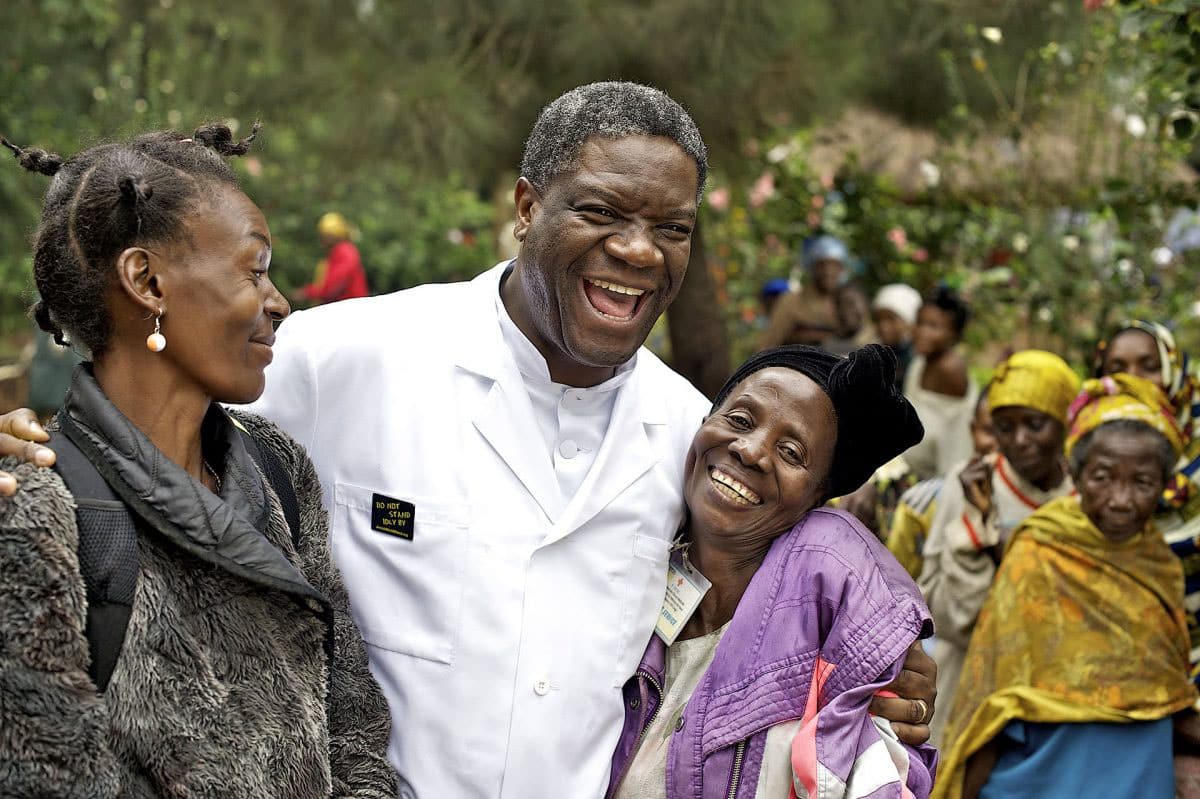
Women in the Democratic Republic of the Congo (DRC) are systematically targeted by both rebel militia groups and government officials as groups vie for control over the resource-rich country. Often ominously labeled the “rape capital of the world,” women in the DRC rely heavily on heroes like Nobel Peace Prize Laureate Dr. Denis Mukewege and his team of doctors and nurses who repair women’s bodies and souls.

Whether it is the inquisitors, the Nazis or the Ethiopian army, the goal is the same: to shred the fabric of community.

Whether it is the inquisitors, the Nazis or the Ethiopian army, the goal is the same: to shred the fabric of community. “Women are the real architects of society,” said Harriet Beecher Stowe. Women create life, hold families together and lead communities with strength and resolve. While this is well-understood, it is historically and presently abused at large worldwide.

Tisha B’Av reminds us that we must learn from tragedy as we mourn and memorialize the atrocities—the baseless hatred that led to the genocides of the Jews, Darfuris, Armenians, Uyghurs and Rohingya, the othering and dehumanization of the people of the DRC, and the ongoing suffering of men, women and children in Tigray.

As we fast on what is often regarded as the saddest day of the year, let us recommit ourselves to the world. Let our reflections on the atrocities of the past compel us to work toward a higher standard of tolerance and acceptance for all.

To take action for women in Tigray, please visit jww.org/tigray


Serena Oberstein is the Executive Director of Jewish World Watch, an anti-genocide non-profit based in Los Angeles.

Honoring Our Past by Looking Forward at Tisha B’Av Read More »

Hope for Uniting the People of Israel

As the summer wears on, Israel is staring down yet another national election.

The Israeli government dissolved the Knesset in late June, bringing an end to Prime Minister Naftali Bennett’s year-long tenure and setting the stage for the Jewish state’s fifth election in the last three years. The announcement also marked the conclusion of a bold experiment in Israeli democracy that could serve as a case study for future national unity governments: the integration of both Jewish and Arab political parties in the government.

The coalition’s collapse raises the question: Is Jewish-Arab cooperation possible in a future coalition? Broadly, the Abraham Accords and a recent visit by President Joe Biden suggest that future political cooperation could be likely.

But, outside of the political area, such cooperation has quickly become a social norm.

For examples of this intercultural cooperation, look no further than one of Israel’s most prominent export industries—olive oil.

Sindyanna of Galilee is a nonprofit organization run by a team of Arab and Jewish women with a mission to “produce outstanding olive oil and other premium food products, while enhancing Arab-Jewish cooperation, promoting Fair Trade, creating economic opportunities for Arab women, and assisting local growers and producers,” according to the organization’s website.

Sindyanna offers the opportunity for Arab and Jewish women to come together to produce Fair Trade products and learn more about each other’s cultures in the process. The organization is often a stop for Birthright trips, helping Western travelers see a different side of Arab-Jewish relations in Israel.

Outside of the political area, such cooperation has quickly become a social norm.

Efforts are underway to promote cultural exchange in education as well. A New Way is a nonprofit organization that brings together high school students from Jewish and Arab neighborhoods to study for Israel’s matriculation exams. Past participants have noted that sharing a common goal of preparing for the exams has helped them form close bonds with their fellow students and learn more about the cultures of their fellow Israelis.

In the philanthropic sector, Yad Sarah has – for nearly four decades – united Jewish and Arab Israelis around the mission of helping people who are chronically or terminally ill, disabled or infirm live with as much comfort and dignity as possible, according to the organization’s website.

“What makes Yad Sarah so special is that it is there to support anyone in Israel who needs assistance, regardless of their ethnicity, religion, or nationality,” said Adele Goldberg, executive director of Friends of Yad Sarah, the organization’s U.S.-based fundraising arm. “Yad Sarah is proud to help thousands of people, from a broad tapestry of backgrounds, live with dignity and independence in the Jewish state.”

With more than 7,000 volunteers and 120 in-person service locations across Israel—from Haifa to the Negev—there are plenty of opportunities for Arab and Jewish Israelis to work together to support those in need.

Yehoshua Yulis, a sixth-generation Israeli who serves as branch manager at Yad Sarah’s Ofakim location in the Negev, recalls many instances in which his staff has been proud to work alongside Israel’s diverse communities to deliver care. Yulis shared that his branch regularly works with Jews, Arabs, Russians, Ethiopians, and Yemenis.

“We provide equal treatment to all,” he said. “The goal of every volunteer is that people should leave with solutions to their problems, with hope and a smile.”

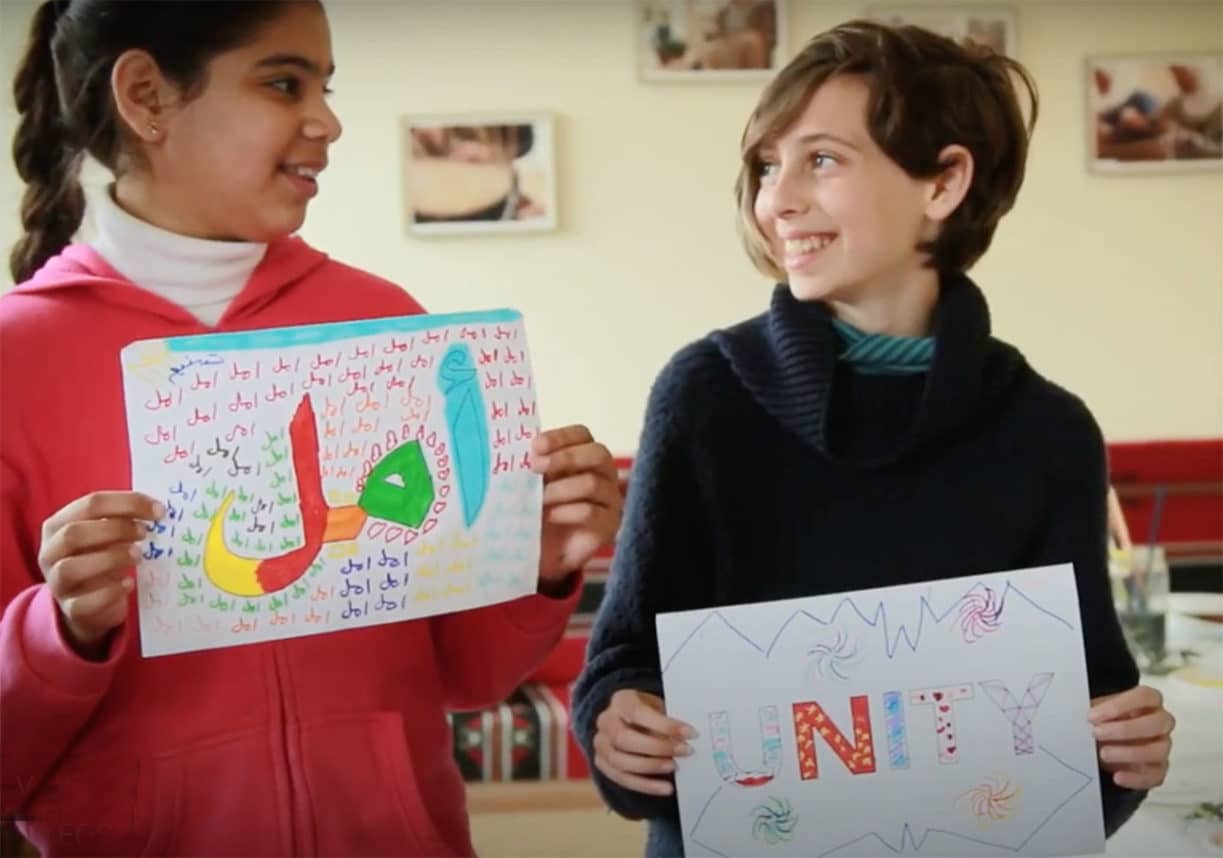
Despite the fall of the most diverse Israeli government to date, Jewish-Arab collaboration is possible in Israel. Organizations such as Sindyanna of Galilee, A New Way, and Yad Sarah are proving Jews and Arabs can work together peacefully – bringing hope for the future of Israel.

Hope for Uniting the People of Israel Read More »