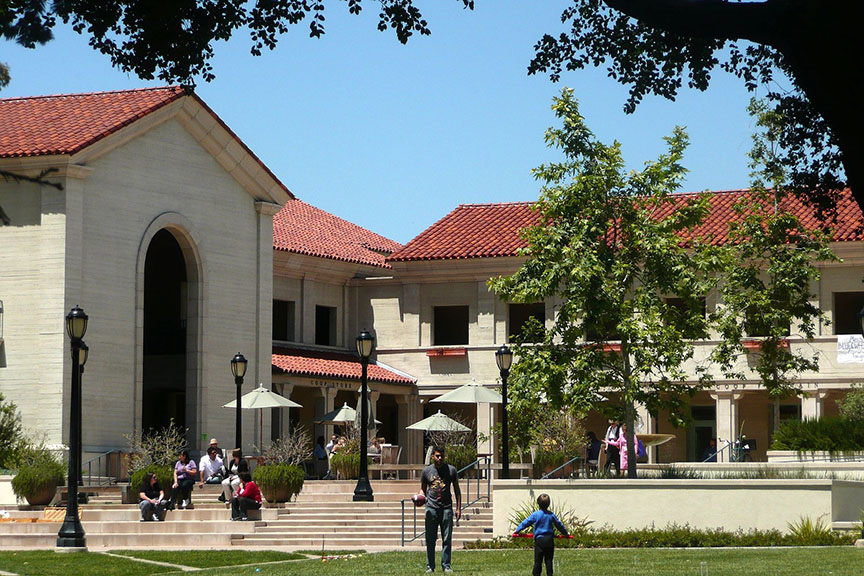
It was announced on June 30 that UCLA and USC will be leaving the Pac-12 Conference and joining the Big Ten Conference in 2024.
By joining the Big Ten Conference, UCLA and USC are also joining the athletic conference with more Jewish students than any other in the U.S, over 58,000 in total.
According to Hillel International’s 2021 survey of Jewish students on college campuses, six of the ten most Jewish public universities in the U.S. are at Big Ten schools: Rutgers, Maryland, Michigan, Wisconsin, Indiana University and Penn State.
The joint move by UCLA and USC rocked the college athletics world for both geographic and historic reasons.
The Pac-12 conference was originally founded as the Pacific Coast Conference in 1915—USC would join in 1922 and UCLA would join in 1928. The conference would undergo name changes throughout the next hundred years, but only expand twice, adding Arizona and Arizona State in 1978, and Colorado and Utah in 2011.
And now, both of the Pac-12’s Los Angeles-based teams are leaving for a conference where their nearest neighbor is in Lincoln, Nebraska, a 1,500-mile road trip from Los Angeles.
There’s plenty of examples of geographic outliers in various collegiate athletic conferences.
But with UCLA and USC departing the Pac-12, they’re joining a conference where their fellow members will be located predominantly in the midwest. Founded in 1896 as the Western Conference, the Big Ten’s charter members were Illinois, Minnesota, Northwestern, Purdue, Wisconsin and Michigan. The University of Chicago gave up their spot to Michigan State after World War II. From 1950-1990, the conference had exactly ten teams, until Penn State joined in 1990. The conference moniker remained at ten even after they expanded to 14 teams. With the addition of UCLA and USC, there will be 16—and that number could still grow before 2024.
This shocking move will likely be an extinction-level event for the current alignment of collegiate athletic conferences delineated by geography and over a century of history. The allure of television money for the athletic conferences stacked with schools in big cities like Los Angeles could result in mega-conferences in excess of 20 members from coast to coast.
This shocking move will likely be an extinction-level event for the current alignment of collegiate athletic conferences delineated by geography and over a century of history.
The reception of UCLA and USC joining the Big Ten has been mixed, and will definitely make future Bruin and Trojan athletic recruits reconsider where to continue their sports endeavors. At their furthest, a plane ride from LAX to Newark Liberty Airport to play Rutgers would be a 5.5 hours across three time zones. For comparison, the longest inter-conference flight from LAX to Seattle to play Washington is less than 3 hours each way and all in the same time zone.
The Journal spoke with Matt Bernstein, a former football player for the University of Wisconsin-Madison who was quite excited for the colossal changes.
“I absolutely love this idea,” Bernstein told The Journal. He was inducted to the National Jewish Sports Hall of Fame in 2006.
“The thought of going to California to play these teams in their stadiums or them coming to Camp Randall [Stadium in Madison] is flat out awesome. I think it helps recruiting, and it gets our west coast fans pumped. The Big Ten stopped being the Big ‘Ten’ a very long time ago, so let’s make it the strongest conference we can.”
There is still much to be determined—for example, UCLA and USC will have to figure out which opponents their respective Women’s Beach Volleyball teams will play. Nine different Pac-12 schools have Beach Volleyball teams. There are none in the Big Ten Conference currently.
But if UCLA and USC started playing in the Big Ten today, their Jewish student population would rank 9th (USC) and 11th (UCLA) most Jewish campuses in the conference:
The allegation that the Trump administration may have used the Internal Revenue Service against two of the president’s high-profile opponents has sparked much debate. For the American Jewish community, it’s a reminder of a disturbing episode that took place during the Holocaust era.
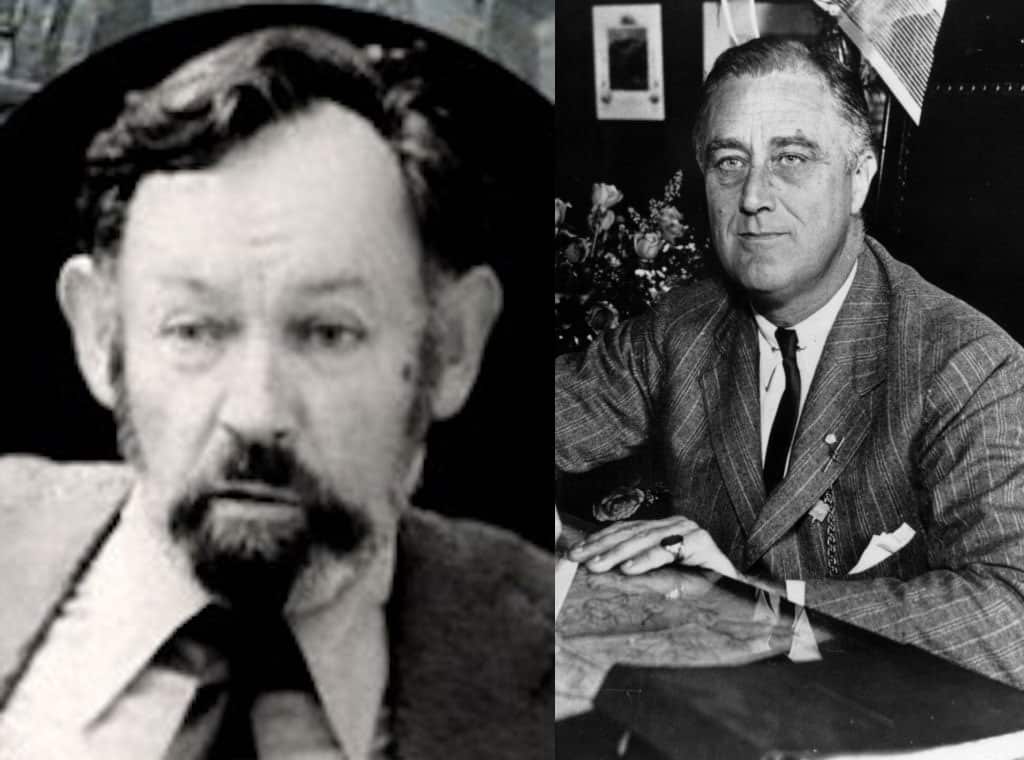
The Jewish target of U.S. government wrath in the 1940s was the Bergson Group, a political action committee led by Peter Bergson (Hillel Kook), a Zionist emissary from Palestine. The group used newspaper advertisements, rallies, and lobbying to press the Roosevelt administration to rescue Jews from the Nazis.

President Franklin D. Roosevelt was unhappy—to put it mildly—about those protests. One senior White House aide reported that FDR was “much displeased” when the Bergson Group brought 400 rabbis to Washington to plead for rescue. First Lady Eleanor Roosevelt told Bergson himself that the president was “very upset” about one of the group’s newspaper ads, which FDR felt was “hitting below the belt” because it accused him of turning a blind eye to the Nazi massacres.
The State Department, too, was annoyed by Bergson’s campaign for rescue. Assistant Secretary of State Breckinridge Long privately complained that the group’s newspaper ads “made it very difficult for the Department.” Long’s deputy, Robert Alexander, absurdly claimed that the slogan used in one Bergson ad, “Action–Not Pity,” had actually been invented by the Nazis as part of a conspiracy to embarrass the Allies.
Beginning in 1942, the Roosevelt administration sent both the Federal Bureau of Investigation and the Internal Revenue Service after Bergson. They were looking for evidence of criminal activity, but their motivation was political. An internal FBI memo that I obtained under the Freedom of Information Act bluntly explained the reason for U.S. government action against Bergson: “This man has been in the hair of [Secretary of State] Cordell Hull.”
Beginning in 1942, the Roosevelt administration sent both the FBI and the IRS after Bergson. They were looking for evidence of criminal activity, but their motivation was political.
FBI agents gathered background information from what they called “persons in New York City who are familiar with Israelite matters.” They also eavesdropped on the Bergsonites’ telephone conversations, opened their mail, went through their trash, and planted informants in the group to steal documents from Bergson’s office. The FBI hoped to find proof the Bergson Group was secretly assisting the Irgun Zvai Leumi, the underground militia in Palestinethat was headed by Menachem Begin. They found no such evidence.
The authorities’ second goal was to find a link between Bergson and the Communist Party. One FBI memo approvingly quoted a rival Jewish organization’s description of the Bergsonites as “a group of thoroughly disreputable Communist Zionists.” In a private letter, FBI director J. Edgar Hoover referred to the playwright Ben Hecht and six other leading Bergson activists as “fellow travelers.” But the FBI’s spying on Bergson did not turn up any evidence of a Communist link, either.
At the same time, the IRS launched a full-scale inquiry into the Bergson Group’s finances, seeking to revoke its tax-exempt status. For nearly a year, IRS agents repeatedly visited the group’s New York City headquarters, once for a stretch where they stayed from morning until night for more than two weeks.
Louis and Jack Yampolsky, a father-and-son accounting team that handled Bergson’s finances pro bono, had to dig out and reconcile every piece of financial information in the group’s records. “There were no photocopy machines in those days, so we had to hand-copy every disbursement and every receipt that was given for every donation,” Jack Yampolsky told me in an interview some years ago. “And because the Bergson Group had enormous grassroots appeal, it received literally thousands of one-dollar or two-dollar donations from people all over the country.”
In the end, the IRS investigators were unable to find evidence of any wrongdoing. In fact, as the IRS team became familiar with the group’s work, they came to sympathize with it, and “when they finished, [they] made a contribution between them–every one of them gave a few dollars,” Bergson later told Prof. David S. Wyman.
The sympathy expressed by the IRS agents contrasted sharply with the sentiments expressed in some of the FBI documents which I obtained. One FBI report about Bergson activist Maurice Rosenblatt derisively referred to the leftwing Coordinating Committee for Democratic Action, in which Rosenblatt was active, as “this Semitic Committee.” The FBI memo complained that Rosenblatt and his colleagues were trying to “smear” Nazi sympathizers in New York City.
“When there is a genuine threat, governments sometimes have to do things like eavesdrop,” Jack Yampolsky conceded. “But in our case, they were doing it for political reasons, and antisemitism also played a role. The fact that we vocally disagreed with U.S. government policy regarding the Holocaust and Jewish statehood was not a valid reason for the Roosevelt administration to enlist the FBI and the IRS in a war against the Bergson group.”
Dr. Medoff is founding director of The David S. Wyman Institute for Holocaust Studies and author of more than 20 books about Jewish history and the Holocaust. His latest is America and the Holocaust: A Documentary History, published by the Jewish Publication Society & University of Nebraska Press.
For Shylee Ravid, an incoming junior at Windward High School in West Los Angeles, many memories at Alexander Muss High School in Israel, Jewish National Fund-USA’s flagship study abroad in Israel program, stand out.
Her time doing “Gadna,” where students spend several days undertaking basic training experiences with the Israel Defense Forces, taught her valuable discipline and leadership skills. Hiking Yam L’Yam, a three-day trek from the Mediterranean Sea to the Sea of Galilee, helped her embrace her fears. Hanging with classmates in the school common room offered the simple pleasure of being around kind and genuine peers.
“It was such an incredible experience,” Ravid said. “It was nothing like what I expected, but it was the best four months I’ve ever had.”
Shylee was one of over 100 Jewish high schoolers who spent a recent semester abroad at Alexander Muss High School in Israel, affectionately known as Muss.
From left-Isabelle Elias, Ben Ahdoot, Shylee Ravid, and Inbal Ziv (Photo courtesy JNF)
Every year, Muss, a college-prep school in Hod HaSharon, on the outskirts of Tel Aviv, welcomes high school students from across North America and the world to its experiential learning programs, including 18-week semesters abroad and eight-week “mini-mesters.”

The students’ experiences at Muss are jam-packed with regularly held tiyulim (field trips) along with an accredited general studies curriculum. A typical class day begins with breakfast in the Hadar Ochel (food hall) at 7.00 a.m., followed by lessons, more meals and free time.
Inbal Ziv is a student at Futures Academy, a network of private schools in California that offers customized lesson plans. However, this past spring, she left the classroom in Woodland Hills and joined the more than 100 students on Muss’ campus, following in the footsteps of two older siblings, both of whom are Muss alumni.
The experience, she said, did not disappoint.
“There were a lot of people on campus, and it doesn’t matter what program you’re on—everybody bonds and everybody talks and plays spike ball together.”
Similar sentiments were shared by Isabelle Elias, an incoming junior at Milken Community School, who spent the 2022 spring semester at Muss. A highlight of the experience, she said, was learning about Israel’s history while physically visiting the sites where so much of what she had read in books took place.
“I always learned about Israel, but you never get to truly learn about something until you go through [it] and experience it,” she said. “We would learn about the Six Day War, then go to battlefield sites where it occurred.”
“We would learn about the Six Day War, then go to battlefield sites where it occurred.” – Isabelle Elias
Elias studied at Muss through a unique partnership between JNF-USA and Milken. Every year, Milken sends a cohort of tenth-grade students to Israel for a semester at Muss as part of its Tiferet Fellowship.
Milken incoming junior Benjamin Ahdoot also studied abroad at Muss this past spring. “In tenth grade, the opportunity came along to do this, and I wanted to grab it,” he said, adding that, “all other Israel trips pale in comparison to this one.”
Before enrolling at Milken, Elias attended Sinai Akiba Academy, and her entire life, she learned about Israel. But studying Israel while actually being there was a welcome change, she said.
“Now that I’ve experienced Israel, saw all the culture and people in Israel [and] all the love and support that is in the air, I am more passionate about Zionism and standing up to antisemitism than ever before,” Isabelle said. “We have to protect the country we love.”
Ahdoot agreed. “A lot of us don’t realize how important Israel is for the Jewish people until we go there,” he said.
Alexander Muss High School in Israel students (Photo courtesy JNF)
For all of the students, one thing was for sure: the semester at Muss was something they would not soon forget.
“It was such an amazing experience, and if someone has the opportunity to do it, they should,” said Elias. “It was eye-opening.”
In honor of its 50th anniversary, Alexander Muss High School in Israel is launching a fundraising campaign for a $10 million endowment fund, safeguarding the institutional belief that the life-changing experience of studying in Israel should be available to beyond those who can afford full tuition. For more information about Muss, visit amhsi.org or contact Marnie Nadolne, Associate Director of Teen Engagement, at mnadolne@jnf.org.
You might have heard that complaint before: “It is all about Benjamin Netanyahu.”
You might have heard that line before: “It’s the fight of only-Netanyahu against never-Netanyahu.”
You might find this storyline boring, repetitive, devoid of inspiration.
But that’s our story. Israel is going to the polls once more. Israel is going to decide, once more, does it want HIM or not.
Israel is going to the polls once more. Israel is going to decide, once more, does it want HIM or not.
On November 1, Israelis will get yet another chance to stabilize the political arena. A fifth chance in fewer than four years of constant campaigning. Between now and Election Day, there is a hot summer, a holiday season, a life to live uninterrupted by politics. Maybe next year. This summer will be interrupted by the noisy and brutal machine of politics. First, it will be primary season as parties must choose their leaders and lists of candidates. Then, it will be on to finalizing the lists, deciding on mergers and splits. Then, mobilizing an exhausted public, encouraging it not to tire of participation. Then, forming a coalition—if there is one to form. Israel’s political system is like a car with a large engine that’s always in neutral, with a heavy foot on the gas pedal. The level of noise is almost unbearable, while the car isn’t moving anywhere, just waiting for someone to have the power to move the stick to drive.
Three main questions will determine the post-election political future of Israel:
Will Netanyahu and his bloc of religious parties get more than 60 seats? The polls show that there is such possibility. And if it materializes, Netanyahu will hold all the cards.
Will Netanyahu choose to form a narrow coalition, or decide to use his better cards to form a wider, less ideologically coherent coalition? Historically speaking, and also as a practical matter, it is better for him to be at the center of his coalition and not the most moderate member of it.
Former Israeli Prime Minister Benjamin Netanyahu speaks during a protest against the Israeli government on April 6, 2022 in Jerusalem, Israel. (Photo by Amir Levy/Getty Images)
If Netanyahu and his bloc do not get 61 seats, will there be an option for a viable and stable coalition that does not include the Likud Party? The outgoing coalition was a creative construct, but a shaky one. It lasted for just one year, and ought to be a warning sign that the creative path isn’t always the most effective path.
They were two: young, verbal, telegenic, fresh. The year was 2012, and their rise was meteoric. Yair Lapid formed a new party, Yesh Atid. Naftali Bennett took over a party, The Jewish Home. A decade later, both have made it to the Prime Minister’s office, both have triumphed, failed, cooperated, both were disappointed by friends, both were manipulated by foes, both operated under the large shadow of the man they came to unseat and inherit, Netanyahu. They were his partners and his rivals. They took him down, and then he took them down back. Now they must part ways: Lapid, to continue his long journey of making Yesh Atid Israel’s main party of the center-left and himself the main candidate of this bloc for the top job; Bennett, to stop and rethink his political strategy for the future, to take a break, from which he intends to return, sooner rather than later.
For Lapid, the coming election is a dramatic test of viability. Yesh Atid is the second largest party in the Knesset, after Likud, and polls show that it ought to be the second largest in the next Knesset. Netanyahu is the man to beat on the right. Lapid is the man to beat on the center-left. Netanyahu is the leader of his bloc, with no one challenging his authority. Lapid is the leader of the other bloc, who gets most of the credit for forming the outgoing coalition, who gets credit for readily accepting Bennett, the head of a much smaller party, as Prime Minister, who gets credit for being methodical, serious, cunning, patient, polite.
For Lapid, the coming election is a dramatic test of viability.
Lapid is also the Prime Minister. For a few months, the public will get used to him as Prime Minister, and maybe learn to accept his presence at the PM’s office as something that feels natural and unthreatening. So, in more than one way, the coming election is Lapid’s great chance of becoming Israel’s leader. To achieve his goal, the one thing he must prevent is a 61 majority for Netanyahu and his bloc of Likud, the Zionist Religious party, and the two ultra-Orthodox parties, Shas and United Torah Judaism.
Why? That’s easy to explain. With 61 seats Netanyahu could form a coalition and could also tempt other parties to join him by way of helping him balance Israel’s government. Take, for example, the leader of Blue and White, Benny Gantz. He is a key character in the unfolding drama of this election for several reasons.
Israeli Minister of Defense, Benny Gantz speaks at the start of a Blue and White party meeting on June 27, 2022 in Jerusalem, Israel. (Photo by Amir Levy/Getty Images)
First, not long ago, it was Gantz against Netanyahu, not Lapid. And Gantz never truly accepted Lapid as the leader of the center-left bloc. Second, Gantz has better relations with the Orthodox camp than Lapid. He is much less reviled by rightwing voters. Third, Gantz’ party is more to the right than Lapid’s. If Lapid is center-slightly-left, Gantz is center-slightly-right. The bottom line of all these factors is the same: Gantz could become a partner of Likud. He could be tempted into a right-religious coalition in two ways: Netanyahu could tell him that he must join him in his quest to reign in the more radical components of his coalition; or Netanyahu could let him be Prime Minister. True, Gantz already pocketed such a promise two years ago, when he joined Netanyahu, and the promise was not fulfilled. But a second time could be a charm, if Gantz makes sure to sign an agreement from which Netanyahu has no escape.
This was a long way of making a short argument: 61 is the key. With it, Netanyahu holds all the cards. Without it—it’s not clear what is going to happen.
In September 2019, the leader of the Israel Beiteinu party, Avigdor Lieberman, made a decisive comment: A third election is not going to happen. In January 2020, Lieberman made a similar comment: A fourth election is not going to happen. In March 2021, Lieberman was silent. Ayelet Shaked of the Yamina party made the comment: A fifth election is not going to happen. She was not alone, and she was not wrong—not at the time. A coalition was formed, which lasted a year. Now, a fifth election will take place, and whether Shaked’s prediction should be considered a false prophesy, or a reasonable assessment, is an open question.
Would you bet against a sixth election? I’d urge you to be cautious. In fact, under the current circumstances it is quite easy to see such a scenario materialize: Netanyahu and his bloc fail to get the 61 needed seats; Gantz refuses to join in and become Netanyahu’s savior; Yamina under Shaked (with Bennett having a “time out”) doesn’t cross the electoral threshold; Lapid cannot convince New Hope to sit alongside the Arab Joint List. Voilà! In February 2023 we can have our sixth election. Not the worst scenario for Lapid, as he will stay as the Prime Minister until then.
And what about Netanyahu? Once more, there are whispers among politicians and pundits that another failure would be one too many for Netanyahu. If he fails to form a coalition in a fifth election, then he must go. Haredi leaders are warning that they might consider joining a coalition under Gantz to save Israel from another election, and themselves from staying in the opposition. And of course, that could happen, but I wouldn’t hold my breath. Netanyahu proved time and again a durability that confounded his peers and rivals.
Once more, there are whispers among politicians and pundits that another failure would be one too many for Netanyahu.
In October 2021, former Speaker of the Knesset and Likud member Yuli Edelstein announced that he intended to challenge Netanyahu. “Netanyahu was a prime minister with many achievements. I worked with him a lot, but the facts speak for themselves. Four times we had an election, four times the Likud Party won many seats, four times the result was not a Likud-led government. So, we need to draw conclusions.” That was Edelstein, one year ago.
And how about now, when a fifth election is coming, and the primary election within Likud is near? “Now that we are facing a critical election campaign, I cannot drag the Likud movement into a confrontation within its ranks, so I have decided to withdraw my candidacy for the party leadership in the upcoming elections.” The panther is a pussycat. Edelstein realized that he has zero chance against Netanyahu. And the lesson for other, future challengers is clear: Betting against Netanyahu staying, even amid another failure, is hardly a sure bet.
Is there anything interesting about the upcoming election? Anything that might be worthy of attention? There is, and it’s not among the usual suspects: Lapid and Netanyahu, Gantz and Lieberman.
The interesting fight is taking place among Arab Israelis. The interesting fight concerns the most daring deed of the outgoing coalition—forming an alliance with the Islamist Raam party. It concerns an important question: Was Raam’s historic participation in the coalition a revolutionary moment that ignites a process of change, or a blip that signals nothing except the very special circumstances and the tendencies of a very special leader, Mansour Abbas?
The interesting fight concerns the most daring deed of the outgoing coalition—forming an alliance with the Islamist Raam party.
The stakes cannot be higher: Israel was established as a State for the Jewish People. It includes a significant Arab minority (about a quarter of its citizens). This situation was a cause for trouble. The Jewish majority was always suspicious of the minority, because of the minority’s reluctance to accept the reality of a Jewish state. The Arab minority was frustrated with the reality of the Jewish “newcomers” having the power to set the direction of the country the two people share (of course, Jews didn’t see themselves as newcomers but rather as a returning indigenous people).
Mansour Abbas, the head of the United Arab Party (Ra’am) delivers a speech on April 1, 2021 in Nazareth, Israel. (Photo by Amir Levy/Getty Images)
It started with bloodshed, when Israel was born in a war of independence, and continued with ebbs and flows of tensions, hostilities and forced, often inconvenient, coexistence. Gradually, some Jews concluded that the time is ripe for a bolder attempt at inclusion. Gradually, some Arabs gradually realized that Israel is not a temporary arrangement, and also learned to appreciate its relative stability and prosperity compared to all other (Arab) options in the region.
But political processes aren’t always in sync with public moods. The attempt to form a coalition of Jews and Arabs was bold and necessary. Yet it was not a clear and undisputed success. Of course, it was not a success because of political considerations. Too many politicians had a stake in ruining the experiment. But it was also not a success because of the tendency of Jews to remain suspicious and the tendency of Arabs to remain uncommitted. Abbas was committed, but not other members of his party, nor all Arab members of Labor and Meretz.
The attempt to form a coalition of Jews and Arabs was bold and necessary. Yet it was not a clear and undisputed success.
And now, a real test is coming: the test of voters. A bitter and highly personal battle between two Arab leaders—in the last day of the Knesset, Abbas of Raam and Ahmad Tibi of the Joint List exchanged words that cannot be printed in a family friendly newspaper—is moving to the street. Arab voters will have to make their voices heard: Do they want a process of integration and involvement in the Israeli game of politics, or do they prefer to remain on the sidelines as a permanent opposition as their parties tended to do?
It’s not as if all Jews accept the idea of integration. The outgoing coalition was under immense pressure from the right, of leaders and experts who believe, not without reason, that Arab intentions are unclear and even suspect. Rightist experts believe that Raam’s grand vision is an Islamic caliphate, and not a Jewish Israel. And they have proof: Raam leaders, including its impressive, communicative head Abbas, paid visits to families of killers and terrorists who sit in Israeli jails. They participated in receptions for such terrorists when they were released from jail. Of course, whether to consider such past behavior as tolerable for a coalition partner is a matter of expectation—and political interest. The center-left opted for yes, the ideological right for no.
But now it is time for Arab voters to speak their minds. If they say no—for example, if Raam fails to cross the electoral threshold, as some polls suggest is possible—then there is little point in Jews becoming enamored with the idea of an evolution toward integration. On the other hand, Arab voters can speak their minds in ways that would force their leaders—not just from Raam—to change course and accept compromise in return for participation. If that happens, it will be an important development. A dramatic development. It will be a development that makes a fifth election less annoying, and maybe even worthwhile.
Shmuel Rosner is senior political editor. For more analysis of Israeli and international politics, visit Rosner’s Domain at jewishjournal.com/rosnersdomain.
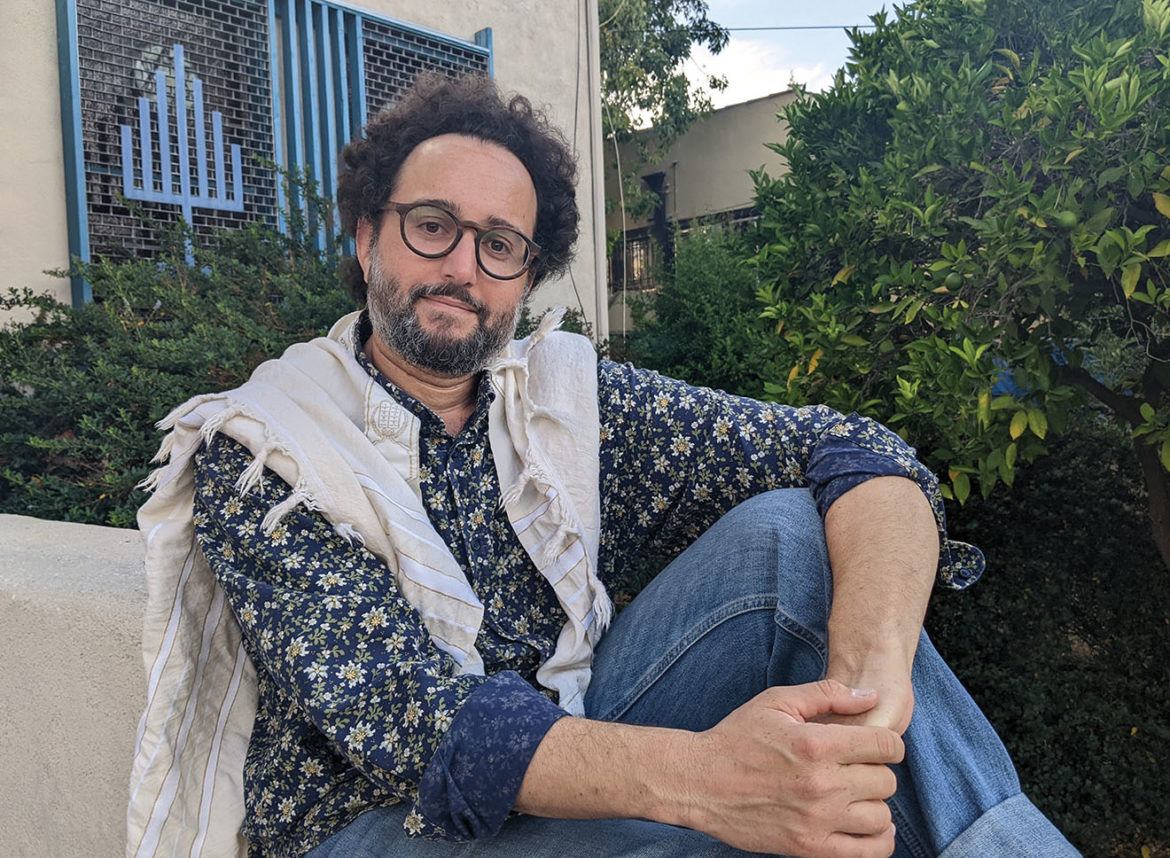
When Rabbi Jason Rosner first joined Temple Beth Israel of Highland Park and Eagle Rock, he was a member of the synagogue – not its spiritual leader. Initially, he didn’t tell anyone he was a rabbi.
But then, one Shabbat, he couldn’t hide it anymore. There was no rabbi, and the person who was supposed to lead services didn’t show up.
“I said, ‘I can lead it,’” Rosner told the Journal. “So they found out. Over time the relationship developed and I became the rabbi.”
Along with not having a rabbi, membership at Temple Beth Israel wasn’t growing; some people had left. Rosner made it his goal to turn that around.
“It became clear the synagogue could benefit from having a rabbi that could also serve as executive director, to work with the board to support and grow the membership,” he said.
The rabbi, who was ordained at Hebrew Union College – JIR (HUC) in Los Angeles and serves as a board member on the Sandra Caplan Community Beit Din, joined TBI in 2019. Since then, the synagogue’s membership has doubled. Much of the success comes from his personal connections with his congregants.
“I met with everyone I could [when I started],” he said. “I said, ‘Please rejoin. Here is our mission.’”
TBI is one of the oldest continuously operating synagogues in Los Angeles. It was incorporated in 1923, and the congregation moved into its current building in 1929. Though it’s not known as a Jewish neighborhood, Highland Park is full of young families. Rosner estimated that 50 to 60% of the members are millennials. The board president is 30 years old.
“Demographics work in our favor,” Rosner said. “I was at the right place at the right time, and I’ve worked hard together with a great team of lay leaders, clergy and staff to build this community. I really believe in its mission and history. My wife Noémie is involved as the rebbetzin on top of her job as a journalist. She has created many excellent programmatic ideas and worked together with me in organizing events.”
“I was at the right place at the right time, and I’ve worked hard together with a great team of lay leaders, clergy and staff to build this community.”
Rosner is an Orange County native who grew up going to a Reform synagogue, Temple Beth Sholom. When he attended California State University, Long Beach, he met Rabbi Yonah and Rebbetzin Rachel Bookstein, who were running the Hillel on campus.
“I was highly influenced by my mentors, [the Booksteins], as well as Rabbi Richard Levy Z”l,” he said. “I was inspired by [the Booksteins’] open home. I saw how dedicated they were.”
After he graduated from Cal State, Rosner went to grad school at the University of St. Andrews in Scotland and got involved in the Jewish society there, running Shabbat dinners and becoming more connected to his Judaism.
It became clear to Rosner, who had been studying Medieval History, that rabbinic work was his path. Aside from HUC, he also studied at the Ziegler School of Rabbinic Studies in Los Angeles, the Conservative Yeshiva in Jerusalem and Ohr Somayach, an Orthodox college of Judaic studies in Monsey, New York. Rosner wanted to learn about the different branches of Judaism, and ultimately he decided to become ordained as a Reform rabbi.
“My journey was to address what I thought was a core question: How does Judaism create community and connection between people?” he said.
In his time at TBI, Rosner has made the synagogue more sustainable, working on a garden on the grounds and installing solar panels. TBI also offered the CoPious Box, a box that featured organic produce from local farmers and was made available for TBI members as well as the community.
Above all, Rosner wants his congregants to feel as if they are part of a family. “I want to have an extended family living room,” he said. “Your family’s life spills over into this place. Your kids can run around here.”

By opening his door to members, he hopes he is cultivating meaningful connection.
“I spend a lot of time connecting with people one on one,” he said. “I am very available to members. There are no screeners or secretaries.”
Though Rosner is focused on his community, he also keeps his broader purpose in mind: to play his part in carrying on the beautiful Jewish tradition.
“A rabbi is a person who is the vessel for Jewish tradition,” he said. “It’s not about them personally or their ego. It’s that they are a vessel that holds the Jewish tradition from previous generations and adapts it for the current generation and passes it on. I’m really a representative of something that is larger than me. It’s my goal to remember that.”
Fast Takes with Jason Rosner
Jewish Journal: What is your favorite Jewish food?
Jason Rosner: Stuffed cabbage made with Beyond Meat and the msoki that Noémie makes for Passover.
JJ: What do you do on your day off?
JR: I go hiking in the San Gabriel Mountains.
JJ: What is your perfect Shabbat?
JR: A nice family style dinner at the synagogue, so everyone can have some really excellent food at a nicely set table and sing together. I lead services in the morning and spend the afternoon sitting in my hammock, reading a book and relaxing.