fbpx

June 24, 2022

Helpful Resources for City Services

There are so many things that are run terribly that we all complain about constantly, so I like to point out when something is actually run well. I try to leave reviews for exceptional service, and I’d like to point out two departments run by Los Angeles that are incredibly reliable and easy to get help from.

1. Sanitation services. 4 of our blue and green bins have had broken and cracked lids for ages. I called 311 on Wednesday, and today someone came, replaced the lids with new ones. It was a 5 minute phone call.

2. Vector Disease Control. I’ve mentioned this before and I’ll say it again. Every year when I start to get bitten by mosquitos, I call (310) 915-7370 and they call me back and send someone to check the area all within 24-48 hours.

Utilize the resources that work, and remember to thank them for doing their jobs excellently.

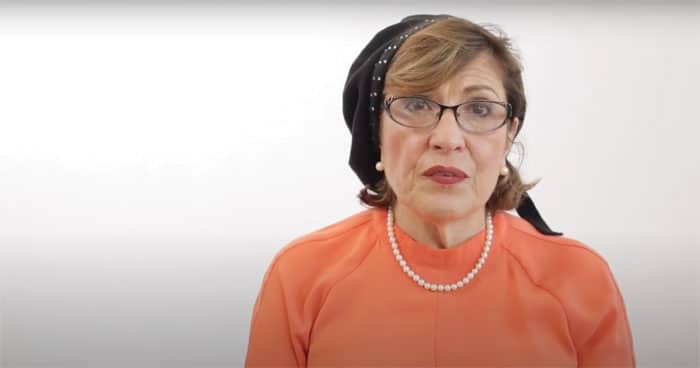
Boaz Hepner works as a Registered Nurse in Saint John’s Health Center, and teaches COVID vaccine education throughout the hospital, and to the community at large. He grew up in LA in Pico/Robertson and lives here with his wife and daughter. He helped clean up the area by adding the dozens of trash cans that can still be seen from Roxbury to La Cienega. He can be found with his family enjoying his passions: his multitude of friends, movies, poker and traveling.

Helpful Resources for City Services Read More »

How Sacramento Can Address the Rising Costs of Student Life

Recently I met with the president of one of the largest public universities in California. As the Executive Director of the Los Angeles Jewish Free Loan Association (JFLA), my purpose was to explain our student loan program, which offers zero-interest, zero-fee loans for college students regardless of religion, race or ethnicity. His first reaction was to cite the impressive statistic that 50% of his students were already on full scholarship due to their family income level, and asked me why they would they need to bother with a loan? But then he thought about the fact that many of those same students are food-insecure. He told me that the university needs to feed thousands of students a day.

This problem will only become worse as inflation continues to rise, making it impossible for many to remain in school.

The JFLA student loan program is posied to play a real role today in helping with this problem. While many grant and loan programs are targeted at tuition alone, JFLA’s student loans can be used for any necessity, such as food, housing, transportation, books, computers, and other supplies.

Founded in 1904, as a non-sectarian agency, JFLA’s mission is to deploy interest-free loans to help people get a hand up. The interest-free loan is non-predatory and offers people access to loans that they can afford to repay. JFLA’s lending program is unique. Because of our audited repayment rate of 99%, JFLA’s loans continue to help people for generations. As old loans are repaid, new loans are made.

In my 20 years working for JFLA, I have never seen the need for college loans as acute as it has been during the COVID-19 pandemic.

In my 20 years working for JFLA, I have never seen the need for college loans as acute as it has been during the COVID-19 pandemic. In the past our no-fee, no-interest loans helped students remain in school, but these loan requests have been different. Without a loan, these students, as in the scenario described by the university president, could remain students but many might experience hunger, and even homelessness.

In November, UCLA published a report that stated that 1 in 5 California Community College students, 1 in 10 CSU students, and 1 in 20 UC students are experiencing homelessness, a number that has risen nearly 50% in the last decade.

Though the pandemic is abating, the volume of JFLA loan applicants continues to grow. Last summer, it hit me: if this need is so strong within the area JFLA covers (Los Angeles, Ventura, and Santa Barbara counties), it must be present to a similiar the same degree throughout the whole state.

I decided I wanted to try to extend the reach of who JFLA is able to help. But while we have been able to raise millions of dollars to address our applicants, covering the state would be a different scale entirely. This effort would require tens of millions of dollars.

I decided to try to get funding from the state of California itself.

I met with state senators, assembly members, and other stakeholders throughout the state, all of whom immediately recognized how a state-wide, interest-free loan program would be critical to helping students attend and stay in college. Assemblymember Al Muratsuchi spearheaded a $30 million budget request for this initiative, with others signing on, including Assemblymembers Christina Garcia, Mark Berman, Vince Fong, Miguel Santiago, Jesse Gabriel, Jose Medina, Tim Grayson, Richard Bloom and State Senators Josh Newman, Steven Glazer, Monique Limon, Ben Allen, and Sydney Kamlager. The request has received hundreds of letters of support from organizations across the state, from hospitals to civil rights organizations to student groups and synagogues.

The budget request is not a done deal. Many entities are competing for funds in the current budget round. In the meantime, this week the JFLA student loan committee will review over 55 student loan applications. This is our fifth meeting this spring and depending on how many loans are approved, we may actually be out of lending dollars for the fall semester. Our student loans are considered on a first-come, first-serve basis to needy students. It is a terrible situation for students and this budget request is urgent. I am grateful to everyone who has supported the request.


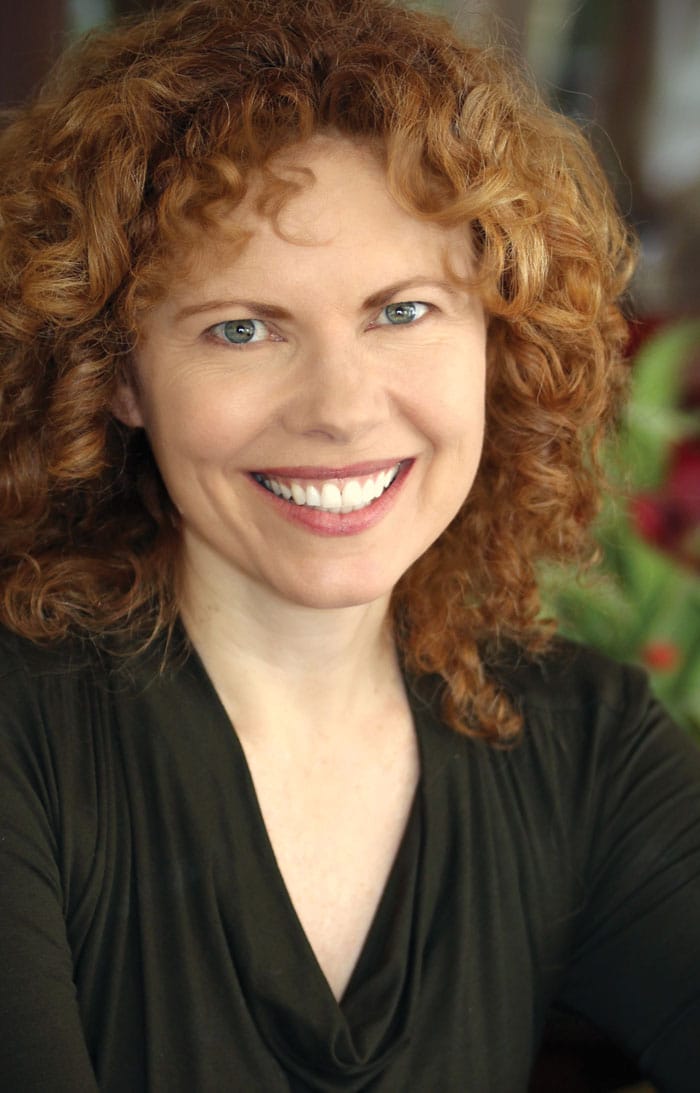
Rachel Grose is the Executive Director of the Jewish Free Loan Association in Los Angeles, where she has worked to create equitable distribution of interest-free loans for twenty years.

How Sacramento Can Address the Rising Costs of Student Life Read More »

Jewish Cowardice: A Reevaluation

In his book “The Interpretation of Dreams,” Sigmund Freud recounts a conversation he had with his father Jakob, when he was 10 or 12 years old. Jakob said to his son: “While I was a young man, I was walking one Saturday on a street in the village where you were born; I was handsomely dressed and wore a new fur cap. Along comes a Christian, who knocks my cap into the mud with one blow and shouts: ‘Jew, get off the sidewalk.’” “And what did you do?” the son asked the father. “I went into the street and picked up the cap,” was the calm answer. This response upset Freud; he wrote that “[it] did not seem heroic on the part of the big strong man, who was leading me, a little fellow, by the hand.” Freud was embarrassed that his father was a coward; he was embarrassed that his father did so little to stand up to an antisemite.

The allegation of Jewish cowardice has a long history, one that begins with the generation of the desert. The spies return from a reconnaissance mission to the promised land with a negative report; they had reviewed the strength of the Canaanites and concluded that “we cannot attack those people, for they are stronger than us.” That night, the entire nation cried, grumbled and plotted a return to Egypt.

Without question, the spies lacked self-confidence. A revealing verse offers a window into their fears and worries; in it, the spies declare that in comparison to the Canaanites, “we were in our own sight as grasshoppers, and so we were in their sight.” The Midrash notes that the spies engage in mind-reading, and instantly assume that the Canaanites see them as weak and small as well; this negative assumption speaks volumes about the spies’ inferiority complex.

From the moment they left Egypt, the Jews were plagued with a lack of self-confidence. Every difficult moment brings fear and worry, so much so, that the Torah explains that God didn’t take the Jews on a direct path to Israel because of a concern that they would flee back to Egypt if they faced war immediately. Many of the commentaries to the Torah explain this lack of self-confidence as being a product of a slave mentality. Ibn Ezra offers the following observation regarding the panic experienced by the Jews at the banks of the Red Sea, when being pursued by the Egyptian army:

One may wonder how such a large camp of six hundred thousand men would be afraid of those pursuing after them; and why did they not stand up and fight for their lives and for their children? The answer is that the Egyptians were the Israelites’ masters. And the generation that left Egypt was trained from its youth to tolerate the yoke of Egypt, and had a lowly soul … (and they were) weak and not trained in warfare. And God … brought it about that all the males of the people that went out of Egypt would die, as there was no strength in them to fight against the Canaanites; (the Jews would first enter the land) after a new generation … that did not see exile and had a confident spirit, arose …

Ibn Ezra says the Jews had a “slave mentality”; they were still held emotionally captive by the Egyptians, and unable to build an independent life. This theory is embraced by the Rambam and multiple other commentaries. The first generation of Jews in the desert are the original Jewish cowards, people who would rather remain slaves than fight for their own future. And Jews in exile often saw a reflection of themselves in the generation of the desert.

Ultimately, the image of the cowardly Jew becomes a staple of antisemitic propaganda; but sadly, Jews adopted this self-image as well. Some of the nastiest and harshest depictions of Jewish cowardice come from inside the Jewish community. Consider the following bitter Jewish joke about what is considered to be “celebration for the Jews.”

One year, in an East European town, a child was found dead on the night of Pesach. All the Jews knew well the rage, rioting and killing that would soon befall them. They gathered in the synagogue and engaged in fervent prayer until one Jew rushed into the synagogue and joyously proclaimed: “Der mes is ah Yid—the dead child is Jewish!” Good news … we had nothing to worry about. There will be no pogrom! Der mes is ah Yid—a simcha bei Yidden—a celebration for the Jews.

This joke is so vicious that I thought for a long time before including it in this article. But it authentically represents a profound Jewish fury at their own community, a fury that they were too eager to accept discrimination and persecution. But by the late-19th century, many young Jews saw themselves as the polar opposites of their ancestors. Much like the second generation of Jews in the desert, they felt that they needed to make a complete break with the past. In a speech in memory of Theodor Herzl, Ze’ev Jabotinsky called on young Jews to restart Jewish history. (Here too, the rhetoric is harsh; Jabotinsky actually used the antisemitic slur zhid in the text; it has been replaced with Yid.) He calls on the community to transform itself from the slavish old Jew of the past:

Our starting point is to take the typical Yid of today and to imagine his diametrical opposite … because the Yid is ugly, sickly, and lacks decorum, we shall endow the ideal image of the Hebrew with masculine beauty. The Yid is trodden upon and easily frightened and, therefore, the Hebrew ought to be proud and independent. The Yid is despised by all and, therefore, the Hebrew ought to charm all. The Yid has accepted submission and, therefore, the Hebrew ought to learn how to command. The Yid wants to conceal his identity from strangers and, therefore, the Hebrew should look the world straight in the eye and declare: “I am a Hebrew!”

This idea was adopted by multiple Zionist thinkers, and called “shlilat hagolah,” “the negation of exile.” The dream was for a generation of new Jews to replace the fearful, cowardly old Jew. The Jews of the early-20th century could only leave the desert of exile if the new Jew unlearned the bad habits of their forebears.

But it authentically represents a profound Jewish fury at their own community, a fury that they were too eager to accept discrimination and persecution.

After the Holocaust, some extended this rhetoric to attack the victims of the Holocaust; they were seen as weak and fearful people who didn’t fight back and went like sheep to the slaughter. Raul Hilberg, one of the first historians to research the Holocaust, supported the stereotype of Jewish cowardice, and his history ignored all forms of Jewish resistance. But other historians recognized that this picture was distorted, and further research brought many instances of active resistance to light. But a large part of this reevaluation came from a new definition of resistance. To resist did not require the taking up of arms, which in most cases was both impossible and futile. Instead, there was a growing recognition of the importance of spiritual resistance; and for those under the crushing oppression of the Nazis, the determination to raise one’s spirit and to pursue life was nothing short of heroic. Hilberg mocked this theory that heroism included the “soup ladlers and all others in the ghettos who staved off starvation and despair.” But today, there is broad recognition of the significance of spiritual resistance. In the hell of the concentration camps, the will to live on required profound strength and determination.

A similar reevaluation is needed for the Jews in the desert. The Torah highlights their flaws and their failures; but perhaps the evidence of a few negative episodes over 40 years is insufficient to render a final verdict on an entire generation. The generation of the desert did follow God for 40 years in the desert; and in the Book of Jeremiah, their devotion is highlighted, where Yirmiyahu says: “I remember the devotion of your youth … how you followed Me in the wilderness, In a land not sown.” In the Mishnah, Rabbi Eliezer argues against the prevailing view, and says that the generation of the desert were pious keepers of the covenant. Yes, at times some of them grumbled, at times they were afraid. But they followed Moses for 40 years in the desert, and they raised a generation of children that would ultimately enter the land. Their case deserves a second look.

This reevaluation also explains a mystery: How is it that after 1900 years of exile, the cowardly Jew became the pioneer and soldier? How did this new Jew arise, as if out of nowhere? Perhaps the answer is that the new Jew and the galut jew are not all that different. Yes, they look different; the new Jew is the very portrait of a knight in shining armor, unafraid to do battle, while the galut Jew is a hunched man in rags, being heaped with abuse as he walks in the street. But one needs to look past the externals; what is more critical is the inner values. Both the new Jew and the galut Jew were guided by the goal of “am Yisrael chai,” ensuring that the Jewish people live on. Sometimes that goal can be pursued with pride; but sometimes survival on its own is good enough, even if it requires enduring humiliation. And when he finally got the chance, the galut Jew grabbed the opportunity to return home.

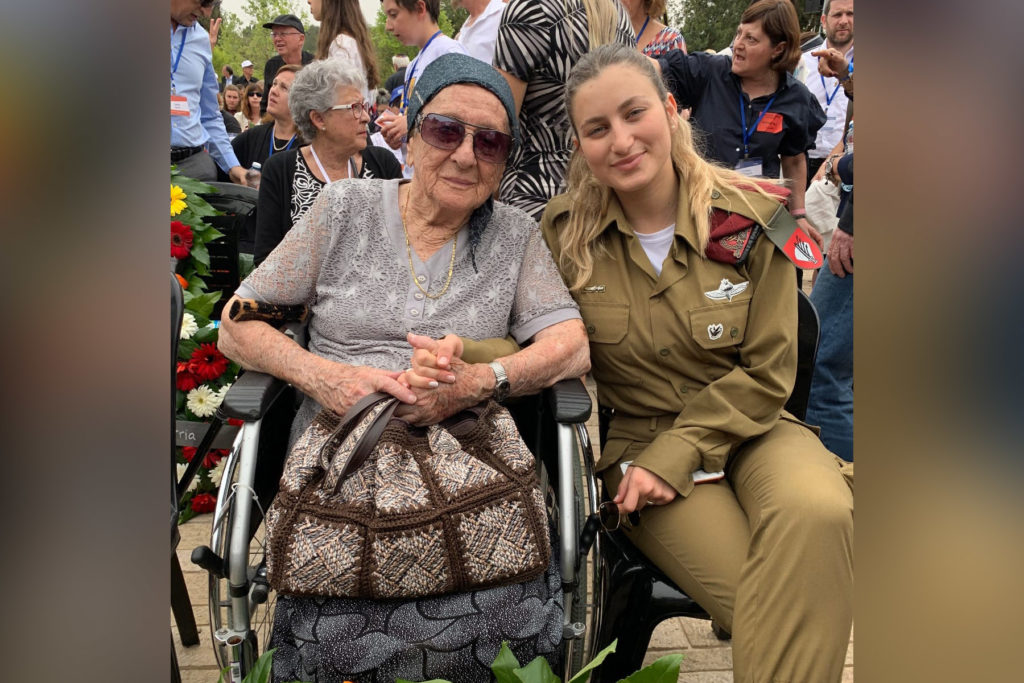
This reevaluation of the galut Jew is now widely accepted; in recent years, the hearts of the two generations have been brought closer to each other. On Yom Hashoah, many Israelis take a moment to reflect on the legacy of Jews who survived during the Holocaust. They are not seen as weaklings; instead, they are respected as heroes. And each year on Yom Hashoah, the IDF, the Israeli army, shares the stories of Holocaust survivors together with their grandchildren who are serving in the Israeli army. One of the stories featured Holocaust survivor Hanna Tessler, 96, and her granddaughter Shira, a parachuting instructor in the IDF Paratroopers Brigade. The caption included what Hanna said to Shira that day:

As a child, I hated soldiers in uniform. They scared me very much. I never thought there would be a time that I would love soldiers. As you hold my hand, while wearing the uniform of the Israel Defense Forces, paratrooper’s wings pinned on your shirt, and a pair of paratrooper’s boots on your feet, I am overwhelmed with emotion that I can’t keep inside. You’re a paratrooper and I float in the air, pinching myself to make sure it’s not a dream. My heart is filled with pride and such incredible love. I feel like a soldier myself—I fought for my life, I fought for my sanity, I fought to be a person again, and I really fought and dreamed to have a big family. So today, I stand up tall and salute you.

This photo is of two generations side by side, holding each other in mutual admiration and love. The Jewish people wouldn’t be here without the determination of previous generations; and we wouldn’t have returned to Israel without the courage of a younger generation. And thanks to the sacrifices of Jews past and present, we can continue to say “am yisrael chai.”


Rabbi Chaim Steinmetz is the Senior Rabbi of Congregation Kehilath Jeshurun in New York.

Jewish Cowardice: A Reevaluation Read More »

Hotter Summers, Higher Health Risks

More than fifty years ago, famed Israeli singer Arik Einstein sang, “Summer is coming, and it’s hot again.” However, not only is it hot again with the recent arrival of the summer solstice, but the summer weather is noticeably hotter. 

In Israel, the climate crisis has already led to an increase in the daily maximum temperature by about 2℃ in the last 30 years. But temperature makes up just one part of excessive summer heat. Just as oppressive, if not more so, is humidity. When high temperatures mix together with high levels of humidity, it is a recipe for prolonged discomfort that is referred to as a high heat index. The higher the humidity, the harder it is for our body to cool itself through sweating.

In a new Israeli study, data from IMS (Israeli Meteorological Service) ground measurement stations as well as American observation satellite data were used to map the average heat index in the afternoons in the July and August months in Israel from the 1970s to present-day. 

Average heat load, North and South Israel.

The study was recently presented at the “Water and Environmental Engineering in the Face of Climate Change” conference of the Environmental, Water, and Agriculture Engineering Department at the Technion’s Faculty of Civil and Environmental Engineering. 

Conducted by Prof. David Broday and Dr. Rakefet Shafran-Nathan of the Technion’s Faculty of Civil and Environmental Engineering, the study effectively illustrated Arik Einstein’s tried and true lyrics, revealing how exposed Israelis actually are to a high heat index and the degree to which it is worsening throughout the country, especially in the north.

Fatal Trends

Not only does a high heat index present itself as an incredibly uncomfortable phenomenon, but it is also quite harmful to one’s health. According to the World Health Organization (WHO), overexposure to heat gives rise to serious physiological effects, exacerbates existing health problems like respiratory and cardiovascular diseases, and particularly affects the elderly, children, and pregnant women.

According to the organization, global warming events are increasing in intensity, frequency, and duration due to the escalating climate crisis. The heat wave that hit Europe in 2003 resulting in the deaths of 70,000 individuals, the heat wave that hit Russia in 2010 resulting in the deaths of 56,000 individuals, and the extraordinary heat wave that hit North America in 2021 are all exemplary of this disconcerting trend.

A High Heat Index Weakens the Body

The dangers of extreme and short-term heat waves are well known, but the health effects of prolonged exposure to a high heat index, however, are less researched but are no less hazardous. A review article published last year explored the subject and showed that chronic exposure to extreme heat significantly increases the risk of heat stress, which jeopardizes our population’s health and productivity and spawns a cascading set of economic consequences. 

“A high heat index weakens the body,” says Prof. Broday. “While it is easy to spot and investigate short-term extreme temperature events, it is also possible that a high heat index that persists over many decades increases the morbidity and mortality of a population.”

Broday wound up addressing Israel’s heat index entirely by accident. Initially, his intention was to investigate air pollution. But in 2015, when he dispersed dozens of sensors in four neighborhoods throughout Haifa (near the Technion) to measure various air pollution concentrations and determine their point of origins, the sensors also collected temperature and humidity data.

“We noticed that for 82 percent of the July-August daytime, residents of the surveyed areas were exposed to heat stress, which according to NOAA (the U.S. National Oceanic and Atmospheric Administration) poses a health risk,” Prof. Broday explains. 

Upon the discovery of the unusual findings, Prof. Broday and his research team decided to expand their surveying beyond the four Haifa neighborhoods. The researchers examined IMS ground surveying data from various stations throughout Israel dating back to the 1950s. The researchers looked at the average heat index at two o’clock in the afternoon from July to August each decade and used the models to construct spatial maps of the heat index.

The results were clear. 

“We have seen how the heat index has increased over the years,” Prof. Brodai describes. “It’s something I’ve been feeling and experiencing even without scientific evidence, but now you can really show the changes from decade to decade.” In addition, the data showed that the heat index is consistently higher in northern Israel, due to the higher humidity in the region.

Change in Average Heat Load in July-August.

In the third phase of the study, Prof. Brodai and Dr. Shafran-Nathan began using data from an American Landsat satellite that measures ground temperature data at a spatial resolution of 30 meters. After the data was incorporated into the IMS-produced maps, the study’s conclusions were confirmed. 

“The maps we got by merging the two databases,” Broday says, “are much richer. They display the heat index at a detailed 30-meter resolution, so conclusions can be drawn not only at the neighborhood level, but also at the street, building, and even the individual level.”

Sidestep the Heat

While the presented data only reflects preliminary results, it is still a significant cause for concern––certainly when you consider grim forecasts from previous studies that project warming of up to 3℃ in Israel by 2050 with extreme summer heat index potentially reaching 61℃. This means exposure to a high and prolonged heat index is expected to increase even more in the future, leading to higher rates of health consequences. 

Avoiding this preordained future will, of course, require urgent global mobilization against the climate crisis. However, there are also local strategies that can mitigate high heat index, especially in urban spaces like using shading, wind corridors, and trees, which alone can yield a 2-4℃ drop in their immediate vicinity. 

“With such a resolution, one can draw important health conclusions,” says Prof. Broday, explaining the capacity to monitor the walking route of a family or individual and calculate the degree of heat exposure they encounter. 

He said public health researchers would be able to use these maps and test them against the prevalence of diseases such as asthma, and even cancer, to examine the health effects of long-term high heat index.

Broday hopes the maps obtained during the new study will be able to help with sustainable urban planning that will reduce the harmful effects of high heat indices in the future. 

“They can be used for the future planning of energy infrastructure required for air conditioning in indoor spaces, for forecasting drinking water consumption, and for planning shaded areas.”

In sun-drenched cities like Tel Aviv, one can only hope that decision makers at the municipal and national levels will take the actions necessary for the sake of our health and well-being. 

This article was prepared by ZAVIT – The News Agency of the Israeli Society of Ecology and Environmental Sciences


Hotter Summers, Higher Health Risks Read More »

Micha Bar-Am Has Photographed Israel’s History

To read more articles from The Media Line, click here.

Legendary photographer Micha Bar-Am has photographed some of the most striking moments of Israel’s history, including the Six-Day War, the trial of Adolf Eichmann, and the Yom Kippur War. His photos, in both black and white and color, have appeared on the front pages and covers of some of the world’s most important publications, including Time magazine, Paris Match, and The New York Times, where he served as photographic correspondent in Israel.

Bar-Am’s photographic legacy could have been lost except for the monumental preservation efforts of his wife, Orna, who organized more than half a million negatives from his more than 60-year career. Hundreds of those images appear in the documentary by acclaimed filmmaker Ran Tal, 1341 Frames of Love and War.

Micha and Orna Bar-Am spoke to The Media Line ahead of the opening of “The Last Photograph: Ran Tal After Micha Bar-Am,” an exhibit that disassembles Ran Tal’s documentary and transforms it into a multi-station video installation that allows visitors to move around the gallery space freely and view segments of the film at different stations.

Micha Bar-Am Has Photographed Israel’s History Read More »

Guerin Children’s at Cedars Offers a Comfortable Place for Children’s Care

When it opens this summer at Cedar-Sinai Medical Center, Guerin Children’s will be, according to president and CEO Thomas M. Priselac, “an international destination for children and their families and as a leader in pediatric care and research in the United States.”

The 26-bed, 24,000 square foot unit was made possible by a record $100 million gift from the Shapell Guerin Family Foundation. The colorful, kid-friendly facility is intended to create a comfortable and healing environment for both ailing children and their worried parents.

Ophir Klein, M.D., Ph.D., will be Guerin Children’s inaugural executive director and the David and Meredith Kaplan Distinguished Chair in Children’s Health.  Known as an innovator in pediatrics and genetics, the developmental biologist comes to Cedars from U.C. San Francisco, where he has spent his 15-year career. 

The Bay Area native said Guerin Children’s mission is to serve the entirety of childhood, from pre-birth to age 21, with his daily goal “to provide a seamless continuum of primary and specialty care for hospitalized patients and outpatients as they grow from newborns to adolescents to adults.” 

The plan, he says, “is to have a full-scope program that spans all the pediatric medical specialties.” This list includes “gastroenterology, cardiology, cancer, neurology, genetics and the best surgical care we can provide, cardiac surgery, orthopedic surgery, a full complement of programs. All of that currently is offered, or it soon will be.”  Klein’s vision is to “have a program that will become a national and international destination, one of the best places in the country for tertiary and quaternary pediatric care.”  

To help accomplish that, Guerin Children’s will also offer a full complement of pediatric specialties, including maternal-fetal medicine, and pediatric surgery and transplants while making use of Cedars’ nationally recognized adult programs. “We are embedded within an outstanding adult academic medical center,” Klein said. “One of the things we believe will be special here is the ability to provide care that spans from prenatal fetal life through neonatal and pediatric care. And we will transition patients who have conditions that need care as adults directly from the pediatric provider to an adult care provider.”

The focus on children extends to the look of Guerin Children’s. The walls are painted in soft pastel colors, which enhance the mood and help younger patients find their rooms easily. Instead of the modern art that lines Cedar’s other hallways, Guerin Children features specially curated, child-friendly art installations, including a wall of 3D clouds. There is a movie theater/game room, and for children who can go outdoors, a play area and conversation corners. The rooms were also designed with an eye toward making the experience feel as little like a hospital as possible. Each of the rooms has a window that faces onto Cedars-Sinai’s Healing Gardens, and a pull-out bed and a chair that can recline completely flat, so parents or caregivers will be able to stay overnight.

“The hope is that by experiencing this environment, it will help children heal better. And the physical space will be an important part of their care.”
– Ophir Klein, M.D., Executive Director

Klein says the environment is an important part of Guerin Children’s mission. “The architects and designers put an amazing amount of thought into building this unit.” He pointed out that “a lot of services are hidden from view so that a quiet space can be provided for families while they learn their child’s health details. We provide state-of-the-art care with the latest equipment. The hope is that by experiencing this environment, it will help children heal better. And the physical space will be an important part of their care.”

Or, as a nurse commented as we were leaving, “almost makes you think you’re not in a hospital anymore.”

Guerin Children’s at Cedars Offers a Comfortable Place for Children’s Care Read More »

Reflecting on the 2022 Tel Aviv Pride Parade

An estimated 170,000 people attended the Tel Aviv Pride Parade on the morning of Friday, June 10. Although there was a Pride Parade in Tel Aviv in 2021, this year’s event was the first to happen after Israel re-opened its borders to tourists of all ages, regardless of vaccination status. As a result, people came from around the world to celebrate.

While waiting for a cab to take him to the parade, David Benaym, a journalist residing in Tel Aviv, met a father with his 10-year-old gay son who traveled to Tel Aviv specifically for the parade. 

“The kid was born in Israel and now goes to Jewish school in Georgia, and the father really wanted to make him feel included,” Benaym said. “The father was proud to say, ‘That’s my son, he’s 10 years old, we’re living in Atlanta and we really wanted to come to the parade.’ That’s what really moved me the most.”

Because of extensive construction in the city center of Tel Aviv where the parade usually takes place, the parade route went north of the city. This made the trek to and into the parade a bit more arduous for some attendees. 

“The whole purpose is for inclusiveness, understanding, opening up the minds, and this year, for some reason the parade had a bitter taste because it wasn’t in the heart of the city like it normally is,” Benaym said. “It was moved all the way up north of the city, not at all in the city center where families, religious, secular, young and old [and] all faiths normally live and gather and encounter the parade. This year, you need to walk miles and miles to access [it].” 

Benaym said he hopes that next year, the Pride Parade will return to be a more inclusive and accessible parade for the whole population. Still, many people celebrated the day in their own way. 

A first-time attendee, Karin Wolok, who describes herself as “the Queen Bee of Tel Aviv,” relished the family vibe of the entire scene.

“It’s really nice to see so many people come out and support the event. What an awesome way to spread love and acceptance.”
– Karin Wolok

 “There were so many people, and it was people of all ages and backgrounds, truly a rainbow of people,” Wolok said. “I even saw families having picnics with their children in the grass. It’s really nice to see so many people come out and support the event. What an awesome way to spread love and acceptance.”

The parade was attended by many prominent lawmakers and entertainers, including Foreign Minister Yair Lapid, Tel Aviv Mayor Ron Huldai, rapper Iggy Azalea and 1998 Eurovision winner Dana International. 

“We are winning the fight for the community, but we need to keep going,” Lapid told the crowd. “As long as there is an LGBTQ child in the periphery who is afraid, we will march for them.”

Having government officials speak to the crowd sent a powerful message to the Pride Parade attendees.

“To have someone that high up in Israel speak [at the Pride Parade] is so important, and it shows that there are people in the government [who] do represent the people in this way,” said Hallel Silverman, a content creator and digital activist who made aliyah from Massachusetts in 2006. Silverman recalled how important it felt in 2021 when Lapid ordered the pride flag to be displayed at the Foreign Ministry in Jerusalem during Pride Month. 

 “[The parade] was a really post-COVID vibe,” she said. “You’re part of the top Pride Parade in the world, and it symbolizes who we are and what we want. We just need to loudly be ourselves and do what we do.”

Silverman also makes sure to attend the Pride Parade in Jerusalem, with this year being the city’s 20th. She said the sentiment feels a bit different than the festive parade 67 kilometers to the west in Tel Aviv. 

“In Jerusalem it’s a protest, [and] in Tel Aviv it’s a celebration,” Silverman said.

“The beauty of Tel Aviv is that we’re saying we are open, we are progressive, we are the future and we are Israel.”
– Hallel Silverman

“The beauty of Tel Aviv is that we’re saying we are open, we are progressive, we are the future and we are Israel,” said Silverman. “There’s something so communal and loving. Everyone talks to each other and makes new friends. It’s a mishpacha moment with tens of thousands of people, and to have that Jewish energy on top of it makes it a beautiful march.”

Reflecting on the 2022 Tel Aviv Pride Parade Read More »

JHubLA: Connecting With Young Jews Through Exciting Trips and Events

This past May, young Jewish professionals from Los Angeles spent a week in Costa Rica zip-lining in the jungle, white-water rafting in the Sarapiqui River, soaking in natural hot springs and spending Shabbat dinner together in San José. 

The trip was part of JHubLA, an organization established in 2018 that brings together young Jewish professionals in their 20s to 40s, encourages them to engage with their Judaism and teaches them classes on personal development and intimacy. 

Rabbi Gavin Mordechai Teller of JHubLA said that on the Costa Rica trip, the group formed strong bonds and relationships that will not soon be broken. 

“There’s a magic to being somewhere exotic, far away from home, with a group of incredible Jewish people,” he said. “We laughed, we cried, we danced, we ate, we barely slept and perhaps most importantly, we became closer in that short week.”

One of the participants, Emily Rachel Shaaya, raved about how alive the trip made her feel.

“[It just engaged] all of our senses,” she said. “Seeing incredible new things, meeting amazing new people, hearing the sounds of the jungle, the waterfall, visiting those kids at the school and seeing their smiles and tasting the exotic fruits of the plantation/farm all brings perspective to what’s possible in this world.”

When the group was traveling from one destination to another on their tour bus, Teller would host in-depth, growth-oriented discussions on topics like creating meaningful relationships and how to incorporate Judaism into your every day.

“JHubLA was formed to meet people where they are in their lives.”
– Rabbi Gavin Mordechai Teller

“We noticed that sometimes the idea of welcoming Judaism into your life can feel overwhelming,” said Teller. “[There are] a lot of exciting new customs and traditions, but it can be a lot all at once. JHubLA was formed to meet people where they are in their lives.”

All of the participants on the highly subsidized tour were given kosher meals thanks to Costa Rica Kosher Adventures, and on Shabbat, they went to the Jewish community in San José to celebrate.

“We prayed in their synagogue, where some of our participants led the prayer services and got called up to the Torah,” said Teller. “We ended up having a beautiful Shabbat meal with the local community members. It was very warm, friendly and a spiritually uplifting experience.”

As part of a tikkun olam project, the group visited a local elementary school for the day to teach the kids English and help paint their building. They also played football, hopscotch and Frisbee with the children.

“We presented every kid with a gift package [of] markers, pens, crayons and paper,” said Teller. “The kids asked us if we were coming back tomorrow. They said that it was the best day of their year having us there.”

In the past, Teller hosted seven trips to Israel, the typical destination for JHubLA. However, because of the pandemic, he went somewhere that would be more accessible for people.

“We wanted to offer the same closeness you get from an Israel trip, but a bit closer to home,” he said. “We were very fortunate to find and participate in the Jewish community in Costa Rica, and thread Judaism [into] this trip to enrich the experience.”

Along with the tours, JHubLA puts on a variety of programming for participants. There are Friday night dinners at local restaurants, extravagant mansion parties in the Hollywood Hills and a weekly Torah portion class. Young professionals can also meet with marriage and family therapists and go to Shabbat meals with families in the community. 

“No matter where someone is on their journey of self-discovery, we have an event or class that is perfectly suitable for their level,” said Teller.

With the Costa Rica trip and all of the JHubLA programming, Teller hopes to connect with young Jews in both a social and spiritual way. 

“We offer our community a growing Jewish network of professionals as mentors and spiritual leaders while having the time of our lives and making new friends,” he said. “This trip to Costa Rica is a perfect example of these tenets of our organization.” 

JHubLA: Connecting With Young Jews Through Exciting Trips and Events Read More »

One Woman’s Life Dedicated to Aiding the Oppressed

Born in Munich, Germany, to Holocaust survivors, Esther Macner regards this as the single most defining moment of her life.

“Being a child of survivors colors my life,” she says. “It is the passion and the fire from which I derive my energy.”

Macner has dedicated her life to following a single path: “I always have felt I need to protect the oppressed from the oppressors.”

This is what she means.

Formerly a senior trial attorney in the county Domestic Violence Bureau in Brooklyn, she moved to Los Angeles and founded Get Jewish Divorce Justice, a non-profit dedicated to the prevention of get (Jewish divorce) abuse.

Most recently she helped her first client under California’s relatively new Coercive Control statute win a get.

In the last 10 years, she has assisted 145 women and men in obtaining a get. 

While Macner identifies as being “retired from the practice of law,” it’s only technical because legal strains continue to flow through her daily life. 

Since the Coercive Control Act passed last year, she has carved out time to advise all attorneys and agunot under her umbrella about when and how to employ this strategy.

“I have a caseload of 30 clients all over the world,” she says. “I do whatever needs to be done to strategize” with each set of parties, whom she contacts on a precise schedule.

“I get information and current status from the agunah. I get in touch with the get refuser (if he will speak to me), and anybody, all rabbis and family members, who may influence him.

Discipline is the guiding light of Macner’s daily schedule. “I talk to clients about whatever needs to be done to strategize, such as which batei din we should we go to,” she said.

She contacts beit din offices from Iran to New York and the agunah department in Israel. “My principal focus is advocating on behalf of the agunah in each case,” she says. “Monthly, I contact each one. Wherever an agunah needs help, I investigate who the players are who can get us to our goal.

“I liaison among all of the pieces who might be a catalyst for the get to be given.”

This helps explain why, as the lone employee of Get Jewish Divorce Justice, Macner puts in as many as 80 hours a week—Sunday through Thursday. “I am working harder than I ever have in my life,” she says. “I am running an organization by myself, and I hate to say, without community support.”

The owner does not draw a salary.

She readily acknowledges that her husband, businessman Chaim Plotzker, makes her professional life possible. “Without him,” Macner says, “I would not be able to do my work. Literally and emotionally, he is supporting me by enabling me not to work for a living.”

“It became apparent this was the right path for Esther,” said Plotzker, “when it was clear our livelihood was not dependent, necessarily, on her. “The passion she shows for this cause was just so wonderful.”

His low-key personality is a comfortable fit for his business. For the last 20 years, Plotzker has owned and operated an assisted living facility for the mentally ill. 

Macner, whose older brother and sister were born in Displaced Person camps, was just a few months old when her family arrived in this country. Raised in a Hasidic home where Yiddish was the only language, she is confident that her career paths have adhered to God’s intentions for her.  

Let there be no doubt this scholarly woman is steeply and diversely educated. 

As a young woman, she devoted years of study to rabbinic texts at Michlala and at Hebrew University in Jerusalem. 

After earning her bachelor’s in psychology from Hebrew University, Macner followed with a master’s from the Jewish Theological Seminary and a JD from Cardozo School of Law, both in New York. 

She trained as a divorce mediator under the auspices of the Association for Conflict Resolution, Peace Talks and at the Loyola School of Law Center for Conflict Resolution. She has been a principal at Get Divorce Solutions, a divorce co-mediation practice that specializes in religious divorcing couples.

Admitted to the New York State Bar 35 years ago, Macner, who moved across the country in 2009, was asked why she chose to enter the noisy field of agunah disputes and solutions for the second half of her career.

A pause followed.

“I am passionate about Judaism and Halacha. I love rabbinic Judaism. The agunah issue always has been a blemish on my identity as a Torah-loving Jew.” – Esther Macner

“I realized when I came here that I wanted to do something I am passionate about, something that my knowledge uniquely has prepared me for,” she said. 

“I am passionate about Judaism and Halacha (Jewish law). I love rabbinic Judaism. The agunah issue always has been a blemish on my identity as a Torah-loving Jew.”

Macner felt she needed to make change in the agunah universe from the inside. 

After decades of study, she believes Jewish law is compassionate.

“Solutions are there in Halacha to be used, and they are not being used to allow Jewish women to live their lives as the Torah intended,” said Macner. “As a rabbi said, we are not free as a nation unless all of us are free.” 

Her learning has convinced her that in ancient times, women were able to initiate a divorce.

The long record of disputes that has handcuffed agunot “unfortunately is a blight on Orthodox Judaism.”

Macner acknowledges that there has been improvement. “Pre-nuptial agreements represent progress,” she said.

Macner acknowledges that there has been improvement.

“Pre-nuptial agreements represent progress,” she said. “I don’t think [the agunah wars are] a matter of indifference. But this needs to be prioritized for all of us.”

How much more progress needs to be made before a desirable place is reached?

Macner exhaled, pondering the question.

“A great deal of progress has been made, but acknowledgement and acceptance of that fact has to be made by diverse strains within Orthodox Judaism.”

Will the present generation live to see the ultimate goal reached? 

“I don’t think this will be resolved completely in our lifetime,” said Macner. “Since the solutions are there, they just need to be used.”


One Woman’s Life Dedicated to Aiding the Oppressed Read More »

“The Button Box” Explores a Muslim-Jewish Friendship – With Time Travel

In “The Button Box,” a new middle grade novel, a Muslim-Jewish friendship is at the center of an exciting time-travel tale. 

Ava, a Sephardic Jewish girl, and her cousin and best friend Nadeem, who is Muslim, are bullied at school because of their religions. When the two girls go to their Granny Buena’s home to talk to her about the incident, they discover a magical button that sends them back in time to ancient Morocco. 

It’s in that colorful and lively setting that they meet their ancestors and embark on a thrilling adventure. “The Button Box” is based on real events that took place during the convivencia period in medieval Spain, where Jews, Muslims and Christians lived together in peace. 

The book was co-written by Bridget Hodder, a Sephardic Jew and the daughter and granddaughter of Holocaust survivors, and Fawzia Gilani-Williams, who is Muslim.

“Fawzia and I are very much aware that as our communities face increasingly emboldened acts of violence and hatred, and Leviticus 19:16 calls upon us to not stand idly by,’” said Hodder. “‘The Button Box’ is, in part, an answer to that call.”

Hodder wrote the first draft of the book with the support of an Author Incentive Award from PJ Library and the Harold Grinspoon Foundation. But when she finished it, she felt like it was missing something.

“The book needed not only a Sephardic Jewish main character, but a Muslim one as well.” – Bridget Hodder

“It turns out the ‘something missing’ was Fawzia,” she said. “I had always known that the history of the Sephardim in Golden Age Spain and Morocco, where the adventures in ‘The Button Box’ take place, was deeply intertwined with Muslim history. But for some reason, I hadn’t thought it through. The book needed not only a Sephardic Jewish main character, but a Muslim one as well.”

Bridget Hodder

Gilani-Williams had previously written an interfaith picture book called, “Yaffa and Fatima: Shalom, Salaam,” which is about two neighbors – one is Jewish and one is Muslim – who are best friends.

“[Gilani-Williams] was the authentic, beautiful voice I’d been waiting for,” said Hodder. “Once we started working together, we never looked back.”

It was important to Hodder to write a book that’s focused on Sephardic Jewish culture because of her family background. Her grandmother was born in the Ottoman Empire, in the Jewish city of Salonica; the Greeks handed over the Jews to be exterminated by the Nazis in World War II. 

“Even the homes and graves of the Jews of Salonica have been razed and built over,” she said. “But our spirit will not die.”

She hopes that readers will learn about why it’s appropriate to step up and defend themselves from harm in the face of bullying. 

She hopes that readers will learn about why it’s appropriate to step up and defend themselves from harm in the face of bullying. There are also many fun aspects of Sephardic culture they can dive into in the pages of the book, including descriptions of Mediterranean, Baltic and Middle Eastern food and old sayings. 

“[A lesser known] Sephardic custom is quoting old sayings at any opportunity, a habit I’ve inherited,” said Hodder. “You’ll find them throughout the book, including sayings in Ladino, the Sephardic language based on archaic Spanish. It’s our parallel for Yiddish.”

Hodder and Gilani-Williams want to educate children in the United States about Jewish and Muslim beliefs with their book, too. 

“How can they stand up and counter hateful nonsense about Jewish conspiracy theories, for example, when they have no actual facts?” said Hodder. “With this in mind, we provided a brief general information section in the back of the book, which should give non-Jewish and non-Muslim readers some basic tools for knowing and spreading truth. We hope it ends up in classrooms.”

Through exciting storytelling and a classic friendship tale, the authors strive to entertain readers while opening their eyes to new information at the same time. 

“The best books are always the ones where you pick up wisdom along the way, without feeling ‘taught,’” said Hodder. “So first and foremost, we hope readers enjoy the adventure so much that they don’t realize they’re learning while they read.”

“The Button Box” is available through Kar-Ben Publishing. 

“The Button Box” Explores a Muslim-Jewish Friendship – With Time Travel Read More »