fbpx

June 22, 2022

Embracing Teens Today

When we hear about LGBTQ+ teens committing suicide, we usually think of an isolated teenager in a small, conservative town, where no one understands them and the adults in their family and community are intolerant. We hear stories of how these teens fear for their lives and – after much harassment and misunderstanding – either leave home for places, such as Hollywood, hence the large runaway population in Hollywood, or give up and give in to a quick way out of the pain.

Listening to the beginning of the MASH movie recently, I was struck by the song playing during the opening credits. “Suicide is painless…” I suppose this fits because war, and other trials we endure in life, are more painful than suicide.

Suicide is hardest on the people left behind. My husband and I have a beautiful teenager, Esther Iris z”l, who now resides in heaven due to suicide. I want to write about the upheaval this has caused in our hearts and souls; I want to pour out my grief and frustration, and proclaim from the mountaintops how much we miss our Esther Iris. 

But right now, I feel compelled to write about one aspect of Esther’s struggle. Mental health was a key component; COVID was another precipitating factor; and yet another issue for Esther was their gender identity and sexual expression.

For LGBTQ+ teens, or those trying to figure out where they fit on the gender continuum, there is so much left unsaid.

We don’t usually think of teens in our Jewish community as limited in any way. Many opportunities are open to them. Yet for LGBTQ+ teens, or those trying to figure out where they fit on the gender continuum, there is so much left unsaid. There are LGBTQ+ shuls primarily aimed at adults, who by and large have figured out their identity and simply want a place to pray and make friends. There is JQ International, Keshet and Rosh Chodesh groups for LGBTQ+ and nonbinary teens, but how do these groups interact with the Conservative Jewish world at large? 

At a Bat Mitzvah, when a mother is praised for bringing her daughter to Torah, I’m happy. But when a girl is told how wonderful it will be when she has kids, I wonder. What if she doesn’t want to have kids? I recall feeling shoved into a box based on gender in my 20’s, as I struggled to find myself as an artist. 

Teens today may be where I was in my early 20’s, in terms of emotional literacy; that’s how fast the world is changing. Puberty arrives years earlier, and so much information floods the internet that pre-teens are incredibly sophisticated. Some may feel they fit perfectly into the box they were placed in at birth, but some take time to find themselves.

The pressure on teens from peers, television, movies, social media, and hormones to explore the body, identity and sexuality is huge. “Parents are literally playing catch up,” Jordan Held, an adolescent therapist at Visions Treatment Center for Teens, said recently at a workshop on Gender, Sexuality, and Suicide organized by the LA Jewish Teen Initiative and sponsored by the Jewish Federation of Greater Los Angeles.

Most adults in the Jewish community are not homophobic. We are LGBTQ+ or have LGBTQ+ friends and colleagues. But how does one approach the issue of gender and sexuality in the Jewish community? It isn’t only about helping children navigate life; we have a responsibility to be examples and guides to the teens in our community. 

Can we exhibit love and fairness regardless of gender identity? It is one thing to say: “I have no problem with LGBTQ+ people.” It is another thing to embrace the Jewish values of tolerance, humility, compassion, and kindness and to be a shining light.

Teens go out in the world in ways we can’t imagine. We can’t prevent them from being who they want to be, or doing what they want. This is part of growing up. When our teenager, Esther Iris z”l, came to me and said they wanted to be addressed as they/them, I wasn’t sure what it meant. I was not prepared. If I had been, I wonder if I could have done more to help them feel comfortable. They borrowed their father’s shirts and used new pronouns, but we were both a bit mystified. Did this mean that Esther would soon want surgery and hormones for a new gender identity?

Esther ordered a binder on Amazon, wore it occasionally, and enjoyed wearing dresses, donning make-up and nail art, and making beaded earrings.

What does clothing and hairstyle matter anyway? As Jews, we believe one’s soul is what counts, right? 

We cannot let biases stop our teens from living out their destinies and becoming their truest, highest selves. It is important that we be supportive.

Esther wrote a poem of two beings at war within themself. When I hear them sing “Lost Boys” on the piano, it makes me cry. Girls are allowed to roam free, but as teens, social restrictions are placed on females. I urged Esther to be adventurous; we hiked and biked together; they surfed … but I didn’t see clearly when Esther began to withdraw emotionally at age 12 what was happening. 

I believe now that Esther may have been feeling things for girls, as well as boys. This was confusing, so they shoved those feelings down deep inside, where no one would see them. They wanted to stay part of the Jewish community they loved, which at the time was not as inclusive as it is now. They began dating boys and maintained close friendships with boys and girls. 

Then COVID arrived and after a year of online school, due to isolation and stress, with no sibling at home, they broke down and began a descent into depression. 

The school where Esther graduated from in 2019 has changed. Now, students use various pronouns and there is an all-gender bathroom. Jewish schools, camps and youth groups are changing with the times and embracing LGBTQ+ teens rather than keeping them on the sidelines. But It is sad to think there are still Jewish adults who do not understand the issue and are fearful. 

Inclusion is a buzz word right now, so it’s easy to feel that by slapping a new label on a bathroom and pronouns on one’s Zoom window, that’s all it takes, but there is more we can do … more ways to love and be kind. 

It starts with listening, seeing and reaching out. Imagine you are in line for food at shul and there is a teen with purple hair, a nose ring, and ambiguous gender, in front of you. You can be stern and unfriendly or you can say in a light tone, “Cool hair!” I guarantee, if you chose the latter, you will be surprised by their appreciation.

Teens trying to find themselves in this complicated world warm up when they feel included by adults; this helps them feel that they have a future in the Jewish community. 

Teens trying to find themselves in this complicated world warm up when they feel included by adults; this helps them feel that they have a future in the Jewish community. What is the message we send when we reject young people on a journey full of tempestuous waters? Sharks lurk in the deep. Wouldn’t we rather be part of the solution than part of the problem? 

When we reject someone this speaks to our inability to confront and deal with the complexity of the situation. Let’s be brave and learn. Just as we are made in God’s image, so are our youth. They need to feel this from each and every one of us. They need to feel they are not alone.


Deborah Fletcher Blum is an artist, writer, filmmaker and educator living in Los Angeles. She believes in fostering mindful conversations and can be reached at Deborah.f.blum@gmail.com

Embracing Teens Today Read More »
The Universalistic Vision of Judaism

At the Revelation at Mount Sinai, God chose the people of Israel to receive the Torah. This unique and unprecedented covenant between God and a group of human beings was to have an immense influence on human civilization. The Torah prescribed a specific way of life for the Jewish people. Yet, the Revelation — though experienced directly by Israel — was also concerned with humanity as a whole.

A fascinating Midrash points out that at the Revelation the voice of God divided into seventy languages, representing the seventy nations of the world i.e. all of humanity. The Torah, while containing a particular message for the people of Israel, also includes a universal message for all human beings. We must maintain an equilibrium, keeping our particularism and universalism in balance.

Some stress universalism. They advocate Jewish ethics, but denigrate the need to fulfill the specific ritual commandments of the Torah. Others are devoted to the ceremonial rituals, but are little involved with the world at large. They retreat into their own spiritual and physical ghettos, often trying to drive as many wedges as possible between themselves and the rest of society.

Judaism emptied of its particularistic mitzvot is hollow; Judaism robbed of its universalistic vision is cult-like, rather than a world religion.

Both of these approaches represent a deviation from the harmonious balance implicit in classic Judaism. An ethical universalism outside the context of observance of the mitzvot is not true to the Jewish religious genius. Likewise, a parochial commitment to rituals, without a concomitant concern for universalistic ethics, is also an aberration. Judaism emptied of its particularistic mitzvot is hollow; Judaism robbed of its universalistic vision is cult-like, rather than a world religion.

During the modern period, efforts have been made to strengthen the universalistic impulse within Judaism. Those who have been most identified with universalistic attitudes have also tended to be those who have moved away from traditional religious beliefs and observances. Thus, universalism has been identified with assimilation and loss of Jewish religious integrity.

Although the tendency toward isolationism may be understandable from a historical and sociological perspective, nevertheless, it is a tendency which needs to be corrected. Vibrant, religious Jewish life needs to look outward as well as inward, and to regain its spiritual vision that focuses on all humanity.

Jews are commanded to be constructive members of society. The Torah demands that we be righteous and compassionate. This responsibility is not confined merely to the broad category of social justice, but extends to the general upbuilding of human civilization as a whole. Rabbi Ben-Zion Uziel (Hegyonei Uziel, Vol. 2, p. 98) discussed the classic concept of “yishuvo shel olam,” responsibility to help in the upbuilding of human civilization. This involves practical society building, but also includes expanding human knowledge. Scientific research, for example, helps us gain a deeper appreciation of God’s wisdom. It also leads to technological discoveries which improve the quality of life. Working to improve the human condition is a Jewish religious imperative.

The Jewish impact on human civilization has been vast. We have given the world many ideas and ideals. On the other hand, we have also learned from the non-Jewish world. And we have been strengthened by non-Jews who have converted to Judaism. In the words of Rabbi Eliyahu Benamozegh (“Israel and Humanity”), “each proselyte in becoming converted has contributed his own impulses and personal sentiments to the Israelite heritage.” Rabbi Benamozegh argued that “in order to achieve the concept of a universal Providence extending to all peoples and sanctioning the legitimate rights of each, men must cease to believe that the national or ethnic group is all that counts, that mankind has no significant existence apart from the nation or tribe … We should not be surprised that such has not been the case with Hebraism, which teaches that all mankind has the same origin and thus that a single Providence looks over all.”

Victor Hugo observed that “narrow horizons beget stunted ideas.” Classic Judaism has included an idealistic universalistic world-view. Judaism’s horizons have been great; and it has begotten great ideas. The challenge to modern Jews is to remain faithful to their distinctive mitzvot while maintaining a universalistic ethical idealism.


Rabbi Angel is Founder and Director of the Institute for Jewish Ideas and Ideals.

The Universalistic Vision of Judaism Read More »

As LGBTQ+ Pride Month Comes to a Close, Israel Remains a Shining Example

As a gay Jew watching Tel Aviv Pride this month, the fact that the largest Pride celebration in the Middle East (and one of the largest in the Asia) takes place in Israel makes me incredibly proud. Although people associate the Middle East with oppressive homophobia, Israel is the exception. It prioritizes a culture of free expression and lifestyle choices, not only permitting but also honoring its citizens’ decisions to live their lives in the way that brings them fulfillment and happiness.

Tel Aviv Pride is one of the city’s biggest events of the year, attended by many LGBTQ+ people from abroad as well as many Israelis, whether they are LGBTQ or not. My own heterosexual siblings regularly attended Pride before the COVID-19 pandemic. Indeed, the years 2018 and 2019 brought out over 250,000 participants, and even in 2021 over 100,000 celebrants joined in the fun. This makes it the biggest Pride event not only in the entire Middle East, but also in the whole continent of Asia. This is a remarkable testament to the kind of modern society Jews have built in our ancient indigenous land, Israel.

At Pride 2017, Mayor Ron Huldai said: “Tel Aviv Pride parade is not just a celebration, but also an important declaration of support. Tel Aviv, which has already been acknowledged as the world’s most gay-friendly city will continue to be a lighthouse city—spreading the values of freedom, tolerance and democracy to the world.” Approximately 25% of Tel Aviv residents identify as LGBTQ+, and the city has been identified as “one of the world’s top destinations for gay men” in particular. There are also important pride parades in other Israeli cities, such as Jerusalem Pride with over 22,000 participants, including religious heterosexual allies.

Furthermore, Israel’s recognition of the value of its LGBTQ+ citizens goes much deeper than just Pride parade. Israel became one of the first countries to recognize homosexual marriages in 2006. Israel’s parliament, the Knesset, banned discrimination against LGBTQ+ youth in schools in 2014. In 2015, Israel’s National Labor Court determined that employees may not be discriminated against based on their gender identity.

Strong representation of the community can be found at all levels of society. Since Israel’s first openly LGBTQ+ lawmaker Uzi Even joined the Knesset in 2002, openly gay membership in Israel’s legislature has now risen to six out of 120 members (five percent), behind only the United Kingdom and Lichtenstein in world legislatures. These six members represent five political parties across Israel’s spectrum, including one representing the conservative Likud. Blue and White Member of Knesset (MK) Idan Roll and his partner recently welcomed a newborn who was carried to term by a surrogate mother. Dori Spivak became Israel’s first openly gay judge in 2011, and Amir Ohana became Israel’s first openly gay government minister in 2019. Israel still has some room for improvement when it comes to LGBTQ+ rights—no country is perfect. But, truthfully, Israel is the place I feel most free in the world, not only as a Jew, but also as a gay man. It is a place where my identities can coexist in one beautiful and thriving land.

But, truthfully, Israel is the place I feel most free in the world, not only as a Jew, but also as a gay man.

Sadly, the contrast with other countries in the region could not be more extreme. Gay men in the Palestinian territories have faced torture and even lethal violence at the hands of PA security forces, members of their own families, and armed militant groups, and the PA has banned activities by gay rights groups. Numerous LGBTQ+ Palestinians have sought asylum in Israel. This is why Israel has decided to grant work permits to Palestinians who have suffered violence or intimidation in the PA territories. The Israeli Knesset’s Committee on Foreign Workers has called on the Welfare and Finance Ministries to create a vocational training program for these new residents.

This oppression continues while many LGBTQ+ organizations around the world focus their attention on Israel. Not only is this deeply anti-Jewish and harmful to LGBTQ+ people in Israel, but also it abandons and erases vulnerable LGBTQ+ people in other parts of the Middle East. And as a gay Jew, I must stand with my LGBTQ+ family who are being oppressed every day by their own leaders and societies.

Ultimately, Israel’s Pride is both a powerful symbol of hope for the world’s LGBTQ+ community and an indicator of Israel’s powerful culture of democracy and acceptance. Despite Zionism itself being the most successful decolonization project in history, Israel’s record on LGBTQ+ people, though not perfect, demonstrates why the rejection of Israel by the progressive and liberal world is both illogical and harmful. As a gay Jew, I can walk down the street holding hands with my partner in Tel-Aviv; sadly, the same cannot be said for LGBTQ+ people in Tehran and other countries.


Ben M. Freeman is a gay Jewish internationally renowned author, educator focusing on Jewish identity, combatting Jew-hatred and raising awareness of the Holocaust. He is the founder of the modern Jewish Pride movement and the author of “Jewish Pride: Rebuilding a People.”

As LGBTQ+ Pride Month Comes to a Close, Israel Remains a Shining Example Read More »

Update on COVID Vaccines for Kids

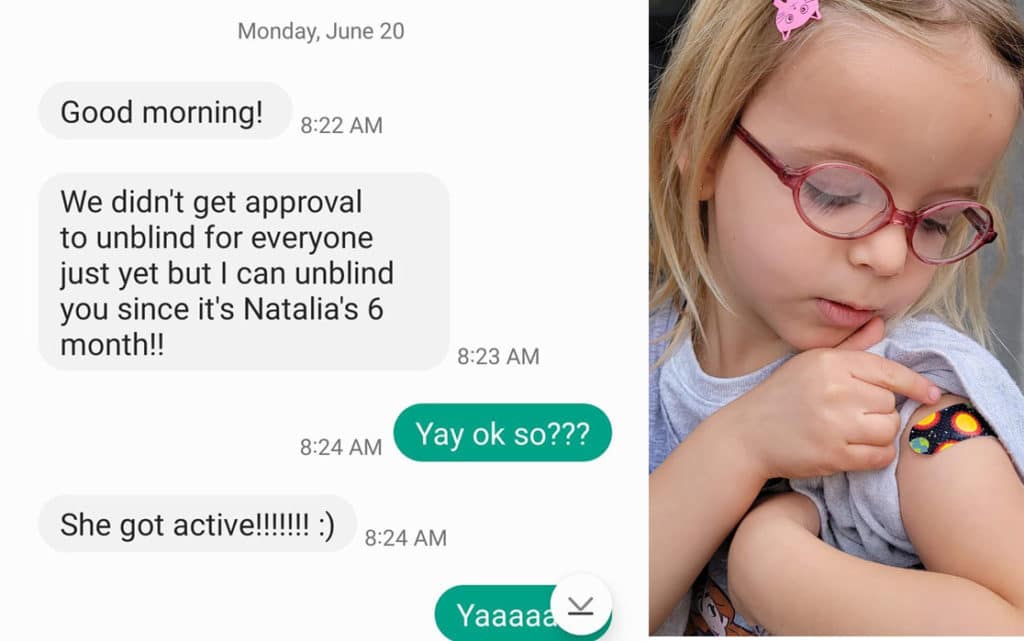
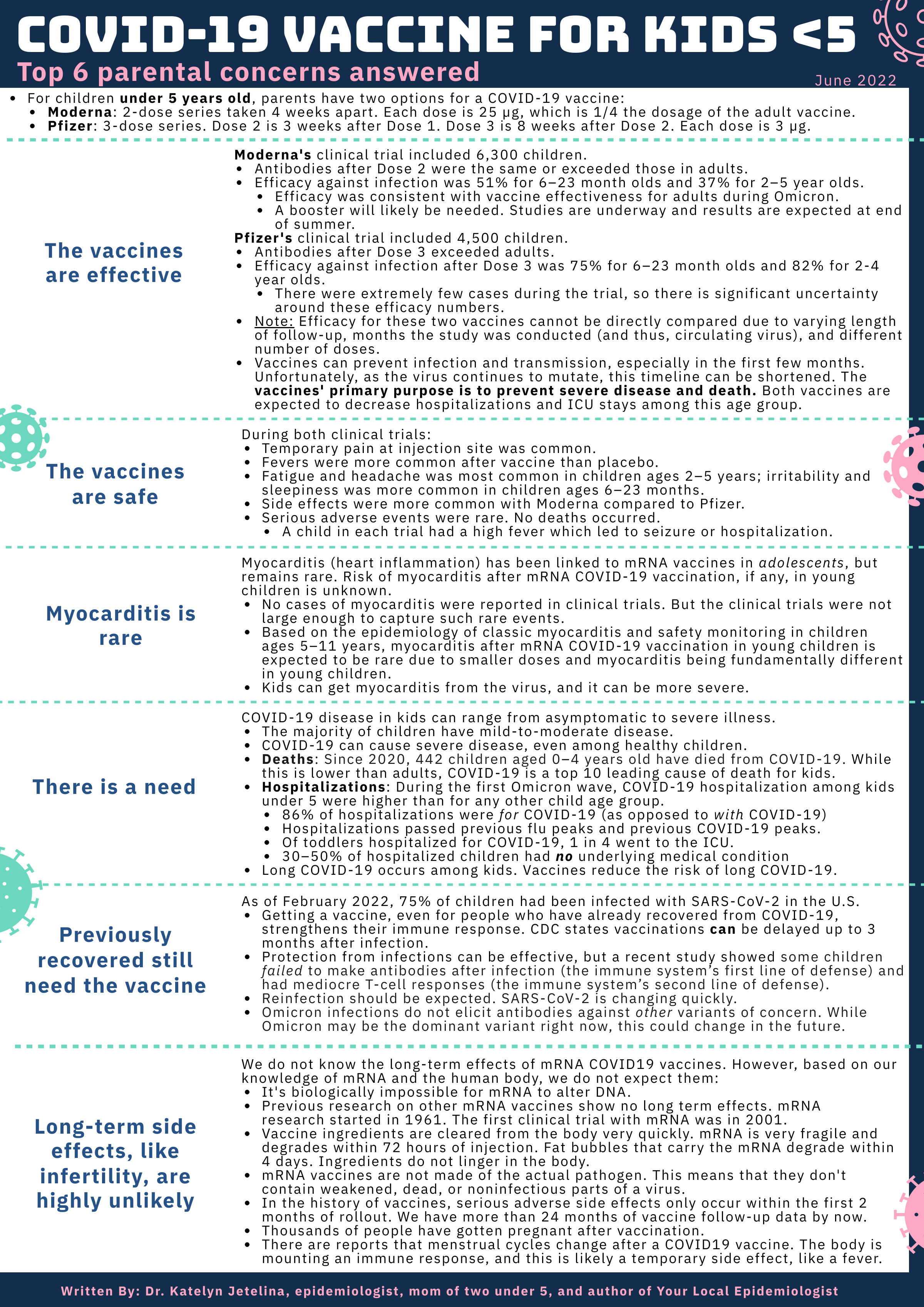
In a “dose” of good news, Adi was notified this morning that Natalia got all 3 shots of the actual Pfizer dose, not the placebo, so we feel very grateful and lucky!

I’m not going to write a long article about this, given how crazy my life is right now (while Adi isolates, I do my best with Natalia and my healing back, and my mom hobbles around their home…oh and we were told that yes, she might have actually fractured her foot after all – REALLY??). But let me say a few quick thoughts for anyone who’s interested, and if you’re not, this is a good place to stop reading:

-I will be giving a Q&A next Monday evening on Zoom privately to Natalia’s school, Intiwasi. They are allowing some others to join if personally vouched for by me. So if you are a friend of mine and would LIKE to attend the short presentation followed by Q&A Monday the 27th at 8pm, please message me. Again, only for those who I know and trust, as this is a private session I’m doing for parents and teachers of my daughter’s school.

-Yes I recommend vaccinating all eligible ages, which AT LONG LAST means age 6 months and up.

-As always, I have no personal background in epidemiology and infectious disease. My recommendations and advice throughout the pandemic are thanks to the time donated by my wonderful expert array of experts, in this case pediatricians and an array of infectious disease physicians. I have the good fortune of them giving me their valuable time in order to explain things as clearly as possible to a wider audience.

-The Pfizer dosage is tiny. Adults have been getting 30mcg. Kids 5-11 have been getting 10mcg. And now age 6 months-4 years old will get just 3mcg. It’s tiny, and yes I recommend it.

-I recommend it regardless of if and when you’ve had COVID.

-In addition to the FDA and the CDC, the AAP (American Academy of Pediatrics) also recommends vaccines and boosters for all eligible ages.

-As we’ve seen with adults and all age groups, 3 shots are crucial. The CDC and governing bodies have continued to do a truly piss-poor job with so much of their messaging, and it’s really important that everyone at every age understand that the 3rd shot is just as important as the first two. They need to stop calling it a booster, because it’s not just boosting your body like an annual flu shot, it actually continues to help mature and develop your antibodies, continuing the process of what the first 2 shots did. Just as HPV and Hepatitis are 3 shot series, we know that if you are being intellectually honest, the Pfizer and Moderna shots are too. And yes, any further shots can be thought of as boosters, that’s fine.

-It’s somewhat shameful that we are still using the original strain for these vaccines, considering how mutated it has become. This is why we actually need the third dose to try to reduce the severity of the virus, even when it will usually not prevent the infection. (Starting this Fall I hope and expect that we will simply get UPDATED boosters once a year along with our flu shots. Easy.)

-As a result of the importance of all 3 shots, I recommend Pfizer for the latest 6 months- 4 year age group, because it’s actually a 3 shot series, as it should be. Moderna has a higher dose, which is generally GREAT, and that’s why I prefer it for adults; and eventually they will also get approval for a 3rd shot, and I’ll probably prefer it at that point in time. But as long as Moderna is only available and approved for the first 2 shots, I would recommend the full 3 shot series with Pfizer, (even though they’ll get a lower dose), so that you can know your child was given the full maturation of the antibodies as intended.

–To be clear, if you get Moderna I think that’s still a WONDERFUL option; in fact you’ll have the advantage of some protection and immune response after each stronger dose, which you do not get with Pfizer until after the third and final dose. I simply encourage you to think of your child as still needing one more shot. My fear is the false sense of security at being called “fully vaccinated”, when I’m confident the third shot is necessary to mature the antibodies for variant protection.

-Pfizer will be a 13 week course to being fully vaccinated. First shot, then second shot 4 weeks later, then third shot 8 weeks after that, and then 2 weeks after final shot you’re considered fully vaccinated. Again, I’m aware Moderna will be tempting as it’s a shorter process, but I really need them to finish testing and approve a third shot before I can recommend them OVER the Pfizer.

-The easiest ways to schedule an appointment seem to be either using the link https://myturn.ca.gov/ or calling Kaiser to schedule one there. And you can certainly call your pediatrician to ask any questions, and see if they will have it in stock.

-Let me make something clear. I know plenty don’t plan to vaccinate their kids, and that this can be a point of contention. I’m not trying to force anything, or argue with anyone; I’m merely trying to be a resource for those who understand that I am unpaid and have tried to give unbiased, informed information throughout the pandemic. My usual sources of infectious disease experts and pediatricians I talk to continue to recommend this, and so do I. I’m sure there will be memes and graphs and articles that come out against this, and I ask that you not send them my way, I only have so much bandwidth, and you are welcome to make your own different choices in life – we each do, every day. And I ask that everyone be respectful and kind to each other, regardless of the choices we each make. I have zero tolerance for people yelling at each other over personal, legal life decisions.

***

RESOURCE LINKS

– Thank you to my gurus for some of these useful links to share:

Boaz Hepner works as a Registered Nurse in Saint John’s Health Center, and teaches COVID vaccine education throughout the hospital, and to the community at large. He grew up in LA in Pico/Robertson and lives here with his wife and daughter. He helped clean up the area by adding the dozens of trash cans that can still be seen from Roxbury to La Cienega. He can be found with his family enjoying his passions: his multitude of friends, movies, poker and traveling.

Update on COVID Vaccines for Kids Read More »

International BDS Org Calls on BDS Boston to Take Down Mapping Project Or “Remove the BDS Acronym from Your Name”

Boycott, Divestment and Sanctions (BDS) National Committee General Coordinator Mahmoud Nawajaa ordered BDS Boston to take down the map targeting Jewish institutions or else “remove the BDS acronym from your name” in a June 20 letter obtained by the Journal.

BDS Boston tweeted on June 3 that their “friends at the Mapping Project” had released an interactive map and articles that “illustrate how local support for the colonization of Palestine is structurally tied to policing, evictions, and privatization locally, and to US imperialist projects worldwide.” Various elected officials and Jewish groups have denounced the map as being antisemitic since Jewish institutions are among the organizations listed on the map.

In his letter to BDS Boston, Nawajaa wrote that the committee has attempted to meet with them but hasn’t heard back, which is why he is sending the letter. Nawajaa wrote that the BDS National Committee has “deep concerns” over the Mapping Project because it “unstrategically targets and provides names and ‘physical addresses’’ of institutions and individuals, and promotes messaging that includes phrases such as ‘resistance in all its forms.’” “Promoting it by a group that is regarded as affiliated to the BDS movement inadvertently but gratuitously opens the door widely for the eager Israeli lobby to intensify to unprecedented levels its legal warfare (lawfare), smears and bullying against the movement, its activists and its support base, as we have seen over the past week,” he wrote. “This also opens up BDS Boston to potential infiltration, and puts you in Boston and us in Palestine and many others in the US and globally in direct danger of heightened persecution and repression.”

Nawajaa added that the BDS movement specifically calls for “peaceful forms of Palestinian popular resistance” and that BDS Boston’s message of “resistance in all its forms,” has “violated a key guideline of our movement.” “The association of the BDS name with such groups and activities hurts our entire movement and presents a substantial threat to our collective and individual safety,” he wrote.

Nawajaa then concluded the letter by calling for BDS Boston to “remove all forms of promotion of the Mapping Project from all BDS Boston media channels” and issue a statement “condemning smears and repressive attacks on the project, but also disassociating BDS Boston from this project in an unambiguous way.” Otherwise, “we shall be compelled to ask that you remove the BDS acronym from your name, as your activities will be outside the mandate of the BDS movement. That way we protect the worldwide movement, especially its presence in Palestine, from a real threat.” The BDS National Committee did not immediately respond to the Journal’s request for comment; requests for comment to BDS Boston’s Facebook and Instagram comments were also not returned.

The FBI is reportedly monitoring the Mapping Project, although they have yet to find “any direct threats of violence” stemming from the map. The Anti-Defamation League (ADL) has a series of Frequently Asked Questions (FAQs) on their website about the Mapping Project, explaining that the project is “threatening” because it calls “for the dismantling and disruption of the Boston Jewish community.” The ADL’s website also urges Jewish community institutions in Boston to “review your communal security preparedness” and report any antisemitic incidents to the ADL.

UPDATE: The BDS National Committee tweeted, “The BDS Movement has no connection to and does not endorse the Mapping Project in Boston, Massachusetts. Simultaneously, we reject and condemn the cynical use of this project as a pretext for repressive attacks on the Palestine solidarity movement.”

International BDS Org Calls on BDS Boston to Take Down Mapping Project Or “Remove the BDS Acronym from Your Name” Read More »

The Gift of a Jewish Mother

When I was ten years old, my parents took me to visit the United States Holocaust Memorial Museum in Washington, D.C. The first exhibit we walked through was Daniel’s Story, which is meant to explain to children the horrors of the Holocaust without graphic imagery, without analysis of antisemitism, and lacking sufficient information on the destruction of European Jewry. Needless to say, I was calm, cool and collected, along with the other children around me. I remember feeling confused as to why the other children did not follow me into the rest of the museum. 

Once my family entered the elevator that takes visitors from Daniel’s Story into the “adult section,” we were presented with a photograph I will never forget, and all feelings of ease slipped away. It was the first picture of a concentration camp I had ever seen, showing General Dwight D. Eisenhower and General George S. Patton standing over an array of immolated corpses at Ohrdruf. I immediately burst into tears. Despite my visible pain, my mother, a Holocaust educator who had introduced me to survivors at an even younger age and had lectured her students on such books as “All But My Life” and “Why Do They Hate Me?” stayed true to her convictions. She held my hand tight and told me we were going to walk through the rest of the museum regardless of how hard I cried. It didn’t matter that the children were gone. My mother’s child was going to stay.

As I recall this memory, I look over Hilton Beach in Tel Aviv, where Jewish descendants of Hitler’s victims lay out in the sun as their children splash in the waves. I am on Taglit this week, also known as Birthright, a free ten-day trip to Israel for Jewish young people. As we hike Masada, float in the Dead Sea, and connect with other participants on the beaches of Haifa, we are meant to strengthen our connection to the Jewish people, to our own Jewish identities, and to the miracle of the State of Israel.

While I touch the Wailing Wall and lay stones on Herzl’s grave, my mom meets with townspeople whose parents ransacked their Jewish neighbor’s property the second they were deported.

Coincidentally, at the same time as my trip, my mother is touring the death camps of Auschwitz and Buchenwald, the mass graves of Gliwice, and the ghostly towns of Dresden and Bedzin which teem with the memories of murdered Jews. In other words, I am celebrating Jewish life while my mom reflects on Jewish death. While I become more convinced of my decision to make aliyah – to move to Israel – this upcoming autumn, my mom is thrown into the abyss of the consequences of Jews not having Israel. While I touch the Wailing Wall and lay stones on Herzl’s grave, my mom meets with townspeople whose parents ransacked their Jewish neighbor’s property the second they were deported. Our two excursions represent a remarkable dichotomy. 

My family is not religious, nor do we descend from survivors, nor do we have any Israelis at our Seder table. There is every reason to believe that we, like many American Jews whose ancestors fled Europe over a hundred years ago, would define our Judaism by bagels and lox and perhaps a Yom Kippur service and nothing more. And yet, my mother and I have made ourselves vulnerable to the story of our people, continuing it and contributing to it as if out of impulse. We have time and again exposed ourselves to the complexities of Judaism without any pressure from our home country or from faith to do so. 

I have often contemplated where this sense of responsibility comes from, so profound that this summer it sends one member of the family to Israel and another to Poland. I am not of the belief that G-d instills in all Jews a sense of deep connection with the rest of the nation from birth — this is made evident by the state of ambivalence that many Jews my age have fallen into, especially in the Diaspora. I also do not believe that the Jewish people need a confrontation with antisemitism in order to feel tethered to something greater than themselves. 

Rather, I feel that the yearning to investigate the contours of Jewish peoplehood, at least in my family, comes from sensitivity. My mother and I are both emotional people, which is constantly mocked by more stoic members of the family. We feel deeply, wearing our hearts on our sleeves, never afraid to show both other people and the world that we care for them. There is not one cause we will not lend our voices to if it entails the suffering of innocents or injustice perpetrated against the powerless. Consequently, when suffering is inflicted on our own blood, on our own brothers and sisters cut from the same fabric, it is absolutely certain that we allow it to consume us, and that it will be the focus of all our endeavors. 

When I began to weep upon seeing the photograph of dead Jews at the Holocaust museum, and when my mom grabbed my hand and cautioned against escaping back to Daniel’s Story, she expressed a mutual understanding that what I was about to experience would be difficult, but it was a necessity that I saw it — for that difficulty would give way to purpose, and that purpose to good deeds like fighting antisemitism and raising my children with a sense of Jewish pride. 

There are far too many families who stop at Daniel’s Story, in order to avoid seeing their children cry. There are far too many Jews who read “The Diary of Anne Frank” and are done with all of it — they “get the gist” and balk at allowing the memory of the Holocaust to inform their outlook on life. This is comfortable; this is what renders us calm, cool and collected. Indeed, American Jews have become numb, drugged by the euphoria of the American Jewish experience, which misleads us into thinking that crying over our people’s story is unnecessary. This is a recipe for dwindling support for Israel, dwindling synagogue attendance, and receding participation within the Jewish community. 

In order to rebel against this and to change the trajectory, we must tap into that emotion, that sensitivity and melodrama for which Jewish mothers are infamous. We must cherish Jewish mothers who cry at graduations, who hold their babies close when they wallow in the despair of a breakup, and who cover their eyes so delicately before lighting Shabbat candles that it sends a chill down the spines of everyone at the table.

If my mother did not bear such a bleeding heart, she certainly would not be educating her sixth graders on the gruesome evil of the Nazis, and she certainly would not be subjecting herself to a tour of Wannsse, where Hitler and Eichmann devised the final solution to the Jewish question. If my mother did not feel, if she did not ache at the sight of her children in anguish, she could not have seen the importance of what comes from such anguish. If my mother did not cry at the stories of Jews whose lives were stolen from them, I would not be pursuing a career in writing about the Jewish people, I would not be on this Birthright trip, and I definitely would not be moving to Israel to begin my life anew. 

For this, mom, though I don’t tell you enough, I am grateful.


Blake Flayton is New Media Director and columnist for the Jewish Journal.

The Gift of a Jewish Mother Read More »

Social Media Influencers Emily Schrader, Yoseph Haddad Discuss Israel Activism at WIZO Event

Social media influencers Emily Schrader and Yoseph Haddad discussed their pro-Israel activism at Women’s International Zionist Organization (WIZO) California event on June 20.

Speaking at The Four Seasons Hotel in Beverly Hills, Schrader, who is originally from Palos Verdes, said she grew up “nominally pro-Israel” and didn’t understand that people hated Israel until she saw an “apartheid wall” while she was a student at USC. She proceeded to join a pro-Israel group on campus. “I was really seeing the extremism on the other side that was pushing me to be more involved and more vocal,” Schrader told Kimberly Brooks, the event moderator, adding that she’s been seeing a lot of criticism of Israel “crossing that line into antisemitism.” “We have to keep fighting that fight,” she said.

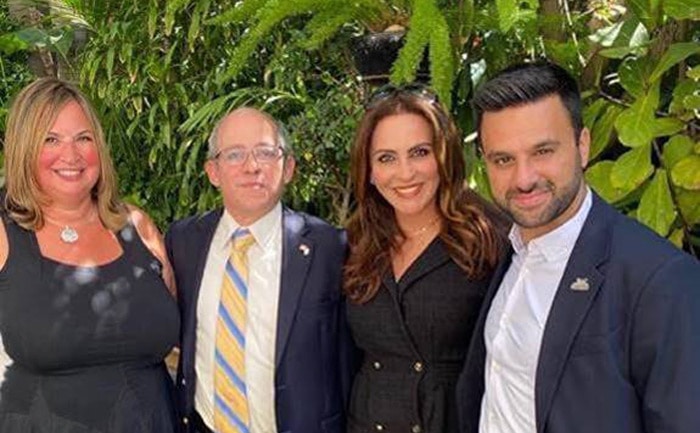
(left to right) Emily Schrader, Kimberly Brooks, Sarah Idan, Miss Universe Iraq 2017

Schrader went to graduate school at Tel Aviv University and returned to Los Angeles only to realize that she wanted to go back to Israel, so she made Aliyah seven years ago and has lived in Tel Aviv ever since. She currently writes and is involved with various podcasts and video projects with Haddad, her fiancé. They co-host a podcast together called “Headlines with the Haddads.” Schrader also touted a recent video on her Instagram page highlighting corruption in the United Nations Relief and Works Agency for Palestinian Refugees (UNRWA).

Haddad, an Israeli Arab, spoke about how he spent his childhood going back and forth between Haifa (where he was born) and Nazareth, where he was raised. When he would visit family in Haifa, he would play soccer with kids who were Jews, Arabs, Christians, Druze and Muslims, which then turned into real friendships. “At that age you don’t really care about Jews or Arabs,” Haddad said. “You just want to play together.” The soccer friends would eventually visit each other’s families during the holidays to learn about their traditions and culture. “I realized that the vision to the Israeli society should be exactly like I had in my childhood,” he said.

Haddad volunteered to serve in the Israel Defense Force despite the fact that Arabs are exempt from Israel’s mandatory military service because he wanted to protect his country and society; he felt even more validated with his decision after a Palestinian female suicide bomber attacked a Haifa restaurant in October 2003 that was co-owned by Arabs and Jews. The bombing killed 21 people, which included both Arabs and Jews. “Terrorism doesn’t discriminate,” Haddad said.

In response to allegations that Israel is an apartheid state, Haddad points to the fact he, an Israeli Arab, was an IDF commander overseeing Jewish soldiers. “Is that a sentence I could say if Israel was an apartheid state?” Haddad said to applause. He added that when he was in the IDF there were only a handful of Arabs; today there are “thousands.” Haddad and Schrader have traveled internationally to explain to people that Israel is not an apartheid state; one notable video was of him debating YouTuber Ali Dawah in London.

Schrader further discussed the U.N.’s hypocrisy against Israel, pointing to how North Korea recently became the head of the U.N. Conference on Disarmament while the U.N. obsesses over the Jewish state. “The hypocrisy is mind boggling,” Schrader said.

She added that the U.N.’s recent commission of inquiry against Israel was supposed to only focus on the 2021 Operation Guardian of the Walls but instead served as a “list of complaints about Israel,” including efforts to blame Israel for “Palestinian-on-Palestinian domestic violence.” When looking into the report’s sources for such a claim were other U.N. reports making similar allegations––meaning the sourcing was circular.

Haddad also talked about how he runs the organization Together—Vouch For Each Other, which focuses on building bridges between Arab-Israelis and other Israelis. He acknowledged that Israel isn’t perfect but there are “so many good things” about the Jewish state that people don’t want to talk about because they “have an agenda.”

Haddad recalled speaking to Harvard’s political science department where he asked to be introduced simply as being someone from Israel. While he was speaking, a student stood up and said they were “disappointed” with Haddad because they “expect any Jew” to talk up Israel––only to embarrassed when Haddad revealed that he’s an Israeli-Arab.

Consul General of Israel to the Pacific Southwest Dr. Hillel Newman also spoke at the event, explaining the importance for Israel to win the public-relations battle on social media in an era of “shorter and shorter” attention spans.

Social Media Influencers Emily Schrader, Yoseph Haddad Discuss Israel Activism at WIZO Event Read More »

Dangerous Ideology At Root of Antisemitic Boston Mapping Project

A new antisemitic initiative called “The Mapping Project” aligned with the BDS movement in Boston names Jewish organizations, volunteer leaders and professional staff in an interactive map of “Zionist leaders and powerhouse NGOs.”

The group says its goal is to demonstrate that “institutional support for the colonization of Palestine is structurally tied to policing and systemic white supremacy here where we live, and to US imperialist projects in other countries.” It brazenly seeks to dismantle the entire Boston Jewish community. Understandably, Boston area Jewish leaders who have been specifically named on the map are nervous that they could be targets of further acts of hate and even violence.

According to Jeremy Burton of the Boston JCRC, the map was “amplified and praised on Twitter by the nonprofit activist group Massachusetts Peace Action.” In other words, The Mapping Project has already been validated by an important voice on the progressive left. 

Without a doubt, The Mapping Project represents a disturbing escalation of antisemitic rhetoric, hate and intimidation coming from the anti-Israel, extreme left. Missing from all the condemnation, expressions of concern, and warnings, however, is a basic understanding of the underlying ideology that fuels left-wing antisemitism.

When the Jewish community counters extreme right-wing antisemitism, we look at the underlying ideology. When the ADL analyzes alt-right antisemitism, for example, the hate-monitoring organization states: “Alt right adherents identify with a range of different ideologies, all of which center on white identity. Many claim to be Identitarians, [who] espouse racism and intolerance under the guise of preserving the ethnic and cultural origins of their respective countries.” From this description, we get a clear sense of the ideology that animates this alt-right variant of antisemitism.

When the Jewish community counters extreme Muslim antisemitism, we look at the underlying Islamist ideology. For example, in 2006, Ken Stern, then with the American Jewish Committee, explained the ideological and religious roots of this distinct form of Jew-hatred: “The Koran paints Jews as wretched … Infidels who have merited God’s wrath.” Radical Islamists lift up particular texts and use them to promote a particular political agenda. Here again we get a sense of the roots of this variant of antisemitism. It didn’t come from nowhere.

There is a reason progressive antisemitism is on the march: The ideology at its root has grown by leaps and bounds.

Mainstream Jewish organization don’t speak of right-wing antisemitism or of Muslim antisemitism as if they are devoid of ideological derivatives, yet for some reason they tend to speak of progressive antisemitism as if there’s no animating ideology. There is a reason progressive antisemitism is on the march: The ideology at its root has grown by leaps and bounds.

Woke ideology is the foundation of The Mapping Project, and the consequence is the expansion of anti-Israelism and the rising isolation of Jewish groups on the progressive left. It’s an academic theory turned dogma that holds that oppression is embedded in society’s systems and structures, and that only those with “lived experience” — those whom progressives identify as oppressed — have standing to define it. What makes it an ideology rather than just another point of view is that its adherents condemn and rule out of all other explanations. Woke ideologues do not advance arguments about why the world is the way it is; they assert their theories with absolute certainty and maintain there are no other acceptable explanations.

When woke ideologues define precisely who has power and privilege based on the identity group, they are laying the groundwork for all manner of extreme claims that become harder and harder to counter. In these circumstances, radical anti-Israel groups have an easy time placing their cause into an intersectional hierarchy that defines who has power and who doesn’t. In the progressive matrix, Israel has power; the Palestinians don’t.

Groups like The Mapping Project feel very justified in naming Jewish groups because there’s no need to be nice to oppressors, and groups like Massachusetts Peace Action feel equally justified in amplifying their meanspirited intimidation of Jewish groups, who they see as complicit in white supremacy.

This is what happens when an ideology that insists on who has power and who doesn’t takes hold: Jews are inevitably branded as powerful and deemed complicit in injustice.

Some Jewish groups seem to have a hard time naming the ideological roots of progressive antisemitism for three reasons. They don’t want to offend donors and supporters who may buy into the ideology, they’ve adopted a moderate form of the ideology themselves, or they want to remain an influential voice in progressive circles in order to influence left-wing discourse. But the gig is up. Left-wing dogma, like right-wing dogma and extreme Muslim dogma, just generates more radical forms of dogma. The more the Jewish community embraces it, the more we become complicit in the very ideology that harms us.

It’s time that we discuss the growing threat of progressive antisemitism with intellectual and moral clarity and, in so doing, name the animating ideology. Until we expose the ideological roots, we won’t be truly opposing it.


David Bernstein is founder of the Jewish Institute for Liberal Values (JILV.org) and author of the forthcoming book “Woke Antisemitism: How a Progressive Ideology Harms Jews.” Follow him on Twitter @DavidLBernstein. 

Dangerous Ideology At Root of Antisemitic Boston Mapping Project Read More »

An Irreplaceable Loss for Iranian Jewry

There are some people whose contributions are so indispensable that their names are preceded with “the.” A decade and a half ago, someone introduced me to Faryar “Frank” Nikbakht at a Holocaust commemoration event. “The Frank Nikbakht?” I asked in wonder. I had heard about this inimitable community leader for years; his knowledge, research and diplomatic (and political) behind-the-scenes advocacy was nearly unparalleled. And that helps explain why my community of Iranian American Jews suffered such a major blow last week when Nikbakht lost his battle with cancer on June 12 in Los Angeles, at age 68. If you don’t believe me, here’s what one of his closest friends, longtime community activist Pooya Dayanim, posted on Facebook the night Nikbakht passed: 

“A part of me died today. My mentor, friend and brother passed away. He was a true prince of Persian Jews … an Iranian rebel and a Jewish hero. His service to Iran, Jewry and the cause of freedom and democracy for over 50 years is too voluminous to list. There will be no other.”

Dayanim was right. There probably will be no other like Nikbakht. What was it about him that has broken the collective heart of our community?

Perhaps it was the fact that he was, in the words of his dear friend, journalist Karmel Melamed, “an encyclopedia” of knowledge. I’m deeply grateful to Melamed for having provided me with so much information about Nikbakht that he (Melamed) spent years researching.

According to Melamed, Nikbakht was an expert on Iranian Jewish history. He was also deeply knowledgeable about the Holocaust. And he knew nearly everything about post-revolutionary Iran, which is especially impressive given that he lived outside the country, as a protected refugee (the United States granted him asylum in the 1980s) the past few decades. In hindsight, Nikbakht knew more about the ayatollahs in Iran than they knew about themselves.

It was a well-known fact that he sacrificed professional pursuits and monetary success for a lifetime of pro bono work for causes related to Iranian Jewry, minorities in Iran and opposition to the regime. 

Perhaps it was because he devoted nearly every waking hour to our community. It was a well-known fact that he sacrificed professional pursuits and monetary success for a lifetime of pro bono work for causes related to Iranian Jewry, minorities in Iran and opposition to the regime. His volunteer contributions can’t be measured by hours, but by decades. 

In fact, I only recently learned that Nikbakht was a part-time realtor. I guess I had taken it for granted that he wasn’t paid for his indefatigable activism. 

Perhaps my community still can’t believe Nikbakht is gone because he was a bona fide maverick. Several decades ago, Iranian Jews living outside Iran practiced tremendous caution with regard to publicly criticizing the regime, exposing its antisemitic rhetoric and actions, or publicly discussing anything negatively related to the thousands of Jews who remain in Iran. To do so was not only considered a taboo, but a danger. The [silent] golden rule among Iranian Jews in the Iranian diaspora was that any public discussion of Jews in Iran would put those Jews at grave risk of persecution, arrest or even execution. 

But Nikbakht completely shattered that precedent. He will be remembered for his tireless advocacy in 1999-2000 in securing the release of “the Shiraz 13” — Iranian Jews the regime had falsely accused of spying for Israel and who were slated for execution. Nikbakht and a small group of other local Iranian Jewish activists devoted a great deal of time to running an international campaign that worked with many Jewish organizations and American diplomats to save “the Shiraz 13.” The efforts proved successful; miraculously, the men were saved (though they faced prison sentences). 

He also proved a maverick by exposing the regime’s antisemitism — particularly the vicious antisemitism post-revolutionary Iran has spouted through state-run media since 1979. Nikbakht founded the Los Angeles-based Committee for Religious Minority Rights in Iran and was also former public affairs director of the now-defunct Council of Iranian American Jewish Organizations. The latter organization afforded him particular access to American lawmakers in order to advocate for Iranian Jewry and expose the regime’s antisemitism. 

And there was no one better to volunteer for the Los Angeles-based “Center for Iranian Jewish Oral History.” Nikbakht spent countless hours collecting video testimonials from Jews about life in Iran before the revolution. That also explains why he was an indispensable contributor to the magnificent 2002 book, “Esther’s Children: A Portrait of Iranian Jews,” which beautifully chronicles the history of Iranian Jewry.   

I decided to ask some of his closest friends to reflect on this extraordinary man, for whom a community-wide memorial was held at Stephen S. Wise Temple on June 21. The reflections below are merely a drop in the ocean of friends, colleagues and grateful admirers of Faryar Nikbakht, z”l. I only wish I could have included touching words from all who loved him.

“I do not know if he knew it or not, [but] Faryar was the prince of our little community,” said Dariush Fakheri, former president of the International Judea Foundation (SIAMAK). “Every aspect of Faryar’s life, emotions, memories, relationships, wisdom, knowledge, pains and pleasures, will live on those of us and countless others who consider him a mentor and a friend, a humble intellectual with an innocent and gentle soul, with a soothing smile, and a calm manner; the Mozart of symphonies of justice and wisdom and truth.”

I asked Bijan Khalili, the visionary publisher, activist and founder of Ketab bookstore, to reflect on his dear friend: “This is how I can explain his opinions and his acts and his life altogether: He believed, ‘The truth is beauty and beauty is the truth’ and he fought for it at any price,” said Khalili.

Well-known journalist, author and activist Homa Sarshar said: “Faryar was a man of honor and integrity. With a great passion for humanity at large and a big heart for minorities’ rights to freedom and equality. He did not stop his mission until his last days. He has been a valuable asset to the Center for Iranian Jewish Oral history and his research and interviews will remain in the Oral History Departments of UCLA, Tel Aviv University, Library of Congress as well as Stanford University’s Iranian Archive) as his legacy.”

Her son, Houman Sarshar, an independent scholar and the editor of “Esther’s Children,” also reflected on Nikbakht’s legacy: “Faryar was a dedicated scholar who pursued his research with passion and relentless curiosity. He spent years not only documenting the history of Jewish life in Iran, but also collecting the oral history of this ancient community. His scholarship is sure to remain valuable to researchers in the field for years to come, and his untimely passing is a loss to us all.”

Like all those who loved Nikbakht, Melamed is still grieving. “Faryar Nikbakht was among the most prolific social justice champions for Iranian Jews and other Iranian religious minorities in the last four decades that was totally underappreciated,” he said. “This was a very special man who never pursued family life, or personal financial gain, or fame or even public accolades for his tireless volunteer work to expose and fight back against the vile Jew hatred propagated by the Islamic regime in Iran. His satisfaction purely came from humbly serving the Jewish community by very publicly fighting the Iranian regime’s campaigns targeting Jews, the regime’s sickening promotion of Holocaust denial and their constant genocidal calls for Israel’s destruction.”

And then, there is Dayanim, as well as George Harounian, two of Nikbakht’s closest friends. “Faryar was the prime example of an Iranian born Jew, who understood Iranian political history and also was proud of his Jewishness and Israel. I am proud to have known him as a friend and as someone who taught me so much,” said Harounian. “His research and writings spread the world over and were read and respected by policy makers and analysts,” said Dayanim. Saving the Shiraz 13, according to Dayanim, “was a major chapter of modern Iranian Jewish history. This effort would not have succeeded without Faryar. He will not be forgotten.”

He gave us too much and immortalized our history too lovingly to ever fade into memory.

No, Nikbakht will not be forgotten. Simply put, he gave us too much and immortalized our history too lovingly to ever fade into memory. Thank you, Mr. Nikbakht.


Tabby Refael is a Los Angeles-based writer, speaker, and civic action activist. Follow her on Twitter @TabbyRefael

An Irreplaceable Loss for Iranian Jewry Read More »

Biden’s First Mideast Trip

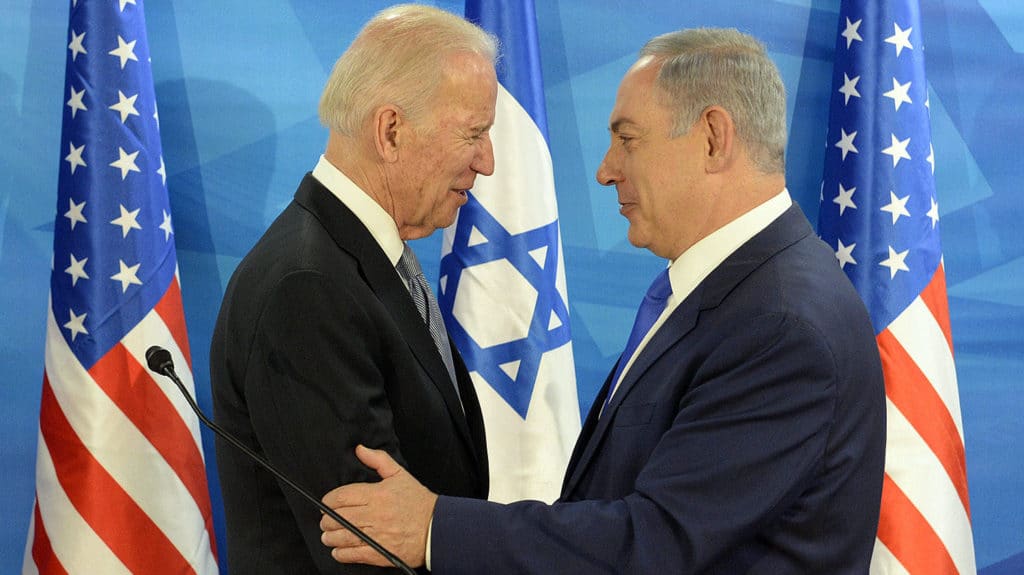
In a few weeks, Joe Biden will be traveling to the Middle East for the first time as president. Even given the recent upheaval in the Israeli government, his time in Israel will be the least important part of the trip. 

There is certainly political value in Biden’s separate meetings with interim Prime Minister Yair Lapid and Palestinian President Mahmoud Abbas. But the American president’s two days in Israel will mainly serve as a prelude to the main event, when he moves on to Saudi Arabia.

The primary benefit of Biden’s time with Lapid will be to show his support for the outgoing coalition that Lapid and now-former prime minister Naftali Bennett taped together last year. Biden’s approach to Israeli domestic politics can be roughly summarized as “anyone-but-Bibi”, so publicly demonstrating the strength of his relationship with Lapid to Israeli voters can serve both to bolster their new leader and marginalize Netanyahu at the same time.

Similarly, Biden and Abbas are not expected to achieve any breakthroughs when they get together the next day. This event is also mainly about geopolitical positioning and messaging. Just as Biden wants Israelis to understand that he is a close ally to their leader, the president’s goal in Bethlehem will be to reassure the Palestinian people that he will pursue a more even-handed approach in the region than the Trump Administration.

Once those two communications goals have been achieved, Biden will not only move from Israel to Saudi Arabia but from symbolism to substance. This is where the president’s trip will really start to matter.

The most obvious and urgent task for Biden with the Saudis is to convince them to start pumping more oil. 

The most obvious and urgent task for Biden with the Saudis is to convince them to start pumping more oil. The war in Ukraine has created a worldwide energy crisis and Biden’s first appeals to Crown Prince Mohammed bin Salman earlier this spring to increase Saudi output were completely ignored. Over the past few months, senior White House and Cabinet officials have dramatically stepped up their outreach to Riyadh, resulting in some additional oil being made available to world markets. But as Russia and Ukraine settle in for a prolonged conflict, the only way to persuade Saudi Arabia to release enough additional oil to offset Russia’s resources will require Biden and the Crown Prince to meet face-to-face. Given the harsh criticism that Biden has leveled against MBS in the past, that reconciliation will be very awkward – and very necessary.

But in addition to the urgent need for gulf oil, this leg of Biden’s trip is substantively important for many other reasons as well. The war in Ukraine will end at some point, but the long-term complications of Middle East politics would become much easier to navigate with enhanced cooperation from the Saudis. The most important step would be for Saudi Arabia to join the Abraham Accord agreements that Israel has achieved with four other Gulf states to normalize relations and to cooperate more closely on economic, cultural and security matters. This in turn would not only strengthen Israel’s standing in the Middle East, but would enhance the largely unofficial coordination between the Saudis, the Israelis and the U.S. toward their shared goal of containing Iran.

Long after the Ukraine war has ended, and long after today’s sky-high gasoline prices are an unpleasant memory, the threat that Iran poses to Israel, to the Middle East and to the world will remain. Earlier this year, Saudi Arabia and Israel participated in American-led naval exercises in the region, a joint effort that was surely noted by Iran’s leaders. But publicly acknowledging and formalizing the partnership between the two countries would send an even stronger message to Tehran.

Biden seems to be willing to sacrifice some personal dignity to be able to repair his relationship with MBS. He might not have taken that step if it were not for the energy emergency that the Russia-Ukraine war has created. But even if cheaper gasoline is the immediate motivation, an officially recognized collaborative effort between Israel and Saudi Arabia against Iran would be an even more consequential outcome of his first trip to the Middle East.


Dan Schnur is a Professor at the University of California – Berkeley, USC and Pepperdine. Join Dan for his weekly webinar “Politics in the Time of Coronavirus” (www/lawac.org) on Tuesdays at 5 PM.

Biden’s First Mideast Trip Read More »