fbpx

March 30, 2022

Trump, Smith and the Decline of Civility

Imagine if you or I were in a restaurant, someone insulted our partner, and we responded by deliberately walking toward that person, slapped them in the face, sat down, and shouted obscenities.

What would happen? In all likelihood, we would be frog-marched out of the restaurant, told to never come back, and then charged with assault.

But that did not happen to Will Smith, who, as the world now knows, defended his wife’s honor by slapping Oscar host Chris Rock and then twice shouting, “keep my wife’s name out your f—ing mouth.”

What was the response? Astonishingly, Smith was treated, not as an out of control boor, but as a victim. Denzel Washington, Tyler Perry, and Bradley Cooper comforted Smith—not Rock—afterward. After he won his Oscar for his performance in “King Richard,” Smith had the audacity to say he acted out of “love.” That’s what abusers say too. At the after-party, Smith was greeted as a hero. He danced and rapped along to his hits, and everyone else tried to catch a shot of him on their phones.

Smith’s assault is more evidence of the coarsening of American civic life. There have been endless incidents of bad behavior from both the Left and the Right. Students censor themselves, parents censor teachers, book-burnings are on the rise, and it seems that there’s no accountability. Yale law students can shout down someone whose views they don’t like, and Donald Trump, it seems, can get away with just about anything. A judge recently decided that Trump “more than likely” committed federal crimes when he tried to obstruct the electoral college vote on January 6. Will he be indicted? Nobody is holding their breath.

Smith’s assault is more evidence of the coarsening of American civic life.

But the Smith incident also shows that there is one law for the very wealthy, and another law for the rest of us. Just as Trump manages to escape accountability because nobody in his inner circle is willing to testify against him, and, it seems, because prosecutors are just too scared. Even though Trump is recorded demanding the Georgia Secretary of State “find 11,780 votes” (an oddly precise number), he has yet to face any charges for inviting election fraud. It seems that if you are big enough, loud enough, and brazen enough, you can get away with whatever crimes you commit.

Which brings us back to Will Smith. There’s no doubt he committed a misdemeanor assault under California Penal Code §240To be found guilty, a person must:

  • Do something that would result in applying force to a person; AND,
  • Do the act willfully; AND,
  • Be aware of facts that should make you realize your act would result in applying force; AND,
  • Have the present ability to apply force; AND,
  • Possess no legal excuse.

Obviously, Smith’s actions fit the definition perfectly.  But will there be any legal consequences? Smith has apologized to Rock and the world: “My behavior at last night’s Academy Awards was unacceptable and inexcusable.” An apology is sufficient when you ghost someone or spill wine on their carpet, or get drunk and say inexcusable things.  Smith, however, committed a crime. That’s different.

Obviously, Smith’s actions fit the definition perfectly.  But will there be any legal consequences?

Nonetheless, the LAPD has said that until Chris Rock files a complaint, they will not investigate. This makes no sense, given that Smith’s actions were witnessed by millions. Sean “Diddy” Combs has said the two have made up: “It’s all love. They’re brothers.”

So now we know that it’s okay to strike someone who insults us or our partner. But only if you are a celebrity.

It seems F. Scott Fitzgerald was right. The rich are very different than the rest of us.

They can openly commit crimes and get away with it. The rest of us can’t.

Trump, Smith and the Decline of Civility Read More »

B’nei Brak Terrorist Came Into Israel Through West Bank Security Barrier “Gap”

The Palestinian terrorist who shot and killed five Israelis on March 29 reportedly came into Israel through a “gap” in the West Bank security barrier.

The Times of Israel (TOI) reported that, according to Channel 12, Diaa Hamarsheh, 27, “switched out the license plates on the car and brought the M-16 used in the attack with him.” The Jerusalem Post also reported that Channel 12 News reporter Gilad Shalmor discovered in December that “that tens of thousands of Palestinians from the West Bank enter Israel daily through holes in security fences, and the IDF [Israel Defense Force] largely turns a blind eye.”

Additionally, on March 16, the IDF decided not to seal off the borders of the barrier for the first time in five years, calling the area “quiet and stable.”

Writer Yoni Michanie tweeted, “Last night’s terrorist entered Israel through a gap in the security fence. If you’re sitting across the world and are arguing that taking down the security barrier will bring about an end to Palestinian terrorism, remember: You won’t be in Israel to pay the price.”

In a separate report, TOI noted that the terrorist had been imprisoned for planning a suicide bombing attempt against Israelis; in 2011, the terrorist openly asked Hamas and Islamic Jihad for aid in the attempt on social media. He served six months in prison on a plea bargain deal, with a judge ruling that the terrorist’s family would “rehabilitate and supervise him.”

The Post also noted that the terrorist had been illegally working at an Israeli construction site and cited figures from the International Labor Organization that 26,000 Palestinians worked illegally in Israel and in Israeli settlements in 2020. The legal consequences for those who illegally employ Palestinians in Israel “are usually not harsh and do not include jail time,” the report stated. 


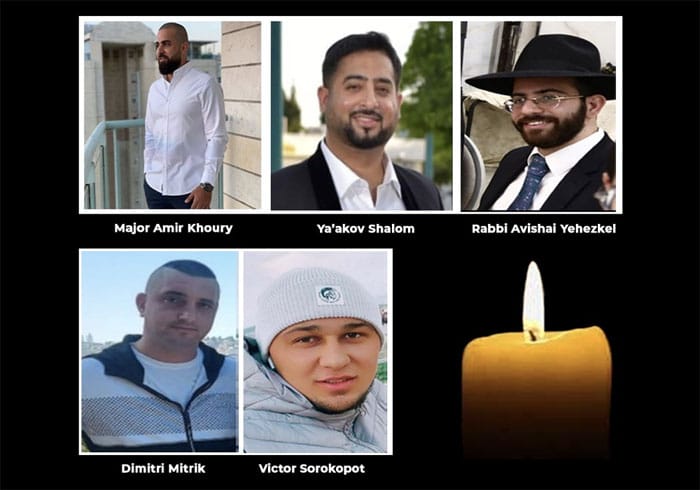
The terrorist was killed by one of his victims, 32-year-old Arab-Israeli police officer Amir Khoury. Two of the victims, Dimitri Mitrik and Victor Sorokopot, were Ukrainian foreign workers. The other two victims have been identified as Rabbi Avishai Yehezkel and Ya’akov Shalom.

Israeli Prime Minister Naftali Bennett urged Israelis to carry a firearm, preaching “vigilance and responsibility” in a March 30 video statement. “Whoever has a gun license, this is the time to carry a gun,” Bennett said, per TOI. 

B’nei Brak Terrorist Came Into Israel Through West Bank Security Barrier “Gap” Read More »

Rosner’s Domain: A First Negev Banquet

On Monday morning, the Negev summit of leaders almost disappeared from the public’s view. Foreign Minister Yair Lapid had everything planned out nicely. The site in Sde Boker—David Ben-Gurion’s place of residence — the flags, the blowing wind, the helicopters, the informal setting. Everything, that is, except the unexpected, which in this region is to be expected. When leaders convene to talk about cooperation and development, invariably someone is going to grab a gun and shoot. TV cameras in the Negev were switched off, TV cameras in the town of Hadera, where two terrorists opened fire and murdered two Israeli police officers, were switched on. Lapid and the summit suddenly seemed irrelevant, distant – as distant as Sde Boker. 

When leaders convene to talk about cooperation and development, invariably someone is going to grab a gun and shoot. 

Even before the latest attack, focusing on the historic summit – attended by foreign ministers from Egypt, Bahrain, Morocco, the Emirates, and the United States, was not easy. Three days before the summit, a terror attack in Beer Sheba ended with four dead. In both terror attacks, the culprits were Arab citizens of Israel. Tension between Jews and Arabs has been a recurring theme in the last year – a year in which, on the one hand, riots and violence were rampant, while on the other hand, for the first time, an Arab party joined the majority coalition. 

So that’s the way it is in this schizophrenic region. When there’s good news, there must be bad news. When some Arabs are integrating, politically speaking, some Arabs are also rioting or committing attacks. It’s not always easy to tell which of the two trends is the more dominant. And the same holds true for news coming from the south, the Negev. When some Israelis and Arabs sit together to have talks with the serene desert as background, other Israelis and Arabs (mostly Bedouin) are caught in a fight over Israel’s ability to rule the desert. 

The Hebrew word that is often used to describe the trouble with the Negev is “Meshilut” – governability, or in this case, the lack thereof. There are not enough police to control the rate of crime in this region; there’s not enough determination to settle the Bedouins on land that they own, rather than wherever they want to reside. The Negev is about half of Israel, but many still feel it is our Wild West, where laws don’t always apply. Ask almost every Israeli, and they will tell you that it’s time the government do something about the Meshilut in the Negev. Ask what exactly ought to be done, and the response begins to vary. In a cabinet meeting on Sunday, two ministers fought vociferously over a plan to build five new Jewish settlements in the northern Negev. In previous months, the Arab party of the coalition, the Raam party, whose main pool of voters is Bedouin, blocked initiatives to deal more aggressively with illegal Bedouin activities.

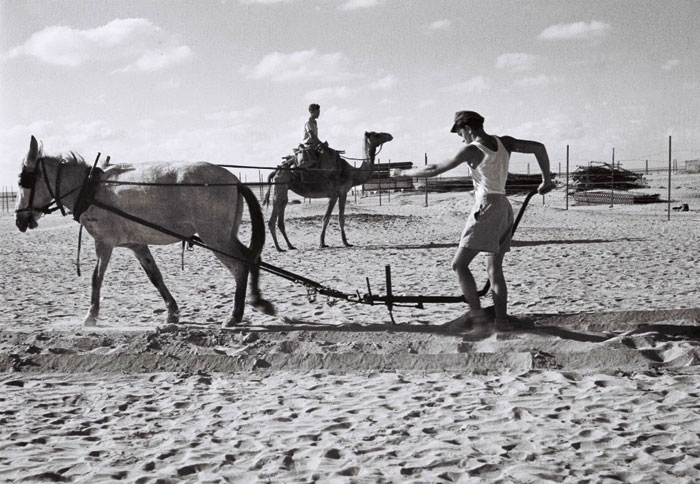
Ben-Gurion’s dream for the Negev, as a blooming desert, the one that Lapid wanted to emphasize as he gathered foreign leaders for a show of unity, is not yet fulfilled. There are blooms, yes, but alongside the bloom is a bag of unresolved trouble, which is also a fitting description for the summit of leaders. It was a historic show of legitimacy, as Arab countries sent their dignitaries to be seen publicly socializing with Israelis, on Israeli land, not far from where Israel’s founder is buried. It was also a show of Middle Eastern leaders beginning to prepare for a more dangerous, more volatile region, in which Iran – emboldened by the lack of American resolve – is getting stronger and more daring. Imagine that: a summit in which Israel and the Arabs are on one side, complaining and protesting, while U.S. Secretary of State, Antony Blinken, is on the other, attempting to explain a U.S. policy for which no good explanation has been given thus far. 

When the summit gathered, there was some speculation that it could become a place of confrontation with the U.S. That did not happen, maybe because of the calm setting, or maybe because this is not Lapid’s mode of operation. Thus, the event was a success. The food was good, the atmosphere cordial, the pictures charming, the sense of history being made in the air. But ask what exactly was achieved and the response becomes somewhat vague. A decision was made to have another such meeting next year. Which reminded me of the Purim we just celebrated, and Queen Esther’s first banquet. Remember her achievement? Let the king and Haman come again, the next day – to deal with the actual problem.

Something I wrote in Hebrew

Sometimes I write about the everyday lives of Israelis. Things such as: do they have pets?

How many of us have a dog or a cat at home? The answer is, about a third. Much less for Arabs, much less for the ultra-Orthodox, more for the rest of us. But even in the case of the rest of us, Israel is far from being at the forefront of having pets. In the United States, more than half of the population has a pet. In Israel, even among secular Israelis, who tend to have more pets, the share does not get as high as fifty percent. Still, the level of tradition and religiosity is the best indication for whether people are likely to have pets. The more religious Israelis are, the fewer pets they have. Among the ultra-Orthodox, this is an almost non-existent phenomenon. Among the religious, it exists only among a minority of about one-tenth.

A week’s numbers

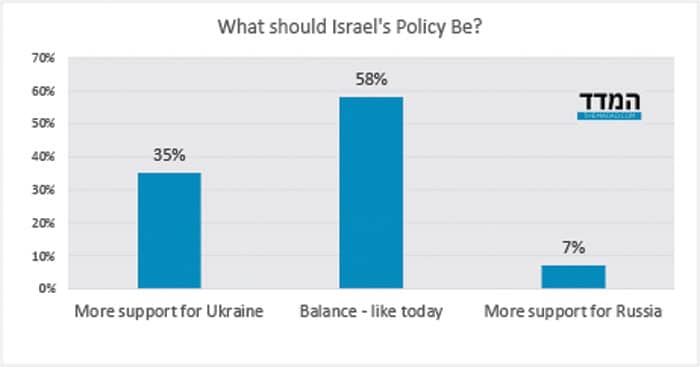
Israel’s heart is with Ukraine; Israel’s mind is more with Israel’s need to balance its policy and not alienate Russia. 

A reader’s response:

Naomi Eshron wrote: “I don’t understand why you call the backwardness of the Haredi world a success – it is a disaster for Israel!”. A quick response: weirdly, both can be true, a success for them that is a challenge for Israel (a “disaster” is premature and too strong). 


Shmuel Rosner is senior political editor. For more analysis of Israeli and international politics, visit Rosner’s Domain at jewishjournal.com/rosnersdomain.

Rosner’s Domain: A First Negev Banquet Read More »

Biden Can’t Avoid the Mideast

Author’s note: This column was written before the tragic deaths of five Israelis at the hands of a Palestinian gunman near Tel Aviv on Tuesday. The broader points about the U.S. challenges in the Middle East are still valid, but the assessment of the relationship between Israel and the Palestinians is obviously not.

Joe Biden wasn’t the first U.S. president to think he could put the Middle East on the back burner while he focused on other global hot spots. Nor will he be the last to realize that the geopolitics of the region are far too tenuous to put the region on America’s foreign policy waiting list for long. But there might not be a precedent in modern history when deprioritizing the longtime tensions in the Mideast have carried such potentially grave consequences worldwide.

When any of Biden’s predecessors have tried to shift the Middle East to second-tier status, it has been because they recognized the intractability of the Israeli-Palestinian conflict and decided that expending their political capital to push for an unachievable peace was not a good use of their time, energy or influence when other parts of the world also demanded their attention.

When Biden took office, he quickly reviewed the seemingly hopeless deadlock in the West Bank and Gaza and came to precisely that conclusion. Except when the abbreviated war last summer between Israel and Hamas forced his hand, his administration’s only significant involvement in the region has been to push for a renewal of a nuclear agreement with Iran.

But even while hostilities between Israel and the Palestinians have returned to a low simmer, two other violent outbreaks have combined to worsen the fraught politics of the Middle East and the United States’ role there. The first is Russia’s invasion of Ukraine, which has created pressure on the U.S. and its allies to impose the most stringent sanctions possible against Vladimir Putin’s government, including a potential embargo against Russian oil imports. But Europe heavily depends on Russia for energy resources, and most European countries are reluctant to impose too much hardship on their own citizens. 

These competing demands have dramatically elevated the importance of the Mideast’s oil-producing countries to an even higher level than normal.  Simply put, the West needs Middle Eastern oil badly, more urgently than has been the case for several decades. But when Biden placed phone calls to the leaders of Saudi Arabia and the United Arab Emirates when the war in Ukraine began, neither the Saudis or Emiratis would take his call. That type of disregard from an ally is almost unheard of, but it becomes easier to understand once we examine the two countries’ other security interests.

Aside from the Russia-Ukraine war, the other military conflict that has created so many complications for the U.S. has been the terrorist uprising in Yemen by Houthi insurgents. This is the type of warfare which usually barely registers in the consciousness of most Americans, but both Saudi Arabia and the U.A.E. have played prominent roles in assisting the Yemeni government’s efforts to defeat the rebellion, and both have been repeatedly attacked by the rebels. Because of the strong support that Iran has extended to the Houthis, Yemen is now the scene of a proxy battle between the Middle East’s most prominent military powers.

The Saudis are already frustrated with the Biden Administration’s efforts to resurrect the Iranian nuclear deal (casting them as Israel’s low-key allies in attempting to stop the deal). Add Biden’s personal and public criticisms of Saudi Crown Prince Mohammed bin Salman, and the United States’ reluctance to make a larger commitment to protecting Saudi interests against the rebels has caused great consternation among many of the Gulf nations. Which means that at the precise moment when the West would benefit most from an increased oil supply from the Middle East to replace Russia’s energy imports, the countries who would be most able to provide those resources are nowhere to be found.

Europe needs gasoline. They can get it from either Putin or Saudi Arabia. It’s not hard to predict where Biden’s next fence-mending mission will take place.

Most presidents learn the hard way that the Middle East demands their attention in almost all circumstances, regardless of competing priorities in other parts of the world. But it’s rare that deprioritizing the region could have such an immense impact so far from Jerusalem and Riyadh. Europe needs gasoline. They can get it from either Putin or from Saudi Arabia. It’s not hard to predict where Biden’s next fence-mending mission will take place.


Dan Schnur is a Professor at the University of California – Berkeley, USC and Pepperdine. Join Dan for his weekly webinar “Politics in the Time of Coronavirus” (www/lawac.org) on Tuesdays at 5 PM.

Biden Can’t Avoid the Mideast Read More »

Can guys and girls really be just friends? Ft. Noah Sellers

After a very brief hiatus, the Schmuckgirls are back! On this week’s episode, Libby, Maxine, and Marla give some exciting updates and discuss the importance of supporting your partner in their career. Later on, they’re joined by the wonderful Noah Sellers and give him a run for his money as he tries to explain why he believes girls and guys can’t be just friends. They end with a fun game of “Friends or Dating.”

Like what you hear? Follow @schmuckboysofficial on Instagram and TikTok. Submit your questions, comments, concerns, crazy date stories, and advice requests to schmuckboysofficial@gmail.com

Can guys and girls really be just friends? Ft. Noah Sellers Read More »

Iowa Passes First State Antisemitism Bill

On Wednesday, Iowa became the first state in the nation to pass a bill adopting the International Holocaust Remembrance Alliance definition of antisemitism for use when assessing the motivation behind illegal discriminatory conduct.

The bill, which is based on a model I drafted, was first introduced in Iowa over two years ago by the Israeli American Council, but it stalled during the Covid-19 shutdowns. Similar bills are currently pending in Georgia, Tennessee, New Jersey, and Arizona, and a number of other states are also considering such legislation. South Carolina and Florida have already adopted IHRA for similar use in their education systems, and a total of 19 states have endorsed the definition in some fashion.

Iowa deserves a lot of credit for being the first to get the job done, especially because there has been so much misinformation spread about the subject. As more and more states move to pass these laws with wide bipartisan support, it is important for the public to be crystal clear about what activities they do and don’t affect.

None of the bills in question in any way limit or chill any person or organization’s freedom of speech or expression. None of the bills create any new protected class, or enhance any punishment, or regulate or restrict academic freedom. Anyone can say whatever they want, however abhorrent, about Jews and about the Jewish state. Antisemitic speech is constitutionally protected—just like racist and sexist speech—and none of the bills attempt to change that. Of course, it is true that the IHRA definition should not (and could not legally) be used as a speech code of any sort, but that is explicitly not what these bills do. Those who continue to claim otherwise are either purposely misleading the public or inexcusably ill-informed.

Practically speaking, these so-called ‘”antisemitism bills” are, in fact, quite narrow. All they do is ensure that when analyzing the intent behind illegal discriminatory actions that target Jewish people, when there is an allegation that the action was motivated by anti-Jewish sentiment, authorities consider (as rebuttable evidence) the world’s most well-accepted definition of antisemitism. For the record, that definition has already been officially adopted by over 865 separate governments, NGOs and other key institutions—including several departments of our own federal government.

Some people are genuinely curious about why these bills are necessary and important—after all, illegal discrimination is by definition already unlawful.

The bills are necessary as it relates to antisemitism because Jewish identity is so potentially multifaceted, (incorporating, as it does, aspects of religion, race, culture, national origin and ethnicity,) that without a standard definition for authorities to use as a reference it is easy for antisemites to hide behind this ambiguity by committing antisemitic acts, then claiming it was not antisemitism because it was not based on this or that particular characteristic. To that end these bills do not revise any existing anti-discrimination policies; they simply clarify a term and ensure that the rules will not be applied arbitrarily.

To that end these bills do not revise any existing anti-discrimination policies; they simply clarify a term and ensure that the rules will not be applied arbitrarily.

These bills are important as it relates to antisemitism because while Jews make up only 2% of the U.S. population, they account for 60% of all hate crimes directed at a specific religious group, and 13% of hate crimes overall. Unfortunately, those numbers are rising, and yet despite the demonstrable prevalence of antisemitic incidents, nearly half of all Americans say they have either never even heard the word antisemitism, or at the very least do not know what it means. You cannot fight a problem if you cannot recognize and define it.

Some have asked why Jews deserve their own group clarification. To be clear, these bills are not about establishing Jewish exceptionalism; they are just about ensuring equality. Jews need this additional clarification because history has shown that throughout the generations no other hatred has been this consistently amorphous and shifting. But notwithstanding the above, the importance of clarity in such definitions is not entirely unique to antisemitism. To the extent that any other group does feel that it is being routinely and systemically discriminated against, and that there is a need for a uniform consensus definition to clarify what is and is not bias-motivated illegal conduct, that group’s concerns should likewise be legislatively addressed.

To be clear, these bills are not about establishing Jewish exceptionalism; they are just about ensuring equality.

Valid monitoring, informed analysis, and effective policy-making all require uniform definitions. Our states have a responsibility to protect their citizens from acts of hate and bigotry motivated by discriminatory animus—including antisemitism—and they must be given the tools to do so. Until now the absence of a legal definition of antisemitism has been an Achilles’ heel for those who expect their government to take a stronger stand against antisemitism, but this week, Iowans stood up to say that hate has no place in their state. God willing many other states will follow their lead.


Dr. Mark Goldfeder, Esq. is an international lawyer and Director of the National Jewish Advocacy Center

Iowa Passes First State Antisemitism Bill Read More »

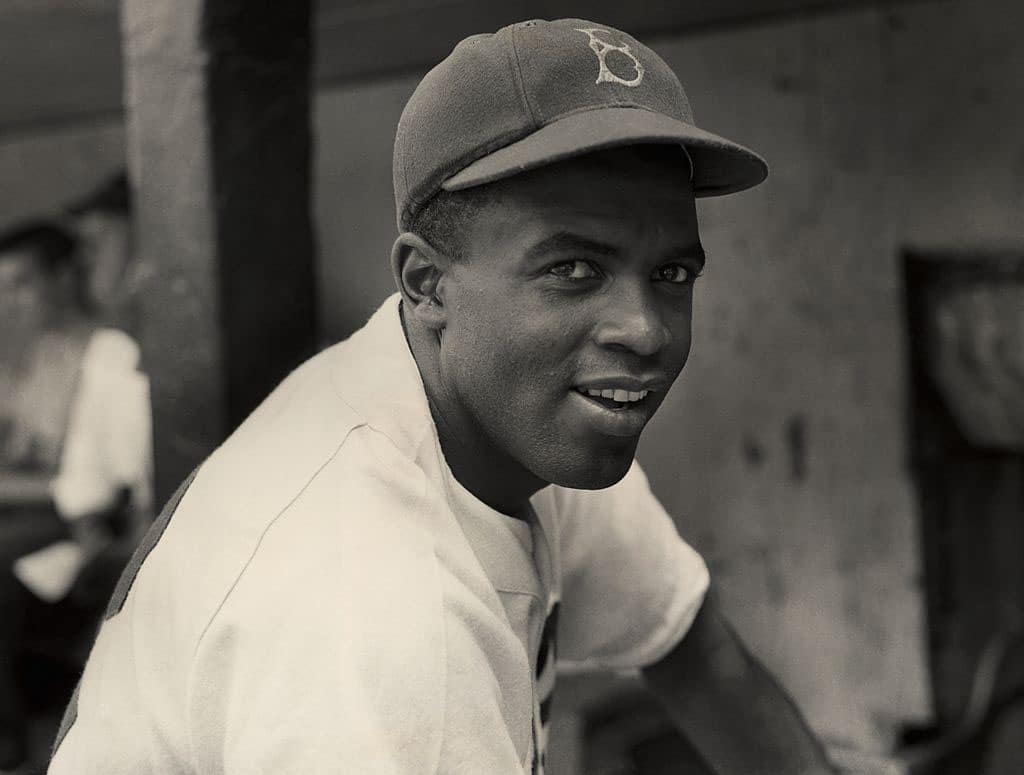
Jackie Robinson and the Jews

This year, Passover and Jackie Robinson Day both take place on April 15. That’s appropriate, because Robinson was baseball’s Moses.

It was on that date in 1947 that Robinson broke baseball’s color barrier when he took the field for the Brooklyn Dodgers. To honor Robinson, each year every player, coach, manager and umpire in Major League Baseball wears Robinson’s uniform number, 42. This year is special because it marks the 75th anniversary of that transformative moment.

During his playing days—1947 to 1956, all with the Brooklyn Dodgers—Robinson was an exceptional athlete. He was Rookie of the Year in 1947 and Most Valuable Player in 1949. An outstanding base runner with a .311 lifetime batting average, he led the Dodgers to six pennants and was elected to the Hall of Fame in 1962.

Robinson’s success on and off the baseball diamond was a symbol of the promise of a racially integrated society. It is difficult today to summon the excitement and fervor that greeted Robinson’s achievement. He did more than change the way baseball is played and who plays it. The dignity with which Robinson handled his encounters with racism among fellow players, fans and the media—as well as in hotels, restaurants, trains and other public places—drew public attention to the issue, stirred the consciences of many white Americans, and gave Black Americans a tremendous boost of pride and self-confidence.

By hiring Robinson, the Dodgers earned the loyalty of millions of Black Americans. But they also gained the allegiance of many white Americans, most fiercely Jews, especially those in immigrant and second-generation neighborhoods. They believed that integration within the national pastime was a critical steppingstone in tearing down other obstacles to equal treatment. Robinson had a strong bond with New York’s large Jewish community, particularly in Brooklyn, where Jews were half of the residents of the city’s largest borough.

But they also gained the allegiance of many white Americans, most fiercely Jews, especially those in immigrant and second-generation neighborhoods.

A number of Jews played key roles in shaping Robinson’s life and career.

Lester Rodney was an influential part of the campaign to end baseball’s Jim Crow system. Starting in 1936, he was the sports editor of the Daily Worker, the Communist Party’s newspaper. Led by Rodney, the paper forged an alliance with the Negro press, civil rights groups, radical politicians and left-wing labor unions to dismantle baseball’s color line. The protest movement—which began when Robinson was still a teenager—published open letters to baseball owners, polled white managers and players about their willingness to have Black players on major league rosters, picketed at baseball stadiums in New York and Chicago,  gathered signatures on petitions, kept the issue before the public, and put pressure on team owners.

In the 1930s and 1940s, Rodney was one of the few white sportswriters to cover the Negro Leagues and to protest baseball segregation. One of his editorials attacked “every rotten Jim Crow excuse offered by the magnates for this flagrant discrimination.” When baseball executives told Rodney that there were no Black players good enough to play in the majors, Rodney shot down the argument by reporting about exhibition games where Negro League players defeated teams comprised of top-flight white major leaguers. In 1941 he and sportswriters for Negro newspapers sent telegrams to team owners asking them to give tryouts to Black players. In 1942 the Chicago White Sox reluctantly invited the Negro League pitcher Nate Moreland and UCLA’s All-American football star Jackie Robinson to attend a tryout camp in Pasadena. Manager Jimmy Dykes raved about Robinson: “He’s worth $50,000 of anybody’s money. He stole everything but my infielders’ gloves.” The two ballplayers never heard from the White Sox again.

During World War 2,  Rodney, and other progressive sportswriters voiced their outrage about the hypocrisy of baseball’s establishment. In an open letter to Baseball Commissioner Kenesaw Mountain Landis published in the Daily Worker in May 1942, Rodney wrote: “Negro soldiers and sailors are among those beloved heroes of the American people who have already died for the preservation of this country and everything this country stands for—yes, including the great game of baseball. You, the self-proclaimed ‘Czar’ of baseball, are the man responsible for keeping Jim Crow in our National Pastime. You are the one refusing to say the word which would do more to justify baseball’s existence in this year of war than any other single thing.”

The son of Lithuanian Jewish immigrants, Shirley Povich, the Washington Post’s sports editor and columnist, consistently challenged baseball’s color line. Reporting from spring training in Florida in 1941, he watched several Negro League games and reminded readers that Black players were as good or better than their white counterparts. The major leagues, he wrote, were missing out on  “a couple of million dollars worth of talent” by excluding Black players. When the Dodgers signed Robinson to a contract in 1947, Povich wrote, “Four hundred and fifty-five years after Columbus eagerly discovered America, major league baseball reluctantly discovered the American Negro.”

In 1945, Isadore Muchnick, a progressive Jewish member of the Boston City Council, determined to push the Boston Red Sox to hire Black players. Owner Tom Yawkey was among baseball’s strongest opponents of integration, so Muchnick threatened to deny the Red Sox a permit needed to play on Sundays. Working with Wendell Smith (the Black sports editor of the Pittsburgh Courier, an influential Black newspaper) and Dave Egan (a white sportswriter for the Boston Record) Muchnick persuaded reluctant Red Sox general manager Eddie Collins to give three Negro League players—Robinson, Sam Jethroe and Marvin Williams—a tryout at Fenway Park on April 16.  Having endured the bogus tryout with the White Sox four years earlier, Robinson was skeptical about the Red Sox’ motives. On the night before the tryout, Robinson went to Muchnick’s home for dinner. During the 90-minute tryout, the three players performed well. Robinson, the most impressive of the three, hit line drives to all fields. “Bang, bang, bang; he rattled it,” Muchnick recalled. “Jackie hit balls over the fence and against the wall,” echoed Jethroe. “What a ballplayer,” said Hugh Duffy, the Red Sox’ chief scout and one-time outstanding hitter. “Too bad he’s the wrong color.” But public pressure and media publicity helped raise awareness and furthered the cause.

After the phony Fenway Park tryout, Smith headed to Brooklyn to tell Dodgers’ president Branch Rickey—who did want to integrate his team and was looking for the right player to do it—about Robinson’s outstanding performance. Rickey picked Robinson. Muchnick and Robinson remained friends. When the Dodgers came to Boston to play the National League’s Braves (who later moved to Milwaukee, then Atlanta), Robinson would visit Muchnik at his home. Robinson once spoke at a father-and-son breakfast at Muchnick’s synagogue, bringing one of his sons with him.

Sam Nahem grew up within New York’s Syrian Jewish community and starred in football and baseball at Brooklyn College, where he was also involved in radical political groups that challenged antisemitism and racism. He pitched for the Dodgers, Cardinals and Phillies in the late 1930s and early 1940s, earning a law degree during the off seasons. In 1945, while stationed in France during World War 2, Nahem was asked to organize a baseball team comprised of American soldiers on his base to compete with the teams from other bases in Europe. Nahem recruited players for his team, the OISE All-Stars, comprised mainly of semi-pro, college, and ex-minor-league players. Besides Nahem, only one other OISE player had major league experience. Nahem boldly insisted on putting two Negro League stars, Leon Day and Willard Brown, on the roster, even though military baseball was segregated.

With Nahem pitching, playing first base, and leading the team in hitting, the OISE All-Stars won 17 games and lost only one, attracting as many as 10,000 fans to their games, and advancing to the finals of the European GI World Series. The other team that reached the finals was the 71st Infantry Red Circlers, representing the 3rd Army, commanded by General George Patton. Patton’s team included nine major leaguers and was heavily favored to win. The GI World Series  took place in September, a few months after the U.S. and the Allies had defeated Germany. The OISE All-Stars and the Red Circlers each won two of the first four games. The final game, played on September 8, 1945, took place in Nuremberg, Germany, in the same stadium where Hitler had addressed Nazi Party rallies. Allied bombings had destroyed the city but somehow spared the stadium. The U.S. Army laid out a baseball diamond and renamed the stadium Soldiers Field. Nahem’s team won final game 2-1. The Sporting News adorned its report on the contest with a photo of Nahem. A month later, Branch Rickey signed Jackie Robinson—who had been barred from playing on the military team at Ft. Riley, Kansas because of his race—to a contract to play for the Dodgers’ minor league team in Montreal.

The  protest movement that included Rodney, Povich, Muchnick, and Nahem—part of a broader postwar movement for civil rights—set the stage for Robinson’s entrance into the major leagues in 1947. During his rookie year, Robinson faced racist epithets on and off the field, including by opposing players.

When Robinson joined the Montreal Royals for the 1946 season, his biggest booster was Sam Maltin, a Jewish sports columnist for the Montreal Herald and a stringer for the Pittsburgh Courier, the influential Black newspaper. When Robinson led the Royals to the minor league World Series championship, the fans surrounded him and carried him on their shoulders in celebration. In the Courier, Maltin, a socialist, wrote: “It was probably the only day in history that a black man ran from a white mob with love instead of lynching on its mind.” Maltin and his wife Belle (who introduced Jackie’s wife Rachel to Jewish cooking) were the Robinsons’ closest friends in Montreal, a friendship that continued after Robinson joined the Dodgers. 

Hank Greenberg was baseball’s first Jewish super-star. As a first baseman for the Detroit Tigers, he led the American League in homers and RBIs four times, played in three World Series, was a five-time All-Star, and was the Most Valuable Player in 1935 and 1940. He attracted national attention in 1934 when he refused to play on Yom Kippur,  even though the Tigers were in the middle of a pennant race. During his playing career, the 6-foot-4 Greenberg—who hit 58 home runs in 1938, two short of Babe Ruth’s 1927 record—faced antisemitic slurs and occasionally challenged bigots to fight him one-on-one. Greenberg was occasionally denied entry to hotels where he teammates were staying. He often said that he felt every home run he hit was a home run against Hitler.

Greenberg was occasionally denied entry to hotels where he teammates were staying. He often said that he felt every home run he hit was a home run against Hitler.

After spending the equivalent of four full seasons in the military during World War 2, Greenberg returned to the Tigers for two years but was traded to the Pittsburgh Pirates for the 1947 season, which turned out to be his final year in the majors. When the Dodgers traveled to Pittsburgh for a three-game stand in May, some Pirates players hurled racial slurs at Robinson from the dugout. In the first inning of the third game on May 17, Pirates pitcher Fritz Ostermueller hit the Dodger rookie on the wrist, sending Robinson to the ground writhing in pain. (That season, Robinson was often the target of “beanball” pitches aimed at his head). In the top of the seventh inning, Robinson laid down a perfect bunt, making it difficult for Ostermueller to throw the ball to first baseman Greenberg. As he  reached the base, Robinson collided with Greenberg. The next inning Greenberg was intentionally walked. When he arrived at first base, he asked Robinson (who played first base during his rookie season) if he had been hurt in the earlier collision. Robinson told Greenberg that he was OK, at which point Greenberg said, “Don’t pay any attention to these guys who are trying to make it hard for you. Stick in there. You’re doing fine. Keep your chin up.” After the game, Robinson told reporters, “Class tells. It sticks out all over Mr. Greenberg.”

Robinson appreciated Greenberg’s support and the two athletes remained friends. They were the only two former super-stars who in 1970 testified in court on behalf of Curt Flood’s challenge to baseball reserve clause, which players considered a form of indentured servitude. When Greenberg became the Cleveland Indians’ general manager, he refused to let the team stay in hotels that denied entry to Black players.

***

In 1954, Robinson and his wife Rachel decided to move from their home in Queens to the suburbs to accommodate their growing family. Rachel took the lead in scouting potential towns and sites. She found houses in Westchester County and Greenwich, Conn. that they both liked, but as soon as the Robinsons expressed interesting in buying them, the real estate brokers or homeowners took them off the market. Not even the famous Robinsons were immune to these racist practices, which were widespread in post-war America. A reporter from the Bridgeport Herald, who was writing a story about housing discrimination, learned about the Robinsons’ problems, interviewed Rachel, and wrote a story.

When she read the story, Andrea Simon (wife of Richard Simon, cofounder of Simon & Schuster publishers and mother of Carly Simon, who would become a well-known singer) invited Rachel Robinson, some local clergy, and some real estate agents to their summer home in the affluent suburb of Stamford, Conn. to find a way to help the Robinsons. After the meeting, Andrea (a Jew), a real estate broker, and Rachel went house-hunting. Rachel liked a five-acre property at 103 Cascade Road overlooking a reservoir in Stamford. Banks routinely denied mortgages to Black home-seekers, but State National Bank of Connecticut—run by  Jewish brothers Norman and Harold Spelke—provided the loan and the Robinsons purchased the site. While the 12-room home (that included a small lake) was under construction, the Robinsons stayed in the Simons’ home while the Simons lived in their main house in Riverdale. When the Robinsons moved into their new home, at least one family moved away. The Robinsons became active members of the community and their children made friends among the predominantly white kids in the area. In 1963, they hosted a jazz concert on their lawn featuring Ella Fitzgerald, Sarah Vaughan, and Duke Ellington. This became the first of the Robinsons’ annual “Afternoons of Jazz” to raise money for civil rights causes, including bail funds for members of the Student Nonviolent Coordinating Committee (SNCC) arrested at lunch counter sit-ins. After Jackie died from diabetes and a heart attack in 1973 at 53, Rachel and the children remained in the house for another 12 years.

After he retired from baseball in 1956, no team offered Robinson a position as a coach, manager, or executive. William Black, a Jewish immigrant from Lithuania, offered Robinson a position as a vice president of personnel with Chock Full O’ Nuts, a restaurant chain that had a reputation as an unusually decent employer. Black had earned an engineering degree from Columbia but quickly discovered that most firms didn’t want to hire a Jew. He shifted gears, selling nuts on the street before opening his first restaurant and marketing his popular coffee. His experience with bigotry shaped Black’s business practices. African Americans comprised most of the company’s employees, who enjoyed health insurance, retirement plans, and other benefits that were unusual at the time. Robinson wasn’t simply a token figure. As one of the few Black top executives of a major American company, he was given considerable management responsibilities.

Black also allowed Robinson to engage in his civil rights activities, even though much of it was controversial. That gave Robinson an opportunity to spend a great deal of time traveling around the country, including the Jim Crow South, on behalf of the civil rights movement. He was a constant presence on picket lines and at civil rights rallies. He served on the NAACP board and raised money for that group as well as Martin Luther King’s Southern Christian Leadership Conference and the Student Nonviolent Coordinating Committee.  He used his regular columns for the New York Post and the New York Amsterdam News (a Black weekly) to support the student sit-ins at Southern lunch counters, the Freedom Riders, and the voter registration drives. In effect, Black subsidized Robinson’s activism. Facing criticism, Black insisted that he supported Robinson’s “right to think and speak his mind.”

Facing criticism, Black insisted that he supported Robinson’s “right to think and speak his mind.”

But the two men had a falling out in 1963 when, while Robinson was away from the office for a month engaged in civil rights work, and without his approval, Black fired six workers who attempted to form a union. Robinson was angry that he was not consulted. Within a few months, he left Chock Full o’Nuts after seven years with the company.

When they lived in Montreal, New York City, and Connecticut, most of the Robinsons close white friends were Jews. They recognized that Jews were deeply involved in the civil rights movement, including two of the three activists who were killed by the Ku Klux Klan in Mississippi in 1964. Not surprisingly, Robinson was an outspoken opponent of antisemitism, whether it came from white or Black bigots. For example, in 1962, Harlem residents marched outside the legendary Apollo Theater to protest plans by its Jewish owner, Frank Schiffman, to lease space to the white owner of a low-cost steak restaurant which, they claimed, threatened a nearby Black-owned eatery with higher prices. Some demonstrators carried antisemitic posters and made antisemitic slurs against Schiffman. Robinson spoke out against the protesters’ bigotry. “Anti-Semitism is as rotten as anti-Negroism,” he wrote in his syndicated newspaper column. “How could we stand against anti-black prejudice,” he recalled in his 1972 autobiography, “I Never Had It Made,” “if we were willing to practice or condone a similar intolerance?”

At this year’s Passover seders, it would be wise to remember Robinson’s heroism and courage, his close ties to the Jewish community, and his motto, carved on his gravestone, “A life is not important except in the impact it has on other lives.” Is there a better definition of tikkun olam?


Peter Dreier is professor of Politics at Occidental College and co-author of “Baseball Rebels: The Players, People, and Social Movements That Shook Up the Game and Changed America” and “Major League Rebels: Baseball Battles Over Workers’ Rights and American Empire.” Both books will be published in early April.

Jackie Robinson and the Jews Read More »

Yazen Falah and Shirel Abukarat Were Only 19

Nineteen is a wonderful age.

I currently have a beautiful 19-year-old daughter whom I adore; and I am blessed with two other children in their twenties who not so long ago were 19 too.

A 19-year-old is still filled with the youthful wonder and exuberance of a teenager; but by 19 they have usually outgrown many of the other less appealing qualities that make so many parents yearn for the teenage years to be over.

In most developed countries, a 19-year-old gets to focus that youthful wonder, exuberance and developing maturity on the excitement of being in college or deciding on a vocation, or on dating, trying to date, or going to parties. And parents of most 19-year-olds in developed countries get to hear about their children’s exploits in college or vocational school, counsel them on their choices, and generally marvel at how wonderful it is to be 19 and to have your whole adult life ahead of you.

But this past Sunday was a terrible day for the parents, families and friends of two brave 19-year-olds. They were teenagers who, until they were called upon to respond to a sudden terrorist attack, were beautiful, exuberant young people with their entire adult lives just beginning to unfold. They were in the first quarter of their lives, with three quarters left to play.

They were teenagers who, until they were called upon to respond to a sudden terrorist attack, were beautiful, young, exuberant young people with their entire adult lives just beginning to unfold.

On Sunday, two ISIS terrorists with multiple guns, automatic rifles, knives and over a thousand rounds of ammunition started shooting up a busy intersection where there are bus stops and restaurants in the coastal Israeli city of Hadera. They were armed to the teeth and would have likely killed dozens but for the bravery of kids who were only 19.

Because, when the ISIS terrorists wearing bullet resistant vests with skulls on them starting firing their automatic rifles at a bus full of civilians, two 19-year-olds, Yazen Falah and Shirel Abukarat, were fatally shot as they ran, along with a number of their brave comrades, toward the gunfire of the terrorists in order to try to stop them from murdering civilians getting off a bus.

Yazen was a beautiful 19-year-old Druze boy and Shirel was a beautiful 19-year-old Jewish girl. Both could have chosen an easier path in the army than they did.

But they both chose to serve in the Magav (Israeli Border Police) because, like my son, who also served in Magav, they knew that by serving in Magav they would regularly be called upon to run toward danger in order to save people’s lives and to stop terrorists. And when the bullets starting flying, Yazen and Shirel backed up their difficult choice, which so many Israeli teenagers are required to make, with another even more difficult and immediate choice: to put their fear aside, and to run toward the ISIS terrorists, to run toward gunfire. It was a choice that cost them their lives, and likely saved so many others.

Since the news first broke of this terrible ISIS attack in Hadera, I have seen numerous articles posted on social media referring to the Israelis who were murdered as “two police officers,” as if that somehow makes it more palatable or less painful for their families. As if it somehow makes it less horrid that two 19-year-olds were murdered.

The other painful part for me, as the father of a 19-year-old, and as the father of a child who also chose to run toward danger in order to protect civilians, is how all of these articles ignore why Israeli kids like Yazen and Shirel have to keep facing these terrible choices when they are 18 or 19 years old, and don’t instead get to choose between which state or private college they may be going to like average kids their age in America and other countries.

These articles ignore that 19-year-olds like Yazen and Shirel have been drafting into the Israeli army after high school for over 73 years because since 1937, the Palestinian Arab side to this conflict, initially led for nearly three decades by Nazi collaborator Haj Amin el-Husseini, not only violently rejected the very existence of a Jewish people, but also said no at least eight times to the creation of the first ever independent Arab state west of the Jordan River (since saying yes to that 23rd Arab state meant saying yes to one tiny Jewish state).

These articles ignore that 19-year-olds like Yazen and Shirel, unlike most of their counterparts in the world who get to choose between college and vocational training at this age, have to serve in the military because an extreme Arab Supremacist ideology paired with a toxic combination of Islamist Supremacism and systemic antisemitism dating back centuries in the Middle East and North Africa (MENA) makes it seemingly impossible for the Palestinian Arab leaders to agree that Jews are entitled to sovereignty and self-determination in their indigenous, historical and religious homeland.

As these articles try to lessen the horror of two 19-year-olds being murdered—by just referring to them as “police officers”—they also ignore that the ISIS terrorists who murdered them, just like the purported Godfather of Palestinian Arab nationalism, Nazi collaborator Haj Amin el-Husseini, do not have as their ultimate goal the creation of a Palestinian Arab state. Nor do they seek even the creation of an Arab state that “only” eliminates Israel between the river and the sea. And they certainly don’t believe in creating a state that would be remotely pluralistic or tolerant. Instead, they want an Islamist Supremacist caliphate throughout the region.

As they either expressly or implicitly try to make the loss seem less horrible by referring to them just as “police officers” these articles ignore all of this history.

But more importantly these articles ignore Yazen and Shirel. They ignore that two 19-year-old kids who should have been able to go to college or choose a career were in uniform and murdered this past Sunday. This is the natural result of centuries of Arab and Islamist colonialism and supremacist hate, which for centuries has also led to the violent rejection of sovereignty and self-determination in the MENA for any non-Arab peoples.

Yazen and Shirel. You were heroes. You shouldn’t have needed to be heroes. You should have been able to be 19-year-old kids deciding between what club to go to, what boy or girl to ask out on a date, or what class to take.

Yazen and Shirel. Baruch Dayan Emet. May your families and friends find comfort in their memories of you and may they know no more sorrow.

Yazen Falah and Shirel Abukarat Were Only 19 Read More »

Democracies Don’t Just Attack Democracies—Ukraine is Not Palestine

What a difference one month makes. On the eve of Russia’s February 24 invasion of Ukraine, any Western support of that nation against its much larger and aggressive neighbor was highly controversial. Republican Senator Josh Hawley of Missouri wrote an open letter to Secretary of State Blinken urging that the United States “must do less” in the “secondary theater” of Europe, and that President Biden’s commitment to “send more conventional forces to Europe, if Russia invades Ukraine” would “only detract” from America’s ability to counter China. Similarly, within 48 hours of the attack, Hawley’s neo-isolationist counterparts on the Left—the Democratic Socialists of America—outrageously blamed the Western democracies for Russia’s invasion with a “call for the U.S. to withdraw from NATO and to end the imperialist expansionism that set the stage for this conflict.”

Today, with Ukraine’s modern Maccabee president Volodymyr Zelenskyy being more popular than Taylor Swift, everyone on this side of the new Iron Curtain has become a Ukraine hawk. Some of these newfound claims of support ring more hollow than others—Tucker Carlson’s springs to mind—but none is more outrageous than the anti-Israel movement’s attempt to appropriate the conflict with the claim that “Ukraine is Palestine.”

For those of us who know the Israeli-Arab and Ukrainian-Russian conflicts well, the comparison is absurd, but unfortunately we live in a society so under informed about history and so seeded with moral relativism that the contrast requires elucidation.

Democracies don’t just attack other democracies. Russia is not a democracy; Ukraine is. Gaza is not a democracy; Israel is.

The attempt to link the Jewish state to Russia’s aggression has an eerie echo in Vladimir Putin’s own claim that he has launched his war to “de-Nazify” the Ukrainian democracy, headed by a Jewish president whose grandfather was the only one of four brothers to survive the Holocaust. Perhaps there is no clearer evidence of the moral vacuum in which our society floats today than “Godwin’s Law,” the received wisdom of the Internet Age that “you can’t talk about World War II” and specifically that “when a Hitler comparison is made, the argument is finished and whoever made the comparison loses whatever debate is in progress.” Who suffers more than the Jews from the inability to call out our persecutors and the historical conditions that enabled them and brought them to power?

Yet in a world so removed from clear principles, the only lesson our world shares from the last great conflagration is that Nazis are villains. Accordingly, the new antisemites have long embraced the cruel argument that Jews are the modern Nazis.

The truth is that Ukraine and Israel are engaged in similar struggles for survival against rapacious, autocratic neighbors who have publicly committed to pursue a policy of genocide against them.

There is another reason the enemies of the Jewish people have applied this outrageous calumny to the Jewish state, with its emphasis on robust democracy, avoiding civilian casualties at all costs, and providing medical care even to the children of its enemies. This is the classic Russian tactic of moral inversion pioneered during the Cold War and referred to as “whataboutism.” That is, by anticipating an expected criticism and applying it—however implausibly—to the opponent, the tool is rhetorically taken off the table. Former President Trump and his acolytes are masters of this strategy. (E.g. “I’ve lost touch with reality? You’ve got Trump Derangement Syndrome!”)

In fact, many Jews around the world today have family origins in Ukraine, and a painfully intimate understanding of the barbarity that is occurring there. While Jews have suffered persecution at the hands of Ukrainians, more frequently we have been the common victims of suffering at the hands of a xenophobic and autocratic Russian government. Discussing the Odessa-born Jewish author Isaac Babel and his experience fighting in a Ukrainian Cossack unit in the period of early Soviet repression, Harvard’s Professor Ruth Wisse explains:

“Babel sensed that the two groups shared a common destiny under the new Soviet regime, which would tolerate neither the Jewish way of life nor the essential autonomy of the horsemen. He was witnessing the imposed death of both these civilizations. Jews suffered the brunt of the violence, but the Cossacks had to submit to foreign codes of conduct and severe limitations on their freedom. Soviet dictatorship bore down equally on both.”

The truth is that Putin’s forces bomb maternity wards and strafe columns of civilian refugees, and that Hamas terrorists target public buses and children’s classrooms—atrocities literally unimaginable from the humane ethical cultures of the Israeli and Ukrainian democracies. The truth is that Ukraine and Israel are engaged in similar struggles for survival against rapacious, autocratic neighbors who have publicly committed to pursue a policy of genocide against them. The truth ultimately is that justice and injustice are engaged in a long war for control of the world, and that every victory for one is a proportionate defeat for the other. We in the West must abandon simplistic relativism and be absolutely clear as to which is which.


Hallel Silverman is an associate at the Tel Aviv Institute, an organization that fights hate on social media and in digital spaces.


Democracies Don’t Just Attack Democracies—Ukraine is Not Palestine Read More »