

fbpx

March 14, 2022

Celebrating Persian New Year in LA, With a 1970s Twist

When pandemic lockdowns began two years ago in spring 2020, many joyous Nowruz (Persian New Year) celebrations around the world, including a famous annual event at UCLA, were put on hold. Over 300 million people worldwide celebrate Nowruz, from the Middle East to the Balkans and Central Asia, and the cancellations proved tremendously disappointing, particularly in Los Angeles, home to the world’s largest Iranian diaspora.

Though Nowruz, which marks the spring equinox, originates in Zoroastrianism, hundreds of millions of people celebrate it — Jews included — because today, it’s a mostly secular holiday. As the ultimate marker of spring, Nowruz is dictated by nature, and therefore immune to political undertones. In Iran, despite repeatedly trying to subvert ancient Persian culture that pre-dates Islam, the regime doesn’t even bother to subdue Nowruz practices, because most Iranians love and embrace the holiday.

This year, Nowruz falls on Sunday, March 20, and with the easing of lockdown restrictions for in-person events in LA, there’s one Nowruz event that’s seized my attention: A celebration called “Disco Jaan,” curated by a young, Los Angeles-based Iranian American Jew named Jonathan York and co-sponsored by NuRoots, The Jewish Federation of Greater Los Angeles and 30 Years After.
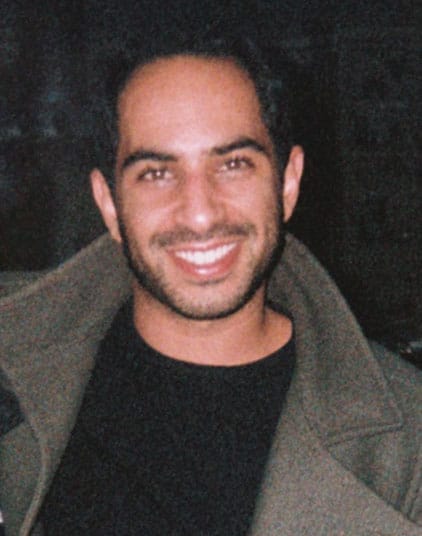
Jonathan York

In full disclosure, I’m a founder and current board member of 30 Years After, an LA-based non-profit that promotes the participation and leadership of Iranian American Jews in American civic, political and Jewish life. I’ve known York for nearly a decade, since he was part of the inaugural cohort of 30 Years After’s Maher Fellowship and displayed inimitable creativity. Perhaps because I know York’s artistic capabilities and hosting savvy — his sukkah last year was a cornucopia of colors, Kabbalah and 500 hand-cut wooden flowers — I anticipate that the event will be unlike any other Nowruz celebration in the city. Don’t believe me? The flier says, “Journey back in time with us to the funky underground of 1970s Iran, with its bold art and psychedelic sound.”

The co-sponsors said there’s an inherent value in investing in this unique event. “First-generation Iranian Americans are bringing in two worlds: a deep interest in their familial identity of a place they’ve never been to, but also cosmopolitan sensitivities,” NuRoots Senior Vice President Jason Leivenberg told the Journal. “The identity struggle is meaningful. But this, to me, is the future of the Jewish community: Keeping the integrity of something sacred, but also bringing in the creativity of what the new and modern world asks of us.”

In addition to having participated in The Maher Fellowship, York is also an alumnus of the Federation’s Rautenberg New Leader’s Project (NLP), which trains young Jewish civic leaders. For 30 Years After, co-sponsoring a Nowruz event seemed like a natural fit. “This event is a wonderful opportunity to bring together the greater Jewish community to celebrate life and new beginnings,” said board member Debbie Afar. “But it’s also an opportunity to showcase an era in Iranian culture that’s often overlooked, but that’s remembered fondly by many, particularly those generations who fled their home and who remember an Iran that was very different from the Iran we see today.”

I anticipate that the event will be unlike any other Nowruz celebration in the city. Don’t believe me? The flier says, “Journey back in time with us to the funky underground of 1970s Iran, with its bold art and psychedelic sound.”

York, a 30-year-old lawyer, real estate investor and developer, is an LA native whose parents were born in pre-revolutionary Iran. He earned his undergraduate degree at Stanford before returning for a JD from Stanford Law School, and holds a master’s degree in Real Estate Development from USC. He also finds time, somehow, to nurture a growing art practice, which includes dreaming up and constructing spaces for gathering. I asked him to answer a few questions about what prompted him to host and curate an experiential Nowruz event that harkens back to pre-revolutionary Iran.

Jewish Journal: How did you conceive the idea for this event?

Jonathan York: It was very serendipitous. I had recently been discovering the music and arts of 1970s Iran when The Federation and 30 Years After reached out to ask if I would create a Nowruz event. It was all swirling in my head, waiting to spring out. They read my mind.

JJ: What’s the significance of the name “Disco Jaan”?

JY: “Jaan” is one of my favorite Persian words. It means “life” in Persian, but it also functions as “dear.” You can meet a stranger, add “Jaan” to their name, and you’re friends. So I took “disco” and threw some love on it.

JJ: You were born in the United States years after the 1979 Islamic Revolution. Why does pre-revolutionary Iran, and particularly the 1960s and 1970s, resonate with you?

JY: There’s an unfortunate tendency in my generation to think either of ancient Iran — the time of Rumi and Esther — or of the theocratic mess that ejected our parents as refugees. We forget that in between there was an enlightened, groovy, sexy Iran. That’s the moment I want to revive with Disco Jaan.

JJ: Do you believe younger generations of Iranian American Jews long for a connection with Iran?

JY: My own primary identities have always been Jewish and American. But I think there’s a natural, human desire to understand the place that bore our families. And until we can visit, culture can be a bridge to that place. I’d love to throw a Disco Jaan party in Tehran one day.

JJ: How did attending college and graduate school in Palo Alto, away from the Los Angeles Iranian community, affect your self-identity?

JY: I spent almost a decade—from age 18 to 27—away from the Persian community, and it gave me the freedom to discover and come to love my culture on my own terms. I’ve been to 51 countries, and the more I travel, the more I appreciate that we have an amazing heritage. When I gave the student commencement address at Stanford, it was largely a love letter to my interwoven Jewish, American and Persian identities. I find the moments where they collide to be the most beautiful.

JJ: What does it mean to curate a Nowruz experience? And what can attendees expect?

JY: My goal is to create a bit of a time capsule: the best of Persian food, art, tradition, and of course, the psychedelic music of the 1960s and 1970s. And it’s important to me that this event is not just for the Persian community, but a chance to share our energy and celebration with all of Jewish LA.

For more information or to purchase tickets to “Disco Jaan,” visit discojaan.com 

Celebrating Persian New Year in LA, With a 1970s Twist Read More »

Sierra Club Cancels Trip to Israel After Accusations of “Greenwashing”

The Sierra Club has canceled their upcoming trip to Israel after various activists accused the Oakland-based environmental group of “greenwashing.”

The Jewish News of Northern California (The J) reported that “greenwashing” is “a term used by critics of Israel to refer to the act of obscuring Israel’s treatment of Palestinians by focusing on the country’s liberal environmental values or policies.” The J had obtained an email from Mary Owens, the chair of The Sierra Club’s National Outings Team, announcing the cancellation, stating that “a Jewish American activist” had urged them to cancel the trip in January, prompting the environmental organization to respond that they don’t cancel “trips due to regional conflicts or politics.” A month later, the activist claimed to have garnered a coalition of progressive activists who were going to publicly accuse the Sierra Club of “violating the organizational values it recently rolled out” if they didn’t cancel the trip by March 7.

Owens wrote in the email that she and the Outings Team were opposed to canceling the trip and are “very disappointed” by the decision. She lamented that the organization had set “a terrible precedent” with their cancellation of the Israel trip. The J also quoted David Neumann, a longtime Jewish member of The Sierra Club based in Oregon, as saying that the cancellation essentially imposed a “purity test” on the Sierra Club and was a “capitulation” to these progressive groups. “These groups that call Israel an apartheid state — that’s so far out there,” Neumann said. “That’s so not mainstream. That’s crazy.”

Jewish groups excoriated The Sierra Club over the decision.

“Experiencing Israel through its environment, geology, history and people does not negate, nor ‘greenwash’ the pressing reality of the Israeli-Palestinian conflict,” Anti-Defamation League (ADL) CEO Jonathan Greenblatt wrote in a March 14 letter to Sierra Club Acting Executive Director Dan Chu. “Rather, such trips provide essential opportunities for first-hand enriching engagement into these complex issues.” Greenblatt added that the progressive activists who urged them to cancel the trip are embracing the tenet of the Boycott, Divestment and Sanctions (BDS) movement against efforts to “normalize” the Jewish state.

“They do not support constructive measures to build Israeli-Palestinian engagement, promote peace negotiations or a mutually negotiated two-state solution to the conflict,” he wrote. “Rather, the activists and the BDS campaign present a biased and simplistic approach to the complex Israeli-Palestinian conflict, positioning this dispute over territorial and nationalist claims as the fault of only one party – Israel – while ignoring other actors and dynamics. They call for pressuring and isolating Israel in order to advocate for self-determination for Palestinians while denying to Jews that same right.” Greenblatt concluded his letter by arguing that the Sierra Club folded to “a campaign that seeks to undermine and demonize Israel’s legitimacy, while doing nothing to promote understanding, reconciliation and ultimately peace.”

Rabbi Abraham Cooper, Associate Dean and Director of Global Social Action Agenda at the Simon Wiesenthal Center, accused The Sierra Club of morphing into “an anti-Semitic polluter by caving to extremist anti-peace groups who seek to demonize, delegitimize, and eliminate the democratic Jewish State.” “We do not believe for one moment that such a draconian move came about because of a single email,” Cooper said in a statement. “Whether your leadership and supporters are aware of the sudden cancellation of regular trips to Israel—a country deeply involved in environmental issues—The Sierra Club was subject to a coordinated campaign by extremists. Your organization made no attempt to verify the allegations made by the hit squad of anti-Israel propagandists.”

Cooper also pointed to the fact that the Sierra Club is continuing its upcoming trip to China “whose regime is guilty of a genocide against the Uighur minority, destroys Christian Churches and crushed the people of Hong Kong.” Citing Natan Sharansky’s “3D” antisemitism test of double-standards, delegitimization and demonization, Cooper argued that “The Sierra Club is guilty of a dangerous double standard that feeds deadly toxic anti-Semitism of these anti-Israel extremists.” “We take note that The Sierra Club identifies one of its motivating goals as ‘standing up to the hate and intolerance that divide people and prevent progress,’” he added. “The sudden and unjust decision made by The Sierra Club makes a mockery of its stated goal. Boycotting the Jewish state feeds hate and intolerance, divides people and prevents progress toward the hoped-for goal of peace in the Holy Land.”

The Progressive Zionists of California launched a petition urging people to inform The Sierra Club that “Israel is part of the solution” to climate change and that the issue can unite both sides of the Israeli-Palestinian conflict. “To single out Israel—apparently due to pressure from a few outspoken anti-Israel activists—does nothing to further Sierra Club’s mission, alienates the vast majority of American Jews who support the State of Israel (and who are a core, enthusiastic part of Sierra Club’s constituency) nor will it help build peace in a region ravaged by decades of conflict,” the petition stated.

Siamak Kordestani, West Coast Director of the Friends of the European Leadership Network (ELNET), tweeted, “Shame on @SierraClub for caving in to antisemites. Israel is a global leader in clean energy and water management. This only promotes antisemitism and weakens environmental advocacy, at a time when we need less hate and more environmental cooperation!”


Sierra Club Cancels Trip to Israel After Accusations of “Greenwashing” Read More »

Asking Better, Getting More: Tips to Help Women Negotiate For What They Deserve

Early in my career, I got a fantastic piece of advice: Getting good at anything is like learning how to fly a plane. You have to clock a certain amount of hours before you can graduate from First Officer to Captain.

Growing up professionally first in fundraising and then business development and sales, I clocked a lot of hours negotiating and I got really good at talking about money.

Unfortunately, while I didn’t get lucky and my story isn’t unique, it’s also not common enough for women in the workplace. Especially in a post-pandemic world that drove four million women from the workforce and stalled the earning potential of millions more.

Combine that with a pay equity gap and it’s no wonder that women feel intimidated and dejected around salary negotiation conversations.

Pandemic aside, we live in a society where most women aren’t taught about money: neither how to ask for it, nor how to manage it when we have it. Combine that with a pay equity gap and it’s no wonder that women feel intimidated and dejected around salary negotiation conversations. Our system is broken and it’s imperative we put this conversation in context. So let’s first take a moment to run the numbers:

  • 82: Cents on the dollar a working woman makes compared to a man, according to the Department of Labor.
  • 78: Cents on the dollar a woman entrepreneur makes compared to a man, according to INC. Magazine.
  • 69: Cents on the dollar a working mom makes as compared to a working dad, according to the National Women’s Law Center.
  • 135.6: The years the World Economic Forum predicts it will take to achieve gender pay equity at current course and speed.
  • 42,300,000: The estimated number of working-age women of color in the United States, according to The Institute for Women’s Policy Research, for whom each one of the aforementioned gaps widens.

That’s why as we honor Women’s History Month (rebranded by CHIEF as Women’s Future Month), International Women’s Day, and Women’s Equal Pay Day this March, we need to talk about money: specifically, how we handle negotiations and tough conversations on an unfair playing field.

Here’s the problem: Often when it comes time for women to negotiate, too many of us just haven’t put in the flying hours and that is not empowering. When the stakes are high and the practice reps are low, it can make an already nerve-wracking situation even more stressful. 

No need to worry: this is your captain speaking and there is no need to assume the brace position. With tens of millions of dollars in generated revenue under my belt, I’ve put in the flying hours for you—including a few botched take-offs and rough landings—so you don’t have to.

So step inside my cockpit and let me show you how to work all these dials and knobs. Here are five questions to consider before you next negotiation: 

  1. Are you asking to be “right-sized” or for a “raise”? These are completely different things. A few years ago, a woman who babysat for our family asked me if she could come over early to get my advice about asking her boss for a raise. The only Latina woman on her team, she had just found out she was being paid $10,000 less than all three of her male colleagues. Our babysitter didn’t need a raise; she needed to get right-sized. Let’s break down the difference: A raise is a merit-based increase in compensation as a reward for excellent performance. A “right-sizing” is having your organization rescope your compensation to properly align with your current responsibilities and/or organizational benchmarks. When we come to our employers to get “right-sized” we put the burden on them for righting a wrong or realigning an inconsistency. 
  2. What are you hoping to make in this next role? I absolutely, positively hate this question as it only serves to perpetuate the gender wage gap. In my view, there is only one answer to this question: I assume you have a budget already allocated for this role: would you mind sharing that with me and I can let you know if this is within my ballpark, understanding it’s part of a broader compensation package? I have never met a hiring manager who went to the marketplace with a role but no budget allocation. That’s why if they refuse to answer this question, I encourage you to run. You’ve dodged a bullet. 
  3. What did you make in your last role? Another question I absolutely hate! No wonder it’s illegal in nearly half the states in the U.S. See above for the same exact talk track. Whether it’s illegal or not in your state, you never have to answer this question. EVER. 
  4. Are you willing to get uncomfortable? As women, many of us were taught to be “good girls.” As “pleasers” we were taught to be grateful, not to rock the boat, and to reduce tension. Here’s the thing: the ability to be uncomfortable and sit in tension is one of the most important elements of a successful negotiation. Here are a few Do and Don’t tips for holding tension:
  • Don’t be afraid to sit in silence after you ask a question or state a request. This creates leverage that forces them to respond instead of side-stepping the issue. Hit the mute button if you must to control yourself from breaking an uncomfortable silence and whatever you do…  
  • Don’t undermine yourself by breaking silence or saying something along the lines of “If you can’t do that, it’s not really a dealbreaker.” Pro tip: organizations will save every penny they can for the people who are willing to walk if they don’t get what they want. So don’t put your pennies in somebody else’s piggy bank. 
  • Do be prepared to have multiple conversations. Most negotiations require a series of conversations. Go into those conversations with the confidence that this is a predictable part of a process. So don’t let that intimidate you, and, to that end…
  • Do co-design next steps at the end of each conversation. As you are wrapping up a conversation and you get a “we’ll have to run the numbers/check with Finance/get back to you” do take time to design a plan of who owes who what in follow up and when you can expect to reconnect. Then do reconnect at the designated time about status updates. 
  • Do make sure you have documentation. Unless it’s documented (and in most cases, signed) the organization does not owe it to you. I’ll repeat this: if it’s not in writing, it’s not happening—no matter how much they “promise” verbally what comes in six months/12 months/two years. 

5. How will you prepare? According to some experts, the prep for a negotiation is where up to 80% of the work comes in, which is great news: because research also demonstrates that women tend to excel at prep, as compared to men (see above on “good girls” and let’s take the wins where we can get them). As you prepare for the conversation make sure you have an outline of your requests, a clear list of what is non-negotiable for you, a list of your questions for them to answer, and an ideal timeline for co-designing net steps.  

With that, please stow your tray table, return your seat to its upright and locked position, and stow larger electronic items like laptops. Thank you for flying with us today and I look forward to landing you at your goals shortly. 


Randi Braun is an executive coach, consultant, speaker and the founder of Something Major.

Asking Better, Getting More: Tips to Help Women Negotiate For What They Deserve Read More »

Jewish House Dems Condemn Amnesty USA Head’s Statement That Israel “Shouldn’t Exist As a Jewish State”

All 25 Jewish members among the Democrats in the House of Representatives issued a statement condemning Amnesty International USA Executive Director Paul O’Brien’s recent remarks about how Israel “shouldn’t exist as a Jewish state.”

The March 14 statement, which included Representatives Ted Deutch (D-FL), Debbie Wasserman Schultz (D-FL), Josh Gottheimer (D-NJ), Jerry Nadler (D-NY) and Elaine Luria (D-VA), said that it was “very disturbing” that O’Brien believes that the American Jewish community doesn’t think Israel should “exist as a Jewish state.” “We are in full agreement that Mr. O’Brien’s patronizing attempt to speak on behalf of the American Jewish community is deeply alarming and offensive,” they said. “He has added his name to the list of those who, across centuries, have tried to deny and usurp the Jewish people’s independent agency. We stand united in condemning this and any antisemitic attempt to deny the Jewish people control of their own destiny.”

The Jewish Democratic Council of America tweeted their thanks to the 25 Jewish House Democrats for issuing the statement and agreed with them that O’Brien’s remarks were “disturbing.”

The Simon Wiesenthal Center tweeted that they welcome the statement and urge “all elected officials, NGOs, and donors to treat [Amnesty International] as a hate group.”

In a Twitter thread, O’Brien claimed that Jewish Insider (JI), which first reported on his comments, took them “out of context.” “Jewish Insider’s headline claims that I and Amnesty questioned the right of Israel to exist,” he wrote. “I did not and Amnesty takes no position on the legitimacy of any state. Nor did I suggest or claim to know that ‘the bulk of American Jews do not want Israel to be a Jewish State.’” He claimed that he was referring “to research showing 25% of American Jews believe Israel is an apartheid state” in response to someone saying that American Jews view Israeli apartheid allegations as antisemitic. O’Brien also claimed he was critiquing Israel’s 2018 nation-state law. 

“While we recognize the right of self-determination for Jewish and Palestinian people as a basic human right, we take no position on the legal or political solutions that any people may take to exercise that right,” O’Brien continued. “I am proud to work at Amnesty alongside colleagues who work so hard to fight for human rights and to confront antisemitism, apartheid, and racial discrimination in all its forms and I look forward to future opportunities to discuss our report findings.”

In response to O’Brien’s allegations, JI released the full transcript and audio of O’Brien’s comments on March 14.

Jewish House Dems Condemn Amnesty USA Head’s Statement That Israel “Shouldn’t Exist As a Jewish State” Read More »

Holocaust Echoes in Ukraine Conspiracy Theory

A prominent television talk show host has claimed that journalists are exaggerating the suffering of Ukrainians in order to provoke an “emotional response” from the American public. Sadly, we’ve heard those kinds of conspiracy theories before—including during the Holocaust.

The latest controversy began when Greg Gutfeld, one of Fox’s highest-rated talk-show hosts, asserted on March 8 that stories showing the suffering of Ukrainian civilians “have sped up and are accumulating to create a narrative — and they only go in one direction…an image is taken and then played over and over and over again to create some kind of emotional response out of you, because that makes a profit for news companies.”

Gutfeld then went a step further and suggested that the motive for this alleged conspiracy by the news media is not merely profit-seeking but also to unfairly paint Russia as a bully. “The humanitarian crisis could have been prevented” if the media were not presenting the conflict as “a David and Goliath narrative” which could “lead to more suffering,” he said.

Gutfeld made his comments during a segment of the Fox daily panel discussion show “The Five,” of which he is co-host. He also hosts “Gutfeld!,” the highest-rated late-night television talk show. Ironically, Gutfeld’s own mother-in-law is one of the 1.3-million Ukrainians who have fled to neighboring Poland.

Moments after Gutfeld made his remark, Fox News war correspondent Benjamin Hall, reporting from Kyiv, refuted Gutfeld’s theory. Hall said, “Speaking as someone on the ground, I want to say that this is not the media trying to drum up some emotional response… [Ukrainian cities] are being absolutely flattened. It is an absolute catastrophe, and the people caught in the middle are the ones who are really suffering.”

Gutfeld responded by accusing Hall of launching a “cheap attack” on him. But it was neither cheap nor an attack—it was a simple statement of fact.

During the Nazi era, too, those who raised the alarm about Hitler’s atrocities were sometimes accused of exaggerating. Two months after the Nazis rose to power, and despite ample evidence of Hitler’s abuses of Jews, Secretary of State Cordell Hull claimed that anti-Jewish violence in Germany had “virtually terminated.” That assertion persuaded a prominent Catholic leader to cancel his plan to speak at a mass Jewish protest rally in New York City.

The war in Ukraine is not comparable to the Holocaust. But atrocities do not have to reach the level of genocide for the international community to feel outrage.

Later that year, the American Ambassador in Berlin, William Dodd, told a prominent American Jewish leader, Rabbi Stephen S. Wise, that “things are improving” for Germany’s Jews. Wise told colleagues he was “shocked and perplexed by that because just about that very time…things were almost at their worst.” Rabbi Wise offered to travel to Berlin to speak with the ambassador about the situation. Dodd did not respond.

It wasn’t only the secretary of state and the U.S. ambassador in Germany who claimed that Jewish complaints were overblown. In October 1936, President Franklin D. Roosevelt dismissed reports of anti-Jewish atrocities in Germany, on the grounds that two American tourists who had visited Berlin told him “that the synagogues are crowded and apparently there is nothing very wrong in the situation [of Germany’s Jews] at present.” When refugee advocate James G. McDonald complained to FDR in 1940 about the suffering of European Jews who were trying to escape from the Nazis, the president dismissed it as “sob stuff.”

Officials of the State Department and the British Foreign Office shared that perspective. In 1940, a British official informed his colleagues that “Jews are inclined to magnify their persecutions.” He recalled the “exaggerated stories of Jewish pogroms” in eastern Europe after World War I, which, he alleged, “when fully examined, were found to have little substance.” (In fact, an estimated 100,000 Jews were slaughtered in those pogroms.)

Even after the ongoing mass murder of the Jews in Europe was confirmed in 1942, many Allied officials continued to see the reports as part of a sinister conspiracy.

Even after the ongoing mass murder of the Jews in Europe was confirmed in 1942, many Allied officials continued to see the reports as part of a sinister conspiracy. Undersecretary of State Sumner Welles claimed in 1943 that the Jewish calls for rescue were actually sponsored by “the German propaganda machine,” which was “using the misery” of the refugees in order to “create confusion and doubt within the United Nations [as the Allies were then known].”

In July 1943, a Foreign Office official said Jews were trying to “stoke us up” in order to get the Allies to “waste a disproportionate amount of…time in dealing with wailing Jews.” One senior State Department official in 1943 derided Jewish rescue advocates as “emotionalists” (a term similar to the language Greg Gutfeld recently used). As late as 1945, a British official wrote that “one notable tendency in Jewish reports on this problem is to exaggerate the numbers of deportations and deaths.”

The war in Ukraine is not comparable to the Holocaust. Russia’s unprovoked military aggression does not meet the criteria of the definition of genocide. But atrocities do not have to reach the level of genocide for the international community to feel outrage—and to feel compassion for the victims. The images we are seeing are not part of some conspiracy to manufacture “an emotional response,” they reflect a tiny fraction of what Ukrainians are really suffering, every day, at the hands of Vladimir Putin’s brutal military forces.


Dr. Medoff is founding director of The David S. Wyman Institute for Holocaust Studies and author of more than 20 books about Jewish history and the Holocaust.

Holocaust Echoes in Ukraine Conspiracy Theory Read More »

Oligarchs and Bedfellows

Ukraine, obviously, is on everyone’s brain. The unfolding humanitarian crisis is ghastly. The breadbasket of Europe is a mere crumb on its way to being reduced, once more, to one of Russia’s satellites. A similar fate has already befallen Crimea, Chechnya and Georgia.

While we were distracted by Monica Lewinsky, 9/11 and global terror, appeasing the Ayatollahs of Iran, conducting wars in Afghanistan and Iraq, and American culture wars involving gender-neutral bathrooms and erasing Abraham Lincoln’s name from school buildings, Russia has been busy reconstituting its empire.

Someone should be warning Belarus and Moldova, along with NATO nations Latvia, Estonia and Lithuania, that they are next on Vladimir Putin’s recovery list.

Apparently, the Cold War never truly ended. It simmered on, out of sight and mind. All that Marxist mumbo-jumbo replaced by the Oligarchs Manifesto. Forty years after the collapse of the Iron Curtain, Putin decided it was time to, once again, install some drapes. And now his nuclear preparedness threatens anyone who dares interfere with his conquest of neighboring states.

The United States has imposed economic sanctions on Russia and delivered miniscule aid to Ukraine, but is otherwise sitting this one out. Our overall tentativeness says a lot about the maintenance of the liberal world order and how far the United States is willing to go in defending democracies around the world. Apparently, not very far.

Switzerland, known for its time-honored neutrality, and Luxemburg, with its army numbering fewer than 1,000 troops, have shown more saber-rattling resolve than the United States. Confiscating the yachts of oligarchs is not quite the same act of valor as storming the beaches of Normandy. It is doubtful that Steven Spielberg will ever direct, “Saving Roman Abramovich.”

Much of the moral anguish over Ukraine is the presence of civilian casualties, now numbering 600. But humanitarian intervention is unlikely. Wars are fought over strategic interests, defending national security, and inflicting blood vengeance. It was Pearl Harbor, after all, and not Auschwitz, that drew the United States into World War II.

It was Pearl Harbor, after all, and not Auschwitz, that drew the United States into World War II.

For this and other reasons, watching from the sidelines has been especially excruciating for Jews.

First, there is the large population of Jewish Ukrainians. There are at least 50,000 Jews in Ukraine, and arguably as many as 200,000 who don’t even know they are Jewish. Hundreds have recently fled and arrived in Israel.

None of this accounts for the millions of Jews who once lived in Ukraine over the centuries who either emigrated or died at the hands of neighbors and invaders. The ghosts of Jewish Ukraine are watching recent events with great interest.

Then there’s the matter of the combatants in this war: Ukraine, the scrappy David standing against Russia’s Goliath. Ironically, the part of David in this theater of war is being portrayed by an actual Jewish president—Volodymyr Zelensky. Stacking the Jewish deck even further, the nation’s last prime minster, Volodymyr Groysman, was also Jewish. At no point throughout the Diaspora, in the upper echelons of government, have Jews ever wielded this much electoral power.

The Czars would have had a stroke.

And, yet, this is a country on the cusp of losing its independence. So desperate is the situation that its Jewish president has aligned himself with an openly neo-Nazi paramilitary group, the Azov Battalion—who serve on the front lines and are notoriously Ukraine’s fiercest fighters and ultra nationalists.

In such times of national emergency, with chaos everywhere, looking the other way can be contagious. The Azov Battalion has ties to America’s Alt-right, and yet it has been, improbably, receiving American military aid. Apparently, demonstrating great heroism against Putin’s advance will earn even avowed racists and antisemites valuable goodwill. Azov is no longer banned on Facebook.

Ukraine, among other countries, has had trouble disassociating from long-standing Nazi flirtations. Soldiers serving in the Azov Battalion, in combat right now, wear vaguely similar Nazi insignias on their uniforms. A former commander once defined their mission to “lead the white races of the world in a final crusade … against Semite-led sub humans.”

When Putin exaggerated that Russia’s invasion was necessary because neo-Nazis controlled Ukraine, he was referring to the Azov movement. Everyone scoffed, since Zelensky is Jewish. But Zelensky, who has discovered that the West is not coming to Ukraine’s rescue, understandably has made common cause with those who would do anything to defend Ukraine even though, on another day, would have no misgivings seeing him and his people exterminated.

Striking deals with odious bedfellows is not unusual for the otherwise unfriended. For example, both the Shah of Iran and the Afrikaners who brought Apartheid to South Africa counted Israel as an ally.

In every century, Jews have faced such moral dilemmas.

Indeed, Israel’s Prime Minister, Naftali Bennett, recently undertook his own shuttle diplomacy, paying Putin a visit just as the bombardment of Ukraine began. Wasn’t Bennett on the wrong side of the conflict even though his purpose was to mediate a ceasefire? Not when Iran is ensconced in Syria, and Israel depends on its friendly relations with Russia in order to destroy Iranian weapons bound for Hezbollah.

This is the realpolitik that levels Israel’s moral high ground. Befriending tyrants, beholden to hypocrites, aligning itself with outlaws—all the consequence of finding itself disproportionately condemned in the United Nations, always in the dock at the ICC, and a pariah on campus.

And when this war comes to an end, it will doubtless not be over for Jews.

And when this war comes to an end, it will doubtless not be over for Jews. Right-wing antisemites will blame Jewish oligarchs for using Putin as their puppet. Progressives are already making twisted analogies between civilians in Kyiv and the “innocents” of Gaza. The situation would be identical but for the tens of thousands of rockets that Ukrainians never fired at Moscow, or their disinterest in stabbing Russians in St. Petersburg, or that Ukrainians are pleading for humanitarian corridors rather than using their dead women and children as propaganda, or in never claiming all of Russia to be Ukrainian land, “From the Matai River, to the Caspian Sea.”

The biggest irony of all is that the United States will soon enter into yet another disastrous “deal” with Iran to temper its nuclear ambitions. Our chief negotiator, it seems, the one moderating voice who might be able to sway the Iranians, will be Putin himself—who is making the most noise now, and stands ready to use, and would never curb, his own nuclear arsenal.”


Thane Rosenbaum is a novelist, essayist, law professor and Distinguished University Professor at Touro University, where he directs the Forum on Life, Culture & Society. He is the legal analyst for CBS News Radio. His most recent book is titled “Saving Free Speech … From Itself.”

Oligarchs and Bedfellows Read More »
