fbpx

March 9, 2022

I Have a Confession: I Can’t Pray in Hebrew

From the outside, I look like a typical observant Jew. Every Saturday morning, you’ll find me in shul. I cover my hair, I keep kosher and I send my daughter to gan. 

But on the inside, I don’t feel like I’m fully integrated into my community. Why? I don’t know Hebrew.  

In shul, when everyone is singing in Hebrew, I cannot. When I go to someone’s house and we say the grace after meals, I have to ask for a transliterated bencher. When I’m at a Jewish wedding and everyone is happily singing Israeli songs, I feel left out.

I know the aleph bet and can read Hebrew, slowly, if the vowels are underneath the letters. However, if I were to pray exclusively in Hebrew, I’d be in shul hours after everyone had already left. Also, I don’t know what most of the words I’m saying actually mean. 

I’ve taken Hebrew lessons and did well with them, but always stopped because I could never make progress past a certain point. My husband doesn’t speak it regularly, and I don’t have Israeli friends I can converse with.

Most of the time, I don’t feel like a convert, or an outsider – until I have to read or speak Hebrew… I’m comforted by the fact that I’m not alone in my struggles with Hebrew. You truly never know what’s going on with people, no matter what it looks like on the outside.

Not knowing Hebrew feels like a barrier in the Orthodox world, one that separates me from everyone else. In addition to not fully knowing the language, I’m a convert. Most of the time, I don’t feel like a convert, or an outsider – until I have to read or speak Hebrew. 

When I was feeling very down about it recently, I posted on a Facebook group that I belong to for Orthodox women. I asked how they learned to speak and read in Hebrew because I cannot, and disclosed that it made me feel upset. Many of the women in this group are baal teshuvas; they were born Jewish but became religious as adults. I get along great with BTs, because like converts, they had to learn everything on their own. 

The response I received was overwhelmingly supportive. To my surprise, many of the women in the group also pray in English. They offered me tips on how to learn the prayers, including finding out the tunes of songs. They provided me with support and talked about how it was difficult for them, too. 

I discussed this with other people who became religious later in life, and many admitted that they pray in Hebrew but don’t know the meanings of the words. I asked my rabbi if it’s better to pray in English, which I understand, or Hebrew, which I don’t understand. Since Hebrew is a holy language, that’s preferred, but praying in your native tongue is by no means wrong. In fact, if you understand the words in your language and not in Hebrew, it could be better to pray in your own language until you learn Hebrew. It’s all about creating a connection with God, and whichever language makes that happen, that’s the one you should use. 

I’m comforted by the fact that I’m not alone in my struggles with Hebrew. You truly never know what’s going on with people, no matter what it looks like on the outside. I’m glad I revealed my secret because in the process I helped others feel less alone as well. 

Now, I’m taking davening very slowly — one line at a time. I didn’t become observant overnight, so I shouldn’t expect to learn how to read Hebrew so quickly either. 

One thing I know I’m doing right is I send my daughter to a daycare where the teachers only speak Hebrew. That hopefully guarantees that by the time she’s my age, she’s going to speak and read fluent Hebrew. So far, she understands what her teachers say and she even speaks a little. Her favorite word is…“Bamba.”


Kylie Ora Lobell is the Community and Arts Editor of the Jewish Journal.

I Have a Confession: I Can’t Pray in Hebrew Read More »

Table for Five: Purim

One verse, five voices. Edited by Salvador Litvak, the Accidental Talmudist

Rava said: A person is obligated to become intoxicated with wine on Purim until he is so intoxicated that he does not know how to distinguish between cursed is Haman and blessed is Mordecai.

– Megilla 7b, B. Talmud


Bracha Goetz
Author of 40 Jewish Children’s Books

A person is guided to become intoxicated on Purim with what results from the crushing, squeezing, and fermentation of sweet fruit until he is so intoxicated that he does not know how to distinguish between evil and goodness. 

There are five rungs on The Pleasure Ladder of Goodness that correspond to the five levels of the human soul. Pleasures on each consecutive level nourish a higher level of the soul. The lowest and most transitory level contains all the wonderful physical pleasures like whole foods, nature, and movement. These gifts uplift and nourish the lowest level of the soul, the nefesh, attached to our bodies. 

Going up the Ladder, we find Love, Meaning, and Creativity on the higher rungs, with each level of pleasure being more lasting and providing us with more connection. On the highest rung we find Transcendence, the level of pleasure providing the greatest sense of connection of all. Transcendence involves immersion in the world while being able to glimpse the cosmic essence of our Universe. This is the potential of Purim, an experience that Yom Kippur, a day aspiring to be like Purim, cannot even reach. 

And what is the price to climb this Stairway to Heaven on Earth? Simple gratitude. On the fifth level of Transcendence, we are able to finally see how all the painful struggles – the crushing, squeezing, and fermentation of each sweet gift given – our challenges – ultimately stem from goodness. That’s Purim’s pure potential – getting drenched in cosmic gratitude.


Rabbi Pinchas Winston
Thirtysix.org

Wine is a drink and da’as is knowledge, but they share something: the quality of each is affected by the container it is in. The “humbler” the container, the better each maintains its integrity. Thus, wine is a symbol of da’as. One who possesses all of Torah is called an eshkol—grape cluster. It’s a play on the word which can be understood as ish kol bo—a person in whom is everything, that is, all of Torah, which of course means da’as because “there is no da’as other than Torah.” 

Being associated with da’as, wine is also closely connected to the Fifty Gates of Understanding with which, the Talmud says, Creation was made. This is why Haman built his gallows 50 cubits high, but that is another story. 

Therefore, the point of the wine on Purim is not to reduce da’as but to increase it. The soul knows that ultimately there really is no difference between Mordechai and Haman, because God runs the world and directs all of history. By drinking just enough wine on Purim we neutralize the body so the soul can have more of a say in how we perceive the world and Divine Providence. Then we can better see how the evil people of history have no power, just as the good people have none. 

God empowers each, the good to do their good and the evil to do their evil. It’s up to us to decide which we want to be.


Lt. (res) Yoni Troy
Counselor, Beit-Hatzayar for at-risk-youth, Jerusalem

The Purim story, like this mitzva, stands out in the Jewish faith. There are no supernatural events and the heroes are not “the Jewish Ideal.” Yet Purim, Rambam explains, unlike other holidays, will always be celebrated. 

Mordechai, the sly politician, cements his status by getting Esther to marry the King. Meanwhile, Mordechai’s political power struggle ignites Haman’s antisemitic decree. 

Still, Esther and Mordechai go from being self-involved takers to risking their livelihood, their status and their lives for their people. This decision is more impressive because they aren’t prophets or rabbis. They aren’t typical Jewish heroes. They’re just people who make the right decision at the right time. 

Purim’s mitzvas emphasize this twist. In the Bible, G-d fixed our problems supernaturally. Now, Purim celebrates giving power to the people — whether it is by helping the needy, appreciating those around us or enjoying a hearty feast with loved ones. The most surprising Purim commandment is to get intoxicated, the idea being that sometimes in life we must shift our perspective on the world, as did Mordechai and Esther. 

The megilla teaches us that we control our lives. We cannot just wait for miracles or to become millionaires to begin helping others. We must start doing good now. 

Fortunately, we usually don’t have to make Purim’s extreme decisions and risk our lives. Still, each of us has a duty to make the world a better place, beginning with the small day-to-day things, moving ever forward so we all build a better world. 


Miriam Yerushalmi
CEO SANE; Author, Reaching New Heights series

Purim is often contrasted with Hanukkah. Both are holidays instituted by the rabbis in response to our nation’s miraculous salvation from the threat of total destruction. On Hanukkah, our enemies attempted to crush our spiritual existence; on Purim, they planned to annihilate our physical existence. But is there really a distinction between the two? 

On Hanukkah, we spin the dreidel until the letters become so blurry that we can’t tell whether it’s a nun or a gimmel, a hey or a shin. 

On Purim, we imbibe until our thinking becomes so blurry that we can’t differentiate between good guys and bad guys. 

Both holidays demonstrate that whether something seems to be good or not good, everything is from Hashem and for our ultimate good. 

We are enjoined to drink wine on Purim in a holy manner at our halachically mandated feast, to rectify the unholy drinking we indulged in at Achashveirosh’s uninhibited revel. This rectification does not necessarily have to come about through actual alcoholic intoxication. The Mishnah Berurah teaches that we can achieve it by drinking slightly more than usual and falling asleep. 

The Slonimer Rebbe explains the directive to “get drunk on Purim” to mean that we should be intoxicated by the holiday itself, for “contemplating the great miracles Hashem did for us is enough reason to enter into an exalted state of transcendent joy.” In that state, we understand that everything is good; we cannot distinguish between blessings and curses, because there is no distinction between them.


Ben Elterman
Screenwriter, Essayist, Speech Writer at Mitzvahspeeches.com

In 2020, I took that idea quite literally when my costume was a MAGA hat and a Bernie 2020 shirt. I went as someone who was so drunk they couldn’t tell the difference between blessing and curse.

Honestly, I was scared to wear the costume. I got odd looks and perplexed stares. But one question that people always asked me was, “Which one is the blessing and which one is the curse?” To that I responded with a tipsy “I can’t tell!” 

The Vilna Gaon says that the labels of blessing and curse can only be understood “at the end.” In the middle of the Purim story, many of the Jews viewed Mordechai as the curse and the source of Haman’s antisemitism. During the big party at the beginning, many of the Jews were probably drinking with Haman. 

No matter how smart we think we are, we never know what’s going on behind the scenes. Petty squabbles shouldn’t divide us. Theoretically we can use politics as a tool to enact social change. But when we let politics become the end and not the tool, when the banner of Republican or Democrat supersedes our Jewish identity … that’s when we’ve gone too far. A blessing may be an incredible hardship at first (i.e. children) but may pay off splendidly in the end. So on Purim we drink to turn off our over active intellect and trust in Hashem that in the end, it’s all a blessing. 
Table for Five: Purim Read More »

Rabbi Joshua Bittan: Preserving Moroccan Jewish Traditions

Rabbi Joshua Bittan, spiritual leader at Em Habanim Sephardic Congregation in Valley Village, grew up in a family that was always serving their community in Morocco. 

Both his mother’s and father’s family members were leaders of their congregations in his country of origin. His grandfather, after whom he is named, was the shaliach tzibur (a Jewish prayer leader) at the Em Habanim synagogue in Bittan’s hometown, Ouezzane, in northern Morocco. 

“My Jewish upbringing was very much inspired by the dedication to chesed and caring for the needs of the community I witnessed with my uncles and, in general, my family,” he said. 

Bittan attended the Em Habanim Talmud Torah Cheder as a child, and then the Ozar Hatorah School and Neve Shalom Yeshiva when his family moved to Fez. He came to the United States in the early 1970s. 

When he arrived, he began serving as youth director of Em Habanim Sephardic Congregation. He then joined the board of directors and eventually led the congregation twice as its president. 

“During much of that time, I continued learning and teaching Torah, including a daily Daf Yomi class that has been going on now for about 25 years,” he said. “I took care of the rabbinic functions in the synagogue as a volunteer for a number of years. Serving my community was always of primary importance for me.”

The rabbi also worked in his family business selling fine art, but he said his “most enjoyable, purposeful and rewarding activity was always learning and teaching Torah.”

Around 20 years ago, there was an opening to become the rabbi at his synagogue, and he was asked to be the acting rabbi. After some convincing from the synagogue leadership and other rabbis, he officially got smicha and became the rabbi of his congregation. 

“It has been and continues to be an inspiring journey,” Bittan said. 

One of Bittan’s goals as a rabbi is to ensure that the Moroccan Jewish teachings and culture live on. This means singing Moroccan tunes, enjoying the cuisine and studying its texts, like a collection of several hundred books by Moroccan Torah scholars that is housed in Em Habanim’s library. He estimates that there are about 20,000 Moroccan Jews in Los Angeles.

“I am very proud of our heritage and consider it of great importance to perpetuate our rich liturgy, customs and traditions into the next generations.” – Rabbi Joshua Bittan

“I am very proud of our heritage and consider it of great importance to perpetuate our rich liturgy, customs and traditions into the next generations,” he said. “I remember them from my childhood in Morocco. In fact, in our synagogue we have preserved the traditional tunes, unique melodies, the delicious foods, the warm hospitality and the traditional celebrations.” 

Bittan also keeps up a connection with his country of origin; two-and-a-half years ago, his congregation paid tribute to His Majesty King Mohammed VI in an event at The Beverly Hills Hotel called, “A Salute to Morocco, honoring a Dynasty of Tolerance.”  

“We expressed our gratitude to His Majesty for the preservation and renovation of synagogues and Jewish cemeteries, and for all his kindnesses to the Jewish community in Morocco,” Bittan said. 

Along with preserving Moroccan traditions, what the rabbi enjoys about his work is helping families afford Jewish school. This year, his synagogue is assisting with partial scholarships for more than 60 students to attend Orthodox Jewish day schools. 

“One of the most satisfying feelings is seeing the students I helped years ago attend Jewish day schools raise observant families and become contributing members of the community,” he said. 

Above all else, this is his goal: to help people connect to Judaism and see the beauty in it, like he does. 

“[I love] showing how our holy Torah and its mitzvot are a guide to a fulfilled, happy and meaningful life,” he said. “I aspire always to do the will of Hashem and hopefully inspire others to do the same.” n

Fast Takes With Joshua Bittan

Jewish Journal: What does your perfect Shabbat look like?

Joshua Bittan: The perfect Shabbat is when the children and grandchildren are there to celebrate Shabbat. Aside from the meals, the day is spent learning and enjoying the spirituality of the day.

JJ: What is your favorite Jewish food?

JB: The variety of Moroccan Shabbat salads.

JJ: How about your favorite Sephardic melody?

JB: “Yafa Vetama,” a song that describes the great virtues of our holy Torah. 

JJ: What do you do on your day off?

JB: I really don’t think I ever have a day off.  There seems to always be something I am busy with. 

Rabbi Joshua Bittan: Preserving Moroccan Jewish Traditions Read More »

David Friedman’s “Sledgehammer”: A Lesson in Principled Diplomacy

This article was first published in Jüdische Rundschau in German.

German Jews who love Israel already know from the work of Ambassador Richard Grenell that Donald Trump had a knack for picking unconventional, outspoken pro-Israel Ambassadors.

While widely criticized by left-wing media, Grenell was praised in these pages for being an unapologetic defender of Israel. He pressured the German government to finally ban Hezbollah–and succeeded; he proudly wore a kippah in solidarity after anti-Semitism commissioner Felix Klein warned Jews not to wear kippahs in public; and he made sure German businesses know there is a hefty price to pay—financially and morally–for bypassing American sanctions to do business with the Jew-hating mullahs. Some argued his diplomacy was “confrontational,” including in regard to his criticism of Nordstream 2, but it was exactly his muscled diplomacy that produced results that in the end served Germany as well. Were he still in Berlin today, it’s likely the Ukraine-Russia crisis would have been averted.

Anyone familiar with Grenell’s leadership can find a similar style in Trump’s go-to man in Jerusalem, David Friedman, upon reading Friedman’s memoir, “Sledgehammer.” Both diplomats were staunch advocates of Trump’s “American First” agenda, and both showed that standing up for Israel was squarely in line with that agenda, even as it coalesced with their personal and religious beliefs, with Grenell being evangelical Christian and Friedman being a modern Orthodox Jew. In his memoir, Friedman articulates how the Biblical heritage that transpired on the land of Israel is essential to American founding principles.

“Israel is our ultimate history,” he writes, “and if, God Forbid, that history is canceled, our national foundation will be nothing but sand.”

Both diplomats already signaled their lack of conventionality at the swearing-in ceremony. Grenell pledged an oath on a huge family bible, his partner Matt Lashey by his side (prompting a blogger to joke that Vice President Mike Pence was deporting a gay couple). Friedman, donning a kippah, his wife Tammy by his side, “affirmed” on his family Bible since swearing is forbidden in Judaism except in special cases.

Both diplomats kick-started their jobs hanging out with pop legends. After Britney Spears’ concert in Berlin, the pop star’s dancers hung out at the Dahlem mansion. Friedman jammed backstage with the band “Aerosmith.” But their legacies are remembered for more than just celebrity hangouts and extravagant fourth of July parties (which Grenell made unabashedly pro-American and Friedman made unabashedly kosher). They didn’t come to world capitals to party.

“Sledgehammer,” named for the metaphoric tool needed to break through the foreign policy establishment’s stale thinking on the Middle East, combines Biblical erudition, riveting anecdotes, and insider information to dramatize a pro-Israel, “America First” ideology in action. Friedman was so pro-Israel that he even prompted one State Department official to advise him: “Don’t be so Jewish.”

At times, Friedman came across as a better diplomat for Israel than Israeli leaders, like when he suggested to Prime Minister “Bibi” Netanyahu that he play for Trump a montage of terror-loving statements made by Palestinian leader Mahmoud Abbas to ensure that Trump doesn’t fall for his “nice guy, peace-loving” act. It worked. Friedman explained that it was in America’s interest to ensure Trump didn’t make decisions based on false assumptions. In another instance, Friedman, with Trump’s agreement, convinced Bibi that he’d be amiss to allow, out of respect for America, anti-Israel congresswomen Rashida Tlaib and Ilhan Omar to enter Israel on a biased tour.

In the chapter “Donald and Me,” Friedman recounts how he got to know Trump as his bankruptcy lawyer. His personal esteem for “Donald” solidified when, in 2005, Trump travelled in his limousine in stormy conditions to pay Friedman a shiva (condolence) call after the death of his father, a very pro-Israel Conservative (Masorti) rabbi in New York. They bonded over their mutual love for their fathers. Later, Trump became impressed with Friedman’s own “art of the deal” skills when, in just a ten minute phone call, Friedman maneuvered opposing counsel to settle a case for a gain of $23 million in Trump’s favor. In an instance of Divine Providence meeting human action, Friedman lobbied for the position of ambassador to Israel, and got it.

With a delicate mixture of humility and pride, Friedman makes it known that he was greatly responsible for Trump’s very pro-Israel turn. He had already gotten a head start in transforming Republican policy when he was appointed advisor to the Trump campaign on Israel matters along with Jason Greenblatt. They removed the reference of the two-state solution from the party platform and added the recognition of Jerusalem. Friedman came up with the idea to re-outfit the American consulate in Jerusalem as the American Embassy to expedite the move from Tel Aviv. He convinced the President that acting on Congress’s 1995 Jerusalem Embassy Act served America’s interest because it showed that America fulfills promises, cannot be threatened by terrorism, and stands by its allies. The predictions of massive violence following the move never came true.

Trump’s first Secretary of State, Rex Tillerson, was part of the old State Department thinking, but ultimately, Trump deferred to Friedman, whom he trusted. It was only when Mike Pompeo replaced Tillerson that the stage was set for American policies that were the fulfillment of dreams of the staunchly pro-Israel camp, like recognizing Israel sovereignty over the Golan Heights and legitimizing Israeli “settlements.”

Mixing realpolitik with principle, Friedman and his team ultimately created conditions for the Abraham Accords. He explains how the “Peace Through Prosperity” plan introduced in January 2020 was largely a strategic mechanism to create movement and political capital. It allowed for Israel to apply sovereignty over Area C (Israeli-controlled areas in Judea and Samaria), a possible move condemned by the German parliament in July 2020. The credible concerns over such a move prompted the United Arab Emirates to make peace with Israel if it suspended plans to apply sovereignty. Bahrain, Sudan, Kosovo, and Morocco followed.

Trump’s men in Berlin and Jerusalem show how Trump’s “America First” approach can change a geopolitical landscape—for the better. Friedman’s successor, Tom Nides, will likely not do, even by his own admission, what Friedman and Trump probably could’ve gotten done in a second term: peace with Saudi Arabia, Indonesia and maybe even Pakistan and Lebanon.

In an interview with the Times of Israel, Nides said that he sees part of his job as strengthening Israel as a Jewish and democratic state by supporting the two-state solution. His approach is: “Do the right thing, don’t be a jerk and try to be a nice person.”

To avoid unnecessary tension, he won’t visit Jewish “settlements” (unlike Friedman and Pompeo who set precedents with their visits to those communities).

“I want people after a couple of years to say, hey, I don’t know if he got much done, but he certainly wanted to do the right thing,” Nides said. “That’s all I really care about.”

According to the elites, Friedman and Grenell were not “nice guys” but hammer-wielding jerks smashing their way through the capitals. But they didn’t care if The New York Times wrote hit pieces about them if it meant they could protect America and bring peace. Let’s hope, for the sake of America, Germany, and Israel, that Grenell’s successor, Amy Gutmann, won’t be too nice.

Friedman didn’t come just wanting to do the right thing. He came to do it. That included, at the end of the day, peace in the Middle East.


Orit Arfa is a journalist and author based in Berlin. Visit her website at www.oritarfa.com.

David Friedman’s “Sledgehammer”: A Lesson in Principled Diplomacy Read More »

Fish Running Out of Water

One of the cleverest ways I’ve heard the Israeli-Jewish experience described, specifically the secular Israeli-Jewish experience, is with the term “fish in water.” The fish is the Israeli, and regardless of how removed one living in Tel Aviv is from religious traditions or from Zionist ideology, Jewish identity is the water. Simply by living in the Jewish state, by speaking Hebrew, by serving in the army, and by bemoaning the lack of transportation from Haifa to Netanya on Shabbat, one is fulfilling the wildest dreams of those who came before us. 

This lifestyle seems extraordinary to an American Jew who grew up as a minority, but “fish in water” means it can certainly feel mundane, and even banal, to members of a Jewish majority. I first heard the term when speaking to friends in Tel Aviv, some of whom relayed a frustration I’ve heard before: the aloof attitudes Israelis often express toward the boycott, divestment, and sanctions (BDS) movement and anti-Israel rhetoric in the U.S. To many Israelis, the rise of anti-Zionism in western counties is not a pressing concern to the same degree as terrorist attacks or the economy. Therefore, distancing themselves from the drama of the Diaspora bears no consequences.

I saw cracks in the fishbowl — signs that the outside world of politics and persuasion may be leaking in, and that Jewish history may be catching up to those who live in the most privileged circumstances in Jewish history. 

But while I was in Israel this past week, my usual agreement with this analysis changed. I saw cracks in the fishbowl — signs that the outside world of politics and persuasion may be leaking in, and that Jewish history may be catching up to those who live in the most privileged circumstances in Jewish history. 

Outside a Tel Aviv gay bar where local drag artists performed the hits of Ofra Haza and Lady Gaga, a group of patrons considered over cigarettes and gin the implications of a recent viral Twitter thread. These individuals, I should note, were no doubt all members of the left, vocally resentful of the occupation of the West Bank and made squeamish by the use of the term “Zionist.” But their feathers were ruffled nonetheless. Kandy Muse, an American drag queen, had recently written online: “Don’t make the mistake I did of not being fully educated and aware of the pink washing of Israel, genocide and displacement of Palestinian people.”

Over the last several years, popular drag queens with large social media platforms have been pressed by the BDS movement to cancel their gigs in Tel Aviv, all to the bewilderment of their Israeli fans. They are then encouraged to publicize the reasons for making their decision, spreading the word to millions. 

From people sitting across the table, I heard arguments like: “We are the only place in the Middle East where there is a drag scene. We are progressive and queer, not settlers, you should be criticizing the politics, not punishing the people.” These are all topics American Jews have been discussing for a while, yet it appeared to be just dawning upon these Israelis — who perhaps considered the need for a Jewish state to be outdated or right-wing — that the ideology festering on American college campuses against the abstract smokescreen of Zionism can and will affect their lives, too. I saw in their faces a realization: This feels like discrimination, and the absurdity of it all is that you are talking about it in a state that allows you to vote and to criticize and to dress up as a woman and lip-sync to Cher. 

Anti-Zionism does not affect Diaspora and Israeli Jews in two different universes. American Jews are not simply grappling with prejudice in left-wing academic spaces while Israelis grapple with the potential of a third intifada. Anti-Zionism is fashioned to be a united front against the Jews that will harm all of us in the same ways at the same time. The Students for Justice in Palestine chapter at your local university knows they cannot punish the IDF, so they punish the Hillel instead, while across the ocean, Israelis begin to feel the implications of cultural boycotts and increasingly feel demonized and isolated. And when there is violence in Israel, that violence can take also the form of attacks against Jews in Europe and the United States, such as the Jews who were attacked while simply eating sushi in a restaurant in LA. My insistence on the equivocation between anti-Zionism and antisemitism comes from seeing the former’s designed function to squeeze Jews anywhere, the strongest rancor toward that which keeps us safe and organized. 

It was this “anti-Zionism” that started the conflict that these activists claim to be solving. In 1948, in 1967 and in 2021, it was the refusal to recognize the Jewish people’s equal right to the same advantages as all other peoples. By that measure, it doesn’t matter if the Jew is in New York City or in Haifa.

Zionism has helped to sustain a Jewish identity for the Reform movement in the United States and for secular and less religious Jews all over the world.

I like the metaphor of “fish in water” because it exemplifies the Zionist project, which was, quite simply, a secular success. To me, it says that I can go to the grocery store, browse through Twitter on Shabbat, and sneak a sandwich on Yom Kippur while still living a Jewish life, still very much connected to my people, as long as I feel connected to Israel.  Zionism has helped to sustain a Jewish identity for the Reform movement in the United States and for secular and less religious Jews all over the world. It offers us a particular sense of peoplehood to embrace outside the synagogue—something that brings us together. Without Zionism, many, and certainly many in generations to come, would cease to feel Jewish. There is a widening chasm between American Jews and Israeli Jews, but I’m glad both are beginning to recognize that an attack on one remains an attack on all.


Blake Flayton is New Media Director and columnist at the Jewish Journal. 

Fish Running Out of Water Read More »

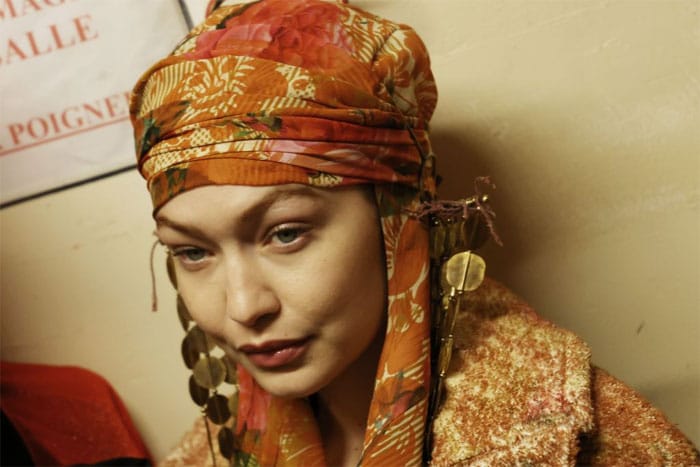
Vogue Edits Instagram Post Echoing Gigi Hadid’s Comparison of Ukraine to Palestinians

Vogue Magazine initially reposted model Gigi Hadid’s comparison of Ukraine to the Palestinians and then scrubbed it after facing criticism over the analogy, The Algemeiner reported.

Hadid, the sister of model Bella Hadid and daughter of Jordanian-American real estate developer Mohamed Hadid, posted on March 6 that she was going to donate money raised from Fall 2022 shows “to aid those suffering from the war in Ukraine, as well as continuing to support those experiencing the same in Palestine. Our eyes and hearts must be open to all human injustice.”  On March 7, Vogue shared Hadid’s news about donating the earnings to the Ukrainians, as well as the “as well as continuing to support those experiencing the same in Palestine” quote.


View this post on Instagram


A post shared by Gigi Hadid (@gigihadid)

Various Jewish and pro-Israel Twitter users slammed Vogue.

“Just absurd that Vogue [is] buying into Gigi Hadid’s pathetic attempt to make the #Ukraine war refugee situation about Palestinians,” Emily Schrader, Social Lite Creative CEO and co-host of the “Headines with the Haddads” podcast, tweeted. “Supporting Ukrainians is good but not when it’s a PR effort to once again shift the focus to the Israeli-Palestinian conflict.”

British actress Tracy-Ann Oberman shared a screenshot from a Ukrainian Jewish woman responding to the Vogue post, calling Hadid’s analogy “antisemitic and blatantly false.” “Ukraine does not pose a security threat to Russia,” the woman wrote. “Ukraine is not launching missiles into Russia like Hamas-controlled Gaza is into Israel. Ukraine actually has free elections––Hamas has not allowed elections in Gaza for 16 years. Ukraine isn’t building underground tunnels through which to infiltrate Israel with suicide bombs.” The woman also accused Vogue of spreading “antisemitic lies that will likely contribute to the ongoing violence against Jews.” Oberman herself wrote that she stands “against all suffering BUT false equivalents DONT help.” 

The Simon Wiesenthal Center shared Oberman’s tweet and called the Jewish woman’s comment “the truth.” They added that Vogue “has an obligation to debunk the lies from @GiGiHadid that the magazine legitimized and spread.”

Creative Community for Peace (CCFP) criticized Vogue in a tweet for “repeating an ugly and completely false comparison by Gigi Hadid to equate #Ukraine refugees with Palestinians.” The tweet also shared a screenshot from Jewish actress Emmanuelle Chriqui accusing Vogue of “fanning the flames of antisemitism.” “Thank you to leaders like @echriqui for calling out Gigi and Vogue’s bigotry!” CCFP wrote.

In a subsequent thread, CCFP argued that “Hamas initiates wars and wants to invade Israel like Russia wants to invade Ukraine. Israel, like Ukraine, is defending its territory” and that “Russia doesn’t want Ukraine to exist. Hamas doesn’t want Israel to exist.”

The Vogue Instagram post has since been edited to remove Hadid’s “Palestine” quote. The New  York Post’s Page Six reported that a source at Vogue told them about the update and they condemn antisemitism.


View this post on Instagram


A post shared by Vogue (@voguemagazine)

Others directed their criticism solely at Hadid.

“Gigi Hadid and other social media personalities are now hijacking the Russian invasion of Ukraine to promote propaganda about Israel,” Israeli actress Noa Tishby said in a video posted to Twitter. “Ukraine is not Palestine, and Israel is not Russia. Russia launched an unprovoked invasion of Ukraine to place it under Russian influence. Israel is a sovereign country and the only consistent democracy in the entire Middle East and she is the one who is constantly trying to defend itself against attacks. Ukrainian President Zelensky thanked Israel and said, ‘We Ukrainians should become more like the Israelis in defending our territory.’ People like Gigi Hadid only harm the real victims, the people of Ukraine, and they help flame anti-Israel and antisemitic sentiments all over the world.”

Stop Antisemitism tweeted, “While Gigi Hadid and crew are appropriating the Russian invasion of Ukraine to push their political agenda vilifying Israel, the Jewish nation instead is negotiating peace between the 2 nations.”

Vogue Edits Instagram Post Echoing Gigi Hadid’s Comparison of Ukraine to Palestinians Read More »

How Zelensky, Putin and Elon Musk Are Fighting the Information War Over Ukraine

This past weekend, Elon Musk’s Twitter followers asked him to deactivate all the Tesla cars in Russia. This is something he could do, more or less with the push of a button. 

The Tesla mogul didn’t do that, but he did call the Twitter-savvy Ukrainian President Volodymyr Zelensky and offer to keep Ukraine connected to the Internet via his Starlink satellite as Russia continues to commandeer large portions of his country’s infrastructure.

New lines are being drawn every day in the information war that is the companion of the horrific shooting war in Ukraine. And while Zelensky has riveted the world with his inspiring social media messages, Russian President Vladimir Putin is playing hardball – signing a new censorship law that threatens prison if you call his invasion a “war” rather than a “special military operation.”

But experts say that Putin may well be playing from an outdated playbook, despite having overwhelming technological superiority.

“We are watching Russia turn into the Soviet Union of the early 1980s when information was impossible to get, and they were trapped inside their own information silo,” Olga Lautman, a Russia analyst who lives in the United States, told me. “But,” she said, “in the short term, they may silence people. Long-term, it will not succeed.”

Troy Hunt, a cybersecurity specialist based in Australia, agreed. “It’s never going to be like what it was in the Cold War, in terms of being able to chop off information coming from the West,” he said, referring to the new censorship law. “Obviously it has a big impact. But you’ve got so many people that have access to technology that can easily circumvent these controls.”

Moves and countermoves in controlling information have come fast and furious in the past week. Facebook and Twitter moved aggressively to remove Russian bots sowing confusion and misinformation, unlike instances in the past. And in turn, Russia banned Facebook for choking off state-run news. 

New lines are being drawn every day in the information war that is the companion of the horrific shooting war in Ukraine.

The BBC suspended operations in Russia because of the censorship threat — as did CNN, ABC, CBS and Bloomberg – but the service also resurrected World War II-era short-wave radio frequencies to broadcast news in Ukraine and Russia. As might have been expected, Russia forced the shutdown of U.S.-backed Radio Free Europe/Radio Liberty by pushing the service into bankruptcy early Sunday, while that same day both TikTok and Netflix shut down their services in the country.

For the moment WhatsApp and Instagram continue to operate unfettered in Russia. Based on data from eMarketer reported by the Washington Post, only about 7.3% of internet users in Russia are on Facebook, compared with 51% for Instagram and 66% for WhatsApp.

It’s this sort of dynamic that is driving a new and entirely unpredictable chapter in the information war that is raging over Ukraine. 

“Can you have an Iron Curtain – of the economy and of information – in our interconnected world? I don’t think we know how it all plays out,” said Stephen Engelberg, a former New York Times correspondent in the Soviet bloc now serving as the editor-in-chief of ProPublica. “An awful lot of people (in Russia) seem to believe there’s a Nazi problem in Ukraine. How many believe it? It’s a good question.”

“It is much harder to do a total lockdown in the tech era,” said Susan Chira, the former foreign editor of the New York Times and editor-in-chief of The Marshall Project, a journalism nonprofit focused on criminal justice. “They are tech-savvy and are trying to do what the Chinese have done. But people are determined to get the word out, and they are pretty creative.” 

That said, Chira spoke to friends in Russia over the weekend who confirmed that police were stopping people on the street and in airports and demanding to view their text messages. “It may be a cat and mouse game,” she said, adding, “It’s fierce. It’s really fierce.”

Hunt added: “We have tens of millions of people with access to technology – that is a great leveler… You’ve got so many people that have access to technology that can easily circumvent controls.” 

“We are watching Russia turn into the Soviet Union of the early 1980s when information was impossible to get, and they were trapped inside their own information silo… in the short term, they may silence people. Long-term, it will not succeed.”  – Olga Lautman

Lautman also noted the broader public access to mobile phones and other technology. “The people who are dying in Ukraine have family. The information will be reported via phones,” she pointed out. “During the Soviet Union, there was no technology. Now we’re in the information age. Because of the internet, younger people will figure out the workarounds.” 

Lautman also said that Russian people will not tolerate the severe squeeze that the international sanctions will mean to their daily lives. 

“In the 1980s, people were used to standing in bread lines. You can’t put the genie back in the bottle. You have some wealthier Russians traveling to France, buying Louis Vuitton. You cannot undo that. Right now every single company is exiting Russia,” she said, noting that there was a rush on Ikea in Moscow when the company announced it was pulling out. 

Economic sanctions aside, there is no doubt that in the short term, accurate information will be hard to come by in Russia.  

Russia’s independent radio station Echo of Moscow was “liquidated” by its board. The independent television station TV Rain said it had suspended operations and Novaya Gazeta, an independent newspaper that had been the subject of attacks in recent years, was also close to shutting down, according to numerous media reports. 

Engelberg pointed out that Ukraine has done a pretty good job of commandeering information itself, with Zelensky on a 24/7 tweetstorm offensive and some potent memes going viral on the internet, like one about 13 heroic Ukrainian border guards who told a Russian warship to “go f**k themselves” ahead of an attack (and who survived the assault but are now captured prisoners of war).

“We’re in some pretty virgin territory,” Engelberg said.


Sharon Waxman is the founder and Editor-in-Chief of The Wrap.

This is a WrapPRO exclusive article, reprinted with permission. If you would like to have access to all member-only stories and virtual events, go to https://www.thewrap.com/join to receive 7 free days of WrapPRO– The Essential Source for Entertainment Insiders.

How Zelensky, Putin and Elon Musk Are Fighting the Information War Over Ukraine Read More »

Ideological Bedfellows and Useful Idiots: The American Woke Machine and the Kremlin War

It should come as no surprise that once progressive American social justice paradigms, brewed in the guts of academia and activism, weighed in on the conflict in Ukraine they quickly became instruments of the Kremlin’s agenda. For the American woke, Ukraine can be no more than the occasion for one of its favorite forms of outrage. In the middle of a war in which one of the main targets has been the civilian population, and where daily reports include the shelling of kindergartens, the American academic and militant left showed first a pathetic irrelevance and then a dangerous susceptibility to the moral proclamations and justifications of the Kremlin. The war and its horrors became yet another opportunity to peddle pet ideological projects. Ukraine became about sexism, about racism and about transphobia—and not one thought spared for Ukrainian families slaughtered under the Russian shelling. And for some, the inhumanity became just another episode of white-on-white violence.

Images of apparent discrimination against non-white refugees trying to leave Ukraine helped the woke cause enormously. Television host Trevor Noah, who leveled the charge of racism not only on whoever mistreated refugees at the border, but also on all of Ukraine, put responsibility for these acts on white people collectively. Reporters, politicians, and the general public—all complicit in the mistreatment of people of color at the Ukrainian border. Much like the Kremlin suggests in its justification of the invasion, suddenly Ukraine became an expression of racial supremacy. The charge also alleged a differential treatment for white refugees above what had been afforded refugees of previous conflicts in predominantly non-white countries.

One of the great skills of Noah and the American social justice program he promotes is to have made a distant conflict in which civilians are dying in an unprovoked attack by Russian military forces about themselves. A conflict that was about fathers leaving their children who they might never see again to defend their future became another episode in the American tale of backyard injustices.

A conflict that was about fathers leaving their children who they might never see again to defend their future became another episode in the American tale of backyard injustices.

But it is the question of the impact of the American progressive perception of the war that is more troublesome. Efforts to hijack the story of Ukrainian victimhood in order to elevate accusations of racism fuel Russian propaganda and put Ukrainian and other lives in danger. If Putin claims that his attack on Ukraine is about “de-nazifying” the country, then accusations of racism at Ukraine’s border and in media reporting support this claim. That the woke machine is actively promoting claims made by the Kremlin should concern everyone.

But the progressive tendency to distort local and global conflicts to elevate their own agenda is nothing new. Only weeks ago Americans were enraged over co-host of “The View” Whoopi Goldberg’s comments that minimized the atrocities of the Holocaust and reduced them to “white-on-white” fighting. In the realm of American racial discourse in which victimhood confers moral fitness and whiteness is synonymous with “perpetrator,” Goldberg’s account diminished the moral standing of the victims, now identified as “white.” And anyone seen as “white” cannot be a victim—even if Putin’s tanks roll into their cities and kill their children. The whiteness of one’s skin transcends the violence done to the body.

And anyone seen as “white” cannot be a victim–even if Putin’s tanks roll into their cities and kill their children. The whiteness of one’s skin transcends the violence done to the body.

White-on-white violence, as the Holocaust was described by Goldberg, is the deflation of criminal mass violence to what proponents of these ideas view as the innately violent state of white nature. In other words, this is simply what white people happen to be: no innocence, no guilt, just violence.

While this idea is politically perverse, it is the policy upshot that should really concern us. We saw in real time that the anti-racist version of race cannot account for the most profound and systematic racial factory of death of the 20th century. But the policies that would issue from it—should activists like Ibram X. Kendi, who proposes an amendment to the Constitution that would make racial inequity over a certain threshold unconstitutional, have their way—would be entirely useless in preventing, punishing or offering redress to any genocidal episode in the past half century. In this moral equation, Rwanda becomes black on back, Bosnia white on white, Myanmar POC on POC, and on.

Perhaps Goldberg should not be faulted for presenting such a clear expression of the symptoms festering in the bowels of the self-appointed American progressive left. What she offered is the logical conclusion of reducing not only racial identity to skin color but moral identity too.

Are we surprised when we find the moral denigration of white people applied to global conflicts, especially when the global conflicts concern predominantly white countries? The cultural ethos of the woke is one of narcissism and myopia: If their agenda can’t be furthered by exploiting the conflict or tragedy at hand, then there is no empathy to be found.

The cultural ethos of the woke is one of narcissism and myopia: If their agenda can’t be furthered by exploiting the conflict or tragedy at hand, then there is no empathy to be found.

A recent statement by Rutgers Associate Professor of Women’s, Gender, and Sexuality Studies Brittney Cooper epitomizes this: “We can’t continue to expect Black folks to be in solidarity with these national movements and foreign policy when that requires us to sacrifice ourselves for the wellbeing of a project that can never take care of us.” If it’s not about us, then we shouldn’t care about it. But Cooper takes it further, suggesting that American sympathy for the Ukrainian cause is deeper evidence of our racism. We recognize ourselves in the “racist” behavior of the Ukrainians fleeing from their persecutors, and so we sympathize with them. It’s hard to imagine that feeling heartbroken at the idea of families, many with children, fleeing for their lives is shameful. It’s hard to imagine that we should feel guilty for being haunted by the stories of little children who are being killed in Ukraine. But according to Cooper, herein lies the proof that we are, indeed, racists.

In case the argument for race as the basis for judging any given conflict isn’t compelling enough, on March 1 CBS aired a story about a transgender woman in Kyiv who says she cannot leave her home because of rampant transphobia. Certainly Ukraine is not without the social and cultural tensions that plague most countries. But it is hard to understand how in light of suspected atrocities committed, CBS thought that pointing the finger at Ukrainians for presumed transphobia could really be a sensible editorial decision. An American television channel entered the war raging in Ukraine with the tools of the parochial culture war back home and declared, like Putin did, Ukrainians the perpetrators.

An American television channel entered the war raging in Ukraine with the tools of the parochial culture war back home and declared, like Putin did, Ukrainians the perpetrators.

Suddenly Ukraine is the country Putin described: a country unworthy of sympathy.

Lithuanian-Jewish philosopher Emmanuel Levinas suggested that evil is justifying the suffering of others. While blatant justification of Ukrainian suffering has not been forthcoming, it’s just around the corner. Nobody with a certified Twitter account has yet dared to suggest such a thing, but many of their bases and followers, hearing the message loud and clear, already have. Suddenly it’s Ukrainian racism—the racism of the whole nation, the structural type that the American left holds so dear—that dominates much of the discussion of progressive circles online. And the implication of this collective assignment of guilt and moral deficiency certifies the heteronormative-whiteness of Ukraine.

Certainly racism, antisemitism and transphobia can be found in Ukraine. But when schools are being bombed and families are fleeing for their lives, crouching for cover in makeshift bomb shelters, or being shamelessly murdered, it’s disingenuous for mainstream media outlets to focus their storytelling on issues that serve only to reinforce the insidiousness of American culture wars.


Monica Osborne is a former professor of literary and cultural studies. She is Editor-at-Large at The Jewish Journal and is author of “The Midrashic Impulse.”

Martin Gak is Senior Producer of the show “Conflict Zone” on Deutche Welle (German Television) and Religious Affairs correspondent. He is also an independent scholar.

Ideological Bedfellows and Useful Idiots: The American Woke Machine and the Kremlin War Read More »

Jewish Tiktok, Shadchan Scaries and Cholent Hierarchy ft. JewCrazy

This week, the Schmuckgirls are thrilled to have on Yossi, one half of the TikTok sensation, JewCrazy. They discuss dating with a Shadchan (Jewish matchmaker), navigating DM’s with a large following, combatting antisemitism with humor and using your Judaism instead of hiding it. And of course, no episode would be complete without a game of “Cute or Cringe.”

Jewish Tiktok, Shadchan Scaries and Cholent Hierarchy ft. JewCrazy Read More »

Welcoming Ukrainian Refugees

One of the books that Impressed me immensely when I was young was Arthur D. Morse’s “While Six Million Died: A Chronicle of American Apathy.” Morse, a historian of World War Two and a CBS producer, blamed President Franklin D. Roosevelt’s administration for failing to act when there was a possibility of rescuing substantial numbers of Jews from the Nazi Holocaust. Only in January, 1944, after handing Roosevelt a damning memorandum titled “Acquiescence of this Government in the Murder of the Jews,” Secretary of the Treasury Henry Morgentau, Jr. managed to force Roosevelt to establish the War Refugee Board, which was too little, too late.

The State of Israel was founded so that Jews in peril will never again be stateless. But what about non-Jews who need a shelter? Here, Prime Minister Menachem Begin set the course. After winning the election in May 1977 and becoming Prime Minister, Begin heard that an Israeli cargo ship picked up some refugees fleeing in a boat from Vietnam, which had fallen in the hands of the Communists two years before. The first decision of the new Begin government was to grant these refugees – 66 in number, with some 240 more coming later – Israeli citizenship. To President Carter, Begin said: “We never have forgotten the boat with 900 Jews, the St. Louis, having left Germany in the last weeks before the Second World War … traveling from harbor to harbor, from country to country, crying out for refuge. They were refused … Therefore it was natural … to give those people a haven in the Land of Israel.”

In 1993, as spokesman of the Rabin government, I was part of a mission that flew to Croatia to airlift to Israel 84 Bosnian refugees…I’ll never forget those gloomy faces. 

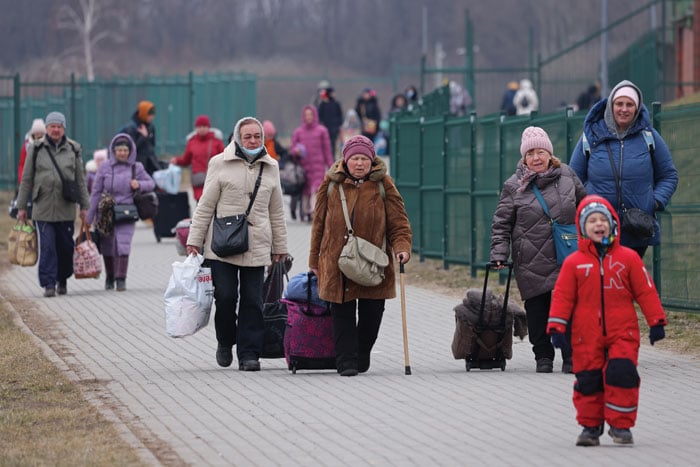
Then, in 1993, as spokesman of the Rabin government, I was part of a mission that flew to Split, Croatia, to airlift to Israel 84 Bosnian refugees.  Since the Serb invasion of Sarajevo in April 1992, thousands of Bosnians have been killed and close to a million fled their country westward, mainly to Croatia, generating heart-breaking scenes similar to the ones we see today in the Ukraine. I’ll never forget those gloomy faces of the people who had been brutally torn out of their homes, heading for the unknown in a foreign land. I visited them later, in Kibbutz Ma’agan Michael, their first home in Israel. They were overwhelmed by the warm welcome, but insisted that for them it was only a temporary haven, and hoped to return to their home once the war ended. Many, indeed, went back, perhaps not back home, but to other European countries.

Finally, in 2007, following the Darfur crisis, the government of Israel decided to grant refuge to a group of 500 asylum seekers who had snuck into Israel through Sinai. More arrived over the years, and only now, pressed by the Israeli Supreme Court, the Israeli Interior Ministry is granting temporary residence status to 2,445 Sudanese asylum seekers. 

Looking at all those numbers, they are really negligible in a country of 10 million people. Still, Interior Minister Ayelet Shaked raised the alarm, warning that of the 2,034 Ukrainians who have arrived in Israel since the start of the war, around 10 percent were eligible for Israeli citizenship under the Law of Return. She predicts that if the current pace continues, there will be 15,000 refugees within the month.  

First, the Ukrainian refugees seek only temporary shelter, until they can make further decisions. They can sign a contract that they will leave once they have a place to go to. And second, if worse comes to worst, would some thousands of non-Jewish Ukrainians – who would be embraced by the large Jewish Ukrainian community in Israel – endanger the demographic balance in Israel? The same Ayelet Shaked, a staunch supporter of Greater Israel, who is happily annexing 330,000 Palestinians who live in Eastern Jerusalem, and who hate us with passion, is suddenly concerned with a few Ukrainians?

Yet all these arithmetic exercises miss the point. Israel, which for decades reminded the world of its apathy when Jews suffered, should open its gates to Ukrainian refugees, because it’s the right, moral thing to do.


Uri Dromi is the Founder and CEO of the Jerusalem Press Club.

Welcoming Ukrainian Refugees Read More »