fbpx

March 3, 2022

Jewish History as Told by A Snarky Teenager Who’s 80 Years Old

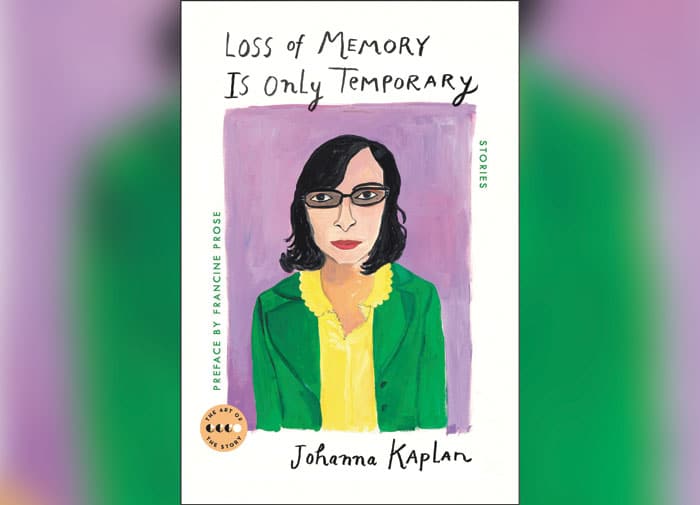
Forget judging a book by its cover: one look at the facial expression on Johanna Kaplan’s author picture on the back flap of “Loss of Memory is Only Temporary” will give a reader everything they need to know about this book. The Maira Kalman drawing on the front is fabulous, too (like everything the genius cartoonist creates), but Kaplan’s face, tilted slightly toward the camera, below salon-perfect white hair, is a wry, sardonic, “you can’t be serious” fisheye. It’s a look I recognize—my teenager wears it all the time. Who knew it would suit an eighty-year old so well?

It’s a look I recognize—my teenager wears it all the time. Who knew it would suit an eighty-year old so well?

Kaplan might not be a household name for all readers, but she’s certainly a writer’s writer. She’s been a finalist for the National Book Award, the American Book Award, and the Hemingway Foundation/PEN Award, and she won the National Jewish Book Award for Fiction (twice), the Kenneth B. Smilen Present Tense Literary Award, and the Edward Lewis Wallant Award. Cynthia Ozick is a fan. Francine Prose is a big fan. Prose, who introduces this collection, claims she’s carried Kaplan’s “Other People’s Lives” (first published in 1975) from one end of the country to the next, repeatedly; it’s a book she can’t live without. 

“Loss of Memory is Only Temporary” is essentially a reprint of “Other People’s Lives” as it includes the six stories from that collection (“Other People’s Lives,” “Sickness,” “Sour or Suntanned, It Makes No Difference,” “Dragon Lady,” “Babysitting,” and “Loss of Memory is Only Temporary”) with two more pieces: “Family Obligations” (first published in “Forthcoming” in 1983) and “Tales of My Great-Grandfathers” (published in Commentary in 2000). The former, following a female physician in the Polish-Soviet War, evokes Isaac Babel’s “Red Cavalry” (with the addition of a backtalking American teenage grand-niece showing up later in the story), and the latter is an autobiographical essay that speaks beautifully to Kaplan’s writerly raison d’être, what she calls her “nistar family,” the hidden family and peoplehood that nourish her imagination.

If you just want to read about people being mean, sarcastic and obnoxious to each other in the funniest ways, you have come to the right place. Make yourself at home. 

Now back to that fisheye. On the one hand, if you are coming to this collection looking for stories that have clear beginnings, middles and ends, or ones that are plot driven, and in which a lot happens, you will be disappointed. Sometimes things happen, but more often than not, they happen in a character’s head. If you are coming to this collection, on the other hand, looking for an uncanny and hilarious performance of the way people (by “people,” I mostly mean Jews) talk at each other (never to, only at) or for the observations of people who are, on the outside, quiet and remote, though in reality incredibly insightful, or, finally, if you just want to read about people being mean, sarcastic and obnoxious to each other in the funniest ways, you have come to the right place. Make yourself at home. 

Personally, my favorite story is “Sour or Suntanned, It Makes No Difference.” The main character here is a teenage girl who has been sent off to sleepaway camp, where she is generally miserable. Miriam is a city girl, so “what she would do with a bunch of trees, Miriam did not know.” She is told she’ll meet kids from all over, but as far as she can tell, the furthest they come from is Teaneck, New Jersey. Miriam is from the Bronx as is Bryna Sue, but Bryna puts on airs because she’s from Riverdale, a posh section of the borough. She says it’s practically the countryside. Miriam has no patience for this claim. “Where you live is the Bronx,” Miriam tells her. “On your letters you put Bronx, New York.” Bryna Sue tries to argue that she could write “Riverdale-on-Hudson” as her address instead. Miriam: “You could … but it would probably end up in a museum in Albany.” I am imagining Miriam making the same facial expression Kaplan does on the back flap of the book. 

The story takes place around the late ’50s—in other words, not many years after the Holocaust—and we can infer that the parents of the campers are either survivors or family members of those who perished. For Parents Day, the campers are made to put on a play that they themselves don’t understand; it’s in Yiddish. The play is about the Warsaw ghetto, and it consists of almost everybody dying. “My part’s good,” Miriam declares, “I’m practically the only one who doesn’t turn out to be killed.” The irony of the story hinges on the children’s failure to recognize the impact of a play of this nature, for this audience, at this time. Miriam is more focused on her mother coming up to camp, seeing how lousy it is, and taking Miriam home with her than she is on the play. Yet her observations about the play and everything else suggest an innate intelligence, an ability to see things for what they are. Explaining her role in the play to Bryna, Miriam says she overhears Nazi soldiers drunkenly screaming out their plans and then goes back to the ghetto and warns everyone. “So the whole thing is that you copy Paul Revere?” asks Bryna. “The only kind of Paul Revere it could be is a Jewish kind,” replies Miriam. “Everybody dies and there are no horses.”

Although I was not a fan of “Dragon Lady,” which lacks the snappy language and humor of the rest, I think this collection includes some of the best Jewish American stories in print, putting Kaplan, in my opinion, both in league with her fan, Cynthia Ozick, as well as the queen of Jewish dialogue herself, Grace Paley.

Jewish History as Told by A Snarky Teenager Who’s 80 Years Old Read More »
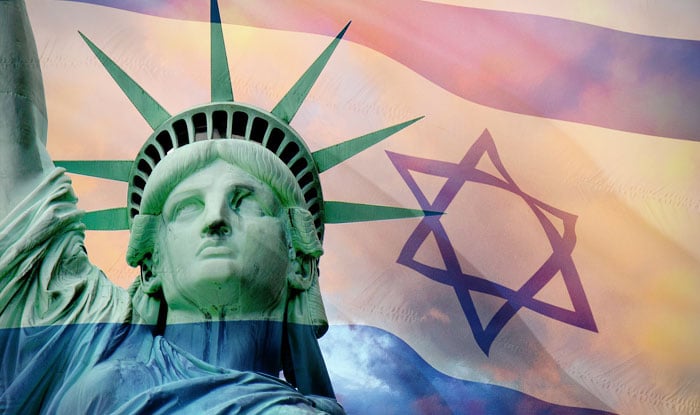
“Star-Spangled Sabra” Highlights Israeli Experiences in the U.S.

Sharon Landau has an intimate understanding of the Israeli community in the United States. An Israeli immigrant who’s lived in the states for more than 40 years, she knows both worlds very well. She spent many summers visiting family in Israel, studied at The Hebrew University of Jerusalem and lives in Los Angeles with her Israeli husband who, she said, insists on speaking Hebrew to their three kids and dog. 

Landau is managing director of The Braid, a Jewish story company and nonprofit organization in Santa Monica, and now she’s also a co-producer and a featured writer in The Braid’s latest salon theater production, “Star-Spangled Sabra.” The new show is a curated collection of stories about Israelis in America.

“This is a fresh collage that weaves in a fuller tapestry of such a vibrant and growing community.” – Sharon Landau

“While there have been several one-person shows about the Israeli experience in the United States, this is a fresh collage that weaves in a fuller tapestry of such a vibrant and growing community,” Landau said. “It was really inspiring and heartening to have a window into the hopes [and] struggles and also humor of my fellow Israelis in America in a way that can be shared with the community at large.”  

“Star-Spangled Sabra” will be performed in person at locations across California, including LA synagogues, from March 6 to 28, as well as on Zoom. The professional actors entrusted with this precious material all have personal ties to the subject matter. Roni Geva and Meitar Paz emigrated from Israel, Jordan Bielsky’s mother is Israeli, Rosie Moss is currently in a master’s program in Jerusalem and Lisa Ann Grant is the child of Holocaust survivors.


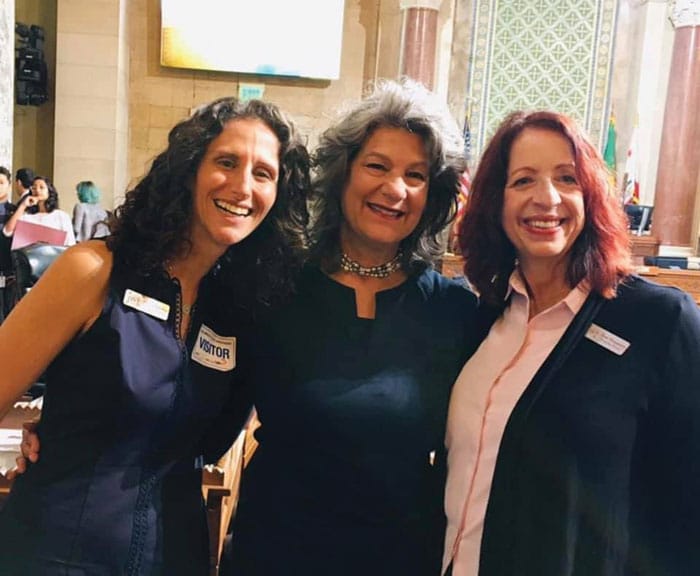
From left: Sharon Landau, Ronda Spinak, and Susan Morgenstern (at the Jewish American Heritage Month celebration at Los Angeles City Hall in May, 2019. Photo courtesy of The Braid.

“The Braid has explored so many Jewish immigrant stories—Russian, Sephardic, Latinx and Persian—that it seemed this was a Jewish story still untold,” said Ronda Spinak, The Braid’s artistic director. “With antisemitism on the rise, hearing our unique stories creates a feeling of unity within our tribe. We are more alike that different. And it allows non-Jews to identify with the humanity of our journey.”

Spinak founded The Braid (formerly known as Jewish Women’s Theatre) to give voice to Jewish stories on stage. It’s grown from 482 patrons the first year to more than 16,000 patrons in the 13th. The company regularly performs around the country, both live and on Zoom.

Like many, Spinak is thrilled to be returning to live theater. 

“We are all craving connection,” she said. “We want to feel something in a group, which makes us feel less alone. I’m grateful to the synagogues, Valley Beth Shalom, Wilshire Boulevard Temple, Or Ami and Temple Isaiah, for bringing us into their sacred spaces in order to present these stories, in order to allow us to feel our stories together.”

While The Braid’s salon style translates well to online streaming, something they will continue to do, there is nothing like the relationship between actors on stage and a live audience. 

“Whether the audience is gasping, murmuring, howling with laughter, weeping or taking in a dramatic moment so quietly you could hear a pin drop, this is the very ‘aliveness’ that is the essence of live theater,” said Susan Morgenstern, producing director at The Braid. “I’m always proud of Braid shows because they consistently break down the walls between us and them and elevate our potential for acceptance and understanding. This show, in particular, is a shining example of just that.”

Morgenstern was an actress with the company for many years. She directed her first show for The Braid 10 years ago, and ultimately became its producing director, working with Spinak to create and develop original salon shows.

“All our shows teach me something about other cultures, about Jewishness, about our shared humanity,” Morgenstern said. “This show in particular has given me a window into a community I didn’t know so well, and truly deepened my understanding of the beauty and depth of the Israeli-American heart.”

For dates, times and locations for “Star-Spangled Sabra,” visit the-braid.org/sabra.

“Star-Spangled Sabra” Highlights Israeli Experiences in the U.S. Read More »

Dawn Arnall Elected Chairwoman of Wiesenthal Center

The Simon Wiesenthal Center (SWC) announced that Dawn Arnall has been elected Chairwoman of the SWC and its Museum of Tolerance. Arnall is the third Board Chair, and the first woman to hold the position, since the SWC was established in 1977. She succeeds Larry Mizel, who served as Board Chair for 20 years after founding Board Chair Samuel Belzberg.

“We are thrilled to welcome Dawn as our new Chairwoman,” Rabbi Marvin Hier, SWC founder and CEO said. “She, along with her late husband, Roland, have been key supporters of the Simon Wiesenthal Center since its inception. A proud American, an activist on behalf of social causes, a fierce Zionist and defender of the Jewish people, Dawn is the right leader at the right time.” 

Arnall, along with her late husband Ambassador Roland Arnall, was first appointed to the SWC’s Board of Trustees in 2005 when her husband stepped down to become U.S. Ambassador to the Netherlands. Roland played a pivotal leadership role in the development of the SWC. In 1977, he accompanied Hier to Vienna, where they met with Nazi hunter Simon Wiesenthal to ask that he entrust his name to the institution.

“While the Center’s global influence has inspired world leaders and fostered understanding of the importance of tolerance among millions of families and children, its mission is more important now than ever,” Arnall said. “What we choose to do through the programs of Simon Wiesenthal Center can shape the world in the second generation of the 21st century like few organizations have the potential to do. This should be our commitment. It is certainly mine.”

“A proud American, an activist on behalf of social causes, a fierce Zionist and defender of the Jewish people, Dawn is the right leader at the right time.” – Rabbi Marvin Hier

Together with her late husband, they are the single largest contributors to the Museum of Tolerance Jerusalem, which will bear the name of Ambassador Arnall and is slated to open in 2023. “I am so proud that the new Museum of Tolerance building, adjacent to Independence Park in the center of Jerusalem, will bear the name of my late husband, Roland,” Arnall said. “For thousands of years, the Jewish people have yearned to return to Zion. My goal is to do everything in my power as the new Chair of the Simon Wiesenthal Center to promote tolerance and human dignity.”

On her work as a member of the SWC Board, Arnall continued: “One of the most exciting parts of being a Board Member of the SWC was that we were among the first to initiate relationships with the leaders of the Gulf countries. We organized missions to the UAE, Bahrain and Abu Dhabi and met with their leaders. I personally chaired the 2018 Mission to Dubai and Abu Dhabi. We later hosted the first Abraham Accords conference in Jerusalem at the future home of the Museum of Tolerance Jerusalem.”

According to a statement by the SWC, “Arnall is an accomplished businesswoman, investor and philanthropist. (She) is committed to the causes of advancing human rights, conservation, military veterans and education.” 

The SWC also announced that Gordon Diamond, a lifelong SWC supporter, Canadian businessman and philanthropist, has been elected Board Co-Chair. Joining Diamond will be Aaron Marzwell, who was elected Co-Chair.

In her new role, Arnall is committed to fulfilling the SWC’s mission. 

“Sadly, today’s headlines remind us that we are living in a dangerous world, one in which hatred and injustice continue to be manifested in tragic ways in and beyond the United States,” she said. “Through our collective service to the mission of the Simon Wiesenthal Center, we are breaking the bounds of silence on this issue with a clarion voice of the importance of remembering the past so as not to repeat it.”

Dawn Arnall Elected Chairwoman of Wiesenthal Center Read More »

High Score – A poem for Parsha Pekudei

Now they brought the Mishkan to Moses, the tent and all its furnishings
its clasps, its planks, its bars, its pillars, and its sockets . . .
-Exodus 39:33

I bit the bullet of my youth and
ordered a full-sized arcade machine
from a guy in New Jersey.

You can stop reading now if
you’re disgusted at how lucky I am.
I don’t mean to show off

but the eighties are still in
full view through these eyes.
It’s a custom job.

He’s making it from scratch.
From trees, and paint, from
hand-coded data that

aging fingers once tapped
into existence. Images of
aliens and Pac people

will adorn its case.
I get to choose where the
buttons go and there will

even be an extra stick that
does what I want it to do.
I’m at the foot of my

own mountain and someday
soon I will experience the joy of
having my ship captured

only to take it back and reap
the benefits of both their abilities.
Doing this as a tween is

part of my own personal Torah.
And as my thirteen year old
spends his free time tapping away

I realize this odd electronic chain
continues. The builder is a craftsman.
The end results of his work will

outlast my ability to enjoy it.
Oh, bless you, guy in New Jersey.
The details of your labor

your craft, connect me to the
high scores of my past. To my
history still in the making.


God Wrestler: a poem for every Torah Portion by Rick LupertLos Angeles poet Rick Lupert created the Poetry Super Highway (an online publication and resource for poets), and hosted the Cobalt Cafe weekly poetry reading for almost 21 years. He’s authored 25 collections of poetry, including “God Wrestler: A Poem for Every Torah Portion“, “I’m a Jew, Are You” (Jewish themed poems) and “Feeding Holy Cats” (Poetry written while a staff member on the first Birthright Israel trip), and most recently “The Tokyo-Van Nuys Express” (Poems written in Japan – Ain’t Got No Press, August 2020) and edited the anthologies “Ekphrastia Gone Wild”, “A Poet’s Haggadah”, and “The Night Goes on All Night.” He writes the daily web comic “Cat and Banana” with fellow Los Angeles poet Brendan Constantine. He’s widely published and reads his poetry wherever they let him.
High Score – A poem for Parsha Pekudei Read More »

Two LA High School Students Reflect on Kest Family Scholars NCSY Trip to New Orleans

Hello to everyone reading this page in the magazine! My name is Grace Boaziz, and I wanted to share a snippet from my life about this chessed trip I had the chance to go on this past week.

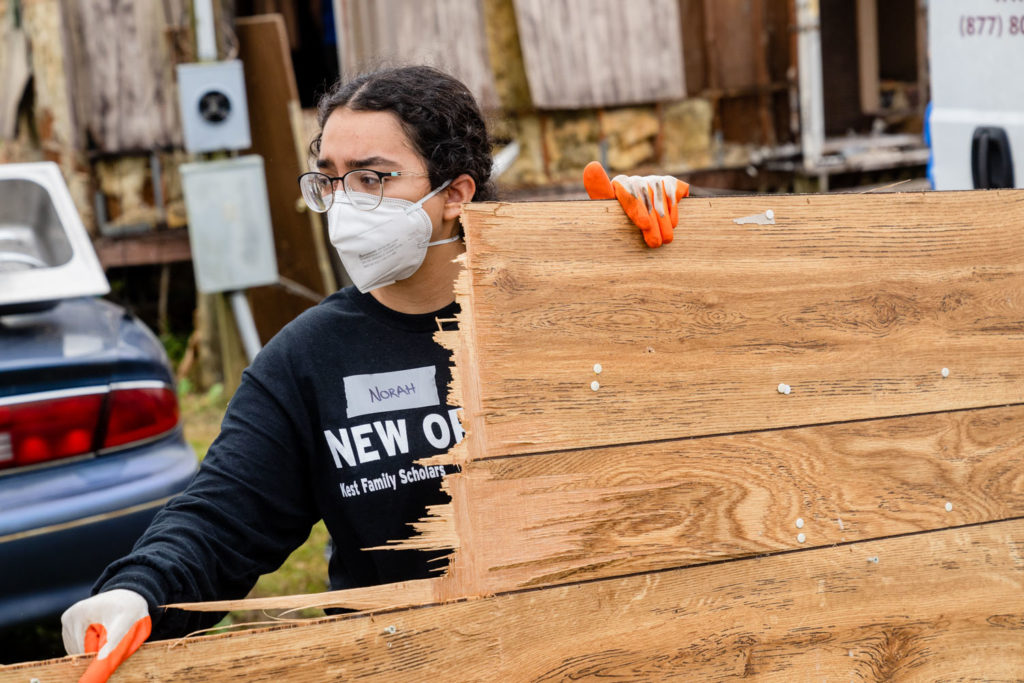
On February 2, 18 Jewish high schoolers who attend public school in Los Angeles flew to New Orleans, Louisiana, as part of NCSY’s Kest Family Scholars group for a five-day adventure. We did not know what to expect. On the first day, we helped to demolish the home of Amy and Larry, which had been destroyed by hurricane Ida. We were with Nechama and AmeriCorps NCCC and they taught us how to do each task. On the second day, Friday, we went to a farm and worked with Joshua from Common Grounds. We worked all morning in the swamps planting trees and learning about the Louisiana ecosystem. I also had a chance to talk with Joshua, and I learned why he does what he does, and where he came from.

Since we are a Jewish Orthodox group, we went back to the hotel early for Shabbas. We got ready and waited to greet Shabbat with songs, stories, food and games. On Shabbat, we played many Mafia games and learned about different topics. One of the topics was “What does love mean to you, and do you believe you can be truly in love.” On our last day, we returned to the site of Amy and Larry’s home, pulled their house down to the ground, and completed some final tasks before our flight back home.

This trip really touched me. I learned more about myself and the people around me. I took away multiple things that will stay with me forever. Joshua taught me that “photos have more meaning than video.” Something the rabbis and advisers demonstrated during this trip was how to always do Kiddush Hashem. That can accomplished by giving someone a compliment or volunteering your time at a soup kitchen. In short, this whole trip was a journey adventure, something I would absolutely do again. Also thank you to the Kest Family for making this trip possible and giving us this opportunity.

— Grace Boaziz


“Chessed” is a Hebrew word that means kindness or love between people. Recently, I spent five days in New Orleans on an LA NCSY Relief Mission trip. This mission was part of the Lauren and Ezra Kest family scholars program. We were a group of eighteen public high school students from all around Los Angeles County who wanted to take part in acts of chesed. We all met at the Los Angeles International Airport (LAX) on a Wednesday afternoon and together we flew to New Orleans.

The first day we were there, we went to a home that was destroyed by Hurricane Ida. The cost of machinery and labor to tear down the home is high. So, as a group, we demolished the house and helped the homeowners, Amy and Larry, tremendously. Before we began breaking down the house, we were tasked with removing all the valuables that the homeowner wanted to keep. As I was picking up their items, I stumbled across several photos. The photos were senior pictures of the homeowners’ children. As a high school senior myself, I felt a connection to these photographs, as entering the last year of high school was an important milestone in my life. When I noticed these photos lying in the debris, I realized how blessed I am to have a home that I can live in.

After we demolished the house, we came back on the last day of our trip to pull the rest of the house down. On the day we went back, I had the chance to meet the homeowners, Amy and Larry. I had never met people who were as appreciative as they were. They were grateful that we helped them with a task that would have cost them thousands of dollars. Although we spent our entire day breaking down a house, after hearing the appreciation from Amy and Larry, I knew that what we had done was worth it.

Ever since I walked into Amy and Larry’s previous home, I have been constantly thanking Hashem for everything. Whenever I am enjoying life, I am thanking Hashem for giving me a moment to breathe. I am also thanking Hashem when my life is not so good. I thank him for placing me in a situation that I will eventually grow and learn from.

On our first day in New Orleans, after we had destroyed the house, we visited a Jewish cemetery. It was my first time visiting a cemetery and it was very emotional. After taking some time to pay our respects, we went to the end of the cemetery and saw a special tomb. In the ground there were 3000 holy books that had been destroyed in Hurricane Katrina. We all sat around the grave and were led through meditation by one of our rabbis, Oran. The meditation allowed us to really connect with where we were and our heritage.

As a group, we also spent a Shabbat together in New Orleans. We were faced with many challenges, including not being able to carry food from our hotel rooms down to the conference room. We had to get creative and find ways to make our Shabbat happen. The challenges made the Shabbat special because everyone was working together to honor Shabbat.

I will be forever grateful to the Kest family, who made this trip a reality. The trip has allowed me to realize everything I should be grateful for. When you do acts of chesed, you will not only impact the people around you but you will affect yourself. The acts will inspire you in a positive way and allow you to gain a new perspective on life. As Jews, it is important that we act as the light in our world and do whatever it takes to make our world a better place.

— Norah Kerendian

Two LA High School Students Reflect on Kest Family Scholars NCSY Trip to New Orleans Read More »

Life’s Instruction Manual: Lessons from Jewish Wisdom Literature

The following are some reflections on various essential pieces of “wisdom literature” found in a portion of the Talmud called the “Ethics of the Fathers” (“Pirke Avot”).

The Keys to a Successful Life

“Accept a Torah teacher upon yourself; acquire a friend for yourself, and judge everyone favourably” (Pirke Avot 1:6).

Although the sages refer to Torah learning, this lesson can be applied to study of any kind. The idea is to accept that learning is critically important—it is mentioned first. No time limit is mentioned. This indicates that learning is to be a lifelong endeavour. The Torah scholar is one who embarks on daily study and accepts the fact that he or she has begun a lifetime journey, just as academics know that they will never exhaust the unending quest that is the study of any subject of substance.

Similarly, academic study requires the same patience, depth and commitment as Jewish source texts. These are the qualities of any truly educated person in any field of study.

The second part basically says not to “go it alone” in life. We need others, we need a friend, we need feedback and a sounding board for our thoughts and actions. The pandemic certainly brought that home to us.

The teacher can be a chavruta or study partner, someone who shares your interest. A variety of approaches, formal and informal, allow for different ways to interact with the text. It is not a coincidence that “friend” is mentioned after “teacher.” Both involve establishing lifelong relationships of mutual respect. The friend is “for yourself” because extending yourself for another is a benefit for both of you, as you gain as much as your friend does.

Lifelong learning and developing true friendships should give a person an appreciation of others, an understanding of life and the perspective to realize that the world is made of others.

Finally, “Judge everyone favourably.” Lifelong learning and developing true friendships should give a person an appreciation of others, an understanding of life and the perspective to realize that the world is made of others. We need to find common cause with people like us and with people unlike us.

Wisdom, Strength, Wealth, Honour

“Ben Zoma says; Who is wise? He who learns from every person. Who is strong? He who exerts control over himself. Who is rich? He who is happy with his lot. Who is honoured? He who honours others” (Pirke Avot, 4:1).

As with study, wisdom does not come from within us but by learning from others. Not just one person or one group but “from every person.” Expanding one’s horizons, enhancing one’s perspective is the key to wisdom.

Strength is not power over others, as we see too often in human relationships and in international affairs, but in people’s ability to grapple with their demons, and to gain an understanding of themselves so that they act with grace and dignity born of self-respect and respect for others.

Wealth will never satisfy, no matter how much one has, unless one is grateful for what one has, because there is no end to the acquisition of wealth. Ben Zoma is not suggesting fatalism and the acceptance of poverty, but is instead advocating a general attitude that makes gratitude, rather than avarice, the goal.

Honour is mentioned last because it is the sum of the previous parts: If one is wise and strong and grateful, then one has the ingredients for honor. The crowning achievement is to have all the preceding blessings and yet not seek honor, but to be able to recognize the achievements of others. Therein lies the person Ben Zoma esteems as a whole person in a world of fragmented lives.

The Source of Hatred and Division

“Any dispute that is for the sake of Heaven will endure; but one that is not for the sake of Heaven will not endure. What kind of dispute was for the sake of Heaven? The dispute between Hillel and Shammai. And which was not for the sake of Heaven? The dispute of Korach and his entire company” (Pirke Avot, 5:20).

Hillel and Shammai were two Talmudic scholars with divergent views on most topics, but they both were genuine searchers for the truth and they honored each other’s quest. Korach, on the other hand, challenges Moses for the leadership of the Jewish people because of jealousy and self-aggrandizement.

Differences of opinion are necessary and good. If everyone thinks alike, no one is really thinking very much or very deeply at all. The Talmud is one long, extended discussion in which arguments are the norm and there is usually no “winner.” The point of it all is to bring the facts of the case to light for thoughtful insights and consideration.

The question is how we argue. What is the nature of our discourse? The Canadian poet E. J. Pratt wrote: “The mark of the educated man is not in his boast that he has built his mountain of facts and stood on the top of it, but in his admission that there may be other peaks in the same range with men on the top of them, and that, though their views of the landscape may be different from his, they are nonetheless legitimate.”

Our Mission

“You are not required to complete the task, yet you are not free to withdraw from it”  (Pirke Avot, 2:21).

The dictum refers to the study of Torah, but stands as a principle that can be applied universally. As Rabbi Jonathan Sacks rephrased it, “We will not complete the journey; therefore inspire others to continue what we began.”

No one person can achieve all that is laid out in Pirke Avot, for we are mortal and fallible. Therefore we cannot be “required” to undertake to do all that needs doing, to reform the world by ourselves. Nevertheless, we need to make a contribution, to shoulder some of the burden, to assume some responsibility and to inspire others to continue the effort.

Jewish writing is not only a formulation of Jewish law. It should be understood as an intergenerational conversation about values, ethics and a philosophy of life. It is meant to spur us on as individuals and as a people because it embodies the moral framework of western civilization and remains an unsurpassed treasure for the enquiring mind.

Translations adapted from Pirke Avos: Maharal of Prague by Rabbi Tuvia Basser


Dr. Paul Socken is Distinguished Professor Emeritus and founder of the Jewish Studies Programme at the University of Waterloo.

Life’s Instruction Manual: Lessons from Jewish Wisdom Literature Read More »

What Have We Done to Our Kids?

Raise your hand if you’ve had a difficult time self-regulating over the course of the last two years. In lay person’s terms, self-regulation means keeping your head cool and your anxiety low, given the chaos of your external environment. Among the consequences of the pandemic has been an astronomical surge in rates of depression, anxiety, loneliness, and isolation for children and adults; if ever there was a time for our ability to self-regulate to be tested, this is it. As a pediatric occupational therapist, I can no longer remain silent about the psychological and social-emotional effects of COVID-19 on us and our children.

Imagine being a child during this pandemic, faced with unpredictable school closures, mask mandates, lessened social encounters, and equipped with only a child’s ability to self-regulate.

Now, imagine being a child with all the above, as well as Sensory Processing Disorder, ADHD, anxiety, depression, and/or other special needs. If you thought you’ve had it tough, put yourself in the shoes of this child.

This is the population I work with five-seven days a week; I am a pediatric occupational therapist specializing in sensory processing and self-regulation. I got into this line of work because there is nothing I love more than teaching students how to self-regulate, but over the course of the past two years, my faith in our educators, parents, and so-called leaders has been shaken.

I am not writing this article to advance a political agenda, nor am I asserting myself as a public health expert. As a health professional, I understand better than most the importance of taking safety precautions.

However, I feel an ethical imperative to share the disturbing trends I have witnessed during this pandemic, and the effects of those trends on the children I work with every day. My angle is just one, and readers may not see what I see; they may not treat the conditions I treat; and they may not have the conversations with parents that I have.

Here is what I am seeing:

On a minute-by-minute basis, I see the effects of the pandemic in the children I treat in the following skill areas: self-regulation, emotional regulation, social, mental health, and speech. These skill areas go hand in hand with one another and feed each other – they are intertwined and there is no black and white way of looking at them. What’s more, they are rooted in sensory processing (i.e., sensory integration), which is the way our brains/nervous systems make sense of and respond to our environments.

Likely due to these skill areas being adversely affected, I see increased suicidal ideation, an uptick in antisocial behaviors, lack of eye contact, increased childhood depression and anxiety, decreased comprehension of social and emotional cues, more oppositional behaviors, and decreased emotional regulation. Although research on young populations is limited, current research already shows the psychological effects of the pandemic on adolescents’ mental health.

I see increased suicidal ideation, an uptick in antisocial behaviors, lack of eye contact, increased childhood depression and anxiety, decreased comprehension of social and emotional cues, more oppositional behaviors, and decreased emotional regulation.

I also see the mental health effects of the pandemic on caregivers, teachers, and therapists. The caregivers, teachers, and therapists I interact with are experiencing visibly higher rates of anxiety and depression than pre-pandemic. This is a problem not only for their mental health, but also for our children – because they rely on us for their own self-regulation. If we are stressed, burnt out, anxious and depressed, it has a huge effect on their development, progress in therapy, and in-school school performance.

This has created a huge conundrum for those in my line of work. We are tasked with protecting, teaching, and assisting the children who have been negatively impacted by this pandemic. But how can we expect our students to be able to self-regulate when many of their parents, teachers, and therapists aren’t able to maintain self-regulation themselves? Children are sponges; if their role models are burnt-out, fearful, angry, confused, and anxious… what are the implications for our children?

As you can see, we’ve got a twofold problem on our hands. Which requires a twofold solution.

First, we as adults and parents, educators and therapists, community leaders and pundits, have an obligation to improve our own emotional regulation and mental health. The struggles we see in our children often reflect the struggles in ourselves; our children learn by watching us, not by magic or osmosis. Regardless of your vaccination status, your belief in masks, or the news you consume, you have a duty to model self-regulation, kindness, sound mental health, and mature behavior for the kids who can’t. You must rise and be resilient for them.

Second, we must focus on helping our children process the disruption and chaos they are currently experiencing. This applies to all children and families, neurotypical or otherwise, but I would be remiss if I didn’t take a moment to speak specifically on behalf of the special-needs children I serve.

It is my informed, professional and clinical view that we need to think long and hard – longer and harder than we have thus far – about forced mask mandates in school. We must consider all children equally, of course, but it is especiallyvital for special-needs children to see the faces of their educators and therapists for their development. This is not my opinion; it is science. While mask mandates are intended to protect our children’s health, masking children who have sensory needs, social deficits, and mental health conditions does more harm than good.

May G-d help us teach and model self-regulation and resilience for this next generation, and stand up for all of the children that have been left behind.


Alexandra Yashar is a Los Angeles-based pediatric occupational therapist and the owner of Kickstart Therapy LA. She is a school consultant to local Jewish schools. Follow her on Instagram @kickstartla

What Have We Done to Our Kids? Read More »

Ben & Jerry’s Israel Files Wrongful Termination Suit Against Unilever, Ben & Jerry’s

The Ben & Jerry’s Israel distributor filed a lawsuit against Unilever and Ben & Jerry’s on March 3, alleging that Unilever wrongfully terminated their contract over the Ben & Jerry’s boycott of Israel.

The 37-page suit, which was obtained the Journal, was filed by Avi Zinger, who heads American Quality Products (AQP) and has been distributing Ben & Jerry’s throughout Israel for 34 years. The lawsuit stated that under a 2004 agreement between AQP, Unilever and Ben & Jerry’s, Zinger had the full authority to sell Ben & Jerry’s ice cream not just in Israel, but to Israeli settlements in the West Bank. Zinger has also worked to “assist disadvantaged groups and to foster Israeli-Palestinian cooperation in alignment with [Ben & Jerry’s]––and Avi’s––own social mission.”

The suit proceeds to mention that the Boycott, Divestment and Sanctions (BDS) movement against Israel has been targeting Ben & Jerry’s for the past decade to pressure them to stop selling ice cream in Israel. Zinger alleged that he was told his contract to distribute Ben & Jerry’s ice cream––which is set to expire at the end of 2022––would be renewed without question and that the July 2021 announcement that Ben & Jerry’s would conduct business elsewhere in Israel was abrupt. He also accused Unilever and Ben & Jerry’s of pressuring him to comply with BDS demands to stop selling ice cream to Israeli settlements, which he argued would go against Israeli law as well as violate anti-BDS laws in various American states like New Jersey and New York. Additionally, Zinger argued that such demands breach AQP’s contract agreement with Unilever and Ben & Jerrys’, since the contract gives him the leeway to sell in the Palestinian territories.

Additionally, Zinger alleged that the Ben & Jerry’s boycott has caused his competitors to “poach” his workers and he has been having trouble hiring more workers and obtaining “necessary ingredients and equipment” due to the “uncertainty” over the Ben & Jerry’s boycott. There has been a steep decline in AQP’s sales as well as a result of the boycott. Consequently, Zinger’s staff, which consists of “new immigrants, African refugees, and people with disabilities,” have been adversely affected by the Ben & Jerry’s boycott.

“I refused Ben & Jerry’s and Unilever’s illegal demands, and as a result, they are threatening to close my business, affecting hundreds of Israeli and Palestinians workers and distributors,” Zinger said in a statement. “Ben & Jerry’s and Unilever’s actions are misguided, unlawful and immoral. Boycotting Israel should come with a heavy price tag, and therefore, we are taking Unilever to court. We expect the court to prevent Unilever from terminating my contract, since the only reason it’s doing so is that I refused to break the law. Shame on Unilever for its wrongful attempt to boycott the state of Israel. There is still time to do the right thing. Renew my license and leave ice cream out of the political debate.”

Alyza Lewin, President of the Louis D. Brandeis Center, also said in a statement, “Unilever’s unlawful action is detrimental not only to Avi Zinger and his company, but also to Avi’s employees; his Palestinian distributors and suppliers; and the general public. Unilever is destroying a successful business that provides jobs for refugees, new immigrants and the disabled; economic opportunity for Palestinians; financial support for Israeli-Palestinian peace and coexistence programs, and education and training for Palestinian students and farmers. Avi’s business makes Ben & Jerry’s available to all consumers throughout Israel – Palestinians and Israelis alike. Unilever is shutting all of this down, only because Avi refuses to agree to its demand that he boycott customers based on where they live – a move, which would harm Palestinian consumers most of all. By placing this unlawful demand on Avi, Unilever has breached its contract and opened itself up to public ridicule and sanction. It is time for Unilever to admit the error of its ways and reverse its discriminatory and self-destructive decision.”

Israeli-American Coalition for Action Executive Director Joseph Sabag said in a statement, “It has been clear for some time now that Unilever has the ability to override Ben & Jerry’s BDS boycott of Israel based upon the companies’ original acquisition agreement. Unilever’s refusal to reverse its subsidiary’s discriminatory commercial policy makes no business sense. We expect that once this lawsuit reaches the discovery phase, some damning evidence may emerge helping to explain why Unilever’s board is subjecting itself and its investors to tens of billions of dollars in losses resulting from their anti-Israel boycott.”

Unilever did not respond to the Journal’s request for comment.

Ben & Jerry’s Israel Files Wrongful Termination Suit Against Unilever, Ben & Jerry’s Read More »

U.S. Holocaust Memorial Museum to Hold Western Region Event

Supporters of the United States Holocaust Memorial Museum in the western United States will hold their annual “What You Do Matters” tribute event on March 30 at 6 p.m. They’ll honor three families with the museum’s National Leadership Award: Jane Jelenko (Los Angeles), Suzi and Steve Hilton (Phoenix) and The Tramiel Family (Palo Alto). Peter Hayes, Theodore Zev Weiss Holocaust Educational Foundation Professor Emeritus of Holocaust Studies at Northwestern University, and the museum’s historian and Senior Curator, Edna Friedberg, will be the featured speakers. 

The event will be held both in person at The Beverly Hilton hotel and via livestream. It will feature a special presentation that will tell the story of the destruction of Jewish life in Poland and intertwine three individual accounts of resilience, hope and determination.

“Poland was home to a vibrant Jewish community, the largest in Europe. After the Holocaust, it was almost completely destroyed.”

 “Poland was home to a vibrant Jewish community, the largest in Europe. After the Holocaust, it was almost completely destroyed,” the museum said in a statement. “Eighty years after mass killing began during the Holocaust, antisemitism and misuse of this history are on the rise — from violent attacks that make headline news to physical, verbal and online assaults that often go unreported. These events, part of a larger climate of hatred, compel us to share Holocaust history and convey its continued relevance.” 

A resident of Stone Canyon in West Los Angeles, Jelenko, 73, is a second-generation survivor; her son David will be presenting her with the award at the event. According to Marla Abraham, the museum’s director of the western region, Jelenko was selected as one of the three honorees because she is not only influential in the community, but she also “has been an advocate for and fully engaged in the mission of the museum. We also wanted to highlight her family’s experience and legacy in the Holocaust.”

Jelenko was the first woman partner in the consulting arm of KPMG, where she served for 25 years, and is a past member of the United States Holocaust Memorial Council. She holds positions on several corporate and community boards, and is the founding president and a board member of Center Dance Arts. She is the author of “Portraits in Black and White: Holocaust Survivors of Café Europa,” a collection of stories and photographs of Holocaust survivors.

The U.S. Holocaust Museum is currently helping Jelenko learn more about her family’s history and Holocaust experiences. “The stories one hears are often lore and one doesn’t know how accurate it is,” she said. “The documents and research that the Museum are helping me with are invaluable. Unfortunately, much of the older generation who experienced the Holocaust have passed away, so we need to carry the torch forward, which makes the work of the museum so critically important.”

At the in-person reception, guests will have the opportunity to tour the Museum’s traveling exhibition, “Some Were Neighbors: Choice, Human Behavior and the Holocaust,” which is currently on view only in Poland and Germany. The exhibition, which originally opened in Washington in 2013 to mark the Museum’s 20th anniversary, examines the role of ordinary people in the Holocaust. 

Abraham said that the Museum is deeply indebted to the honorees’ ongoing work and commitment to Holocaust education, and for opening up about their families’ journeys of survival. 

She said, “Their stories must be the impetus to engage and educate new audiences and inform younger people of the significance of this history and what it means for them as they become engaged citizens.” 

For more information on how to register for the event, visit ushmm.org.

U.S. Holocaust Memorial Museum to Hold Western Region Event Read More »