fbpx

March 2, 2022

Gaza is Not Kyiv

I am currently fortunate enough to be staying in a beautiful apartment in Tel Aviv that peers over the entire metro area of Israel’s biggest city. To the west is the Mediterranean Sea, its grandeur breathtaking when it reflects a blue and clear sky. To the north are the skyscrapers of Israel’s burgeoning high tech and finance sector. And to the east is Ramat Gan, Petah Tikvah, and then a vast swath of green land that indicates passage into the West Bank. This land appears almost as close to my vantage point as the sea, emphasizing the miniscule size of Israel proper—just fifteen miles from the beach to the green line. Yet despite the magnificence of this view on a sunny day like today, a dark cloud hangs over the Jewish state.

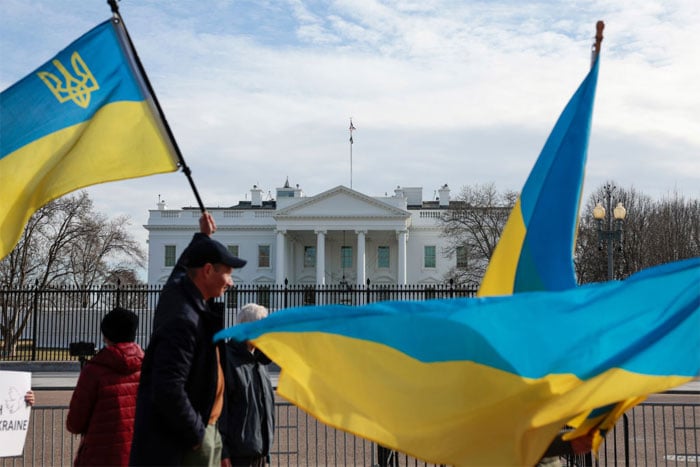
As thousands of Ukrainian Jews protest Russia’s invasion of Ukraine in Tel Aviv’s Habima Square, Israeli diplomats and military officials are busy grappling with a European continent once again on the verge of war.

As thousands of Ukrainian Jews protest Russia’s invasion of Ukraine in Tel Aviv’s Habima Square, Israeli diplomats and military officials are busy grappling with a European continent once again on the verge of war. We Jews feel a strong connection to the latest news from the front lines, not only because many of our families hail from this region of the world or because President Zelensky is a Jew, but because the politics of war and siege greatly interest a people who have so desperately clung to their fragile power. To see this fragility up close and personal, simply gaze over the apartment balcony from which I write now. 

I’d like to invite Maureen Murphy, the senior editor of Electronic Intifada magazine, to explain to me how she can reconcile this view of Tel Aviv with her latest inflammatory tweet, in which she asserts: “If you’re a Western liberal sympathizing with Ukrainians taking up arms against Russia right now, ask yourself why you haven’t sympathized with Hamas fighters in Gaza or Hizbollah in Lebanon. Why don’t you glorify their patriotic sacrifices?” 

This statement is at best comical and at worst downright vicious. In trying to find the words to respond to it, I was reminded of Professor Ruth Wisse’s characterization of antisemitism as a “politics of inversion.” Throughout Jewish history, those who harbor animosity toward our people have repeatedly flipped on its head the reality of Jewish power or influence: The Christians accused the Jews of spreading the plague when it was in fact our customs that shielded us from deadly pathogens; the Nazis accused the Jews of dominating Germany when Jews were merely a tiny fraction of the population; and the Soviets accused the Jews of being a fifth column in Russian society when Jews were uniquely represented among loyal communists and Bolsheviks. Anti-Zionism that positions itself as sympathetic to Palestinians is in itself a politics of inversion, as it accuses the Jewish state of not allowing the formation of an Arab state (though Israel has in fact offered this very proposal many times,) when, in reality, it is the Arab states that have been intransigent in allowing the formation of a Jewish state in any borders, and have weaponized the Palestinian people to fight against it for nearly eighty years. While touring Tel Aviv this week, I learned of how isolated and demonized Israelis felt during the Second Intifada, believing the entire world had turned against them. This truism is tantalizing, considering it was the Israelis who had offered peace and negotiations, as opposed to the terrorism and violence coming from the other side of the table.

The war to eliminate Israel, similar to the war to lay claim on Ukraine and to prevent it from joining NATO, is a campaign of imperialism.

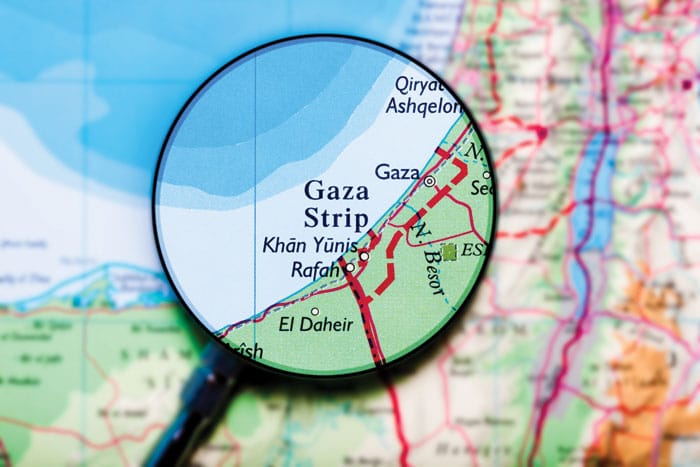
The war to eliminate Israel, similar to the war to lay claim on Ukraine and to prevent it from joining NATO, is a campaign of imperialism. Indeed, calls to free Palestine “from the river to the sea” are calls to install a hegemonic Middle East, where ethnic and religious minorities lose their right to sovereignty and readjust to their proper subordinate place in a hierarchy of power. This is, of course, not to say that the occupation of the West Bank and the blockade of the Gaza Strip are not pressing issues with their fair share of injustices perpetrated by both parties, but rather that the position in which Israel now finds itself is the result of defensive warfare against first the Arab League and now an imminently nuclear Iran. To view a tiny Jewish democracy facing genocidal ambitions since its independence and conclude that it represents Russia and that Hamas and Hezbollah, terrorist organizations dedicated to violent usurpation of Jewish civil liberties, represent Ukraine is libelous, antisemitic hate-mongering. Of course, this is nothing new for Electronic Intifada. 

Maureen Murphy’s Twitter bio indeed contains the phrase “from the river to the sea” in Arabic, and yet her location reads as Chicago, and her website showcases her work in “botanical art” and “nature journaling.” Clearly she is not a freedom fighter in Gaza charging the border, and yet she feels inclined to speak for the Palestinians, whitewashing anti-Zionism as valiant resistance and gaslighting her readers by inverting the perception of Jewish power. This is not unlike Vladimir Putin attempting to frame the Ukrainian state as an artificial entity in the heart of Russian civilization, portraying Ukraine’s fighters as neo-Nazis and thugs, and cracking down on dissent in his own society by arresting moderates and objectors to violence. I’ve written in the past of the parallels between those who resent the West, NATO, and liberal democracy and those who resent Israel and its people, but nothing has made this more apparent than the behavior and words of radical activists and journalists during this horrible war. 


Blake Flayton is New Media Director and columnist at the Jewish Journal. 
Gaza is Not Kyiv Read More »

What’s Good for One Tyrant is Good for Another

To paraphrase the famous tourist slogan, what happens in Ukraine doesn’t necessarily stay in Ukraine.

Just as Vladimir Putin watched carefully as American presidents drew and then erased red lines in Syria, Afghanistan and elsewhere over the last twenty-plus years, other dictators around the world have now been paying equally close attention to the promises and threats that Joe Biden has issued as the Russia-instigated violence in Eastern Europe has increased. At the time this was written, Biden and his allies have not only held to their initial warnings, but have gradually increased the pressure on Russia through economic sanctions, military aid and diplomatic pressure. If Putin is ultimately unsuccessful in achieving his goals, it will be because the West remains unified and holds firm.

But one thing that could quickly undermine the cohesion of the U.S.-led alliance would be for Biden to waver in the face of similar bullying elsewhere on the international stage. That’s why Xi Jinping is monitoring the war so closely from China and why Kim Jong-un has resumed missile testing in North Korea. And why it’s so important for all of us to keep an especially close eye on the continuing multinational negotiations in Vienna with Iran over that country’s nuclear capability.

I should be clear: I opposed the original agreement with Iran back in 2015 based on concerns that the short-term delay to the mullahs in achieving their nuclear ambitions was an insufficient tradeoff for the considerable economic rewards they would receive. But both fans and foes of that deal should agree that reinstating that treaty in the current geopolitical climate would be disastrous. Even those who believe the benefits of a new deal outweigh the downsides should see that the timing of a new agreement would send a particularly unhelpful message to Putin, Xi and other authoritarian leaders with whom the U.S. must deal. 

As the sanctions against Russia strengthen, it would be understandable for Putin to wonder if he had underestimated Biden’s resolve and his ability to hold together an international coalition. There would be no more effective way to reassure Putin that his original instincts were correct, if the America that he saw back down in Syria and walk away in Afghanistan would also decide that Ukraine is too difficult a challenge to maintain for the long haul. It’s equally easy to imagine that Xi, whose long-time goal of controlling Taiwan has looked more distant in recent days, would come to the same conclusion.

Capitulating to the demands that Iranian negotiators have now raised would send an especially damaging message to a global audience. 

Capitulating to the demands that Iranian negotiators have now raised would send an especially damaging message to a global audience. Iran has reportedly made it clear that their conditions now include an end to investigations of their past violations of previous agreements and that the country’s notorious Islamic Revolutionary Guard Corps be dropped from all international terrorism lists. It’s hard to imagine a clearer signal of appeasement to America’s opponents and allies, or a worse time to send that message.

The original Iran nuclear agreements were a wrenching experience for the American Jewish community. Smart people of good faith lined up on both sides of the debate, and longtime personal and political relationships were destroyed as a result. Donald Trump’s withdrawal from the treaty and Biden’s decision to restart negotiations reopened those wounds: it’s clear that the rupture will not be healed anytime soon. But despite the deep and angry divisions over the agreement that still remain, there should be at least the possibility for agreement on questions of timing. Not now. Not until the Russian threat to Ukraine and its neighbors has subsided. Not yet. Not now.

The temptation to move ahead with Iran is understandable. The country is rapidly closing in on nuclear capability and the most effective alternative for preventing the attainment of their goals at this late hour is unclear. But if an economic chokehold is the best recipe for thwarting Putin’s evil ambitions, then it’s difficult to understand why the same approach is not the smartest way to deal with Iran’s nuclear terrorists. Not now.


Dan Schnur is a Professor at the University of California – Berkeley, USC and Pepperdine. Join Dan for his weekly webinar “Politics in the Time of Coronavirus” (www/lawac.org) on Tuesdays at 5 PM.

What’s Good for One Tyrant is Good for Another Read More »

War in Ukraine: The View from Israel

1. This is a sad truth about the human condition in general, and the political arena is no exception: Ultimately, we are all alone. When the Chinese took over Hong Kong, and decided to do with it as they pleased, Hong Kong was left alone to meet its fate. When the Russians conquered Crimea, and renewed their rule over it, the people of Crimea were left alone to meet their new ruler. States act to safeguard their interests, and in the absence of a very strong reason, or a rare possibility of action that has no price, they do not tend to participate in the fights of others. 

You may ask: So why did the West act in Yugoslavia in the 1990s? The answer is simple: because it was possible to act without paying any price, to both feel righteous and come out without a scratch. 

You may ask: So why does the West not act the same way in Ukraine? The answer is simple: because in this case the cost of action will be high, whereas the cost of loss seems lower. That is – the cost of a loss will be high for the Ukrainians, but low for the French, or the Belgians, or the Italians. Therefore, all these countries will impose severe financial sanctions, but they will not send forces to Ukraine and risk their people’s lives. 

You may ask: But what about the lesson of Hitler? Answer: Here, you just lost the argument. The first to say “Hitler” loses an argument. Putin is not Hitler. Putin is much more like the Russian leaders who came before him, from Peter the Great to Nikita Khrushchev. 

You may say: But the world has changed since Peter the Great and Nikita Khrushchev! Answer: not as much as you think.

One lesson is clear: small nations must be prepared to fight alone. They must be prepared to shed blood and thus shame the West into supporting them. 

2. What is the lesson of Ukraine? One lesson is clear: small nations must be prepared to fight alone. They must be prepared to shed blood and thus shame the West into supporting them. So, the right order of looking at the so-called “world order” is as follows: it is not “the order” that defends weaker countries against the aggressor, it is the sacrifice of weaker countries that defends “the order” against the numbness of its supposed leaders. The unity of the West in imposing crushing sanctions on Russia is a sign that Ukraine’s sacrifice is having an effect.

3. In this age of populists and bureaucrats, can the leadership of one man still change the arc of history? Look at the leaders of the West – Biden, Macron, Johnson, Scholz. Then look at Ukraine’s Zelensky. Can you see the difference? If you can’t find it, here’s a mental exercise: Imagine Vladimir Putin on your doorstep. Imagine a situation in which your nation must face Putin in a deadly battle. Which of these leaders would you choose as your own leader? 

Amazingly, and amusingly, would it not be the Jewish comedian?

4. And here’s another mental exercise. I think Americans must engage in such exercises because for most of them the idea of being a weaker nation under threat is so remote they can’t even imagine what it’s like. They can’t imagine a situation in which the barber, the shopkeeper, the lawyer and the comedian must arm and shoot. 

So, try this: You are not an American living securely in Los Angeles, you are now the leader of Poland, or Hungary, or Slovakia, and the Russians might soon have their army on your Western border. The only deterrence that you have against these forces is your alliance with the other members of NATO, Joe Biden’s America included. 

Do you feel safe? Do you stand firm against Putin and Russia, or look for a conciliatory policy that would make it easier to coexist calmly alongside this restless brutal giant? 

5. Consider three possible scenarios: 

The first: The sanctions lead Russia to a retreat and allow Ukraine to exist in a state of independence like its pre-war independence. 

The second: A compromise is reached, the Russians leave Ukraine, but in practice the country becomes much more attuned to the whims of Moscow. 

Third: The Russians occupy Ukraine and remain in control. 

If you bet on the first scenario, it means Putin made the mistake of overreach. If you bet on the second or third scenario, it means Putin has achieved his goal, at least in part. Are you willing to take a one-in-three chance?

6. The headline says: lessons for Israel. So where are the lessons for Israel? 

Answer: We’ll find them soon enough.

Something I wrote in Hebrew

Israel has refused to recognize the Turkish massacre of Armenians for decades. It was a moral disgrace and a political necessity. Israel has decided to discuss payments to Holocaust survivors with the Germans. This too was a moral disgrace and a political necessity. Israel is a small country, whose leadership has one and only one important role. To ensure Israel’s safety and future. All other considerations are secondary, including “being on the right side of history.” It is less important to feel good when looking in the mirror. It is more important to survive. If we agree on this thing, everything else, including Israel’s position on the Russia-Ukraine question, is derived from it. 

A week’s numbers

A reader’s response:

Israel has refused to recognize the Turkish massacre of Armenians for decades. It was a moral disgrace and a political necessity. Israel has decided to discuss payments to Holocaust survivors with the Germans. This too was a moral disgrace and a political necessity. Israel is a small country, whose leadership has one and only one important role. To ensure Israel’s safety and future. All other considerations are secondary, including “being on the right side of history.” It is less important to feel good when looking in the mirror. It is more important to survive. If we agree on this thing, everything else, including Israel’s position on the Russia-Ukraine question, is derived from it. 


Shmuel Rosner is senior political editor. For more analysis of Israeli and international politics, visit Rosner’s Domain at jewishjournal.com/rosnersdomain.

War in Ukraine: The View from Israel Read More »

A Prayer of Peace for the People of Ukraine

God, Our hearts are with all the people of Ukraine,
Its president, Volodymyr Zelensky,
And with our Jewish brothers and sisters in Ukraine
200,000 souls
Who crouch in fear
As the sound of sirens and bombs pierces the air.
Synagogues once filled with songs of celebration
Have become makeshift shelters.
Echos of the Holocaust reverberate,
The memory of the one-and-a-half million
Martyred Ukrainian Jews.

God, we pray that the panic in the streets of Ukraine
Will give way to the sound of children playing,
And the sound of sirens will give way to songs of hope.
We pray that the world community will unite
And cause the Russian army to retreat.
We pray for no more violence
Or bloodshed
And we pray that diplomacy
Will be the path to peace.

Hear our prayers, God,
Hear the prayers of the mothers and fathers,
the prayers of the children
longing for safety.
God, our Shelter,
Bring peace.
Let it rain down from the heavens like a mighty storm.
Let it wash away all hatred and bloodshed.
Peace, God. Please, God. Amen.


Rabbi Naomi Levy is founder of Nashuva and author of “Einstein and the Rabbi.”

A Prayer of Peace for the People of Ukraine Read More »