fbpx

February 22, 2022

COVID and America’s Major Religions

For two years, Americans have been partially or entirely deprived of fundamental freedoms — of assembly, speech, religious liberty, making a living, a child’s right to an education, access to early treatment for a potentially deadly virus, and more — for the first time in American history. That half of America, especially its elites, has either made peace with or supported these deprivations of freedom is why many of us worry about America’s future as a free society.

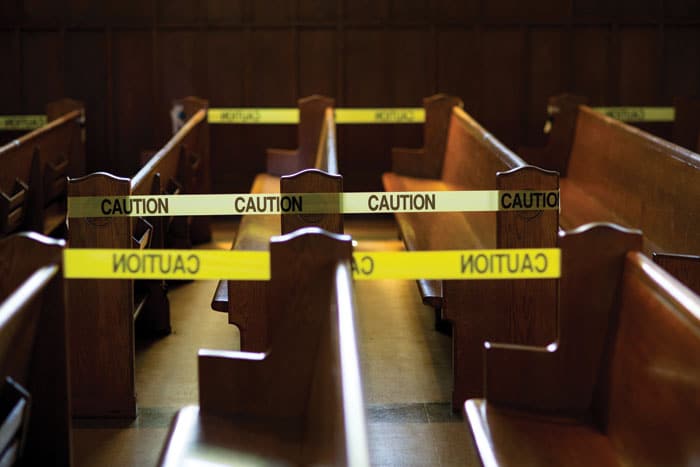
Even more concerning have been the reactions of America’s great religions — specifically, Catholics, Protestants, Mormons (Latter-day Saints), and Jews. The government issued irrational (as well as anti-religious and unethical) edicts and nearly every church and synagogue obeyed.

Exponentially more children have been hurt by closing schools and, later, by making children wear masks — even outdoors — than by COVID-19. 

These churches and synagogues closed their schools to in-classroom instruction despite the fact that COVID-19 presented virtually no threat to young people. Exponentially more children have been hurt by closing schools and, later, by making children wear masks — even outdoors — than by COVID-19. This has been made clear not only by relevant data in America but by Sweden, which never closed its schools for children under 16 — and no student or teacher died from COVID-19.

As Swedish physicians wrote in a letter published in the New England Journal of Medicine in February 2021:

“Despite Sweden’s having kept schools and preschools open, we found a low incidence of severe Covid-19 among schoolchildren and children of preschool age during the SARS-CoV-2 pandemic. Among the 1.95 million children who were 1 to 16 years of age, 15 children had COVID-19, MIS-C [Multisystem inflammatory syndrome in children], or both conditions and were admitted to an ICU, which is equal to 1 child in 130,000. . . . No child with COVID-19 died.”

Recently, some churches and synagogues told their congregants that children as young as 5 had to be vaccinated in order to attend services. It is immoral to give young children a COVID-19 vaccine for which we have no long-term safety data, and especially when children are not at risk from the virus. Yet many churches and synagogues, pastors, priests and rabbis have insisted on it.

Given the unquestioning obedience among so many of America’s religious leaders and institutions, the question is: Why?

There are both similar and different answers for each religion. The similar reasons are that most religious institutions and leaders have become largely indistinguishable from their secular counterparts. With the exception of attending church or synagogue, most Christians and Jews think and act like most secular Americans.

Regarding COVID-19, most religious leaders have been as scared as most secular leaders. The only major difference between Americans has not been between religious and secular, but between Right and Left. Conservative clergy have been less scared than liberal clergy, just as conservative nonreligious Americans have been less scared than liberal nonreligious Americans. Which, of course, prompts the question: Does religion make people wiser, better and more courageous? Or has religion largely become something that serves only to make adherents feel good?

With regard to Christians there is the issue of the New Testament admonition to obey secular authority. To cite the most famous example: “Let every person be subject to the governing authorities. For there is no authority except from God, and those that exist have been instituted by God. Therefore whoever resists the authorities resists what God has appointed, and those who resist will incur judgment” (Romans 13:1-3).

Mormons have an additional issue. They are not only expected to obey the Bible, but LDS leaders as well. The head of the Church of Jesus Christ of Latter-day Saints is the First Presidency, which consists of three men who are regarded as prophets. God speaks through them. Faithful Mormons therefore regard some First Presidency pronouncements as the word of God.

On Aug. 12, 2021, the First Presidency (whose President is, not surprisingly, a physician) released a statement saying, “we urge individuals to be vaccinated,” and “we can win this war if everyone will follow the wise and thoughtful recommendations of medical experts and government leaders.”

As Mormons are generally the most socially and politically conservative of America’s religious groups, many of them have not regarded the “recommendations of medical experts and government leaders” as “wise and thoughtful.” Just as most non-Mormon conservatives do, most Mormon conservatives regard many of our medical experts and government leaders as non-thoughtful, non-wise and even dishonest.

So, what are these Mormons to do?

A Brigham Young University publication, the Daily Universe, quoted a Mormon woman named Hannah Colby: “I am kind of like at odds with the First Presidency, but I know President [Russell M.] Nelson is a prophet of God,” she said.

The paper did not reveal how Ms. Colby resolved that tension.

Christians need to grapple with the New Testament admonitions to obey secular authorities. That’s what the great majority of German Christian pastors and churches did in the 1930s. In light of Romans 13, were they right or wrong? If the irrational and freedom-destroying mandates of the secular authorities in America (and the rest of the West) force serious Christians to confront the question of whether a Christian must always obey the government, that will be one of the few good things to come out of the COVID-19 era.

Now, to Jews. What has animated most non-Orthodox (and more than a few modern Orthodox) synagogues to obey irrational and immoral rules of the secular authorities?

One obvious answer is that most non-Orthodox Jews are on the Left. And much of the Left lives in fear (of COVID-19, of global warming, of secondhand smoke, of diving boards, and much else) and is prepared to subvert freedom to assuage their fears.

There are two other, less obvious, reasons for the unquestioning obedience of most syna-gogues and other Jewish institutions. One is that Jews tend to idolize doctors and the other is that Jews tend to unquestioningly obey “experts.” “Experts say” is to most non-Orthodox Jews what “Thus says the Lord” is to most Orthodox Jews. Of course, unquestioning obedience to “experts” also characterizes many non-Jews; in fact, it characterizes most well-educated people. And Jews happen to be the most well-educated ethnic/religious group in America.

By keeping their churches and synagogues closed for so long and for no good reason, many of their congregants may just not return.

All this notwithstanding, the fact is that a disproportionate percentage of those who defied irrational and unconstitutional governmental mandates have been religious Americans — mostly Evangelical Christians and ultra-Orthodox Jews.

In September 2021, for the 15th consecutive year (except for 2020), I led Jewish High Holy Day Services for about 400 people — no masks required, and no vaccination necessary. Other synagogues could have done the same thing — but nearly all rabbis and synagogue boards were too scared and too obedient to do so. And of course, the same holds true for most churches.

They may pay a steep price as people gradually come to recognize the weakness of their religious leaders. And they will pay another price: by keeping their churches and synagogues closed for so long and for no good reason, many of their congregants may just not return. If my clergy didn’t think it was important that I attend for nearly two years, maybe it just isn’t that important.


Dennis Prager is a nationally syndicated radio talk-show host and founder of PragerU. His latest book, The Rational Passover Haggadah, will be published by Regnery on March 1. He may be contacted at dennisprager.com.

COVID and America’s Major Religions Read More »

The Post-Post-Cold War Era Has Begun

This column was written on Monday, before both Russia’s invasion and before Israel’s statement in support of Ukraine. Israel’s statement in of support of Ukraine’s territorial integrity was issued after Russia’s incursion into Ukraine’s eastern region and the day before the full invasion of Ukraine began. While Israel had little choice but to speak out against international aggression, the statement did not mention Russia. The essential premise of the column still holds: that Israel is caught in an awkward position between two longtime allies.


To untrained eyes such as mine, the distinction between the prelude to war and war itself has largely been lost in the mud of Eastern Ukraine. When this column was submitted, Russian and Ukrainian forces were exchanging gunfire, missiles, injuries and death. Yet world leaders were still speculating about the likelihood or probability of war between those two countries rather than the battles already underway.

By the time you read this, Russia may have launched the full-out invasion that President Biden and others have warned about. But regardless of how the military action in Ukraine is named, it’s clear that the post-post-Cold War era of European geopolitics has begun. Since the fall of the Soviet Union in the early 1990s, the United States enjoyed almost three decades as the world’s lone superpower. But China’s rapid ascension to global prominence has remade that landscape, and now a newly assertive Vladimir Putin is forcing a reconsideration for the U.S. and its allies as to the best way to deal with a threat they assumed had long since faded.

As a result, the Biden Administration is adjusting to the challenges of a tri-polar world. Most of Europe has realized that Russia will be a military concern and an economic threat for the foreseeable future. And U.S. allies on the Pacific Rim understand that our country’s pivot to China will not be as complete a re-ordering of priorities as they had hoped.

This latest world order presents important challenges for Israel, whose uniquely deep ties with the U.S. are not quite as unique anymore.

But this latest world order also presents important challenges for the state of Israel, whose uniquely deep ties with the United States are not quite as unique anymore as the Jewish state’s growing relationship with Russia and China created a different but connected set of challenges. Both Putin and Chinese President Xi Jinping understand the geopolitical benefits of closer ties with Israel, and while both countries’ ongoing support of Iran will keep Israeli leaders on their toes, it’s clear that Israel sees the advantages in these alliances too.

As the violence in Ukraine worsens, Israel now finds itself in a particularly troublesome position, having maintained good relations in recent years with both Ukraine and Russia. Even while most American allies joined Biden in condemnation of Putin’s conduct and offered varying degrees of military assistance to Ukraine, Israel has stayed steadfastly neutral. At one point, Prime Minister Naftali Bennett offered to host peace talks, an idea that Putin quickly swatted away. And the Ukraine Foreign Ministry reacted angrily last week when Israel requested Russia’s help in evacuating Israeli citizens from Ukraine during an invasion.

Even as the rest of the world is consumed by the conflict, Israel has otherwise mostly kept quiet. But if the violence escalates, that position will be much harder to maintain. Ukrainian government leaders are becoming increasingly vocal in calling for Israel’s support against Russia’s violation of international norms. And while the Biden Administration has enough else on its plate at the moment, they will certainly take note if Israel remains on the sidelines while Russian tanks roll toward Kyiv.

But the international politics of this are more complicated for Israel than it seems. Many Westerners believed that the friendship of mutual convenience between Putin and Benjamin Netanyahu was based on the personal needs of the two leaders, but it became clear to both that cooperating in Syria benefited both countries’ security priorities and laid the groundwork for other types of collaboration. And while Avigdor Lieberman’s Yisrael Beiteinu party might not be as prominent as in past years, it is still an integral part of Bennett’s governing coalition and still commands the support of legions of Russian-speaking immigrants. Although the United States is far and away Israel’s strongest ally on the world stage, upsetting Putin would have both international and domestic political consequences.

Israel is still navigating similar intricacies in its dealings with China. Last year, when the U.S. determined that their conversations relating to shared technology could pose a potential security threat, the Biden Administration made it clear that Israel needed to pull back. We’ll see in the weeks ahead if Bennett receives a similar message regarding Russia.


Dan Schnur is a Professor at the University of California – Berkeley, USC and Pepperdine. Join Dan for his weekly webinar “Politics in the Time of Coronavirus” (www/lawac.org) on Tuesdays at 5 PM.

The Post-Post-Cold War Era Has Begun Read More »

“Mrs. Maisel” is Making Me Marvelous

I’m a woman in my thirties, which, in age-obsessed Los Angeles, renders me in my seventies. 

During the spectacular Super Bowl Halftime Show that featured artists such as Dr. Dre and Snoop Dogg —who made it big decades ago — I turned around to one of my houseplants and bragged, “That’s my jam.” 

And lately, I’ve been calling a lot of people, from telemarketers to waiters, “dear,” and complaining to anyone who will listen that young people today wouldn’t know good music if Eminem hit them over the head.

I’m in need of glamour and variety; of high heels, stiff drinks, and a world in which some good old-fashioned red lipstick always saves the day. 

I’m in need of glamour and variety; of high heels, stiff drinks, and a world in which some good old-fashioned red lipstick always saves the day. Suffice it to say, I badly need the return of a show like Amazon Prime’s “The Marvelous Mrs. Maisel,” which debuted the first two episodes of its fourth season on February 18 after a two-year hiatus.

With its glorification of the late Fifties and early Sixties, the show, which tells the story of a beautiful and brilliant Jewish housewife turned aspiring stand-up comedian named Miriam “Midge” Maisel, allows me an escape from my world of sweatpants, masks, meals my kids don’t eat and more sweatpants. There’s nothing wrong with sweatpants, and it’s not my business to tell others how to dress. But I know myself, and I’ve hit a metaphorical [sweatpants] wall.

I can’t deny the delicious escapism the series offers. I previously thought I wanted to see television shows that reflected the indescribable challenges, however beautiful, of raising young children, but as it turns out, all I really want is to watch the fabulous exploits of a mother who owns more pillbox hats than diapers. 

Presently, I’m committed to channeling the fabulous “femme joy” of Mrs. Maisel while still retaining my own lifestyle, which mostly consists of writing, denting my minivan, and ignoring a mound of laundry I’ve promised to fold after retirement. Channeling Midge over the past few weeks started with the physical, as I gradually began swapping out old sweatpants for midiskirts and, on one occasion, a full-blown dress, which was promptly stained with tiny hands covered in peanut butter. It all began with the tangible and physical, but soon, I noticed a change in my attitude and lifestyle that has helped me put my problems in a healthy perspective. 

For example, each time I’m filled with anxious worry over whether my children will ever learn to regulate their emotions or, at the very least, put their toys away, I remember that if they were real, Midge’s children now would be in their mid-60s and wholly accountable for their own coping skills — and toys. Things almost always have a way of working themselves out.

Some of my Midge-inspired physical endeavors, such as working or running errands while wearing high heels, are downright misguided, at least for someone as uncoordinated as me, but inarguably fun. And in L.A., a beachside city of relaxed fashion standards, it’s been exciting and energizing to wear anything other than flip-flops.

Naturally, I wonder whether I’m setting the women’s movement back at least four decades: I recently began waiting until my husband falls asleep to remove the day’s makeup, à la Midge (and her mother). 

Naturally, I wonder whether I’m setting the women’s movement back at least four decades: I recently began waiting until my husband falls asleep to remove the day’s makeup, à la Midge (and her mother). I know, I’m awful, but it felt good to look good before bedtime, given that my usual nightly routine for the past few years has involved accidentally applying diaper rash cream to my face before collapsing in a daze.

In my defense, I believe that reclaiming fabulousness and empowerment as a woman and mother on my own terms, with inspiration from “Mrs. Maisel” and a healthy dose of modern-day perspective, is a totally feminist endeavor. 

I’m discovering the power of connecting to “femme joy” and the radical act of reclaiming my own life and talent, even as I love and care for my children. It’s not an either/or; I’m not frazzled and frumpy or perfectly-coiffed and fabulous. Instead, it’s the power of “yes.” And that power, ironically, is the motor that pushes the best comedy forward.

For me, the antidote to the survival mode that stems from mothering young children isn’t always more sleep or increased help around the house. Sometimes, it’s a fleeting moment, one in which you look in the mirror and see a glimmer of someone fabulous looking back at you, whatever your definition of fabulous might be.

But there’s so much more to emulating “Mrs. Maisel” than wanting to slip my tired feet into some glamorous house slippers, rather than stepping on yesterday’s banana. The show is also plowing the metaphoric snow of self-doubt which has plagued me ever since I became a mother and began excoriating myself for not always feeling fulfilled by that role. 

“What if some of us are just supposed to talk to adults our entire lives?” Midge asks the audience during a live set in Season Two. It’s a legitimate question, one which I ponder a lot these days as I peel stubborn, dried-out jam off the dining room floor while contemplating my master’s degree in public diplomacy.

As a mother with young children, I am trying to claim some joy and space of my own, though there are days when I could especially use more space. If I had obsessively watched “Mrs. Maisel” during the height of the pandemic, when both of my kids were home from school and my husband and I were also forced to work from our dining room table, I probably would have blinded myself with those kitten heels. But today, with school back in session, I possess both the openness and the bandwidth to take a few cues from Midge herself.  

Yes, I need the return of  “The Marvelous Mrs. Maisel” in my life. That’s why I recently spent $38 to buy YSL 201 red lipstick (the same brand that, in 2018, head makeup artist Patricia Regan confirmed Midge wore during most performance scenes in earlier seasons). With price tags like this, our children will simply have to eat generic Cheerios and knock-off Mott’s applesauce until 2024.

I purchased the lipstick online, with the hope that it would be my new secret weapon. I even wondered if those red lips would make me feel indestructible, at least until I trip on whatever toys the kids have left on the floor and land miserably on my tailbone. By that point, I’ll probably sound less like Doris Day at brunch and more like Lenny Bruce in jail. 

As soon as the lipstick arrived in the mail, I meticulously applied it with a lipstick brush, dabbed my lips, checked my teeth and stepped outside. I was radiant; I was unstoppable; and then, I remembered that most spaces I frequent in L.A. County still require a mask, despite California’s recent lifting of the indoor mask mandate.

Still, I’m not deterred. With enough openness and inspiration, “Mrs. Maisel” is transforming me into something I’ve never been, but always yearned to be: marvelous.


Tabby Refael is a Los Angeles-based writer, speaker and civic action advocate. Follow her on Twitter @RefaelTabby

“Mrs. Maisel” is Making Me Marvelous Read More »

Rosner’s Domain: The Other Iran-Strategy Also Doesn’t Work

The clichés are familiar: you have to be smart. And another one: Energy and persistence conquer all things. The reality is a little different: sometimes smart is not enough, nor is energy and persistence. Sometimes events are simply out of Israel’s control.

We are probably getting closer to getting such a lesson on Iran. In 2015, President Barack Obama had decided to sign an agreement with Iran. Israel made great efforts to prevent the agreement. It did not help. The agreement was signed. True, later it was canceled. But the cancellation had a price, to be paid now, in any new agreement. It’s an agreement that President Joe Biden looks like he’s going to sign. In the case of Biden, Israel has changed its policy and tone. Instead of the aggressive and public approach, it launched a quiet dialogue. The result seems similar to the one produced by the previous approach. Or maybe a little worse? Prime Minister Naftali Bennett said on Sunday that the coming agreement would be weaker than its predecessor. 

What is the lesson in all of this? One lesson is unclear. Proponents of the current Israeli line would say that instead of double damage — both an agreement with Iran and a quarrel with Israel’s U.S. friends — we now only see a single damage — the looming agreement. At least, they say, we maintain a close relationship with the administration.

This is a possible conclusion, but not the only one. Proponents of the aggressive approach (that is, Benjamin Netanyahu,) will say that if an agreement with Iran is a done deal, it is better for Israel to accept it under fierce, blatant protest, so as not to create the impression that Israel is willing to live with it. A clear protest opens the door to a later change when, say, Donald Trump is re-elected president, or Nicki Haley, or Ron DeSantis.

There is also a clearer, more definite lesson to be learned, and Bennett seems to have missed it. He said earlier this week that “Israel will not accept Iran as a nuclear threshold state.” This is similar to previous statements on what Israel will or will not accept about an Iran nuclear deal. That is, a statement that has no connection to a reality over which Israel has no control.

In other words: just as in the case of the agreement, when it was proved that two different approaches could not prevent it, so it is with the case of Iran as a nuclear power. Israel can “accept” or “not accept” reality. The ultimate question will be not whether Israel accepts reality, but whether Iran is a nuclear threshold state, and it is not at all certain that Israel has the option to prevent such scenario from materializing. Maybe it does. We all hope it does. But we cannot be certain. Had it been simple, had it been foolproof, Israel would probably already be doing it.

The implication of this understanding is that Israel must prepare, as PM Bennett also said. It is essential to prepare for an agreement which will undermine stability in the Middle East. It is essential to prepare for a weak agreement that will allow Iran to continue to advance its nuclear program. 

As for America, the next test of Israel’s current approach will be the ability of Bennett’s government to get something tangible in return for its tacit acceptance of the nuclear deal. Not that they agree to the agreement – they agree to remain relatively silent. At least until now. A grateful administration (so the Israeli government hopes) will provide Israel with more means to deal with the consequences of the agreement. And forgive me for being a little suspicious about this possibility. The administration is going to want to make sure that the compensation for Israel would not allow Israel to take steps that would undermine the agreement. 

That’s really the point. The interests of Israel and America are different. And the public seems to understand this as much as the leaders do. Even among Republican voters there is not a clear majority opposing an agreement (see a recent Morning Consult Poll). In fact, Netanyahu would probably look at the numbers and say ‘I told you so’. He’d say, not without reason, that had Israel protested more vigorously, at least the proportion of Republicans who object to an agreement would have been higher (to which Bennett would respond: yes, but this comes with a price on the other side).

Israel and America don’t see eye to eye on Iran. That was as true when Netanyahu was vocal as is it is when Bennett is restrained. 

So, Israel and America don’t see eye to eye on Iran. That was as true when Netanyahu was vocal as it is when Bennett is restrained. Israel expects from Americans the kind of support that it could get in a different era. But in the current era, of battle with China, of focusing on domestic problems, of attempting to ease the burden of being a global policeman, of energy independence — in this current era, Israel’s concerns are, well, less important to American administrations. 

This should be stated, clearly and calmly: Israel is less important to the Americans. And that, too, as Bennett says, is something for which Israel must prepare.

Something I wrote in Hebrew

Israel’s Finance Minister is trying to tempt ultra-Orthodox men into the workforce. Here is something I wrote about his plan:

The habits of ultra-Orthodox society cannot be changed in one or two years. The first reaction of ultra-Orthodox communities to the Lieberman decrees will be to wait… If the government disintegrates in six months or a year, it is doubtful it will be able to anchor the necessary change and make them irreversible… a change is conditional on the habituation of a new generation of ultra-Orthodox men to conditions it will no longer want to roll back… If 200,000 men go out to work and do so for a long enough time to get used to it, and decide that it is good for them, only then the ultra-Orthodox leadership would no longer be able to persuade them to give up the new lifestyle to which they were accustomed.

A week’s numbers

Are we still “the people of the book”? These are the numbers from Israel. And note the exact language: this is how much Israelis say they read, not necessarily what they read (when asking such questions, we should take into account social desirability). 

A reader’s response:

Erwin Goldstein did not appreciate the idea of an “Israeli Century” that was presented in a cover story I wrote. Here’s Goldstein’s comment: “why do we have to decide between ‘Israeli’ or ‘American’ century – can we not compromise on a joint ‘Jewish century’?”. 


Shmuel Rosner is senior political editor. For more analysis of Israeli and international politics, visit Rosner’s Domain at jewishjournal.com/rosnersdomain.

Rosner’s Domain: The Other Iran-Strategy Also Doesn’t Work Read More »

Ukraine’s Jewish Community on Edge as Russia Invades Country

Russian President Vladimir Putin’s recognition on Feb. 21 of two “breakaway” states in eastern Ukraine and his subsequent dispatch of “peacekeepers” there—considered by Western nations to be an official invasion of the country—has left its citizens and particularly the Jewish communities on edge. Throughout Ukraine, Jewish leaders are watching closely, and many have made contingency plans in the event the situation worsens.

Ukraine’s Chief Rabbi Yaakov Bleich told JNS that the Jews “are part of the general community. What’s good for Ukraine is good for the Jews of Ukraine. What’s bad for Ukraine is bad for the Jews of Ukraine.”
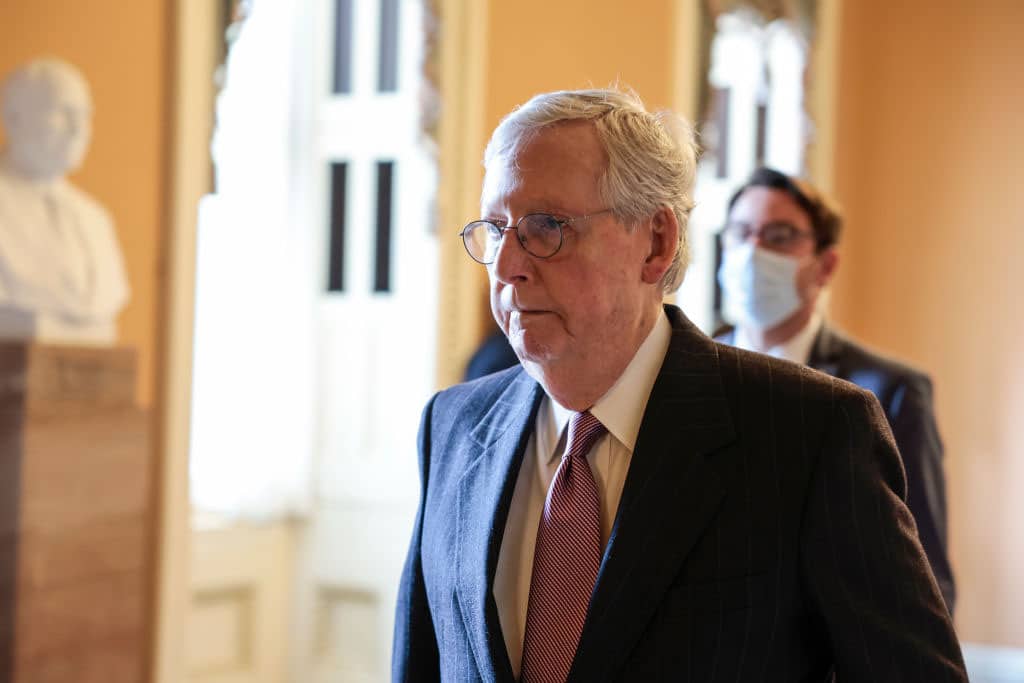
He stated that Russia’s move is an “act of war against the sovereignty of Ukraine,” and he and other communities are keeping a close watch on events, as “it’s a developing situation.”

An estimated 200,000 Jews are spread throughout a number of communities in the country.

Bleich said that in the meantime, the Jewish communities near Lugansk and Donetsk “will shelter in place or evacuate.”

The Jewish communities of Kharkiv and Odessa “need to make a decision of what they are doing,” he said, but are likely waiting to see how events unfold.

Bleich said that as far as Kyiv is concerned, “at this point, no one thinks there will be a ground incursion, but there is a danger of bombings and missiles being shot at Kyiv, especially trying to get to certain buildings in Kyiv such as the ministry of defense, the airports and other strategic areas.”

These targets, he said, have put Kyiv “in the line of fire.”

“Most people are sheltering in place,” he said. “Some communities have made contingency plans for temporary evacuation. However, it all depends on the situation.”

Israel’s Foreign Minister Yair Lapid spoke on Tuesday with Israeli Ambassador to Ukraine Michael Brodsky and the Ukraine embassy staff who had been instructed to leave Kyiv and move to a temporary consular office in Lviv.

According to the ministry’s Twitter account, “Lapid emphasized that protecting the lives of Israel’s emissaries, Israeli citizens situated in Ukraine, and the large Jewish community in the country, is the State of Israel’s top priority.”

The ministry has made contingency plans to help evacuate Ukraine’s Jews, if necessary. Since the skies will likely be closed, Israel has arranged for a land evacuation through Ukraine’s neighbors including Poland, Hungary, Romania, Slovakia and Moldova.

The Foreign Ministry reiterated its call to all Israeli citizens to leave Ukraine immediately.

Rabbi Yaakov Bleich, Ukraine 2021. Credit: Кальницкий Михаил via Wikimedia Commons.

‘We need a lot of heavenly help’

Rabbi Hillel Cohen, an active leader within Kyiv’s Jewish community and head of Hatzalah Ukraine, told JNS he is prepared for the worst-case scenario, but he hopes for the best.

He mirrored Bleich’s assessment of the current situation, saying that most Jewish communities are either hunkering down or making emergency contingency plans to evacuate westward if necessary.

As of now, even with the incursion of Russian troops into Ukrainian territory, the Jewish communities are alert and ready to react, though still hoping that the situation will deescalate and not deteriorate.

Nearly 100 Ukrainian Jews immigrated to Israel on Feb. 20 to escape a dire situation they believed would only deteriorate even further.

Asked whether more Ukrainian Jews will move to Israel or other countries in order to escape advancing Russian troops, Bleich sounded skeptical.

“It’s hard to say that now people will be running en masse to Israel,” he said. “They didn’t do it in 2014. I don’t see it happening now unless things get really bad.”

“There has not been—and we hope there will not be—any anti-Semitism due to what is happening,” he said. “We need a lot of heavenly help from God that things should stay under control and not get out of hand.”

Ukraine’s Jewish Community on Edge as Russia Invades Country Read More »

Mitch McConnell Says It’s “Jaw-Dropping” That BLM Chapter Bailed Out Suspect in Attempted Shooting of Jewish Louisville Mayoral Candidate

Senate Minority Leader Mitch McConnell (R-KY) said in a February 17 speech on the Senate floor that it’s “jaw-dropping” that the Black Lives Matter (BLM) Louisville chapter posted bond for the suspect in the attempted shooting of a Jewish Louisville mayoral candidate.

The suspect, 21-year-old Quintez Brown, was arrested on February 14 after allegedly entering the campaign headquarters of Craig Greenberg and opening fire. No one was injured, although Greenberg’s sweater was grazed. Following Brown’s arrest, a judge posted $100,000 bond for Brown; the bond was paid for by the Louisville Community Fund, which was organized by Black Lives Matter (BLM) Louisville. BLM Louisville organizer Chanelle Helm told WHAS11 that they posted the bond for Brown because “they are calling for this individual, this young man who needs support and help, to be punished to the full extent. It is a resounding message that people are down for the torture that has taken place in our jails and prisons.” She also told The Courier Journal that they are seeking mental health counseling for Brown. “Jails and prisons do not rehabilitate people,” Helm said. “The community’s been doing that.”

McConnell said, according to his Senate website, that “On Monday, my hometown of Louisville was stunned by what appears to have been an assassination attempt against a Jewish mayoral candidate by a prominent far-left activist who’d previously called for defunding our Police Department. This far-left Black Lives Matter activist and defund-the-police cheerleader walked into a Jewish Democrat’s campaign headquarters and opened fire.

“Obviously, every aspect of this is still under investigation, including the suspect’s mental condition,” he continued. “But guess what: He’s already been let out of jail. A left-wing bail fund partnered with BLM Louisville to bail him out. Less than 48 hours after this activist tried to literally murder a politician, the radical left bailed their comrade out of jail.

“It is just jaw-dropping. The innocent people of Louisville deserve better.”

McConnell went on to speculate if any “corporate money” went toward Brown’s bond, pointing out how “a long list of prominent corporations” have provided money to BLM since 2020. He then accused the media of a double-standard when it comes to its coverage of Brown and BLM Louisville.

“I’m confident that if an activist claiming to be conservative tried to assassinate a politician, whatever his mental state, the media would open a 24-7 ‘national conversation’ about rhetoric on the right,” he said. “Somehow I doubt attempted murder by a BLM activist will get that treatment. I doubt we’ll have a ‘national conversation’ about the constant chorus of powerful voices calling our society evil.” The Senate minority leader argued that the double-standard extends to the legal system as well, pointing to how prosecutors in Minnesota asked for a more lax sentence for someone in May 2020 who “broke into a pawn shop and started a fire that burned it down” during the George Floyd protests. “His act of arson killed somebody.” “We cannot have federal officials acting like left-wing political violence is more acceptable than any other violence,” McConnell added. “If anything, political violence is uniquely unacceptable in a democratic republic.”

He concluded: “The American people need public servants to crack down on crime and defend their safety. Less pandering to woke mobs; more protecting innocent families.”

Greenberg said in a February 16 statement that Brown’s release shows that “our criminal justice system is clearly broken. It is nearly impossible to believe that someone can attempt murder on Monday and walk out of jail on Wednesday. If someone is struggling with a mental illness and is in custody, they should be evaluated and treated in custody. We must work together to fix this system. Sadly, like others who suffer from a broken system, my team and family have been traumatized again by this news.” He concluded by saying that “too many families in our city live in fear due to the constant threat of gun violence. We must all work together to fix this system so it works for everyone and is focused on preventing violent crime from happening.”

Former Judge David Holton placed the blame at the feet of the judge, saying that he would have set Brown’s bail at $500,000 minimum. “I believe that the judge failed this community,” he said, although the judge did set the bond at a higher level than what the prosecutors requested. Holton also called for cash bond to be abolished entirely in Kentucky; State Representative Jason Nemes, a Republican, will be introducing a bill nixing cash bond for charges related to violent crime.

According to The Daily Beast, Brown’s social media posts leading up to the shooting showed “an increasing interest in Black nationalist and pan-Africanist leaders” and had encouraged his followers to join the Lion of Judah Armed Forces, a local group that believes in Black Hebrew Israelite theology. A spokesperson for the group told the Beast that Brown was not a member of the group, nor do they support the attempted shooting of Greenberg. “We are terribly heartbroken over what appears to have been a humongous lapse in judgment,” the spokesperson said. “The Lion of Judah Armed Forces in no way advocates anything of this nature.”

Mitch McConnell Says It’s “Jaw-Dropping” That BLM Chapter Bailed Out Suspect in Attempted Shooting of Jewish Louisville Mayoral Candidate Read More »

Torah Scrolls Found on Street in Pico-Union

On Saturday night, a non-Jewish man was driving near downtown Los Angeles, on Vermont Avenue and Washington Boulevard in Pico-Union, when he spotted something peculiar on the street. He didn’t know exactly what it was, but there was Hebrew writing on it, so he called his friend Adam Schwartz, a lawyer in Tujunga.

Picture courtesy of Adam Schwartz

“My friend immediately sensed something was wrong,” Schwartz said. “He may not have realized how wrong it was. He reached out to me, at which point I hightailed it to downtown. He rescued it and put it into his car. I met him and confirmed that it was what we now know it is and brought it home.” 

What Schwartz’s friend had discovered were Torah scrolls. Schwartz took immediate action, reaching out to the police. They said that there weren’t any reports of a missing Torah scroll filed. Schwartz also contacted his friends in the Jewish community in Los Angeles, trying to find the scroll’s owners, but so far, there have been no leads.

“We don’t have an owner, which means we don’t know if there were victims or the circumstances [of what happened],” he said.

Picture courtesy of Adam Schwartz

Right now, Schwartz is keeping the Torah scrolls in his home. “It’s a heavy thing to have in the house,” he said. “This is a situation that I was sort of thrust into, and I took the action that any Jewish person would take. I’m merely just a role player.” 

If nobody comes forward in a reasonable amount of time, he’ll have to decide what to do.

“My first goal is to return it to the proper owner,” he said. “But if that proves impossible, my next step is to get it into the hands of people who are more qualified to handle it.” 

The missing Torah scrolls have been highly publicized on Twitter in an attempt to find the owner, with Jews from all over the world, including Israel advocate Scottish journalist Eve Barlow retweeting a post about it. 

Looking at the Torah scrolls, Schwartz said he believes that weren’t any aggressive steps taken by the person who chose to ditch it. 

“It seems like they just wanted to get rid of it,” he said. “I really hope that the more we publicize it, that someone comes forward with some information that can lead to its return.” 

Torah Scrolls Found on Street in Pico-Union Read More »

you-dont-know-schiff

Kevin Nealon

Kevin Nealon is a comedian, actor, artist, and an all-around great person.  He is known for his work on SNL, Weeds, Glenn Martin DDS,  A Man with a Plan, and of course his YouTube show Hiking With Kevin.  He is a self-taught artist with a book coming out later this year of his incredible caricatures.  Kevin joins Mark and Lowell for their first episode of You Don’t Know Schiff, talking everything from show business to the depths of the universe. 

Kevin Nealon
https://kevinnealon.com
https://twitter.com/kevin_nealon
https://instagram.com/kevinnealon
https://instagram.com/kevinnealonartwork

Your hosts:
Mark Schiff
https://markschiff.com
https://twitter.com/markschiff
https://instagram.com/markschiff1

Lowell Benjamin
https://twitter.com/lowellcbenjamin
https://instagram.com/lowellcbenjamin

Check out Mark’s book
“I Killed: True Stories of the Road from America’s Top Comics”
https://www.amazon.com/Killed-True-Stories-Americas-Comics-ebook/dp/B0024NP5DI


Kevin Nealon Read More »