How Scared Should We Be of Omicron?
How Scared Should We Be of Omicron? Read More »
Birthright Israel is merging with Onward Israel, joining two high-profile organizations with parallel missions of strengthening young diaspora Jews’ relationship with Israel.
Onward Israel will become a division of Birthright Israel as a result of the merger, announced January 5.
Gidi Mark will continue serving as international CEO of Birthright, and Ilan Wagner, formerly the CEO of Onward Israel, will become vice president of Onward programs at Birthright Israel.
“Our primary goal has always been to give every Jewish young adult around the world a trip to Israel in order to help strengthen identity and connection with Israel,” Mark said in a statement. “The pandemic has been the greatest challenge we have faced on the road to achieving that goal, but by merging with Onward we take the next great step forward, ensuring that more young people have the opportunity to experience and develop a deeper relationship with Israel and its people.”
The pandemic has presented unprecedented obstacles for Birthright Israel. Travel regulations prompted by COVIE-19 have forced the cancellation of trips. According to the Jewish Futures Project, a recent study by Brandeis University’s Center for Modern Jewish Studies, “Birthright Israel’s educational [tourism] model … is particularly vulnerable to the disruptions of the pandemic.”
Nevertheless, “despite the headwinds posed by the Covid-19 pandemic, Birthright Israel is optimistic about 2022 and beyond,” the organization said. “Birthright Israel plans to resume trips as soon as it is safe to do so, for individuals who are vaccinated or have received a booster in the last six months.”
Birthright Israel brings Jewish young adults to Israel on free 10-day tours. Founded in 1999 by a group of committed Jewish philanthropists, the program has brought more than 750,000 young people, ages 18-32, to Israel. Participants have come from 68 countries, including all 50 U.S. States, Canadian provinces and nearly 1,000 North American colleges and universities.
Onward Israel, originally launched in 2012 as part of the Jewish Agency for Israel, offers highly subsidized longer-length internships, academic study and immersive living experiences for young people in Israel. The organization works in close partnership with MASA Israel Journey on programs lasting six to ten weeks.
The merger of Birthright and Onward formalizes an already-existing pipeline between the two groups. Onward participants are often Birthright alumnae, and Onward Israel’s mission includes bringing young people back to Israel for a second visit after their Birthright experience.
Birthright Israel and Onward Israel Merge Read More »
Jon Stewart denied calling author J.K. Rowling antisemitic over how goblins are portrayed in the “Harry Potter” movies, saying that his earlier comments were “lighthearted” and taken out of context.
In December, the former “Daily Show” host discussed during “The Problem with Jon Stewart” podcast about how the goblins who run Gringotts Bank, the major bank in the fictional series, are portrayed. He said that Harry Potter fans would be showed a depiction of Jews in the notoriously antisemitic “The Protocols of the Elder of Zion” book. “They’re like, ‘Oh look at that that’s from Harry Potter!’” Stewart said. “You’re like, ‘No, that’s a caricature of a Jew from an antisemitic piece of literature.’” He added: “The train station has half a thing and no one can see it, and we can ride dragons and you’ve got a pet owl. Who should run the bank? Jews.”
He recalled seeing the first Harry Potter movie in the theater and expected “the crowd to be like, ‘Holy s—, she did not in a wizarding world just throw Jews in there to run the f—ing underground bank.’ And everyone was like, ‘Wizards.’”
So @jonstewart recently broke Hollywood's complete silence on @jk_rowling unapologetically maintaining antisemitic folklore through Harry Potter. pic.twitter.com/ezWrxpzryB
— Google Fox News Sexual Abuse (@rafaelshimunov) January 3, 2022
Those comments were later picked up by various news outlets, including Newsweek, which ran a January 4 piece titled: “Jon Stewart Accuses J.K. Rowling of Antisemitism in ‘Harry Potter.’” Stewart pushed back in a January 5 video posted to his Twitter account, arguing that he never called Rowling or the Harry Potter series antisemitic, explaining that it was simply “a lighthearted conversation among colleagues and chums … enjoying ourselves about Harry Potter and my experience watching it for the first time in the theater as a Jewish guy and how some tropes are so embedded in society they’re basically invisible.”
He later added: “I do not think J.K. Rowling is antisemitic. I did not accuse her of being antisemitic. I do not think the Harry Potter movies are antisemitic. I really love the Harry Potter movies, probably too much for a gentleman of my considerable age.”
Stewart proceeded to accuse Newsweek of having “a business model based on f—ing arson” and reiterated that he didn’t want the Harry Potter movies to be censored. “Get a f—ing grip,” he said.
Newsweek et al, may eat my ass. pic.twitter.com/eRoYYeNRi1
— Jon Stewart (@jonstewart) January 5, 2022
Earlier on January 5, the Britain-based Campaign Against Antisemitism defended Rowling in a statement saying that the goblins in Harry Potter are based on their “portrayal of Western literature as a whole.” “It is the product of centuries of association of Jews with grotesque and malevolent creatures in folklore, as well as money and finance,” the statement read. “The mythological association have become ingrained in Western culture that their provenance no longer registers with creators or consumers.” They added that Rowling “has proven herself over recent years to be a tireless defender of the Jewish community in its fight against antisemitism, for which we are immensely grateful.”
Our statement on suggestions that JK Rowling's portrayal of the goblins in the Harry Potter series is antisemitic pic.twitter.com/v9twpzkxM4
— Campaign Against Antisemitism (@antisemitism) January 5, 2022
Author and education Ben Freeman tweeted that Rowling “was one of the only non-Jewish celebrities who stood up for Jews during Corbynism. The goblins in Harry Potter were influenced by European folklore, which is, of course, steeped in racist lies about Jews.” “This does not mean that in her portrayal of the goblins of Gringotts Rowling intended to demonise Jews, nor does it mean she is a racist,” he added. “This can only demonstrate how deeply embedded anti-Jewishness is in European (and in turn, Western) culture.”
JK Rowling is not anti-Jewish.
In fact, she was one of the only non-Jewish celebrities who stood up for Jews during Corbynism.
The goblins in Harry Potter were influenced by European folklore, which is, of course, steeped in racist lies about Jews.
— Ben M. Freeman (@BenMFreeman) January 5, 2022
This does not mean that in her portrayal of the goblins of Gringotts Rowling intended to demonise Jews, nor does it mean she is a racist.
This can only demonstrate how deeply embedded anti-Jewishness is in European (and in turn, Western) culture.
— Ben M. Freeman (@BenMFreeman) January 5, 2022
I thought I was done with “West Side Story.” When I saw the 2020 Broadway revival, I felt almost nothing and thought, well, I guess I’ve seen that show one too many times. I realized, of course, that director Ivo van Hove’s techno-centric production was extremely dissociative. He dwarfed his actors by projecting enormous filmed images of them on the walls behind and around them. At times actors filmed other actors using handheld cameras, and those projected images likewise overwhelmed the ant-like action on the stage. The point of this undoubtably had to do with how racism and poverty produce a dissociative environment, but, for me, the director’s choices seemed to undermine the art of theater itself. Or maybe, I thought, I’ve felt everything there is for me to feel about “West Side Story,” and now it’s like a cod cake, something I adored as a kid that I now go out of my way to avoid.
Growing up I loved, almost lived for, musicals. Like the Jews who created “West Side Story” and who adapted and directed the new film, I came from parents or grandparents who emigrated from places that did not want them and that they did not miss. By the time I was born, in 1958, the family had found safety and sanity in an all-Jewish suburb of Baltimore called Pikesville. Too much sanity, for my spoiled taste. Like so many members of my theater-loving tribe, I heard the siren song of the city. I listened to the cast albums in my parents’ collection and dreamed about a far-away place called New York where people were incredibly witty and lived vivid lives filled with adventure and art. Particularly alluring at that time were two shows written by a boy who grew up in similar circumstances in Jersey City whose name was Gerald Sheldon Herman. For kids like me the lyric “Out there! There’s a world outside of Yonkers!” called directly to us, and we prayed to Saint Bridget to deliver us to “Be-eee-eee-e-eeckman Place,” where we would learn to be unconventional and open a new window every day.
Like the Jews who created “West Side Story” and who adapted and directed the new film, I came from parents or grandparents who emigrated from places that did not want them and that they did not miss.
A childish dream, but not a bad one.
As we grew up, we might even, some days, be slightly embarrassed by embracing such lovable, daft whimsy, but usually we were proud of it. Because wrapped in that culture of the musical, where we were never bored, was a central tenet of progressive American thought in the twentieth century. You may not remember, but in the climax of Jerry Herman’s “Mame,” the glamorous heroine’s nephew Patrick, who she raised to be unconventional and life-loving, has somehow fallen in love with a young woman who is a boring snob and whose parents are well-heeled bigots. Mame throws a party for her potential in-laws, the Upsons, inviting all her flamboyant and creative friends, the kinds of people who the Upsons think are not “top drawer,” causing Patrick to realize he should not marry the girl Mame privately refers to as “the Aryan from Darien.”
When I read Yarimar Bonilla’s recent critique in The New York Times about the new “West Side Story” film directed by Steven Spielberg and adapted by Tony Kushner, a playwright who has dedicated his career to dissecting the overwhelming fact of oppression, it piqued some proprietary feeling in me. So I went to see the film, and I was moved and excited by the choreography and a new generation of stars. I cried copiously and recalled what I felt very strongly as a young person, that if we want to make a better world, our best tools are love and forgiveness—something that Spielberg underlines again and again by nestling Tony and Maria’s love scenes in a spectral white light that connotes holiness.
Bonilla confesses she never saw the original, and by that she means the 1961 film version starring Natalie Wood and Richard Beymer—for theater nerds, “the original” would mean the 1957 Broadway production.
She begins by saying that she didn’t know much about the musical except:
All I knew is that it somehow involved gang members dance-fighting and singing about how much they loved America. I wasn’t interested. But then, growing up in Puerto Rico, I never had to search for myself in the side plots of Hollywood or Broadway. I could watch the movies and television shows made by and for Puerto Ricans.
I think it’s safe to say that her capsule summary, though clearly an assumption, isn’t at all what “West Side Story” is about—yes there are gang members, and yes there is choreographed testosterone — but the film is clearly a critique of anti-immigrant sentiment. To miss that is to miss the essence of the piece. It’s also true that the movie was not made by and for Puerto Ricans. Pointing that out raises serious questions about the nature and meaning of art and audience, but let’s put a pin in that, for the moment, and move on to Bonilla’s theory as to why Puerto Ricans living here and in the homeland liked the film back in the day:
The 1961 film most likely was the first time they saw themselves represented on the big screen. Despite the convoluted plot, the dearth of actual Latino actors, the mishmash of Caribbean and Spanish culture and the deep stereotypes it trafficked in, it at least offered a recognition of the Puerto Rican presence in the United States and allowed us to be seen with some measure of grace and beauty.
Let me take a brief exception with the word “convoluted,” which “West Side Story” is not. This is an extremely fast-moving and straight-forward script. Every action that a character takes is the direct consequence of another action. Shakespeare’s audience had no trouble following the plot of “Romeo and Juliet,” and in the 9th century Ovid’s readers very much liked his tale of Pyramus and Thisby. Ovid himself adapted the story from an earlier myth. This is a story that’s stood the test of time. It’s a very clear story, Kushner and Spielberg’s version perhaps even more so than the original.
I think it’s safe to say that her capsule summary, though clearly an assumption, isn’t at all what “West Side Story” is about—yes there are gang members, and yes there is choreographed testosterone — but the film is clearly a critique of anti-immigrant sentiment.
But further, I would wager that, whatever else Puerto Rican viewers in the 1960s saw in the film, at least some of them embraced its central message—again, that love and compassion are the only things that can make this corrupt world lovely—a message of which we need to be constantly reminded in a powerful way. Leonard Bernstein’s music, to me, delivers that power. His emotional range as a composer was enormous, bigger than almost anyone else’s who wrote music for Broadway shows, and that includes Stephen Sondheim, who at the time was chafing to write both music and lyrics but who agreed to write only the lyrics for “West Side Story.”
The show’s summing up, its offered epiphany, can be found in the song “Somewhere,” which features the show’s simplest lyric:
Somewhere
We’ll find a new way of living
We’ll find a way of forgiving
Somewhere.
The melody starts with a cautious gravitas and wends its way upward to a place from which it wants to soar but can’t because of the heavy sense of loss that lies upon it. It’s a melody that gave the young Sondheim a chance to write his first song as momentous as those of his teacher and friend Oscar Hammerstein II. Like Hammerstein’s “You’ll Never Walk Alone” from “Carousel,” “Somewhere” offers a shortcut to our spiritual self, to the being that emerges from within when our world falls apart and we must shoulder on. I have found, throughout my life, that these songs have the capacity to soothe me in my darkest moments, just as they can almost always be counted on to deliver audiences to a transcendent plane where we stand outside of our own mortality and assess our lives and life itself.
Politically, these songs and the shows that launched them come from an ethic of caring that belonged to a person who used to be called a “liberal”—i.e. a progressive who held a passionate belief in the improvability of the human condition and was dedicated to human rights for all. They were written largely for a burgeoning middle class—mostly white—who drank them in and bought cast albums by the millions. Both the songs and the shows sailed past cultural boundaries and were embraced by people around the globe. And the message of these shows and many others from the golden age of Broadway, taken together, is that if we are not all interconnected in some fundamental way, we are all lost.
And the message of these shows and many others from the golden age of Broadway, taken together, is that if we are not all interconnected in some fundamental way, we are all lost.
But I digress. Let me rewind a little and go back to Bonilla’s argument:
They say the devil is in the details, and there are many that this film gets right, from the pale blue of the Puerto Rican flag on the nationalist murals in the set, to the specificity of slang words. But just because a historical text is accurate, does that make it authentic? . . . The film is littered with symbols of Puerto Rico’s nationalist movements, but there is no recognition of how people who embraced these symbols have long been surveilled and criminalized by the federal and Puerto Rican governments. There is a particular irony to the scene in which the Sharks are singing the Puerto Rican revolutionary anthem as they walk away from the police. As the cultural critic Frances Negrón Muntaner has argued, in real life such an act would have likely landed them under F.B.I. surveillance.
It is true that the young men would probably not have sung the version of a song that might land them in jail. This was an over-correction on Kushner’s part as he tried to show the Sharks’ pride and love of their place of birth. It is also true that “West Side Story” is an historical text in that it was written at a certain time and so tells us something about that time. But “West Side Story” is first and foremost a musical play. Even if it were based on an actual series of murders, it would still be a work of fiction and its “authenticity” should not be judged in an accounting of whether or not its details are an adequate representation of actual history or contain the exact pieties of the moment. “War and Peace” is inadequate as history. “Hamilton” is inadequate as history. And while I understand how completely annoying and even harmful the success of “West Side Story” has been and still is for many Puerto Ricans, it’s also true that no one could find the infinite varieties of their experiences in one musical play.
The most startling anti-Spielberg rhetoric came from The New Yorker’s Richard Brody, who rushes to the finish line before he is out of the gate. His piece (“Steven Spielberg’s ‘West Side Story’ Remake is Worse than the Original”) begins:
A rich and famous artist spends a hundred million dollars to revive a corpse with the blood of young people. The creature is still alive, but barely, and the infusion leaves it deader than when it started. This is not the plot of the latest horror film from A24 but the unfortunate tale of Steven Spielberg’s efforts to remake “West Side Story.”
Obvious from the headline, Brody dislikes every single change that Spielberg and Kushner made to the text, including the one whereby Tony’s decision to forgo gang life comes not from a simple change of heart but was inspired by a year’s stint in prison, where he was sent after nearly killing someone in a fight. Brody finds all the new storylines full of “facile psychologizing” and “flimsy new struts of sociology and psychology.” Clearly the critic stands against shortcuts that reduce complex human journeys to packaged insights, particularly ones that seem to bow to correct contemporary positions. So I was startled to learn that, for Brody, Tony’s confession that prison gave him time to think about his mistakes represents, in the view of the filmmakers, “an endorsement of incarceration.” Still scratching my head about that one.
Writers have objected to aspects of the musical since it was created and have built a robust and necessary dialogue about it. In his 1994 essay “‘West Side Story’: A Puerto Rican Reading of ‘America,’” Alberto Sandaval-Sanchez examines how the 1961 film projects “ethnic difference as a threat to the national, territorial, racial, and linguistic identity as well as to the national and imperial subjectivity of the Anglo-Americans.” Sandaval-Sanchez migrated from Puerto Rico to Wisconsin in 1973 to attend college, and he found that the film was “frequently imposed upon me as a ‘model of/for’ my Puerto Rican ethnic identity.” He continues:
Over and over again, to make me feel comfortable in their family rooms and to tell me of their knowledge about Puerto Ricans, they would start their conversations with WEST SIDE STORY: “Al, we loved WEST SIDE STORY.” “Have you seen the movie?” “Did you like it?” On other occasions, some people even sang parodically in my ears: “Alberto, I’ve just met a guy named Alberto.” And, how can I forget those who upon my arrival would start tapping flamenco steps and squealing: “I like to be in America! … Everything free in America.”
Sandaval-Sanchez at last sees the movie in the 1980s when he moves to New York, and he becomes particularly concerned about the song “America,” not only for what he believes it says, but because audiences love the number so much—it “constitutes one of the most rhythmic, energetic, and vital hists in the history of musical comedy.” It was this song that moved him to write about the film:
My interest on decentering, demythifying, and deconstructing ethnic, social, and racial stereotypes of Latinos inscribed in the musical film was the result of witnessing the reaction of an Anglo-American audience that applauded euphorically after the number “America.” Only then did I understand the power and vitality of the musical, not just as pure entertainment, but as an iconic ideological articulation of the stereotype and identity of Puerto Rican immigrants in the U.S.A. as well as for all other Latino immigrants. I also realized at the same time that in the musical number “America” there is a political campaign in favor of assimilation. Such assimilation is pronounced by a Puerto Rican herself, Rita Moreno, whose acting was awarded with the coveted Oscar Award.
But why did the show and movie become iconic? I do not believe it was because viewers subconsciously supported an imperialist argument for assimilation. I think first and foremost and despite what it gets historically right and wrong, “West Side Story” is a critique of racism in America and as such it holds the host side, the Jets, the more responsible party. In 2021 Kushner tried to address earlier criticisms of the musical by altering dialogue to underline the point that the Jets are even more infused with violent, toxic masculinity, and he suggests that they are direct forefathers of the white nationalists we see today. The police chief makes the point when he calls Riff, the leader of the Jets, “the last of the can’t-make-it Caucasians.” Then Riff complains that everything is being taken away from him and “the only thing I have is these guys who look like me.” Riff is the one who decides the gangs have to “rumble.” Riff is the one who brings a gun to a knife fight. When Riff tries to set the time for the fracas, Shark leader Bernardo rejects the first offer, saying with pointed anger, “We have jobs.” And, finally, as in the original, it is the Jets, not the Sharks, who turn out to be a bunch of group rapists.
I think first and foremost and despite what it gets historically right and wrong, “West Side Story” is a critique of racism in America and as such it holds the host side, the Jets, the more responsible party.
Perhaps the most ubiquitous criticism of “West Side Story,” remarked on by Santiago-Sanchez, has been included in almost every negative review of the film, and was echoed in Carina del Valle Schorske’s 2020 New York Times piece called “Let ‘West Side Story’ and Its Stereotypes Die:”
The show’s creators didn’t know, or didn’t seem to care to know much about their own material. The lyricist Stephen Sondheim at first expressed doubts about his fitness for the project: “I’ve never been that poor and I’ve never even met a Puerto Rican.” The initial concept, an adaptation of “Romeo and Juliet” recast with teenage street gangs, didn’t involve Puerto Ricans at all. The artists toyed with a number of ethnic possibilities—Jewish people? Mexicans?—before settling on the version we know now.
In the words of Leonard Bernstein, the show’s composer, “the Puerto Rican thing had just begun to explode.” For Mr. Bernstein, that “thing” was a fortuitous coincidence for his formal experiment, but in the real world, it was an enormous postwar migration from the island that had “nearly doubled” New York City’s Puerto Rican population in just two years, as the scholar Lorrin Thomas notes in her book “Puerto Rican Citizen.”
The suggestion is that the choice to make one of the warring factions a Puerto Rican gang was exploitative, and that, once chosen, the added current-events value of the scenario somehow relieved the creators of the responsibility of further research, or deep thinking or feeling about the characters involved. In fact, Sondheim and Bernstein’s comments describe only the start of their thinking on the project. And, as today’s critics are almost certainly aware, most works of art take circuitous paths before finding the right road. Once on that road, true artists commit to the story before them. This is not at all unusual, nor does it imply a lack of commitment to getting that story right, to give it cohesion and relevance.
One can’t help but detect, though, running through the new crop of critiques, an a-historical anger that we see directed at not only the art but also the artists of the 20th century who fail to live up to current standards, many of whom were among the most progressive artists of their times.
The new generation always schools the older generation; that is how it should be. One can’t help but detect, though, running through the new crop of critiques, an a-historical anger that we see directed at not only the art but also the artists of the 20th century who fail to live up to current standards, many of whom were among the most progressive artists of their times. In the Slate piece “Down with ‘West Side Story,’” Odie Henderson makes the argument that “West Side Story” is de facto irrelevant because it is old:
It’s a dusty, outdated, racist musical that hit the Great White Way when my mother was in grammar school. Sure, it has some great songs, but so does “Porgy and Bess,” the even more racist opera that also keeps getting restaged. At least the Gershwins had the wherewithal to ensure their work wasn’t going to be cast with a bunch of white people in blackface.
Reporting on the film’s mediocre box-office numbers, Henderson admits, “The schadenfreude I feel is delicious.”
Artists like George Gershwin, Leonard Bernstein, and Oscar Hammerstein II are in the cross-hairs today because they wrote about cultures not their own without a full appreciation of the socioeconomic and cultural forces at play, but they did so because they cared about injustice and they cared about other cultures. Although their version of progressivism is not ours, they changed the country. Do the artists and activists of the past deserve the contempt of the new progressives because the world is still a mess? Before they wrote, it was worse. In September 1957, the month that “West Side Story” debuted on Broadway, nine Black students were prevented from attending their new high school by the governor of Arkansas, the National Guard, and a screaming mob. Inter-racial marriage was illegal in twenty-six states. Redlining, or “restrictive covenants” that excluded people of color from buying houses in certain neighborhoods, was legal. And nobody, but nobody, had a diversity, inclusion and equity officer on staff.
Meanwhile, the new “West Side Story” film has been banned in six Middle Eastern countries: Saudi Arabia, Qatar, the United Arab Emirates, Bahrain, Oman and Kuwait. These countries, some of which implement the death penalty for men who engage in homosexual acts, asked Disney to cut out the character of Anybodys, a Jet-worshipping tomboy in the original who is now transgender. The company refused to make the cut. In response Kevin McCollum, one of the film’s producers, said he believes that “West Side Story” will overcome any border.
Someday, maybe. Maybe not.
A former drama critic for The Wall Street Journal and the Los Angeles Times, Laurie Winer is a founding editor at the Los Angeles Review of Books. Her book “Oscar Hammerstein II and the Invention of the Musical” will be published by Yale University Press in the fall.

A Word, If I May, in Defense of “West Side Story” Read More »
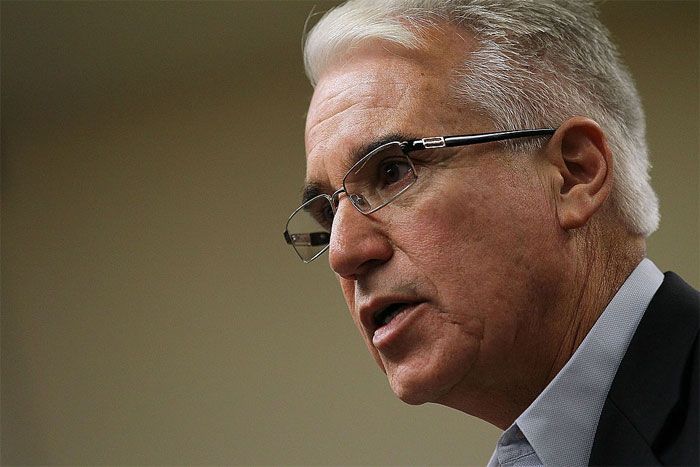
The Beverly Hills City Council unanimously passed a resolution on January 4 endorsing the recall of Los Angeles District Attorney (DA) George Gascon.
According to a press release from the City of Beverly Hills, the resolution was brought at the request of Beverly Hills Mayor Bob Wunderlich and Vice Mayor Lili Bosse. “Over the last 12 months, Los Angeles County has seen a dramatic increase in widespread crime including follow-home robberies, smash-and-grab incidents and the tragic death of beloved Beverly Hills philanthropist Jacqueline Avant,” the press release stated.
Avant, the 81-year-old wife of music executive Clarence Avant, was shot and killed during a home invasion on December 1; the suspect, 29-year-old Aariel Maynor, has been charged in the killing of Avant. Beverly Hills Chief of Police Mark Stainbrook was quoted as saying: “We’re arresting the same people again and again and letting them right out to commit more crime. So, if you look at Mrs. Avant’s case, that individual has a lengthy criminal history. He was out on parole and he was out committing crime. He should never have ever been out in the first place.”
The “smash-and-grab” incidents are referencing a ring of burglars targeting stores and looting them; nearly a dozen such incidents have occurred in the county since November. Fourteen people have been arrested in connection to them, but they all have since been released from custody as a result of “their age, after posting bail or because of no-bail rules,” according to NBC Los Angeles.
The city council then cited specific policies implemented by Gascon that concern them, including the elimination of cash bail for misdemeanors and nonviolent felonies, dismissing misdemeanor charges (albeit some exceptions) and revoking sentence enhancements in circumstances involving bail violations and gang affiliations, among others.
The DA’s office did not respond to the Journal’s request for comment.
The effort to recall Gascon initially sputtered but a new campaign was launched on December 6. One of the leaders of the recall efforts is former Los Angeles DA Steve Cooley; County Sheriff Alex Villanueva was a supporter for the first recall campaign and has been a vocal critic of Gascon. Jon Hatami, a deputy district attorney under Gascon, has also criticized the DA, telling ABC7 that “releasing criminals, not charging crime does not work in Los Angeles.” Thirty-one city councils in the county have issued votes of no confidence against Gascon. The recall will need 579,000 signatures in order to force an election to replace Gascon, according to CBS Los Angeles.
A December 9 KTLA report stated that recent crime statistics “paint a complicated picture of Gascón’s policies,” noting that while “homicides are up 46% and car thefts are up 53% in Los Angeles compared with the same time frame through Nov. 27 of 2019 … Property crime however is down 6.6%, robberies are down 13.6%, and burglaries are down 7.7%, in the same time frames.” Gascon’s policies mainly affect property crimes, KTLA report stated, citing The Los Angeles Times.
Gascon has defended his policies, arguing that many cases don’t reach his office before the suspects are released, and “that we go through these cycles, and we go through the cycles for a variety of reasons … In many ways we cannot prosecute our way out of social inequalities, income inequalities, the unhoused, the desperation that we have,” per ABC7 and KTLA.
In an official rebuttal to the recall campaign, Gascon accused the recall of being a “right-wing” effort to oust him from office. “This is not about keeping Angelenos safe, it’s about a political power grab by well-funded political operatives who have fought reforms—on juvenile detention, mental health treatment, police accountability in fatal police shootings, and the death penalty—for decades,” he said, per The Washington Examiner, adding that “Los Angeles needs to move forward as a safer and less divided community where we focus on preventing crime to keep people safe—not react with political fearmongering or cable news ratings grabs.”
God aimed the first of ten plagues against the Egyptian gods, the river Nile and idols that were made of wood and stone,
and aimed the second against Pharaoh, whom Ezekiel called a crocodile, fierce beast confronted by a plague of frogs.
The third was lice, a plague God aimed against all the Egyptians. Smart magicians also conjured lice like virus that was grown
in laboratories by smart Chinese virologists, a fact that is disputed by undemocratic demagogues.
The first plague, blood, was a plague against the Egyptian gods, as, Christoph Berner of Kiel University, explained in “Blood, Frogs, and Impurity” (thetorah.com)
The second plague, frogs, was against Pharaoh, whom Ezekiel 29:3 describes as a crocodile, the frogs waging war against the Big Crocodile, like mice who anecdotally scare elephants.
The third plague, lice, notorious transmitters of infectious diseases, was aimed against all the Egyptians. Exod. 8:14 points out that this plague was not only produced by Aaron, following God’s directions, but by Pharaoh’s magicians, described in this poem as the predecessors of Chinese virologists.
Gershon Hepner is a poet who has written over 25,000 poems on subjects ranging from music to literature, politics to Torah. He grew up in England and moved to Los Angeles in 1976. Using his varied interests and experiences, he has authored dozens of papers in medical and academic journals, and authored “Legal Friction: Law, Narrative, and Identity Politics in Biblical Israel.” He can be reached at gershonhepner@gmail.com.
The First Three Plagues: A New Exegesis Read More »
It’s not often a high school basketball star turns down full-scholarship offers from major universities in favor of a Jewish university better known for its academics than athletics, while paying full tuition for the honor.
But then again there aren’t many students like Ryan Turell, a senior at Yeshiva University (YU) and star of the school’s Maccabees (Macs) basketball team.
The Macs have garnered major media attention over the past several months due to their 50-game win streak over the past two seasons in NCAA Division III basketball, and their 14-0 record this season. However, the seemingly unbeatable team met their match on Dec. 30, when Illinois Wesleyan University denied YU a 51st consecutive win by beating them 73-59 in a packed house at YU’s Max Stern Athletic Center.
Longtime residents of Valley Village, The Turell family, with parents Brad and Laurel and children, Jack, 26; Austin, 25 (daughter), and Ryan, 22, maintain an Orthodox Jewish lifestyle that the parents instilled in their children. The family belongs to Shaare Zedek Congregation with the three children having received Jewish day school educations at Emek Hebrew Academy and Valley Torah High School.
The 6-foot 7-inch guard made the sole decision to attend YU, which was not necessarily the first choice of his parents. As his father said, “When I asked him why he would pass up a full scholarship offer from Division I programs to attend YU, he replied, ‘why then did you send me to Emek and Valley Torah?’”
“I feel like I am representing the Jewish people. I think it’s important that Jewish athletes wear a yarmulke when they play and be proud of where they came from and know who they are.” – Ryan Turell
Turell’s commitment to Judaism shows in how he plays and how he thinks. “Every time I wear a yarmulke on the court, I know I am not just playing for myself,” Turell said. “I feel like I am representing the Jewish people. I think it’s important that Jewish athletes wear a yarmulke when they play and be proud of where they came from and know who they are.”
Turell’s basketball skills have caught the attention of NBA scouts, a major achievement in and of itself. So far eight NBA teams have either come to see him play, requested video or spoken to his coaches about him. The proud father says his son is, “definitely a prospect, probably top 100.” While only 60 players get drafted and about 100 sign with teams to play either in the NBA or the G league (its minor league), competition is fierce. But his parents believe in their son’s pro basketball prospects. “Ryan has a skillset (shooting) that is in high demand and he has NBA size. We are confident he will either be drafted or signed by an NBA team,” they said in a joint statement.
The young basketball star is well aware of the challenges he would face should he have the opportunity to play professional basketball. Keeping Shabbat and kosher while playing games on the road is something that he has confidence can be worked out. “I first would talk to my rabbis to make sure I do everything according to Jewish law,” he said. “I would plan to stay walking distance to the gyms for practice, but I would never travel on Shabbat and of course keep strictly kosher on the road, which shouldn’t be a problem.”
Turell cites Kobe Bryant as his primary basketball hero while growing up. “My whole life I was a huge Lakers fan,” he said. “Watching Kobe’s demeanor and his work ethic really inspired me.” Even more important, he cites his father as his life role model with both his parents being his biggest fans, attending every game.
Playing against schools around the country where Jewish students might be few and far between, and where Zionism is often under attack, Turell admits to having experienced some antisemitism on the court and from fans as the team travels to various cities. “Thankfully, it has not been a lot,” he said. “But when it happens, I just take it out on the court and finish the game with a win. I let the game do the talking.”
YU’s Jewish pride and support for Zionism goes beyond players wearing their yarmulkes on the court. When competing on home court, the crowd sings Hatikvah immediately after the Star Spangled Banner at the start of the game.
Turell is a marketing major with plans to navigate a career in real estate and professional basketball, “B’ezrat HaShem” (with God’s help), he is quick to add. He also one day hopes to open a training camp to help Jewish kids hone their athletic skills.
Right now he is taking it one game at a time and knows that he has the ability, if not a responsibility, to serve as a role model for other Jewish kids who love both their religion and athletics. “Ultimately, Judaism is my life,” he said. “It’s a part of who I am. I will never let that go. I want to show other Jewish kids that they can remain true to themselves and at the same time be anything they want to be.”
Ryan Turell: Wearing His Judaism On The Basketball Court Read More »
Alex Edelman grew up in an Orthodox Jewish family, and the experience equipped him with one of the things Jews need most in 2022: comedy. His new stand-up show, “Just For Us,” which I have had the pleasure of seeing twice, is a hilariously well-crafted exploration of how Edelman sees the world, which, at every corner, is as a Jew. From naughty yeshiva boys telling their classmates about the miracle of Christmas to tales of his brother representing Israel in the Olympics, the performance is a pleasant reminder of what might be our most enjoyable tradition: telling jokes. But one of Edelman’s stories in particular stands out, and has been the subject of articles and reviews across various outlets: the time Edelman thought it would be fun to attend a white nationalist meeting.
Yes, a very Jewish looking boy tried to pass as a burgeoning white nationalist at a far-right gathering in an apartment in Queens. The story is a knock-out laugh. Edelman prefaces it by telling us he rarely gets political on stage, considering it always “bums people out,” which contributes to the innocent way he approaches the characters, including Chelsea, a white nationalist he couldn’t help but have a crush on. (“You never know….” he waxes romantically).
Edelman is not on stage to challenge hateful prejudices with clever commentary sprinkled throughout. Instead, he portrays these people as village idiots from the point of view of a Jewish, Neil Simon-esque playwright. One character gives out a pseudonym in order to protect his identity. Another character spends years putting together 12,000-piece jigsaw puzzles. They make silly mistakes and dumb comments, lost in their own twisted worldview. Edelman is more focused on poking fun at the absurdities of twenty-first-century Nazism than in making a blatant statement on it, but as is the case with most good comedy, a message is clearly conveyed.
In times like these, who can blame us for also deploying the ultimate Jewish coping mechanism? We gain power from looking the enemy in the eye and laughing at his absurdity.
As antisemitism continues to plague this country and countries around the world, there seems to be no alternative for Jews than to make as much noise as possible. It is in our DNA to see a problem, grow paranoid about the problem, and then alert as many other people to the problem to tightly seal our community envelope of hysteria. In 2021, this was certainly warranted, whether in regard to far-right activism or violence against Jews in American streets during the conflict between Israel and Hamas. In times like these, who can blame us for also deploying the ultimate Jewish coping mechanism? We gain power from looking the enemy in the eye and laughing at his absurdity. As Mel Brooks has famously articulated, getting people to laugh at the perpetrator means that we win. A great example can be found in one of the most beloved episodes of television in the Jewish world this past year. In Season 11 Episode 4 of “Curb Your Enthusiasm,” Larry spills coffee on a Ku Klux Klan member’s robe, and then agrees to get the robe cleaned for the Klansman, but not before suggesting that the man simply wear a sheet instead. Ultimately, after a series of unfortunate events involving the cleaning of the robe, the Klansman becomes not just human but also a laughing stock.
At the white nationalist meeting, Edelman routinely responds to assertions from attendees with the catch phrase “Can you believe it?” According to him, this is a great conversation hack in order to: first, let the person know you know what they’re talking about; second, let them know you agree with them; and third, allow them to do the talking. Meghan Markle marrying Prince Harry—can you believe it? What’s going on in the White House—can you believe it? At the end of the meeting, when Edelman is revealed to be a Jew, much to the sheer horror of the other participants, he meekly shrugs his shoulders and asks “Can you believe it?” Banished from the meeting, Edelman laments his lost chance to turn Chelsea, his crush, away from a life of hatred and kiss her on top of the Empire State Building.
“Just For Us” is able to bridge the divide between politics and Shabbat dinner table jokes and teaches us all a lesson in how to fight antisemitism.
What’s especially appealing about Edelman’s show is its playfulness. It is tempting in these chaotic days to fashion a comedy out of bitterness, where jokes either “punch up” or “punch down,” but do so with an air of grievance either way. But some of the best comics of this moment are doing just the opposite, and Edelman can be counted among them. “Just For Us” feels full of joy—like a heartfelt love letter to our community. At the end of the set, Edelman reaches into his pocket to reveal a small memento he snatched from the meeting. “It’s tiny, it’s disintegrating,” but the way I see it, it’s nothing less than a Jewish victory prize.
“Just For Us” is able to bridge the divide between politics and Shabbat dinner table jokes and teaches us all a lesson in how to fight antisemitism. I want to head into 2022 addressing threats with the moral superiority I am certain the Jewish people have. It is a necessity to laugh at the world when the world scares us. Can you believe it?
Blake Flayton is New Media Director and columnist at the Jewish Journal.
A Jew Walks Into A White Supremacist Meeting Read More »

Dec 2021
Nov 2021
Oct 2021
Sept 2021

August 2021
July 2021

June 2021
May 2021

April 2021
March 2021
February 2021

January 2021

2021: Creating 2021 Content during COVID-19
2020: Creating 2020 Content during COVID-19
2019: Wonderful Wanderings
2018: Where were Lisa’s Wonderful Wanderings?
2017: We Said Go Travel is GLOBAL!
2016: What did Lisa LOVE the most?
2015: Highlights from Lisa’s videos and adventures
2014: A real rollercoaster!
Creating 2021 Content during COVID-19 Read More »
In the more than thirty years I have been a congregational rabbi, never have I witnessed a more polarizing issue, within houses of worship, than those generated by constantly changing COVID policies. Many policies are state, county and city mandates, including when to wear a mask, what type of mask to wear, PCR tests, proof of vaccination, indoor and outdoor protocols, along with seating layouts and more.
Adding to tensions engendered by these mandates are the diverse attitudes and psychological makeup of members.
This constitutes a perfect storm: For nearly two years, COVID policies have been viewed as either too stringent or not stringent enough. Parishioners have expressed disappointment in their clergy for not being exemplars in action and speech during the pandemic. They have lambasted us for not reacting more quickly and speaking out more forcibly—provided, of course, that our actions and statements accord with their political, scientific and social views.
Still others see the pandemic as a reason to withdraw from organized religion for a time, or even forever. The often mean-spirited inability to find common ground, frequently accompanied by threats of quitting, have further drained followers away from religious organizations that can hardly afford more losses to their already declining membership. If there ever was a time to leave a House of God, this is not it.
Saddest of all, congregants have disregarded some of their religion’s core principles and teachings, central to which is the Judeo-Christian ethic stating: God’s primary demand is that we be good, not perfect, people. The infighting and lack of civility are hardly an expression of goodness. Two examples help illustrate the point.
First: compassion and inclusion. These timeless religious ideals are noticeably absent when it comes to the unvaccinated. They are a modern-day extension of the biblical lepers.
I have witnessed long-standing friendships severed as the result of the anger bordering on hatred of the unvaccinated.
I have witnessed long-standing friendships severed as the result of the anger bordering on hatred of the unvaccinated. Where’s the compassion and inclusivity?
Understandably, the vaccinated will respond, “If the unvaccinated were compassionate and inclusive, they would get vaccinated and save lives and prevent burdening our overrun hospitals. Most people recognize that the benefits of being vaccinated outweigh the risks” (life-threatening hazards have occasionally been associated with the vaccine).
On one level, this makes little sense. If the vaccine is effective, who are the unvaccinated allegedly hurting? I say this as one who, along with my wife and adult children, is vaccinated. Why isn’t my position regarding the unvaccinated one seen as exemplar leadership? Because I harbor no ill-will for the unvaccinated?
Second: fear. Within houses of worship, congregants are terrified of contracting the COVID-19 virus. The fear is warranted; it’s a serious illness, particularly for the elderly and those with compromised immune systems. Religious faith doesn’t protect us from disease, injury or death.
For many, the fear has become all-encompassing—ironically, more debilitating than the illness itself. They either haven’t learned, or disregard, the Hebrew Bible’s injunction that is repeated more than 80 times, not to fear.
We should know better: fearful people tend to be less optimistic, practical, generous, happy, forgiving and friendly. That’s what we clergy should be preaching from the pulpit.
Impassioned discussions are important. The pandemic is dangerous—and not fully understood. Vehement reactions are understandable. But how one argues is often as important as the argument itself.
Debate and disagreement are at the core of the Talmudic tradition. Some of the disagreements among ancient rabbis raged for years. Occasionally, heated debates degraded into name calling and dissociation. But for the most part, opposing sides remained respectful. In fact, arch-rivals danced at each other’s children’s weddings. Opposing sides treated one another with equal measures of skepticism and humility.
Certainly, religion’s steady decline preceded the pandemic. Its drop-off is partly due to the rise of secularism, along with a general disenchantment with organized religion. Perhaps, worst of all, the decline is also the result of religious followers who disregard some of their religion’s core principles, not least of which are compassion, inclusion and fearlessness. Now, more than ever, is the time to reassert those ideals, in no better place than a house of worship.
Michael Gottlieb is rabbi of Kehillat Ma’arav in Santa Monica.
Returning to Jewish Ideals of Compassion & Inclusion Read More »